Adhyaya 3
Satī Desires to Attend Dakṣa’s Sacrifice; Śiva Warns Against the Pain of Relatives’ Insults
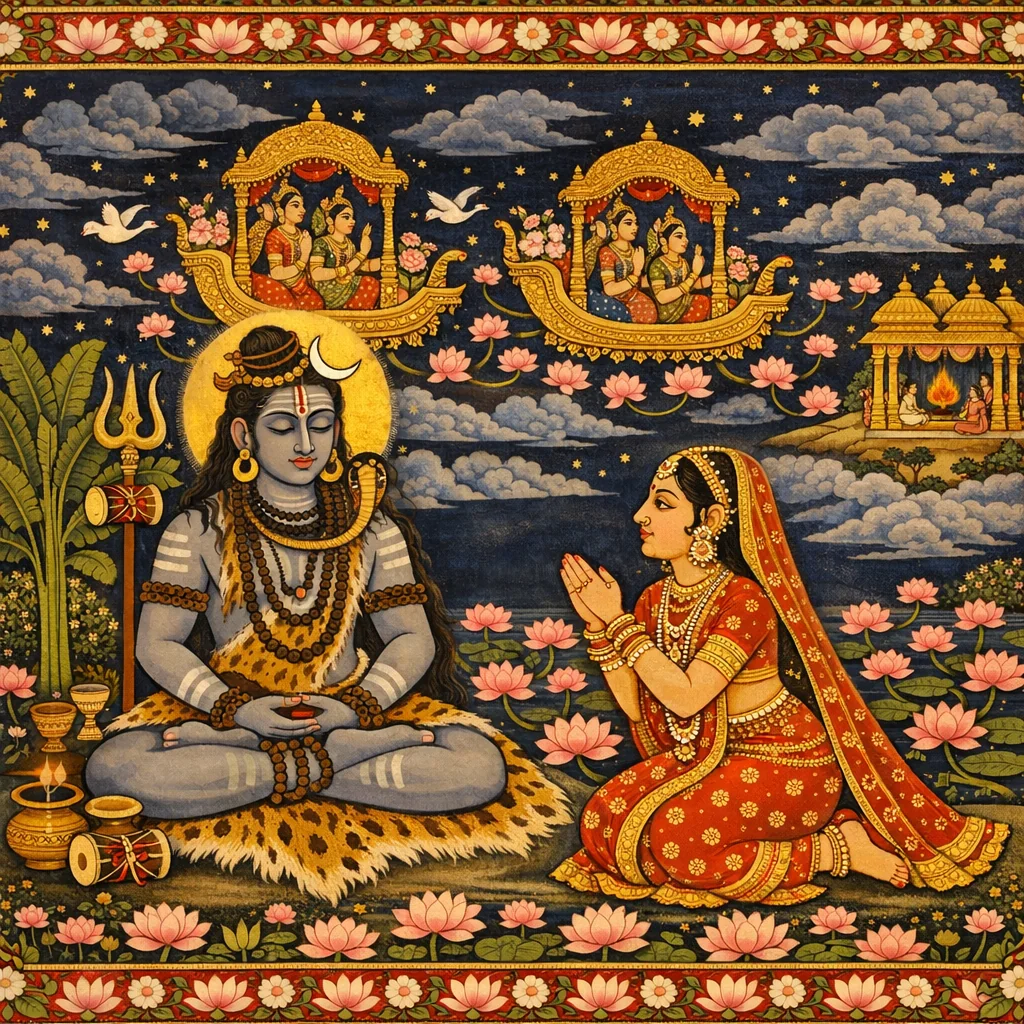
The chapter continues the long tension between Dakṣa and his son-in-law Śiva. Empowered as chief of the Prajāpatis, Dakṣa grows proud and performs grand sacrifices (vājapeya and bṛhaspati-sava), drawing ṛṣis, pitṛs, devas, and their ornamented wives from across the universe. Satī hears celestial talk and sees the procession of divine ladies going to her father’s yajña; moved by family affection and social custom, she asks Śiva to accompany her, arguing that one may visit a father’s house even uninvited. Śiva answers with a sober ethic of association: to approach the envious is to invite harm, and the harsh words of relatives wound more deeply than an enemy’s arrows. He exposes Dakṣa’s blindness—pride in learning, austerity, wealth, beauty, youth, and lineage—and contrasts mere bodily etiquette with true reverence for the Paramātmā within all beings. Declaring his constant obeisance to Vāsudeva in pure consciousness, Śiva warns Satī that Dakṣa’s envy will become her humiliation, and that insult from kin can be “equal to death,” foreshadowing the coming disaster at the sacrifice.
Shlokas
Verse 1
मैत्रेय उवाच सदा विद्विषतोरेवं कालो वै ध्रियमाणयो: । जामातु: श्वशुरस्यापि सुमहानतिचक्रमे ॥ १ ॥
Maitreya continued: Thus the hostility and tension between father-in-law and son-in-law—Dakṣa and Lord Śiva—endured for a very long time.
Verse 2
यदाभिषिक्तो दक्षस्तु ब्रह्मणा परमेष्ठिना । प्रजापतीनां सर्वेषामाधिपत्ये स्मयोऽभवत् ॥ २ ॥
When Brahmā, the Parameṣṭhī, appointed Dakṣa as chief of all the Prajāpatis, Dakṣa became greatly puffed up with pride.
Verse 3
इष्ट्वा स वाजपेयेन ब्रह्मिष्ठानभिभूय च । बृहस्पतिसवं नाम समारेभे क्रतूत्तमम् ॥ ३ ॥
Dakṣa performed the vājapeya sacrifice and, relying on Lord Brahmā’s support, became overly self-assured. Then he began another supreme sacrifice, known as bṛhaspati-sava.
Verse 4
तस्मिन्ब्रह्मर्षय: सर्वे देवर्षिपितृदेवता: । आसन् कृतस्वस्त्ययनास्तत्पत्न्यश्च सभर्तृका: ॥ ४ ॥
As the sacrifice proceeded, all the brahmarṣis, devarṣis, ancestral deities and other demigods were present. Having performed auspicious benedictions, their wives also arrived with their husbands, beautifully adorned.
Verse 5
तदुपश्रुत्य नभसि खेचराणां प्रजल्पताम् । सती दाक्षायणी देवी पितृयज्ञमहोत्सवम् ॥ ५ ॥ व्रजन्ती: सर्वतो दिग्भ्य उपदेववरस्त्रिय: । विमानयाना: सप्रेष्ठा निष्ककण्ठी: सुवासस: ॥ ६ ॥ दृष्ट्वा स्वनिलयाभ्याशे लोलाक्षीर्मृष्टकुण्डला: । पतिं भूतपतिं देवमौत्सुक्यादभ्यभाषत ॥ ७ ॥
Hearing the talk of the celestial beings moving through the sky, the chaste goddess Satī, daughter of Dakṣa, learned of her father’s great festival sacrifice to the forefathers. Seeing from every direction the lovely wives of the demigods—riding in vimānas with their beloveds, clad in fine garments and adorned with earrings and necklaces with pendants—passing near her dwelling on their way to the sacrifice, Satī, anxious and eager, approached her husband, Śaṅkara, lord of the bhūtas, and spoke.
Verse 6
तदुपश्रुत्य नभसि खेचराणां प्रजल्पताम् । सती दाक्षायणी देवी पितृयज्ञमहोत्सवम् ॥ ५ ॥ व्रजन्ती: सर्वतो दिग्भ्य उपदेववरस्त्रिय: । विमानयाना: सप्रेष्ठा निष्ककण्ठी: सुवासस: ॥ ६ ॥ दृष्ट्वा स्वनिलयाभ्याशे लोलाक्षीर्मृष्टकुण्डला: । पतिं भूतपतिं देवमौत्सुक्यादभ्यभाषत ॥ ७ ॥
Hearing the talk of the celestial beings moving through the sky, the chaste goddess Satī, daughter of Dakṣa, learned of her father’s great festival sacrifice to the forefathers. Seeing from every direction the lovely wives of the demigods—riding in vimānas with their beloveds, clad in fine garments and adorned with earrings and necklaces with pendants—passing near her dwelling on their way to the sacrifice, Satī, anxious and eager, approached her husband, Śaṅkara, lord of the bhūtas, and spoke.
Verse 7
तदुपश्रुत्य नभसि खेचराणां प्रजल्पताम् । सती दाक्षायणी देवी पितृयज्ञमहोत्सवम् ॥ ५ ॥ व्रजन्ती: सर्वतो दिग्भ्य उपदेववरस्त्रिय: । विमानयाना: सप्रेष्ठा निष्ककण्ठी: सुवासस: ॥ ६ ॥ दृष्ट्वा स्वनिलयाभ्याशे लोलाक्षीर्मृष्टकुण्डला: । पतिं भूतपतिं देवमौत्सुक्यादभ्यभाषत ॥ ७ ॥
Hearing the talk of the celestial beings moving through the sky, the chaste goddess Satī, daughter of Dakṣa, learned of her father’s great festival sacrifice to the forefathers. Seeing from every direction the lovely wives of the demigods—riding in vimānas with their beloveds, clad in fine garments and adorned with earrings and necklaces with pendants—passing near her dwelling on their way to the sacrifice, Satī, anxious and eager, approached her husband, Śaṅkara, lord of the bhūtas, and spoke.
Verse 8
सत्युवाच प्रजापतेस्ते श्वशुरस्य साम्प्रतं निर्यापितो यज्ञमहोत्सव: किल । वयं च तत्राभिसराम वाम ते यद्यर्थितामी विबुधा व्रजन्ति हि ॥ ८ ॥
Satī said: My beloved Śiva, your father-in-law, Prajāpati, is now performing a great sacrificial festival, and all the demigods invited by him are going there. If you so desire, we too may go.
Verse 9
तस्मिन्भगिन्यो मम भर्तृभि: स्वकै- र्ध्रुवं गमिष्यन्ति सुहृद्दिदृक्षव: । अहं च तस्मिन्भवताभिकामये सहोपनीतं परिबर्हमर्हितुम् ॥ ९ ॥
At that sacrifice my sisters must surely have gone with their husbands, eager to see their kinsmen. I too long to adorn myself with the ornaments my father gave me and go with you to take part in that assembly.
Verse 10
तत्र स्वसृर्मे ननु भर्तृसम्मिता मातृष्वसृ: क्लिन्नधियं च मातरम् । द्रक्ष्ये चिरोत्कण्ठमना महर्षिभि- रुन्नीयमानं च मृडाध्वरध्वजम् ॥ १० ॥
There my sisters, my mother’s sisters with their husbands, and my affectionate mother will be assembled—those whom I have long yearned to see. I shall also behold the sacrifice conducted by the great sages and the banners fluttering in the wind. For these reasons, dear husband, I am very eager to go.
Verse 11
त्वय्येतदाश्चर्यमजात्ममायया विनिर्मितं भाति गुणत्रयात्मकम् । तथाप्यहं योषिदतत्त्वविच्च ते दीना दिदृक्षे भव मे भवक्षितिम् ॥ ११ ॥
This manifested cosmos is a wondrous creation of the Supreme Lord’s māyā, woven from the three guṇas—this truth you know completely. Yet I am but a humble woman, unversed in tattva. Therefore I wish to see my birthplace once more; please grant me leave to go.
Verse 12
पश्य प्रयान्तीरभवान्ययोषितो ऽप्यलड़्क़ृता: कान्तसखा वरूथश: । यासां व्रजद्भि: शितिकण्ठ मण्डितं नभो विमानै: कलहंसपाण्डुभि: ॥ १२ ॥
Behold, O Unborn One, O blue-throated Lord—not only my relatives, but other women as well, clad in fine garments and adorned with ornaments, are going there in groups with their husbands and companions. Their white, swanlike airplanes have made the whole sky exceedingly beautiful.
Verse 13
कथं सुताया: पितृगेहकौतुकं निशम्य देह: सुरवर्य नेङ्गते । अनाहुता अप्यभियन्ति सौहृदं भर्तुर्गुरोर्देहकृतश्च केतनम् ॥ १३ ॥
O best of the gods, how can a daughter’s body and heart remain unmoved when she hears of a festive celebration in her father’s home? Even if uninvited, there is no fault in going without invitation to the house of one’s friend, husband, spiritual master, or father.
Verse 14
तन्मे प्रसीदेदममर्त्य वाञ्छितं कर्तुं भवान्कारुणिको बतार्हति । त्वयात्मनोऽर्धेऽहमदभ्रचक्षुषा निरूपिता मानुगृहाण याचित: ॥ १४ ॥
O immortal Śiva, be gracious to me and fulfill my cherished desire. You have accepted me as half of your own body; therefore, in compassion, please grant my request.
Verse 15
ऋषिरुवाच एवं गिरित्र: प्रिययाभिभाषित: प्रत्यभ्यधत्त प्रहसन् सुहृत्प्रिय: । संस्मारितो मर्मभिद: कुवागिषून् यानाह को विश्वसृजां समक्षत: ॥ १५ ॥
The great sage Maitreya said: Thus addressed by his beloved wife, Lord Śiva, the lord of Kailāsa, replied with a smile; yet at the same time he remembered Dakṣa’s malicious, heart-piercing words spoken before the guardians of universal affairs.
Verse 16
श्रीभगवानुवाच त्वयोदितं शोभनमेव शोभने अनाहुता अप्यभियन्ति बन्धुषु । ते यद्यनुत्पादितदोषदृष्टयो बलीयसानात्म्यमदेन मन्युना ॥ १६ ॥
The great lord replied: My beautiful wife, what you have said is indeed proper—that one may go to the home of relatives even uninvited; but only when they do not fault a guest out of bodily pride and, by such false ego, flare up in anger.
Verse 17
विद्यातपोवित्तवपुर्वय:कुलै: सतां गुणै: षड्भिरसत्तमेतरै: । स्मृतौ हतायां भृतमानदुर्दृश: स्तब्धा न पश्यन्ति हि धाम भूयसाम् ॥ १७ ॥
Education, austerity, wealth, beauty, youth, and noble lineage—these six qualities belong to the truly elevated; yet one who becomes proud of them turns blind, loses sound remembrance, and cannot perceive the glory of great souls.
Verse 18
नैतादृशानां स्वजनव्यपेक्षया गृहान्प्रतीयादनवस्थितात्मनाम् । येऽभ्यागतान् वक्रधियाभिचक्षते आरोपितभ्रूभिरमर्षणाक्षिभि: ॥ १८ ॥
One should not go to the house of such unsteady-minded persons, even if they are one’s own kin; for they look upon a guest with crooked intent, raised brows, and angry eyes.
Verse 19
तथारिभिर्न व्यथते शिलीमुखै: शेतेऽर्दिताङ्गो हृदयेन दूयता । स्वानां यथा वक्रधियां दुरुक्तिभि- र्दिवानिशं तप्यति मर्मताडित: ॥ १९ ॥
Even when struck by an enemy’s arrows one is not so afflicted as when cut by the harsh words of one’s own kin; that pain pierces the vital core and tears the heart day and night.
Verse 20
व्यक्तं त्वमुत्कृष्टगते: प्रजापते: प्रियात्मजानामसि सुभ्रु मे मता । तथापि मानं न पितु: प्रपत्स्यसे मदाश्रयात्क: परितप्यते यत: ॥ २० ॥
My fair-complexioned beloved, it is plain that among Dakṣa Prajāpati’s daughters you are most dear; yet because you are sheltered by me, you will not be honored in your father’s house, and you will grieve for being connected with me.
Verse 21
पापच्यमानेन हृदातुरेन्द्रिय: समृद्धिभि: पूरुषबुद्धिसाक्षिणाम् । अकल्प एषामधिरोढुमञ्जसा परं पदं द्वेष्टि यथासुरा हरिम् ॥ २१ ॥
One driven by false ego is ever distressed in mind and senses, unable to bear the opulence of the self-realized. Failing to rise to that standard, he envies them as the demons envy Śrī Hari, the Supreme Personality of Godhead.
Verse 22
प्रत्युद्गमप्रश्रयणाभिवादनं विधीयते साधु मिथ: सुमध्यमे । प्राज्ञै: परस्मै पुरुषाय चेतसा गुहाशयायैव न देहमानिने ॥ २२ ॥
My slender-waisted wife, friends and relatives rightly rise, welcome, and offer obeisances to one another. Yet the wise, situated on the transcendental plane, offer such respect in their hearts not to the body-identified person, but to the Paramātmā—the Supreme Puruṣa dwelling secretly within the body.
Verse 23
सत्त्वं विशुद्धं वसुदेवशब्दितं यदीयते तत्र पुमानपावृत: । सत्त्वे च तस्मिन्भगवान्वासुदेवो ह्यधोक्षजो मे नमसा विधीयते ॥ २३ ॥
Pure sattva, known as “Vāsudeva,” is that state in which the Person is revealed without covering. In that stainless consciousness I ever offer my obeisances to Bhagavān Vāsudeva, the Adhokṣaja.
Verse 24
तत्ते निरीक्ष्यो न पितापि देहकृद् दक्षो मम द्विट्तदनुव्रताश्च ये । यो विश्वसृग्यज्ञगतं वरोरु मा- मनागसं दुर्वचसाकरोत्तिर: ॥ २४ ॥
Therefore do not even look upon your father Dakṣa, though he gave you this body, for he and his followers are envious of me. O most venerable one, out of envy he has insulted me—though innocent—with cruel words in the assembly of Viśvasṛj’s sacrifice.
Verse 25
यदि व्रजिष्यस्यतिहाय मद्वचो भद्रं भवत्या न ततो भविष्यति । सम्भावितस्य स्वजनात्पराभवो यदा स सद्यो मरणाय कल्पते ॥ २५ ॥
If, disregarding my words, you still decide to go, no good will come to you. You are most honorable, and when insult comes from one’s own kin, that insult at once becomes equal to death.
Frequently Asked Questions
Satī is moved by natural filial emotion and social dharma: hearing of festivity at her father’s home and seeing other devas’ wives traveling, she longs to meet sisters, maternal relatives, and witness the sacrificial grandeur. She also reasons that a father, like a friend, husband, or guru, may be approached without formal invitation—an appeal grounded in customary etiquette and familial intimacy.
Śiva reads the underlying consciousness: Dakṣa’s pride and envy make him likely to dishonor Satī because she is Śiva’s wife. Śiva teaches that association with the envious is spiritually and emotionally dangerous; insults from relatives pierce more deeply than attacks from enemies. His warning is also theological: when ritual is driven by bodily identification and ego, it becomes a venue for aparādha, not purification.
Śiva distinguishes social courtesies from spiritual vision: the truly intelligent offer respect to the Supersoul (Paramātmā) seated within all bodies, not merely to the external person identified with the body. He frames his own practice as constant obeisance to Vāsudeva in pure Kṛṣṇa consciousness, where the Lord is revealed without covering.
The six—education, austerity, wealth, beauty, youth, and heritage—are ordinarily signs of elevation, but when possessed with pride they produce blindness and loss of discernment. In Dakṣa’s case, these become fuel for superiority and contempt toward a self-realized personality (Śiva), demonstrating the Bhāgavata’s critique of prestige divorced from humility and devotion.