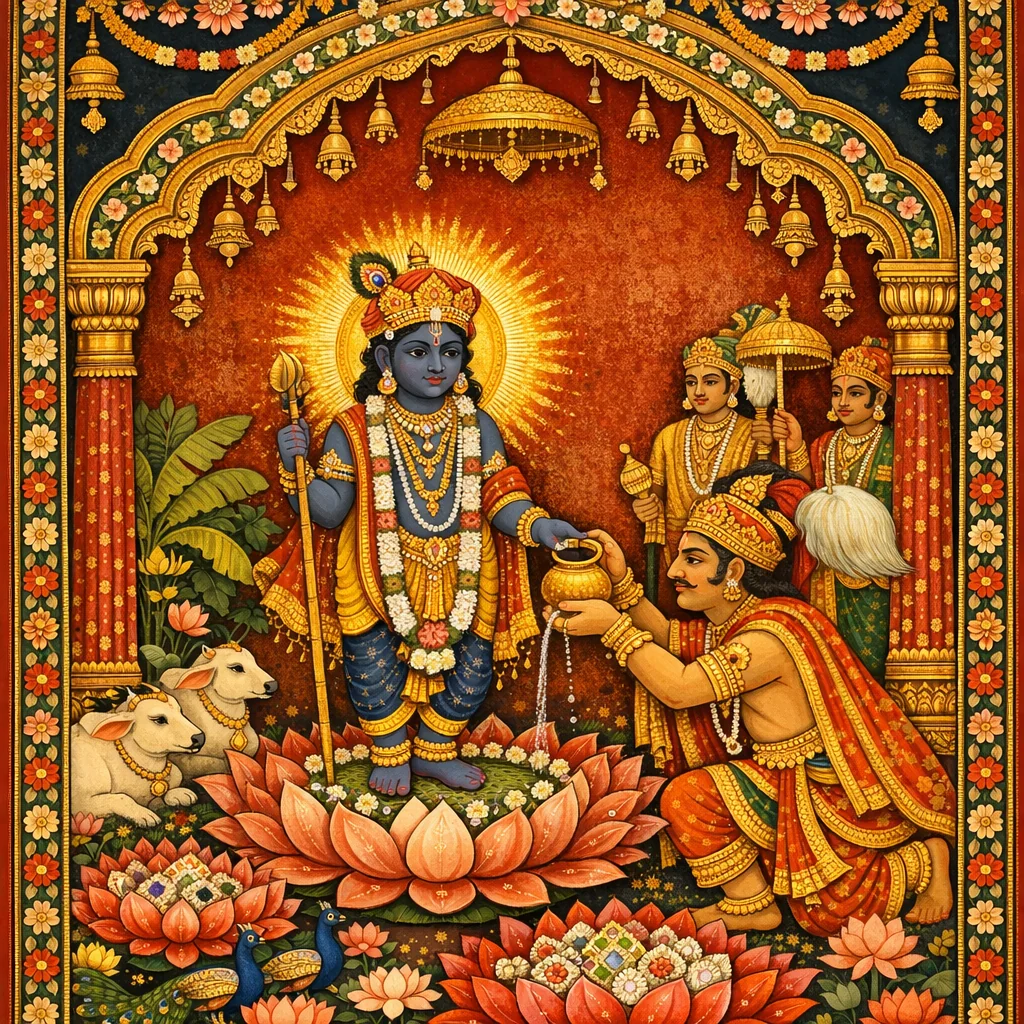
Adhyaya 13
The Future Manus and the Avatāras in Their Manvantaras
Śukadeva continues his manvantara framework by anchoring the present rule: he names Śrāddhadeva (Vaivasvata) Manu as the seventh Manu, lists his sons, the chief deva groups, Indra (Purandara), the seven ṛṣis, and the avatāra Vāmana born of Kaśyapa and Aditi. He then turns from the present to the future, recalling Vivasvān’s wives (Saṁjñā, Chāyā, and Vaḍavā) and their progeny to establish the lineage leading to the eighth Manu, Sāvarṇi. The chapter unfolds as a structured forecast: for each coming Manu (8th through 14th), Śukadeva identifies key sons, the ruling Indra, the deva communities, the seven sages, and the Lord Viṣṇu’s partial or plenary incarnation who will steady that age. Bali Mahārāja’s future elevation is emphasized: though bound by the Lord, he is installed in Sutala and later becomes Indra in the eighth manvantara when Sārvabhauma reallocates sovereignty. The chapter concludes by defining the full cycle of fourteen Manus as one kalpa—one day of Brahmā—bridging the Vāmana–Bali history with the Purāṇic macro-chronology that frames the narration to come.
Shlokas
Verse 1
श्रीशुक उवाच मनुर्विवस्वत: पुत्र: श्राद्धदेव इति श्रुत: । सप्तमो वर्तमानो यस्तदपत्यानि मे शृणु ॥ १ ॥
Śukadeva Gosvāmī said: The present Manu, known as Śrāddhadeva, is the son of Vivasvān, the presiding deity of the sun. He is the seventh Manu. Now hear from me as I describe his sons.
Verse 2
इक्ष्वाकुर्नभगश्चैव धृष्ट: शर्यातिरेव च । नरिष्यन्तोऽथ नाभाग: सप्तमो दिष्ट उच्यते ॥ २ ॥ तरूषश्च पृषध्रश्च दशमो वसुमान्स्मृत: । मनोर्वैवस्वतस्यैते दशपुत्रा: परन्तप ॥ ३ ॥
O King Parīkṣit, among the ten sons of Vaivasvata Manu are Ikṣvāku, Nabhaga, Dhṛṣṭa, Śaryāti, Nariṣyanta and Nābhāga. The seventh son is known as Diṣṭa. Then come Tarūṣa and Pṛṣadhra, and the tenth son is remembered as Vasumān.
Verse 3
इक्ष्वाकुर्नभगश्चैव धृष्ट: शर्यातिरेव च । नरिष्यन्तोऽथ नाभाग: सप्तमो दिष्ट उच्यते ॥ २ ॥ तरूषश्च पृषध्रश्च दशमो वसुमान्स्मृत: । मनोर्वैवस्वतस्यैते दशपुत्रा: परन्तप ॥ ३ ॥
O King Parīkṣit, among the ten sons of Vaivasvata Manu are Ikṣvāku, Nabhaga, Dhṛṣṭa, Śaryāti, Nariṣyanta and Nābhāga. The seventh son is known as Diṣṭa. Then come Tarūṣa and Pṛṣadhra, and the tenth son is remembered as Vasumān.
Verse 4
आदित्या वसवो रुद्रा विश्वेदेवा मरुद्गणा: । अश्विनावृभवो राजन्निन्द्रस्तेषां पुरन्दर: ॥ ४ ॥
O King, in this manvantara the Ādityas, Vasus, Rudras, Viśvedevas, hosts of Maruts, the two Aśvinī-kumāra brothers, and the Ṛbhus are the demigods. Their chief, Indra, is known as Purandara.
Verse 5
कश्यपोऽत्रिर्वसिष्ठश्च विश्वामित्रोऽथ गौतम: । जमदग्निर्भरद्वाज इति सप्तर्षय: स्मृता: ॥ ५ ॥
Kaśyapa, Atri, Vasiṣṭha, Viśvāmitra, Gautama, Jamadagni and Bharadvāja are remembered as the seven sages (Saptarṣis).
Verse 6
अत्रापि भगवज्जन्म कश्यपाददितेरभूत् । आदित्यानामवरजो विष्णुर्वामनरूपधृक् ॥ ६ ॥
In this manvantara as well, the Supreme Lord appeared from Kaśyapa and Aditi. As the youngest among the Ādityas, Viṣṇu assumed the form of Vāmana, the divine dwarf.
Verse 7
सङ्क्षेपतो मयोक्तानि सप्तमन्वन्तराणि ते । भविष्याण्यथ वक्ष्यामि विष्णो: शक्त्यान्वितानि च ॥ ७ ॥
I have briefly told you of the station of the seven Manus. Now I shall speak of the Manus yet to come, together with the śakti-endowed incarnations of Lord Viṣṇu.
Verse 8
विवस्वतश्च द्वे जाये विश्वकर्मसुते उभे । संज्ञा छाया च राजेन्द्र ये प्रागभिहिते तव ॥ ८ ॥
O King, Vivasvān had two wives, both daughters of Viśvakarmā—Saṁjñā and Chāyā—of whom I have already spoken to you before.
Verse 9
तृतीयां वडवामेके तासां संज्ञासुतास्त्रय: । यमो यमी श्राद्धदेवश्छायायाश्च सुताञ्छृणु ॥ ९ ॥
Some say the sun-god had a third wife named Vaḍavā. Of the three wives, Saṁjñā bore three children—Yama, Yamī, and Śrāddhadeva. Now hear of the children of Chāyā.
Verse 10
सावर्णिस्तपती कन्या भार्या संवरणस्य या । शनैश्चरस्तृतीयोऽभूदश्विनौ वडवात्मजौ ॥ १० ॥
Chāyā bore a son named Sāvarṇi and a daughter named Tapatī, who later became the wife of King Saṁvaraṇa. Chāyā’s third child is known as Śanaiścara (Śani, Saturn). Vaḍavā gave birth to two sons, the Aśvinī brothers.
Verse 11
अष्टमेऽन्तर आयाते सावर्णिर्भविता मनु: । निर्मोकविरजस्काद्या: सावर्णितनया नृप ॥ ११ ॥
O King, when the age of the eighth Manu arrives, Sāvarṇi will become the Manu. Among his sons will be Nirmoka, Virajaska, and others.
Verse 12
तत्र देवा: सुतपसो विरजा अमृतप्रभा: । तेषां विरोचनसुतो बलिरिन्द्रो भविष्यति ॥ १२ ॥
In the eighth manvantara, the demigods will be known as the Sutapās, the Virajas, and the Amṛtaprabhās. Their king, Indra, will be Bali Mahārāja, the son of Virocana.
Verse 13
दत्त्वेमां याचमानाय विष्णवे य: पदत्रयम् । राद्धमिन्द्रपदं हित्वा तत: सिद्धिमवाप्स्यति ॥ १३ ॥
He who granted to Viṣṇu, who came as a supplicant, the gift of three paces of land, gave up the prosperous post of Indra (and lost the three worlds). Yet later, when the Lord is pleased by his complete surrender, he will attain life’s supreme perfection.
Verse 14
योऽसौ भगवता बद्ध: प्रीतेन सुतले पुन: । निवेशितोऽधिके स्वर्गादधुनास्ते स्वराडिव ॥ १४ ॥
Bound by the Lord with affectionate favor, Bali was then installed in Sutala, a realm more opulent than the heavens. There Bali Mahārāja now dwells like a sovereign, more comfortably situated than Indra.
Verse 15
गालवो दीप्तिमान्रामो द्रोणपुत्र: कृपस्तथा । ऋष्यशृङ्ग: पितास्माकं भगवान्बादरायण: ॥ १५ ॥ इमे सप्तर्षयस्तत्र भविष्यन्ति स्वयोगत: । इदानीमासते राजन् स्वे स्व आश्रममण्डले ॥ १६ ॥
O King, in the eighth manvantara the seven sages will be Gālava, Dīptimān, Paraśurāma, Aśvatthāmā the son of Droṇa, Kṛpācārya, Ṛṣyaśṛṅga, and our father Bhagavān Bādarāyaṇa Vyāsa—an incarnation of Nārāyaṇa. At present they dwell in their respective āśramas.
Verse 16
गालवो दीप्तिमान्रामो द्रोणपुत्र: कृपस्तथा । ऋष्यशृङ्ग: पितास्माकं भगवान्बादरायण: ॥ १५ ॥ इमे सप्तर्षयस्तत्र भविष्यन्ति स्वयोगत: । इदानीमासते राजन् स्वे स्व आश्रममण्डले ॥ १६ ॥
O King, in the eighth manvantara the seven sages will be Gālava, Dīptimān, Paraśurāma, Aśvatthāmā the son of Droṇa, Kṛpācārya, Ṛṣyaśṛṅga, and our father Bhagavān Bādarāyaṇa Vyāsa—an incarnation of Nārāyaṇa. At present they dwell in their respective āśramas.
Verse 17
देवगुह्यात्सरस्वत्यां सार्वभौम इति प्रभु: । स्थानं पुरन्दराद्धृत्वा बलये दास्यतीश्वर: ॥ १७ ॥
In the eighth manvantara, the supremely powerful Bhagavān Sārvabhauma will appear as the son of Devaguhya, born from Sarasvatī. He will take the kingdom from Purandara (Indra) and bestow it upon Bali Mahārāja.
Verse 18
नवमो दक्षसावर्णिर्मनुर्वरुणसम्भव: । भूतकेतुर्दीप्तकेतुरित्याद्यास्तत्सुता नृप ॥ १८ ॥
O King, the ninth Manu will be Dakṣa-sāvarṇi, born of Varuṇa. Among his sons will be Bhūtaketu, Dīptaketu, and others.
Verse 19
पारामरीचिगर्भाद्या देवा इन्द्रोऽद्भुत: स्मृत: । द्युतिमत्प्रमुखास्तत्र भविष्यन्त्यृषयस्तत: ॥ १९ ॥
In this ninth manvantara, the Pāras and the Marīcigarbhas will be among the demigods. The Indra of heaven will be named Adbhuta, and among the seven sages will be Dyutimān and others.
Verse 20
आयुष्मतोऽम्बुधारायामृषभो भगवत्कला । भविता येन संराद्धां त्रिलोकीं भोक्ष्यतेऽद्भुत: ॥ २० ॥
From his father Āyuṣmān and his mother Ambudhārā, Ṛṣabhadeva—an expansion of the Supreme Bhagavān—will take birth. By Him, the Indra named Adbhuta will enjoy the prosperity of the three worlds.
Verse 21
दशमो ब्रह्मसावर्णिरुपश्लोकसुतो मनु: । तत्सुता भूरिषेणाद्या हविष्मत्प्रमुखा द्विजा: ॥ २१ ॥
The tenth Manu will be Brahma-sāvarṇi, the son of Upaśloka. Among his sons will be Bhūriṣeṇa and others, and the seven sages will be brāhmaṇas headed by Haviṣmān.
Verse 22
हविष्मान्सुकृत: सत्यो जयो मूर्तिस्तदा द्विजा: । सुवासनविरुद्धाद्या देवा: शम्भु: सुरेश्वर: ॥ २२ ॥
Haviṣmān, Sukṛta, Satya, Jaya, Mūrti and others will be the seven sages. The Suvāsanas and Viruddhas will be among the demigods, and Śambhu will be their king, Indra.
Verse 23
विष्वक्सेनो विषूच्यां तु शम्भो: सख्यं करिष्यति । जात: स्वांशेन भगवान्गृहे विश्वसृजो विभु: ॥ २३ ॥
In the home of Viśvasraṣṭā, from the womb of Viṣūcī, a plenary portion of the Supreme Lord will appear as the incarnation Viṣvaksena. He will become a friend of Śambhu.
Verse 24
मनुर्वै धर्मसावर्णिरेकादशम आत्मवान् । अनागतास्तत्सुताश्च सत्यधर्मादयो दश ॥ २४ ॥
In the eleventh manvantara, the Manu will be Dharma-sāvarṇi, greatly learned in spiritual wisdom. From him will come ten sons, headed by Satyadharma.
Verse 25
विहङ्गमा: कामगमा निर्वाणरुचय: सुरा: । इन्द्रश्च वैधृतस्तेषामृषयश्चारुणादय: ॥ २५ ॥
The Vihaṅgamas, Kāmagamas, Nirvāṇarucis and others will be the demigods. Their Indra will be Vaidhṛta, and the sages will be headed by Aruṇa.
Verse 26
आर्यकस्य सुतस्तत्र धर्मसेतुरिति स्मृत: । वैधृतायां हरेरंशस्त्रिलोकीं धारयिष्यति ॥ २६ ॥
There, the son of Āryaka will be known as Dharmasetu. From the womb of Vaidhṛtā, Āryaka’s wife, he will appear as a partial incarnation of Hari and will sustain and rule the three worlds.
Verse 27
भविता रुद्रसावर्णी राजन्द्वादशमो मनु: । देववानुपदेवश्च देवश्रेष्ठादय: सुता: ॥ २७ ॥
O King, the twelfth Manu will be named Rudra-sāvarṇi. Among his sons will be Devavān, Upadeva, and Devaśreṣṭha, and others.
Verse 28
ऋतधामा च तत्रेन्द्रो देवाश्च हरितादय: । ऋषयश्च तपोमूर्तिस्तपस्व्याग्नीध्रकादय: ॥ २८ ॥
In this manvantara, Indra will be known as Ṛtadhāmā, and the demigods will be led by the Haritas. Among the sages will be Tapomūrti, Tapasvī, and Āgnīdhraka.
Verse 29
स्वधामाख्यो हरेरंश: साधयिष्यति तन्मनो: । अन्तरं सत्यसहस: सुनृताया: सुतो विभु: ॥ २९ ॥
From the mother Sunṛtā and the father Satyasahā will come Svadhāmā, a partial incarnation of the Supreme Lord, Hari. He will rule that manvantara.
Verse 30
मनुस्त्रयोदशो भाव्यो देवसावर्णिरात्मवान् । चित्रसेनविचित्राद्या देवसावर्णिदेहजा: ॥ ३० ॥
The thirteenth Manu will be named Deva-sāvarṇi, greatly advanced in spiritual knowledge. Among his sons will be Citrasena and Vicitra, and others.
Verse 31
देवा: सुकर्मसुत्रामसंज्ञा इन्द्रो दिवस्पति: । निर्मोकतत्त्वदर्शाद्या भविष्यन्त्यृषयस्तदा ॥ ३१ ॥
In the thirteenth manvantara, the demigods will include the Sukarmās and Sutrāmas; Indra, king of heaven, will be Divaspati. Among the sages will be Nirmoka and Tattvadarśa, and others.
Verse 32
देवहोत्रस्य तनय उपहर्ता दिवस्पते: । योगेश्वरो हरेरंशो बृहत्यां सम्भविष्यति ॥ ३२ ॥
Devahotra’s son, named Yogeśvara, will appear from the womb of Bṛhatī as a partial incarnation of Śrī Hari, and he will act for the welfare of Divaspati.
Verse 33
मनुर्वा इन्द्रसावर्णिश्चतुर्दशम एष्यति । उरुगम्भीरबुधाद्या इन्द्रसावर्णिवीर्यजा: ॥ ३३ ॥
The fourteenth Manu will be named Indra-sāvarṇi, and he will have sons such as Uru, Gambhīra, and Budha.
Verse 34
पवित्राश्चाक्षुषा देवा: शुचिरिन्द्रो भविष्यति । अग्निर्बाहु: शुचि: शुद्धो मागधाद्यास्तपस्विन: ॥ ३४ ॥
The Pavitras and Cākṣuṣas will be among the demigods, and Śuci will be Indra. Agni, Bāhu, Śuci, Śuddha, Māgadha and other great ascetics will be the seven sages.
Verse 35
सत्रायणस्य तनयो बृहद्भानुस्तदा हरि: । वितानायां महाराज क्रियातन्तून्वितायिता ॥ ३५ ॥
O King Parīkṣit, in the fourteenth manvantara Śrī Hari will appear from the womb of Vitānā, with Satrāyaṇa as His father. This incarnation will be known as Bṛhadbhānu and will establish spiritual rites and duties.
Verse 36
राजंश्चतुर्दशैतानि त्रिकालानुगतानि ते । प्रोक्तान्येभिर्मित: कल्पो युगसाहस्रपर्यय: ॥ ३६ ॥
O King, I have described to you the fourteen Manus of past, present, and future. The total span of their rule equals one thousand yuga cycles; this is called a kalpa, one day of Lord Brahmā.
Frequently Asked Questions
The chapter lists ten sons of the seventh Manu (Śrāddhadeva Vaivasvata), headed by Ikṣvāku, along with Nabhaga, Dhṛṣṭa, Śaryāti, Nariṣyanta, Nābhāga, Diṣṭa, Tarūṣa, Pṛṣadhra, and Vasumān. This serves vaṁśa (dynastic) mapping, especially for royal lineages central to Purāṇic history.
Because the Lord personally protected and established Bali in Sutala—depicted as more opulent than Svarga—after binding him with affection. The theological point is that proximity to the Lord’s favor and protection outweighs positional prestige; divine guardianship makes Bali’s ‘defeat’ a superior condition.
It concludes that the combined duration of the fourteen Manus’ reigns equals one thousand yuga cycles, termed a kalpa—one day of Brahmā. This is the Bhāgavata’s macro-chronological frame for organizing manvantara histories and avatāra descents.
The chapter states that in the eighth manvantara the Lord will appear as Sārvabhauma, born of Devaguhya and Sarasvatī. He will take the kingdom from Purandara (Indra) and give it to Bali Mahārāja, aligning sovereignty with the Lord’s devotional purpose and karmic-ethical order.