Adhyaya 289
Pṛthā’s Atithi-Sevā and the Gift of the Deva-Āhvāna Mantra (पृथायाः अतिथिसेवा तथा देवाह्वानमन्त्रप्रदानम्)
Upa-parva: Kuntī-Upākhyāna (The account of Pṛthā/Kuntī receiving the deva-āhvāna mantra)
Vaiśaṃpāyana describes how the young Kuntī (Pṛthā) consistently pleases a rigorously vowed brāhmaṇa guest through pure-minded attendance, providing food, lodging, and honor at all hours, with provisions increasing day by day. Despite occasional harsh speech or irregular comings and goings, she does nothing displeasing and fulfills requests even when resources are difficult to obtain. Her father, Kuntibhoja, repeatedly inquires whether the brāhmaṇa is satisfied; Kuntī affirms his contentment. After a full year, the brāhmaṇa finds no fault in her conduct and declares himself greatly pleased, offering her rare boons. When she refuses to request a boon, he gives her instead a mantra—heard in Atharvaśiras—for invoking devas: whichever deity she calls with it will come under her directive, whether willing or unwilling, as if an obedient attendant. Unable to refuse again out of fear of a curse, she accepts the mantra. The brāhmaṇa then informs Kuntibhoja of his pleasant stay and disappears, leaving the king astonished and Kuntī honored.
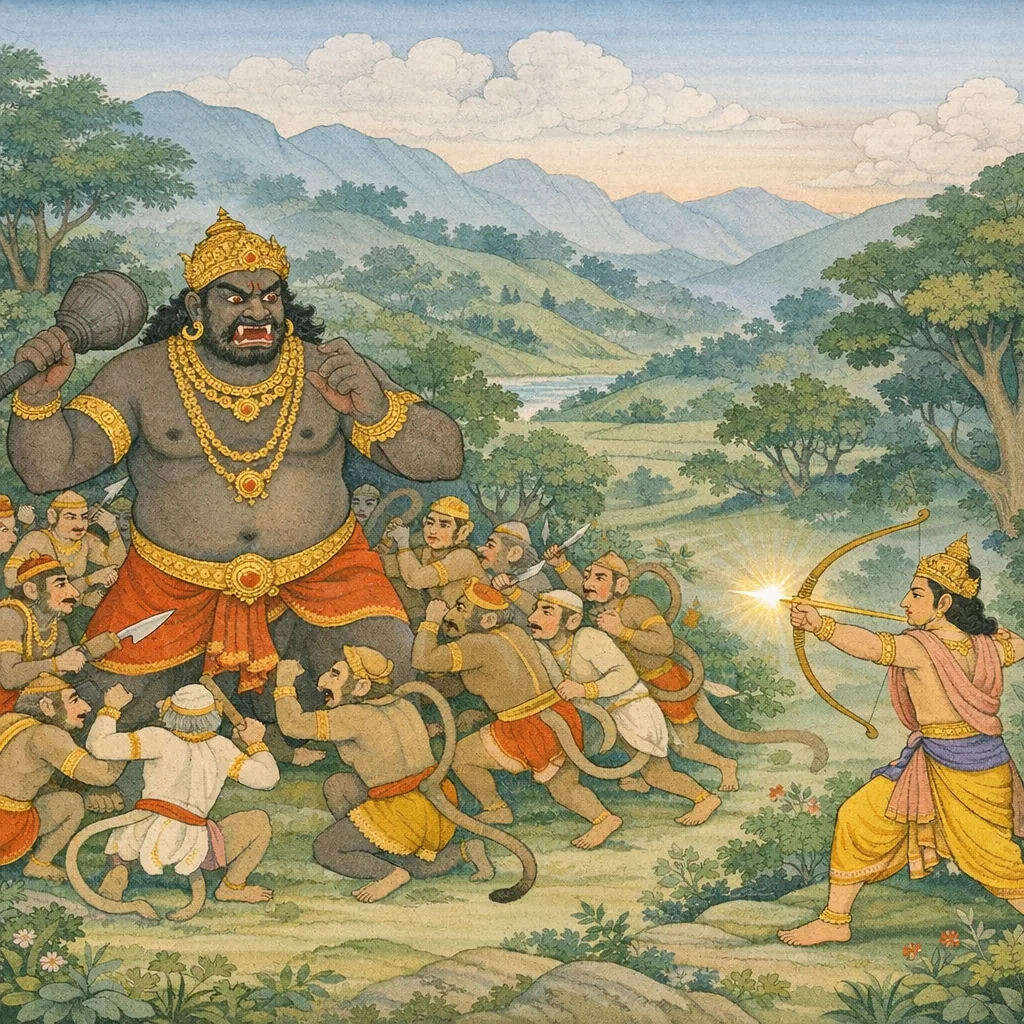
Chapter Arc: मार्कण्डेय ऋषि जनमेजय को सुनाते हैं—रावण की आज्ञा से निद्रा-भंग कर महाकाय कुम्भकर्ण नगर से निकलता है, राम-दर्शन की उत्कंठा और युद्ध-लालसा से भरा हुआ। → कुम्भकर्ण वानर-सेना में घुसकर पर्वत-शिखरों जैसे प्रहार सहते हुए भी हँसता है, वानरों को पकड़-पकड़कर खाता है; तार आदि प्रमुख वानर भय से चीत्कार करते हैं। उधर लक्ष्मण धनुष हाथ में लेकर उसे रोकने को अग्रसर होते हैं। → कुम्भकर्ण अपने शरीर को और भी विकराल—अनेक पाँव, अनेक सिर, अनेक भुजाओं वाला—बना लेता है; तब लक्ष्मण ब्रह्मास्त्र/महास्त्र का प्रयोग कर निर्णायक प्रहार करते हैं और सुवर्ण-पंखयुक्त तीक्ष्ण बाणों से उसे लक्ष्य कर गिराने की प्रक्रिया आरम्भ करते हैं। → लक्ष्मण के दिव्यास्त्रों से कुम्भकर्ण की उन्मत्त गति थमती है; वानर-सेना को संबल मिलता है और राक्षस-बल का एक महाभयकारी स्तम्भ ढहने की ओर बढ़ता है—युद्ध का पलड़ा राम-पक्ष की ओर झुकता है। → कुम्भकर्ण के पतन के बाद लंका की प्रतिक्रिया और रावण की अगली चाल—किसे आगे भेजा जाएगा—यह प्रश्न अगले अध्याय की देहरी पर छोड़ दिया जाता है।
Shlokas
Verse 1
अपना स२ (0 अवज असल सप्ताशीरत्याधिकद्विशततमो< ध्याय: कुम्भकर्ण, वज्वेग और प्रमाथीका वध मार्कण्डेय उवाच ततो निर्याय स्वपुरात् कुम्भकर्ण: सहानुग: । अपश्यत् कपिसैन्यं तज्जितकाश्यग्रत: स्थितम्,मार्कण्डेयजी कहते हैं--युधिष्ठि!! सेवकों-लहित अपने नगरसे निकलकर कुम्भकर्णने अपने सामने खड़ी हुई वानरसेनाको देखा, जो विजयके उल्लाससे सुशोभित हो रही थी
Mārkaṇḍeya said: Then Kumbhakarṇa, accompanied by his followers, marched out from his own city and beheld the army of monkeys standing before him—radiant with the confidence and exhilaration born of victory. The scene underscores how triumph can embolden a force, even as it foreshadows the moral gravity of the coming clash between opposing duties and loyalties in war.
Verse 2
स वीक्षमाणस्तत् सैन्यं रामदर्शनकाड्क्षया । अपश्यच्चापि सौमित्रिं धनुष्पाणिं व्यवस्थितम्,फिर जब उसने भगवान् श्रीरामके दर्शनकी इच्छासे उस सेनामें इधर-उधर दृष्टि डाली, तब उसे हाथमें धनुष लिये सुमित्रानन्दन लक्ष्मण खड़े दिखायी दिये
Scanning that army with a longing to behold Rāma, he looked about—and there he saw Saumitrī (Lakṣmaṇa), Sumitrā’s son, standing firmly in position with bow in hand. The verse highlights devotion guiding perception: the seeker’s desire for the righteous leader (Rāma) leads him first to encounter steadfast dharmic support (Lakṣmaṇa), poised for duty.
Verse 3
तमभ्येत्याशु हरय: परिवद्रु: समनन््ततः । अभ्यघ्नंश्व महाकायैर्बहुभिर्जगतीरुहै:,इतनेमें ही वानरोंने चारों ओरसे आकर कुम्भकर्णको शीघ्रतापूर्वक घेर लिया और बहुत-से बड़े-बड़े पेड़ उखाड़कर उन्हींके द्वारा उसपर प्रहार करने लगे
Then the monkeys swiftly rushed up to him and, surrounding him on every side, began striking him with many huge trees they had torn up from the earth. The scene underscores their collective resolve: when a destructive force threatens the righteous cause, disciplined unity and courageous action become a form of dharma in practice.
Verse 4
करजैरतुदंश्वान्ये विहाय भयमुत्तमम् । बहुधा युध्यमानास्ते युद्धमार्गैं: प्लवज्भमा:
Mārkaṇḍeya said: “Others, casting aside even the greatest fear, struck with their hands and fought in many ways—leaping and darting about through the various courses and openings of battle.”
Verse 5
नानाप्रहरणैर्भीमै राक्षसेन्द्रमताडयन् । कुछ वानरोंने कुम्भकर्णसे प्राप्त होनेवाले महान् भयकी परवा न करके उसको नखोंसे पीड़ा देनी प्रारम्भ की। युद्धकी विभिन्न प्रणालियोंद्वारा अनेक प्रकारसे युद्ध करते हुए वानरसैनिक भाँति-भाँतिके भयंकर आयुधोंद्वारा राक्षसराज कुम्भकर्णको चोट पहुँचाने लगे |। स ताड्यमान: प्रहसन् भक्षयामास वानरान्
Mārkaṇḍeya said: Striking the lord of the rākṣasas with many dreadful weapons, the vānaras—heedless of the great terror that came from Kumbhakarṇa—began to torment him even with their claws. Yet as he was being beaten, he only laughed, and in the midst of that assault he devoured the vānaras. The scene underscores how courage and collective effort in war can still be overwhelmed when power is joined with cruelty and unchecked appetite.
Verse 6
बल॑ं चण्डबलाख्यं च वज़बाहुं च बानरम् | वानरोंके प्रहार करनेपर वह जोर-जोरसे हँसने और उन्हें पकड़-पकड़कर खाने लगा। देखते-देखते बल, चण्डबल और वज्रबाहु नामक वानर उसके मुखके ग्रास बन गये ।। ५६ || तद् दृष्टवा व्यथनं कर्म कुम्भकर्णस्य रक्षस:
Mārkaṇḍeya said: “He seized the monkeys named Bala, Caṇḍabala, and Vajrabāhu. When the monkeys struck at him, he burst into loud laughter and began catching them one by one and devouring them. In a short time, Bala, Caṇḍabala, and Vajrabāhu became morsels in his mouth. Seeing this cruel deed of the rākṣasa Kumbhakarṇa, the others were shaken with anguish.”
Verse 7
उदक्रोशन् परित्रस्तास्तारप्रभूतयस्तदा । राक्षस कुम्भकर्णका यह दुःखदायी कर्म देखकर तार आदि वानर भयभीत हो जोर- जोरसे चीत्कार करने लगे ।। तानुच्चै: क्रोशत: सैन्याउछुत्वा स हरियूथपान्
Markandeya said: Then Tara and the others, terrified, cried out loudly. Seeing the cruel, sorrow-bringing deed of the rakshasa Kumbhakarna, the monkeys beginning with Tara were seized by fear and raised repeated shrieks. Hearing those troops wailing aloud, that leader of the monkey-bands responded (turning his attention toward them).
Verse 8
ततो निपत्य वेगेन कुम्भकर्ण महामना:
Then, with sudden speed, the great-souled Kumbhakarṇa swooped down. The narration highlights the irresistible momentum of a powerful being once roused—suggesting that unchecked force, when set in motion, can overwhelm restraint and bring swift consequences in the moral order of events.
Verse 9
स महात्मा महावेग: कुम्भकर्णस्य मूर्थनि
Mārkaṇḍeya said: That great-souled hero, moving with tremendous force, (struck/advanced) upon the head of Kumbhakarṇa—evoking the moral contrast between disciplined valor and the destructive might of a rākṣasa driven by brute power.
Verse 10
ततो विनद्य सहसा शालस्पर्शविबोधित:
Then, suddenly roused by the touch of a śāla tree, he cried out aloud—startled into wakefulness by that abrupt contact.
Verse 11
ह्वियमाणं तु सुग्रीवं कुम्भकर्णेन रक्षसा
Mārkaṇḍeya said: “But when Sugrīva was being summoned by the rākṣasa Kumbhakarṇa….” (The line sets the scene for an ensuing episode in which a powerful adversary calls another into confrontation, highlighting the moral tension between coercive force and rightful conduct.)
Verse 12
सो$भिपत्य महावेगं रुक्मपुड्खं महाशरम्
Mārkaṇḍeya said: “Then, rushing forward with great force, he let fly a mighty arrow—golden-feathered and driven with tremendous speed.” The line heightens the scene’s intensity, underscoring how decisive, forceful action in conflict can swiftly shape outcomes, and implicitly reminds that such power should be governed by dharma rather than mere impulse.
Verse 13
स तस्य देहावरणं भिनत्त्वा देहं च सायक:
Markandeya said: “That arrow, having pierced through his bodily covering (armor), struck his very body as well.”
Verse 14
जगाम दारयन् भूमिं रुधिरेण समुक्षित: । वह बाण उसके कवचको काटकर शरीरको छेदता हुआ रक्तरंजित हो धरतीको चीरकर उसमें समा गया” ।। १३ है || तथा स भिन्नह्ृदय: समुत्सृज्य कपी श्वरम्,इस प्रकार छाती छिद जानेके कारण महाथधनुर्धर कुम्भकर्णने वानरराज सुग्रीवको तो छोड़ दिया और बड़े वेगसे लक्ष्मणकी ओर घूमकर कहा--'अरे! खड़ा रह, खड़ा रह'। तत्पश्चात् एक बहुत बड़ी शिला हाथमें लेकर वह सुमित्रानन्दन लक्ष्मणकी ओर दौड़ा
The arrow, drenched in blood, tore through the earth and disappeared into it. Then, with his chest pierced and his heart struck, the mighty bowman Kumbhakarṇa released the lord of the monkeys (Sugrīva). Turning with great speed toward Lakṣmaṇa, he cried, “Stand! Stand!” and, seizing a massive rock in his hand, he rushed at Sumitrā’s son. Ethically, the scene underscores the relentless momentum of battle: even grievously wounded, a warrior’s wrath and resolve can drive him to seek a new target, shifting from one opponent to another in the heat of conflict.
Verse 15
(वेगेन महता<<विष्टस्तिष्ठ तिछेति चाब्रवीत् ।) कुम्भकर्णो महेष्वास: प्रगृहीतशिलायुध: । अभिदुद्राव सौमित्रिमुद्यम्य महतीं शिलाम्,इस प्रकार छाती छिद जानेके कारण महाथधनुर्धर कुम्भकर्णने वानरराज सुग्रीवको तो छोड़ दिया और बड़े वेगसे लक्ष्मणकी ओर घूमकर कहा--'अरे! खड़ा रह, खड़ा रह'। तत्पश्चात् एक बहुत बड़ी शिला हाथमें लेकर वह सुमित्रानन्दन लक्ष्मणकी ओर दौड़ा
Markandeya said: Struck with great force, the mighty archer Kumbhakarna released the lord of the monkeys, Sugriva. Whirling around toward Lakshmana, he shouted, “Stand! Stand!” Then, lifting an enormous rock as his weapon, he charged at Saumitri (Lakshmana). The scene underscores how, in the heat of battle, wrath and pride can drive a warrior to sudden, perilous escalation—testing steadiness, courage, and restraint on both sides.
Verse 16
तस्याभिपततत्तूर्ण क्षुराभ्यामुच्छिती करौ । चिच्छेद निशिताग्राभ्यां स बभूव चतुर्भुज:,तब लक्ष्मणने भी बड़ी शीघ्रताके साथ तीखी धारवाले दो क्षुर॒ नामक बाण मारकर अपनी ओर आते हुए कुम्भकर्णकी ऊपर उठी हुई दोनों भुजाओंको काट डाला। उनके कटते ही वह चार भुजाओंसे युक्त हो गया
Mārkaṇḍeya said: As he rushed forward, Lakṣmaṇa swiftly struck with two razor-edged arrows (kṣura) and severed the two arms that were raised aloft. When those arms were cut away, the foe appeared as though endowed with four arms—his remaining pair and the two severed arms still seen in the moment of battle—underscoring the fierce, unsparing precision of righteous combat.
Verse 17
तानप्यस्य भुजान् सर्वान् प्रगृहीतशिलायुधान् | क्षुरैश्निच्छेद लघ्वस्त्रं सौमित्रि: प्रतिदर्शयन्,उन चारों भुजाओंमें भी उसने आयुधके रूपमें बड़ी-बड़ी चट्टानें उठा लीं। यह देख सुमित्राकुमारने अपने हाथोंकी फुर्ती दिखाते हुए फिरसे पूर्वोक्त बाण मारकर उसकी उन चारों भुजाओंको भी काट दिया
He too seized up all those arms, lifting massive rocks as his weapons. Seeing this, Saumitrī displayed the swiftness of his light, precise archery and, with razor-edged arrows, swiftly severed those four arms as well—showing that disciplined skill and alert restraint can overcome brute force and violent escalation.
Verse 18
स बभूवातिकायश्व बहुपादशिरोभुज: । त॑ ब्रह्मास्त्रेण सौमित्रिर्ददाराद्रिचयोपमम्
Mārkaṇḍeya said: “It became monstrously huge, with many feet, heads, and arms. Then Saumitrī (Lakṣmaṇa), using the Brahmāstra, tore that mountain-like mass apart.”
Verse 19
अब उसने अपना शरीर बहुत बड़ा बना लिया। उसके अनेक पैर, अनेक सिर और अनेक भुजाएँ हो गयीं। यह देख लक्ष्मणने ब्रह्मास्त्रका प्रयोग करके पर्वत-समूहके समान विशाल शरीरवाले उस राक्षसको चीर डाला ।। स पपात महावीर्यों दिव्यास्त्राभिहतो रणे | महाशनिविनिर्दग्ध: पादपो5ड्कुरवानिव,जैसे महान् भयंकर बिजलीके आघातसे शाखाओं और पत्तोंसहित वृक्ष दग्ध हो जाता है, उसी प्रकार लक्ष्मणके दिव्यास्त्रसे आहत होकर महापराक्रमी कुम्भकर्ण रणभूमिमें गिर पड़ा
Struck in battle by a celestial weapon, the mighty warrior fell upon the battlefield—like a tree, still bearing fresh shoots, that is scorched by the terrible stroke of a great lightning-bolt. The simile underscores the ethical gravity of war: even formidable power, when turned toward unrighteous violence, can be brought down by disciplined, divinely sanctioned force.
Verse 20
त॑ं दृष्टवा वृत्रसंकाशं कुम्भकर्ण तरस्विनम् | गतासुं पतितं भूमौ राक्षसा: प्राद्रवन्ू भयात्,वृत्रासुरके समान वेगशाली कुम्भकर्णको प्राणशून्य होकर पृथ्वीपर पड़ा देख सब राक्षस भयके मारे भाग चले
Seeing mighty Kumbhakarṇa—terrible in appearance like Vṛtra—lying lifeless, fallen upon the earth, the rākṣasas fled in panic. The passage underscores how the fall of a formidable leader shatters the morale of his followers, and how fear swiftly overtakes those who rely on brute force rather than steadiness of purpose.
Verse 21
तथा तान् द्रवतो योधान् दृष्टवा तौ दूषणानुजौ | अवस्थाप्याथ सौमित्रिं संक्रुद्धावभ्यधावताम्,अपने उन सैनिकोंको इस प्रकार भागते देख दूषणके दोनों भाई--वज़वेग और प्रमाथीने किसी प्रकार उन्हें रोककर खड़ा किया और अत्यन्त कुपित हो सुमित्राकुमार लक्ष्मणपर धावा बोल दिया
Seeing those warriors fleeing in that manner, the two younger brothers of Dūṣaṇa somehow halted them and made them stand their ground; then, inflamed with anger, they charged straight at Saumitri Lakṣmaṇa. The passage highlights how wrath and wounded pride can drive combatants to force others back into violence, intensifying the moral peril of battle.
Verse 22
तावाद्रवन्तौ संक्रुद्धी वज़वेगप्रमाथिनौ । अभिजग्राह सौमित्रिर्विनद्योभौ पतत्त्रिभि:,क्रोधमें भरे हुए वज्रवेग और प्रमाथीको अपनी ओर आते देख लक्ष्मणने बड़े जोरसे सिंहनाद किया और उन दोनोंकी गतिको बाणोंद्वारा रोक दिया
Then those two—Vajravega and Pramāthin—rushed forward in fury. Seeing them charging toward him, Saumitri (Lakṣmaṇa) let out a powerful roar and checked the advance of both by means of his arrows, restraining their onslaught through disciplined force rather than uncontrolled rage.
Verse 23
ततः सुतुमुलं युद्धम भवल्लोमहर्षणम् । दूषणानुजयो: पार्थ लक्ष्मणस्य च धीमत:,युधिष्ठिर! फिर तो दूषणके भाइयों तथा बुद्धिमान् लक्ष्मणमें ऐसा भयंकर युद्ध हुआ, जो रोंगटे खड़े कर देनेवाला था
Mārkaṇḍeya said: Then there arose a fiercely tumultuous battle—one that made the hair stand on end—between the younger brothers of Dūṣaṇa and the wise Lakṣmaṇa, O Yudhiṣṭhira. The scene underscores how, once violence is unleashed, even capable and discerning warriors are drawn into terrifying conflict, testing steadiness, restraint, and righteous conduct amid chaos.
Verse 24
महता शरवर्षेण राक्षसौ सो5भ्यवर्षत । तौ चापि वीरौ संक्रुद्धावुभौ तं॑ समवर्षताम्,लक्ष्मण उन दोनों राक्षसोंपर बाणोंकी बड़ी भारी वर्षा कर रहे थे और वे दोनों वीर राक्षस भी अत्यन्त कुपित होकर लक्ष्मणपर बाणोंकी बौछार करते थे
Mārkaṇḍeya said: With a mighty shower of arrows, Lakṣmaṇa rained missiles upon the two rākṣasas. Those two valiant demons, enraged in return, likewise poured a barrage of arrows upon Lakṣmaṇa. The scene underscores the reciprocity of violence in battle—wrath answering wrath—while highlighting the warrior’s steadfastness amid escalating danger.
Verse 25
मुहूर्तमेवमभवद् वज्वेगप्रमाथिनो: । सौमित्रेश्न महाबाहो: सम्प्रहार: सुदारुणग:,इस प्रकार वज्रवेग, प्रमाथी और महाबाहु लक्ष्मणका वह भयंकर संग्राम दो घड़ीतक अबाधगतिसे चलता रहा
Mārkaṇḍeya said: Thus, for a full muhūrta, the clash between Vajravega and Pramāthin on one side and the mighty-armed Saumitri (Lakṣmaṇa) on the other raged on—an exceedingly dreadful combat, driven by unbroken force and resolve.
Verse 26
अथाद्रिशृड्रमादाय हनुमान् मारुतात्मज: । अभिद्र॒त्याददे प्राणान् वज्वेगस्य रक्षस:,इसी बीचमें वायुनन्दन हनुमानजीने पर्वतका शिखर हाथमें लेकर वज्रवेग नामक राक्षसके ऊपर आक्रमण किया और उसके प्राण ले लिये
Then Hanumān, the son of the Wind-god, seized a mountain-peak and, rushing upon the rākṣasa named Vajravega, struck him down and took away his life. The episode underscores the righteous use of overwhelming strength: power is employed decisively to remove a violent threat and protect the moral order.
Verse 27
नीलश्न महता ग्राव्णा दूषणावरजं हरि: । प्रमाथिनमभिद्र॒ुत्य प्रममाथ महाबल:,महाबली नील नामक वानरने एक विशाल चट्टान लेकर दूषणके छोटे भाई प्रमाथीपर हमला किया और उसका कचूमर निकाल दिया
Mārkaṇḍeya said: Then Nīla, the mighty monkey, seized a huge rock and, rushing straight at Pramāthin—the younger brother of Dūṣaṇa—crushed him with overwhelming force. The episode underscores the swift consequences of violent aggression in battle and the decisive protection offered by powerful allies when adharma advances.
Verse 28
ततः प्रावर्तत पुन: संग्राम: कटुकोदय: । रामरावणसैन्यानामन्योन्यमभिधावताम्,तदनन्तर श्रीराम और रावणकी सेनाओंमें परस्पर आक्रमणपूर्वक भीषण संग्राम आरम्भ हो गया जो कटु परिणामका जनक था
Then the battle began again—fierce and foreboding in its outcome—as the armies of Rāma and Rāvaṇa rushed upon one another in mutual assault. The narrative underscores how renewed aggression, once unleashed, tends to ripen into bitter consequences for all involved.
Verse 29
शतशो नैर््रतान् वन्या जष्नुर्वन्यांश्व नैर््रता: । नैऋतास्तत्र वध्यन्ते प्रायेण न तु वानरा:,वनवासी वानरोंने सैकड़ों राक्षसोंको तथा राक्षसोंने वानरोंको घायल किया। उस युद्धमें अधिकांश राक्षस ही मारे जा रहे थे, वानर नहीं
Mārkaṇḍeya said: “In that forest-battle, the forest-dwelling monkeys struck down hundreds of the Naiṛtas (rākṣasas), and the Naiṛtas in turn wounded many of the forest-dwellers. Yet in that clash it was mostly the rākṣasas who were being slain, while the monkeys were scarcely killed.”
Verse 73
अभिदुद्राव सुग्रीव: कुम्भकर्णमपेतभी: । अपने सैनिकों तथा वानरयूथपतियोंका वह उच्च स्वरसे किया जाता हुआ चीत्कार सुनकर सुग्रीव निर्भय हो कुम्भकर्णकी ओर दौड़े
Mārkaṇḍeya said: Hearing the loud battle-cry raised by his own troops and the leaders of the monkey-bands, Sugrīva—free from fear—rushed straight toward Kumbhakarṇa. The scene underscores how courage, strengthened by the support and resolve of one’s companions, drives a leader to confront overwhelming force without wavering.
Verse 86
शालेन जध्निवान् मूर्घ्नि बलेन कपिकुञ्जर: । महामना कपिगश्रेष्ठ सुग्रीवने बड़े वेगसे उछलकर एक शालवृक्षके द्वारा कुम्भकर्णके मस्तकपर बलपूर्वक प्रहार किया
Mārkaṇḍeya said: With great force the mighty monkey—an elephant among monkeys, noble-minded and foremost of his kind—leapt with tremendous speed and struck Kumbhakarṇa on the head using a śāla tree. The scene underscores heroic resolve and the use of strength in the service of one’s side in battle, where courage and loyalty drive decisive action.
Verse 96
बिभेद शालं सुग्रीवो न चैवाव्यथयत् कपि: । कपिश्रेष्ठ सुग्रीवका हृदय महान् था। उनका वेग भी महान् था। उन्होंने कुम्भकर्णके मस्तकपर पटककर उस शालवृक्षको दो टूक कर डाला; तथापि वे उसे व्यथा न पहुँचा सके
Mārkaṇḍeya said: Sugrīva, the foremost of monkeys, split a śāla tree, yet he could not cause Kumbhakarṇa any pain. Great-hearted and mighty, with tremendous speed, he hurled that śāla tree onto Kumbhakarṇa’s head and broke it into two; even so, he failed to injure him. The episode underscores that mere force and display of prowess do not guarantee righteous success—true effectiveness depends on the opponent’s strength, the situation, and the deeper order governing outcomes.
Verse 103
दोर्भ्यामादाय सुग्रीव॑ कुम्भकर्णो5हरद् बलात् । शालके स्पर्शसे कुम्भकर्ण कुछ सावधान हो गया। उसने सहसा गर्जना करके सुग्रीवको दोनों हाथोंसे बलपूर्वक धर दबाया और अपने साथ ले लिया
Mārkaṇḍeya said: Seizing Sugrīva with both arms, Kumbhakarṇa carried him off by sheer force—an act that highlights the raw might of the rākṣasa in contrast to the vulnerable position of the vānaras, and underscores how power, when unchecked by dharma, turns into coercion rather than rightful strength.
Verse 113
अवेक्ष्याभ्यद्रवद् वीर: सौमित्रिर्मित्रनन्दन: । राक्षस कुम्भकर्ण द्वारा सुग्रीवका अपहरण होता देख मित्रोंका आनन्द बढ़ानेवाले सुमित्राकुमार वीरवर लक्ष्मण उसकी ओर दौड़े
Markandeya said: Seeing Sugriva being carried off by the rākṣasa Kumbhakarṇa, the heroic Lakṣmaṇa—son of Sumitrā, delight of his allies—rushed forward toward him. The scene underscores the warrior’s duty to protect companions and resist adharma when the innocent are seized by force.
Verse 126
प्राहिणोत् कुम्भकर्णाय लक्ष्मण: परवीरहा । शत्रुवीरोंका संहार करनेवाले लक्ष्मणने कुम्भकर्णके सामने जाकर उसको लक्ष्य करके सुवर्णमय पंखसे सुशोभित एक महावेगशाली महान् बाण चलाया
Mārkaṇḍeya said: Lakṣmaṇa, the slayer of enemy champions, advanced to face Kumbhakarṇa. Fixing him as his target, he released a single mighty arrow—swift as a great force—adorned with golden feathers. The scene underscores the warrior’s duty to confront a destructive aggressor directly, using disciplined aim and resolve rather than reckless violence.
Verse 286
इस प्रकार श्रीमह्याभारत वनपर्वके अन्तर्गत रामोपाख्यानपर्वमें कुम्भकर्णका युद्धके लिये प्रस्थानविषयक दो सौ छियासीवाँ अध्याय पूरा हुआ
Thus ends the two hundred and eighty-sixth chapter of the Rāmopākhyāna section within the Vana Parva of the revered Mahābhārata, describing Kumbhakarṇa’s departure to engage in battle. The colophon signals a transition in the narrative toward the escalation of war, where duty, loyalty, and the consequences of allegiance to unrighteous leadership come into sharper focus.
Verse 287
इति श्रीमहाभारते वनपर्वणि रामोपाख्यानपर्वणि कुम्भकर्णादिवधे सप्ताशीत्यधिकद्धिशततमो<ध्याय:
Thus, in the Śrī Mahābhārata, within the Vana Parva, in the section known as the Rāmopākhyāna, concludes the two-hundred-and-eighty-seventh chapter, describing the slaying of Kumbhakarṇa and others. The colophon signals the completion of this narrative unit, marking a transition point in the ethical arc of the Rāma story where the struggle against destructive power is framed as a necessary act in defense of righteousness and the protection of the world.
Frequently Asked Questions
Kuntī must sustain exemplary hospitality and restraint even when the guest is unpredictable and at times harsh; the ethical tension is between personal discomfort and the duty of atithi-sevā performed without retaliation or complaint.
Steady, pure-minded service and disciplined conduct generate trust and auspicious outcomes; spiritual power is portrayed as responding to integrity and consistency rather than to status or coercive display.
No formal phalaśruti is stated; instead, the narrative functions as etiological meta-commentary by explaining the provenance of a mantra that later operates as a key causal instrument within the broader Mahābhārata storyline.