Adhyaya 283
Sāvitrī-Upākhyāna: Dyumatsena’s Restoration and the Return to Kāmyaka (Conclusion)
Upa-parva: Sāvitrī-Upākhyāna (The Exemplum of Sāvitrī and Satyavān) — concluding movement
Mārkaṇḍeya describes the morning after prior events: ascetics complete their morning rites and repeatedly recount Sāvitrī’s extraordinary fortune to Dyumatsena. Envoys and subjects arrive from the Śālva realm reporting that the usurping king has been killed by his own minister and that hostile forces have fled. The populace expresses unanimous consent that Dyumatsena—whether sighted or blind—should rule, and they provide vehicles and a fourfold army for his return. Dyumatsena proceeds to the city amid announced victory; on seeing him restored in sight and bodily vigor, the people bow in astonishment. He honors the elder brahmins of the hermitage and is ceremonially welcomed; Śaibyā and Sāvitrī travel in a well-appointed conveyance escorted by forces. Purohitas consecrate Dyumatsena, and his son is installed as heir-apparent. Over time, Sāvitrī is said to bear a hundred heroic sons; her father Aśvapati likewise gains a hundred sons through Mālavī. The narration generalizes the outcome: Sāvitrī rescues her entire familial network from distress, and Draupadī is predicted to similarly ‘carry across’ the Pāṇḍavas like Sāvitrī. Vaiśaṃpāyana closes by stating the Pāṇḍava becomes free of grief and fever, dwelling in Kāmyaka after being consoled by the great sage.
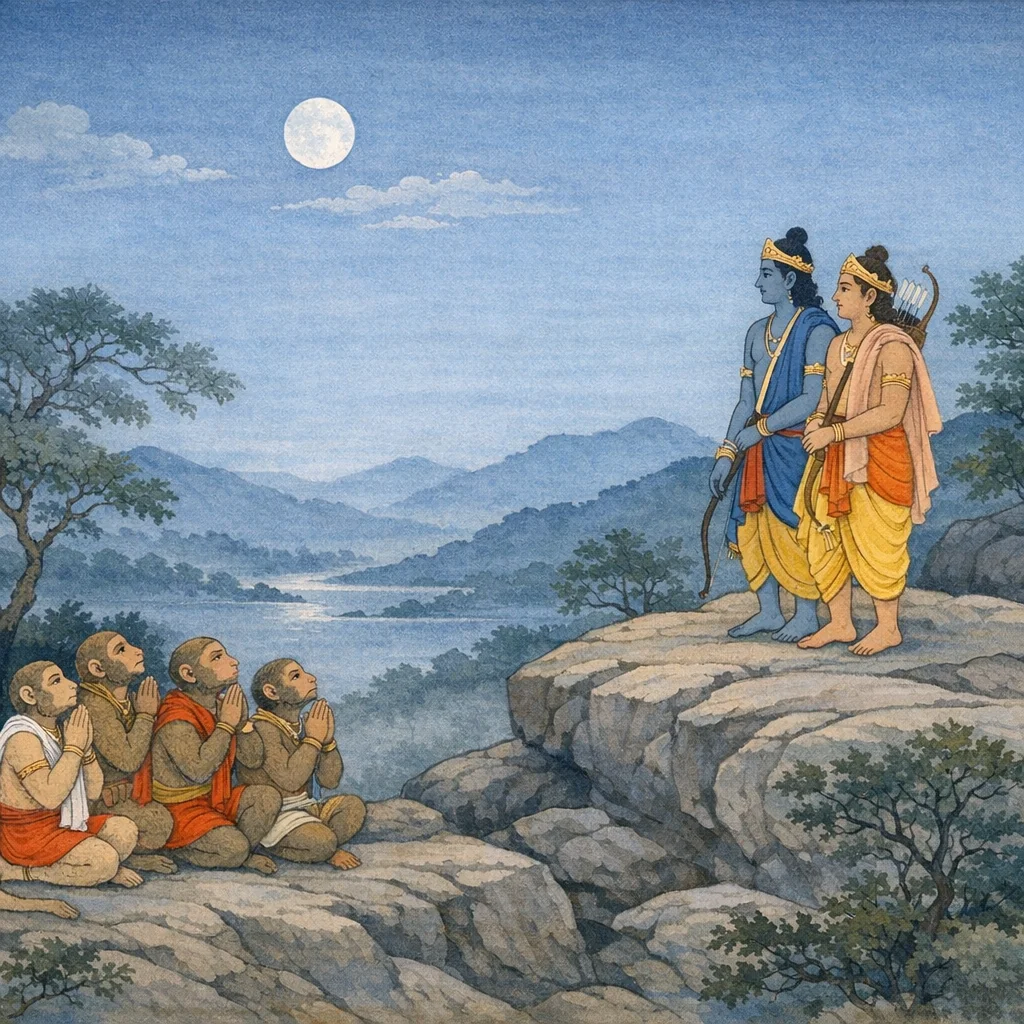
Chapter Arc: शरद्-रात्रि के निर्मल व्योम में चन्द्रमा, ग्रह-नक्षत्र-ताराओं की उज्ज्वल संगति—और उसी शीतल सौंदर्य के बीच राम-लक्ष्मण के भीतर जलता हुआ अधीर प्रतीक्षा का ताप। → सीता-खोज के लिए भेजे गए वानर-दल लौटते नहीं; समय सरकता है। उधर मधुवन में पवनपुत्र हनुमान और वानर मधु-भक्षण करते हैं—यह उल्लंघन सुग्रीव के अनुशासन और राम के धैर्य, दोनों पर प्रश्नचिह्न बनकर आता है। दो मास बीतने पर वानर उतावले होकर सुग्रीव को समाचार देते हैं, और राम धनुष-बाण लेकर पूछते हैं कि क्या वे उन्हें ‘जीवित’ रख पाएँगे—अर्थात् क्या कोई शुभ वार्ता है या क्रोध का प्रलय। → राम का तीखा प्रश्न और धनुष का उठना—‘जनकनन्दिनी को पाए बिना मैं अयोध्या का राज्य कैसे करूँ?’—यह क्षण प्रतीक्षा को दण्ड-धमकी में बदल देता है; वानर-समुदाय पर उत्तरदायित्व का वज्र गिरता है। → सुग्रीव नम्र होकर लक्ष्मण के समक्ष हाथ जोड़कर (पत्नी-सेवकों सहित) निवेदन करता है, और फिर राम के पास जाकर कार्य-प्रगति का प्रतिवेदन देता है—राजधर्म और मित्रधर्म के बीच संतुलन साधते हुए वह राम के क्रोध को शमन करने का यत्न करता है। → हनुमान की वापसी/समाचार की आहट और मधुवन-प्रसंग से उठी हलचल—क्या यह उल्लंघन दण्ड बनेगा या सीता-प्राप्ति का शुभ संकेत?
Shlokas
Verse 1
#::732:.8 #::3..7 () हि 2 7 दयशीर्त्याधिकद्विशततमो< ध्याय: श्रीरामका सुग्रीवपर कोप, सुग्रीवका सीताकी खोजमें वानरोंको भेजना तथा श्रीहनुमानजीका लौटकर अपनी लंकायात्राका वृत्तान्त निवेदन करना मार्कण्डेय उवाच राघव: सहसौमित्रि: सुग्रीवेणाभिपालित: । वसन् माल्यवत: पृष्ठे ददृशे विमलं नभ:,मार्कण्डेयजी कहते हैं--युधिष्ठिर! इधर श्रीराम और लक्ष्मण सुग्रीवसे सुरक्षित हो माल्यवान् पर्वतके पृष्ठभागपर रहने लगे। कुछ कालके अनन्तर जब वर्षाऋतु बीत गयी, तब उन्हें आकाश निर्मल दिखायी दिया
Mārkaṇḍeya said: Rāma, together with Lakṣmaṇa, being protected under Sugrīva’s guardianship, dwelt upon the slopes of Mount Mālyavat. After some time, when the season had cleared, they beheld the sky become pure and cloudless—an outward sign that the time for renewed effort and faithful action had arrived.
Verse 2
स दृष्टवा विमले व्योम्नि निर्मल शशलक्षणम् | ग्रहनक्षत्रताराभिरनुयातममित्रहा,शरदऋतुके निर्मल आकाशमें ग्रह, नक्षत्र तथा ताराओंसहित विमल चन्द्रमाका दर्शन करके शत्रुसंहारक श्रीराम अभी पर्वतपर सोये ही थे कि कुमुद, उत्पल और पद्मोंकी सुगन्ध लेकर बहती हुई शीतल एवं सुखद वायुने उन्हें सहसा जगा दिया
Mārkaṇḍeya said: Having beheld in the spotless autumn sky the pure moon—marked with the hare-sign and attended by planets, constellations, and stars—the slayer of foes, Śrī Rāma, was still lying asleep upon the mountain. Just then a cool, pleasant breeze, carrying the fragrance of kumuda, utpala, and padma lotuses, suddenly awakened him. The scene underscores how nature’s purity and gentle forces can rouse even a mighty warrior from rest, setting the mind toward alertness and right action.
Verse 3
कुमुदोत्पलपद्मानां गन्धमादाय वायुना । महीधरस्थ: शीतेन सहसा प्रतिबोधित:,शरदऋतुके निर्मल आकाशमें ग्रह, नक्षत्र तथा ताराओंसहित विमल चन्द्रमाका दर्शन करके शत्रुसंहारक श्रीराम अभी पर्वतपर सोये ही थे कि कुमुद, उत्पल और पद्मोंकी सुगन्ध लेकर बहती हुई शीतल एवं सुखद वायुने उन्हें सहसा जगा दिया
Mārkaṇḍeya said: “As a cool breeze, bearing the fragrance of kumuda, utpala, and lotus flowers, swept in, Rāma—resting upon the mountain—was suddenly awakened. The scene evokes the serene clarity of autumn’s sky and moon, while reminding that even a mighty destroyer of foes remains subject to nature’s gentle summons.”
Verse 4
प्रभाते लक्ष्मणं वीरमभ्यभाषत दुर्मना: । सीतां संस्मृत्य धर्मात्मा रुद्धां राक्षसवेश्मनि,धर्मात्मा श्रीरामको प्रातःकाल राक्षसके भवनमें कैद हुई अपनी पत्नी सीताका स्मरण हो आया और वे खिन्नचित्त होकर वीरवर लक्ष्मणसे इस प्रकार बोले--
At daybreak, the righteous-souled (Rāma), his mind weighed down with sorrow, addressed the heroic Lakṣmaṇa. Remembering Sītā—his wife—kept confined within the rākṣasa’s dwelling, he spoke to him in distress, revealing both his grief and his steadfast commitment to dharma even amid calamity.
Verse 5
गच्छ लक्ष्मण जानीहि किष्किन्धायां कपीश्वरम् । प्रमत्तं ग्राम्यरधर्मेषु कृतघ्नं स्वार्थपण्डितम्,“लक्ष्मण! जाओ और पता लगाओ कि किष्किन्धामें वानरराज सुग्रीव क्या कर रहा है? जान पड़ता है, स्वार्थलाधनकी कलामें पण्डित कृतघ्न सुग्रीव विषयभोगोंमें आसक्त हो अपने कर्तव्यको भूल गया है
“Go, Lakṣmaṇa, and find out what the lord of the monkeys is doing in Kiṣkindhā. He seems heedless—absorbed in worldly pleasures and indulgent ways—ungrateful, and clever only in securing his own advantage.”
Verse 6
योडसौ कुलाधमो मूढो मया राज्येडभिषेचित: । सर्ववानरगोपुच्छा यमृक्षाश्न॒ भजन्ति वै,“उस वानरकुलकलंक मूर्खको मैंने ही राज्यपर अभिषिक्त किया है। इसके कारण सम्पूर्ण वानर, लंगूर तथा रीछ उसकी सेवा करते हैं
Markandeya said: “That foolish wretch—the disgrace of his lineage—was installed by me myself upon the kingship. And because of that consecration, all the monkeys, langurs, and bears indeed attend upon him in service.”
Verse 7
यदर्थ निहतो वाली मया रघुकुलोद्वह । त्वया सह महाबाहो किष्किन्धोपवने तदा,'रघुकुलतिलक महाबाहु लक्ष्मण! इसी सुग्रीवके लिये उन दिनों मैंने तुम्हारे साथ किष्किन्धाके उद्यानमें जाकर वालीका वध किया था
Mārkaṇḍeya said: “O foremost of the Raghu line, mighty-armed one—remember: it was for this very purpose that I, together with you, went then into the grove of Kiṣkindhā and brought about Vālī’s death.”
Verse 8
कृतघ्नं तमहं मन््ये वानरापसदं भुवि । यो मामेवंगतो मूढो न जानीतेडद्य लक्ष्मण,'सुमित्रानन्दन! मैं तो उस नीच वानरको इस भूतलपर कृतधघ्न मानता हूँ, क्योंकि वह मूर्ख इस अवस्थामें पहुँचकर मुझे भूल गया है
I deem him a thankless wretch, the lowest of monkeys upon this earth—because that deluded one, having fallen into such a state, does not recognize me today, O Lakṣmaṇa. The censure underscores the ethical fault of ingratitude: when one forgets a benefactor or elder in times of distress or decline, it is counted as a grave lapse in conduct.
Verse 9
असौ मन्ये न जानीते समयप्रतिपालनम् । कृतोपकारं मां नूनमवमन्याल्पया धिया,“मैं तो समझता हूँ, वह अपनी की हुई प्रतिज्ञाका पालन करना नहीं जानता और अपनी मन्दबुद्धिके कारण मुझ उपकारीकी भी वह निश्चय ही अवहेलना कर रहा है
I think that man does not understand how to keep to an agreed pledge. Indeed, with his paltry judgment, he is surely showing contempt even for me—one who has done him a kindness. (Markandeya frames the lapse as a failure of ethical fidelity: breaking one’s pledged word and slighting benefactors.)
Verse 10
यदि तावदनुद्युक्त: शेते कामसुखात्मक: । नेतव्यो वालिमार्गेण सर्वभूतगतिं त्वया,“यदि वह विषयसुखमें ही आसक्त हो सीताकी खोजके लिये कुछ उद्योग न कर रहा हो तो उसे भी तुम वालीके मार्गसे उसी लोकको पहुँचा देना, जहाँ एक-न-एक दिन सभी प्राणियोंको जाना पड़ता है
Verse 11
अथापि घटतेडस्माकमर्थे वानरपुड्रव: । तमादायैव काकुत्स्थ त्वरावान् भव मा चिरम्,सीताजीका रावणको फटकारना हनुमानजीकी श्रीसीताजीसे भेंट “लक्ष्मण! यदि वानरराज हमारे कार्यके लिये कुछ चेष्टा कर रहा हो तो उसे साथ लेकर तुरंत लौट आना, देर न लगाना”
“Even so, the foremost of monkeys is striving on our behalf. O scion of Kakutstha, take him with you and return at once; be swift and do not delay.”
Verse 12
इत्युक्तो लक्ष्मणो भ्रात्रा गुरुवाक्यहिते रत: । प्रतस्थे रुचिरं गृह्मु समार्गणगुणं धनु:
Thus addressed by his brother, Lakṣmaṇa—devoted to what was beneficial and in accord with the counsel of elders—set out at once, taking up a splendid bow endowed with the qualities needed for battle. The verse highlights disciplined obedience and the ethical impulse to act under rightful guidance rather than mere impulse.
Verse 13
भाईके ऐसा कहनेपर गुरुजनोंकी आज्ञाके पालन तथा हिताचरणमें तत्पर रहनेवाले लक्ष्मण बाण और प्रत्यज्चासहित सुन्दर धनुष हाथमें लेकर वहाँसे चल दिये ।। किष्किन्धाव्दारमासाद्य प्रविवेशानिवारित: । सक्रोध इति त॑ मत्वा राजा प्रत्युद्ययौ हरि:,किष्किन्धाके द्वारपर पहुँचकर वे बेरोक-टोक भीतर घुस गये। लक्ष्मण क्रोधमें भरे हुए आ रहे हैं, यह जानकर राजा सुग्रीव उनकी अगवानीके लिये आगे बढ़ आया
Reaching the gate of Kiṣkindhā, he entered without being stopped. Realizing, “He is coming in anger,” the monkey-king Sugrīva went forward to receive him—an act meant to avert conflict through timely respect and conciliation.
Verse 14
त॑ सदारो विनीतात्मा सुग्रीव: प्लवगाधिप: । पूजया प्रतिजग्राह प्रीयमाणस्तदर्हया
Then Sugrīva, lord of the monkeys, accompanied by his wife and possessed of a disciplined and courteous spirit, received him with due honors. Pleased by the fitting reverence shown, he accepted the welcome in a manner befitting righteous conduct and proper hospitality.
Verse 15
तमब्रवीद् रामवच: सौमित्रिरकुतो भय: । पत्नीसहित वानरराज सुग्रीव विनीतभावसे लक्ष्मणजीकी पूजा करके उन्हें साथ लिवा ले गये। किसीसे भी भय न माननेवाले सुमित्रानन्दन लक्ष्मणने उस पूजा (आदर-सत्कार)-से प्रसन्न हो उनसे श्रीरामचन्द्रजीकी कही हुई सारी बातें कह सुनायीं ।। १४ $ ।। स तत् सर्वमशेषेण श्रुत्वा प्रह्द: कृताउ्जलि:
Mārkaṇḍeya said: Then the fearless son of Sumitrā, Lakṣmaṇa, conveyed to him Rāma’s message. Having been duly honored with respectful worship, Lakṣmaṇa, pleased by that reception, took the monkey-king Sugrīva—together with his wife—along with him, and related in full all that Śrī Rāmacandra had instructed. Hearing everything completely, Sugrīva became delighted and, with hands joined in reverence, responded with humility.
Verse 16
सभृत्यदारो राजेन्द्र सुग्रीवो वानराधिप: । इदमाह वच: प्रीतो लक्ष्मणं नरकुज्जरम्
Markandeya said: “O best of kings, Sugriva—the lord of the monkeys—together with his attendants and household, being pleased, spoke these words to Lakshmana, that mighty man like a war-elephant among men.”
Verse 17
राजेन्द्र! वह सब कुछ पूरा-पूरा सुनकर नम्रतापूर्वक हाथ जोड़े हुए भार्या तथा सेवकोंसहित वानरराज सुग्रीवने नरश्रेष्ठ लक्ष्मणसे सहर्ष निवेदन किया-- ।। नास्मि लक्ष्मण दुर्मेधा नाकृतज्ञो न निर्घण: । श्रूयतां यः प्रयत्नो मे सीतापर्येषणे कृत:,“लक्ष्मण! मैं न तो दुर्बुद्धि हूँ, न अकृतज्ञ हूँ और न निर्दय ही हूँ। मैंने सीताकी खोजके लिये जो प्रयत्न किया है, उसे सुनिये
O king! Having heard everything in full, Sugrīva—the lord of the monkeys—stood with joined palms in humility, accompanied by his wife and attendants, and joyfully addressed Lakṣmaṇa, the best of men: “Lakṣmaṇa, I am neither foolish, nor ungrateful, nor cruel. Hear now what efforts I have undertaken in the search for Sītā.” The verse frames Sugrīva’s moral self-accounting: he seeks to clear himself of blame and to affirm gratitude and compassion as the ethical basis for his alliance and action.
Verse 18
दिश: प्रस्थापिता: सर्वे विनीता हरयो मया । सर्वेषां च कृत: कालो मासेनागमनं पुन:,“मैंने सब दिशाओंमें सभी विनयशील वानरोंको भेज दिया है और उन सबके लिये एक महीनेके अंदर ही लौट आनेका समय निश्चित कर दिया है
Markandeya said: “I have dispatched the disciplined hosts of monkeys in every direction, and I have fixed for them all a deadline: they must return again within a month.”
Verse 19
यैरियं सवना साद्रि: सपुरा सागराम्बरा । विचेतव्या मही वीर सग्रामनगराकरा,“वीर! वे सब लोग वन, पर्वत, पुर, ग्राम, नगर तथा आकरोंसहित समुद्रवसना इस सारी पृथ्वीपर सीताकी खोज करेंगे
Mārkaṇḍeya said: “By those men, O hero, this entire earth—clothed by the ocean, with its forests and mountains, its cities, villages, towns, and mines—must be searched through.”
Verse 20
स मास: पज्चरात्रेण पूर्णो भवितुम्ति । तत:ः श्रोष्यसि रामेण सहित: सुमहत् प्रियम्,“वह एक मास, जिसके समाप्त होनेतक वानरोंको लौट आना है, पाँच रातमें पूरा हो जायगा। तत्पश्चात् आप रामचन्द्रजेके साथ सीताका अत्यन्त प्रिय समाचार सुनेंगे”
Markandeya said: “That one month will be completed in just five nights. After that, together with Rama, you will hear exceedingly welcome and joyful news—news most dear (concerning Sita).”
Verse 21
इत्युक्तो लक्ष्मणस्तेन वानरेन्द्रेण धीमता । त्यक्त्वा रोषमदीनात्मा सुग्रीव॑ प्रत्यपूजयत्,बुद्धिमान् वानरराज सुग्रीवके ऐसा कहनेपर उदार हृदयवाले लक्ष्मणने रोष त्यागकर उनकी भूरि-भूरि प्रशंसा की
Thus addressed by the wise lord of the monkeys, Lakṣmaṇa—steadfast and noble-hearted—set aside his anger and, in return, honored Sugrīva with respectful praise. The episode underscores the ethical strength of self-restraint: even when provoked, one who upholds dharma chooses reconciliation and courteous speech over resentment.
Verse 22
स राम॑ सहसुग्रीवो माल्यवत्पृष्ठमास्थितम् | अभिगम्योदयं तस्य कार्यस्य प्रत्यवेदयत्,तत्पश्चात् वे सुग्रीवको साथ लेकर माल्यवान् पर्वतके पृष्ठभागमें रहनेवाले श्रीरामचन्द्रजीके पास गये। वहाँ उन्होंने बताया कि सीताका अनुसंधानकार्य आरम्भ हो गया है
Verse 23
इत्येवं वानरेन्द्रास्ते समाजग्मु: सहस्रश: । दिशस्तिस्रो विचित्याथ न तु ये दक्षिणां गता:
Thus, those lordly monkeys gathered together in their thousands. After searching through three directions, they still did not find those who had gone toward the southern quarter.
Verse 24
इसके बाद मास पूर्ण होनेपर तीन दिशाओंकी खोज करके सहस्रों वानरप्रमुख वहाँ आये। केवल वे ही नहीं आये जो दक्षिण दिशामें पता लगाने गये थे ।। आचख्युस्तत्र रामाय महीं सागरमेखलाम् । विचितां न तु वैदेह्या दर्शने रावणस्य वा,आये हुए वानरोंने श्रीरामचन्द्रजीसे बताया कि समुद्रसे घिरी हुई सारी पृथ्वी हमने देख डाली, परंतु कहीं भी सीता अथवा रावणका दर्शन नहीं हुआ
Then the monkeys who had searched in three directions returned after a full month and reported to Rama: “We have thoroughly surveyed the entire earth, girdled by the ocean; yet we have not obtained any sight of Vaidehī (Sītā), nor of Rāvaṇa.” The passage underscores the discipline of assigned duty and truthful reporting even when the outcome is disappointing, setting the stage for renewed resolve and wiser strategy.
Verse 25
गतास्तु दक्षिणामाशां ये वै वानरपुड्रवा: । आशावांस्तेषु काकुत्स्थ: प्राणानातों5भ्यधारयत्,जो प्रमुख वानर दक्षिण दिशाकी ओर गये थे, उन्हींसे सीताका वास्तविक समाचार मिलनेकी आशा बँधी हुई थी, इसीलिये व्यथित होनेपर भी श्रीरामचन्द्रजी अपने प्राणोंको धारण किये रहे
Verse 26
द्विमासोपरमे काले व्यतीते प्लवगास्ततः । सुग्रीवमभिगम्येदं त्वरिता वाक्यमन्रुवन्,दो मास व्यतीत हो जानेपर कुछ वानर बड़ी उतावलीके साथ सुग्रीवके पास आये और इस प्रकार कहने लगे---
Markandeya said: When the further period of two months had elapsed, the monkeys then hurried to Sugriva, approached him, and spoke these words in haste—signaling urgency and the moral pressure to honor one’s pledged duty within the promised time.
Verse 27
रक्षितं वालिना यत् तत् स्फीतं मधुवनं महत् | त्वया च प्लवगश्रेष्ठ तद् भुड्क्ते पवनात्मज:,“वानरराज! वालीने तथा आपने भी जिस समृद्धिशाली महान् मधुवनकी रक्षा की थी, उसे पवननन्दन हनुमानजी (राजाज्ञाके बिना ही) अपने उपभोगमें ला रहे हैं
Mārkaṇḍeya said: “O best of monkeys, that vast and flourishing Madhuvana which was guarded by Vāli—and later protected by you as well—is now being enjoyed and consumed by Hanumān, the son of the Wind-god (without first seeking the king’s leave).”
Verse 28
वालिपुत्रो$ड्भदश्चैव ये चान्ये प्लवगर्षभा: । विचेतुं दक्षिणामाशां राजन् प्रस्थापितास्त्वया,राजन! उनके साथ वालिपुत्र अंगद तथा अन्य सभी श्रेष्ठ वानर इस काममें भाग ले रहे हैं, जिन्हें आपने दक्षिण दिशामें सीताजीकी खोजके लिये भेजा था”
Mārkaṇḍeya said: “O King, Vāli’s son Aṅgada, along with the other foremost of the monkey-heroes, were dispatched by you to search out the southern quarter.”
Verse 29
तेषामपनयं श्रुत्वा मेने स कृतकृत्यताम् । कृतार्थानां हि भृत्यानामेतद् भवति चेष्टितम्,उन वानरोंके अनुचित बर्तावका समाचार सुनकर सुग्रीवको यह विश्वास हो गया कि वे सब काम पूरा करके लौटे हैं; क्योंकि ऐसी धृष्टतापूर्ण चेष्टा उन्हीं सेवकोंकी होती है जो अपने कार्यमें सफल हो जाते हैं
Hearing of their improper conduct, Sugrīva concluded that they had accomplished their mission. For such bold, even impertinent behavior is characteristic of servants who have succeeded in the task entrusted to them.
Verse 30
स तदू रामाय मेधावी शशंस प्लवगर्षभ: । रामश्चाप्यनुमानेन मेने दृष्टां तु मैथिलीम्,बुद्धिमान् वानरप्रवर सुग्रीवने श्रीरामचन्द्रजीसे अपना निश्चय बताया। श्रीरामचन्द्रजीने भी अनुमानसे यह मान लिया कि उन वानरोंने अवश्य ही मिथिलेशकुमारी सीताका दर्शन किया होगा
Mārkaṇḍeya said: Then that wise bull among the monkeys reported the matter to Rāma. And Rāma too, by inference, concluded that the princess of Mithilā—Sītā—had indeed been seen. The passage highlights prudent communication and reasoned judgment: trustworthy testimony is offered, and the listener responds with measured inference rather than rash certainty.
Verse 31
हनुमत्प्रमुखाश्चापि विश्रान्तास्ते प्लवड़रमा: । अभिमजममुर्रीन्द्रं तं रामलक्ष्मणसंनिधौ,हनुमान् आदि श्रेष्ठ वानर विश्राम कर लेनेके पश्चात् श्रीराम और लक्ष्मणके समीप बैठे हुए उन वानरराज सुग्रीवके पास गये
Markandeya said: Hanuman and the other foremost monkeys, having rested, approached that lord of the monkeys—Sugriva—who was seated near Rama and Lakshmana. The scene underscores disciplined service: after regaining strength, the leaders return to their king and to Rama’s side, ready to act in a righteous cause.
Verse 32
गति च मुखवर्ण च दृष्टवा रामो हनूमत: । अगमत् प्रत्ययं भूयो दृष्टा सीतेति भारत,युधिष्ठिर! हनुमानूजीकी चाल-ढाल और मुखकी कान्ति देखकर श्रीरामचन्द्रजीको यह विश्वास हो गया कि इन्होंने सीताको देखा है
Markandeya said: Seeing Hanuman’s gait and the radiance of his face, Rama became firmly convinced once again, “Sita has indeed been seen.” O Bharata (descendant of Bharata), O Yudhishthira—Rama reads the truth of Hanuman’s success from the unmistakable signs of inner certainty and fulfilled duty, where outward composure reflects faithful service and truthful speech.
Verse 33
हनुमत्प्रमुखास्ते तु वानरा: पूर्णमानसा: । प्रणेमुर्विधिवद् राम॑ सुग्रीवं लक्ष्मणं तथा,सफलमनोरथ हुए हनुमान् आदि प्रमुख वानरोंने श्रीराम, सुग्रीव तथा लक्ष्मणको विधिपूर्वक प्रणाम किया
Then the monkeys, led by Hanumān—hearts filled with resolve and satisfaction—bowed in due ritual manner to Rāma, and likewise to Sugrīva and Lakṣmaṇa. The scene underscores disciplined devotion: even in moments of success, proper conduct and reverence toward rightful leaders are maintained.
Verse 34
तानुवाचानतान् राम: प्रगृह् सशरं धनु: । अपि मां जीवयिष्यध्वमपि व: कृतकृत्यता,उस समय श्रीरामचन्द्रजी धनुष-बाण लेकर उन प्रणाम करते हुए वानरोंसे पूछा--“क्या तुमलोग सीताका अमृतमय समाचार सुनाकर मुझे जीवनदान दोगे? क्या तुम लोगोंको अपने कार्यमें सफलता मिली है?
Verse 35
अपि राज्यमयोध्यायां कारयिष्याम्यहं पुनः । निहत्य समरे शत्रूनाहत्य जनकात्मजाम्
Mārkaṇḍeya said: “I shall have the kingdom established again in Ayodhyā. Having slain the enemies in battle, I will restore (what is rightfully mine) without harming Janaka’s daughter.” The line underscores a dharmic resolve: victory and political restoration are sought through just warfare against aggressors, while the innocent—especially Sītā, the blameless princess—must not be harmed.
Verse 281
इस प्रकार श्रीमहाभारत वनपर्वके अन्तर्गत रामोपाख्यानपर्वमें सीता-रगवणसंवादविषयक दो सौ इकक््यासीवाँ अध्याय पूरा हुआ
Thus ends the 281st chapter of the Rāmopākhyāna section within the Vana Parva of the Śrī Mahābhārata, dealing with the dialogue between Sītā and Rāvaṇa. The colophon signals the close of this narrative unit, underscoring the ethical tension between steadfast virtue and coercive desire that frames their exchange.
Frequently Asked Questions
The chapter reframes a governance dilemma—whether a previously impaired king should rule—by resolving it through unanimous public consent and ritual legitimacy, subordinating personal contingency to institutional and ethical order.
Exemplary virtue is depicted as socially efficacious: disciplined conduct stabilizes polity and family, while narrative remembrance (recounting Sāvitrī’s deed) functions as instruction that reduces grief and restores composure.
Yes in effect: the text presents long-term ‘fruit’—restored kingship and abundant progeny—as outcomes of Sāvitrī’s dharma, and it adds meta-commentary by forecasting Draupadī’s analogous salvific role for the Pāṇḍavas.