Adhyaya 282
Dyumatsena’s Restoration and Sāvitrī’s Disclosure of Yama’s Boons (आरण्यकपर्व, अध्याय २८२)
Upa-parva: Sāvitrī-Upākhyāna (Narrative of Sāvitrī and Satyavān)
Mārkaṇḍeya narrates that Dyumatsena, in the great forest, suddenly regains sight and becomes lucid, after which he and Śaibyā search anxiously across āśramas, rivers, forests, and lakes for Satyavān and Sāvitrī. Hearing sounds, they rush forward in fear and are escorted by āśrama-dwelling brāhmaṇas back to the hermitage, where elders console them with instructive royal exempla. Multiple sages and speakers (Suvarcā, Gautama, a disciple, and assembled r̥ṣis including Bhāradvāja, Dālbhya, Māṇḍavya, and Dhaumya) affirm—by virtue-signs, austerity, and observed auspiciousness—that Satyavān lives. Shortly thereafter, Sāvitrī returns at night with Satyavān, joyous; the community inquires about their delay and the cause of Dyumatsena’s regained vision. Satyavān reports a sudden headache and uncharacteristic sleep while woodcutting; Gautama requests Sāvitrī to explain the deeper cause. Sāvitrī states that Nārada had foretold the day of Satyavān’s death; Yama approached, bound him, and led him toward the ancestral direction. By praising Yama with truthful speech, she receives five boons: Dyumatsena’s sight and sovereignty; a hundred sons for her father; a hundred sons for herself; and Satyavān restored with a lifespan of four hundred years. The r̥ṣis praise Sāvitrī as rescuing a sinking royal lineage and depart after honoring the family.
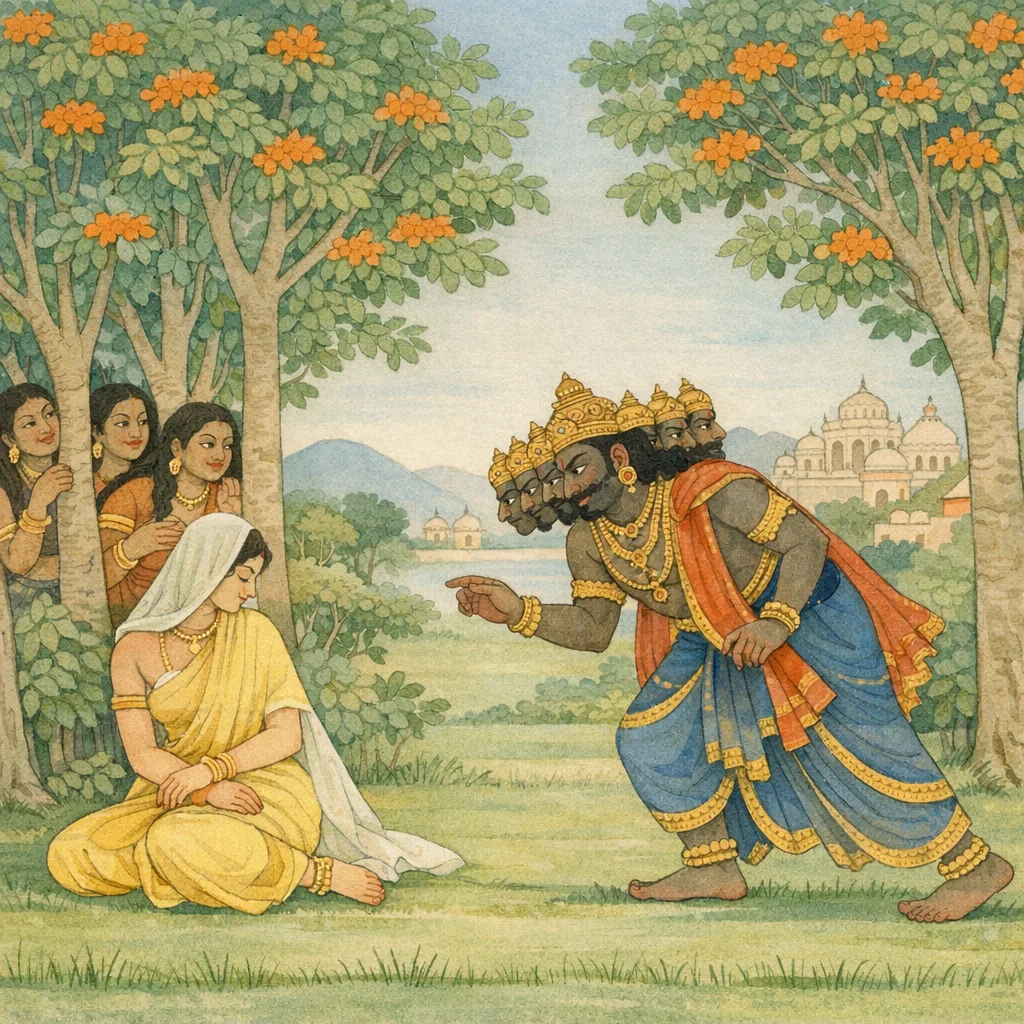
Chapter Arc: Markandeya, speaking to Yudhishthira, turns the tale to Ashoka-vatika: Sita—wasted by grief, in soiled garments yet still radiant with the remnants of royal adornment—sits on stone, ringed by rakshasis, weeping for Rama. → Ravana, inflamed by desire like one pierced by Kama’s arrows, comes to the grove—undaunted even by the gaze of gods, danavas, gandharvas, yakshas, and kimpurushas—approaching Sita with the confidence of a conqueror and the impatience of lust. → Sita, turning away and placing a blade of grass between them as a boundary, answers the night-stalker with scorn and unwavering pativrata resolve—rejecting him utterly and refusing consent in word, mind, and body. → Ravana’s entreaty and threats fail to bend her; after speaking, the rakshasa-lord vanishes from that place and departs in the direction he desires, leaving Sita still in captivity but morally unshaken. → Sita remains in Ashoka-vatika under rakshasi watch, sustained by the assurance and service of Trijata—her fate suspended between Ravana’s renewed schemes and Rama’s yet-unseen arrival.
Shlokas
Verse 1
8 () ऑपफज अप एकाशीत्यवथिकद्वधिशततमो< ध्याय: रावण और सीताका संवाद मार्कण्डेय उवाच ततस्तां भर्तृशोकार्ता दीनां मलिनवाससम् | मणिशेषाभ्यलड्कारां रुदतीं च पतिव्रताम्,मार्कण्डेयजी कहते हैं--युधिष्ठिर!| तदनन्तर एक दिन जब पतिव्रता सीता स्वामीके वियोगके दुःखसे पीड़ित हो मैले कपड़े पहने केवल चूड़ामणिमात्र आभूषण धारण किये राक्षसियोंसे घिरी हुई एक शिलापर बैठी दीनभावसे रो रही थीं, उसी समय देवता, दानव, गन्धर्व, यक्ष और किम्पुरुष किसीसे कभी युद्धमें परास्त न होनेवाला रावण कामबाणसे पीड़ित हो अशोकवाटिकामें गया। वहाँ उसने सीताको देखा और कामवेदनासे व्यथित होकर वह उनके समीप चला गया
Mārkaṇḍeya said: Thereafter, Sītā—afflicted by grief at separation from her husband—sat in misery, wearing soiled garments, adorned only with the remaining jewel (her crest-gem), and weeping, steadfast in her wifely vow. The scene underscores her unwavering fidelity and inner discipline amid coercion and sorrow.
Verse 2
राक्षसीभिरुपास्यन्तीं समासीनां शिलातले । रावण: कामबाणार्तों ददर्शोपससर्प च,मार्कण्डेयजी कहते हैं--युधिष्ठिर!| तदनन्तर एक दिन जब पतिव्रता सीता स्वामीके वियोगके दुःखसे पीड़ित हो मैले कपड़े पहने केवल चूड़ामणिमात्र आभूषण धारण किये राक्षसियोंसे घिरी हुई एक शिलापर बैठी दीनभावसे रो रही थीं, उसी समय देवता, दानव, गन्धर्व, यक्ष और किम्पुरुष किसीसे कभी युद्धमें परास्त न होनेवाला रावण कामबाणसे पीड़ित हो अशोकवाटिकामें गया। वहाँ उसने सीताको देखा और कामवेदनासे व्यथित होकर वह उनके समीप चला गया
Mārkaṇḍeya said: “Surrounded and attended by the rākṣasīs, Sītā sat upon a stone slab. Rāvaṇa, tormented by the arrows of desire, saw her there and drew near.” In ethical and narrative terms, the verse contrasts Sītā’s steadfast, sorrowful restraint in separation with Rāvaṇa’s loss of self-mastery under kāma (desire), setting the stage for a moral conflict between fidelity and coercive passion.
Verse 3
देवदानवगन्धर्वयक्षकिम्पुरुषैर्युधि । अजितो5शोकवनिकां ययौ कन्दर्पपीडित:,मार्कण्डेयजी कहते हैं--युधिष्ठिर!| तदनन्तर एक दिन जब पतिव्रता सीता स्वामीके वियोगके दुःखसे पीड़ित हो मैले कपड़े पहने केवल चूड़ामणिमात्र आभूषण धारण किये राक्षसियोंसे घिरी हुई एक शिलापर बैठी दीनभावसे रो रही थीं, उसी समय देवता, दानव, गन्धर्व, यक्ष और किम्पुरुष किसीसे कभी युद्धमें परास्त न होनेवाला रावण कामबाणसे पीड़ित हो अशोकवाटिकामें गया। वहाँ उसने सीताको देखा और कामवेदनासे व्यथित होकर वह उनके समीप चला गया
Mārkaṇḍeya said: “In battle, even among gods, demons, Gandharvas, Yakṣas, and Kimpuruṣas, he had never been defeated. Yet, tormented by Kāma’s arrows, Rāvaṇa went into the Aśoka grove.”
Verse 4
दिव्याम्बरधर: श्रीमान् सुमृष्टमणिकुण्डल: । विचित्रमाल्यमुकुटो वसन््त इव मूर्तिमान्,रावणने दिव्य वस्त्र धारण कर रखे थे। उसके कानोंमें सुन्दर मणिमय कुण्डल झलक रहे थे। वह विचित्र माला और मुकुट पहने मूर्तिमान् वसन्तके समान शोभासम्पन्न जान पड़ता था
Verse 5
न कल्पवृक्षसदृशो यत्नादपि विभूषित: । श्मशानचैत्यद्रुमवद् भूषितो5पि भयंकर:,उसने बड़े यत्नसे अपने-आपको वस्त्राभूषणोंद्वारा सजा रखा था, तो भी कल्पवृक्षके समान आह्वादजनक नहीं जान पड़ता था; अपितु श्मशानभूमिके चैत्यवृक्षकी भाँति भूषित होनेपर भी भयानक प्रतीत होता था
Mārkaṇḍeya said: “Though he had adorned himself with garments and ornaments with great effort, he did not appear pleasing like a wish-fulfilling tree. Rather, even when decorated, he looked terrifying—like a cemetery’s sacred memorial tree.”
Verse 6
स तस्यास्तनुमध्याया: समीपे रजनीचर: । ददृशे रोहिणीमेत्य शनैश्वर इव ग्रह:,सूक्ष्म कटिप्रदेशवाली सीताके समीप खड़ा हुआ वह राक्षस रोहिणी नक्षत्रके निकट पहुँचे हुए शनैश्वर ग्रहके समान भयंकर दिखायी देता था
Mārkaṇḍeya said: Near that slender-waisted lady, the night-roaming demon was seen—terrifying like the planet Śanaiścara (Saturn) when it approaches the Rohiṇī constellation. The image underscores an ominous, harmful presence drawing close to the vulnerable, signaling impending danger and the ethical urgency to protect the innocent.
Verse 7
स तामामन्त्र्य सुश्रोणीं पुष्पकेतुशराहत: । इदमित्यब्रवीद् वाक््यं त्रस्तां रीहीमिवाबलाम्,कामदेवके बाणोंसे घायल हुआ रावण मृगीके समान भयभीत हुई उस सुन्दरी अबलाको सम्बोधित करके इस प्रकार बोला--
Markandeya said: Struck by the flower-bannered god’s arrows (of desire), Rāvaṇa addressed that fair-hipped lady. Seeing the helpless beauty trembling like a frightened doe, he spoke these words: “Listen to this…”.
Verse 8
सीते पर्याप्तमेतावत् कृतो भर्तुरनुग्रह: । प्रसादं कुरु तन्वज्ञि क्रियतां परिकर्म ते,'सीते! आजतक तुमने जो अपने पतिपर इतना अनुग्रह दिखाया, यह बहुत हुआ। तन्वंगि! अब मुझपर कृपा करो, जिससे तुम्हें शृंगार धारण कराया जाय
Markandeya said: “Sita, enough—this much favor and devoted indulgence toward your husband has already been shown. O slender-limbed one, now show grace to me as well, so that your adornment and preparation may be carried out.”
Verse 9
भजस्व मां वरारोहे महाहाभिरणाम्बरा । भव मे सर्वनारीणामुत्तमा वरवर्णिनी,“वरारोहे! मुझे अंगीकार करो और बहुमूल्य वस्त्राभूषणोंसे भूषित हो मेरी सब स्त्रियोंमें श्रेष्ठ तथा सुन्दरी पटरानी बनो
Mārkaṇḍeya said: “O fair-hipped lady, accept me as your chosen lord; be adorned in splendid garments and ornaments. Become my foremost queen—pre-eminent among all women, O exquisitely beautiful one.”
Verse 10
सन्ति मे देवकन्याश्र गन्धर्वाणां च योषित: । सन्ति दानवकन्याक्ष दैत्यानां चापि योषित:,“मेरे महलमें देवताओंकी कन्याएँ, गन्धर्वोकी युवती स्त्रियाँ, दानवकिशोरियाँ तथा दैत्योंकी रमणियाँ मेरी भार्याओंके रूपमें विद्यमान हैं
Mārkaṇḍeya said: “In my abode there are celestial maidens and the women of the Gandharvas; likewise there are maidens of the Dānavas and also women of the Daityas—present here as my consorts.” The statement underscores the extraordinary, otherworldly scope of the speaker’s household and status, and sets a narrative tone of marvel while implicitly raising questions about power, propriety, and the boundaries of worldly desire even amid ascetic or sacred contexts.
Verse 11
चतुर्दश पिशाचानां कोट्यो मे वचने स्थिता: । द्विस्तावत् पुरुषादानां रक्षसां भीमकर्मणाम्,“चौदह करोड़ पिशाच मेरी आज्ञाके अधीन रहते हैं। इनसे दूने नरभक्षी राक्षस मेरे सेवक हैं, जो अत्यन्त भयंकर कर्म करनेवाले हैं
Mārkaṇḍeya said: “Fourteen crores of Piśācas stand obedient to my command; and twice that number of man-eating Rākṣasas—of dreadful deeds—serve under me.” In context, the statement underscores the speaker’s formidable spiritual authority and the moral warning that power over fearsome beings is not mere violence, but disciplined mastery and responsibility.
Verse 12
ततो मे त्रिगुणा यक्षा ये मद्बाघनकारिण: । केचिदेव धनाध्यक्ष॑ भ्रातरं मे समाश्रिता:,“इनकी अपेक्षा तिगुनी संख्या मेरे आज्ञापालक यक्षोंकी है। यक्षोंमेंसे कुछ ही मेरे भाई धनाध्यक्ष कुबेरकी सेवामें रहते हैं
“Therefore, the Yakṣas who carry out my commands are three times as numerous. Among them, only some have taken service under my brother, Kubera, the Lord of Wealth.”
Verse 13
गन्धर्वाप्सरसो भद्रे मामापानगतं सदा । उपतिष्ठन्ति वामोरु यथैव भ्रातरं मम,“भद्रे! वामोरु! जब मैं मधुपानकी गोष्ठीमें बैठता हूँ, उस समय मेरे भाईकी ही भाँति मेरी सेवामें भी गन्धर्वोंसहित अप्सराएँ उपस्थित होती हैं
Mārkaṇḍeya said: “O noble lady, O fair-thighed one—whenever I sit in the gathering for drinking, the Gandharvas along with the Apsarases always attend upon me, just as they would attend upon my own brother.”
Verse 14
पुत्रो5हमपि विप्रषें: साक्षाद् विश्रवसो मुने: । पडञ्चमो लोकपालानामिति मे प्रथितं यश:,“मैं भी कुबेरके ही समान साक्षात् ब्रह्मर्षि विश्रवा मुनिका पुत्र हूँ। (इन्द्र, यम, वरुण और कुबेर--इन चार लोकपालोंके सिवा) पाँचवें लोकपालके रूपमें मेरा सुयश सर्वत्र फैला हुआ है
Mārkaṇḍeya said: “O brahmin-seer, I too am directly the son of the sage Viśravas. My fame is widely known as that of the ‘fifth guardian of the worlds’—beyond the four Lokapālas (Indra, Yama, Varuṇa, and Kubera).”
Verse 15
दिव्यानि भक्ष्यभोज्यानि पानानि विविधानि च | यथैव त्रिदशेशस्य तथैव मम भाविनि,'भामिनि! देवराज इन्द्रकी भाँति मुझे भी दिव्य भक्ष्य-भोज्य पदार्थ तथा नाना प्रकारके पेय रस उपलब्ध होते हैं
Mārkaṇḍeya said: “I, too, O dear one, have at my disposal celestial foods fit to be eaten and enjoyed, and many kinds of divine drinks—just as they are available to Indra, the lord of the gods.”
Verse 16
क्षीयतां दुष्कृतं कर्म वनवासकृतं तव । भार्या मे भव सुश्रोणि यथा मन्दोदरी तथा,'सुश्रोणि! वनवासका कष्ट प्रदान करनेवाले तुम्हारे पूर्वकृत दुष्कर्मकी समाप्ति हो जानी चाहिये; इसके लिये तुम मन्दोदरीकी भाँति मेरी भार्या हो जाओ'
Mārkaṇḍeya said: “Let the evil deed of yours—whose consequence has been this painful life of exile in the forest—be exhausted and brought to an end. Therefore, O fair-hipped lady, become my wife, even as Mandodarī became (the wife of her lord).”
Verse 17
इत्युक्ता तेन वैदेही परिवृत्य शुभानना । तृणमन्तरत: कृत्वा तमुवाच निशाचरम्,उवाच वाक्य त॑ क्षुद्रे वैदेही पतिदेवता । रावणके ऐसा कहनेपर परम सुन्दर जाँघोंसे सुशोभित, पतिको ही देवता माननेवाली विदेहराजकुमारी सुमुखी सीता अपना मुँह फेरकर बीचमें तिनकेकी ओट करके राक्षसोंके लिये अमंगलसूचक आँसुओंद्वारा अपने पीन एवं उन्नत स्तनोंको निरन्तर भिगोती हुई उस नीच निशाचरसे इस प्रकार बोलीं--
Thus addressed by him, Vaidehī (Sītā), the fair-faced princess of Videha, turned her face away. Placing a blade of grass between them as a sign of refusal and ritual distance, she spoke to that night-roaming demon. The scene underscores her unwavering fidelity to her husband and her ethical resistance: she will not even symbolically accept the aggressor’s approach, maintaining chastity, dignity, and dharma in the face of coercion.
Verse 18
अशिवेनातिवामोरूरजस््र॑ नेत्रवारिणा । स्तनावपतितौ बाला संहतावभिवर्षती
Mārkaṇḍeya said: “With inauspicious, blood-tinged tears streaming from her eyes, the young girl—whose thighs were exceedingly fair—kept weeping; and as she cried, her breasts drooped down, pressed together, as though weighed by grief.”
Verse 19
असकृद् वदतो वाक्यमीदृशं राक्षसे श्वर,'राक्षसराज! तुम्हारे मुखसे ऐसी दुःखदायिनी बातें अनेक बार निकली हैं और मुझ अभागिनीको वे सारी बातें बार-बार सुननी पड़ी हैं। भद्रसुख! तुम्हारा भला हो। तुम अपना मन मेरी ओरसे हटा लो
Mārkaṇḍeya said: “O lord of the Rākṣasas, O king of the Rākṣasas—words of this kind, bringing only sorrow, have issued from your mouth again and again, and I, unfortunate as I am, have been forced to hear them repeatedly. O gentle one, may good befall you; turn your mind away from me.”
Verse 20
विषादयुक्तमेतत् ते मया श्रुतमभाग्यया । तद् भद्गसुख भद्ठरं ते मानसं विनिवर्त्यताम्,'राक्षसराज! तुम्हारे मुखसे ऐसी दुःखदायिनी बातें अनेक बार निकली हैं और मुझ अभागिनीको वे सारी बातें बार-बार सुननी पड़ी हैं। भद्रसुख! तुम्हारा भला हो। तुम अपना मन मेरी ओरसे हटा लो
Mārkaṇḍeya said: “I, unfortunate as I am, have heard from you these grief-laden words. Therefore, O Bhadrasukha—may good befall you—turn your mind away from me (and cease directing such sorrowful speech toward me).”
Verse 21
परदारास्म्यलभ्या च सततं च पतिव्रता । न चैवोपयिकी भार्या मानुषी कृपणा तव,“मैं परायी स्त्री हूँ, पतिव्रता हूँ। तुम कभी किसी तरह मुझे नहीं पा सकते। एक दीन मानवकन्या होनेके कारण मैं तुम-जैसे निशाचरकी भार्या होने योग्य नहीं हूँ
Markandeya said: “I belong to another; I am unattainable to you, and I am ever faithful to my husband. Nor am I fit to be your wife—being a helpless human woman, I am not a suitable bride for a night-roaming demon like you.”
Verse 22
विवशां धर्षयित्वा च कां त्वं प्रीतिमवाप्स्यसि । प्रजापतिसमो वितप्रो ब्रह्ययोनि: पिता तव,“मुझ विवश अबलाको बलपूर्वक अपमानित करके तुम्हें क्या सुख मिलेगा? तुम्हारे पिता ब्राह्मण हैं। ब्रह्मासे उत्पन्न होनेके कारण वे ब्रह्माके ही समान हैं
Markandeya said: “By violating a helpless woman, what satisfaction will you truly gain? Your father is a brahmin; born from the line of Brahmā, he is regarded as equal to Prajāpati himself. Such an act would be unworthy of your lineage and a grave breach of dharma.”
Verse 23
न च पालयसे धर्म लोकपालसम: कथम् | भ्रातरं राजराजानं महेश्वरसखं प्रभुम्,धनेश्वरं व्यपदिशन् कथं त्विह न लज्जसे । “तुम भी लोकपालोंके समान हो, फिर धर्मका पालन क्यों नहीं करते? महेश्वरके सखा राजराज धनाध्यक्ष प्रभु कुबेरको अपना भाई बता रहे हो, तो भी यहाँ ऐसा बर्ताव करते हुए तुम्हें लज्जा क्यों नहीं आती?”
Mārkaṇḍeya said: “And yet you do not uphold dharma—how can that be, when you claim to be like the guardians of the world? While calling Kubera—lord of wealth, king of kings, a sovereign master, and a friend of Maheśvara—your own brother, how do you not feel shame to behave in this way here?”
Verse 24
।। इत्युक्त्वा प्रारूवत् सीता कम्पयन्ती पयोधरौ
Having spoken thus, Sītā broke into tears, her bosom trembling—an image of grief and vulnerability that underscores the moral weight of the moment and the human cost borne by the righteous amid adversity.
Verse 25
तस्या रुदत्या भाविन्या दीर्घा वेणी सुसंयता
Markandeya said: “As she wept—foreboding what was to come—her long braid was kept tightly bound.”
Verse 26
श्रुत्वा तद् रावणो वाक्यं सीतयोक्तं सुनिष्ठरम्,न त्वामकामां सुश्रोणीं समेष्ये चारुहासिनीम् । सीताके मुखसे यह अत्यन्त निछ्ठदर वचन सुनकर और उनके द्वारा कोरा उत्तर पाकर भी दुर्बुद्धि रावण पुन: इस प्रकार कहने लगा--'सीते! भले ही कामदेव मेरे शरीरको पीड़ा देता रहे, परंतु मैं तुम-जैसी मनोहर मुसकानवाली सुन्दरी युवतीको राजी किये बिना तुम्हारे साथ समागम नहीं करूँगा
Mārkaṇḍeya said: Hearing Sītā’s harsh and unyielding reply, Rāvaṇa—though rebuffed—spoke again in his deluded obstinacy: “O fair-hipped lady of lovely smile, I will not seek union with you while you are unwilling; even if desire torments my body, I will not approach you until you consent.” In the narrative’s ethical frame, the line underscores Sītā’s steadfast refusal and highlights the moral tension between coercive intent and the stated (yet self-serving) claim of not forcing an unwilling woman.
Verse 27
प्रत्याख्यातो5पि दुर्मेधा: पुनरेवाब्रवीद् वच: । काममड्ननि मे सीते दुनोतु मकरध्वज:
Though rebuffed, the foolish man spoke again: “Let the fires burn me as they please, O Sītā; let Makaradhvaja (Kāma) torment me.” The verse highlights obstinate desire: even after clear refusal, delusion-driven passion returns to press its claim, disregarding propriety and restraint.
Verse 28
कि नु शकक्यं मया कर्तु यत् त्वमद्यापि मानुषम्,“तुम आज भी उस मनुष्य रामके प्रति ही, जो हम लोगोंका आहार है, अनुराग दिखाती जा रही हो; ऐसी दशामें मैं क्या कर सकता हूँ?
Markandeya said: “What, indeed, can I do, when even now you continue to show affection toward that human Rama—who is, for us, a source of food? In such a state, what action is possible for me?”
Verse 29
आहारभूतमस्माकं राममेवानुरुध्यसे,“तुम आज भी उस मनुष्य रामके प्रति ही, जो हम लोगोंका आहार है, अनुराग दिखाती जा रही हो; ऐसी दशामें मैं क्या कर सकता हूँ?
Mārkaṇḍeya said: “Even now you persist in showing affection only toward that man Rāma—who is, for us, a source of food. In such a situation, what can I possibly do?”
Verse 30
इत्युक्त्वा तामनिन्द्याड्रीं स राक्षसमहेश्वर: । तत्रैवान्तहितो भूत्वा जगामाभिमतां दिशम्
Having spoken thus to that blameless mountain, the mighty lord among the Rākṣasas vanished on the very spot and departed in the direction he desired. The episode underscores the sudden, uncanny mobility of such beings and the narrative motif that power, once its purpose is declared, withdraws without further entanglement.
Verse 31
अनिन्द्य अंगोंवाली सीतासे ऐसा कहकर राक्षसराज रावण वहीं अन्तर्धान हो अभीष्ट दिशाकी ओर चल दिया ।। राक्षसीभि: परिवृता वैदेही शोककर्शिता । सेव्यमाना त्रिजटया तत्रैव न्न्यवसत् तदा
Having spoken thus to Sītā of blameless limbs, Rāvaṇa, king of the rākṣasas, vanished on the spot and departed toward the direction he desired. Vaidehī, worn down by grief, remained there then—surrounded by rākṣasī women, yet attended and cared for by Trijaṭā. The passage underscores the ethical contrast between coercive power and steadfast chastity, and hints at compassion persisting even within hostile captivity.
Verse 183
उवाच वाक्य त॑ क्षुद्रे वैदेही पतिदेवता । रावणके ऐसा कहनेपर परम सुन्दर जाँघोंसे सुशोभित, पतिको ही देवता माननेवाली विदेहराजकुमारी सुमुखी सीता अपना मुँह फेरकर बीचमें तिनकेकी ओट करके राक्षसोंके लिये अमंगलसूचक आँसुओंद्वारा अपने पीन एवं उन्नत स्तनोंको निरन्तर भिगोती हुई उस नीच निशाचरसे इस प्रकार बोलीं--
When Rāvaṇa spoke in that manner, the princess of Videha—Sītā, fair-faced and famed for her beautiful thighs, who regarded her husband alone as her deity—turned her face away. Placing a blade of grass as a screen between them, she let fall tears that were an omen of misfortune for the rākṣasas, soaking her full, uplifted breasts without cease. Then, addressing that base night-roamer, she spoke as follows.
Verse 246
शिरोधरां च तन्वज्जी मुखं प्रच्छाद्य वाससा । ऐसा कहकर तन्वंगी सीता अपनी गर्दन और मुखको कपड़ेसे ढककर फूट-फ़ूटकर रोने लगीं। उस समय छाती धड़कनेके कारण उनके स्तन काँप रहे थे
Mārkaṇḍeya said: “And the slender-limbed lady covered her neck and face with her garment.” In the narrative context, this gesture signals modesty and overwhelming grief—an inward turning of the mind under the weight of sorrow, where speech gives way to tears and self-restraint.
Verse 253
ददृशे स्वसिता स्निग्धा काली व्यालीव मूर्थनि । अच्छी तरह रोती हुई भामिनी सीताके मस्तकपर बँधी हुई स्निग्ध, असित एवं विशाल वेणी काली नागिनके समान दिखायी देती थी
Mārkaṇḍeya said: Upon her head it could be seen—dark, glossy, and thick—her braid, appearing like a black she-serpent. The image underscores Sītā’s sorrow and vulnerability, while also hinting at her inner strength and chastity: even in grief, her dignity remains intact, and the narrative invites reverence for steadfast virtue under suffering.
Verse 273
न त्वामकामां सुश्रोणीं समेष्ये चारुहासिनीम् । सीताके मुखसे यह अत्यन्त निछ्ठदर वचन सुनकर और उनके द्वारा कोरा उत्तर पाकर भी दुर्बुद्धि रावण पुन: इस प्रकार कहने लगा--'सीते! भले ही कामदेव मेरे शरीरको पीड़ा देता रहे, परंतु मैं तुम-जैसी मनोहर मुसकानवाली सुन्दरी युवतीको राजी किये बिना तुम्हारे साथ समागम नहीं करूँगा
Mārkaṇḍeya said: “O fair-hipped one, O sweet-smiling lady, I will not unite with you against your will.” In the narrative context, this line is cited amid Rāvaṇa’s coercive pursuit of Sītā: he claims that even if desire torments him, he will not force physical union without first winning her consent—an utterance that attempts to mask predation with a veneer of restraint, highlighting the ethical contrast between true dharma (respecting autonomy) and manipulative self-justification.
Verse 280
इस प्रकार श्रीमहाभारत वनपर्वके अन्तर्गत रामोपाख्यानपर्वमें त्रिजटाद्वारा सीताको आश्वासनविषयक दो सौ अस्सीवाँ अध्याय पूरा हुआ
Thus ends the two hundred and eightieth chapter of the Rāmopākhyāna section within the Vana Parva of the Śrī Mahābhārata, concerning the reassurance given to Sītā by Trijaṭā. The close of this chapter underscores steadfastness in adversity and the sustaining power of compassionate counsel when one’s dharma is tested by suffering and separation.
Verse 281
इधर शोकसे दुबली हुई सीता राक्षसियोंसे घिरकर त्रिजटासे सुसेवित हो अशोकवाटिकामें ही रहने लगीं ।। इति श्रीमहाभारते वनपर्वणि रामोपाख्यानपर्वणि सीतारावणसंवादे एकाशीत्यधिकद्धिशततमो<5ध्याय:
Here, Sītā—worn down by grief—remained in the Aśoka grove itself, surrounded by rākṣasī women. Yet she was attentively cared for by Trijaṭā. The passage underscores how steadfast endurance in adversity, and the presence of even a single compassionate ally amid hostility, can preserve dignity and hope.
Frequently Asked Questions
The tension between foreknown mortality and steadfast duty: Sāvitrī acts under a confirmed prediction of Satyavān’s death yet maintains disciplined accompaniment and truthful address, converting crisis into restoration.
Truthful, restrained, and consistent conduct (satya–tapas–ācāra) is portrayed as a stabilizing force that can restore social order—health, kingship, and progeny—when affirmed by both divine and communal witnesses.
No formal phalaśruti formula is stated here; the meta-commentary is enacted through the r̥ṣis’ public praise, which functions as an authoritative endorsement of Sāvitrī’s dharmic efficacy within the narrative frame.