Adhyaya 261
Rāma’s Abhiṣeka Plan, Kaikeyī’s Boon, and the Initiation of the Exile (Mārkaṇḍeya’s Account)
Upa-parva: Mārkaṇḍeya–Rāmopākhyāna (Rāma Narrative as Exemplum)
Yudhiṣṭhira requests clarification on the causal chain behind Rāma’s departure to the forest. Mārkaṇḍeya outlines Daśaratha’s happiness after sons are born and mature in learning and discipline, with Rāma portrayed as the eldest, admired by the populace, and fit for consecration. As the king consults ministers and prepares Rāma’s yuvarājya-abhiṣeka under an auspicious lunar conjunction, Mantharā approaches Kaikeyī and frames Rāma’s consecration as Kaikeyī’s misfortune, catalyzing courtly pressure. Kaikeyī invokes the king’s prior promise of a boon; Daśaratha offers expansive gifts and punitive powers, after which Kaikeyī demands Bharata’s consecration and Rāma’s forest exile. Daśaratha is stricken; Rāma accepts exile to preserve the king’s truth, with Lakṣmaṇa and Sītā accompanying him. After Rāma’s departure, Daśaratha dies; Kaikeyī informs Bharata, who condemns the act and seeks Rāma’s return, ultimately ruling from Nandigrāma with Rāma’s sandals as a legitimacy-symbol. Rāma proceeds deeper into the wilderness, protects ascetics, defeats Khara and Dūṣaṇa’s forces, and Śūrpaṇakhā’s disfigurement leads her to Rāvaṇa, who, angered, consults Mārīca—setting the next causal link in motion.
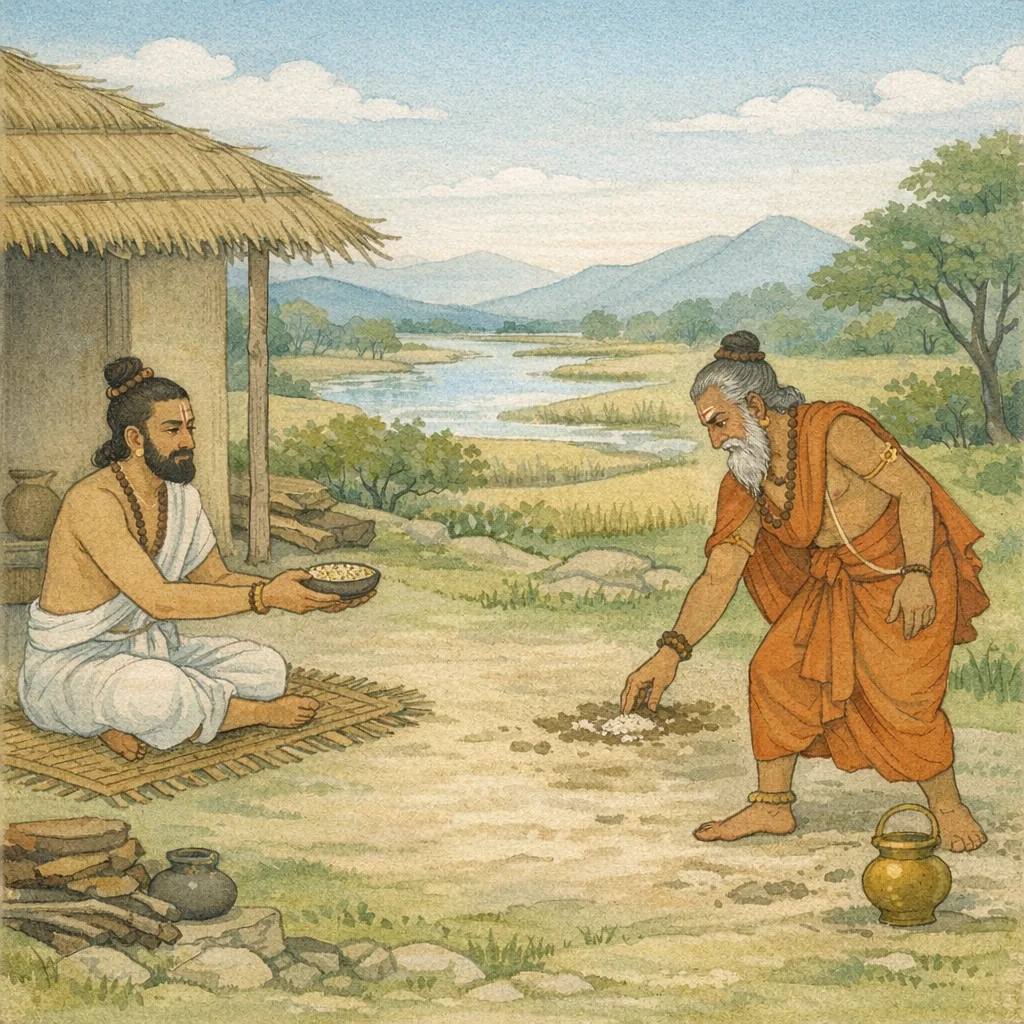
Chapter Arc: Vyasa introduces the austere sage Mudgala of Kurukshetra—truthful, envyless, and living by śilocchavṛtti (gleaning fallen grains)—whose very life is a visible proof of dharma. → Mudgala’s tiny, hard-won store of food becomes a test-ground for charity: despite scarcity, his giving feeds many learned Brahmanas, and the wonder grows that the more he gives, the more the food seems to increase through the purity of renunciation. → Durvasa arrives as the fiercest examiner of hospitality; after eating all that is offered, he takes the remaining leavings and smears them upon his body, departing as he came—leaving behind the burning question of what hunger and pride can do to dharma. → The narration turns reflective: hunger is named as a force that can drive away dharma and steal steadiness; yet life-breath depends on food, and true tapas is the one-pointed mastery of mind and senses even amid necessity—thus Mudgala’s restraint and giving are upheld as the higher victory. → Whether Mudgala’s tested charity will lead to a further boon, revelation, or a new trial is held in suspense as the discourse on hunger and self-control opens onward.
Shlokas
Verse 1
(दाक्षिणात्य अधिक पाठका $ “लोक मिलाकर कुल ३५३ “लोक हैं) ्ग््स “+(>9) #ट<-> #2६] षष्ट्यथिकद्वधिशततमो< ध्याय: दुर्वासाद्वारा महर्षि मुदूगलके दानधर्म एवं धैर्यकी परीक्षा तथा मुद्गलका देवदूतसे कुछ प्रश्न करना युधिषछ्िर उवाच ब्रीहिद्रोण: परित्यक्त: कथं तेन महात्मना । कस्मै दत्तश्न भगवन् विधिना केन चात्थ मे,युधिष्ठिरने पूछा--भगवन! महात्मा मुद्गलने एक द्रोण5 धानका दान कैसे और किस विधिसे किया था तथा वह दान किसको दिया गया था? यह सब मुझे बताइये
Yudhiṣṭhira said: “O revered one, how did that great-souled Mudgala give away the measure of rice he had set aside? To whom was it given, and by what proper procedure? Please tell me in detail.”
Verse 2
प्रत्यक्षधर्मा भगवान् यस्य तुष्टो हि कर्मभि: । सफल तस्य जन्माहं मन्ये सद्धर्मचारिण:,मनुष्योंके धर्मको प्रत्यक्ष देखने और जाननेवाले भगवान् जिसके कर्मोंसे संतुष्ट होते हैं, उसी श्रेष्ठ धर्मात्मा पुरुषका जन्म सफल है, ऐसा मैं मानता हूँ
Yudhiṣṭhira said: “I consider that person’s birth truly fulfilled—the noble practitioner of right conduct—whose deeds please the Lord, the One who directly witnesses and knows the dharma of human beings.”
Verse 3
व्यास उवाच शिलोज्छवृत्तिर्धर्मात्मा मुदूगल: संयतेन्द्रिय: । आसीदू राजन् कुरुक्षेत्रे सत्यवागनसूयक:,व्यासजी बोले--राजन्! कुरुक्षेत्रमें मुदगुलनामक एक ऋषि रहते थे। वे बड़े धर्मात्मा और जितेन्द्रिय थे। शिलः तथा उज्छवृत्तिसे ही वे जीविका चलाते थे तथा सदा सत्य बोलते और किसीकी भी निन्दा नहीं करते थे
Vyāsa said: O King, in Kurukṣetra there lived a sage named Mudūgala—righteous in spirit and master of his senses. He sustained himself only by gleaning and by what was freely available, always speaking the truth and never finding fault with anyone. The verse introduces him as an ethical exemplar whose austere livelihood and restraint embody dharma in daily conduct.
Verse 4
अतिथित्रती क्रियावांश्व॒ कापोतीं वृत्तिमास्थित: । सत्रमिष्टीकृतं नाम समुपास्ते महातपा:,उन्होंने अतिथियोंकी सेवाका व्रत ले रखा था। वे बड़े कर्मनिष्ठ और तपस्वी थे तथा कापोती वृत्तिका आश्रय ले आवश्यकताके अनुरूप थोड़े-से ही अन्नका संग्रह करते थे। वे मुनि स्त्री और पुत्रके साथ रहकर पंद्रह दिनमें जैसे कबूतर दाने चुगता है, उसी प्रकार चुनकर एक द्रोण धानका संग्रह कर पाते थे और उसके द्वारा इष्टीकृत नामक यज्ञका अनुष्ठान करते थे। इस प्रकार परिवारसहित उन्हें पंद्रह दिनपर भोजन प्राप्त होता था
Vyāsa said: He had undertaken a vow of serving guests. Steadfast in sacred duties and rich in austerity, he lived by the ‘pigeon-like’ mode of subsistence—gathering only what was needed in small amounts. With that modest collection he maintained a sacrificial observance called Iṣṭīkṛta, showing how disciplined hospitality and restrained livelihood can themselves become a form of worship and dharma.
Verse 5
सपुत्रदारो हि मुनि: पक्षाहारो बभूव ह । कपोततवृत्त्या पक्षेण व्रीहिद्रोणमुपार्जयत्,उन्होंने अतिथियोंकी सेवाका व्रत ले रखा था। वे बड़े कर्मनिष्ठ और तपस्वी थे तथा कापोती वृत्तिका आश्रय ले आवश्यकताके अनुरूप थोड़े-से ही अन्नका संग्रह करते थे। वे मुनि स्त्री और पुत्रके साथ रहकर पंद्रह दिनमें जैसे कबूतर दाने चुगता है, उसी प्रकार चुनकर एक द्रोण धानका संग्रह कर पाते थे और उसके द्वारा इष्टीकृत नामक यज्ञका अनुष्ठान करते थे। इस प्रकार परिवारसहित उन्हें पंद्रह दिनपर भोजन प्राप्त होता था
Vyāsa said: That sage, living together with his wife and son, used to eat only once in a fortnight. Following the ‘pigeon’s way of life’—gathering only what is needed—he would, over the course of fifteen days, pick up and accumulate a single droṇa-measure of rice. Bound by a vow of serving guests, steadfast in action and austerity, he maintained his household on this sparse store, using it for his sacrificial observances and sustaining his family with food that came only at the end of each fortnight.
Verse 6
दर्श च पौर्णमासं च कुर्वन् विगतमत्सर: । देवतातिथिशेषेण कुरुते देहयापनम्,उनके मनमें किसीके प्रति ईष्याका भाव नहीं था। वे प्रत्येक पक्षमें दर्श एवं पौर्णमास यज्ञ करते हुए देवताओं और अतिथियोंको उनका भाग अर्पित करके शेष अन्नसे जीवन- यापन करते थे
Vyāsa said: Free from jealousy, he regularly performed the Darśa and Paurṇamāsa rites each fortnight. After offering the due portions to the gods and to guests, he sustained his body on what remained—living by restraint, duty, and contentment rather than by grasping.
Verse 7
तस्येन्द्र: सहितो देवै: साक्षात् त्रिभुवनेश्चर: । प्रत्यगृह्लान्महाराज भागं पर्वणि पर्वणि,महाराज! प्रत्येक पर्वपर तीनों लोकोंके स्वामी साक्षात् इन्द्र देवताओंसहित पधारकर उनके यज्ञमें भाग ग्रहण करते थे
O great king, Indra himself—the manifest Lord of the three worlds—would come accompanied by the gods and, at each recurring sacrificial occasion, accept his allotted share in that man’s rite. The passage underscores that when a sacrifice is performed in due order and with proper offerings, even the highest divine powers are said to acknowledge it by receiving their portion, affirming the moral force of disciplined ritual duty.
Verse 8
स पर्वकाल कृत्वा तु मुनिवृत्त्या समन्वित: । अतिथि भ्यो ददावन्नं प्रहृष्टेनान्तरात्मना,मुद्गल ऋषि मुनिवृत्तिसे रहते हुए पर्वकालोचित कर्मदर्श और पौर्णमास यज्ञ करके हर्षोल्लासपूर्ण हृदयसे अतिथियोंको भोजन देते थे
Having duly observed the rites appropriate to the sacred season, and living in the disciplined manner of a sage, the seer Mudgala would, with an inwardly joyful heart, give food to guests. The verse highlights his steady dharma: ritual propriety joined with generous hospitality and inner gladness rather than mere outward display.
Verse 9
व्रीहिद्रोणस्प तद्धास्प ददतोन्न॑ महात्मन: । शिष्टं मात्सर्यहीनस्य वर्धतेडतिथिदर्शनात्,ईर्ष्यासे रहित महात्मा मुद्गल एक द्रोण धानसे तैयार किये हुए अन्नमेंसे जब-जब दान करते थे, तब-तब देनेसे बचा हुआ अन्न मुद्गलके द्वारा दूसरे अतिथियोंका दर्शन करनेसे बढ़ जाया करता था
Vyāsa said: When the great-souled Mudgala—free from envy—kept giving away the food he had prepared from a single droṇa of rice, the portion that remained after each gift would increase again upon the arrival of another guest. The episode highlights the ethical power of hospitality and selfless giving: what is offered without jealousy or possessiveness becomes inexhaustible through dharmic conduct.
Verse 10
तच्छतान्यपि भुज्जन्ति ब्राह्मणानां मनीषिणाम् | मुनेस्त्यागविशुद्धया तु तदन्न॑ वृद्धिमृच्छति,इस प्रकार उसमें सैकड़ों मनीषी ब्राह्मण एक साथ भोजन कर लेते थे। मुद्गल मुनिके विशुद्ध त्यागके प्रभावसे वह अन्न निश्चय ही बढ़ जाता था
Even hundreds of wise Brahmins could eat from that same store of food. Yet, through the sage’s perfectly purified spirit of renunciation, that food would surely increase—showing how selfless giving and inner purity become an inexhaustible source of sustenance for others.
Verse 11
त॑ तु शुभ्ाव धर्मिष्ठ मुदूगलं संशितव्रतम् । दुर्वासा नृप दिग्वासास्तमथाभ्याजगाम ह,राजन्! एक दिन दिगम्बर वेषमें भ्रमण करनेवाले महर्षि दुर्वासाने उत्तम व्रतका पालन करनेवाले धर्मिष्ठ महात्मा मुदुगलका नाम सुना। उनके व्रतकी ख्याति सुनकर वे वहाँ आ पहुँचे
But the sage Durvāsā—O king—who wandered clad only in the directions (i.e., naked), heard of Mudgala, a man of auspicious conduct, most devoted to dharma, and steadfast in his vowed discipline. Hearing of the fame of his vow, Durvāsā then came to him, O king, to test and witness the power of such righteousness.
Verse 12
बिशभ्रच्चानियतं वेषमुन्मत्त इव पाण्डव । विकच: परुषा वाचो व्याहरन् विविधा मुनि:,पाण्डुनन्दन! दुर्वासा मुनि पागलोंकी तरह अटपटा वेष धारण किये, मूँड़ मुड़ाये और नाना प्रकारके कटु वचन बोलते हुए उस आश्रममें पधारे
Vyāsa said: “O Pāṇḍava, the sage Durvāsā arrived at that hermitage wearing an irregular, unkempt guise, like one out of his senses—his head shaven, uttering many kinds of harsh words.” The passage underscores how a great ascetic may appear outwardly disturbing or abrasive, yet his presence tests the hosts’ restraint, hospitality, and steadiness in dharma.
Verse 13
अभिगम्याथ तं॑ विप्रमुवाच मुनिसत्तम: । अन्नार्थिनमनुप्राप्तं विद्धि मां द्विजसत्तम,ब्रह्मर्षि मुदगुलके पास पहुँचकर मुनिश्रेष्ठ दुर्वासाने कहा--“विप्रवर! तुम्हें यह मालूम होना चाहिये कि मैं भोजनकी इच्छासे यहाँ आया हूँ
Having approached that brāhmaṇa, the foremost of sages addressed him: “O best of the twice-born, know me to be one who has come here seeking food.” The statement frames the ethical test of hospitality: a guest’s request for sustenance becomes an occasion to uphold dharma through generosity and respectful reception.
Verse 14
स्वागतं ते$स्त्विति मुनिं मुदूगल: प्रत्यभाषत । पाद्यमाचमनीयं च प्रतिपाद्यार्घ्यमुत्तमम्,मुद्गलने उनसे कहा--“महर्षे!! आपका स्वागत है, ऐसा कहकर उन्होंने पाद्य, उत्तम अर्घ्य तथा आचमनीय आदि पूजनकी सामग्री भेंट की। तत्पश्चात् उन व्रतधारी अतिथिसेवी महर्षि मुद्गलने बड़ी श्रद्धाके साथ उन्मत्त-वेशधारी भूखे तपस्वी दुर्वासाको भोजन अर्पित किया। वह अन्न बड़ा स्वादिष्ट था। वे उन्मत्त मुनि भूखे तो थे ही, परोसी हुई सारी रसोई खा गये। तब महर्षि मुद्गलने उन्हें और भोजन दिया
Mudūgala greeted the sage, saying, “Welcome to you.” He then duly offered the customary honors of hospitality—water for washing the feet, water for sipping, and an excellent arghya offering. The scene underscores the dharma of receiving a guest: even an unexpected ascetic is to be honored with reverence and proper rites of welcome.
Verse 15
प्रादात् स तापसायान्न क्षुधितायातिथित्रती । उन्मत्ताय परां श्रद्धामास्थाय स धृतव्रत:,मुद्गलने उनसे कहा--“महर्षे!! आपका स्वागत है, ऐसा कहकर उन्होंने पाद्य, उत्तम अर्घ्य तथा आचमनीय आदि पूजनकी सामग्री भेंट की। तत्पश्चात् उन व्रतधारी अतिथिसेवी महर्षि मुद्गलने बड़ी श्रद्धाके साथ उन्मत्त-वेशधारी भूखे तपस्वी दुर्वासाको भोजन अर्पित किया। वह अन्न बड़ा स्वादिष्ट था। वे उन्मत्त मुनि भूखे तो थे ही, परोसी हुई सारी रसोई खा गये। तब महर्षि मुद्गलने उन्हें और भोजन दिया
Vyāsa said: Holding fast to his vow, the sage—ever devoted to honoring guests—offered food to the hungry ascetic. With supreme faith he served the one who appeared mad, treating him not with suspicion but with reverence. The scene underscores a central ethic of dharma: unwavering hospitality and compassion, even when the guest’s outward behavior is unsettling or socially disruptive.
Verse 16
ततस्तदन्नं रसवत् स एव क्षुधयान्वित: । बुभुजे कृत्स्नमुन्मत्त: प्रादात् तस्मै च मुदूगल:,मुद्गलने उनसे कहा--“महर्षे!! आपका स्वागत है, ऐसा कहकर उन्होंने पाद्य, उत्तम अर्घ्य तथा आचमनीय आदि पूजनकी सामग्री भेंट की। तत्पश्चात् उन व्रतधारी अतिथिसेवी महर्षि मुद्गलने बड़ी श्रद्धाके साथ उन्मत्त-वेशधारी भूखे तपस्वी दुर्वासाको भोजन अर्पित किया। वह अन्न बड़ा स्वादिष्ट था। वे उन्मत्त मुनि भूखे तो थे ही, परोसी हुई सारी रसोई खा गये। तब महर्षि मुद्गलने उन्हें और भोजन दिया
Then that very food proved delicious. The ascetic—still driven by hunger and behaving like a madman—ate the entire meal. Thereupon the sage Mudūgala gave him more food as well. The episode underscores the ethic of atithi-sevā: the householder-sage does not measure his giving by the guest’s restraint, but by his own vow of hospitality and compassion.
Verse 17
भुक्त्वा चान्नं ततः सर्वमुच्छिष्टेनात्मनस्तत: । अथाड़ूं लिलिपेडन्नेन यथागतमगाच्च स:,इस तरह सारा भोजन उदरस्थ करके दुर्वासाजीने जूठन लेकर अपने सारे अंगोंमें लपेट ली और फिर जैसे आये थे, वैसे ही चल दिये
Having eaten all the food, he then took the remaining morsel as his own leavings; with that he smeared his limbs, and departed just as he had come. In the narrative’s ethical frame, the act signals the ascetic’s self-sufficiency and closure of the encounter—accepting what is offered, leaving no claim behind, and moving on without further entanglement.
Verse 18
एवं द्वितीये सम्प्राप्ते यथाकाले मनीषिण: । आगम्य बुभुजे सर्वमन्नमुछ्छोपजीविन:,इसी प्रकार दूसरा पर्वकाल आनेपर दुर्वासा ऋषिने पुन: आकर उज्छवृत्तिसे जीवन- निर्वाह करनेवाले उन मनीषी महात्मा मुदूगलके यहाँका सारा अन्न खा लिया
Vyāsa said: When the second seasonal period arrived in due course, the sage came again and ate up all the food belonging to that wise great soul Mudgala, who sustained himself by gleaning the leftover grains (uccha-vṛtti). The episode underscores the ethic of patient endurance and unwavering hospitality even under repeated testing.
Verse 19
77/# ७८ हन्स जा टूर ६९२०५ 3 रे 232 ६ ७) 42 4 5 ८ 2 ; 5 63 २८ ४ 5३ ५ 5 4६.2 निराहारस्तु स मुनिरुञ्छमार्जयते पुन: । न चैनं विक्रियां नेतुमशकन्मुद्गलं क्षुधा,मुनि निराहार रहकर पुन: अन्नके दाने बीनने लगे। भूखका कष्ट उनके मनमें विकार उत्पन्न करनेमें समर्थ न हो सका
Vyāsa said: That sage, though fasting, again went about gathering gleanings. Hunger could not drive Mudgala into any inner disturbance or moral deviation; even under bodily hardship his mind remained steady and disciplined.
Verse 20
न क्रोधो न च मात्सर्य नावमानो न सम्भ्रम: । सपुत्रदारमुछ्छन्तमाविवेश द्विजोत्तमम्,स्त्री-पुत्रसहित अन्नके दाने चुनते हुए विप्रवर मुद्गलके हृदयमें क्रोध, द्वेष, घबराहट तथा अपमान प्रवेश नहीं कर सके
Vyāsa said: No anger, no envy, no sense of insult, and no agitation could enter the heart of that best of Brahmins. Even while he was gleaning food together with his wife and son—living in hardship—Mudgala remained untouched by wrath, malice, confusion, or wounded pride.
Verse 21
तथा तमुउ्छधर्माणं दुर्वासा मुनिसत्तमम् । उपतस्थे यथाकालं षट्कृत्व: कृतनिश्चय:,इस प्रकार उज्छधर्मका पालन करनेवाले मुनिश्रेष्ठ मुदुगलके घरपर महर्षि दुर्वासा उनका धैर्य छुड़ानेका दृढ़ निश्चय लेकर लगातार छः बार ठीक पर्वके समय उपस्थित हुए
So then, the sage Durvāsā—firmly resolved—came at the proper times again and again, six times in all, to the house of the foremost ascetic Mudgala, who was faithfully observing the austere vow of living on gleanings, intending to test and unsettle his steadfast patience.
Verse 22
न चास्य मनसा कंचिद् विकार ददृशे मुनि: । शुद्धसत्त्वस्य शुद्ध स ददृशे निर्मल मन:,किंतु उन्होंने उनके मनमें कभी कोई विकार नहीं देखा। शुद्ध अन्त:करणवाले महर्षि मुद्गलके मनको दुर्वासाने सदा शुद्ध और निर्मल ही पाया
And the sage perceived in him no mental disturbance at all. In that man of purified goodness, he found the mind ever pure and stainless—untouched by agitation or fault.
Verse 23
तमुवाच ततः प्रीत: स मुनिर्मुदूगलं ततः । त्वत्समो नास्ति लोके5स्मिन् दाता मात्सर्यवर्जित:,तब वे प्रसन्न होकर मुद्गलसे बोले--“ब्रह्मन! इस संसारमें ईष्यासे रहित होकर दान देनेवाला मनुष्य तुम्हारे समान दूसरा कोई नहीं है
Then that sage, pleased at heart, addressed Mudgala: “O brāhmaṇa, in this world there is no other giver equal to you—one who gives free from envy and spite.”
Verse 24
क्षुद् धर्मसंज्ञां प्रणुदत्यादत्ते धैर्यमेव च । रसानुसारिणी जिद्ठ्ा कर्षत्येव रसान् प्रति,'भूख (बड़े-बड़े लोगोंके) धर्मज्ञानको विलुप्त कर देती है, धैर्य हर लेती है तथा रसका अनुसरण करनेवाली रसना सदा रसीले पदार्थोंकी ओर मनुष्यको खींचती रहती है
Vyāsa said: Hunger drives away even the very sense of dharma and steals away steadfastness. And the tongue, ever following after taste, continually drags a person toward pleasurable flavors. In this way, bodily need and craving can eclipse moral discernment and weaken self-control.
Verse 25
आहारप्रभवा: प्राणा मनो दुर्निग्रहं चलम् । मनसश्षेन्द्रियाणां चाप्यैकाग्रयं निश्चितं तप:,'भोजनसे ही प्राणोंकी रक्षा होती है। चंचल मनको रोकना अत्यन्त कठिन होता है। मन और इन्द्रियोंकी एकाग्रताको ही निश्चितरूपसे तप कहा गया है”
Vyāsa said: Life-breaths are sustained by food. The mind is restless and exceedingly hard to restrain. True austerity, firmly understood, is the one-pointed steadiness of the mind and the senses—an inner discipline rather than mere outward hardship.
Verse 26
श्रमेणोपार्जिति त्यक्तुं दुःखं शुद्धेन चेतसा । तत् सर्व भवता साधो यथावदुपपादितम्,'परिश्रमसे उपार्जित किये हुए धनका शुद्ध हृदयसे दान करना अत्यन्त दुष्कर है। परंतु श्रेष्ठ पुरुष! तुमने यह सब कुछ यथार्थरूपसे सिद्ध कर लिया है
Vyāsa said: “To give away what one has earned through hard labor is truly difficult, even for a mind that is pure. Yet, noble one, you have rightly demonstrated this in full—proving in practice that hard-won wealth can be relinquished in the spirit of righteousness.”
Verse 27
प्रीता: स्मो5नुगृहीताश्व॒ समेत्य भवता सह । इन्द्रियाभिजयो धैर्य संविभागो दम: शम:,“तुमसे मिलकर हम बहुत प्रसन्न हैं और अपने ऊपर तुम्हारा अनुग्रह मानते हैं। इन्द्रियसंयम, धैर्य, संविभाग (दान), शम, दम, दया, सत्य और धर्म--ये सब गुण तुममें पूर्णरूपसे विद्यमान हैं। तुम्हारे-जैसा पवित्र अन्तःकरणवाला दूसरा कोई नहीं है। तुमने अपने शुभ कर्मोंसे सभी लोकोंको जीत लिया; परमपदको प्राप्त कर लिया
Vyāsa said: “Meeting with you, we are delighted and count ourselves blessed by your favor. Mastery over the senses, steadfast courage, fair sharing through giving, self-restraint, and inner calm—these virtues are firmly established in you.”
Verse 28
दया सत्य च धर्मश्न त्वयि सर्व प्रतिष्ठितम् । (विशुद्धसत्त्वसम्पन्नो न त्वदन्यो5स्ति कश्नन ।) जितास्ते कर्मभिलेंका: प्राप्तोडसि परमां गतिम्,“तुमसे मिलकर हम बहुत प्रसन्न हैं और अपने ऊपर तुम्हारा अनुग्रह मानते हैं। इन्द्रियसंयम, धैर्य, संविभाग (दान), शम, दम, दया, सत्य और धर्म--ये सब गुण तुममें पूर्णरूपसे विद्यमान हैं। तुम्हारे-जैसा पवित्र अन्तःकरणवाला दूसरा कोई नहीं है। तुमने अपने शुभ कर्मोंसे सभी लोकोंको जीत लिया; परमपदको प्राप्त कर लिया
Vyāsa said: “Compassion, truth, and dharma—all of these stand firmly established in you. Endowed with a purified and luminous inner nature, there is none other like you. By your righteous deeds you have won the worlds and have attained the highest state.”
Verse 29
अहो दान विघुष्ट ते सुमहत् स्वर्गवासिभि: । सशरीरो भवान् गन्ता स्वर्ग सुचरितव्रत,“अहो! स्वर्गवासी देवताओंने भी तुम्हारे महान् दानकी सर्वत्र घोषणा की है। उत्तम व्रतका पालन करनेवाले महर्षे! तुम सदेह स्वर्गलोकको जाओगे”
Vyāsa said: “Ah! Even the dwellers of heaven have widely proclaimed your exceedingly great gift. O sage of well-observed vows and noble conduct, you shall go to heaven in your very body.”
Verse 30
इत्येवं वदतस्तस्य तदा दुर्वाससो मुने: । देवदूतो विमानेन मुद्गल प्रत्युपस्थित:
As the sage Durvāsas was speaking in this manner, at that very moment a divine messenger arrived before Mudgala, coming in a celestial aerial car. The scene underscores how divine response and recognition may come precisely when a life of austerity and truth is being articulated and tested.
Verse 31
दुर्वासा मुनि इस प्रकार कह ही रहे थे कि एक देवदूत विमानके साथ मुद्गल ऋषिके पास आ पहुँचा ।। हंससारसयुक्तेन किड॒किणीजालमालिना । कामगेन विचित्रेण दिव्यगन्धवता तथा,उस विमानमें हंस एवं सारस जुते हुए थे। क्षुद्र-घधण्टिकाओंकी जालीसे उसे सुसज्जित किया गया था तथा उससे दिव्य सुगन्ध फैल रही थी। वह विमान देखनेमें बड़ा विचित्र और इच्छानुसार चलनेवाला था
Vyāsa said: As the sage Durvāsā was still speaking in this manner, a divine messenger arrived before the Ṛṣi Mudgala, accompanied by a celestial aerial car. That vimāna was yoked with swans and cranes, adorned with a net of tiny tinkling bells, moving wherever one wished, wondrous to behold, and diffusing a heavenly fragrance—an emblem of the rewards that follow austere virtue and self-restraint.
Verse 32
उवाच चैन विप्रर्षि विमान॑ कर्मभिर्जितम् । समुपारोह संसिद्धि प्राप्तोडसि परमां मुने,देवदूतने ब्रह्मर्षि मुदगलसे कहा--'मुने! यह विमान आपको शुभ कर्मोंसे प्राप्त हुआ है। इसपर बैठिये। आप परम सिद्धि प्राप्त कर चुके हैं!
Vyāsa said: Then the divine messenger addressed the brahmarṣi Mudgala: “O sage, this celestial chariot has been won by your deeds. Ascend it. You have attained the highest perfection.” The moment frames liberation not as a gift of status, but as the moral fruit of sustained righteous action.
Verse 33
मिब्सब्रच्सस्स् ं: | धन्य “(४ | //८ ५ ८ तक 55300 ५ तमेवंवादिनमृषिर्देवदूतमुवाच ह । इच्छामि भवता प्रोक्तान् गुणान् स्वर्गनिवासिनाम्
Hearing the divine messenger speak in this manner, the sage said: “I wish to hear from you the qualities and virtues that belong to those who dwell in heaven.”
Verse 34
के गुणास्तत्र वसतां कि तप: कश्न निश्चय: । स्वर्गे तत्र सुखं कि च दोषो वा देवदूतक
Vyāsa said: “What virtues belong to those who dwell there? What austerity do they practice, and what firm resolve guides them? What kind of happiness is found there in heaven—and is there any fault at all, O little divine messenger?”
Verse 35
देवदूतके ऐसा कहनेपर महर्षि मुदुगलने उससे कहा--“देवदूत! मैं तुम्हारे मुखसे स्वर्गवासियोंके गुण सुनना चाहता हूँ। वहाँ रहनेवालोंमें कौन-कौनसे गुण होते हैं? कैसी तपस्या होती है? और उनका निश्चित विचार कैसा होता है? स्वर्गमें क्या सुख है और वहाँ क्या दोष है? ।। सतां साप्तपदं मैत्रमाहु: सन्तः कुलोचिता: । मित्रतां च पुरस्कृत्य पृच्छामि त्वामहं विभो,'प्रभो! सत्पुरुषोंमें सात पण एक साथ चलनेसे ही मित्रता हो जाती है, ऐसा कुलीन सत्पुरुषोंका कथन है। मैं उसी मैत्रीको सामने रखकर तुमसे उपर्युक्त प्रश्न पूछ रहा हूँ
When the divine messenger had spoken thus, the sage Mudgala replied: “O messenger of the gods, I wish to hear from your own mouth about the qualities of those who dwell in heaven. What virtues do the residents there possess? What kind of austerity is practiced? What settled conviction guides their thinking? What happiness is found in heaven, and what fault or drawback exists there? The noble and well-bred declare that friendship is formed by walking together seven steps. Holding that bond of friendship foremost, O mighty one, I ask you these questions.”
Verse 36
यदत्र तथ्यं पथ्यं च तद् ब्रवीह्॒विचारयन् । श्रुत्वा तथा करिष्यामि व्यवसायं गिरा तव,“इसके उत्तरमें जो सत्य एवं हितकर बात हो, उसे बिना किसी हिचकिचाहटके कहो। तुम्हारी बात सुनकर उसीके द्वारा मैं अपने कर्तव्यका निश्चय करूँगा”
“After due reflection, tell me here whatever is true and also beneficial. Having heard your words, I shall act accordingly and settle my resolve about what ought to be done.”
Verse 259
इस प्रकार श्रीमह्ाभारत वनपर्वके अन्तर्गत व्रीहिद्रीणिकपर्वमें दानकी दुष्करताका प्रतिपादनविषय दो सौ उनसठवाँ अध्याय पूरा हुआ
Thus ends the two hundred and fifty-ninth chapter in the Vana Parva of the Śrī Mahābhārata, within the Vrīhidhṛṇika sub-section, where the difficulty and rarity of true giving (dāna) is set forth—underscoring that generosity is a demanding ethical discipline rather than a casual act.
Verse 260
इति श्रीमहा भारते वनपर्वणि व्रीहिद्रौणिकपर्वणि मुदूगलोपाख्याने षष्टयधिकद्धिशततमो< ध्याय:,इस प्रकार श्रीमहाभारत वनपर्वके अन्तर्गत व्रीहिद्रीणिकपर्वमें मुदूगलीपाख्यानसम्बन्धी दी सौ साठवाँ अध्याय पूरा हुआ
Thus, in the sacred Mahābhārata, within the Vana Parva—under the section called the Vrīhidraunika Parva—ends the two-hundred-and-sixtieth chapter of the Mudgala narrative. This is a formal colophon marking the completion of the chapter, situating the episode within the larger ethical frame of the forest-book, where ideals of restraint, endurance, and dharma are examined through exemplary stories.
Verse 427
| ४८
Verse text not provided (only the verse marker “48” is shown), so a faithful translation cannot be produced. Please share the full Sanskrit pāṭha of Vana Parva 261 (Gita Press), verse 48, and I will translate it in context with Vyāsa as speaker.
Frequently Asked Questions
The dilemma is whether royal promises remain binding when they produce unjust or destabilizing outcomes: Daśaratha’s pledged boon conflicts with welfare and succession prudence, while Rāma chooses obedience to preserve truth as a public moral standard.
Legitimacy is portrayed as ethical coherence: rulers and heirs maintain authority by honoring truth, restraining self-interest, and accepting hardship to prevent moral rupture in governance.
No explicit phalaśruti is presented in the supplied passage; the chapter functions primarily as an instructive exemplum embedded within Mārkaṇḍeya’s discourse to contextualize dharma through parallel history.