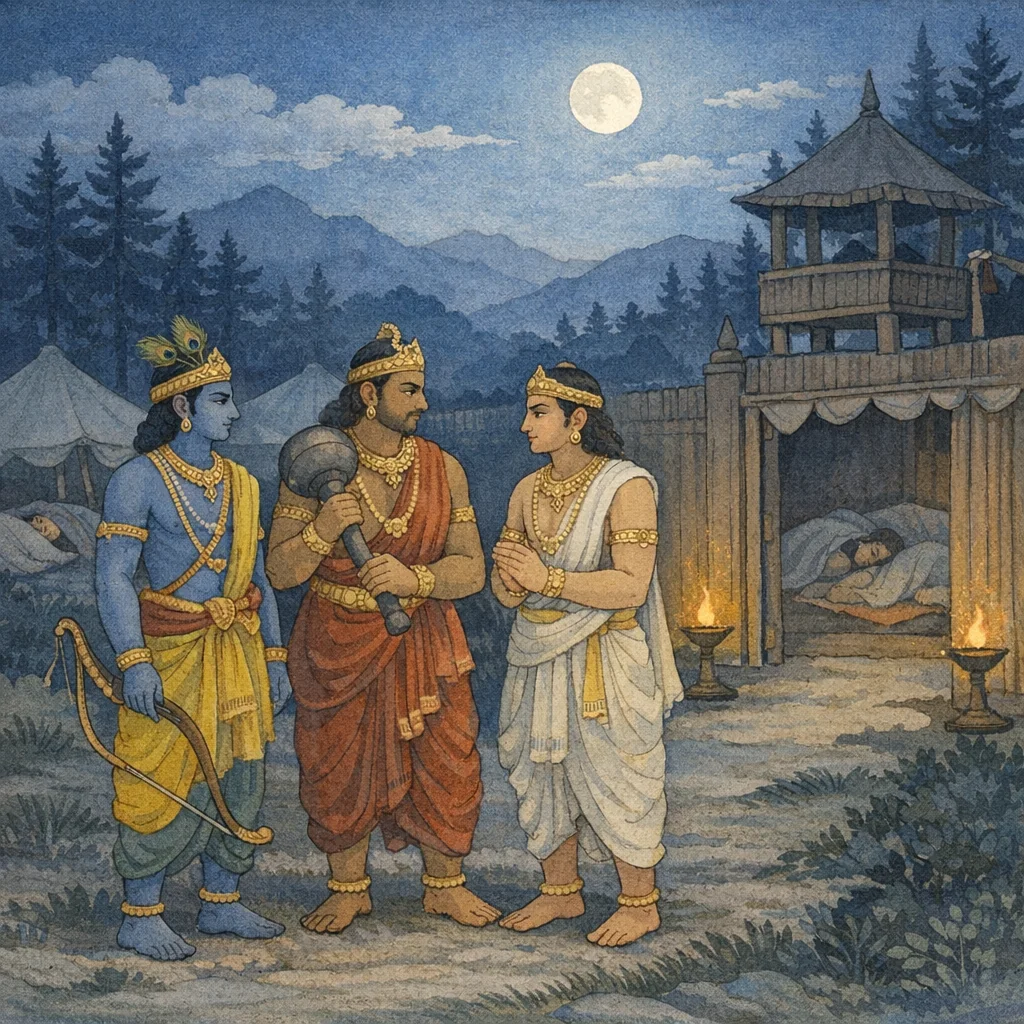
Adhyaya 5
Chapter Arc: रात्रि के सन्नाटे में कृपाचार्य अश्वत्थामा को विनय और धर्मार्थ-विवेक का उपदेश देते हैं—कि केवल शौर्य या विद्या नहीं, संयम ही मनुष्य को धर्म-निर्णय तक ले जाता है। → अश्वत्थामा के भीतर अपमान, शोक और प्रतिशोध की आग भड़कती है। वह युद्ध के अन्यायपूर्ण वधों का स्मरण कराता है—भूरिश्रवा का युयुधान द्वारा गिराया जाना, और विशेषतः अपने पिता द्रोण का धृष्टद्युम्न द्वारा शस्त्र-त्याग की अवस्था में वध। कृप की नीति-भाषा और अश्वत्थामा की प्रतिहिंसा-प्रतिज्ञा टकराती रहती है। → अश्वत्थामा निर्णायक स्वर में कृप और कृतवर्मा को आदेश देता है कि वे शीघ्र कवच धारण कर, खड्ग-धनुष लेकर उसके साथ चलें—और तीनों एक साथ पाण्डव-पांचाल शिविर की ओर प्रस्थान करते हैं, यज्ञाग्नि की तरह प्रज्वलित। → तीनों महारथी शत्रु-शिविर के द्वार-प्रदेश तक पहुँचते हैं; भीतर जन-समुदाय निद्रा में डूबा है। अश्वत्थामा द्वार पर ठहरकर अवसर और प्रवेश का उपाय देखता है—अब वध का क्षण निकट है। → सुप्त शिविर के द्वार पर खड़ा द्रोणपुत्र—क्या वह धर्म-सीमा लाँघकर रात्रि-वध करेगा, और कौन उसे रोकेगा?
Shlokas
Verse 1
अपन क्ाता छा अर: पञठ्चमो<ध्याय: अश्वत्थामा और कृपाचार्यका संवाद तथा तीनोंका पाण्डवोंके शिविरकी ओर प्रस्थान कृप उवाच शुश्रूषुरपि दुर्मेधा: पुरुषो5नियतेन्द्रिय: । नालं॑ वेदयितुं कृत्स्नौ धर्मार्थाविति मे मति:,कृपाचार्य बोले--अश्व॒त्थामन्! मेरा विचार है कि जिस मनुष्यकी बुद्धि दुर्भावनासे युक्त है तथा जिसने अपनी इन्द्रियोंको काबूमें नहीं रखा है, वह धर्म और अर्थकी बातोंको सुननेकी इच्छा रखनेपर भी उन्हें पूर्णरूपसे समझ नहीं सकता
Kripa said: “In my judgment, a man whose understanding is perverted and whose senses are undisciplined cannot fully comprehend Dharma and Artha—even if he professes a desire to listen and learn.”
Verse 2
तथैव तावन्मेधावी विनयं यो न शिक्षते । न च किंचन जानाति सो<पि धर्मार्थनिश्चयम्,इसी प्रकार मेधावी होनेपर भी जो मनुष्य विनय नहीं सीखता, वह भी धर्म और अर्थके निर्णयको थोड़ा भी नहीं समझ पाता है
Likewise, even if a man is intelligent, if he does not learn humility and discipline, he understands nothing at all of how to judge what is righteous (dharma) and what is beneficial (artha).
Verse 3
चिरं हाापि जड: शूर: पण्डितं पर्युपास्य हि । न स धर्मान् विजानाति दर्वी सूपरसानिव,जिसकी बुद्धिपर जडता छा रही हो, वह शूरवीर योद्धा दीर्घकालतक विद्वानकी सेवामें रहनेपर भी धर्मोका रहस्य नहीं जान पाता। ठीक उसी तरह जैसे करछुल दालनमें डूबी रहनेपर भी उसके स्वादको नहीं जानती है
Kṛpa said: Even if a brave man remains for a long time in the company and service of the learned, if his intellect is dulled by inertia he does not truly understand dharma. He is like a ladle: though immersed in the soup, it does not taste its flavor. The verse warns that mere proximity to wisdom or righteous counsel does not yield ethical insight unless one is inwardly receptive and discerning.
Verse 4
इस प्रकार श्रीमह्याभारत सौप्तिकपर्वमें अश्वत्थामाकी मन्त्रणाविषयक चौथा अध्याय पूरा हुआ,मुहूर्तमपि त॑ प्राज्ञ: पण्डितं पर्युपास्य हि । क्षिप्रं धर्मान् विजानाति जिह्नला सूपरसानिव जैसे जिह्ना दालके स्वादको जानती है, उसी प्रकार बुद्धिमान् पुरुष यदि दो घड़ी भी विवेकशीलकी सेवामें रहे तो वह शीघ्र ही धर्मोका रहस्य जान लेता है
Kṛpa said: Even if an intelligent man attends upon a learned and discerning person for only a brief while, he quickly comes to understand the principles of dharma—just as the tongue at once recognizes the flavors of well-prepared food. The verse underscores that proximity to the wise rapidly refines moral discernment, even amid the harsh aftermath of war.
Verse 5
शुश्रूषुस्त्वेव मेधावी पुरुषो नियतेन्द्रिय: । जानीयादागमानू् सर्वान् ग्राह्मूं च न विरोधयेत्,अपनी इन्द्रियोंको वशमें रखनेवाला मेधावी पुरुष यदि विद्वानोंकी सेवामें रहे और उनसे कुछ सुननेकी इच्छा रखे तो वह सम्पूर्ण शास्त्रोंकी समझ लेता है तथा ग्रहण करनेयोग्य वस्तुका विरोध नहीं करता इति श्रीमहाभारते सौप्तिकपर्वणि द्रौणिगमने पठचमो<5ध्याय:
Kṛpa said: A wise man, intent on learning and with his senses restrained, if he remains in attendance upon the learned and desires to hear from them, comes to understand the whole body of authoritative teachings; and he does not oppose what is truly fit to be accepted. In the grim aftermath of war, the verse frames self-mastery and humble service to the wise as the ethical basis for right understanding and right conduct.
Verse 6
अनेयस्त्ववमानी यो दुरात्मा पापपूरुष: | दिष्टमुत्सूज्य कल्याणं करोति बहुपापकम्,परंतु जिसे सन्मार्गपर नहीं ले जाया जा सकता, जो दूसरोंकी अवहेलना करनेवाला है तथा जिसका अन्तःकरण दूषित है, यह पापात्मा पुरुष बताये हुए कल्याणकारी पथको छोड़कर बहुत-से पापकर्म करने लगता है
Verse 7
नाथवन्तं तु सुहृद: प्रतिषेधन्ति पातकात् । निवर्तते तु लक्ष्मीवान् नालक्ष्मीवान् निवर्तते,जो सनाथ है, उसे उसके हितैषी सुहृद् पापकर्मोंसे रोकते हैं, जो भाग्यवान् है--जिसके भाग्यमें सुख भोगना बदा है, वह मना करनेपर उस पापकर्मसे रुक जाता है; परंतु जो भाग्यहीन है, वह उस दुष्कर्मसे नहीं निवृत्त होता है
But a man who has protectors and well-wishers is restrained by his friends from sinful action. The fortunate one—he whose lot includes the enjoyment of happiness—turns back when forbidden; the unfortunate does not turn back from that wrongdoing.
Verse 8
यथा हाुच्चावचैववक्यै: क्षिप्तचित्तो नियम्यते । तथैव सुहृदा शक््यो न शक््यस्त्ववसीदति,जैसे मनुष्य विक्षिप्त चित्तवाले पागलको नाना प्रकारके ऊँच-नीच वचनोंद्वारा समझा- बुझाकर या डरा-धमकाकर काबूमें लाते हैं, उसी प्रकार सुहृदगण भी अपने स्वजनको समझा-बुझाकर और डाँट-डपटकर वशमें रखनेकी चेष्टा करते हैं। जो वशमें आ जाता है, वह तो सुखी होता है और जो किसी तरह काबूमें नहीं आ सकता, वह दुःख भोगता है
Kṛpa said: “Just as a man whose mind has become deranged and scattered is brought under control by all sorts of words—now gentle, now harsh—so too a well-wisher tries to restrain his own kinsman by counsel and, when needed, by stern rebuke. The one who can be brought under discipline fares well; but the one who cannot be restrained sinks into misery.”
Verse 9
तथैव सुद्ठदं प्राज्ञ कुर्वाणं कर्म पापकम् । प्राज्ञा: सम्प्रतिषेधन्ति यथाशक्ति पुन: पुन:,इसी तरह विद्वान् पुरुष पापकर्ममें प्रवृत्त होनेवाले अपने बुद्धिमान सुहृदको भी यथाशक्ति बारंबार मना करते हैं
Likewise, when a wise friend becomes firmly set on committing a sinful deed, discerning men repeatedly restrain him to the best of their ability—again and again—seeking to turn him back from wrongdoing.
Verse 10
स कल्याणे मन: कृत्वा नियम्यात्मानमात्मना | कुरु मे वचनं तात येन पश्चान्न तप्यसे,तात! तुम भी स्वयं ही अपने मनको काबूमें करके उसे कल्याणसाधनमें लगाकर मेरी बात मानो, जिससे तुम्हें पश्चात्ताप न करना पड़े
Kṛpa said: “Fix your mind on what leads to true welfare, and by your own self restrain yourself. Do as I say, dear child, so that you will not be tormented later by regret.”
Verse 11
न वध: पूज्यते लोके सुप्तानामिह धर्मत: । तथैवापास्तशस्त्राणां विमुक्तरथवाजिनाम्,जो सोये हुए हों, जिन्होंने अस्त्र-शस्त्र रख दिये हों, रथ और घोड़े खोल दिये हों, “जो मैं आपका ही हूँ' ऐसा कह रहे हों, जो शरणमें आ गये हों, जिनके बाल खुले हुए हों तथा जिनके वाहन नष्ट हो गये हों, इस लोकमें ऐसे लोगोंका वध करना धर्मकी दृष्टिसे अच्छा नहीं समझा जाता
Kripa said: “In this world, the killing of those who are asleep is not approved as righteous conduct. Likewise, it is not considered dharmic to slay those who have laid aside their weapons and those whose chariots and horses have been released (i.e., who are no longer in fighting condition).”
Verse 12
ये च ब्रूयुस्तवास्मीति ये च स्यु: शरणागता: । विमुक्तमूर्थजा ये च ये चापि हतवाहना:,जो सोये हुए हों, जिन्होंने अस्त्र-शस्त्र रख दिये हों, रथ और घोड़े खोल दिये हों, “जो मैं आपका ही हूँ' ऐसा कह रहे हों, जो शरणमें आ गये हों, जिनके बाल खुले हुए हों तथा जिनके वाहन नष्ट हो गये हों, इस लोकमें ऐसे लोगोंका वध करना धर्मकी दृष्टिसे अच्छा नहीं समझा जाता
Kṛpa said: “Those who declare, ‘I am yours,’ those who have come seeking refuge, those whose hair is loosened (in distress or surrender), and those whose mounts or vehicles have been destroyed—killing such people in this world is not regarded as righteous.”
Verse 13
अद्य स्वप्स्यन्ति पञ्चाला विमुक्तकवचा विभो । विश्वस्ता रजनीं सर्वे प्रेता इव विचेतस:,प्रभो! आज रातमें समस्त पांचाल कवच उतारकर निश्रिन्त हो मुर्दोके समान अचेत सो रहे होंगे। उस अवस्थामें जो क्रूर मनुष्य उनके साथ द्रोह करेगा, वह निश्चय ही नौकारहित अगाध एवं विशाल नरकके समुद्रमें डूब जायगा
Kṛpa said: “Tonight the Pāñcālas will sleep, O mighty one, having taken off their armor. Trusting and unguarded through the whole night, they will lie senseless like the dead. In such a condition, whoever—being cruel—commits treachery against them will surely sink into a vast, unfathomable hell-ocean, without any boat to save him.”
Verse 14
यस्तेषां तदवस्थानां द्रह्ेत पुरुषोडनृजु: । व्यक्ते स नरके मज्जेदगाधे विपुले5प्लवे,प्रभो! आज रातमें समस्त पांचाल कवच उतारकर निश्रिन्त हो मुर्दोके समान अचेत सो रहे होंगे। उस अवस्थामें जो क्रूर मनुष्य उनके साथ द्रोह करेगा, वह निश्चय ही नौकारहित अगाध एवं विशाल नरकके समुद्रमें डूब जायगा
O lord, if in that condition—when they are lying down unsuspecting—a cruel and crooked man should look upon them with intent to betray and harm them, he would surely sink into hell: a vast, deep ocean without any boat to save him. The speech underscores that attacking sleeping, unarmed men is a grave breach of righteous conduct and invites severe moral consequence.
Verse 15
सर्वस्त्रिविदुषां लोके श्रेष्ठस्त्वमसि विश्रुत: । नच ते जातु लोके5स्मिन् सुसूक्ष्ममपि किल्बिषम्
Kṛpa said: “In this world you are renowned as the foremost among all who know the science of weapons. And in this world, at no time has there ever been found in you even the slightest trace of wrongdoing.”
Verse 16
संसारके सम्पूर्ण अस्त्रवेत्ताओंमें तुम श्रेष्ठ हो। तुम्हारी सर्वत्र ख्याति है। इस जगतमें अबतक कभी तुम्हारा छोटे-से-छोटा दोष भी देखनेमें नहीं आया है ।। त्वं पुनः सूर्यसंकाश: श्वोभूत उदिते रवौ । प्रकाशे सर्वभूतानां विजेता युधि शात्रवान्,कल खबेरे सूर्योदय होनेपर तुम सूर्यके समान प्रकाशित हो उजालेमें युद्ध छेड़कर समस्त प्राणियोंके सामने पुन: शत्रुओंपर विजय प्राप्त करना
Kripa said: “Among all who know the science of weapons in this world, you are the foremost. Your fame is everywhere, and until now no fault—however small—has ever been seen in you. Therefore, when tomorrow the sun rises, shine like the sun itself; in the clear light, engage the enemy in battle before all beings and win victory over your foes.”
Verse 17
असम्भावितरूपं हि त्वयि कर्म विगर्हितम् । शुक्ले रक्तमिव न्यस्तं भवेदिति मतिर्मम,जैसे सफेद वस्त्रमें लाल रंगका धब्बा लग जाय, उस प्रकार तुममें निन्दित कर्मका होना सम्भावनासे परेकी बात है, ऐसा मेरा विश्वास है
Indeed, for you to commit a blameworthy deed is something beyond expectation. It would be like a red stain placed upon a white cloth—such is my conviction.
Verse 18
अश्वत्थामोवाच एवमेव यथा<5त्थ त्वं मातुलेह न संशय: । तैस्तु पूर्वमयं सेतु: शतधा विदलीकृत:,अश्वत्थामा बोला--मामाजी! आप जैसा कहते हैं, निःसंदेह वही ठीक है; परंतु पाण्डवोंने ही पहले इस धर्म-मर्यादाके सैकड़ों टुकड़े कर डाले हैं
Aśvatthāmā said: “Exactly so—just as you say, uncle; there is no doubt about it. Yet it was they who first shattered this very ‘bridge’ of moral restraint—this boundary of dharma—into a hundred pieces.”
Verse 19
प्रत्यक्ष भूमिपालानां भवतां चापि संनिधौ । न्यस्तशस्त्रो मम पिता धृष्टद्युम्नेन पातित:,धष्टद्युम्नने समस्त राजाओंके सामने और आपलोगोंके निकट ही मेरे उस पिताको मार गिराया, जिन्होंने अस्त्र-शस्त्र रख दिये थे
In the very presence of the assembled kings—and even with you all standing nearby—my father, having laid aside his weapons, was struck down by Dhṛṣṭadyumna. Kṛpa points to the ethical breach: a warrior who has disarmed is no longer a fair target, and killing him before witnesses becomes a public stain on the codes of war and kingship.
Verse 20
कर्णक्ष पतिते चक्रे रथस्य रथिनां वर: । उत्तमे व्यसने मग्नो हतो गाण्डीवधन्चना,रथियोंमें श्रेष्ठ कर्णको भी गाण्डीवधारी अर्जुनने उस अवस्थामें मारा था, जब कि उनके रथका पहिया गड्ढेमें गिरकर फँस गया था और इसीलिये वे भारी संकटमें पड़े हुए थे
Kripa said: “When Karna’s chariot-wheel had sunk and become stuck, that best of chariot-warriors, plunged into a dire calamity, was slain by the wielder of the Gāṇḍīva (Arjuna).” The statement recalls a contested moment of battlefield ethics, implying that Karna was killed while disadvantaged, and is used to frame later acts of retaliation and moral debate.
Verse 21
इसी प्रकार शान्तनुनन्दन भीष्म जब हथियार डालकर अस्त्रहीन हो गये, उस अवस्थामें शिखण्डीको आगे करके गाण्डीवधारी धनंजयने उनका वध किया था
“In the same way, when Bhīṣma, the son of Śāntanu, laid down his weapons and became unarmed, Dhanañjaya (Arjuna), bearer of the Gāṇḍīva, placing Śikhaṇḍī in front, brought about his slaying. The episode is recalled to underline how, in war, strategy and vows can override ordinary expectations of fair combat, raising a sharp ethical tension between duty to win and the ideal of fighting an armed opponent.”
Verse 22
भूरिश्रवा महेष्वासस्तथा प्रायगतो रणे । क्रोशतां भूमिपालानां युयुधानेन पातितः,महाधनुर्थधर भूरिश्रवा तो रणभूमिमें अनशन व्रत लेकर बैठ गये थे। उस अवस्थामें समस्त भूमिपाल चिल्ला-चिल्लाकर रोकते ही रह गये; परंतु सात्यकिने उन्हें मार गिराया
Kṛpa said: “Bhūriśravā, that great archer, had in the midst of battle undertaken the vow of fasting unto death. Even as the kings cried out loudly (to stop it), he was struck down by Yuyudhāna (Sātyaki).”
Verse 23
दुर्योधनश्व भीमेन समेत्य गदया रणे । पश्यतां भूमिपालानामधर्मेण निपातित:,भीमसेनने भी सम्पूर्ण राजाओंके देखते-देखते रणभूमिमें गदायुद्ध करते समय दुर्योधनको अधर्मपूर्वक गिराया था
Kṛpa said: “Duryodhana, having engaged Bhīma in battle with the mace, was struck down unfairly—before the very eyes of the assembled kings.” The line underscores the moral grievance that Duryodhana’s fall was not merely a defeat in war, but a breach of righteous combat as witnessed by many rulers.
Verse 24
एकाकी बहुभिस्तत्र परिवार्य महारथै: । अधर्मेण नरव्याप्रो भीमसेनेन पातित:,नरश्रेष्ठ राजा दुर्योधन अकेला था और बहुत-से महारथियोंने उसे वहाँ घेर रखा था, उस दशामें भीमसेनने उसको धराशायी किया है
Kṛpa said: “There, the tiger among men—King Duryodhana—stood alone, yet he was surrounded by many great chariot-warriors. Even so, Bhīmasena struck him down by unrighteous means.”
Verse 25
विलापो भग्नसक्थस्य यो मे राज्ञ: परिश्रुत: । वार्तिकाणां कथयतां स मे मर्माणि कृन्तति,टूटी जाँघोंवाले राजा दुर्योधनका जो विलाप मैंने सुना है और संदेशवाहक दूतोंके मुखसे जो समाचार मुझे ज्ञात हुआ है, वह सब मेरे मर्मस्थानोंको विदीर्ण किये देता है
The lament of the king with shattered thighs that I have heard, and the reports conveyed by the messengers as they recount the tidings—these cut into my very vitals. Their words reopen the wound of our defeat and the moral ruin brought by this war.
Verse 26
एवं चाधार्मिका: पापा: पठ्चाला भिन्नसेतव: । तानेवं भिन्नमर्यादान् कि भवान् न निगहति,इस प्रकार वे सब-के-सब पापी और अधार्मिक हैं। पांचालोंने भी धर्मकी मर्यादा तोड़ डाली है। इस तरह मर्यादा भंग करनेवाले उन पाण्डवों और पांचालोंकी आप निन्दा क्यों नहीं करते हैं?
“Thus, too, the Pāñcālas are sinful and unrighteous—people who have broken the very embankments of moral order. When those men have so violated all bounds, why do you not restrain them?”
Verse 27
पितृहन्तृनहं हत्वा पज्चालान् निशि सौप्तिके । काम॑ कीट: पतड़ो वा जन्म प्राप्प भवामि वै,पिताकी हत्या करनेवाले पांचालोंका रातको सोते समय वध करके मैं भले ही दूसरे जन्ममें कीट या पतंग हो जाऊँ, सब कुछ स्वीकार है
Kṛpa said: “Having slain the Pāñcālas—those who killed my father—at night while they lie asleep, I accept whatever consequence may follow. Even if, in another birth, I must become a worm or a moth, so be it.”
Verse 28
त्वरे चाहमनेनाद्य यदिदं मे चिकीर्षितम् । तस्य मे त्वरमाणस्य कुतो निद्रा कुत: सुखम्
“I am in haste today to carry out what I intend to do. For me, rushing toward that purpose, how could there be sleep—how could there be comfort?”
Verse 29
इस समय मैं जो कुछ करना चाहता हूँ, उसीको पूर्ण करनेके उद्देश्यसे उतावला हो रहा हूँ। इतनी उतावलीमें रहते हुए मुझे नींद कहाँ और सुख कहाँ? ।। न स जात: पुमॉल्लोके कश्चिन्न स भविष्यति । यो मे व्यावर्तयेदेतां वधे तेषां कृतां मतिम्,इस संसारमें ऐसा कोई पुरुष न तो पैदा हुआ है और न होगा ही, जो उन पांचालोंके वधके लिये किये गये मेरे इस दृढ़ निश्चयको पलट दे
Kṛpa said: “At this moment I am driven by urgency to bring to completion what I intend to do. In such restless haste, where could sleep be for me, and where could comfort be? No man has been born in this world, nor will any be born, who could turn me back from this firm resolve I have formed—to slay them.”
Verse 30
संजय उवाच एवमुक्त्वा महाराज द्रोणपुत्र: प्रतापवान् । एकान्ते योजयित्वाश्वान् प्रायादभिमुख: परान्,संजय कहते हैं--महाराज! ऐसा कहकर प्रतापी द्रोणपुत्र अश्वत्थामा एकान्तमें घोड़ोंको जोतकर शत्रुओंकी ओर चल दिया
Sañjaya said: “O King, having spoken thus, the valiant son of Droṇa—Aśvatthāmā—harnessed his horses in a secluded place and then set out, facing toward the enemy. The narrative turns from speech to decisive action, marking his deliberate movement toward a violent end within the moral darkness of the night-raid.”
Verse 31
तमब्रूतां महात्मानौ भोजशारद्वतावुभौ । किमर्थ स्यन्दनो युक्त: किज्च कार्य चिकीर्षितम्,उस समय भोजवंशी कृतवर्मा और शरद्वानके पुत्र कृपाचार्य दोनों महामनस्वी वीरोंने उससे कहा--'अश्व॒त्थामन्! तुमने किसलिये रथको जोता है? तुम इस समय कौन-सा कार्य करना चाहते हो?
Sañjaya said: Then those two high-souled warriors—Kṛtavarmā of the Bhoja line and Kṛpa, the son of Śaradvat—addressed him: “Aśvatthāman, for what purpose have you harnessed the chariot? What deed do you intend to carry out now?” The question carries an ethical edge: before action is taken in the aftermath of war, they seek to know the aim and moral direction of his intent.
Verse 32
एकसर्थप्रयातौ स्वस्त्वया सह नरर्षभ । समदुःखसुखौ चापि नावां शड्कितुमरहसि
Sañjaya said: “O bull among men, you and I have set out for a single purpose together. We have shared both sorrow and joy alike; therefore you ought not to suspect me.”
Verse 33
“नरश्रेष्ठट हम दोनों एक साथ तुम्हारी सहायताके लिये चले हैं। तुम्हारे दुःख-सुखमें हमारा समान भाग होगा, तुम्हें हम दोनोंपर संदेह नहीं करना चाहिये” ।। अश्वत्थामा तु संक्रुद्धः पितुर्वधमनुस्मरन् । ताभ्यां तथ्यं तथा55चख्यौ यदस्यात्मचिकीर्षितम्,उस समय अश्वत्थामा पिताके वधका स्मरण करके रोषसे आगबबूला हो रहा था। उसके मनमें जो कुछ करनेकी इच्छा थी, वह सब उसने उन दोनोंसे ठीक-ठीक कह सुनाया
Sañjaya said: “O best of men, we two have set out together to aid you. In your sorrow and in your joy we shall have an equal share; you should not doubt either of us.” But Aśvatthāmā, inflamed with anger as he recalled the killing of his father, truthfully disclosed to those two what he himself intended to do. The passage highlights how vows of loyalty and shared fate can become instruments that enable revenge when grief hardens into wrath.
Verse 34
हत्वा शतसहस््राणि योधानां निशितै: शरै: । न्यस्तशस्त्रो मम पिता धृष्टद्युम्नेन पातित:,वह बोला--"मेरे पिता अपने तीखे बाणोंसे लाखों योद्धाओंका वध करके जब अस्त्र- शस्त्र नीचे डाल चुके थे, उस अवस्थामें धृष्टद्युम्नने उन्हें मारा है
Sañjaya said: “After my father had slain hundreds of thousands of warriors with his razor-sharp arrows, when he had laid down his weapons, Dhṛṣṭadyumna struck him down. The act is presented as a killing of one who was disarmed—an ethically charged moment amid the brutal unraveling of dharma in war.”
Verse 35
त॑ तथैव हनिष्यामि न्यस्तथर्माणमद्य वै | पुत्र पाउ्चालराजस्य पाप॑ पापेन कर्मणा,“अतः धर्मका परित्याग करनेवाले उस पापी पांचालराजकुमारको भी मैं उसी प्रकार पापकर्मद्वारा ही मार डालूँगा
“That man too—who has cast aside dharma—I shall kill today, in the very same manner: the sinful son of the king of the Pāñcālas, by a sinful deed in return.”
Verse 36
कथं च निहत: पाप: पाउ्चाल्य: पशुवन्मया । शस्त्रेण विजिताललोकान् नाप्नुयादिति मे मति:,“मेरा ऐसा निश्चय है कि मेरे हाथसे पशुकी भाँति मारे गये पापी पांचालराजकुमार धष्टद्यम्मको किसी तरह भी अस्त्र-शस्त्रोंद्रार मिलनेवाले पुण्यलोकोंकी प्राप्ति न हो!!
Sañjaya said: “How could that sinful son of the Pāñcālas—slain by me like a beast—ever attain the meritorious worlds won through weapons? Such is my settled conviction.”
Verse 37
क्षिप्रं संनद्धकवचौ सखडूगावात्तकार्मुकौ | मामास्थाय प्रतीक्षेतां रथवर्यो परंतपौ,“आप दोनों रथियोंमें श्रेष्ठ और शत्रुओंको संताप देनेवाले वीर हैं। शीघ्र ही कवच बाँधकर खड्ग और धनुष लेकर रथपर बैठ जाइये तथा मेरी प्रतीक्षा कीजिये”
Sañjaya said: “You two—foremost among charioteers and fierce tormentors of enemies—quickly fasten your armor, take up your swords and bows, mount the chariot, and wait for me.” The command underscores the urgency and discipline of wartime readiness, where valor is framed as swift, orderly action under a trusted leader’s direction.
Verse 38
इत्युक्त्वा रथमास्थाय प्रायादभिमुख: परान् | तमन्वगात् कृपो राजन् कृतवर्मा च सात्वत:,राजन! ऐसा कहकर अअभश्वत्थामा रथपर आरूढ़ हो शत्रुओंकी ओर चल दिया। कृपाचार्य और सात्वतवंशी कृतवर्मा भी उसीके मार्गका अनुसरण करने लगे
Sañjaya said: “Having spoken thus, he mounted his chariot and set out, facing toward the foes. O King, Kṛpa followed after him, and Kṛtavarmā of the Sātvata line as well.” The verse marks the decisive movement from speech to action: a chosen course in war is immediately embodied in motion, and companions align themselves with that resolve—an ethically charged moment in the Sauptika narrative where intent and consequence begin to converge.
Verse 39
ते प्रयाता व्यरोचन्त परानभिमुखास्त्रय: । हूयमाना यथा यज्ञे समिद्धा हव्यवाहना:,शत्रुओंकी ओर जाते समय वे तीनों तेजस्वी वीर यज्ञमें आहुति पाकर प्रज्वलित हुए तीन अग्नियोंकी भाँति प्रकाशित हो रहे थे
Sañjaya said: As those three set out, facing toward their enemies, they shone brilliantly—like three fires in a sacrifice, kindled and blazing when oblations are poured into them. The image underscores how the warriors’ ardor is being fed by the very act of going to violence, as if war itself were a grim ritual that intensifies their destructive power.
Verse 40
ययुश्न शिबिरं तेषां सम्प्रसुप्तजनं विभो । द्वारदेशं तु सम्प्राप्य द्रौणिस्तस्थौ महारथ:,प्रभो! वे तीनों पाण्डवों और पांचालोंके उस शिविरके पास गये, जहाँ सब लोग सो गये थे। शिविरके द्वारपर पहुँचकर महारथी अश्वत्थामा खड़ा हो गया
Sañjaya said: O mighty one, they went to the camp of those (the Pāṇḍavas and the Pāñcālas), where all the people lay fast asleep. Reaching the very gateway of the camp, Droṇa’s son, the great chariot-warrior Aśvatthāmā, stood there—poised at the threshold of a sleeping host, at the edge of an act that would test the bounds of warrior-ethics and dharma.
Verse 231
तथा शान्तनवो भीष्मो न्यस्तशस्त्रो निरायुध: । शिखण्डिनं पुरस्कृत्य हतो गाण्डीवधन्चना
Likewise Bhīṣma, the son of Śāntanu—having laid aside his weapons and standing unarmed—was slain by the wielder of the Gāṇḍīva, with Śikhaṇḍin placed in front. The line underscores how, in the turmoil of war, victory can hinge not only on strength but on strategy that exploits vows, restraints, and moral hesitations.