Adhyaya 81
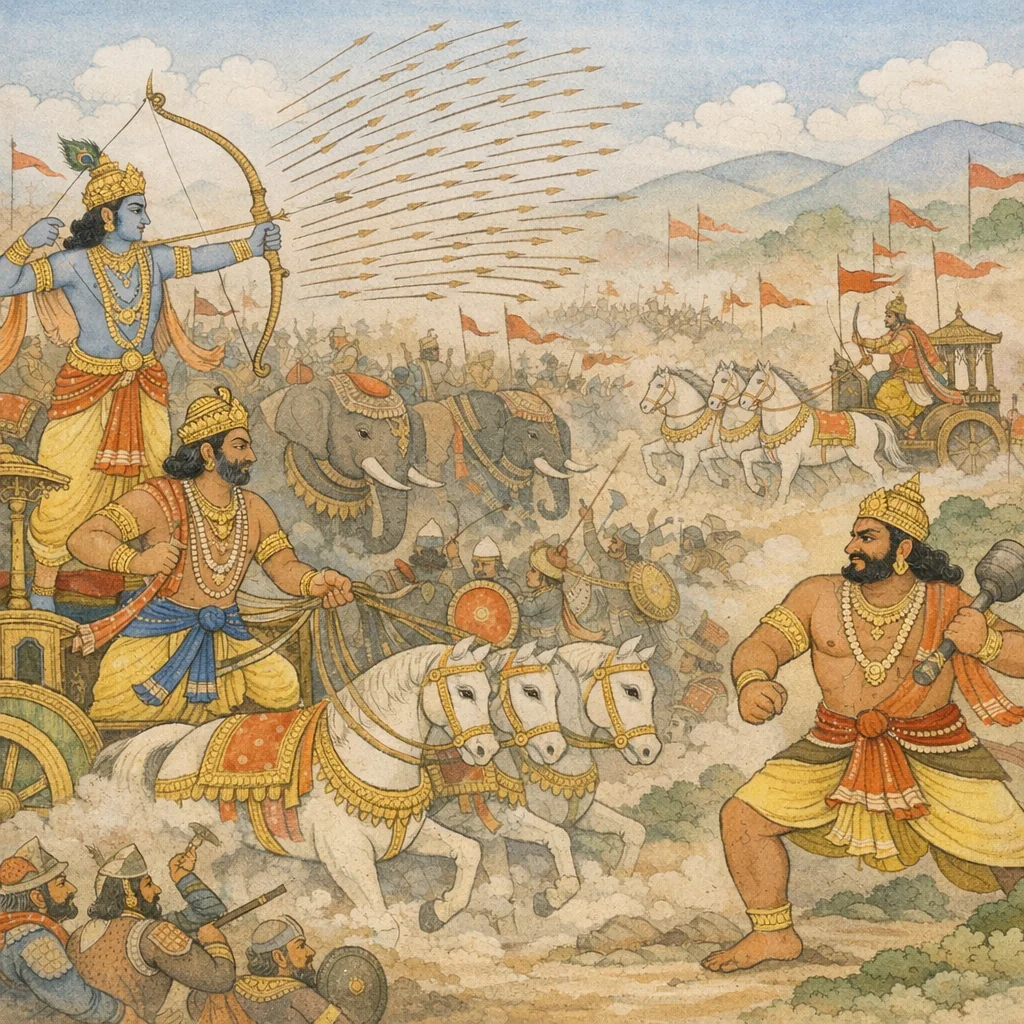
Chapter Arc: संकुल युद्ध की धूल में संशप्तक वीर परलोक-संबंधी घोर शपथ लेकर अर्जुन को घेरते हैं—मानो आज ही उसका रथ रोककर प्राण-दान मांगेंगे। → कौरव-सेना की भीड़ और थकान के बीच भी उन्मत्त गजदल आगे बढ़ता है; अर्जुन की गति अवरुद्ध होती है। उधर श्रीकृष्ण स्वर्ण-भूषणों और मुक्ताजाल से सुसज्जित श्वेत अश्वों को कर्ण-रथ की ओर साधते हैं—रण का केंद्र कर्ण-अर्जुन की ओर खिंचने लगता है। → भीमसेन कालरात्रि-सदृश प्रचंड रूप धारण कर मनुष्य-हय-गज का संहार करते हुए कौरव-सेना में आतंक का ज्वार उठाते हैं; साथ ही अर्जुन के बाणों से नराश्वनागों का महान आर्तनाद गूंजता है और रथ, सादी, हय, गज—कोई भी अखंड नहीं बचता। → कर्ण मित्रहित में, मित्रगृद्धि से प्रेरित होकर, पाञ्चालों पर शर-सहस्रों की वर्षा करता है; पाञ्चाल-सेना में भारी शब्द और भगदड़ फैलती है, और युद्ध का पलड़ा क्षण भर को कर्ण की ओर झुकता है। → कर्ण की तीव्र बाण-वृष्टि के बाद रण का अगला मोड़—क्या अर्जुन-भीम इस दबाव को तोड़कर कर्ण तक पहुंचेंगे—अध्याय के अंत में अधर में लटकता है।
Shlokas
Verse 1
इस प्रकार श्रीमह्याभारत कर्णपर्वमें संकुलयुद्धाविषयक अस्सीवाँ अध्याय पूरा हुआ ॥/ ८० ॥। शी ्सिि्जडीीििि श्यु नासा तसथिस एकाशीतितमो<ध्याय: अर्जुन और भीमसेनके द्वारा कौरव वीरोंका संहार तथा कर्णका पराक्रम संजय उवाच त॑ं प्रयान्तं महावेगैरश्वै: कपिवरध्वजम् । युद्धायाभ्यद्रवन् वीरा: कुरूणां नवती रथा:,संजय कहते हैं--राजन्! जिनकी थध्वजामें श्रेष्ठ कपिका चिह्न है, उन वीर अर्जुनको महावेगशाली अश्रोंद्वारा आगे बढ़ते देख कौरव-दलके नब्बे वीर रथियोंने युद्धके लिये धावा किया इस प्रकार श्रीमह्याभारत कर्णपर्वमें संकुलयुद्धाविषयक इक्यासीवाँ अध्याय पूरा हुआ ॥/ ८१ ॥ (दाक्षिणात्य अधिक पाठके ३ श्लोक मिलाकर कुल ६० श्लोक हैं।) ऑपन-माज बछ। अफि्--छऋाज द्रयशीतितमो< ध्याय: सात्यकिके द्वारा कर्णपुत्र प्रसेनका वध, कर्णका पराक्रम और दुःशासन एवं भीमसेनका युद्ध संजय उवाच ततः कर्ण: कुरुषु प्रद्रुतेषु वरूथिना श्वेतहयेन राजन् । पाज्चालपुत्रान् व्यधमत् सूतपुत्रो महेषुभिववत इवाभ्रसंघान्
Sañjaya said: O King, seeing Arjuna—whose banner bears the emblem of the great ape—advancing swiftly, drawn by high-speed horses, ninety Kuru chariot-warriors surged forward to engage him in battle. The scene underscores how, in the press of war, collective force is marshalled to check a single formidable champion, and how valor and duty (as each side understands it) drive men into escalating violence.
Verse 2
कृत्वा संशप्तका घोरं शपथं पारलौकिकम् | परिवत्रुर्नरव्याप्रा नरव्याप्र॑ं रणेडर्जुनम्,उन नरव्याप्र संशप्तक वीरोंने परलोकसम्बन्धी घोर शपथ खाकर पुरुषसिंह अर्जुनको रणभूमिमें चारों ओरसे घेर लिया
Sañjaya said: Having taken a dreadful vow, binding even for the next world, the Saṃśaptaka warriors surrounded Arjuna—the tiger among men—on the battlefield. The scene underscores the grim ethic of war: men staking their very afterlife on a sworn pledge, driven by loyalty and enmity, closing in upon a single heroic target.
Verse 3
कृष्ण: श्वेतान् महावेगानश्वानूकाञज्चनभूषणान् । मुक्ताजालप्रतिच्छन्नान् प्रैषीत् कर्णरथं प्रति,श्रीकृष्णने सोनेके आभूषणोंसे विभूषित तथा मोतीकी जालियोंसे आच्छादित श्वेत रंगके महान् वेगशाली अश्वोंको कर्णके रथकी ओर बढ़ाया
Sanjaya said: Krishna directed forward, toward Karna’s chariot, swift white horses of tremendous speed—adorned with gold ornaments and covered with netted strings of pearls. In the charged ethics of war, the verse underscores deliberate, skillful action: even amid violence, strategy and mastery over resources are employed with clear intent, shaping the encounter that is about to unfold.
Verse 4
ततः कर्णरथं यान्तमरिघ्नं तं धनंजयम् । बाणवर्षैरभिष्नन्त: संशप्तकरथा ययु:,तत्पश्चात् कर्णके रथकी ओर जाते हुए शत्रुसूदन धनंजयको बाणोंकी वर्षासे घायल करते हुए संशप्तक रथियोंने उनपर आक्रमण कर दिया
Sanjaya said: Then, as that foe-slaying Dhanañjaya (Arjuna) moved toward Karṇa’s chariot, the Saṃśaptaka chariot-warriors advanced against him, striking him with showers of arrows. The scene underscores the relentless pressure of battle: even a righteous champion pursuing a principal adversary must face coordinated assaults from vowed fighters who seek to obstruct his course.
Verse 5
त्वरमाणांस्तु तान् सर्वान् ससूतेष्वसनध्वजान् | जघान नवतिं वीरानर्जुनो निशितै: शरै:,सारथि, धनुष और ध्वजसहित उतावलीके साथ आक्रमण करनेवाले उन सभी नब्बे वीरोंको अर्जुनने अपने पैने बाणोंद्वारा मार गिराया
Sañjaya said: As those warriors rushed forward in haste—still with their charioteers, harnessed teams, and standards—Arjuna struck them down: ninety heroes fell, cut off by his razor-sharp arrows. The verse underscores the grim momentum of battle, where martial skill and resolve rapidly decide life and death, even for fully arrayed fighters.
Verse 6
ते5पतन्त हता बाणैर्नानारूपै: किरीटिना । सविमाना यथा सिद्धा: स्वर्गात् पुण्यक्षये तथा,किरीटधारी अर्जुनके चलाये हुए नाना प्रकारके बाणोंसे मारे जाकर वे संशप्तक रथी पुण्यक्षय होनेपर विमानसहित स्वर्गसे गिरनेवाले सिद्धोंक समान रथसे नीचे गिर पड़े
Sañjaya said: Struck down by the many-shaped arrows loosed by the diademed Arjuna, those Saṁśaptaka chariot-warriors fell from their cars—like perfected beings who, when their store of merit is exhausted, drop from heaven together with their celestial vehicles. The verse underscores a moral irony of war: worldly glory and even heavenly reward are impermanent, and valor without enduring righteousness cannot prevent decline.
Verse 7
ततः सरथनागाश्चा: कुरव: कुरुसत्तमम् । निर्भया भरतश्रेष्ठमभ्यवर्तन्त फाल्गुनम्,तदनन्तर रथ, हाथी और घोड़ोंसहित बहुत-से कौरव वीर निर्भय हो भरतभूषण कुरुश्रेष्ठ अर्जुनका सामना करनेके लिये चढ़ आये
Sañjaya said: Then many warriors of the Kurus—supported by chariots, elephants, and horses—advanced without fear to confront Phālguna (Arjuna), the foremost of the Kurus and the best of the Bharatas. The scene underscores how, in the momentum of war, collective martial resolve can harden into fearless aggression, even when directed against a celebrated and righteous opponent.
Verse 8
तदायस्तमनुष्याश्वमुदीर्णवरवारणम् । पुत्राणां ते महासैन्यं समरौत्सीद् धनंजयम्
Sañjaya said: Then, with its men and horses exhausted and its finest elephants thrown into turmoil, that vast army of your sons, O King, in the press of battle, closed in upon Dhanañjaya (Arjuna). The scene underscores how, when a host is strained to its limits, it may still rally through collective resolve—yet such resolve, when driven by anger and rivalry, deepens the moral weight of the war.
Verse 9
आपके पुत्रोंकी उस विशाल सेनामें मनुष्य और अश्व तो थक गये थे, परंतु बड़े-बड़े हाथी उद्धत होकर आगे बढ़ रहे थे। उस सेनाने अर्जुनकी गति रोक दी ।। शक्त्यृष्टितोमरप्रासैर्गदानिस्त्रिंशसायकै: । प्राच्छादयन् महेष्वासा: कुरव: कुरुनन्दनम्,उन महाथधनुर्धर कौरवोंने कुरुकुलनन्दन अर्जुनको शक्ति, ऋष्टि, तोमर, प्रास, गदा, खड्ग और बाणोंके द्वारा ढक दिया
Sañjaya said: The mighty bowmen of the Kurus showered Kuru-nandana Arjuna from every side, covering him over with a storm of weapons—javelins, spears, tomaras, lances, maces, swords, and arrows—seeking to check his advance amid the press of battle. The scene underscores how, in war, collective force and relentless assault are used to restrain a single heroic opponent, even as the moral weight of violence continues to accumulate on all sides.
Verse 10
तामन्तरिक्षे विततां शस्त्रवृष्टिं समन््तत: । व्यधमत् पाण्डवो बाणैस्तम: सूर्य इवांशुभि:
Sañjaya said: The Pāṇḍava dispersed that weapon-storm, spread across the sky on every side, with his arrows—just as the sun, with its rays, drives away darkness. The image underscores a warrior’s duty in battle: to meet overwhelming violence with disciplined skill, restoring clarity and order amid chaos.
Verse 11
परंतु जैसे सूर्य अपनी किरणोंद्वारा अन्धकारको नष्ट कर देता है, उसी प्रकार पाण्डुपुत्र अर्जुनने आकाशमें सब ओर फैली हुई उस बाणवर्षाको छिन्न-भिन्न कर डाला ।। ततो म्लेच्छा: स्थिता मत्तैस्त्रयोदशशतैर्गजै: । पार्श्वतो व्यहनन् पार्थ तव पुत्रस्य शासनात्,तब आपके पुत्र दुर्योधनकी आज्ञासे म्लेच्छसैनिक तेरह सौ मतवाले हाथियोंके साथ आ पहुँचे और पार्श्वभागमें खड़े हो अर्जुनको घायल करने लगे
Sañjaya said: Then, at your son Duryodhana’s command, bands of Mleccha warriors arrived with thirteen hundred rut-maddened elephants. Taking position on Arjuna’s flank, they struck at Pārtha, seeking to wound him—an escalation that shows how, in the frenzy of war, commanders deploy overwhelming force and foreign auxiliaries to break a single steadfast hero.
Verse 12
कर्णिनालीकनाराचैस्तोमरप्रासशक्तिभि: । मुसलैभिन्दिपालैश्न रथस्थं पार्थमार्दयन्,उन्होंने रथपर बैठे हुए अर्जुनको कर्णी, नालीक, नाराच, तोमर, मूसल, प्रास, भिंदिपाल और शक्तियोंद्वारा गहरी चोट पहुँचायी
Sañjaya said: Striking Arjuna as he sat upon his chariot, they battered him with many kinds of missiles—karṇi-darts, nālīka-arrows, nārāca shafts, tomara javelins, prāsa spears, śakti lances, as well as heavy clubs and bhindipāla weapons—inflicting deep wounds amid the relentless press of battle.
Verse 13
तां शस्त्रवृष्टिमतुलां द्विपहस्तैः प्रवेरिताम् । चिच्छेद निशितैर्भल्लैरर्धचन्द्रैश्ष फाल्गुन:,हाथियोंकी सूँड़ोंद्वारा की हुई उस अनुपम शस्त्रवर्षाको अर्जुनने तीखे भल्लों तथा अर्धचन्द्रोंसे नष्ट कर दिया
Sañjaya said: That incomparable shower of weapons, hurled forth by the elephants’ trunks, Arjuna (Phālguna) cut down—shattering it with sharp bhalla-arrows and crescent-headed shafts. The scene underscores disciplined mastery in battle: force is met not with rage, but with precise, controlled skill that neutralizes harm.
Verse 14
अथ तान् द्विरदान् सर्वान् नानालिज्जैः शरोत्तमै: । सपताकथध्वजारोहान् गिरीन् वजैरिवाहनत्,फिर नाना प्रकारके चिह्नवाले उत्तम बाणोंद्वारा पताका, ध्वज और सवारोंसहित उन सभी हाथियोंको उसी तरह मार गिराया, जैसे इन्द्रने वज़के आघातोंसे पर्वतोंको धराशायी कर दिया था
Verse 15
ते हेमपुड्खैरिषुभिरददिता हेममालिन: । हताः पेतुर्महानागा: साग्निज्वाला इवाद्रय:,सोनेके पंखवाले बाणोंसे पीड़ित हुए वे सुवर्ण-मालाधारी बड़े-बड़े गजराज मारे जाकर आगकी ज्वालाओंसे युक्त पर्वतोंके समान धरतीपर गिर पड़े
Sañjaya said: Tormented by arrows whose shafts were adorned with gold, those great war-elephants, decked with golden garlands, were slain and fell upon the earth like mountains wreathed in tongues of fire. The image underscores the terrible grandeur of battle—splendor turned into ruin, and living strength brought down by relentless violence.
Verse 16
ततो गाण्डीवनिर्घोषो महानासीद विशाम्पते । स्तनतां कूजतां चैव मनुष्यगजवाजिनाम्,प्रजानाथ! तदनन्तर गाण्डीव धनुषकी टंकारध्वनि बड़े जोर-जोरसे सुनायी देने लगी। साथ ही चिग्घाड़ते और आर्तनाद करते हुए मनुष्यों, हाथियों तथा घोड़ोंकी आवाज भी वहाँ गूँज उठी
Sañjaya said: Then, O lord of the people, there arose the mighty reverberation of the Gāṇḍīva. Along with it resounded the cries—roaring and wailing—of men, elephants, and horses. The verse heightens the moral atmosphere of the battlefield: the famed bow’s thunder signals the surge of martial resolve, while the mixed animal and human lament underscores the terrible cost that war exacts from all living beings.
Verse 17
कुण्जराश्नव हता राजन दुद्गर॒ुवुस्ते समन््तत: । अश्वाश्न॒ पर्यधावन्त हतारोहा दिशो दश,राजन्! घायल हाथी सब ओर भागने लगे। जिनके सवार मार दिये गये थे, वे घोड़े भी दसों दिशाओंमें दौड़ लगाने लगे
Sañjaya said: “O King, nine elephants were slain, and the remaining great elephants, thrown into panic, fled in every direction. And the horses—whose riders had been killed—ran wildly toward the ten quarters. Thus, with the fall of their drivers and commanders, the ordered array dissolved into confusion, revealing how quickly violence turns disciplined forces into uncontrolled flight.”
Verse 18
रथा हीना महाराज रथिभिवाजिभिस्तथा । गन्धर्वनगराकारा दृश्यन्ते सम सहस्रश:,महाराज! गन्धर्वनगरोंके समान सहस्रों विशाल रथ रथियों और घोड़ोंसे हीन दिखायी देने लगे
Sañjaya said: “O King, thousands of great chariots now appear—bereft of charioteers and horses—like the illusory cities of the Gandharvas.” The image underscores the war’s moral devastation: the proud instruments of battle stand emptied of life and purpose, reduced to haunting, unreal-looking shells amid the slaughter.
Verse 19
अश्वारोहा महाराज धावमाना इतस्तत: । तत्र तत्रैव दृश्यन्ते निहता: पार्थसायकै:,राजेन्द्र! अर्जुनके बाणोंसे घायल हुए अश्वारोही भी जहाँ-तहाँ इधर-उधर भागते दिखायी दे रहे थे
Sañjaya said: O great king, the horsemen—struck down by the arrows of Pārtha—were seen fleeing in all directions, appearing here and there across the field. The scene underscores the relentless momentum of battle, where prowess and fate swiftly overturn pride and position, and where the consequences of violence spread beyond the foremost warriors to every rank.
Verse 20
तस्मिन् क्षणे पाण्डवस्य बाह्दोर्बलमदृश्यत । यत् सादिनो वारणांश्व रथांश्नैकोडजयद् युधि,उस समय पाण्डुपुत्र अर्जुनकी भुजाओंका बल देखा गया, उन्होंने अकेले ही युद्धमें रथों, सवारों और हाथियोंको भी परास्त कर दिया
Sañjaya said: “At that very moment the might of the Pāṇḍava’s arms became manifest: for, alone in the battle, he overcame chariots, horsemen, horses, and even elephants.” The verse highlights Arjuna’s extraordinary prowess as a visible sign of disciplined strength employed in the harsh demands of righteous war.
Verse 21
(असंयुक्ताश्न ते राजन् परिवृत्ता रणं प्रति । हया नागा रथाश्रैव नदन्तो<र्जुनमभ्ययु: ।।) राजन! तदनन्तर पृथक्-पृथक् वे हाथी, घोड़े और रथ पुनः युद्धस्थलमें लौट आये और अर्जुनके सामने गर्जना करते हुए डट गये। ततस्त्र्यज्रेण महता बलेन भरतर्षभ । दृष्टवा परिवृतं राजन् भीमसेन: किरीटिनम्,नरेश्वर! भरतश्रेष्ठ] तदनन्तर अर्जुनको तीन अंगोंवाली विशाल सेनासे घिरा देख भीमसेन मरनेसे बचे हुए आपके कतिपय रथियोंको छोड़कर बड़े वेगसे धनंजयके रथकी ओर दौड़े
Sañjaya said: O King, those troops of yours who had become disordered turned back again toward the battlefield. Horses, elephants, and chariots advanced once more, roaring as they came up against Arjuna. Then, O bull among the Bharatas, seeing the diademed Arjuna surrounded by a great threefold force, Bhīmasena—O lord of men, best of the Bharatas—abandoned the pursuit of some of your surviving chariot-warriors and rushed with great speed toward Dhanañjaya’s chariot, intent on breaking the encirclement.
Verse 22
हतावशेषानुत्सृज्य त्वदीयान् कतिचिद् रथान् । जवेनाभ्यद्रवद् राजन् धनंजयरथं प्रति,नरेश्वर! भरतश्रेष्ठ] तदनन्तर अर्जुनको तीन अंगोंवाली विशाल सेनासे घिरा देख भीमसेन मरनेसे बचे हुए आपके कतिपय रथियोंको छोड़कर बड़े वेगसे धनंजयके रथकी ओर दौड़े
Sañjaya said: O King, O lord of men, best of the Bharatas—leaving aside a few of your chariot-warriors who had survived the slaughter, he rushed with great speed toward the chariot of Dhanañjaya (Arjuna).
Verse 23
ततस्तत् प्राद्रवत् सैन्यं हतभूयिष्ठमातुरम् । दृष्टवार्जुन॑ तदा भीमो जगाम भ्रातरं प्रति,उस समय आपके अधिकांश सैनिक मारे जा चुके थे, बहुत-से घायल होकर आतुर हो गये थे। फिर तो कौरव-सेनामें भगदड़ मच गयी। यह सब देखते हुए भीमसेन अपने भाई अर्जुनके पास आ पहुँचे
Sanjaya said: Then that army—its greater part already slain and the rest distressed with wounds—broke into a headlong rout. Seeing Arjuna at that moment, Bhima went straight toward his brother, as the Kaurava host fell into confusion.
Verse 24
हतावशिष्टांस्तुरगानर्जुनेन महाबलान् । भीमो व्यधमदश्रान्तो गदापाणिमहाहवे,भीमसेन अभी थके नहीं थे, उन्होंने हाथमें गदा ले उस महासमरमें अर्जुनद्वारा मारे जानेसे बचे हुए महाबली घोड़ों और सवारोंका संहार कर डाला
Sañjaya said: In that great battle, Bhīma—still unwearied and wielding his mace—went on to slaughter the powerful horses (and their riders) who had survived after being struck down by Arjuna. The verse underscores the relentless, cumulative violence of war: even those who escape one hero’s assault are not spared when another, driven by duty and wrath, presses the attack.
Verse 25
कालरात्रिमिवात्युग्रां नरनागाश्वभोजनाम् । प्राकाराषट्ट्रपुरद्वारदारणीमतिदारुणाम्
Sañjaya said: It was like the dread Kālarātri herself—fiercely terrifying—devouring men, elephants, and horses; exceedingly cruel, shattering ramparts, smashing defensive engines, and bursting through the gates of the city.
Verse 26
ततो गदां नृनागाश्वेष्वाशु भीमो व्यवासृजत् | सा जघान बहूनश्वानश्चारोहांश्व मारिष
Sañjaya said: Then Bhīma swiftly hurled his mace into the mass of men, elephants, and horses. That weapon struck down many horses and their riders, O revered one—an image of war’s relentless force where valor becomes destruction amid the press of battle.
Verse 27
मान्यवर नरेश! तदनन्तर भीमसेनने कालरात्रिके समान अत्यन्त भयंकर, मनुष्यों, हाथियों और घोड़ोंको कालका ग्रास बनानेवाली, परकोटों, अट्टालिकाओं और नगरद्वीपोंको भी विदीर्ण कर देनेवाली अपनी अति दारुण गदाका वहाँ मनुष्यों, गजराजों तथा अश्वोंपर तीव्रवेगसे प्रहार किया। उस गदाने बहुत-से घोड़ों और घुड़सवारोंका संहार कर डाला ।। कार्ष्णायसतनुत्राणान् नरानश्चांश्व॒ पाण्डव: । पोथयामास गदया सशब्दं तेडपतन् हता:
Sañjaya said: Then Bhīmasena, wielding his exceedingly dreadful mace—like Kālarātri herself, a devourer of men, elephants, and horses, and capable of rending ramparts and lofty towers—struck with swift force at warriors, lordly elephants, and horses. With that mace the Pāṇḍava crushed many iron-armoured men and horses; they fell down slain with a great crashing sound. The passage underscores the terrifying momentum of battle, where strength and wrath, once unleashed, turn living beings into the prey of Time.
Verse 28
पाण्डुपुत्र भीमने काले लोहेका कवच पहने हुए बहुत-से मनुष्यों और अश्वोंको भी गदासे मार गिराया। वे सब-के-सब आर्तनाद करते हुए प्राणशून्य होकर गिर पड़े ।। उन्तैर्दशन्तो वसुधां शेरते क्षतजोक्षिता: । भग्नमूर्धास्थिचरणा: क्रव्यादगणभोजना:,घायल हुए कौरव-सैनिक खूनसे नहाकर दाँतोंसे ओठ चबाते हुए धरतीपर सो गये थे, किन्हींका माथा फट गया था, किन्हींकी हड्डियाँ चूर-चूर हो गयी थीं और किन्हींके पाँव उखड़ गये थे। वे सब-के-सब मांसभक्षी पशुओंके भोजन बन गये थे
Sañjaya said: The wounded Kaurava soldiers, drenched in blood, lay upon the earth, biting their lips with clenched teeth in agony. Some had their skulls split, some had their bones shattered, and some had their feet torn away. All of them became food for packs of flesh-eating creatures—an unsparing picture of war’s cruelty and the moral cost of violence.
Verse 29
असृड्मांसवसाभिश्च तृप्तिमभ्यागता गदा । अस्थीन्यप्यश्नती तस्थौ कालरात्रीव दुर्दुशा,वह गदा दुर्लक्ष्य कालरात्रिके समान शत्रुओंके रक्त, मांस और चर्बीसे तृप्त होकर उनकी हड्डियोंको भी चबाये जा रही थी
Sañjaya said: The mace, having reached satiety on blood, flesh, and fat, stood there still—gnawing even the bones—terrible to behold, like Kālarātrī herself. The image underscores how, in the frenzy of war, weapons become extensions of death, consuming not only bodies but also the moral order that should restrain violence.
Verse 30
सहस्राणि दशाश्रानां हत्वा पत्तीश्व भूयसा । भीमो< भ्यधावत् संक्रुद्धो गदापाणिरितस्तत:,दस हजार घोड़ों और बहुसंख्यक पैदलोंका संहार करके क्रोधमें भरे हुए भीमसेन हाथमें गदा लेकर इधर-उधर दौड़ने लगे
Sañjaya said: After slaying ten thousand horses and a great multitude of foot-soldiers, Bhīma—his wrath fully kindled—rushed forward, mace in hand, ranging here and there across the battlefield. The verse underscores the ferocity of war, where prowess and anger drive action, even as the moral weight of mass slaughter hangs over the scene.
Verse 31
गदापार्णिं ततो भीम॑ दृष्टवा भारत तावका: । मेनिरे समनुप्राप्तं कालदण्डोद्यतं यमम्
Sañjaya said: Then, O Bhārata, when your warriors saw Bhīma with his mace in hand, they thought that Yama himself had arrived—raising the rod of Death. The sight of Bhīma, armed and advancing, struck them as the very embodiment of inevitable retribution on the battlefield.
Verse 32
भरतनन्दन! भीमसेनको गदा हाथमें लिये देख आपके सैनिक कालदण्ड लेकर आया हुआ यमराज मानने लगे ।। स मत्त इव मातजड्ज: संक्रुद्ध: पाण्डुनन्दन: । प्रविवेश गजानीकं॑ मकर: सागरं यथा,मतवाले हाथीके समान अत्यन्त क्रोधमें भरे हुए पाण्डुनन्दन भीमसेनने शत्रुओंकी गजसेनामें प्रवेश किया, मानो मगर समुद्रमें जा घुसा हो
Sañjaya said: “O scion of Bharata, seeing Bhīmasena with his mace in hand, your soldiers took him to be Yama himself, come bearing the rod of Death. Like a rut-maddened elephant, the wrathful son of Pāṇḍu plunged into the enemy’s elephant-corps—just as a makara drives into the sea.” The verse heightens the moral atmosphere of the battlefield: Bhīma appears as the visible force of retribution, and fear spreads among those who stand in the path of inevitable consequence.
Verse 33
विगाह[ च गजानीकं प्रगृह्म महतीं गदाम् | क्षणेन भीम: संक्रुद्धस्तन्निन्ये यमसादनम्,विशाल गदा हाथमें ले अत्यन्त कुपित हो भीमसेनने हाथियोंकी सेनामें घुसकर उसे क्षणभरमें यमलोक पहुँचा दिया
Sañjaya said: Seizing his massive mace and plunging into the elephant-corps, Bhīma—inflamed with wrath—sent that foe to Yama’s abode in a mere moment. The verse underscores the ferocity of battlefield duty (kṣātra-dharma) while also hinting at the moral gravity of anger: even when action is sanctioned by war, wrath remains a dangerous inner force that drives swift, irreversible outcomes.
Verse 34
गजान् सकड़्कटान् मत्तान् सारोहानू सपताकिन: । पतत: समपश्याम सपक्षान् पर्वतानिव
Sañjaya said: We saw maddened elephants—armoured and bearing riders and banners—falling in the battle, like mountains with wings crashing down. The scene conveyed the terrible momentum of war: even the mightiest supports of an army, once driven into frenzy and then struck down, become instruments of ruin, warning how violence turns strength into catastrophe.
Verse 35
कवचों, सवारों और पताकाओंसहित मतवाले हाथियोंको हमने पंखधारी पर्वतोंके समान धराशायी होते देखा था ।। हत्वा तु तद् गजानीकं॑ भीमसेनो महाबल: । पुन: स्वरथमास्थाय पृष्ठतो<र्जुनमभ्ययात्
Sañjaya said: After slaying that elephant-corps, the mighty Bhīmasena mounted his own chariot again and advanced to Arjuna’s rear—returning to support him in the press of battle. The scene underscores disciplined valor: strength is used not for mere display, but to clear obstacles and rejoin one’s duty to protect an ally in a righteous cause.
Verse 36
महाबली भीमसेन उस गजसेनाका संहार करके पुनः अपने रथपर आ बैठे और अर्जुनके पीछे-पीछे चलने लगे ।। ततः पराड्मुखप्रायं निरुत्साहं बल॑ तव । व्यालम्बत महाराज प्रायश: शस्त्रवेष्टितम्,महाराज! उस समय भीमसेन और अर्जुनके अस्त्र-शस्त्रोंस घिरी हुई आपकी अधिकांश सेना उत्साहशून्य, विमुख और जडवत् हो गयी
Sañjaya said: After slaying that elephant-corps, the mighty Bhīmasena again mounted his chariot and began to move behind Arjuna. Then, O King, your army—mostly hemmed in on all sides by the weapons of Bhīma and Arjuna—became largely spiritless, turned away as if in retreat, and stood stunned and inert.
Verse 37
विलम्बमानं तत् सैन्यमप्रगल्भमवस्थितम् । दृष्टवा प्राच्छादयद् बाणैरर्जुन: प्राणतापनै:,उस सेनाको जडवत्, उद्योगशून्य हुई देख अर्जुनने प्राणोंको संतप्त कर देनेवाले बाणोंद्वारा उसे आच्छादित कर दिया
Sañjaya said: Seeing that army lingering in hesitation—standing without boldness or initiative—Arjuna covered it with volleys of arrows that scorched the very life-breath. In the moral pressure of battle, the verse highlights how delay and loss of resolve become fatal, while decisive action by a capable warrior turns hesitation into immediate peril.
Verse 38
नराश्वरथमातज़ा युधि गाण्डीवधन्चना । शयव्रातैश्वषिता रेजु: कदम्बा इव केसरै:,युद्धसस््थलमें गाण्डीवधारी अर्जुनके बाणोंसे छिदे हुए मनुष्य, घोड़े, रथ और हाथी केसरयुक्त कदम्बपुष्पोंके समान सुशोभित हो रहे थे
Sañjaya said: On the battlefield, men, horses, chariots, and elephants—pierced through by volleys of arrows from Arjuna, the wielder of the Gāṇḍīva—appeared strikingly adorned, like kadamba blossoms bright with their stamens. The verse underscores the grim aesthetic of war: martial excellence can make even devastation look ‘ornamented,’ reminding the listener that brilliance in combat does not erase the ethical weight of slaughter.
Verse 39
ततः कुरूणामभवदार्तनादो महान् नृप । नराश्वनागासुहरैर्वध्यतामर्जुनेषुभि:,नरेश्वर! तदनन्तर मनुष्यों, घोड़ों और हाथियोंके प्राण लेनेवाले अर्जुनके बाणोंद्वारा हताहत होते हुए कौरवोंका महान् आर्तनाद प्रकट होने लगा
Sañjaya said: Then, O King, a great wail of anguish arose among the Kurus, as they were being struck down by Arjuna’s arrows—arrows that robbed men, horses, and elephants of their very lives. The battlefield’s sound turned into a collective lament, revealing the terrible cost of war as prowess became slaughter.
Verse 40
हाहाकृतं भृशं त्रस्तं लीयमानं परस्परम् । अलातचक्रवत् सैन्यं तदाभ्रमत तावकम्,महाराज! उस समय अत्यन्त भयभीत हो हाहाकार मचाती और एक-दूसरेकी आड़में छिपती हुई आपकी सेना अलातचक्रके समान वहाँ चक्कर काटने लगी
Sañjaya said: “O King, at that time your army—utterly terrified—raised a loud cry of panic, pressed in upon one another seeking cover, and whirled about on the field like a spinning firebrand, its order and resolve collapsing under fear.”
Verse 41
ततस्तद् युद्धमभवत् कुरूणां सुमहद् बलै: । नद्वात्रासीदनिर्भिन्नो रथ: सादी हयो गज:,तत्पश्चात् कौरवोंकी सेनाके साथ महान् युद्ध होने लगा। उसमें कोई भी ऐसा रथ, सवार, घोड़ा अथवा हाथी नहीं था, जो अर्जुनके बाणोंसे विदीर्ण न हो गया हो
Sañjaya said: Then a very great battle arose with the forces of the Kurus. In that clash there remained no chariot, no rider, no horse, and no elephant that was not pierced through—shattered by Arjuna’s arrows. The scene underscores the overwhelming momentum of Arjuna’s martial prowess and the grim ethical weight of war, where entire formations are undone by a single warrior’s focused skill.
Verse 42
आदीप्तमिव तत् सैन्यं शरैश्छिन्नतनुच्छदम् । आसीत् सुशोणितक्लिन्नं फुल्लाशोकवनं यथा,उस समय सारी सेना जलती हुई-सी दिखायी देती थी। बाणोंसे उसके कवच छित्न- भिन्न हो गये थे तथा वह खूनसे लथपथ हो खिले हुए अशोकवनके समान प्रतीत होती थी
Sañjaya said: “That host appeared as though it were ablaze. Its bodily coverings—its armor and protective gear—had been torn and shredded by arrows; drenched in copious blood, it looked like a grove of aśoka trees in full bloom.”
Verse 43
(तत् सैन्यं भरतश्रेष्ठ वध्यमानं शितै: शरै: । न जहीौ समर प्राप्य फाल्गुनं शत्रुतापनम् ।। तत्राद्भुतमपश्याम कौरवाणां पराक्रमम् । वध्यमानापि यत् पार्थ न जहुर्भरतर्षभ ।।) भरतश्रेष्ठ! शत्रुओंको तपानेवाले अर्जुनको सामने पाकर तीखे बाणोंसे मारी जाती हुई आपकी उस सेनाने युद्ध नहीं छोड़ा। भरतभूषण! वहाँ हमलोगोंने कौरवयोद्धाओंका यह अद्भुत पराक्रम देखा कि वे मारे जानेपर भी अर्जुनको छोड़ नहीं रहे थे। त॑ दृष्टवा कुरवस्तत्र विक्रान्तं सव्यसाचिनम् । निराशा: समपद्यन्त सर्वे कर्णस्य जीविते,सव्यसाची अर्जुनको इस प्रकार पराक्रम प्रकट करते देख समस्त कौरव-सैनिक कर्णके जीवनसे निराश हो गये
Sañjaya said: O best of the Bharatas, though your army was being cut down by sharp arrows, it did not abandon the battle when it came face to face with Phālguna (Arjuna), the scorcher of foes. There we witnessed an astonishing valor among the Kauravas: even while being slain, they would not give up their stand against Pārtha. Seeing Savyasācin (Arjuna) displaying such prowess there, all the Kurus fell into despair regarding Karṇa’s very survival.
Verse 44
अविषट्ां तु पार्थस्य शरसम्पातमाहवे । मत्वा न्यवर्तन् कुरवो जिता गाण्डीवधन्चना,गाण्डीवधारी अर्जुनके द्वारा परास्त हुए कौरव-योद्धा समरांगणमें उनकी बाण-वर्षाको अपने लिये असहा मानकर युद्धसे पीछे हटने लगे
Sañjaya said: In the thick of battle, the Kaurava warriors, judging Arjuna’s relentless shower of arrows to be unbearable, began to fall back from the fight—overcome by the wielder of the Gāṇḍīva. The verse underscores how sheer martial excellence and resolve can break an army’s will, forcing retreat when endurance fails.
Verse 45
ते हित्वा समरे कर्ण वध्यमानाश्न सायकै: । प्रदुद्रवुर्दिशो भीताश्लुक्रुशुश्नापि सूतजम्,बाणोंसे बिंध जानेके कारण वे भयभीत हो रणभूमिमें कर्णको अकेला ही छोड़कर सम्पूर्ण दिशाओंमें भाग चले; किंतु अपनी रक्षाके लिये सूतपुत्र कर्णको ही पुकारते रहे
Sañjaya said: Struck down by arrows and seized by fear, they abandoned Karṇa on the battlefield and fled in every direction. Yet even as they ran for their own safety, they kept crying out to the charioteer’s son, Karṇa, as the one who should protect them—revealing the moral contradiction of deserting a leader while still demanding his shelter.
Verse 46
अभ्यद्रवत तान् पार्थ: किरन् शरशतान् बहून् हर्षयन् पाण्डवान् योधान् भीमसेनपुरोगमान्,कुन्तीकुमार अर्जुन सैकड़ों बाणोंकी वर्षा करते और भीमसेन आदि पाण्डव- योद्धाओंका हर्ष बढ़ाते हुए आपके उन सैनिकोंको खदेड़ने लगे
Sañjaya said: Then Pārtha (Arjuna), rushing upon those foes, showered them with hundreds of arrows. By this display of prowess he gladdened the Pāṇḍava warriors led by Bhīmasena, and began to drive back your troops. The passage highlights the battlefield ethic of inspiring one’s own side through disciplined valor while pressing the enemy without hesitation.
Verse 47
पुत्रास्तु ते महाराज जग्मु: कर्णरथं प्रति । अगाधे मज्जतां तेषां द्वीप: कर्णोडभवत्तदा,महाराज! इसके बाद आपके पुत्र भागकर कर्णके रथके पास गये। वे संकटके अगाध समुद्रमें डूब रहे थे। उस समय कर्ण ही द्वीपके समान उनका रक्षक हुआ
Sañjaya said: “O King, your sons rushed toward Karṇa’s chariot. As they were sinking in a perilous, unfathomable sea of distress, Karṇa at that moment became like an island to them— a refuge and protector amid danger.”
Verse 48
कुरवो हि महाराज निर्विषा: पन्नगा इव | कर्णमेवोपलीयन्त भयाद् गाण्डीवधन्चन:,महाराज! कौरव विषरहित सर्पोंके समान गाण्डीवधारी अर्जुनके भयसे कर्णके ही पास छिपने लगे
Sañjaya said: “O great king, the Kuru warriors—like serpents whose venom has been removed—were, out of fear of Arjuna, the wielder of the Gāṇḍīva, gathering close to Karṇa alone for shelter.”
Verse 49
यथा सर्वाणि भूतानि मृत्योर्भीतानि मारिष । धर्ममेवोपलीयन्ते कर्मवन्ति हि यानि च,माननीय नरेश! जैसे कर्म करनेवाले सब जीव मृत्युसे डरकर धर्मकी ही शरण लेते हैं, उसी प्रकार आपके पुत्र महामना पाण्डुपुत्र अर्जुनके भयसे महाधनुर्धर कर्णकी ही ओटमें छिपने लगे थे
Sañjaya said: “O venerable one, just as all living beings, frightened of Death, take refuge in Dharma—so too did your sons, alarmed by the high-souled Pāṇḍava Arjuna, begin to hide behind Karṇa, the great archer, seeking his protection.”
Verse 50
तथा कर्ण महेष्वासं पुत्रास्तव नराधिप । उपालीयन्त संत्रासात् पाण्डवस्थ महात्मन:,माननीय नरेश! जैसे कर्म करनेवाले सब जीव मृत्युसे डरकर धर्मकी ही शरण लेते हैं, उसी प्रकार आपके पुत्र महामना पाण्डुपुत्र अर्जुनके भयसे महाधनुर्धर कर्णकी ही ओटमें छिपने लगे थे
Sañjaya said: “O king, in the same way that living beings, frightened of death, take refuge in dharma, so too your sons—terrified of the great-souled Pāṇḍava Arjuna—began to seek shelter behind Karṇa, that mighty archer.”
Verse 51
तान् शोणितपरिक्लिन्नान् विषमस्थान् शरातुरान् । मा भैष्टेत्यब्रवीत् कर्णो हर भीतो मामितेति च,कर्णने उन्हें खूनसे लथपथ, संकटमें मगन और बाणोंकी चोटसे व्याकुल देखकर कहा --4वीरो! डरो मत। तुम सब लोग निर्भय होकर मेरे पास आ जाओ”
Seeing them drenched in blood, caught in a perilous position, and distressed by the pain of arrows, Karṇa spoke words meant to steady their hearts: “Do not be afraid. Come to me without fear.” In the midst of battle’s chaos, he assumes the role of a rallying leader, urging courage and cohesion rather than panic.
Verse 52
सम्भग्नं हि बल॑ दृष्टवा बलात् पार्थेन तावकम् | भधनुर्विस्फारयन् कर्णस्तस्थौ शत्रुजिघांसया,अर्जुनने बलपूर्वक आपकी सेनाको भगा दिया है--यह देखकर कर्ण शत्रुओंका वध करनेकी इच्छासे धनुष तानकर खड़ा हो गया
Sañjaya said: Seeing your army shattered by the force of Pārtha (Arjuna), Karṇa stood firm, twanging and drawing his bow, intent on the destruction of the enemy. The verse frames a decisive escalation: the collapse of one side’s formation provokes a renewed, lethal resolve in a principal warrior, highlighting how battlefield duty and personal enmity converge into immediate action.
Verse 53
तान् प्रद्रुतान् कुरून् दृष्टवा कर्ण: शस्त्रभृतां वर: । संचिन्तयित्वा पार्थस्य वधे दश्ने मन:श्वसन्,शस्त्रधारियोंमें श्रेष्ठ कर्णने कौरव-सैनिकोंको भागते देख खूब सोच-विचारकर लंबी साँस लेते हुए मन-ही-मन अर्जुनके वधका निश्चय किया
Sañjaya said: Seeing the Kuru warriors fleeing in disorder, Karṇa—foremost among those who bear weapons—reflected deeply. Drawing a long breath, he inwardly fixed his resolve upon the slaying of Pārtha (Arjuna), seeking to restore the Kaurava cause through a decisive act amid the moral and strategic collapse of the battlefield.
Verse 54
विस्फार्य सुमहच्चापं ततश्नाधिरथिरवृष: । पज्चालान् पुनराधावत् पश्यत: सव्यसाचिन:,तत्पश्चात् धर्मात्मा अधिरथपुत्र कर्णने अपने विशाल धनुषको फैलाकर अर्जुनके देखते- देखते पुनः पांचाल-योद्धाओंपर धावा किया
Sañjaya said: Then Karṇa, the bull among chariot-warriors, drew his mighty bow to its full stretch and, before Arjuna’s very eyes, charged once more against the Pāñcāla fighters—pressing the battle forward with relentless martial resolve amid the demands of kṣatriya-duty.
Verse 55
तत: क्षणेन क्षितिपा: क्षतजप्रतिमेक्षणा: । कर्ण ववर्षुर्बाणौचैर्यथा मेघा महीधरम्,यह देख पांचालनरेशोंके नेत्र रोषसे लाल हो गये। जैसे बादल पर्वतपर पानी बरसाते हैं, उसी प्रकार वे क्षणभरमें कर्णपर बाणसमूहोंकी वर्षा करने लगे
Sañjaya said: Then, in a moment, the kings—whose eyes were like blood with wrath—poured down volleys of arrows upon Karṇa, just as rain-bearing clouds shower a mountain. The scene underscores how anger in battle swiftly turns into collective, overwhelming violence, where many rulers act as one force against a single champion.
Verse 56
तत: शरसहस्राणि कर्णमुक्तानि मारिष । व्ययोजयन्त पज्चालानू् प्राणै: प्राणभूतां वर,प्राणधारियोंमें श्रेष्ठ मान्यवर नरेश! तदनन्तर कर्णके छोड़े हुए सहस्रों बाण पांचालोंको प्राणहीन करने लगे
Sañjaya said: “Then, O venerable one—best among those who bear life—thousands of arrows released by Karṇa began to sever the Pāñcālas from their very breath, striking them down in the fury of battle.”
Verse 57
तत्र शब्दो महानासीत् पञ्चालानां महामते । वध्यतां सूतपुत्रेण मित्रार्थे मित्रगृद्धिना,महामते! वहाँ मित्रका हित चाहनेवाले सूतपुत्र कर्णके द्वारा मित्रकी ही भलाईके लिये मारे जानेवाले पांचालोंका महान् आर्तनाद होने लगा
Sañjaya said: “O wise one, there arose there a great cry among the Pāñcālas, as they were being slain by Karṇa, the son of a charioteer—one who, for the sake of his friend, was fiercely intent on his friend’s cause.” The verse underscores the grim irony of war: loyalty to a friend becomes the ethical justification for ruthless violence, and the battlefield resounds with the anguish of those destroyed in the name of ‘friendship’ and alliance.
Verse 81
इति श्रीमहाभारते कर्णपर्वणि संकुलयुद्धे एकाशीतितमो< ध्याय:
Thus ends the eighty-first chapter of the Karṇa Parva of the Śrī Mahābhārata, within the section describing the confused and densely entangled battle. The narrator marks a formal closure, reminding the listener that the war has reached a state of chaotic intensity where discernment, duty, and restraint are severely tested.