Adhyaya 118
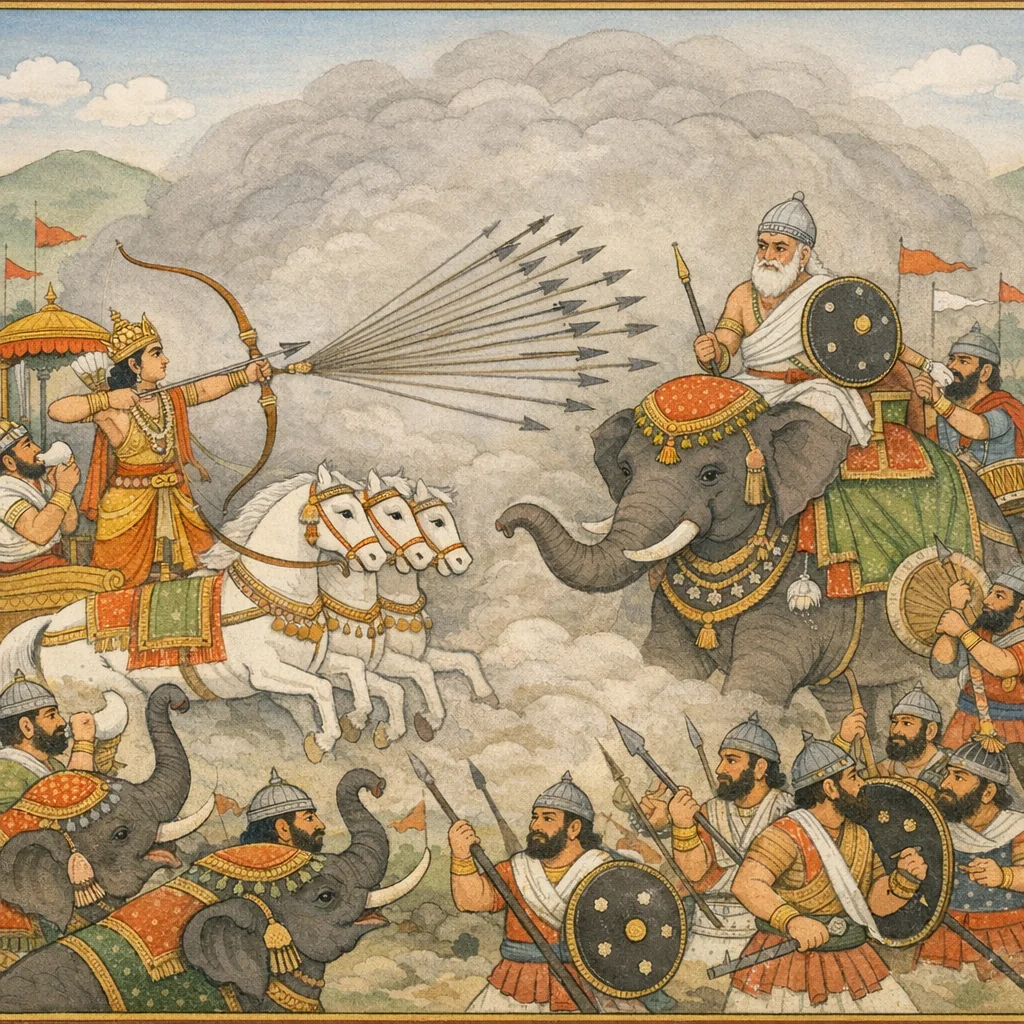
Chapter Arc: धृतराष्ट्र संजय से पूछते हैं—दसवें दिन, जब शान्तनुनन्दन भीष्म रणभूमि की शोभा बनकर खड़े थे, कौरवों ने पाण्डवों को युद्ध में कैसे रोका और वह महासंग्राम कैसा रहा? → संजय युद्ध-चित्र को क्रमशः उभारते हैं—किरिटधारी अर्जुन के परमास्त्रों से प्रतिदिन क्रुद्ध महारथियों का परलोकगमन, शंख-दुन्दुभि का गम्भीर घोष, हाथियों की गर्जना, सैनिकों के सिंहनाद; धूल की घटा मेघ-सी छा जाती है और अस्त्रों की चमक बिजली-सी फैलती है। दोनों सेनाएँ विजय-लालसा में एक-दूसरे के वधार्थ टकराती हैं। → भीष्म-हेतु से कुरु और पाण्डव सेनाओं का घोर समागम—मानो आहार के लिए दो श्येन पक्षी भिड़े हों; धूल-मेघ के भीतर धनुषों की टंकार, अस्त्र-शस्त्रों की विद्युत-सी झिलमिलाहट और सर्वत्र ‘वध के लिए वध’ की उन्मत्त आकांक्षा युद्ध को चरम भयावहता तक ले जाती है। → संजय इस अध्याय में युद्ध के व्यापक, कोलाहलपूर्ण और सर्वनाशी स्वरूप को स्थिर करते हैं—यह स्पष्ट करते हुए कि दोनों पक्षों के योद्धा परस्पर-वध के लिए एकत्र हैं और रणभूमि एक ही क्षण में उत्सव-सा भी है और श्मशान-सा भी। → भीष्म के रहते युद्ध का प्रवाह किस ओर मुड़ेगा—और किसकी रणनीति इस धूल-मेघ के भीतर निर्णायक प्रहार करेगी—यह प्रश्न अगले प्रसंग के लिए खुला रह जाता है।
Shlokas
Verse 1
[दाक्षिणात्य अधिक पाठके १ ६ श्लोक मिलाकर कुल ४८ ६ “लोक हैं।] हि (> > जयत्सेन नामके दो व्यक्ति प्रतीत होते हैं, एक पाण्डवपक्षमें और दूसरे कौरवपक्षमें रहे होंगे। पञ्चदशाधिकशततमो< ध्याय: भीष्मके आदेशसे युधिष्ठिरका उनपर आक्रमण तथा कौरव-पाण्डव-सैनिकोंका भीषण युद्ध धृतराष्ट्र रवाच कथं शान्तनवो भीष्मो दशमे5हनि संजय । अयुध्यत महावीर्य: पाण्डवै: सहसूंजयै:,धृतराष्ट्रने पूछा--संजय! दसवें दिन महापराक्रमी शान्तनुकुमार भीष्मने पाण्डवों तथा सूंजयोंके साथ किस प्रकार युद्ध किया तथा कैरवोंने पाण्डवोंको युद्धमें किस प्रकार रोका? रणक्षेत्रमें शोभा पानेवाले भीष्मके उस महायुद्धका वृत्तान्त मुझसे कहो
Dhṛtarāṣṭra said: “Sañjaya, how did Bhīṣma, the son of Śantanu—of great valor—fight on the tenth day against the Pāṇḍavas together with the Sṛñjayas?”
Verse 2
कुरवश्च कथं युद्धे पाण्डवान् प्रत्यवारयन् । आचक्ष्व मे महायुद्ध भीष्मस्याहवशोभिन:,धृतराष्ट्रने पूछा--संजय! दसवें दिन महापराक्रमी शान्तनुकुमार भीष्मने पाण्डवों तथा सूंजयोंके साथ किस प्रकार युद्ध किया तथा कैरवोंने पाण्डवोंको युद्धमें किस प्रकार रोका? रणक्षेत्रमें शोभा पानेवाले भीष्मके उस महायुद्धका वृत्तान्त मुझसे कहो
Sanjaya said: “Tell me how, in the battle, the Kurus held back the Pandavas. Describe to me that great combat of Bhishma—splendid in the clash of arms—(as it unfolded on the tenth day).”
Verse 3
संजय उवाच कुरव: पाण्डवै: सार्थ यदयुध्यन्त भारत । यथा च तदभूद् युद्ध तत् तु वक्ष्यामि साम्प्रतम्,संजयने कहा--भारत! कौरवोंने पाण्डवोंके साथ जो युद्ध किया और जिस प्रकार वह युद्ध हुआ, वह सब इस समय बताता हूँ
Sanjaya said: O Bharata, I shall now recount how the Kurus fought together with the Pandavas, and in what manner that battle unfolded. In this declaration lies the ethical weight of the epic: the war is not merely an event to be described, but a consequential clash of kin bound by duty, choice, and the outcomes of their actions.
Verse 4
गमिता: परलोकाय परमास्त्रै: किरीटिना । अहन्यहनि संक्रुद्धास्तावकानां महारथा:,किरीटधारी अर्जुनने प्रतिदिन अपने उत्तम अस्त्रोंद्वारा क्रोधमें भरे हुए आपके महारथियोंको परलोकमें पहुँचाया है
Sañjaya said: “Day after day, the Kuru great chariot-warriors—your men—when inflamed with fury, were dispatched to the next world by the diademed Arjuna through his supreme weapons.” The verse underscores the grim moral weight of war: anger and pride drive combatants, while extraordinary skill and divine weaponry turn the battlefield into a relentless passage from life to death.
Verse 5
यथाप्रतिज्ञं कौरव्य: स चापि समितिंजय: । पार्थानामकरोद् भीष्म: सततं समितिक्षयम्,इसी प्रकार युद्धविजयी कुरुकुलनन्दन भीष्मने भी सदा अपनी प्रतिज्ञाके अनुसार युद्धमें कुन्तीपुत्रोंक सैनिकोंका संहार किया है
Sañjaya said: True to his vow, Bhīṣma—the Kuru prince and conqueror in battle—unceasingly brought about the destruction of the Pāṇḍavas’ forces. The verse underscores the grim power of a warrior’s pledged resolve when applied within the ruthless ethics of war.
Verse 6
कुरुभि: सहित भीष्म युध्यमानं परंतप । अर्जुनं च सपाज्चाल्यं संशयो विजये5भवत्,शत्रुओंको संताप देनेवाले नरेश! एक ओरसे कौरवोंसहित भीष्म युद्ध कर रहे थे और दूसरी ओरसे पांचालदेशीय वीरोंके सहित अर्जुन उनका सामना कर रहे थे, यह देखकर सबके मनमें संशय हो गया कि किस पक्षकी विजय होगी
Sañjaya said: O scorcher of foes, when Bhīṣma, supported by the Kurus, was engaged in battle on one side, and Arjuna, together with the heroes of Pāñcāla, confronted him on the other, a doubt arose in all minds as to which side would attain victory.
Verse 7
दशमे<5हनि तस्मिंस्तु भीष्मार्जुनसमागमे । अवर्तत महारौद्र: सततं समितिक्षय:,दसवें दिन भीष्म और अर्जुनके उस युद्धमें निरन्तर महाभयंकर जनसंहार होने लगा
Sañjaya said: On that tenth day, when Bhīṣma and Arjuna met in battle, a ceaseless and exceedingly dreadful destruction of warriors unfolded—an unbroken slaughter in the very press of combat, showing how war, once fully engaged, consumes lives without restraint.
Verse 8
तस्मिन्नयुतशो राजन भूयशश्व परंतप: । भीष्म: शान्तनवो योधाञ्जघान परमास्त्रवित्,राजन! उत्तम अस्त्रोंके ज्ञाता तथा शत्रुओंको संताप देनेवाले शान्तनुनन्दन भीष्मने उस युद्धमें कई अयुत योद्धाओंका संहार कर डाला
Sanjaya said: “In that battle, O King, Bhishma—the son of Shantanu, a tormentor of foes and a supreme knower of celestial weapons—again and again slew warriors by the tens of thousands. The verse underscores the overwhelming force of Bhishma’s martial mastery, while also hinting at the grim moral weight of mass slaughter within a dharma-fractured war.”
Verse 9
येषामज्ञातकल्पानि नामगोत्राणि पार्थिव । ते हतास्तत्र भीष्मेण शूरा: सर्वेडनिवर्तिन:,भूपाल! जिनके नाम और गोत्र प्राय: अज्ञात थे तथा जो सभी युद्धमें कभी पीठ नहीं दिखाते थे, वे शूरवीर वहाँ भीष्मके हाथों मारे गये
Sañjaya said: “O king, there were warriors there whose very names and lineages were scarcely known; yet they were all heroes who never turned back from battle. Those men were slain on that field by Bhīṣma.”
Verse 10
दशाहानि ततस्तप्त्वा भीष्म: पाण्डववाहिनीम् | निरविद्यत धर्मात्मा जीवितेन परंतप,परंतप! इस प्रकार दस दिनोंतक धर्मात्मा भीष्म पाण्डवसेनाको संतप्त करके अन्ततोगत्वा अपने जीवनसे ही ऊब गये
Sañjaya said: After scorching the Pāṇḍava host for ten days, the righteous-souled Bhīṣma—O scorcher of foes—at last grew weary of life itself. The verse underscores the moral strain of war: even a dharmic elder, bound by duty, can come to a point where continued living amid such destruction feels unbearable.
Verse 11
स क्षिप्रं वधमन्विच्छन्नात्मनो 5भिमुखो रणे । न हन्यां मानवश्रेष्ठान् संग्रामे सुबहुनिति,अब वे रफणक्षेत्रमें सम्मुख रहकर शीघ्र ही अपने वधकी इच्छा करने लगे। महाराज! आपके ताऊ महाबाहु देवव्रतने यह सोचकर कि अब मैं संग्राममें बहुसंख्यक श्रेष्ठ मानवोंका वध न करूँ, अपने निकटवर्ती पाण्डुनन्दन युधिष्ठटिरसे इस प्रकार बोले--
Sañjaya said: Facing the battle head-on, he quickly began to seek his own death. Thinking, “May I not slay many excellent men in this war,” the mighty-armed Devavrata (Bhīṣma) then addressed the nearby son of Pāṇḍu, Yudhiṣṭhira, in these words.
Verse 12
चिन्तयित्वा महाबाहु: पिता देवव्रतस्तव । अभ्याशस्थं महाराज पाण्डवं वाक्यमब्रवीत्,अब वे रफणक्षेत्रमें सम्मुख रहकर शीघ्र ही अपने वधकी इच्छा करने लगे। महाराज! आपके ताऊ महाबाहु देवव्रतने यह सोचकर कि अब मैं संग्राममें बहुसंख्यक श्रेष्ठ मानवोंका वध न करूँ, अपने निकटवर्ती पाण्डुनन्दन युधिष्ठटिरसे इस प्रकार बोले--
Sañjaya said: Having reflected, your father Devavrata (Bhīṣma), the mighty-armed one, addressed the Pāṇḍava who was standing near him. O King, thinking, “Let me not, in this battle, bring about the slaughter of countless excellent men,” he spoke words to Yudhiṣṭhira—signaling a turn from sheer martial success toward restraint and responsibility amid war.
Verse 13
युधिष्ठिर महाप्राज्ञ सर्वशास्त्रविशारद । शृणुष्व वचन तात धर्म्य स्वरग्य च जल्पत:,“सम्पूर्ण शास्त्रोंके निपुण विद्वान, महाज्ञानी तात युधिष्ठिर! मैं तुम्हें धर्मके अनुकूल तथा स्वर्गकी प्राप्ति करानेवाली एक बात बता रहा हूँ, तुम मेरे उस वचनको सुनो
Sañjaya said: “O Yudhiṣṭhira, great in wisdom and well-versed in all the śāstras, dear child—listen to my words. I shall tell you a counsel that accords with dharma and leads to heaven; hear it as I speak.”
Verse 14
निर्विण्णो5स्मि भूशं तात देहेनानेन भारत । घ्नतश्न मे गत: काल: सुबहून् प्राणिनो रणे,“तात भरतनन्दन! अब मैं इस देहसे ऊब गया हूँ; क्योंकि रणभूमिमें बहुत-से प्राणियोंका वध करते हुए ही मेरा समय बीता है
Sañjaya said: “Dear child, O Bhārata, I am utterly weary of this body. For my time has passed on the battlefield while slaying very many living beings.”
Verse 15
तस्मात् पार्थ पुरोधाय पञ्चालान् सूंजयांस्तथा । मद्वधे क्रियतां यत्नो मम चेदिच्छसि प्रियम्,“इसलिये यदि तुम मेरा प्रिय करना चाहते हो तो अर्जुन तथा पांचालों और सूंजयोंको आगे करके मेरे वधके लिये प्रयत्न करो”
Therefore, O Pārtha, placing the Pāñcālas and the Sṛñjayas in the forefront, make a determined effort for my slaying—if you truly wish to do what is dear to me. The counsel frames the battle not as blind fury but as a deliberate, ethically charged choice: to pursue a difficult duty in war by targeting the pivotal warrior whose fall would alter the course of the conflict.
Verse 16
तस्य तन्मतमाज्ञाय पाण्डव: सत्यदर्शन: । भीष्मं प्रति ययौ राजा संग्रामे सह सूंजयै:,भीष्मके इस अभिप्रायको जानकर सत्यदर्शी पाण्डुनन्दन राजा युधिष्ठिर रणभूमिमें सूंजयवीरोंको साथ ले भीष्मकी ओर आगे बढ़े
Sañjaya said: Understanding Bhīṣma’s intention, the truth-seeing Pāṇḍava king (Yudhiṣṭhira) advanced on the battlefield toward Bhīṣma, accompanied by the Sṛñjaya warriors—moved by duty and the resolve to act rightly even amid war.
Verse 17
धृष्टद्युम्नस्ततो राजन् पाण्डवश्च युधिष्ठिर: । श्रुत्वा भीष्मस्य तां वाचं चोदयामासतुर्बलम्,राजन्! उस समय भीष्मजीका वह वचन सुनकर धृष्टद्युम्न और पाण्डुनन्दन युधिष्ठिरने अपनी सेनाको आज्ञा दी--'वीरो! आगे बढ़ो। युद्ध करो और संग्राममें भीष्मपर विजय पाओ। तुम सब लोग शत्रुविजयी सत्यप्रतिज्ञ अर्जुनके द्वारा सुरक्षित हो
Sañjaya said: “Then, O King, Dhṛṣṭadyumna and the Pāṇḍava Yudhiṣṭhira, having heard those words of Bhīṣma, urged their army onward—‘Heroes, advance! Fight, and in this battle win victory over Bhīṣma. You are all protected by Arjuna, the conqueror of foes, steadfast in truth to his vows.’”
Verse 18
अभिद्रवध्वं युध्यध्वं भीष्मं जयत संयुगे | रक्षिता: सत्यसंधेन जिष्णुना रिपुजिष्णुना,राजन्! उस समय भीष्मजीका वह वचन सुनकर धृष्टद्युम्न और पाण्डुनन्दन युधिष्ठिरने अपनी सेनाको आज्ञा दी--'वीरो! आगे बढ़ो। युद्ध करो और संग्राममें भीष्मपर विजय पाओ। तुम सब लोग शत्रुविजयी सत्यप्रतिज्ञ अर्जुनके द्वारा सुरक्षित हो
Sanjaya said: “Charge forward and fight; conquer Bhishma in the battle. You are protected, O King, by Arjuna—steadfast in truth to his vow—himself a conqueror, and a conqueror of enemies.”
Verse 19
अयं चापि महेष्वास: पार्षतो वाहिनीपति: । भीमसेनश्न समरे पालयिष्यति वो ध्रुवम्,'ये महाधनुर्थधर सेनापति धृष्टद्युम्मन तथा भीमसेन भी समरांगणमें निश्चय ही तुम सब लोगोंकी रक्षा करेंगे
Sañjaya said: “And this great archer too—Dhṛṣṭadyumna, the son of Pṛṣata and commander of the army—together with Bhīmasena, will surely protect you all in the battle.” In the ethical frame of the war, the verse underscores the duty of appointed leaders to safeguard their side through courage, skill, and steadfast resolve.
Verse 20
मा वो भीष्माद् भयं किज्चिदस्त्वद्य युधि सूंजया: । ध्रुवं भीष्म विजेष्याम: पुरस्कृत्य शिखण्डिनम्,“सूृंजय वीरो! आज तुम युद्धमें भीष्मजीसे तनिक भी भय न करो। हम शिखण्डीको आगे करके भीष्मपर अवश्य ही विजय पायेंगे”
Sañjaya said: “O Sṛñjayas, let there be no fear of Bhīṣma for you today in battle. With Śikhaṇḍin placed in the forefront, we shall surely overcome Bhīṣma.” In the ethical tension of the war, the line underscores how strategy exploits a known vulnerability of a mighty yet dharma-bound warrior, turning moral restraint into a tactical opening.
Verse 21
ते तथा समयं कृत्वा दशमे5हनि पाण्डवा: । ब्रह्मलोकपरा भूत्वा संजग्मु: क्रोधमूर्च्छिता:,तब वे पाण्डव सैनिक दसवें दिन वैसा ही करनेकी प्रतिज्ञा करके ब्रह्मलोकको अपना लक्ष्य बनाकर क्रोधसे मूर्च्छित हो शिखण्डी तथा पाण्डुपुत्र अर्जुनको आगे करके आगे बढ़े और भीष्मको मार गिरानेका महान् प्रयत्न करने लगे
Sanjaya said: Having thus made an agreement (a firm resolve), on the tenth day the Pāṇḍavas advanced, their minds fixed on attaining Brahmaloka, and themselves overcome by a trance of wrath. With grim determination they pressed forward, intent on bringing Bhīṣma down.
Verse 22
शिखण्डिनं पुरस्कृत्य पाण्डवं च धनंजयम् । भीष्मस्य पातने यत्नं परमं ते समास्थिता:,तब वे पाण्डव सैनिक दसवें दिन वैसा ही करनेकी प्रतिज्ञा करके ब्रह्मलोकको अपना लक्ष्य बनाकर क्रोधसे मूर्च्छित हो शिखण्डी तथा पाण्डुपुत्र अर्जुनको आगे करके आगे बढ़े और भीष्मको मार गिरानेका महान् प्रयत्न करने लगे
Sañjaya said: Placing Śikhaṇḍin in the forefront, and also the Pāṇḍava Dhanañjaya (Arjuna), they set themselves with utmost resolve to bring about Bhīṣma’s fall. In the ethical tension of the war, this signals a deliberate strategy: to overcome an otherwise invincible elder-warrior by using the one person Bhīṣma would not strike, thereby pursuing victory while remaining within the constraints each side recognizes.
Verse 23
ततस्तव सुतादिष्टा नानाजनपदेश्वरा: । द्रोणेन सहपुत्रेण सहसेना महाबला:,तदनन्तर आपके पुत्रकी आज्ञा पाकर नाना देशोंके स्वामी महाबली नरेशगण अपनी विशाल सेनासहित द्रोण तथा अश्वत्थामाके साथ अग्रसर हुए
Sanjaya said: Then, acting on your son’s command, the mighty kings—lords of many realms—advanced with their vast armies, accompanied by Droṇa and his son Aśvatthāmā. The verse underscores how royal authority and allegiance mobilize collective force, setting the stage for the ethical weight of obedience and the consequences of war.
Verse 24
दुःशासनश्न बलवान् सह सर्व: सहोदरै: । भीष्म॑ समरमध्यस्थं पालयाज्चक्रिरे तदा,उस समय वे सब वीर और समस्त भाइयोंसहित बलवान् दुःशासन समरभूमिमें खड़े हुए भीष्मकी रक्षा करने लगे
Sañjaya said: Then the mighty Duḥśāsana, together with all his brothers, formed a protective guard around Bhīṣma as he stood in the midst of the battle. In the moral tension of the war, their action shows steadfast loyalty to their commander and clan-duty, even as it serves an unrighteous cause.
Verse 25
ततस्तु तावका: शूरा: पुरस्कृत्य महाव्रतम् । शिखण्डिप्रमुखान् पार्थान् योधयन्ति सम संयुगे,तदनन्तर आपके पक्षके शूरवीर सैनिक महाव्रती भीष्मको आगे करके रणक्षेत्रमें शिखण्डी आदि पाण्डवसैनिकोंके साथ युद्ध करने लगे
Sañjaya said: Then the valiant warriors on your side, placing the great-vowed Bhīṣma at their forefront, engaged in even battle on the field against the Pāṇḍava forces led by Śikhaṇḍin. The verse underscores how the Kauravas rely on Bhīṣma’s austere vow and authority as a moral and strategic center even amid the harsh necessities of war.
Verse 26
चेदिभिस्तु सपञ्चालै: सहितो वानरध्वज: । ययौ शान्तनवं भीष्म पुरस्कृत्य शिखण्डिनम्,वानरचिह्लित ध्वजासे विभूषित अर्जुनने चेदि तथा पांचालदेशके वीरोंके साथ शिखण्डीको आगे करके शान्तनुनन्दन भीष्मपर चढ़ाई की
Sañjaya said: Accompanied by the Cedis and the Pañcālas, Arjuna—whose banner bore the emblem of a monkey—advanced against Bhīṣma, the son of Śāntanu, placing Śikhaṇḍin in the forefront. The scene underscores a deliberate war-strategy shaped by moral memory: Bhīṣma’s vow-bound invincibility is met not by brute force alone but by a carefully chosen arrangement that exploits the limits he himself accepts.
Verse 27
द्रोणपुत्रं शिनेर्नप्ता धृष्टकेतुस्तु पौरवम् अभिमन्यु: सहामात्यं दुर्योधनमयोधयत्,सात्यकि अभश्व॒त्थामाके साथ, धृष्टकेतु पौरवके साथ तथा मन्त्रियोंसहित दुर्योधनके साथ अभिमन्यु युद्ध करने लगे
Sañjaya said: Abhimanyu engaged Duryodhana in battle, even as he was supported by his ministers and allies. At the same time, Śine’s grandson Sātyaki fought Droṇa’s son Aśvatthāmā, while Dhṛṣṭaketu confronted the Paurava forces. The scene underscores the moral weight of war: each warrior chooses his opponent and accepts the consequences of duty, loyalty, and the escalating cost of violence.
Verse 28
विराटस्तु सहानीक: सहसेन॑ जयद्रथम् | वृद्धक्षत्रस्य दायादमाससाद परंतप,परंतप! सेनासहित विराटने सैनिकोंसहित वृद्धक्षत्रके पुत्र जयद्रथयर आक्रमण किया
Sanjaya said: Then Virāṭa, advancing with his full battle-array and troops, charged at Jayadratha, the heir of Vṛddhakṣatra. In the press of war, the king’s assault is portrayed as a decisive, duty-bound act of kṣatriya conduct—meeting aggression with organized resistance and confronting a principal adversary directly.
Verse 29
मद्रराजं महेष्वासं सहसैन्यं युधिष्ठिर: । भीमसेनो5भिगुप्तस्तु नागानीकमुपाद्रवत्,युधिष्ठिरने महाधनुर्धर मद्रराज शल्य तथा उनकी सेनापर धावा किया। सब ओरसे सुरक्षित हुए भीमसेन हाथियोंकी सेनापर टूट पड़े
Sañjaya said: Yudhiṣṭhira charged against the king of Madra—Śalya, the great archer—together with his forces. Meanwhile Bhīmasena, though well-protected on all sides, rushed upon the elephant-corps. The scene underscores the grim momentum of battle: leaders press forward against leaders, while disciplined formations (like the elephant division) become decisive targets, testing courage, duty, and restraint amid violence.
Verse 30
अप्रधृष्यमनावार्य सर्वशस्त्रभूृतां वरम् द्रौणिं प्रति ययौ यत्त: पाउचाल्य: सह सोदरै:,समस्त शस्त्रधारियोंमें श्रेष्ठ अनिवार्य और दुर्धर्ष वीर अश्वत्थामापर भाइयोंसहित धृष्टद्युम्नने प्रयत्नपूर्वक आक्रमण किया
Sañjaya said: Dṛṣṭadyumna of Pāñcāla, accompanied by his brothers, advanced with determined effort against Droṇa’s son Aśvatthāmā—an unassailable, irresistible warrior, foremost among all who bear weapons. The moment underscores how, in the press of war, resolve and duty-driven aggression collide with the reality of an opponent’s formidable prowess.
Verse 31
कर्णिकारध्वजं चैव सिंहकेतुररिंदम: । प्रत्युज्जगाम सौभद्रं राजपुत्रो बृहद्धलः,कर्णिकारके चिह्नसे युक्त ध्वजवाले सुभद्राकुमार अभिमन्युपर सिंहचिह्वलित ध्वजावाले शत्रुदमन राजकुमार बृहद्वलने आक्रमण किया
Sañjaya said: The prince Bṛhaddhala, a subduer of foes, bearing a banner marked with karṇikāra blossoms and a lion-emblem, advanced to confront Saubhadra (Abhimanyu). In the moral atmosphere of the war, this depicts the inevitable clash of renowned warriors where personal valor and loyalty to one’s side are tested amid the larger demands of kṣatriya-dharma.
Verse 32
शिखण्डिनं च पुत्रास्ते पाण्डवं च धनंजयम् । राजशि: समरे पार्थमभिपेतुर्जिघांसव:,शिखण्डी तथा पाण्डुपुत्र अर्जुनपर आपके पुत्रोंने समस्त राजाओंको साथ लेकर युद्धस्थलमें आक्रमण किया। वे उन दोनोंको मार डालना चाहते थे
Sañjaya said: Your sons, intent on killing, advanced in battle against Śikhaṇḍin and against the Pāṇḍava Dhanañjaya (Arjuna). Along with them, the assembled kings pressed forward toward Pārtha on the battlefield—driven by the resolve to strike down those two. The verse underscores the war’s moral tension: personal enmity and strategic necessity harden into a collective will to destroy, even as the targets include figures central to contested questions of dharma and rightful conduct in war.
Verse 33
तस्मिन्नतिमहाभीमे सेनयोर्व पराक्रमे । सम्प्रधावत्स्वनीकेषु मेदिनी समकम्पत,इस प्रकार उन दोनों सेनाओंके वीर जब अत्यन्त भयानक पराक्रम प्रकट करने लगे और समस्त सैनिक इधर-उधर दौड़ने लगे; उस समय यह सारी पृथ्वी काँपने लगी
Sañjaya said: When the two armies, in that exceedingly dreadful clash of prowess, surged and ran about within their respective divisions, the very earth—this broad ground that bears all—began to tremble. The scene signals that the conflict has reached a pitch where human ambition and wrath shake not only men but the moral and natural order that sustains them.
Verse 34
तान्यनीकान्यनीकेषु समसज्जन्त भारत । तावकानां परेषां च दृष्टवा शान्तनवं रणे,भारत! आपके और शत्रुपक्षेके सब सैनिक युद्धमें शान्तनुनन्दन भीष्मको देखकर विरोधी सैनिकोंके साथ जमकर युद्ध करने लगे
Sañjaya said: “O Bhārata, those battle-formations closed upon one another and became firmly engaged. Seeing Śāntanava (Bhīṣma) on the field, both your warriors and the opposing host pressed into intense combat.”
Verse 35
ततस्तेषां प्रतप्तानामन्योन्यमभिधावताम् | प्रादुरासीन्महाशब्दो दिक्षु सर्वासु भारत,भरतनन्दन! एक दूसरेपर धावा करनेवाले उन संतप्त सैनिकोंका महान् कोलाहल सम्पूर्ण दिशाओं में व्याप्त हो गया
Sanjaya said: Then, as those battle-heated warriors rushed at one another, a tremendous roar arose and spread through all the directions—O Bharata, O joy of the Bharatas. The clash of armies, driven by wrath and duty, filled the world with the sound of impending slaughter.
Verse 36
शड्खदुन्दुभिघोषश्न वारणानां च बंंहितै: । सिंहनादश्न सैन्यानां दारुग: समपद्यत,शंखों और दुन्दुभियोंका गम्भीर घोष तथा हाथियोंकी गर्जनाके साथ सैनिकोंका सिंहनाद बड़ा भयंकर जान पड़ता था
Sañjaya said: The deep blare of conches and kettle-drums, the trumpeting of elephants, and the lion-like roar of the troops all rose together, creating a terrifying din—an omen of the war’s fierce momentum and the human cost about to unfold.
Verse 37
सा च सर्वनरेन्द्राणां चन्द्रार्कसदृशी प्रभा । वीराज़दकिरीटेषु निष्प्रभा समपद्यत,समस्त राजाओंकी चन्द्रमा और सूर्यके समान प्रकाशित होनेवाली प्रभा वीरोंके अंगद और किरीटोंके सामने अत्यन्त फीकी पड़ गयी
Sanjaya said: The radiance of all the kings—shining like the moon and the sun—was, in the presence of the heroes’ armlets and crowns, reduced to a dull glow, as though it had lost its brilliance. The scene underscores how, in war, worldly splendor is measured against martial prowess and the visible signs of valor.
Verse 38
रजोमेघास्तु संजज्ञु: शस्त्रविद्युद्धिरावृता: । धनुषां चापि निर्घोषो दारुण: समपद्यत
Sañjaya said: Clouds of dust rose up, thickly veiling the field amid the clash of weapons; and the dreadful roar of bows, too, came to fill the air—signaling that the battle had fully surged into its fierce course.
Verse 39
धूल मेघोंकी घटा-सी छा गयी। उसमें अस्त्र-शस्त्रोंकी चमक बिजलीकी प्रभाके समान व्याप्त हो रही थी, धनुषोंकी टंकारध्वनि अत्यन्त भयंकर प्रतीत होने लगी ।। बाणशड्खप्रणादाश्न भेरीणां च महास्वना: । रथघोषश्न संजज्ञे सेनयोरुभयोरपि,बाणों, शंखों तथा भेरियोंके सम्मिलित शब्द जोर-जोरसे सुनायी देने लगे। साथ ही दोनों सेनाओंमें रथोंकी घरघराहट भी दूरतक फैलने लगी
Sañjaya said: The roar of arrows and conches, and the great booming of kettle-drums, rose up together; and the rumbling din of chariots also arose in both armies. The battlefield was being swallowed by dust like a mass of clouds, while the flash of weapons spread through it like lightning—an ominous prelude to the violence about to unfold.
Verse 40
प्रासशव्त्यृष्टिसड्चैश्व बाणौघैश्ष समाकुलम् । निष्प्रकाशमिवाकाशं सेनयो: समपद्यत,दोनों सेनाओंके प्रास, शक्ति, ऋष्टि और बाणोंके समुदायोंसे भरा हुआ वहाँका आकाश प्रकाशहीन-सा जान पड़ता था
Sañjaya said: The sky above, choked with masses of spears, javelins, lances, and torrents of arrows from both armies, seemed as though it had lost its light. The scene conveys the moral darkness that war can cast—where the sheer violence of conflict obscures clarity and auspiciousness, even as each side pursues what it believes to be its duty.
Verse 41
अन्योन्यं रथिन: पेतुर्वाजिनश्व॒ महाहवे | कुज्जरान् कुछ्जरा जष्नु: पादातांश्व पदातय:,उस महासमरमें रथी और घोड़े एक-दूसरेपर टूटे पड़ते थे। हाथी हाथियोंको और पैदल पैदल सिपाहियोंको मार रहे थे
Sañjaya said: In that great battle, chariot-warriors and horses crashed upon one another in mutual onslaught. Elephants struck down elephants, and foot-soldiers slew foot-soldiers—an image of war’s blind reciprocity, where each class of fighter meets its like and violence multiplies without discrimination.
Verse 42
तत्रासीत् सुमहद् युद्ध कुरूणां पाण्डवैः: सह । भीष्महेतोर्नरिव्याप्र श्येनयोरामिषे यथा,पुरुषसिंह! जैसे मांसके टुकड़ेके लिये दो श्येन पक्षी आपसमें लड़ते हैं, उसी प्रकार वहाँ भीष्मके लिये कौरवोंका पाण्डवोंके साथ बड़ा भारी युद्ध हो रहा था
Sañjaya said: There a very great battle arose between the Kurus and the Pāṇḍavas. O tiger among men, it was fought for Bhīṣma’s sake—like two hawks contending over a piece of flesh. The simile underscores how attachment to a single, prized objective can inflame violence and eclipse discernment in war.
Verse 43
तेषां समागमो घोरो बभूव युधि संगत: । अन्योन्यस्य वधार्थाय जिगीषूणां महाहवे
Sañjaya said: Their encounter on the battlefield became dreadful—when they closed in for combat in that great war, each side intent on killing the other, driven by the will to conquer.
Verse 114
इस प्रकार श्रीमह्या भारत भीष्मपर्वके अन्तर्गत भीष्मवधपर्वमें भीमसेन और अर्जुनका पराक्रमविषयक एक सौ चौदहवाँ अध्याय पूरा हुआ
Thus ends the one hundred and fourteenth chapter of the Bhīṣma Parva of the Śrī Mahābhārata, within the section on Bhīṣma’s slaying, describing the valor of Bhīmasena and Arjuna. The closing formula frames the narrative as a record of righteous duty amid war, highlighting heroic effort undertaken in service of a larger moral order.
Verse 115
उस महासमरमें एक दूसरेके वधके लिये एकत्र हुए विजयाभिलाषी सैनिकोंका बड़ा भयंकर संग्राम हुआ ।। इति श्रीमहाभारते भीष्मपर्वणि भीष्मवधपर्वणि भीष्मोपदेशे पजञ्चदशाधिकशततमो< ध्याय:,इस प्रकार श्रीमहाभारत भीष्मपर्वके अन्तर्गत भीष्मवधपर्वमें भीष्पका उपदेशविषयक एक सौ पंद्रहवाँ अध्याय पूरा हुआ
Sañjaya said: In that great battle, the victory-seeking soldiers—gathered together with the aim of killing one another—engaged in a terribly fierce combat. Thus ends the one-hundred-and-fifteenth chapter of the Bhīṣma Parva of the Śrī Mahābhārata, within the section on Bhīṣma’s fall, concerning Bhīṣma’s instruction.