Adhyaya 81
Ulūpī’s Disclosure and the Saṃjīvana-Maṇi: Arjuna’s Restoration (उलूपी-प्रकटनं संजीवनमणि-स्थापनं च)
Upa-parva: Babhruvāhana–Ulūpī Episode (Maṇipura Encounter) — Upa-parvan within Āśvamedhika-parva
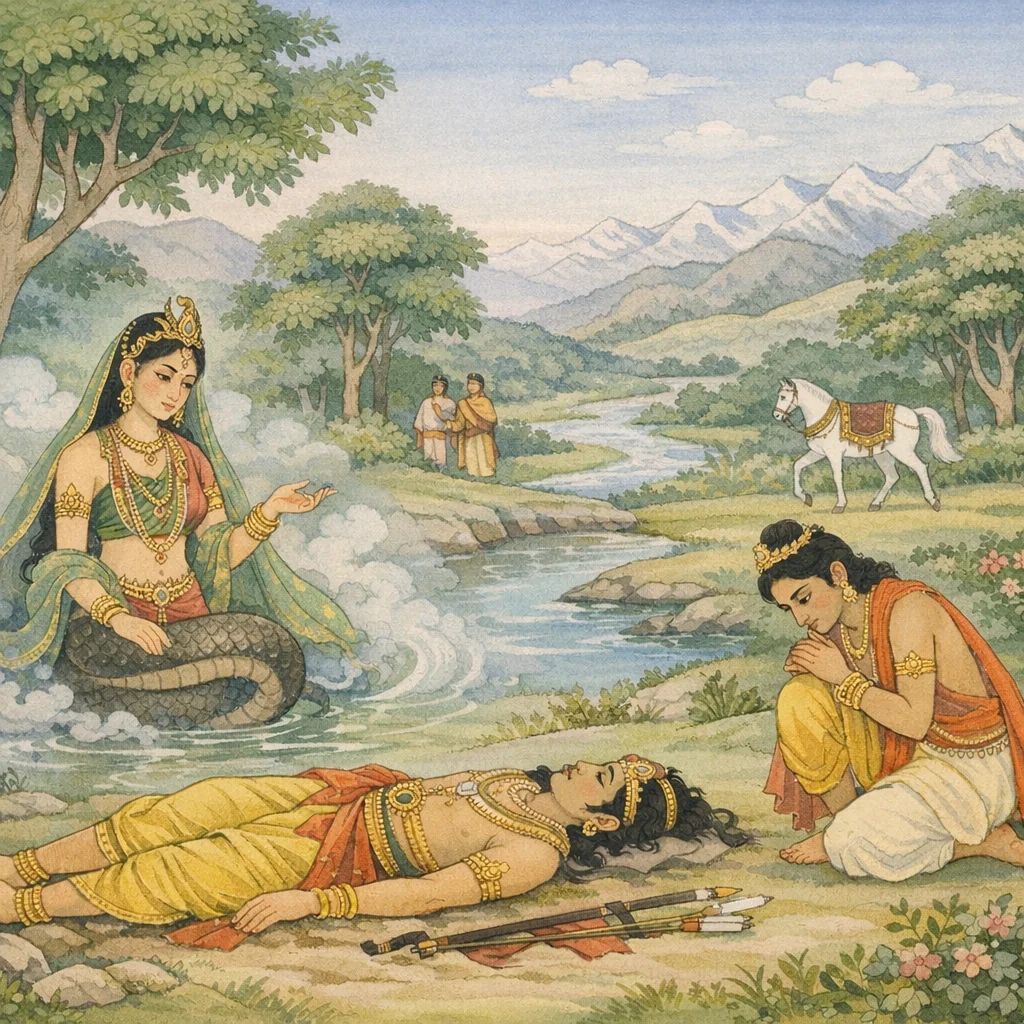
Vaiśaṃpāyana reports that, with the Maṇipura ruler seated in extremis and overcome by paternal grief, Ulūpī reflects upon a revivifying jewel (saṃjīvana-maṇi) associated with nāga protection. Taking the jewel, she addresses the assembled forces with calming speech, instructing Babhruvāhana not to grieve and clarifying that Arjuna (Jişṇu/Dhanaṃjaya) is not truly “defeated” in an ultimate sense. She states that a māyā named Mohinī was deployed by her for a purposive aim connected to the father’s interests, and that the encounter functioned as a test of Babhruvāhana’s strength rather than a terminal act. Ulūpī further elevates Arjuna’s status by describing him as an enduring, great-souled figure whom even Indra could not overcome in battle, thereby reframing the event from culpable harm to orchestrated trial. She then directs that the divine jewel be placed upon Arjuna’s chest; Babhruvāhana complies out of filial attachment and without malicious intent. Upon placement, Arjuna revives as if waking from sleep; celestial signs (flowers, drums, acclaim) mark restoration. Arjuna embraces Babhruvāhana, then notices his grieving mother with Ulūpī and inquires into the cause and the women’s presence. The Maṇipura ruler responds deferentially, indicating that Ulūpī should be questioned for the explanation.
Chapter Arc: अर्जुन—अश्वमेध के घोड़े के अनुगमन में—मणिपुर के राजा बभ्रुवाहन से पराजित होकर भूमि पर पड़े हैं; तभी नागकन्या उलूपी प्रकट होकर इस पराजय का रहस्य खोलने का संकेत देती है। → अर्जुन उलूपी से पूछते हैं कि क्या वह बभ्रुवाहन का कुशल चाहती है और क्या अनजाने में उससे या बभ्रुवाहन से कोई अप्रिय कर्म हो गया। उलूपी बताती है कि यह पराजय साधारण नहीं—भीष्म-वध के बाद अर्जुन ने जिन दिव्य-तत्त्वों/वसुओं के प्रति शान्ति-प्रायश्चित्त नहीं किया, उसी दोष की छाया अब फलित हुई है; यदि शान्ति किए बिना अर्जुन जीवन त्यागते, तो धर्म-हानि और भी बढ़ती। → उलूपी स्पष्ट करती है कि अर्जुन का गिरना ‘वीरता की कमी’ नहीं, बल्कि ‘अधूरे प्रायश्चित्त’ का दण्ड-संकेत है—और उसी हेतु वह आई है कि अर्जुन का जीवन, यश और अश्वमेध-यज्ञ की मर्यादा बची रहे। → उलूपी के निर्देश से उपाय किया जाता है: बभ्रुवाहन को साथ लेकर (माताओं/परिजनों सहित) उचित शान्ति-प्रक्रिया और क्षमा-याचना का क्रम चलता है; अर्जुन चित्रांगदा और उलूपी के प्रति कृतज्ञता प्रकट करते हैं, और बभ्रुवाहन अर्जुन की आज्ञा से अश्वमेध महायज्ञ में ब्राह्मण-सेवा/परिवेषण हेतु उपस्थित होने का वचन देता है। → अर्जुन के पुनर्जीवन/पुनर्स्थापन के बाद भी प्रश्न शेष रहता है—क्या यह शान्ति-क्रम उनके समस्त पूर्वकर्म-दोष को पूर्णतः काट देगा, और अश्वमेध की यात्रा आगे किन नई परीक्षाओं से गुज़रेगी?
Shlokas
Verse 1
अप्--#रू- एकाशीतितमो<ध्याय: उलूपीका अर्जुनके पूछनेपर अपने आगमनका कारण एवं अर्जुनकी पराजयका रहस्य बताना, पुत्र और पत्नीसे विदा लेकर पार्थका पुन: अश्व॒के पीछे जाना अर्जुन उवाच किमागमनकृत्यं ते कौरव्यकुलनन्दिनि । मणिपूरपतेर्मातुस्तथैव च रणाजिरे,अर्जुन बोले--कौरव्य नामके कुलको आनन्दित करनेवाली उलूपी! इस रणभूमिमें तुम्हारे और मणिपुरनरेश बश्रुवाहनकी माता चित्रांगदाके आनेका क्या कारण है?
Arjuna said: “O Ulūpī, delight of the Kuru line, for what purpose have you come here? And likewise, why has the mother of the king of Maṇipura come to this battlefield?”
Verse 2
कच्चित् कुशलकामासि राज्ञोड5स्य भुजगात्मजे । मम वा चपलापाड़ि कच्चित् त्वं शुभमिच्छसि,नागकुमारी! तुम इस राजा बश्रुवाहनका कुशल-मंगल तो चाहती हो न? चंचल कटाक्षवाली सुन्दरी! तुम मेरे कल्याणकी भी इच्छा रखती हो न?
Arjuna said: “O Nāga princess, daughter of the serpent race—do you truly wish well for this king? And you, O lady of restless, darting glances, do you also desire my welfare?”
Verse 3
कच्चित् ते पृथुलश्रोणि नाप्रियं प्रियदर्शने । अकार्षमहमज्ञानादयं वा बभ्रुवाहन:,स्थूल नितम्बवाली प्रियदर्शने! मैंने या इस बभ्रुवाहनने अनजानमें तुम्हारा कोई अप्रिय तो नहीं किया है?
Arjuna said: “O broad-hipped one, O fair to behold—have I, through ignorance, done anything displeasing to you? Or has this Babhruvāhana done something that has caused you offense?”
Verse 4
कच्चिन्नु राजपुत्री ते सपत्नी चैत्रवाहनी । चित्राजड्भदा वरारोहा नापराध्यति किंचन,तुम्हारी सौत चित्रवाहनकुमारी वरारोहा राजपुत्री चित्रांगदाने तो तुम्हारा कोई अपराध नहीं किया है?
Arjuna said: “Tell me—has your co-wife, the princess Chitrāṅgadā, daughter of Chitravāhana, that noble lady, committed no offence at all against you?”
Verse 5
तमुवाचोरगपतेर्दुहिता प्रहसन्निव । न मे त्वमपराद्धोडसि न हि मे बश्रुवाहन:,अर्जुनका यह प्रश्न सुनकर नागराजकन्या उलूपी हँसती हुई-सी बोली--'प्राणवल्लभ! आपने या बश्रुवाहनने मेरा कोई अपराध नहीं किया है। बभ्रुवाहनकी माताने भी मेरा कुछ नहीं बिगाड़ा है। यह तो सदा दासीकी भाँति मेरी आज्ञाके अधीन रहती है। यहाँ आकर मैंने जो-जो जिस प्रकार काम किया है, वह बतलाती हूँ; सुनिये
Ulūpī, the daughter of the lord of serpents, spoke with a faint, smiling laugh: “Neither you nor Babhruvāhana has committed any offense against me. (Indeed,) he is not my offender.”
Verse 6
न जनित्री तथास्येयं मम या प्रेष्यवत् स्थिता । श्रूयतां यद् यथा चेदं मया सर्व विचेष्टितम्,अर्जुनका यह प्रश्न सुनकर नागराजकन्या उलूपी हँसती हुई-सी बोली--'प्राणवल्लभ! आपने या बश्रुवाहनने मेरा कोई अपराध नहीं किया है। बभ्रुवाहनकी माताने भी मेरा कुछ नहीं बिगाड़ा है। यह तो सदा दासीकी भाँति मेरी आज्ञाके अधीन रहती है। यहाँ आकर मैंने जो-जो जिस प्रकार काम किया है, वह बतलाती हूँ; सुनिये
Arjuna said: “Nor is this woman—who is my mother—of such a kind; she remains under my direction like a servant. Listen, then, to what I did here and how I acted in every respect.”
Verse 7
न मे कोपस्त्वया कार्य: शिरसा त्वां प्रसादये । त्वत्प्रियार्थ हि कौरव्य कृतमेतन््मया विभो,'प्रभो! कुरुनन्दन! पहले तो मैं आपके चरणोंमें सिर रखकर आपको प्रसन्न करना चाहती हूँ। यदि मुझसे कोई दोष बन गया हो तो भी उसके लिये आप मुझपर क्रोध न करें; क्योंकि मैंने जो कुछ किया है, वह आपकी प्रसन्नताके लिये ही किया है
Arjuna said: “Do not be angry with me; you should not direct wrath toward me. Bowing my head, I seek to appease you. O scion of the Kuru line, O mighty one—whatever I have done has been done solely for your pleasure and satisfaction.”
Verse 8
यत्तच्छूणु महाबाहो निखिलेन धनंजय । महाभारतयुद्धे यत् त्वया शान्तनवो नृप:
“Hear, O mighty-armed Dhanañjaya, in full, that matter—what the Śāntanava king did through you in the great war of the Bhāratas.”
Verse 9
न हि भीष्मस्त्वया वीर युद्धामानो हि पातित:
Arjuna said: “For Bhīṣma was not struck down by you, O hero, while he was fighting. His fall did not come from your direct prowess in open combat.”
Verse 10
तस्य शान्तिमकृत्वा त्वं त्यजेथा यदि जीवितम्
Arjuna said: “If, without first bringing him peace and reconciliation, you were to give up your life, it would be a grave moral failure—one must not abandon life while leaving another’s turmoil unresolved.”
Verse 11
एषा तु विहिता शान्ति: पुत्राद् यां प्राप्ततानसि । वसुभिर्वसुधापाल गड़या च महामते,“महामते! पृथ्वीपाल! पूर्वकालमें वसुओं तथा गंगाजीने इसी रूपमें उस पापकी शान्ति निश्चित की थी; जिसे आपने अपने पुत्रसे पराजयके रूपमें प्राप्त किया है
Arjuna said: “O wise one, O protector of the earth! This is the very expiation that was formerly ordained—established by the Vasus and by the river Gaṅgā. It is that same ‘pacification of sin’ which you have now obtained through your son, in the form of defeat.”
Verse 12
पुरा हि श्रुतमेतत् ते वसुभि: कथितं मया । गज्जायास्तीरमाश्रित्य हते शान्तनवे नूप,“पहलेकी बात है, एक दिन मैं गंगाजीके तटपर गयी थी। नरेश्वर! वहाँ शान्तनुनन्दन भीष्मजीके मारे जानेके बाद वसुओंने गंगातटपर आकर आपके सम्बन्धमें जो यह बात कही थी, उसे मैंने अपने कानों सुना था
Arjuna said: “Formerly, O king, I heard this very matter—spoken by the Vasus and reported by me to you—when, after the fall of Bhīṣma, the son of Śāntanu, they came to the bank of the Gaṅgā and spoke in connection with you. I heard it with my own ears.”
Verse 13
आप्लुत्य देवा वसव: समेत्य च महानदीम् । इदमूचुर्वचो घोरं भागीरथ्या मते तदा,“वसु नामक देवता महानदी गंगाके तटपर एकत्र हो स्नान करके भागीरथीकी सम्मतिसे यह भयानक वचन बोले--
Arjuna said: Having bathed and then assembled together on the bank of the great river, the Vasus—divine beings—spoke these dreadful words, with the assent of the Bhāgīrathī (Gaṅgā), at that time. The scene frames a solemn, morally weighty pronouncement: a collective divine decision is voiced in a sacred riverside setting, underscoring that the coming statement bears grave ethical consequence rather than casual opinion.
Verse 14
एष शान्तनवो भीष्मो निहत: सव्यसाचिना । अयुध्यमान: संग्रामे संसक्तो5न्येन भाविनि । तदनेनानुषड्गेण वयमद्य धनंजयम्
Arjuna said: “This Bhīṣma, son of Śāntanu, has been slain by the left-handed archer. Though he was not fighting, he was caught up in the battle because of another’s destined course. Therefore, by this attendant consequence, today we too are made to bear (the burden of) Dhanañjaya’s deed.”
Verse 15
शापेन योजयामेति तथास्त्विति च साब्रवीत् । “भाविनि! ये शान्तनुनन्दन भीष्म संग्राममें दूसरेके साथ उलझे हुए थे। अर्जुनके साथ युद्ध नहीं कर रहे थे तो भी सव्यसाची अर्जुनने इनका वध किया है। इस अपराधके कारण हमलोग आज अर्जुनको शाप देना चाहते हैं।” यह सुनकर गंगाजीने कहा--'हाँ, ऐसा ही होना चाहिये' ।। तदहं पितुरावेद्य प्रविश्य व्यथितेन्द्रिया
Arjuna said: “They declared, ‘Let us bind him with a curse,’ and she replied, ‘So be it.’ Thereupon, having informed my father, I entered (the place), my senses shaken with distress.” The passage frames a moral reckoning: because Arjuna slew warriors who were not directly engaged with him in battle, the elders seek to impose a curse, and Gaṅgā consents—underscoring the ethical weight of wartime conduct and accountability beyond mere victory.
Verse 16
पिता तु मे वसून् गत्वा त्वदर्थे समयाचत
Arjuna said: “But my father, having gone to the Vasus, requested them on your behalf, in accordance with the pledged understanding.”
Verse 17
पुत्रस्तस्य महाभाग मणिपूरेश्वरो युवा,“महाभाग नागराज! मणिपुरका नवयुवक राजा बश्रुवाहन अर्जुनका पुत्र है। वह युद्ध- भूमिमें खड़ा होकर अपने बाणोंद्वारा जब उन्हें पृथ्वीपर गिरा देगा, तब अर्जुन हमारे शापसे मुक्त हो जायूँगे
Arjuna said: “O noble one, his son is the youthful lord of Maṇipura. O great Nāga-king! The young ruler of Maṇipura, Babhruvāhana, is Arjuna’s son. When, standing on the battlefield, he strikes Arjuna down to the earth with his arrows, then Arjuna will be released from our curse.”
Verse 18
स एन॑ रणमध्यस्थ: शरै: पातयिता भुवि | एवं कृते स नागेन्द्र मुक्तशापो भविष्यति,“महाभाग नागराज! मणिपुरका नवयुवक राजा बश्रुवाहन अर्जुनका पुत्र है। वह युद्ध- भूमिमें खड़ा होकर अपने बाणोंद्वारा जब उन्हें पृथ्वीपर गिरा देगा, तब अर्जुन हमारे शापसे मुक्त हो जायूँगे
Verse 19
गच्छेति वसुभ्रि श्चोक्तो मम चेदं शशंस सः । तच्छुत्वा त्वं मया तस्माच्छापादसि विमोक्षितः,“अच्छा अब जाओ' वसुओंके ऐसा कहनेपर मेरे पिताने आकर मुझसे यह बात बतायी। इसे सुनकर मैंने इसीके अनुसार चेष्टा की है और आपको उस शापसे छुटकारा दिलाया है
"When the Vasus said, 'Go,' my father came and reported this matter to me. Hearing it, I acted accordingly, and thus I have freed you from that curse."
Verse 20
न हि त्वां देवराजो5पि समरेषु पराजयेत् । आत्मा पुत्र: स्मृतस्तस्मात् तेनेहासि पराजित:,'प्राणनाथ! देवराज इन्द्र भी आपको युद्धमें परास्त नहीं कर सकते, पुत्र तो अपना आत्मा ही है, इसीलिये इसके हाथसे यहाँ आपकी पराजय हुई है
Arjuna said: “Indeed, not even Indra, the king of the gods, could defeat you in battle. But a son is regarded as one’s very self; therefore it is by him—your own self in the form of your son—that you have been overcome here, O lord of life.”
Verse 21
न हि दोषो मम मत: कथं वा मन्यसे विभो । इत्येवमुक्तो विजय: प्रसन्नात्माब्रवीदिदम्,'प्रभो! मैं समझती हूँ कि इसमें मेरा कोई दोष नहीं है। अथवा आपकी क्या धारणा है? क्या यह युद्ध कराकर मैंने कोई अपराध किया है?' उलूपीके ऐसा कहनेपर अर्जुनका चित्त प्रसन्न हो गया। उन्होंने कहा--
"Surely, in my view, there is no fault on my part. Or what do you think, O mighty one?" Thus addressed, Vijaya (Arjuna), his heart made serene, spoke these words. The exchange frames a moral inquiry: whether causing or urging a battle constitutes culpability, and it prepares Arjuna’s measured response on responsibility and dharma in war.
Verse 22
सर्व मे सुप्रियं देवि यदेतत् कृतवत्यसि । इत्युक्त्वा सोडब्रवीत् पुत्र मणिपूरपतिं जय:
Arjuna said: “O goddess, everything you have done in this matter is exceedingly dear to me.” Having spoken thus, the victorious Arjuna then addressed his son, the king of Maṇipūra. The verse highlights gratitude and respectful speech as ethical conduct—acknowledging beneficence before proceeding to the next duty in the unfolding narrative.
Verse 23
युधिष्ठिरस्याश्वमेध: परिचैत्रीं भविष्यति
Arjuna said: “Yudhiṣṭhira’s Aśvamedha sacrifice will take place in the month of Caitra.”
Verse 24
तत्रागच्छे: सहामात्यो मातृभ्यां सहितो नूप
“Then you should come there, accompanied by your ministers and together with your two mothers, O king.”
Verse 25
“नरेश्वर! आगामी चैत्रमासकी पूर्णिमाको महाराज युधिष्ठिरके यज्ञका आरम्भ होगा। उसमें तुम अपनी इन दोनों माताओं और मन्त्रियोंके साथ अवश्य आना' ।। इत्येवमुक्त: पार्थेन स राजा बभ्रुवाहन: । उवाच पितरं धीमानिदमस्राविलेक्षण:,अर्जुनके ऐसा कहनेपर बुद्धिमान् राजा बश्रुवाहनने नेत्रोंमें आँसू भरकर पितासे इस प्रकार कहा--
Arjuna said: “O king, on the coming full-moon day of the month of Caitra, King Yudhiṣṭhira’s sacrifice will begin. You must certainly come there, together with these two mothers of yours and with your ministers.” Thus addressed by Pārtha, the wise king Babhruvāhana—his eyes filled with tears—spoke these words to his father.
Verse 26
उपयास्यामि धर्मज्ञ भवत: शासनादहम् । अश्वमेधे महायज्ञे द्विजातिपरिवेषक:,'धर्मज्ञ! आपकी आज्ञासे मैं अश्वमेध महायज्ञमें अवश्य उपस्थित होऊँगा और ब्राह्मगोंको भोजन परोसनेका काम करूँगा
Arjuna said: “O knower of dharma, in obedience to your command I shall certainly come to the great Aśvamedha sacrifice, and there I will serve by distributing food to the twice-born.”
Verse 27
मम त्वनुग्रहार्थाय प्रविशस्व पुरं स्वकम् । भार्याभ्यां सह धर्मज्ञ मा भूत् ते5त्र विचारणा,“इस समय आपसे एक प्रार्थना है--धर्मज्ञ! आज मुझपर कृपा करनेके लिये अपनी इन दोनों धर्मपत्नियोंके साथ इस नगरमें प्रवेश कीजिये। इस विषयमें आपको कोई अन्यथा विचार नहीं करना चाहिये
Arjuna said: “To show me favor, please enter your own city. O knower of dharma, come together with your two wives; do not entertain any hesitation or second thoughts about this matter.”
Verse 28
उषित्वेह निशामेकां सुखं स्वभवने प्रभो । पुनरश्चानुगमनं कर्तासि जयतां वर,'प्रभो! विजयी वीरोंमें श्रेष्ठ! यहाँ भी आपका ही घर है। अपने उस घरमें एक रात सुखपूर्वक निवास करके कल सबेरे फिर घोड़ेके पीछे-पीछे जाइयेगा'
Arjuna said: “O lord, best among victors—this too is your own home. Stay here comfortably for a single night in your residence; then, at dawn, you will again proceed to follow the sacrificial horse.”
Verse 29
इत्युक्त: स तु पुत्रेण तदा वानरकेतन: । स्मयन् प्रोवाच कौन्तेयस्तदा चित्राड्रदासुतम्,पुत्रके ऐसा कहनेपर कुन्तीनन्दन कपिध्वज अर्जुनने मुसकराते हुए चित्राड्रदाकुमारसे कहा--
When his son had spoken thus, Arjuna—the son of Kuntī, whose banner bore the emblem of a monkey—smiled and then addressed the son of Citrādradā. The smile signals a composed, affectionate response: rather than reacting with harshness, Arjuna answers with measured clarity, keeping the bond of kinship and the demands of right conduct in view.
Verse 30
विदितं ते महाबाहो यथा दीक्षां चराम्यहम् । न स तावत् प्रवेक्ष्यामि पुरं ते पूुधुलोचन,“महाबाहो! यह तो तुम जानते ही हो कि मैं दीक्षा ग्रहण करके विशेष नियमोंके पालनपूर्वक विचर रहा हूँ। अतः विशाललोचन! जबतक यह दीक्षा पूर्ण नहीं हो जाती तबतक मैं तुम्हारे नगरमें प्रवेश नहीं करूँगा
Arjuna said: “O mighty-armed one, you already know how I am observing my consecratory vow and moving about under its discipline. Therefore, O wide-eyed one, until that vow is fulfilled, I will not enter your city.”
Verse 31
यथाकामं व्रजत्येष यज्ञियाश्वो नरर्षभ । स्वस्ति ते5स्तु गमिष्यामि न स्थान विद्यते मम,“नरश्रेष्ठ! यह यज्ञका घोड़ा अपनी इच्छाके अनुसार चलता है (इसे कहीं भी रोकनेका नियम नहीं है); अतः तुम्हारा कल्याण हो। मैं अब जाऊँगा। इस समय मेरे ठहरनेके लिये कोई स्थान नहीं है”
Verse 32
स तत्र विधिवत् तेन पूजित: पाकशासनि: । भायभ्यामभ्यनुज्ञात: प्रायाद् भरतसत्तम:,तदनन्तर वहाँ बभ्रुवाहनने भरतवंशके श्रेष्ठ पुरुष इन्द्रकुमार अर्जुनकी विधिवत् पूजा की और वे अपनी दोनों भार्याओंकी अनुमति लेकर वहाँसे चल दिये
There, Arjuna—best among the Bharatas and son of Indra—was duly honored by him (Babhruvāhana) according to proper rites. Having obtained the consent of his two wives, he then departed from that place. The episode underscores the ethic that even a mighty warrior acts within the bounds of propriety: receiving hospitality with humility and proceeding only after securing rightful permission within the household.
Verse 81
इति श्रीमहा भारते आश्वमेधिके पर्वणि अनुगीतापर्वणि अश्वानुसरणे एकाशीतितमो<ध्याय:
Thus, in the Śrī Mahābhārata, within the Āśvamedhika Parva—specifically in the Anugītā section—this concludes the eighty-first chapter, concerning the pursuit and following of the sacrificial horse. The colophon signals a transition point in the narrative, framing the events as part of the dharmic rite of Aśvamedha and the responsibilities of kingship after war.
Verse 83
अधर्मेण हतः पार्थ तस्यैषा निष्कृति: कृता । “महाबाहु धनंजय! आप मेरी कही हुई सारी बातें ध्यान देकर सुनिये। पार्थ! महाभारत- युद्धमें आपने जो शान्तनुकुमार महाराज भीष्मको अधर्मपूर्वक मारा है, उस पापका यह प्रायश्चित्त कर दिया गया
‘O Partha, he was slain through adharma; therefore this act of expiation has been performed for that deed.’
Verse 96
शिखण्डिना तु संयुक्तस्तमाश्रित्य हतस्त्वया । “वीर! आपने अपने साथ जूझते हुए भीष्मजीको नहीं मारा है, वे शिखण्डीके साथ उलझे हुए थे। उस दशामें शिखण्डीकी आड़ लेकर आपने उनका वध किया था
Arjuna said: “It was by taking shelter behind Śikhaṇḍin—while Bhīṣma was engaged with him—that you struck him down. O hero, you did not truly slay Bhīṣma in direct combat; using Śikhaṇḍin as a screen in that moment, you brought about his fall.”
Verse 103
कर्मणा तेन पापेन पतेथा निरये ध्रुवम् । “उसकी शान्ति किये बिना ही यदि आप प्राणोंका परित्याग करते तो उस पापकर्मके प्रभावसे निश्चय ही नरकमें पड़ते
Arjuna said: “Because of that sinful deed, you would certainly have fallen into hell. Had you abandoned your life without first making peace and setting right the wrong, the moral consequence of that act would have dragged you to a dreadful fate.”
Verse 166
पुन: पुन: प्रसाद्यैतांस्त एनमिदमन्रुवन् । “वे तत्काल वसुओंके पास जाकर उन्हें बारंबार प्रसन्न करके आपके लिये उनसे बारंबार क्षमा-याचना करने लगे। तब वसुगण उनसे इस प्रकार बोले--
Arjuna said: Again and again they sought to appease those Vasus, and then they addressed him with these words. Having gone to the Vasus, they repeatedly pleased them and, for your sake, kept asking forgiveness again and again. Thereupon the Vasus spoke to them in this manner.
Verse 226
चित्राड़दाया: शृण्वत्या: कौरव्यदुहितुस्तदा । “देवि! तुमने जो यह कार्य किया है, यह सब मुझे अत्यन्त प्रिय है।” यों कहकर अर्जुनने चित्रांगदा तथा उलूपीके सुनते हुए अपने पुत्र मणिपुरनरेश बश्रुवाहनसे कहा--
While the Kuru princess Chitrāṅgadā listened, Arjuna said, “O goddess! This deed you have done is wholly and exceedingly dear to me.” Having spoken thus—within the hearing of both Chitrāṅgadā and Ulūpī—Arjuna then addressed his son, Babhruvāhana, the king of Maṇipura.
Verse 1563
अभवं स च तच्छुत्वा विषादमगमत् परम् । ः | : है डर “उनकी बातें सुनकर मेरी सारी इन्द्रियाँ व्यथित हो उठीं और पातालमें प्रवेश करके मैंने अपने पितासे यह सारा समाचार कह सुनाया। यह सुनकर पिताजीको भी बड़ा खेद हुआ
Arjuna said: “When I heard those words, I was overwhelmed by intense grief. My senses were shaken, and I entered the nether regions to report the entire matter to my father. On hearing it, my father too was seized by deep sorrow.”
Frequently Asked Questions
The tension lies between accountability for harm in a strategic engagement and the later revelation that the act was an orchestrated test; the chapter resolves it by emphasizing intent, disclosure, and reparative action.
Restorative dharma is prioritized: when a conflict is framed as instrumental or misperceived, moral order is re-established through truth-telling, compassion, and concrete remediation rather than prolonged blame.
No explicit phalaśruti appears in this passage; its meta-function is narrative-ethical, demonstrating how reconciliation and repair integrate diverse lineages (Kuru, Maṇipura, nāga) within the post-war moral landscape.