Adhyaya 194
कर्णस्य मन्त्रः — Duryodhana-प्रति नीति-विचारः (Karna’s Counsel on Strategy toward the Pāṇḍavas)
Upa-parva: Mantra–Nīti Saṃvāda (Karna’s Counsel on Policy and Force)
Karna addresses Duryodhana with a critical assessment of earlier failures to restrain the Pāṇḍavas when they were politically and militarily immature. He argues that the Pāṇḍavas are now consolidated: they are vigilant, motivated to reclaim ancestral status, and internally cohesive—particularly through their shared marriage to Kṛṣṇā (Draupadī), which he presents as resistant to external attempts at sowing discord. He further notes the reliability of allied support from Pañcāla (Drupada and his capable son), asserting that such allies will not abandon the Pāṇḍavas even for inducements. Karna concludes that sāma, dāna, and bheda are ineffective and urges immediate decisive action (vikrama/daṇḍa) while the Kaurava side retains relative advantage and before additional support (including Kṛṣṇa and Yādava forces) arrives. The narration then shifts to Vaiśaṃpāyana, who reports Dhṛtarāṣṭra’s approval of Karna’s martial confidence and his decision to summon Bhīṣma, Droṇa, Vidura, and other ministers for formal consultation.
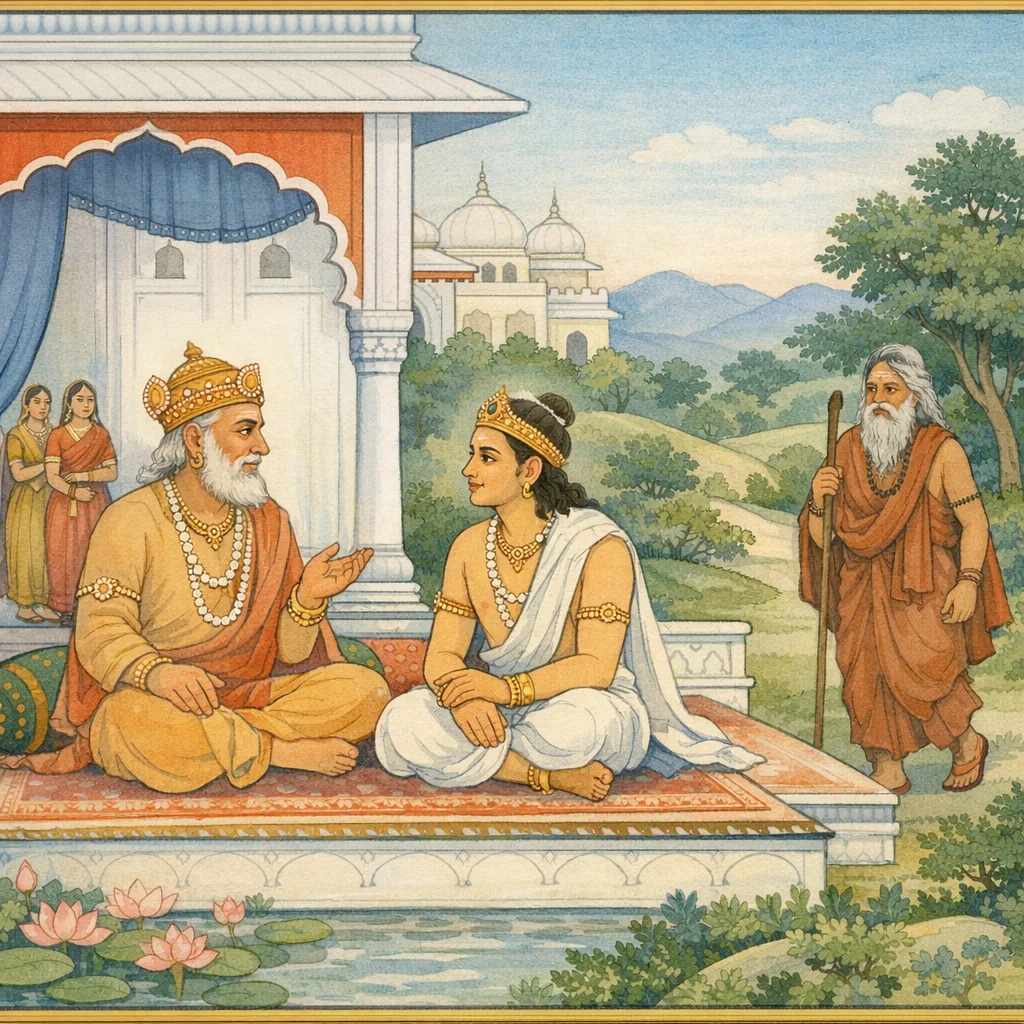
Chapter Arc: द्रुपद राजा युधिष्ठिर को बुलाकर अत्यन्त विनय से पूछता है—ये पाँचों वीर वास्तव में कौन हैं: क्षत्रिय, ब्राह्मण, वैश्य, शूद्र, या किसी मायावी वेश में आए हुए? → पाण्डवों की पहचान गुप्त है; द्रुपद का भय है कि कहीं नियम-विरुद्ध सम्बन्ध न हो जाए। युधिष्ठिर सत्य और मर्यादा के बीच संतुलन रखते हुए द्रुपद को आश्वस्त करता है कि विवाह विधिपूर्वक और धर्मानुसार ही होगा, और द्रुपद को संशय न रखने का उपदेश देता है। → युधिष्ठिर का निर्णायक वचन—‘यह अटल धर्म है; बिना शंका के इसका पालन कीजिए’—द्रुपद के भीतर उठते संदेह को काट देता है; उसी क्षण कथा में एक दिव्य-गुरुत्व का प्रवेश-आभास बनता है। → सभा में सब मिलकर विवाह-विषयक बातों का निष्कर्ष करते हैं; द्रुपद हर्ष से भर उठता है, पर युधिष्ठिर की गंभीरता और धर्म-निश्चय के सामने वह कुछ क्षण बोल भी नहीं पाता। → उसी समय यदृच्छया महर्षि द्वैपायन (व्यास) का आगमन होता है—उनके आने से गुप्त पहचान, विवाह-धर्म और भविष्य की दिशा पर निर्णायक प्रकाश पड़ने वाला है।
Shlokas
Verse 1
अ-क्राछ चतुन॑वर्त्याधेकशततमो< ध्याय: ट्रपद और युधिष्ठिरकी बातचीत तथा व्यासजीका आगमन वैशम्पायन उवाच तत आहूय पाज्चाल्यो राजपुत्र युधिष्ठिरम् । परिग्रहेण ब्राह्मण परिगृह महाद्युति:,वैशम्पायनजी कहते हैं--जनमेजय! तदनन्तर महातेजस्वी, उदारचित्त, पांचालराज द्रुपदने अत्यन्त कान्तिमान् कुन्तीपुत्र राजकुमार युधिष्ठिरको (अपने पास) बुलाकर ब्राह्मणोचित आतिथ्य-सत्कारके द्वारा उन्हें अपनाकर पूछा -- हमें कैसे ज्ञात हो कि आपलोग किस वर्णके हैं? हम आपको क्षत्रिय, ब्राह्मण, गुणसम्पन्न वैश्य अथवा शूद्र क्या समझें? अथवा मायाका आश्रय लेकर ब्राह्मगरूपसे सब दिशाओंमें विचरनेवाले आपलोगोंको हम कोई देवता मानें?
Vaiśampāyana said: Then the Pāñcāla king (Drupada), having summoned the royal prince Yudhiṣṭhira, received the radiant one with the kind of respectful hospitality due to a brāhmaṇa and, after thus welcoming him, questioned him—seeking to know their true social identity and status. The scene frames an ethical concern central to dharma: how one ought to honor guests even when their lineage and intentions are not yet fully known.
Verse 2
पर्यपृच्छददीनात्मा कुन्तीपुत्रं सुवर्चसम् । कथं जानीम भवतः: क्षत्रियान् ब्राह्मणानुत,वैशम्पायनजी कहते हैं--जनमेजय! तदनन्तर महातेजस्वी, उदारचित्त, पांचालराज द्रुपदने अत्यन्त कान्तिमान् कुन्तीपुत्र राजकुमार युधिष्ठिरको (अपने पास) बुलाकर ब्राह्मणोचित आतिथ्य-सत्कारके द्वारा उन्हें अपनाकर पूछा -- हमें कैसे ज्ञात हो कि आपलोग किस वर्णके हैं? हम आपको क्षत्रिय, ब्राह्मण, गुणसम्पन्न वैश्य अथवा शूद्र क्या समझें? अथवा मायाका आश्रय लेकर ब्राह्मगरूपसे सब दिशाओंमें विचरनेवाले आपलोगोंको हम कोई देवता मानें?
Vaiśampāyana said: Then the noble-minded (king) questioned the radiant son of Kuntī: “How are we to know who you are—whether you are kṣatriyas or brāhmaṇas?” The inquiry frames a dharmic concern: proper hospitality and social conduct depend upon rightly discerning a guest’s station and identity, especially when their appearance and bearing suggest uncommon excellence.
Verse 3
वैश्यान् वा गुणसम्पन्नानथवा शूद्रयोनिजान् । मायामास्थाय वा वि्रांश्वरत: सर्वतोदिशम्,वैशम्पायनजी कहते हैं--जनमेजय! तदनन्तर महातेजस्वी, उदारचित्त, पांचालराज द्रुपदने अत्यन्त कान्तिमान् कुन्तीपुत्र राजकुमार युधिष्ठिरको (अपने पास) बुलाकर ब्राह्मणोचित आतिथ्य-सत्कारके द्वारा उन्हें अपनाकर पूछा -- हमें कैसे ज्ञात हो कि आपलोग किस वर्णके हैं? हम आपको क्षत्रिय, ब्राह्मण, गुणसम्पन्न वैश्य अथवा शूद्र क्या समझें? अथवा मायाका आश्रय लेकर ब्राह्मगरूपसे सब दिशाओंमें विचरनेवाले आपलोगोंको हम कोई देवता मानें?
Vaiśampāyana said: “(Drupada wondered:) ‘Are you men of the Vaiśya class, endowed with good qualities, or born among Śūdras? Or, having resorted to some illusion, do you move about in the guise of Brāhmaṇas in every direction? How are we to know what your true social order is—Kṣatriya, Brāhmaṇa, virtuous Vaiśya, or Śūdra—or should we take you to be divine beings roaming the world under a Brahmin appearance?’”
Verse 4
कृष्णाहेतोरनुप्राप्ता देवा: संदर्शनार्थिन: । ब्रवीतु नो भवान् सत्य संदेहो हृत्र नो महान्,जान पड़ता है, आप कृष्णाको पानेके लिये यहाँ दर्शक बनकर आये हुए देवता ही हैं। आप सच्ची बात हमें बता दें; क्योंकि आपके विषयमें हमको बड़ा संदेह हो रहा है
Vaiśampāyana said: 'These are indeed the gods who have come here for the sake of beholding Kṛṣṇa. Tell us the truth, sir, for a great doubt has arisen in our hearts concerning you.'
Verse 5
अपि न: संशयस्यान्ते मन: संतुष्टिमावहेत् । अपि नो भागधेयानि शुभानि स्यु: परंतप,परंतप! आपसे रहस्यकी बात सुनकर क्या हमारे इस संशयका नाश और मनको संतोष होगा और क्या हमारा भाग्य उदय होगा?
Vaiśampāyana said: “When we hear this secret teaching, will it finally bring our doubt to an end and grant peace to our minds? And, O scorcher of foes, will auspicious fortune and our rightful share truly arise for us?”
Verse 6
इच्छया ब्रूहि तत् सत्यं सत्यं राजसु शोभते । इष्टापूर्तेन च तथा वक्तव्यमनृतं न तु,आप स्वेच्छासे ही सच्ची बात बतायें, राजाओंमें इष्ट- और पूर्तकी अपेक्षा सत्यकी ही अधिक महिमा है; अतः असत्य नहीं बोलना चाहिये
Speak the truth of it willingly. Truth befits kings and is their true ornament. Even when acts of sacrifice and public benefaction are praised, one should still speak what is true—never what is false.
Verse 7
श्रुत्वा हमरसंकाश तव वाक्यमरिंदम । ध्रुवं विवाहकरणमास्थास्यामि विधानत:,देवताओंके समान तेजस्वी शत्रुसूदन! मैं आपकी बात सुनकर निश्चय ही विधिपूर्वक विवाहकी तैयारी करूँगा
Vaiśampāyana said: “O you who shine like the gods, O subduer of foes—having heard your words, I am now certain: I shall undertake the arrangements for the marriage, and I will do so in full accordance with proper rite and rule.”
Verse 8
युधिछिर उवाच मा राजन् विमना भूस्त्वं पाज्चाल्य प्रीतिरस्तु ते । ईप्सितस्ते ध्रुव: काम: संवृत्तोडयमसंशयम्,युधिष्ठिर बोले--पांचालराज! आप उदास न हों, आपको प्रसन्न होना चाहिये। आपके मनमें जो अभीष्ट कामना थी, वह निश्चय ही आज पूरी हुई है, इसमें संशय नहीं है
Verse 9
वयं हि क्षत्रिया राजन् पाण्डो: पुत्रा महात्मन: । ज्येष्ठ मां विद्धि कौन्तेयं भीमसेनार्जुनाविमौ,राजन! हमलोग क्षत्रिय ही हैं, महात्मा पाण्डुके पुत्र हैं। मुझे कुन्तीका ज्येष्ठ पुत्र समझिये, ये दोनों भीमसेन और अर्जुन हैं
Yudhiṣṭhira declares their identity and lineage: “O King, we are indeed kṣatriyas, the sons of the great-souled Pāṇḍu. Know me as Kuntī’s eldest son; and these two here are Bhīmasena and Arjuna.” In the ethical frame of the epic, the statement functions as a formal self-introduction grounded in birth, duty, and rightful standing, asserting their kṣatriya responsibility and legitimate place in the royal order.
Verse 10
आशभ्यां तव सुता राजन् निर्जिता राजसंसदि । यमौ च तत्र कुन्ती च यत्र कृष्णा व्यवस्थिता,राजन! इन्हीं दोनोंने समस्त राजाओंके समूहमें आपकी पुत्रीको जीता है। उधर वे दोनों नकुल और सहदेव हैं। माता कुन्ती वहीं गयी हैं, जहाँ राजकुमारी कृष्णा है
O King, your daughter has been won in the royal assembly by those two. And the twin brothers, Nakula and Sahadeva, are there as well; and Mother Kuntī has gone to the place where Princess Kṛṣṇā (Draupadī) is staying. The statement underscores that the outcome was achieved publicly and according to the accepted rules of the courtly contest, and that the family elders move to ensure the bride’s protection and propriety after the victory.
Verse 11
व्येतु ते मानसं दुःखं क्षत्रिया: स्मो नरर्षभ | पद्मिनीव सुतेयं ते हृदादन्यद्वदं गता,नरश्रेष्ठ अब आपकी मानसिक चिन्ता निकल जानी चाहिये। हम सब लोग क्षत्रिय ही हैं। आपकी यह पुत्री कृष्ण कमलिनीकी भाँति एक सरोवरसे दूसरे सरोवरको प्राप्त हुई है
“Let the sorrow in your mind pass away, O bull among men. We are kṣatriyas. Your daughter has gone from your heart to another, as a lotus-plant is borne from one lake to another.”
Verse 12
इति तथ्यं महाराज सर्वमेतद् ब्रवीमि ते | भवान् हि गुरुरस्माकं परमं च परायणम्,महाराज! यह सब मैं आपसे सच्ची बात कह रहा हूँ। आप हमारे बड़े तथा परम आश्रय हैं
“Thus, O great king, I tell you all this as the plain truth. For you are indeed our elder and teacher, and you are our highest refuge and final support.”
Verse 13
वैशम्पायन उवाच ततः स द्रुपदो राजा हर्षव्याकुललोचन: । प्रतिवक्तुं मुदा युक्तो नाशकत् तं॑ युधिषछ्िरम्,वैशम्पायनजी कहते हैं--जनमेजय! राजा युधिष्ठिरकी ये बातें सुनकर महाराज ट्रुपदकी आँखोंमें हर्षके आँसू छलक आये। वे आनन्दमें मग्न हो गये और (गला भर आनेके कारण) उन युधिष्ठिरको तत्काल (कुछ) उत्तर न दे सके
Vaiśampāyana said: Then King Drupada, his eyes trembling and overflowing with joy, though eager to reply in gladness, was unable at once to answer Yudhiṣṭhira—overcome by emotion. The moment underscores a dharmic courtly ideal: when words arise from righteousness and respect, they can move even a king beyond speech.
Verse 14
यत्नेन तु स तं हर्ष संनिगृहा परंतप: । अनुरूपं तदा वाचा प्रत्युवाच युधिष्ठिरम्,शत्रुसूदन ट्रपदने (बड़े) यत्नसे अपने (हर्षके आवेश)-को रोका और युधिष्ठिरको उनके कथनके अनुरूप ही उत्तर दिया
But he, the scorcher of foes, restrained that surge of joy with deliberate effort, and then replied to Yudhiṣṭhira in words fitting to what had been said—showing self-control and propriety even in a moment of inner elation.
Verse 15
पप्रच्छ चैनं धर्मात्मा यथा ते प्रद्रुता: पुरात् । स तस्मै सर्वमाचख्यावानुपूर्व्येण पाण्डव:,फिर उन धर्मात्मा पांचाल-नरेशने यह पूछा कि 'आपलोग वारणावत नगरसे किस प्रकार भाग निकले? पाण्डुनन्दन युधिष्ठिरने वे सारी बातें उन्हें क्रमशः कह सुनायीं
Vaiśampāyana said: The righteous king of the Pāñcālas questioned him: “How did you all escape long ago from Vāraṇāvata?” Then the Pāṇḍava (Yudhiṣṭhira), in orderly sequence, narrated the entire account to him—setting forth the truth of their peril and deliverance with the restraint and clarity befitting dharma.
Verse 16
तच्छुत्वा द्रुपदो राजा कुन्तीपुत्रस्य भाषितम् । विगर्हयमास तदा धृतराष्ट्रं नरेश्वरम्,कुन्तीकुमारके मुखसे वह सारा समाचार सुनकर वक्ताओंमें श्रेष्ठ महाराज द्रपदने उस समय राजा धुृतराष्ट्रकी बड़ी निन्दा की और कुन्तीनन्दन युधिष्ठिरको आश्वासन दिया। साथ ही उन्होंने यह प्रतिज्ञा भी की कि “हम तुम्हें तुम्हारा राज्य दिलवाकर रहेंगे”
Hearing the words spoken by Kuntī’s son, King Drupada at that time strongly censured Dhṛtarāṣṭra, the lord of men. In ethical indignation at the injustice done, he reassured Yudhiṣṭhira and pledged that he would see to it that the rightful kingdom was restored to him.
Verse 17
आश्वासयामास च त॑ कुन्तीपुत्रं युधिष्ठिरम् । प्रतिजज्ञे च राज्याय द्रुपदो वदतां वर:,कुन्तीकुमारके मुखसे वह सारा समाचार सुनकर वक्ताओंमें श्रेष्ठ महाराज द्रपदने उस समय राजा धुृतराष्ट्रकी बड़ी निन्दा की और कुन्तीनन्दन युधिष्ठिरको आश्वासन दिया। साथ ही उन्होंने यह प्रतिज्ञा भी की कि “हम तुम्हें तुम्हारा राज्य दिलवाकर रहेंगे”
Vaiśampāyana said: Drupada, foremost among speakers, consoled that son of Kuntī, Yudhiṣṭhira; and he also made a firm pledge regarding the kingdom—promising that he would see Yudhiṣṭhira restored to his rightful sovereignty. The passage underscores a moral stance against unjust seizure of power and affirms the duty of allies to support dharma through protection, counsel, and committed action.
Verse 18
ततः कुन्ती च कृष्णा च भीमसेनार्जुनावपि । यमौ च राज्ञा संदिष्टं विविशुर्भवनं महत्,राजन! तत्पश्चात् कुन्ती, कृष्णा, युधिष्ठिर, भीमसेन, अर्जुन, नकुल और सहदेव राजा द्रुपदके द्वारा निर्दिष्ट किये हुए विशाल भवनमें गये और यज्ञसेन (ट्रपद)-से सम्मानित हो वहीं रहने लगे। इस प्रकार विश्वास जम जानेपर महाराज ट्रुपदने अपने पुत्रोंके साथ जाकर युधिष्ठिससे कहा--
Vaiśaṃpāyana said: Then Kuntī and Kṛṣṇā (Draupadī), and also Bhīmasena and Arjuna, along with the twin brothers, entered the great mansion that had been assigned by the king, O king. Having been received with honor by Yajñasena (Drupada), they stayed there—signaling the growth of trust and rightful hospitality between host and guests, after which Drupada approached Yudhiṣṭhira with his sons to speak further.
Verse 19
तत्र ते न््यवसन् राजन् यज्ञसेनेन पूजिता: । प्रत्याश्वस्तस्ततो राजा सह पुत्रैरुवाच तम्,राजन! तत्पश्चात् कुन्ती, कृष्णा, युधिष्ठिर, भीमसेन, अर्जुन, नकुल और सहदेव राजा द्रुपदके द्वारा निर्दिष्ट किये हुए विशाल भवनमें गये और यज्ञसेन (ट्रपद)-से सम्मानित हो वहीं रहने लगे। इस प्रकार विश्वास जम जानेपर महाराज ट्रुपदने अपने पुत्रोंके साथ जाकर युधिष्ठिससे कहा--
There, O king, they took up residence, honored by Yajñasena (Drupada). Then the king, reassured and confident, went with his sons and addressed him—thus continuing the narrative of hospitality, alliance, and the restoration of trust after hardship.
Verse 20
गृह्नातु विधिवत् पाणिमद्यायं कुरुनन्दन: । पुण्येडहनि महाबाहुरर्जुन: कुरुतां क्षणम्,'ये कुरुकुलको आनन्दित करनेवाले महाबाहु अर्जुन आजके पुण्यमय दिवसमें मेरी पुत्रीका विधिपूर्वक पाणिग्रहण करें और (अपने कुलोचित) मंगलाचारका पालन प्रारम्भ कर दें”
Vaiśampāyana said: “Let the delight of the Kuru line take her hand today in the proper rite. On this auspicious day, let the mighty-armed Arjuna perform, without delay, the customary auspicious ceremonies befitting his lineage.”
Verse 21
वैशम्पायन उवाच तमब्रवीत् ततो राजा धर्मात्मा च युधिष्ठिर: । ममापि दारसम्बन्ध: कार्यस्तावद् विशाम्पते,वैशम्पायनजी कहते हैं--तब धर्मात्मा राजा युधिष्ठिरने उनसे कहा --'राजन! विवाह तो मेरा भी करना होगा”
Vaiśampāyana said: Then the righteous king Yudhiṣṭhira spoke to him: “O lord of the people, I too must, in due course, enter into the bond of marriage.”
Verse 22
दुपद उवाच भवान् वा विधिवत पार्णिं गृह्नातु दुहितुर्मम । यस्य वा मन्यसे वीर तस्य कृष्णामुपादिश,द्रपद बोले--वीर! तब आप ही विधिपूर्वक मेरी पुत्रीका पाणिग्रहण करें अथवा आप अपने भाइयोंमेंसे जिसके साथ चाहें, उसीके साथ कृष्णाको विवाहकी आज्ञा दे दें
Dupada said: “O hero, you may yourself, in due ritual form, take the hand of my daughter in marriage; or else, if you prefer, authorize Kṛṣṇā’s marriage to whichever of your brothers you deem fit.”
Verse 23
युधिछिर उवाच सर्वेषां महिषी राजन् द्रौपदी नो भविष्यति । एवं प्रव्याह्वतं पूर्व मम मात्रा विशाम्पते,युधिष्ठिरने कहा--राजन्! द्रौपदी तो हम सभी भाइयोंकी पटरानी होगी। मेरी माताने पहले हम सब लोगोंको ऐसी ही आज्ञा दे रखी है
Yudhiṣṭhira said: “O King, Draupadī shall be the chief queen of us all. This was spoken beforehand as an instruction by my mother, O lord of the people.”
Verse 24
अहं चाप्यनिविष्टो वै भीमसेनश्न् पाण्डव: । पार्थेन विजिता चैषा रत्नभूता सुता तव,मैं तथा पाण्डव भीमसेन भी अभीतक अविवाहित हैं और आपकी इस रत्नस्वरूपा कन्याको अर्जुनने जीता है
Yudhiṣṭhira said: “I too remain unwed, and Bhīmasena, the Pāṇḍava, is likewise not yet married. And this jewel-like daughter of yours has been won by Pārtha (Arjuna).” In context, the statement affirms propriety and transparency in a marriage alliance: the Pāṇḍavas disclose their marital status and acknowledge Arjuna’s rightful victory, framing the proposed union within dharma and accepted custom.
Verse 25
एष न: समयो राजन् रत्नस्यथ सह भोजनम् | न च तं हातुमिच्छाम: समयं राजसत्तम,महाराज! हम लोगोंमें यह शर्त हो चुकी है कि रत्नको हम सब लोग बाँटकर एक साथ उपभोग करेंगे। नृपशिरोमणे! हम अपनी उस (पुरानी) शर्तको छोड़ना या तोड़ना नहीं चाहते
Yudhiṣṭhira said: “O King, this is our agreed compact regarding the jewel: that we shall share it and enjoy it together. And, O best of kings, we do not wish to abandon or violate that pledge.”
Verse 26
सर्वेषां धर्मतः कृष्णा महिषी नो भविष्यति । आनुपूर्व्येण सर्वेषां गृह्नातु ज्वलने करान्,अतः कृष्णा धर्मके अनुसार हम सभीकी महारानी होगी। इसलिये वह प्रज्वलित अग्निके सामने क्रमश: हम सबका पाणिग्रहण करे
Yudhiṣṭhira said: “By the rule of dharma, Kṛṣṇā (Draupadī) shall be the queen-consort of us all. Therefore, before the blazing sacred fire, let her take the hands of each of us in due order.”
Verse 27
दुपद उवाच एकस्य बह्दयो विहिता महिष्य: कुरुनन्दन । नैकस्या बहव: पुंस: श्रूयन्ते पतय: क्वचित्,द्रुपद बोले--'कुरुनन्दन! एक राजा बहुत-सी रानियाँ (अथवा एक पुरुषकी अनेक स्त्रियाँ) हों, ऐसा विधान तो वेदोंमें देखा गया है; परंतु एक स्त्रीके अनेक पुरुष पति हों, ऐसा कहीं सुननेमें नहीं आया है-
Drupada said: “O delight of the Kurus, the Vedas and established ordinances allow that one man may have many queens. But that one woman should have many husbands—this is not heard of anywhere.”
Verse 28
लोकवेददविरुद्ध त्वं नाधर्म धर्मविच्छुचि: । कर्तुमहसि कौन्तेय कस्मात् ते बुद्धिरीदृशी,“तुम धर्मके ज्ञाता और पवित्र हो, अतः तुम्हें लोक और वेदके विरुद्ध यह अधर्म नहीं करना चाहिये। तुम कुन्तीके पुत्र हो; तुम्हारी बुद्धि ऐसी क्यों हो रही है?
Drupada said: “You are pure and a knower of dharma; therefore you ought not commit this unrighteous act that stands opposed to both worldly custom and Vedic authority. You are Kuntī’s son—why has your judgment taken such a course?”
Verse 29
युधिछिर उवाच सूक्ष्मो धर्मो महाराज नास्य विद्यो वयं गतिम् । पूर्वेषामानुपूर्व्येण यातं वर्त्मनुयामहे,युधिष्ठिरने कहा--महाराज! धर्मका स्वरूप अत्यन्त सूक्ष्म है, हम उसकी गतिको नहीं जानते। पूर्वकालके प्रचेता आदि जिस मार्गसे गये हैं, उसीका हमलोग क्रमश: अनुसरण करते हैं
Yudhiṣṭhira said: “O great king, Dharma is exceedingly subtle; we do not truly know its course. Therefore we follow, step by step, the very path that the ancients before us have taken.”
Verse 30
न मे वागनृतं प्राह नाधर्मे धीयते मति: । एवं चैव वदत्यम्बा मम चैतन्मनोगतम्,मेरी वाणी कभी झूठ नहीं बोलती और मेरी बुद्धि भी कभी अधर्ममें नहीं लगती। हमारी माताने हमें ऐसा ही करनेकी आज्ञा दी है और मेरे मनमें भी यही ठीक जँचा है
Yudhiṣṭhira said: “My speech has never uttered falsehood, and my understanding never turns toward unrighteousness. Our mother herself speaks in this very way, and this is also what my own heart accepts as right.”
Verse 31
एष धर्मों ध्रुवो राजंश्वरैनमविचारयम् । मा च शंका तत्र ते स्थात् कथंचिदपि पार्थिव,राजन! यह अटल धर्म है। आप बिना किसी सोच-विचारके इसका पालन करें। पृथ्वीपते! आपको इस विषयमें किसी प्रकारकी आशंका नहीं होनी चाहिये
Yudhiṣṭhira said: “O king, this is the firm and unalterable rule of dharma. Follow it without wavering or over-deliberation. O lord of the earth, let no doubt arise in you about this matter in any way.”
Verse 32
दुपद उवाच त्वंच कुन्ती च कौन्तेय धृष्टद्युम्नश्व मे सुतः । कथयन्त्विति कर्तव्यं श्व:ः काले करवामहे,द्रुपद बोले--कुन्तीनन्दन! तुम, कुन्तीदेवी और मेरा पुत्र धृष्टद्युम्न--ये सब लोग मिलकर यह निश्चय करके बतायें कि क्या करना चाहिये? उसे ही कल ठीक समयपर हमलोग करेंगे
Verse 33
वैशग्पायन उवाच ते समेत्य तत: सर्वे कथयन्ति सम भारत । अथ द्वैपायनो राजन्नभ्यागच्छद् यदृच्छया,वैशम्पायनजी कहते हैं--भारत! तदनन्तर वे सब लोग मिलकर इस विषयमें सलाह करने लगे। राजन! इसी समय भगवान् वेदव्यास वहाँ अकस्मात् आ पहुँचे
Vaiśampāyana said: “O Bhārata, after that, all of them gathered together and began deliberating on the matter. Just then, O king, Dvaipāyana (Vyāsa) arrived there unexpectedly, as if by chance.”
Verse 193
इस प्रकार श्रीमह्याभारत आदिपर्वके अन्तर्गत वैवाहिकपर्वनें युधिष्ठिर आदिकी परीक्षाविषयक एक सौ तिरानबेवाँ अध्याय पूरा हुआ
Thus, in the Śrī Mahābhārata’s Ādi Parva, within the Vaivāhika section, the one-hundred-and-ninety-third chapter—concerning the testing of Yudhiṣṭhira and the others—comes to its close. The narrator signals a formal transition, emphasizing that the events are being arranged as a purposeful examination of character and conduct.
Verse 194
इति श्रीमहाभारते आदिपर्वणि वैवाहिकपर्वणि द्वैपायनागमने चतुर्नवत्यधिकशततमो<ध्याय:
Thus ends the one hundred and ninety-fourth chapter of the Ādi Parva of the Śrī Mahābhārata, within the section on marriage, in the episode concerning the arrival of Dvaipāyana (Vyāsa).
Frequently Asked Questions
The dilemma concerns means and legitimacy in governance: whether a ruler should rely on conciliatory policy tools or shift to coercive action when rivals are cohesive, allied, and perceived as politically unreconcilable.
The chapter illustrates a pragmatic rājānīti claim: strategy depends on timing, coalition strength, and opponent cohesion; however, it also implicitly foregrounds the ethical risk of treating coercion as the default solution when other instruments are judged ineffective.
No explicit phalaśruti is stated here; the meta-commentary appears structurally through the narrative shift to Dhṛtarāṣṭra’s convening of elders, signaling that consequential decisions require broader deliberation within the epic’s moral-political framework.