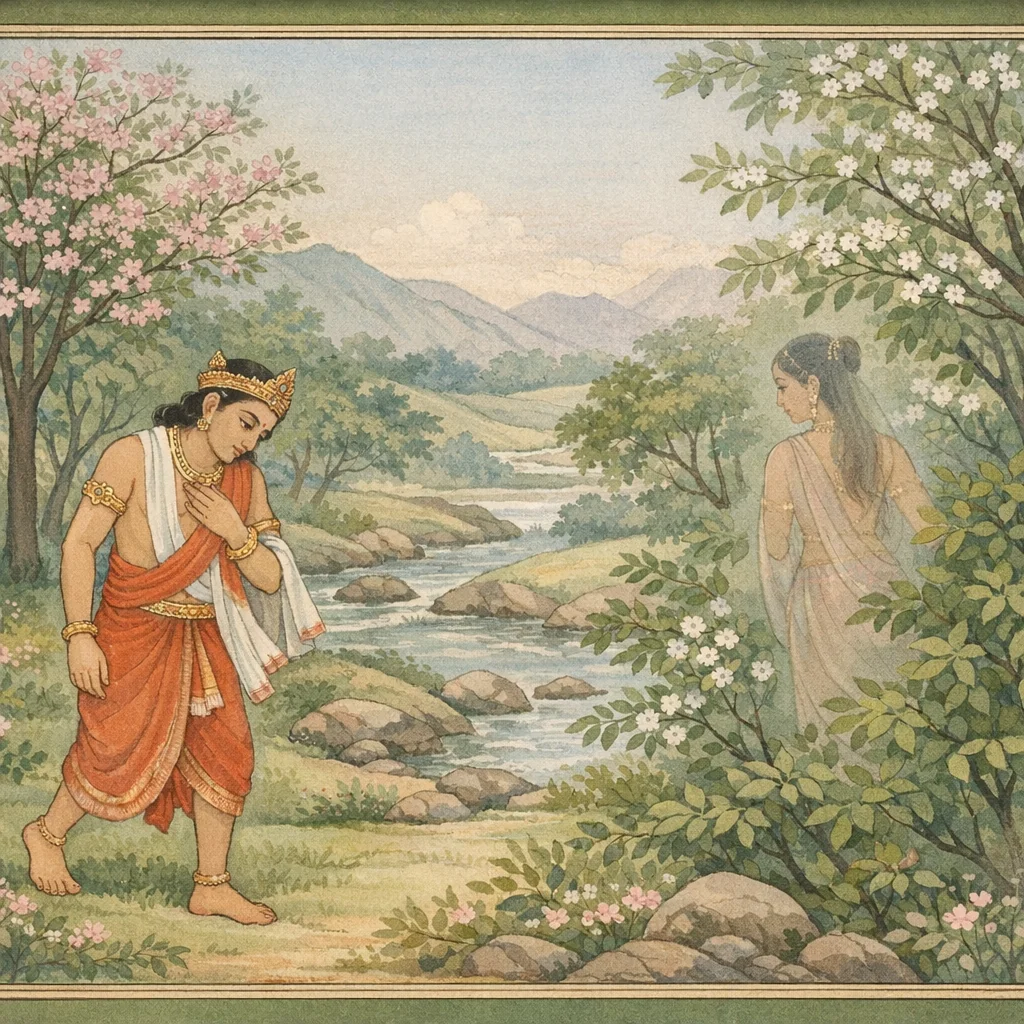
Adhyaya 171
और्वकृत-क्रोधाग्नि-निग्रहः (Aurva’s Containment of the Wrath-Fire)
Upa-parva: Aūrva–Krodhāgni Upākhyāna (Episode of Aurva’s Anger-Fire)
Aūrva speaks of a vow made in anger to effect universal destruction, insisting he cannot live with a futile wrath-vow and that unspent anger would consume him. He articulates a political-ethical doctrine: one who cannot endure justified anger is unfit to protect the trivarga; properly applied anger disciplines the unruly and protects the disciplined, especially for rulers seeking higher aims. He recalls hearing, even in the womb, the cries of Bhṛgu women during kṣatriya violence, and describes how the absence of a restrainer enables wrongdoing; even one with power who fails to prevent known evil becomes implicated. Though now ‘lord of worlds,’ he claims he cannot disregard the elders’ welfare-oriented counsel. The pitaraḥ advise releasing the wrath-fire into the waters, since worlds are established in water and the cosmos is water-constituted; thus the vow remains true without destroying beings. Vasiṣṭha narrates that Aūrva releases the krodhaja fire into Varuṇa’s domain; the ocean ‘drinks’ and contains it, described in Vedic terms as a great horse-headed form. The passage concludes by advising Parāśara, knower of higher dharma, not to harm worlds—positioning the episode as normative instruction on restraint and cosmic stewardship.
Chapter Arc: अर्जुन गन्धर्वराज से ‘तापत्य’ शब्द का निश्चित अर्थ पूछता है—‘तपती’ कौन है, जिसके कारण किसी वंश/सम्बोधन का यह नाम पड़ा? → वैशम्पायन के माध्यम से गन्धर्व अर्जुन को त्रिलोके-प्रसिद्ध कथा सुनाता है: सूर्यकन्या तपती का अनुपम सौन्दर्य वर्णित होता है; राजा संवरण उसे देखकर मोहित हो जाता है, कामाग्नि से दग्ध होकर उसे प्रणय-प्रस्ताव देता है और फिर वह दिव्य कन्या अचानक ओझल हो जाती है। → तपती के अदृश्य हो जाने पर संवरण उन्मत्त-सा होकर वन-वन भटकता है, विलाप करता है और उसे न पा सकने की असहायता में ठिठक जाता है—प्रेम-वियोग का चरम क्षण। → अध्याय का समापन तपती के सौन्दर्य, संवरण की आसक्ति, प्रस्ताव और फिर उसके वियोग-विलाप की स्थिति पर होता है; कथा आगे बढ़ने के लिए मंच तैयार करती है कि यह मिलन/विवाह कैसे संभव होगा। → संवरण तपती को खोज नहीं पाता—अब प्रश्न यह रह जाता है कि दिव्य कन्या कहाँ गई, और राजा का यह दाह कैसे शान्त होगा?
Shlokas
Verse 1
अर्जुनने कहा--गन्धर्व! तुमने “तपतीनन्दन” कहकर जो बात यहाँ मुझसे कही है, उसके सम्बन्धमें मैं यह जानना चाहता हूँ कि तापत्यका निश्चित अर्थ क्या है?
Arjuna said: “O Gandharva, you addressed me here as ‘son of Tapatī.’ I wish to understand the matter behind that expression—what is the definite meaning of the term ‘Tāpatya’?”
Verse 2
तपती नाम का चैषा तापत्या यत्कृते वयम् । कौन्तेया हि वयं साधो तत्त्वमिच्छामि वेदितुम्,साधुस्वभाव गन्धर्वराज! यह तपती कौन है, जिसके कारण हमलोग तापत्य कहलाते हैं? हम तो अपनेको कुन्तीका पुत्र समझते हैं। अतः “तापत्य” का यथार्थ रहस्य क्या है, यह जाननेकी मुझे बड़ी इच्छा हो रही है
Arjuna said: “Who is this woman named Tapatī, on whose account we are called ‘Tāpatyas’? We are known as the sons of Kuntī. Therefore, O noble one, I wish to know the true meaning and origin of this designation ‘Tāpatya’.”
Verse 3
वैशम्पायन उवाच एवमुक्त: स गन्धर्व: कुन्तीपुत्रं धनंजयम् । विश्रुतां त्रिषु लोकेषु श्रावयामास वै कथाम्,वैशम्पायनजी कहते हैं--जनमेजय! उनके यों कहनेपर गन्धर्वने कुन्तीनन्दन धनंजयको वह कथा सुनानी प्रारम्भ की, जो तीनों लोकोंमें विख्यात है
Vaiśampāyana said: Thus addressed, that Gandharva began to recount to Dhanañjaya, the son of Kuntī, a tale renowned throughout the three worlds—setting before him a widely celebrated account meant to instruct as well as to inform.
Verse 4
गन्धर्व उवाच हन्त ते कथयिष्यामि कथामेतां मनोरमाम् | यथावदखिलां पार्थ सर्वबुद्धिमतां वर,गन्धर्व बोला--समस्त बुद्धिमानोंमें श्रेष्ठ कुन्तीकुमार! इस विषयमें एक बहुत मनोरम कथा है, जिसे मैं यथार्थ एवं पूर्णरूपसे आपको सुनाऊँगा
The Gandharva said: “Well then, I shall recount to you this delightful tale. O Pārtha, best among all the wise, I will tell it to you correctly and in full.”
Verse 5
उक्तवानस्मि येन त्वां तापत्य इति यद् वच: । तत् ते5हं कथयिष्यामि शृणुष्वैकमना भव,मैंने जिस कारण अपने वक्तव्यमें तुम्हें 'तापत्य” कहा है, वह बता रहा हूँ, एकाग्रचित्त होकर सुनो
The Gandharva said: “I have already spoken the words by which I addressed you as ‘Tāpatya.’ Now I shall tell you the reason for that address—listen with a single, focused mind.”
Verse 6
य एष दिवि धिष्ण्येन नाकं व्याप्रोति तेजसा । एतस्य तपती नाम बभूव सदृशी सुता,ये जो आकाशगमें उदित हो अपने तेजोमण्डलके द्वारा यहाँसे स्वर्गलोकतक व्याप्त हो रहे हैं, इन्हीं भगवान् सूर्यदेवके तपती नामकी एक पुत्री हुई, जो पिताके अनुरूप ही थी। प्रभो! वह सावित्रीदेवीकी छोटी बहिन थी। वह तपस्यामें संलग्न रहनेके कारण तीनों लोकोंमें तपती नामसे विख्यात हुई
The Gandharva said: “He who, stationed in the heavens, pervades the celestial realm with his radiance—of that very Sun-god there was born a daughter named Tapatī, resembling her father in splendor. Through her austerity and steadfast discipline she became renowned across the three worlds by the name ‘Tapatī’.”
Verse 7
विवस्वतो वै देवस्य सावित्रयवरजा विभो । विश्रुता त्रिषु लोकेषु तपती तपसा युता,ये जो आकाशगमें उदित हो अपने तेजोमण्डलके द्वारा यहाँसे स्वर्गलोकतक व्याप्त हो रहे हैं, इन्हीं भगवान् सूर्यदेवके तपती नामकी एक पुत्री हुई, जो पिताके अनुरूप ही थी। प्रभो! वह सावित्रीदेवीकी छोटी बहिन थी। वह तपस्यामें संलग्न रहनेके कारण तीनों लोकोंमें तपती नामसे विख्यात हुई
The Gandharva said: “O mighty one, there is a renowned daughter of the god Vivasvat (the Sun), the younger sister of Sāvitrī. Endowed with austerity, she is celebrated in the three worlds as Tapatī—so named because of her ascetic power and her likeness to her radiant father.”
Verse 8
न देवी नासुरी चैव न यक्षी न च राक्षसी | नाप्सरा न च गन्धर्वी तथा रूपेण काचन,उस समय देवता, असुर, यक्ष एवं राक्षस जातिकी स्त्री, कोई अप्सरा तथा गधर्वपत्नी भी उसके समान रूपवती न थी
The Gandharva said: “She was not a goddess, nor an Asura-woman; not a Yakṣī, nor a Rākṣasī. No Apsaras, and no Gandharva-wife possessed such beauty as she did.” In the narrative, this is a hyperbolic praise that elevates her exceptional form beyond all known classes of celestial and semi-celestial women, underscoring the power of beauty to captivate and to set events in motion.
Verse 9
सुविभक्तानवद्याज़ी स्वसितायतलोचना । स्वाचारा चैव साध्वी च सुवेषा चैव भामिनी,उसके शरीरका एक-एक अवयव बहुत सुन्दर, सुविभक्त और निर्दोष था। उसकी आँखें बड़ी-बड़ी और कजरारी थीं। वह सुन्दरी सदाचार, साधु-स्वभाव और मनोहर वेशसे सुशोभित थी। भारत! भगवान् सूर्यने तीनों लोकोंमें किसी भी पुरुषको ऐसा नहीं पाया, जो रूप, शील, गुण और शास्त्रज्ञानकी दृष्टिसे उसका पति होनेयोग्य हो
The Gandharva said: “She was flawless in every limb, each feature beautifully proportioned. Her eyes were large, dark, and long. That radiant woman was marked by good conduct and a saintly disposition, and she shone in a pleasing attire. O Bhārata, the Sun-god, having surveyed the three worlds, found no man who, in beauty, character, virtues, and knowledge of the sacred teachings, was fit to be her husband.”
Verse 10
न तस्या: सदृशं कंचित् त्रिषु लोकेषु भारत । भर्तरें सविता मेने रूपशीलगुणश्रुतै:,उसके शरीरका एक-एक अवयव बहुत सुन्दर, सुविभक्त और निर्दोष था। उसकी आँखें बड़ी-बड़ी और कजरारी थीं। वह सुन्दरी सदाचार, साधु-स्वभाव और मनोहर वेशसे सुशोभित थी। भारत! भगवान् सूर्यने तीनों लोकोंमें किसी भी पुरुषको ऐसा नहीं पाया, जो रूप, शील, गुण और शास्त्रज्ञानकी दृष्टिसे उसका पति होनेयोग्य हो
The Gandharva said: “O Bhārata, in the three worlds there is no one comparable to her. The Sun-god (Savitṛ) judged that, by beauty, conduct, virtues, and learning, no man was fit to be her husband.”
Verse 11
सम्प्राप्तयौवनां पश्यन् देयां दुहितरं तु ताम् । नोपलेभे ततः शान्तिं सम्प्रदानं विचिन्तयन्,वह युवावस्थाको प्राप्त हो गयी। अब उसका किसीके साथ विवाह कर देना आवश्यक था। उसे उस अवस्थामें देखकर भगवान् सूर्य इस चिन्तामें पड़े कि इसका विवाह किसके साथ किया जाय। यही सोचकर उन्हें शान्ति नहीं मिलती थी
Seeing that the maiden had reached youth and that it was now proper to give his daughter in marriage, he became preoccupied with the question of her bestowal. As he pondered to whom she should be given, he found no peace of mind—his concern reflecting the dharmic duty of a guardian to secure a fitting marriage for a daughter at the right time.
Verse 12
अथर्क्षपुत्र: कौन्तेय कुरूणामृषभो बली । सूर्यमाराधयामास नृप: संवरणस्तदा,कुन्तीनन्दन! उन्हीं दिनों महाराज ऋक्षके पुत्र राजा संवरण कुरुकुलके श्रेष्ठ एवं बलवान पुरुष थे। उन्होंने भगवान् सूर्यकी आराधना प्रारम्भ की
The Gandharva said: “O son of Kuntī, in those days King Saṃvaraṇa—son of Ṛkṣa, the foremost and mighty bull among the Kurus—began to worship the Sun. By turning to Sūrya with reverence, the king sought divine support and inner steadiness, showing how royal power is ideally grounded in disciplined devotion rather than mere force.”
Verse 13
अर्घ्यमाल्योपहाराद्यर्गन्धैश्व नियत: शुचि: । नियमैरुपवासैशक्ष तपोभिविविधैरपि,पौरवनन्दन! वे मन और इन्द्रियोंको संयममें रखकर पवित्र हो अर्घ्य, पुष्प, गन्ध एवं नैवेद्य आदि सामग्रियोंसे तथा भाँति-भाँतिके नियम, व्रत एवं तपस्याओंद्वारा बड़े भक्तिभावसे उदय होते हुए सूर्यकी पूजा करते थे। उनके हृदयमें सेवाका भाव था। वे शुद्ध तथा अहंकारशून्य थे
The Gandharva said: “O descendant of Puru, disciplined and pure, they worshipped the rising Sun with heartfelt devotion—offering arghya (water oblation), garlands, fragrances, and other gifts, and observing many kinds of restraints, fasts, vows, and austerities. Their minds and senses were held in check; their service was sincere, and they remained clean and free from pride.”
Verse 14
शुश्रूषुरनहंवादी शुचि: पौरवनन्दन । अंशुमन्तं समुद्यन्तं पूजयामास भक्तिमान्,पौरवनन्दन! वे मन और इन्द्रियोंको संयममें रखकर पवित्र हो अर्घ्य, पुष्प, गन्ध एवं नैवेद्य आदि सामग्रियोंसे तथा भाँति-भाँतिके नियम, व्रत एवं तपस्याओंद्वारा बड़े भक्तिभावसे उदय होते हुए सूर्यकी पूजा करते थे। उनके हृदयमें सेवाका भाव था। वे शुद्ध तथा अहंकारशून्य थे
The Gandharva said: “O descendant and delight of the Puru line, he was eager to serve, free from self-assertion, and inwardly pure. With devoted mind he worshipped the radiant Sun as it rose—honouring it with reverent offerings and disciplined observances. His conduct was marked by humility, self-restraint, and a sincere spirit of service.”
Verse 15
ततः कृतज्ञं धर्मज्ञं रूपेणासदृशं भुवि | तपत्या: सदृशं मेने सूर्य: संवरणं पतिम्,रूपमें इस पृथ्वीपर उनके समान दूसरा कोई पुरुष नहीं था। वे कृतज्ञ और धर्मज्ञ थे। अतः सूर्यदेवने राजा संवरणको ही तपतीके योग्य पति माना
Then Sūrya (the Sun-god) regarded Saṃvaraṇa as a fitting husband for Tapatī: a man unmatched on earth in beauty, and distinguished by gratitude and knowledge of dharma. Seeing these virtues, Sūrya judged him worthy of his daughter.
Verse 16
दातुमैच्छत् ततः कन्यां तस्मै संवरणाय ताम् । नृपोत्तमाय कौरव्य विश्रुताभिजनाय च,कुरुनन्दन! उन्होंने नृपश्रेष्ठ संवरणको, जिनका उत्तम कुल सम्पूर्ण विश्वमें विख्यात था, अपनी कन्या देनेकी इच्छा की
Then he wished to give that maiden to Saṃvaraṇa—an excellent king of the Kuru line, renowned for the fame of his noble ancestry. The verse underscores a socially sanctioned, dharma-aligned marriage choice: the bride is offered to a ruler distinguished not merely by power, but by lineage and public repute.
Verse 17
यथा हि दिवि दीप्तांशु: प्रभासयति तेजसा । तथा भुवि महीपालो दीप्त्या संवरणो5भवत्,जैसे आकाशगमें उद्दीप्त किरणोंवाले सूर्यदेव अपने तेजसे प्रकाशित होते हैं, उसी प्रकार पृथ्वीपर राजा संवरण अपनी दिव्य कान्तिसे प्रकाशित थे
As the radiant sun in the heavens illumines all by its own splendor, so too on earth King Saṁvaraṇa shone forth—his presence made manifest by a divine brilliance. The comparison frames kingship as a moral and social light: a ruler’s inner excellence is expected to become visible as protection, order, and auspiciousness for the world.
Verse 18
यथार्चयन्ति चादित्यमुद्रन्तं ब्रह्मवादिन: । तथा संवरणं पार्थ ब्राह्मणावरजा: प्रजा:,पार्थ! जैसे ब्रह्मवादी महर्षि उगते हुए सूर्यकी आराधना करते हैं, उसी प्रकार क्षत्रिय, वैश्य आदि प्रजाएँ महाराज संवरणकी उपासना करती थीं
The Gandharva said: “Just as the Brahma-knowing sages worship the Sun as he rises, so too, O son of Pṛthā, did the people—those of the orders following the Brāhmaṇas—revere King Saṃvaraṇa.”
Verse 19
स सोममति कान्तत्वादादित्यमति तेजसा । बभूव नृपति: श्रीमान् सुहृदां दुर्ददामपि,वे अपनी कमनीय कान्तिसे चन्द्रमाको और तेजसे सूर्यदेवको भी तिरस्कृत करते थे। राजा संवरण मित्रों तथा शत्रुओंकी मण्डलीमें भी अपनी दिव्य शोभासे प्रकाशित होते थे
The illustrious king, by the loveliness of his beauty, seemed to outshine even the Moon, and by the brilliance of his energy, even the Sun. He shone with a divine splendor amid the circles of friends and foes alike—so radiant that he was hard to look upon. The verse underscores how true royal excellence is recognized universally, beyond partisan loyalties, and how inner vigor and outward grace together command respect.
Verse 20
एवंगुणस्य नृपतेस्तथावृत्तस्य कौरव । तस्मै दातुं मनश्लक्रे तपतीं तपन: स्वयम्,कुरुनन्दन! ऐसे उत्तम गुणोंसे विभूषित तथा श्रेष्ठ आचार-व्यवहारसे युक्त राजा संवरणको भगवान् सूर्यने स्वयं ही अपनी पुत्री तपतीको देनेका निश्चय कर लिया
O Kaurava, seeing that King Saṁvaraṇa was endowed with such virtues and conducted himself with exemplary discipline and noble behavior, Tapana (the Sun-god) himself resolved in his mind to give his daughter Tapatī to him in marriage. The verse underscores how ethical character and worthy conduct naturally draw divine favor and rightful alliances.
Verse 21
स कदाचिदथो राजा श्रीमानमितविक्रम: । चचार मृगयां पार्थ पर्वतोपवने किल,कुन्तीनन्दन! एक दिन अमितपराक्रमी श्रीमान् राजा संवरण पर्वतके समीपवर्ती उपवनमें हिंसक पशुओंका शिकार कर रहे थे
The Gandharva said: Once, that illustrious king—of immeasurable prowess—went out on a hunt. O son of Pṛthā, it is said that he ranged through a grove near the mountain, pursuing game. In the narrative setting, the verse situates the king in the ethically charged activity of mṛgayā (royal hunting), a context often used in the Mahābhārata to foreshadow encounters, tests of restraint, and consequences arising from violence undertaken for sport or duty.
Verse 22
चरतो मृगयां तस्य क्षुत्पिपासासमन्वित: । ममार राज्ञ: कौन्तेय गिरावप्रतिमो हय:,कुन्तीपुत्र! शिकार खेलते समय ही राजाका अनुपम अश्व पर्वतपर भूख-प्याससे पीड़ित हो मर गया। पार्थ! घोड़ेकी मृत्यु हो जानेसे राजा संवरण पैदल ही उस पर्वत- शिखरपर विचरने लगे। घूमते-घूमते उन्होंने एक विशाललोचना कन्या देखी, जिसकी समता करनेवाली स्त्री कहीं नहीं थी
O son of Kuntī, while the king was roaming on a hunt, his incomparable horse died on the mountain, afflicted by hunger and thirst. The episode underscores how even royal power and splendid possessions remain subject to bodily limits and the harshness of terrain; it also frames the king’s subsequent wandering as a consequence of neglecting basic needs in pursuit of sport.
Verse 23
स मृताश्वश्चरन् पार्थ पदभ्यामेव गिरौ नृपः । ददर्शासदृशीं लोके कन्न्यामायतलोचनाम्,कुन्तीपुत्र! शिकार खेलते समय ही राजाका अनुपम अश्व पर्वतपर भूख-प्याससे पीड़ित हो मर गया। पार्थ! घोड़ेकी मृत्यु हो जानेसे राजा संवरण पैदल ही उस पर्वत- शिखरपर विचरने लगे। घूमते-घूमते उन्होंने एक विशाललोचना कन्या देखी, जिसकी समता करनेवाली स्त्री कहीं नहीं थी
O Pārtha, when the king’s horse died, he continued his journey on foot upon the mountain. As he wandered there, he beheld a maiden with long, expansive eyes—one whose beauty and presence seemed without equal anywhere in the world. The episode frames how sudden loss and hardship can redirect a ruler’s path, leading to unforeseen encounters that shape lineage and destiny.
Verse 24
स एक एकामासाद्य कन््यां परबलार्दन: । तस्थौ नृपतिशार्दूल: पश्यन्नविचलेक्षण:,शत्रुओंकी सेनाका संहार करनेवाले नृपश्रेष्ठ संवरण अकेले थे और वह कन्या भी अकेली ही थी। उसके पास पहुँचकर राजा एकटक नेत्रोंस उसकी ओर देखते हुए खड़े रह गये
The king—crusher of hostile forces—came upon the maiden when she was all alone. The tiger among rulers then stood there, gazing at her with unwavering eyes. The scene underscores a charged moment of encounter: power restrained by attention and intent, where the ethical weight lies in how a mighty man conducts himself upon meeting a solitary young woman.
Verse 25
स हि तां तर्कयामास रूपतो नृपति: श्रियम् । पुन: संतर्कयामास रवेर्भ्रष्टामिव प्रभाम्ू,पहले तो उसका रूप देखकर नरेशने अनुमान किया कि हो-न-हो ये साक्षात् लक्ष्मी हैं; फिर उनके ध्यानमें यह बात आयी कि सम्भव है, भगवान् सूर्यकी प्रभा ही सूर्यमण्डलसे च्युत होकर इस कन्याके रूपमें आकाशसे पृथ्वीपर आ गयी हो
Seeing her beauty, the king inferred that she must be Lakṣmī herself. Then he reconsidered, thinking instead that she might be the radiance of the Sun—fallen from the solar orb—having descended to earth in the form of this maiden. The verse highlights how extraordinary beauty can provoke reverent wonder, yet also invites careful discernment rather than impulsive certainty.
Verse 26
वपुषा वर्चसा चैव शिखामिव विभावसो: । प्रसन्नत्वेन कान्त्या च चन्द्ररेखामिवामलाम्,शरीर और तेजसे वह आगकी ज्वाला-सी जान पड़ती थी। उसकी प्रसन्नता और कमनीय कान्तिसे ऐसा प्रतीत होता था, मानो वह निर्मल चन्द्रकला हो
The Gandharva said: “By her bodily form and radiant splendor she appeared like a flame of fire; and by her serene joy and lovely luster she seemed like a spotless sliver of the moon.” The verse heightens the ethical-narrative sense that true nobility is recognized not merely by birth or circumstance but by an inner clarity that shines outward as composure, purity, and auspicious beauty.
Verse 27
गिरिपृषछे तु सा यस्मिन् स्थिता स्वसितलोचना । विभ्राजमाना शुशुभे प्रतिमेव हिरण्मयी,सुन्दर कजरारे नेत्रोंवाली वह दिव्य कन्या जिस पर्वत-शिखरपर खड़ी थी, वहाँ वह सोनेकी दमकती हुई प्रतिमा-सी सुशोभित हो रही थी
The Gandharva said: Standing upon that mountain-crest, the maiden—her eyes cool and serene—shone forth brilliantly, appearing splendid like a golden statue. The verse emphasizes the striking, almost otherworldly radiance of the woman being described, heightening the sense of wonder and the moral caution often implied in such scenes: beauty can captivate the mind and must be met with restraint and discernment.
Verse 28
तस्या रूपेण स गिरिखवेंषेण च विशेषत: । स सवृक्षक्षुपलतो हिरण्मय इवाभवत्,विशेषत: उसके रूप और वेशसे विभूषित हो वृक्ष, गुल्म और लताओंसहित वह पर्वत सुवर्णमय-सा जान पड़ता था
Adorned in a distinctive way by her beauty and by that mountain-like attire, the place appeared transformed: the mountain—together with its trees, shrubs, and creepers—seemed as though it were made of gold. The passage underscores how extraordinary presence and ornament can alter perception, making the natural world look radiant and auspicious.
Verse 29
अवमेने च तां दृष्टवा सर्वलोकेषु योषित: । अवाप्तं चात्मनो मेने स राजा चक्षुष: फलम्,उसे देखकर राजा संवरणकी समस्त लोकोंकी सुन्दरी युवतियोंमें अनादर-बुद्धि हो गयी। राजा यह मानने लगे कि आज मुझे अपने नेत्रोंका फल मिल गया
On seeing her, the king grew indifferent to all other women in the worlds. He felt that he had at last obtained the true reward of his eyes—fulfillment through a vision that eclipsed all lesser attractions.
Verse 30
जन्मप्रभूति यत् किंचिद् दृष्टवान् स महीपति: । रूपं न सदृशं तस्यास्तर्कयामास किंचन,भूपाल संवरणने जन्मसे लेकर (उस दिनतक) जो कुछ देखा था, उसमें कोई भी रूप उन्हें उस (दिव्य किशोरी)-के सदृश नहीं प्रतीत हुआ
The king reflected that, from his birth onward, among all the sights he had ever beheld, he had never seen any form comparable to hers. In this moment the narrative underscores how an encounter with extraordinary beauty can unsettle ordinary judgment, prompting inward deliberation rather than rash action.
Verse 31
तया बद्धमनश्षक्षुः पाशैर्गुणमयैस्तदा । न चचाल ततो देशाद् बुबुधे न च किंचन,उस कन्याने उस समय अपने उत्तम गुणमय पाशोंसे राजाके मन और नेत्रोंको बाँध लिया। वे अपने स्थानसे हिल-डुलतक न सके। उन्हें किसी बातकी सुध-बुध (भी) न रही
Then, by her bonds—made of captivating virtues—she bound the king’s mind and eyes. He could not stir from that spot, and he awoke to nothing else; all awareness of what was happening around him was lost. The verse underscores how attachment and fascination can overpower discernment and immobilize one’s agency.
Verse 32
अस्या नूनं विशालाक्ष्या: सदेवासुरमानुषम् । लोकं निर्मथ्य धात्रेदं रूपमाविष्कृतं कृतम्,वे सोचने लगे, निश्चय ही ब्रह्माने देवता, असुर और मनुष्योंसहित सम्पूर्ण लोकोंके सौन्दर्य-सेन्धुको मथकर इस विशाल नेत्रोंवाली किशोरीके इस मनोहर रूपका आविष्कार किया होगा
Verse 33
एवं संतर्कयामास रूपद्रविणसम्पदा । कन्यामसदृशीं लोके नृप: संवरणस्तदा,इस प्रकार उस समय उसकी रूप-सम्पत्तिसे राजा संवरणने यही अनुमान किया कि संसारमें इस दिव्य कनन््याकी समता करनेवाली दूसरी कोई स्त्री नहीं है
Thus, King Saṁvaraṇa reflected upon her—considering her beauty and the richness of her qualities—and concluded that in all the world there was no other maiden comparable to this divine girl. The verse underscores how extraordinary excellence can arrest the mind, and it hints at the ethical need to temper admiration with discernment before desire turns into attachment.
Verse 34
तां च दृष्टवैव कल्याणीं कल्याणाभिजनो नृप: । जगाम मनसा चिन्तां कामबाणेन पीडित:,कल्याणमय कुलमें उत्पन्न हुए वे नरेश उस कल्याणस्वरूपा कामिनीको देखते ही काम-बाणसे पीड़ित हो गये। उनके मनमें चिन्ताकी आग जल उठी
The king, born of an illustrious and noble lineage, the moment he beheld that auspicious maiden, was struck and tormented by Kāma’s arrow. His mind at once fell into anxious brooding, kindled by desire—setting the stage for a moral tension between self-control and passion.
Verse 35
दहामान: स तीव्रेण नृपतिर्मन्मथाग्निना । अप्रगल्भां प्रगल्भस्तां तदोवाच मनोहराम्,तदनन्तर तीव्र कामाग्निसे जलते हुए राजा संवरणने लज्जारहित होकर उस लज्जाशीला एवं मनोहारिणी कन्यासे इस प्रकार पूछा--
Burning intensely in the fire of desire, King Saṃvaraṇa—his boldness overcoming her modest reserve—addressed that shy yet captivating maiden and questioned her in this manner. The passage frames the moment as a surge of passion that presses against decorum, setting up an ethical tension between self-restraint and impulsive longing.
Verse 36
कासि कस्यासि रम्भोरु किमर्थ चेह तिष्ठसि । कथं च निर्जने5रण्ये चरस्येका शुचिस्मिते,“रम्भोरु) तुम कौन हो? किसकी पुत्री हो? और किसलिये यहाँ खड़ी हो? पवित्र मुसकानवाली! तुम इस निर्जन वनमें अकेली कैसे विचर रही हो?
The Gandharva said: “Who are you, O woman of lovely thighs? Whose daughter are you? And for what purpose do you stand here? O you of pure, gentle smile—how do you wander alone in this deserted forest?”
Verse 37
त्वं हि सर्वानवद्याजी सर्वाभरणभूषिता । विभूषणमिवैतेषां भूषणानामभीप्सितम्,“तुम्हारे सभी अंग परम सुन्दर एवं निर्दोष हैं। तुम सब प्रकारके (दिव्य) आभूषणोंसे विभूषित हो। सुन्दरि! इन आभूषणोंसे तुम्हारी शोभा नहीं है, अपितु तुम स्वयं ही इन आभूषणोंकी शोभा बढ़ानेवाली अभीष्ट आभूषणके समान हो
The Gandharva said: “Indeed, every limb of yours is flawless and exquisitely beautiful, and you are adorned with every kind of ornament. O fair one, it is not these ornaments that lend you splendor; rather, you yourself are the desired adornment—like an ornament to the ornaments—enhancing their beauty.”
Verse 38
नददेवीं नासुरीं चैव न यक्षीं न च राक्षसीम् । न च भोगवतीं मन्ये न गन्धर्वी न मानुषीम्,“मुझे तो ऐसा जान पड़ता है, तुम न तो देवांगना हो न असुरकन्या, न यक्षकुलकी स्त्री हो न राक्षसवंशकी, न नागकन्या हो न गन्धर्वकन्या। मैं तुम्हें मानवी भी नहीं मानता
The Gandharva said: “I do not take you to be a river-goddess, nor an Asura maiden; neither a Yakṣa woman nor a Rākṣasī. Nor do I think you are a Bhogavatī (Nāga maiden); neither a Gandharvī nor even a human woman.” In this moment of wonder, he tries to locate her identity within the known orders of beings, implying that her presence and radiance exceed ordinary categories and demanding a truthful self-disclosure consistent with dharma.
Verse 39
या हि दृष्टा मया काश्रिच्छुता वापि वराड्ना: । न तासां सदृशीं मन्ये त्वामहं मत्तकाशिनि,“यौवनके मदसे सुशोभित होनेवाली सुन्दरी! मैंने अबतक जो कोई भी सुन्दरी स्त्रियाँ देखी अथवा सुनी हैं, उनमेंसे किसीको भी मैं तुम्हारे समान नहीं मानता
The Gandharva said: “O radiant beauty, adorned with the intoxication of youth! Of all the lovely women I have ever seen, or even heard described, I do not consider any to be your equal.”
Verse 40
दृष्टवैव चारुवदने चन्द्रात् कान्ततरं तव । वदन पद्मपत्राक्ष॑ मां मथ्नातीव मन्मथ:,'सुमुखि! जबसे मैंने चन्द्रमासे भी बढ़कर कमनीय एवं कमलदलके समान विशाल नेत्रोंसे युक्त तुम्हारे मुखका दर्शन किया है, तभीसे मनन््मथ मुझे मथ-सा रहा है”
The Gandharva said: “O lovely-faced one—your face is more radiant than the moon. Since the very moment I beheld it, with eyes wide like lotus-petals, Kāma (the god of desire) has been churning my heart as if with a churning-rod.”
Verse 41
एवं तां स महीपालो बभाषे न तु सा तदा । कामार्त निर्जने3रण्ये प्रत्यभाषत किचन,इस प्रकार राजा संवरण उस सुन्दरीसे बहुत कुछ कह गये; परंतु उसने उस समय उस निर्जन वनमें उन कामपीड़ित नरेशको कुछ भी उत्तर नहीं दिया
Thus the king spoke at length to that maiden; yet she, at that time, in the lonely forest, gave no reply at all to the love-tormented ruler. The scene underscores restraint and consent: speech driven by desire does not compel an answer, and silence here functions as a boundary rather than assent.
Verse 42
ततो लालप्यमानस्य पार्थिवस्यायतेक्षणा । सौदामिनीव चाभ्रेषु तत्रैवान्तरधीयत,राजा संवरण उन्मत्तकी भाँति प्रलाप करते रह गये और वह विशाल नेत्रोंवाली सुन्दरी वहीं उनके सामने ही बादलोंमें बिजलीकी भाँति अन्तर्धान हो गयी
Then, while the king was left lamenting and speaking deliriously, the large-eyed maiden vanished on the spot before him—like a flash of lightning disappearing amid the clouds. The scene underscores how attachment and agitation can unseat even a ruler’s composure, and how the wondrous may withdraw when met with uncontrolled longing.
Verse 43
तामन्वेष्ट स नृपति: परिचक्राम सर्वतः । वन॑ वनजपत्राक्षीं भ्रमन्नुन्मत्ततत् तदा,तब वे नरेश कमलदलके समान विशाल नेत्रोंवाली उस (दिव्य) कन्याको ढूँढ़नेके लिये वनमें सब ओर उन्मत्तकी भाँति भ्रमण करने लगे
Seeking her, the king wandered everywhere, circling through the forest in all directions. In his agitation he roamed like one maddened, searching for that lotus-petaled-eyed maiden—showing how overpowering desire and sudden separation can unsettle even a ruler’s composure and judgment.
Verse 44
अपश्यमान: स तु तां बहु तत्र विलप्य च । निश्वेष्ट: पार्थिवश्रेष्ठो मुहूर्त स व्यतिष्ठत,जब कहीं भी उसे देख न सके, तब वे नृपश्रेष्ठ वहाँ बहुत विलाप करते-करते मूर्च्छित हो दो घड़ीतक निश्रेष्ट पड़े रहे
When he could not see her anywhere, the best of kings lamented there at length; then, overcome by grief, he fainted and lay motionless for a while.
Verse 170
इति श्रीमहाभारते आदिपर्वणि चैत्ररथपर्वणि तपत्युपाख्याने सप्तत्यधिकशततमो<थध्याय:
Thus, in the Śrī Mahābhārata, within the Ādi Parva, in the Caitraratha section, in the episode concerning Tapatī, ends the one-hundred-and-seventieth chapter. This closing colophon marks the completion of the chapter and situates the narrative within its larger ethical frame—stories of lineage, conduct, and the consequences of desire and duty as preserved in the epic tradition.
Frequently Asked Questions
Aūrva faces a dharma-saṅkaṭa between keeping a wrath-born vow (so it is not ‘false’) and preventing catastrophic harm to living worlds; the resolution is to preserve satya while redirecting the destructive force away from beings.
Anger is ethically permissible only when purpose-bound and proportionate—used to restrain wrongdoing and protect social order—yet it must be governed by counsel, compassion, and responsibility for collective welfare; power without prevention of known harm creates moral implication.
No explicit phalaśruti is stated; the meta-function is didactic framing—through Vasiṣṭha’s narration and the final admonition to Parāśara—presenting the episode as an authoritative model of restraint and cosmic stewardship within Itihāsa ethics.