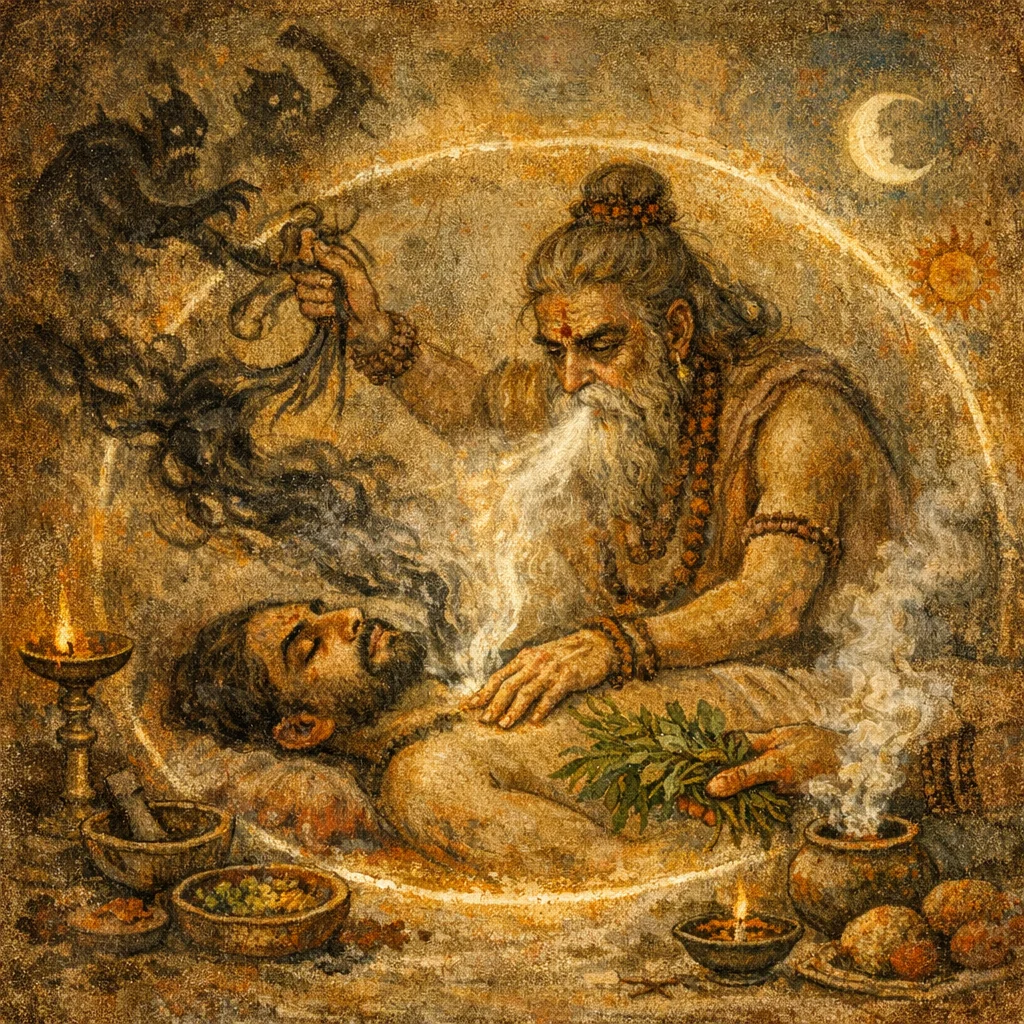
Sukta 2
Rishi: Atharvanic tradition (Anukramaṇī attribution for AV 8.2 as a protective/healing sequence; specific r̥ṣi varies by school lists).
Devata: Śiva/auspiciousness as operative power; implicitly the protective efficacy of the mantra itself.
Chandas: Anuṣṭubh (predominant in this section)
Mantras
Mantra 1
दीर्घायुःप्राप्तिः। आ रभस्वेमाममृतस्य श्नुष्टिमच्छिद्यमाना जरदष्टिरस्तु ते । असुं त आयुः पुनरा भरामि रजस्तमो मोप गा मा प्र मेष्ठाः
Lay hold upon this stay of immortality: unshorn, unbroken, let it be thine, to see old age. Thy breath, thy life, I bring again hither; let not mist, let not darkness come nigh—do not thou utterly pass away.
Mantra 2
जीवतां ज्योतिरभ्येह्यर्वाङा त्वा हरामि शतशारदाय । अवमुञ्चन् मृत्युपाशानशस्तिं द्राघीय आयुः प्रतरं ते दधामि
O light of the living, come hitherward; thee I bring for a hundred autumns. Releasing the nooses of Death, the ill-omened bane, I set for thee a life more long, more onward-reaching.
Mantra 3
वातात् ते प्राणमविदं सूर्याच्चक्षुरहं तव । यत् ते मनस्त्वयि तद् धारयामि सं वित्स्वाङ्गैर्वद जिह्वयालपन्
From Wind for thee I have found thy breath; from the Sun, thy sight, I. What mind of thine is within thee—that I hold fast. Come wholly to thy sense with thy limbs; speak with thy tongue, uttering clear speech.
Mantra 4
प्राणेन त्वा द्विपदां चतुष्पदामग्निमिव जातमभि सं धमामि । नमस्ते मृत्यो चक्षुषे नमः प्राणाय तेऽकरम्
With breath I breathe upon thee—of bipeds, of quadrupeds—like fire new-born I kindle thee wholly. Homage to thee, O Death, to thine eye; homage have I made to Prāṇa for thee.
Mantra 5
अयं जीवतु मा मृतेमं समीरयामसि । कृणोम्यस्मै भेषजं मृत्यो मा पुरुषं वधीः
Let this man live; let him not die: this one we raise up wholly. For him I fashion a remedy. O Death, do not smite the person down.
Mantra 6
जीवलां नघारिषां जीवन्तीमोषधीमहम्। त्रायमाणां सहमानां सहस्वतीमिह हुवेऽस्मा अरिष्टतातये
The life-bestowing, the unassailable, the living Herb do I invoke—protecting, overpowering, rich in might—here, for this man, unto unhurtful safety.
Mantra 7
अधि ब्रूहि मा रभथाः सृजेमं तवैव सन्त्सर्वहाया इहास्तु । भवाशर्वौ मृडतं शर्म यच्छतमपसिध्य दुरितं धत्तमायुः
Pronounce thou over him: seize him not; release this man—being thine, let him abide here, complete in all his years. O Bhava and Śarva, be gracious; grant ye shelter; drive ye away misfortune; set ye fast his life.
Mantra 8
अस्मै मृत्यो अधि ब्रूहीमं दयस्वोदितो३यमेतु । अरिष्टः सर्वाङ्गः सुश्रुज्जरसा शतहायन आत्मना भुजमश्नुताम्
For this man, O Death, pronounce thou; have pity—let him, arisen, go his way. Unharmed, whole-limbed, of good hearing, let him by old age attain a hundred years, and with his very self enjoy his portion.
Mantra 9
देवानां हेतिः परि त्वा वृणक्तु पारयामि त्वा रजस उत् त्वा मृत्योरपीपरम्। आरादग्निं क्रव्यादं निरूहं जीवातवे ते परिधिं दधामि
Let the Gods’ weapon close around thee. I bear thee through from out the region; from Death I have delivered thee. Far off the flesh-devouring Fire, the uprooting one— for thy living I set a boundary round about thee.
Mantra 10
यत् ते नियानं रजसं मृत्यो अनवधर्ष्यऽम्। पथ इमं तस्माद् रक्षन्तो ब्रह्मास्मै वर्म कृण्मसि
That leading-down of thine, O Death, from out the region—irresistible— from that path, guarding this man, we make for him Prayer as armor.
Mantra 11
कृणोमि ते प्राणापानौ जरां मृत्युं दीर्घमायुः स्वस्ति। वैवस्वतेन प्रहितान् यमदूतांश्चरतोऽप सेधामि सर्वान्
I set in order for thee the in-breath and the out-breath—old age, death, long life, and welfare. All Yama’s messengers, roaming, sent forth by Vaivasvata, these I drive away and bar off.
Mantra 12
आरादरातिं निरृतिं परो ग्राहिं क्रव्यादः पिशाचान्। रक्षो यत् सर्वं दुर्भूतं तत् तम इवाप हन्मसि
Far away [be] malignity and Nirṛti; far away the Seizer, the flesh-eaters, the Piśācas. Whatsoever Rakṣas, all that is ill-formed, that we smite away, as [one smites] darkness.
Mantra 13
अग्नेष्टे प्राणममृतादायुष्मतो वन्वे जातवेदसः । यथा न रिष्या अमृतः सजूरसस्तत् ते कृणोमि तदु ते समृध्यताम्
O Agni, from the deathless, from the life-endowed, I seek to win thy breath, O Jātavedas; so that thou suffer no hurt—deathless, in firm accord—this I establish for thee; yea, let that for thee be brought to full success.
Mantra 14
शिवे ते स्तां द्यावापृथिवी असंतापे अभिश्रियौ । शं ते सूर्य आ तपतु शं वातो वातु ते हृदे। शिवा अभि क्षरन्तु त्वापो दिव्याः पयस्वतीः
Auspicious for thee be Heaven and Earth, untroubling, rich in splendour. Weal—let the Sun shine warmly upon thee; weal—let the Wind blow for thy heart. Kindly let the heavenly Waters, rich in nourishment, flow over thee.
Mantra 15
शिवास्ते सन्त्वोषधय उत् त्वाहार्षमधरस्या उत्तरां पृथिवीमभि। तत्र त्वादित्यौ रक्षतां सूर्याचन्द्रमसावुभा
Auspicious for thee be the Herbs. Up have I lifted thee from the lower [region] unto the upper Earth. There let the two Ādityas guard thee—both Sun and Moon.
Mantra 16
यत् ते वासः परिधानं यां नीविं कृणुषे त्वम्। शिवं ते तन्वे३तत् कृण्मः संस्पर्शेऽद्रूक्ष्णमस्तु ते
What garment of thine is for wearing, what girdle thou dost fasten on—this we appoint as gracious for thy body: in its very touch let it be to thee uninjuring.
Mantra 17
यत् क्षुरेण मर्चयता सुतेजसा वप्ता वपसि केशश्मश्रु। शुभं मुखं मा न आयुः प्र मोषीः
When with the razor, sharpened, of excellent edge, the shaver shears the hair and beard—make thou the face auspicious; do not, for us, steal away the life.
Mantra 18
शिवौ ते स्तां व्रीहियवावबलासावदोमधौ। एतौ यक्ष्मं वि बाधेते एतौ मुञ्चतो अंहसः
Benign for thee be rice and barley, free from phlegm, unharmful in the house. These twain drive off the wasting-disease; these twain release from anguish.
Mantra 19
यदश्नासि यत् पिबसि धान्यंऽ कृष्याः पयः । यदाद्यं१ यदनाद्यं सर्वं ते अन्नमविषं कृणोमि
What thou eatest and what thou drinkest—grain of the tilth, and milk—whether it be fit for eating or unfit, all thy food I render free from poison.
Mantra 20
अह्ने च त्वा रात्रये चोभाभ्यां परि दद्मसि । अरायेभ्यो जिघत्सुभ्य इमं मे परि रक्षत
To Day and unto Night, to both together, we commit thee round about. From foes, from the hungry that would seize, do ye protect this man of mine on every side.
Mantra 21
शतं तेऽयुतं हायनान् द्वे युगे त्रीणि चत्वारि कृण्मः । इन्द्राग्नी विश्वे देवास्तेऽनु मन्यन्तामहृणीयमानाः
A hundred for thee, a myriad of years—two ages, yea three and four—do we ordain. Indra and Agni, and all the Gods, let them consent thereto, being unangered and unoffended.
Mantra 22
शरदे त्वा हेमन्ताय वसन्ताय ग्रीष्माय परि दद्मसि । वर्षाणि तुभ्यं स्योनानि येषु वर्धन्त ओषधीः
To Autumn thee, to Winter, to the Spring, to Summer do we wholly commit. Years, kindly and benign, be thine—those in which the healing plants wax and prosper.
Mantra 23
मृत्युरीशे द्विपदां मृत्युरीशे चतुष्पदाम्। तस्मात् त्वां मृत्योर्गोपतेरुद् भरामि स मा बिभेः
Death ruleth over bipeds; Death ruleth over quadrupeds. Therefore from Death, the keeper, do I bear thee forth: fear thou not.
Mantra 24
सोऽरिष्ट न मरिष्यसि न मरिष्यसि मा बिभेः । न वै तत्र म्रियन्ते नो यन्त्यधमं तमः
Unharmed art thou: thou shalt not die, thou shalt not die—fear not. Verily there men die not, nor go they down to the nethermost darkness.
Mantra 25
सर्वो वै तत्र जीवति गौरश्वः पुरुषः पशुः । यत्रेदं ब्रह्म क्रियते परिधिर्जीवनाय कम्
All verily live there—cow and horse, man and beast—where this holy spell is wrought, a boundary made for life and blessed weal.
Mantra 26
परि त्वा पातु समानेभ्योऽभिचारात् सबन्धुभ्यः । अमम्रिर्भवामृतोऽतिजीवो मा ते हासिषुरसवः शरीरम्
Round thee let protection stand, from equals’ sorcery, from kindred foes. Be thou unperishing; be deathless, over-living: let not the vital juices ever leave thy body.
Mantra 27
ये मृत्यव एकशतं या नाष्ट्रा अतितार्याः । मुञ्चन्तु तस्मात् त्वां देवा अग्नेर्वैश्वानरा दधि
What deaths there be, a hundredfold, what ruinous perils to be overpassed—let them from thee unloose their hold. The Gods, as Vaiśvānara Agni, set thee (in safety).
Mantra 28
अग्नेः शरीरमसि पारयिष्णु रक्षोहासि सपत्नहा। अथो अमीवचातनः पूतुद्रुर्नाम भेषजम्
Thou art Agni’s very body, a bearer across; thou art a slayer of demons, a slayer of rivals; yea, a driver-off of sickness—Pūtudru by name, a remedy.
Frequently Asked Questions
To protect a sick or threatened person from Death’s approach and restore vitality by making mantra-power (brahman) into protective “armor,” including protection through consecrated clothing.
They mark the body’s everyday contact boundary. The hymn consecrates garment and waistband so their touch becomes auspicious and non-injuring, preventing harm from entering through contact.
Both. It ‘makes a remedy’ (bheṣaja) while also functioning as rakṣā: it names Mṛtyu as the adversary and counters it by constructing a protective field and armor through mantra.