Adhyaya 24
Hari’s Boon to Muchukunda, Security of the Yādus, and Balarāma’s Consolation in Vraja (Viraha-Bhakti)
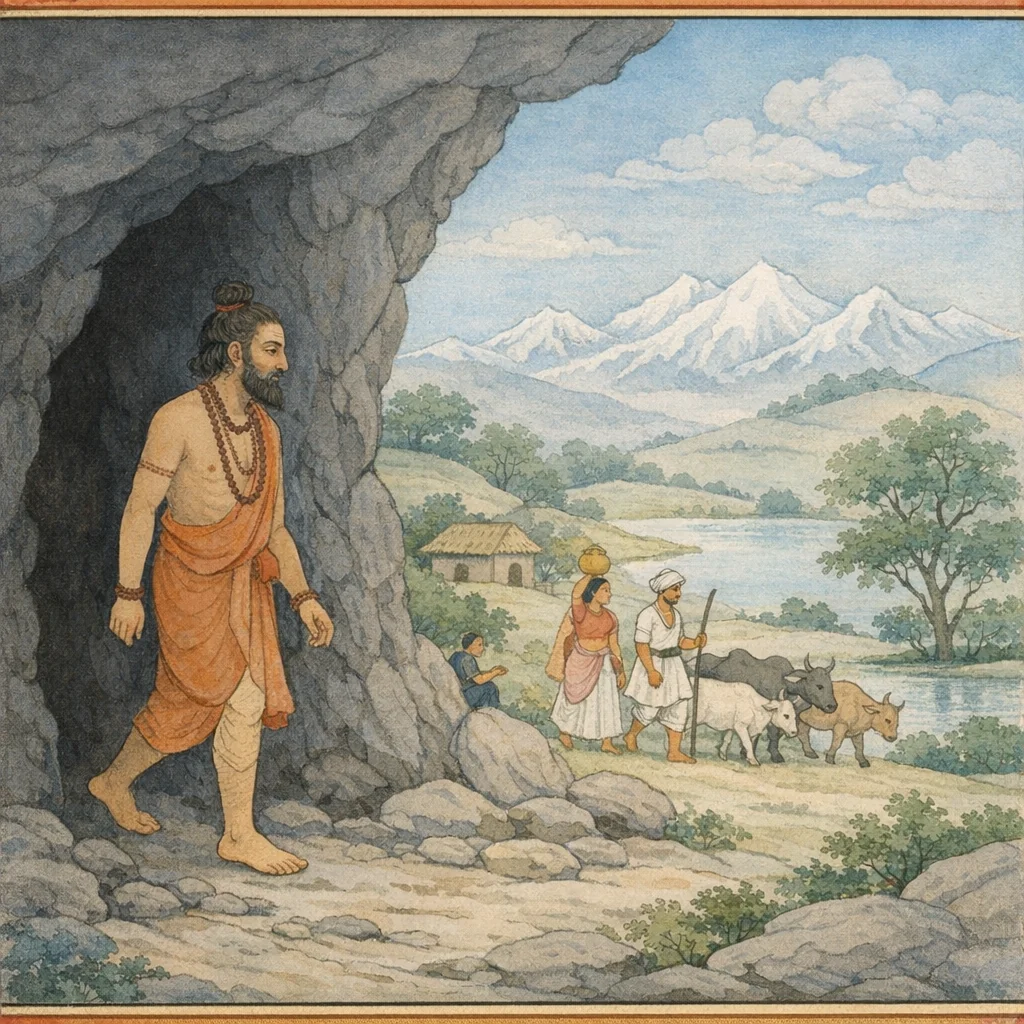
Parāśara continues to Maitreya: praised by Muchukunda, beginningless Hari speaks, granting him the desired divine worlds and foretelling a future noble birth with jāti-smara (memory of past lives) that culminates in mokṣa. Muchukunda leaves the cave, recognizes Kali’s advent, and departs to Gandhamādana—the seat of Nara-Nārāyaṇa—for tapas. Kṛṣṇa, having destroyed the foe by upāya (skillful means), returns to Mathurā, secures it, and reports to Ugrasena in Dvāravatī; the Yadu line becomes fearless. Balarāma then journeys to Nanda’s Gokula, meeting cowherds and gopīs with affection, embraces, and shared laughter. The gopīs voice viraha: fears that Kṛṣṇa has turned to city women, laments over abandonment, and longing for remembrance and return—even for Yaśodā’s sake—while weeping “Kṛṣṇa” and “Dāmodara.” Rāma consoles them with gentle, love-filled messages from Kṛṣṇa and sports again in Vraja. Thus the chapter binds royal protection to intimate bhakti-rasa, showing the Lord’s governance and his devotees’ separation-love within one sacred horizon.
Shlokas
Verse 1
इत्थं स्तुतस् तदा तेन मुचुकुन्देन धीमता प्राहेशः सर्वभूतानाम् अनादिर् भगवान् हरिः
Thus praised by the wise King Mucukunda, the Lord of all beings—Bhagavān Hari, the beginningless Sovereign—then spoke.
Verse 2
यथाभिवाञ्छितान् दिव्यान् लोकान् गच्छ नरेश्वर अव्याहतपरैश्वर्यो मत्प्रसादोपबृंहितः
O lord of men, go now to the divine worlds you have long desired. Sustained by my grace, your supreme sovereignty shall remain unobstructed.
Verse 3
भुक्त्वा दिव्यान् महाभोगान् भविष्यसि महाकुले जातिस्मरो मत्प्रसादात् ततो मोक्षम् अवाप्स्यसि
Having enjoyed celestial and abundant delights, you shall be born in a great and noble family. By my grace you will remember former births, and thereafter attain liberation.
Verse 4
इत्य् उक्तः प्रणिपत्येशं जगताम् अच्युतं नृपः गुहामुखाद् विनिष्क्रान्तः ददृशे सो ऽल्पकान् नरान्
Thus instructed, the king bowed down to the Lord of the worlds, Acyuta. Then, emerging from the mouth of the cave, he beheld only a few men.
Verse 5
ततः कलियुगं ज्ञात्वा प्राप्तं तप्तुं नृपस् तपः नरनारायणस्थानं प्रययौ गन्धमादनम्
Then, recognizing that the age of Kali had arrived, the king resolved to undertake austerities; and setting his course for the sacred seat of Nara and Nārāyaṇa, he departed for Gandhamādana.
Verse 6
कृष्णो ऽपि घातयित्वारिम् उपायेन हि तद्बलम् जग्राह मथुराम् एत्य हस्त्यश्वस्यन्दनोज्ज्वलम्
Kṛṣṇa too, by wise strategy, destroyed the foe and shattered the strength of his forces. Then he came to Mathurā and took possession of that radiant city, resplendent with elephants, horses, and chariots.
Verse 7
आनीय चोग्रसेनाय द्वारवत्यां न्यवेदयत् पराभिभवनिःशङ्कं बभूव च यदोः कुलम्
Having brought them and duly presented the matter to Ugrasena in Dvāravatī, the lineage of Yadu became fearless, free from dread of being overcome by any rival.
Verse 8
बलदेवो ऽपि मैत्रेय प्रशान्ताखिलविग्रहः ज्ञातिदर्शनसोत्कण्ठः प्रययौ नन्दगोकुलम्
O Maitreya, Balarāma too—his every impulse stilled and his bearing composed—set out for Nanda’s Gokula, yearning to behold his kinsfolk again.
Verse 9
ततो गोपांश् च गोपीश् च यथापूर्वम् अमित्रजित् तथैवाभ्यवदत् प्रेम्णा बहुमानपुरःसरम्
Then the unconquered hero addressed the cowherds and the cowherd-women just as before—speaking with affection, his words led by honor and warm regard.
Verse 10
कैश् चापि संपरिष्वक्तः कांश्चिच् च परिषस्वजे हास्यं चक्रे समं कैश्चिद् गोपैर् गोपीजनैस् तथा
Some embraced Him closely, and some He embraced in return; with cowherds and cowherd-women alike He shared laughter and playful mirth, moving among all in intimate joy.
Verse 11
प्रियाण्य् अनेकान्य् अवदन् गोपास् तत्र हलायुधम् गोप्यश् च प्रेमकुपिताः प्रोचुः सेर्ष्यम् अथापराः
There the cowherd boys spoke many affectionate words to Halāyudha (Balarāma); the cowherd maidens too—angered only by love—addressed him, and some others spoke with tender jealousy.
Verse 12
गोप्यः पप्रच्छुर् अपरा नागरीजनवल्लभः कच्चिद् आस्ते सुखं कृष्णश् चलत्प्रेमलवात्मकः
Then the gopīs asked another messenger: “Does Kṛṣṇa—beloved even of the city women—abide in happiness, he whose very being is made of trembling, ever-shifting particles of love?”
Verse 13
अस्मच्चेष्टाम् अपहसन् न कच्चित् पुरयोषिताम् सौभाग्यमानम् अधिकं करोति क्षणसौहृदः
Is there someone—laughing at my efforts—who makes the women of the city prize a fleeting, momentary affection as a greater “fortune” than true worth?
Verse 14
कच्चित् स्मरति नः कृष्णो गीतानुगमनं कलम् अप्य् असौ मातरं द्रष्टुं सकृद् अप्य् आगमिष्यति
Does Kṛṣṇa still remember us—does he recall even the tender time of our songs and shared moments? Will he, even once, come to see his mother?
Verse 15
अथ वा किं तदालापैर् अपरा क्रियतां कथा यस्यास्माभिर् विना तेन विनास्माकं भविष्यति
Or else—what is the use of such talk? Let another course be taken, another tale set in motion; for without us he will not endure, and without him we too shall have no future.
Verse 16
पिता माता तथा भ्राता भर्ता बन्धुजनश् च किम् न त्यक्तस् तत्कृते ऽस्माभिर् अकृतज्ञध्वजो हि सः
For his sake, what have we not abandoned—father, mother, brother, husband, and all our kin? Yet he stands marked by ingratitude; indeed, he bears the very banner of the ungrateful.
Verse 17
तथापि कच्चिद् आलापम् इहागमनसंश्रयम् करोति कृष्णो वक्तव्यं भवता राम नानृतम्
Even so, does Kṛṣṇa utter any word that hints at coming here? Tell me, O Rāma—what you say must be truth, not falsehood.
Verse 18
दामोदरः स गोविन्दः पुरस्त्रीसक्तमानसः अपेतप्रीतिर् अस्मासु दुर्दर्शः प्रतिभाति नः
That very Dāmodara—Govinda—whose mind is now captivated by the women of the city, seems to have withdrawn his former affection for us; to us he appears distant, hard to behold.
Verse 19
आमन्त्रितः स कृष्णेति पुनर् दामोदरेति च रुरुदुः सस्वरं गोप्यो हरिणा हृतचेतसः
Again and again they called, “Kṛṣṇa!” and once more, “Dāmodara!”—and the gopīs, their hearts stolen by Hari, wept aloud in a single, unrestrained cry.
Verse 20
संदेशैः साममधुरैः प्रेमगर्भैर् अगर्वितैः रामेणाश्वासिता गोप्यः कृष्णस्यातिमनोहरैः
With messages gentle and sweet—wombed with love and free of pride—Rāma consoled the gopīs, conveying Kṛṣṇa’s exceedingly enchanting words.
Verse 21
गोपैश् च पूर्ववद् रामः परिहासमनोरमाः कथाश् चकार रेमे च सह तैर् व्रजभूमिषु
And Rāma, as before, shared with the cowherds delightful tales touched with playful humor, and he sported with them throughout the lands of Vraja.
Frequently Asked Questions
It links divine grace with liberation: after enjoying heavenly worlds and being reborn in a great family, retained memory becomes a catalyst for detachment and final mokṣa.
It completes the theological arc: the same Lord who secures kingdoms also remains the inner life of devotees; viraha intensifies bhakti, and Balarāma’s consoling role preserves the pastoral community’s devotional stability.