युद्धप्रस्थान-वर्णनम् (Departure to the Battlefield and the Śaiva Overlordship over the Devas)
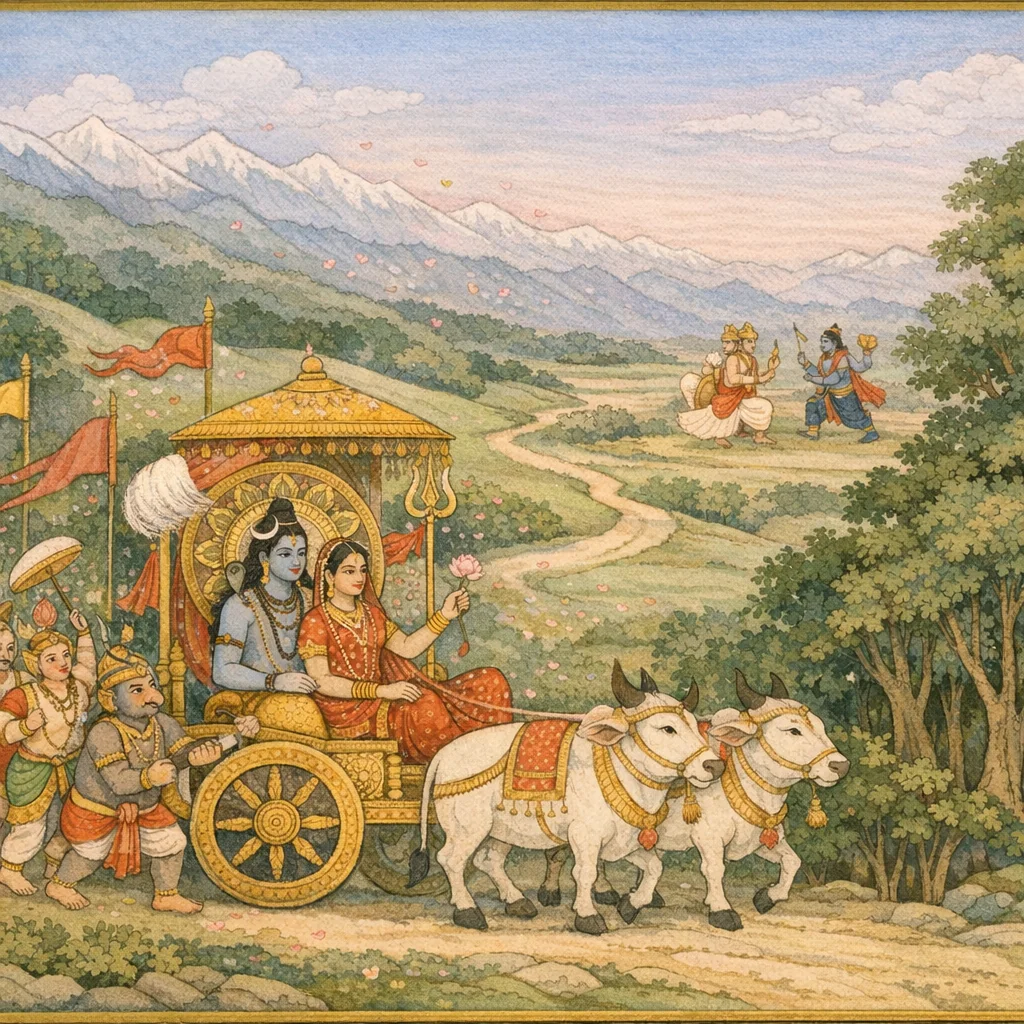
This chapter moves from counsel to action: Īśvara (Śiva) addresses the assembled devas, asking after their welfare and the steadiness of cosmic governance under his śāsana (v.1). Though the coming conflict between Brahmā and Viṣṇu is already known, it is restated to calm the devas’ agitation (v.2), showing repetition as reassurance and rule. Śiva, with Devī (Ambā/Parā), proceeds to the battlefield in a ceremonial mobilization: the Gaṇeśas are commanded in council (v.4), instruments resound (v.5), and Śiva mounts a chariot marked by praṇava symbolism and mandalic ornamentation (v.6), so the journey itself manifests cosmic order. The procession features banners, flywhisks, flower-rain, dance, and music (v.7), then suddenly grows quiet as the battle is watched from concealment (v.8), shifting from spectacle to tense metaphysical contest. Brahmā and Viṣṇu seek mutual destruction, wielding Śaiva-coded weapons—the Māheśvara and Pāśupata astras (v.9)—affirming that even inter-deva rivalry unfolds within Śiva’s supreme domain of power.
Shlokas
Verse 1
ईश्वर उवाच । वत्सकाः स्वस्तिवः कच्चिद्वर्तते मम शासनात् । जगच्च देवतावंशः स्वस्वकर्मणि किं नवा
Īśvara said: “Dear children, is all well with you—are things proceeding in accordance with My ordinance? And is the world, along with the race of the gods, duly engaged in its own appointed duties, without any disturbance?”
Verse 2
प्रागेव विदितं युद्धं ब्रह्मविष्ण्वोर्मयासुराः । भवतामभितापेन पौनरुक्त्येन भाषितम्
O Asuras, that battle between Brahmā and Viṣṇu is already well known. Yet, because of your insistence and agitation, it has been spoken of again, even at the cost of repetition.
Verse 3
इति सस्मितया माध्व्या कुमारपरिभाषया । समतोषयदंबायाः स पतिस्तत्सुरव्रजम्
Thus, with a gentle smile and in the playful manner of a child, that Lord—the Consort of Ambā—pleased the entire assembly of the gods.
Verse 4
अथ युद्धांगणं गंतुं हरिधात्रोरधीश्वरः । आज्ञापयद्गणेशानां शतं तत्रैव संसदि
Then, intending to proceed to the battlefield, the Supreme Lord over Hari (Viṣṇu) and Dhātṛ (Brahmā) commanded, in that very assembly, a hundred chiefs of his gaṇas (attendant hosts).
Verse 5
ततो वाद्यं बहुविधं प्रयाणाय परेशितुः । गणेश्वराश्च संनद्धा नानावाहनभूषणाः
Then, for the departure of the Supreme Lord, many kinds of musical instruments were sounded; and the Gaṇeśvaras, fully armed and prepared, appeared adorned with diverse vehicles and ornaments.
Verse 6
प्रणवाकारमाद्यंतं पंचमंडलमंडितम् । आरुरोह रथं भद्र मंबिकापतिरीश्वरः । ससूनुगणमिंद्रा द्याः सर्वेप्यनुययुः सुराः
O noble one, Lord Īśvara—the Consort of Ambika—mounted a chariot whose form was like the sacred Praṇava (Oṁ), adorned with five circular emblems. Indra and the other gods, together with their sons and attendant hosts, all followed after Him.
Verse 7
इति श्रीशिवमहापुराणे विद्येश्वरसंहितायां सप्तमोऽध्यायः
Thus ends the seventh chapter in the Vidyeśvara-saṃhitā of the holy Śiva Mahāpurāṇa.
Verse 8
समीक्ष्यं तु तयोर्युद्धं निगूढोऽभ्रं समास्थितः । समाप्तवाद्यनिर्घोषः शांतोरुगणनिःस्वनः
Watching the combat of the two, he remained concealed, having taken refuge in the clouds. The blare of the instruments came to an end, and the loud tumult of the mighty hosts grew quiet.
Verse 9
अथ ब्रह्माच्युतौ वीरौ हंतुकामौ परस्परम् । माहेश्वरेण चाऽस्त्रेण तथा पाशुपतेन च
Then the two heroic gods—Brahmā and Acyuta (Viṣṇu)—each desiring to strike down the other, confronted one another, employing the Māheśvara weapon and also the Pāśupata weapon.
Verse 10
अस्त्रज्वालैरथो दग्धं ब्रह्मविष्ण्वोर्जगत्त्रयम् । ईशोपि तं निरीक्ष्याथ ह्यकालप्रलयं भृशम्
Then, by the blazing flames of those divine missiles, the entire triple world—along with Brahmā and Viṣṇu—was scorched. Seeing that, even Īśa (Lord Śiva) beheld a fierce dissolution, as though the cosmic pralaya had arrived out of its proper time.
Verse 12
महानलस्तंभविभीषणाकृतिर्बभूव तन्मध्यतले स निष्कलः । ते अस्त्रे चापि सज्वाले लोकसंहरणक्षमे । निपतेतुः क्षणे नैव ह्याविर्भूते महानले
A terrifying form of an immense pillar of fire appeared, and within its very midst stood the Partless, Formless One—Niṣkala Śiva. Even those blazing weapons, able to destroy worlds, fell powerless in an instant when that great fire had manifested.
Verse 13
दृष्ट्वा तदद्भुतं चित्रमस्त्रशांतिकरं शुभम् । किमेतदद्भुताकारमित्यूचुश्च परस्परम्
Seeing that wondrous, radiant marvel—auspicious and able to pacify the force of weapons—they said to one another, “What is this extraordinary form?”
Verse 14
अतींद्रि यमिदं स्तंभमग्निरूपं किमुत्थितम् । अस्योर्ध्वमपि चाधश्च आवयोर्लक्ष्यमेव हि
“This pillar is beyond the reach of the senses, and it has arisen in the form of fire—what is this? Indeed, for both of us, its upper end as well as its lower end is the very object to be sought.”
Verse 15
इति व्यवसितौ वीरौ मिलितौ वीरमानिनौ । तत्परौ तत्परीक्षार्थं प्रतस्थातेऽथ सत्वरम्
Thus resolved, the two valiant heroes—each proud of his heroism—came together; intent upon that very purpose and wishing to test it, they then set out swiftly.
Verse 16
आवयोर्मिश्रयोस्तत्र कार्यमेकं न संभवेत् । इत्युक्त्वा सूकरतनुर्विष्णुस्तस्यादिमीयिवान्
“If the two of us are mixed together there, a single definite result cannot arise.” Having said this, Viṣṇu—assuming the body of a boar—set out to measure it, seeking its beginning.
Verse 17
तथा ब्रह्माहं सतनुस्तदंतं वीक्षितुं ययौ । भित्त्वा पातालनिलयं गत्वा दूरतरं हरिः
Thus I, Brahmā, assuming a bodily form, set out to behold the end of that limitless divine Column. Hari (Viṣṇu), piercing through the subterranean realms of Pātāla, went ever farther in search of its base.
Verse 18
नाऽप्श्यात्तस्य संस्थानं स्तंभस्यानलवर्चसः । श्रांतः स सूकरहरिः प्राप पूर्वं रणांगणम्
He could not perceive the limit or true form of that pillar, radiant like blazing fire. Exhausted, Hari—who had taken the form of a boar—returned first to the battlefield.
Verse 19
अथ गच्छंस्तु व्योम्ना च विधिस्तात पिता तव । ददर्श केतकी पुष्पं किंचिद्विच्युतमद्भुतम्
Then, as he was moving through the sky, Brahmā—dear one, your father—saw a wondrous ketakī flower that had fallen down from above.
Verse 20
अतिसौरभ्यमम्लानं बहुवर्षच्युतं तथा । अन्वीक्ष्य च तयोः कृत्यं भगवान्परमेश्वरः
Seeing that it was exceedingly fragrant, never withering, and as though fallen after many years, the Blessed Supreme Lord, Parameśvara, carefully observed the act performed by those two.
Verse 21
परिहासं तु कृतवान्कंपनाच्चलितं शिरः । तस्मात्तावनुगृह्णातुं च्युतं केतकमुत्तमम्
He spoke in a playful, teasing way, and his head trembled slightly. Therefore, to bestow grace upon that excellent ketaka flower that had fallen, he proceeded accordingly.
Verse 22
किं त्वं पतसि पुष्पेश पुष्पराट् केन वा धृतम् । आदिमस्याप्रमेयस्य स्तंभमध्याच्च्युतश्चिरम्
“O lord of flowers, O king among blossoms—why do you fall? By whom were you held back? Long ago you slipped down from the middle of the pillar of the Primordial One, the Immeasurable—tell me the cause.”
Verse 23
न संपश्यामि तस्मात्त्वं जह्याशामंतदर्शने । अस्यां तस्य च सेवार्थं हंसमूर्तिरिहागतः
“I do not perceive Him; therefore abandon your hope of seeing that limit. To serve this task and that, I have come here in the form of a haṃsa (swan).”
Verse 24
इतः परं सखे मेऽद्य त्वया कर्तव्यमीप्सितम् । मया सह त्वया वाच्यमेतद्विष्णोश्च सन्निधौ
“From here onward, my friend, today you must do what is desired. And together with me, you should speak this matter in the very presence of Viṣṇu.”
Verse 25
स्तंभांतो वीक्षितो धात्रा तत्र साक्ष्यहमच्युत । इत्युक्त्वा केतकं तत्र प्रणनाम पुनः नः । असत्यमपि शस्तं स्यादापदीत्यनुशासनम्
Having beheld the end of the pillar, the Creator Brahmā said there, “O Acyuta (Viṣṇu), I am the witness.” Saying so, he again bowed there to the Ketakī flower. Thus came the admonition: “Even untruth may seem acceptable in times of calamity.”
Verse 26
समीक्ष्य तत्राऽच्युतमायतश्रमं प्रनष्टहर्षं तु ननर्त हर्षात् । उवाच चैनं परमार्थमच्युतं षंढात्तवादः स विधिस्ततोऽच्युतम्
Seeing Acyuta (Viṣṇu) there—wearied by long exertion and with his former delight dispelled—Brahmā rejoiced and, in gladness, began to dance. Then that very Brahmā, establisher of ordinances, spoke to Acyuta the supreme purport: the true principle that leads the soul toward the Highest, Śiva.
Verse 27
स्तंभाग्रमेतत्समुदीक्षितं हरे तत्रैव साक्षी ननु केतकं त्विदम् । ततोऽवदत्तत्र हि केतकं मृषा तथेति तद्धातृवचस्तदंतिके
“O Hari, I have beheld the summit of this pillar; surely this Ketakī flower here is the witness.” Then the Ketakī spoke falsely there, saying, “So it is,” in accord with the words of its creator, spoken close by.
Verse 28
हरिश्च तत्सत्यमितीव चिंतयंश्चकार तस्मै विधये नमः स्वयम् । षोडशैरुपचारैश्च पूजयामास तं विधिम्
Hari, reflecting, “Indeed, this is true,” personally bowed to that Ordainer, Brahmā, and worshipped him with the sixteen traditional services of reverent honor.
Verse 29
विधिं प्रहर्तुं शठमग्निलिंगतः स ईश्वरस्तत्र बभूव साकृतिः । समुत्थितः स्वामि विलोकनात्पुनः प्रकंपपाणिः परिगृह्य तत्पदम्
To restrain (and punish) the deceitful Brahmā, the Lord (Īśvara) manifested there a tangible form from the fiery Liṅga. Beholding his Master again, Brahmā rose; with trembling hands he clasped His feet.
Verse 30
आद्यंतहीनवपुषि त्वयि मोहबुद्ध्या भूयाद्विमर्श इह नावति कामनोत्थः । स त्वं प्रसीद करुणाकर कश्मलं नौ मृष्टं क्षमस्व विहितं भवतैव केल्या
O Lord whose form is without beginning or end—through deluded understanding turned toward You, our discernment here is again and again overpowered by impulses born of desire. Therefore, O ocean of compassion, be gracious. Forgive the sin that has stained us—for truly, whatever we have done has occurred only by Your own divine play (līlā).
Verse 31
ईश्वर उवाच । वत्सप्रसन्नोऽस्मि हरे यतस्त्वमीशत्वमिच्छन्नपि सत्यवाक्यम् । ब्रूयास्ततस्ते भविता जनेषु साम्यं मया सत्कृतिरप्यलप्थाः
Īśvara (Lord Śiva) said: “O dear one, O Hari, I am pleased with you, for though you desired sovereignty, you spoke the truth. Therefore, among beings you shall attain equality with Me, and you shall also receive honor and reverent worship.”
Verse 32
इतः परं ते पृथगात्मनश्च क्षेत्रप्रतिष्ठोत्सवपूजनं च
Beyond this, I shall explain to you separately the consecration of sacred holy sites (kṣetra), along with the rites of installation, festival observances, and worship.
Verse 33
इति देवः पुरा प्रीतः सत्येन हरये परम् । ददौ स्वसाम्यमत्यर्थं देवसंघे च पश्यति
Thus, in ancient times, the Lord—pleased by that truthfulness—bestowed upon Hari the supreme boon: an exalted equality with Himself; and this was witnessed by the assembly of the gods.
Frequently Asked Questions
It depicts Śiva’s supervised approach to the Brahmā–Viṣṇu conflict, framing their battle not as an independent duel but as an event governed by Śiva’s command and theological jurisdiction, reinforced by the deployment of Śaiva astras.
The praṇava-shaped, mandala-adorned chariot and the highly ordered procession encode the idea that Śiva’s movement is cosmic ordering itself—ritual form externalizes metaphysical authority, turning a military departure into a liturgical assertion of Śiva-tattva.
Śiva appears as Īśvara/Paśupati—the commanding Lord honored with royal-ritual insignia—while Devī is presented as Ambā/Parā accompanying him, emphasizing Śiva-with-Śakti as the operative, complete divinity in cosmic regulation.