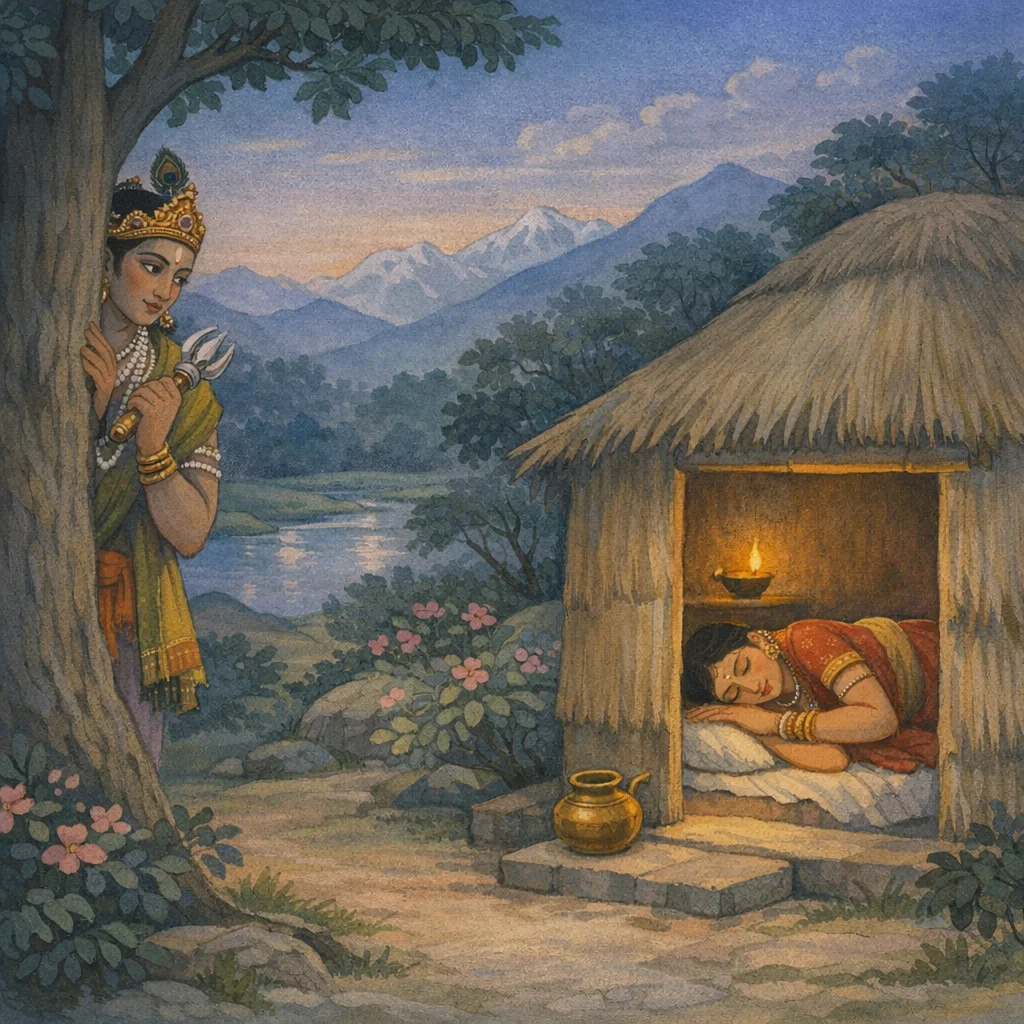
Diter Vratabhaṅga and Indra’s Intervention (Diti–Kaśyapa Narrative)
Spoken by Sūta, this chapter frames the tale within the manvantara and recounts a prajā-sarga episode tied to Brahmā, from which the conflict between Devas and Dānavas arises. It then centers on Diti: grieving her slain sons, she approaches Kaśyapa and serves him with strict discipline; granted a boon, she asks for a son able to kill Indra. Kaśyapa agrees, but makes the boon conditional on a hundred years of sustained restraint—especially brahmacarya and related niyamas. Diti undertakes the vrata and carries the embryo. Indra, seeking an “opening” (antara) in her observance, watches for a lapse; near the end he finds a moment of impurity/neglect when Diti sleeps without performing foot-purification (pāda-śauca). The esoteric lesson is the Purāṇic logic of vrata: spiritual potency is generated by long discipline yet can be undone by tiny breaches, and divine outcomes turn on λεπτομέρειες of śauca and vigilant care in Śaiva-Purāṇic teaching.
Shlokas
Verse 1
सूत उवाच । एष मन्वन्तरे तात सर्गस्स्वारोचिषे स्मृतः । वैवस्वते तु महति वारुणे वितते क्रतौ
Sūta said: “O dear one, this creation is remembered as belonging to the Svārociṣa Manvantara. But in the great Vaivasvata Manvantara, during the widely extended Vāruṇa sacrifice, (the account continues accordingly).”
Verse 2
जुह्वानस्य ब्रह्मणो वै प्रजासर्ग इहोच्यते । पूर्वं यानथ ब्रह्मर्षीनुत्पन्नान्सप्त मानसान्
Here is described the emanation of progeny from Brahmā, the Lord of creation, while he was engaged in sacrificial offering. First, there arose the seven Brahmarṣis—mind-born sages—manifested from his will.
Verse 3
पुत्रान्वै कल्पयामास स्वयमेव पितामहः । तेषां विरोधो देवानां दानवानां महानृषे
The Grandfather, Brahmā himself, brought forth sons. From them arose the great enmity between the Devas and the Dānavas, O great sage.
Verse 4
दिति विनष्टपुत्रा तु कश्यपं समुपस्थिता । स कश्यपः प्रसन्नात्मा सम्गयगाराधितस्तया
Diti, bereft of her sons, approached Kaśyapa. And Kaśyapa—his heart made serene—was pleased, for she had entreated him rightly and served him with reverence.
Verse 5
वरेणच्छंदयामास सा च वव्रे वरं तदा । पुत्रमिन्द्रवधार्थाय समर्थममितौजसम्
Granted the choice of a boon, she then asked for this blessing: a son of immeasurable splendor and strength, fully able to slay Indra, so that Indra might meet his destined end.
Verse 6
स तस्यै च वरं प्रादात्प्रार्थितं सुमहातपाः । ब्रह्मचर्य्यादिनियमं प्राह चैव शतं समाः
That great ascetic granted her the boon she had requested, and he also enjoined upon her disciplines beginning with brahmacarya—sacred celibacy—to be observed for a hundred years.
Verse 7
धारयामास गर्भं तु शुचिस्सा वरवर्णिनी । ब्रह्मचर्य्यादिनियमं दितिर्दध्रे तथैव वै
That pure and radiant lady conceived and bore the embryo; and Diti likewise undertook the sacred disciplines—beginning with brahmacarya (chaste restraint)—in accordance with holy observance.
Verse 8
ततस्त्वाधाय सोऽदित्यां गर्भं तं शंसितव्रतः । जगाम कश्यपस्तप्तुं तपस्संहृष्टमानसः
Then that Kaśyapa—firm in his praised vows—having placed that embryo in Aditi, went forth to practise austerity, his mind rejoicing, intent on tapas.
Verse 9
तस्याश्चैवांतरं प्रेप्सुस्सोऽभवत्पाकशासनः । ऊनवर्षे शते चास्या ददर्शान्तरमेव सः
Desiring to find some fault in her, Pākaśāsana (Indra) set about it. Yet even after almost a hundred years had passed, he beheld in her nothing but blameless purity.
Verse 10
अकृत्वा पादयोः शौचं दितिरर्वाक्शिरास्तदा । निद्रामाहारयामास भाविनोऽर्थस्य गौरवात्
Without first washing her feet, Diti then lay down with her head turned the wrong way and fell asleep, for the weight of the impending matter (of what was to come) pressed heavily upon her mind.
Verse 11
एतस्मिन्नन्तरे शक्रस्तस्याः कुक्षिं प्रविश्य सः । वज्रपाणिस्तु तं गर्भं सप्तधा हि न्यकृन्तत
Meanwhile, Śakra (Indra) entered her womb; and Vajrapāṇi, wielding the thunderbolt, indeed cut that fetus into seven parts.
Verse 12
स पाट्यमानो गर्भोऽथ वज्रेण प्ररुरोद ह । रुदन्तं सप्तधैकैकं मारोदीरिति तान्पुनः । चकर्त वज्रपाणिस्तान्नेव मम्रुस्तथापि ते
When that embryo was struck by the vajra (thunderbolt), it cried out loudly. As it wailed, it split—each part into seven. Yet though Indra, wielder of the vajra, cut them again, saying, “Do not cry,” still they did not die.
Verse 13
ते तमूचुः पात्यमानास्सर्वे प्रांजलयो मुने । नो जिघांससि किं शक्र भ्रातरो मरुतस्तव
O sage, as they were being struck down, all of them, with palms joined, said to him: “O Śakra (Indra), why do you wish to kill us? We are your brothers—the Maruts.”
Verse 14
इंद्रेण स्वीकृतास्ते हि भ्रातृत्वे सर्व एव च । तत्यजुर्द्दैत्यभावं ते विप्रर्षे शंकरेच्छया
O brahmin-sage, all of them were accepted by Indra as brothers; and, by Śaṅkara’s own will, they abandoned their demonic disposition.
Verse 15
मरुतो नाम ते देवा बभूवुस्तु महाबलाः । खगा एकोनपंचाशत्सहाया वज्रपाणिनः
Those gods came to be known as the Maruts—mighty in strength. As winged ones, they became the forty-nine companions of Vajrapāṇi (Indra), the wielder of the thunderbolt.
Verse 16
तेषामेव प्रवृद्धानां हरिः प्रादात्प्रजापतिः । क्रमशस्तानि राज्यानि पृथुपूर्वं शृणुष्व तत्
When those (descendants) had grown and prospered, Hari—the Lord and Prajāpati—granted them their respective kingdoms in due order. Now listen to those realms, beginning with Pṛthu.
Verse 17
अरिष्टपुरुषो वीरः कृष्णो जिष्णुः प्रजापतिः । पर्जन्यस्तु धनाध्यक्षस्तस्य सर्वमिदं जगत्
He is the invincible Person, the Hero; the Dark-hued One, the Conqueror, the Lord of creatures. He is Parjanya, the giver of rains, and the overseer of wealth—indeed, this entire universe belongs to Him.
Verse 18
भूतसर्गमिमं सम्यगवोचं ते महामुने । विभागं शृणु राज्यानां क्रमशस्तं ब्रुवेऽधुना
O great sage, I have rightly described to you this creation of beings. Now listen to the orderly division of realms and dominions, which I shall explain step by step.
Verse 19
अभिषिच्याधिराज्ये तु पृथुं वैन्यं पितामहः । ततः क्रमेण राज्यानि व्यादेष्टुमुपचक्रमे
Having anointed Pṛthu, the son of Vena, to imperial sovereignty, the Grandfather (Brahmā) then, in due order, began to assign the kingdoms and their governance.
Verse 20
द्विजानां वीरुधां चैव नक्षत्रग्रहयोस्तथा । यज्ञानां तपसां चैव सोमं राज्येऽभ्यषेचयत्
He consecrated Soma as king—over the twice-born, over plants and herbs, over the constellations and the planets, and likewise over sacrifices and ascetic disciplines.
Verse 21
अपां तु वरुणं राज्ये राज्ञां वैश्रवणं प्रभुम् । आदित्यानां तथा विष्णुं वसूनामथ पावकम्
As the sovereign over the waters is Varuṇa; as the lord among kings is Vaiśravaṇa (Kubera); among the Ādityas is Viṣṇu; and among the Vasus is Pāvaka (Agni).
Verse 22
प्रजापतीनां दक्षं तु मरुतामथ वासवम् । दैत्यानां दानवानां च प्रह्लादममितौजसम्
Among the Prajāpatis, (He appointed) Dakṣa; among the Maruts, Vāsava (Indra). And among the Daityas and Dānavas, (He established) Prahlāda of immeasurable prowess.
Verse 23
वैवस्वतं पितॄणां च यमं राज्येऽभ्यषेचयत् । मातॄणां च व्रतानां च मन्त्राणां च तथा गवाम्
He anointed Vaivasvata Yama to sovereignty over the Pitṛs, the ancestral spirits; and likewise He established lordship and guardianship over the Mothers, over vows and observances, over mantras, and over cattle as well.
Verse 24
यक्षाणां राक्षसानां च पार्थिवानां तथैव च । सर्वभूतपिशाचानां गिरिशं शूलपाणिनम्
He is the Lord of the Yakṣas and the Rākṣasas, and likewise of the kings of the earth; of all beings and of the Piśācas too—He is Girīśa, the Mountain-Lord, who bears the trident in His hand.
Verse 25
शैलानां हिमवन्तं च नदीनामथ सागरम् । मृगाणामथ शार्दूलं गोवृषं तु गवामपि
Among mountains He set Himavān as the foremost; among rivers, the Ocean as the final reservoir. Among beasts, the tiger is supreme; and among cattle too, the bull is pre-eminent.
Verse 26
वनस्पतीनां वृक्षाणां वटं राज्येऽभ्यषेचयत् । इति दत्तं प्रजेशेन राज्यं सर्वत्र वै क्रमात्
Among plants and trees, Prajāpati consecrated the banyan (vaṭa) as king. Thus, in due order, the Lord of creatures granted sovereignty everywhere—each being receiving its appointed domain.
Verse 27
पूर्वस्यां दिशि पुत्रं तु वैराजस्य प्रजापतेः । स्थापयामास सर्वात्मा राज्ये विश्वपतिर्विभुः
In the eastern direction, the all-pervading Lord—the Soul of all, the mighty Sovereign of the universe—installed the son of Prajāpati Vairāja in kingship, to govern that quarter.
Verse 28
तथैव मुनिशार्दूल कर्दमस्य प्रजापतेः । दक्षिणस्यां तथा पुत्रं सुधन्वानमचीक्लृपत्
O tiger among sages, in the same manner the Prajāpati Kardama caused a son named Sudhanvan to be born through Dakṣiṇā.
Verse 29
पश्चिमायां दिशि तथा रजसः पुत्रमच्युतम् । केतुमन्तं महात्मानं राजानं व्यादिशत्प्रभुः
Likewise, in the western direction, the Lord appointed as king Ketumān—the steadfast (Acyuta) son of Rajas—who was a great-souled ruler.
Verse 30
तथा हिरण्यरोमाणं पर्जन्यस्य प्रजापतेः । उदीच्यां दिशि राजानं दुर्धर्षं सोऽभ्यषेचयत्
In the same manner, he consecrated Hiraṇyaromā—of Parjanya, the Prajāpati—as the unassailable king in the northern direction.
Verse 31
तस्य विस्तारमाख्यातं पृथोर्वेन्यस्य शौनक । महर्ध्ये तदधिष्ठानं पुराणे परिकीर्तितम्
O Śaunaka, the detailed account of that has been narrated in the Purāṇa in connection with Pṛthu, the son of Vena; and its sacred seat (adhiṣṭhāna), most excellent and highly venerable, has also been proclaimed there.
Verse 33
इति श्रीशिवमहापुराणे पञ्चम्यामुमासंहितायां सर्गवर्णनं नाम त्रयस्त्रिंशत्तमोध्यायः
Thus, in the holy Śrī Śiva Mahāpurāṇa, in the fifth book—the Umāsaṃhitā—ends the thirty-third chapter called “Description of Creation.”
Frequently Asked Questions
It presents the Diti–Kaśyapa boon narrative: Diti requests a son powerful enough to kill Indra; Kaśyapa grants it conditionally through a strict hundred-year regimen, while Indra searches for a breach—establishing the Purāṇic argument that boons and cosmic power are mediated by disciplined observance (vrata) rather than desire alone.
The episode encodes a ritual-metaphysical principle: tapas accumulates through sustained niyama, but its ‘seal’ depends on meticulous śauca and wakeful care. A minor lapse becomes an ontological ‘gap’ (antara) through which counter-forces can intervene, illustrating how purity rules operate as causal constraints in Purāṇic theology.
No distinct Śiva or Umā form is foregrounded in the sampled passage; the chapter operates primarily through Prajāpati and Deva–Dānava actors. Its Shaiva relevance is indirect: it models the efficacy of tapas/niyama—disciplines that the broader Umāsaṃhitā aligns with Śiva-tattva and Śakti-mediated cosmic order.