Sarga 26
महाभिषेकः — Sugriva’s Coronation and Angada’s Installation
किष्किन्धाकाण्ड
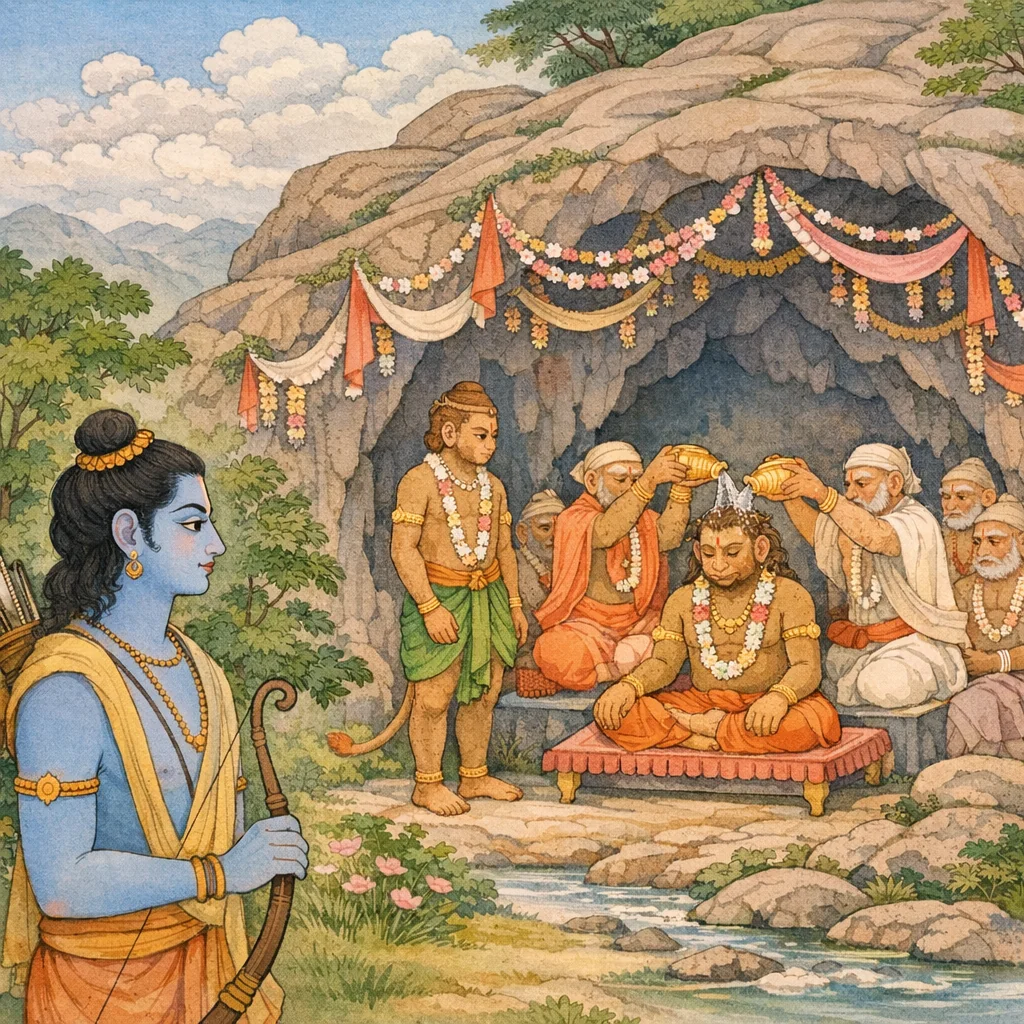
This sarga marks the passage from mourning to lawful rule. Vanara chiefs gather before Sugriva, still clad in the wet garments of the funeral bath, showing that the rites of grief are closed and public duty must begin. Hanuman urges Rama to enter Kishkindha and formalize royal ties; Rama declines, bound by his father’s command to avoid all villages and cities for fourteen years, yet he authorizes the political order: Sugriva should enter the prosperous cave-city and be installed with due rites. Rama further directs that Angada, the elder brother’s eldest son and equal in prowess, be consecrated as yuvarāja to secure succession. Rama also gives seasonal counsel: with the four-month rains beginning in Śrāvaṇa, immediate enterprise is unfit; when Kārtika arrives, preparations for Ravana’s slaying should proceed. Sugriva enters Kishkindha, receives the subjects’ prostrations, and is crowned by kin and leaders through Vedic fire offerings and abhiṣeka with sanctified waters gathered from rivers, tīrthas, and oceans, kept in golden vessels and poured with auspicious implements. The regalia and ritual substances—white canopy, chamaras, garments, perfumes, jewels, herbs, unguents, and pigments—are recounted to affirm royal legitimacy through ceremonial completeness. After Sugriva’s installation, Angada is installed as prince regent; the city is decked with flags and rejoices. Sugriva reports the completed mahābhiṣeka to Rama and regains Ruma, like Indra restored to sovereignty.
Shlokas
Verse 1
ततश्शोकाभिसन्तप्तं सुग्रीवं क्लिन्नवाससम्।शाखामृगमहामात्राः परिवार्योपतस्थिरे।।
Then the great monkey chiefs and ministers gathered around Sugrīva, scorched by grief and still clad in wet garments, and stood by him in devoted attendance.
Verse 2
अभिगम्य महाबाहुं राममक्लिष्टकारिणम्।स्थिताः प्राञ्जलयस्सर्वे पितामहमिवर्षयः।।
Approaching long-armed Rāma, the reliever of affliction, they all stood with folded hands—like sages before Pitāmaha (Brahmā).
Verse 3
ततः काञ्चनशैलाभ स्तरुणार्कनिभाननः।अब्रवीत्प्राञ्जलिर्वाक्यं हनूमान्मारुतात्मजः।।
Then the ritual experts, having spread kuśa grass and kindled the sacred fire, Jātavedas, offered oblations of havis sanctified by mantras.
Verse 4
भवत्प्रसादात्सुग्रीवः पितृपैतामहं महत्।वानराणां सुदुष्प्रापं प्राप्तो राज्यमिदं प्रभो।।
Pleased at what had taken place there, all of them praised the great-souled Rāma and also Lakṣmaṇa, again and again.
Verse 5
भवता समनुज्ञातः प्रविश्य नगरं शुभम्।।संविधास्यति कार्याणि सर्वाणि ससुहृज्जनः।स्नातोऽयं विविधैर्गन्धैरौषधैश्च यथाविधि।।
With your permission, he will enter the auspicious city together with his friends and set in order all the necessary affairs. He has already bathed in the prescribed manner with various fragrances and medicinal herbs, according to custom.
Verse 6
भवता समनुज्ञातः प्रविश्य नगरं शुभम्4.26.5।।संविधास्यति कार्याणि सर्वाणि ससुहृज्जनः।स्नातोऽयं विविधैर्गन्धैरौषधैश्च यथाविधि4.26.6।।
With your permission, he will enter the auspicious city with his friends and set all matters in order. He has bathed in accordance with prescribed custom, using various fragrances and medicinal herbs.
Verse 7
अर्चयिष्यति रत्नैश्च माल्यैश्च त्वां विशेषतः।इमां गिरिगुहां रम्यामभिगन्तुमितोऽर्हसि।।कुरुष्व स्वामिसम्बन्धं वानरान्सम्प्रहर्षय।
He will honour you especially with gems and garlands. It is fitting that you now enter this delightful mountain-cave; establish the bond of allegiance with your lord, the king, and gladden the vānaras.
Verse 8
एवमुक्तो हनुमता राघवः परवीरहा।।प्रत्युवाच हनूमन्तं बुद्धिमान्वाक्यकोविदः।
Thus addressed by Hanumān, Rāghava—wise, eloquent, and the slayer of hostile heroes—replied to Hanumān.
Verse 9
चतुर्दश समास्सौम्य ग्रामं वा यदि वा पुरम्।।न प्रवेक्ष्यामि हनुमन्पितुर्निर्देशपालकः।
Dear Hanumān, obedient to my father’s command, I shall not enter any village or city for fourteen years.
Verse 10
सुसमृद्धां गुहां रम्यां सुग्रीवो वानरर्षभः।।प्रविष्टो विधिवद्वीरः क्षिप्रं राज्येऽभिषिच्यताम्।
Let Sugrīva—the bull among monkeys—enter the lovely, prosperous cave-city, and let that hero be promptly consecrated as king in accordance with proper rites.
Verse 11
एवमुक्त्वा हनूमन्तं रामस्सुग्रीवमब्रवीत्।।वृत्तज्ञो वृत्तसम्पन्नमुदारबलविक्रमम्।
Having spoken thus to Hanūmān, Rāma—skilled in righteous conduct—addressed Sugrīva, a man of good character, endowed with noble strength and valor.
Verse 12
इममप्यङ्गदं वीर यौवराज्येऽभिषेचय।।ज्येष्ठस्य स सुतो ज्येष्ठस्सदृशो विक्रमेण ते।अङ्गदोऽयमदीनात्मा यौवराज्यस्य भाजनम्।।
O hero, consecrate Angada too as heir-apparent. He is the eldest son of your elder brother, equal to you in valor; this Angada, steadfast in spirit, is worthy of the office of crown prince.
Verse 13
इममप्यङ्गदं वीर यौवराज्येऽभिषेचय4.26.12।।ज्येष्ठस्य स सुतो ज्येष्ठस्सदृशो विक्रमेण ते।अङ्गदोऽयमदीनात्मा यौवराज्यस्य भाजनम्4.26.13।।
O hero, consecrate Angada as heir-apparent—Vālī’s eldest son—equal to you in prowess; steadfast Angada is fit to bear the responsibility of the crown prince’s office.
Verse 14
पूर्वोऽयं वार्षिको मासः श्रावणस्सलिलागमः।प्रवृत्तास्सौम्य चत्वारो मासा वार्षिकसज्ञिकाः।।
O gentle one, this is the first month of the rainy season—Śrāvaṇa—when the coming of waters begins. The four months known as the rains have now commenced.
Verse 15
नायमुद्योगसमयः प्रविश त्वं पुरीं शुभाम्।अस्मिन्वत्स्याम्यहं सौम्य पर्वते सह लक्ष्मणः।।
This is not the time for exertion and enterprise. Enter your auspicious city; I will stay on this mountain, O gentle one, together with Lakṣmaṇa.
Verse 16
इयं गिरिगुहा रम्या विशाला युक्तमारुता।प्रभूतसलिला सौम्य प्रभूतकमलोत्पला।।
Dear Sugrīva, this mountain-cavern is delightful—spacious, well-ventilated, and supplied with abundant water, rich with lotuses and lilies.
Verse 17
कार्तिके समनुप्राप्ते त्वं रावणवधे यत।एष नस्समयस्सौम्य प्रविश त्वं स्वमालयम्।।अभिषिक्तस्व राज्ये च सुहृदस्सम्प्रहर्षय।
When the month of Kārtika arrives, strive toward Rāvaṇa’s destruction. This is the proper time for our purpose, noble one—enter your own city, be duly consecrated in the kingdom, and gladden your friends.
Verse 18
इति रामाभ्यनुज्ञातस्सुग्रीवो वानराधिपः।।प्रविवेश पुरीं रम्यां किष्किन्धां वालिपालिताम्।
Thus permitted by Rāma, Sugrīva—the lord of the Vānara hosts—entered the lovely city of Kiṣkindhā, once ruled by Vālin.
Verse 19
तं वानरसहस्राणि प्रविष्टं वानरेश्वरम्।।अभिवाद्य प्रविष्टानि सर्वतः पर्यवारयन्।
Thousands of Vānaras, entering with their king, greeted him and stood around him on every side in devoted attendance.
Verse 20
ततः प्रकृतयस्सर्वा दृष्ट्वा हरिगणेश्वरम्।।प्रणम्य मूर्ध्ना पतिता वसुधायां समाहिताः।
Then all the citizens, seeing the lord of the Vānara hosts, bowed with their foreheads to the earth and sat gathered together in composed attention.
Verse 21
सुग्रीवः प्रकृतीस्सर्वास्सम्भाष्योत्थाप्य वीर्यवान्।।भ्रातुरन्तःपुरं सौम्यं प्रविवेश महाबलः।
Sugrīva, mighty in valor and strength, spoke to all the citizens and raised them up; then he entered his brother’s gentle inner apartments.
Verse 22
प्रविश्य त्वभिनिष्क्रान्तं सुग्रीवं प्लवगेश्वरम्।।अभ्यषिञ्चन्त सुहृदस्सहस्राक्षमिवामराः।
When Sugrīva, lord of the Vānaras, had entered and come forth again, his friends consecrated him—just as the gods consecrated Sahasrākṣa (Indra).
Verse 23
तस्य पाण्डुरमाजह्रुश्छत्रं हेमपरिष्कृतम्।।शुक्ले च वालव्यजने हेमदण्डे यशस्करे।तथा सर्वाणि रत्नानि सर्वबीजौषधीरपिसक्षीराणां च वृक्षाणां प्ररोहान्कुसुमानि च।शुक्लानि चैव वस्त्राणि श्वेतं चैवानुलेपनम्।।सुगन्धीनि च माल्यानि स्थलजान्यम्बुजानि च।चन्दनानि च दिव्यानि गन्धांश्च विविधान्बहून्।।अक्षतं जातरूपं च प्रियङ्गुमधुसर्पिषी।दधि चर्म च वैयाघ्रं वाराही चाप्युपानहौ।।समालम्भनमादाय रोचनां समनश्शिलाम्।आग्मुस्तत्र मुदिता वराः कन्यास्तु षोडश।।
For him they brought a pale-white canopy adorned with gold, and white yak-tail fans with glorious golden handles. They also brought jewels; many kinds of medicinal herbs and seeds; shoots, sap-bearing sprouts, and flowers from trees; white garments and white unguents for ritual anointing; fragrant garlands—born on land and in water, including lotus—divine sandalwood, and many varied perfumes. They brought unhusked rice and gold as well; priyaṅgu, honey, and ghee; curds; a tiger-skin; and sandals made of boar-hide. Bearing the ceremonial requisites—gorocanā and manaḥśilā (realgar)—sixteen joyful, lovely maidens came there.
Verse 24
तस्य पाण्डुरमाजह्रुश्छत्रं हेमपरिष्कृतम्4.26.23।।शुक्ले च वालव्यजने हेमदण्डे यशस्करे।तथा सर्वाणि रत्नानि सर्वबीजौषधीरपि4.26.24सक्षीराणां च वृक्षाणां प्ररोहान्कुसुमानि च।शुक्लानि चैव वस्त्राणि श्वेतं चैवानुलेपनम्4.26.25।।सुगन्धीनि च माल्यानि स्थलजान्यम्बुजानि च।चन्दनानि च दिव्यानि गन्धांश्च विविधान्बहून्4.26.26।।अक्षतं जातरूपं च प्रियङ्गुमधुसर्पिषी।दधि चर्म च वैयाघ्रं वाराही चाप्युपानहौ4.26.27।।समालम्भनमादाय रोचनां समनश्शिलाम्।आग्मुस्तत्र मुदिता वराः कन्यास्तु षोडश4.26.28।।
In the Southern Recension, this verse is an expanded, cross-referential repetition of 4.26.23–28, listing the same coronation insignia and auspicious substances assembled for Sugrīva’s sacred anointing (abhiṣeka).
Verse 25
तस्य पाण्डुरमाजह्रुश्छत्रं हेमपरिष्कृतम्4.26.23।।शुक्ले च वालव्यजने हेमदण्डे यशस्करे।तथा सर्वाणि रत्नानि सर्वबीजौषधीरपि4.26.24सक्षीराणां च वृक्षाणां प्ररोहान्कुसुमानि च।शुक्लानि चैव वस्त्राणि श्वेतं चैवानुलेपनम्4.26.25।।सुगन्धीनि च माल्यानि स्थलजान्यम्बुजानि च।चन्दनानि च दिव्यानि गन्धांश्च विविधान्बहून्4.26.26।।अक्षतं जातरूपं च प्रियङ्गुमधुसर्पिषी।दधि चर्म च वैयाघ्रं वाराही चाप्युपानहौ4.26.27।।समालम्भनमादाय रोचनां समनश्शिलाम्।आग्मुस्तत्र मुदिता वराः कन्यास्तु षोडश4.26.28।।
They also brought white garments, and white unguent for ceremonial anointing.
Verse 26
तस्य पाण्डुरमाजह्रुश्छत्रं हेमपरिष्कृतम्4.26.23।।शुक्ले च वालव्यजने हेमदण्डे यशस्करे।तथा सर्वाणि रत्नानि सर्वबीजौषधीरपि4.26.24सक्षीराणां च वृक्षाणां प्ररोहान्कुसुमानि च।शुक्लानि चैव वस्त्राणि श्वेतं चैवानुलेपनम्4.26.25।।सुगन्धीनि च माल्यानि स्थलजान्यम्बुजानि च।चन्दनानि च दिव्यानि गन्धांश्च विविधान्बहून्4.26.26।।अक्षतं जातरूपं च प्रियङ्गुमधुसर्पिषी।दधि चर्म च वैयाघ्रं वाराही चाप्युपानहौ4.26.27।।समालम्भनमादाय रोचनां समनश्शिलाम्।आग्मुस्तत्र मुदिता वराः कन्यास्तु षोडश4.26.28।।
They brought fragrant garlands—both land-grown and water-born, including lotus—along with divine sandalwood and many perfumes of various kinds.
Verse 27
तस्य पाण्डुरमाजह्रुश्छत्रं हेमपरिष्कृतम्4.26.23।।शुक्ले च वालव्यजने हेमदण्डे यशस्करे।तथा सर्वाणि रत्नानि सर्वबीजौषधीरपि4.26.24सक्षीराणां च वृक्षाणां प्ररोहान्कुसुमानि च।शुक्लानि चैव वस्त्राणि श्वेतं चैवानुलेपनम्4.26.25।।सुगन्धीनि च माल्यानि स्थलजान्यम्बुजानि च।चन्दनानि च दिव्यानि गन्धांश्च विविधान्बहून्4.26.26।।अक्षतं जातरूपं च प्रियङ्गुमधुसर्पिषी।दधि चर्म च वैयाघ्रं वाराही चाप्युपानहौ4.26.27।।समालम्भनमादाय रोचनां समनश्शिलाम्।आग्मुस्तत्र मुदिता वराः कन्यास्तु षोडश4.26.28।।
They brought unhusked rice and gold, along with priyaṅgu, honey, and ghee; also curds, a tiger-skin, and sandals made of boar-hide.
Verse 28
तस्य पाण्डुरमाजह्रुश्छत्रं हेमपरिष्कृतम्4.26.23।।शुक्ले च वालव्यजने हेमदण्डे यशस्करे।तथा सर्वाणि रत्नानि सर्वबीजौषधीरपि4.26.24सक्षीराणां च वृक्षाणां प्ररोहान्कुसुमानि च।शुक्लानि चैव वस्त्राणि श्वेतं चैवानुलेपनम्4.26.25।।सुगन्धीनि च माल्यानि स्थलजान्यम्बुजानि च।चन्दनानि च दिव्यानि गन्धांश्च विविधान्बहून्4.26.26।।अक्षतं जातरूपं च प्रियङ्गुमधुसर्पिषी।दधि चर्म च वैयाघ्रं वाराही चाप्युपानहौ4.26.27।।समालम्भनमादाय रोचनां समनश्शिलाम्।आग्मुस्तत्र मुदिता वराः कन्यास्तु षोडश4.26.28।।
Then, taking unguents along with gorocanā and manaḥśilā, sixteen excellent maidens came there, joyful.
Verse 29
ततस्ते वानरश्रेष्ठं यथाकालं यथाविधि।रत्नैर्वस्त्रैश्च भक्ष्यैश्च तोषयित्वा द्विजर्षभान्।।
Then, O best of monkeys, at the proper time and in the proper manner, they satisfied the foremost of the twice-born—brahmins—with jewels, garments, and gifts of food.
Verse 30
ततः कुशपरिस्तीर्णं समिद्धं जातवेदसम्।मन्त्रपूतेन हविषा हुत्वा मन्त्रविदो जनाः।।
Then the ritual experts, having spread kuśa grass and kindled the sacred fire, Jātavedas, offered oblations of havis sanctified by mantras.
Verse 31
ततो हेमप्रतिष्ठाने वरास्तरणसंवृते।प्रासादशिखरे रम्ये चित्रमाल्योपशोभिते।।प्राङ्मुखं विविधैर्मन्त्रै: स्थापयित्वा वरासने।नदीनदेभ्यस्संहृत्य तीर्थेभ्यश्च समन्ततः।।आहृत्य च समुद्रेभ्यस्सर्वेभ्यो वानरर्षभाः।अपः कनककुम्भेषु निधाय विमलाश्शुभाः।।शुभैर्वृषभशृङ्गैश्च कलशैश्चापि काञ्चनैः।शास्त्रदृष्टेन विधिना महर्षिविहितेन च।।गजो गवाक्षो गवयश्शरभो गन्धमादनः।मैन्दश्च द्विविदश्चैव हनुमान्जाम्बवान्नलः।।अभ्यषिञ्चन्त सुग्रीवं प्रसन्नेन सुगन्धिना।सलिलेन सहस्राक्षं वसवो वासवं यथा।।
Then, on the delightful summit of the palace—adorned with variegated garlands—they prepared a golden throne-seat, firmly set and covered with fine spreads.
Verse 32
ततो हेमप्रतिष्ठाने वरास्तरणसंवृते।प्रासादशिखरे रम्ये चित्रमाल्योपशोभिते4.26.31।।प्राङ्मुखं विविधैर्मन्त्रै: स्थापयित्वा वरासने।नदीनदेभ्यस्संहृत्य तीर्थेभ्यश्च समन्ततः4.26.32।।आहृत्य च समुद्रेभ्यस्सर्वेभ्यो वानरर्षभाः।अपः कनककुम्भेषु निधाय विमलाश्शुभाः4.26.33।।शुभैर्वृषभशृङ्गैश्च कलशैश्चापि काञ्चनैः।शास्त्रदृष्टेन विधिना महर्षिविहितेन च4.26.34।।गजो गवाक्षो गवयश्शरभो गन्धमादनः।मैन्दश्च द्विविदश्चैव हनुमान्जाम्बवान्नलः4.26.35।।अभ्यषिञ्चन्त सुग्रीवं प्रसन्नेन सुगन्धिना।सलिलेन सहस्राक्षं वसवो वासवं यथा4.26.36।।
Having seated him on a fine seat, facing east, with various mantras, they gathered sacred waters from rivers, streams, and holy fords (tīrthas) on every side.
Verse 33
ततो हेमप्रतिष्ठाने वरास्तरणसंवृते।प्रासादशिखरे रम्ये चित्रमाल्योपशोभिते4.26.31।।प्राङ्मुखं विविधैर्मन्त्रै: स्थापयित्वा वरासने।नदीनदेभ्यस्संहृत्य तीर्थेभ्यश्च समन्ततः4.26.32।।आहृत्य च समुद्रेभ्यस्सर्वेभ्यो वानरर्षभाः।अपः कनककुम्भेषु निधाय विमलाश्शुभाः4.26.33।।शुभैर्वृषभशृङ्गैश्च कलशैश्चापि काञ्चनैः।शास्त्रदृष्टेन विधिना महर्षिविहितेन च4.26.34।।गजो गवाक्षो गवयश्शरभो गन्धमादनः।मैन्दश्च द्विविदश्चैव हनुमान्जाम्बवान्नलः4.26.35।।अभ्यषिञ्चन्त सुग्रीवं प्रसन्नेन सुगन्धिना।सलिलेन सहस्राक्षं वसवो वासवं यथा4.26.36।।
And the foremost of the Vānara heroes brought water from all the oceans and placed those pure, auspicious waters into golden jars.
Verse 34
ततो हेमप्रतिष्ठाने वरास्तरणसंवृते।प्रासादशिखरे रम्ये चित्रमाल्योपशोभिते4.26.31।।प्राङ्मुखं विविधैर्मन्त्रै: स्थापयित्वा वरासने।नदीनदेभ्यस्संहृत्य तीर्थेभ्यश्च समन्ततः4.26.32।।आहृत्य च समुद्रेभ्यस्सर्वेभ्यो वानरर्षभाः।अपः कनककुम्भेषु निधाय विमलाश्शुभाः4.26.33।।शुभैर्वृषभशृङ्गैश्च कलशैश्चापि काञ्चनैः।शास्त्रदृष्टेन विधिना महर्षिविहितेन च4.26.34।।गजो गवाक्षो गवयश्शरभो गन्धमादनः।मैन्दश्च द्विविदश्चैव हनुमान्जाम्बवान्नलः4.26.35।।अभ्यषिञ्चन्त सुग्रीवं प्रसन्नेन सुगन्धिना।सलिलेन सहस्राक्षं वसवो वासवं यथा4.26.36।।
Using auspicious bull-horns and golden vessels, they performed the consecration according to the rite approved by the śāstras and ordained by the great ṛṣis.
Verse 35
ततो हेमप्रतिष्ठाने वरास्तरणसंवृते।प्रासादशिखरे रम्ये चित्रमाल्योपशोभिते4.26.31।।प्राङ्मुखं विविधैर्मन्त्रै: स्थापयित्वा वरासने।नदीनदेभ्यस्संहृत्य तीर्थेभ्यश्च समन्ततः4.26.32।।आहृत्य च समुद्रेभ्यस्सर्वेभ्यो वानरर्षभाः।अपः कनककुम्भेषु निधाय विमलाश्शुभाः4.26.33।।शुभैर्वृषभशृङ्गैश्च कलशैश्चापि काञ्चनैः।शास्त्रदृष्टेन विधिना महर्षिविहितेन च4.26.34।।गजो गवाक्षो गवयश्शरभो गन्धमादनः।मैन्दश्च द्विविदश्चैव हनुमान्जाम्बवान्नलः4.26.35।।अभ्यषिञ्चन्त सुग्रीवं प्रसन्नेन सुगन्धिना।सलिलेन सहस्राक्षं वसवो वासवं यथा4.26.36।।
Gaja, Gavākṣa, Gavaya, Śarabha, Gandhamādana, and also Mainda, Dvivida, Hanumān, Jāmbavān, and Nala—these leaders were present for the consecration rites.
Verse 36
ततो हेमप्रतिष्ठाने वरास्तरणसंवृते।प्रासादशिखरे रम्ये चित्रमाल्योपशोभिते4.26.31।।प्राङ्मुखं विविधैर्मन्त्रै: स्थापयित्वा वरासने।नदीनदेभ्यस्संहृत्य तीर्थेभ्यश्च समन्ततः4.26.32।।आहृत्य च समुद्रेभ्यस्सर्वेभ्यो वानरर्षभाः।अपः कनककुम्भेषु निधाय विमलाश्शुभाः4.26.33।।शुभैर्वृषभशृङ्गैश्च कलशैश्चापि काञ्चनैः।शास्त्रदृष्टेन विधिना महर्षिविहितेन च4.26.34।।गजो गवाक्षो गवयश्शरभो गन्धमादनः।मैन्दश्च द्विविदश्चैव हनुमान्जाम्बवान्नलः4.26.35।।अभ्यषिञ्चन्त सुग्रीवं प्रसन्नेन सुगन्धिना।सलिलेन सहस्राक्षं वसवो वासवं यथा4.26.36।।
They anointed Sugrīva with clear, fragrant water—just as the Vasus once bathed Sahasrākṣa (Indra), the lord of the devas.
Verse 37
अभिषिक्ते तु सुग्रीवे सर्वे वानरपुङ्गवाः।प्रचुक्रुशुर्महात्मानो हृष्टा स्तत्र सहस्रशः ।।
When Sugrīva had been consecrated, all the great leaders among the vānaras, thrilled with joy, raised jubilant cries there in their thousands.
Verse 38
रामस्य तु वचः कुर्वन्सुग्रीवो हरिपुङ्गवः।अङ्गदं सम्परिष्वज्य यौवराज्येऽभ्यषेचयत्।।
Obeying Rāma’s words, Sugrīva, foremost among the vānaras, embraced Aṅgada and anointed him as yuvarāja, heir-apparent.
Verse 39
अङ्गदे चाभिषिक्ते तु सानुक्रोशाः प्लवङ्गमाः।साधु साध्विति सुग्रीवं महात्मानोऽभ्यपूजयन्।।
When Aṅgada too was installed, the compassionate and noble vānaras honored Sugrīva, acclaiming him again and again: “Well done! Well done!”
Verse 40
रामं चैव महात्मानं लक्ष्मणं च पुनः पुनः।प्रीताश्च तुष्टुवुस्सर्वे तादृशे तत्र वर्तिते।।
Pleased at what had taken place there, all of them praised the great-souled Rāma and also Lakṣmaṇa, again and again.
Verse 41
हृष्टपुष्टजनाकीर्णा पताकाध्वजशोभिता।बभूव नगरी रम्या किष्किन्धा गिरिगह्वरे।।
In the mountain cavern, the lovely city of Kiṣkindhā became splendid—crowded with happy and well-nourished people, and adorned with banners and flags.
Verse 42
निवेद्य रामाय तदा महात्मनेमहाभिषेकं कपिवाहिनीपतिः।रुमां च भार्यं प्रतिलभ्य वीर्यवानवाप राज्यं त्रिदशाधिपो यथा।।
Then the valiant lord of the monkey-host reported to the great-souled Rāma the grand consecration; and, having regained his wife Rumā, he attained his kingdom—like Indra, lord of the gods.
Frequently Asked Questions
Rama refuses to enter any village or city during the fourteen-year exile—an explicit maryādā-based constraint—yet he still enables just governance by authorizing Sugriva’s lawful coronation and the establishment of succession through Angada.
Dharma is enacted through disciplined boundaries and timely policy: vows are not negotiable, but righteous outcomes can be achieved through delegated, ritually legitimate action; additionally, strategy must respect ṛtu (season), postponing major enterprise during the rains.
Kishkindha is framed as a mountain-cavern capital (giri-guhā/purī), and the cultural landmark is the royal abhiṣeka protocol: kuśa-strewn sacred fire, tīrtha waters collected from rivers and oceans, golden vessels, and regalia (chatra, chamaras, banners) that publicly encode sovereignty.