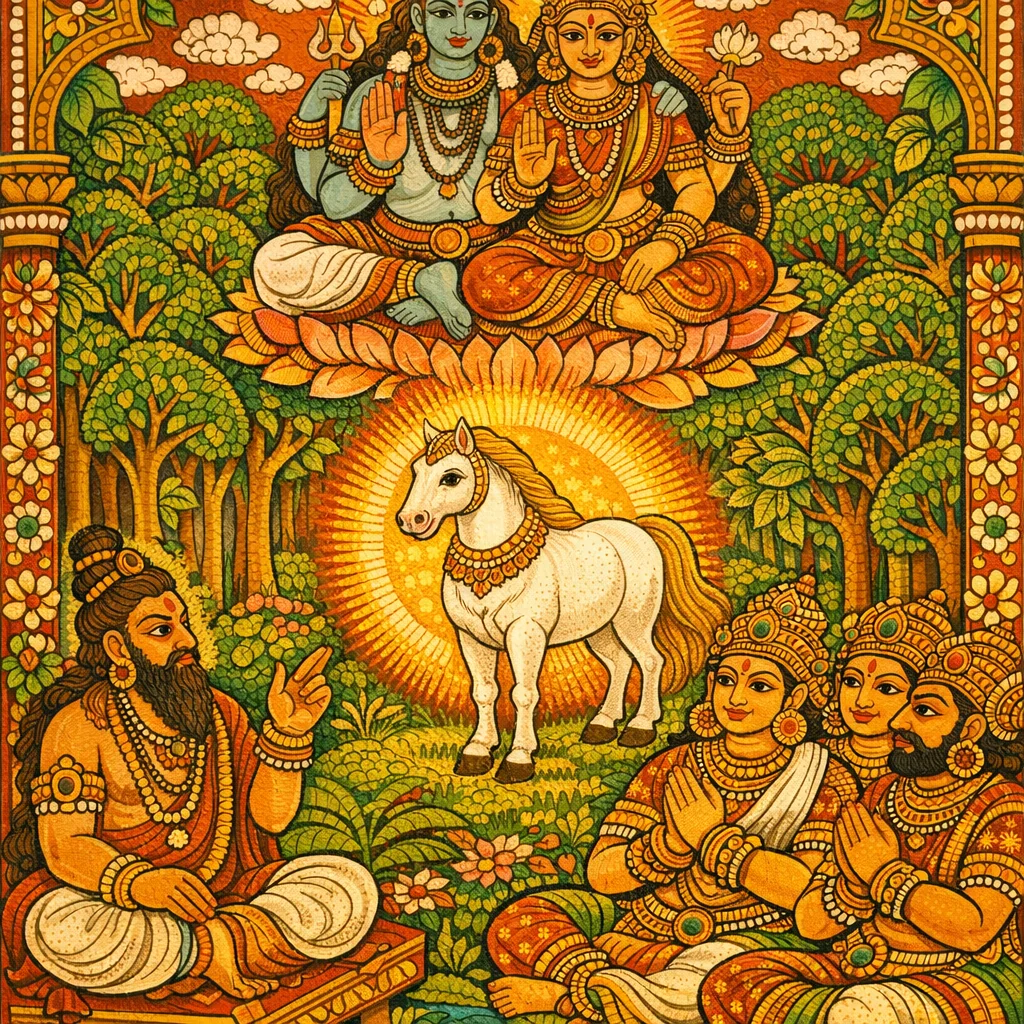
Adhyaya 12: Ila–Sudyumna Episode and the Expansion of the Ikṣvāku (Solar) Dynasty Genealogy
इला–सुद्युम्न–इक्ष्वाकुवंशवर्णनम्
Speaker: Sūta, Vasiṣṭha (Maitrāvaruṇi), Pārvatī, Parameśvara (Śiva)
Sūta recounts that Manu’s sons, led by Ikṣvāku, search for the king near Śaravaṇa and behold Candraprabha transformed into a mare. They consult their priest Maitrāvaruṇi (Vasiṣṭha), who explains Pārvatī’s ordinance for Śaravaṇa: any male who enters becomes female. The brothers then worship Śiva and Pārvatī; the deities affirm the rule cannot be broken, yet declare a compensatory outcome connected with Ikṣvāku’s Aśvamedha merit and a Kiṃpuruṣa condition. The account turns to dynastic results: Ila/Sudyumna’s progeny and place-names (Ilāvṛta, Utkalā, Gayā), followed by a long catalogue of Ikṣvāku-line kings culminating in Daśaratha and Rāma, and continuing through Kuśa–Lava and later descendants—grounding royal legitimacy in sacred lineage, yajña, and famed deeds such as Bhagīratha’s bringing down of the Gaṅgā.
Key Concepts
Shlokas in Adhyaya 12
Verse 1
*सूत उवाच अथान्विषन्तो राजानं भ्रातरस् तस्य मानवाः इक्ष्वाकुप्रमुखा जग्मुस् तदा शरवणान्तिकम् //
Sūta said: Then those Mānavas—his brothers—set out in search of the king; with Ikṣvāku at their head, they went at that time to the vicinity of Śaravaṇa.
Verse 2
ततस्ते ददृशुः सर्वे वडबाम् अग्रतः स्थिताम् रत्नपर्याणकिरणदीप्तकायाम् अनुत्तमाम् //
Then they all beheld, standing before them, a wondrous mare (Vaḍabā), unsurpassed, her body blazing with the radiance of rays reflected from jeweled ornaments.
Verse 3
पर्याणप्रत्यभिज्ञानात् सर्वे विस्मयम् आगताः अयं चन्द्रप्रभो नाम वाजी तस्य महात्मनः //
Recognizing it by its saddle-gear, all were struck with wonder: “This is the horse named Candraprabha, belonging to that great-souled man.”
Verse 4
अगमद् वडबारूपम् उत्तमं केन हेतुना ततस् तु मैत्रावरुणिं पप्रच्छुस्ते पुरोधसम् //
“For what reason did (he/it) assume the excellent form of the Vaḍabā?” Then they questioned Maitrāvaruṇi, their family priest, about it.
Verse 5
किमित्येतदभूच्चित्रं वद योगविदां वर वसिष्ठश्चाब्रवीत् सर्वं दृष्ट्वा तद्ध्यानचक्षुषा //
“Why did this wondrous thing occur? Tell me, O best among the knowers of Yoga.” Then Vasiṣṭha, having beheld everything with the eye of meditative insight, spoke and explained it all.
Verse 6
समयः शम्भुदयिताकृतः शरवणे पुरा यः पुमान्प्रविशेद् अत्र स नारीत्वमवाप्स्यति //
This is the ancient ordinance established in the Śaravana grove by Śambhu’s beloved: any man who enters here shall attain womanhood.
Verse 7
अयमश्वो ऽपि नारीत्वम् अगाद्राज्ञा सहैव तु पुनः पुरुषतामेति यथासौ धनदोपमः //
This horse, too, entered womanhood together with the king; then it returned again to manhood—just as that one, comparable to Kubera, the Lord of Wealth, did.
Verse 8
तथैव यत्नः कर्तव्यश् चाराध्यैव पिनाकिनम् ततस्ते मानवा जग्मुर् यत्र देवो महेश्वरः //
In the same manner, earnest effort should indeed be made, and Pinākin (Śiva, bearer of the bow) should be duly worshipped. Thereupon those men went to the place where the god Maheśvara was present.
Verse 9
तुष्टुवुर् विविधैः स्तोत्रैः पार्वतीपरमेश्वरौ ताव् ऊचतुर् अलङ्घ्यो ऽयं समयः किंतु साम्प्रतम् //
They praised Pārvatī and Parameśvara with many kinds of hymns. Then the two divinities said: “This appointed time (and its obligation) cannot be transgressed—yet, for the present moment…”
Verse 10
इक्ष्वाकोरश्वमेधेन यत्फलं स्यात्तदावयोः दत्त्वा किम्पुरुषो वीरः स भविष्यत्यसंशयम् //
Whatever merit is obtained by Ikṣvāku through the Aśvamedha sacrifice—by giving in this manner, that very fruit will accrue to us. Indeed, after giving, the heroic giver will surely become a Kiṃpuruṣa, without doubt.
Verse 11
तथेत्युक्तास्ततस्ते तु जग्मुर् वैवस्वतात्मजाः इक्ष्वाकोश्चाश्वमेधेन चेलः किम्पुरुषो ऽभवत् //
Having said, “So be it,” the sons of Vaivasvata (Manu) then departed. And Ikṣvāku, by performing the Aśvamedha sacrifice, became (renowned as) Cela, the Kiṃpuruṣa.
Verse 12
मासमेकं पुमान्वीरः स्त्री च मासमभूत्पुनः बुधस्य भवने तिष्ठन् निलो गर्भधरो ऽभवत् //
For one month the valiant one became a man, and for another month became a woman again. While dwelling in Budha’s abode, Nila became the bearer of a fetus (became pregnant).
Verse 13
अजीजनत्पुत्रमेकम् अनेकगुणसंयुतम् बुधश्चोत्पाद्य तं पुत्रं स्वर्लोकम् अगमत्ततः //
Budha begot a single son endowed with many virtues; and, having brought forth that son, Budha thereafter went to Svarga (the heavenly world).
Verse 14
इलस्य नाम्ना तद्वर्षम् इलावृतम् अभूत्तदा सोमार्कवंशयोर् आदाव् इलो ऽभून्मनुनन्दनः //
That region then came to be called Ilāvṛta after Ila; and Ila—Manu’s beloved child—became the first progenitor at the beginning of both the Lunar and the Solar dynastic lines.
Verse 15
एवं पुरूरवाः पुंसोर् अभवद् वंशवर्धनः इक्ष्वाकुर् अर्कवंशस्य तथैवोक्तस्तपोधनाः //
Thus, from that man (the progenitor), Purūravas became an increaser of the lineage; and Ikṣvāku—of the Solar (Arka/Sūrya) dynasty—has likewise been declared, O wealth of austerity.
Verse 16
इलः किम्पुरुषत्वे च सुद्युम्न इति चोच्यते पुनः पुत्रत्रयमभूत् सुद्युम्नस्यापराजितम् //
Ila, when in the state of being a Kimpuruṣa, was again called Sudyumna. And Sudyumna had three sons, unconquered in might.
Verse 17
उत्कलो वै गहस् तद्वद् धरिताश्वश् च वीर्यवान् उत्कलस्योत्कला नाम गयस्य तु गया मता //
Indeed there was Utkala, and likewise Gaha; and also the valiant Dharitāśva, possessed of strength. From Utkala arose (a land or people) called Utkalā, and from Gaya arose what is known as Gayā.
Verse 18
हरिताश्वस्य दिक्पूर्वा विश्रुता कुरुभिः सह प्रतिष्ठाने ऽभिषिच्याथ स पुरूरवसं सुतम् //
Then, in Pratiṣṭhāna, he consecrated his son Purūravas by royal anointing and installed him as king—together with the Kurus—while the eastern quarter (of Haritāśva) was renowned.
Verse 19
जगामेलावृतं भोक्तुं वर्षं दिव्यफलाशनम् इक्ष्वाकुर्ज्येष्ठदायादो मध्यदेशमवाप्तवान् //
Ikṣvāku’s eldest heir went to enjoy the region of Elāvṛta, that varṣa where one lives on divine fruits; and he also obtained Madhyadeśa, the central country.
Verse 20
नरिष्यन्तस्य पुत्रो ऽभूच् छुचो नाम महाबलः नाभागस्याम्बरीषस्तु धृष्टस्य च सुतत्रयम् //
Of Nariṣyanta there was a son named Śuco, a man of great strength. And of Nābhāga was born Ambarīṣa; and Dhṛṣṭa had three sons.
Verse 21
धृतकेतुश्चित्रनाथो रणधृष्टश्च वीर्यवान् आनर्तो नाम शर्यातेः सुकन्या चैव दारिका //
Dhṛtaketu, Citranātha, and the valiant Raṇadhṛṣṭa were born. And of Śaryāti there was also a son named Ānarta, and a maiden daughter named Sukanyā.
Verse 22
आनर्तस्याभवत्पुत्रो रोचमानः प्रतापवान् आनर्तो नाभ देशो ऽभून् नगरी च कुशस्थली //
Ānarta had a son named Rocamāna, a radiant hero of great might. From Ānarta arose the Nābha region, and the city called Kuśasthalī.
Verse 23
रोचमानस्य पुत्रो ऽभूद् रेवो रैवत एव च ककुद्मी चापरं नाम ज्येष्ठः पुत्रशतस्य च //
Rocamāna had a son named Reva—also known as Raivata—and another son named Kakudmī; he was the eldest among a hundred sons.
Verse 24
रेवती तस्य सा कन्या भार्या रामस्य विश्रुता करूषस्य तु कारूषा बहवः प्रथिता भुवि //
Revatī, his daughter, became the renowned wife of Rāma. And from Karūṣa arose many who were called the Kāruṣas, celebrated upon the earth.
Verse 25
पृषध्रो गोवधाच्छूद्रो गुरुशापादजायत इक्ष्वाकुवंशं वक्ष्यामि शृणुध्वमृषिसत्तमाः //
Pṛṣadhra, because he slew a cow, became a Śūdra through his teacher’s curse. Now I shall recount the lineage of Ikṣvāku—listen, O best of sages.
Verse 26
इक्ष्वाकोः पुत्रताम् आप विकुक्षिर् नाम देवराट् ज्येष्ठः पुत्रशतस्यासीद् दश पञ्च च तत्सुताः //
Vikukṣi—also called Devarāṭ—was born as the son of Ikṣvāku. He was the eldest among a hundred sons, and he himself had fifteen sons.
Verse 27
मेरोरुत्तरतस्ते तु जाताः पार्थिवसत्तमाः चतुर्दशोत्तरं चान्यच् छतमस्य तथाभवत् //
Those eminent kings were born to the north of Mount Meru, and their total number amounted to one hundred and fourteen.
Verse 28
मेरोर्दक्षिणतो ये ये राजानः संप्रकीर्तिताः ज्येष्ठः ककुत्स्थो नाम्नाभूत् तत्सुतस्तु सुयोधनः //
Among the kings proclaimed as dwelling to the south of Mount Meru, the eldest was named Kakutstha, and his son indeed was Suyodhana.
Verse 29
तस्य पुत्रः पृथुर्नाम विश्वगश्चपृथोः सुतः इन्दुस्तस्य च पुत्रो ऽभूद् युवनाश्वस्ततो ऽभवत् //
His son was named Pṛthu, and Viśvaga was the son of Pṛthu. Indu was born as Viśvaga’s son, and from Indu was born Yuvanāśva.
Verse 30
श्रावस्तश्च महातेजा वत्सकस्तत्सुतो ऽभवत् निर्मिता येन श्रावस्ती गौडदेशे द्विजोत्तमाः //
O best of the twice-born, there was the mighty Śrāvasta; his son was Vatsaka. It was by him that the city of Śrāvastī was founded in the land of Gauḍa.
Verse 31
श्रावस्ताद्बृहदश्वो ऽभूत् कुवलाश्वस् ततो ऽभवत् धुन्धुमारत्वमगमद् धुन्धुनाम्ना हतः पुरा //
From Śrāvasta was born Bṛhadaśva; from him arose Kuvalāśva. He came to be known as Dhundhumāra, for in ancient times he had slain the being named Dhundhu.
Verse 32
तस्य पुत्रास् त्रयो जाता दृढाश्वो दण्ड एव च कपिलाश्वश्च विख्यातो धौन्धुमारिः प्रतापवान् //
He had three sons: Dṛḍhāśva, Daṇḍa, and the renowned Kapilāśva—known as Dhaundhumāri—mighty and valorous.
Verse 33
दृढाश्वस्य प्रमोदश्च हर्यश्वस्तस्य चात्मजः हर्यश्वस्य निकुम्भो ऽभूत् संहताश्वस् ततो ऽभवत् //
From Dṛḍhāśva was born Pramoda, and his son was Haryaśva. From Haryaśva came Nikumbha, and thereafter Saṃhatāśva was born.
Verse 34
अकृताश्वो रणाश्वश्च संहताश्वसुताव् उभौ युवनाश्वो रणाश्वस्य मान्धाता च ततो ऽभवत् //
Akṛtāśva and Raṇāśva—both sons of Saṃhatāśva—are named; from Raṇāśva was born Yuvanāśva, and thereafter Māṅdhātṛ was born.
Verse 35
मान्धातुः पुरुकुत्सो ऽभूद् धर्मसेनश्च पार्थिवः मुचुकुन्दश्च विख्यातः शत्रुजिच्च प्रतापवान् //
From Māṅdhātṛ was born Purukutsa; and there was also the king Dharmasena. Likewise the renowned Mucukunda, and Śatrujit, mighty in prowess.
Verse 36
पुरुकुत्सस्य पुत्रो ऽभूद् वसुदो नर्मदापतिः सम्भूतिस्तस्य पुत्रो ऽभूत् त्रिधन्वा च ततो ऽभवत् //
Purukutsa’s son was Vasuda, lord of the Narmadā region. Vasuda’s son was Sambhūti, and after him Tridhanvā was born.
Verse 37
त्रिधन्वनः सुतो जातस् त्रय्यारुण इति स्मृतः तस्मात्सत्यव्रतो नाम तस्मात्सत्यरथः स्मृतः //
From Tridhanvan was born a son remembered by the name Trayyāruṇa. From him came one named Satyavrata, and from Satyavrata is said to have been born Satyaratha.
Verse 38
तस्य पुत्रो हरिश्चन्द्रो हरिश्चन्द्राच्च रोहितः रोहिताच्च वृको जातो वृकाद्बाहुरजायत //
From him was born Hariścandra; from Hariścandra came Rohita; from Rohita was born Vṛka; and from Vṛka was born Bāhu.
Verse 39
सगरस्तस्य पुत्रो ऽभूद् राजा परमधार्मिकः द्वे भार्ये सगरस्यापि प्रभा भानुमती तथा //
His son was King Sagara, supremely righteous in dharma. Sagara too had two wives—Prabhā and Bhānumatī.
Verse 40
ताभ्यामाराधितः पूर्वम् और्वो ऽग्निः पुत्रकाम्यया और्वस्तुष्टस्तयोः प्रादाद् यथेष्टं वरमुत्तमम् //
Formerly, those two worshipped the Aurva-fire with the desire for a son. Pleased, Aurva granted them an excellent boon according to their wish.
Verse 41
एका षष्टिसहस्राणि सुतमेकं तथापरा गृह्णातु वंशकर्तारं प्रभागृह्णाद् बहूंस्तदा //
One queen accepted a single son—one who would continue the dynasty—while the other, Prabhā, then accepted many sons.
Verse 42
एकं भानुमती पुत्रम् अगृह्णादसमञ्जसम् ततः षष्टिसहस्राणि सुषुवे यादवी प्रभा //
Bhānumatī bore a single son, Asamañjasa. Thereafter Yādavī Prabhā gave birth to sixty thousand sons.
Verse 43
खनन्तः पृथिवीं दग्धा विष्णुना ये ऽश्वमार्गणे असमञ्जसस्तु तनयो यो ऽंशुमान्नाम विश्रुतः //
While digging up the earth in search of the Aśvamedha sacrificial horse, those sons of Sagara were burned by Viṣṇu (in the form of Kapila). But Asamañjasa had a son renowned as Aṃśumān.
Verse 44
तस्य पुत्रो दिलीपस् तु दिलीपात्तु भगीरथः येन भागीरथी गङ्गा तपः कृत्वावतारिता //
His son was Dilīpa; and from Dilīpa was born Bhagīratha—by whose austerities (tapas) the Gaṅgā, famed as Bhāgīrathī, was brought down to the earth.
Verse 45
भगीरथस्य तनयो नाभाग इति विश्रुतः नाभागस्याम्बरीषो ऽभूत् सिन्धुद्वीपस् ततो ऽभवत् //
Bhagīratha’s son was renowned as Nābhāga. From Nābhāga was born Ambarīṣa, and from him thereafter arose Sindhudvīpa.
Verse 46
तस्यायुतायुः पुत्रो ऽभूद् ऋतुपर्णस्ततो ऽभवत् तस्य कल्माषपादस्तु सर्वकर्मा ततः स्मृतः //
From him was born Ayutāyu; his son was Ṛtuparṇa. From Ṛtuparṇa was born Kalmāṣapāda, who is thereafter remembered as Sarvakarmā (“the doer of all deeds”).
Verse 47
तस्यानरण्यः पुत्रो ऽभून् निघ्नस्तस्य सुतो ऽभवत् निघ्नपुत्राव् उभौ जाताव् अनमित्ररघू नृपौ //
From him was born Anaraṇya; and Anaraṇya’s son was Nighna. To Nighna were born two sons—Anamitra and Raghu—both kings.
Verse 48
अनामित्रो वनमगाद् भविता स कृते नृपः रघोर् अभूद्दिलीपस्तु दिलीपादजकस्तथा //
Anāmitra went to the forest; in the Kṛta age he would become a king. From Raghu was born Dilīpa, and from Dilīpa likewise was born Aja.
Verse 49
दीर्घबाहुरजाज्जातश् चाजपालस्ततो नृपः तस्माद्दशरथो जातस् तस्य पुत्रचतुष्टयम् //
From Aja was born Dīrghabāhu; and then the king Ajapāla. From him was born Daśaratha, who had a set of four sons.
Verse 50
नारायणात्मकाः सर्वे रामस्तेष्वग्रजो ऽभवत् रावणान्तकरस्तद्वद् रघूणां वंशवर्धनः //
All of them were of the very essence of Nārāyaṇa; among them, Rāma became the foremost. He was the slayer who brought Rāvaṇa to his end, and likewise the increaser and upholder of the lineage of the Raghu dynasty.
Verse 51
वाल्मीकिस्तस्य चरितं चक्रे भार्गवसत्तमः तस्य पुत्रौ कुशलवाव् इक्ष्वाकुकुलवर्धनौ //
Vālmīki composed the account of his life; and his two sons, Kuśa and Lava, became enhancers of the Ikṣvāku dynasty.
Verse 52
अतिथिस्तु कुशाज्जज्ञे निषधस्तस्य चात्मजः नलस्तु नैषधस्तस्मान् नभास्तस्मादजायत //
From Kuśa was born Atithi; his son was Niṣadha. From Niṣadha was born Nala, famed as Naiṣadha; and from Nala was born Nabhā.
Verse 53
नभसः पुण्डरीको ऽभूत् क्षेमधन्वा ततः स्मृतः तस्य पुत्रो ऽभवद्वीरो देवानीकः प्रतापवान् //
From Nabhas was born Puṇḍarīka; after him is remembered Kṣemadhanvan. His son was the heroic Devānīka, renowned for his valor and majesty.
Verse 54
अहीनगुस्तस्य सुतः सहस्राश्वस्ततः परः ततश्चन्द्रावलोकस्तु तारापीडस्ततो ऽभवत् //
From Ahīnagu, his son was Sahasrāśva; after him came Candrāvaloka, and thereafter Tārāpīḍa was born as the successor.
Verse 55
तस्यात्मजश् चन्द्रगिरिर् भानुश् चन्द्रस्ततो ऽभवत् श्रुतायुर् अभवत्तस्माद् भारते यो निपातितः //
His son was Candragiri; from him came Bhānu; then Candras was born. From Candras arose Śrutāyus—he who met his death in Bhārata, the land of India.
Verse 56
नलौ द्वाव् एव विख्यातौ वंशे कश्यपसम्भवे वीरसेनसुतस्तद्वन् नैषधश्च नराधिपः //
In the lineage descended from Kaśyapa, two kings named Nala alone are renowned—one the son of Vīrasena, and the other the Niṣadha king, a ruler among men.
Verse 57
एते वैवस्वते वंशे राजानो भूरिदक्षिणाः इक्ष्वाकुवंशप्रभवाः प्राधान्येन प्रकीर्तिताः //
These kings, born in the lineage of Vaivasvata (Manu) and sprung from the Ikṣvāku dynasty, were proclaimed preeminent, famed chiefly for abundant generosity in gifts and sacrificial patronage.
Frequently Asked Questions
The chapter teaches that divine ordinances (samaya/niyama) established by deities are binding and cannot be overridden by human will; however, dharmic effort through proper devotion (Śiva–Pārvatī stuti and worship) can yield compensatory outcomes. It also presents lineage and yajña (especially Aśvamedha) as foundations of Rajadharma—how kings gain legitimacy, merit, and lasting renown through sacrifice and righteous continuity of the dynasty.
This adhyāya is primarily Genealogy and Dharma/Rajadharma. It contains (1) the Ila–Sudyumna gender-transformation episode tied to Śiva–Pārvatī’s ordinance, (2) Aśvamedha sacrifice and merit logic, and (3) an extended Solar dynasty genealogy from Ikṣvāku onward—covering Sagara, Bhagīratha’s descent of Gaṅgā, Daśaratha, Rāma, and later descendants. Vāstu/architecture is not the main focus here, except indirectly via sacred geography and city foundations like Śrāvastī and Kuśasthalī.
Because Śaravaṇa is governed by an ancient ordinance established by Śambhu’s beloved (Pārvatī): any male who enters the grove attains womanhood. Since the king and the horse enter that space, both undergo the transformation, demonstrating the impersonal force of divine rule attached to a sacred location.
The text presents Ila (also called Sudyumna in a Kiṃpuruṣa state) as a foundational progenitor linked to both the Soma (Lunar) and Arka/Sūrya (Solar) lines. Through Ila’s alternating states and progeny (including Purūravas), the narrative explains how major royal lineages share a common sacred ancestry rooted in Vaivasvata Manu.
No. Adhyāya 12 is narrative-genealogical and dharma-oriented, not a Vāstu-vidyā technical chapter. Readers seeking “Matsya Purana Vastu” content (temple plans, measurements, iconography rules) should look to the Purāṇa’s dedicated Vāstu/architecture sections rather than this genealogy-focused adhyāya.