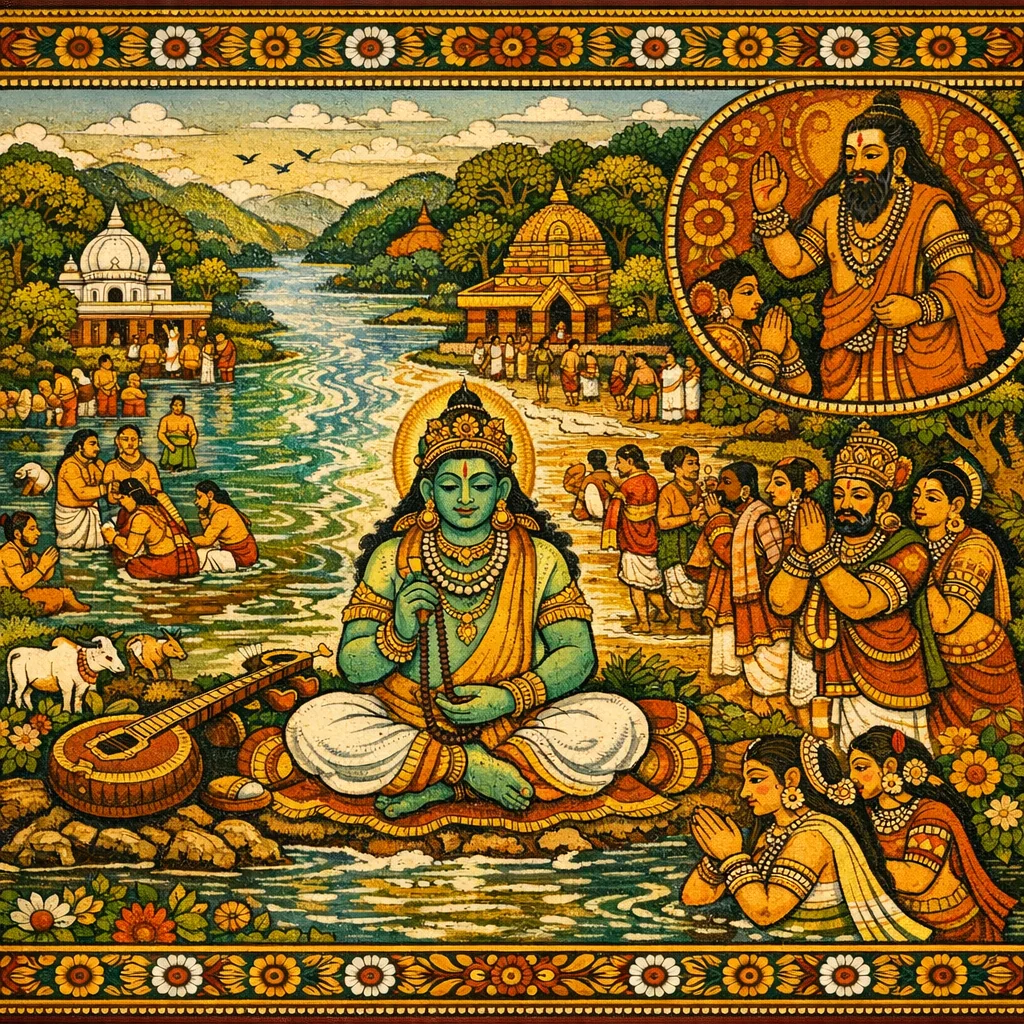
Adhyaya 112: Conclusion of the Prayaga Mahatmya: Kingship Restored, Daily Remembrance, and the True Fruit of Tirtha
प्रयागमाहात्म्य-उपसंहारः
Speaker: नन्दिकेश्वर (Nandikeśvara), वासुदेव (Vāsudeva/Kṛṣṇa), सूत (Sūta)
Nandikeśvara recounts how Yudhiṣṭhira and the Pāṇḍavas honor brāhmaṇas, gurus, and deities; Kṛṣṇa arrives and is worshipped; and Yudhiṣṭhira is restored to kingship. Mārkaṇḍeya pronounces “svasti” and returns to his āśrama; the king gives mahādāna and lives with his brothers. The teaching then turns to Prayāga: reciting the māhātmya at dawn and constant remembrance of Prayāga destroys sins and grants Rudraloka. Kṛṣṇa enjoins daily japa and homa, assuring heaven through remembrance. The text declares that even going toward or dwelling at Prayāga purifies, yet the true qualifications for tīrtha fruit are inner virtues—non-acceptance of gifts, contentment, self-restraint, purity, egolessness; truthfulness, non-anger, and equanimity. It contrasts costly yajñas, often beyond the poor, with a dharma practice open to all, and proclaims tīrtha merit superior to yajña merit. It highlights Māgha as the time when countless tīrthas and rivers merge into the Gaṅgā. Nandikeśvara says Mārkaṇḍeya vanishes; the king bathes and attains tranquility. Nandīśa instructs the divine sage Nārada to face Prayāga; Sūta concludes: Nandīśa disappears, Nārada goes to Prayāga, bathes, performs japa, gives dāna, and returns home fulfilled.
Key Concepts
Shlokas in Adhyaya 112
Verse 1
*नन्दिकेश्वर उवाच भ्रातृभिः सहितः सर्वैर् द्रौपद्या सह भार्यया ब्राह्मणेभ्यो नमस्कृत्य गुरून्देवानतर्पयत् //
Nandikeśvara said: Accompanied by all his brothers, and together with Draupadī as his wife, he bowed to the brāhmaṇas and then, with due offerings, honored and satisfied his teachers and the gods.
Verse 2
वासुदेवो ऽपि तत्रैव क्षणेनाभ्यागतस्तदा पाण्डवैः सहितैः सर्वैः पूज्यमानस्तु माधवः //
Then Vāsudeva (Mādhava) too arrived at that very place in an instant, and all the Pāṇḍavas together duly honored and worshipped him.
Verse 3
कृष्णेन सहितैः सर्वैः पुनरेव महात्मभिः अभिषिक्तः स्वराज्ये च धर्मपुत्रो युधिष्ठिरः //
Then Dharmaputra Yudhiṣṭhira—together with Kṛṣṇa and all those great-souled ones—was once again consecrated (abhiṣeka) and installed in his own sovereign kingdom.
Verse 4
एतस्मिन्नन्तरे चैव मार्कण्डेयो महामुनिः ततः स्वस्तीति चोक्त्वा तु क्षणादाश्रममागमत् //
Meanwhile, the great sage Mārkaṇḍeya, having uttered “svasti” (“May there be well-being”), returned in an instant to his hermitage (āśrama).
Verse 5
युधिष्ठिरो ऽपि धर्मात्मा भ्रातृभिः सहितो ऽवसत् महादानं ततो दत्त्वा धर्मपुत्रो महामनाः //
Then Yudhiṣṭhira too—righteous-souled, the son of Dharma and great-minded—dwelt together with his brothers, after bestowing a great gift (mahādāna).
Verse 6
यस्त्विदं कल्य उत्थाय माहात्म्यं पठते नरः प्रयागं स्मरते नित्यं स याति परमं पदम् मुच्यते सर्वपापेभ्यो रुद्रलोकं स गच्छति //
That man who rises at dawn and recites this sacred eulogy, and who ever remembers Prayāga, attains the supreme state; he is freed from all sins and goes to Rudra’s world.
Verse 7
*वासुदेव उवाच मम वाक्यं च कर्तव्यं महाराज ब्रवीम्यहम् नित्यं जपस्व जुह्वस्व प्रयागे विगतज्वरः //
Vāsudeva said: “O great king, you must carry out my instruction—thus do I declare. Perform japa daily and offer homa oblations; at Prayāga, free from fever (affliction), do so.”
Verse 8
प्रयागं स्मर वै नित्यं सहास्माभिर्युधिष्ठिर स्वयं प्राप्स्यसि राजेन्द्र स्वर्गलोकं न संशयः //
Remember Prayāga indeed every day, O Yudhiṣṭhira, together with us; O best of kings, you yourself will attain the world of heaven—there is no doubt.
Verse 9
प्रयागमनुगच्छेद्वा वसते वापि यो नरः सर्वपापविशुद्धात्मा रुद्रलोकं स गच्छति //
Whether a man merely proceeds toward Prayāga, or even resides there, his self becomes purified of all sins, and he attains Rudra’s world.
Verse 10
प्रतिग्रहादुपावृत्तः संतुष्टो नियतः शुचिः अहंकारनिवृत्तश्च स तीर्थफलमश्नुते //
One who turns away from accepting gifts, is content, self-restrained, pure, and free from ego—such a person truly attains the fruit of visiting sacred tīrthas.
Verse 11
अकोपनश्च सत्यश्च सत्यवादी दृढव्रतः आत्मोपमश्च भूतेषु स तीर्थफलमश्नुते //
One who is free from anger, devoted to truth, truthful in speech, firm in vows (vrata), and who regards all beings as equal to oneself—such a person truly attains the fruit of pilgrimage to the sacred tīrthas.
Verse 12
ऋषिभिः क्रतवः प्रोक्ता देवैश्चापि यथाक्रमम् न हि शक्या दरिद्रेण यज्ञाः प्राप्तुं महीपते //
The ṛṣis have taught the sacrificial rites (yajñas), and the gods too have ordained them in proper sequence; yet, O king, one who is poor cannot truly undertake and bring to completion the performance of yajñas.
Verse 13
बहूपकरणा यज्ञा नानासम्भारविस्तराः प्राप्यन्ते पार्थिवैरेतैः समृद्धैर्वै नरैः क्वचित् //
Sacrifices (yajñas) that require many implements and an extensive array of materials are attainable only at times—and only by prosperous men among the kings of the earth.
Verse 14
यो दरिद्रैरपि विधिः शक्यः प्राप्तुं नरेश्वर तुल्यो यज्ञफलैः पुण्यैस् तन्निबोध युधिष्ठिर //
O king, understand this, Yudhiṣṭhira: that religious observance which even the poor can accomplish is equal in merit to the holy rewards that arise from the performance of yajñas.
Verse 15
ऋषीणां परमं गुह्यम् इदं भरतसत्तम तीर्थानुगमनं पुण्यं यज्ञेभ्यो ऽपि विशिष्यते //
O best of the Bharatas, this is the sages’ deepest secret: the holy merit gained by visiting the sacred tīrthas surpasses even that gained through sacrifices (yajñas).
Verse 16
दश तीर्थसहस्राणि तिस्रः कोट्यस्तथापगाः माघमासे गमिष्यन्ति गङ्गायां भरतर्षभ //
O bull among the Bhāratas, in the month of Māgha, ten thousand tīrthas (sacred fords) and likewise three crores of rivers will make their way to the Gaṅgā.
Verse 17
स्वस्थो भव महाराज भुङ्क्ष्व राज्यमकण्टकम् पुनर्द्रक्ष्यसि राजेन्द्र यजमानो विशेषतः //
Be well, O great king. Enjoy and govern your kingdom free from thorns—free from troubles and enemies. And again, O lord of kings, you shall behold prosperity and auspicious results, most especially when you stand as the yajamāna in the rites.
Verse 18
*नन्दिकेश्वर उवाच इत्युक्त्वा स महाभागो मार्कण्डेयो महातपाः युधिष्ठिरस्य नृपतेस् तत्रैवान्तरधीयत //
Nandikeśvara said: Having spoken thus, that most fortunate sage Mārkaṇḍeya—of great austerities—then vanished from that very place before King Yudhiṣṭhira.
Verse 19
ततस्तत्र समाप्लाव्य गात्राणि सगणो नृपः यथोक्तेनाथ विधिना परां निर्वृतिमागमत् //
Then, there itself, the king—together with his attendants—bathed and cleansed his limbs; and, following the procedure exactly as prescribed, he attained profound tranquility and contentment.
Verse 20
तथा त्वमपि देवर्षे प्रयागाभिमुखो भव अभिषेकं तु कृत्वाद्य कृतकृत्यो भविष्यसि //
So you too, O divine sage, turn yourself toward Prayāga. Having performed the abhiṣeka—ritual ablution—today, you will become one whose purpose is fulfilled.
Verse 21
*सूत उवाच एवमुक्त्वाथ नन्दीशस् तत्रैवान्तरधीयत नारदो ऽपि जगामाशु प्रयागाभिमुखस्तथा //
Sūta said: Having spoken thus, Nandīśa vanished right there; and Nārada too quickly set off, facing toward Prayāga.
Verse 22
तत्र स्नात्वा च जप्त्वा च विधिदृष्टेन कर्मणा दानं दत्त्वा द्विजाग्र्येभ्यो गतः स्वभवनं तदा //
There, having bathed and performed japa according to the rite prescribed in the scriptures, and having given charitable gifts to the foremost of the twice-born, he then returned to his own home.
Frequently Asked Questions
The chapter teaches that the highest fruit of Prayāga is gained through daily remembrance, japa and homa, and inner ethical purity—often surpassing elaborate yajñas. It promises purification from sin and attainment of Rudraloka/Swarga to those who recite the māhātmya at dawn, remember Prayāga continually, and embody virtues like truthfulness, non-anger, and ego-less-ness.
This adhyāya is primarily Dharma and Tīrtha-Māhātmya: it covers pilgrimage merit (tīrtha-phala), daily ritual practice (japa, homa, snāna, dāna), and ethical qualifications for spiritual reward. It also touches Rajadharma indirectly through Yudhiṣṭhira’s re-coronation and the ideal of a thornless, well-governed kingdom, but it does not treat Vastu or genealogy in this chapter.