Adhyaya 97
Agastya’s Encounter with Ilvala and Vātāpi; Dāna, Progeny, and the Renown of Agastya-Āśrama
Upa-parva: Agastya–Ilvala–Vātāpi Upākhyāna (Episode of Agastya and the Asura Brothers)
Lomāśa recounts how Ilvala, accompanied by ministers, receives visiting royal sages and offers hospitality through a prepared meal involving his brother Vātāpi in ram-form. The assembled sages are distressed upon recognizing the stratagem, but Agastya reassures them and consumes Vātāpi completely. When Ilvala attempts to summon Vātāpi back, the attempt fails; Ilvala, seeing the outcome, becomes subdued. Ilvala then inquires the purpose of the visit. Agastya, with controlled irony, acknowledges Ilvala’s lordship and requests wealth: cattle and gold for the attending kings, and a greater allotment for himself, including a golden chariot with swift horses. The request is verified and granted, and the wealth is rapidly conveyed to Agastya’s āśrama; the royal sages depart with Agastya’s permission. The narrative shifts to Lopāmudrā requesting a single, highly capable son. Agastya discusses options—many sons or one equal to many—and accepts her preference. After conception, Agastya returns to the forest; the child develops over seven years and is born as Dṛḍhasyu, radiant and Veda-reciting, later known for carrying firewood (idhmavāha), pleasing his father and benefiting ancestors. The chapter closes by noting the celebrated, flower-rich āśrama of Agastya and inviting immersion in the sacred Bhāgīrathī.
Chapter Arc: तीर्थयात्रा के प्रसंग में लोमश ऋषि अगस्त्य-महर्षि की कथा उठाते हैं—कैसे गंगाद्वार के तपस्वी, जिनका तेज शापाग्नि-सा है, गृहस्थ-धर्म की ओर एक असाधारण मांग लेकर विदर्भ-राज के द्वार पर आते हैं। → अगस्त्य स्पष्ट कहते हैं कि पुत्र-कारण से वे विवाह चाहते हैं और राजा से लोपामुद्रा को मांगते हैं। विदर्भ-नरेश स्तब्ध—न अस्वीकार कर पाते हैं, न सहजता से दे पाते हैं; भय है कि क्रुद्ध महर्षि शाप से भस्म कर देंगे। राजा रानी से परामर्श करता है, और राजकुल की मर्यादा बनाम ऋषि-आज्ञा का द्वंद्व तीखा होता जाता है। → लोपामुद्रा स्वयं आगे बढ़कर पिता को धैर्य देती है—‘मेरे कारण पीड़ा न मानो; मुझे अगस्त्य को दे दो।’ फिर वह अगस्त्य के सामने लज्जा और प्रेम सहित अपनी शर्त रखती है: वह जीर्ण काषाय-वस्त्रों में उपेक्षित जीवन नहीं चाहती, पर उनके धर्म का लोप भी नहीं चाहती—अर्थात् गृहस्थ-आनंद और धर्म, दोनों का संतुलन। → अगस्त्य लोपामुद्रा की बुद्धि-निश्चित इच्छा स्वीकार करते हैं और कहते हैं कि वह उसकी कामना की पूर्ति हेतु धन/सम्पदा अर्जित करने निकलेंगे; लोपामुद्रा को आश्रम में ठहरने का निर्देश देकर वे प्रयोजन-सिद्धि के लिए प्रस्थान का संकल्प लेते हैं। → अगस्त्य ‘हर्तु गच्छामि’ कहकर निकल पड़ते हैं—अब प्रश्न यह है कि तपस्वी ऋषि किस प्रकार और किनसे वह वैभव प्राप्त करेंगे जिससे लोपामुद्रा की मर्यादा-युक्त कामना पूरी हो सके।
Shlokas
Verse 1
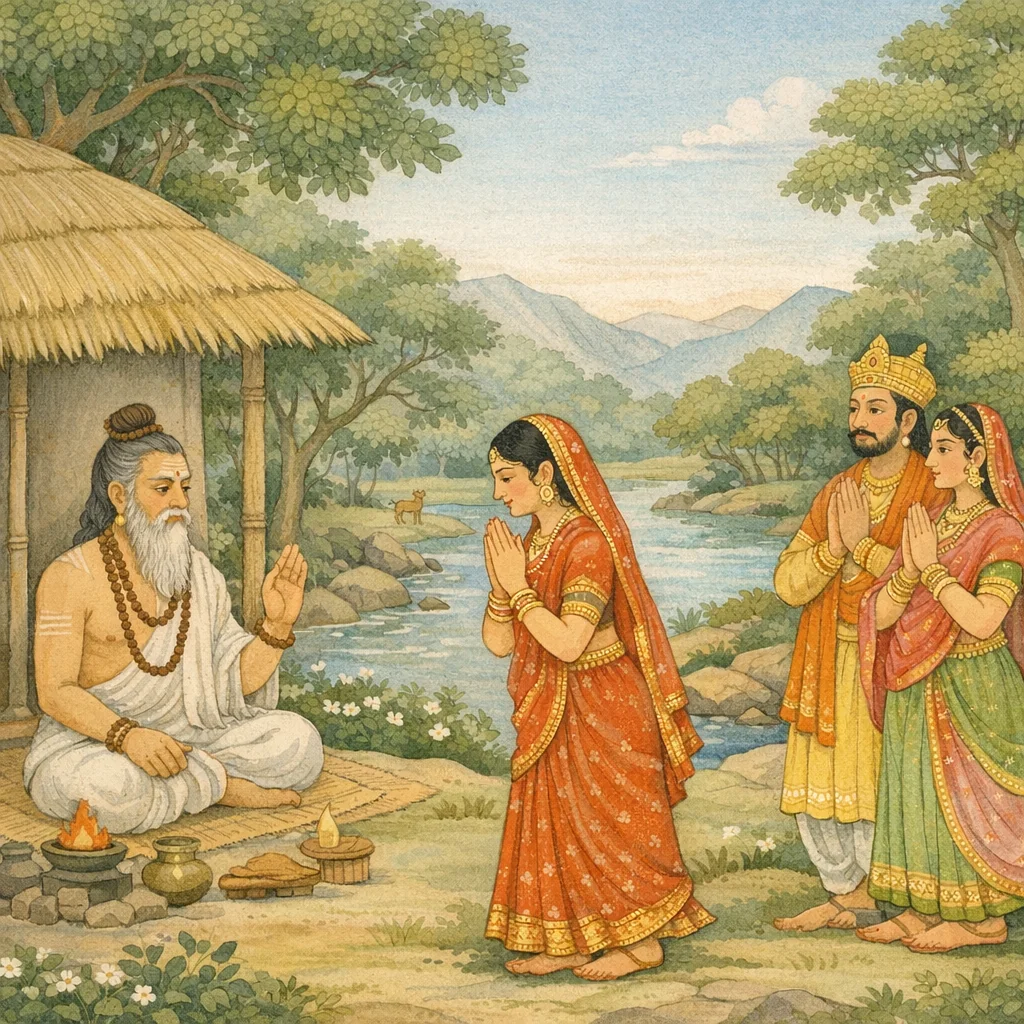
[दाक्षिणात्य अधिक पाठका ३ “लोक मिलाकर कुल ३०३६ “लोक हैं] ८-० 05० () अत मा सप्तनवतितमो< ध्याय: महर्षि अगस्त्यका 29255 6 द्रासे विवाह, गंगाद्वारमें तपस्या एवं पत्नीकी इच्छासे धनसंग्रहके लिये प्रस्थान लोगश उवाच यदा त्वमन्यतागस्त्यो गार्हस्थ्ये तां क्षमामिति । तदाभिगम्य प्रोवाच वैदर्भ पृथिवीपतिम्,लोमशजी कहते हैं--युधिष्ठिर! जब मुनिवर अगस्त्यजीको यह मालूम हो गया कि विदर्भराजकुमारी मेरी गृहस्थी चलानेके योग्य हो गयी है, तब वे विदर्भ-नरेशके पास जाकर बोले--
Lomaśa said: “O Yudhiṣṭhira, when the sage Agastya learned that the princess of Vidarbha had become fit to bear the duties of household life, he went to the king of Vidarbha, lord of that land, and addressed him.”
Verse 2
राजन निवेशे बुद्धिमें वर्तते पुत्रकारणात् । वरये त्वां महीपाल लोपामुद्रां प्रयच्छ मे,“राजन! पुत्रोत्पत्तिके लिये मेरा विवाह करनेका विचार है। अतः महीपाल! मैं आपकी कन्याका वरण करता हूँ। आप लोपामुद्राको मुझे दे दीजिये”
“O King, my resolve is set upon entering household life for the sake of begetting a son. Therefore, O ruler of the earth, I choose your daughter Lopāmudrā as my bride; grant her to me.”
Verse 3
एवमुक्त: स मुनिना महीपालो विचेतन: । प्रत्याख्यानाय चाशक्तः प्रदातुं चैव नैच्छत,मुनिवर अगस्त्यके ऐसा कहनेपर विदर्भराजके होश उड़ गये। वे न तो अस्वीकार कर सके और न उन्होंने अपनी कन्या देनेकी इच्छा ही की
Thus addressed by the sage, the king was struck senseless and bewildered. He found himself unable to refuse the request, yet he also did not wish to give what was being asked—his daughter.
Verse 4
ततः स भार्यामभ्येत्य प्रोवाच पृथिवीपति: । महर्षिवीर्यवानेष क्रुद्ध: शापाग्निना दहेत्,तब विदर्भनरेश अपनी पत्नीके पास जाकर बोले--'प्रिये! ये महर्षि अगस्त्य बड़े शक्तिशाली हैं। यदि कुपित हों तो हमें शापकी अग्निसे भस्म कर सकते हैं"
Then the king approached his wife and said: “Beloved, this great seer Agastya is mighty in spiritual power. If he becomes angry, he could burn us to ashes with the fire of his curse.”
Verse 5
तं॑ तथा दु:खितं दृष्टवा सभार्य पृथिवीपतिम् । लोपामुद्राभिगम्येदं काले वचनमब्रवीत्,रानीसहित महाराजको इस प्रकार दुःखी देख लोपामुद्रा उनके पास गयी और समयके अनुसार इस प्रकार बोली--
Seeing the lord of the earth thus distressed, together with his queen, Lopāmudrā approached him and, choosing the proper moment, spoke these fitting words.
Verse 6
न मत्कृते महीपाल पीडामभ्येतुमहसि । प्रयच्छ मामगस्त्याय त्राह्मात्मानं मया पित:,“राजन! आपको मेरे लिये दुःख नहीं मानना चाहिये। पिताजी! आप मुझे अगस्त्यजीकी सेवामें दे दें और मेरे द्वारा अपनी रक्षा करें”
“O king, you should not take suffering upon yourself on my account. Father, entrust me to Agastya, so that you may safeguard yourself through me—by fulfilling what is right and by gaining protection under that holy sage’s care.”
Verse 7
दुहितुर्वचनाद् राजा सोडगस्त्याय महात्मने । लोपामुद्रां ततः प्रादाद् विधिपूर्व विशाम्पते,युधिष्ठिर! पुत्रीकी यह बात सुनकर राजाने महात्मा अगस्त्यमुनिको विधिपूर्वक अपनी कन्या लोपामुद्रा ब्याह दी
Lomaśa said: Hearing his daughter’s words, King Soḍa duly gave his daughter Lopāmudrā in marriage to the great-souled sage Agastya, O lord of the people, Yudhiṣṭhira.
Verse 8
प्राप्प भार्यामगस्त्यस्तु लोपामुद्रामभाषत । महाहण्युत्सूजैतानि वासांस्याभरणानि च,लोपामुद्राको पत्नीरूपमें पाकर महर्षि अगस्त्यने उससे कहा--'ये तुम्हारे वस्त्र और आभूषण बहुमूल्य हैं। इन्हें उतार दो”
Having obtained Lopāmudrā as his wife, the sage Agastya addressed her: “These garments and ornaments are of great value; set them aside and remove them.”
Verse 9
ततः सा दर्शनीयानि महाहाणि तनूनि च । समुत्ससर्ज रम्भोरुर्वसनान्यायतेक्षणा,तब कदलीके समान जाँघ तथा विशाल नेत्रोंवाली लोपामुद्राने अपने बहुमूल्य, महीन एवं दर्शनीय वस्त्र उतार दिये और फटे-पुराने वस्त्र तथा वलकल और मृगचर्म धारण कर लिये। वह विशालनयनी बाला पतिके समान ही व्रत और आचारका पालन करनेवाली हो गयी
Then Lopāmudrā—slender-thighed and long-eyed—cast off her fine, precious, and beautiful garments. Taking up worn and humble clothing, bark-fibre, and deerskin, she adopted the same vows and disciplined conduct as her husband, aligning her life with his ascetic observances.
Verse 10
ततश्लीराणि जग्राह वल्कलान्यजिनानि च । समानव्रतचर्या च बभूवायतलोचना,तब कदलीके समान जाँघ तथा विशाल नेत्रोंवाली लोपामुद्राने अपने बहुमूल्य, महीन एवं दर्शनीय वस्त्र उतार दिये और फटे-पुराने वस्त्र तथा वलकल और मृगचर्म धारण कर लिये। वह विशालनयनी बाला पतिके समान ही व्रत और आचारका पालन करनेवाली हो गयी
Then the wide-eyed Lopāmudrā took up garments of bark and also deerskins. Adopting the same vows and disciplined conduct as her husband, she became a companion in ascetic practice—choosing simplicity and shared restraint over comfort and display.
Verse 11
गड्जाद्वारमथागम्य भगवानृषिसत्तम: | उग्रमातिष्ठत तप: सह पत्न्यानुकूलया,तदनन्तर मुनिश्रेष्ठ भगवान् अगस्त्य अपनी अनुकूल पत्नीके साथ गंगाद्वार (हरिद्वार)- में आकर घोर तपस्यामें संलग्न हो गये
Then the blessed sage, foremost among seers, came to Gaṅgādvāra (Haridwar). There, together with his devoted and agreeable wife, he undertook severe austerities with steadfast resolve.
Verse 12
सा प्रीता बहुमानाच्च पतिं पर्यचरत् तदा । अगस्त्यश्न परां प्रीतिं भार्यायामचरत् प्रभु:,लोपामुद्रा बड़ी ही प्रसन्नता और विशेष आदरके साथ पतिदेवकी सेवा करने लगी। शक्तिशाली महर्षि अगस्त्यजी भी अपनी पत्नीपर बड़ा प्रेम रखते थे
Pleased and filled with deep respect, she then devoted herself to serving her husband. And the mighty sage Agastya, in turn, showed the highest affection toward his wife.
Verse 13
ततो बहुतिथे काले लोपामुद्रां विशाम्पते । तपसा द्योतितां स््नातां ददर्श भगवानृषि:,राजन! जब इसी प्रकार बहुत समय व्यतीत हो गया, तब एक दिन भगवान् अगस्त्यमुनिने ऋतुस्नानसे निवृत्त हुई पत्नी लोपामुद्राको देखा। वह तपस्याके तेजसे प्रकाशित हो रही थी। महर्षिने अपनी पत्नीकी सेवा, पवित्रता, इन्द्रियसंयम, शोभा तथा रूप-सौन्दर्यसे प्रसन्न होकर उसे मैथुनके लिये पास बुलाया
After a long time had passed in this manner, O lord of the people, the venerable sage beheld Lopāmudrā, radiant with the splendor born of austerity, just returned from her ritual bath. Seeing her purity, self-restraint, and disciplined service, and pleased by her grace and beauty, the sage drew her near with the intention of conjugal union.
Verse 14
स तस्या: परिचारेण शौचेन च दमेन च । श्रिया रूपेण च प्रीतो मैथुनायाजुहाव ताम्,राजन! जब इसी प्रकार बहुत समय व्यतीत हो गया, तब एक दिन भगवान् अगस्त्यमुनिने ऋतुस्नानसे निवृत्त हुई पत्नी लोपामुद्राको देखा। वह तपस्याके तेजसे प्रकाशित हो रही थी। महर्षिने अपनी पत्नीकी सेवा, पवित्रता, इन्द्रियसंयम, शोभा तथा रूप-सौन्दर्यसे प्रसन्न होकर उसे मैथुनके लिये पास बुलाया
Pleased by her devoted attendance, her purity, and her self-restraint—and also by her grace and beauty—he summoned her for conjugal union.
Verse 15
ततः सा प्राञ्जलि र्भूत्वा लज्जमानेव भाविनी । तदा सप्रणयं वाक्यं भगवन्तमथाब्रवीत्,तब अनुरागिणी लोपामुद्रा कुछ लज्जित-सी हो हाथ जोड़कर बड़े प्रेमसे भगवान् अगस्त्यसे बोली--
Then she, the noble-hearted woman, joined her palms, appearing as though modestly bashful. With affectionate reverence, she spoke these loving words to the venerable sage Agastya.
Verse 16
इस प्रकार श्रीमह्याभारत वनपर्वके अन्तर्गत तीर्थयात्रापर्वमें लोमशतीर्थयात्राके प्रसंगमें अगस्त्योपाख्यानविषयक छानबेवाँ अध्याय पूरा हुआ,असंशयं प्रजाहेतोर्भाया पतिरविन्दत | या तु त्वयि मम प्रीतिस्तामृषे कर्तुमहसि “महर्षे! इसमें संदेह नहीं कि पतिदेवने अपनी इस पत्नीको संतानके लिये ही ग्रहण किया है, परंतु आपके प्रति मेरे हृदयमें जो प्रीति है, वह भी आपको सफल करनी चाहिये
“Without doubt, the husband has taken a wife for the sake of offspring. Yet the affection I bear for you—O sage—you ought to fulfill that as well.”
Verse 17
यथा पितुर्ग॒हे विप्र प्रासादे शयनं मम । तथाविधे त्वं शयने मामुपैतुमिहाहसि,“ब्रह्मन! मैं अपने पिताके घर उनके महलमें जैसी शय्यापर सोया करती थी, वैसी ही शय्यापर आप मेरे साथ समागम करें
Lomaśa said: “O brāhmaṇa, just as I used to sleep on a couch in my father’s house, in his palace, so too you ought to approach me here upon a bed of that very kind.”
Verse 18
इच्छामि त्वां स्रग्विणं च भूषणैश्न विभूषितम् । उपसर्तु यथाकामं दिव्याभरणभूषिता,“मैं चाहती हूँ कि आप सुन्दर हार और आभूषणोंसे विभूषित हों और मैं भी दिव्य अलंकारोंसे अलंकृत हो इच्छानुसार आपके साथ समागम-सुखका अनुभव करूँ
Lomaśa said: “I wish to see you adorned with a garland and ornamented with jewels; and I too, decorated with divine ornaments, desire to approach you as I please and experience the pleasure of union.”
Verse 19
, नि जय ध्म_न> |। : हु 3 या ५१० अन्यथा नोपतिष्ठेयं चरिकाषायवासिनी । नैवापवित्रो विप्रर्षे भूषणो5यं कथंचन,“अन्यथा मैं यह जीर्ण-शीर्ण काषाय-वस्त्र पहनकर आपके साथ समागम नहीं करूँगी। ब्रह्म! तपस्वीजनोंका यह पवित्र आभूषण किसी प्रकार सम्भोग आदिके द्वारा अपवित्र नहीं होना चाहिये”
“Otherwise, I will not come to you while I am clad in this worn, ascetic ochre garment. O brahmin seer, this sacred ornament of the tapasvins must never, in any way, be rendered impure through sexual enjoyment or the like.”
Verse 20
अगस्त्य उवाच न ते धनानि विद्यन्ते लोपामुद्रे तथा मम । यथाविधानि कल्याणि पितुस्तव सुमध्यमे,अगस्त्यजीने कहा--सुन्दर कटिप्रदेशवाली कल्याणी लोपामुद्रे! तुम्हारे पिताके घरमें जैसे धन-वैभव हैं, वे न तो तुम्हारे पास हैं और न मेरे ही पास (फिर ऐसा कैसे हो सकता है?)
Agastya said: “Auspicious Lopāmudrā, slender-waisted one—neither you nor I possess the kind of wealth that exists in your father’s house. Given our present means, how could such splendor be possible?”
Verse 21
लोपामुद्रोवाच ईशो5सि तपसा सर्व समाहर्तु तपोधन । क्षणेन जीवलोके यद् वसु किंचन विद्यते,लोपामुद्रा बोली--तपोधन! इस जीव-जगत्में जो कुछ भी धन है, वह सब क्षणभरमें आप अपनी तपस्याके प्रभावसे जुटा लेनेमें समर्थ हैं
Lopāmudrā said: “O treasure of austerity, by your tapas you are capable of gathering everything. Whatever wealth exists anywhere in the world of living beings—you can bring it together in a single moment through the power of your ascetic merit.”
Verse 22
अगस्त्य उवाच एवमेतद् यथा5<त्थ त्वं तपोव्ययकरं तु तत् । यथा तु मे न नश्येत तपस्तन्मां प्रचोदय,अगस्त्यजीने कहा-्रिये! तुम्हारा कथन ठीक है। परंतु ऐसा करनेसे तपस्याका क्षय होगा। मुझे ऐसा कोई उपाय बताओ, जिससे मेरी तपस्या क्षीण न हो
Agastya said: “It is exactly as you have stated. Yet that course would cause a diminution of my ascetic merit. Therefore, prompt me—tell me a means by which my tapas will not be lost.”
Verse 23
लोपामुद्रोवाच अल्पावशिष्ट: कालो<यमृतोर्मम तपोधन । न चान्यथाहमिच्छामि त्वामुपैतुं कथंचन,लोपामुद्रा बोली--तपोधन! मेरे ऋतुकालका थोड़ा ही समय शेष रह गया है। मैं जैसा बता चुकी हूँ, उसके सिवा और किसी तरह आपसे समागम नहीं करना चाहती
Lopāmudrā said: “O treasure of austerity, only a little of my fertile season remains. And as I have already stated, I do not wish to unite with you in any other manner whatsoever.”
Verse 24
न चापि धर्ममिच्छामि विलोप्तुं ते कथंचन । एवं तु मे यथाकामं सम्पादयितुमहसि,साथ ही मेरी यह भी इच्छा नहीं है कि किसी प्रकार आपके धर्मका लोप हो। इस प्रकार अपने तप एवं धर्मकी रक्षा करते हुए जिस तरह सम्भव हो उसी तरह आप मेरी इच्छा पूर्ण करें
Agastya said: “Nor do I wish, in any way, to cause the loss of your dharma. Therefore, while safeguarding your austerity and righteous duty, you should fulfill my request as far as it is possible for you to do.”
Verse 25
अगस्त्य उवाच यद्येष काम: सुभगे तव बुद्धया विनिश्चित: । हर्तु गच्छाम्यहं भद्रे चर काममिह स्थिता,अगस्त्यजीने कहा--सुभगे! यदि तुमने अपनी बुद्धिसे यही मनोरथ पानेका निश्चय कर लिया है तो मैं धन लानेके लिये जाता हूँ, तुम यहीं रहकर इच्छानुसार धर्माचरण करो
Agastya said: “O fortunate lady, if by your own judgment you have firmly resolved upon this desire, then, O good one, I shall go to procure (what is needed). Remain here, and while staying in this place, act according to your wish—within the bounds of dharma.”
Verse 97
इति श्रीमहाभारते वनपर्वणि तीर्थयात्रापर्वणि लोमशतीर्थयात्रायामगस्त्योपाख्याने सप्तनवतितमो<ध्याय:
Thus, in the Śrī Mahābhārata, within the Vana Parva—specifically the Tīrthayātrā Parva on pilgrimage to the sacred fords (tīrthas)—in Lomāśa’s narration of the pilgrimage, in the episode concerning Agastya—ends the ninety-seventh chapter. This line serves as a colophon, marking the close of a narrative unit and setting it within the dharmic frame of pilgrimage, remembrance of sages, and the merit of sacred travel.
Frequently Asked Questions
The tension between accepting hospitality and recognizing concealed harm: the sages face a deceptive ‘guest-offering,’ and the episode examines how discernment and disciplined response preserve dharma without panic or retaliatory excess.
Power is ethically legitimate when governed by self-mastery and oriented toward protection and rightful aims; additionally, dāna is framed as a regulated social instrument—requests should be purposeful and non-injurious, and giving should be proportionate and responsible.
Rather than a formal phalaśruti, the chapter ends with sacral indexing: the renown of Agastya’s āśrama and the invitation to bathe in the Bhāgīrathī function as a pilgrimage marker, implying merit through remembrance and participation in tīrtha practice.