Adhyaya 301
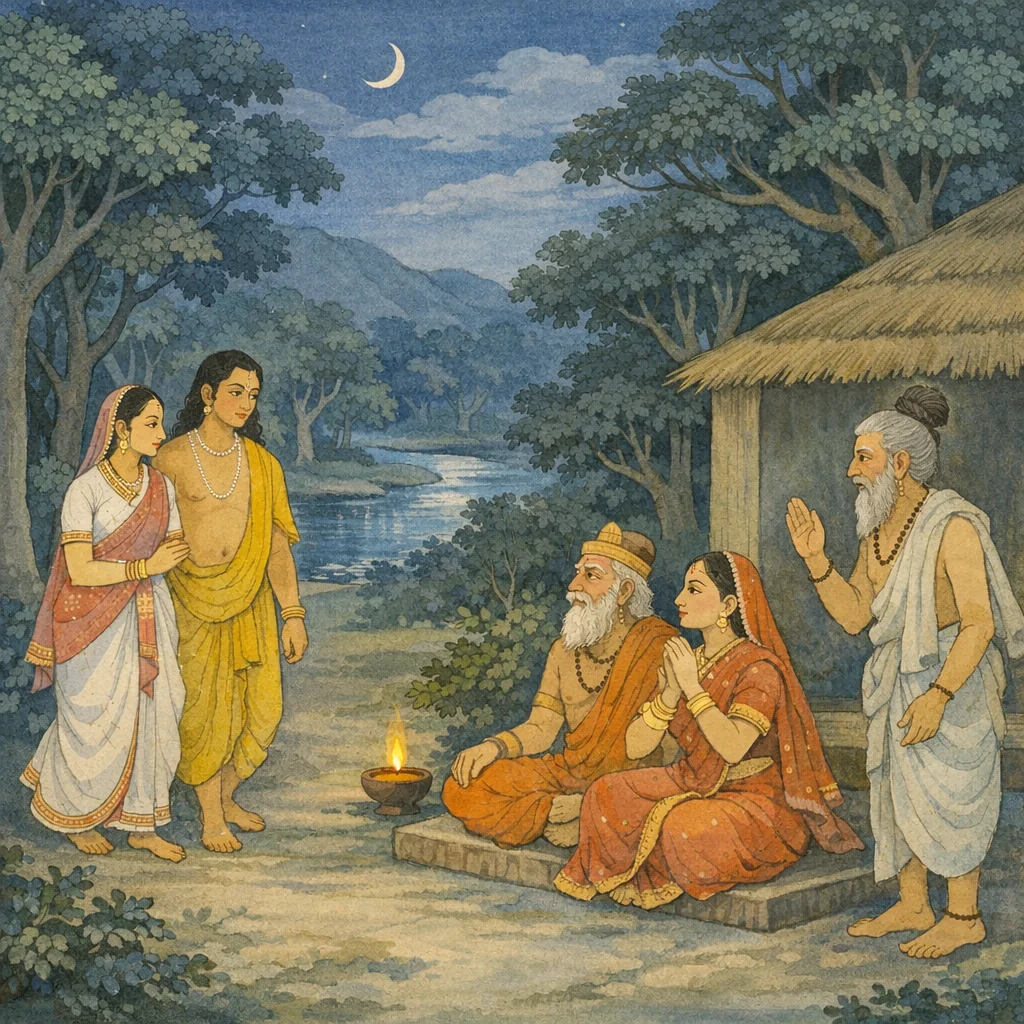
Chapter Arc: अंधे और निर्वासित राजा द्युमत्सेन अपनी पत्नी शैब्या के साथ आश्रम-आश्रम भटकते हैं—पुत्र सत्यवान का कोई समाचार नहीं, और रात घिर आई है। → दम्पती नदी, वन, सरोवर और ऋषि-आश्रमों में रात भर खोज करते हैं। उधर आश्रम-समाज में एक अद्भुत घटना की आहट है—सावित्री सत्यवान को साथ लेकर लौट रही है, मानो मृत्यु से छीन लाई हो। → गौतम ऋषि संकेत करते हैं कि द्युमत्सेन की ‘अकस्मात्’ दृष्टि-प्राप्ति का कारण साधारण नहीं—यह सावित्री के सत्य, तप और पतिव्रत-बल का प्रत्यक्ष फल है; आश्रमवासी चकित होकर राजा से प्रश्न करते हैं। → सावित्री सत्यवान सहित आश्रम में प्रवेश करती है; ऋषि-समुदाय उस ‘वरस्त्री’ की प्रशंसा और पूजा कर राजा को पुत्र-प्राप्ति तथा दृष्टि-लाभ के शुभ संकेतों सहित विदा करता है। द्युमत्सेन का संकट-काल समाप्ति की ओर मुड़ता है और परिवार का पुनर्मिलन स्थिर होता है।
Shlokas
Verse 1
(दाक्षिणात्य अधिक पाठका १ श्लोक मिलाकर कुल ११२ श्लोक हैं) हू... “+(>9) #2९-3 #25-२ अष्टनवर्त्याधिकद्विशततमो< ध्याय: पत्नीसहित राजा द्युमत्सेनकी सत्यवानके लिये चिन्ता, ऋषियोंका उन्हें आश्वासन देना, सावित्री और सत्यवान्का आगमन तथा सावित्रीद्वारा विलम्बसे आनेके कारणपर प्रकाश डालते हुए वरप्राप्तिका विवरण बताना मार्कण्डेय उवाच एतस्मिन्नेव काले तु द्युमत्सेनो महाबल: । लब्धचक्षु: प्रसन्नायां दृष्ट्यां सर्व ददर्श ह,मार्कण्डेयजी कहते हैं--युधिष्ठिर! इसी समय महाबली महाराजा द्युमत्सेनको उनकी खोयी हुई आँखें मिल गयीं। दृष्टि स्वच्छ हो जानेके कारण वे सब कुछ देखने लगे
Mārkaṇḍeya said: “At that very time, the mighty King Dyumatsena regained his eyesight. With his vision now clear and serene, he was able to see everything once again.”
Verse 2
स सर्वनाश्रमान् गत्वा शैब्यया सह भार्यया । पुत्रहेतो: परामार्ति जगाम भरतर्षभ,भरतश्रेष्ठ] वे अपनी पत्नी शैब्याके साथ सभी आश्रमोंमें जाकर पुत्रका पता लगाने लगे। उस समय उन्हें सत्यवानके लिये बड़ी वेदना हो रही थी
O bull among the Bharatas, he went to all the hermitages together with his wife Śaibyā, driven by the purpose of finding his son; and in that search he fell into profound anguish, tormented by grief for Satyavān.
Verse 3
तावाश्रमान् नदीश्वैव वनानि च सरांसि च | तस्यां निशि विचिन्वन्तौ दम्पती परिजग्मतु:,वे दोनों पति-पत्नी उस रातमें पुत्रकी खोज करते हुए विभिन्न आश्रमों, नदीके तटों तथा वनों और सरोवरोंमें भ्रमण करने लगे
Mārkaṇḍeya said: “That night, the husband and wife, searching everywhere for their son, wandered through hermitages, along riverbanks, and across forests and lakes—driven by anxious love and steadfast resolve.”
Verse 4
श्रुत्वा शब्दं तु यं कज्चिदुन्मुखा सुतशड्कया । सावित्रीसहितो<भ्येति सत्यवानित्यभाषताम्,जो कोई भी शब्द कानमें पड़ता, उसीको सुनकर वे अपने पुत्रके आनेकी आशंकासे उत्सुक हो उठते और परस्पर कहने लगते कि “सावित्रीके साथ सत्यवान् आ रहा है!
Hearing any sound at all, they would at once look up—eager with the anxious hope that their son had come. And they would say to one another, “Satyavān is coming, accompanied by Sāvitrī.”
Verse 5
भिन्नैश्न परुषै: पादैः सव्रणै: शोणितोक्षितै: । कुशकण्टकविद्धाड्गावुन्मत्ताविव धावत:,उनके पैरोंमें बिवाई फट गयी थी, वे कठोर हो गये थे तथा घाव हो जानेके कारण रक्तसे भींगे रहते थे, तो भी उन्हीं पैरोंसे वे दोनों दम्पति इधर-उधर पागलोंकी भाँति दौड़ रहे थे। उस समय उनके अंगोंमें कुश और काँटे बिंध गये थे
Mārkaṇḍeya said: “With their feet split and hardened, wounded and drenched in blood, the two of them still ran about like mad people. As they fled, their bodies were pierced by kuśa-grass and thorns.”
Verse 6
ततोभिसूृत्य तैरविंप्रै: सर्वराश्रमवासिभि: । परिवार्य समाश्वास्य तावानीतौ स्वमाश्रमम्,तब उन आश्रमोंमें रहनेवाले समस्त ब्राह्मणोंने उनके पास जा उन्हें सब ओरसे घेरकर आश्वासन दिया तथा उन दोनोंको उनके आश्रमपर पहुँचाया
Then those brāhmaṇas—residents of all the hermitages—went up to them, surrounded them on every side, and spoke words of reassurance. Having thus comforted them, they escorted the two back to their own āśrama.
Verse 7
तत्र भार्यासहाय: स वृतो वृद्धैस्तपोधनै: । आश्वासितोडपि चित्रार्थ: पूर्वराज्ञां कथाश्रयैः,तपस्याके धनी वृद्ध ब्राह्मणोंद्वारा घिरे हुए पत्नीसहित राजा ट्ुमत्सेनको प्राचीन राजाओंकी विचित्र अर्थोंसे भरी हुई कथाएँ सुनाकर पूरा आश्वासन दिया गया, तो भी वे दोनों वृद्ध बारंबार सान्त्वना मिलते रहनेपर भी अपने पुत्रको देखनेकी इच्छासे उसके बचपनकी बातें सोचते हुए बहुत दुःखी हो गये
There, King Dyumatsena, accompanied by his wife, was surrounded by aged ascetics rich in austerity. Though he was repeatedly consoled—being heartened by accounts of former kings filled with striking and meaningful episodes—still the old couple remained deeply sorrowful, their minds returning again and again to memories of their son’s childhood and to the longing to see him.
Verse 8
ततस्तौ पुनराश्चवस्तौ वृद्धौ पुत्रदिदृक्षया । बाल्यवृत्तानि पुत्रस्य स्मरन्तौ भृशदु:ःखितौ,तपस्याके धनी वृद्ध ब्राह्मणोंद्वारा घिरे हुए पत्नीसहित राजा ट्ुमत्सेनको प्राचीन राजाओंकी विचित्र अर्थोंसे भरी हुई कथाएँ सुनाकर पूरा आश्वासन दिया गया, तो भी वे दोनों वृद्ध बारंबार सान्त्वना मिलते रहनेपर भी अपने पुत्रको देखनेकी इच्छासे उसके बचपनकी बातें सोचते हुए बहुत दुःखी हो गये
Then those two aged ones, though repeatedly reassured, were again overcome by their longing to see their son. Remembering the incidents of his childhood, they became deeply distressed.
Verse 9
पुनरुक्त्वा च करुणां वाचं तौ शोककर्शितौ | हा पुत्र हा साध्वि वधू: क्वासि क्वासीत्यरोदताम् | ब्राह्मण: सत्यवाक् तेषामुवाचेदं तयोवच:,वे शोककातर दम्पति बारंबार करुण वचन बोलते हुए 'हा पुत्र! हा सती-साध्वी बहू! तुम कहाँ हो, कहाँ हो?' यों कहकर रोने लगे। उस समय एक सत्यवादी ब्राह्मणने उन दोनोंसे इस प्रकार कहा
Again and again, the two—worn down by grief—uttered piteous words and wept: “Alas, my son! Alas, virtuous daughter-in-law! Where are you, where are you?” Then a truth-speaking brāhmaṇa addressed them, responding to their lament.
Verse 10
युवर्चा उवाच यथास्य भार्या सावित्री तपसा च दमेन च | आचारेण च संयुक्ता तथा जीवति सत्यवान्,सुवर्चा बोले--सत्यवान्की पत्नी सावित्री जैसी तपस्या, इन्द्रियसंयम तथा सदाचारसे संयुक्त है, उसे देखते हुए मैं कह सकता हूँ कि सत्यवान् जीवित है
Yuvārcā said: “Since his wife Sāvitrī is endowed with austerity, self-restraint, and upright conduct, I can affirm that Satyavān is alive.”
Verse 11
गौतम उवाच वेदा: साड़्ा मयाधीतास्तपो मे संचितं महत् | कौमारब्रह्मचर्य च गुरवो3ग्निश्व तोषिता:
Gautama said: “I have studied the Vedas together with their ancillary disciplines, and I have amassed great austerity. I have also observed brahmacarya from youth, and I have duly satisfied my teachers and the sacred fire.”
Verse 12
समाहितेन चीर्णानि सर्वाण्येव व्रतानि मे । वायुभक्षोपवास श्च कृतो मे विधिवत् पुरा
Gautama said: “With a mind held in steady concentration, I have duly observed every one of my vows. In former times, I also performed the ‘air-only’ fast—living by breath alone—according to the prescribed rule.”
Verse 13
अनेन तपसा वेदि सर्व परचिकीर्षितम् । सत्यमेतन्निबोधध्वं प्रियते सत्यवानिति
Gautama said: “By this austerity I have come to know the whole intent behind what was sought to be done. Understand this as true: the one who is dear is called ‘Satyavān’ because he is devoted to truth.”
Verse 14
गौतम बोले--मैंने छहों अंगोंसहित सम्पूर्ण वेदोंका अध्ययन किया है। महान् तपका संचय किया है। कुमारावस्थासे ही ब्रह्मचर्यका पालन करते हुए गुरुजनों तथा अग्निदेवको संतुष्ट किया है। एकाग्रचित्त होकर सभी व्रत पूर्ण किये हैं। पूर्वकालमें हवा पीकर विधिपूर्वक उपवासव्रतका साधन किया है। इस तपस्याके प्रभावसे मैं दूसरोंकी सारी चेष्टाओंको जान लेता हूँ। आपलोग मेरी यह बात सच मानें कि सत्यवान् जीवित है ।। ११ “7१३ || शिष्य उवाच उपाध्यायस्य मे वक््त्राद् यथा वाक्यं विनि:सृतम् । नैव जातु भवेन्मिथ्या तथा जीवति सत्यवान्,गौतमके शिष्यने कहा--मेरे गुरुजीके मुखसे जो बात निकली है वह कभी मिथ्या नहीं हो सकती। सत्यवान् अवश्य जीवित है
Gautama said: “I have studied the entire Vedas with their six limbs, and I have amassed great austerity. From youth I have observed brahmacarya, and I have duly satisfied my teachers and the god Agni, the sacred fire. With a concentrated mind I have fulfilled all my vows; in former times I also undertook, according to rule, the fast of ‘drinking the air.’ By the power of this austerity I know the full scope of others’ endeavors. Therefore take my words as true: Satyavān is alive.” The disciple said: “Whatever has issued from my teacher’s mouth can never be false. Therefore Satyavān is indeed alive.”
Verse 15
ऋषय ऊचु यथास्य भार्या सावित्री सर्वरेव सुलक्षणै: । अवैधव्यकरैरयुक्ता तथा जीवति सत्यवान्,कुछ ऋषियोंने कहा--सत्यवान्की पत्नी सावित्री उन सभी शुभ लक्षणोंसे युक्त है जो वैधव्यका निवारण करके सौभाग्यकी वृद्धि करनेवाले हैं, इसलिये सत्यवान् अवश्य जीवित है
The sages said: “Since his wife Sāvitrī is endowed with every auspicious mark—those that avert widowhood and increase marital good fortune—Satyavān is surely alive.”
Verse 16
भारद्वाज उवाच यथास्य भार्या सावित्री तपसा च दमेन च । आचारेण च संयुक्ता तथा जीवति सत्यवान्
Bhāradvāja said: “Just as his wife Sāvitrī is endowed with austerity, self-restraint, and impeccable conduct, so too does Satyavān live on.”
Verse 17
भारद्वाज बोले--सत्यवानकी पत्नी सावित्री जैसी तपस्या, इन्द्रियसंयम तथा सदाचारसे संयुक्त है, उसे देखते हुए मैं कह सकता हूँ कि सत्यवान् जीवित है ।। दाल्भ्य उवाच यथा दृष्टि: प्रवृत्ता ते सावित्र्याश्न यथा व्रतम् गता55हारमकृत्वा च तथा जीवति सत्यवान्,दाल्भ्यने कहा--राजन! जिस प्रकार आपको दृष्टि प्राप्त हो गयी और जिस प्रकार सावित्रीका उपवास-व्रत चल रहा था तथा जिस प्रकार वह आज भोजन किये बिना ही पतिके साथ गयी है, इन सब बातोंपर विचार करनेसे यही प्रतीत होता है कि सत्यवान् जीवित है
Dālbhyā said: “O king, since your insight has thus arisen, and since Savitrī’s vow is being observed in this manner—she even went with her husband today without taking food—considering these signs, it appears that Satyavān is indeed alive.”
Verse 18
आपस्तम्ब उवाच यथा वदन्ति शान्तायां दिशि वै मृगपक्षिण: । पार्थिवी च प्रवृत्तिस्ते तथा जीवति सत्यवान्,आपफस्तम्ब बोले--इस शान्त (एवं प्रसन्न) दिशामें मृत और पक्षी जैसी बोली बोल रहे हैं और आपके द्वारा जिस प्रकार राजोचित धर्मका अनुष्ठान हो रहा है, उसके अनुसार यह कहा जा सकता है कि सत्यवान् जीवित है
Āpastamba said: “Just as the deer and birds are calling in this calm and auspicious quarter, and just as your conduct proceeds in a kingly and righteous manner, so may it be understood that Satyavān is indeed alive.”
Verse 19
धौग्य उवाच सर्वर्गुणैरुपेतस्ते यथा पुत्रो जनप्रिय: । दीर्घायु्लक्षणोपेतस्तथा जीवति सत्यवान्,धौम्यने कहा--महाराज! आपका यह पुत्र जिस प्रकार समस्त सदगुणोंसे सम्पन्न, जनप्रिय तथा चिरजीवी पुरुषोंके लक्षणोंसे युक्त है, उसके अनुसार यही मानना चाहिये कि सत्यवान् जीवित है
Dhaumya said: “O King, your son is endowed with every virtue—beloved of the people and marked with the signs of long life. Therefore, one should conclude that Satyavān is indeed alive.”
Verse 20
मार्कण्डेय उवाच एवमाश्वासितस्तैस्तु सत्यवाग्भिस्तपस्विभि: । तांस्तान् विगणयन् सर्वास्तत:ः स्थिर इवाभवत्,मार्कण्डेयजी कहते हैं--युधिष्ठिर! इस प्रकार सत्यवादी एवं तपस्वी मुनियोंने जब राजा द्युमत्सेनको पूर्णतः आश्वासन दिया, तब उन सबका समादर करते हुए उनकी बात मानकर वे स्थिर-से हो गये
Mārkaṇḍeya said: Thus reassured by those ascetics whose words were truthful, he—giving due regard to each of them and accepting their counsel—became as if steady, calm, and composed.
Verse 21
ततो मुहूर्तात् सावित्री भरत्रां सत्यवता सह । आजगामाश्रमं रात्रौ प्रह्ष्ठा प्रविवेश ह,तदनन्तर दो ही घड़ीमें सावित्री अपने पति सत्यवानके साथ रातमें वहाँ आयी और बड़े हर्षके साथ उसने आश्रममें प्रवेश किया
Then, after a short while, Sāvitrī arrived at the hermitage together with her husband Satyavān. Entering at night, she went in with a heart full of joy.
Verse 22
ब्राह्मणा ऊचु. पुत्रेण संगतं त्वां तु चक्षुष्मन्तं निरीक्ष्य च सर्वे वयं वै पृच्छामो वृद्धिं वै पृथिवीपते,तब ब्राह्मणोंने कहा--महाराज! पुत्रके साथ आपका मिलन हुआ और आपको नेत्र भी प्राप्त हो गये, इस अवस्थामें आपको देखकर हम सब लोग आपका अभ्युदय मना रहे हैं
The Brahmins said: “O king, seeing that you have been reunited with your son and that you have regained your sight, we all inquire after your welfare and prosperity. May you flourish.”
Verse 23
समागमेन पुत्रस्य सावित्र्या दर्शनेन च । चक्षुषश्चात्मनो लाभात् त्रिभिर्दिष्ट्या विवर्धसे,बड़े सौभाग्यकी बात है कि आपको पुत्रका समागम प्राप्त हुआ, बहू सावित्रीका दर्शन हुआ और अपने खोये हुए नेत्र पुन: मिल गये। इन तीनों बातोंसे आपका अभ्युदय सूचित होता है
By reunion with your son, by beholding Sāvitrī, and by the recovery of your own sight, you prosper through these three blessings of good fortune.
Verse 24
सर्वैरस्माभिरुक्त यत् तथा तन्नात्र संशय: । भूयोभूय: समृद्धिस्ते क्षिप्रमेव भविष्यति,हम सब लोगोंने जो बात कही है, वह ज्यों-की-त्यों सत्य निकली, इसमें संशय नहीं है। आगे भी शीघ्र ही आपकी बारंबार समृद्धि होनेवाली है
Mārkaṇḍeya said: “What all of us declared has indeed proved exactly true—there is no doubt about it. And in the time ahead as well, your prosperity will return again and again, and it will come swiftly.”
Verse 25
ततोड<ग्निं तत्र संज्वाल्य द्विजास्ते सर्व एव हि । उपासांचक्रिरे पार्थ द्युमत्सेने महीपतिम्,युधिष्ठि!! तदनन्तर सभी ब्राह्मण वहाँ आग जलाकर राजा च्ुमत्सेनके पास बैठ गये
Then, having kindled a fire there, all those twice-born Brahmins sat in attendance. O Pārtha, they rendered respectful service to King Dyumatsena, remaining near him in reverence and support, as dharma enjoins toward an afflicted and venerable ruler.
Verse 26
शैब्या च सत्यवांश्रैव सावित्री चैकतः स्थिता: । सर्वैस्तैरभ्यनुज्ञाता विशोका: समुपाविशन्,शैब्या, सत्यवान् तथा सावित्री--ये तीनों भी एक ओर खड़े थे, जो उन सब महात्माओंकी आज्ञा पाकर शोकरहित हो बैठ गये
Śaibyā, Satyavān, and Sāvitrī stood together to one side. With the assent of all those venerable sages, they then sat down, free from grief—signaling a restored calm and the ethical order re-established after trial.
Verse 27
ततो राज्ञा सहासीना: सर्वे ते वनवासिन: । जातकौतूहला: पार्थ पप्रच्छुर्न॒पते: सुतम्,पार्थ! तत्पश्चात् राजाके साथ बैठे हुए वे सभी वनवासी कौतूहलवश राजकुमार सत्यवानसे पूछने लगे
Then, as the king sat with them, all those forest-dwellers—stirred by curiosity—began to question the prince, the son of the king. The scene underscores a dharmic social order in which the community, witnessing an extraordinary situation, seeks truthful clarification from the rightful heir, and the prince is implicitly called to respond with integrity and restraint.
Verse 28
ऋषय ऊचु. प्रागेव नागतं कस्मात् सभार्येण त्वया विभो | विरात्रे चागतं कस्मात् को5नुबन्धस्तवाभवत्,ऋषि बोले--राजकुमार! तुम अपनी पत्नीके साथ पहले ही क्यों नहीं चले आये? क्यों इतनी रात बिताकर आये? तुम्हारे सामने कौन-सी अड़चन आ गयी थी?
The sages said: “O mighty one, why did you not come earlier, together with your wife? Why did you arrive only after the night had grown late? What obstacle or pressing circumstance held you back?”
Verse 29
संतापित: पिता माता वयं चैव नृपात्मज । कस्मादिति न जानीमस्तत् सर्व वक्तुमहसि,राजपुत्र! तुमने आनेमें विलम्ब करके अपने माता-पिता तथा हमलोगोंको भी भारी संतापमें डाल दिया था। तुमने ऐसा क्यों किया? यह हम नहीं जान पाते हैं, अतः सब बातें स्पष्ट रूपसे बताओ
Mārkaṇḍeya said: “O prince, by delaying your return you caused great anguish to your father, your mother, and to us as well. We do not understand why you acted so. Therefore, you should tell us everything clearly.”
Verse 30
सत्यवानुवाच पित्राहमभ्यनुज्ञात: सावित्रीसहितो गतः । अथ मे<भूच्छिरोदु:खं वने काष्ठानि भिन्दतः,सत्यवान् बोले--मैं पिताकी आज्ञा पाकर सावित्रीके साथ वनमें गया। फिर वनमें लकड़ियोंको चीरते समय मेरे सिरमें बड़े जोरसे दर्द होने लगा
Satyavān said: “Having obtained my father’s permission, I went to the forest accompanied by Sāvitrī. Then, while splitting firewood in the woods, a severe pain suddenly arose in my head.”
Verse 31
सुप्तश्नाहं वेदनया चिरमित्युपलक्षये । तावत् काल॑ न च मया सुप्तपूर्व कदाचन,मैं समझता हूँ कि मैं वेदनासे व्याकुल होकर देरतक सोता रह गया। उतने समयतक मैं उसके पहले कभी नहीं सोया था
Mārkaṇḍeya said: “I realize that, overwhelmed by pain, I must have slept for a long time. Never before had I ever slept for such a length of time.”
Verse 32
सर्वेषामेव भवतां संतापो मा भवेदिति । अतो विरात्रागमनं नान्यदस्तीह कारणम्,नींद खुलनेपर मैं इतनी रातके बाद भी इसलिये चला आया कि आप सब लोगोंको मेरे लिये चिन्तित न होना पड़े। इस विलम्बमें और कोई कारण नहीं है
Mārkaṇḍeya said: “So that none of you should be distressed, I have come here even at this late hour. There is no other reason for this delay.”
Verse 33
गौतम उवाच अकस्माच्चक्षुष: प्राप्तिर्युमत्सेनस्य ते पितु: । नास्य त्वं कारण वेत्सि सावित्री वक्तुमहति,गौतम बोले--तुम्हारे पिता द्युमत्सेनको जो सहसा नेत्रोंकी प्राप्ति हुई है, इसका कारण तुम नहीं जानते। सम्भवत: सावित्री बतला सकती है
Gautama said: “Your father Dyumatsena has suddenly regained his sight. You do not know the cause of this; Savitrī is the one fit to explain it.”
Verse 34
श्रोतुमिच्छामि सावित्रि त्वं हि वेत्थ परावरम् । त्वां हि जानामि सावित्रि सावित्रीमिव तेजसा,सावित्री! मैं इसका रहस्य तुमसे सुनना चाहता हूँ; क्योंकि तुम भूत और भविष्य सब कुछ जानती हो। मैं तुम्हें साक्षात् सावित्रीदेवीके समान तेजस्विनी जानता हूँ। राजाको जो सहसा नेत्रोंकी प्राप्ति हुई है, इसका कारण तुम जानती हो। सच-सच बताओ, यदि इसमें कुछ छिपानेकी बात न हो तो हमसे अवश्य कहो
Gautama said: “Sāvitrī, I wish to hear it from you, for you know what is beyond and what is within—past and future, the higher and the lower. I recognize you, Sāvitrī, as radiant like the goddess Sāvitrī herself. You know the true cause by which the king has suddenly regained his sight. Speak the truth; if there is nothing that must be concealed, tell us without holding anything back.”
Verse 35
त्वमत्र हेतुं जानीषे तस्मात् सत्यं निरूच्यताम् | रहस्यं यदि ते नास्ति किंचिदत्र वदस्व न:,सावित्री! मैं इसका रहस्य तुमसे सुनना चाहता हूँ; क्योंकि तुम भूत और भविष्य सब कुछ जानती हो। मैं तुम्हें साक्षात् सावित्रीदेवीके समान तेजस्विनी जानता हूँ। राजाको जो सहसा नेत्रोंकी प्राप्ति हुई है, इसका कारण तुम जानती हो। सच-सच बताओ, यदि इसमें कुछ छिपानेकी बात न हो तो हमसे अवश्य कहो
Gautama said: “You know the true cause of what has happened here; therefore, speak the truth plainly. If there is no secret in this matter for you, then tell us what it is.”
Verse 36
सावित्रयुवाच एवमेतद् यथा वेत्थ संकल्पो नान्यथा हि व: । न हि किंचिद् रहस्यं मे श्रूयतां तथ्यमेव यत्,सावित्री बोली--मुनीश्वरो! आपलोग जैसा समझते हैं, ठीक है। आपलोगोंका संकल्प अन्यथा नहीं हो सकता। मेरे लिये कोई छिपानेकी बात नहीं है। मैं सब घटनाएँ ठीक-ठीक बताती हूँ, सुनिये
Sāvitrī said: “It is exactly as you understand, O great sage. Your resolve cannot be otherwise. I have nothing to conceal. I shall recount all that happened truthfully—listen.”
Verse 37
मृत्युमें पत्युराख्यातो नारदेन महात्मना । स चाद्य दिवस: प्राप्तस्ततो नैनं जहाम्यहम्,महात्मा नारदजीने मुझसे मेरे पतिकी मृत्युका हाल बताया था। वह मृत्युदिवस आज ही आया था; इसलिये मैं इन्हें अकेला नहीं छोड़ती थी
Sāvitrī said: “The great sage Nārada had foretold to me the time of my husband’s death. That very day has now arrived; therefore I do not abandon him or leave him alone.”
Verse 38
सुप्तं चैनं यम: साक्षादुपागच्छत् सकिड्कर: । स एनमनयद् बद्धवा दिशं पितृनिषेविताम्,जब ये सिरके दर्दसे व्याकुल होकर सो गये, उस समय साक्षात् भगवान् यमराज अपने सेवकके साथ पधारे। वे इन्हें बाँधकर दक्षिण दिशाकी ओर ले चले
Sāvitrī said: “When he had fallen asleep, Yama himself—manifest in person and accompanied by his attendants—came to him. Binding him, Yama led him away toward the southern quarter, the direction frequented by the Pitṛs (ancestors).”
Verse 39
अस्तौषं तमहं देवं सत्येन वचसा विभुम् | पज्च वै तेन मे दत्ता वरा: शूणुत तान् मम,उस समय मैंने सत्यवचनोंद्वारा उन भगवान् यमकी स्तुति की। तब उन्होंने मुझे पाँच वर दिये। उन वरोंको आप मुझसे सुनिये
Sāvitrī said: “With truthful words I praised that mighty god. Pleased, he granted me five boons. Now listen from me to what those boons were.”
Verse 40
चक्षुषी च स्वराज्यं च द्वौ वरौ श्वशुरस्य मे । लब्धं पितु: पुत्रशतं पुत्राणां चात्मन: शतम्,नेत्र तथा अपने राज्यकी प्राप्ति--ये दो वर मेरे श्वशुरके लिये प्राप्त हुए हैं। इसके सिवा मैंने अपने पिताके लिये सौ पुत्र तथा अपने लिये भी सौ पुत्र होनेके दो वर और पाये हैं
Gautama said: “Two boons have been secured for my father-in-law—his eyesight and the recovery of his own sovereignty. Besides these, I have also obtained two further boons: that my father be blessed with a hundred sons, and that I myself have a hundred sons.”
Verse 41
चतुर्वर्षशतायुर्मे भर्ता लब्धश्न सत्यवान् | भर्तुर्हि जीवितार्थ तु मया चीर्ण त्विदं ब्रतम्,पाँचवें वरके रूपमें मुझे मेरे पति सत्यवान् चार सौ वर्षोकी आयु लेकर प्राप्त हुए हैं। पतिके जीवनकी रक्षाके लिये ही मैंने यह व्रत किया था
As my fifth boon, I obtained my husband Satyavān endowed with a lifespan of four hundred years. Indeed, it was solely for the protection of my husband’s life that I undertook and observed this vow.
Verse 42
एतत् सर्व मया55ख्यातं कारणं विस्तरेण व: । यथावृत्तं सुखोदर्कमिदं दु:ःखं महन्मम,इस प्रकार मैंने आपलोगोंसे विलम्बसे आनेका कारण और उसका यथावत् वृत्तान्त विस्तारपूर्वक बताया है। मुझे जो यह महान् दुःख उठाना पड़ा है उसका अन्तिम फल सुख ही हुआ है
Gautama said: “I have now told you everything—the reason for my delay in full detail, and the events exactly as they occurred. Though this suffering of mine was great, its final outcome has been happiness.”
Verse 43
ऋषय ऊचु: निमज्जमानं व्यसनैरभिद्रुतं कुल नरेन्द्रस्य तमोमये हृदे । त्वया सुशीलब्रतपुण्यया कुलं समुद्धृतं साध्वि पुन: कुलीनया,ऋषि बोले--पतिव्रते! राजा द्युमत्सेनका कुल भाँति-भाँतिकी विपत्तियोंसे ग्रस्त होकर दुःखके अंधकारमय गढ़ेमें डूबा जा रहा था; परंतु तुझ-जैसी सुशीला, व्रतपरायणा और पवित्र आचरणवाली कुलीन वधूने आकर इसका उद्धार कर दिया
The sages said: “O chaste and virtuous lady! When the king of this lineage, Dyumatsena, was being battered by many calamities and sinking into a darkness-filled pit of sorrow, you—noble-born, gentle in conduct, steadfast in vows, and pure in merit—lifted up the family again and restored it.”
Verse 44
मार्कण्डेय उदाच तथा प्रशस्य हाभिपूज्य चैव वरस्त्रियं तामृषय: समागता: । नरेन्द्रमामन्त्रय सपुत्रमज्जसा शिवेन जम्मुर्मुदिता: स्वमालयम्,मार्कण्डेयजी कहते हैं--युधिष्ठिर! इस प्रकार वहाँ आये हुए महर्षियोंने स्त्रियोंमें श्रेष्ठ सावित्रीकी भूरि-भूरि प्रशंसा तथा आदर-सत्कार करके पुत्रसहित राजा द्युमत्सेनकी अनुमति ले सुख और प्रसन्नताके साथ अपने-अपने घरको प्रस्थान किया
Markandeya said: “Thus, having lavishly praised and duly honored that best of women, Sāvitrī, the assembled sages took leave of the king Dyumatsena together with his son. Then, with auspiciousness and glad hearts, they departed swiftly to their respective hermitages.”
Verse 297
इस प्रकार श्रीमहाभारत वनपर्वके अन्तर्गत पतिव्रतामाहात्म्यपर्वमें सावित्री- उपाख्यानविषयक दो सौ सत्तानबेवाँ अध्याय पूरा हुआ
Thus ends the two-hundred-and-ninety-seventh chapter of the Śrī Mahābhārata’s Vana Parva, within the section on the greatness of the devoted wife (Pativratā-māhātmya), dealing with the Savitrī episode. The closing formula affirms the ideal upheld by the tale: steadfast marital fidelity and dharmic resolve as a wellspring of spiritual power.
Verse 298
इति श्रीमहा भारते वनपर्वणि पतिव्रतामाहात्म्यपर्वणि सावितरयुपाख्याने अष्टनवत्यधिकद्वधिशततमो< ध्याय:,इस प्रकार श्रीमह्याभारत वनपर्वके अन्तर्गत पतित्रतामाहात्म्यपर्वमें सावित्री- उपाख्यानविषयक दी सौ अद्ठदानबेवाँ अध्याय पूरा हुआ
Thus, in the revered Mahābhārata, within the Vana Parva—specifically in the section praising the greatness of the devoted wife (pativratā)—the Savitrī episode concludes here as the two-hundred-and-ninety-eighth chapter. The closing formula underscores the ideal celebrated: steadfast marital fidelity and dharmic resolve as a source of spiritual power and protection.