Adhyaya 295
Araṇi Lost to the Deer: Pāṇḍavas Pursue to Preserve Agnihotra (अरणी-हरण प्रसङ्गः)
Upa-parva: Dvaitavana-episode (Pāṇḍava residence near Mārkaṇḍeya-āśrama; Brahmin’s Araṇi Retrieval)
Janamejaya inquires about the Pāṇḍavas’ actions after Draupadī’s recovery. Vaiśaṃpāyana reports their departure from Kāmyaka and return to Dvaitavana, where they live on guarded fruit and roots with measured consumption. A distressed brāhmaṇa reports that his araṇi set has become stuck in a tree because a deer, while rubbing, snagged it on its horn and fled swiftly from the āśrama. Concerned that agnihotra not be interrupted, the Pāṇḍavas arm themselves and pursue the animal, releasing arrows but failing to strike or recover it. Unable to locate the deer, they become fatigued, afflicted by hunger and thirst, and sit in the cool shade of a dense-forest nyagrodha. As they rest, Nakula addresses Yudhiṣṭhira with indignation, remarking on the family’s unusual encounter with adversity despite their established reputation for dharma and diligence, setting up further inquiry into causality and endurance.
Chapter Arc: द्रौपदी के अपमान और हरण की स्मृति से व्यथित पाण्डव युधिष्ठिर के सामने प्रश्न उठाते हैं—क्या द्रपदात्मजा के समान कोई और भी अद्वितीय पतिव्रता स्त्री जगत में हुई है? → युधिष्ठिर के प्रश्न पर मार्कण्डेय ऋषि ‘सावित्री’ की कथा आरम्भ करते हैं: मद्रदेश के राजा अश्वपति को संतान नहीं; वे धर्मनिष्ठ होकर तप, यज्ञ और सावित्री-उपासना करते हैं, और देव-प्रसाद की प्रतीक्षा में वर्षों तक संयम धारण करते हैं। → सावित्री-देवी प्रसन्न होकर अश्वपति को वर माँगने को कहती हैं—धर्म में प्रमाद न करने की चेतावनी के साथ—और राजा संतान-प्राप्ति का वर चुनता है। → देवी के वरदान से कन्या का जन्म होता है; ब्राह्मण और पिता उसका नाम ‘सावित्री’ रखते हैं। समय बीतने पर जब विवाह-काल आता है और कोई स्वयंवर-याचक नहीं आता, तब राजा पुत्री को स्वयं योग्य वर खोजने का आदेश देता है; सावित्री तीर्थ-यात्रा और दान के साथ वर-अन्वेषण हेतु निकल पड़ती है। → तीर्थों में विचरती सावित्री किस पुरुष को पति-रूप में चुनेगी—और उसके भाग्य में कौन-सा अदृश्य संकट छिपा है?
Shlokas
Verse 1
2.8 #:23:.7 () हि २ 7 (पतिव्रतामाहात्म्यपर्व) त्रिनवत्यधिकद्धिशततमो< ध्याय: राजा अभश्वपतिको देवी सावितन्रीके वरदानसे सावित्री नामक कन्याकी प्राप्ति तथा सावित्रीका पतिवरणके लिये विभिन्न देशोंमें भ्रमण युधिछिर उवाच नात्मानमनुशोचामि नेमान् भ्रातृन् महामुने । हरणं चापि राज्यस्य यथेमां द्रुपदात्मजाम्,युधिष्ठिर बोले--महामुने! इस ट्रपदकुमारीके लिये मुझे जैसा शोक होता है, वैसा न तो अपने लिये, न इन भाइयोंके लिये न राज्य छिन जानेके लिये ही होता है
Yudhiṣṭhira said: “O great sage, I do not grieve for myself, nor for these brothers, nor even for the loss of the kingdom—so much as I grieve for this daughter of Drupada.”
Verse 2
द्यूते दुरात्मभि: क्लिष्टा: कृष्णया तारिता वयम् | जयद्रथेन च पुनर्वनाच्चापि हृता बलात्,दुरात्मा धृतराष्ट्रपुत्रोंने जूएके समय हमलोगोंको भारी संकटमें डाल दिया था, परंतु इस द्रौपदीने हमें बचा लिया। फिर जयद्रथने इस वनसे इसका बलपूर्वक अपहरण किया
Yudhiṣṭhira said: “In the dice-game we were tormented by wicked men, and it was Kṛṣṇā (Draupadī) who delivered us. Then again, Jayadratha forcibly abducted her from this forest.”
Verse 3
अस्ति सीमन्तिनी काचिद् दृष्टपूर्वापि वा श्रुता । पतिव्रता महाभागा यथेयं द्रपदात्मजा,क्या आपने किसी ऐसी परम सौभाग्यवती पतिव्रता नारीको पहले कभी देखा अथवा सुना है, जैसी यह द्रौपदी है?
Yudhiṣṭhira said: “Is there any woman—ever seen before or even heard of—so supremely fortunate and so steadfast in wifely fidelity as this Draupadī, the daughter of Drupada?”
Verse 4
मार्कण्डेय उदाच शृणु राजन् कुलस्त्रीणां महाभाग्यं युधिष्ठिर । सर्वमेतद् यथा प्राप्तं सावित्रया राजकन्यया,मार्कण्डेयजी बोले--राजा युधिष्ठिर! राजकन्या सावित्रीने कुलकामिनियोंके लिये परम सौभाग्यरूप यह पातिव्रत्य आदि सब सद्गुणसमूह जिस प्रकार प्राप्त किया था, वह बताता हूँ, सुनो
Mārkaṇḍeya said: “Listen, O king Yudhiṣṭhira, to the great blessed fortune of noble women. I shall tell you how the princess Sāvitrī attained all of this—her wifely fidelity and the full array of virtues—exactly as it came to be.”
Verse 5
आसीन्मद्रेषु धर्मात्मा राजा परमधार्मिक: । ब्रह्माण्यश्ष महात्मा च सत्यसंधो जितेन्द्रिय:,प्राचीनकालकी बात है, मद्रदेशमें एक परम धर्मात्मा राजा राज्य करते थे। वे ब्राह्मण- भक्त, विशालह्ृदय, सत्य-प्रतिज्ञ और जितेन्द्रिय थे
Yudhiṣṭhira said: In ancient times, in the land of Madra, there ruled a king of righteous soul, supremely devoted to dharma. He was devoted to the Brāhmaṇas, great-hearted, unwaveringly true to his vows, and master of his senses.
Verse 6
यज्वा दानपतिर्दक्ष: पौरजानपदप्रिय: । पार्थिवो5श्वपतिर्नाम सर्वभूतहिते रत:,वे यज्ञ करनेवाले, दानाध्यक्ष, कार्यकुशल, नगर और जनपदके लोगोंके परम प्रिय तथा सम्पूर्ण भूतोंके हितमें तत्पर रहनेवाले भूपाल थे। उनका नाम अश्विपति था
Yudhiṣṭhira said: “There was a king named Aśvapati—one who had performed sacrifices, who presided over gifts and charity, who was capable in action, dearly loved by the townspeople and the inhabitants of the countryside, and who was devoted to the welfare of all living beings.”
Verse 7
क्षमावाननपत्यश्व सत्यवाग विजितेन्द्रिय: । अतिक्रान्तेन वयसा संतापमुपजग्मिवान्,राजा अश्वपति क्षमाशील, सत्यवादी और जितेन्द्रिय होनेपर भी संतानहीन थे। बहुत अधिक अवस्था बीत जानेपर इसके कारण उनके मनमें बड़ा संताप हुआ
Yudhiṣṭhira said: King Aśvapati, though patient and forbearing, truthful in speech, and self-controlled, had no child. As great age passed, he became deeply afflicted with sorrow on account of this childlessness.
Verse 8
अपत्योत्पादनार्थ च तीव्रं नियममास्थित: । काले परिमिताहारो ब्रह्मचारी जितेन्द्रिय:,अतः उन्होंने संतानकी उत्पत्तिके लिये कठोर नियमोंका आश्रय लिया। वे निश्चित समयपर थोड़ा-सा भोजन करते और ब्रह्मचर्यका पालन करते हुए इन्द्रियोंको संयममें रखते थे
For the sake of begetting offspring, he undertook a rigorous discipline. He ate only a measured amount at fixed times, lived in celibate restraint, and kept his senses under firm control—showing that the pursuit of lineage was to be governed by self-mastery rather than impulse.
Verse 9
हुत्वा शतसहस््र॑ं स सावित्र्या राजसत्तम: । षष्ठे पछ्ठे तदा काले बभूव मितभोजन:,राजाओंमें श्रेष्ठ अश्वपति ब्राह्मणोंके साथ प्रतिदिन गायत्री-मन्त्रसे एक लाख आहुति देकर दिनके छठे भागमें परिमित भोजन करते थे
Yudhiṣṭhira said: That best of kings, Aśvapati, having offered a hundred thousand oblations each day with the Sāvitrī (Gāyatrī) mantra, lived on measured food, taking his meal only at the appointed time—when the sixth portion of the day had come. The verse highlights disciplined austerity: devotion expressed through sustained ritual effort, and self-restraint expressed through regulated eating.
Verse 10
एतेन नियमेनासीद् वर्षाण्यष्टादशैव तु । पूर्णे त्वष्टादशे वर्षे सावित्री तुष्टिमभ्यगात्,उनको इस नियमसे रहते हुए अठारह वर्ष बीत गये। अठारहवाँ वर्ष पूर्ण होनेपर सावित्रीदेवी संतुष्ट हुईं
Yudhiṣṭhira said: “Living by this very observance, eighteen years passed. When the eighteenth year was completed, the goddess Sāvitrī became satisfied.”
Verse 11
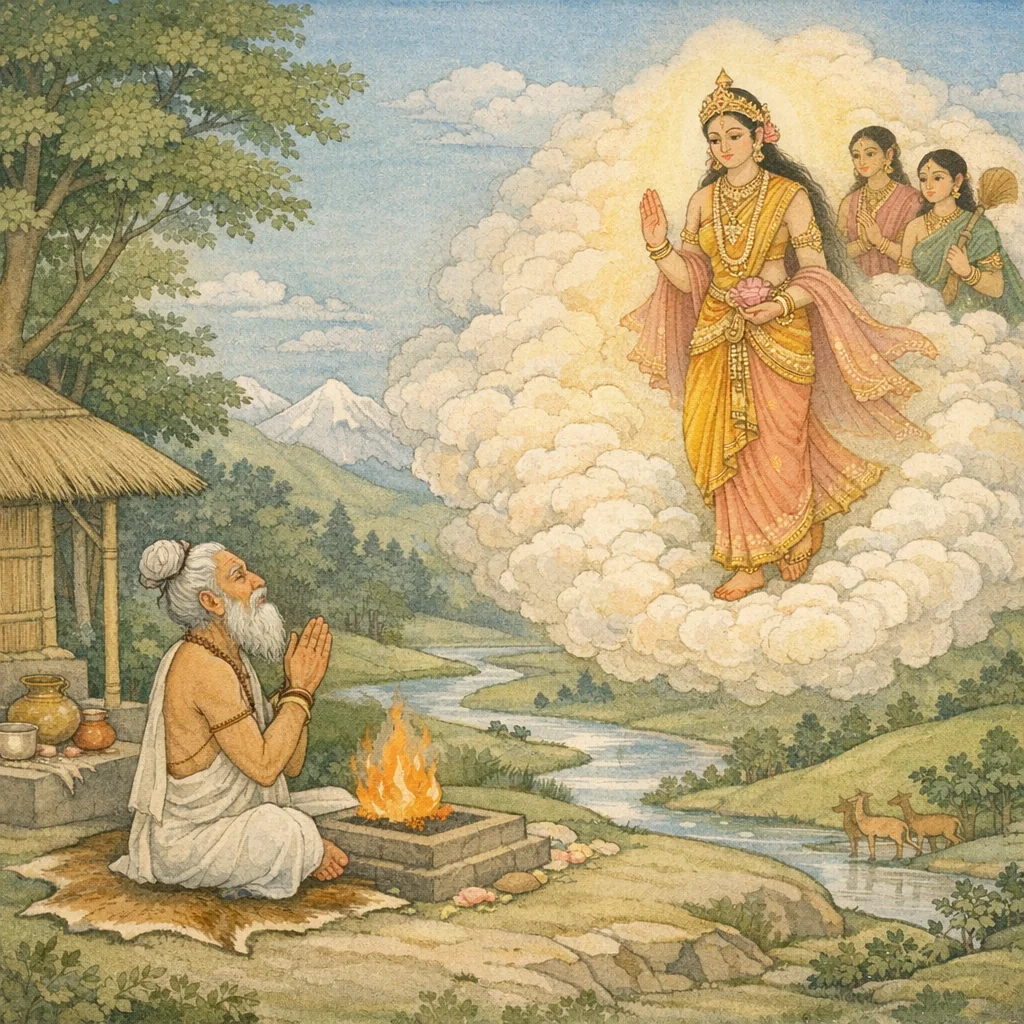
रूपिणी तु तदा राजन् दर्शयामास तं नृपम् | अग्निहोत्रात् समुत्थाय हर्षेण महतान्विता । उवाच चैनं वरदा वचन पार्थिवं तदा
Then, O king, the lady of radiant form revealed herself to that monarch. Rising up after completing the Agnihotra, filled with great joy, the boon-giving one addressed the earthly ruler with fitting words.
Verse 12
(सा तमश्वपतिं राजन् सावित्री नियमे स्थितम् ।।) राजन! तब मूर्तिमती सावित्रीदेवीने अग्निहोत्रकी अग्निसे प्रकट होकर बड़े हर्षके साथ राजाको प्रत्यक्ष दर्शन दिया और वर देनेके लिये उद्यत हो अनुष्ठानके नियमोंमें स्थित उस राजा अश्वपतिसे इस प्रकार कहा ।। सावित्रयुवाच ब्रह्मचर्येण शुद्धेन दमेन नियमेन च । सर्वात्मना च भक्त्या च तुष्टास्मि तव पार्थिव,सावित्री बोली--राजन! मैं तुम्हारे विशुद्ध ब्रह्मचर्य, इन्द्रियसंयम, मनोनिग्रह तथा सम्पूर्ण हृदयसे की हुई भक्तिके द्वारा बहुत संतुष्ट हुई हूँ
Yudhiṣṭhira said: “O King, then the goddess Sāvitrī, taking visible form and emerging from the fire of the Agnihotra, appeared before King Aśvapati with great joy. Ready to grant a boon, she addressed that king, who was steadfast in the disciplines of his rite, as follows.” Sāvitrī said: “O ruler, I am greatly pleased with you—by your pure celibate discipline, by self-restraint, by observance of sacred vows, and by wholehearted devotion.”
Verse 13
वरं वृणीष्वाश्वपते मद्रराज यदीप्सितम् । न प्रमादश्न धर्मेषु कर्तव्यस्ते कथठचन,मद्रराज अश्वपते! तुम्हें जो अभीष्ट हो, वह वर माँगो। धर्मोंके पालनमें तुम्हें कभी किसी तरह भी प्रमाद नहीं करना चाहिये
Yudhiṣṭhira said: “O Aśvapati, king of Madra, choose a boon—whatever you desire. But you must never, in any circumstance, be negligent in the observance of dharma.”
Verse 14
अश्वपतिरवाच अपत्यार्थ: समारम्भ: कृतो धर्मेप्सया मया । पुत्रा मे बहवो देवि भवेयु: कुलभावना:,अश्वपतिने कहा-देवि! मैंने धर्मप्राप्तिकी इच्छासे संतानके लिये यह अनुष्ठान आरम्भ किया था। आपकी कृपासे मुझे बहुत-से वंशप्रवर्तक पुत्र प्राप्त हों
Aśvapati said: “O goddess, desiring to attain dharma, I began this rite for the sake of offspring. By your grace, may I be blessed with many sons—upholders and continuers of my lineage.”
Verse 15
तुष्टासि यदि मे देवि वरमेतं वृणोम्यहम् । संतान परमो धर्म इत्याहुर्मा द्विजातय:,देवि! यदि आप प्रसन्न हैं तो मैं आपसे यह संतानसम्बन्धी वर ही माँगता हूँ; क्योंकि द्विजातिगण मुझसे बराबर यही कहते हैं कि “न्याययुक्त संतानोत्पादन (भी) परम धर्म है!
Yudhiṣṭhira said: “O Goddess, if you are pleased with me, I choose this boon: offspring. For the twice-born repeatedly tell me, ‘The begetting of righteous progeny is the highest dharma.’”
Verse 16
सावित्रयुवाच पूर्वमेव मया राजन्नभिप्रायमिमं तव । ज्ञात्वा पुत्रार्थमुक्तो वै भगवांस्ते पितामह:,सावित्री बोली--राजन! मैंने पहले ही तुम्हारे इस अभिप्रायको जानकर पुत्रके लिये भगवान् ब्रह्माजीसे निवेदन किया था
Sāvitrī said: “O King, having already understood this intention of yours beforehand, I had petitioned the Blessed Pitāmaha (Brahmā) for a son on your behalf.”
Verse 17
प्रसादाच्चैव तस्मात् ते स्वयम्भुविहिताद भुवि । कन्या तेजस्विनी सौम्य क्षिप्रमेव भविष्यति,अतः सौम्य! भगवान् ब्रह्माजीके कृपाप्रसादसे तुम्हें शीघ्र ही इस पृथ्वीपर एक तेजस्विनी कन्या प्राप्त होगी
Yudhiṣṭhira said: “By the gracious favor of that Self-born Lord (Brahmā), whose ordinance prevails upon the earth, you will soon be blessed, gentle one, with a radiant daughter. Therefore, take heart: through the compassionate grace of Bhagavān Brahmā, a luminous maiden will quickly come to you on this earth.”
Verse 18
उत्तरं च न ते किंचिद् व्याहर्तव्यं कथठ्चन । पितामहनिसर्गेण तुष्टा होतद् ब्रवीमि ते,इस विषयमें तुम्हें किसी तरह भी कोई प्रतिवाद या उत्तर नहीं देना चाहिये। मैं ब्रह्माजीकी आज्ञासे संतुष्ट होकर तुमसे यह बात कहती हूँ
“You should not offer any rebuttal or counter-answer at all, in any manner. Content and at peace through the ordinance of the Grandfather (Brahmā), I speak this to you.”
Verse 19
मार्कण्डेय उवाच स तथेति प्रतिज्ञाय सावित्रया वचन नृप: । प्रसादयामास पुन: क्षिप्रमेतद् भविष्यति,मार्कण्डेयजी कहते हैं--राजन्! सावित्रीदेवीकी बात सुनकर राजाने “बहुत अच्छा' कहकर उनकी आज्ञाका पालन करनेकी प्रतिज्ञा की और पुनः सावित्रीदेवीको इस उद्देश्यसे प्रसन्न किया कि यह भविष्यवाणी शीघ्र सफल हो
Mārkaṇḍeya said: “O king, having pledged ‘So be it’ in response to Sāvitrī’s words, the king undertook to carry out her instruction. He then sought to please Sāvitrī again, with the intent that this prophecy should be fulfilled without delay.”
Verse 20
अन्तर्हितायां सावित्र्यां जगाम स्वपुरं नृप: । स्वराज्ये चावसदू वीर: प्रजा धर्मेण पालयन्
When Sāvitrī had vanished from sight, the king returned to his own city. There that heroic ruler dwelt in his rightful kingdom, protecting his subjects in accordance with dharma—governing not by mere power, but by righteous duty.
Verse 21
नियमपूर्वक उत्तम व्रतका पालन करनेवाले राजा अश्वपतिने किसी समय अपनी धर्मपरायणा बड़ी रानीमें गर्भ स्थापित किया
Mārkaṇḍeya said: King Aśvapati, who observed excellent vows with disciplined regularity, once caused conception in his eldest queen, a woman devoted to dharma—thus setting in motion a righteous lineage and the moral responsibilities that follow from kingship and household duty.
Verse 22
राजपुत्र्यास्तु गर्भ: स मालव्या भरतर्षभ । व्यवर्धत तदा शुक्ले तारापतिरिवाम्बरे,भरतश्रेष्ठ! अश्वपतिकी पत्नी मालवदेशकी राजकुमारी थीं। उनका वह गर्भ आकाशमें शुक्लपक्षीय चन्द्रमाकी भाँति दिनोदिन बढ़ने लगा
Mārkaṇḍeya said: “O bull among the Bharatas, the embryo in that princess of Mālava grew steadily day by day, like the bright moon in the clear sky during the waxing fortnight.”
Verse 23
जब सावित्रदेवी अन्तर्धान हो गयीं, तब वीर राजा अश्वपति भी अपने नगरको चले गये और प्रजाका धर्मपूर्वक पालन करते हुए अपने राज्यमें ही रहने लगे ।। कम्मिंश्चित् तु गते काले स राजा नियतव्रतः । ज्येष्ठायां धर्मचारिण्यां महिष्यां गर्भभादधे,प्राप्ते काले तु सुषुवे कनन््यां राजीवलोचनाम् । क्रियाश्व तस्या मुदितश्चक्रे च नृपसत्तम: समय प्राप्त होनेपर महारानीने एक कमलनयनी कन्याको जन्म दिया तथा नृपश्रेष्ठ अश्वपतिने अत्यन्त प्रसन्न होकर उसके जातकर्म आदि संस्कार सम्पन्न करवाये
After some time had passed, King Aśvapati—steadfast in his vows—begot a child in his chief queen, a woman devoted to righteous conduct. When the proper time arrived, she gave birth to a lotus-eyed daughter. The best of kings, filled with joy, duly performed for her the prescribed rites, beginning with the birth-ceremony.
Verse 24
सावित्र्या प्रीतया दत्ता सावित्र्या हुतया हापि । सावित्रीत्येव नामास्याश्षक्रुर्विप्रास्तथा पिता,सावित्रीने प्रसन्न होकर उस कन्याको दिया था तथा गायत्री-मन्त्रद्वारा आहुति देनेसे ही सावित्रीदेवी प्रसन्न हुई थीं, अतः ब्राह्मणों तथा पिताने उस कन्याका नाम “सावित्री” ही रखा
Mārkaṇḍeya said: “Because the maiden was granted through the favor of Sāvitrī, and because Sāvitrī was also pleased by oblations offered with the Sāvitrī/Gāyatrī mantra, the Brahmins—together with her father—therefore gave her the name ‘Sāvitrī’.”
Verse 25
सा विग्रहवतीव श्रीर्व्यवर्धत नृपात्मजा । कालेन चापि सा कन्या यौवनस्था बभूव ह,वह राजकन्या मूर्तिमती लक्ष्मीके समान बढ़ने लगी और यथासमय उसने युवावस्थामें प्रवेश किया
Mārkaṇḍeya said: The king’s daughter grew ever more in splendor, as though Fortune herself—Śrī (Lakṣmī)—had taken bodily form. In due course of time, that maiden also reached the state of youth.
Verse 26
तां सुमध्यां पृथुश्रोणी प्रतिमां काउचनीमिव । प्राप्तेयं देवकन्येति दृष्टवा सम्मेनिरे जना:,उसके शरीरका कटिभाग परम सुन्दर तथा नितम्बदेश पृथुल था। वह सुवर्णकी बनी हुई प्रतिमा-सी जान पड़ती थी। उसे देखकर सब लोग यही मानते थे कि यह कोई देवकन्या आ गयी है
Markandeya said: Seeing her—slender-waisted and broad-hipped, like a golden statue—people concluded, ‘Surely a celestial maiden has arrived.’
Verse 27
तां तु पच्मपलाशाक्षीं ज्वलन्तीमिव तेजसा | न कश्चिद् वरयामास तेजसा प्रतिवारित:,उसके नेत्रयुगल विकसित नील कमलदलके समान मनोहर थे। वह अपने तेजसे प्रज्वयलित-सी जान पड़ती थी। उसके तेजसे प्रतिहत हो जानेके कारण कोई भी राजा या राजकुमार उसका वरण नहीं कर सका
But she—lotus-petal-eyed—seemed as though aflame with her own radiance. Repelled and held back by that very splendor, no king or prince dared to seek her hand.
Verse 28
अथोपोष्य शिर:स्नाता देवतामभिगम्य सा । ह॒त्वाग्निं विधिवद् विप्रान् वाचयामास पर्वणि,एक दिन किसी पर्वके अवसरपर उपवासपूर्वक शिरसे स्नान करके सावित्री देवताके दर्शनके लिये गयी और विधिपूर्वक अग्निमें आहुति दे उसने ब्राह्मणोंसे स्वस्तिवाचन कराया
Then, having observed a fast and bathed with the ritual head-bath, she approached the deity for darśana. Having duly offered oblations into the sacred fire on a festival day, she had the Brahmins recite auspicious benedictions.
Verse 29
ततः सुमनस: शेषा: प्रतिगृह्य महात्मन: । पितु: समीपमगमद् देवी श्रीरिव रूपिणी,तदनन्तर इष्टदेवताका प्रसाद लेकर मूर्तिमती लक्ष्मीदेवीके समान सुशोभित होती हुई वह अपने महात्मा पिताके समीप गयी
Then, having accepted the remaining auspicious offerings, she—radiant in form like the goddess Śrī (Lakṣmī)—went to the presence of her noble father.
Verse 30
साभिवाद्य पितु: पादौ शेषा: पूर्व निवेद्य च कृताञ्जलिवर्वरारोहा नृपते: पार्श्वरमास्थिता,पहले प्रसाद आदि निवेदन करके उसने पिताके चरणोंमें प्रणाम किया। फिर वह सुन्दरी कन्या हाथ जोड़कर पिताके पार्श्वभागमें खड़ी हो गयी
After first offering due salutations and submitting the remaining matters, she bowed at her father’s feet. Then the fair maiden, with palms joined in reverence, stood quietly at the king’s side—an image of disciplined modesty and filial duty.
Verse 31
यौवनस्थां तु तां दृष्टवा स्वां सुतां देवरूपिणीम् । अयाच्यमानां स वरैर्नपतिर्दु:खितो5भवत्,अपनी देवस्वरूपिणी पुत्रीको युवावस्थामें प्रविष्ट हुई देख और अभीतक इसके लिये किसी वरने याचना नहीं की, यह सोचकर मद्रनरेशको बड़ा दुःख हुआ
Mārkaṇḍeya said: Seeing his own daughter—radiant with a godlike beauty—now come into the bloom of youth, and yet not sought in marriage by any suitor, the king was overcome with sorrow. The verse underscores a father’s anxious sense of duty to secure an appropriate match and social protection for his daughter, and the pain that arises when that responsibility appears thwarted.
Verse 32
राजोवाच पुत्रि प्रदानकालस्ते न च कश्चिद् वृणोति माम् । स्वयमन्विच्छ भर्तारें गुणै: सदृशमात्मन:,राजा बोले--बेटी! अब किसी वरके साथ तेरा ब्याह कर देनेका समय आ गया है, परंतु (तेरे तेजसे प्रतिहत हो जानेके कारण) कोई भी मुझसे तुझे माँग नहीं रहा है। इसलिये तू स्वयं ही ऐसे वरकी खोज कर ले जो गुणोंमें तेरे समान हो
The king said: “Daughter, the time has come for me to give you in marriage, yet no one comes forward to seek you from me. Therefore, you yourself should search for a husband who matches you in virtues.”
Verse 33
प्रार्थित: पुरुषो यश्न स निवेद्यस्त्वया मम । विमृश्याहं प्रदास्यामि वरय त्वं यथेप्सितम्,जिस पुरुषको तू पतिरूपमें प्राप्त करना चाहे, उसका मुझे परिचय दे देना; फिर मैं सोच-विचारकर उसके साथ तेरा ब्याह कर दूँगा। तू मनोवांछित वरका वरण कर ले
Mārkaṇḍeya said: “Whichever man you desire and seek as your husband, introduce him to me. After due reflection, I shall give you to him in marriage. Choose the bridegroom you truly wish for.”
Verse 34
श्रुतं हि धर्मशास्त्रेषु पठ्यमानं द्विजातिभि: । तथा त्वमपि कल्याणि गदतो मे वच: शृणु,कल्याणि! मैंने ब्राह्मणोंके मुखसे धर्मशास्त्रोंकी जो बात सुनी है, उसे बता रहा हूँ, तू भी सुन ले--
Mārkaṇḍeya said: “Indeed, I have heard—recited in the Dharmaśāstras by the twice-born—this teaching. So you too, auspicious lady, listen to my words as I speak.”
Verse 35
अप्रदाता पिता वाच्यो वाच्यश्वानुपयन् पति: । मृते भर्तरि पुत्तश्न वाच्यो मातुररक्षिता,“विवाहके योग्य हो जानेपर कनन््याका दान न करनेवाला पिता निन्दनीय है। ऋतुकालमें पत्नीके साथ समागम न करनेवाला पति निन्दाका पात्र है तथा पतिके मर जानेपर विधवा माताकी रक्षा न करनेवाला पुत्र धिक्कारके योग्य है"
Mārkaṇḍeya said: “A father who does not give his daughter in marriage when she has become eligible is blameworthy. A husband who, at the proper season, does not approach his wife is also blameworthy. And when the husband has died, a son who does not protect his mother is likewise deserving of censure.”
Verse 36
इदं मे वचन श्रुत्वा भर्तुरन्वेषणे त्वर । देवतानां यथा वाच्यो न भवेयं तथा कुरु,मेरी यह बात सुनकर तू पतिकी खोज करनेमें शीघ्रता कर। ऐसी चेष्टा कर, जिससे मैं देवताओंकी दृष्टिमें अपराधी न बनूँ
Markandeya said: “Having heard these words of mine, hasten in the search for your husband. Act in such a way that, in the eyes of the gods, I do not become blameworthy.”
Verse 37
मार्कण्डेय उवाच एवमुकक््त्वा दुहितरं तथा वृद्धांश्व मन्त्रिण: । व्यादिदेशानुयात्र च गम्यतां चेत्यचोदयत्,मार्कण्डेयजी कहते हैं--युधिष्ठिर! पुत्रीसे ऐसा कहकर राजाने बूढ़े मन्त्रियोंको आज्ञा दी--“आपलोग यात्राके लिये आवश्यक सामग्री (वाहन आदि) लेकर सावित्रीके साथ जायूँ'
Mārkaṇḍeya said: Having spoken thus to his daughter, the king then instructed the aged ministers as well. He directed them to make the necessary arrangements for the journey and urged them, saying, “Let it be set out; let us go.”
Verse 38
साभिवाद्य पितु: पादौ व्रीडितेव मनस्विनी । पितुर्वचनमाज्ञाय निर्जगामाविचारितम्,मनस्विनी सावित्रीने कुछ लज्जित-सी होकर पिताके चरणोंमें प्रणाम किया और उनकी आज्ञा शिरोधार्य करके बिना कुछ सोच-विचार किये उसने प्रस्थान कर दिया
Markandeya said: Having respectfully saluted her father’s feet, the high-minded maiden—seeming almost shy—accepted his word as a command and, without wavering in deliberation, set out at once.
Verse 39
सा हैमं रथमास्थाय स्थविरै: सचिवैर्वृ॑ता । तपोवनानि रम्याणि राजर्षीणां जगाम ह,सुवर्णमय रथपर सवार हो बूढ़े मन्त्रियोंसे घिरी हुई वह राजकन्या राजर्षियोंके सुरम्य तपोवनोंमें गयी
Markandeya said: Mounted on a golden chariot and surrounded by her aged ministers, the princess set out for the delightful forest-hermitages of the royal sages.
Verse 40
मान्यानां तत्र वृद्धानां कृत्वा पादाभिवादनम् | वनानि क्रमशस्तात सर्वाण्येवाभ्यगच्छत,तात! वहाँ माननीय वृद्धजनोंकी चरणवन्दना करके उसने क्रमश: सभी वनोंमें भ्रमण किया
Having first bowed at the feet of the venerable elders there, he then proceeded in due order, dear child, to visit and wander through all the forests—acting with humility toward those worthy of honor and with disciplined purpose in his journey.
Verse 41
एवं तीर्थेषु सर्वेषु धनोत्सर्ग नृपात्मजा । कुर्वती द्विजमुख्यानां तं त॑ं देशं जगाम ह,इस प्रकार राजकुमारी सावित्री सभी तीथर्थोमें जाकर श्रेष्ठ ब्राह्मगोंको धनदान करती हुई विभिन्न देशोंमें घूमती फिरी
Thus, the king’s daughter, moving through all the sacred fords, kept making gifts of wealth to the foremost Brahmins; and in this way she journeyed on, going from one region to another. The narrative underscores a dharmic pattern of pilgrimage joined with generosity—purifying one’s purpose through tīrtha-visits and sustaining the learned through rightful giving.
Verse 292
इस प्रकार श्रीमह्याभारत वनपर्वके अन्तर्गत रामोपाख्यानपर्वरें युधिष्ठिरको आश्वासनविषयक दो सौ बानबेवाँ अध्याय पूरा हुआ
Thus, in the revered Mahābhārata, within the Vana Parva, the section known as the Rāmopākhyāna comes to a close: the 292nd chapter, concerned with consoling and reassuring Yudhiṣṭhira, is completed. The colophon signals a pause in the narration, emphasizing the ethical purpose of the episode—strengthening resolve through exemplary precedent.
Verse 293
इति श्रीमहा भारते वनपर्वणि पतिव्रतामाहात्म्यपर्वणि सावितयुपाख्याने त्रिनवत्यधिकद्धिशततमो<ध्याय:
Thus, in the revered Mahābhārata, within the Vana Parva, in the section praising the greatness of devoted wives (pativratās), in the episode of Sāvitrī, ends the two-hundred-and-ninety-third chapter.
Frequently Asked Questions
The dilemma is operational and time-sensitive: whether and how exiled kṣatriyas, themselves resource-constrained, should prioritize immediate intervention to protect a brāhmaṇa’s ritual continuity (agnihotra) when success is uncertain and the pursuit imposes physical risk and depletion.
Dharma is enacted through responsive service and perseverance rather than guaranteed outcomes; even when effort fails (the deer is not found), the ethical value lies in prompt commitment to protect others’ obligations and in disciplined endurance of resultant hardship.
No explicit phalaśruti appears in the provided passage; instead, the chapter functions as narrative groundwork, using the failed retrieval and subsequent exhaustion to introduce reflective questioning about adversity, causality, and steadfast conduct.