Adhyaya 173
Kubera-prasāda-vihāra and Counsel on Ajñātavāsa (कुबेरप्रसादविहारः तथा अज्ञातवासोपदेशः)
Upa-parva: Kubera-prasāda-nivāsa & Vanavihāra (Episode: Pāṇḍavas at Vaiśravaṇa’s mountain-abode)
Janamejaya inquires about the Pāṇḍavas’ actions after Arjuna (likened to Indra) returns having completed the weapon-acquisition objective. Vaiśaṃpāyana describes the brothers residing in forests at a beautiful mountain where they enjoy an extraordinary dwelling granted by Vaiśravaṇa (Kubera), engaging in recreation while Arjuna remains continuously intent on mastery of astras. The narrative stresses a favorable, non-covetous interval in which they do not envy other beings. Subsequently, Bhīma, Arjuna, and the twin brothers speak privately with Yudhiṣṭhira: they affirm his vow, recommend abandoning pride, and propose completing the exile carefully, including a concealed year so opponents cannot detect them by proximity. They argue for preserving fame and ensuring a successful, lawful return to sovereignty rather than initiating premature engagement. Yudhiṣṭhira accepts the counsel, circumambulates Kubera’s abode, formally takes leave of the dwellings, rivers, lakes, and protective beings, and departs with brothers, priests, and companions. Ghaṭotkaca transports the party through mountain streams; ṛṣi Lomaśa, like a father instructing sons, departs to a celestial residence, while the Pāṇḍavas continue onward, viewing sacred sites under ṛṣi Ārṣṭiṣeṇa’s guidance.
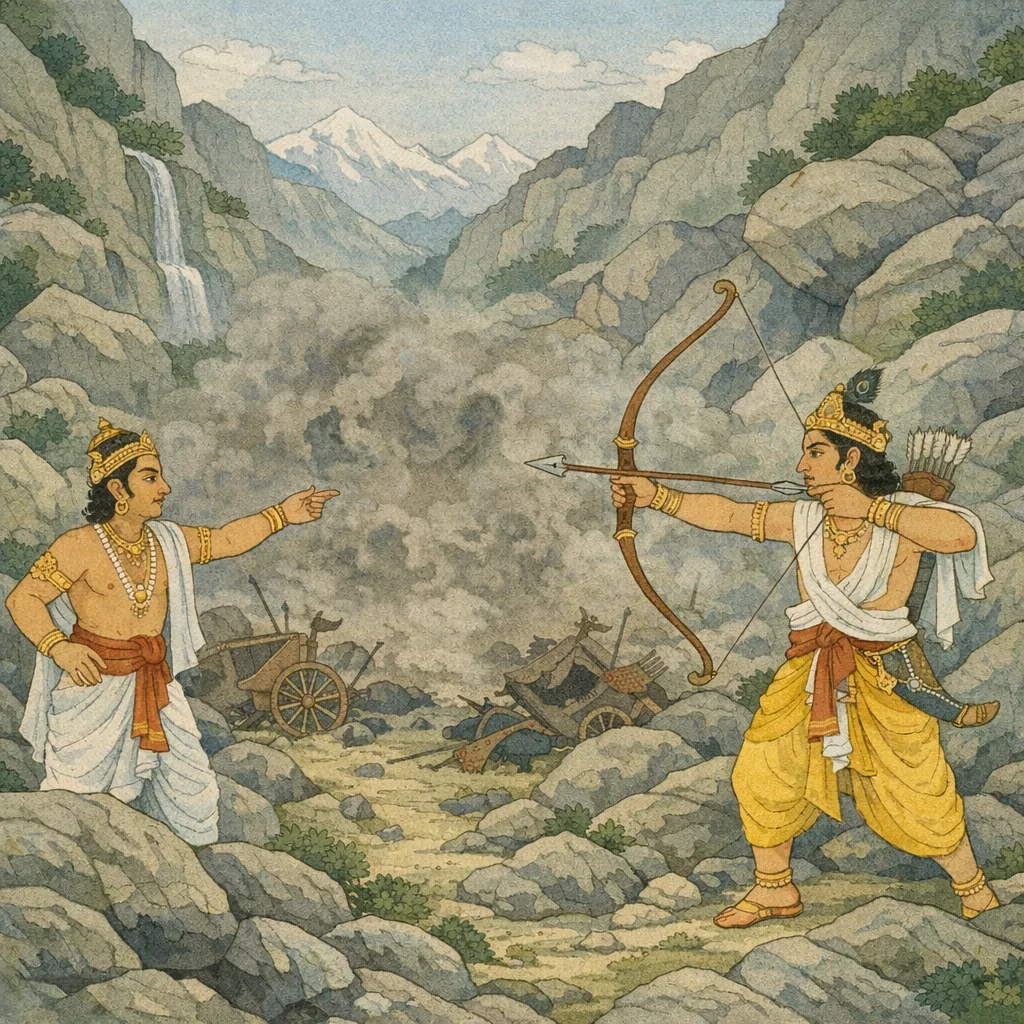
Chapter Arc: अर्जुन वर्णन करता है कि अदृश्य, मायावी निवातकवच दैत्य सामने हैं—वे दृष्टि से ओझल होकर भी युद्धभूमि को अपने छल से भर देते हैं। → गाण्डीव से छूटे दिव्यास्त्र-प्रचोदित बाण जहाँ-जहाँ पड़ते हैं वहाँ दैत्य कटते हैं, पर वे सहसा अपनी माया समेटकर नगर/पुर में घुस जाते हैं और पर्वत-शिलाओं की वर्षा, भूमिगत आक्रमण, तथा रथ-घोड़ों को जकड़ने जैसे उपायों से अर्जुन को घेरते हैं। युद्ध-स्थल ‘गुफा’ सा संकुचित हो उठता है—ऊपर से चट्टानें, नीचे से दबाव। → मातलि के संकेत/वचन को सुनकर अर्जुन देवराज का परम प्रिय, भीम और भयंकर वज्र-सदृश अस्त्र उठाता है; साथ ही भूमिगत घुसकर रथवाजिनों को पकड़ने वाले दानवों पर ऐसे बाण छोड़ता है जो भीतर तक प्रवेश कर उन्हें यमसादन भेज देते हैं। माया का जाल टूटता है और नगर में आतंक फैलता है। → दैत्यनारियाँ भयभीत होकर रत्न-विचित्र, शातकुम्भमय भवनों में छिप जाती हैं। अर्जुन नगर को प्रशान्त कर, दानवों का संहार कर, मातलि के साथ देवसभा की ओर लौट पड़ता है। → देवसभा में इस विजय का प्रतिफल और आगे के दिव्य-कार्य—अर्जुन के लिए कौन-सा नया आदेश/वरदान प्रतीक्षा कर रहा है?
Shlokas
Verse 1
हि मो [हुक मपआ आप्८् - कोसोंमें 'अक्ष' शब्दका अर्थ 'सर्प' भी मिलता है। द्विसप्तत्याधिकशततमो< ध्याय: निवातकवचोंका संहार अजुन उवाच अदृश्यमानास्ते दैत्या योधयन्ति सम मायया । अदृश्येनास्त्रवीर्येण तानप्यहमयोधयम्,अर्जुन बोले--राजन्! इस प्रकार अदृश्य रहकर ही वे दैत्य मायाद्वारा युद्ध करने लगे तथा मैं भी अपने अस्त्रोंकी अदृश्य शक्तिके द्वारा ही उनका सामना करने लगा
Arjuna said: “O King, those Dānavas, remaining unseen, fought by means of illusion; and I too countered them, employing the unseen potency of my weapons.”
Verse 2
गाण्डीवमुक्ता विशिखा: सम्यगस्त्रप्रचोदिता: । अच्चछिन्दनुत्तमाड़नि यत्र यत्र सम ते3भवन्,मेरे गाण्डीव धनुषसे छूटे हुए बाण विधिवत प्रयुक्त दिव्यास्त्रोंसे प्रेरित हो जहाँ-जहाँ वे दैत्य थे, वहीं जाकर उनके सिर काटने लगे
Arjuna said: “The arrows released from my Gāṇḍīva—rightly discharged and impelled by divine weapons—went wherever those foes were gathered, and there they began to sever their heads.”
Verse 3
ततो निवातकवचा वध्यमाना मया युधि । संहृत्य मायां सहसा प्राविशन् पुरमात्मन:,जब मैं इस प्रकार युद्धक्षेत्रमें उनका संहार करने लगा, तब वे निवातकवच दानव अपनी मायाको समेटकर सहसा नगरमें घुस गये
Then, as I was cutting down the Nivātakavaca demons on the battlefield, they abruptly withdrew their sorcery and, all at once, rushed back into their own city—seeking refuge behind their defenses when direct combat turned against them.
Verse 4
व्यपयातेषु दैत्येषु प्रादुर्भूते च दर्शने । अपश्यं दानवांस्तत्र हतान् शतसहसत्रश:,दैत्योंक भाग जानेसे जब वहाँ सब कुछ स्पष्ट दिखायी देने लगा, तब मैंने देखा, लाखों दानव वहाँ मरे पड़े थे
Arjuna said: “When the Daityas had withdrawn and clear vision manifested again, I saw there—strewn upon the ground—Dānavas slain in hundreds of thousands.”
Verse 5
विनिष्पिष्टानि तत्रैषां शस्त्राण्याभरणानि च । शतश: सम प्रदृश्यन्ते गात्राणि कवचानि च,उनके अस्त्र-शस्त्र और आभूषण भी पिसकर चूर्ण हो गये थे। दानवोंके शरीरों और कवचोंके सौ-सौ टुकड़े दिखायी देते थे। वहाँ दैत्योंकी इतनी लाशें पड़ी थी कि घोड़ोंके लिये एकके बाद दूसरा पैर रखनेके लिये कोई स्थान नहीं रह गया था। अतः वे अन्तरिक्षचारी अश्व वहाँसे सहसा उछलकर आकाशकमें खड़े हो गये
Arjuna said: “There, their weapons and ornaments had been crushed and ground down. In hundreds, limbs and pieces of armor were seen scattered about—so great was the carnage that the ground was choked with bodies, leaving no space for the horses to set one hoof after another; thus the sky-ranging steeds suddenly sprang up and stood poised in the air.”
Verse 6
हयानां नान्तरं हवासीत् पदाद् विचलितुं पदम् । उत्पत्य सहसा तस्थुरन्तरिक्षगमास्तत:,उनके अस्त्र-शस्त्र और आभूषण भी पिसकर चूर्ण हो गये थे। दानवोंके शरीरों और कवचोंके सौ-सौ टुकड़े दिखायी देते थे। वहाँ दैत्योंकी इतनी लाशें पड़ी थी कि घोड़ोंके लिये एकके बाद दूसरा पैर रखनेके लिये कोई स्थान नहीं रह गया था। अतः वे अन्तरिक्षचारी अश्व वहाँसे सहसा उछलकर आकाशकमें खड़े हो गये
Arjuna said: “There was no space left for the horses to set one hoof after another without stepping on what lay beneath. Therefore those sky-moving steeds suddenly sprang up and remained poised in the air.”
Verse 7
ततो निवातकवचा व्योम संछाद्य केवलम् । अदृश्या ह्ृत्यवर्तन्त विसृजन्त: शिलोच्चयान्,तदनन्तर निवातकवचोंने अदृश्यरूपसे ही आक्रमण किया और केवल आकाशको आच्छादित करके पत्थरोंकी वर्षा आरम्भ कर दी
Then the Nivātakavaca demons, veiling the sky entirely, attacked while remaining unseen. Moving about in concealment, they began hurling great masses of rock in a storm of missiles.
Verse 8
अन्तर्भूमिगताश्चान्ये हयानां चरणान्यथ । व्यगृह्लनन् दानवा घोरा रथचक्रे च भारत,भरतनन्दन! कुछ भयंकर दानवोंने, जो पृथ्वीके भीतर घुसे हुए थे, मेरे घोड़ोंके पैर तथा रथके पहिये पकड़ लिये
Arjuna said: “O Bhārata, some other dreadful Dānavas, having gone beneath the earth, seized the feet of my horses and also the wheels of my chariot.”
Verse 9
विनिगृहा हरीनश्चान् रथं च मम युध्यत: । सर्वतो मामविध्यन्त सरथं धरणीधरै:,इस प्रकार युद्ध करते समय मेरे हरे रंगके घोड़ों तथा रथको पकड़कर उन दानवोंने रथसहित मेरे ऊपर सब ओरसे शिलाखण्डोंद्वारा प्रहार आरम्भ किया
Arjuna said: “While I was fighting, they seized my tawny steeds and my chariot; then, from every side, those foes began to strike at me—chariot and all—with great boulders.”
Verse 10
पर्वतैरुपचीयद्धि: पतमानैस्तथापरै: | स देशो यत्र वर्ताम गुहेव समपद्यत,नीचे पर्वतोंके ढेर लग रहे थे और ऊपरसे नयी-नयी चट्टानें पड़ रही थीं। इससे वह प्रदेश जहाँ हमलोग मौजूद थे, एक गुफाके समान बन गया
Arjuna said: “As heaps of mountains were piling up and other rocks kept crashing down from above, the very place where we were standing turned, as it were, into a cave—shut in and enclosed on all sides.”
Verse 11
पर्वतैश्छाद्यमानो*5हं निगृहीतैश्व वाजिभि: । अगच्छं परमामार्ति मातलिस्तदलक्षयत्,एक ओर तो मैं शिलाखण्डोंसे आच्छादित हो रहा था, दूसरी ओर मेरे घोड़े पकड़ लिये जानेसे रथकी गति कुण्ठित हो गयी थी। इस विवशताकी दशामें मुझे बड़ी पीड़ा होने लगी, जिसे मातलिने जान लिया
Arjuna said: “As I was being hemmed in and covered over by falling mountain-masses, and as my horses were seized so that the chariot’s speed was checked, I was driven into extreme distress. Mātali perceived my helpless plight and understood the pain I was undergoing.”
Verse 12
लक्षयित्वा च मां भीतमिदं वचनमत्रवीत् । अर्जुनार्जुन मा भैस्त्वं वज्रमस्त्रमुदीरय,इस प्रकार मुझे भयभीत हुआ देख मातलिने कहा--'अर्जुन! अर्जुन! तुम डरो मत। इस समय वच्ञास्त्रका प्रयोग करो”
Seeing me frightened, Mātali spoke these words: “Arjuna, Arjuna—do not be afraid. Now unleash the Vajra-weapon.”
Verse 13
ततोऊहं तस्य तद् वाकक््यं श्रुत्वा वज़मुदीरयम् । देवराजस्य दयितं भीममस्त्रं नराधिप,महाराज! मातलिका वह वचन सुनकर मैंने देवराजके परम प्रिय तथा भयंकर अस्त्र वज्रका प्रयोग किया
Arjuna said: “Then, having heard his words, O king—O great ruler—I discharged the thunderbolt weapon, the beloved and fearsome missile of the Lord of the gods.”
Verse 14
अचल स्थानमासाद्य गाण्डीवमनुमन्त्रय च । अमुज्चं वज्रसंस्पर्शानायसान् निशितान् शरान्,अविचल स्थानका आश्रय ले गाण्डीव धनुषको वच्ञास्त्रसे अभिमन्त्रित करके मैंने लोहेके तीखे बाण छोड़े, जिनका स्पर्श वज़्के समान कठोर था
Arjuna said: “Having taken my stand on firm, unmoving ground, and having invoked and consecrated the Gāṇḍīva bow, I released sharp iron arrows—whose touch was as hard as a thunderbolt.”
Verse 15
ततो मायाश्व ता: सर्वा निवातकवचांश्व तान् । ते वज़्चोदिता बाणा वज्रभूता: समाविशन्,तदनन्तर वच्ास्त्रसे प्रेरित हुए वे वज्रस्वरूप बाण पूर्वोक्त सारी मायाओं तथा निवातकवच दानवोंके भीतर घुस गये
Then all those illusory contrivances, and those Nivātakavaca demons as well, were struck through: the arrows, impelled by the weapon-spell, became like thunderbolts and penetrated them.
Verse 16
ते वज्वेगविहता दानवा: पर्वतोपमा: । इतरेतरमा श्लिष्य न्यपतन् पृथिवीतले,फिर तो वज्रके वेगसे मारे गये वे पर्ववाकार दानव एक-दूसरेका आलिंगन करते हुए धराशायी हो गये
Arjuna said: Struck down by the thunderbolt’s irresistible force, the mountain-like Dānavas, clinging to one another in a final embrace, collapsed upon the surface of the earth.
Verse 17
अन्तर्भूमौ च येडगृह्नन् दानवा रथवाजिन: । अनुप्रविश्य तान् बाणा: प्राहिण्वन् यमसादनम्,पृथ्वीके भीतर घुसकर जिन दानवोंने मेरे रथके घोड़ोंको पकड़ रखा था, उनके शरीरमें भी घुसकर मेरे बाणोंने उन सबको यमलोक भेज दिया
Arjuna said: “Those Dānavas who, having burrowed within the earth, were seizing the horses of my chariot—my arrows, piercing into their very bodies as well, dispatched them all to Yama’s abode.”
Verse 18
हतैर्निवातकवचैर्निरस्तै: पर्वतोपमै: । समाच्छाद्यत देश: स विकीर्णैरिव पर्वतैः,वहाँ मरकर गिरे हुए पर्वताकार निवातकवच इधर-उधर बिखरे हुए पर्वतोंके समान जान पड़ते थे। वहाँका सारा प्रदेश उनकी लाशोंसे पट गया था
Arjuna said: “That region was completely covered over by the slain Nivātakavacas—cast down and lying like mountains. Scattered in every direction, their fallen bodies made the whole land appear as though strewn with mountains.”
Verse 19
न हयानां क्षति: काचिन्न रथस्य न मातले: । मम चादृश्यत तदा तदद्भुतमिवाभवत्,उस समयके युद्धमें न तो घोड़ोंको कोई हानि पहुँची, न रथका ही कोई सामान टूटा, न मातलिको ही चोट लगी और न मेरे ही शरीरमें कोई आघात दिखायी दिया, यह एक अद्भुत- सी बात थी
Arjuna said: “In that battle, no harm at all came to the horses, nor was any part of the chariot damaged; Mātali too was not struck, and no injury was seen on my own body. At that time it seemed to me like something wondrous—an extraordinary preservation amid the violence of war.”
Verse 20
ततो मां प्रहसन् राजन् मातलि: प्रत्यभाषत । नैतदर्जुन देवेषु त्वयि वीर्य यदीक्ष्यते,तब मातलिने हँसते हुए मुझसे कहा--“अर्जुन! तुममें जो पराक्रम दिखायी देता है, वह देवताओं में भी नहीं है”
Then, O King, Mātali—smiling—addressed me: “Arjuna, the valor that is seen in you is not found even among the gods.”
Verse 21
हतेष्वसुरसंघेषु दारास्तेषां तु सर्वश: । प्राक्रोशन् नगरे तस्मिन् यथा शरदि सारसा:,उन असुरसमूहोंके मारे जानेपर उनकी सारी स्त्रियाँ उस नगरमें जोर-जोरसे करुण क्रन्दन करने लगीं, मानो शरत्कालमें सारस पक्षी बोल रहे हों
When the hosts of asuras had been slain, all their women in that city began to cry out loudly in grief—like the calls of cranes in the autumn season.
Verse 22
ततो मातलिना सार्धमहं तत् पुरम भ्ययाम् । त्रासयन् रथघोषेण निवातकवचस्त्रिय:,तब मैं मातलिके साथ रथकी घर्घराहटसे निवातकवचोंकी स्त्रियोंको भयभीत करता हुआ उस दैत्य-नगरमें गया
Then, accompanied by Mātali, I advanced into that city. With the thunderous roar of my chariot, I struck fear into the women of the Nivātakavaca demons as I entered their dread stronghold.
Verse 23
तान् दृष्टवा दशसाहस्रान् मयूरसदृशान् हयान् । रथं च रविसंकाशं प्राद्रवन् गणश: स्त्रिय:,मोरके समान सुन्दर उन दस हजार घोड़ोंको तथा सूर्यके समान तेजस्वी उस दिव्य रथको देखते ही झुंड-की-झुंड दानवस्त्रियाँ इधर-उधर भाग चलीं
Arjuna said: Seeing those ten thousand horses, lovely as peacocks, and that chariot radiant like the sun, the women fled in groups in all directions, seized by sudden fear at such dazzling martial splendor.
Verse 24
ताभिराभरणै: शब्दस्त्रासिताभि: समीरित: । शिलानामिव शैलेषु पतन्तीनामभूत् तदा,उन डरी हुई निशाचरियोंके आभूषणोंके द्वारा उत्पन्न हुआ शब्द पर्वतोंपर पड़ती हुई शिलाओंके समान जान पड़ता था
Then the clatter raised by their ornaments, set jingling as the frightened night-roaming women fled, sounded like boulders crashing down upon mountain slopes.
Verse 25
वित्रस्ता दैत्यनार्यस्ता: स्वानि वेश्मान्यथाविशन् | बहुरत्नविचित्राणि शातकुम्भमयानि च,तत्पश्चात् वे भयभीत हुई दैत्यनारियाँ अपने-अपने घरोंमें घुस गयीं। उनके महल सोनेके बने हुए थे और अनेक प्रकारके रत्नोंसे उनकी विचित्र शोभा होती थी
Terrified, the women of the Daityas hurried into their own residences. Those mansions, fashioned of pure gold and adorned with many kinds of gems, displayed a dazzling, opulent splendor.
Verse 26
तदद्भुताकारमहं दृष्टवा नगरमुत्तमम् । विशिष्ट देवनगरादपृच्छे मातलिं ततः,वह उत्तम एवं अद्भुत नगर देवपुरीसे भी श्रेष्ठ दिखायी देता था। तब उसे देखकर मैंने मातलिसे पूछा--
Arjuna said: “When I beheld that excellent city, wondrous in form, surpassing even the cities of the gods, I then questioned Mātali about it.”
Verse 27
इदमेवंविधं कस्माद् देवा नावासयन्त्युत । पुरंदरपुराद्धीदं विशिष्टमिति लक्षये,'सारथे! देवतालोग ऐसा नगर क्यों नहीं बसाते हैं? यह नगर तो मुझे इन्द्रपुरीसे भी बढ़कर दिखायी देता है”
Arjuna said: “Why do the gods not establish a city of this kind? Indeed, O charioteer, I perceive this city to be even more distinguished than the city of Purandara (Indra).”
Verse 28
मातलिर्वाच आसीदिदं पुरा पार्थ देवराजस्य न: पुरम् ततो निवातकवचैरित: प्रच्याविता: सुरा:,मातलि बोले--पार्थ! पूर्वकालमें यह नगर हमारे देवराजके ही अधिकारमें था। फिर निवातकवचोंने आकर देवताओंको यहाँसे निकाल दिया
Mātali said: “O Pārtha, in former times this city belonged to our lord, the king of the gods. Later, the Nivātakavacas came here and drove the gods out from this place.”
Verse 29
तपस्तप्त्वा महत् तीव्र प्रसाद्य च पितामहम् इदं वृतं निवासाय देवेभ्यश्वाभयं युधि,उन्होंने अत्यन्त तीव्र तपस्या करके पितामह ब्रह्माजीको प्रसन्न किया और उनसे अपने रहनेके लिये यही नगर माँग लिया। साथ ही यह भी माँगा कि “हमें युद्धमें देवताओंसे भय न हो”
Having performed intense and arduous austerities, he pleased the Grandsire Brahmā and requested this very city as his dwelling. He also sought a boon that, in battle, he and his people would be free from fear even of the gods.
Verse 30
तत: शक्रेण भगवान् स्वयंभूरिति चोदितः विधत्तां भगवानन्तमात्मनो हितकाम्यया,तब इन्द्रने भगवान् ब्रह्माजीसे इस प्रकार निवेदन किया--'प्रभो! अपने (और हमारे) हितके लिये आप ही इन दानवोंका अन्त कीजिये'
Then, urged by Śakra (Indra), the Blessed Self-born Lord (Brahmā) was petitioned: “O Lord, for the welfare of yourself and of us all, please bring these demons to their end.”
Verse 31
तत उक्तो भगवता दिष्टमत्रेति भारत भवितान्तस्त्वमप्येषां देहेनानयेन शत्रुहन्,भरतनन्दन! उनके ऐसा कहनेपर भगवान् ब्रह्माने कहा--“शत्रुदमन देवराज! इसमें दैवका यही विधान है कि तुम्हीं दूसरा शरीर धारण करके इन दानवोंका अन्त कर सकोगे”
When they had spoken thus, the Blessed Brahmā replied: “O subduer of foes, O lord of the gods! In this matter, such is the ordinance of destiny: you too will assume another body, and by that means you will bring about the end of these Dānavas.”
Verse 32
तत एपषां वधार्थाय शक्रो<स्त्राणि ददौ तव न हि शक्या: सुरै्हन्तुं य एते निहतास्त्वया,(अर्जुन! तुम्हीं इन्द्रके दूसरे स्वरूप हो।) इन दैत्योंके वधके लिये ही इन्द्रने तुम्हें दिव्यास्त्र प्रदान किये हैं। आज जो ये दानव तुम्हारे हाथों मारे गये हैं, इन्हें देवता नहीं मार सकते थे
It was for the very purpose of slaying these foes that Śakra (Indra) bestowed divine missiles upon you. For those whom you have struck down today could not have been killed even by the gods. (Arjuna, you are as it were another form of Indra.)
Verse 33
कालस्य परिणामेन ततस्त्वमिह भारत एषामन्तकर: प्राप्तस्तत् त्वया च कृतं तथा,भारत! समयके फेरसे ही तुम इनका विनाश करनेके लिये यहाँ आ पहुँचे हो और तुमने जैसा दैवका विधान था, उसके अनुसार इनका संहार कर डाला है
Arjuna said: “By the ripening of Time’s course, O Bhārata, you have come here as the appointed bringer of their end; and you have acted accordingly—carrying out their destruction in the very manner ordained by destiny.”
Verse 34
दानवानां विनाशाय अस्त्राणां परमं बलम् ग्राहितस्त्वं महेन्द्रेण पुरुषेन्द्र तदुत्तमम्,पुरुषोत्तम! देवराज इन्द्रने इन दानवोंके विनाशके उद्देश्यसे ही तुम्हें परम उत्तम अस्त्रबलकी प्राप्ति करायी है
Arjuna said: O best of men, O Supreme Person—Lord Indra, the great king of the gods, has caused you to obtain the highest power of divine weapons for the very purpose of destroying the Dānavas. This supreme martial potency was not granted for pride or display, but to uphold the gods’ cause and restrain destructive forces that threaten the moral order.
Verse 35
अर्जुन उवाच ततः प्रशाम्य नगरं दानवांश्व निहत्य तान् पुनर्मातलिना सार्थमगच्छे देवसझ तत्,अर्जुन कहते हैं--महाराज! इस प्रकार उन दानवोंका संहार करके नगरमें शान्ति स्थापित करनेके पश्चात् मैं मातलिके साथ पुनः: उस देवलोकको लौट आया
Arjuna said: “O King, after I had slain those Dānavas and restored peace in the city, I returned once again with Mātali to that divine assembly in heaven.”
Verse 171
इस प्रकार श्रीमह्याभारत वनपर्वके अन्तर्गत निवातकवचयुद्धपर्वमें मायायुद्धविषयक एक सौ इकद्ठत्तरवाँ अध्याय पूरा हुआ
Thus ends the one hundred and seventy-first chapter on the theme of illusory warfare, within the Nivātakavaca battle episode of the Vana Parva of the revered Mahābhārata.
Verse 172
इति श्रीमहाभारते वनपर्वणि निवातकवचयुद्धपर्वणि निवातकवचयुद्धे द्विसप्तत्यधिकशततमो<ध्याय:
Thus, in the Śrī Mahābhārata, within the Vana Parva—specifically in the section concerning the battle with the Nivātakavacas—ends the one-hundred-and-seventy-second chapter.
Frequently Asked Questions
Whether to act immediately against adversaries or to uphold the exile vow fully; the chapter resolves toward vow-completion and disciplined timing to preserve moral and legal legitimacy.
Endurance guided by counsel is portrayed as strength: humility, restraint, and lawful sequencing of action protect both reputation (kīrti) and the ethical foundation of governance.
Yes: the text highlights that favorable time and divine hospitality do not negate dharma; rather, ritualized leave-taking and continued pilgrimage underscore continuity of duty beyond temporary comfort.