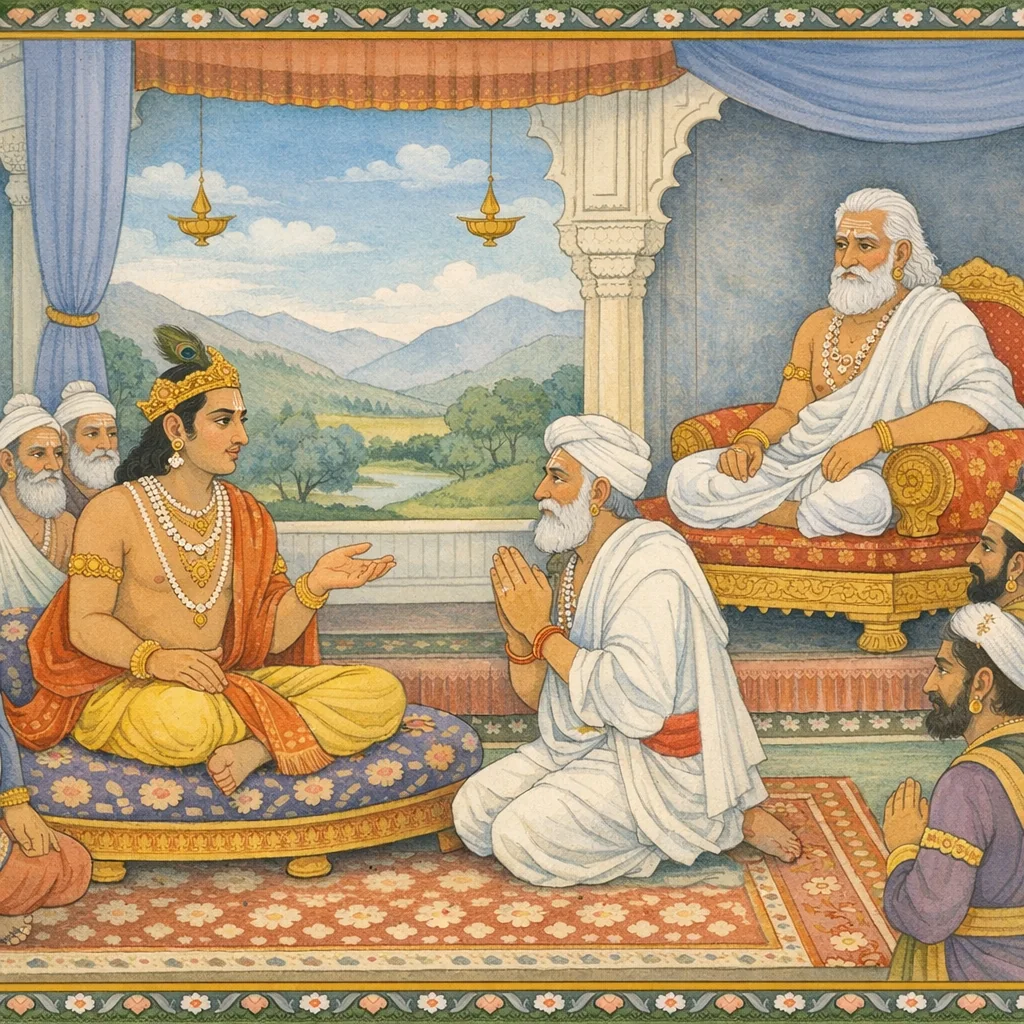
Adhyaya 29
अध्याय २९ — वासुदेव–संजय संवादः (Karma, Varṇa-Dharma, and the Ethics of Governance)
Upa-parva: Sañjaya–Vāsudeva Saṃvāda (Udyoga Parva: Ethical Counsel on Karma, Varṇa-Dharma, and Court Failure)
Krishna addresses Saṃjaya with a stated wish for the Pāṇḍavas’ non-destruction and welfare, while also expressing regard for Dhṛtarāṣṭra’s prosperity—framing his stance as peace-oriented yet principled. He argues that true śama (conciliation) is difficult when the Kuru side is driven by acquisitiveness, and questions Saṃjaya’s role if he withholds dharmic counsel in service of partisan court interests. The chapter advances a karma-centered doctrine: disciplined action produces tangible results in the world, illustrated through cosmic agents (sun, moon, wind, fire, earth, waters) whose constancy is portrayed as ‘work’ sustaining order. Krishna then enumerates varṇa-dharma: the Brāhmaṇa’s learning, sacrifice, giving, teaching; the Kṣatriya’s protection, lawful rule, sacrifice; the Vaiśya’s agriculture, trade, wealth stewardship; and the Śūdra’s service and diligence. He critiques predatory appropriation (theft by stealth or force) as blameworthy, recalls the Kuru court’s earlier failure to restrain the Draupadī humiliation, and frames restitution of the Pāṇḍavas’ share as ethically primary. Metaphors of trees, forest, and tigers depict mutual dependence between rulers and warrior-protectors, urging Dhṛtarāṣṭra to act appropriately: accept peace if possible, and recognize that continued injustice invites destructive consequences.
Chapter Arc: सभा के मध्य संजय को विदा करते हुए युधिष्ठिर धर्म और मर्यादा के साथ दूत-कार्य का आरम्भ कराते हैं—“अनुज्ञातः संजय स्वस्ति गच्छ”। → युधिष्ठिर संजय को विस्तृत संदेश सौंपते हैं: कृष्ण, भीम, अर्जुन, माद्रीसुत (नकुल/सहदेव), सात्यकि, चेकितान आदि का कुशल-समाचार; ब्राह्मण, तपस्वी, भिक्षु, वनवासी ऋषियों का अभिवादन; भीष्म जैसे कुरुवृद्धों के चरणों में निवेदन; और कुरु-युवाओं, पुत्र-पौत्रों, भ्राताओं तथा विविध दिशाओं के शूरवीरों का हाल पूछने की आज्ञा। → युधिष्ठिर का कठोरतम संदेश दुर्योधन के लिए उभरता है—उसकी देह-हृदय को जलाने वाली ‘कामना’ (कुरुओं को निष्पत्न करने की लालसा) को लक्ष्य कर चेतावनी: इस हठ की कोई युक्ति नहीं; या तो न्यायोचित अंश दे, या युद्ध के लिए प्रस्तुत हो। → संजय को स्पष्ट निर्देश मिलते हैं कि वह सबके प्रति शिष्टाचार निभाते हुए भीष्म-सभा और धृतराष्ट्र-दुर्योधन तक पांडवों का धर्मयुक्त, पर अडिग, पक्ष पहुँचा दे। → संजय हस्तिनापुर में यह संदेश सुनाएगा—पर क्या धृतराष्ट्र और दुर्योधन इसे स्वीकार करेंगे, या हठ युद्ध को अवश्यंभावी बना देगा?
Shlokas
Verse 1
[दाक्षिणात्य अधिक पाठका १ श्लोक मिलाकर कुल ५९ “लोक हैं।] - इस प्रकार यद्यपि गृहस्थाश्रममें रहने और संन्यास लेनेका भी शास्त्रद्वारा ही विधान किया गया है, तथापि अन्य आश्रमोंमें प्राप्त होनेवाले ज्ञानकी उपलब्धि तो गृहस्थाश्रममें भी हो सकती है, परंतु गृहस्थ-साध्य यज्ञादि पुण्यकर्म आश्रमान्तरोंमें नहीं हो सकते; अत: सम्पूर्ण धर्मोकी सिद्धिका स्थान गृहस्थाश्रम ही है। त्रिशो5ध्याय: संजयकी विदाई तथा युधिषिरका संदेश संजय उवाच आमन्त्रये त्वां नरदेवदेव गच्छाम्यहं पाण्डव स्वस्ति तेडस्तु । कच्चिन्न वाचा वृजिनं हि किंचि- दुच्चारितं मे ममनसो5भिषज्भात्,संजयने कहा--नरदेवदेव पाण्डुनन्दन! आपका कल्याण हो। अब मैं आपसे विदा लेता और हस्तिनापुरको जाता हूँ। कहीं ऐसा तो नहीं हुआ कि मैंने मानसिक आवेगके कारण वाणीद्वारा कोई ऐसी बात कह दी हो, जिससे आपको कष्ट हुआ हो? इति श्रीमहाभारते उद्योगपर्वणि सञ्जययानपर्वणि युधिष्ठिरसंदेशे त्रिंशो 5ध्याय: ।। ३० || इस प्रकार श्रीमह्याभारत उद्योगपर्वके अन्तर्गत संजययानपर्वमें युधिष्ठिरसंदेशविषयक तीसवाँ अध्याय पूरा हुआ ॥/ ३० ॥। [दाक्षिणात्य अधिक पाठका १ श्लोक मिलाकर कुल ५० “लोक हैं।] ऑपन--#हू< बछ। है २ >> एकत्रिशो<5 ध्याय: युधिष्ठटिरका मुख्य-मुख्य कुरुवंशियोंके प्रति संदेश युधिछिर उवाच उत सनन््तमसन्तं वा बाल॑ वृद्ध च संजय । उताबलं बलीयांसं धाता प्रकुरुते वशे
Sañjaya said: “O god among kings, O Pāṇḍava, may well-being be yours. I now take leave of you and depart for Hastināpura. Tell me—have I, driven by a sudden surge of feeling in my mind, spoken any word that was in the least hurtful or improper, causing you distress?”
Verse 2
जनार्दनं भीमसेनार्जुनौ च माद्रीसुतो सात्यकिं चेकितानम् । आमन्त्रय गच्छामि शिवं सुखं व: सौम्येन मां पश्यत चक्षुषा नूपा:,भगवान् श्रीकृष्ण, भीमसेन, अर्जुन, नकुल, सहदेव, सात्यकि तथा चेकितानसे भी आज्ञा लेकर मैं जा रहा हूँ। आपलोगोंको सुख और कल्याणकी प्राप्ति हो। राजाओ! आप मेरी ओर स्नेहपूर्ण दृष्टिसे देखें
Sañjaya said: “Having taken leave of Janārdana (Kṛṣṇa), of Bhīmasena and Arjuna, and also of Mādrī’s son (the twin), Sātyaki, and Cekitāna, I now depart. May auspiciousness and well-being be yours. O kings, look upon me with kindly eyes.”
Verse 3
युधिछिर उवाच अनुज्ञात: संजय स्वस्ति गच्छ न नः स्मरस्यप्रियं जातु विद्वन् विद्यश्ष त्वां ते च वयं च सर्वे शुद्धात्मानं मध्यगतं सभास्थम्,युधिष्ठिर बोले--संजय! मैं तुम्हें जानेकी अनुमति देता हूँ। तुम्हारा कल्याण हो। अब तुम जाओ। विद्वन्! तुम कभी हमलोगोंका अनिष्ट-चिन्तन नहीं करते हो। इसलिये कौरव तथा हमलोग सभी तुम्हें शुद्धचित्त एवं मध्यस्थ सदस्य समझते हैं
Yudhiṣṭhira said: “Sañjaya, you have my leave to depart. Go in well-being. Learned one, you never entertain any thought that is harmful to us. Therefore both the Kauravas and we all regard you as pure-minded and impartial—one who stands in the midst of the assembly as a neutral, trustworthy person.”
Verse 4
आप्तो दूत: संजय सुप्रियो5सि कल्याणवाक् शीलवांस्तृप्तिमांश्व न मुहोस्त्वं संजय जातु मत्या न च क़्ुद्धोरुच्यमानो दुरुक्तै:,संजय! तुम विश्वसनीय दूत और हमारे अत्यन्त प्रिय हो। तुम्हारी बातें कल्याणकारिणी होती हैं। तुम शीलवान् और संतोषी हो। तुम्हारी बुद्धि कभी मोहित नहीं होती और कट वचन सुनकर भी तुम कभी क्रोध नहीं करते हो
Yudhiṣṭhira said: “Sañjaya, you are a trustworthy envoy and very dear to us. Your speech is auspicious and beneficial; you are well-mannered and content. Your judgment is never clouded, and even when harsh words are spoken, you do not become angry.”
Verse 5
न मर्मगां जातु वक्तासि रूक्षां नोपश्रुतिं कटुकां नोत मुक्ताम् । धर्मारामामर्थवतीमहिंस्रा- मेतां वाचं तव जानीम सूत,सूत! तुम्हारे मुखसे कभी कोई ऐसी बात नहीं निकलती, जो कड़वी होनेके साथ ही मर्मपर आघात करनेवाली हो। तुम नीरस और अप्रासंगिक बात भी नहीं बोलते। हम अच्छी तरह जानते हैं कि तुम्हारा यह कथन धर्मानुकूल होनेके कारण मनोहर, अर्थयुक्त तथा हिंसाकी भावनासे रहित है
Yudhiṣṭhira said: “O Sūta, never do you utter words that strike at a vital spot—harsh, bitter, or carelessly let loose. Nor do you speak what is dry or irrelevant. We know well that your speech is in harmony with dharma: pleasing to the righteous, meaningful in purpose, and free from any intent to harm.”
Verse 6
त्वमेव न: प्रियतमो5सि दूत इहागच्छेद् विदुरो वा द्वितीय: । अभीक्षणदृष्टोडसि पुरा हि नस्त्वं धनंजयस्यात्मसम: सखासि,संजय! तुम्हीं हमारे अत्यन्त प्रिय हो। जान पड़ता है, दूसरे विदुरजी ही (दूत बनकर) यहाँ आ गये हैं। पहले भी तुम हमसे बारंबार मिलते रहे हो और धनंजयके तो तुम अपने आत्माके समान प्रिय सखा हो
Yudhiṣṭhira said: “You alone are our most beloved envoy. It seems as though Vidura himself has come here as a second messenger. For you have often met with us before; and to Dhanañjaya (Arjuna) you are a friend as dear as his own self, O Sañjaya.”
Verse 7
इतो गत्वा संजय क्षिप्रमेव उपातिष्ठेथा ब्राह्मणान् ये तदर्हा: । विशुद्धवीर्याश्वरणोपपन्ना: कुले जाता: सर्वधर्मोपपन्ना:,संजय! यहाँसे जाकर तुम शीघ्र ही जो आदर और सम्मानके योग्य हैं, उन विशुद्ध शक्तिशाली, ब्रह्मचर्य-पालनपूर्वक वेदोंके स्वाध्यायमें संलग्न, कुलीन तथा सर्वधर्म-सम्पन्न ब्राह्मणोंको हमारी ओरसे प्रणाम कहना
Yudhiṣṭhira said: “Go from here, Saṃjaya, and without delay pay your respects to those Brāhmaṇas who truly deserve honor—men of pure lineage and spiritual vigor, endowed with disciplined conduct and Vedic study, born in noble families and established in all the duties of dharma. Offer them our reverent salutations.”
Verse 8
स्वाध्यायिनो ब्राह्मणा भिक्षवश्न तपस्विनो ये च नित्या वनेषु । अभिवाद्या वै मद्धचनेन वृद्धा- स्तथेतरेषां कुशलं वदेथा:,स्वाध्यायशील ब्राह्मणों, संन्यासियों तथा सदा वनमें निवास करनेवाले तपस्वी मुनियों एवं बड़े-बूढ़े लोगोंसे हमारी ओरसे प्रणाम कहना और दूसरे लोगोंसे भी कुशल-समाचार पूछना
Yudhiṣṭhira said: “Convey my respectful salutations, in my name, to the Brāhmaṇas devoted to Vedic study, to the mendicants, and to the ascetics who dwell continually in the forests. Offer due reverence to the elders, and to all the others as well, inquire after their welfare.”
Verse 9
पुरोहित धृतराष्ट्रस्य राज्ञ- स्तथा55चायनित्विजो ये च तस्य । तैश्न त्वं तात सहितैर्य थाई संगच्छेथा: कुशलेनैव सूत,तात संजय! राजा धृतराष्ट्रके पुरोहित, आचार्य तथा उनके ऋत्विजोंसे भी (उनके साथ भेंट होनेपर) तुम (हमारी ओरसे) कुशल-मंगलका समाचार पूछते हुए ही मिलना
Yudhiṣṭhira said: “O dear Saṃjaya, charioteer, when you meet King Dhṛtarāṣṭra’s family priest, his teachers, and the officiating priests who serve him, approach them with propriety and goodwill. On our behalf, greet them by asking only after their welfare—so that, even as conflict rises, the courtesies of dharma and respectful speech are not abandoned.”
Verse 10
(ततोड्व्यग्रस्तन्मना: प्राउ्जलि श्व कुर्या नमो मद्धवचनेन तेभ्य: ।) तदनन्तर शान्तभावसे उन्हींकी ओर मनकी वृत्तियोंको एकाग्र करके हाथ जोड़कर मेरे कहनेसे उन सबको प्रणाम निवेदन करना। अश्रोत्रिया ये च वसन्ति वृद्धा मनस्विन: शीलबलोपपन्ना: । आशंसन्तो<5स्माकमनुस्मरन्तो यथाशक्ति धर्ममात्रां चरन्त:
“Then, tomorrow, with a focused mind and folded hands, convey to them all, in my name, my respectful salutations, as I have said. After that, with a calm disposition, approach the elders who dwell there—though not trained in formal Vedic recitation, yet high-minded, endowed with good conduct and strength; who wish us well, remember us, and, to the best of their ability, live by the measure of dharma.”
Verse 11
ये जीवन्ति व्यवहारेण राष्टरे पशुूंश्ष ये पालयन्तो वसन्ति,(कृषीवला बिश्रति ये च लोकं तेषां सर्वेषां कुशल सम पृच्छे: ।) जो कौरव-राज्यमें व्यापारसे जीविका चलाते हैं, पशुओंका पालन करते हुए निवास करते हैं तथा जो खेती करके सब लोगोंका भरण-पोषण करते हैं, उन सब वैश्योंका भी कुशल-समाचार पूछना
Yudhiṣṭhira said: “I ask after the welfare of all those Vaiśyas in the kingdom—those who earn their living through trade, those who dwell while tending cattle and other livestock, and those farmers who, by agriculture, sustain the people. May they all be safe and thriving.”
Verse 12
आचार्य इष्टो नयगो विधेयो वेदानभीप्सन् ब्रह्मचर्य चचार । योअस्त्रं चतुष्पात् पुनरेव चक्रे द्रोण: प्रसन्नोडभिवाद्यस्त्ववासौ,जिन्होंने वेदोंकी शिक्षा प्राप्त करनेके लिये पहले ब्रह्मचर्यका पालन किया। तत्पश्चात् मन्त्र, उपचार, प्रयोग तथा संहार--इन चार पादोंसे युक्त अस्त्रविद्याकी शिक्षा प्राप्त की, वे सबके प्रिय, नीतिज्ञ, विनयी तथा सदा प्रसन्नचित्त रहनेवाले आचार्य द्रोण भी हमारे अभिवादनके योग्य हैं, तुम उनसे भी मेरा प्रणाम कहना
Yudhiṣṭhira said: “Drona, our revered teacher—beloved, skilled in policy, disciplined and worthy of respect—first lived the life of a brahmacārin in order to master the Vedas. Thereafter he learned and systematized the science of weapons in its fourfold completeness—mantra, application, deployment, and withdrawal. Ever composed and gracious, that teacher Drona too deserves our salutations; convey my respectful obeisance to him as well.”
Verse 13
अधीतविद्यक्षरणोपपतन्नो योअस्त्रं चतुष्पात् पुनरेव चक्रे । गन्धर्वपुत्रप्रतिमं तरस्विनं तमश्वत्थामानं कुशल सम पृच्छे:,जो वेदाध्ययनसम्पन्न तथा सदाचारयुक्त हैं, जिन्होंने चारों पादोंसे युक्त अस्त्रविद्याकी शिक्षा पायी है, जो गन्धर्वकुमारके समान वेगशाली वीर हैं, उन आचार्यपुत्र अश्वत्थामाका भी कुशल-समाचार पूछना
Yudhiṣṭhira said: “And I ask after the welfare of Aśvatthāmā, the preceptor’s son—accomplished in Vedic study and disciplined conduct; trained in the complete, fourfold science of weapons; and a mighty warrior swift as a Gandharva prince.”
Verse 14
शारद्वतस्यावसथ्ं सम गत्वा महारथस्यात्मविदां वरस्य । त्वं मामभीक्ष्णं परिकीर्तयन् वै कृपस्य पादौ संजय पाणिना स्पृशे:,संजय! तदनन्तर आत्मवेत्ताओंमें श्रेष्ठ महारथी कृपाचार्यके घर जाकर बारंबार मेरा नाम लेते हुए अपने हाथसे उनके दोनों चरणोंका स्पर्श करना
Sañjaya, go to the dwelling of Kṛpācārya (Kṛpa), that great chariot-warrior, foremost among those who know the Self. Repeating my name again and again, touch both his feet with your hand in reverence.
Verse 15
यस्मिन् शौर्यमानृशंस्यं तपश्च प्रज्ञा शीलं॑ श्रुतिसत्त्वे धृतिश्व । पादौ गृहीत्वा कुरुसत्तमस्य भीष्मस्य मां तत्र निवेदयेथा:,जिनमें वीरत्व, दया, तपस्या, बुद्धि, शील, शास्त्रज्ञान, सत्त्व और धैर्य आदि सदगुण विद्यमान हैं, उन कुरुश्रेष्ठ पितामह भीष्मके दोनों चरण पकड़कर मेरा प्रणाम निवेदन करना
To Bhīṣma, the grandsire—best among the Kurus—in whom dwell valor, compassion, austerity, wisdom, good conduct, learning in sacred tradition, purity of character, and steadfastness: clasp both his feet and convey my respectful salutations to him there.
Verse 16
प्रज्ञाचक्षुर्य: प्रणेता कुरूणां बहुश्रुतो वृद्धसेवी मनीषी । तस्मै राज्ञे स्थविरायाभिवाद्य आचक्षीथा: संजय मामरोगम्,संजय! जो कौरवगणोंके नेता, अनेक शास्त्रोंके ज्ञाता, बड़े बूढ़ोंके सेवक और बुद्धिमान् हैं, उन वृद्ध नरेश प्रज्ञाचक्षु धृतराष्ट्रको मेरा प्रणाम निवेदन करके यह बताना कि युधिष्ठिर नीरोग और सकुशल है
Sañjaya, after offering my respectful salutations to that aged king Dhṛtarāṣṭra—who, though blind, is endowed with insight; who leads the Kurus; who is learned in many teachings; who serves and honors the elders; and who is wise—convey to him that I, Yudhiṣṭhira, am free from illness and safe.
Verse 17
ज्येष्ठ: पुत्रो धृतराष्ट्रस्य मन्दो मूर्ख: शठ: संजय पापशील: । यस्यापवाद: पृथिवीं याति सर्वा सुयोधनं कुशलं तात पृच्छे:,तात संजय! जो धुृतराष्ट्रका ज्येष्ठ पुत्र, मन्दबुद्धि, मूर्ख, शठ और पापाचारी है तथा जिसकी निन्दा सारी पृथ्वीमें फैल रही है, उस सुयोधनसे भी मेरी ओरसे कुशल-मंगल पूछना
O Sañjaya, Dhṛtarāṣṭra’s eldest son is dull-witted, foolish, deceitful, and of sinful conduct; his disgrace is spreading across the whole earth. Even so, dear one, convey my inquiry after the welfare of Suyodhana.
Verse 18
भ्राता कनीयानपि तस्य मन्द- स्तथाशील: संजय सो<पि शश्चवत् | महेष्वास: शूरतम: कुरूणां दुःशासन: कुशलं तात वाच्य:,तात संजय! जो दुर्योधनका छोटा भाई है तथा उसीके समान मूर्ख और सदा पापमें संलग्न रहनेवाला है, कुरुकुलके उस महाधनुर्धर एवं विख्यात वीर दुःशासनसे भी कुशल पूछकर मेरा कुशल-समाचार कहना
O Sañjaya, convey my greetings and inquire after the welfare of Duḥśāsana as well—Duryodhana’s younger brother, of the same dull disposition and the same habitual conduct. Though ever inclined toward wrongdoing, he is famed among the Kurus as a great archer and a foremost warrior. Ask after his well-being, and deliver my message of welfare.
Verse 19
यस्य कामो वर्तते नित्यमेव नान्य: शमाद् भारतानामिति सम | स बाह्लिकानामृषभो मनीषी त्वयाभिवाद्य: संजय साधुशील:,संजय! भरतवंशियोंमें परस्पर शान्ति बनी रहे, इसके सिवा दूसरी कोई कामना जिनके हृदयमें कभी नहीं होती है, जो बाह्नलीकवंशके श्रेष्ठ पुरुष हैं, उन साधु स्वभाववाले बुद्धिमान् बाह्नलीकको भी तुम मेरा प्रणाम निवेदन करना
Yudhiṣṭhira said: “O Sañjaya, convey my respectful salutations to that wise and noble Bāhlīka—foremost among the Bāhlīkas—whose constant and only desire is this: that peace and concord may ever prevail among the Bhāratas. For him, there is no other wish beyond the settling of minds and the restoration of harmony.”
Verse 20
गुणैरनेकै: प्रवरैश्न युक्तो विज्ञानवान् नैव च निष्ठरो यः । स्नेहादमर्ष सहते सदैव स सोमदत्त: पूजनीयो मतो मे,जो अनेक श्रेष्ठ गुणोंसे विभूषित और ज्ञानवान् हैं, जिनमें निल्ठरताका लेशमात्र भी नहीं है, जो स्नेहवश सदा ही हमलोगोंका क्रोध सहन करते रहते हैं, वे सोमदत्त भी मेरे लिये पूजनीय हैं
Yudhiṣṭhira said: “Endowed with many excellent virtues and possessed of discernment, one who is not harsh in the least, and who, out of affection, continually bears our anger—Somadatta too, in my judgment, deserves reverence.”
Verse 21
अर्हत्तम: कुरुषु सौमदत्ति: स नो भ्राता संजय मत्सखा च | महेष्वासो रथिनामुत्तमो्ई: सहामात्य: कुशल तस्य पृच्छे:,संजय! सोमदत्तके पुत्र भूरिश्रवा कुरुकुलमें पूज्यतम पुरुष माने गये हैं। वे हमलोगोंके निकट सम्बन्धी और मेरे प्रिय सखा हैं। रथी वीरोंमें उनका बहुत ऊँचा स्थान है। वे महान् धनुर्धर तथा आदरणीय वीर हैं। तुम मेरी ओरसे मन्त्रियोंसहित उनका कुशल-समाचार पूछना
Yudhiṣṭhira said: “Among the Kurus, Saumadatti (Bhūriśravas) is most worthy of honor. O Sañjaya, he is our kinsman and also my dear friend. He stands foremost among the great chariot-warriors—an eminent archer and a venerable hero. Convey my regards and, together with his ministers, inquire after his welfare.”
Verse 22
ये चैवान्ये कुरुमुख्या युवान: पुत्रा: पौत्रा भ्रातरश्वैव ये नः । यं यमेषां मन्यसे येन योग्यं तत् तत् प्रोच्यानामयं सूत वाच्या:,संजय! इनके सिवा और भी जो कुरुकुलके प्रधान नवयुवक हैं, जो हमारे पुत्र, पौत्र और भाई लगते हैं, इनमेंसे जिस-जिसको तुम जिस व्यवहारके योग्य समझो, उससे वैसी ही बात कहकर उन सबसे बताना कि पाण्डवलोग स्वस्थ और सानन्द हैं
Yudhiṣṭhira said: “And those other foremost youths of the Kuru line as well—who are our sons, grandsons, and brothers—whomever among them you judge fit for a particular manner of address, speak to each accordingly. O Sūta, convey to them all that the Pāṇḍavas are well and in good spirits.”
Verse 23
ये राजान: पाण्डवायोधनाय समानीता धार्तराष्ट्रेण केचित् । वशातय: शाल्वका: केकयाश्ष तथाम्बष्ठा ये त्रिगर्ताश्न॒ मुख्या:,दुर्योधनने हम पाण्डवोंके साथ युद्ध करनेके लिये जिन-जिन राजाओंको बुलाया है। वे वशाति, शाल्व, केकय, अम्बष्ठ तथा त्रिगर्तदेशके प्रधान वीर, पूर्व, उत्तर, दक्षिण और पश्चिम दिशाके शौर्यसम्पन्न योद्धा तथा समस्त पर्वतीय नरेश वहाँ उपस्थित हैं। वे लोग दयालु तथा शील और सदाचारसे सम्पन्न हैं। संजय! तुम मेरी ओरसे उन सबका कुशल-मंगल पूछना
Yudhiṣṭhira said: “Sañjaya, convey my words and ask after the welfare and auspicious condition of all those kings whom Dhṛtarāṣṭra’s son has summoned for battle against the Pāṇḍavas—such as the Vaśātis, the Śālvas, the Kekayas, the Ambāṣṭhas, and the foremost heroes of the Trigartas. Though they have been called to war, they are reputed to be compassionate and well-conducted; therefore, on my behalf, inquire after their well-being.”
Verse 24
प्राच्योदीच्या दाक्षिणात्याश्व शूरा- स्तथा प्रतीच्या: पर्वतीयाश्न सर्वे अनुशंसा: शीलवृत्तोपपन्ना- स्तेषां सर्वेषां कुशलं सूत पृच्छे:,दुर्योधनने हम पाण्डवोंके साथ युद्ध करनेके लिये जिन-जिन राजाओंको बुलाया है। वे वशाति, शाल्व, केकय, अम्बष्ठ तथा त्रिगर्तदेशके प्रधान वीर, पूर्व, उत्तर, दक्षिण और पश्चिम दिशाके शौर्यसम्पन्न योद्धा तथा समस्त पर्वतीय नरेश वहाँ उपस्थित हैं। वे लोग दयालु तथा शील और सदाचारसे सम्पन्न हैं। संजय! तुम मेरी ओरसे उन सबका कुशल-मंगल पूछना
Yudhiṣṭhira said: “Heroes from the eastern, northern, and southern regions, and likewise those from the west, along with all the mountain kings, are present. They are well-disposed, compassionate, and endowed with good character and right conduct. Charioteer, on my behalf ask after the welfare of them all.”
Verse 25
हस्त्यारोहा रथिन: सादिनश्न पदातयश्चार्यसड्घा महान्त: । आख्याय मां कुशलिन सम नित्य- मनामयं परिपृच्छे: समग्रान्,जो हाथीसवार, रथी, घुड़सवार, पैदल तथा बड़े-बड़े सज्जनोंके समुदाय वहाँ उपस्थित हैं, उन सबसे मुझे सकुशल बताकर उनका भी आरोग्य-समाचार पूछना
Yudhiṣṭhira says: “There are elephant-riders, chariot-warriors, horsemen, foot-soldiers, and great assemblies of venerable elders present there. After reporting that I am safe and well, you should also inquire fully after the health and freedom from illness of them all.”
Verse 26
तथा रज्ञो हार्थयुक्तानमात्यान् दौवारिकान् ये च सेनां नयन्ति । आयदव्ययं ये गणयन्ति नित्य- मर्थाश्न ये महतश्षिन्तयन्ति,जो राजाके हितकर कार्योमें लगे हुए मन्त्री, द्वारपाल, सेनानायक, आय-व्ययनिरीक्षक तथा निरन्तर बड़े-बड़े कार्यों एवं प्रश्नोंपर विचार करनेवाले हैं, उनसे भी कुशल-समाचार पूछना
Yudhiṣṭhira said: “Likewise, inquire after the welfare of the king’s ministers who are entrusted with matters of revenue and policy; the doorkeepers; and those who lead the army. Ask also about those who continually calculate income and expenditure, and those who constantly deliberate upon great affairs and weighty questions.”
Verse 27
वृन्दारक॑ कुरुमध्येष्वमूढं महाप्रज्ञं सर्वधर्मोपपन्नम् । न तस्य युद्ध रोचते वै कदाचिद् वैश्यापुत्रं कुशलं तात पृच्छे:,तात! जो समस्त कौरवोंमें श्रेष्ठ, महाबुद्धिमान, ज्ञानी तथा सब धर्मोसे सम्पन्न हैं, जिसे कौरव और पाण्डवोंका युद्ध कभी अच्छा नहीं लगता, उस वैश्यापुत्र युयुत्सुका भी मेरी ओरसे कुशल-मंगल पूछना
Yudhiṣṭhira said: “O noble one, among the Kurus there is Yuyutsu—the Vaiśya’s son—unbewildered, of great intelligence, and endowed with every form of dharma. War between the Kauravas and the Pāṇḍavas has never pleased him. Dear one, convey my inquiry after his welfare and well-being.”
Verse 28
निकर्तने देवने योउद्धितीय- श्छन्नोपथ: साधुदेवी मताक्ष: । यो दुर्जयो देवरथेन संख्ये स चित्रसेन: कुशलं तात वाच्य:,तात! जो धनके अपहरण और द्यूतक्रीड़ामें अद्वितीय है, छलको छिपाये रखकर अच्छी तरहसे जूआ खेलता है, पासे फेंकनेकी कलामें प्रवीण है तथा जो युद्धमें दिव्य रथारूढ़ वीरके लिये भी दुर्जय है, उस चित्रसेनसे भी कुशल-समाचार पूछना और बताना
Yudhiṣṭhira said: “Convey my respectful inquiry after the welfare of that Citrasena—peerless in the arts of dice and gambling, who conceals his stratagems and plays with calculated skill, expert in casting the dice; and who, even in battle, is hard to overcome, though one ride a divine chariot. Ask after his well-being and report it to me, dear one.”
Verse 29
इस प्रकार श्रीमह्ाभारत उद्योगपर्वके अन्तर्गत संजययानपर्वमें श्रीकृष्णवाक्यसम्बन्धी उनतीसवाँ अध्याय पूरा हुआ,गान्धारराज: शकुनि: पर्वतीयो निकर्तने योडद्धितीयो<क्षदेवी । मान कुर्वन् धार्तराष्ट्रस्य सूत मिथ्याबुद्धेः कुशलं तात पृच्छे: तात संजय! जो जूआ खेलकर पराये धनका अपहरण करनेकी कलामें अपना सानी नहीं रखता तथा दुर्योधन-का सदा सम्मान करता है, उस भिथ्याबुद्धि पर्वतनिवासी गान्धारराज शकुनिकी भी कुशल पूछना
Thus ends the twenty-ninth chapter in the Udyoga Parva of the Śrī Mahābhārata, within the Sañjayayāna section, connected with Kṛṣṇa’s message. Vāyu-deva said: “O Sañjaya, ask also after the welfare of Śakuni, the king of Gāndhāra, a dweller in the mountains—who prides himself on the craft of dice and on seizing another’s wealth through gambling, and who ever flatters and honors Duryodhana. Inquire too into the well-being of that man of misguided understanding.”
Verse 30
यः पाण्डवानेकरथेन वीर: समुत्सहत्यप्रधृष्यान् विजेतुम् । यो मुहातां मोहयिताद्वितीयो वैकर्तन: कुशलं तस्य पृच्छे:,जो अद्वितीय वीर एकमात्र रथकी सहायतासे अजेय पाण्डवोंको भी जीतनेका उत्साह रखता है तथा जो मोहमें पड़े हुए धृतराष्ट्रके पुत्रोंकोी और भी मोहित करनेवाला है, उस वैकर्तन कर्णकी भी कुशल पूछना
Yudhiṣṭhira said: “I ask after the welfare of that Vaikartana (Karna)—the heroic warrior who, even with a single chariot, dares to seek victory over the unconquerable Pāṇḍavas, and who is second to none in further deluding those already sunk in folly.”
Verse 31
स एव भक्त: स गुरु: स भर्ता सवैपिता सच माता सुद्ृच्च । अगाधबुद्धि्विंदुरो दीर्घदर्शी स नो मन्त्री कुशलं तं सम पृच्छे:
Yudhiṣṭhira said: “He alone is the true devotee; he alone is the teacher; he alone is the protector and support; he is as a father, and also as a mother—steadfast and reliable. Deep in understanding, discerning, and far-sighted, he is our counsellor. Ask him, with due respect, what is wholesome and beneficial for us.”
Verse 32
अगाधबुद्धि दूरदर्शी विदुरजी हमलोगोंके प्रेमी, गुर, पालक, पिता-माता और सुहूृद् हैं, वे ही हमारे मन्त्री भी हैं। संजय! तुम मेरी ओरसे उनकी भी कुशल पूछना ।। वृद्धाः स्त्रियो याश्व गुणोपपन्ना ज्ञायन्ते न: संजय मातरस्ता: । ताभि: सर्वाभि: सहिताभि: समेत्य स्त्रीभिवृद्धाभिरभिवादं वदेथा:,संजय! राजघरानेमें जो सदगुणवती वृद्धा स्त्रियाँ हैं, वे सब हमारी माताएँ लगती हैं। उन सब वृद्धा स्त्रियोंसे एक साथ मिलकर तुम उनसे हमारा प्रणाम निवेदन करना
Yudhiṣṭhira said: “Vidura—of unfathomable intellect and far-seeing judgment—is our well-wisher, our teacher, our protector, like father and mother to us, and our trusted friend; indeed, he is also our minister. Sañjaya, convey my greetings and inquire after his welfare on my behalf. And the elderly women of the royal household who are endowed with virtue—Sañjaya, we regard them as our mothers. Go to them together, and in the company of all those venerable ladies, offer our respectful salutations.”
Verse 33
कच्चित् पुत्रा जीवपुत्रा: सुसम्यग् वर्तन्ते वो वृत्तिमनृशंसरूपा: । इति स्मोक््त्वा संजय ब्रूहि पश्चा- दजातशत्रुः कुशली सपुत्र:,संजय! उन बड़ी-बूढ़ी स्त्रियोंसे इस प्रकार कहना--“माताओ! आपके पुत्र आपके साथ उत्तम बर्ताव करते हैं न? उनमें क्रूरता तो नहीं आ गयी है? उन सबके दीर्घायु पुत्र हो गये हैं न?” इस प्रकार कहकर पीछे यह बताना कि आपका बालक अजातशत्रु युधिष्ठिर पुत्रोंसहित सकुशल है
Yudhiṣṭhira said: “Sañjaya, ask the venerable elder women: ‘Mothers, do your sons treat you well? Has any harshness or cruelty arisen in them? And have all of you been blessed with long-lived sons?’ Having said this, then convey afterward that Ajātaśatru (Yudhiṣṭhira) is safe and well, together with his sons.”
Verse 34
या नो भार्या: संजय वेत्थ तत्र तासां सर्वासां कुशल तात पृच्छे: । सुसंगुप्ता: सुरभयो5नवद्या: कच्चिद् गृहानावसथाप्रमत्ता:,तात संजय! हस्तिनापुरमें हमारे भाइयोंकी जो स्त्रियाँ हैं, उन सबको तो तुम जानते ही हो। उन सबकी कुशल पूछना और कहना क्या तुमलोग सर्वथा सुरक्षित रहकर निर्दोष जीवन बिता रही हो? तुम्हें आवश्यक सुगन्ध आदि प्रसाधन-सामग्रियाँ प्राप्त होती हैं न? तुम घरमें प्रमादशून्य होकर रहती हो न? भद्र महिलाओ! क्या तुम अपने श्वशुरजनोंके प्रति क्रूरतारहित कल्याणकारी बर्ताव करती हो तथा जिस प्रकार तुम्हारे पति अनुकूल बने रहें, वैसे व्यवहार और सद्भावको अपने हृदयमें स्थान देती हो?
Yudhiṣṭhira said: “Sañjaya, you know the wives of our brothers who are there in Hastināpura. Dear one, ask after the welfare of all of them. Are they well protected and living blamelessly? Do they receive the needed fragrant unguents and other adornments? Do they remain vigilant and careful within the household?”
Verse 35
कच्चिद् वृत्तिं श्वशुरेषु भद्रा: कल्याणी वर्तध्वमनृशंसरूपाम् । यथा च व: स्यु: पतयो5नुकूला- स्तथा वृत्तिमात्मन: स्थापयध्वम्,तात संजय! हस्तिनापुरमें हमारे भाइयोंकी जो स्त्रियाँ हैं, उन सबको तो तुम जानते ही हो। उन सबकी कुशल पूछना और कहना क्या तुमलोग सर्वथा सुरक्षित रहकर निर्दोष जीवन बिता रही हो? तुम्हें आवश्यक सुगन्ध आदि प्रसाधन-सामग्रियाँ प्राप्त होती हैं न? तुम घरमें प्रमादशून्य होकर रहती हो न? भद्र महिलाओ! क्या तुम अपने श्वशुरजनोंके प्रति क्रूरतारहित कल्याणकारी बर्ताव करती हो तथा जिस प्रकार तुम्हारे पति अनुकूल बने रहें, वैसे व्यवहार और सद्भावको अपने हृदयमें स्थान देती हो?
Yudhiṣṭhira said: “Do the noble ladies conduct themselves well among their fathers-in-law, maintaining a gracious way of life free from harshness? And do they so establish their own conduct that their husbands remain well-disposed toward them? Dear Sañjaya, please inquire after their welfare.”
Verse 36
या नः स्नुषा: संजय वेत्थ तत्र प्राप्ता: कुलेभ्यश्व गुणोपपन्ना: । प्रजावत्यो ब्रूहि समेत्य ताश्न युधिष्ठिरो वो$भ्यवदत् प्रसन्न:,संजय! तुम वहाँ उन स्त्रियोंको भी जानते हो, जो हमारी पुत्रवधुएँ लगती हैं, जो उत्तम कुलोंसे आयी हैं तथा सर्वगुणसम्पन्न और संतानवती हैं। वहाँ जाकर उनसे कहना --“बहुओ! युधिष्छिर प्रसन्न होकर तुमलोगों-का कुशल-समाचार पूछते थे”
Yudhiṣṭhira said: “Sañjaya, you know there those women who are our daughters-in-law—who have come from noble families, are endowed with excellent qualities, and are mothers of children. Go and meet them, and convey this message: ‘Yudhiṣṭhira, with a calm and gracious heart, inquires after your welfare.’”
Verse 37
कन्या: स्वजेथा: सदनेषु संजय अनामयं मद्वगचनेन पृष्टवा । कल्याणा व: सन्तु पतयोडनुकूला यूयं पतीनां भवतानुकूला:,संजय! राजमहलमें जो छोटी-छोटी बालिकाएँ हैं, उन्हें हृदयसे लगाना और मेरी ओरसे उनका आरोग्य-समाचार पूछकर उन्हें कहना--'पुत्रियो! तुम्हें कल्याणकारी पति प्राप्त हों और वे तुम्हारे अनुकूल बने रहें। साथ ही तुम भी पतियोंके अनुकूल बनी रहो”
Yudhiṣṭhira said: “O Sañjaya, in the royal residence embrace the young maidens as if they were your own, and after asking about their well-being in my name, convey this to them: ‘Daughters, may you obtain husbands who are auspicious and favorable to you; and may you, in turn, remain favorable and devoted to your husbands.’”
Verse 38
अलंकृता वस्त्रवत्य: सुगन्धा अबीभत्सा: सुखिता भोगवत्य: । लघु यासां दर्शनं वाक् च लघ्वी वेशस्त्रिय: कुशल तात पृच्छे:,तात संजय! जिनका दर्शन मनोहर और बातें मनको प्रिय लगनेवाली होती हैं, जो वेश- भूषासे अलंकृत, सुन्दर वस्त्रोंस सुशोभित, उत्तम सुगन्ध धारण करनेवाली, घृणित व्यवहारसे रहित, सुखशालिनी और भोग-सामग्रीसे सम्पन्न हैं, उन वेश (शृंगार) धारण करानेवाली स्त्रियोंकी भी कुशल पूछना
Yudhiṣṭhira said: “O dear Sañjaya, I ask after the welfare of those women who attend to adornment and dress—women whose appearance is pleasing and whose speech is gentle; who are decorated with ornaments, clothed in fine garments, and fragrant; who are free from repulsive conduct; who live in comfort and are well supplied with the means of enjoyment.”
Verse 39
दास्य: स्युर्या ये च दासा: कुरूणां तदाश्रया बहव: कुब्जखजञ्जा: | आखूयाय मां कुशलिन सम तेभ्यो- 5प्यनामयं परिपृच्छेर्जघन्यम्,कौरवोंके जो दास-दासियाँ हों तथा उनके आश्रित जो बहुत-से कुबड़े और लँगड़े मनुष्य रहते हों, उन सबसे मुझे सकुशल बताकर अन्तमें मेरी ओरसे उनकी भी कुशल पूछना
Yudhiṣṭhira said: “As for the maidservants and servants of the Kurus, and the many dependents who live under their protection—those who are hunchbacked or lame—tell them that I am well. Then, at the end, convey my respectful inquiry after their welfare too.”
Verse 40
कच्चिद् वृत्तिं वर्तते वै पुराणीं कच्चिद् भोगान् धार्तराष्ट्रो ददाति । अंगहीनान् कृपणान् वामनान् वा यानानृशंस्यो धृतराष्ट्रो बिभर्ति,(और कहना--) क्या राजा धृतराष्ट्र दयावश जिन अंगहीनों, दीनों और बौने मनुष्योंका पालन करते हैं, उन्हें दुर्योधन भरण-पोषणकी सामग्री देता है? क्या वह उनकी प्राचीन जीविका-वृत्तिका निर्वाह करता है?
Yudhiṣṭhira said: “Does he still maintain the ancient, customary means of livelihood? Does Dhārtarāṣṭra (Duryodhana) provide them with sustenance and necessities? And do those whom compassionate Dhṛtarāṣṭra supports—people who are disabled, destitute, or of small stature—receive from Duryodhana the provisions required for their upkeep?”
Verse 41
अन्धांश्व सर्वान् स्थविरांस्तथैव हस्त्याजीवा बहवो ये>त्र सन्ति । आखूयाय मां कुशलिन सम तेभ्यो- 5प्यनामयं परिपृच्छेर्जघन्यम्
Yudhiṣṭhira said: “And also all the blind, and likewise all the aged, and the many who earn their living by elephants who are here—having summoned me, you should inquire after their welfare and freedom from illness, along with the rest. Even the least among them should not be left unasked.”
Verse 42
हस्तिनापुरमें जो बहुत-से हाथीवान हैं तथा जो अन्धे और बूढ़े हैं, उन सबको मेरी कुशल बताकर अन्तमें मेरी ओरसे उनके भी आरोग्य आदिका समाचार पूछना ।। मा भैष्ट दुःखेन कुजीवितेन नूनं कृतं परलोकेषु पापम् । निगृहा शत्रून् सुहृदो$नुगृहा वासोभिरन्नेन च वो भरिष्ये,साथ ही उन्हें आश्वासन देते हुए मेरा यह संदेश सुना देना। तुम्हें जो दुःख प्राप्त होता है अथवा कुत्सित जीवन बिताना पड़ता है, इसके कारण तुमलोग भयभीत न होना। निश्चय ही यह दूसरे जन्मोंमें किये हुए पापका फल प्रकट हुआ है। मैं कुछ ही दिनोंमें अपने शत्रुओंको कैद करके हितैषी सुहृदोंपर अनुग्रह करते हुए अन्न और वस्त्रद्वारा तुमलोगोंका भरण- पोषण करूँगा
Yudhiṣṭhira says: “In Hastināpura, convey my well-being to all—especially those who keep elephants, and those who are blind and aged—and at the end, on my behalf, inquire after their health and welfare. Tell them not to be afraid because of their suffering or because they are forced to live a wretched life; surely this is the ripening of sins committed in former births. Assure them that before long I will subdue and confine the enemies, show favor to my well-wishing friends, and sustain them with food and clothing.”
Verse 43
सन्त्येव मे ब्राह्मणेभ्य: कृतानि भावीन्यथो नो बत वर्तयन्ति । तान् पश्यामि युक्तरूपांस्तथैव तामेव सिद्धि श्रावयेथा नृपं तम्,राजा दुर्योधनसे कहना, मैंने कुछ ब्राह्मणोंके लिये वार्षिक जीविका-वृत्तियाँ नियत कर रखी थीं, किंतु खेद है कि तुम्हारे कर्मचारीगण उन्हें ठीकसे नहीं चला रहे हैं। मैं उन ब्राह्मणोंको पुनः पूर्ववत् उन्हीं वृत्तियोंसे युता देखना चाहता हूँ। तुम किसी दूतके द्वारा मुझे यह समाचार सुना दो कि उन वृत्तियोंका अब यथावत्रूपसे पालन होने लगा है
Yudhiṣṭhira said: “Indeed, I had arranged continuing annual sustenance for certain brāhmaṇas; yet, alas, it is not being properly carried out. I wish to see those brāhmaṇas once again provided for in the same fitting manner as before. Therefore, have that king informed—through a messenger—that those endowments are now being maintained exactly as they should be.”
Verse 44
ये चानाथा दुबला: सर्वकाल- मात्मन्येव प्रयतन्ते5थ मूढा: । तांश्वापि त्वं कृपणान् सर्वथैव हास्मद्वाक्यात् कुशलं तात पृच्छे:,संजय! जो अनाथ, दुर्बल एवं मूर्खजन सदा अपने शरीरका पोषण करनेके लिये ही प्रयत्न करते हैं, तुम मेरे कहनेसे उन दीनजनोंके पास भी जाकर सब प्रकारसे उनका कुशल-समाचार पूछना
Yudhiṣṭhira says: “And those too who are without protectors—weak and deluded—who at all times strive only to keep their own bodies going: you also, out of compassion, should go to those poor people and inquire in every way after their welfare, O Saṃjaya, at my request.”
Verse 45
ये चाप्यन्ये संश्रिता धार्तराष्ट्रान् नानादिग्भ्यो5 भ्यागता: सूतपुत्र । दृष्टवा तांश्चैवार्हतश्चापि सर्वान् सम्पृच्छेथा: कुशलं चाव्ययं च,सूतपुत्र! इनके सिवा विभिन्न दिशाओंसे आये हुए दूसरे-दूसरे लोग धृतराष्ट्रपुत्रोंका आश्रय लेकर रहते हैं। उन सब माननीय पुरुषोंसे भी मिलकर उनकी कुशल और क्या वे जीवित बचे रहेंगे, इस सम्बन्धमें भी प्रश्न करना
Yudhiṣṭhira said: “And there are also others—men who, coming from many different regions, have taken refuge with the sons of Dhṛtarāṣṭra. When you see them, and indeed all those worthy of honor, you should greet them and inquire after their welfare—and also whether they remain safe and unharmed, O son of a charioteer.”
Verse 46
एवं सर्वानागताभ्यागतांश्ष॒ राज्ञो दूतान् सर्वदिग्भ्यो<्भ्युपेतान् । पृष्टवा सर्वान् कुशल तांश्व सूत पश्चादहं कुशली तेषु वाच्य:,इस प्रकार वहाँ सब दिशाओंसे पधारे हुए राजदूतों तथा अन्य सब अभ्यागतोंसे कुशल- मंगल पूछकर अन्तमें उनसे मेरा कुशल-समाचार भी निवेदन करना
“Having first inquired after the welfare of all—those who have arrived and those who have come as guests, the king’s envoys who have approached from every direction—O Sūta, you should then convey to them, at the end, my own well-being as well.”
Verse 47
न हीदृशा: सन्त्यपरे पृथिव्यां ये योधका धार्तराष्ट्रेण लब्धा: । धर्मस्तु नित्यो मम धर्म एव महाबल: शत्रुनिबर्हणाय,यद्यपि दुर्योधनने जिन योद्धाओंका संग्रह किया है, वैसे वीर इस भूमण्डलमें दूसरे नहीं हैं, तथापि धर्म ही नित्य है और मेरे पास शत्रुओंका नाश करनेके लिये धर्मका ही सबसे महान् बल है
Yudhiṣṭhira said: “On this earth there are no other warriors like those whom Dhṛtarāṣṭra’s son has gathered. Yet dharma alone is eternal; and for me, dharma itself is the greatest strength for the destruction of enemies.”
Verse 48
इदं पुनर्वचन धार्त॑राष्ट्र सुयोधनं संजय श्रावयेथा: । यस्ते शरीरे हृदयं दुनोति काम: कुरूनसपत्नो<नुशिष्याम्,संजय! दुर्योधनको तुम मेरी यह बात पुनः सुना देना--“ तुम्हारे शरीरके भीतर मनमें जो यह अभिलाषा उत्पन्न हुई है कि मैं कौरवोंका निष्कण्टक राज्य करूँ, वह तुम्हारे हृदयको पीड़ा-मात्र दे रही है। उसकी सिद्धिका कोई उपाय नहीं है। हम ऐसे पौरुषहीन नहीं हैं कि तुम्हारा यह प्रिय कार्य होने दें। भरतवंशके प्रमुख वीर! तुम इन्द्रप्रस्थपुरी फिर मुझे ही लौटा दो अथवा युद्ध करो”
“Sañjaya, repeat this message again to Dhṛtarāṣṭra’s son Suyodhana. The craving that has arisen within you—to rule the Kurus without a rival—only torments your heart. There is no means by which it can be fulfilled. We are not so lacking in manly resolve that we would allow what is dear to you to be accomplished. O foremost hero of the Bharatas: return Indraprastha to me, or else choose war.”
Verse 49
न विद्यते युक्तिरेतस्य काचि- न्नैवंविधा: स्याम यथा प्रियं ते । ददस्व वा शक्रपुरी ममैव युध्यस्व वा भारतमुख्य वीर,संजय! दुर्योधनको तुम मेरी यह बात पुनः सुना देना--“ तुम्हारे शरीरके भीतर मनमें जो यह अभिलाषा उत्पन्न हुई है कि मैं कौरवोंका निष्कण्टक राज्य करूँ, वह तुम्हारे हृदयको पीड़ा-मात्र दे रही है। उसकी सिद्धिका कोई उपाय नहीं है। हम ऐसे पौरुषहीन नहीं हैं कि तुम्हारा यह प्रिय कार्य होने दें। भरतवंशके प्रमुख वीर! तुम इन्द्रप्रस्थपुरी फिर मुझे ही लौटा दो अथवा युद्ध करो”
Yudhiṣṭhira said: “There is no strategy by which this desire of yours can be fulfilled. We are not the sort of men who would grow so feeble as to let what is dear to you be accomplished at our cost. Therefore, O foremost hero of the Bhāratas, either restore to me Śakrapurī (Indraprastha) itself, or else fight.”
Verse 106
श्लाघस्व मां कुशलिन सम तेभ्यो हानामयं तात पृच्छेर्जघन्यम् । तात! जो अअभ्रोत्रिय (शूद्र) वृद्ध पुरुष मनस्वी तथा शील और बलसे सम्पन्न हैं एवं हस्तिनापुरमें निवास करते हैं, जो यथाशक्ति कुछ धर्मका आचरण करते हुए हमलोगोंके प्रति शुभ कामना रखते हैं और बारंबार हमें याद करते हैं, उन सबसे हमलोगोंका कुशल- समाचार निवेदन करना। तत्पश्चात् उनके स्वास्थ्यका समाचार पूछना
Yudhiṣṭhira said: “Convey my respectful greetings to them, O fortunate one; and, dear friend, ask after their welfare and freedom from illness. In particular, those elderly men of steadfast mind—though not Vedic scholars and of the śūdra community—who are endowed with good conduct and strength, who dwell in Hastināpura, who practice whatever measure of dharma they can, who wish us well and remember us again and again: to all of them report our well-being. After that, inquire carefully about their health.”
Frequently Asked Questions
How to preserve kinship and political stability through peace while refusing to legitimize greed-based dispossession—i.e., whether conciliation remains ethical when restitution is systematically denied.
That karma—steady, role-aligned action—sustains both cosmic order and social order; therefore governance must be disciplined, lawful, and corrective rather than driven by desire or anger.
No explicit phalaśruti is stated; instead the chapter uses consequential reasoning—social and cosmic analogies—to imply that understanding and practicing dharma-aligned action yields stability, while injustice yields systemic collapse.