Adhyaya 161
Pāṇḍava-senā-niryāṇa and Vyūha-vibhāga (पाण्डवसेनानिर्याण तथा व्यूहविभाग)
Upa-parva: Sainyaniryāṇa (Pāṇḍava-senā-vyūha) Episode
Sañjaya reports that upon hearing Ulūka’s words, Yudhiṣṭhira orders the Pāṇḍava army to move out with Dhṛṣṭadyumna at the front. The host is described as a formidable caturvidha-bala—infantry, elephants, chariots, and cavalry—guarded by Bhīmasena and other leaders alongside Arjuna and the mahārathas, and likened to an unshaken earth or a still ocean in its steadiness. Dhṛṣṭadyumna, intent on confronting Droṇa, advances the divisions and assigns principal warriors against prominent opponents in accordance with strength and resolve: Arjuna toward Karṇa; Bhīma toward Duryodhana; Nakula toward Aśvatthāman; Śaibya toward Kṛtavarman; Yuyudhāna toward Jayadratha; Śikhaṇḍin toward Bhīṣma; Sahadeva toward Śakuni; Cekitāna toward Śalya; Dhṛṣṭaketu toward Śalya (as additionally stated); Uttamaujas toward Gautama; the Draupadeyas toward the Trigartas; and Abhimanyu toward Vṛṣasena, with Abhimanyu assessed as exceptionally capable in battle. After separating and grouping these fighters, Dhṛṣṭadyumna—described as radiant and resolute—organizes the army in proper formation (vidhivat vyūhya) and stands prepared for the Pāṇḍavas’ success in the imminent engagement.
Chapter Arc: संजय धृतराष्ट्र को बताता है कि दुर्योधन का दूत उलूक फिर अर्जुन के पास आया और दुर्योधन का संदेश—धमकी, उपहास और युद्ध-घोष—ज्यों का त्यों सुनाने लगा। → उलूक के वचन सुनते ही पाण्डव पहले से संचित क्रोध में भड़क उठते हैं; वे आसनों से उठ खड़े होते हैं, भुजाएँ झटकते हैं और क्रुद्ध सर्पों की भाँति एक-दूसरे की ओर देखते हैं। सभा का ताप बढ़ता जाता है—यह केवल संदेश नहीं, पाण्डव-धर्म और वीर्य को ललकारने वाला अपमान है। → भाव-भंगिमा पढ़कर वृकोदर (भीम) हाथ मसलते हुए उठता है और उलूक को कठोर उत्तर देता है—दुर्योधन को समस्त क्षत्रियों के बीच, कर्ण और धृतराष्ट्र के सुनते हुए, पाण्डव-प्रतिज्ञा और प्रतिशोध का संदेश पहुँचाने को कहता है; दुर्योधन के ‘उधार के बल’ पर गर्जने का उपहास करता है और युद्ध में पाण्डव-पक्ष के महारथियों की ज्वाला-सी प्रतिज्ञा का उद्घोष करता है। → उलूक को स्पष्ट कर दिया जाता है कि उसका संदेश सुन लिया गया; अब पाण्डव भयभीत नहीं, बल्कि प्रतिज्ञाबद्ध हैं—दूत लौटे और दुर्योधन को वही उत्तर दे जो यहाँ से उठी अग्नि है। → दूत के लौटते ही यह प्रश्न हवा में लटकता है—क्या दुर्योधन इस उत्तर से भी झुकेगा, या अपमान-प्रतिज्ञा का यह संवाद सीधे कुरुक्षेत्र की रणभेरी बन जाएगा?
Shlokas
Verse 1
अपना बछ। डे, द्विषष्टर्याधेकशततमो< ध्याय: पाण्डवपक्षकी ओरसे दुर्योधनको उसके संदेशका उत्तर संजय उवाच उलूकस्त्वर्जुनं भूयो यथोक्तं वाक्यमत्रवीत् | आशीविषमिव क्रुद्धं तुदन् वाक्यशलाकया,संजय कहते हैं--राजन्! उलूकने विषधर सर्पके समान क्रोधमें भरे हुए अर्जुनको अपने वाग्बाणोंसे और भी पीड़ा देते हुए दुर्योधनकी कही हुई सारी बातें कह सुनायीं इस प्रकार श्रीमह्याभारत उद्योगपर्वके अन्तर्गत उलूकदूताभिगमनपर्वमें श्रीकृष्ण आदिके वचनविषयक एक सौ बासठवाँ अध्याय पूरा हुआ ॥/ १६२ ॥/ ऑपन-साजल बछ। अप ऋाल त्रिषष्टयाधिेकशततमो< ध्याय: पाँचों पाण्डवों, विराट, द्रुपद, शिखण्डी और धृष्टद्युम्नका संदेश लेकर उलूकका लौटना और उलूककी बात सुनकर दुर्योधनका सेनाको युद्धके लिये तैयार होनेका आदेश देना संजय उवाच दुर्योधनस्यथ तद् वाक्य निशम्य भरतर्षभ । नेत्राभ्यामतिताम्राभ्यां कैतव्यं समुदैक्षत
Sanjaya said: O King, Uluka again addressed Arjuna, repeating exactly the message he had been instructed to deliver. With words like sharp darts, he goaded Arjuna—who raged like a venomous serpent—seeking to inflame his wrath and sharpen his resolve for war.
Verse 2
तस्य तद् वचन श्रुत्वा रुषिता: पाण्डवा भृशम् | प्रागेव भृशसंक्रुद्धा: कैतव्येनापि धर्षिता:,उसकी बात सुनकर पाण्डवोंको बड़ा रोष हुआ। एक तो वे पहलेसे ही अधिक क्रुद्ध थे, दूसरे जुआरी शकुनिके बेटेने भी उनका बड़ा तिरस्कार किया
Sanjaya said: Hearing those words of his, the Pāṇḍavas were inflamed with intense anger. Already deeply enraged, they were further provoked and insulted by the gambler, Kaitavya—an affront that sharpened the moral outrage born of deceit and humiliation.
Verse 3
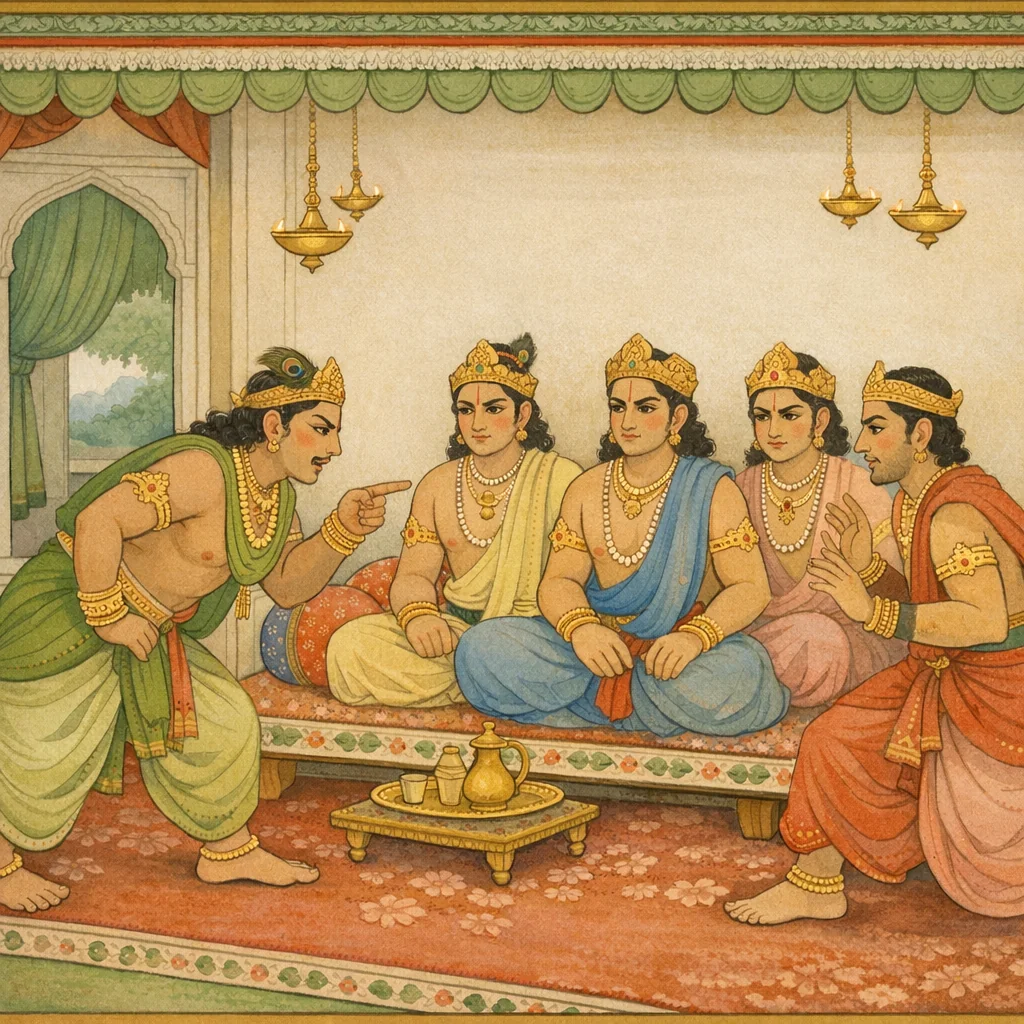
आसनेषूदतिष्ठन्त बाहुंश्नैव प्रचिक्षिपु: । आशीविषा इव क्रुद्धा वीक्षांचक्रु: परस्परम्,वे आसनोंसे उठकर खड़े हो गये और अपनी भुजाओंको इस प्रकार हिलाने लगे, मानो प्रहार करनेके लिये उद्यत हों। वे विषैले सर्पोंके समान अत्यन्त कुपित हो एक-दूसरेकी ओर देखने लगे
Sanjaya said: Rising from their seats, they began to brandish their arms as if poised to strike. Like venomous serpents roused to fury, they glared at one another—anger tightening the bonds of restraint and pushing the assembly toward open conflict.
Verse 4
अवाक्शिरा भीमसेन: समुदैक्षत केशवम् | नेत्राभ्यां लोहितान्ताभ्यामाशीविष इव श्वसन्,भीमसेनने फुफकारते हुए विषधर नागकी भाँति लंबी साँसें खींचते हुए सिर नीचे किये लाल नेत्रोंसे भगवान् श्रीकृष्णकी ओर देखा
Sanjaya said: With his head bowed down, Bhīmasena fixed his gaze upon Keśava. Breathing hard like a venomous serpent, he looked with eyes reddened at the corners—his restrained fury and resolve gathering before the coming conflict.
Verse 5
आर्त वातात्मजं दृष्टवा क्रोधेनाभिहतं भृशम् । उत्स्मयन्निव दाशार्ह: कैतव्यं प्रत्यभाषत,वायुपुत्र भीमको क्रोधसे अत्यन्त पीड़ित और आहत देख दशार्हकुलभूषण श्रीकृष्णने उलूकसे मुसकराते हुए-से कहा--
Sanjaya said: Seeing the son of Vāyu, Bhīma, in distress—violently struck and deeply shaken by anger—Dāśārha (Śrī Kṛṣṇa), as if with a faint smile, addressed Kaitavya (Ulūka).
Verse 6
प्रयाहि शीघ्र कैतव्य ब्रूयाश्वैव सुयोधनम् । श्रुतं वाक्य गृहीतो<र्थों मतं यत् ते तथास्तु तत्,“जुआरी शकुनिके पुत्र उलूक! तू शीघ्र लौट जा और दुर्योधनसे कह दे--'पाण्डवोंने तुम्हारा संदेश सुना और उसके अर्थको समझकर स्वीकार किया। युद्धके विषयमें जैसा तुम्हारा मत है, वैसा ही हो”
Sañjaya said: “Go back quickly, O gambler, and tell Suyodhana: ‘The Pāṇḍavas have heard your message, understood its meaning, and accepted it. As for war, let it be exactly as you intend.’”
Verse 7
एवमुक््त्वा महाबाहु: केशवो राजसत्तम | पुनरेव महाप्राज्ञ युधिष्ठिरमुदैक्षत,नृपश्रेष्ठै ऐसा कहकर महाबाहु केशवने पुनः परम बुद्धिमान् राजा युधिष्ठिरकी ओर देखा
Sañjaya said: Having spoken thus, the mighty-armed Keśava again looked toward Yudhiṣṭhira, the supremely wise king.
Verse 8
सृञ्जयानां च सर्वेषां कृष्णस्य च यशस्विन: । द्रुपदस्य सपुत्रस्य विराटस्य च संनिधौ,फिर उलूकने भी समस्त सूंजयवंशी क्षत्रियसमुदाय, यशस्वी श्रीकृष्ण तथा पुत्रोंसहित द्रपद और विराटके समीप सम्पूर्ण राजाओंकी मण्डलीमें शेष बातें कहीं। उसने विषधर सर्पके सदृश कुपित हुए अर्जुनको पुन: अपने वाग्बाणोंसे पीड़ा देते हुए दुर्योधनकी कही हुई सब बातें कह सुनायीं। साथ ही श्रीकृष्ण आदि अन्य सब लोगोंसे कहनेके लिये भी उसने जो-जो संदेश दिये थे, उन्हें भी उन सबको यथावत्रूपसे सुना दिया
Sañjaya said: In the presence of all the Sṛñjayas, of the illustrious Kṛṣṇa, of Drupada with his sons, and of Virāṭa, before the full assembly of kings, Ulūka spoke the remaining words—repeating everything Duryodhana had said. With speech sharp as venom he sought to sting and inflame the already angered Arjuna again, and he delivered, exactly as instructed, the other messages Duryodhana had ordered him to convey to Kṛṣṇa and the rest.
Verse 9
भूमिपानां च सर्वेषां मध्ये वाक््यं जगाद ह । उलूको>प्यर्जुनं भूयो यथोक्त वाक्यमब्रवीत्,फिर उलूकने भी समस्त सूंजयवंशी क्षत्रियसमुदाय, यशस्वी श्रीकृष्ण तथा पुत्रोंसहित द्रपद और विराटके समीप सम्पूर्ण राजाओंकी मण्डलीमें शेष बातें कहीं। उसने विषधर सर्पके सदृश कुपित हुए अर्जुनको पुन: अपने वाग्बाणोंसे पीड़ा देते हुए दुर्योधनकी कही हुई सब बातें कह सुनायीं। साथ ही श्रीकृष्ण आदि अन्य सब लोगोंसे कहनेके लिये भी उसने जो-जो संदेश दिये थे, उन्हें भी उन सबको यथावत्रूपसे सुना दिया
Sañjaya said: In the midst of all the kings, he delivered his speech. Then Ulūka again addressed Arjuna, repeating exactly the message he had been instructed to convey.
Verse 10
आशीविषमिव क्रुद्धं तुदन् वाक्यशलाकया । कृष्णादीं श्वैव तान् सर्वान् यथोक्तं वाक्यमब्रवीत्,फिर उलूकने भी समस्त सूंजयवंशी क्षत्रियसमुदाय, यशस्वी श्रीकृष्ण तथा पुत्रोंसहित द्रपद और विराटके समीप सम्पूर्ण राजाओंकी मण्डलीमें शेष बातें कहीं। उसने विषधर सर्पके सदृश कुपित हुए अर्जुनको पुन: अपने वाग्बाणोंसे पीड़ा देते हुए दुर्योधनकी कही हुई सब बातें कह सुनायीं। साथ ही श्रीकृष्ण आदि अन्य सब लोगोंसे कहनेके लिये भी उसने जो-जो संदेश दिये थे, उन्हें भी उन सबको यथावत्रूपसे सुना दिया
Sañjaya said: Stinging with the sharp needle of his words, Ulūka spoke again like an enraged venomous serpent. He repeated, exactly as instructed, Duryodhana’s message to Kṛṣṇa and to all the others present, further provoking the already angered Arjuna in the assembly of kings.
Verse 11
उलूकस्य तु तद् वाक््यं पापं दारुणमीरितम् | श्र॒ुत्वा विचुक्षुभे पार्थो ललाटं चाप्यमार्जयत्,उलूकके कहे हुए उस पापपूर्ण दारुण वचनको सुनकर कुन्तीपुत्र अर्जुनको बड़ा क्षोभ हुआ। उन्होंने हाथसे ललाटका पसीना पोंछा
Sañjaya said: Hearing the sinful and harsh message spoken by Ulūka, Pārtha (Arjuna) was deeply agitated; he wiped the sweat from his forehead—an outward sign of the inner turmoil stirred by words that violate ethical restraint and inflame hostility.
Verse 12
तदवस्थं तदा दृष्टवा पार्थ सा समितिर्नप । नामृष्यन्त महाराज पाण्डवानां महारथा:
Sañjaya said: O king, when that situation was seen, the assembly of warriors—O son of Pṛthā—could not endure it. O great king, the mighty chariot-fighters of the Pāṇḍavas were unable to tolerate what had occurred, stirred by a sense of honor and justice.
Verse 13
नरेश्वर! अर्जुनको उस अवस्थामें देखकर राजाओंकी वह समिति तथा पाण्डव महारथी सहन न कर सके ।। अधिक्षेपेण कृष्णस्य पार्थस्य च महात्मन: । श्रुत्वा ते पुरुषव्याप्रा: क्रोधाज्जज्वलुरच्युता:,राजन! महात्मा अर्जुन तथा श्रीकृष्णके प्रति आक्षेपपूर्ण वचन सुनकर वे पुरुषसिंह शूरवीर क्रोधसे जल उठे
Sanjaya said: O King, when those lion-like heroes heard the taunting, disparaging words directed at Krishna and the noble Arjuna, they could not endure it; their righteous indignation flared, and they burned with anger. The scene underscores how public insult to the virtuous is treated as a moral provocation, intensifying the ethical and political crisis that is moving inexorably toward war.
Verse 14
धृष्टद्युम्न: शिखण्डी च सात्यकिश्व महारथ: । केकया भ्रातर: पज्च राक्षसक्ष घटोत्कच:,दन्तान् दन्तेषु निष्पिष्य सृक्किणी परिलेलिहन् | धष्टद्युम्न, शिखण्डी, महारथी सात्यकि, पाँच भाई केकयराजकुमार, राक्षस घटोत्कच, द्रौपदीके पाँचों पुत्र, अभिमन्यु, राजा धृष्टकेतु, पराक्रमी भीमसेन तथा महारथी नकुल- सहदेव--ये सब-के-सब क्रोधसे लाल आँखें किये अपने आसनोंसे उछलकर खड़े हो गये और अंगद, पारिहार्य (मोतियोंके गुच्छों) तथा केयूरोंसे विभूषित एवं लाल चन्दनसे चर्चित अपनी सुन्दर भुजाओंको थामकर दाँतोंपर दाँत रगड़ते हुए ओठोंके दोनों कोने चाटने लगे
Sañjaya said: “Dhṛṣṭadyumna, Śikhaṇḍī, the great chariot-warrior Sātyaki, the five Kekaya brothers, and the rākṣasa Ghaṭotkaca—grinding their teeth together and licking the corners of their mouths—rose up from their seats in wrath. Their eyes reddened with anger, they seized their well-adorned arms—decked with armlets, pearl-strings, and bracelets and anointed with red sandal paste—signaling a fierce readiness to answer insult with force as the crisis of dharma moved toward war.”
Verse 15
द्रौपदेयाभिमन्युश्न धृष्टकेतुश्न पार्थिव: । भीमसेनश्न विक्रान्तो यमजौ च महारथौ
Sañjaya said: The sons of Draupadī, Abhimanyu, and Dhṛṣṭaketu the king were there; and Bhīmasena, famed for his valor, along with the twin brothers—both great chariot-warriors. The verse underscores the gathering of righteous allies and renowned fighters, signaling the moral weight and grave consequences of the coming conflict.
Verse 16
उत्पेतुरासनात् सर्वे क्रोधसंरक्तलोचना: । बाहून् प्रगृह्म रुचिरान् रक्तचन्दनरूषितान् । अड्डदैः पारिहार्यश्व केयूरैश् विभूषितान्
Sañjaya said: All of them sprang up from their seats, their eyes reddened with anger. They raised their handsome arms, smeared with red sandal paste and adorned with armlets and other ornaments—signs of rank and readiness.
Verse 17
तेषामाकारभावज्ञ: कुन्तीपुत्रो वृकोदर:,हस्तं हस्तेन निष्पिष्य उलूकं॑ वाक्यमब्रवीत् | उनकी आकृति और भावको जानकर दुन्तीपुत्र वृकोदर बड़े वेगसे उठे और क्रोधसे जलते हुएके समान सहसा आँखें फाड़-फाड़कर देखते, दाँत कट-कटाते और हाथ-से-हाथ रगड़ते हुए उलूकसे इस प्रकार बोले--
Sañjaya said: Understanding their outward bearing and inner intent, Vṛkodara (Bhīma), the son of Kuntī, clenched one hand against the other and addressed Ulūka.
Verse 18
उदतिष्ठत् स वेगेन क्रोधेन प्रज्वलजन्निव । उद्वृत्य सहसा नेत्रे दन्तान् कटकटाय्य च
Sañjaya said: He sprang up with sudden force, as if blazing with anger. In an instant he rolled his eyes and ground his teeth.
Verse 19
अशक्तानामिवास्माकं प्रोत्साहननिमित्तकम्
Sañjaya said: “It serves as a cause for encouragement for us, as though we were powerless.”
Verse 20
तन्मे कथयते मन्द शृणु वाक््यं दुरासदम्,“मूर्ख उलूक! अब तू मेरी कही हुई दुःसह बातें सुन और समस्त राजाओंकी मण्डलीमें सूतपुत्र कर्ण और अपने दुरात्मा पिता शकुनिके सामने दुर्योधनको सुना देना --
Sañjaya said: “Now listen, O dull-witted one, to my words—hard to endure. ‘Foolish Ulūka! Hear these unbearable things I speak, and then, in the full assembly of kings, proclaim them to Duryodhana—before Karṇa, the charioteer’s son, and before your wicked father Śakuni.’”
Verse 21
सर्वक्षत्रस्य मध्ये तं यद् वक्ष्यसि सुयोधनम् । शृण्वत: सूतपुत्रस्य पितुश्च त्वं दुरात्मन:,“मूर्ख उलूक! अब तू मेरी कही हुई दुःसह बातें सुन और समस्त राजाओंकी मण्डलीमें सूतपुत्र कर्ण और अपने दुरात्मा पिता शकुनिके सामने दुर्योधनको सुना देना --
Sañjaya said: “Whatever message you intend to speak to Suyodhana (Duryodhana), speak it there, in the midst of the full assembly of kṣatriyas—while Karṇa, the charioteer’s son, listens, and while his wicked father (Śakuni) also hears. Let Duryodhana hear it openly before all.”
Verse 22
अस्माभ्ि: प्रीतिकामैस्तु भ्रातुर्ज्येष्ठस्य नित्यश: । मर्षितं ते दुराचार तत् त्वं न बहु मन््यसे,“दुराचारी दुर्योधन! हमलोगोंने सदा अपने बड़े भाईको प्रसन्न रखनेकी इच्छासे तेरे बहुत-से अत्याचारोंको चुपचाप सह लिया है; परंतु तू इन बातोंको अधिक महत्त्व नहीं दे रहा है
“Duryodhana, you man of wicked conduct! Out of a constant wish to keep our eldest brother pleased, we have silently endured many of your outrages; yet you do not count these things for much.”
Verse 23
प्रेषितश्नह्वषीकेश: शमाकाड्क्षी कुरून् प्रति । कुलस्य हितकामेन धर्मराजेन धीमता,“बुद्धिमान् धर्मराजने कौरवकुलके हितकी इच्छासे शान्ति चाहनेवाले भगवान् श्रीकृष्णको कौरवोंके पास भेजा था
Sañjaya said: “The wise Dharmarāja, seeking peace and desiring the welfare of the Kuru line, dispatched Hṛṣīkeśa (Kṛṣṇa) as an envoy to the Kurus.”
Verse 24
त्वं कालचोदितो नून॑ गन्तुकामो यमक्षयम् | गच्छस्वाहवमस्माभिस्तच्च श्वो भविता श्रुवम्,'परंतु तू निश्चय ही कालसे प्रेरित हो यमलोकमें जाना चाहता है (इसीलिये संधिकी बात नहीं मान सका)। अच्छा, हमारे साथ युद्धमें चल। कल निश्चय ही युद्ध होगा
Sañjaya said: “Surely you are driven by Time itself, intent on going to Yama’s imperishable realm; that is why you could not accept the path of reconciliation. Very well—come to battle with us. Tomorrow, without doubt, the war will take place.”
Verse 25
मयापि च प्रतिज्ञातो वध: सभ्रातृकस्य ते । स तथा भविता पाप नात्र कार्या विचारणा,'पापात्मन! मैंने भी जो तेरे और तेरे भाइयोंके वधकी प्रतिज्ञा की है, वह उसी रूपमें पूर्ण होगी। इस विषयमें तुझे कोई अन्यथा विचार नहीं करना चाहिये
Sañjaya said: “I too have vowed your destruction—yours together with your brothers. That vow will be fulfilled exactly so, O wicked one; on this there is no room for doubt or reconsideration.”
Verse 26
वेलामतिक्रमेत् सद्यः सागरो वरुणालय: । पर्वताश्न विशीर्येयुर्मयोक्ते न मृषा भवेत्,“वरुणालय समुद्र शीघ्र ही अपनी सीमाका उल्लंघन कर जाय और पर्वत जीर्ण-शीर्ण होकर बिखर जाय॑ँ, परंतु मेरी कही हुई बात झूठी नहीं हो सकती
Sañjaya said: “The ocean—abode of Varuṇa—may at once overstep its shoreline, and the mountains may crumble and scatter; yet what I have spoken cannot turn out to be false.”
Verse 27
सहायस्ते यदि यम: कुबेरो रुद्र एव वा । यथाप्रतिज्ञं दुर्बुद्धे प्रकरिष्यन्ति पाण्डवा: । दुःशासनस्य रुधिरं पाता चास्मि यथेप्सितम्,'दुर्बद्धे! तेरी सहायताके लिये यमराज, कुबेर अथवा भगवान् रुद्र ही क्यों न आ जायाँ, पाण्डव अपनी प्रतिज्ञाके अनुसार सब कार्य अवश्य करेंगे। मैं अपनी इच्छाके अनुसार दुःशासनका रक्त अवश्य पीऊँगा
Sañjaya said: “Even if Yama, Kubera, or Rudra himself were to come as your ally, O foolish one, the Pāṇḍavas will carry out their vow exactly as pledged. And I shall drink Duḥśāsana’s blood, as I have desired.”
Verse 28
यश्नेह प्रतिसंरब्ध: क्षत्रियो माभियास्यति । अपि भीष्म पुरस्कृत्य तं॑ नेष्यामि यमक्षयम्,“उस समय साक्षात् भीष्मको भी आगे करके जो कोई भी क्षत्रिय क्रोधपूर्वक मेरे ऊपर धावा करेगा, उसे उसी क्षण यमलोक पहुँचा दूँगा
Sañjaya said: “Here, whoever—any kṣatriya—rushes at me in wrath, even placing Bhīṣma at the forefront, I shall send him at once to Yama’s imperishable realm.”
Verse 29
यच्चैतदुक्त वचन मया क्षत्रस्य संसदि | यथैतद् भविता सत्यं तथैवात्मानमालभे,“मैंने क्षत्रियोंकी सभामें यह बात कही है, जो अवश्य सत्य होगी। यह मैं अपनी सौगन्ध खाकर कहता हूँ
Sañjaya said: “And as for this statement that I have spoken in the assembly of the kṣatriyas—just as it is bound to prove true, so do I pledge myself upon my own life. I swear that it will indeed be so.”
Verse 30
भीमसेनवच: श्रुत्वा सहदेवो5प्यमर्षण: । क्रोधसंरक्तनयनस्ततो वाक्यमुवाच ह,भीमसेनका वचन सुनकर सहदेवका भी अमर्ष जाग उठा। तब उन्होंने भी क्रोधसे आँखें लाल करके यह बात कही--
Sañjaya said: Hearing Bhīmasena’s words, Sahadeva too was stirred by indignation. Then, with eyes reddened by anger, he spoke—
Verse 31
शौटीरशूरसद्शमनीकजनसंसदि । शृणु पाप वचो महां यद्वाच्यो हि पिता त्वया,'“ओ पापी! मैं इन वीर सैनिकोंकी सभामें गर्वीले शूरवीरके योग्य वचन बोल रहा हूँ। तू इसे सुन ले और अपने पिताके पास जाकर सुना दे
Sañjaya said: “In this assembly of warriors I speak words befitting a proud and valiant hero. Listen, you sinner—then go and repeat this message to your father.”
Verse 32
नास्माकं भविता भेद: कदाचित् कुरुभि: सह । धृतराष्ट्रस्य सम्बन्धो यदि न स्यात् त्वया सह,“यदि धृतराष्ट्रका तेरे साथ सम्बन्ध न होता, तो कभी कौरवोंके साथ हमलोगोंकी फूट नहीं होती
Sañjaya said: “There would never have been any rupture between us and the Kurus—at any time—if you had not been bound to Dhṛtarāṣṭra by relationship. It is this attachment of kinship that has made division possible, overriding what ought to have been unity and right conduct.”
Verse 33
त्वं तु लोकविनाशाय धृतराष्ट्रकुलस्यथ च । उत्पन्नो वैरपुरुष: स्वकुलघ्नश्व पापकृत्,'तू सम्पूर्ण जगत् तथा धृतराष्ट्रकुलके विनाशके लिये पापाचारी मूर्तिमान् वैरपुरुष होकर उत्पन्न हुआ है। तू अपने कुलका भी नाश करनेवाला है
Sañjaya said: “But you have been born as the very embodiment of enmity—sinful and destructive—bringing ruin upon the world and upon the house of Dhṛtarāṣṭra. You are one who will even destroy your own lineage.”
Verse 34
जन्मप्रभृति चास्माकं पिता ते पापपूरुष: । अहितानि नृशंसानि नित्यश: कर्तुमिच्छति,“उलूक! तेरा पापात्मा पिता जन्मसे ही हम-लोगोंके प्रति प्रतिदिन क्रूरतापूर्ण अहितकर बर्ताव करना चाहता है
Sañjaya said: “From our very birth onward, your father—sinful and cruel by nature—has continually wished to do us harm, day after day, pursuing ruthless acts of hostility.”
Verse 35
तस्य वैरानुषड्रस्य गन्तास्म्यन्तं सुदुर्गमम् । अहमादीौ निहत्य त्वां शकुने: सम्प्रपश्यत:,ततो5स्मि शकुनिं हन्तामिषतां सर्वधन्विनाम् | इसलिये मैं शकुनिके देखते-देखते सबसे पहले तेरा वध करके सम्पूर्ण धनुर्धरोंके सामने शकुनिको भी मार डालूँगा और इस प्रकार अत्यन्त दुर्गम शत्रुतासे पार हो जाऊँगा”
Sañjaya said: “I shall reach the far end of that deeply entrenched and hard-to-cross enmity. First, before Śakuni’s very eyes, I will slay you; then, in the presence of all the bowmen, I will also kill Śakuni. Thus will I pass beyond this most formidable hostility.”
Verse 36
भीमस्य वचन श्रुत्वा सहदेवस्य चोभयो:,मन्दा गृहेषु सुखिनो मृत्युपाशवशं गता: । भीमसेन और सहदेव दोनोंके वचन सुनकर अर्जुनने भीमसेनसे मुसकराते हुए कहा --आर्य भीम! जिनका आपके साथ वैर ठन गया है, वे घरमें बैठकर सुखका अनुभव करनेवाले मूर्ख कौरव कालके पाशमें बाँध गये हैं (अर्थात् उनका जीवन नहींके बराबर है)
Sañjaya said: Hearing the words of both Bhīma and Sahadeva, Arjuna—smiling—spoke to Bhīmasena: “Noble Bhīma! Those foolish Kauravas who have taken up enmity with you, though they sit at home imagining themselves happy, have in truth fallen under the noose of Death—so their life is as good as lost.”
Verse 37
उवाच फाल्गुनो वाक््यं भीमसेनं स्मयन्निव | भीमसेन न ते सन्ति येषां वैरं त्वया सह,मन्दा गृहेषु सुखिनो मृत्युपाशवशं गता: । भीमसेन और सहदेव दोनोंके वचन सुनकर अर्जुनने भीमसेनसे मुसकराते हुए कहा --आर्य भीम! जिनका आपके साथ वैर ठन गया है, वे घरमें बैठकर सुखका अनुभव करनेवाले मूर्ख कौरव कालके पाशमें बाँध गये हैं (अर्थात् उनका जीवन नहींके बराबर है)
Sanjaya said: Smiling as though in gentle irony, Phalguna (Arjuna) spoke to Bhimasena: “Bhimasena, those who have entered into enmity with you are no longer truly alive. Though they sit at home imagining themselves happy, those foolish Kauravas have already fallen under the noose of Death—bound by Time itself.”
Verse 38
उलूकश्नच न ते वाच्य: परुषं पुरुषोत्तम,दूता: किमपराध्यन्ते यथोक्तस्यानुभाषिण: । “पुरुषोत्तम! आपको इस उलूकसे कोई कठोर बात नहीं कहनी चाहिये। बेचारे दूतोंका क्या अपराध है? वे तो कही हुई बातका अनुवादमात्र करनेवाले हैं”
Sanjaya said: “O Puruṣottama, you should not address Ulūka with harsh words. What fault can messengers have? They merely repeat what has been said to them.”
Verse 39
एवमुक्त्वा महाबाहुर्भीमं भीमपराक्रमम्,धृष्टद्युम्ममुखान् वीरान् सुह्दद: समभाषत । भयंकर पराक्रमी भीमसेनसे ऐसा कहकर महाबाहु अर्जुनने धृष्टद्युम्न आदि वीर सुहृदोंसे कहा--
Sañjaya said: Having spoken thus to Bhīma—whose prowess was as formidable as his name—Arjuna, the mighty-armed, then addressed his well-wishing comrades, the heroes led by Dhṛṣṭadyumna.
Verse 40
श्रुतं वस्तस्पापस्य धार्तराष्ट्स्य भाषितम्,“बन्धुओ! आपलोगोंने उस पापी दुर्योधनकी बात सुनी है न? इसमें उसके द्वारा विशेषत: मेरी और भगवान् श्रीकृष्णकी निन््दा की गयी है। आपलोग हमारे हितकी कामना रखते हैं, इसलिये इस निन्दाको सुनकर कुपित हो उठे हैं
Sanjaya said: “You have heard the words spoken by that sinful son of Dhritarashtra. ‘Kinsmen, you have heard what that wicked Duryodhana has said, have you not? In it he has especially reviled me and the Lord, Sri Krishna. Since you seek our welfare, you have become indignant on hearing this slander.’”
Verse 41
कुत्सनं वासुदेवस्यथ मम चैव विशेषत: । श्रुत्वा भवन्त: संरब्धा अस्माकं हितकाम्यया,“बन्धुओ! आपलोगोंने उस पापी दुर्योधनकी बात सुनी है न? इसमें उसके द्वारा विशेषत: मेरी और भगवान् श्रीकृष्णकी निन््दा की गयी है। आपलोग हमारे हितकी कामना रखते हैं, इसलिये इस निन्दाको सुनकर कुपित हो उठे हैं
Sañjaya said: “Having heard the disparagement of Vāsudeva—and, in particular, of me as well—you have become inflamed with anger, because you seek our welfare. You have listened to that sinful Duryodhana’s words, in which he has spoken in contempt of Lord Kṛṣṇa and of me.”
Verse 42
प्रभावाद् वासुदेवस्य भवतां च प्रयत्नत: । समग्रं पार्थिवं क्षत्र॑ं सर्व न गणयाम्यहम्,“परंतु भगवान् वासुदेवके प्रभाव और आपलोगोंके प्रयत्नसे मैं इस समस्त भूमण्डलके सम्पूर्ण क्षत्रियोंको भी कुछ नहीं गिनता हूँ
Sañjaya said: “By the sheer might of Vāsudeva and by your own determined effort, I do not count as significant even the entire body of kings and warriors across the whole earth.”
Verse 43
भवद्धिः समनुज्ञातो वाक्यमस्य यदुत्तरम् । उलूके प्रापयिष्यामि यद् वक्ष्यति सुयोधनम्,“यदि आपलोगोंकी आज्ञा हो तो मैं इस बातका उत्तर उलूकको दे दूँ, जिसे यह दुर्योधनको सुना देगा
Sañjaya said: “If you grant me permission, I shall deliver to Ulūka the reply to his words—so that he may convey it to Suyodhana (Duryodhana).”
Verse 44
श्वोभूते कत्थितस्यास्य प्रतिवाक्यं चमूमुखे । गाण्डीवेनाभिधास्यामि क्लीबा हि वचनोत्तरा:,“अथवा आपकी सम्मति हो, तो कल खबेरे सेनाके मुहानेपर उसकी इन शेखीभरी बातोंका ठीक-ठीक उत्तर गाण्डीव धनुषद्वारा दे दूँगा; क्योंकि केवल बातोंमें उत्तर देनेवाले तो नपुंसक होते हैं!
Sañjaya said: “Or, if you approve, tomorrow at the very front of the host I shall answer his boastful words as they deserve—with the bow Gāṇḍīva; for those who give only verbal replies are but weaklings.”
Verse 45
ततस्ते पार्थिवा: सर्वे प्रशशंसुर्धनंजयम् | तेन वाक्योपचारेण विस्मिता राजसत्तमा:,अर्जुनकी इस प्रवचन-शैलीसे सभी श्रेष्ठ भूपाल आश्वर्यचकित हो उठे और वे सब-के- सब उनकी भूरि-भूरि प्रशंसा करने लगे
Sañjaya said: “Then all those kings praised Dhanañjaya (Arjuna). Astonished by the refined manner and courteous force of his speech, the foremost of rulers broke into repeated acclaim.”
Verse 46
अनुनीय च तान् सर्वान् यथामान्यं यथावय: । धर्मराजस्तदा वाक्य तत्प्राप्यं प्रत्यभाषत,तदनन्तर धर्मराजने उन समस्त राजाओंको उनकी अवस्था और प्रतिष्ठाके अनुसार अनुनय-विनय करके शान्त किया और दुर्योधनको देनेयोग्य जो संदेश था, उसे इस प्रकार कहा--
Sañjaya said: Having conciliated and pacified all those kings with due courtesy—each according to his rank and age—Dharmarāja then spoke the message that was to be delivered to Duryodhana, in the manner befitting the occasion.
Verse 47
आत्मानमवमन्वानो न हि स्यात् पार्थिवोत्तम: । तत्रोत्तरं प्रवक्ष्यामि तव शुश्रूषणे रत:,“उलूक! कोई भी श्रेष्ठ राजा शान्त रहकर अपनी अवज्ञा सहन नहीं कर सकता। मैंने तुम्हारी बात ध्यान देकर सुनी है। अब मैं तुम्हें उत्तर देता हूँ, उसे सुनो”
“O Ulūka, no truly excellent king can remain silent while enduring open disrespect. I have listened carefully to what you have said; now I will state my reply—listen.”
Verse 48
उलूकं॑ भरतश्रेष्ठ सामपूर्वमथोर्जितम् । दुर्योधनस्य तद् वाक््यं निशम्य भरतर्षभ:,भरतश्रेष्ठ जनमेजय! इस प्रकार युधिष्ठिरने उलूकसे पहले मधुर वचन बोलकर फिर ओजस्वी शब्दोंमें उत्तर दिया। (उलूकके मुखसे) पहले दुर्योधनके पूर्वोक्त संदेशको सुनकर भरतकुलभूषण युधिष्छिर रोषसे अत्यन्त लाल हुए नेत्रोंद्वारा देखते हुए विषधर सर्पके समान उच्छवास लेने लगे। फिर ओठोंके दोनों कोनोंको चाटते हुए वे श्रीकृष्ण तथा भाइयोंकी ओर देखकर बोलनेको प्रस्तुत हुए। वे अपनी विशाल भुजा ऊपर उठा धूर्त जुआरी शकुनिके पुत्र उलूकसे मुसकराते हुए-से बोले---
Sanjaya said: O best of the Bharatas, Yudhiṣṭhira first addressed Ulūka with sweet, conciliatory words, and then replied with forceful speech. Hearing Duryodhana’s message from Ulūka’s mouth, that bull of the Bharata line flared inwardly—his eyes reddened with anger, he breathed like a venomous serpent, and he licked the corners of his lips. Looking toward Śrī Kṛṣṇa and his brothers, he raised his mighty arm and spoke to Ulūka, Shakuni’s son, with a smile that scarcely concealed his wrath.
Verse 49
अतिलोहिलतनेत्राभ्यामाशीविष इव श्वसन् | स्मयमान इव क्रोधात् सक्किणी परिसंलिहन्,भरतश्रेष्ठ जनमेजय! इस प्रकार युधिष्ठिरने उलूकसे पहले मधुर वचन बोलकर फिर ओजस्वी शब्दोंमें उत्तर दिया। (उलूकके मुखसे) पहले दुर्योधनके पूर्वोक्त संदेशको सुनकर भरतकुलभूषण युधिष्छिर रोषसे अत्यन्त लाल हुए नेत्रोंद्वारा देखते हुए विषधर सर्पके समान उच्छवास लेने लगे। फिर ओठोंके दोनों कोनोंको चाटते हुए वे श्रीकृष्ण तथा भाइयोंकी ओर देखकर बोलनेको प्रस्तुत हुए। वे अपनी विशाल भुजा ऊपर उठा धूर्त जुआरी शकुनिके पुत्र उलूकसे मुसकराते हुए-से बोले---
Sañjaya said: O best of the Bharatas—his eyes reddened with fury, he breathed like a venomous serpent. Though anger burned within, he seemed almost to smile, licking the corners of his lips, as he prepared to speak—having first answered Ulūka with sweet words and then with forceful, spirited speech. Hearing Duryodhana’s message delivered through Ulūka, Yudhiṣṭhira, the ornament of the Bharata line, looked toward Śrī Kṛṣṇa and his brothers, raised his mighty arm, and readied his reply to the crafty gambler’s son as if with a smile.
Verse 50
जनार्दनमभिप्रेक्ष्य भ्रातृश्वैवेदमब्रवीत् । अभ्यभाषत कैततव्यं प्रगृह्य विपुलं भुजम्,भरतश्रेष्ठ जनमेजय! इस प्रकार युधिष्ठिरने उलूकसे पहले मधुर वचन बोलकर फिर ओजस्वी शब्दोंमें उत्तर दिया। (उलूकके मुखसे) पहले दुर्योधनके पूर्वोक्त संदेशको सुनकर भरतकुलभूषण युधिष्छिर रोषसे अत्यन्त लाल हुए नेत्रोंद्वारा देखते हुए विषधर सर्पके समान उच्छवास लेने लगे। फिर ओठोंके दोनों कोनोंको चाटते हुए वे श्रीकृष्ण तथा भाइयोंकी ओर देखकर बोलनेको प्रस्तुत हुए। वे अपनी विशाल भुजा ऊपर उठा धूर्त जुआरी शकुनिके पुत्र उलूकसे मुसकराते हुए-से बोले---
Sañjaya said: Having looked toward Janārdana (Kṛṣṇa) and then toward his brothers, he spoke these words. Lifting his mighty arm, he said what was to be said—preparing to reply with controlled force after hearing the envoy’s message, framing his answer within duty, restraint, and the gravity of the war drawing near.
Verse 51
उलूक गच्छ कैतव्य ब्रूहि तात सुयोधनम् । कृतघ्नं वैरपुरुषं दुर्मतिं कुलपांसनम्,“जुआरी शकुनिके पुत्र तात उलूक! तुम जाओ और वैरके मूर्तिमान् स्वरूप उस कृतघ्न, दुर्बुद्धि एवं कुलांगार दुर्योधनसे इस प्रकार कह दो--
Sañjaya said: “O deceitful Ulūka—dear boy—go and deliver this message to Suyodhana: to that ungrateful man, the very embodiment of enmity, of perverse judgment, and a disgrace to his lineage.”
Verse 52
पाण्डवेषु सदा पाप नित्यं जिद्ठां प्रवर्तसे । स्ववीर्याद् यः पराक्रम्य पाप आह्वयते परान् । अभीत: पूरयन् वाक्यमेष वै क्षत्रिय: पुमान्,“पापी दुर्योधन! तू पाण्डवोंके साथ सदा कुटिल बर्ताव करता आ रहा है। पापात्मन्! जो किसीसे भयभीत न होकर अपने वचनोंका पालन करता है और अपने ही बाहुबलसे पराक्रम प्रकट करके शत्रुओंको युद्धके लिये बुलाता है, वही पुरुष क्षत्रिय है
Sañjaya said: “O sinner, you have always behaved with constant crookedness toward the Pāṇḍavas. O wicked one! The true kṣatriya is that man who, fearless, keeps his pledged word and, relying on his own strength, displays valor and openly challenges his foes to battle.”
Verse 53
स पाप: क्षत्रियो भूत्वा अस्मानाहूय संयुगे । मान्यामान्यान् पुरस्कृत्य युद्ध मा गा: कुलाधम,“कुलाधम! तू पापी है! देख, क्षत्रिय होकर और हमलोगोंको युद्धके लिये बुलाकर ऐसे लोगोंको आगे करके रणभूमिमें न आना, जो हमारे माननीय वृद्ध गुरुजन और स्नेहास्पद बालक हों
Sañjaya said: “O wretch of a clan! Though born a kṣatriya, you have summoned us to battle; do not come onto the battlefield placing in front those who are to be honored—our venerable elders and teachers, and the dear young ones. Such conduct is sinful and ignoble.”
Verse 54
आत्मवीर्य समाश्रित्य भृत्यवीर्य च कौरव । आह्वयस्व रणे पार्थान् सर्वथा क्षत्रियो भव,“कुरुनन्दन! तू अपने तथा भरणीय सेवकवर्गके बल और पराक्रमका आश्रय लेकर ही कुन्तीके पुत्रोंका युद्धके लिये आह्वान कर। सब प्रकारसे क्षत्रियत्वका परिचय दे
Sañjaya said: “O Kaurava, relying upon your own valor and also upon the valor of your dependents and retainers, challenge the sons of Kuntī in battle. In every way, conduct yourself as a kṣatriya—show the full measure of warrior duty.”
Verse 55
परवीर्य समाश्रित्य यः समाह्दयते परान् | अशक्त: स्वयमादातुमेतदेव नपुंसकम्,“जो स्वयं सामना करनेमें असमर्थ होनेके कारण दूसरोंके पराक्रमका भरोसा करके शत्रुओंको युद्धके लिये ललकारता है, उसका यह कार्य उसकी नपुंसकताका ही सूचक है
Sañjaya said: “He who, relying on the prowess of others, challenges his enemies to battle—being himself incapable of facing them—this very act is a mark of his unmanliness.”
Verse 56
स त्वं परेषां वीर्येण आत्मानं बहु मन्यसे । कथमेवमशक्तस्त्वमस्मान् समभिगर्जसि,'तू तो दूसरोंके ही बलसे अपने-आपको बहुत अधिक शक्तिशाली मानता है; परंतु ऐसा असमर्थ होकर तू हमारे सामने गर्जना कैसे कर रहा है?”
Sanjaya said: “You deem yourself exceedingly mighty only by leaning on the strength of others. How, powerless in yourself, do you roar at us with such boldness?”
Verse 57
श्रीकृष्ण उवाच मद्धचश्नापि भूयस्ते वक्तव्य: स सुयोधन: । श्व॒ इदानीं प्रपद्येथा: पुरुषो भव दुर्मते,तत्पश्चात् भगवान् श्रीकृष्णने कहा--उलूक! इसके बाद तू दुर्योधनसे मेरी यह बात भी कह देना--*दुर्मते! अब कल ही तू रणभूमिमें आ जा और अपने पुरुषत्वका परिचय दे
Śrī Kṛṣṇa said: “And you must again convey this message of mine to that Suyodhana (Duryodhana): ‘O misguided one, take responsibility now—tomorrow, come to the battlefield; be a man and show your manliness.’”
Verse 58
मन्यसे यच्च मूढ त्वं न योत्स्यति जनार्दन: । सारथ्येन वृतः पार्थरिति त्वं न बिभेषि च,'मूढ़! तू जो यह समझता है कि दुन्तीके पुत्रोंने श्रीकृष्णसे सारथि बननेका अनुरोध किया है, अतः वे युद्ध नहीं करेंगे। सम्भवत: इसीलिये तू मुझसे डर नहीं रहा है
Kṛṣṇa said: “Foolish one, you imagine that Janārdana will not fight because the sons of Pṛthā have chosen him only as their charioteer. Thinking so, you do not fear me.”
Verse 59
जघन्यकालमप्येतन्न भवेत् सर्वपार्थिवान् | निर्दहेयमहं क्रोधात् तृणानीव हुताशन:
“Even this would not be the worst of times for all the kings: if anger were to seize me, I could burn them down like dry grass, as fire does.”
Verse 60
'परंतु याद रख, मैं चाहूँ, तो इन सम्पूर्ण नरेशोंको अपनी क्रोधाग्निसे उसी प्रकार भस्म कर सकता हूँ, जैसे आग घास-फूसको जला डालती है। किंतु युद्धके अन्ततक मुझे ऐसा करनेका अवसर न मिले; यही मेरी इच्छा है ।। युधिष्ठिरनियोगात् तु फाल्गुनस्य महात्मन: । करिष्ये युध्यमानस्य सारथ्यं विजितात्मन:,'राजा युधिष्ठिरके अनुरोधसे मैं जितेन्द्रिय महात्मा अर्जुनके युद्ध करते समय उनके सारथिका काम अवश्य करूँगा
“But remember: if I wished, I could burn all these kings to ashes with the fire of my wrath, as fire consumes dry grass. Yet it is my will that, until the war’s end, no occasion arise for me to do so. And at King Yudhiṣṭhira’s request, I will certainly serve as the charioteer of Arjuna (Phālguna), that great-souled master of himself, while he fights.”
Verse 61
यद्युत्पतसि लोकांस्त्रीन् यद्याविशसि भूतलम् | तत्र तत्रार्जुनरथं प्रभाते द्रक्ष्यसे पुन:,“अब तू यदि तीनों लोकोंसे ऊपर उड़ जाय अथवा धरतीमें समा जाय, तो भी (तू जहाँ- जहाँ जायगा), वहाँ-वहाँ कल प्रातः:काल अर्जुनका रथ पहुँचा हुआ देखेगा
Śrī Kṛṣṇa said: “Even if you were to soar beyond the three worlds, or sink into the very earth, wherever you go you will see Arjuna’s chariot there again—already arrived by tomorrow morning.”
Verse 62
यच्चापि भीमसेनस्य मन्यसे मोघभाषितम् । दुःशासनस्य रुधिरं पीतमद्यावधारय,“इसके सिवा, तू जो भीमसेनकी कही हुई बातोंको व्यर्थ मानने लगा है, यह ठीक नहीं है। तू आज ही निश्चितरूपसे समझ ले कि भीमसेनने दुःशासनका रक्त पी लिया
And as for your thinking that Bhīmasena’s words were empty boasting—do not judge them so. Know this with certainty today: Bhīma has indeed drunk Duḥśāsana’s blood.
Verse 63
न त्वां समीक्षते पार्थो नापि राजा युधिष्ठिर: । न भीमसेनो न यमौ प्रतिकूलप्रभाषिणम्,'तू पाण्डवोंके विपरीत कठुभाषण करता जा रहा है, परंतु अर्जुन, राजा युधिष्ठिर, भीमसेन तथा नकुल-सहदेव तुझे कुछ भी नहीं समझते हैं”
Śrī Kṛṣṇa said: “Though you keep speaking harshly and in opposition to the Pāṇḍavas, Arjuna does not take notice of you; nor does King Yudhiṣṭhira, nor Bhīmasena, nor the twin brothers—Nakula and Sahadeva.”
Verse 161
इस प्रकार श्रीमह्ाभारत उद्योगपर्वके अन्तर्गत उलूकदूतागमनपर्वमें उलूकवाक्यविषयक एक सौ इकसठवाँ अध्याय पूरा हुआ
Thus ends the one hundred and sixty-first chapter of the Udyoga Parva of the Śrī Mahābhārata, within the section on the arrival of Ulūka as a messenger—this chapter being concerned with Ulūka’s speech.
Verse 162
इति श्रीमहाभारते उद्योगपर्वणि उलूकदूताभिगमनपर्वणि कृष्णादिवाक्ये द्विषष्टयधिकशततमो< ध्याय:
Thus, in the Śrī Mahābhārata, within the Udyoga Parva, in the section concerning the arrival of Ulūka as an envoy, concludes the one-hundred-and-sixty-second chapter, titled with the opening words of Kṛṣṇa’s speech.
Verse 166
दन्तान् दन्तेषु निष्पिष्य सृक्किणी परिलेलिहन् | धष्टद्युम्न, शिखण्डी, महारथी सात्यकि, पाँच भाई केकयराजकुमार, राक्षस घटोत्कच, द्रौपदीके पाँचों पुत्र, अभिमन्यु, राजा धृष्टकेतु, पराक्रमी भीमसेन तथा महारथी नकुल- सहदेव--ये सब-के-सब क्रोधसे लाल आँखें किये अपने आसनोंसे उछलकर खड़े हो गये और अंगद, पारिहार्य (मोतियोंके गुच्छों) तथा केयूरोंसे विभूषित एवं लाल चन्दनसे चर्चित अपनी सुन्दर भुजाओंको थामकर दाँतोंपर दाँत रगड़ते हुए ओठोंके दोनों कोने चाटने लगे
Sañjaya said: Grinding their teeth and licking the corners of their lips, Dhṛṣṭadyumna, Śikhaṇḍin, the great chariot-warrior Sātyaki, the five princes of the Kaikeya king, the rākṣasa Ghaṭotkaca, Draupadī’s five sons, Abhimanyu, King Dhṛṣṭaketu, the mighty Bhīmasena, and the great chariot-warriors Nakula and Sahadeva—all of them, their eyes reddened with anger, sprang up from their seats. Adorned with armlets, pearl-garlands, and bracelets, and their handsome arms smeared with red sandal paste, they stood gripping their arms, seething with wrath—an outward sign of the inner storm that war and wounded dharma had stirred in them.
Verse 186
हस्तं हस्तेन निष्पिष्य उलूकं॑ वाक्यमब्रवीत् | उनकी आकृति और भावको जानकर दुन्तीपुत्र वृकोदर बड़े वेगसे उठे और क्रोधसे जलते हुएके समान सहसा आँखें फाड़-फाड़कर देखते, दाँत कट-कटाते और हाथ-से-हाथ रगड़ते हुए उलूकसे इस प्रकार बोले--
Sañjaya said: Pressing one hand against the other in restrained fury, Bhīma—son of Kuntī—rose with sudden speed. Reading Ulūka’s posture and intent, he stared wide-eyed, ground his teeth, and, burning with anger, addressed Ulūka with these words—signaling that the messenger’s taunt had crossed the bounds of honorable speech and was now drawing the response of a warrior bound to answer insult with resolve.
Verse 193
श्रुतं ते वचन मूर्ख यत् त्वां दुर्योधनो<ब्रवीत् | 'ओ मूर्ख! दुर्योधनने तुझसे जो कुछ कहा है, वह तेरा वचन हमने सुन लिया। मानो हम असमर्थ हों और तू हमें प्रोत्साहन देनेके निमित्त यह सब कुछ कह रहा हो
Sañjaya said: “Fool! We have heard your words—those very words that Duryodhana spoke to you. You speak as though we were powerless, and as though you were saying all this only to spur us on.”
Frequently Asked Questions
How to translate political resolve into organized readiness: the chapter shows the need to allocate elite combat capacity across multiple threat-nodes while maintaining coherent command under Dhṛṣṭadyumna.
Effective leadership in crisis prioritizes clarity of roles, proportional deployment (matching capability to opposition), and disciplined formation—reducing chaos by making accountability explicit.
No explicit phalaśruti appears in this chapter; its meta-significance lies in documenting procedural war-readiness as an ethical-structural bridge between failed diplomacy and imminent battle.