Adhyaya 15
Nahūṣa’s Pride, the Ṛṣi-Borne Palanquin, and the Search for Indra (नहुष-इन्द्राणी-प्रकरणम्)
Upa-parva: Nahūṣa–Indrāṇī–Bṛhaspati–Agni Episode (Udyoga Parva: Adhyāya 15)
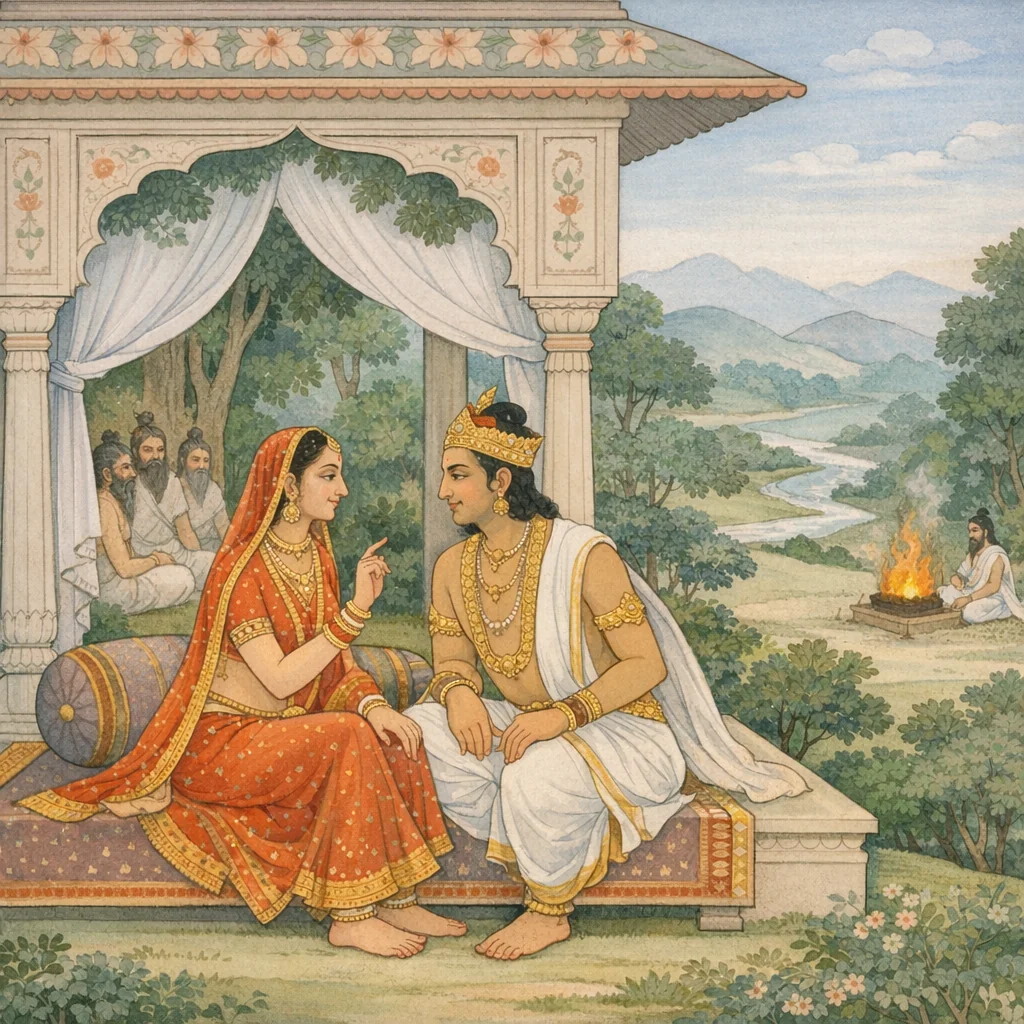
Śalya narrates an embedded episode in which a confidential plan is communicated to Indrāṇī: she is instructed to approach Nahūṣa privately and propose that, if he desires her allegiance, he should come in a distinctive conveyance. Indrāṇī meets Nahūṣa; he welcomes her, promises to fulfill her request, and is persuaded by her proposal that ṛṣis collectively bear him in a palanquin—an unprecedented display meant to test his conduct. Nahūṣa, exhilarated, interprets the arrangement as proof of his superiority and articulates expansive claims about his power and cosmic centrality. He then compels disciplined sages to carry him, characterized as a lapse into adharma fueled by intoxication of boons and desire. Released from Nahūṣa, Indrāṇī appeals to Bṛhaspati: the time-limit imposed by Nahūṣa is nearly spent, and Indra must be found. Bṛhaspati reassures her that Nahūṣa’s unethical treatment of sages will not endure and undertakes a rite to locate the devarāja. Agni, assuming an extraordinary disguise, searches rapidly across realms but reports inability to enter the waters, citing existential risk; Bṛhaspati directs him toward the waters nonetheless, and a cosmological maxim is stated about elemental energies returning to their own wombs (yoni) and becoming quiescent there.
Chapter Arc: शल्य उवाच—इन्द्र के अन्तर्धान के बाद देवसभा में अस्थिरता है; इन्द्राणी (शची) को उपाय सूझता है कि नहुष के बढ़ते अहंकार को उसी के वचन-जाल में बाँधकर देवाधिपत्य की मर्यादा बचाई जाए। → ऋषियों के हव्य-कव्य से तेजस्वी होकर नहुष इन्द्रासन पर बैठता है और इन्द्राणी पर अधिकार जताता है। इन्द्राणी उसे एक ‘शर्त’ में उलझाती है—गुप्त रूप से जाकर एकान्त में उसे उकसाती है कि वह अपूर्व वाहन की इच्छा करे। नहुष, काम और मद में, ऋषियों को ही अपना वाहन बनाने की बात स्वीकार कर लेता है। → नहुष का ‘अपूर्व वाहन’—ऋषियों को पालकी/वाहन बनाना—धर्म-सीमा का अतिक्रमण बनकर फूट पड़ता है; ब्रह्मतेज का अपमान और राजतेज का उन्माद टकराते हैं। इसी बीच बृहस्पति विधिपूर्वक अग्नि प्रज्वलित कर हवि अर्पित करते हैं और देव-व्यवस्था को पुनः स्थिर करने हेतु इन्द्र-प्राप्ति का यज्ञीय उपाय आरम्भ होता है। → बृहस्पति और अग्नि के संवाद में सृष्टि-तत्त्वों का क्रम (जल से अग्नि, ब्राह्मण से क्षत्र, पत्थर से लोहा—तेज का अपने-अपने योनि में शमन) प्रतिपादित होता है—यह संकेत देता है कि उन्मत्त तेज भी मर्यादा में लौटता है। इन्द्राणी आश्वस्त होती है कि नहुष का अधर्म उसे शीघ्र पतन की ओर ले जाएगा और इन्द्र की पुनर्प्राप्ति सम्भव है। → नहुष के पतन की घड़ी निकट है—ऋषियों को वाहन बनाने का दुष्परिणाम कब और कैसे प्रकट होगा, और इन्द्र किस प्रकार पुनः प्राप्त होंगे?
Shlokas
Verse 1
अत-४--क+ पञ्चदशो<् ध्याय: इन्द्रकी आज्ञासे इन्द्राणीके अनुरोधपर नहुषका ऋषियोंको अपना वाहन बनाना तथा बृहस्पति और अग्निका संवाद शल्य उवाच एवमुक्त: स भगवाऊ्छच्या तां पुनरब्रवीत् | विक्रमस्य न कालो<यं नहुषो बलवत्तर:,शल्य कहते हैं--युधिष्ठिर! शचीदेवीके ऐसा कहनेपर भगवान् इन्द्रने पुन: उनसे कहा --देवि! यह पराक्रम करनेका समय नहीं है। आजकल नहुष बहुत बलवान हो गया है
Śalya said: When Śacī had spoken thus, the Blessed Indra replied to her again: “Devi, this is not the time for feats of valor. For now, Nahuṣa has grown exceedingly powerful.”
Verse 2
विवर्धितश्न ऋषिभिह॑व्यकव्यैशक्ष भाविनि । नीतिमत्र विधास्यामि देवि तां कर्तुमहसि,'भामिनि! ऋषियोंने हव्य और कव्य देकर उसकी शक्तिको बहुत बढ़ा दिया है। अतः मैं यहाँ नीतिसे काम लूँगा। देवि! तुम उसी नीतिका पालन करो
Śalya said: “O passionate lady, the sages have greatly increased his power by offerings of havya and kavya, meant for the gods and for the ancestors. Therefore, here I shall proceed by nīti—policy and prudent strategy. O queen, you should follow that very course of wise conduct.”
Verse 3
गुहां चैतत् त्वया कार्य नाख्यातव्यं शुभे क्वचित् | गत्वा नहुषमेकान्ते ब्रवीहि च सुमध्यमे,'शुभे! तुम्हें गुप्तरूपसे यह कार्य करना है। कहीं (भी इसे) प्रकट न करना। सुमध्यमे! तुम एकान्तमें नहुषके पास जाकर कहो--जगत्पते! आप दिव्य ऋषियानपर बैठकर मेरे पास आइये। ऐसा होनेपर मैं प्रसन्नतापूर्वक आपके वशमें हो जाऊँगी”
Śalya instructs her: “O auspicious lady, you must do this in strict secrecy; reveal it nowhere. O slender-waisted one, go to Nahuṣa in private and say: ‘Lord of the world, come to me seated upon the divine ṛṣis as your conveyance. If you do so, I shall gladly place myself under your power.’”
Verse 4
ऋषियानेन दिव्येन मामुपैहि जगत्पते । एवं तव वशे प्रीता भविष्यामीति तं॑ वद,'शुभे! तुम्हें गुप्तरूपसे यह कार्य करना है। कहीं (भी इसे) प्रकट न करना। सुमध्यमे! तुम एकान्तमें नहुषके पास जाकर कहो--जगत्पते! आप दिव्य ऋषियानपर बैठकर मेरे पास आइये। ऐसा होनेपर मैं प्रसन्नतापूर्वक आपके वशमें हो जाऊँगी”
Śalya instructs her to say: “Lord of the world, come to me seated upon the divine ṛṣis as your conveyance. If you do so, I shall gladly submit to your power.”
Verse 5
इत्युक्ता देवराजेन पत्नी सा कमलेक्षणा । एवमस्त्वित्यथोक्त्वा तु जगाम नहुषं प्रति,देवराजके इस प्रकार आदेश देनेपर उनकी कमलनयनी पत्नी शची 'एवमस्तु” कहकर नहुषके पास गयीं
Thus addressed by the king of the gods, his lotus-eyed consort Śacī replied, “So be it,” and then went toward Nahuṣa.
Verse 6
नहुषस्तां ततो दृष्टवा सस्मितो वाक्यमब्रवीत् स्वागतं ते वरारोहे कि करोमि शुचिस्मिते,उन्हें देखकर नहुष मुसकराया और इस प्रकार बोला--“वरारोहे! तुम्हारा स्वागत है। शुचिस्मिते! कहो, तुम्हारी क्या सेवा करूँ?
Seeing her, Nahuṣa smiled and spoke with courteous warmth: “Welcome, noble lady. O you of pure, gentle smile—tell me, what service may I render you?”
Verse 7
भक्त मां भज कल्याणि किमिच्छसि मनस्विनि । तव कल्याणि यत् कार्य तत् करिष्ये सुमध्यमे,“कल्याणि! मैं तुम्हारा भक्त हूँ, मुझे स्वीकार करो। मनस्विनि! तुम क्या चाहती हो? सुमध्यमे! तुम्हारा जो भी कार्य होगा, उसे मैं सिद्ध करूँगा
Nahuṣa said: “A devoted servant of yours, I seek your favor—accept me, auspicious lady. Noble-minded one, what do you desire? O slender-waisted one, whatever task is for your welfare, that I will accomplish.”
Verse 8
न च व्रीडा त्वया कार्या सुश्रोणि मयि विश्वसे: । सत्येन वै शपे देवि करिष्ये वचनं तव,'सुश्रोणि! तुम्हें मुझसे लज्जा नहीं करनी चाहिये। मुझपर विश्वास करो। देवि! मैं सत्यकी शपथ खाकर कहता हूँ, तुम्हारी प्रत्येक आज्ञाका पालन करूँगा”
Nahuṣa said: “O fair-hipped lady, you need not feel any shame before me; place your trust in me. O goddess-like one, I swear by truth itself: I will carry out your word—your every command.”
Verse 9
इन्द्राण्युवाच यो मे कृतस्त्वया कालस्तमाकाडुक्षे जगत्पते । ततस्त्वमेव भर्ता मे भविष्यसि सुराधिप,इन्द्राणी बोलीं--जगत्पते! आपके साथ जो मेरी शर्त हो चुकी है, उसे मैं पूर्ण करना चाहती हूँ। सुरेश्वर! फिर तो आप ही मेरे पति होंगे
Indrāṇī said: “O Lord of the world, I now seek the fulfillment of the agreed term that was fixed by you for me. Therefore, O ruler of the gods, you yourself shall become my husband.”
Verse 10
कार्य च हृदि मे यत् तद् देवराजावधारय । वक्ष्यामि यदि मे राजन् प्रियमेतत् करिष्यसि
Śalya said: “What duty lies in my heart—mark it well, O king of the gods. I shall speak it, O King, if you will do this as a kindness to me.”
Verse 11
वाक्यं॑ प्रणयसंयुक्तं ततः स्यां वशगा तव । देवराज! मेरे हृदयमें एक कार्यकी अभिलाषा है, उसे बताती हूँ, सुनिये। राजन्! यदि आप मेरे इस प्रिय कार्यको पूर्ण कर देंगे, प्रेमपूर्वक कही हुई मेरी यह बात मान लेंगे तो मैं आपके अधीन हो जाऊँगी ।। १० ह ।। इन्द्रस्य वाजिनो वाहा हस्तिनो5थ रथास्तथा,सुरेश्वर! पहले जो इन्द्र थे, उनके वाहन हाथी, घोड़े तथा रथ आदि रहे हैं, परंतु आपका वाहन उनसे सर्वथा विलक्षण--अपूर्व हो, ऐसी मेरी इच्छा है। वह वाहन ऐसा होना चाहिये, जो भगवान् विष्णु, रुद्र, असुर तथा राक्षसोंके भी उपयोगमें न आया हो
Śalya said: “If you accept my affectionate words and fulfill the dear wish that lies in my heart, then I shall be wholly under your sway. In former times Indra’s conveyances were horses, elephants, and chariots; but, O lord of the gods, I desire that your vehicle be altogether exceptional—unprecedented—one that has not been used even by Viṣṇu, Rudra, the Asuras, or the Rākṣasas.”
Verse 12
इच्छाम्यहमथापूर्व वाहनं ते सुराधिप । यन्न विष्णोर्न रुद्रस्य नासुराणां न रक्षसाम्,सुरेश्वर! पहले जो इन्द्र थे, उनके वाहन हाथी, घोड़े तथा रथ आदि रहे हैं, परंतु आपका वाहन उनसे सर्वथा विलक्षण--अपूर्व हो, ऐसी मेरी इच्छा है। वह वाहन ऐसा होना चाहिये, जो भगवान् विष्णु, रुद्र, असुर तथा राक्षसोंके भी उपयोगमें न आया हो
Śalya said: “O lord of the gods, I desire for you a conveyance that is unprecedented—unlike the elephants, horses, and chariots that earlier Indras have used. Let your vehicle be wholly exceptional, one that has not been employed even by Viṣṇu or Rudra, nor by the Asuras or the Rākṣasas.”
Verse 13
वहन्तु त्वां महाभागा ऋषय: संगता विभो । सर्वे शिबिकया राजन्नेतद्धि मम रोचते
Śalya said: “O illustrious one, let the assembled great sages carry you. O king, let it be in a palanquin—this indeed is what pleases me.”
Verse 14
प्रभो! महाभाग सप्तर्षि एकत्र होकर शिबिकाद्वारा आपका वहन करें। राजन्! यही मुझे अच्छा लगता है ।। नासुरेषु न देवेषु तुल्यो भवितुमरहसि । सर्वेषां तेज आदत्से स्वेन वीर्येण दर्शनात् | न ते प्रमुखतः स्थातुं कश्निच्छक्नोति वीर्यवान्,आप अपने पराक्रमसे तथा दृष्टिपात करनेमात्रसे सबका तेज हर लेते हैं। देवताओं तथा असुरोंमें कोई भी आपकी समानता करनेवाला नहीं है। कोई कितना ही शक्तिशाली क्यों न हो, आपके सामने ठहर नहीं सकता है
Śalya said: “O lord, O greatly fortunate one—let the Seven Sages assemble and bear you in a palanquin. O king, this is what pleases me. Among neither the Asuras nor the Devas is there anyone fit to be your equal. By your own prowess, merely by being seen, you seem to draw away the splendor of all. No man, however mighty, can stand facing you.”
Verse 15
शल्य उवाच एवमुक्तस्तु नहुष: प्राह्ृष्पत तदा किल । उवाच वचन चापि सुरेन्द्रस्तामनिन्दिताम्,शल्य कहते हैं--युधिष्ठिर! इन्द्राणीके ऐसा कहनेपर देवराज नहुष बड़े प्रसन्न हुए और उस सती-साध्वी देवीसे इस प्रकार बोले इति श्रीमहा भारते उद्योगपर्वणि सेनोद्योगपर्वणि बृहस्पत्यग्निसंवादे पज्चदशो<ध्याय:
Śalya said: “O Yudhiṣṭhira, when Indrāṇī spoke thus, King Nahuṣa—who had assumed the station of the lord of the gods—was greatly delighted. Then that ‘Indra’ addressed the blameless goddess in words of his own.”
Verse 16
नहुष उवाच अपूर्व वाहनमिदं त्वयोक्तं वरवर्णिनि । दृढं मे रुचितं देवि त्वद्वशो5स्मि वरानने,नहुषने कहा--सुन्दरि! तुमने तो यह अपूर्व वाहन बताया। देवि! मुझे भी वही सवारी अधिक पसंद है। सुमुखि! मैं तुम्हारे वशमें हूँ
Nahuṣa said: “O fair-complexioned lady, what you have described is indeed an unprecedented conveyance. O goddess, it has firmly won my liking. O beautiful-faced one, I am under your sway.”
Verse 17
न हाल्पवीर्यो भवति यो वाहान् कुरुते मुनीन् | अहं तपस्वी बलवान् भूतभव्यभवत्प्रभु:,जो ऋषियोंको भी अपना वाहन बना सके, उस पुरुषमें थोड़ी शक्ति नहीं होती है। मैं तपस्वी, बलवान् तथा भूत, भविष्य और वर्तमान तीनों कालोंका स्वामी हूँ
Nahusha said: “He who can make even sages serve as his conveyance is not a man of little power. I am an ascetic of fierce austerity, mighty in strength, and I claim mastery over the three times—past, future, and present.”
Verse 18
मयि क्ुद्धे जगन्न स्यान्मयि सर्व प्रतिष्ठितम् । देवदानवगन्धर्वा: किन्नरोरगराक्षसा:,मेरे कुपित होनेपर यह संसार मिट जायगा। मुझपर ही सब कुछ टिका हुआ है। शुचिस्मिते! यदि मैं क्रोधमें भर जाऊँ तो यह देवता, दानव, गन्धर्व, किन्नर, नाग, राक्षस और सम्पूर्ण लोक मेरा सामना नहीं कर सकते हैं। मैं अपनी आँखसे जिसको देख लेता हूँ, उसका तेज हर लेता हूँ
Nahusha declared in overbearing pride: “If I grow wrathful, the very world would cease, for all things are founded upon me. O you of pure smile, when my anger swells, neither gods nor Dānavas, nor Gandharvas, Kinnaras, Nāgas, Rākṣasas—nor all the worlds—can withstand me. Whomever I behold with my eyes, I seize away that one’s tejas, their radiance.”
Verse 19
न मे क्रुद्धस्य पर्याप्ता: सर्वे लोका: शुचिस्मिते । चक्षुषा यं प्रपश्यामि तस्य तेजो हराम्यहम्,मेरे कुपित होनेपर यह संसार मिट जायगा। मुझपर ही सब कुछ टिका हुआ है। शुचिस्मिते! यदि मैं क्रोधमें भर जाऊँ तो यह देवता, दानव, गन्धर्व, किन्नर, नाग, राक्षस और सम्पूर्ण लोक मेरा सामना नहीं कर सकते हैं। मैं अपनी आँखसे जिसको देख लेता हूँ, उसका तेज हर लेता हूँ
Nahusha said: “When I am enraged, all the worlds together are not sufficient to withstand me, O you of pure smile. Whomever I behold with my eyes, I strip away that person’s tejas, their radiance.”
Verse 20
तस्मात् ते वचन देवि करिष्यामि न संशय: । सप्तर्षयो मां वक्ष्यन्ति सर्वे ब्रह्मर्षयस्तथा । पश्य माहात्म्ययोगं मे ऋद्धिं च वरवर्णिनि,अतः देवि! मैं तुम्हारी आज्ञाका पालन करूँगा, इसमें संशय नहीं है। सम्पूर्ण सप्तर्षि और ब्रह्मर्षि मेरी पालकी ढोयेंगे। वरवर्णिनि! मेरे माहात्म्य तथा समृद्धिको तुम प्रत्यक्ष देख लो
Nahusha said: “Therefore, O goddess, I shall carry out your command—there is no doubt. All the Seven Sages will bear me, and so too will all the Brahmarṣis. Behold, O fair-complexioned lady, the power of my greatness and the fullness of my prosperity.”
Verse 21
शल्य उवाच एवमुकक्त्वा तु तां देवीं विसृज्य च वराननाम् | विमाने योजयित्वा च ऋषीन् नियममास्थितान्,शल्य कहते हैं--राजन्! सुन्दर मुखवाली शची देवीसे ऐसा कहकर नहुषने उन्हें विदा कर दिया और यम-नियमका पालन करनेवाले बड़े-बड़े ऋषि-मुनियोंका अपमान करके अपनी पालकीमें जोत दिया। वह ब्राह्मणद्रोही नरेश बल पाकर उन्मत्त हो गया था। मद और बलसे गर्वित हो स्वेच्छाचारी दुष्टात्मा नहुषने उन महर्षियोंको अपना वाहन बनाया
Śalya said: “Having spoken thus to that goddess of lovely face, Nahūṣa dismissed her. Then, violating the reverence due to great seers who were established in self-restraint, he yoked those ṛṣis to his aerial car/palanquin as if they were beasts of burden. Empowered by his newfound might, that king became intoxicated with pride; driven by arrogance and lawless will, he made the sages his conveyance—an act of grave adharma and hostility toward the Brahminical order.”
Verse 22
अब्रह्माण्यो बलोपेतो मत्तो मदबलेन च | कामवृत्त: स दुष्टात्मा वाहयामास तानूषीन्,शल्य कहते हैं--राजन्! सुन्दर मुखवाली शची देवीसे ऐसा कहकर नहुषने उन्हें विदा कर दिया और यम-नियमका पालन करनेवाले बड़े-बड़े ऋषि-मुनियोंका अपमान करके अपनी पालकीमें जोत दिया। वह ब्राह्मणद्रोही नरेश बल पाकर उन्मत्त हो गया था। मद और बलसे गर्वित हो स्वेच्छाचारी दुष्टात्मा नहुषने उन महर्षियोंको अपना वाहन बनाया
Śalya said: “That king, hostile to the brāhmaṇas, became intoxicated with power. Inflamed by pride born of strength and arrogance, and driven by self-willed desire, the wicked-souled Nahūṣa compelled those sages to serve as his bearers.”
Verse 23
नहुषेण विसृष्टा च बृहस्पतिमथाब्रवीत् । समयोअल्पावशेषो मे नहुषेणेह यः कृत:,उधर नहुषसे विदा लेकर इन्द्राणी बृहस्पतिके यहाँ गयीं और इस प्रकार बोलीं --देवगुरो! नहुषने मेरे लिये जो समय निश्चित किया है, उसमें थोड़ा ही शेष रह गया है
Dispatched by Nahusha, she (Indrāṇī) went to Bṛhaspati and spoke: “O preceptor of the gods, the time-limit that Nahusha has fixed for me here has only a little remaining.”
Verse 24
शक्रं मृगय शीघ्र त्वं भक्ताया: कुरु मे दयाम् । बाढमित्येव भगवान् बृहस्पतिरुवाच ताम्,“आप शीघ्र इन्द्रका पता लगाइये। मैं आपकी भक्त हूँ। मुझपर दया कीजिये।” तब भगवान् बृहस्पतिने “बहुत अच्छा” कहकर उनसे इस प्रकार कहा--
“Quickly seek out Śakra (Indra),” she implored, “and show compassion to me, your devoted supplicant.” Thereupon the venerable Bṛhaspati replied to her, “So be it,” and spoke further in this manner.
Verse 25
न भेतव्यं त्वया देवि नहुषाद् दुष्टचेतस: । न होष स्थास्यति चिरं गत एष नराधम:,'देवि! तुम दुष्टात्मा नहुषसे डरो मत। यह नराधम अब अधिक समयतक यहाँ ठहर नहीं सकेगा। इसे गया हुआ ही समझो
Śalya said: “O goddess, you need not fear the wicked-minded Nahusha. That vile man will not remain here for long; consider him as good as gone.”
Verse 26
अधर्मज्ञो महर्षीणां वाहनाच्च ततः शुभे । इष्टिं चाहं करिष्यामि विनाशायास्य दुर्मते:
Śalya said: “O auspicious lady, since he is ignorant of dharma and has even taken away the conveyance of the great seers, I too shall perform a sacrificial rite—aimed at the destruction of that evil-minded man.”
Verse 27
ततः प्रज्वाल्य विधिवज्जुहाव परमं हवि:,तदनन्तर महातेजस्वी बृहस्पतिने देवराजकी प्राप्तिके लिये विधिपूर्वक अग्निको प्रज्वलित करके उसमें उत्तम हविष्यकी आहुति दी। राजन! अग्निमें आहुति देकर उन्होंने अग्निदेवसे कहा--“आप इन्द्रदेवका पता लगाइये”
Then, having kindled the fire according to prescribed rite, he offered the finest oblation. Thereafter, the radiant one, seeking to reach Bṛhaspati and the lord of the gods (Indra), duly rekindled the sacred fire and poured into it an excellent offering. O king, after making the oblation, he addressed Agni: “Find out the whereabouts of Indra.”
Verse 28
बृहस्पतिर्महातेजा देवराजोपलब्धये । ह॒त्वाग्निं सो5ब्रवीद् राजज्छक्रमन्विष्यतामिति,तदनन्तर महातेजस्वी बृहस्पतिने देवराजकी प्राप्तिके लिये विधिपूर्वक अग्निको प्रज्वलित करके उसमें उत्तम हविष्यकी आहुति दी। राजन! अग्निमें आहुति देकर उन्होंने अग्निदेवसे कहा--“आप इन्द्रदेवका पता लगाइये”
Śalya said: “Bṛhaspati, radiant with great spiritual power, sought to recover the Lord of the gods. Having duly offered oblations into the sacred fire, he addressed Agni: ‘O King, let Śakra (Indra) be sought out.’”
Verse 29
तस्माच्च भगवान् देव: स्वयमेव हुताशन: । स्त्रीवेषमद्धुतं कृत्वा तत्रैवान्तरधीयत,उस हवनकुण्डसे साक्षात् भगवान् अग्निदेव प्रकट होकर अद्भुत स्त्रीवेष धारण करके वहीं अन्तर्धान हो गये
Therefore, the blessed divine one—Agni himself, the Fire-god—appeared in that very sacrificial fire. Assuming a wondrous disguise in the form of a woman, he then vanished on the spot.
Verse 30
| / दा | 23 ((([१ | //2८ पृथिवीं चान्तरिक्षं च विचिन्त्याथ मनोगति: । निमेषान्तरमात्रेण बृहस्पतिमुपागमत्,मनके समान तीव्र गतिवाले अग्निदेव सम्पूर्ण दिशाओं, विदिशाओं, पर्वतों और वनोंमें तथा भूतल और आकाशमें भी इन्द्रकी खोज करके पलभरमें बृहस्पतिके पास लौट आये
After surveying both the earth and the mid-region of the sky, the swift-moving one—whose speed was like that of thought—returned in no more than the span of a blink to Bṛhaspati. The narrative underscores disciplined service: a messenger’s duty is fulfilled through focused search, restraint, and prompt reporting to rightful authority rather than acting on impulse.
Verse 31
अग्निर्वाच बृहस्पते न पश्यामि देवराजमिह क्वचित् । आप: शेषता: सदा चाप: प्रवेष्टं नोत्सहाम्पयहम्,अग्निदेव बोले--बृहस्पते! मैं देवराजको तो इस संसारमें कहीं नहीं देख रहा हूँ, केवल जल शेष रह गया है, जहाँ उनकी खोज नहीं की है। परंतु मैं कभी भी जलनमें प्रवेश करनेका साहस नहीं कर सकता
Agni said, “O Bṛhaspati, I do not see the king of the gods anywhere here. Only the waters remain—those are the only place left unsearched. Yet I do not have the courage to enter the waters.”
Verse 32
न मे तत्र गतिर्तब्रह्मन् किमन्यत् करवाणि ते । तमब्रवीद् देवगुरुरपो विश महाद्युते,ब्रह्म! जलमें मेरी गति नहीं है। इसके सिवा तुम्हारा दूसरा कौन कार्य मैं करूँ? तब देवगुरुने कहा--“महाद्युते! आप जलमें भी प्रवेश कीजिये”
Śalya said, “O Brahmin, I have no way of proceeding there (in that element). What other service shall I perform for you?” Then the preceptor of the gods replied, “O greatly radiant one, O Brahmin—enter the waters as well.”
Verse 33
अग्निरवाच नाप: प्रवेष्ठुं शक्ष्यामि क्षयो मे5त्र भविष्यति । शरणं त्वां प्रपन्नो5स्मि स्वस्ति ते5स्तु महाद्युते
Agni said: “I cannot enter the waters; my destruction would occur there. I have come to you for refuge. May well-being be yours, O greatly radiant one.”
Verse 34
३३ ॥। अद्भयोडन्नि््रह्यृत: क्षत्रमश्मनो लोहमुत्थितम् । तेषां सर्वत्रगं तेज: स्वासु योनिषु शाम्यति,जलसे अगन्नि, ब्राह्मणसे क्षत्रिय तथा पत्थरसे लोहेकी उत्पत्ति हुई है। इनका तेज सर्वत्र काम करता है। परंतु अपने कारणभूत पदार्थोमें आकर बुझ जाता है
From the waters fire is drawn forth; from the Brāhmaṇa arises the Kṣatriya; and from stone iron is produced. The potency of each spreads and works everywhere, yet when it returns to its own source-cause it becomes quenched. Thus, power is real and far-reaching, but it is also dependent—its force is restrained when it meets its originating principle and proper limit.
Verse 266
शक्रं चाधिगमिष्यामि मा भैस्त्वं भद्रमस्तु ते । 'शुभे! यह पापी धर्मको नहीं जानता। अतः महर्षियोंको अपना वाहन बनानेके कारण शीघ्र नीचे गिरेगा। इसके सिवा मैं भी इस दुर्बुद्धि नहुषके विनाशके लिये एक यज्ञ करूँगा। साथ ही इन्द्रका भी पता लगाऊँगा। तुम डरो मत। तुम्हारा कल्याण होगा”
Śalya said: “I too shall find Śakra (Indra). Do not be afraid; may good befall you.” He reassures the listener that Nahūṣa—sinful, ignorant of dharma, and guilty of forcing great seers to bear him as a conveyance—will soon fall from his lofty state. Śalya further vows to perform a yajña to bring about the destruction of the ill-minded Nahūṣa and to discover Indra’s whereabouts. The moral force is that power without righteousness collapses, and that violating sages and dharma invites swift ruin.
Verse 77777
ता
“Those …” (The line is fragmentary; as given, it only begins a reference to “those” and does not convey a complete thought without the missing continuation.)
Frequently Asked Questions
The chapter dramatizes the misuse of delegated or assumed sovereignty: whether power can be exercised through coercion and spectacle, particularly by subordinating ṛṣis to royal vanity—an act framed as ethically corrosive and politically self-defeating.
Authority is stabilized by restraint and reverence for dharmic institutions; when pride and desire compel a ruler to instrumentalize ascetics, that ruler undermines legitimacy and invites corrective consequences through social and cosmic order.
No explicit phalaśruti appears in this chapter segment; its meta-function is exemplum-based—embedding a cautionary narrative to illustrate how adharma in leadership produces rapid reversal and necessitates ritual and ethical restoration.