Adhyaya 333
पितृयज्ञे नारायणतत्त्वम् — The Nārāyaṇa Grounding of Ancestral Offerings
Upa-parva: Mokṣa-dharma (Liberation Teachings) — Pitṛyajña and the Ontology of Ancestral Rites
Vaiśaṃpāyana reports a dialogue in which a senior dharmic authority questions Nārada about the proper object of worship in daiva and pitrya rites, and the intended result (phala) of these actions. Nārada answers by asserting that the supreme sacrificial referent is the eternal Paramātman, identified with Vaikuṇṭha/Nārāyaṇa, from whom Brahmā proceeds. He situates himself within this cosmogonic lineage and states that, when pitṛyajña is performed according to Nārāyaṇa’s ordinance, the worship ultimately reaches the Jagatpati. The discourse then introduces an etiological account (narrated by Nara-Nārāyaṇa) describing how Govinda, in the Varāha form, raised the earth and, at the midday rite, shook off three clods of earth from his tusks onto kuśa grass, establishing the prototype of the three piṇḍas. These are declared to become the ‘pitṛs’ in the world, corresponding to father, grandfather, and great-grandfather, with the deity himself understood as present in all three. The chapter concludes with a universalizing claim: those who honor ancestors, devas, teachers, guests, cows, brahmins, and the earth-mother by deed, mind, and speech are, in effect, worshipping Viṣṇu, who is described as the indwelling, impartial lord of all beings and experiences.
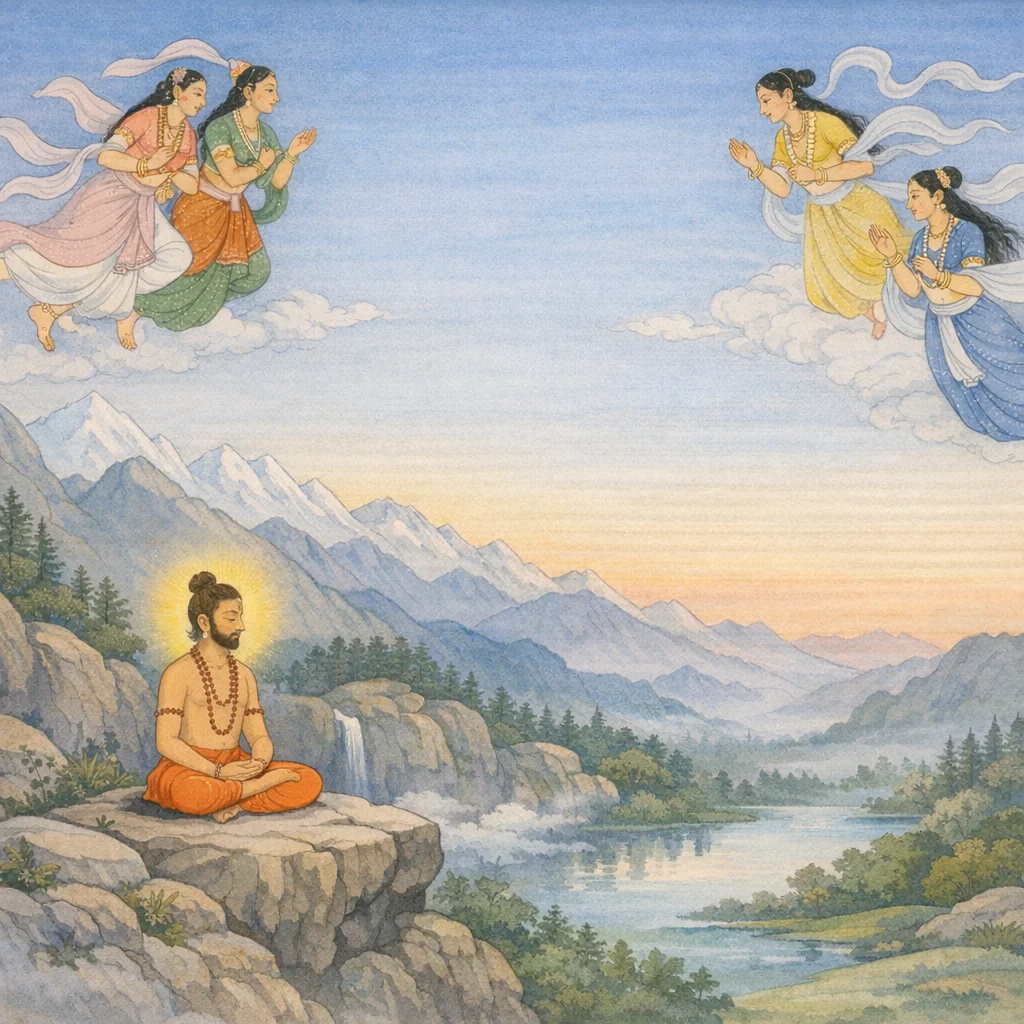
Chapter Arc: भीष्म युधिष्ठिर से कहते हैं—व्यासपुत्र शुकदेव कैलास-शिखर पर आरूढ़ होकर एकान्त, समतल, विविक्त देश में योग-नियम के अनुसार अपने शरीर-मन को साधने लगे; यह दृश्य मानो देह में रहते हुए देहातीत होने की तैयारी है। → सूर्योदय के साथ शुकदेव प्राङ्मुख होकर विनीत भाव से बैठते हैं, पाद से आरम्भ कर क्रमशः अंगों में प्राण-धारण/संयम करते हैं। इधर देव-अप्सराएँ विस्मित-व्याकुल होकर पूछती हैं—‘यह कौन-सा देव है जो उत्तम गति को प्राप्त हो रहा है, निःस्पृह और विमुक्त-सा?’ और दूसरी ओर प्रश्न उठता है—जो पुत्र पितृभक्त, दृढ़तपस्वी और पिता का अत्यन्त प्रिय है, उसे पिता ने कैसे विसर्जित किया? → शुकदेव देवियों/अप्सराओं से स्पष्ट वचन कहते हैं—यदि मेरे पिता ‘शुक’ नाम लेकर मुझे पुकारते हुए मेरे पीछे आएँ, तो तुम सब समाहित होकर उन्हें प्रत्युत्तर देना; इस एक वाक्य में शुक का संन्यास-निश्चय, पिता-वात्सल्य की परीक्षा, और जगत् के आकर्षणों पर उनकी अडिग विजय एक साथ प्रकट होती है। → अप्सराएँ शुक के तेज और संकल्प से सम्भ्रान्त होकर आकाश को अपने शब्दों से भर देती हैं; शुकदेव की ऊर्ध्वगति/प्रस्थान की कथा भीष्म के मुख से युधिष्ठिर तक पहुँचकर मोक्षधर्म के उपदेश-प्रवाह में प्रतिष्ठित हो जाती है—निःस्पृहता ही सर्वोच्च गति का द्वार है। → शुक के पीछे-पीछे व्यास के आने पर अप्सराएँ क्या उत्तर देती हैं, और पिता-पुत्र का वह अन्तिम संवाद किस रूप में घटित होता है—यह आगे की कड़ी में उत्कंठा बनकर ठहरता है।
Shlokas
Verse 1
अफ्-#-#का+ द्वात्रिशर्दाधिकत्रिशततमो<ध्याय: शुकदेवजीकी ऊर्ध्वगतिका वर्णन भीष्म उवाच गिरिशृजूं समारुह्मु सुतो व्यासस्थ भारत । समे देशे विविक्ते स निःशलाक उपाविशत्,भीष्मजी कहते हैं--भरतनन्दन! कैलास-शिखरपर आरूढ़ हो व्यासपुत्र शुकदेव एकान्तमें तृणरहित समतल भूमिपर बैठ गये और शास्त्रोक्त विधिसे पैरसे लेकर सिरतक सम्पूर्ण अंगोंमें क्रमश: आत्माकी धारणा करने लगे। वे क्रमयोगके पूर्ण ज्ञाता थे
Bhishma said: O Bharata, having ascended the peak of Kailasa, Shuka, the son of Vyasa, sat down in a solitary, level spot free of grass. Following the procedure taught in the scriptures, he began the disciplined fixing of the Self throughout all his limbs in due sequence, from the feet up to the head. Fully accomplished in the graded method of yoga, he entered deep collectedness—preparing for the upward course of the soul.
Verse 2
धारयामास चात्मानं यथाशास्त्रं यथाविधि । पादप्रभृतिगात्रेषु क्रमेण क्रमयोगवित्,भीष्मजी कहते हैं--भरतनन्दन! कैलास-शिखरपर आरूढ़ हो व्यासपुत्र शुकदेव एकान्तमें तृणरहित समतल भूमिपर बैठ गये और शास्त्रोक्त विधिसे पैरसे लेकर सिरतक सम्पूर्ण अंगोंमें क्रमश: आत्माकी धारणा करने लगे। वे क्रमयोगके पूर्ण ज्ञाता थे
Bhishma said: In accordance with the scriptures and the prescribed discipline, he steadied his inner self. Beginning with the feet and proceeding limb by limb in due sequence, he fixed his awareness throughout the body—being one who fully knew the method of step-by-step yogic concentration.
Verse 3
ततः स प्राड्मुखो विद्वानादित्ये नचिरोदिते । पाणिपादं समादाय विनीतवदुपाविशत्,थोड़ी ही देरमें जब सूर्योदय हुआ, तब ज्ञानी शुकदेव हाथ-पैर समेटकर विनीतभावसे पूर्व दिशाकी ओर मुँह करके बैठे और योगमें प्रवृत्त हो गये। उस समय बुद्धिमान् व्यास- नन्दन जहाँ योगयुक्त हो रहे थे, वहाँ न तो पक्षियोंका समुदाय था, न कोई शब्द सुनायी पड़ता था और न दृष्टिको आकृष्ट करनेवाला कोई दृश्य ही उपस्थित था
Bhishma said: Then that learned one, facing east as the sun had only just risen, drew in his hands and feet and sat down with humble composure. Thus composed, he entered into yoga—seeking inward stillness and self-mastery at the auspicious moment of dawn.
Verse 4
न तत्र पक्षिसंघातो न शब्दो नातिदर्शनम् | यत्र वैयासकिर्धीमान् योक्तुं समुपचक्रमे,थोड़ी ही देरमें जब सूर्योदय हुआ, तब ज्ञानी शुकदेव हाथ-पैर समेटकर विनीतभावसे पूर्व दिशाकी ओर मुँह करके बैठे और योगमें प्रवृत्त हो गये। उस समय बुद्धिमान् व्यास- नन्दन जहाँ योगयुक्त हो रहे थे, वहाँ न तो पक्षियोंका समुदाय था, न कोई शब्द सुनायी पड़ता था और न दृष्टिको आकृष्ट करनेवाला कोई दृश्य ही उपस्थित था
Bhishma said: “In that place there was no flocking of birds, no sound at all, and nothing striking to the eye—where the wise son of Vyāsa, Śuka, began to enter into Yoga. The surroundings were utterly quiet and free from distractions, as he gathered himself for inner union.”
Verse 5
स ददर्श तदा5>त्मानं सर्वसंगविनि:सृतम् । प्रजहास ततो हासं शुक: सम्प्रेक्ष्य तत्परम्,उस समय उन्होंने सब प्रकारके संगोंसे रहित आत्माका दर्शन किया। उस परमतत्त्वका साक्षात्कार करके शुकदेवजी जोर-जोरसे हँसने लगे
Then he beheld the Self, freed from every attachment. Having directly realized that Supreme Reality, Śuka burst into laughter again and again—an expression of utter freedom and transcendence beyond worldly bonds.
Verse 6
स पुनर्योगमास्थाय मोक्षमार्गोपलब्धये । महायोगेश्वरो भूत्वा सो5त्यक्रामद् विहायसम्,फिर मोक्षमार्गकी उपलब्धिके लिये योगका आश्रय ले महान् योगेश्वर होकर वे आकाश में उड़नेके लिये तैयार हो गये
Bhīṣma said: “Then, taking up yoga once more to realize the path of liberation, he became a great lord of yogins; and, transcending ordinary limits, he moved through the sky.”
Verse 7
ततः प्रदक्षिणं कृत्वा देवर्षि नारदं ततः । निवेदयामास च त॑ स्वं योगं परमर्षये,तदनन्तर देवर्षि नारदके पास जा उनकी प्रदक्षिणा की और उन परम ऋषिसे अपने योगके सम्बन्धमें इस प्रकार निवेदन किया
Then, having circumambulated the divine seer Nārada in reverence, he respectfully submitted to that supreme ṛṣi an account of his own yogic discipline.
Verse 8
शुक उवाच दृष्टो मार्ग: प्रवृत्तोडस्मि स्वस्ति ते5स्तु तपोधन । त्वत्प्रसादाद् गमिष्यामि गतिमिष्टां महाद्युते,शुकदेव बोले--महातेजस्वी तपोधन! आपका कल्याण हो। अब मुझे मोक्षमार्गका दर्शन हो गया। मैं वहाँ जानेको तैयार हूँ। आपकी कृपासे मैं अभीष्ट गति प्राप्त करूँगा
Śuka said: “O Tapodhana of great splendor, may well-being be yours. Now I have beheld the path of mokṣa; I am ready to go there. By your grace I shall attain the destiny I desire.”
Verse 9
नारदेनाभ्यनुज्ञात: शुको द्वैपायनात्मज: । अभिवाद्य पु]नर्योगमास्थायाकाशमाविशत्,नारदजीकी आज्ञा पाकर व्यासकुमार शुकदेवजी उन्हें प्रणाम करके पुनः योगमें स्थित हो आकाशमें प्रविष्ट हुए। कैलासशिखरसे उछलकर वे तत्काल आकाशमें जा पहुँचे और सुनिश्चित ज्ञान पाकर वायुका रूप धारण करके श्रीमान् शुकदेव अन्तरिक्षमें विचरने लगे
With Nārada’s permission, Śuka—the son of Dvaipāyana (Vyāsa)—bowed in reverence and, once again establishing himself in yogic absorption, entered the sky.
Verse 10
कैलासपृष्ठादुत्पत्य स पपात दिव॑ तदा । अन्तरिक्षचर: श्रीमान् वायुभूत: सुनिश्चित:,नारदजीकी आज्ञा पाकर व्यासकुमार शुकदेवजी उन्हें प्रणाम करके पुनः योगमें स्थित हो आकाशमें प्रविष्ट हुए। कैलासशिखरसे उछलकर वे तत्काल आकाशमें जा पहुँचे और सुनिश्चित ज्ञान पाकर वायुका रूप धारण करके श्रीमान् शुकदेव अन्तरिक्षमें विचरने लगे
Having sprung up from the ridge of Mount Kailāsa, he at once rose into the sky. Endowed with firm certainty of knowledge, the illustrious Śuka—moving through the mid-air—assumed the nature of wind and ranged freely through the atmosphere.
Verse 11
तमुद्यन्तं द्विजश्रेष्ठ वैनतेयसमद्युतिम् ददृशु: सर्वभूतानि मनोमारुतरंहसम्,उस समय समस्त प्राणियोंने ऊपर जाते हुए द्विजश्रेष्ठ शुकदेवको विनतानन्दन गरुड़के समान कान्तिमान् तथा मन और वायुके समान वेगशाली देखा
Then all beings beheld Śukadeva, foremost among the twice-born, rising upward—radiant like Vainateya (Garuḍa) and swift as thought and wind.
Verse 12
व्यवसायेन लोकांस्त्रीन् सर्वान् सो5थ विचिन्तयन् । आस्थितो दीर्घमध्वानं पावकार्कसमप्रभ:,वे निश्चयात्मक बुद्धिके द्वारा सम्पूर्ण त्रिलोकीको आत्मभावसे देखते हुए बहुत दूरतक आगे बढ़ गये। उस समय उनका तेज सूर्य और अग्निके समान प्रकाशित हो रहा था
With resolute, decisive understanding, he contemplated all the three worlds as his own Self. Then he set out upon a long journey onward, his radiance shining like fire and the sun.
Verse 13
तमेकमनसं यान्तमव्यग्रमकुतोभयम् । ददृशु: सर्वभूतानि जड़मानि चराणि च,उन्हें निर्भय होकर शान्त और एकाग्रचित्तसे ऊपर जाते समय समस्त चराचर प्राणियोंने देखा और अपनी शक्ति तथा रीतिके अनुसार उनका यथोचित पूजन किया। देवताओं ने उनपर दिव्य फूलोंकी वर्षा की
All beings—moving and unmoving—beheld him as he proceeded upward, fearless, serene, and with a mind gathered into single-pointed concentration. Each, according to its own capacity and proper custom, offered him fitting reverence; and the gods showered him with celestial flowers.
Verse 14
यथाशक्ति यथान्यायं पूजां वै चक्रिरे तदा । पुष्पवषैश्न दिव्यैस्तमवचक्रुर्दिवौकस:,उन्हें निर्भय होकर शान्त और एकाग्रचित्तसे ऊपर जाते समय समस्त चराचर प्राणियोंने देखा और अपनी शक्ति तथा रीतिके अनुसार उनका यथोचित पूजन किया। देवताओं ने उनपर दिव्य फूलोंकी वर्षा की
Then they rendered worship according to their strength and in accordance with proper rite; and the dwellers of heaven, the gods, covered him with a rain of divine flowers.
Verse 15
तं॑ दृष्टवा विस्मिता: सर्वे गन्धर्वाप्सरसां गणा: । ऋषयश्नैव संसिद्धा: परं विस्मयमागता:
Seeing him, all the companies of Gandharvas and Apsarases were struck with wonder; and the perfected sages too were filled with the highest amazement.
Verse 16
उन्हें इस प्रकार जाते देख समस्त गन्धर्व, अप्सराओंके समुदाय तथा सिद्ध ऋषि-मुनि महान् आश्चर्यमें पड़ गये ।। अन्तरिक्षगत: को<5यं तपसा सिद्धिमागत: । अधःकायोर्थध्ववक्त्रश्ष नेत्रै: समभिरज्यते,और आपसमें कहने लगे--“तपस्यासे सिद्धिको प्राप्त हुआ यह कौन महात्मा आकाश कभमार्गसे जा रहा है, जिसका मुख-मण्डल ऊपरकी ओर और शरीरका निचला भाग नीचेकी ओर ही है? हमारी आँखें बरबस इसकी ओर खिंच जाती हैं"
Śuka said: Seeing him proceed in that extraordinary manner, all the Gandharvas, the hosts of Apsarases, and the perfected sages were struck with great wonder. They began saying to one another, “Who is this exalted one, moving through the sky, who has attained perfection through austerity—whose face is turned upward while the lower part of his body is downward? Our eyes are irresistibly drawn toward him.”
Verse 17
ततः परमधर्मात्मा त्रिषु लोकेषु विश्लुत: । भास्करं समुदी क्षन् स प्राडमुखो वाग्यतो5गमत्,तीनों लोकोंमें प्रसिद्ध परम धर्मात्मा शुकदेवजी पूर्व दिशाकी ओर मुँह करके सूर्यको देखते हुए मौनभावसे आगे बढ़ रहे थे
Then Śuka, the supremely righteous one renowned throughout the three worlds, proceeded onward in silence, facing east and gazing upon the Sun—his movement marked by restraint of speech and disciplined composure.
Verse 18
शब्देनाकाशमखिल पूरयन्निव सर्वशः । तमापतन्तं सहसा दृष्टवा सर्वाप्सरोगणा:
As though filling the entire sky on every side with his resounding sound, he came rushing down. Seeing him suddenly descending, all the assembled bands of Apsarases were struck with alarm and attention.
Verse 19
पज्चचूडाप्र भूतयो भृशमुत्फुल्ललोचना:
Śuka said: “They were beings of the Pañcacūḍā type, their eyes wide and fully opened in intense excitement.”
Verse 20
दैवतं कतमं होतदुत्तमां गतिमास्थितम् । सुनिश्चितमिहायाति विमुक्तमिव नि:स्पृहम्
Śuka said: “Which deity is that—established in the highest state—toward whom one comes here with certainty, as if already liberated, free from craving and possessiveness?”
Verse 21
पजञ्चचूडा आदि अप्सराओंके नेत्र विस्मयसे अत्यन्त खिल उठे थे। वे परस्पर कहने लगीं कि उत्तम गतिका आश्रय लेकर यह कौन-सा देवता यहाँ आ रहा है? इसका निश्चय अत्यन्त दृढ़ है। यह सब प्रकारके बन्धनों तथा संशयोंसे मुक्त-सा हो गया है और इसके भीतर किसी वस्तुकी कामना नहीं रह गयी है ।। ततः समभिचक्राम मलयं नाम पर्वतम् | उर्वशी पूर्वचित्तिश्न यं नित्यमुपसेवत:,कुछ ही देरमें वे मलय नामक पर्वतपर जा पहुँचे, जहाँ उर्वशी और पूर्वचित्ति--ये दो अप्सराएँ सदा निवास करती हैं
The eyes of the apsarases—Pajancacūḍā and the rest—opened wide and shone with utter amazement. They said to one another, “Relying on the highest course (gati), what god is coming here? His resolve is unshakably firm. He seems freed from every bond and doubt, and within him no desire remains.” Then he went on toward the mountain called Malaya, a place ever frequented by the apsarases Urvaśī and Pūrvacitti.
Verse 22
तस्य ब्रद्यार्षिपुत्रस्य विस्मयं ययतु: परम् । अहो बुद्धिसमाधान वेदाभ्यासरते द्विजे,ब्रह्मर्षि व्यासजीके पुत्रकी यह उत्तम गति देख उन दोनोंको बड़ा विस्मय हुआ। वे आपसमें कहने लगीं, “अहो! इस वेदाभ्यासपरायण ब्राह्मणकी बुद्धिमें कितनी अद्भुत एकाग्रता है? पिताकी सेवासे थोड़े ही समयमें उत्तम बुद्धि पाकर यह चन्द्रमाके समान आकाशकमें विचर रहा है
Śuka said: “Seeing the supreme state attained by that son of Brahmarṣi Vyāsa, the two were filled with the greatest wonder. They said to one another, ‘Ah! What extraordinary steadiness and one-pointed concentration of intellect there is in this twice-born, devoted to Vedic study!’”
Verse 23
अचिरेणैव कालेन नभश्नरति चन्द्रवत् । पितृशुश्रूषया बुद्धि सम्प्राप्तोडयमनुत्तमाम्,ब्रह्मर्षि व्यासजीके पुत्रकी यह उत्तम गति देख उन दोनोंको बड़ा विस्मय हुआ। वे आपसमें कहने लगीं, “अहो! इस वेदाभ्यासपरायण ब्राह्मणकी बुद्धिमें कितनी अद्भुत एकाग्रता है? पिताकी सेवासे थोड़े ही समयमें उत्तम बुद्धि पाकर यह चन्द्रमाके समान आकाशकमें विचर रहा है
Śuka said: “In a very short time, this one has come to move through the sky like the moon. By devoted service to his father, he has attained an unsurpassed clarity of intellect.”
Verse 24
पितृभक्तो दृढतपा: पितु: सुदयित: सुतः । अनन्यमनसा तेन कथं पित्रा विसर्जित:,“यह बड़ा ही तपस्वी और पितृभक्त था और अपने पिताका बहुत ही प्यारा बेटा था। उनका मन सदा इसीमें लगा रहता था; फिर भी उन्होंने इसे जानेकी आज्ञा कैसे दे दी?”
Śuka said: “He was steadfast in austerity and devoted to his father, and he was a son exceedingly dear to him. His mind was fixed on him alone; even so, how could the father have given him leave to depart?”
Verse 25
उर्वश्या वचन श्रुत्वा शुक: परमधर्मवित् । उदैक्षत दिश: सर्वा वचने गतमानस:,उर्वशीकी बात सुनकर परम धर्मज्ञ शुकदेवजीने सम्पूर्ण दिशाओंकी ओर देखा। उस समय उनका चित्त उसकी बातोंकी ओर चला गया था
Hearing Urvaśī’s words, Śuka—supremely versed in dharma—looked out in all directions. For at that moment his mind had been drawn toward what she had said.
Verse 26
सोअन्तरिक्षं महीं चैव सशैलवनकाननाम् । विलोकयामास तदा सरांसि सरितस्तथा,आकाश, पर्वत, वन और काननोंसहित पृथ्वी एवं सरोवरों और सरिताओंकी ओर भी उन्होंने दृष्टि डाली
Then Śuka cast his gaze over the mid-air and the earth as well—together with its mountains, forests, and groves—and he also looked upon the lakes and the flowing rivers. The scene underscores a contemplative, all-encompassing vision in which the world is surveyed as a unified field of nature, inviting detachment and discernment rather than possessiveness.
Verse 27
ततो द्वैपायनसुतं बहुमानात् समन्ततः । कृताञ्जलिपुटा: सर्वा निरी क्षन्ते सम देवता:,उस समय इन सबकी अधिष्ठात्री देवियोंने सब ओरसे बड़े आदरके साथ द्वैपायनकुमार शुकदेवजीको देखा। वे सब-की-सब अंजलि बाँधे खड़ी थीं
Then, from every side and with profound reverence, all the presiding goddesses beheld Śuka, the son of Dvaipāyana. Standing with hands joined in añjali, they gazed upon him in respectful attention—signaling the moral authority of renunciation and spiritual attainment that even divine powers honor.
Verse 28
अब्रवीत् तास्तदा वाक््यं शुक: परमधर्मवित् | पिता यद्यनुगच्छेन्मां क्रोशभान: शुकेति वै,तब परम धर्मज्ञ शुकदेवजीने उन सबसे कहा--'देवियो! यदि मेरे पिताजी मेरा नाम लेकर पुकारते हुए इधर आ निकलें तो आप सब लोग सावधान होकर मेरी ओरसे उन्हें उत्तर देना। आप लोगोंका मुझपर बड़ा स्नेह है; इसलिये आप सब मेरी इतनी-सी बात मान लेना'
Then Śuka, the knower of the highest dharma, spoke these words to them: “If my father should come after me, calling out loudly, ‘Śuka!’, then be alert and reply to him on my behalf. You bear great affection for me; therefore, please comply with this small request of mine.”
Verse 29
ततः प्रतिवचो देयं सर्वरेव समाहितै: । एतन्मे स्नेहत: सर्वे वचन कर्तुमर्हथ,तब परम धर्मज्ञ शुकदेवजीने उन सबसे कहा--'देवियो! यदि मेरे पिताजी मेरा नाम लेकर पुकारते हुए इधर आ निकलें तो आप सब लोग सावधान होकर मेरी ओरसे उन्हें उत्तर देना। आप लोगोंका मुझपर बड़ा स्नेह है; इसलिये आप सब मेरी इतनी-सी बात मान लेना'
Then Śuka said: “All of you, remaining fully attentive, should give the reply on my behalf. Out of affection for me, you all ought to do this one thing I ask: if my father comes here calling me by name, answer him carefully from my side.”
Verse 30
शुकस्य वचन श्रुत्वा दिश: सर्वा: सकानना: । समुद्रा: सरित: शैला: प्रत्यूचुस्तं समन््तत:,शुकदेवजीकी यह बात सुनकर कानर्नोसहित सम्पूर्ण दिशाओं, समुद्रों, नदियों, पर्वतों और पर्वतोंकी अधिष्ठात्री देवियोंने सब ओरसे यह उत्तर दिया--
Hearing Śuka’s words, all the directions together with their forests—along with the oceans, rivers, and mountains—responded to him from every side. The whole natural world, as if endowed with voice and authority, returned an answer to the sage’s inquiry, suggesting that moral truth is not confined to human speech but is echoed by the order of creation itself.
Verse 31
यथाअज्ञापयसे विप्र बाढमेवं भविष्यति । ऋषेत्याहरतो वाक्यं प्रतिवक्ष्यामहे वयम्,“ब्रह्म! आप जैसी आज्ञा देते हैं, निश्चय ही वैसा ही होगा। जब महर्षि व्यास आपको पुकारेंगे, तब हम सब लोग उन्हें उत्तर देंगी'
Śuka said: “As you command, O brahmin, so indeed it shall be. When the great sage Vyāsa calls to us, ‘O Ṛṣi!’, we shall all reply to his words.”
Verse 183
सम्भ्रान्तमनसो राजन्नासन् परमविस्मिता: । वे अपने शब्दसे सम्पूर्ण आकाशको पूर्ण-सा कर रहे थे। राजन! उन्हें सहसा आते देख सम्पूर्ण अप्सराएँ मन ही-मन घबरा उठीं और अत्यन्त आश्चर्यमें पड़ गयीं
Śuka said: “O King, their minds were thrown into agitation and they were struck with the utmost astonishment. With their own voices they seemed to fill the entire sky to overflowing. O King, seeing them arrive all at once, all the Apsarases became inwardly alarmed and fell into profound wonder.”
Verse 331
इस प्रकार श्रीमह्या भारत शान्तिपर्वके अन्तर्गत गोक्षधर्मपर्वमें शुकदेवका प्रस्थानविषयक तीन सौ इकतीसवाँ अध्याय पूरा हुआ
Thus ends the three-hundred-and-thirty-first chapter of the Mokṣadharma section within the Śānti Parva of the great Mahābhārata, dealing with Śukadeva’s departure.
Verse 332
इति श्रीमहा भारते शान्तिपर्वणि मोक्षधर्मपर्वणि शुकाभिपतने द्वात्रिंशदधिकत्रिशततमो<ध्याय:
Thus, in the revered Mahābhārata, within the Śānti Parva—specifically the Mokṣadharma section—ends the chapter entitled “Śuka’s Descent/Approach,” being the three-hundred-and-thirty-second chapter (332).
Frequently Asked Questions
The dilemma concerns ritual referents: when one performs offerings to devas and ancestors, who is truly being worshipped, and what is the intended fruit of these rites within a coherent dharmic worldview?
Plural ritual obligations are unified by a single metaphysical center: Nārāyaṇa/Viṣṇu is presented as the supreme sacrificial reality and the indwelling lord, so social and ritual duties ultimately converge upon the same ultimate referent.
Yes. It offers an origin narrative for the three piṇḍas: three earth-clods shaken from Varāha’s tusks are established on kuśa grass, becoming the archetype for father–grandfather–great-grandfather offerings and grounding pitṛ terminology in a cosmological act.