Adhyaya 276
Śreyas-nirdeśa (Discerning the Superior Good): Nārada–Gālava Saṃvāda
Upa-parva: Mokṣa-dharma (Mokṣadharma-parvan) — Śreyas and conduct-discourse frame
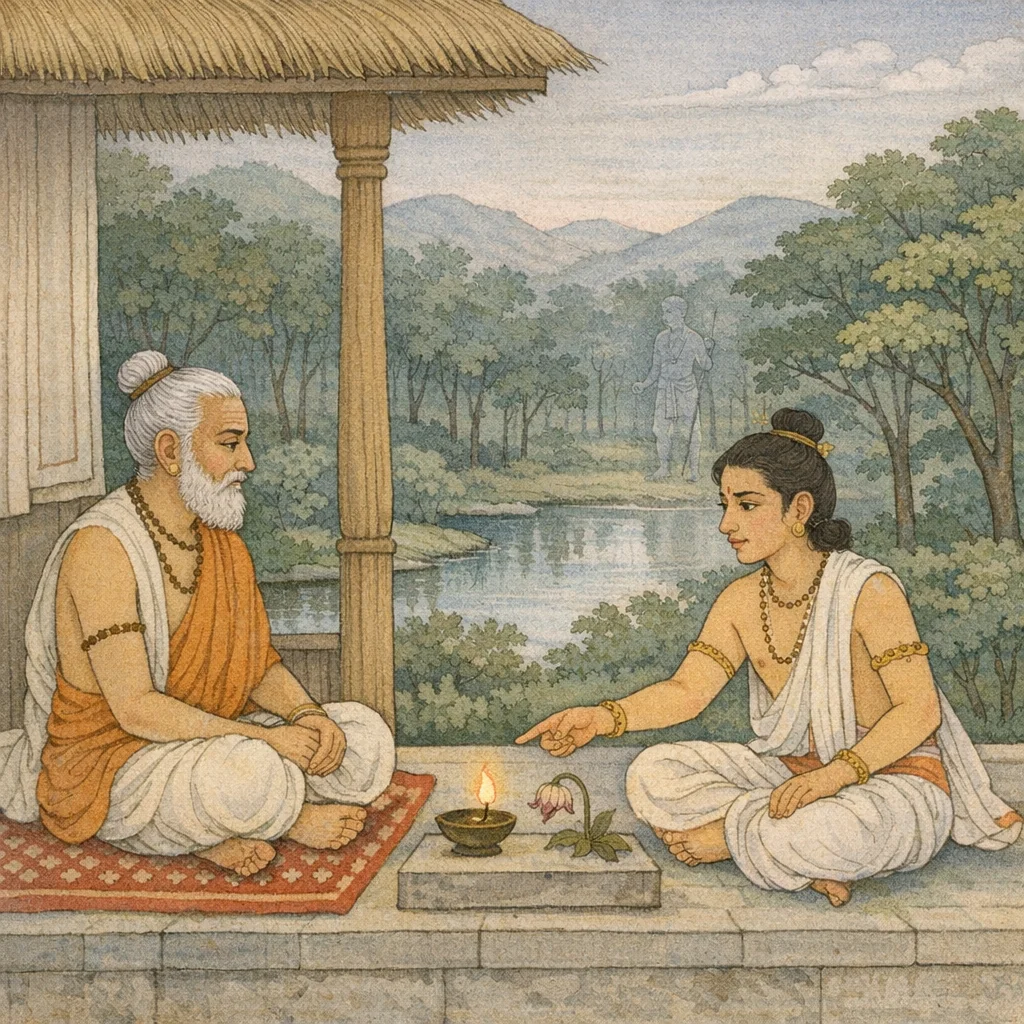
Yudhiṣṭhira asks Bhīṣma to identify śreyas for one who lacks settled understanding, remains in doubt, and cannot determine decisive action. Bhīṣma responds with baseline disciplines—ongoing guru-pūjā, service to elders, and attentive learning—then introduces an ancient exemplum: Gālava approaches Nārada, praising his restraint and knowledge, and requests clarity because multiple āśramas and many śāstras appear to compete, making śreyas seem obscured. Nārada answers that the four āśramas are distinct yet can each lead to the intended end when followed correctly; he then enumerates practical, non-sectarian indicators of śreyas: beneficence to allies and restraint toward aggressors; stewardship of the trivarga (dharma-artha-kāma) without imbalance; withdrawal from sinful action, steady virtue, and good conduct with the good; gentleness, straightforward dealings, and sweet speech; proper sharing with deities, ancestors, guests, and dependents; truth-speaking and the difficulty of truth-knowing oriented to universal welfare; abandoning egoism and curbing excessive intimacy; disciplined Vedic study and inquiry; moderated sense-enjoyments and avoidance of sloth, intoxication, malicious speech, and extremes. The chapter emphasizes reputational ethics: do not seek superiority by criticizing others; avoid self-praise; genuine learning shines even when concealed, while empty speech fades. Finally, Nārada gives civic-ethical guidance on where to reside—among dharmic, generous communities with appropriate governance and respect for the learned—urging departure from places marked by disorder, exploitation, or habitual wrongdoing. The teaching closes by noting that śreyas cannot be exhaustively enumerated, but becomes clearer through disciplined practice and tapas.
Chapter Arc: युधिष्ठिर के प्रश्न के उत्तर में भीष्म एक प्राचीन ‘पिता–पुत्र संवाद’ का आह्वान करते हैं—शरीर और संसार की अनित्यता को जानकर आत्मकल्याण चाहने वाले पुरुष को क्या करना चाहिए? → स्वाध्याय-परायण ब्राह्मण के मेधावी पुत्र की वाणी पिता के गृहस्थ-आसक्त कर्म-क्रम पर चोट करती है: मनुष्य ‘यह कर लिया, वह करना है’ कहते-कहते ही मृत्यु के हाथों खिंच जाता है; कर्मों के फल अधूरे रह जाते हैं, योजनाएँ अपूर्ण। पुत्र सत्य, वैराग्य, अहिंसा, काम-क्रोध-त्याग और मन-वाणी की एकाग्रता का आग्रह करता है, जिससे पिता के स्थापित जीवन-ढाँचे में द्वंद्व उठता है। → उपदेश का शिखर ‘अमृत और मृत्यु’ के रहस्य में आता है: मोह से मृत्यु प्राप्त होती है और सत्य से अमृत-पद; सत्य-व्रत ही अन्तक (मृत्यु) पर विजय का मार्ग है। इसी के साथ पुत्र का निर्णायक संकल्प उभरता है—काम-क्रोध त्यागकर अहिंसा-धर्म का पालन और सत्य का आश्रय। → पुत्र की बात सुनकर पिता वैसा ही आचरण करता है; भीष्म युधिष्ठिर से कहते हैं कि तुम भी सत्य-धर्म-परायण होकर इसी मार्ग पर चलो—तप, त्याग और योग का समन्वय, तथा मन-वाणी की एकाग्रता से सर्वसिद्धि संभव है।
Shlokas
Verse 1
अपन क्ाता बछ। 5 सप्तसप्तत्याथिकाद्वेशततमो< ध्याय: शरीर और संसारकी अनित्यता तथा आत्मकल्याणकी इच्छा रखनेवाले पुरुषके कर्तव्यका निर्देश--पिता-पुत्रका संवाद युधिछिर उवाच अतिक्रामति काले<स्मिन् सर्वभूतभयावहे । कि श्रेय: प्रतिपद्येत तन्मे ब्रूहि पितामह,युधिष्ठिरने पूछा--पितामह! सम्पूर्ण प्राणियोंको भय देनेवाला यह काल धीरे-धीरे बीता जा रहा है। (कौन कबतक जीवित रहेगा, इसका कुछ निश्चय नहीं है।) ऐसी दशामें मनुष्य किस कार्यको अपने लिये कल्याणकारी समझे, यह मुझे बताइये?
Yudhiṣṭhira said: “Grandfather, this time—terrifying to all living beings—keeps passing away. In such a condition, what course should a person adopt as truly beneficial? Tell me.”
Verse 2
भीष्म उवाच अत्राप्युदाहरन्तीममितिहासं पुरातनम् । पितुः पुत्रेण संवाद तं निबोध युधिछ्टिर,भीष्मजीने कहा--युधिष्ठि! इस विषयमें विज्ञ पुरुष पिता-पुत्र-संवादरूप एक प्राचीन इतिहासका उदाहरण दिया करते हैं, उसे सुनो
Bhishma said: “Here too, the learned cite an ancient precedent as an illustration—a dialogue between a father and his son. Listen to that account, O Yudhishthira.”
Verse 3
द्विजाते: कस्यचित् पार्थ स्वाध्यायनिरतस्य वै । पुत्रो बभूव मेधावी मेधावी नाम नामतः,कुन्तीनन्दन! प्राचीनकालमें किसी स्वाध्यायपरायण ब्राह्मणके एक बड़ा मेधावी पुत्र उत्पन्न हुआ, जिसका नाम “मेधावी” ही था
Bhishma said: O Partha, in ancient times there lived a certain twice-born man, wholly devoted to sacred study. To him was born a son of exceptional intelligence—so renowned for his brilliance that he was called by the very name “Medhāvī” (the Wise).
Verse 4
सो<ब्रवीत् पितरं पुत्र: स्वाध्यायकरणे रतम् | मोक्षधर्मेष्वकुशलं मोक्षधर्मविचक्षण:,उसके पिता सदा स्वाध्यायमें ही तत्पर रहते थे, किंतु मोक्षधर्ममें इतने निपुण नहीं थे। पुत्र मोक्षधर्मके ज्ञानमें कुशल था; अत: उसने अपने पितासे पूछा
Bhishma said: A son, discerning in the discipline of liberation, addressed his father—who was ever devoted to the practice of Vedic study yet not skilled in the teachings concerning moksha. Knowing the path of liberation well, the son questioned his father.
Verse 5
पुत्र बवाच धीर: किंस्वित् तात कुर्यात् प्रजानन् क्षिप्रं ह्यायुर्श्श्यते मानवानाम् । पितस्तथा<5<5ख्याहि यथार्थयोगं ममानुपूर्व्या येन धर्म चरेयम्,पुत्र बोला--तात! मनुष्योंकी आयु तीव्रगतिसे बीती जा रही है। इस बातको अच्छी तरह जाननेवाला धीर पुरुष किस धर्मका अनुष्ठान करे? पिताजी! यह सब क्रमश: और यथार्थरूपसे आप मुझे बताइये, जिससे मैं भी उस धर्मका आचरण कर सकूँ
The son said: “Father, human life is swiftly being used up. Knowing this well, what religious and ethical discipline should a steadfast and discerning person undertake? O Father, explain to me—step by step and in its true meaning—the proper method, so that I too may live and practice dharma.”
Verse 6
पितोवाच अधीत्य वेदान् ब्रह्मचर्येषु पुत्र पुत्रानिच्छेत् पावनाय पितृणाम् । अग्नीनाधाय विधिवच्चेष्टयज्ञो वन॑ प्रविश्याथ मुनिर्बुभूषेत्,पिताने कहा--बेटा! द्विजको चाहिये कि वह पहले ब्रह्मचर्य-आश्रममें रहकर वेदोंका अध्ययन कर ले, फिर पितरोंका उद्धार करनेके लिये गृहस्थ-आश्रममें प्रवेश करके पुत्रोत्पादनकी इच्छा करे। वहाँ विधिपूर्वक अग्नियोंकी स्थापना करके उनमें विधिवत् अग्निहोत्र करे। इस प्रकार यज्ञकर्मका सम्पादन करके वानप्रस्थ-आश्रममें प्रविष्ट हो मुनिवृत्तिसे रहनेकी इच्छा करे
The father said: “Having studied the Vedas while living the discipline of studentship, a man should then, for the purification and uplift of his ancestors, enter the householder’s life and desire sons. Having duly established the sacred fires, he should perform the prescribed rites such as the fire-offering according to rule. After completing the sacrificial duties, he should then enter the forest-dweller stage, wishing to live as a sage.”
Verse 7
पुत्र बवाच एवमभ्याहते लोके सर्वतः परिवारिते । अमोघासु पतन्तीषु कि धीर इव भाषसे,पुत्रने पूछा--पिताजी! यह लोक तो किसीके द्वारा अत्यन्त ताड़ित और सब ओरसे घिरा हुआ जान पड़ता है। यहाँ ये अमोघ वस्तुएँ निरन्तर हमलोगोंपर टूटी पड़ती हैं। ऐसी दशामें आप धीर पुरुषके समान कैसे बातचीत कर रहे हैं?
The son said: “Father, this world seems grievously struck and hemmed in on every side. When unfailing forces keep falling upon us without respite, how is it that you speak as though you were a steadfast, composed man?”
Verse 8
पितोवाच कथमभ्याहतो लोक: केन वा परिवारित: । अमोघा: का: पतन्तीह कि नु भीषयसीव माम्,पिता बोले--पुत्र! तुम मुझे डरानेकी चेष्टा क्यों करते हो? भला, यह लोक कैसे ताड़ित होता है अथवा किसने इसे घेर रखा है? और यहाँ कौन-सी अमोघ वस्तुएँ हमपर टूटी पड़ती हैं?
The father said: “My son, why do you try to frighten me? Tell me—by what is this world struck down, or by whom is it hemmed in? And what unfailing forces are said to fall upon us here?”
Verse 9
पुत्र बवाच मृत्युनाभ्याहतो लोको जरया परिवारित: । अहोरात्रा: पतन्तीमे तच्च कस्मान्न बुद्धासे,पुत्र बोला--पिताजी! देखिये, मृत्यु सारे जगत्को पीट रही है। बुढ़ापेने इसे घेर लिया है। ये दिन और रात्रियाँ हमपर टूटी पड़ती हैं। इस बातको आप समझ क्यों नहीं रहे हैं?
The son said: “Father, look—Death is striking down the whole world, and old age has surrounded it on every side. These days and nights keep falling upon us without pause. Why do you not understand this?”
Verse 10
यदाहमेव जानामि न मृत्युस्तिष्ठतीति ह । सोऊहं कथं प्रतीक्षिष्ये ज्ञानेनापिहितश्षरन्,जब मैं यह अच्छी तरह जानता हूँ कि मौत मेरे कहनेसे क्षणभर भी रुक नहीं सकती और मैं ज्ञानरूपी कवचसे अपनेको बिना ढके हुए ही विचर रहा हूँ, तब यह समझकर भी मैं अपने कल्याणसाधनमें एक क्षणकी भी प्रतीक्षा कैसे करूँगा?
Bhīṣma said: “Since I know for certain that Death does not stand still—does not pause at anyone’s bidding—how could I delay even for a moment in pursuing my own highest good, when I am moving about unprotected, not covered by the armor of true knowledge?”
Verse 11
रात्र्यां रात्र्यां व्यतीतायामायुरल्पतरं यदा । गाधोदके मत्स्य इव सुखं विन्देत कस्तदा,जब प्रत्येक रात बीतनेके बाद आयु क्षीण होकर कुछ-न-कुछ थोड़ी होती चली जा रही है, तब छिछले पानीमें रहनेवाली मछलीके समान कौन सुख पा सकता है?
Bhīṣma said: “As each night passes, life grows ever shorter. When one’s lifespan is steadily being diminished in this way, who could truly find happiness—like a fish struggling in shallow water?”
Verse 12
पुष्पाणीव विचिन्वन्तमन्यत्र गतमानसम् | अनवाप्तेषु कामेषु मृत्युरभ्येति मानवम्,जैसे मनुष्य वनमें फ़ूल चुन रहा हो, उसी बीचमें कोई हिंसक जीव उसपर आक्रमण कर दे; उसी प्रकार जब मनुष्यका मन दूसरी ओर (विषयभोगोंमें) लगा होता है, उसी समय उसकी इच्छा पूर्ण होनेके पहले ही सहसा मौत आकर उसे दबोच लेती है
Bhīṣma said: “Just as a person, absorbed in picking flowers, keeps his mind elsewhere and fails to notice danger, so Death suddenly comes upon a human being while his desires are still unfulfilled—seizing him before he can complete what he longs for.”
Verse 13
श्वः कार्यमद्य कुर्वीत पूर्वाह्न चापराह्निकम् | न हि प्रतीक्षते मृत्यु: कृतं वास्य न वा कृतम्,इसलिये जिस कामको कल करना हो, उसे आज ही कर ले। जिसे अपराह्वमें करना हो, उसे पूर्वाह्नमें ही कर डाले; क्योंकि मृत्यु इस बातकी प्रतीक्षा नहीं करती कि इसका काम पूरा हो गया या नहीं
Bhīṣma said: “Do today the task you would otherwise do tomorrow. Do in the forenoon what you would put off to the afternoon; for Death does not wait to see whether one’s work has been completed or left undone.”
Verse 14
अद्यैव कुरु यच्छेयो मा त्वां कालो5त्यगान्महान् । को हि जानाति कस्याद्य मृत्युकालो भविष्यति,जो कल्याणकारी कार्य है, उसे आप आज ही कर डालिये। यह महान् काल आपको लाँधच न जाय; क्योंकि कौन जानता है कि आज किसकी मृत्युकी घड़ी आ पहुँचेगी
Bhishma said: “Do today itself whatever is truly for your highest good. Do not let mighty Time overtake you; for who can know whose appointed hour of death will come—perhaps even today?”
Verse 15
अकृतेष्वेव कार्येषु मृत्युर्वें सम्प्रकर्षति । युवैव धर्मशील: स्यादनिमित्तं हि जीवितम्,सारे काम अधूरे ही रह जाते हैं और मौत अपनी ओर खींच लेती है, इसलिये युवावस्थामें ही मनुष्यको धर्मका आचरण करना चाहिये, क्योंकि जीवनका कुछ ठिकाना नहीं है
Bhishma said: “While one’s duties still remain undone, death indeed drags one away. Therefore a person should become devoted to dharma while still young, for life has no fixed guarantee or predictable cause.”
Verse 16
कृते धर्मे भवेत् प्रीतिरिह प्रेत्य च शाश्वती । मोहेन हि समाविष्ट: पुत्रदारार्थमुद्यत:
Bhishma said: “When one acts in accordance with dharma, a lasting joy arises—here in this life and also after death. But a person, seized by delusion, becomes driven and restless, striving only for the sake of son, wife, and wealth.”
Verse 17
कृत्वा कार्यमकार्य वा तुष्टिमेषां प्रयच्छति । त॑ पुत्रपशुसम्पन्नं व्यासक्तमनसं नरम्
Bhishma said: “Whether by doing what ought to be done or what ought not to be done, he seeks only to win their satisfaction. Such a man—rich in sons and cattle—becomes one whose mind is bound by attachment.”
Verse 18
सुप्तं व्याघ्रं महौघो वा मृत्युरादाय गच्छति । धर्माचरण करनेसे इस लोकमें प्रसन्नता प्राप्त होती है और मृत्युके पश्चात् परलोकमें अक्षय सुखकी प्राप्ति होती है। जिसपर मोहका आवेश होता है, वही स्त्री-पुत्रोंके लिये तरह-तरहके काम-धंधोंकी खटपटमें लगा रहता है। वह करने और न करने योग्य काम करके भी इन सबको संतोष देता है। पुत्रों और पशुओंसे सम्पन्न हो जब मनुष्यका मन उन्हींमें आसक्त रहता है, उसी समय जैसे नदीका महान् जलप्रवाह अपने तटपर सोये हुए व्याप्रको बहा ले जाता है, उसी प्रकार मृत्यु उस मनुष्यको लेकर चल देती है ।। १६-१७ ६ || संचिन्वानकमेवैनं कामानामवितृप्तकम्
Bhishma said: “Just as a mighty river-flood carries away a tiger lying asleep on the bank, so does Death seize and carry away a person. One who is overpowered by delusion stays entangled in ceaseless labors for wife and children, trying to satisfy them by doing what should and should not be done. Even when he has gained sons and cattle, if his mind remains attached to them and he is still unsated in desires, Death comes and takes him away—suddenly, like a flood sweeping off the unwary.”
Verse 19
इदं कृतमिदं कार्यमिदमन्यत् कृताकृतम्
Bhishma said: “This has been done; this remains to be done; this other matter stands as done and not done.”
Verse 20
कृतानां फलमप्राप्तं कार्याणां कर्मसज्ञिनाम्
Bhīṣma said: “The fruit of deeds already performed is not obtained; and the results of undertakings—those actions that are truly ‘karma’—remain unrealized.”
Verse 21
दुर्बलं बलवन्तं च प्राज्ञ शूरं जडं कविम्
Bhīṣma said: “(One should discern rightly among) the weak and the strong, the wise and the heroic, the dull-witted and the poet.”
Verse 22
मृत्युर्जरा च व्याधिश्व दुःखं चानेककारणम्
Bhīṣma said: “Death, old age, and disease—and suffering that arises from many causes—are ever-present realities of embodied life.”
Verse 23
जातमेवान्तको<न्ताय जरा चाभ्येति देहिनम्
Bhīṣma said: “From the very moment a being is born, Death is already moving toward its end; and old age, too, advances upon the embodied.”
Verse 24
न मृत्युसेनामायान्तीं जातु कश्चित् प्रबाधते
Bhīṣma said: “No one, at any time, can obstruct the advancing army of Death.”
Verse 25
बलात् सत्यमृते त्वेकं सत्ये हामृतमाश्रितम् । एकमात्र सत्यके बिना कोई भी मनुष्य कभी सामने आती हुई मृत्युकी सेनाको बलपूर्वक नहीं दबा सकता (अत: असत्यको त्यागकर सत्यका ही आश्रय लेना चाहिये)। क्योंकि सत्यमें ही अमृत (ब्रह्म) प्रतिष्ठित है ।। मृत्योर्वा गृहमेतद् वै या ग्रामे वसतो रति:
Bhīṣma said: Apart from truth alone, no one can ever forcibly hold back the army of Death as it advances toward him; therefore one should abandon falsehood and take refuge in truth. For in truth itself the deathless reality—Brahman—is established. Indeed, delight in dwelling in a village, amid worldly attachments, is as it were a very house of Death.
Verse 26
देवानामेष वै गोष्ठो यदरण्यमिति श्रुति: । गाँव या नगरमें रहकर स्त्री-पुत्रोंमें आसक्ति रखना--यह मृत्युका घर ही है। “यदरण्यम्” इस श्रुतिके अनुसार जो वानप्रस्थ-आश्रम है, यह देवताओंकी गोशालाके समान है ।। २५६ || निबन्धनी रज्जुरेषा या ग्रामे वसतो रति:
Bhīṣma said: “Scripture declares, ‘The forest is indeed the gods’ own cattle-shed,’ a sacred refuge under divine protection. In contrast, the delight and attachment of one who lives in a village, entangled in household ties, becomes a binding rope. Thus the life of withdrawal to the forest—the vānaprastha stage—is praised as a divine sanctuary, while clinging to domestic pleasures is portrayed as a fetter leading toward death and bondage.”
Verse 27
यो न हिंसति सत्त्वानि मनोवाक्कर्महेतुभि:
Bhīṣma said: Whoever does not harm living beings—whether by the impulse of the mind, by speech, or through bodily action—embodies the discipline of non-violence as a complete ethical practice, not merely an outward restraint.
Verse 28
तस्मात् सत्यव्रताचार: सत्यव्रतपरायण:
Therefore, one should conduct oneself in accordance with a vow of truth and remain steadfastly devoted to that very vow—making truthfulness the guiding rule of one’s life and practice.
Verse 29
अमृतं चैव मृत्युश्च द्वयं देहे प्रतेष्ठितम्
Bhīṣma said: “Both immortality and death are established together within the body.” In ethical terms, embodied life holds within it the conditions for liberation (the ‘deathless’) as well as the inevitability of physical death; one’s conduct and understanding determine which aspect becomes spiritually decisive.
Verse 30
सो<हं सत्यमहिसार्थी कामक्रोधबहिष्कृत:
Bhīṣma said: “I seek the great good of truth, having cast out desire and anger.”
Verse 31
शान्तियज्ञरतो दान्तो ब्रह्मयज्ञे स्थितो मुनि:
Bhīṣma said: “The sage, devoted to the sacrifice of peace, self-restrained and disciplined, remains established in the Brahma-sacrifice—steadfast in sacred study and inner worship rather than outward contention.”
Verse 32
पशुयज्ञै: कथं हिंस्नैमादृशो यछ्टमहति
Bhīṣma said: “How could one like me be fit to perform sacrifices involving animals—rites that entail violence?”
Verse 33
अन्तवद्ध्विरुत प्राज्ञ: क्षत्रयज्जै: पिशाचवत् । मेरे-जैसा ज्ञानवान् पुरुष हिंसाप्रधान पशुयज्ञोंद्वारा कैसे यजन कर सकता है? अथवा पिशाचके समान विनाशशील क्षत्रिय--यज्ञोंके अनुष्ठानमें कैसे प्रवृत्त हो सकता है ।। ३२ $ || आत्मन्येवात्मना जात आत्मनिष्ठो5प्रज: पित:
Bhīṣma said: “How could a truly wise man—one who knows the end of all embodied things—perform sacrifices dominated by violence, such as animal-offerings? And how could a kshatriya, whose life is as perishable as a goblin’s, throw himself into the performance of such ‘kshatriya-sacrifices’?”
Verse 34
यस्य वाड्मनसी स्यातां सम्यक् प्रणिहिते सदा
Bhīṣma said: “He whose speech and mind are always properly restrained and steadily directed—”
Verse 35
नास्ति विद्यासमं चक्षुर्नास्ति विद्यासमं फलम्
Bhīṣma said: “There is no vision equal to knowledge, and there is no reward equal to knowledge.” In the ethical instruction of the Śānti Parva, this affirms that learning is both the clearest inner ‘sight’ for discerning dharma and the highest, most enduring fruit of human effort.
Verse 36
नास्ति रागसमं दुःखं नास्ति त्यागसमं सुखम्
Bhīṣma said: “There is no sorrow equal to attachment; there is no happiness equal to renunciation.” In the ethical instruction of the Śānti teachings, he presents craving and clinging as the deepest source of suffering, and letting-go as the surest ground of peace and well-being.
Verse 37
संसारमें ब्रह्मविद्याके समान कोई नेत्र नहीं है, ब्रह्मविद्याके समान कोई फल नहीं है, रागके समान कोई दुःख नहीं है और त्यागके समान कोई सुख नहीं है ।। नैतादशं ब्राह्मणस्यास्ति वित्त यथैकता समता सत्यता च | शीले स्थितिर्दण्डनिधानमार्जवं ततस्ततश्षोपरम: क्रियाभ्य:,ब्रह्ममें एकीभाव, समता, सत्यपरायणता, सदाचार-निष्ठा, दण्डका त्याग (अहिंसा), सरलता तथा सब प्रकारके सकाम कर्मोसे निवृत्ति--इनके समान ब्राह्मणका दूसरा कोई धर्म नहीं है
Bhishma said: In this samsara there is no eye like Brahmavidyā, no fruit like Brahmavidyā; no sorrow like attachment, and no happiness like renunciation. For a brāhmaṇa there is no wealth comparable to these: oneness with Brahman, even-mindedness, devotion to truth, steadfastness in good conduct, laying aside the rod (non-violence), straightforwardness, and—again and again—withdrawal from action driven by desire. These alone are the brāhmaṇa’s highest treasure and distinctive duty.
Verse 38
कि ते धनैर्बान्धवैर्वापि कि ते किं ते दारैब्राह्मण यो मरिष्यसि । आत्मानमन्विच्छ गुहां प्रविष्टं पितामहास्ते क्व गता: पिता च,ब्राह्मणदेव (पिताजी)) जब एक दिन आपको मरना ही है, तब इन धन-वैभव, बन्धु- बान्धव तथा स्त्री-पुत्रोंसे क्या प्रयोजन है? अपनी हृदयगुहामें विराजमान आत्माकी खोज कीजिये। सोचिये तो सही, आज आपके पिताजी कहाँ हैं, दादा-बाबा कहाँ चले गये
Bhīṣma said: “What use to you are riches or even kinsmen? What use are wife and household to you, O brāhmaṇa, when you are destined to die? Seek the Self that has entered the cave of the heart. Reflect: where have your forefathers gone, and where is your father now?”
Verse 39
भीष्म उवाच पुत्रस्यैतद् वच: श्रुत्वा तथाकार्षीत् पिता नृप । तथा त्वमपि वर्तस्व सत्यधर्मपरायण:,भीष्मजी कहते हैं--नरेश्वर! पुत्रका यह वचन सुनकर उसके पिताने सब कुछ उसके कथनानुसार किया। उसी प्रकार तुम भी सत्य और धर्ममें तत्पर होकर उसी प्रकार आचरण करो
Bhishma said: “O king, having heard these words of his son, the father acted exactly in accordance with what was said. In the same way, you too should conduct yourself—steadfastly devoted to truth and dharma.”
Verse 183
वृकीवोरणमासाद्य मृत्युरादाय गच्छति । वह भोग-सामग्रियोंका संयम करता और कामनाओंसे अतृप्त ही रहता है। तभी मृत्यु आकर उसे उसी तरह उठा ले जाती है, जैसे बाघिन भेड़के पास पहुँचकर उसे दबोच लेती है
Bhishma said: Death comes and carries him away, just as a tigress, reaching her prey, seizes it. Though he restrains and hoards the means of enjoyment, he remains unsatisfied in his desires; and then, in that very state of craving, Death arrives and snatches him away.
Verse 203
क्षेत्रापणगृहासक्तं मृत्युरादाय गच्छति । वह अपने खेत, दूकान और घरके ही चक््करमें पड़ा रहता है। उनके लिये तरह-तरहके कर्मोमें फँसता है; परंतु उनका फल मिलने भी नहीं पाता कि मौत उसको इस संसारसे उठा ले जाती है
Bhishma said: Death carries away the person who remains absorbed in fields, marketplaces, and household concerns. Entangled in countless actions undertaken for their sake, he is taken from the world before he can even obtain their results—showing the fragility of worldly striving and the urgency of right understanding and dharma.
Verse 216
अप्राप्तसर्वकामार्थ मृत्युरादाय गच्छति । मनुष्य दुर्बल हो या बलवान, बुद्धिमान् हो या शूरवीर अथवा मूर्ख हो या विद्वान--मृत्यु उसकी समस्त कामनाओं के पूर्ण होनेसे पहले ही उसे उठा ले जाती है
Bhīṣma says: Death carries a person away before all desires and aims are fulfilled. Whether one is weak or strong, intelligent or heroic, foolish or learned—mortality interrupts every human plan, reminding one to ground life in dharma rather than in endless postponement for worldly completion.
Verse 223
असंत्याज्यं यदा मर्त्य: कि स्वस्थ इव तिष्ठसि | पिताजी! जब इस शरीरमें मृत्यु, जरा, व्याधि और अनेक कारणोंसे होनेवाले दुःखोंका ताँता बँधा ही रहता है और मनुष्य किसी प्रकार भी उनसे अपना पिण्ड नहीं छुड़ा सकते, तब ऐसी दशामें आप निश्चिन्त-से क्यों बैठे हैं?
Bhishma said: “When what cannot be cast off—mortality itself—stands before a human being, why do you remain as though at ease? In this body, death, old age, disease, and a continuous chain of sufferings arising from many causes are ever present; and people cannot truly free themselves from them. In such a condition, why do you sit unconcerned?”
Verse 233
अनुषक्ता द्वयेनैते भावा: स्थावरजड्रमा: । मनुष्यके जन्म लेते ही उसका अन्त कर डालनेके लिये अन्तक (यमराज) उसके पीछे लग जाता है और बुढ़ापा भी देहधारीके पास आता ही है। समस्त चराचर पदार्थ इन दोनोंसे बँधे हुए हैं
Bhishma said: All states of being—whether immobile or moving—are bound by two companions. The moment a human is born, Death (Yama) follows close behind to bring life to its end, and old age inevitably approaches every embodied creature. Thus, the entire world of the moving and the unmoving is held fast by these two.
Verse 263
छित्त्वैनां सुकृतो यान्ति नैनां छिन्दन्ति दुष्कृत: । गाँवोंमें रहकर विषय-भोगोंमें आसक्त होना--यह जीवको बाँधनेवाली रस्सीके समान है। केवल पुण्यात्मा पुरुष ही इसे काटकर निकल पाते हैं। पापी पुरुष इसे नहीं काट सकते
Bhishma said: “Those of righteous merit cut through this binding cord and pass beyond it; the wicked do not cut it. To dwell among villages and cling to the enjoyments of the senses is like a rope that binds the embodied being fast. Only the virtuous—through merit and self-mastery—can sever this bond and go onward; the sinful, driven by craving, cannot break free.”
Verse 273
जीवितार्थापनयनै: प्राणिभिर्न स बद्धाते । जो मन, वाणी, क्रिया तथा अन्य कारणोंद्वारा किसी भी प्राणीकी जीविकाका अपहरण करके उसकी हिंसा नहीं करता, उसको दूसरे प्राणी भी वध या बन्धनके कष्टमें नहीं डालते
Bhishma teaches that one who does not deprive any living being of its means of livelihood—whether by mind, speech, action, or any other instrument—and thus does not harm it, is not himself subjected by other creatures to the suffering of killing or captivity. The ethical point is that non-injury includes not only refraining from physical violence but also refraining from economic or existential harm that destroys another’s life-support.
Verse 276
इस प्रकार श्रीमहाभारत शान्तिपर्वके अन्तर्गत मोक्षधर्मपर्वमें माण्डव्य और जनकका संवादविषयक दो सौ छिद्त्तरवाँ अध्याय पूरा हुआ
Thus ends the two-hundred-and-seventy-sixth chapter of the Mokṣadharma section within the Śānti Parva of the Śrī Mahābhārata, whose subject is the dialogue between Māṇḍavya and King Janaka—bringing that teaching exchange on liberation and right conduct to its close.
Verse 277
इति श्रीमहाभारते शान्तिपर्वणि मोक्षधर्मपर्वणि पितापुत्रसंवादे सप्तसप्तत्यधिकद्वधिशततमो<ध्याय:
Thus, in the Śrī Mahābhārata, within the Śānti Parva—specifically the Mokṣa-dharma section—ends the dialogue between father and son, concluding the two-hundred-and-seventy-seventh chapter. This closing colophon frames the teaching as part of the Mahābhārata’s ethical and liberative instruction, situating the discourse within the tradition of dharma and mokṣa-oriented reflection.
Verse 296
मृत्युरापद्यते मोहात् सत्येनापद्यते5मृतम् । अमृत और मृत्यु--ये दोनों इस शरीरमें ही विद्यमान हैं। मोहसे मृत्यु प्राप्त होती है और सत्यसे अमृतपदकी उपलब्धि होती है
Bhīṣma said: “Through delusion one falls into death; through truth one attains the deathless. Both immortality and death are present within this very body: delusion leads to mortality, while steadfast truthfulness opens the way to the state beyond death.” The teaching frames liberation not as something distant, but as a moral and cognitive transformation enacted in embodied life.
Verse 303
समाश्रित्य सुखं क्षेमी मृत्युं हास्याम्यमृत्युवत् । अतः अब मैं काम और क्रोधको त्यागकर अहिंसाधर्मके पालनकी इच्छा करूँगा। सत्यका आश्रय लेकर कल्याणका भागी बनूँगा और अमरकी भाँति मृत्युको दूर हटा दूँगा
Bhishma said: “Taking refuge in true well-being and peace, I shall cast off death as though I were deathless. Therefore, from this very moment I will abandon desire and anger and resolve to uphold the dharma of non-violence. Resting on truth, I will become a sharer in what is auspicious, and—like one immortal—I will drive death far away.”
Verse 313
वाड्मन:कर्मयज्ञश्व भविष्याम्युदगायने । सूर्यके उत्तरायण होनेपर शान्तिमय यज्ञमें तत्पर, जितेन्द्रिय, ब्रह्मयज्ञपरायण एवं मननशील होकर मैं जप-स्वाध्यायरूप वाग्यज्ञ, ध्यानरूप मनोयज्ञ और शास्त्रविहित कर्मोंका निष्कामभावसे आचरणरूप कर्मयज्ञका अनुष्ठान करूँगा
When the sun turns to Uttarāyaṇa (its northward course), I shall devote myself to the peaceful sacrifice: self-controlled, intent on the Brahma-sacrifice, and given to contemplation. I will perform the three sacrifices—Vāk-yajña, the sacrifice of speech, as japa and svādhyāya (recitation and sacred study); Mano-yajña, the sacrifice of mind, as meditation; and Karma-yajña, the sacrifice of action, as the selfless performance of scripturally enjoined deeds, without desire for their fruits.
Verse 333
आत्मयज्ञो भविष्यामि न मां तारयति प्रजा । पिताजी! मैं आत्मासे अपने आपमें ही उत्पन्न हुआ हूँ। अपने आपमें ही स्थित हूँ। मेरे कोई संतान नहीं है। मैं आत्मयज्ञका ही यजमान होऊँगा। मुझे संतान नहीं तार सकती है
Bhishma said: “I shall be the sacrificer in the sacrifice of the Self; offspring cannot deliver me. My origin and support are in the Self alone, and therefore I do not rely on progeny for salvation.”
Verse 343
तपस्यागश्न योगश्न स तै: सर्वमवाप्नुयात् । जिसकी वाणी और मन सदा एकाग्र रहते हैं तथा जिसमें तप, त्याग और योग-- तीनोंका समावेश है, वह उनके द्वारा सब कुछ पा लेता है
Bhishma said: One in whom austerity, renunciation, and yogic discipline are all united—and whose speech and mind remain steadily concentrated—can, by these very means, attain all that is worth attaining.
Verse 1936
एवमीहासमायुक्तं मृत्युरादाय गच्छति । मनुष्य सोचता है कि यह काम तो मैंने कर लिया, इस कामको अभी करना है और यह दूसरा कार्य कुछ हदतक हो गया है और शेष बाकी पड़ा है। इस प्रकार मनसूबे बाँधनेमें लगे हुए उस मनुष्यको मौत लेकर चल देती है
Bhishma said: Thus, while a person remains absorbed in plans and pursuits—thinking, “This task I have finished; that one I must still do; this other work is partly done and the rest remains”—Death comes and carries him away.
Verse 2836
सत्यकाम: समो दान्तः सत्येनैवान्तकं॑ जयेत् | अतः मनुष्यको सत्यव्रतका आचरण करना चाहिये। सत्यरूपी व्रतके पालनमें तत्पर रहना चाहिये। वह सत्यकी कामना करे। सबके प्रति समान भाव रखे। जितेन्द्रिय बने और सत्यके द्वारा ही मृत्युपर विजय प्राप्त करे
Bhishma said: “Let a person be one who longs for truth, who is even-minded and self-restrained. By truth alone should one conquer Antaka (Death). Therefore a human being should practice the vow of truth, remain devoted to observing this truth-vow, cultivate a longing for truth, maintain equal regard toward all, master the senses, and through truth itself attain victory over death.”
Frequently Asked Questions
The dilemma is epistemic and practical: a learner confronted by many śāstras and divergent āśrama practices cannot decide what truly leads to the superior good, and seeks a criterion beyond mere doctrinal plurality.
Śreyas is recognized through disciplined conduct—service to teachers and elders, truthful and beneficial speech, restraint of senses and ego, avoidance of self-praise and disparagement, and sustained association with ethically ordered communities.
Yes: the discourse states that śreyas cannot be fully counted or reduced to a single exhaustive list; it becomes progressively manifest through regulated practice, self-watchfulness, and tapas within dharmic settings.