Adhyaya 180
Adhyāya 180: Jīva, Śarīra, and the Fire Analogy (भृगु–भरद्वाज संवादः)
Upa-parva: Mokṣa-dharma (Liberation Teachings) — Bhṛgu–Bharadvāja Dialogue
Bhṛgu argues that there is no absolute destruction of living beings or of the moral residue of gifts and deeds; the embodied being proceeds to another body while the current body disintegrates (1). He denies that the jīva perishes with the body, comparing it to fire that is not destroyed when fuel-sticks are burned (2). Bharadvāja challenges the analogy: when fuel is exhausted, the fire is no longer apprehended, and its trajectory, measure, or form is not seen (3–4). Bhṛgu replies that fire becomes difficult to grasp because it is unsupported and follows space; likewise, upon abandoning the body, the jīva is space-like and extremely subtle, not captured by ordinary grasping (5–6). The discourse then links life to ‘body-fire’ and breath-regulation, describing the body’s inertness when that fire is extinguished and outlining a five-element schema in which subtle elements (space, wind, fire) and gross elements (water, earth) are distinguished (7–10). Bharadvāja presses for the jīva’s defining mark within the five-element, five-cognition body, noting its absence under dissection and asking who experiences pain, perception, sleep, emotion, desire, and speech (11–18). Bhṛgu answers that an inner self (antarātman) bears the body and knows sensory qualities; the body alone does not know once separated (19–20). He further identifies the kṣetrajña as enduring and associates the jīva’s qualities with the guṇas (tamas, rajas, sattva), asserting transmigration rather than annihilation and the possibility of subtle realization through disciplined practice, light diet, and clarity of mind, culminating in stable, imperishable well-being (21–30).
Chapter Arc: भीष्म युधिष्ठिर से कहते हैं कि इस विषय पर एक प्राचीन आख्यान है—प्रह्लाद और ‘अजगर-वृत्ति’ धारण करने वाले मुनि/ब्राह्मण का संवाद, जो लोक-धर्म और मोक्ष-धर्म की सीमा रेखा को छूता है। → बुद्धिमान राजा प्रह्लाद एक दृढ़चित्त, शोक-रहित, विचित्र आचरण वाले ब्राह्मण से प्रश्न करते हैं—ऐसा कौन-सा व्रत है जिसमें मनुष्य यदृच्छा-लाभ पर निर्भर रहकर भी धर्म से न गिरे? ब्राह्मण अपनी ‘अजगर-वृत्ति’ का वर्णन करता है: जो मिले उसे स्वीकार, न मिले तो दीर्घकाल तक भी बिना खिन्न हुए पड़े रहना; दुर्लभ भोगों के पीछे न दौड़ना। → ब्राह्मण अपने व्रत का सार तीखे वैराग्य में रखता है—दुःख-परिणामी इच्छाओं से बुद्धि हटाकर, अनियत/तृषित मन को नियम में लाने के लिए ‘अजगर-व्रत’ का आश्रय; यदृच्छा से बड़ा ग्रास मिले तो खा लेना, फिर अनेक दिवस बिना भोग के भी शान्त पड़े रहना; धर्म्य उपभोग मिले तो न ठुकराना, पर उसके लिए अनुराग/आग्रह भी न करना। → प्रह्लाद इस वृत्ति का मर्म सुनते हैं: यह आलस्य नहीं, बल्कि राग-द्वेष-लोभ-भय-क्रोध से निवृत्ति का अभ्यास है। भीष्म निष्कर्ष देते हैं—जो विनीत-राग होकर अजगरचरित व्रत का आचरण करता है, वह भय-लोभ-मोह-मन्यु से रहित होकर सुखी विचरता है।
Shlokas
Verse 1
अरक्रा - एक गृहस्थके घरपर कुछ अतिथि आ गये। घरके सब लोग कहीं बाहर चले गये थे। भीतर केवल एक कुमारी कन्या थी, जिसपर उन अतिथियोंके भोजन आदिका भार आ पड़ा। वह उनके निमित्त रसोई बनानेके लिये धान कूटने लगी। उसके हाथोंमें शंखकी बनी हुई कई चूड़ियाँ थीं, जो धान कूटते समय खनखना उठीं। अतिथियोंको इस बातका पता न चल जाय; इसलिये एक-एक करके उसने चूड़ियाँ निकाल लीं, दोनों हाथोंमें केवल एक-एक चूड़ी ही शेष रह गयी; फिर उनका बजना बंद हो गया। इस तरह एकाकी रहनेका उपदेश देनेके कारण वह कुमारी गुरु हुई। एकोनाशीरत्याधिकशततमो< ध्याय: प्रह्माद और अवधूतका संवाद--आजगर-वृत्तिकी प्रशंसा युधिछिर उवाच केन वृत्तेन वृत्तज्ञ वीतशोकश्षरेन्महीम् । किज्च कुर्वन्नरो लोके प्राप्रोति गतिमुत्तमाम्,राजा युधिष्ठिरने पूछा--पितामह! आप सदाचारके स्वरूपको जाननेवाले हैं। कृपया यह बताइये, किस तरहके आचारको अपनाकर मनुष्य शोकरहित हो इस पृथ्वीपर विचरण कर सकता है? और इस जगत्में कौन-सा कर्म करके वह उत्तम गति पा सकता है?
Yudhiṣṭhira said: “O knower of right conduct, by what manner of living may a person roam the earth free from sorrow? And what, by doing in this world, does a human being attain the highest goal?”
Verse 2
भीष्म उवाच अत्राप्युदाहरन्तीममितिहासं पुरातनम् । प्रह्मादस्यथ च संवादं मुनेराजगरस्य च,भीष्मजी कहते हैं--राजन्! इस विषयमें भी प्रह्लाद तथा अजगरवृत्तिसे रहनेवाले एक मुनिके संवादरूप प्राचीन इतिहासका दृष्टान्त दिया जाता है
Bhishma said: “O King, in this matter too an ancient historical example is cited—namely, the dialogue between Prahlada and a sage who lived by the ‘python-like’ way of life (remaining still, accepting what comes without striving).”
Verse 3
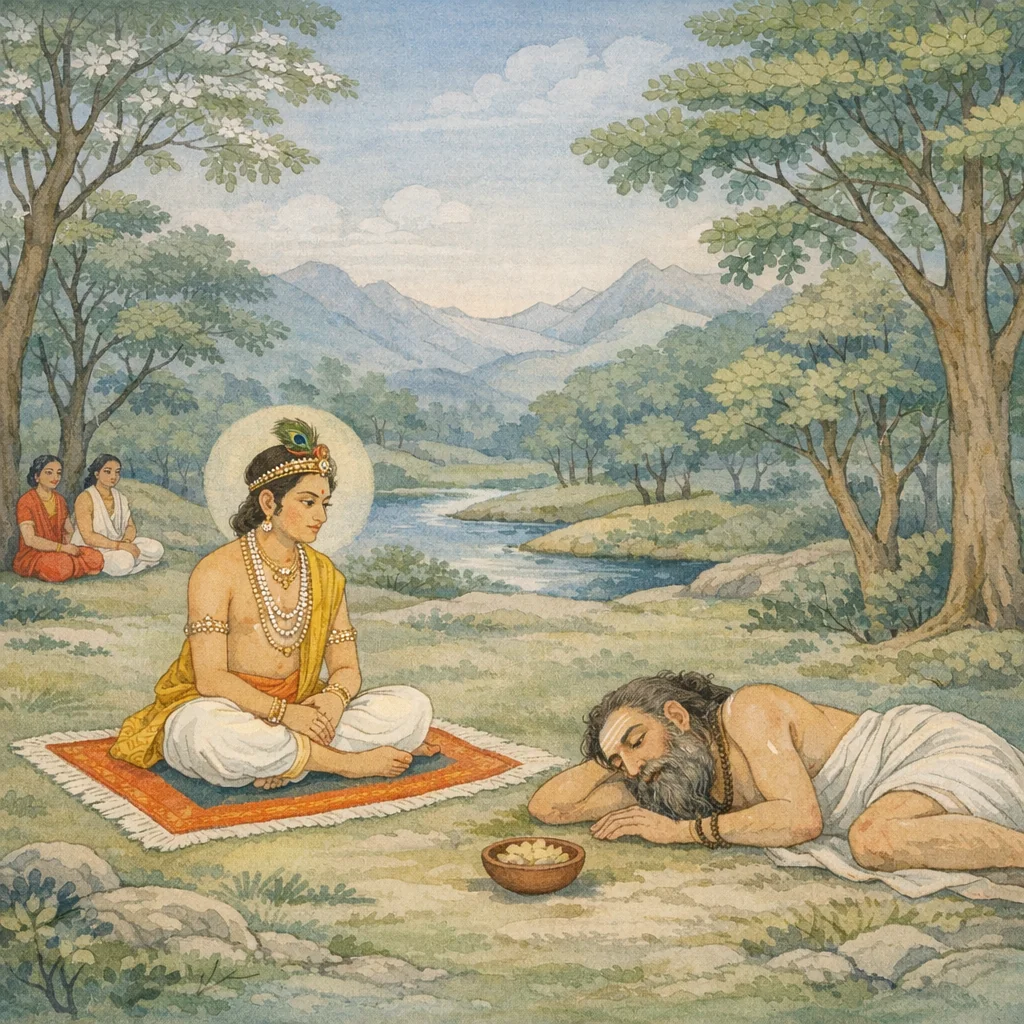
चरन्तं ब्राह्मणं कज्चित् कल्पचित्तमनामयम् | पप्रच्छ राजा प्रह्मादो बुद्धिमान् बुद्धिसम्मतम्,एक सुदृढ़चित, दुःख-शोकसे रहित तथा बुद्धिसम्मत ब्राह्मणको पृथ्वीपर विचरते देख बुद्धिमान् राजा प्रह्नादने उससे इस प्रकार पूछा
Bhishma said: Seeing a certain brāhmaṇa wandering upon the earth—firm in resolve, free from affliction, and possessed of a well-composed mind—the wise king Prahrāda, approving of his discernment, questioned him.
Verse 4
प्रह्माद उवाच स्वस्थ: शक्तो मृदुर्दान्तो निर्विधित्सोडनसूयक: । सुवाक् प्रगल्भो मेधावी प्राज्ञशक्षरसि बालवत्,प्रह्नमाद बोले--ब्रह्मय! आप स्वस्थ, शक्तिमान्, मृदु, जितेन्द्रिय, कर्मारम्भसे दूर रहनेवाले, दूसरोंके दोषोंपर दृष्टि न डालनेवाले, सुन्दर और मधुर वचन बोलनेवाले, निर्भीक, प्रतिभाशाली, मेधावी तथा तत्त्वज्ञ होकर भी बालकोंके समान विचर रहे हैं
Prahlāda said: “O Brahman! You are composed and well, strong, gentle, and self-controlled; you refrain from initiating actions driven by restless impulse, and you do not look for faults in others. Your speech is pleasing and well-formed; you are bold, intelligent, learned, and wise—yet you move about with the simplicity of a child.”
Verse 5
नैव प्रार्थयसे लाभं नालाभेष्वनुशोचसि । नित्यतृप्त इव ब्रह्मनून किज्चिदिव मन्यसे,न आप कोई लाभ चाहते हैं और न हानि होनेपर उसके लिये शोक ही करते हैं। ब्रह्मन! आप नित्यतृप्त-से रहते हुए न किसी वस्तुको प्रिय मानते हैं और न अप्रिय
Prahlāda said: “You do not seek gain at all, nor do you grieve when gain is absent. O Brahmin, you appear ever-content, as though you regard everything here as insignificant.”
Verse 6
स्रोतसा द्वियमाणासु प्रजासु विमना इव । धर्मकामार्थकार्येषु कूटस्थ इव लक्ष्यसे,सारी प्रजा काम-क्रोध आदिके प्रवाहमें पड़कर बही जा रही है; परंतु आप उधरसे उदासीन-जैसे जान पड़ते हैं तथा धर्म, अर्थ एवं काम-सम्बन्धी कार्योंके प्रति भी निमश्रेष्ट-से दिखायी देते हैं
Prahlāda said: “While people are swept along by the current of desire, anger, and the like, you seem untouched by it, as though indifferent. And in matters of dharma, artha, and kāma, you appear steadfast—like one who stands unmoving.”
Verse 7
नानुतिष्ठसि धर्मार्थी न कामे चापि वर्तसे । इन्द्रियार्थाननादृत्य मुक्तश्चरसि साक्षिवत्,धर्म और अर्थ-सम्बन्धी कार्योंका आप अनुष्ठान नहीं करते हैं, काममें भी आपकी प्रवृत्ति नहीं है। आप इन्द्रियोंके सम्पूर्ण विषयोंकी उपेक्षा करके साक्षीके समान मुक्तरूपसे विचरते हैं
Prahlāda said: “You do not undertake actions aimed at dharma and artha, nor do you engage in the pursuit of pleasure. Disregarding the objects of the senses, you move about as one liberated—like a mere witness.”
Verse 8
का नु प्रज्ञा श्रुतं वा किं वृत्तिवा का नु ते मुने क्षिप्रमाचक्ष्व मे ब्रह्मन् श्रेयो यदिह मनन््यसे,मुने! आपके पास कौन-सी ऐसी बुद्धि, कैसा शास्त्रज्ञान अथवा कौन-सी वृत्ति है, जिससे आपका जीवन ऐसा बन गया है? ब्रह्म! आपके मतसे इस जगतमें मेरे लिये जो श्रेयका साधन हो, उसे शीघ्र बतावें
Prahlāda said: “O sage, what wisdom is yours, what learning from sacred teaching, or what disciplined way of life has shaped you so? O Brahman, tell me quickly what you judge to be the highest good for me in this world.”
Verse 9
भीष्म उवाच अनुयुक्त: स मेधावी लोकधर्मविधानवित् । उवाच श्लक्ष्णया वाचा प्रह्मादमनपार्थया,भीष्मजी कहते हैं--राजन्! प्रहादके इस प्रकार पूछनेपर लोक-धर्मके विधानको जाननेवाले उन मेधावी मुनिने उनसे मधुर एवं सार्थक वाणीमें इस प्रकार कहा
Bhishma said: O king, when Prahrada questioned him thus, that wise sage—versed in the ordinances of worldly dharma—replied to Prahrada in gentle speech, meaningful and to the point.
Verse 10
पश्य प्रह्माद भूतानामुत्पत्तिमनिमित्तत: । ह्वासं वृद्धि विनाशं च न प्रहृष्ये न च व्यथे,'प्रह्माद! देखो, इस जगतके प्राणियोंकी उत्पत्ति, वृद्धि, हास और विनाश कारणरहित सत्स्वरूप परमात्मासे ही हुए हैं; इस कारण मैं उनके लिये न तो हर्ष प्रकट करता हूँ और न व्यथित ही होता हूँ
“Look, Prahrada: the birth of beings, their growth, decline, and destruction arise from the Supreme Self—the true Reality beyond all causes. Therefore I neither rejoice over them nor grieve.”
Verse 11
स्वभावादेव संदृश्या वर्तमाना: प्रवृत्तय: । स्वभावनिरता: सर्वाः परितुष्येन्न केनचित्,“ऐसा समझना चाहिये, पूर्वकृत कर्मानुसार बने हुए स्वभावसे ही प्राणियोंकी वर्तमान प्रवृत्तियाँ प्रकट हुई हैं; अत: समस्त प्रजा स्वभावमें ही तत्पर है, उनका दूसरा कोई आश्रय नहीं है। इस रहस्यको समझकर मनुष्यको किसी भी परिस्थितिमें संतुष्ट नहीं होना चाहिये
“Know that the tendencies seen in beings manifest in the present from their very nature—shaped by prior deeds. All creatures are absorbed in their own nature and have no other refuge. Understanding this subtle truth, a person should not become complacently ‘satisfied’ in any condition.”
Verse 12
पश्य प्रह्याद संयोगान् विप्रयोगपरायणान् । संचयांश्व विनाशान्तान् न क्वचिद् विदधे मनः,'प्रह्माद! देखो, जितने संयोग हैं, उनका पर्यवसान वियोगमें ही होता है और जितने संचय हैं, उनकी समाप्ति विनाशमें ही होती है। यह सब देखकर मैं कहीं भी अपने मनको नहीं लगाता हूँ
“See, Prahrada: all unions end in separation, and all accumulations end in destruction. Seeing this, I set my mind on nothing, nowhere.”
Verse 13
अन्तवन्ति च भूतानि गुणयुक्तानि पश्यत: । उत्पत्तिनिधनज्ञस्थ कि कार्यमवशिष्यते,“जो गुणयुक्त सम्पूर्ण भूतोंको नाशवान् देखता है तथा उत्पत्ति और प्रलयके तत्त्वको जानता है, उसके लिये यहाँ कौन-सा कार्य अवशिष्ट रह जाता है?
“For one who sees that all beings—though constituted by the guṇas—are perishable, and who knows the principle of their arising and passing away, what task can remain here that still binds?”
Verse 14
जलजानामपि हान्तं पर्यायेणोपलक्षये । महतामपि कायानां सूक्ष्माणां च महोदधौ,“महासागरके जलमें पैदा होनेवाले विशाल शरीरवाले तिमि आदि मत्स्यों तथा छोटे- छोटे कीड़ोंका भी बारी-बारीसे विनाश होता देखता हूँ
Bhishma said: “O slayer of foes, I observe that even creatures born in water meet destruction in due course—within the great ocean itself, both the huge-bodied fishes such as the timi and the tiniest worms perish one after another.”
Verse 15
जज्भमस्थावराणां च भूतानामसुराधिप । पार्थिवानामपि व्यक्त मृत्युं पश्यामि सर्वश:,“असुरराज! पृथ्वीपर भी जितने स्थावर-जंगम प्राणी हैं, उन सबकी मृत्यु मुझे स्पष्ट दिखायी दे रही है
Bhishma said: “O lord of the Asuras, among all beings—both moving and unmoving—and even among earthly creatures, I clearly behold death everywhere.”
Verse 16
अन्तरिक्षचराणां च दानवोत्तम पक्षिणाम् | उत्तिष्ठते यथाकाल मृत्युर्बलवतामपि,“दानवश्रेष्ठी] आकाशमें विचरनेवाले बलवान पक्षियोंके समक्ष भी यथासमय मृत्यु आ पहुँचती है
Bhishma said: “Even for the mightiest birds that roam the sky—those foremost among the Dānava-born—Death rises up at its appointed time.”
Verse 17
दिवि संचरमाणानि हस्वानि च महान्ति च । ज्योतींष्यपि यथाकालं पतमानानि लक्षये,“आकाशमें जो छोटे-बड़े ज्योतिर्मय नक्षत्र विचर रहे हैं, उन्हें भी मैं यथासमय नीचे गिरते देखता हूँ
Bhishma said: “In the heavens I observe luminous bodies—some small, some great—moving about; and I also see those very lights, in their appointed season, falling down.”
Verse 18
इति भूतानि सम्पश्यन्ननुषक्तानि मृत्युना । सर्वसामान्यगो विद्वान् कृतकृत्य: सुखं स्वपे,“इस प्रकार सारे प्राणियोंको मैं मृत्युके पाशमें बद्ध देखता हूँ; इसलिये तत्त्वको जानकर कृतकृत्य हो सबके प्रति समान भाव रखता हुआ सुखसे सोता हूँ
Bhishma said: “Seeing thus that all beings are bound and entangled in the noose of death, I—knowing the truth—have become one who has done what must be done. Moving with an equal regard toward all, I sleep in peace.”
Verse 19
सुमहान्तमपि ग्रासं ग्रसे लब्धं यदृच्छया । शये पुनरभुञ्जानो दिवसानि बहून्यपि,“यदि दैवेच्छासे अकस्मात् अधिक भोजन प्राप्त हो जाय तो मैं बहुत खा लेता हूँ, ग्रासमात्र मिले तो उसीमें संतुष्ट रहता हूँ और न मिला तो बहुत दिनोंतक बिना खाये-पीये भी सो रहता हूँ
Bhīṣma said: “If by sheer chance I obtain a very large portion of food, I eat it. If I receive only a single mouthful, I remain content with that. And if I receive nothing at all, I simply lie down, even for many days, without eating.”
Verse 20
आशयन्त्यपि मामन्न॑ पुनर्बहुगुणं बहु । पुनरल्पं पुन:स्तोकं पुनर्नैवोपपद्यते,'फिर कितने ही लोग आकर मुझे अनेक गुणोंसे सम्पन्न बहुत-सा अन्न खिला देते हैं। पुनः कभी बहुत थोड़ा, कभी थोड़े-से भी थोड़ा भोजन मिलता है और कभी वह भी नहीं मिलता
Bhīṣma said: “Even while I am being cared for, people come again and again and feed me abundant food, rich in many qualities. Yet at other times I receive only a little—sometimes a mere morsel—and sometimes not even that. Thus, what comes to one in life is uneven and uncertain.”
Verse 21
कणं कदाचित् खादामि पिण्याकमपि च ग्रसे । भक्षये शालिमांसानि भक्षांश्नोच्चावचान् पुन:,“कभी चावलकी कनी खाता हूँ, कभी तिलकी खली ही खाकर रह जाता हूँ और कभी अगहनीके चावलका भात भरपेट खाता हूँ। इस प्रकार मुझे बढ़िया-घटिया सभी तरहके भोजन बारंबार प्राप्त होते रहते हैं
Bhīṣma said: “At times I eat only a few grains of rice; at times I swallow even oil-cake (pīṇyāka) as my portion. And at times I eat fine rice and meat; thus foods of high and low kind come to me again and again.”
Verse 22
शये कदाचित् पर्यड्के भूमावषि पुन: शये । प्रासादे चापि मे शय्या कदाचिदुपपद्यते,“कभी पलंगपर सोता हूँ, कभी पृथ्वीपर ही पड़ा रहता हूँ और कभी-कभी मुझे महलके भीतर बिछी हुई बहुमूल्य शय्या भी उपलब्ध हो जाती है
Bhīṣma said: “At times I sleep on a couch; at other times I lie down again on the bare ground. And sometimes, even a bed laid within a palace becomes available to me.”
Verse 23
धारयामि च चीराणि शाणक्षौमाजिनानि च । महाहाणि च वासांसि धारयाम्यहमेकदा,“मैं कभी तो चिथड़े अथवा वलल््कल पहनकर रहता हूँ, कभी सनके, कभी रेशमके और कभी मृगचर्मके वस्त्र धारण करता हूँ तथा किसी एक कालमें बहुत-से बहुमूल्य वस्त्रोंको भी पहन लेता हूँ
Bhīṣma said: “At times I wear mere rags; at times bark-cloth; at times garments of hemp or linen, and at times deerskin. Yet on some occasions I also put on many costly robes.”
Verse 24
न संनिपतितं धर्म्यमुपभोगं यदृच्छया । प्रत्याचक्षे न चाप्येनमनुरुध्ये सुदुर्लभम्,“यदि दैववश मुझे कोई धर्मानुकूल भोग्य पदार्थ प्राप्त हो जाय तो मैं उससे द्वेष नहीं करता हूँ और प्राप्त न होनेपर किसी दुर्लभ भोगकी भी कभी इच्छा नहीं करता
Bhishma said: “If, by chance, a righteous enjoyment or an object of enjoyment comes to me, I do not reject it out of aversion. And when it does not come, I do not chase after it—nor do I long for some hard-to-obtain pleasure. Thus one should remain steady, accepting what arrives in accordance with dharma and letting go of craving for what is absent.”
Verse 25
अचलमनिधनं शिवं विशोक॑ शुचिमतुल विदुषां मते प्रविष्टम् । अनभिमतमसेवितं विमूढै- ब्रीतमिदमाजगरं शुचिश्नचरामि,मैं सदा पवित्रभावसे रहकर इस अजगरवृत्तिका अनुसरण करता हूँ। यह अत्यन्त सुदृढ़, मृत्युसे दूर रखनेवाली, कल्याणमय, शोकहीन, शुद्ध, अनुपम और विद्वानोंके मतके अनुकूल है। मूर्ख मनुष्य न तो इसे मानते हैं और न इसका सेवन ही करते हैं
Bhishma said: “This ‘python-like’ way of life is steady and unshakable, free from decay, auspicious, sorrowless, pure, incomparable, and approved by the judgment of the wise. It is not liked and therefore not practiced by the deluded. Abiding always in purity of intent, I follow this ajagara-vṛtti—living without restless striving, content with what comes of itself.”
Verse 26
अचलितमतिरच्युत: स्वधर्मात् परिमितसंसरण: परावरज्ञ: । विगतभयकषायलो भमोहो व्रतमिदमाजगरं शुचिश्चरामि,“मेरी बुद्धि अविचल है, मैं अपने धर्मसे च्युत नहीं हुआ हूँ, मेरा सांसारिक व्यवहार परिमित हो गया है, मुझे उत्तम और अधमका ज्ञान है, मेरे हृदयसे भय, राग-द्वेष, लोभ और मोह दूर हो गये हैं तथा पवित्रभावसे रहकर इस अजगरोचित व्रतका आचरण करता हूँ
Bhishma said: “My understanding is steady and I have not fallen away from my own dharma. My worldly movement and dealings have become measured and restrained. I discern what is higher and what is lower. Fear, passion and impurity, greed, and delusion have departed from my heart; abiding in purity, I practice this ‘python-like’ vow—living with minimal striving, enduring what comes, and remaining inwardly composed.”
Verse 27
अनियतफलभक्ष्यभोज्यपेयं विधिपरिणामविभक्तदेशकालम् | हृदयसुखमसेवितं कदर्य- ब्रीतमिदमाजगरं शुचिश्नचरामि,“यह अजगर-सम्बन्धी व्रत मेरे हृदयको सुख देनेवाला है। इसमें भक्ष्य, भोज्य, पेय और फल आदिके मिलनेकी कोई नियत व्यवस्था नहीं रहती--अनियतरूपसे जो कुछ मिल जाय, उसीसे निर्वाह करना होता है। इस व्रतमें प्रारब्धके परिणामके अनुसार देश और कालका विभाग नियत है। विषयलोलुप नीच पुरुष इसका सेवन नहीं करते, मैं पवित्रभावसे इसी व्रतका आचरण करता हूँ
Bhishma said: “This ‘python-like’ vow is pleasing to my heart. In it there is no fixed arrangement for fruits, food to be eaten, meals to be enjoyed, or drink; whatever comes unbidden, that alone sustains one. According to the ripening of destiny, one’s place and time are apportioned. Base men, greedy for sense-objects, do not undertake it; I practice this vow in purity.”
Verse 28
इदमिदमिति तृष्णयाभि भूत॑ जनमनवाप्तधनं विषीदमानम् | निपुणमनुनिशम्य तत्त्वबुद्धया व्रतमिदमाजगरं शुचिश्षरामि,“जो यह मिले, वह मिले, इस प्रकार तृष्णासे दबे रहते हैं और धन न मिलनेके कारण निरन्तर विषाद करते हैं; ऐसे लोगोंकी दशा अच्छी तरह देखकर तात््विक बुद्धिसे सम्पन्न हुआ मैं पवित्रभावसे इस आजगरव्रतका आचरण करता हूँ
Bhishma said: “People, overpowered by craving, keep thinking, ‘Let this be mine, let that be mine.’ When wealth is not obtained, they sink into continual dejection. Having carefully observed their condition with discerning insight into reality, I, with a purified mind, undertake this ‘python-like’ vow—living without restless pursuit and accepting what comes.”
Verse 29
बहुविधमनुदृश्य चार्थहेतो: कृपणमिहार्यमनार्यमा श्रयन्तम् । उपशमरुचिरात्मवान् प्रशान्तो व्रतमिदमाजगरं शुचिश्चरामि,“मैं बारंबार देखता हूँ कि श्रेष्ठ मनुष्य भी धनके लिये दीनभावसे नीच पुरुषका आश्रय लेते हैं। यह देखकर मेरी रुचि प्रशान्त हो गयी है। अतः मैं अपने स्वरूपको प्राप्त और सर्वथा शान्त हो गया हूँ और पवित्रभावसे इस आजगर-व्रतका आचरण करता हूँ
Bhīṣma said: “Again and again I observe, in many ways, that even a noble person, for the sake of wealth, takes refuge with a base man in a pitiable manner. Seeing this, my taste has turned toward quietude. Therefore, having come to my own true nature and become wholly tranquil, I practice this pure ‘python-vow’ (ājagara-vrata), living without anxious striving.”
Verse 30
सुखमसुखमलाभमर्थलाभं रतिमरतिं मरणं च जीवितं च । विधिनियतमवेक्ष्य तत्त्वतो<5हं व्रतमिदमाजगरं शुचिश्लरामि,“सुख-दुःख, लाभ-हानि, अनुकूल और प्रतिकूल तथा जीवन और मरण--ये सब दैवके अधीन हैं। इस प्रकार यथार्थरूपसे जानकर मैं शुद्धभावसे इस आजगरब्रतका आचरण करता हूँ
Bhīṣma said: “Happiness and suffering, lack of gain and gain of wealth, liking and disliking, death and life—all these are governed by destiny. Knowing this as it truly is, I practice with a purified mind this ‘python-vow’ (ājagara-vrata).”
Verse 31
अपगतभयरागमोहदर्पो धृतिमतिबुद्धिसमन्वित: प्रशान्त: । उपगतफलभोगिनो निशम्य व्रतमिदमाजगरं शुचिश्चरामि,“मेरे भय, राग, मोह और अभिमान नष्ट हो गये हैं। मैं धृति, मति और बुद्धिसे सम्पन्न एवं पूर्णतया शान्त हूँ। और प्रारब्धवश स्वतः अपने समीप आयी हुई वस्तुका ही उपभोग करनेवालोंको देखकर मैं पवित्रभावसे इस आजगरबव्रतका आचरण करता हूँ
Bhīṣma said: “Fear, attachment, delusion, and pride have fallen away from me. Endowed with steadiness, right reflection, and discernment, I am wholly tranquil. Observing those who accept and enjoy only what comes to them of its own accord—by the force of what has already begun to bear fruit (prārabdha)—I practice, in purity of mind, this ‘python-vow’ (ājagara-vrata), a discipline of non-grasping and contentment.”
Verse 32
अनियतशयनासन: प्रकृत्या दमनियमव्रतसत्यशौचयुक्त: । अपगतफलसंचय: प्रह्ृष्टो व्रतमिदमाजगरं शुचिश्चरामि,“मेरे सोने-बैठनेका कोई नियत स्थान नहीं है। मैं स्व भावत: दम, नियम, व्रत, सत्य और शौचाचारसे सम्पन्न हूँ। मेरे कर्मफल-संचयका नाश हो चुका है। मैं प्रसन्नतापूर्वक पवित्रभावसे इस आजगरबव्रतका आचरण करता हूँ
Bhīṣma said: “I have no fixed place for sleeping or sitting. By my very nature I am endowed with self-restraint, observances, vows, truthfulness, and purity. The accumulation of karmic results has fallen away from me. With gladness and a purified mind I practice this ‘python-vow’ (ājagara-vrata), living without anxious striving and without attachment to outcomes.”
Verse 33
अपगतमसुखार्थमी हनार्थ- रुपगतबुद्धिरवेक्ष्य चात्मसंस्थम् । तृषितमनियतं मनो नियम्तुं व्रतमिदमाजगरं शुचिश्ष॒रामि,“जिनका परिणाम दु:ख है, उन इच्छाके विषयभूत समस्त पदार्थोसे जो विरक्त हो चुका है, ऐसे आत्मनिष्ठ महापुरुषको देखकर मुझे ज्ञान प्राप्त हो गया है। अतः मैं तृष्णासे व्याकुल असंयत मनको वशगमें करनेके लिये पवित्रभावसे इस आजगर-व्रतका आचरण करता हूँ
Bhīṣma said: “Seeing a great man established in the Self—one whose understanding has turned away from all pursuits and objects that, though sought as ‘happiness’, end in suffering—I gained insight. Therefore, to bring my thirst-driven, undisciplined mind under control, I undertake with purity this ‘python-vow’ (ājagara-vrata), the vow of stillness and non-grasping.”
Verse 34
न हृदयमनुरुध्य वाड्मनो वा प्रियसुखदुर्लभतामनित्यतां च । तदुभयमुपलक्षयत्रिवाहं व्रतमिदमाजगरं शुचिश्नचरामि,“मन, वाणी और बुद्धिकी उपेक्षा करके इनको प्रिय लगनेवाले विषय-सुखोंकी दुर्लभता तथा अनित्यता--इन दोनोंको देखनेवालेकी भाँति मैं पवित्रभावसे इस आजगरबव्रतका आचरण करता हूँ
Bhīṣma said: Without yielding to the impulses of the heart, nor to the urgings of speech and mind, I live as one who clearly perceives both the rarity and the impermanence of pleasures that seem dear. Seeing these two truths together, I practice with purity this ‘ājagara-vrata’—the vow of the python—moving through life with restrained, ungrasping endurance.
Verse 35
बहुकथितमिदं हि बुद्धिमद्धिः कविभिरपि प्रथयद्धिरात्मकीर्तिम् । इदमिदमिति तत्र तत्र हन््त स्वपरमतैर्गहनं प्रतर्कयद्धि:ः,“अपनी कीर्तिका विस्तार करनेवाले विद्वानों और बुद्धिमानोंने अपने और दूसरोंके मतसे गहन तर्क और वितर्क करके 'ऐसे करना चाहिये" 'ऐसे करना चाहिये” इत्यादि कहकर इस व्रतकी अनेक प्रकारसे व्याख्या की है
Bhīṣma said: This observance has been explained in many ways by intelligent scholars and poets as well—each seeking to spread his own fame. With intricate reasoning and counter-reasoning drawn from their own and others’ doctrines, they keep asserting in one place after another, “This is how it should be; this is how it should be.”
Verse 36
तदिदमनुनिशम्य विप्रपात॑ पृथगभिपतन्नमिहाबुरधर्मनुष्यै: । अनवसितमनन्तदोषपारं नृषु विहरामि विनीतदोषतृष्ण:,“मूर्खलोग इस अजगरवृत्तिको सुनकर इसे पहाड़की चोटीसे गिरनेकी भाँति भयंकर समझते हैं। परंतु उनकी वह मान्यता भिन्न है। मैं इस अजगरवृत्तिको अज्ञानका नाशक और समस्त दोषोंसे रहित मानता हूँ। अतः दोष और तृष्णाका त्याग करके मनुष्योंमें विचरता हूँ'
Bhishma said: “Hearing of this ‘python-like’ way of life, foolish people—whose understanding of dharma is distorted—shudder at it as though it were a fall from a mountain peak. Yet their judgment is mistaken. I regard this ajagara-vṛtti as a destroyer of ignorance and as free from every fault, with no end and no far shore of defects. Therefore, having subdued both fault-finding and craving, I move among people.”
Verse 37
भीष्म उवाच अजगरचरितं व्रतं महात्मा य इह नरो<नुचरेद् विनीतराग: । अपगतभयलो भमोहमन्यु: स खलु सुखी विचरेदिमं विहारम्,भीष्मजी कहते हैं-राजन्! जो महापुरुष राग, भय, लोभ, मोह और क्रोधको त्यागकर इस आजगर व्रतका पालन करता है, वह इस लोकमें सानन्द विचरण करता है
Bhishma said: O King, that noble person who, in this world, follows the vow modeled on the python’s way of life—having subdued attachment and having cast off fear, greed, delusion, and anger—truly lives happily, moving through life in calm freedom.
Verse 179
इति श्रीमहाभारते शान्तिपर्वणि मोक्षधर्मपर्वणि आजगरप्रह्नादसंवादे एकोनाशीत्यधिकशततमो< ध्याय:,इस प्रकार श्रीमह्ाभारत शान्तिपर्वके अन्तर्गत मोक्षधर्मपर्वमें अजगरवृत्तिसे रहनेवाले मुनि और प्रह्नादका संवादविषयक एक सौ उनासीवाँ अध्याय पूरा हुआ
Thus, in the Śrī Mahābhārata, within the Śānti Parva—specifically the Mokṣa-dharma section—the one-hundred-and-seventy-ninth chapter concludes, presenting the dialogue between Prahlāda and the sage who lives by the ‘python-like’ discipline (ājagara-vṛtti), a model of radical contentment, non-striving, and inward freedom. The closing colophon signals the end of this teaching unit, framing its ethical emphasis on liberation-oriented conduct rather than worldly acquisition.
Frequently Asked Questions
Whether the jīva is destroyed when the body perishes; Bhṛgu defends continuity and transmigration, while Bharadvāja challenges the claim by appealing to the non-observability of the jīva and the ‘vanishing’ of fire when fuel ends.
It proposes that the inner self is apprehended by refined discernment—through steady practice across day and night, light diet, purified disposition, and mental clarity—rather than by gross sensory inspection.
No formal phalaśruti is stated; instead, it offers an implicit result: abandoning attachment to auspicious/inauspicious action through mental clarity, one attains stable, ‘imperishable’ well-being (akṣaya-sukha) in inner steadiness.