Adhyaya 5
शल्यस्य सेनापत्याभ्युपगमः | Śalya’s Acceptance of Command
Upa-parva: Śalya-senāpatyābhiṣeka (Appointment of Śalya as Commander)
Sañjaya reports that Kaurava-aligned warriors regroup on the Haimavata plateau after Karṇa’s death, seeking refuge and organizational coherence. Key figures—Śalya, Citraseṇa, Śakuni, Aśvatthāmā, Kṛpa, and Kṛtavarmā—are enumerated among those assembled. The narrative then shifts to a portrait-like encomium of Aśvatthāmā, emphasizing martial competence, learning (veda-vidyā and śāstra), and exceptional origin traditions, establishing his authority as a recommender in matters of command. Aśvatthāmā proposes Śalya as camūpati on grounds of lineage, valor, radiance, reputation, and gratitude/loyalty; the gathered rulers affirm with victory acclamations and resolve for continued engagement. Duryodhana approaches Śalya with formal humility and persuasive rhetoric about friendship-testing in adversity, requesting him to lead the vanguard. Śalya consents, declaring readiness to prioritize Duryodhana’s aims, and Duryodhana urges an anointment-like assumption of command, framing victory as contingent upon Śalya’s leadership.
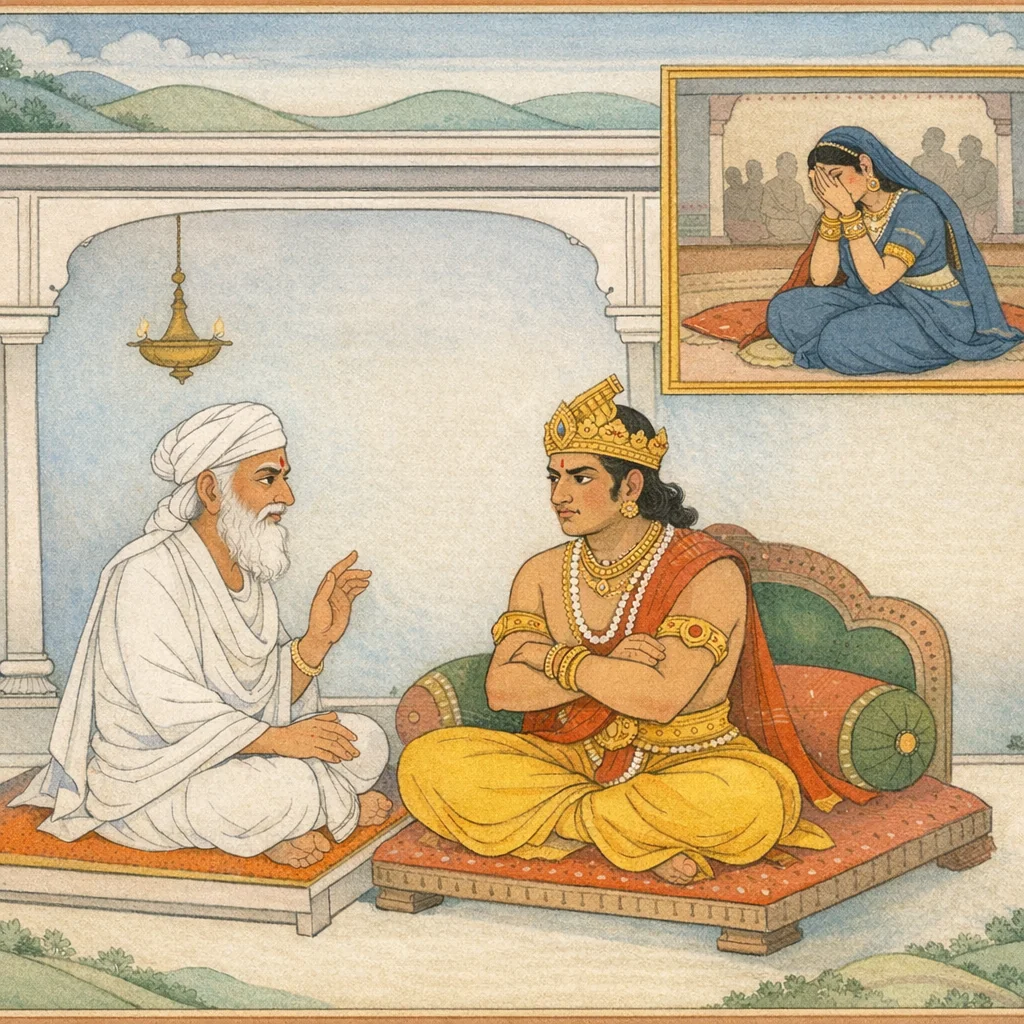
Chapter Arc: संजय धृतराष्ट्र को सुनाते हैं—तपस्वी गौतम-वंशी कृपाचार्य की हितकारी वाणी सुनकर भी दुर्योधन भीतर-ही-भीतर उबल उठता है; वह सन्धि की बात को अपने अपमान और दुर्बलता का संकेत मानता है। → दुर्योधन कुछ घड़ियाँ मौन होकर सोचता है, फिर कृप से कहता है कि आपने जो भी हितैषी वचन कहने योग्य था, सब कह दिया—पर वह अपने मन की गाँठ खोलता है: द्रौपदी का सभामध्य का विलाप, राज्य-हरण, और कृष्ण-पक्ष के प्रति अपनी असह्य कटुता को वह क्षमा नहीं कर सकता। वह ‘क्षत्रिय-धर्म’ का आवरण ओढ़कर घर में मरने को निन्दित बताता है और युद्ध को ही प्रतिष्ठा का मार्ग ठहराता है। → दुर्योधन निर्णायक स्वर में कह देता है—“सन्धि मुझे किसी प्रकार भी प्राप्तकाल नहीं लगती; यह कायर होने का समय नहीं, संयोद्धा होने का समय है।” वह अपने विनाशकारी संकल्प को भी ‘स्वर्ग-प्राप्ति’ की भाषा में सजाता है: उत्तम युद्ध से त्रिविष्टप में वास निश्चित है। → कृप की नीति-परक, स्नेह-परक सलाह को औपचारिक सम्मान देकर भी दुर्योधन उसे अस्वीकार कर देता है; उसका निष्कर्ष स्थिर है—युद्ध ही नीति, युद्ध ही धर्म, युद्ध ही गति। → सन्धि का द्वार बंद होते ही अगला प्रश्न तीखा हो उठता है—कौरव पक्ष किस रणनीति और किस सेनानायक-व्यवस्था के साथ निर्णायक संघर्ष में उतरेगा?
Shlokas
Verse 1
पञठ्चमो<ध्याय: दुर्योधनका कृपाचार्यको उत्तर देते हुए सन्धि स्वीकार न करके युद्धका ही निश्चय करना संजय उवाच एवमुक्तस्ततो राजा गौतमेन तपस्विना । नि:श्वस्य दीर्घमुष्णं च तृष्णीमासीदू विशाम्पते,संजय कहते हैं--प्रजानाथ! तपस्वी कृपाचार्यके ऐसा कहनेपर दुर्योधन जोर-जोरसे गरम साँस खींचता हुआ कुछ देरतक चुपचाप बैठा रहा
Sanjaya said: When the king had been addressed in this way by the ascetic Gautama, the lord of men heaved a long, hot sigh and remained silent for some time. The moment signals inner agitation: counsel toward restraint has been heard, yet pride and the pull of war keep the decision suspended in tense silence.
Verse 2
ततो मुहूर्त स ध्यात्वा धार्तराष्ट्री महामना: । कृपं शारद्वतं वाक्यमित्युवाच परंतप:,दो घड़ीतक सोच-विचार करनेके पश्चात् शत्रुओंको संताप देनेवाले आपके उस महामनस्वी पुत्रने शरद्वानके पुत्र कृपाचार्यको इस प्रकार उत्तर दिया--
Sañjaya said: Then, after reflecting for a short while, that great-souled son of Dhṛtarāṣṭra—an afflicter of foes—addressed Kṛpa, the son of Śaradvat, and spoke these words in reply. The pause suggests deliberation amid crisis, where counsel and responsibility weigh heavily before speech is given in the war-council setting.
Verse 3
यत् किंचित् सुद्गदा वाच्यं तत् सर्व श्रावितों हाहम् । कृतं च भवता सर्व प्राणान् संत्यज्य युध्यता,“विप्रवर! एक हितैषी सुहृदको जो कुछ कहना चाहिये, वह सब आपने कह सुनाया। इतना ही नहीं, आपने प्राणोंका मोह छोड़कर युद्ध करते हुए मेरी भलाईके लिये सब कुछ किया है
“O best of Brahmins! Whatever a well-wishing friend ought to say, you have told me in full. More than that, for my good you have done everything—casting off attachment to life and fighting on the field.”
Verse 4
इस प्रकार श्रीमद्याभारत शल्यपर्वमें कृपाचार्यका वचनविषयक चौथा अध्याय पूरा हुआ,गाहमानमनीकानि युध्यमानं महारथै: । पाण्डवैरतितेजोभिलोंकस्त्वामनुदृष्टवान् “सब लोगोंने आपको शत्रुओंकी सेनाओंमें घुसते और अत्यन्त तेजस्वी महारथी पाण्डवोंके साथ युद्ध करते हुए बारंबार देखा है
Sanjaya said: “People have repeatedly witnessed you plunging into the enemy battle-formations and fighting there against the exceedingly radiant Pāṇḍava great chariot-warriors.” The line underscores the public, undeniable visibility of valor in war: courage is not merely claimed but proven before the eyes of many, and ethical reputation in a dharma-war is shaped by observable conduct amid danger.
Verse 5
सुहृदा यदिदं वाक््यं भवता श्रावितो हाहम् । न मां प्रीणाति तत् सर्व मुमूर्षोरिव भेषजम्,“आप मेरे हितचिन्तक सुहृद् हैं तो भी आपने मुझे जो बात सुनायी है, वह सब मेरे मनको उसी तरह पसंद नहीं आती, जैसे मरणासन्न रोगीको दवा अच्छी नहीं लगती है इति श्रीमहाभारते शल्यपर्वणि दुर्योधनवाक्ये पठचमो<ध्याय:
Sanjaya said: “Though you are a well-wishing friend, the words you have made me hear do not please me at all—just as medicine does not seem agreeable to a man on the verge of death.”
Verse 6
हेतुकारणसंयुक्त हितं वचनमुत्तमम् । उच्यमानं महाबाहो न मे विप्राग्रय रोचते,“महाबाहो! विप्रवर! आपने युक्ति और कारणोंसे सुसंगत, हितकारक एवं उत्तम बात कही है तो भी वह मुझे अच्छी नहीं लग रही है
Sañjaya said: “O mighty-armed one, O foremost of Brahmins, though the counsel you speak is well-reasoned, grounded in causes, beneficial, and excellent, it does not please me.”
Verse 7
राज्याद् विनिकृतो<स्माभि: कथं सो<स्मासु विश्वसेत् । अक्षयूते च नृपतिर्जितोडस्माभिमहाधन:
Sañjaya said: “We ourselves have stripped him of his kingdom—how could he ever place trust in us? And in the game of dice too, that great-wealthy king was defeated by us.”
Verse 8
स कथं मम वाक्यानि श्रद्दधध्याद् भूय एव तु । “हमलोगोंने राजा युधिष्ठिरकके साथ छल किया है। वे महाधनी थे, हमने उन्हें जूएमें जीतकर निर्धन बना दिया। ऐसी दशामें वे हमलोगोंपर विश्वास कैसे कर सकते हैं? हमारी बातोंपर उन्हें फिर श्रद्धा कैसे हो सकती है? ।। तथा दौत्येन सम्प्राप्त: कृष्ण: पार्थहिते रत:,“ब्रह्मन्! पाण्डवोंके हितमें तत्पर रहनेवाले श्रीकृष्ण मेरे यहाँ दूत बनकर आये थे, किंतु मैंने उन हृषीकेशके साथ धोखा किया। मेरा वह कर्म अविचारपूर्ण था। भला, अब वे मेरी बात कैसे मानेंगे?
Sañjaya said: “How could he ever again place faith in my words? We deceived King Yudhishthira; though he was immensely wealthy, we won him in the dice-game and reduced him to poverty. In such a condition, how could he trust us? How could he regain confidence in what we say? And Krishna too—ever devoted to the welfare of the son of Pritha—came to my court as an envoy; yet I dealt deceitfully with that Hrishikesha. That act of mine was thoughtless. How, now, would he accept my words?”
Verse 9
प्रलब्धश्न हृषीकेशस्तच्च कर्माविचारितम् । सच मे वचन ब्रह्मनू कथमेवाभिमन्यते,“ब्रह्मन्! पाण्डवोंके हितमें तत्पर रहनेवाले श्रीकृष्ण मेरे यहाँ दूत बनकर आये थे, किंतु मैंने उन हृषीकेशके साथ धोखा किया। मेरा वह कर्म अविचारपूर्ण था। भला, अब वे मेरी बात कैसे मानेंगे?
“I deceived Hrishikesha, and that deed was thoughtless. O Brahmin, how could he accept my words?”
Verse 10
विललाप च यत् कृष्णा सभामध्ये समेयुषी । न तन्मर्षयते कृष्णो न राज्यहरणं तथा,“सभामें बलात् लायी हुई द्रौपदीने जो विलाप किया था तथा पाण्डवोंका जो राज्य छीन लिया गया था, वह बर्ताव श्रीकृष्ण सहन नहीं कर सकते
Sañjaya said: “The lament that Draupadī (Kṛṣṇā) uttered when she was brought into the royal assembly, and likewise the seizure of the Pāṇḍavas’ kingdom—these are wrongs that Śrī Kṛṣṇa cannot endure.”
Verse 11
एकप्राणावुभौ कृष्णावन्योन्यमभिसंश्रितौ । पुरा यच्छुतमेवासीदद्य पश्यामि तत् प्रभो
Sañjaya said: “Both the Kṛṣṇas—bound together as if sharing a single life-breath—stand mutually dependent and closely supported by one another. What I had formerly only heard about, O lord, I now behold with my own eyes.”
Verse 12
'प्रभो! श्रीकृष्ण और अर्जुन दोनों दो शरीर और एक प्राण हैं। वे दोनों एक-दूसरेके अश्रित हैं। पहले जो बात मैंने केवल सुन रखी थी, उसे अब प्रत्यक्ष देख रहा हूँ ।। स्वस्रीयं निहतं श्रुत्वा दुः:खं स्वपिति केशव: । कृतागसो वयं तस्य स मदर्थ कथं क्षमेत्
Sañjaya said: “O lord! Śrī Kṛṣṇa and Arjuna are like two bodies sharing a single life-breath; each depends upon the other. What I had only heard of before, I now behold with my own eyes. Hearing that his sister’s son has been slain, Keśava lies down in grief. We have become offenders against him—how could he forgive this, done for my sake?”
Verse 13
“अपने भानजे अभिमन्युके मारे जानेका समाचार सुनकर श्रीकृष्ण सुखकी नींद नहीं सोते हैं। हम सब लोग उनके अपराधी हैं, फिर वे हमें कैसे क्षमा कर सकते हैं? ।। अभिमन्योर्विनाशेन न शर्म लभतेडर्जुन: । स कथं मद्िते यत्नं प्रकरिष्यति याचित:,“अभिमन्युके मारे जानेसे अर्जुनको भी चैन नहीं है, फिर वे प्रार्थना करनेपर भी मेरे हितके लिये कैसे यत्न करेंगे?
Sañjaya said: “Hearing that Abhimanyu has been slain, Śrī Kṛṣṇa can no longer sleep in peace. We have all become offenders against him—how could he forgive us? With Abhimanyu’s destruction, Arjuna too finds no rest. How then, even if entreated, could he strive for my welfare, when his heart is consumed by grief?”
Verse 14
मध्यम: पाण्डवस्तीक्ष्णो भीमसेनो महाबल: । प्रतिज्ञातं च तेनोग्रं भज्येतापि न संनमेत्,“मझले पाण्डव महाबली भीमसेनका स्वभाव बड़ा ही कठोर है। उन्होंने बड़ी भयंकर प्रतिज्ञा की है। सूखे काठकी तरह वे टूट भले ही जाय, झुक नहीं सकते
Sañjaya said: “Bhīmasena, the middle of the Pāṇḍava brothers, is fierce and of immense strength. He has taken a dreadful vow: even if he were to break like dry wood, he would not bend.”
Verse 15
उभौ तौ बद्धनिस्त्रिंशावुभी चाबद्धकड्कटौ । कृतवैरावुभौ वीरौ यमावपि यमोपमौ,“दोनों भाई नकुल और सहदेव तलवार बाँधे और कवच धारण किये हुए यमराजके समान भयंकर जान पड़ते हैं। वे दोनों वीर मुझसे वैर मानते हैं
Sañjaya said: “Both those brothers, their swords fastened on and their armor secured, appeared terrifying—like Yama himself. Those two heroic warriors, having fixed their enmity, stood like a pair of Yamas, intent on requital in the midst of war.”
Verse 16
धृष्टद्युम्न: शिखण्डी च कृतवैरा मया सह । तौ कथं मद्िते यत्नं कुर्यातां द्विजसत्तम,द्विजश्रेष्ठ! धृष्टद्यम्म और शिखण्डीने भी मेरे साथ वैर बाँध रखा है, फिर वे दोनों मेरे हितके लिये कैसे यत्न कर सकते हैं?
Sañjaya said: “Dhṛṣṭadyumna and Śikhaṇḍin too have sworn enmity with me. How, then, could those two strive for my welfare, O best of Brahmins?”
Verse 17
दुःशासनेन यत् कृष्णा एकवस्त्रा रजस्वला | परिक्लिष्टा सभामध्ये सर्वलोकस्य पश्यत:
Sañjaya said: That outrage—when Kṛṣṇā (Draupadī), clad in a single garment and in her menstrual period, was tormented in the midst of the royal assembly while all the people looked on—stands as a grave public violation of dharma, exposing the court’s moral collapse and the complicity of silent witnesses.
Verse 18
न निवारयितु शक््या: संग्रामात्ते परंतपा:,“इसलिये अब उन शत्रुसंतापी वीरोंको युद्धसे रोका नहीं जा सकता। जबसे द्रौपदीको क्लेश दिया गया, तबसे वह दुःखी हो मेरे विनाशका संकल्प लेकर प्रतिदिन मिट्टीकी वेदीपर सोया करती है। जबतक वैरका पूरा बदला न चुका लिया जाय, तबतकके लिये उसने यह व्रत ले रखा है
Sañjaya said: “Those heroes, scorcher of foes, cannot now be restrained from battle. Ever since Draupadī was subjected to humiliation and suffering, she has lived in grief, daily sleeping upon an earthen altar with a fixed resolve for our destruction. She has undertaken this vow to continue until the enmity is fully repaid.”
Verse 19
यदा च द्रौपदी क्लिष्टा मद्विनाशाय दुःखिता । स्थण्डिले नित्यदा शेते यावद् वैरस्य यातनम्,“इसलिये अब उन शत्रुसंतापी वीरोंको युद्धसे रोका नहीं जा सकता। जबसे द्रौपदीको क्लेश दिया गया, तबसे वह दुःखी हो मेरे विनाशका संकल्प लेकर प्रतिदिन मिट्टीकी वेदीपर सोया करती है। जबतक वैरका पूरा बदला न चुका लिया जाय, तबतकके लिये उसने यह व्रत ले रखा है
Sañjaya said: “And ever since Draupadī was wronged and afflicted, she has remained in sorrow, resolved upon my destruction. Day after day she lies upon the bare ground, enduring the hardship of her vow, until the torment of enmity is fully repaid.”
Verse 20
उग्र॑ तेपे तप: कृष्णा भर्तृणामर्थसिद्धये । निक्षिप्य मान॑ दर्प च वासुदेवसहोदरा
Sañjaya said: Kṛṣṇā (Draupadī), the sister of Vāsudeva, undertook severe austerities for the fulfillment of her husbands’ aims. Casting aside pride and arrogance, she embraced disciplined self-restraint in order to secure their success.
Verse 21
कृष्णाया: प्रेष्यवद् भूत्वा शुश्रूषां कुरुते सदा । इति सर्व समुन्नद्धं न निरवाति कथठ्चन
Sañjaya said: “Having become like a servant to Kṛṣṇā (Draupadī), he continually renders her attentive service. Thus, though everything is fully prepared and set in motion, he does not at any time slacken or turn away.”
Verse 22
'ट्रौपदी अपने पतियोंके अभीष्ट मनोरथकी सिद्धिके लिये बड़ी कठोर तपस्या करती है और वसुदेवनन्दन श्रीकृष्णकी सगी बहन सुभद्रा मान और अभिमानको दूर फेंककर सदा दासीकी भाँति द्रौपदीकी सेवा करती है। इस प्रकार इन सारे कार्योंके रूपमें वैरकी आग प्रज्वलित हो उठी है, जो किसी प्रकार बुझ नहीं सकती ।। अभिमन्योर्विनाशेन स संधेय: कथं मया | कथं च राजा भुकक्त्वेमां पृथिवीं सागराम्बराम्
Sañjaya said: “Draupadī performs very severe austerities so that the cherished aims of her husbands may be fulfilled. And Subhadrā, the own sister of Śrī Kṛṣṇa, Vasudeva’s son, casting aside pride and self-regard, ever serves Draupadī like a maidservant. Thus, in the form of all these deeds, the fire of enmity has been kindled—one that cannot be quenched by any means. With Abhimanyu slain, how could any reconciliation be made by me? And how could the king, after consuming and enjoying this earth—girt by the ocean as its garment—ever find contentment?”
Verse 23
उपर्युपरि राज्ञां वै ज्वलित्वा भास्करो यथा
Sañjaya said: “Rising higher and higher above the kings, he blazed forth—like the sun.”
Verse 24
युधिष्ठिरं कथं पश्चादनुयास्यामि दासवत् । “समस्त राजाओंके ऊपर सूर्यके समान प्रकाशित होकर अब दासकी भाँति युधिष्ठिरके पीछे-पीछे कैसे चलूँगा? ।। कथं भुक््त्वा स्वयं भोगान् दत्त्वा दायांश्व॒ पुष्कलान्
Sañjaya said: “How can I, like a servant, follow behind Yudhiṣṭhira? After shining like the sun above all kings, how can I now walk behind Yudhiṣṭhira as though I were a slave? And how can one who has himself enjoyed pleasures, and has bestowed abundant shares upon others, accept such a reversal?”
Verse 25
नाभ्यसूयामि ते वाक्यमुक्तं स्निग्धं हितं त्वया
Sañjaya said: “I do not take fault with your words—spoken by you with affection and with a view to what is truly beneficial.”
Verse 26
सुनीतमनुपश्यामि सुयुद्धेन परंतप
Sañjaya said: “I see that this course is well-considered—and that it is to be carried out through a noble battle, O scorcher of foes.”
Verse 27
इष्टं मे बहुभिर्यज्ञैर्दत्ता विप्रेषु दक्षिणा:
Sañjaya said: “I have performed many sacrifices as prescribed, and I have given the due sacrificial fees (dakṣiṇās) to the Brahmins.”
Verse 28
प्राप्ता: कामा: श्रुता वेदा: शत्रूणां मूर्थ्नि च स्थितम् भृत्या मे सुभृतास्तात दीनश्वाभ्युदूधृतो जन:
Sañjaya said: “All desired ends have been attained; the Vedas have been duly studied; and I have stood upon the very heads of my enemies. My attendants are well maintained, dear sir, and the people have been raised up from wretchedness and want.”
Verse 29
नोत्सहेड्द्य द्विजश्रेष्ठ पाण्डवान् वक्तुमीदृशम् “तात! मैंने बहुत-से यज्ञोंका अनुष्ठान कर लिया। ब्राह्मणोंको पर्याप्त दक्षिणाएँ दे दीं। सारी कामनाएँ पूर्ण कर लीं। वेदोंका श्रवण कर लिया। शत्रुओंके माथेपर पैर रखा और भरण-पोषणके योग्य व्यक्तियोंके पालन-पोषणकी अच्छी व्यवस्था कर दी। इतना ही नहीं, मैंने दीनोंका उद्धारकार्य भी सम्पन्न कर दिया है। अतः द्विजश्रेष्ठ। अब मैं पाण्डवोंसे इस प्रकार सन्धिके लिये याचना नहीं कर सकता ।। २७-२८ ई || जितानि परराष्ट्राणि स्वराष्ट्रमनुपालितम्,“मैंने दूसरोंके राज्य जीते, अपने राष्ट्रका निरन्तर पालन किया, नाना प्रकारके भोग भोगे; धर्म, अर्थ और कामका सेवन किया और पितरों तथा क्षत्रियधर्म--दोनोंके ऋणसे उऋण हो गया
Sanjaya said: “O best of Brahmins, I cannot bring myself to speak to the Pandavas in this manner: ‘Dear one, I have already performed many sacrifices; I have given ample fees to Brahmins; I have fulfilled my desires; I have heard the Vedas; I have set my foot upon the heads of enemies; and I have made proper provision for the maintenance of those who depend on me. More than that, I have also completed works of relief for the distressed. Therefore, O best of Brahmins, I cannot now go to the Pandavas and beg for peace in such a way. I have conquered other kingdoms, protected my own realm continually, enjoyed many pleasures, pursued dharma, wealth, and desire, and have become free of debt both to the ancestors and to the Kshatriya code.’”
Verse 30
भुक्ताश्न विविधा भोगास्त्रिवर्ग: सेवितो मया । पितृणां गतमानृण्यं क्षत्रधर्मस्य चोभयो:,“मैंने दूसरोंके राज्य जीते, अपने राष्ट्रका निरन्तर पालन किया, नाना प्रकारके भोग भोगे; धर्म, अर्थ और कामका सेवन किया और पितरों तथा क्षत्रियधर्म--दोनोंके ऋणसे उऋण हो गया
“I have enjoyed varied pleasures; I have pursued the three aims—dharma, artha, and kama. I have become free of debt both to the ancestors and to the Kshatriya code—both alike.”
Verse 31
न ध्रुवं सुखमस्तीति कुतो राष्ट्र कुतो यश: । इह कीर्तिविधातव्या सा च युद्धेन नान्यथा,'संसारमें कोई भी सुख सदा रहनेवाला नहीं है। फिर राष्ट्र और यश भी कैसे स्थिर रह सकते हैं? यहाँ तो कीर्तिका ही उपार्जन करना चाहिये और कीर्ति युद्धके सिवा किसी दूसरे उपायसे नहीं मिल सकती
No happiness is certain or lasting; how then could a kingdom, how then could fame, stand firm? In this world one must win kīrti—renown—and that renown is gained by war and by no other means.
Verse 32
गृहे यत् क्षत्रियस्यापि निधन तद् विगर्हितम् । अधर्म: सुमहानेष यच्छय्यामरणं गृहे,'क्षत्रियकी भी यदि घरमें मृत्यु हो जाय तो उसे निन्दित माना गया है। घरमें खाटपर सोकर मरना यह क्षत्रियके लिये महान् पाप है
Sañjaya said: Even for a kṣatriya, to meet death at home is held blameworthy. To die in one’s house—lying on a bed—is deemed a very great breach of dharma for a warrior, for his ordained path is to face peril and death on the field of duty, not in sheltered ease.
Verse 33
अरण्ये यो विमुच्येत संग्रामे वा तनुं नर: । क्रतूनाहत्य महतो महिमानं स गच्छति,'जो बड़े-बड़े यज्ञोंका अनुष्ठान करके वनमें या संग्राममें शरीरका त्याग करता है, वही क्षत्रिय महत्त्वको प्राप्त होता है
Sañjaya said: The man who lays down his body in the wilderness or upon the battlefield—as though he had completed great yajñas—attains exalted glory.
Verse 34
कृपणं विलपन्नार्तो जरयाभिपरिप्लुत: । ग्रियते रुदतां मध्ये ज्ञातीनां न स पूरुष:,“जिसका शरीर बुढ़ापेसे जर्जर हो गया हो, जो रोगसे पीड़ित हो, परिवारके लोग जिसके आस-पास बैठकर रो रहे हों और उन रोते हुए स्वजनोंके बीचमें जो करुण विलाप करते-करते अपने प्राणोंका परित्याग करता है, वह पुरुष कहलानेयोग्य नहीं है
Sañjaya said: A man worn down by old age, afflicted by disease, who wails pitifully and dies amid his kinsmen sitting around in tears—lamenting helplessly as he gives up his life—such a one is not worthy of the name “man”.
Verse 35
त्यक्त्वा तु विविधान् भोगान् प्राप्तानां परमां गतिम् । अपीदानीं सुयुद्धेन गच्छेयं यत्सलोकताम्,“अतः जिन्होंने नाना प्रकारके भोगोंका परित्याग करके उत्तम गति प्राप्त कर ली है, इस समय युद्धके द्वारा मैं उन्हींके लोकोंमें जाऊँगा
Sañjaya said: “Having renounced the many kinds of pleasures, those men have attained the highest state. Now, through a noble battle, may I go to their very world.”
Verse 36
शूराणामरर्यवृत्तानां संग्रामेष्वनिवर्तिनाम् । धीमतां सत्यसंधानां सर्वेषां क्रतुयाजिनाम्
Sañjaya said: “They were heroes of noble conduct, who do not turn back in battle—wise men, steadfast in truth and pledged word, all of them performers of sacred rites.”
Verse 37
मुदा नून॑ प्रपश्यन्ति युद्धे ह्ाप्सरसां गणा:
Sañjaya said: “Surely, with delight, the hosts of Apsarases are watching this battle.”
Verse 38
पश्यन्ति नूनं पितर: पूजितान् सुरसंसदि । अप्सरोभि: परिवृतान् मोदमानांस्त्रिविष्टपे
Sañjaya said: “Surely the forefathers now behold them—honoured in the assembly of the gods—surrounded by Apsarās and rejoicing in Triviṣṭapa (heaven).”
Verse 39
“निश्चय ही युद्धमें प्राण देनेवालोंकी ओर अप्सराएँ बड़ी प्रसन्नतासे निहारा करती हैं। पितृगण उन्हें अवश्य ही देवताओं-की सभामें सम्मानित होते देखते हैं। वे स्वर्गमें अप्सराओंसे घिरकर आनन्दित होते देखे जाते हैं ।। पन्थानममरैर्यान्तं शूरैश्वैवानिवर्तिभि: । अपि तत्संगतं मार्ग वयमध्यारुहेमहि,“देवता तथा युद्धमें पीठ न दिखानेवाले शूरवीर जिस मार्गसे जाते हैं, क्या उसी मार्गपर अब हमलोग भी वृद्ध पितामह, बुद्धिमान् आचार्य द्रोण, जयद्रथ, कर्ण तथा दुःशासनके साथ आरूढ़ होंगे?
Sanjaya said: “Surely, the apsarases look with great delight upon those who give up their lives in battle. The Fathers behold them, without fail, honored in the assembly of the gods. In heaven they are seen rejoicing, surrounded by apsarases. Along the very path by which the immortals go—and the steadfast heroes who never turn back—shall we too now ascend that same road, together with the aged grandsire, the wise teacher Drona, Jayadratha, Karna, and Duhshasana?”
Verse 40
पितामहेन वृद्धेन तथा55चार्येण धीमता । जयद्रथेन कर्णेन तथा दुःशासनेन च,“देवता तथा युद्धमें पीठ न दिखानेवाले शूरवीर जिस मार्गसे जाते हैं, क्या उसी मार्गपर अब हमलोग भी वृद्ध पितामह, बुद्धिमान् आचार्य द्रोण, जयद्रथ, कर्ण तथा दुःशासनके साथ आरूढ़ होंगे?
Sañjaya said: “Along with the aged grandsire Bhīṣma, the wise preceptor Droṇa, Jayadratha, Karṇa, and Duḥśāsana—shall we too now ascend the very path by which the gods’ own heroes, who never turn their backs in battle, depart?”
Verse 41
घटमाना मदर्थेडस्मिन् हता: शूरा जनाधिपा: । शेरते लोहिताक्ताड़्ा: संग्रामे शरविक्षता:,“कितने ही वीर नरेश मेरी विजयके लिये यथाशक्ति चेष्टा करते हुए बाणोंसे क्षत-विक्षत हो मारे जाकर रक्तरंजित शरीरसे संग्रामभूमिमें सो रहे हैं
Sañjaya said: “Striving with all their might for my sake in this battle, many heroic kings have been slain. Their bodies, torn and mangled by arrows and smeared with blood, now lie stretched upon the field of war.”
Verse 42
उत्तमास्त्रविद: शूरा यथोक्तक्रतुयाजिन: । त्यक्त्वा प्राणान् यथान्यायमिन्द्रसझस्वधिष्िता:,“उत्तम अस्त्रोंके ज्ञाता और शास्त्रोक्त विधिसे यज्ञ करनेवाले अन्य शूरवीर यथोचित रीतिसे युद्धमें प्राणोंका परित्याग करके इन्द्रलोकमें प्रतिष्ठित हो रहे हैं
“Other valiant heroes—masters of the finest weapons and performers of sacrifices according to the Vedic rule—have, in due and righteous manner, laid down their lives in battle and are established in Indra’s heaven.”
Verse 43
तैः स्वयं रचितो मार्गों दुर्गमो हि पुनर्भवेत् सम्पतद्धिमहावेगैर्यास्यद्धिरिह सद्गतिम्,“उन वीरोंने स्वयं ही जिस मार्गका निर्माण किया है, वह पुनः बड़े वेगसे सदगतिको जानेवाले बहुसंख्यक वीरोंद्वारा दुर्गण हो जाय (अर्थात् इतने अधिक वीर उस मार्गसे यात्रा करें कि भीड़के मारे उसपर चलना कठिन हो जाय)
“The path those heroes have themselves fashioned may again become hard to traverse—crowded and difficult—because of the multitude of warriors, rushing with great speed, who now set out along it toward the ‘good course’, the noble destiny won by heroic death.”
Verse 44
ये मदर्थे हता: शूरास्तेषां कृतमनुस्मरन् । ऋणं तत् प्रतियुञ्जानो न राज्ये मम आदथधे,“जो शूरवीर मेरे लिये मारे गये हैं, उनके उस उपकारका निरन्तर स्मरण करता हुआ उस ऋणको उतारनेकी चेष्टामें संलग्न होकर मैं राज्यमें मन नहीं लगा सकता
Sañjaya said: “Remembering again and again the service rendered by those heroes who were slain for my sake, and striving to repay that debt, I cannot bring my mind to rest upon the business of kingship.”
Verse 45
घातयित्वा वयस्यांश्न भ्रातूनथ पितामहान् । जीवितं यदि रक्षेयं लोको मां गर्हयेद् ध्रुवम्,“मित्रों, भाइयों और पितामहोंको मरवाकर यदि मैं अपने प्राणोंकी रक्षा करूँ तो सारा संसार निश्चय ही मेरी निनदा करेगा
Sañjaya said: “If, after having my friends, brothers, and grandsires slain, I were to preserve my own life, then surely the whole world would condemn me.”
Verse 46
कीदृशं च भवेद् राज्यं मम हीनस्य बन्धुभि: । सखिभिश्न विशेषेण प्रणिपत्य च पाण्डवम्,“बन्धु-बान्धवों और मित्रोंसे हीन हो युधिष्ठिरके पैरोंमें पड़नेपर मुझे जो राज्य मिलेगा, वह कैसा होगा?
Sañjaya said: “What sort of kingship would it be for me—bereft of kinsmen and companions—if, above all, I must bow down and fall at the feet of the Pāṇḍava to obtain it?”
Verse 47
सो5हमेतादृशं कृत्वा जगतो5स्य परा भवम् । सुयुद्धेन ततः स्वर्ग प्राप्स्यामि न तदन््यथा,“इसलिये मैं जगत्का ऐसा विनाश करके अब उत्तम युद्धके द्वारा ही स्वर्गलोक प्राप्त करूँगा। मेरी सद्गतिके लिये दूसरा कोई उपाय नहीं है!
Sañjaya said: “Having brought about such a ruin of this world, I shall now attain heaven only through a noble and resolute battle—there is no other way for my final good.”
Verse 48
एवं दुर्योधनेनोक्तं सर्वे सम्पूज्य तद्बच: । साधु साध्विति राजान क्षत्रिया: सम्बभाषिरे,इस प्रकार राजा दुर्योधनकी कही हुई यह बात सुनकर सब क्षत्रियोंने “बहुत अच्छा, बहुत अच्छा” कहकर उसका आदर किया और उसे भी धन्यवाद दिया
Sañjaya said: When Duryodhana had spoken thus, all the assembled warriors honored his words; addressing the king, the Kṣatriyas responded, “Well said, well said,” thereby expressing approval and paying him due respect.
Verse 49
पराजयमशोचन्त: कृतचित्ताश्न विक्रमे | सर्वे सुनिश्चिता योद्धुमुदग्रमनसो5भवन्,सबने अपनी पराजयका शोक छोड़कर मन-ही-मन पराक्रम करनेका निश्चय किया। युद्ध करनेके विषयमें सबका पक्का विचार हो गया और सबके हृदयमें उत्साह भर गया
Sañjaya said: Casting aside grief over their defeat, they fixed their minds on renewed valor. All of them became firmly resolved to fight, and their hearts rose with ardor.
Verse 50
ततो वाहान् समाश्रचस्य सर्वे युद्धाभिनन्दिन: । ऊने द्वियोजने गत्वा प्रत्यतिष्ठन्त कौरवा:,तत्पश्चात् सब योद्धाओंने अपने-अपने वाहनोंको विश्राम दे युद्धका अभिनन्दन किया और आठ कोससे कुछ कम दूरीपर जाकर डेरा डाला
Sañjaya said: Then, after giving their mounts a rest, all those warriors—who delighted in battle—moved on to a point a little less than two yojanas away and there the Kauravas halted and made camp.
Verse 51
आकाशे विद्रुमे पुण्ये प्रस्थे हिमवत: शुभे | अरुणां सरस्वती प्राप्य पपु: सस्नुश्चन ते जलम्,आकाशके नीचे हिमालयके शिखरकी सुन्दर, पवित्र एवं वृक्षरहित चौरस भूमिपर अरुणसलिला सरस्वतीके निकट जाकर उन सबने स्नान और जलपान किया
Sañjaya said: On the auspicious, sacred, tree-less plateau called Ākāśa-vidruma, on the fair heights of Himavat, they reached the reddish-flowing Sarasvatī. There they drank her waters and bathed—seeking refreshment and ritual purity amid their arduous journey in the shadow of war.
Verse 52
तव पुत्रकृतोत्साहा: पर्यवर्तन्त ते ततः । पर्यवस्थाप्य चात्मानमन्योन्येन पुनस्तदा । सर्वे राजन् न्यवर्तन्त क्षत्रिया: कालचोदिता:,राजन! वे कालप्रेरित समस्त क्षत्रिय आपके पुत्रद्वारा उत्साह देनेपर एक-दूसरेके द्वारा मनको स्थिर करके पुन: रणभूमिकी ओर लौटे
Sañjaya said: Thereafter, those warriors—heartened by your son—turned back. Steadying their minds again through mutual encouragement, all the kṣatriyas, O King, driven onward by Time itself, returned once more to the battlefield.
Verse 176
तथा विवसनां दीनां स्मरन्त्यद्यापि पाण्डवा: | 'ट्रौपदी एक वस्त्र पहने हुए थी, रजस्वला थी। उस अवस्थामें जो वह भरी सभामें लायी गयी और दुःशासनने सब लोगोंके सामने जो उसे महान् क्लेश पहुँचाया, उसका जो वस्त्र उतारा गया और उसे जो दयनीय दशाको पहुँचा दिया गया, उन सब बातोंको पाण्डव आज भी याद रखते हैं
Sañjaya said: Even now the Pāṇḍavas remember how Draupadī was brought into the royal assembly and reduced to a pitiable state, as if left unclothed—an outrage that became a lasting wound to their sense of justice and honor, and a moral cause that continued to fuel their resolve.
Verse 223
पाण्डवानां प्रसादेन भोक्ष्ये राज्यमहं कथम् | “अभिमन्युके विनाशसे जिनके हृदयमें गहरी चोट पहुँची है, उस अर्जुनके साथ मेरी सन्धि कैसे हो सकती है? जब मैं समुद्रसे घिरी हुई सारी पृथ्वीका एकच्छत्र राजाकी हैसियतसे उपभोग कर चुका हूँ, तब इस समय पाण्डवोंकी कृपाका पात्र बनकर कैसे राज्य भोगूँगा?
Sañjaya said: “How could I ever enjoy the kingdom by the Pāṇḍavas’ favor?” The line conveys a warrior’s pride and moral resistance to living on an enemy’s grace—especially after having claimed sovereign enjoyment of the earth—making reconciliation feel like humiliation rather than peace.
Verse 243
कृपणं वर्तयिष्यामि कृपणै: सह जीविकाम् । “स्वयं बहुत-से भोग भोगकर और प्रचुर धन दान करके अब दीन पुरुषोंके साथ दीनतापूर्ण जीविकाका आश्रय ले किस प्रकार निर्वाह कर सकूँगा?
Sañjaya said: “How can I sustain myself by adopting a wretched livelihood among the wretched—after I myself have long enjoyed many pleasures and have also given away abundant wealth in gifts? Now, to take refuge in a life of destitution alongside destitute men—how could I possibly carry on?”
Verse 253
न तु सन्धिमहं मन्ये प्राप्तकालं कथडठ्चन । “आपने स्नेहवश हितकी ही बात कही है। आपकी इस बातमें मैं दोष नहीं निकालता और न इसकी निन्दा ही करता हूँ। मेरा कथन तो इतना ही है कि अब किसी प्रकार सन्धिका अवसर नहीं रह गया है। मेरी ऐसी ही मान्यता है
Sañjaya said: “Yet I do not think a treaty is possible now—by any means—for the decisive time has already arrived. You have spoken what is beneficial out of affection; I find no fault in your words and do not condemn them. I only say this: the opportunity for reconciliation has passed.”
Verse 266
नायं क्लीबयितुं काल: संयोद्धु काल एव नः । 'शत्रुओंको तपानेवाले वीर! अब मैं अच्छी तरह युद्ध करनेमें ही उत्तम नीतिका पालन समझ रहा हूँ। हमारा यह समय कायरता दिखानेका नहीं, उत्साहपूर्वक युद्ध करनेका ही है
Sañjaya said: “This is not a time for cowardice; it is indeed our time to fight. In such a moment, the highest policy is to engage in battle with steadfast resolve, not to falter before the enemy.”
Verse 363
शस्त्रावभूथपूतानां ध्रुवं वासस्त्रिविष्टपे “जिनके आचरण श्रेष्ठ हैं, जो युद्धसे कभी पीछे नहीं हटते, अपनी प्रतिज्ञाको सत्य कर दिखाते और यज्ञोंद्वारा यजन करनेवाले हैं तथा जिन्होंने शस्त्रकी धारामें अवभूथस्नान किया है, उन समस्त बुद्धिमान् पुरुषोंका निश्चय ही स्वर्गमें निवास होता है
Sañjaya said: Those wise men who are purified by the ‘avabhṛtha’ of weapons—whose conduct is noble, who never turn back from battle, who make their vows come true, and who worship through sacrifices—certainly attain residence in heaven.
Frequently Asked Questions
The dilemma concerns legitimate authority under duress: whether command should follow sheer necessity and remaining power, or be grounded in merit, counsel, and publicly affirmed responsibility toward the coalition.
The chapter models leadership as a socially constructed duty: counsel (from a credible agent), collective endorsement, and the leader’s declared willingness to bear risk for allies together constitute the ethical basis of command.
No explicit phalaśruti is stated in these verses; the meta-function is structural—marking a command succession and re-legitimation of authority as the narrative advances toward the war’s terminal phase.