Adhyaya 33
Adhyāya 33: Antarvedī-Samāgama, Arghya-Nirṇaya, and Śiśupāla’s Objection
Upa-parva: Rājasūya–Sabhā-Satkāra (Honor, Precedence, and Arghya in the Assembly)
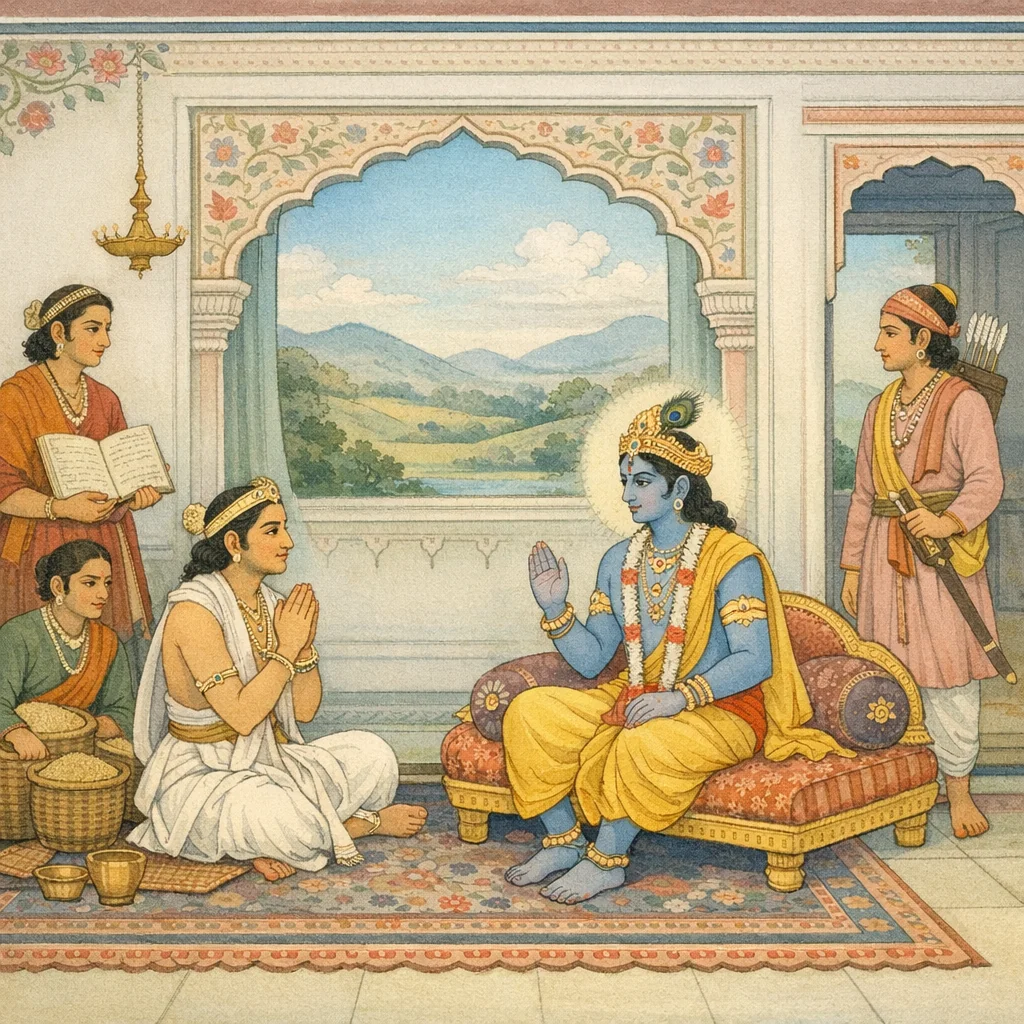
Vaiśaṃpāyana describes the consecration-day gathering in Yudhiṣṭhira’s inner ritual precinct, where brāhmaṇas, kings, and mahārṣis assemble. Nāradā and other sages sit with rājarṣis; learned disputation and dharma-artha discourse unfold, and the vedī is portrayed as radiant with Veda-knowing elites. The narration notes a controlled ritual environment in the antarvedī. Nārada observes the grandeur and recalls a prior divine context connected to Nārāyaṇa’s descent and the gathering of powers, framing Kṛṣṇa’s presence as exceptional within a human court. Bhīṣma then instructs Yudhiṣṭhira to perform appropriate honoring (arhaṇa) for the arriving kings and lists categories of those worthy of arghya; he recommends offering it to the most eminent among them. Yudhiṣṭhira asks whom to choose. Bhīṣma decisively names Kṛṣṇa as the foremost; Kṛṣṇa is praised as outshining the assembly. With Bhīṣma’s approval, Sahadeva offers the arghya to Kṛṣṇa, who accepts according to śāstric procedure. Śiśupāla, unable to tolerate the honor shown to Vāsudeva, censures Bhīṣma and Yudhiṣṭhira in the assembly and directs a verbal attack at Kṛṣṇa, initiating a public rupture in the ritual-political order.
Chapter Arc: धर्मराज युधिष्ठिर के न्यायपूर्ण शासन से राज्य में अद्भुत समृद्धि का उदय होता है—मेघ ‘निकामवर्षी’ बनते हैं और जनपद स्फीत हो उठता है। → समृद्धि केवल प्रकृति की कृपा नहीं, राजधर्म की कसौटी बनती है: कर-ग्रहण ‘न्यायपूर्वक’ हो, दान ‘सम्यग्’ हो, और गोरक्षा, कृषि, वाणिज्य—सब ‘सुप्रवृत्त’ रहें। इसी बीच युधिष्ठिर अपने कोष-धान्यागार का परिमाण जानकर एक महान यज्ञ (राजसूय) की तैयारी का संकल्प करते हैं। → युधिष्ठिर देवकीसुत माधव से कहते हैं कि यह समस्त धन विधिवत् श्रेष्ठ ब्राह्मणों और हव्यवाहन (अग्नि) में अर्पित करना चाहते हैं—धन का शिखर अब ‘यज्ञ’ में रूपांतरित होने को तत्पर है। → युधिष्ठिर की बात समाप्त होते ही सहदेव तत्क्षण आवश्यक व्यवस्थाओं का निवेदन/प्रस्ताव रखते हैं; फिर युधिष्ठिर नकुल को हस्तिनापुर भेजते हैं—भीष्म, द्रोण, धृतराष्ट्र, विदुर, कृप तथा अन्य अनुरक्त कौरव-सम्बन्धियों को आमंत्रित/सूचित करने हेतु। दूर-दूर देशों से वेद-वेदांग पारंगत ब्राह्मणों का आगमन आरम्भ होता है। → राजसूय की विराट तैयारी के साथ यह प्रश्न हवा में रहता है—क्या यह यज्ञ केवल धर्म-प्रतिष्ठा बनेगा, या राजकीय ईर्ष्या और प्रतिस्पर्धा को भी जगा देगा?
Shlokas
Verse 1
नस्ममा न (0) आसजअन+- - इसीको आजकल रोहतक (पंजाब) कहते हैं। (राजसूयपर्व) त्रयस्त्रिंशो 5 ध्याय: युधिष्ठिरके शासनकी विशेषता, श्रीकृष्णकी आज्ञासे युधिष्ठिरका राजसूययज्ञकी दीक्षा लेना तथा राजाओं, ब्राह्मणों एवं सगे-सम्बन्धियोंको बुलानेके लिये निमन्त्रण भेजना वैशम्पायन उवाच (एवं निर्जित्य पृथिवीं भ्रातर: कुरुनन्दन । वर्तमाना: स्वधर्मेण शशासु: पृथिवीमिमाम् ।। वैशम्पायनजी कहते हैं--कुशनन्दन! इस प्रकार सारी पृथ्वीको जीतकर अपने धर्मके अनुसार बर्ताव करते हुए पाँचों भाई पाण्डव इस भूमण्डलका शासन करने लगे। चतुर्भिर्भीमसेनाद्यैर्भ्रातृभि: सहितो नृप: । अनुग॒ृहा प्रजा: सर्वा: सर्ववर्णानगोपयत् ।। भीमसेन आदि चारों भाइयोंके साथ राजा युधिष्छिर सम्पूर्ण प्रजापर अनुग्रह करते हुए सब वर्णके लोगोंको संतुष्ट रखते थे। अविरोधेन सर्वेषां हितं चक्रे युधिष्ठिर: । प्रीयतां दीयतां सर्व मुक्त्वा कोषं बल॑ं विना ।। साधु धर्मेति पार्थस्य नान्यच्छुयेत भाषितम् । युधिष्ठिर किसीका भी विरोध न करके सबके हितसाधनमें लगे रहते थे। “सबको तृप्त एवं प्रसन्न किया जाय, खजाना खोलकर सबको खुले हाथ दान दिया जाय, किसीपर बलप्रयोग न किया जाय, धर्म! तुम धन्य हो।” इत्यादि बातोंके सिवा युधिष्ठिरके मुखसे और कुछ नहीं सुनायी पड़ता था। एवंवृत्ते जगत् तस्मिन् पितरीवान्वरज्यत ।। न तस्य विद्यते द्वेष्ठा ततो5स्थाजात शत्रुता ।) उनके ऐसे बर्तावके कारण सारा जगत् उनके प्रति वैसा ही अनुराग रखने लगा, जैसे पुत्र पिताके प्रति अनुरक्त होता है। राजा युधिष्ठिरसे द्वेष रखनेवाला कोई नहीं था, इसीलिये वे “अजातशत्रु' कहलाते थे। रक्षणाद् धर्मराजस्य सत्यस्य परिपालनात् | शत्रूणां क्षपणाच्चैव स्वकर्मनिरता: प्रजा:,धर्मराज युधिष्छिर प्रजाकी रक्षा, सत्यका पालन और शत्रुओंका संहार करते थे। उनके इन कार्योसे निश्चिन्त एवं उत्साहित होकर प्रजावर्गके सब लोग अपने-अपने वर्णाश्रमोचित कर्मोके पालनमें संलग्न रहते थे
Vaiśampāyana said: “O delight of the Kurus! Thus, having conquered the earth, the brothers—acting in accordance with their own dharma—began to govern this very world.”
Verse 2
बलीनां सम्यगादानादू धर्मतश्नानुशासनात् | निकामवर्षी पर्जन्य: स्फीतो जनपदो5भवत्,न्यायपूर्वक कर लेने और धर्मपूर्वक शासन करनेसे उनके राज्यमें मेघ इच्छानुसार वर्षा करते थे। इस प्रकार युधिष्ठिरका सम्पूर्ण जनपद धन-धान्यसे सम्पन्न हो गया था
Vaiśampāyana said: Because the strong were made to render what was rightly due, and because governance was carried out in accordance with dharma, the rains fell as desired. Thus the realm became prosperous and well-nourished, flourishing in wealth and grain.
Verse 3
सर्वारम्भा: सुप्रवृत्ता गोरक्षा कर्षणं वणिक् । विशेषात् सर्वमेवैतत् संजज्ञे राजकर्मण:,गोरक्षा, खेती और व्यापार आदि सभी कार्य अच्छे ढंगसे होने लगे। विशेषतः राजाकी सुव्यवस्थासे ही यह सब कुछ उत्तमरूपसे सम्पन्न होता था
Vaiśampāyana said: All undertakings began to prosper—especially the protection of cattle, the tilling of fields, and trade. Indeed, it was particularly through the king’s orderly administration that all these activities came to be successfully accomplished.
Verse 4
दस्युभ्यो वज्चकेभ्यो वा राजन् प्रति परस्परम् । राजवल्लभतश्चैव नाश्रूयन्त मृषा गिर:,राजन! औरोंकी तो बात ही क्या है, चोरों, ठगों, राजा अथवा राजाके विश्वासपात्र व्यक्तियोंके मुखसे भी वहाँ कोई झूठी बात नहीं सुनी जाती थी। केवल प्रजाके साथ ही नहीं, आपसमें भी वे लोग झूठ-कपटका बर्ताव नहीं करते थे
Vaiśampāyana said: “O King, there false words were not heard—whether from robbers or deceivers, nor even from the king’s own favourites and trusted men. Not only toward the subjects, but even among themselves, people did not resort to lying or fraud.”
Verse 5
अवर्ष चातिवर्ष च व्याधिपावकमूर्च्छनम् । सर्वमेतत् तदा नासीद् धर्मनित्ये युधिषछिरे,धर्मपरायण युधिष्ठिरके शासनकालमें अनावृष्टि, अतिवृष्टि, रोग-व्याधि तथा आग लगने आदि उपद्रवोंका नाम भी नहीं था
Vaiśampāyana said: In the time when Yudhiṣṭhira—steadfast in dharma—was ruling, there was then no talk at all of calamities: neither drought nor excessive rain, nor outbreaks of disease, nor the spread of fire.
Verse 6
प्रियं कर्तुमुपस्थातुं बलिकर्म स्वभावजम् | अभिहर्तु नृपा जम्मुर्नान्यि: कार्य: कथंचन,राजा लोग उनके यहाँ स्वाभाविक भेंट देने अथवा उनका कोई प्रिय कार्य करनेके लिये ही आते थे, युद्ध आदि दूसरे किसी कामसे नहीं
Vaiśampāyana said: The kings came there only to pay their natural, customary tribute and to render some pleasing service—never for any other purpose such as war or coercion.
Verse 7
धर्म्यर्धनागमैस्तस्य ववृधे निचयो महान् । कर्तु यस्य न शक््येत क्षयो वर्षशतैरपि,धर्मपूर्वक प्राप्त होनेवाले धनकी आयसे उनका महान् धन-भण्डार इतना बढ़ गया था कि सैकड़ों वर्षोतक खुले हाथ लुटानेपर भी उसे समाप्त नहीं किया जा सकता था
Vaiśampāyana said: By wealth acquired through righteous and lawful means, his great treasury grew so vast that it could not be exhausted even if it were spent freely for hundreds of years.
Verse 8
स्वकोष्ठस्य परीमाणं कोशस्य च महीपति: । विज्ञाय राजा कौन्तेयो यज्ञायैव मनो दथे,कुन्तीनन्दन राजा युधिष्ठिरने अपने अन्न-वस्त्रके भंडार तथा खजानेका परिमाण जानकर यज्ञ करनेका ही निश्चय किया
Vaiśampāyana said: Having ascertained the measure of his granaries and the extent of his treasury, the king Yudhiṣṭhira—Kuntī’s son—resolved his mind solely upon performing a sacrifice.
Verse 9
सुहृदश्चैव ये सर्वे पूृथक् च सह चाब्रुवन् | यज्ञकालस्तव विभो क्रियतामत्र साम्प्रतम्,उनके जितने हितैषी सुहृद् थे, वे सभी अलग-अलग और एक साथ यही कहने लगे --'प्रभो! यह आपके यज्ञ करनेका उपयुक्त समय आया है; अत: अब उसका आरम्भ कीजिये”
Vaiśampāyana said: All his well-wishing friends—some speaking individually and others together—kept urging, “O mighty lord, the proper time for your sacrifice has arrived; therefore let it be undertaken here and now.”
Verse 10
अथीैवं ब्रुवतामेव तेषाम भ्याययौ हरि: । ऋषि: पुराणो वेदात्मादृश्यश्वैव विजानताम्,वे सुहृदू इस तरहकी बातें कर ही रहे थे कि उसी समय भगवान् श्रीहरि आ पहुँचे। वे पुराणपुरुष, नारायण ऋषि, वेदात्मा एवं विज्ञानीजनोंके लिये भी अगम्य परमेश्वर हैं
While they were still speaking in this manner, Hari arrived there at that very moment. He is the primeval Sage, Nārāyaṇa, the very soul of the Veda—yet even for those who deem themselves discerning, He is difficult to comprehend, appearing only by His own will.
Verse 11
जगतस्तस्थुषां श्रेष्ठ: प्रभवश्वाप्ययश्न ह । भूतभव्यभवन्नाथ: केशव: केशिसूदन:,वे ही स्थावर-जंगम प्राणियोंके उत्तम उत्पत्ति-स्थान और लयके अधिष्ठान हैं। भूत, वर्तमान और भविष्य--तीनों कालोंके नियन्ता हैं। वे ही केशी दैत्यको मारनेवाले केशव हैं
Vaiśampāyana said: Keshava—slayer of the demon Keśin—is the foremost among all that moves and all that stands still. He is both the source from which beings arise and the ground into which they dissolve. He is the sovereign lord of past, present, and future—governing all three times.
Verse 12
प्राकार: सर्ववृष्णीनामापत्स्वभयदो<रिहा । बलाधिकारे निक्षिप्य सम्यगानकदुन्दुभिम्,वे सम्पूर्ण वृष्णिवंशियोंके परकोटेकी भाँति संरक्षक, आपत्तिमें अभय देनेवाले तथा उनके शत्रुओंका संहार करनेवाले हैं। पुरुषसिंह माधव अपने पिता वसुदेवजीको द्वारकाकी सेनाके आधिपत्यपर स्थापित करके धर्मराजके लिये नाना प्रकारके धन-रत्नोंकी भेंट ले विशाल सेनाके साथ वहाँ आये थे
Vaiśampāyana said: “He is like a rampart for all the Vṛṣṇis—granting fearlessness in times of crisis and destroying their enemies. Having duly installed Ānakadundubhi (Vasudeva) in command of the Dvārakā forces, Mādhava, the lion among men, came there with a vast army, bringing many kinds of wealth and jewels as offerings for Dharmarāja.”
Verse 13
उच्चावचमुपादाय धर्मराजाय माधव: । धनौघं पुरुषव्याप्रो बलेन महता55वृत:,वे सम्पूर्ण वृष्णिवंशियोंके परकोटेकी भाँति संरक्षक, आपत्तिमें अभय देनेवाले तथा उनके शत्रुओंका संहार करनेवाले हैं। पुरुषसिंह माधव अपने पिता वसुदेवजीको द्वारकाकी सेनाके आधिपत्यपर स्थापित करके धर्मराजके लिये नाना प्रकारके धन-रत्नोंकी भेंट ले विशाल सेनाके साथ वहाँ आये थे
Vaiśampāyana said: Taking with him gifts of many kinds for Dharmarāja (Yudhiṣṭhira), Mādhava (Kṛṣṇa)—that tiger among men—came surrounded by a great force, bringing a flood of wealth.
Verse 14
त॑ धनौघमपर्यन्तं रत्नसागरमक्षयम् | नादयन् रथघोषेण प्रविवेश पुरोत्तमम्,उस धनराशिकी कहीं सीमा नहीं थी, मानो रत्नोंका अक्षय महासागर हो। उसे लेकर रथोंकी आवाजसे समूची दिशाओंको प्रतिध्वनित करते हुए वे उत्तम नगर इन्द्रप्रस्थमें प्रविष्ट हुए
Vaiśampāyana said: That amassed wealth had no limit—like an inexhaustible ocean of jewels. Bearing it, and making the quarters resound with the thunder of chariots, they entered the foremost city, Indraprastha.
Verse 15
पूर्णमापूरयंस्तेषां द्विषच्छोकावहो 5भवत् | असूर्यमिव सूर्येण निवातमिव वायुना । कृष्णेन समुपेतेन जहृषे भारतं पुरम्,पाण्डवोंका धन-भण्डार तो यों ही भरा-पूरा था, भगवानने (उन्हें अक्षय धनकी भेंट देकर) उसे और भी पूर्ण कर दिया। उनका शुभागमन पाण्डवोंके शत्रुओंका शोक बढ़ानेवाला था। बिना सूर्यका अन्धकारपूर्ण जगत् सूर्योदय होनेसे जिस प्रकार प्रकाशसे भर जाता है, बिना वायुके स्थानमें वायुके चलनेसे जैसे नूतन प्राण-शक्तिका संचार हो उठता है, उसी प्रकार भगवान् श्रीकृष्णके पदार्पण करनेपर समस्त इन्द्रप्रस्थमें हर्षोल्लास छा गया
Vaiśampāyana said: By his arrival he made their prosperity even more complete, yet for their enemies it became a cause of grief. Just as a sunless world is filled with light when the sun rises, and as a windless stillness is stirred into fresh life when the wind begins to blow, so too, when Kṛṣṇa came among them, the city of the Bhāratas (Indraprastha) rejoiced.
Verse 16
त॑ मुदाभिसमागम्य सत्कृत्य च यथाविधि । स पृष्टवा कुशलं चैव सुखासीनं युधिष्ठिर:,नरश्रेष्ठ जनमेजय! राजा युधिष्छिर बड़े प्रसन्न होकर उनसे मिले। उनका विधिपूर्वक स्वागत-सत्कार करके कुशलमंगल पूछा और जब वे सुखपूर्वक बैठ गये, तब धौम्य, द्वैपायन आदि ऋत्विजों तथा भीम, अर्जुन, नकुल, सहदेव--चारों भाइयोंके साथ निकट जाकर युधिष्ठिरने श्रीकृष्णसे कहा
Vaiśampāyana said: Delighted, Yudhiṣṭhira went forward to meet him and, following due rite, offered respectful hospitality. He inquired after his welfare; and when the guest had taken a comfortable seat, King Yudhiṣṭhira—O best of men, Janamejaya—approached Śrī Kṛṣṇa together with the priests such as Dhaumya and Dvaipāyana, and with his brothers Bhīma, Arjuna, Nakula, and Sahadeva, and then addressed Kṛṣṇa.
Verse 17
धौम्यद्वैपायनमुखैर्त्विग्भि: पुरुषर्षभ । भीमार्जुनयमैश्वैव सहित: कृष्णमब्रवीत्,नरश्रेष्ठ जनमेजय! राजा युधिष्छिर बड़े प्रसन्न होकर उनसे मिले। उनका विधिपूर्वक स्वागत-सत्कार करके कुशलमंगल पूछा और जब वे सुखपूर्वक बैठ गये, तब धौम्य, द्वैपायन आदि ऋत्विजों तथा भीम, अर्जुन, नकुल, सहदेव--चारों भाइयोंके साथ निकट जाकर युधिष्ठिरने श्रीकृष्णसे कहा
Vaiśampāyana said: O bull among men, O best of men Janamejaya—accompanied by the officiating priests headed by Dhaumya and Dvaipāyana, and also by Bhīma, Arjuna, and the twins (Nakula and Sahadeva), the king approached Kṛṣṇa and addressed him. The scene underscores proper royal conduct: respectful reception, orderly hospitality, and speaking in the presence of elders and kin, in accordance with dharma.
Verse 18
युधिछिर उवाच त्वत्कृते पृथिवी सर्वा मद्वशे कृष्ण वर्तते । धनं च बहु वार्ष्णेय त्वत्प्रसादादुपार्जितम्,युधिष्ठिरने कहा--श्रीकृष्ण/ आपकी दयासे आपकी सेवाके लिये सारी पृथ्वी इस समय मेरे अधीन हो गयी है। वार्ष्णेय! मुझे धन भी बहुत प्राप्त हो गया है
Yudhiṣṭhira said: “O Kṛṣṇa, because of you the whole earth now stands under my control, ready for service. And, O descendant of the Vṛṣṇis, abundant wealth too has been obtained by me through your gracious favor.”
Verse 19
सो5हमिच्छामि तत् सर्व विधिवद् देवकीसुत । उपय क्तुं द्विजाग्रयेभ्यो हव्यवाहे च माधव,देवकीनन्दन माधव! वह सारा धन मैं विधिपूर्वक श्रेष्ठ ब्राह्मणों तथा हव्यवाहन अग्निके उपयोगमें लाना चाहता हूँ
Yudhiṣṭhira said: “Therefore, O son of Devakī, O Mādhava, I wish to employ all that wealth in the proper, prescribed manner—offering it to the foremost of the twice-born (brāhmaṇas) and into the sacred fire. Let it be used in ways that uphold right order and sanctify what has been gained.”
Verse 20
तदहं यटष्टमिच्छामि दाशा्ह सहितस्त्वया । अनुजैश्न महाबाहो तन्मानुज्ञातुमहसि,महाबाहु दाशार्ह! अब मैं आप तथा अपने छोटे भाइयोंके साथ यज्ञ करना चाहता हूँ। इसके लिये आप मुझे आज्ञा दें
Yudhiṣṭhira said: “Therefore I wish to perform a sacrifice, with you, O Dāśārha, and together with my younger brothers. O mighty-armed one, please grant me your consent for this.”
Verse 21
तद् दीक्षापय गोविन्द त्वमात्मानं महाभुज । त्वयीष्टवति दाशार्ह विपाप्मा भविता हाहम्,विशाल भुजाओंवाले गोविन्द! आप स्वयं यज्ञकी दीक्षा ग्रहण कीजिये। दाशाहई! आपके यज्ञ करनेपर मैं पापरहित हो जाऊँगा
Yudhiṣṭhira said: “Therefore, O Govinda, O mighty-armed one, please undertake the consecration for the sacrifice yourself. O Dāśārha, when you perform this rite, I shall become free from sin.”
Verse 22
मां वाप्यभ्यनुजानीहि सहैभिरनुजैर्विभो | अनुज्ञातस्त्वया कृष्ण प्राप्त॒यां क्रतुमुत्तमम्,प्रभो! अथवा मुझे अपने इन छोटे भाइयोंके साथ दीक्षा ग्रहण करनेकी आज्ञा दीजिये। श्रीकृष्ण! आपकी अनुज्ञा मिलनेपर ही मैं उस उत्तम यज्ञकी दीक्षा ग्रहण करूँगा
Yudhiṣṭhira said: “O Lord, grant permission to me as well, together with my younger brothers. O Kṛṣṇa, only when you authorize me will I undertake the consecration for that supreme sacrifice. For me, rightful action begins with due consent and proper order.”
Verse 23
वैशम्पायन उवाच त॑ं कृष्ण: प्रत्युवाचेदं बहूकत्वा गुणविस्तरम् । त्वमेव राजशार्दूल सम्राडहों महाक्रतुम् । सम्प्राप्रुहि त्वया प्राप्ते कृतकृत्यास्ततो वयम्,वैशम्पायनजी कहते हैं--जनमेजय! तब भगवान् श्रीकृष्णने राजसूययज्ञके गुणोंका विस्तारपूर्वक वर्णन करके उनसे इस प्रकार कहा--'राजसिंह! आप सम्राट होने योग्य हैं, अतः आप ही इस महान् यज्ञकी दीक्षा ग्रहण कीजिये। आपके दीक्षा लेनेपर हम सबलोग कृतकृत्य हो जायँगे
Vaiśampāyana said: Then Kṛṣṇa replied to him, having set forth at length the excellences of the rite: “O tiger among kings, you alone are fit to be an emperor. Therefore you should undertake this great sacrifice. Once you have obtained it (its consecration and accomplishment), we shall all be fulfilled in our purpose.”
Verse 24
यजस्वाभीप्सितं यज्ञ मयि श्रेयस्यवस्थिते । नियुद्धक्ष्व त्वं च मां कृत्ये सर्व कर्तास्मि ते वच:,आप अपने इस अभीष्ट यज्ञको प्रारम्भ कीजिये। मैं आपका कल्याण करनेके लिये सदा उद्यत हूँ। मुझे आवश्यक कार्यमें लगाइये, मैं आपकी सब आज्ञाओंका पालन करूँगा”
“Begin the sacrifice you desire. I stand ready for your true good (śreyas). Employ me in whatever duty is required; I will carry out all your commands.”
Verse 25
युधिछिर उवाच सफल: कृष्ण संकल्प: सिद्धिश्व नियता मम । यस्य मे त्वं हृषीकेश यथेप्सितमुपस्थित:,युधिष्ठिर बोले--श्रीकृष्ण मेरा संकल्प सफल हो गया, मेरी सिद्धि सुनिश्चित है; क्योंकि हृषीकेश! आप मेरी इच्छाके अनुसार स्वयं ही यहाँ उपस्थित हो गये हैं
Yudhiṣṭhira said: “O Kṛṣṇa, my resolve has borne fruit, and my success is now assured—for you, Hṛṣīkeśa, have appeared here of your own accord exactly as I had wished.”
Verse 26
वैशम्पायन उवाच अनुज्ञातस्तु कृष्णेन पाण्डवो भ्रातृभि: सह | ईजितुं राजसूयेन साधनान्युपचक्रमे,वैशम्पायनजी कहते हैं--जनमेजय! भगवान् श्रीकृष्णसे आज्ञा लेकर भाइयोंसहित पाण्डुनन्दन युधिष्ठिरने राजसूययज्ञ करनेके लिये साधन जुटाना आरम्भ किया
Vaiśampāyana said: Having received Kṛṣṇa’s consent, the son of Pāṇḍu (Yudhiṣṭhira), together with his brothers, began to assemble the necessary means to perform the Rājasūya sacrifice.
Verse 27
ततस्त्वाज्ञापयामास पाण्डवो5रिनिबर्हण: । सहदेवं युधां श्रेष्ठ मन्त्रिणश्वैव सर्वश:,उस समय शशत्रुओंका संहार करनेवाले पाण्डुकुमारने योद्धाओंमें श्रेष्ठ सहदेव तथा सम्पूर्ण मन्त्रियोंको आज्ञा दी
Then the Pāṇḍava, famed as a crusher of enemies, issued his orders—summoning Sahadeva, foremost among warriors, and all the ministers as well.
Verse 28
अस्मिन् क्रतौ यथोक्तानि यज्ञाड़नि द्विजातिभि: । तथोपकरणं सर्व मड़लानि च सर्वश:,“इस यज्ञके लिये ब्राह्मणोंके बताये अनुसार यज्ञके अंगभूत सामान, आवश्यक उपकरण, सब प्रकारकी मांगलिक वस्तुएँ तथा धौम्यजीकी बतायी हुई यज्ञोपयोगी सामग्री >-इन सभी वस्तुओंको क्रमशः जैसे मिलें, वैसे शीघ्र ही अपने सेवक जाकर ले आवें
Vaiśaṃpāyana said: “In this sacrifice, let all the sacrificial requisites, as prescribed by the twice-born (Brāhmaṇas)—together with every necessary implement and all auspicious items—be gathered accordingly.”
Verse 29
अधियज्ञांश्न॒ सम्भारान् धौम्योक्तान् क्षिप्रमेव हि । समानयमन्तु पुरुषा यथायोगं यथाक्रमम्,“इस यज्ञके लिये ब्राह्मणोंके बताये अनुसार यज्ञके अंगभूत सामान, आवश्यक उपकरण, सब प्रकारकी मांगलिक वस्तुएँ तथा धौम्यजीकी बतायी हुई यज्ञोपयोगी सामग्री >-इन सभी वस्तुओंको क्रमशः जैसे मिलें, वैसे शीघ्र ही अपने सेवक जाकर ले आवें
Vaiśampāyana said: “Let the men quickly bring together the sacrificial requisites—the items that form the limbs of the rite—exactly as prescribed by Dhaumya. Let them be procured and arranged in proper fitness and in due sequence.”
Verse 30
इन्द्रसेनो विशोकश्न पूरुश्चार्जुनसारथि: । अन्नाद्याहरणे युक्ता: सन््तु मत्प्रियकाम्यया,“इन्द्रसेन, विशोक और अर्जुनका सारथि पूरु, ये मेरा प्रिय करनेकी इच्छासे अन्न आदिके संग्रहके कामपर जुट जायँ
Vaiśampāyana said: “Let Indrasena, Viśoka, and Pūru—the charioteer of Arjuna—set themselves to the task of procuring food and other necessities, motivated by the wish to do what is pleasing to me.”
Verse 31
सर्वकामाश्च कार्यन्तां रसगन्धसमन्विता: । मनोरथप्रीतिकरा द्विजानां कुरुसत्तम,“कुरुश्रेष्ठ जिनको खानेकी प्राय: सभी इच्छा करते हैं, वे रस और गन्धसे युक्त भाँति- भाँतिके मिष्टात्न आदि तैयार कराये जाँय, जो ब्राह्मणोंको उनकी इच्छाके अनुसार प्रीति प्रदान करनेवाले हों”
Vaiśampāyana said: “O best of the Kurus, have all kinds of foods prepared—endowed with pleasing taste and fragrance—so that they fulfill the wishes of the twice-born and bring them satisfaction.”
Verse 32
तद्घाक्यसमकालं च कृतं सर्व न्यवेदयत् । सहदेवो युधां श्रेष्ठो धर्मराजे युधिषछ्ठिरे,धर्मराज युधिष्ठिरकी यह बात समाप्त होते ही योद्धाओंमें श्रेष्ठ सहदेवने उनसे निवेदन किया, “यह सब व्यवस्था हो चुकी है”
As soon as those words were concluded, Sahadeva—foremost among warriors—reported to King Yudhiṣṭhira, the upholder of dharma, that all the arrangements had been duly completed.
Verse 33
ततो द्वैपायनो राजन्नृत्विज: समुपानयत् । वेदानिव महाभागान् साक्षान्मूर्तिमतो द्विजान्,राजन! तदनन्तर द्वैपायन व्यासजी बहुत-से ऋत्विजोंको ले आये। वे महाभाग ब्राह्मण मानो साक्षात् मूर्तिमान् वेद ही थे इति श्रीमहाभारते सभापर्वणि राजसूयपर्वणि राजसूयदीक्षायां त्रयस्त्रिंशो 5 ध्याय: ।। ३३ ॥।। इस प्रकार श्रीमह्ाभारत सभापरवके अन्तर्गत राजयूयपर्वमें रजसूयदीक्षाविषयक तैंतीसवाँ अध्याय पूरा हुआ
Then Dvaipāyana (Vyāsa), O king, brought forward the officiating priests—high-souled brahmins who seemed like the Vedas themselves made manifest in embodied form.
Verse 34
स्वयं ब्रह्मत्वमकरोत् तस्य सत्यवतीसुतः । धनंजयानामृषभ: सुसामा सामगो5भवत्,स्वयं सत्यवतीनन्दन व्यासने उस यज्ञमें ब्रह्माका काम सँभाला। धनंजयगोत्रीय ब्राह्मणोंमें श्रेष्ठ सुसामा सामगान करनेवाले हुए
Vaiśampāyana said: Satyavatī’s son (Vyāsa) himself assumed the office of Brahmā-priest for that sacrifice. And among the Dhanañjaya lineage, the foremost—Susāmā—served as the Sāman-chanter (Sāmaga).
Verse 35
याज्ञवल्क्यो बभूवाथ ब्रह्निष्ठो5 ध्वर्युसत्तम: । पैलो होता वसो: पुत्रो धौम्पेन सहितो5भवत्,और ब्रह्मनिष्ठ याज्ञवल्क्य उस यज्ञके श्रेष्ठतम अध्वर्यु थे। वसुपुत्र पैल धौम्य मुनिके साथ होता बने थे
Vaiśampāyana said: Then Yājñavalkya—steadfastly devoted to Brahman—became the foremost of the adhvaryu priests for that sacrifice; and Paila, the son of Vasu, together with the sage Dhaumya, served as the hotṛ.
Verse 36
एतेषां पुत्रवर्गाश्न॒ शिष्पाश्न भरतर्षभ | बशभूवुहोत्रगा: सर्वे वेदवेदाड़पारगा:,भरतश्रेष्ठ! इनके पुत्र और शिष्यवर्गके लोग, जो सब-के-सब वेद-वेदांगोंके पारंगत विद्वान थे, 'होत्रग” (सप्तहोता) हुए
Vaiśampāyana said: “O bull among the Bharatas, the sons and the circle of disciples of those men—all of them thoroughly accomplished in the Vedas and the Vedāṅgas—came to serve as Hotṛ-priests (the sevenfold officiants) in the sacrificial rite.”
Verse 37
ते वाचयित्वा पुण्याहमूहयित्वा च तं विधिम् । शास्त्रोक्तं पूजयामासुस्तद् देवयजनं महत्,उन सबने पुण्याहवाचन कराकर उस विधिका ऊहन (अर्थात्र 'राजसूयेन यक्ष्ये, स्वाराज्यमवाप्रवानि'--मैं स्वाराज्य प्राप्त करूँ, इस उद्देश्यसे राजसूययज्ञ करूँगा, इत्यादि रूपसे संकल्प) कराकर शास्त्रोक्त विधिसे उस महान् यज्ञस्थानका पूजन कराया
They had the auspicious benedictions (pūṇyāha) recited and the prescribed rite duly set in order, with its purpose solemnly declared as a saṅkalpa. Then, in accordance with the injunctions of śāstra, they caused that great sacrificial ground—meant for the worship of the gods—to be honored.
Verse 38
तत्र चक्कुरनुज्ञाता: शरणान्युत शिल्पिन: । गन्धवन्ति विशालानि वेश्मानीव दिवौकसाम्,उस स्थानपर राजाकी आज्ञासे शिल्पियोंने देवमन्दिरोंक समान विशाल एवं सुगन्धित भवन बनाये
There, under the king’s authorization, the craftsmen built shelters and other structures—spacious, fragrant buildings, like the mansions of the gods.
Verse 39
तत आज्ञापयामास स राजा राजसत्तम: | सहदेवं तदा सद्यो मन्त्रिणं पुरुषर्षभ:,तदनन्तर राजशिरोमणि नरश्रेष्ठ धर्मराज युधिष्छिरने तुरंत ही मन्त्री सहदेवको आज्ञा दी, 'सब राजाओं तथा ब्राह्मणोंको आमन्त्रित करनेके लिये तुरंत ही शीघ्रगामी दूत भेजो।' राजाकी यह बात सुनकर सहदेवने दूतोंको भेजा और कहा--
Then that king—foremost among kings, the bull among men—at once commanded his minister Sahadeva. The righteous Yudhiṣṭhira, intent on proper order and due honor, directed that swift messengers be dispatched to invite the rulers and the brāhmaṇas, so that the coming royal rite and council might proceed in accordance with dharma and established protocol.
Verse 40
आमन्त्रणार्थ दूतांस्त्वं प्रेषयस्वाशुगान् द्रुतम् । उपश्रुत्य वचो राज्ञ: स दूतान् प्राहिणोत् तदा,तदनन्तर राजशिरोमणि नरश्रेष्ठ धर्मराज युधिष्छिरने तुरंत ही मन्त्री सहदेवको आज्ञा दी, 'सब राजाओं तथा ब्राह्मणोंको आमन्त्रित करनेके लिये तुरंत ही शीघ्रगामी दूत भेजो।' राजाकी यह बात सुनकर सहदेवने दूतोंको भेजा और कहा--
“For the purpose of issuing invitations, dispatch swift messengers at once.” Hearing the king’s command, Sahadeva immediately sent out the envoys.
Verse 41
आमन्त्रयध्वं राष्ट्रेषु ब्राह्मणान् भूमिपानथ । विशश्व मान्यान् शूद्रांक्ष सर्वानानयतेति च,“तुमलोग सभी राज्योंमें घूम-घूमकर वहाँके राजाओं, ब्राह्मणों, वैश्यों तथा सब माननीय शूद्रोंको निमन्त्रित कर दो और बुला ले आओ'
“Go throughout the kingdoms and formally invite the brāhmaṇas and the rulers of the land; invite the vaiśyas as well, and all respected śūdras too—bring everyone here.”
Verse 42
वैशम्पायन उवाच समाज्ञप्तास्ततो दूता: पाण्डवेयस्य शासनात् | आमन्त्रयाम्बभूवुश्च आनयंश्वापरान् द्रुतम् । तथा परानपि नरानात्मन: शीघ्रगामिन:,वैशम्पायनजी कहते हैं--राजन! तदनन्तर पाण्डुपुत्र राजा युधिष्ठिरके आदेशसे सहदेवकी आज्ञा पाकर सब शीघ्रगामी दूत गये और उन्होंने ब्राह्मण आदि सब वर्णोंके लोगोंको निमन्त्रित किया तथा बहुतोंको वे अपने साथ ही शीघ्र बुला लाये। वे अपनेसे सम्बन्ध रखनेवाले अन्य व्यक्तियोंको भी साथ लाना न भूले
Vaiśampāyana said: Then, at the command of the Pāṇḍava (Yudhiṣṭhira), the swift-moving messengers—having received Sahadeva’s instructions—set out. They invited people of all classes, including brāhmaṇas, and quickly brought many others along as well. They also did not neglect to summon additional persons connected with them, gathering them without delay.
Verse 43
ततस्ते तु यथाकाल कुन्तीपुत्र युधिष्ठिरम् । दीक्षयाज्चक्रिरे विप्रा राजसूयाय भारत,भारत! तदनन्तर वहाँ आये हुए सब ब्राह्मणोंने ठीक समयपर कुन्तीपुत्र युधिष्ठिरको राजसूययज्ञकी दीक्षा दी
Then, at the proper time, the Brahmin priests who had assembled there formally initiated Kuntī’s son Yudhiṣṭhira with the consecratory rite for the Rājasūya sacrifice.
Verse 44
दीक्षित: स तु धर्मात्मा धर्मराजो युधिष्ठिर: । जगाम यज्ञायतनं वृतो विप्रै: सहस्रश:,यज्ञकी दीक्षा लेकर धर्मात्मा धर्मराज युधिष्ठिर सहसौ्रों ब्राह्मणोंसे घिरे हुए यज्ञमण्डपमें गये
Having undertaken the consecratory vow for the sacrifice, the righteous-souled Yudhiṣṭhira—king devoted to dharma—proceeded to the sacrificial enclosure, surrounded by thousands of brāhmaṇas.
Verse 45
भ्रातृभिज्ञातिभिश्वैव सुहृद्धिः सचिवै: सह । क्षत्रियैश्व मनुष्येन्द्रैननादेशसमागतै:
Along with his brothers and kinsmen, and also with trusted friends and ministers, and with kṣatriya lords—kings of men—who had assembled from many different regions, he was attended and surrounded.
Verse 46
अमात्यैश्न नरश्रेष्ठो धर्मो विग्रहवानिव । उस समय उनके सगे भाई, जाति-बन्धु, सुहृद, सहायक अनेक देशोंसे आये हुए क्षत्रिय-नरेश तथा मन्त्रिगण भी थे। नरश्रेष्ठ युधिष्ठिर मूर्तिमान् धर्म ही जान पड़ते थे || ४५ *3॥ आजजम्मुर्ब्राह्मणास्तत्र विषयेभ्यस्ततस्तत:
And with his ministers around him, that best of men, Yudhiṣṭhira, appeared as Dharma itself embodied—his conduct and bearing making righteousness seem visibly present in the royal assembly.
Verse 47
तेषामावसथांक्षक्रुर्थर्मराजस्य शासनात्,धर्मराजकी आज्ञासे हजारों शिल्पियोंने आत्मीयजनोंके साथ आये हुए उन ब्राह्मणोंके ठहरनेके लिये पृथक्-पृथक् घर बनाये थे, जो बहुत-से अन्न और वस्त्रोंसे परिपूर्ण थे और जिनमें सभी ऋतुओंमें सुखपूर्वक रहनेकी सुविधाएँ थीं
By the command of Dharmarāja, thousands of craftsmen built separate houses for those brāhmaṇas who had arrived with their own kinsfolk—dwellings filled with abundant food and clothing, and furnished with comforts for every season, so that they might live there at ease.
Verse 48
बद्चन्नाच्छादनैर्युक्तानू सगणानां पृथक् पृथक् सर्वर्तुगुणसम्पन्नान् शिल्पिनो5थ सहस्रशः,धर्मराजकी आज्ञासे हजारों शिल्पियोंने आत्मीयजनोंके साथ आये हुए उन ब्राह्मणोंके ठहरनेके लिये पृथक्-पृथक् घर बनाये थे, जो बहुत-से अन्न और वस्त्रोंसे परिपूर्ण थे और जिनमें सभी ऋतुओंमें सुखपूर्वक रहनेकी सुविधाएँ थीं
Vaiśampāyana said: Then, by the command of Dharmarāja, thousands of craftsmen built separate dwellings for those brāhmaṇas who had arrived together with their own people. These houses were well supplied with food and clothing and were furnished with comforts suited to every season, so that the guests might reside with ease and dignity.
Verse 49
तेषु ते न््यवसन् राजन ब्राह्मणा नृपसत्कृता: | कथयन्त: कथा बद्दी: पश्यन्तो नटनर्तकान्,राजन! उन गृहोंमें वे ब्राह्मणलोग राजासे सत्कार पाकर निवास करने लगे। वहाँ वे नाना प्रकारकी कथाएँ कहते और नट-नर्तकोंके खेल देखते थे
O King, in those houses the brāhmaṇas, honored and well received by the ruler, took up residence. There they passed the time recounting many kinds of stories and watching the performances of actors and dancers.
Verse 50
भुज्जतां चैव विप्राणां वदतां च महास्वन: । अनिशं श्रूयते तत्र मुदितानां महात्मनाम्,वहाँ भोजन करते और बोलते हुए आनन्दमग्न महात्मा ब्राह्मणोंका निरन्तर महान् कोलाहल सुनायी पड़ता था
Vaiśampāyana said: There, the continuous, great din could be heard—arising from high-souled brāhmaṇas who were joyfully eating and conversing.
Verse 51
दीयतां दीयतामेषां भुज्यतां भुज्यतामिति । एवम्प्रकारा: संजल्पा: श्रूयन्ते स्मात्र नित्यश:,“इनको दीजिये, इन्हें परोसिये, भोजन कीजिये, भोजन कीजिये” इसी प्रकारके शब्द वहाँ प्रतिदिन कानोंमें पड़ते थे
Vaiśampāyana said: “Give—give to these; serve—serve; eat—eat!” Such calls and exchanges of this kind were heard there every day without fail.
Verse 52
गवां शतसहस्राणि शयनानां च भारत । रुक्मस्य योषितां चैव धर्मराज: पृथग् ददौ,भारत! धर्मराज युधिष्ठिरने एक लाख गौएँ, उतनी ही शब्याएँ, एक लाख स्वर्णमुद्राएँ तथा उतनी ही अविवाहित युवतियाँ पृथक्-पृथक् ब्राह्मणोंको दान की
Vaiśampāyana said: “O Bhārata, King Dharma (Yudhiṣṭhira) gave separately as gifts: hundreds of thousands of cows, and likewise beds, and also gold and maidens.”
Verse 53
प्रावर्ततैवं यज्ञ: स पाण्डवस्य महात्मन: । पृथिव्यामेकवीरस्य शक्रस्येव त्रिविष्टपे,इस प्रकार स्वर्गमें इन्द्रकी भाँति भूमण्डलमें अद्वितीय वीर महात्मा पाण्डुनन्दन युधिष्ठिरका वह यज्ञ प्रारम्भ हुआ
Vaiśampāyana said: Thus began the sacrifice of that great-souled Pāṇḍava—Yudhiṣṭhira—who stood unrivaled in heroism upon the earth, even as Śakra (Indra) is preeminent in heaven.
Verse 54
ततो युधिष्छिरो राजा प्रेषयामास पाण्डवम् | नकुलं हास्तिनपुरं भीष्माय पुरुषर्षभ:,तदनन्तर पुरुषोतम राजा युधिष्ठिरने भीष्म, द्रोणाचार्य, धृतराष्ट्र, विदुर, कृपाचार्य तथा दुर्योधन आदि सब भाइयों एवं अपनेमें अनुराग रखनेवाले अन्य जो लोग वहाँ रहते थे, उन सबको बुलानेके लिये पाण्डुपुत्र नकुलको हस्तिनापुर भेजा
Then King Yudhiṣṭhira, the foremost of men, dispatched the Pāṇḍava Nakula to Hāstinapura, to summon Bhīṣma.
Verse 55
द्रोणाय धृतराष्ट्राय विदुराय कृपाय च । भ्रातृणां चैव सर्वेषां येडनुरक्ता युधिष्ठिरे,तदनन्तर पुरुषोतम राजा युधिष्ठिरने भीष्म, द्रोणाचार्य, धृतराष्ट्र, विदुर, कृपाचार्य तथा दुर्योधन आदि सब भाइयों एवं अपनेमें अनुराग रखनेवाले अन्य जो लोग वहाँ रहते थे, उन सबको बुलानेके लिये पाण्डुपुत्र नकुलको हस्तिनापुर भेजा
Vaiśampāyana said: (Yudhiṣṭhira sent word) to Droṇa, to Dhṛtarāṣṭra, to Vidura, and to Kṛpa, and likewise to all his brothers and to all others who were devoted to Yudhiṣṭhira.
Verse 463
सर्वविद्यासु निष्णाता वेदवेदाड़पारगा: । तत्पश्चात् वहाँ भिन्न-भिन्न देशोंसे ब्राह्यगलोग आये, जो सम्पूर्ण विद्याओंमें निष्पात तथा वेद-वेदांगोंके पारंगत विद्वान् थे
Vaiśampāyana said: Thereafter, Brahmins arrived there from many different regions—learned men thoroughly trained in every branch of knowledge, and fully accomplished in the Vedas and their auxiliary disciplines.
Frequently Asked Questions
The tension lies in selecting a single recipient of highest honor in a multi-king assembly: a procedural decision about precedence must balance ritual correctness, political stability, and perceived fairness among rival elites.
Public authority depends on transparent criteria and proper protocol; honoring the most worthy is not mere ceremony but a governance act that signals norms, consolidates consensus, and reduces arbitrariness in statecraft.
No explicit phalaśruti is presented here; the chapter functions as narrative-ethical framing, showing how ritual procedure and speech in assembly can generate downstream conflict within the epic’s broader dharma inquiry.