Adhyaya 94
Chapter Arc: संजय धृतराष्ट्र से कहता है—कर्ण-वध के बाद रणभूमि का दृश्य भयावह हो उठा; शल्य दुर्योधन को रक्त, ध्वजा, रथ, गज और अश्वों से भरी उस उग्र भूमि का दिग्दर्शन कराता है। → शल्य के वचनों में पराजय का ठोस प्रमाण है—वर्म, आयुध, चर्म, खड्ग, रथ-चक्र, पतित पर्वत-से गज, शर-भिन्न देह; कौरव-सेना का मनोबल टूटता है और पलायन/विक्षेप फैलता है। अपशकुन उठते हैं—वायु कठोर, दिशाएँ धूम-दीप्त, समुद्र-सा कोलाहल; मानो प्रकृति भी कर्ण के पतन पर काँप रही हो। → कर्ण के वध का महिमामय प्रतिपादन—अर्जुन ने उस देव-गन्धर्व-मानव-पूजित वीर को रण में गिराया; आकाश-भेदन गर्जना और लोक-व्यापी कम्पन के बीच यह निर्णायक क्षण युद्ध की धुरी बदल देता है। → कृष्ण और अर्जुन कर्ण-वध के बाद सुहृदों सहित आनन्दित/पूजित होकर शिविर की ओर गमन करते हैं; उधर कौरव-पक्ष में शोक, बिखराव और रणभूमि पर बिखरे वैभव (हार, ध्वजा, वस्त्र, आभूषण) पराजय की मुहर बन जाते हैं। → कर्ण के पतन से उत्पन्न रिक्ति में दुर्योधन के अगले निर्णय और कौरव-सेना के पुनर्गठन का संकट आसन्न है।
Shlokas
Verse 1
ऑपन--माज बक। अकाल चतुर्नवतितमो< ध्याय: शल्यके द्वारा रणभूमिका दिग्दर्शन, कौरव-सेनाका पलायन और श्रीकृष्ण तथा अर्जुनका शिविरकी ओर गमन संजय उवाच दृष्टवा तु सैन्यं परिवर्त्यमानं पुत्रेण ते मद्रपतिस्तदानीम् । संत्रस्तरूप: परिमूढचेता दुर्योधनं वाक्यमिदं बभाषे,संजय कहते हैं--राजन्! आपके पुत्रद्वारा सेनाको पुनः लौटानेका प्रयत्न होता देख उस समय भयभीत और मूढ़चित्त हुए मद्रराज शल्यने दुर्योधनसे इस प्रकार कहा
Sañjaya said: O King, seeing your son striving at that moment to turn the army back, Śalya, lord of Madra—his appearance shaken with fear and his mind bewildered—addressed Duryodhana with these words. The scene underscores how, amid the moral and strategic collapse of battle, even eminent leaders are driven by panic and confusion, and counsel arises from a troubled conscience rather than steady discernment.
Verse 2
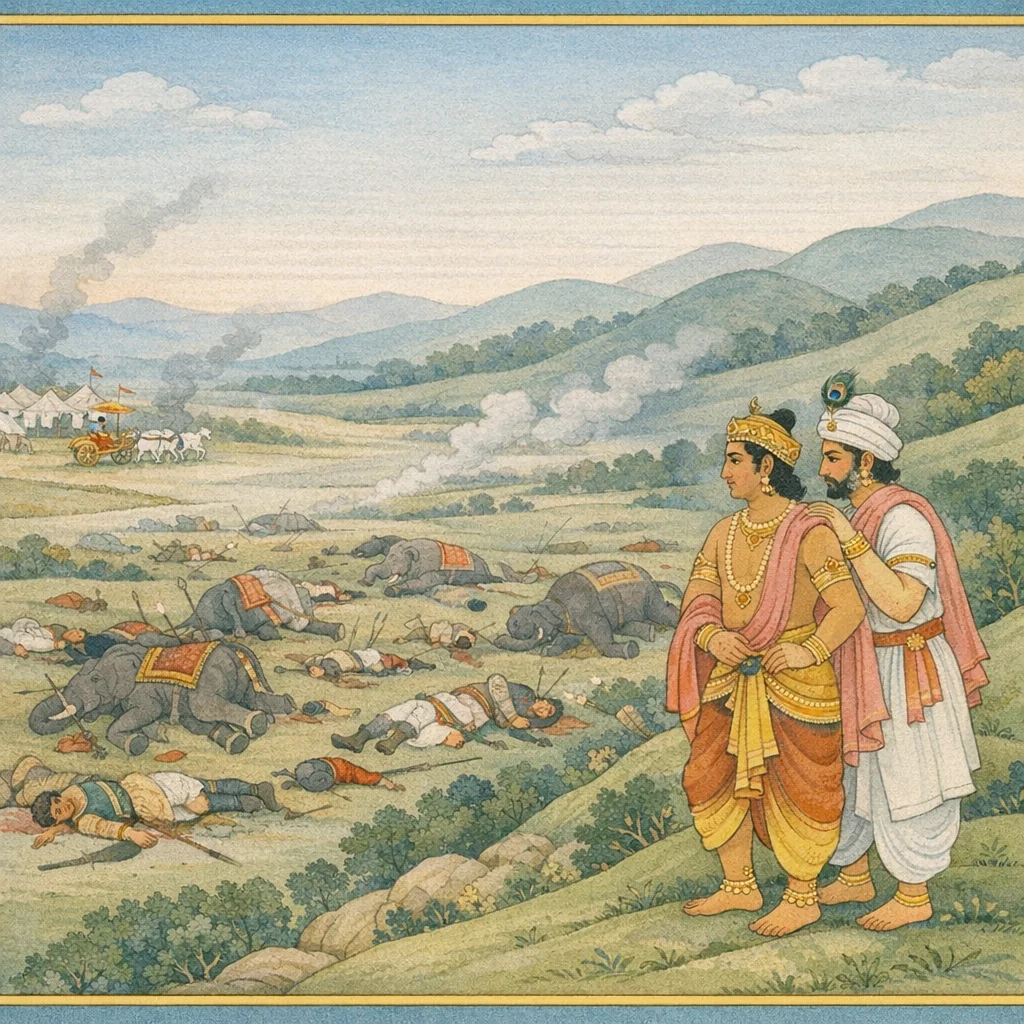
शल्य उवाच पश्येदमुग्रं नरवाजिनागै- रायोधनं वीरहतै: सुपूर्णम् महीधराभै: पतितैश्न नागै: सकृत्प्रभिन्नै: शरभिन्नदेहै:,शल्य बोले--वीर नरेश! देखो, मारे गये मनुष्यों, घोड़ों और हाथियोंकी लाशोंसे भरा हुआ यही युद्धस्थल कैसा भयंकर जान पड़ता है? पर्वताकार गजराज, जिनके मस्तकोंसे मदकी धारा फूटकर बहती थी, एक ही साथ बाणोंकी मारसे शरीर विदीर्ण हो जानेके कारण धराशायी हो गये हैं। उनमेंसे कितने ही वेदनासे छटपटा रहे हैं, कितनोंके प्राण निकल गये हैं। उनपर बैठे हुए सवारोंके कवच, अस्त्र-शस्त्र, ढाल और तलवार आदि नष्ट हो गये हैं। इन्हें देखकर ऐसा जान पड़ता है मानो वज़के आघातसे बड़े-बड़े पर्वत ढह गये हों और उनके प्रस्तरखण्ड, विशाल वृक्ष तथा औषधसमूह छिलन्न-भिन्न हो गये हों। उन गजराजोंके घंटा, अंकुश, तोमर और ध्वज आदि सभी वस्तुएँ बाणोंके आघातसे टूट- फ़ूटकर बिखर गयी हैं। उन हाथियोंके ऊपर सोनेकी जालीसे युक्त आवरण पड़ा है। उनकी लाशें रक्तके प्रवाहसे नहा गयी हैं। घोड़े बाणोंसे विदीर्ण होकर गिरे हैं, वेदनासे व्यथित हो उच्छवास लेते और मुखसे रक्त वमन करते हैं। वे दीनतापूर्ण आर्तनाद कर रहे हैं। उनकी आँखें घूम रही हैं। वे धरतीमें दाँत गड़ाते और करुण चीत्कार करते हैं। हाथी, घोड़े, पैदल सैनिक तथा वीरसमुदाय बाणोंसे क्षत-विक्षत हो मरे पड़े हैं। किन्हींकी साँसें कुछ-कुछ चल रही हैं और कुछ लोगोंके प्राण सर्वथा निकल गये हैं। हाथी, घोड़े, मनुष्य और रथ कुचल दिये गये हैं। इन सबकी कान्ति मन्द पड़ गयी है। इनके कारण उस महासमरकी भूमि निश्चय ही वैतरणीके समान प्रतीत होती है
Śalya said: “O heroic king, look—how dreadful this battlefield appears, crammed with the slain: men, horses, and elephants. Mountain-like lordly elephants have fallen, their bodies torn open by arrows, their temples split so that the streams of rut once bursting forth now mingle with blood. The ground is heaped with the wreckage of war, making the scene a stark reminder of the ruin that follows when valor is yoked to slaughter rather than to dharma.”
Verse 3
सुविद्वलद्धिश्व गतासुभिश्न प्रध्वस्तवर्मायुधचर्मखड््गै: । वज्ापविद्धैरिव चाचलोत्तमै- विभिन्नपाषाणमहाद्रुमौषधै:,शल्य बोले--वीर नरेश! देखो, मारे गये मनुष्यों, घोड़ों और हाथियोंकी लाशोंसे भरा हुआ यही युद्धस्थल कैसा भयंकर जान पड़ता है? पर्वताकार गजराज, जिनके मस्तकोंसे मदकी धारा फूटकर बहती थी, एक ही साथ बाणोंकी मारसे शरीर विदीर्ण हो जानेके कारण धराशायी हो गये हैं। उनमेंसे कितने ही वेदनासे छटपटा रहे हैं, कितनोंके प्राण निकल गये हैं। उनपर बैठे हुए सवारोंके कवच, अस्त्र-शस्त्र, ढाल और तलवार आदि नष्ट हो गये हैं। इन्हें देखकर ऐसा जान पड़ता है मानो वज़के आघातसे बड़े-बड़े पर्वत ढह गये हों और उनके प्रस्तरखण्ड, विशाल वृक्ष तथा औषधसमूह छिलन्न-भिन्न हो गये हों। उन गजराजोंके घंटा, अंकुश, तोमर और ध्वज आदि सभी वस्तुएँ बाणोंके आघातसे टूट- फ़ूटकर बिखर गयी हैं। उन हाथियोंके ऊपर सोनेकी जालीसे युक्त आवरण पड़ा है। उनकी लाशें रक्तके प्रवाहसे नहा गयी हैं। घोड़े बाणोंसे विदीर्ण होकर गिरे हैं, वेदनासे व्यथित हो उच्छवास लेते और मुखसे रक्त वमन करते हैं। वे दीनतापूर्ण आर्तनाद कर रहे हैं। उनकी आँखें घूम रही हैं। वे धरतीमें दाँत गड़ाते और करुण चीत्कार करते हैं। हाथी, घोड़े, पैदल सैनिक तथा वीरसमुदाय बाणोंसे क्षत-विक्षत हो मरे पड़े हैं। किन्हींकी साँसें कुछ-कुछ चल रही हैं और कुछ लोगोंके प्राण सर्वथा निकल गये हैं। हाथी, घोड़े, मनुष्य और रथ कुचल दिये गये हैं। इन सबकी कान्ति मन्द पड़ गयी है। इनके कारण उस महासमरकी भूमि निश्चय ही वैतरणीके समान प्रतीत होती है
Śalya said: “O heroic king, look—this battlefield, heaped with the bodies of slain men, horses, and elephants, appears terrifying. The great elephants, mountain-like and once streaming ichor from their temples, have fallen together, their bodies torn open by volleys of arrows; some still writhe in pain, while others have already lost their lives. The riders’ armor, weapons, shields, and swords lie shattered and ruined. The scene resembles lofty mountains struck by Indra’s thunderbolt—crags split apart, with boulders, mighty trees, and medicinal growths scattered and crushed. Thus does war reduce strength and splendor to ruin, confronting all with the grim consequence of violence.”
Verse 4
प्रविद्धघण्टाड्कुशतोमरध्वजै: सहेमजालै रुधिरौघसम्प्लुतै: । शरावभिशन्नैः पतितैस्तुरड़मै: श्वुसद्धिरातेैं: क्षतजं वमद्धि:,शल्य बोले--वीर नरेश! देखो, मारे गये मनुष्यों, घोड़ों और हाथियोंकी लाशोंसे भरा हुआ यही युद्धस्थल कैसा भयंकर जान पड़ता है? पर्वताकार गजराज, जिनके मस्तकोंसे मदकी धारा फूटकर बहती थी, एक ही साथ बाणोंकी मारसे शरीर विदीर्ण हो जानेके कारण धराशायी हो गये हैं। उनमेंसे कितने ही वेदनासे छटपटा रहे हैं, कितनोंके प्राण निकल गये हैं। उनपर बैठे हुए सवारोंके कवच, अस्त्र-शस्त्र, ढाल और तलवार आदि नष्ट हो गये हैं। इन्हें देखकर ऐसा जान पड़ता है मानो वज़के आघातसे बड़े-बड़े पर्वत ढह गये हों और उनके प्रस्तरखण्ड, विशाल वृक्ष तथा औषधसमूह छिलन्न-भिन्न हो गये हों। उन गजराजोंके घंटा, अंकुश, तोमर और ध्वज आदि सभी वस्तुएँ बाणोंके आघातसे टूट- फ़ूटकर बिखर गयी हैं। उन हाथियोंके ऊपर सोनेकी जालीसे युक्त आवरण पड़ा है। उनकी लाशें रक्तके प्रवाहसे नहा गयी हैं। घोड़े बाणोंसे विदीर्ण होकर गिरे हैं, वेदनासे व्यथित हो उच्छवास लेते और मुखसे रक्त वमन करते हैं। वे दीनतापूर्ण आर्तनाद कर रहे हैं। उनकी आँखें घूम रही हैं। वे धरतीमें दाँत गड़ाते और करुण चीत्कार करते हैं। हाथी, घोड़े, पैदल सैनिक तथा वीरसमुदाय बाणोंसे क्षत-विक्षत हो मरे पड़े हैं। किन्हींकी साँसें कुछ-कुछ चल रही हैं और कुछ लोगोंके प्राण सर्वथा निकल गये हैं। हाथी, घोड़े, मनुष्य और रथ कुचल दिये गये हैं। इन सबकी कान्ति मन्द पड़ गयी है। इनके कारण उस महासमरकी भूमि निश्चय ही वैतरणीके समान प्रतीत होती है
Śalya said: “O heroic king, look at this battlefield—made dreadful by the heaps of fallen men, horses, and elephants. The great elephants, once like mountains with streams of rut flowing from their temples, have been torn open by volleys of arrows and have collapsed together; some still writhe in agony, while others have already lost their lives. The gear of their riders—armor, weapons, shields, and swords—lies ruined. It is as though mighty mountains have been shattered by a thunderbolt, their rocks, great trees, and medicinal plants smashed and scattered. Bells, goads, javelins, and banners have been broken and strewn by the impact of arrows; golden netted coverings lie upon the elephants, and their bodies are washed in torrents of blood. Horses, split by arrows, have fallen; gasping in pain, they vomit blood, cry out pitiably, and roll their eyes. Thus, with elephants, horses, foot-soldiers, and hosts of warriors lying mangled by arrows—some barely breathing, others utterly lifeless—this great field of battle appears like a river of death, a Vaitaraṇī made visible.”
Verse 5
दीनं स्तनद्धिः परिवृत्तनेत्रै- महीं दशद्धि: कृपणं नदद्धि: । तथापविद्धैर्गजवाजियोधै: शरापविद्धैरथ वीरसंघै:,शल्य बोले--वीर नरेश! देखो, मारे गये मनुष्यों, घोड़ों और हाथियोंकी लाशोंसे भरा हुआ यही युद्धस्थल कैसा भयंकर जान पड़ता है? पर्वताकार गजराज, जिनके मस्तकोंसे मदकी धारा फूटकर बहती थी, एक ही साथ बाणोंकी मारसे शरीर विदीर्ण हो जानेके कारण धराशायी हो गये हैं। उनमेंसे कितने ही वेदनासे छटपटा रहे हैं, कितनोंके प्राण निकल गये हैं। उनपर बैठे हुए सवारोंके कवच, अस्त्र-शस्त्र, ढाल और तलवार आदि नष्ट हो गये हैं। इन्हें देखकर ऐसा जान पड़ता है मानो वज़के आघातसे बड़े-बड़े पर्वत ढह गये हों और उनके प्रस्तरखण्ड, विशाल वृक्ष तथा औषधसमूह छिलन्न-भिन्न हो गये हों। उन गजराजोंके घंटा, अंकुश, तोमर और ध्वज आदि सभी वस्तुएँ बाणोंके आघातसे टूट- फ़ूटकर बिखर गयी हैं। उन हाथियोंके ऊपर सोनेकी जालीसे युक्त आवरण पड़ा है। उनकी लाशें रक्तके प्रवाहसे नहा गयी हैं। घोड़े बाणोंसे विदीर्ण होकर गिरे हैं, वेदनासे व्यथित हो उच्छवास लेते और मुखसे रक्त वमन करते हैं। वे दीनतापूर्ण आर्तनाद कर रहे हैं। उनकी आँखें घूम रही हैं। वे धरतीमें दाँत गड़ाते और करुण चीत्कार करते हैं। हाथी, घोड़े, पैदल सैनिक तथा वीरसमुदाय बाणोंसे क्षत-विक्षत हो मरे पड़े हैं। किन्हींकी साँसें कुछ-कुछ चल रही हैं और कुछ लोगोंके प्राण सर्वथा निकल गये हैं। हाथी, घोड़े, मनुष्य और रथ कुचल दिये गये हैं। इन सबकी कान्ति मन्द पड़ गयी है। इनके कारण उस महासमरकी भूमि निश्चय ही वैतरणीके समान प्रतीत होती है
Śalya said: “O hero-king, look at this battlefield—how dreadful it appears, strewn with the slain: men, horses, and elephants. Some, pierced by arrows, still gasp in misery, groaning and crying out; their eyes roll in pain, and they bite the earth in helpless agony. Others lie utterly lifeless. Warriors and mounts alike are torn and shattered by shafts, and the ground is choked with broken bodies and ruined war-gear. Seeing this devastation, the field seems like a river of death itself—an image of the Vaitaraṇī—where the splendor of life and valor has been extinguished by the violence of war.”
Verse 6
मन्दासुभिश्वैव गतासुभिश्न नराश्ननागैश्न रथैश्व मर्दितै: । मन्दांशुभिश्चैव मही महाहवे नूनं यथा वैतरणीव भाति,शल्य बोले--वीर नरेश! देखो, मारे गये मनुष्यों, घोड़ों और हाथियोंकी लाशोंसे भरा हुआ यही युद्धस्थल कैसा भयंकर जान पड़ता है? पर्वताकार गजराज, जिनके मस्तकोंसे मदकी धारा फूटकर बहती थी, एक ही साथ बाणोंकी मारसे शरीर विदीर्ण हो जानेके कारण धराशायी हो गये हैं। उनमेंसे कितने ही वेदनासे छटपटा रहे हैं, कितनोंके प्राण निकल गये हैं। उनपर बैठे हुए सवारोंके कवच, अस्त्र-शस्त्र, ढाल और तलवार आदि नष्ट हो गये हैं। इन्हें देखकर ऐसा जान पड़ता है मानो वज़के आघातसे बड़े-बड़े पर्वत ढह गये हों और उनके प्रस्तरखण्ड, विशाल वृक्ष तथा औषधसमूह छिलन्न-भिन्न हो गये हों। उन गजराजोंके घंटा, अंकुश, तोमर और ध्वज आदि सभी वस्तुएँ बाणोंके आघातसे टूट- फ़ूटकर बिखर गयी हैं। उन हाथियोंके ऊपर सोनेकी जालीसे युक्त आवरण पड़ा है। उनकी लाशें रक्तके प्रवाहसे नहा गयी हैं। घोड़े बाणोंसे विदीर्ण होकर गिरे हैं, वेदनासे व्यथित हो उच्छवास लेते और मुखसे रक्त वमन करते हैं। वे दीनतापूर्ण आर्तनाद कर रहे हैं। उनकी आँखें घूम रही हैं। वे धरतीमें दाँत गड़ाते और करुण चीत्कार करते हैं। हाथी, घोड़े, पैदल सैनिक तथा वीरसमुदाय बाणोंसे क्षत-विक्षत हो मरे पड़े हैं। किन्हींकी साँसें कुछ-कुछ चल रही हैं और कुछ लोगोंके प्राण सर्वथा निकल गये हैं। हाथी, घोड़े, मनुष्य और रथ कुचल दिये गये हैं। इन सबकी कान्ति मन्द पड़ गयी है। इनके कारण उस महासमरकी भूमि निश्चय ही वैतरणीके समान प्रतीत होती है
Śalya said: “O heroic king, look—this battlefield, crushed and churned by men, horses, elephants, and chariots, and strewn with those whose breaths are faint and those whose lives have departed, appears dreadful indeed. In this great combat the earth, dimmed in its radiance, now seems like the Vaitaraṇī itself—a vision of death that exposes the terrible moral cost of war.”
Verse 7
गजैनिकृत्तैर्वरहस्तगात्रै- रुद्वेपमानै: पतितै: पृथिव्याम् । विशीर्णदन्तै: क्षतजं वमद्धि: स्फुरद्धिरातैं: करुणं नदद्धिः,हाथियोंके शुण्डदण्ड और शरीर छित्न-भिन्न हो गये हैं। कितने ही हाथी पृथ्वीपर गिरकर काँप रहे हैं, कितनोंके दाँत टूट गये हैं और वे खून उगलते तथा छटपटाते हुए वेदनाग्रस्त हो करुण स्वरमें कराह रहे हैं
Śalya said: “Elephants lie on the earth with their trunks and mighty limbs hewn apart. Some, fallen down, still tremble; some have their tusks shattered. Spitting blood, writhing in agony, they cry out in a pitiful voice.”
Verse 8
निकृत्तचक्रेषुयुगै: सयोक्तृभि: प्रविद्धतृणीरपताककेतुभि: । सुवर्णजालावततैर्भशाहतै- महारथौचैर्जलदैरिवावृता,बड़े-बड़े रथोंके समूह इस रणभूमिमें बादलोंके समान छा गये हैं। उनके पहिये, बाण, जूए और बन्धन कट गये हैं। तरकस, ध्वज और पताकाएँ फेंकी पड़ी हैं; सोनेके जालसे आवृत हुए वे रथ बहुत ही क्षतिग्रस्त हो गये हैं
Śalya said: “The battlefield is now covered, as though by clouds, with masses of towering great chariots—whose wheels, shafts, yokes, and harness have been cut away; whose charioteers are still with them; whose quivers lie flung aside; whose banners, pennants, and standards are cast down. Though once draped in golden netting, those chariots have been grievously shattered.”
Verse 9
यशस्विभिरनागरथाश्व॒योधिभि: पदातिभि श्चाभिमुखैह्तै: परै: । विशीर्णवर्माभरणाम्बरायुधै- ता प्रशान्तैरिव तावकैर्मही,हाथी, रथ और घोड़ोंपर सवार होकर युद्ध करनेवाले यशस्वी योद्धा और पैदल वीर सामने लड़ते हुए शत्रुओंके हाथसे मारे गये हैं। उनके कवच, आभूषण, वस्त्र और आयुध सभी छित्न-भिन्न होकर बिखर गये हैं। इस प्रकार शान्त पड़े हुए आपके प्राणहीन योद्धाओंसे यह पृथ्वी पट गयी है
Śalya said: “Your renowned warriors—fighters on elephants, chariots, and horses, as well as foot-soldiers—have been struck down by the enemy while facing them in battle. Their armor, ornaments, garments, and weapons lie shattered and scattered. Thus the earth is covered, as though stilled into silence, by your lifeless troops.”
Verse 10
शरप्रहाराभिहतैर्महाबलै- रवेक्ष्यममाणै: पतितै: सहस्रश: । दिवश्ष्युतैर्भूरतिदीप्तिमद्धि- नक्त ग्रहैद्यौरमलप्रदीप्तै:,बाणोंके प्रहारसे घायल होकर गिरे हुए सहस्रों महाबली योद्धा आकाशसे नीचे गिरे हुए अत्यन्त दीप्तिमान् एवं निर्मल प्रभासे प्रकाशित ग्रहोंके समान दिखायी देते हैं और उनसे ढकी हुई यह भूमि रातके समय उन ग्रहोंसे व्याप्त हुए आकाशके सदृश सुशोभित होती है
Śalya said: “Struck down by volleys of arrows, thousands of mighty warriors lie fallen, no longer able to look about. They appear like brilliantly shining, spotless stars that have dropped from the sky; and the earth, covered with them, is beautified like the night-sky filled with luminous constellations.”
Verse 11
प्रणष्टसंज्जै: पुनरुच्छवसद्धि- मही बभूवानुगतैरिवाग्निभि: । कर्णार्जुनाभ्यां शरभिन्नगात्रै- ते: प्रवीरै: कुरुसूज्जयानाम्,कर्ण और अर्जुनके बाणोंसे जिनके अंग-अंग छिलन्न-भिन्न हो गये हैं, उन मारे गये कौरव-सूंजय वीरोंकी लाशोंसे भरी हुई भूमि यज्ञमें स्थापित हुई अग्नियोंके द्वारा यज्ञभूमिके समान सुशोभित होती है। उनमेंसे कितने ही वीरोंकी चेतना लुप्त हो गयी है और कितने ही पुनः साँस ले रहे हैं
Śalya said: The earth, strewn with heroes of the Kurus and the Sṛñjayas whose limbs had been torn and shattered by the arrows of Karṇa and Arjuna—some lying senseless, others still drawing breath—appeared as though attended by sacrificial fires, like a consecrated altar-ground. Thus the battlefield mimicked a yajña, yet its “offerings” were human lives.
Verse 12
शरास्तु कर्णार्जुनबाहुमुक्ता विदार्य नागाश्चमनुष्यदेहान् । प्राणान् निरस्याशु महीं प्रतीयु- महोरगा वासमिवातिताम्रा:
Śalya said: “The arrows released from the arms of Karṇa and Arjuna tore through elephants and human bodies alike; swiftly driving out their life-breath, they fell to the earth—like great serpents, their coppery shafts seeming to slip back into their dwelling.”
Verse 13
कर्ण और अर्जुनके हाथोंसे छूटे हुए बाण हाथी, घोड़े और मनुष्योंके शरीरोंको विदीर्ण करके उनके प्राण निकालकर तुरंत पृथ्वीमें घुस गये थे, मानो अत्यन्त लाल रंगके विशाल सर्प अपनी बिलमें जा घुसे हों ।। हतैर्मनुष्याश्वगजैश्न संख्ये शरापविद्धैश्न रथैनरिन्द्र । धनंजयस्याधिर थेश्ष मार्गणै- रगम्यरूपा वसुधा बभूव,नरेन्द्र! अर्जुन और कर्णके बाणोंद्वारा मारे गये हाथी, घोड़े एवं मनुष्योंसे तथा बाणोंसे नष्ट-भ्रष्ट होकर गिरे पड़े रथोंसे इस पृथ्वीपर चलना-फिरना असम्भव हो गया है
Śalya said: “O king, in this battle the earth has become impassable. Men, horses, and elephants lie slain, and chariots—shattered by arrows—have collapsed in heaps. The shafts loosed by Dhanañjaya (Arjuna) and by the great charioteer Karṇa pierce bodies, take away life, and then plunge straight into the ground, as if huge crimson serpents were slipping back into their burrows.”
Verse 14
रथैव॑रेषून्मथितै: सुकल्पै: सयोधश-्त्रैश्व वरायुधैर्ध्वजै: । विशीर्णयोक्त्रैविनिकृत्तबन्धनै- निकृत्तचक्राक्षयुगत्रिवेणुभि:,सजे-सजाये रथ बाणोंके आघातसे मथ डाले गये हैं। उनके साथ जो योद्धा, शस्त्र, श्रेष्ठ आयुध और ध्वज आदि थे, उनकी भी यही दशा हुई है। उनके पहिये, बन्धनरज्जु, धुरे, जूए और त्रिवेणु काष्ठके भी टुकड़े-टुकड़े हो गये हैं
Śalya said: “Even the finest chariots have been crushed by the impact of arrows—along with their warriors, their weapons, their superior arms, and their banners. Their reins lie torn, their bindings severed; their wheels, axles, yokes, and the tri-veṇu wooden fittings have been cut to pieces.”
Verse 15
विमुक्तशस्त्रैश्न तथा व्युपस्करै- हतानुकर्षविनिषड्रबन्धनै: । प्रभग्ननीडैर्मणिहेम भूषितै: स्तृता मही द्यौरिव शारदैर्घनी:,उनपर जो अस्त्र-शस्त्र रखे गये थे, वे सब दूर जा पड़े हैं। सारी सामग्री नष्ट हो गयी है। अनुकर्ष, तूणीर और बन्धनरज्जु--ये सब-के-सब नष्ट-भ्रष्ट हो गये हैं। उन रथोंकी बैठकें टूट-फूट गयी हैं। सुवर्ण और मणियोंसे विभूषित उन रथोंद्वारा आच्छादित हुई पृथ्वी शरद्- ऋतुके बादलोंसे ढके हुए आकाशके समान जान पड़ती है
Śalya said: “The chariots have been stripped of their weapons, and their fittings and equipment have been scattered away. Their yokes, quivers, and binding-ropes lie ruined and torn. Their seats and frames are broken. Thus the earth, strewn over with those chariots once adorned with gold and gems, looks like the sky covered with autumn clouds.”
Verse 16
विकृष्यमाणैर्जवनैस्तुरड़मै- हतेश्वरै राजरथै: सुकल्पितै: । मनुष्यमातड्ररथाश्वराशिभि- ्रूतं ब्रजन्तो बहुधा विचूर्णिता:,जिनके स्वामी (रथी) मारे गये हैं, राजाओंके उन सुसज्जित रथोंको, जब वेगशाली घोड़े खींचे लिये जाते थे और झुंड-के-झुंड मनुष्य, हाथी, साधारण रथ और अश्व भी भागे जा रहे थे, उस समय उनके द्वारा शीघ्रतापूर्वक भागनेवाले बहुत-से मनुष्य कुचलकर चूर- चूर हो गये हैं
Śalya said: As the well-appointed royal chariots—now bereft of their masters, the chariot-warriors—were dragged along by swift horses, and as masses of men, elephants, ordinary chariots, and horses fled in confusion, many who ran in haste were trampled and crushed to pieces. The scene lays bare the moral cost of battle: when leadership falls and order collapses, the innocent and the ordinary are destroyed in the stampede of fear.
Verse 17
सहेमपट्टा: परिघा: परश्चधा: शिताश्व शूला मुसलानि मुद्गरा: । पेतुश्न खडगा विमला विकोशा गदाश्न जाम्बूनदपट्टनद्धा:,सुवर्ण-पत्रसे जड़े गये परिघ, फरसे, तीखे शूल, मूसल, मुद्गर, म्यानसे बाहर निकाली हुई चमचमाती तलवारें और स्वर्णजटित गदाएँ जहाँ-तहाँ बिखरी पड़ी हैं
Śalya said: “Iron-bound clubs and heavy bludgeons, axes, sharp-pointed spears, pestles and hammers—along with spotless swords drawn from their scabbards and maces fitted with bands of Jāmbūnada gold—have fallen and lie scattered everywhere.” The scene underscores the moral desolation of battle: splendid weapons, meant for prowess and protection, now litter the ground as mere debris of violence.
Verse 18
चापानि रुक््माड्रदभूषणानि शराश्न कार्तस्वरचित्रपुड्खा: । ऋष्ट्यश्व॒ पीता विमला विकोशा: प्रासाश्ष॒ दण्डै: कनकावभासै:
Śalya said: “Bows adorned with firm golden ornaments, and arrows whose bright, variegated fletchings were of refined gold; spears, yellow-hued, spotless, and drawn from their sheaths; and lances with shafts gleaming like gold—such weapons were seen ready for use.” In this martial catalogue, the poem underscores the deliberate preparation for battle: splendor and craftsmanship heighten the gravity of violence, reminding the listener that war is not mere impulse but an organized, ethically weighty undertaking with consequences for all.
Verse 19
छत्राणि वालव्यजनानि शड्खा- श्छिन्नापविद्धाश्ष स्रजो विचित्रा: । सुवर्णमय अंगदोंसे विभूषित धनुष, सोनेके विचित्र पंखवाले बाण, ऋष्टि, पानीदार एवं कोशरहित निर्मल खड्ग तथा सुनहरे डंडोंसे युक्त प्रास, छत्र, चँवर, शंख और विचित्र मालाएँ छिन्न-भिन्न होकर फेंकी पड़ी हैं ।। कुथा: पताकाम्बरभूषणानि किरीटमाला मुकुटाश्न शुभ्रा:
Shalya said: “Here lie, scattered and shattered, parasols, yak-tail fans, conches, and many-variegated garlands. Bows adorned with golden armlets, arrows with wondrous golden feathers, spears, bright unsheathed swords with jeweled hilts, and lances with golden shafts—all have been broken and flung down. Quivers too, along with banners, garments, ornaments, and gleaming crowns and diadems, are strewn about.”
Verse 20
आपीडकेयूरवराड्रदानि ग्रैवैयनिष्का: ससुवर्णसूत्रा:
Śalya speaks of splendid ornaments—diadems and armlets, and necklaces with golden threads—evoking the opulence and martial display that surround the warriors. In the ethical shadow of war, such finery underscores the contrast between outward glory and the inner cost of violence and pride.
Verse 21
मण्युत्तमा वज्रसुवर्णमुक्ता रत्नानि चोच्चावचमड्नलानि । गात्राणि चात्यन्तसुखोचितानि शिरांसि चेन्दुप्रतिमाननानि
Śalya said: “There are excellent gems—diamond, gold, pearls—and many kinds of ornaments set with precious stones. There are bodies fit for the highest pleasures, and heads with faces lovely like the moon.”
Verse 22
देहांश्व॒ भोगांश्व॒ परिच्छदांश्व॒ त्यक्त्वा मनोज्ञानि सुखानि चैव । स्वधर्मनिष्ठां महतीमवाप्य व्याप्याशु लोकान् यशसा गतास्ते
Abandoning their bodies, their enjoyments, and all their possessions, and leaving behind even the pleasures that delight the mind, they attained a great steadfastness in their own dharma. Having swiftly pervaded the worlds with their fame, they passed on—honoured through renown—because they held firmly to righteous duty.
Verse 23
शिरोभूषण, केयूर, सुन्दर अंगद, गलेके हार, पदक, सोनेकी जंजीर, उत्तम मणि, हीरे, सुवर्ण तथा मुक्ता आदि छोटे-बड़े मांगलिक रत्न, अत्यन्त सुख भोगनेके योग्य शरीर, चन्द्रमाको भी लज्जित करनेवाले मुखसे युक्त मस्तक, देह, भोग, आच्छादन-वस्त्र तथा मनोरम सुख--इन सबको त्यागकर स्वधर्मकी पराकाष्ठाका पालन करते हुए सम्पूर्ण लोकोंमें अपने यशका विस्तार करके वे वीर सैनिक दिव्य लोकोंमें पहुँच गये हैं | २०-- २२ |। निवर्त दुर्योधन यान्तु सैनिका व्रजस्व राजन् शिबिराय मानद । दिवाकरो<प्येष विलम्बते प्रभो पुनस्त्वमेवात्र नरेन्द्र कारणम्,दूसरोंको सम्मान देनेवाले राजा दुर्योधन! अब लौटो। इन सैनिकोंको भी जाने दो। शिबिरमें चलो। प्रभो! ये भगवान् सूर्य भी अस्ताचलपर लटक रहे हैं। नरेन्द्र! तुम्हीं इस नर- संहारके प्रधान कारण हो
Śalya said: “Crowns and armlets, fair aṅgadas, necklaces at the throat, pendants, chains of gold; finest gems—diamonds, gold, and pearls—auspicious jewels, great and small; bodies fit to taste the utmost pleasure; heads with faces that would make the moon itself grow shy—body, enjoyment, garments, and delights of the heart: casting all this away, and upholding their own dharma to its very summit, they spread their fame through all the worlds, and those heroic warriors reached the divine realms. “Turn back, Duryodhana. Let the soldiers depart as well. Go to the camp, O king who honors others. Even the Sun now lingers, ready to sink toward the western horizon. O lord, O ruler of men—once again, you yourself are the chief cause of this slaughter of men.”
Verse 24
इत्येवमुक्त्वा विरराम शल्यो दुर्योधनं शोकपरीतचेता: । हा कर्ण हा कर्ण इति ब्रुवाण- मार्त विसंज्ञं भृशमश्रुनेत्रम्,दुर्योधनसे ऐसा कहकर राजा शल्य चुप हो गये। उनका चित्त शोकसे व्याकुल हो रहा था। दुर्योधन भी आर्त होकर 'हा कर्ण! हा कर्ण!” पुकारने लगा। वह सुध-बुध खो बैठा था। उसके नेत्रोंसे वेगपूर्वक आँसुओंकी अविरल धारा बह रही थी
Having spoken thus, King Śalya fell silent, his mind overwhelmed by grief. Duryodhana, stricken with anguish, began crying out, “Alas, Karṇa! Alas, Karṇa!” He lost all composure, and from his eyes tears streamed down in a relentless flow.
Verse 25
त॑ द्रोणपुत्रप्रमुखा नरेन्द्रा: सर्वे समाश्चास्य मुहुः प्रयान्ति । निरीक्षमाणा मुहुरर्जुनस्य ध्वजं महान्तं यशसा ज्वलन्तम्,द्रोणपुत्र अश्वत्थामा तथा अन्य सभी नरेश बारंबार आकर दुर्योधनको सान्त्वना देते और अर्जुनके महान् ध्वजको, जो उनके उज्ज्वल यशसे प्रकाशित हो रहा था, देखते हुए फिर लौट जाते थे
Śalya said: “Led by Droṇa’s son, all those kings would repeatedly come, console Duryodhana, and then depart again—each time casting their eyes upon Arjuna’s mighty banner, blazing with the radiance of his fame.”
Verse 26
नराश्वमातड्रशरीरजेन रक्तेन सिक्तां च तथैव भूमिम् । रक्ताम्बरस्रक् तपनीययोगा- न्नारीं प्रकाशामिव सर्वगम्याम्,मनुष्यों, घोड़ों और हाथियोंके शरीरसे बहते हुए रक्तकी धारासे वहाँकी भूमि ऐसी सिंच गयी थी कि लाल वस्त्र, लाल फूलोंकी माला तथा तपाये हुए सुवर्णके आभूषण धारण करके सबके सामने आयी हुई सर्वगम्या नारी (वेश्या)-के समान प्रतीत होती थी
Śalya said: “The earth there was drenched with the blood flowing from the bodies of men, horses, and elephants. So soaked, it appeared like a public courtesan standing openly before all—clad in red garments, adorned with a red garland, and wearing ornaments of heated gold.”
Verse 27
प्रच्छन्नरूपां रुधिरेण राजन् रौद्रे मुहूर्तेशतिविराजमाने । नैवावतस्थु: कुरव: समीक्ष्य प्रत्राजिता देवलोकाय सर्वे,राजन! अत्यन्त शोभा पानेवाले उस रौद्रमुहूर्त (सायंकाल)-में, रुधिरसे जिसका स्वरूप छिप गया था, उस भूमिको देखते हुए कौरव-सैनिक वहाँ ठहर न सके। वे सब-के-सब देवलोककी यात्राके लिये उद्यत थे
O King, in that dreadful twilight hour, when the battlefield’s very form was concealed by blood and the moment blazed with terror, the Kuru warriors, upon beholding it, could not stand their ground. All of them, driven away in dismay, turned as if setting out on the journey to the world of the gods.
Verse 28
वधेन कर्णस्य तु दुःखितास्ते हा कर्ण हा कर्ण इति ब्रुवाणा: | द्रुतं प्रयाता: शिबिराणि राजन् दिवाकरं रक्तमवेक्षमाणा:,महाराज! समस्त कौरव कर्णके वधसे अत्यन्त दुःखी हो “हा कर्ण! हा कर्ण!” की रट लगाते और लाल सूर्यकी ओर देखते हुए बड़े वेगसे शिबिरकी ओर चले
Śalya said: Grief-stricken by Karṇa’s death, they kept crying, “Alas, Karṇa! Alas, Karṇa!” and, O king, swiftly made their way back to the camp, all the while looking up at the sun, now red—an ominous witness to the day’s slaughter and the collapse of their hope.
Verse 29
गाण्डीवमुक्तैस्तु सुवर्णपुड्खै: शिलाशितै: शोणितदिग्धवाजै: । शरैश्षिताजड़ी युधि भाति कर्णो हतो<5पि सन् सूर्य इवांशुमाली,गाण्डीव धनुषसे छूटे हुए सुवर्णमय पंखवाले और शिलापर तेज किये हुए बाणोंसे कर्णका अंग-अंग बिंध गया था। उन बाणोंकी पाँखें रक्तमें डूबी हुई थीं। उनके द्वारा युद्धस्थलमें पड़ा हुआ कर्ण मर जानेपर भी अंशुमाली सूर्यके समान सुशोभित हो रहा था
Śalya said: “Pierced all over by arrows released from the Gāṇḍīva—arrows with golden fletching, sharpened on stone, their feathers smeared with blood—Karna lay on the battlefield. Yet even in death he shone there like the radiant sun.”
Verse 30
कर्णस्य देहं रुधिरावसिक्तं भक्तानुकम्पी भगवान् विवस्वान् । स्पृष्टवांशुभिलोंहितरक्तरूप: सिष्णासुरभ्येति परं समुद्रम्,भक्तोंपर कृपा करनेवाले भगवान् सूर्य खूनसे भीगे हुए कर्णके शरीरका किरणोंद्वारा स्पर्श करके रक्तके समान ही लालरूप धारणकर मानो स्नान करनेकी इच्छासे पश्चिम समुद्रकी ओर जा रहे थे
Śalya said: “Seeing Karṇa’s body drenched in blood, the blessed Sun—compassionate toward his devotee—touched him with his rays and, taking on a hue as red as blood, seemed to move toward the western ocean, as if desiring to bathe.”
Verse 31
इतीव संचिन्त्य सुरबिसंघा: सम्प्रस्थिता यान्ति यथा निकेतनम् | संचिन्तयित्वा जनता विसखु- य॑थासुखं खं च महीतलं च,इस युद्धके ही विषयमें सोच-विचार करते हुए देवताओं तथा ऋषियोंके समुदाय वहाँसे प्रस्थित हो अपने-अपने स्थानको चल दिये और इसी विषयका चिन्तन करते हुए अन्य लोग भी सुखपूर्वक अन्तरिक्ष अथवा भूतलपर अपने-अपने निवासस्थानको चले गये
Having thus reflected, the assembled hosts of gods and seers set out from there and went each to his own abode. Likewise, other people too—still pondering this very matter of the war—departed in comfort, some through the open sky and others along the earth, returning to their respective dwellings.
Verse 32
तदद्धभुतं प्राणभूतां भयंकर निशाम्य युद्ध कुरुवीरमुख्ययो: । धनंजयस्याधिर थेश्ष विस्मिता: प्रशंसमाना: प्रययुस्तदा जना:,कौरव तथा पाण्डवपक्षके उन प्रमुख वीर अर्जुन और कर्णका वह अद्भुत तथा प्राणियोंके लिये भयंकर युद्ध देखकर सब लोग आश्वर्यचकित हो उनकी प्रशंसा करते हुए वहाँसे चले गये
Seeing that astonishing battle—terrifying to living beings—between the foremost heroes of the Kurus, Dhanañjaya (Arjuna) and the chariot-warrior (Karna), the people were struck with wonder. Praising them both, they then departed from that place.
Verse 33
शरसंकृत्तवर्माणं रुधिरोक्षितवाससम् | गतासुमपि राधेयं नैव लक्ष्मीविमुड्चति,राधापुत्र कर्णका कवच बाणोंसे कट गया था। उसके सारे वस्त्र खूनसे भीग गये थे और प्राण भी निकल गये थे तो भी उसे शोभा छोड़ नहीं रही थी
Śalya said: “Though Rādheya (Karna) had his armour cut to pieces by arrows, though his garments were drenched in blood, and though life had already departed from him, still splendour (lakṣmī)—the radiance of heroic dignity—did not abandon him.”
Verse 34
तप्तजाम्बूनदनिभं ज्वलनार्कसमप्रभम् | जीवन्तमिव तं॑ शूरं सर्वभूतानि मेनिरे,वह तपाये हुए सुवर्ण तथा अग्नि और सूर्यके समान कान्तिमान् था। उस शूरवीरको देखकर सब प्राणी जीवित-सा समझते थे
Śalya said: “He shone like heated Jāmbūnada-gold, radiant like fire and the sun. Seeing that hero, all beings took him to be as if life itself stood embodied before them.”
Verse 35
हतस्यापि महाराज सूतपुत्रस्य संयुगे । वित्रेसु: सर्वतो योधा: सिंहस्येवेतरे मृगा:,महाराज! जैसे सिंहसे दूसरे जंगली पशु सदा डरते रहते हैं, उसी प्रकार युद्धस्थलमें मारे गये सूतपुत्रसे भी समस्त योद्धा भय मानते थे
Śalya said: “O great king, even after the charioteer’s son had been slain on the battlefield, warriors on every side still trembled—just as other beasts fear a lion.”
Verse 36
हतो<पि पुरुषव्यात्र जीववानिव लक्ष्यते । नाभवद् विकृति: काचिद्धतस्यापि महात्मन:,पुरुषसिंह नरेश! वह मारा जानेपर भी जीवित-सा दीखता था, महामना कर्णके शरीरमें मरनेपर भी कोई विकार नहीं हुआ था
Śalya said: “O tiger among men, though he has been slain, he appears as if still alive. In that great-souled one, even after death, no distortion or disfigurement at all arose.”
Verse 37
चारुवेषधरं वीरं॑ चारुमौलिशिरोधरम् । तन्मुखं सूतपुत्रस्य पूर्णचन्द्रसमद्युति,सूतपुत्र कर्णका मुख पूर्ण चन्द्रमाके समान कान्तिमान् था। उसने मनोहर वेष धारण किया था। वह वीरोचित शोभासे सम्पन्न था। उसके मस्तक और कण्ठ भी मनोहर थे
Śalya said: “That heroic son of a charioteer—Karna—appeared in a captivating attire, bearing a handsome head and noble carriage. His face shone with the radiance of the full moon.”
Verse 38
नानाभरणवान् राजंस्तप्तजाम्बूनदाड़द: । हतो वैकर्तनः शेते पादपो5ड्कुरवानिव,राजन! नाना प्रकारके आभूषणोंसे विभूषित तथा तपाये हुए सुवर्णका अंगद (बाजूबंद) धारण किये वैकर्तन कर्ण मारा जाकर अंकुरयुक्त वृक्षके समान पड़ा था
Śalya said: “O king, Vaikartana Karṇa—adorned with many ornaments and wearing an armlet of heated Jāmbūnada gold—lies slain, stretched on the ground like a tree fallen with its sprouts still upon it.”
Verse 39
कनकोकत्तमसंकाशो ज्वलन्निव विभावसु: । स शान्तः पुरुषव्यात्र पार्थसायकवारिणा,नरव्याप्र नरेश! उत्तम सुवर्णके समान कान्तिमान् कर्ण प्रज्वलित अग्निके तुल्य प्रकाशित होता था; परंतु पार्थके बाणरूपी जलसे वह बुझ गया
Śalya said: “Karna shone like the finest gold, blazing like fire itself. Yet that blazing hero was quenched—his radiance and power brought to stillness—by the water-like shower of Arjuna’s arrows.”
Verse 40
यथा हि ज्वलनो दीप्तो जलमासाद्य शाम्यति । कर्णाग्नि: समरे तद्वत् पार्थमेघेन शामित:,जैसे प्रजलित आग जलको पाकर बुझ जाती है, उसी प्रकार समरांगणमें कर्णरूपी अग्निको अर्जुनरूपी मेघने बुझा दिया
Śalya said: “Just as a blazing fire is quenched when it meets water, so too, on the battlefield, the fire that was Karṇa has been extinguished by the cloud that is Pārtha (Arjuna).”
Verse 41
आहत्य च यशो दीप्त॑ सुयुद्धेनात्मनो भुवि । विसृज्य शरवर्षाणि प्रताप्य च दिशो दश
Śalya said: “Having won for himself blazing fame on this earth through noble combat, and having poured forth showers of arrows, he made his prowess felt in all the ten directions.”
Verse 42
प्रताप्य पाण्डवान् सर्वान् पञ्चालांश्चास्त्रतेजसा,अस्त्रके तेजसे सम्पूर्ण पाण्डव और पांचालोंको संताप देकर, बाणोंकी वषकि द्वारा शत्रुसेनाको तपाकर तथा सहस््र किरणोंवाले तेजस्वी सूर्यके समान सम्पूर्ण संसारमें अपना प्रताप बिखेरकर वैकर्तन कर्ण पुत्र और वाहनोंसहित मारा गया। याचकरूपी पक्षियोंके समुदायके लिये जो कल्पवृक्षके समान था, वह कर्ण मार गिराया गया
Śalya said: “Having scorched all the Pāṇḍavas and the Pāñcālas with the blazing power of his weapons, and having tormented the enemy host with showers of arrows, Karṇa—Vaikartana—spread his fame like the thousand-rayed sun across the world. Yet that very Karṇa was slain, together with his sons and his charioteers and mounts. He who had been like a wish-fulfilling tree to the flock of ‘birds’ in the form of supplicants was brought down.”
Verse 43
वर्षित्वा शरवर्षेण प्रताप्प रिपुवाहिनीम् । श्रीमानिव सहस्रांशुर्जगत् सर्व प्रताप्प च,अस्त्रके तेजसे सम्पूर्ण पाण्डव और पांचालोंको संताप देकर, बाणोंकी वषकि द्वारा शत्रुसेनाको तपाकर तथा सहस््र किरणोंवाले तेजस्वी सूर्यके समान सम्पूर्ण संसारमें अपना प्रताप बिखेरकर वैकर्तन कर्ण पुत्र और वाहनोंसहित मारा गया। याचकरूपी पक्षियोंके समुदायके लिये जो कल्पवृक्षके समान था, वह कर्ण मार गिराया गया
Śalya said: “After pouring down a rain of arrows and scorching the enemy host, and after spreading his splendor across the whole world like the glorious sun with a thousand rays, Vaikartana Karṇa—who had tormented the Pāṇḍavas and the Pāñcālas with the full force of his weapons—was slain along with his son and his charioteer. He who had been like a wish-fulfilling tree for the flock of supplicant-birds was brought down.”
Verse 44
हतो वैकर्तन: कर्ण: सपुत्र: सहवाहन: । अर्थिनां पक्षिसंघस्य कल्पवृक्षो निपातित:,अस्त्रके तेजसे सम्पूर्ण पाण्डव और पांचालोंको संताप देकर, बाणोंकी वषकि द्वारा शत्रुसेनाको तपाकर तथा सहस््र किरणोंवाले तेजस्वी सूर्यके समान सम्पूर्ण संसारमें अपना प्रताप बिखेरकर वैकर्तन कर्ण पुत्र और वाहनोंसहित मारा गया। याचकरूपी पक्षियोंके समुदायके लिये जो कल्पवृक्षके समान था, वह कर्ण मार गिराया गया
Śalya said: “Vaikartana Karṇa has been slain—together with his son and his charioteer and team. He who stood like a wish-fulfilling tree for hosts of supplicants has been felled. After scorching the Pāṇḍavas and the Pāñcālas with the brilliance of his weapons, tormenting the enemy army with showers of arrows, and spreading his fame like the radiant sun with a thousand rays, Karṇa has fallen.”
Verse 45
ददानीत्येव यो5वोचन्न नास्तीत्यर्थितो<र्थिभि: । सद्धिः सदा सत्पुरुष: स हतो द्वैरथे वृष:,जो माँगनेपर सदा यही कहता था कि “मैं दूँगा।” श्रेष्ठ याचकोंके माँगनेपर जिसके मुहसे कभी “नाहीं' नहीं निकला, वह धर्मात्मा कर्ण द्वैरथ युद्धमें मारा गया
Śalya said: “He who would say only, ‘I will give,’ and who, when petitioned by worthy supplicants, never let the word ‘No’ come from his mouth— that ever-righteous, truly noble man, Karṇa, the bull among men, has been slain in the chariot-duel.”
Verse 46
यस्य ब्राह्मणसात् सर्व वित्तमासीन्महात्मन: । नादेयं ब्राह्मणेष्वासीद् यस्प स्वमपि जीवितम्,जिस महामनस्वी कर्णका सारा धन ब्राह्मणोंके अधीन था, ब्राह्मणोंके लिये जिसका कुछ भी, अपना जीवन भी अदेय नहीं था, जो स्त्रियोंको सदा प्रिय लगता था और प्रतिदिन दान किया करता था, वह महारथी कर्ण पार्थके बाणोंसे दग्ध हो परम गतिको प्राप्त हो गया
Śalya said: “All the wealth of that great-souled Karṇa lay at the disposal of the brāhmaṇas. For brāhmaṇas there was nothing he would refuse to give—not even his own life. Such a man, ever dear to women and daily devoted to giving, has now been scorched by Pārtha’s arrows and has attained the highest end.”
Verse 47
सदा स्त्रीणां प्रियो नित्यं दाता चैव महारथ: । स वै पार्थस्त्रिनिर्दग्थो गत: परमिकां गतिम्,जिस महामनस्वी कर्णका सारा धन ब्राह्मणोंके अधीन था, ब्राह्मणोंके लिये जिसका कुछ भी, अपना जीवन भी अदेय नहीं था, जो स्त्रियोंको सदा प्रिय लगता था और प्रतिदिन दान किया करता था, वह महारथी कर्ण पार्थके बाणोंसे दग्ध हो परम गतिको प्राप्त हो गया
Śalya said: “Karna—the great chariot-warrior—was ever dear to women, and he was constantly a giver. Now that very Karna, scorched by the arrows of Partha, has departed to the highest state.”
Verse 48
यमाश्रित्याकरोद् बैरं पुत्रस्ते स गतो दिवम् | आदाय तव पुत्राणां जयाशां शर्म वर्म च
Śalya said: “Relying on Yama (the Lord of Death), your son entered into enmity and has now gone to heaven. And he has taken with him your sons’ hope of victory—along with their protection and armour.”
Verse 49
राजन्! जिसका सहारा लेकर आपके पुत्रने पाण्डवोंके साथ वैर किया था, वह कर्ण आपके पुत्रोंकी विजयकी आशा, सुख तथा कवच (रक्षा) लेकर स्वर्गलोकको चला गया ।। हते कर्णे सरितो न प्रसखु- जगाम चास्तं सविता दिवाकर: । ग्रहश्न॒ तिर्यग् ज्वलनार्कवर्ण: सोमस्य पुत्रो5भ्युदियाय तिर्यक्,कर्णके मारे जानेपर नदियोंका प्रवाह रुक गया, सूर्यदेव अस्ताचलको चले गये और अग्नि तथा सूर्यके समान कान्तिमान् मंगल एवं सोमपुत्र बुध तिरछे होकर उदित हुए
Śalya said: “O King, the very Karṇa—relying on whom your son dared to nurture enmity with the Pāṇḍavas—has now departed to heaven, taking with him your sons’ hope of victory, their comfort, and their protective shield. When Karṇa was slain, ominous signs appeared: the rivers’ flow seemed to falter, the Sun hastened to set, and the planets Mars—glowing like fire and the sun—and Mercury, the son of Soma, rose in a slanting, inauspicious course.”
Verse 50
नभ: पफालेव ननाद चोर्वी ववुश्न वाता: परुषा: सुघोरा: । दिशो बभूवुज्वलिता: सधूमा महार्णवा: सस्वनुश्नुक्षुभुश्ष,आकाश फटने-सा लगा, पृथ्वी चीत्कार कर उठी, भयानक और रूखी हवा चलने लगी, सम्पूर्ण दिशाएँ धूमसहित अग्निसे प्रज्वलित-सी होने लगीं और महासागर भयंकर स्वरमें गर्जने तथा विक्षुब्ध होने लगे
Śalya said: “The sky roared as if splitting apart, and the earth cried out. Harsh, dreadful winds began to blow. All the directions seemed to blaze with fire, wreathed in smoke, and the great oceans thundered with terrifying sound, churning in violent agitation.”
Verse 51
सकाननाश्षाद्रिचयाश्न॒कम्पिरे प्रविव्यथुर्भूतगणा श्र सर्वे । बृहस्पति: सम्परिवार्य रोहिणीं बभूव चन्द्रार्कसमो विशाम्पते,वनोंसहित पर्वतसमूह काँपने लगे, सम्पूर्ण भूतसमुदाय व्यथित हो उठे। प्रजानाथ! बृहस्पति नामक ग्रह रोहिणी नक्षत्रकों सब ओरसे घेरकर चन्द्रमा और सूर्यके समान प्रकाशित होने लगा
Śalya said: “The forests and the clustered mountain ranges began to tremble, and all the hosts of beings were shaken with fear. O lord of men, the planet Bṛhaspati, surrounding the Rohiṇī constellation on every side, blazed forth with a radiance like the Moon and the Sun.”
Verse 52
हते तु कर्णे विदिशो5पि जज्वलु- स्तमोवृता द्यौर्विचचाल भूमि: । पपात चोल्का ज्वलनप्रकाशा निशाचराश्षाप्यभवन् प्रह्श:,कर्णके मारे जानेपर दिशाओंके कोने-कोनेमें आग-सी लग गयी, आकाशमें अँधेरा छा गया, धरती डोलने लगी, अग्निके समान प्रकाशमान उल्का गिरने लगी और निशाचर प्रसन्न हो गये
Śalya said: “When Karṇa was slain, even the quarters of the sky seemed to blaze; darkness covered the heavens, and the earth began to tremble. A meteor, bright like fire, fell, and the night-roaming beings rejoiced.”
Verse 53
शशिप्रकाशाननमर्जुनो यदा क्षुरेण कर्णस्य शिरो न्यपातयत् । तदान्तरिक्षे सहसैव शब्दो बभूव हाहेति सुरैर्विमुक्त:,जिस समय अर्जुनने क्षुरके द्वारा कर्णके चन्द्रमाके समान कान्तिमान् मुखवाले मस्तकको काट गिराया, उस समय आकाशमें देवताओंके मुखसे निकला हुआ हाहाकारका शब्द गूँज उठा
Śalya said: “When Arjuna, with a razor-sharp weapon, struck down Karṇa’s head—his face shining like the moon—at that very moment a sudden cry of ‘Hā hā!’ burst forth in the sky, released by the gods.”
Verse 54
सदेवगन्धर्वमनुष्यपूजितं निहत्य कर्ण रिपुमाहवेडर्जुन: । रराज राजन् परमेण वर्चसा यथा पुरा वृत्रवधे शतक्रतु:,राजन! देवता, गन्धर्व और मनुष्योंद्वारा पूजित अपने शत्रु कर्णको युद्धमें मारकर अर्जुन अपने उत्तम तेजसे उसी प्रकार प्रकाशित होने लगे, जैसे पूर्वकालमें वृत्रासुरका वध करके इन्द्र सुशोभित हुए थे
Śalya said: “O King, having slain his enemy Karṇa in battle—Karṇa who was revered by gods, Gandharvas, and men—Arjuna shone with supreme radiance, just as in former times Śatakratu (Indra) blazed forth after killing Vṛtra.”
Verse 55
ततो रथेनाम्बुदवृन्दनादिना शरन्नभोमध्यदिवाकरार्चिषा । पताकिना भीमनिनादकेतुना हिमेन्दुशड्खस्फटिकावभासिना,तदनन्तर नरश्रेष्ठ श्रीकृष्ण और अर्जुन समरांगणमें रथपर आरूढ़ हो अग्नि और सूर्यके समान तेजस्वी एक ही वाहनपर बैठे हुए भगवान् विष्णु और इन्द्रके सदूश भयरहित हो विशेष शोभा पाने लगे। वे जिस रथसे यात्रा करते थे, उससे मेघसमूहोंकी गर्जनाके समान गम्भीर ध्वनि होती थी, वह रथ शरत्-कालके मध्याह्नकालीन सूर्यके समान तेजसे उद्दीप्त हो रहा था, उसपर पताका फहराती थी और उसकी ध्वजापर भयानक शब्द करनेवाला वानर बैठा था। उसकी कान्ति हिम, चन्द्रमा, शंख और स्फटिकमणिके समान सुन्दर थी। वह रथ वेगमें अपना सानी नहीं रखता था और देवराज इन्द्रके रथके समान तीव्रगामी था। उसपर बैठे हुए दोनों नरश्रेष्ठ देवराज इन्द्रके समान शक्तिशाली और पुरुषार्थी थे तथा सुवर्ण, मुक्ता, मणि, हीरे और मूँगेके बने हुए आभूषण उनके श्रीअंगोंकी शोभा बढ़ाते थे
Then, mounted on their chariot, Kṛṣṇa and Arjuna shone forth with a splendor that inspired fearlessness—like Viṣṇu and Indra seated together on a single vehicle. The chariot they rode resounded with a deep roar like a mass of thunderclouds; it blazed like the midday sun in the middle of autumn. A banner streamed from it, and upon its standard was the monkey-emblem that gave forth a dreadful cry. Its radiance was pure and beautiful like snow, the moon, a conch, and crystal.
Verse 56
महेन्द्रवाहप्रतिमेन तायुभौ महेन्द्रवीर्यपप्रतिमानपौरुषौ । सुवर्णमुक्तामणिवज्विद्रुमै- रलंकृतावप्रतिमेन रंहसा,तदनन्तर नरश्रेष्ठ श्रीकृष्ण और अर्जुन समरांगणमें रथपर आरूढ़ हो अग्नि और सूर्यके समान तेजस्वी एक ही वाहनपर बैठे हुए भगवान् विष्णु और इन्द्रके सदूश भयरहित हो विशेष शोभा पाने लगे। वे जिस रथसे यात्रा करते थे, उससे मेघसमूहोंकी गर्जनाके समान गम्भीर ध्वनि होती थी, वह रथ शरत्-कालके मध्याह्नकालीन सूर्यके समान तेजसे उद्दीप्त हो रहा था, उसपर पताका फहराती थी और उसकी ध्वजापर भयानक शब्द करनेवाला वानर बैठा था। उसकी कान्ति हिम, चन्द्रमा, शंख और स्फटिकमणिके समान सुन्दर थी। वह रथ वेगमें अपना सानी नहीं रखता था और देवराज इन्द्रके रथके समान तीव्रगामी था। उसपर बैठे हुए दोनों नरश्रेष्ठ देवराज इन्द्रके समान शक्तिशाली और पुरुषार्थी थे तथा सुवर्ण, मुक्ता, मणि, हीरे और मूँगेके बने हुए आभूषण उनके श्रीअंगोंकी शोभा बढ़ाते थे
Śalya said: “Those two—Kṛṣṇa and Arjuna—rode a chariot comparable to Indra’s own. In prowess and manly valor they matched Indra, and with matchless speed they shone forth, adorned with ornaments of gold, pearls, gems, diamonds, and coral. Thus, fearless and splendid, they appeared on the battlefield like divine powers embodied, their presence proclaiming confidence and righteous resolve amid the terror of war.”
Verse 57
नरोत्तमौ केशवपाण्डुनन्दनौ तदाहितावग्निदिवाकराविव । रणाजिरे वीतभयौ विरेजतु: समानयानाविव विष्णुवासवौ,तदनन्तर नरश्रेष्ठ श्रीकृष्ण और अर्जुन समरांगणमें रथपर आरूढ़ हो अग्नि और सूर्यके समान तेजस्वी एक ही वाहनपर बैठे हुए भगवान् विष्णु और इन्द्रके सदूश भयरहित हो विशेष शोभा पाने लगे। वे जिस रथसे यात्रा करते थे, उससे मेघसमूहोंकी गर्जनाके समान गम्भीर ध्वनि होती थी, वह रथ शरत्-कालके मध्याह्नकालीन सूर्यके समान तेजसे उद्दीप्त हो रहा था, उसपर पताका फहराती थी और उसकी ध्वजापर भयानक शब्द करनेवाला वानर बैठा था। उसकी कान्ति हिम, चन्द्रमा, शंख और स्फटिकमणिके समान सुन्दर थी। वह रथ वेगमें अपना सानी नहीं रखता था और देवराज इन्द्रके रथके समान तीव्रगामी था। उसपर बैठे हुए दोनों नरश्रेष्ठ देवराज इन्द्रके समान शक्तिशाली और पुरुषार्थी थे तथा सुवर्ण, मुक्ता, मणि, हीरे और मूँगेके बने हुए आभूषण उनके श्रीअंगोंकी शोभा बढ़ाते थे
Śalya said: “Then those two best of men—Keśava and Pāṇḍu’s son—mounted on the same chariot, shone on the battlefield like Fire and the Sun. Fearless in the press of war, they appeared like Viṣṇu and Vāsava (Indra) seated together on one vehicle.”
Verse 58
ततो धनुज्यातलबाणनि:स्वनै: प्रसहा[ कृत्वा च रिपून् हतप्रभान् । संछादयित्वा तु कुरून् शरोत्तमै: कपिध्वज: पक्षिवरध्वजश्ष
Then, with the thunderous sounds of bowstrings, bow-slaps, and arrows, he forcefully reduced the enemy warriors to a dimmed splendor. And by showering the Kuru host with excellent arrows, both the monkey-bannered hero and the bird-bannered hero covered the battlefield—pressing the fight with relentless martial resolve.
Verse 59
हृष्टो ततस्तावमितप्रभावौ मनांस्थरीणामवदारयन्तौ | सुवर्णजालावततौ महास्वनौ हिमावदातौ परिगृहा[ पाणिशि: । चुचुम्बतु: शड्खवरी नृणां वरौ वराननाभ्यां युगपच्च दध्मतु:,तत्पश्चात् धनुषकी प्रत्यंचा, हथेली और बाणके शब्दोंसे शत्रुओंको बलपूर्वक श्रीहीन करके, उत्तम बाणोंद्वारा कौरव-सैनिकोंको ढककर अमित प्रभावशाली नरश्रेष्ठ गरुडध्वज श्रीकृष्ण और कपिध्वज अर्जुन हर्षमें भरकर विपक्षियोंका हृदय विदीर्ण करते हुए हाथोंमें दो श्रेष्ठ शंख ले उन्हें अपने सुन्दर मुखोंसे एक ही साथ चूमने और बजाने लगे। उनके वे दोनों शंख सोनेकी जालीसे आवृत, बर्फके समान सफेद और महान् शब्द करनेवाले थे
Then those two heroes of immeasurable prowess—filling the opposing warriors with dread and rending their hearts—took into their hands two excellent conches, white as snow and covered with a golden net, resonant with a mighty sound. With their handsome faces they kissed the conches and, at the same moment, blew them together.
Verse 60
पाञज्चजन्यस्थ निर्घोषो देवदत्तस्थ चोभयो: । पृथिवीं चान्तरिक्षं च दिशश्वैवान्चनादयत्,पांचजन्य तथा देवदत्त दोनों शंखोंकी गम्भीर ध्वनिने पृथ्वी, आकाश तथा सम्पूर्ण दिशाओंको प्रतिध्वनित कर दिया
Śalya said: “The deep, rolling roar of both conches—Pāñcajanya and Devadatta—resounded so powerfully that it made the earth, the sky, and all the directions echo.”
Verse 61
वित्रस्ताश्ना भवन् सर्वे कौरवा राजसत्तम | शड्खशब्देन तेनाथ माधवस्यार्जुनस्य च,नृपश्रेष्ठ! श्रीकृष्ण और अर्जुनकी उस शंखध्वनिसे समस्त कौरव संत्रस्त हो उठे
Śalya said: “O best of kings, all the Kauravas were thrown into alarm by that blaring conch-sound—raised by Mādhava (Kṛṣṇa) and by Arjuna. The very signal of their resolve and unity shook the opposing host, revealing how fear can spread when confronted by steadfast purpose in war.”
Verse 62
तौ शड्खशब्देन निनादयन्तौ वनानि शैलान् सरितो गुहाश्न । वित्रासयन्तौ तव पुत्रसेनां युधिष्ठिरं नन्दयतां वरिष्ठी,अपने शंखनादसे नदियों, पर्वतों, कन्दराओं तथा काननोंको प्रतिध्वनित करके आपके पुत्रकी सेनाकों भयभीत करते हुए वे दोनों श्रेष्ठठटम वीर युधिष्ठिरका आनन्द बढ़ाने लगे
Śalya said: “Those two foremost heroes, sounding their conches, made forests, mountains, rivers, and caves resound. By terrifying your son’s army with that thunderous call, they increased Yudhiṣṭhira’s confidence and joy—strengthening the righteous side at a critical moment of war.”
Verse 63
ततः प्रयाता: कुरवो जवेन श्रुत्वैव शड्खस्वनमीर्यमाणम् । विहाय मद्राधिपतिं पतिं च दुर्योधनं भारत भारतानाम्,भारत! उस शंखध्वनिको सुनते ही समस्त कौरवयोद्धा मद्रराज शल्य तथा भरतवंशियोंके अधिपति दुर्योधनको वहीं छोड़कर वेगपूर्वक भागने लगे
Śalya said: “Then, hearing the blare of the conch as it was being sounded, the Kuru warriors fled in haste. In their panic they abandoned even the lord of Madra, Śalya, and their own sovereign Duryodhana—ruler of the Bharatas—leaving them behind.”
Verse 64
महाहवे तं बहु रोचमानं धनंजयं भूतगणा: समेता: । तदान्वमोदन्त जनार्दनं च दिवाकरावभ्युदितौ यथैव,उस समय उदित हुए दो सूर्योंके समान उस महासमरमें प्रकाशित होनेवाले अत्यन्त कान्तिमान् अर्जुन तथा भगवान् श्रीकृष्णके पास आकर समस्त प्राणी उनके कार्यका अनुमोदन करने लगे
Then, in that great battle, the radiant Dhanañjaya (Arjuna) and Janārdana (Kṛṣṇa) shone as though two suns had risen. At that moment, hosts of beings and spirit-thronged multitudes gathered near them, approving their deed and acclaiming their purpose.
Verse 65
समाचितौ कर्णशरै: परंतपा- वुभौ व्यभातां समरे<च्युतार्जुनौ । तमो निहत्याभ्युदिती यथामलौ शशाड्कसूर्यों दिवि रश्मिमालिनौ,समरभूमिमें कर्णके बाणोंसे व्याप्त हुए वे दोनों शत्रुसंतापी वीर श्रीकृष्ण और अर्जुन अन्धकारका नाश करके आकाशकमें उदित हुए निर्मल अंशुमाली सूर्य और चन्द्रमाके समान प्रकाशित हो रहे थे
Śalya said: “Though covered and pierced all over by Karṇa’s arrows, those two tormentors of foes—Acyuta (Kṛṣṇa) and Arjuna—still shone forth on the battlefield. Like the spotless, radiant Moon and Sun rising in the sky after dispelling darkness, they illuminated the field of war.”
Verse 66
विहाय तान् बाणगणानथागतौ सुह्ृद्वृतावप्रतिमानविक्रमौ । सुखं प्रविष्टी शिबिरं स्वमी श्वरौ सदस्यनिन्न्द्याविव विष्णुवासवौ
Śalya said: “Casting aside those volleys of arrows, the two—guarded by their loyal companions and unmatched in prowess—returned and entered their own camp in comfort, like Viṣṇu and Vāsava (Indra), though in this assembly they were objects of censure.”
Verse 67
उन बाणोंको निकालकर वे अनुपम पराक्रमी सर्वसमर्थ श्रीकृष्ण और अर्जुन सुहृदोंसे घिरे हुए छावनीपर आये और यज्ञमें पदार्पण करनेवाले भगवान् विष्णु तथा इन्द्रके समान वे दोनों ही सुखपूर्वक शिबिरके भीतर प्रविष्ट हुए ।। तौ देवगन्धर्वमनुष्यचारणै- महर्षिभिर्यक्षमहोरगैरपि । जयाभिवृद्ध्या परयाभिपूजितौ हते तु कर्णे परमाहवे तदा,उस महासमरमें कर्णके मारे जानेपर देवता, गन्धर्व, मनुष्य, चारण, महर्षि, यक्ष तथा बड़े-बड़े नागोंने भी “आपकी जय हो, वृद्धि हो" ऐसा कहते हुए बड़ी श्रद्धासे उन दोनोंका समादर किया
Having the arrows drawn out, the two—Śrī Kṛṣṇa and Arjuna—of incomparable valor and complete capability, surrounded by their well-wishers, returned to the camp. Like Viṣṇu and Indra arriving to take their places at a sacrifice, they entered the pavilion in comfort and composure. When Karṇa had been slain in that supreme battle, gods, Gandharvas, men, Cāraṇas, great seers, Yakṣas, and mighty Nāgas honored the pair with the highest reverence, acclaiming, “Victory to you—may your triumph increase.”
Verse 68
यथानुरूप॑ प्रतिपूजितावु भौ प्रशस्यमानौ स्वकृतैर्गुणौचै: । ननन्दतुस्तौ ससुहृद्गणौ तदा बल॑ नियम्येव सुरेशकेशवी
Shalya said: “Both of them were honored in a manner befitting their rank, and were loudly praised for the virtues they had earned by their own deeds. Then, together with their circles of friends, they rejoiced—having restrained their power, as it were, like Indra and Keshava (Krishna).”
Verse 93
इस प्रकार श्रीमह्याभारत कर्णपर्वमें कौरवयेनाका पलायनविषयक तिरानबेवाँ अध्याय पूरा हुआ
Sañjaya said: Thus, in the revered Mahābhārata, within the Karṇa Parva, the ninety-fourth chapter—concerning the flight of the Kaurava army—comes to its close. The closing formula underscores the moral weight of the battlefield: when resolve collapses and fear overtakes discipline, even a mighty host turns to retreat, revealing the fragility of power when dharma and leadership falter.
Verse 94
जैसे बलासुरका दमन करके देवराज इन्द्र और भगवान् विष्णु अपने सुहृदोंके साथ आनन्दित हुए थे, उसी प्रकार श्रीकृष्ण और अर्जुन कर्णका वध करके यथायोग्य पूजित तथा अपने उपार्जित गुणसमूहोंद्वारा भूरि-भूरि प्रशंसित हो हितैषी-सम्बन्धियोंसहित बड़े हर्षका अनुभव करने लगे ।। इति श्रीमहा भारते कर्णपर्वणि रणभूमिवर्णनं नाम चतुर्नवतितमो<5ध्याय:
Shalya said: “Just as, after subduing the demon Bala, Indra the lord of the gods and Lord Vishnu rejoiced together with their well-wishers, so too did Shri Krishna and Arjuna—having slain Karna—experience great joy along with their allies and relations. They were honored as was fitting, and were praised again and again for the virtues they had earned by their own deeds.”
Verse 196
प्रकीर्णका विप्रकीर्णाश्न॒ राजन् प्रवालमुक्तातरलाश्व हारा: । राजन! हाथीकी पीठपर बिछाये जानेवाले कम्बल या झूल, पताका, वस्त्र, आभूषण, किरीटमाला, उज्ज्वल मुकुट, श्वेत चामर, मूँगे और मोतियोंके हार--से सब-के-सब इधर- उधर बिखरे पड़े हैं
Śalya said: “O King, everything lies scattered in confusion—corpses and the trappings of royalty alike. Coral and pearl necklaces, glittering horse-ornaments, and many splendid insignia of rank are strewn on every side. The scene proclaims the ethical truth of war: when dharma is abandoned, pride and pageantry collapse into ruin, and battle turns into indiscriminate destruction.”
Verse 413
सपुत्र: समरे कर्ण: स शान्तः पार्थतेजसा । इस पृथ्वीपर उत्तम युद्धके द्वारा अपने लिये उत्तम यशका उपार्जन करके, बाणोंकी झड़ी लगाकर, दसों दिशाओंको संतप्त करके, पुत्रसहित कर्ण अर्जुनके तेजसे शान्त हो गया
Śalya said: “Karna, together with his son, fought in the battle; but he was finally stilled—his might quenched—by the blazing prowess of Pārtha (Arjuna). Having won for himself noble fame on this very earth through excellent combat, showering volleys of arrows and scorching the ten directions, Karna, with his son, came to rest under Arjuna’s overpowering radiance.”