Adhyaya 36
Adhyāya 36: Ghora-yuddha-varṇanam (A Clinical Description of the Intensified Engagement)
Upa-parva: Yuddha-varṇana (Battlefield Description Unit) within Karṇa Parva
Sañjaya describes a densely interlocked engagement in which chariots, horses, elephants, and infantry collide across the field. Weapon types are enumerated to convey saturation—maces, clubs, spears, and volleys of arrows—creating a ‘fog of war’ compounded by dust and continuous impacts. The terrain is depicted as transformed by blood and scattered armor and ornaments, with repeated similes to seasonal or natural phenomena to mark scale rather than celebration. Elephants clash horn-to-horn; some collapse, some flee wounded, others stand roaring; horses are struck, fall, and scatter. Human casualties are portrayed through severed limbs and bodies, while combatants attempt identification by calling out names and gotras amid confusion. The chapter culminates in an operational assessment: the Kaurava army becomes dispirited and fragmented, likened to a broken vessel at sea, indicating systemic loss of cohesion under sustained pressure.
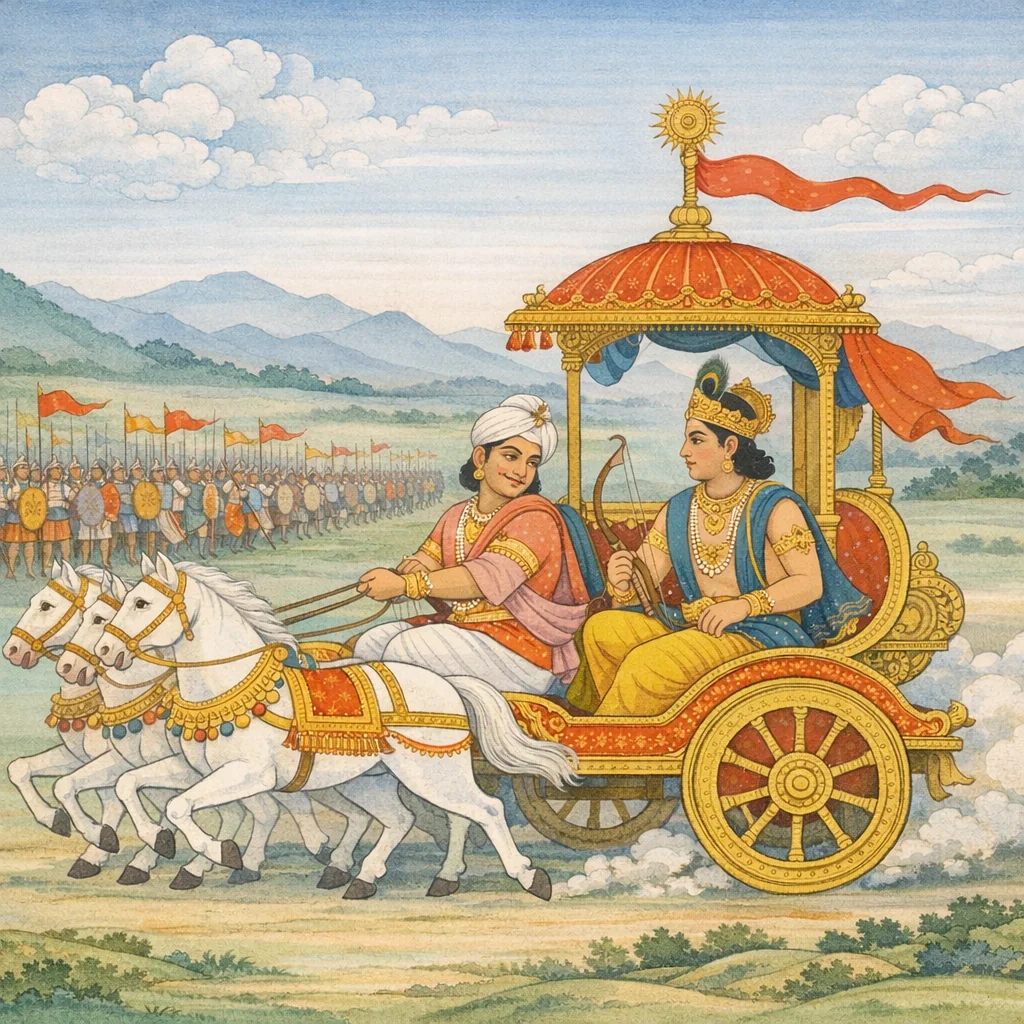
Chapter Arc: संजय धृतराष्ट्र को सुनाते हैं—जैसे ही महाधनुर्धर कर्ण युद्ध-इच्छा से रणभूमि में अडिग खड़ा होता है, कौरव-सेना हर्ष से उछल पड़ती है; पर उसी उल्लास के बीच अपशकुनों की छाया भी फैलती जाती है। → कर्ण अपनी विजय-निश्चितता का घोष करता है और स्वयं की महिमा का बखान करता है। मद्रराज शल्य—जो उसका सारथि है—उसी आत्मप्रशंसा को व्यंग्य और उपहास से काटता है, और अर्जुन के बल-पराक्रम, उसकी अजेयता तथा उसके रथ-ध्वज की प्रभा का वर्णन कर कर्ण के मन में चुभन भर देता है। कौरव-वीर दैव-मोह से ‘जय’ का नाद करते हैं और पाण्डवों को पहले ही पराजित मान बैठते हैं। → शल्य का तीखा उपहास और अर्जुन-स्तुति कर्ण के अभिमान को चुनौती देती है; कर्ण क्रोध और हठ में शल्य को आदेश देता है—‘याहि शल्य’—और शल्य ‘एवमस्तु’ कहकर आगे बढ़ने को बाध्य होता है। → शल्य-सारथि और श्वेत अश्वों से युक्त कर्ण का रथ शत्रुओं की ओर बढ़ता है—मानो सूर्य अंधकार को काटता हुआ। कर्ण पाण्डव-सेना को देख कर विशेषतः धनंजय (अर्जुन) के विषय में शीघ्र पूछताछ करता है, और युद्ध का रुख निर्णायक द्वंद्व की ओर मुड़ जाता है। → कर्ण का रथ पाण्डव-ध्वजिनी की ओर बढ़ चुका है; अगला क्षण अर्जुन-कर्ण के आमने-सामने आने की आहट देता है।
Shlokas
Verse 1
अफ्-#-रा- सप्तत्रिशो5्ध्याय: कौरव-सेनामें अपशकुन, कर्णकी आत्मप्रशंसा, शल्यके द्वारा उसका उपहास और अर्जुनके बल-पराक्रमका वर्णन संजय उवाच दृष्टवा कर्ण महेष्वासं युयुत्सुं समवस्थितम् । चुक्॒ुशु: कुरव: सर्वे हृष्टरूपा: समनन््तत:ः
Sañjaya said: Seeing Karṇa—the great archer—standing ready and eager to fight, all the Kurus cried out in jubilation from every side.
Verse 2
संजय कहते हैं--महाराज! जब महाथनुर्धर कर्ण युद्धकी इच्छासे समरांगणमें डटकर खड़ा हो गया, तब समस्त कौरव बड़े हर्षमें भरकर सब ओर कोलाहल करने लगे ।। ततो दुन्दुभिनिर्घोषैभेरीणां निनदेन च | बाणशब्दैश्व विविधैर्गर्जितिश्व तरस्विनाम्
Sañjaya said: O King, when the great archer Karṇa, intent on battle, stood firm upon the field, all the Kauravas, filled with exultation, raised a tumult on every side. Then there arose the booming of kettledrums and the blare of war-drums, the many sharp sounds of arrows, and the fierce roars of the mighty warriors.
Verse 3
प्रयाते तु तत: कर्णे योधेषु मुदितेषु च
Sañjaya said: Then, when Karṇa had set forth, and the warriors too were gladdened, the host moved on in renewed confidence.
Verse 4
निःसरन्तो व्यदृश्यन्त सूर्यात् सप्त महाग्रहा:,उस समय सूर्यमण्डलसे सात बड़े-बड़े ग्रह निकलते दिखायी दिये, उल्कापात होने लगे, दिशाओंमें आग-सी जल उठी, बिना वर्षके ही बिजलियाँ गिरने लगीं और भयानक आँधी चलने लगी
Sañjaya said: “Seven mighty planets seemed to emerge from the sun. Meteors began to fall; the quarters blazed as if filled with fire. Lightning struck even without rain, and terrifying, violent winds arose.”
Verse 5
उल्कापाताश्च संजज्ुर्दिशां दाहास्तथैव च । शुष्काशन्यश्व सम्पेतुर्वयुर्वाताश्च॒ भैरवा:,उस समय सूर्यमण्डलसे सात बड़े-बड़े ग्रह निकलते दिखायी दिये, उल्कापात होने लगे, दिशाओंमें आग-सी जल उठी, बिना वर्षके ही बिजलियाँ गिरने लगीं और भयानक आँधी चलने लगी
Sañjaya said: Portents erupted—meteors fell, the quarters seemed to blaze as if on fire, lightning struck even without rain, and terrifying winds rose.
Verse 6
मृगपक्षिगणाश्वैव पृतनां बहुशस्तव । अपसव्यं तदा चक्रुरवेदयन्तो महाभयम्,बहुतेरे मृग और पक्षी महान् भयकी सूचना देते हुए अनेक बार आपकी सेनाको दाहिने करके चले गये
Sañjaya said: “Then herds of deer and flocks of birds repeatedly moved around your army in an inauspicious course (to the left), as though proclaiming a great terror soon to come.”
Verse 7
प्रस्थितस्य च कर्णस्य निपेतुस्तुरगा भुवि । अस्थिवर्ष च पतितमन्तरिक्षाद् भयानकम्,कर्णके प्रस्थान करते ही उसके घोड़े पृथ्वीपर गिर पड़े और आकाशसे हडियोंकी भयंकर वर्षा होने लगी
Sañjaya said: “As Karṇa set out, his horses suddenly collapsed upon the earth, and from the sky there fell a dreadful shower of bones—an ominous portent.”
Verse 8
जज्वलुश्चैव शस्त्राणि ध्वजाश्वैव चकम्पिरे । अश्रूणि च व्यमुञ्चन्त वाहनानि विशाम्पते,प्रजानाथ! कौरवोंके शस्त्र जल उठे, ध्वज हिलने लगे और वाहन आँसू बहाने लगे
Sañjaya said: “O lord of the people, on the Kaurava side the weapons suddenly blazed, the standards trembled, and even the mounts and vehicles seemed to shed tears.”
Verse 9
एते चान्ये च बहव उत्पातास्तत्र दारुणा: | समत्पेतुर्विनाशाय कौरवाणां सुदारुणा:,ये तथा और भी बहुत-से भयंकर उत्पात वहाँ प्रकट हुए, जो कौरवोंके विनाशकी सूचना दे रहे थे
Sañjaya said: “These, and many other dreadful portents, manifested there—terrible in every way—converging as omens of destruction, foretelling the utter ruin of the Kauravas.”
Verse 10
न च तान् गणयामासु: सर्वे देवेन मोहिता: । प्रस्थितं सूतपुत्रं च जयेत्यूचुर्नराधिपा: । निर्जितान् पाण्डवांश्वैव मेनिरे तत्र कौरवा:,परंतु दैवसे मोहित होनेके कारण उन सबने उन उत्पातोंकों कुछ गिना ही नहीं। सूतपुत्रके प्रस्थान करनेपर सब राजा उसकी जय-जयकार बोलने लगे। कौरवोंको यह विश्वास हो गया कि अब पाण्डव परास्त हो जायूँगे
Sañjaya said: “Deluded by fate, they all paid no heed to those ominous portents. When the charioteer’s son (Karna) set forth, the kings cried out, ‘Victory to him!’ Thereupon the Kauravas became convinced that the Pāṇḍavas had already been overcome.”
Verse 11
ततो रथस्थ: परवीरहन्ता भीष्मद्रोणावस्तवीर्यों समीक्ष्य । समुज्ज्वलद््भास्करपावका भो वैकर्तनोडसौ रथकुञ्जरो नूप,नरेश्वर! तदनन्तर प्रकाशमान सूर्य और अग्निके समान तेजस्वी, शत्रुवीरोंका संहार करनेमें समर्थ एवं रथपर बैठा हुआ रथिश्रेष्ठ कर्ण यह देखकर कि भीष्म और द्रोणाचार्यके पराक्रमका लोप हो गया, अर्जुनके अलौकिक कर्मका चिन्तन करके अभिमान और दर्पसे दग्ध हो उठा तथा क्रोधसे चलता हुआ-सा लंबी-लंबी साँस खींचने लगा। उस समय उसने शल्यको सम्बोधित करके कहा--
Sañjaya said: Then Karṇa—standing on his chariot, a slayer of enemy champions, blazing like the sun and fire—saw that the prowess of Bhīṣma and Droṇa had come to an end. Reflecting on Arjuna’s extraordinary feats, he was scorched by pride and arrogance; and, as though trembling with wrath, he drew long, heavy breaths. At that moment he addressed Śalya and spoke.
Verse 12
स शल्यमाभाष्य जगाद वाक्यं पार्थस्य कर्मातिशयं विचिन्त्य । मानेन दर्पेण विदह्ममान: क्रोधेन दीप्यन्निव नि:श्वसंश्ष,नरेश्वर! तदनन्तर प्रकाशमान सूर्य और अग्निके समान तेजस्वी, शत्रुवीरोंका संहार करनेमें समर्थ एवं रथपर बैठा हुआ रथिश्रेष्ठ कर्ण यह देखकर कि भीष्म और द्रोणाचार्यके पराक्रमका लोप हो गया, अर्जुनके अलौकिक कर्मका चिन्तन करके अभिमान और दर्पसे दग्ध हो उठा तथा क्रोधसे चलता हुआ-सा लंबी-लंबी साँस खींचने लगा। उस समय उसने शल्यको सम्बोधित करके कहा--
Sañjaya said: Having addressed Śalya, Karṇa spoke—his mind fixed on the extraordinary prowess of Pārtha (Arjuna). Scorched by pride and arrogance, and blazing with anger, he breathed hard like a fire fanned by wind. Then that foremost of charioteers—radiant like the sun and fire, seated upon his chariot and capable of destroying heroic foes—seeing that the might of Bhīṣma and Droṇa had waned, reflected on Arjuna’s superhuman deeds. Consumed by wounded self-regard, he drew long, heavy breaths and, turning to Śalya, began to speak.
Verse 13
नाहं महेन्द्रादपि वजपाणे: क्रुद्धाद् बिभेम्यायुधवान् रथस्थ: । दृष्टवा हि भीष्मप्रमुखाउशयाना- नतीव मां हास्थिरता जहाति
Sañjaya said: “Even if Indra himself—wielder of the thunderbolt—were to become enraged, I would not fear, armed as I am and standing upon my chariot. But when I behold the foremost heroes, headed by Bhīṣma, lying fallen, my steadiness deserts me completely.”
Verse 14
“राजन! मैं हाथमें आयुध लेकर रथपर बैठा रहूँ, उस अवस्थामें यदि वज्र धारण करनेवाले इन्द्र भी कुपित होकर आ जाय॑ँ तो उनसे भी मुझे भय न होगा। भीष्म आदि महारथियोंको रणभूमिमें सदाके लिये सोया हुआ देखकर भी अस्थिरता (घबराहट) मुझसे दूर ही रहती है ।। महेन्द्रविष्णुप्रतिमावनिन्दितौ रथाश्वनागप्रवरप्रमाथिनौ । अवध्यकल्पौ निहतौ यदा परै- स्ततो न मे5प्यस्ति रणेड्द्य साध्वसम्,'भीष्म और द्रोणाचार्य देवराज इन्द्र और विष्णुके समान पराक्रमी, सबके द्वारा प्रशंसित, रथों, घोड़ों और गजराजोंको भी मथ डालनेवाले तथा अवध्य-तुल्य थे, जब उन्हें भी शत्रुओंने मार डाला, तब मेरी क्या गिनती है? यह सोचकर भी आज मुझे रणभूमिमें कोई भय नहीं हो रहा है
Sañjaya said: “O King, if I remain seated upon my chariot with weapons in hand, then even should Indra himself—wielder of the thunderbolt—arrive in wrath, I would not be afraid of him. Even after seeing Bhishma and the other great chariot-warriors lying forever asleep upon the battlefield, agitation stays far from me. For when Bhishma and Drona—blameless, praised by all, mighty like Indra and Vishnu, capable of crushing the finest chariots, horses, and lordly elephants, and seemingly invincible—were nevertheless slain by their foes, what account is there of me? Yet, even thinking thus, today I feel no fear on the field of battle.”
Verse 15
समीक्ष्य संख्येडतिबलान् नराधिपान् ससूतमातड्रथान् परैहतान् | कथं न सर्वानहितान् रणेडवधीद् महास्त्रविद् ब्राह्मणपुड्वो गुरु:
Sañjaya said: “Seeing those exceedingly mighty kings—together with their charioteers and their chariots—struck down by the enemy, one wonders: how did that master of great weapons, the venerable preceptor honored even by Brahmins, not slay all the hostile foes in the battle?”
Verse 16
युद्धस्थलमें अत्यन्त बलवान् नरेशोंको सारथि, रथ और हाथियोंसहित शत्रुओंद्वारा मारा गया देखकर भी महान् अस्त्रवेत्ता ब्राह्मणशिरोमणि आचार्य द्रोणने रणभूमिमें समस्त शत्रुओंका वध क्यों नहीं कर डाला? ।। स संस्मरन् द्रोणमहं महाहवे ब्रवीमि सत्यं कुरवो निबोधत । न वा मदन्य: प्रसहेद् रणे<र्जुन॑ समागतं मृत्युमिवोग्ररूपिणम्,“अतः महासमरमें मारे गये द्रोणाचार्यका स्मरण करके मैं सत्य कहता हूँ, कौरवो! तुमलोग ध्यान देकर सुनो। मेरे सिवा दूसरा कोई रणभूमिमें अर्जुनका वेग नहीं सह सकता। वे सामने आये हुए भयानक रूपधारी मृत्युके समान हैं
Sanjaya said: Even after seeing on the battlefield mighty kings—together with their charioteers, chariots, and elephants—slain by the enemy, why did the great master of weapons, the Brahmin jewel, Acharya Drona, not destroy all the foes on the field? Remembering Drona, slain in that great combat, I speak the truth—O Kurus, listen attentively: other than me, no one can endure Arjuna in battle. When he advances, he is like Death itself, terrible in form.
Verse 17
शिक्षाप्रमादश्न बल॑ धृतिश्न द्रोणे महास्त्राणि च संनतिश्न । स चेदगान्मृत्युवशं महात्मा सव्वनिन्यानातुरानद्य मन्ये,'शिक्षा, सावधानी, बल, धैर्य, महान् अस्त्र और विनय--ये सभी सदगुण द्रोणाचार्यमें विद्यमान थे। वे महात्मा द्रोण भी यदि मृत्युके वशमें पड़ गये तो अन्य सब लोगोंको भी मैं मरणासन्न ही समझता हूँ
Sañjaya said: Training and discipline, vigilance, strength, steadfast courage, mastery of great weapons, and humility—all these virtues were present in Droṇa. If even that great-souled Droṇa has fallen under the power of Death, then today I deem all other men to be already stricken and near their end.
Verse 18
नेह ध्रुवं किंचिदपि प्रचिन्तयन् विद्यां लोके कर्मणो नित्ययोगात् । सूर्योदये को हि विमुक्तसंशयो भावं कुर्वीताद्य गुरौ निपातिते,“बहुत सोचनेपर भी मैं कर्म-सम्बन्धकी अनित्यताके कारण इस लोकमें किसी भी वस्तुको नित्य नहीं मानता। जब आचार्य द्रोण भी मार दिये गये, तब कौन संदेहरहित होकर आगामी सूर्योदयतक जीवित रहनेका दृढ़ विश्वास कर सकता है?
Sañjaya said: “Even after much reflection, I do not regard anything in this world as truly lasting, for action is ever bound to change and perish. When even the revered teacher Droṇa has been struck down today, who—free from doubt—can hold a firm conviction that he will live until the next sunrise?”
Verse 19
न नूनमस्त्राणि बल॑ पराक्रम: क्रिया: सुनीतं परमायुधानि वा । अलं मनुष्यस्य सुखाय वर्तितुं तथा हि युद्धे निहतः परैर्गुरु:,“निश्चय ही अस्त्र, बल, पराक्रम, क्रिया, अच्छी नीति अथवा उत्तम आयुध आदि किसी मनुष्यको सुख पहुँचानेके लिये पर्याप्त नहीं हैं; क्योंकि इन सब साधनोंके होते हुए भी आचार्यको शत्रुओंने युद्धमें मार डाला है
Sañjaya said: Surely weapons, strength, valor, skilled action, sound policy, or even the finest arms are not sufficient to secure a man’s happiness; for even with all such means at hand, the revered teacher was slain by enemies in battle.
Verse 20
हुताशनादित्यसमानतेजसं पराक्रमे विष्णुपुरन्दरोपमम् | नये बृहस्पत्युशनो: सदा सम॑ न चैनमस्त्रं तदुपास्त दुःसहम्,“अग्नि और सूर्यके समान तेजस्वी, विष्णु और इन्द्रके समान पराक्रमी तथा सदा बृहस्पति और शुक्राचार्यके समान नीतिमान् इन गुरुदेवको बचानेके लिये इनके दुःसह अस्त्र आदि पास न आ सके अर्थात् उनकी रक्षा नहीं कर सके
Sañjaya said: “In radiance he was like Fire and the Sun; in valor he resembled Viṣṇu and Purandara (Indra); and in statecraft he was ever the equal of Bṛhaspati and Uśanas (Śukrācārya). Yet that dreadful weapon could not protect this revered teacher—its power could not come near him to save him.”
Verse 21
सम्प्राक्रुष्टे रुदितस्त्रीकुमारे पराभूते पौरुषे धार्तराष्टरे । मया कृत्यमिति जानामि शल्य प्रयाहि तस्माद् द्वधिघतामनीकम्,“शल्य! (द्रोणाचार्यके मारे जानेपर) जब सब ओर त्राहि-त्राहिकी पुकार हो रही है, स्त्रियाँ और बच्चे बिलख-बिलखकर रो रहे हैं तथा दुर्योधनका पुरुषार्थ दब गया है, ऐसे समयमें दुर्योधनको मेरी सहायताकी विशेष आवश्यकता है। मैं अपने इस कर्तव्यको अच्छी तरह समझता हूँ। इसलिये तुम शत्रुओंकी सेनाकी ओर चलो
Sañjaya said: “When cries of distress rise on every side, when women and children are weeping aloud, and when the manly resolve of the Dhārtarāṣṭra (Duryodhana) has been crushed, I know what duty lies upon me, O Śalya. Therefore go forth toward the enemy host and strike down their foremost ranks.”
Verse 22
यत्र राजा पाण्डव: सत्यसंधो व्यवस्थितो भीमसेनार्जुनौ च । वासुदेव: सात्यकि: सृञ्जयाश्न यमौ च कस्तान् विषहेन्मदन्य:,“जहाँ सत्यप्रतिज्ञ पाण्डुपुत्र राजा युधिष्ठिर खड़े हैं, जहाँ भीमसेन, अर्जुन, वसुदेवनन्दन श्रीकृष्ण, सात्यकि, सूंजय वीर तथा नकुल और सहदेव डटे हुए हैं, वहाँ मेरे सिवा दूसरा कौन उन वीरोंका वेग सह सकता है?
Sañjaya said: “Where the Pāṇḍava king, steadfast in truth, stands firm—where Bhīmasena and Arjuna are stationed, and where Vāsudeva (Kṛṣṇa), Sātyaki, the Sṛñjaya heroes, and the twin brothers (Nakula and Sahadeva) are also arrayed—who other than me could endure the onrush of those warriors?”
Verse 23
तस्मात् क्षिप्र॑ मद्रपते प्रयाहि रणे पञ्चालान् पाण्डवान् सृज्जयांश्व । तान् वा हनिष्यामि समेत्य संख्ये यास्यामि वा द्रोणपथा यमाय,“इसलिये मद्रराज! तुम शीघ्र ही रणभूमिमें पांचाल, पाण्डव तथा सूंजय वीरोंकी ओर रथ ले चलो। आज युद्धस्थलमें उन सबके साथ भिड़कर या तो उन्हें ही मार डालूँगा या स्वयं ही द्रोणाचार्यके मार्गसे यमलोक चला जाऊँगा
Therefore, O king of Madra, drive swiftly on the battlefield toward the Pāñcālas, the Pāṇḍavas, and the Sṛñjayas. Today, meeting them in close combat, I shall either slay them—or else, following the path taken by Droṇa, I shall myself depart to Yama’s realm.
Verse 24
न त्वेवाहं न गमिष्यामि मध्ये तेषां शूराणामिति मां शल्य विद्धि | मित्रद्रोहो मर्षणीयो न मे<5यं त्यक्त्वा प्राणाननुयास्यामि द्रोणम्,“शल्य! मैं उन शूरवीरोंके बीचमें नहीं जाऊँगा, ऐसा मुझे न समझो; क्योंकि संग्रामसे पीछे हटनेपर मित्रद्रोह होगा और यह मित्रद्रोह मेरे लिये असह्य है। इसलिये मैं प्राणोंका परित्याग करके द्रोणाचार्यका ही अनुसरण करूँगा
Sañjaya said: “Do not think, O Śalya, that I will not go into the midst of those heroes. To withdraw from the battle would be betrayal of a friend, and such betrayal is intolerable to me. Therefore, even at the cost of my life, I will follow Droṇa.”
Verse 25
प्राज्लस्थ मूढस्य च जीवितान्ते नास्ति प्रमोक्षो5न्तकसत्कृतस्य । अतो विद्वन्नभियास्यामि पार्थान् दिष्टं न शक््यं व्यतिवर्तितुं वै,“विद्वान् हो या मूर्ख, आयुकी समाप्ति होनेपर सभीका यमराजके द्वारा यथायोग्य सत्कार होता है। उससे किसीको छुटकारा नहीं मिलता। अतः विद्वन! मैं कुन्तीके पुत्रोंपर अवश्य चढ़ाई करूँगा। निश्चय ही दैवके विधानको कोई पलट नहीं सकता
Sañjaya said: “Whether one is wise or deluded, when life reaches its end there is no escape from Death, Antaka, who receives each being in due measure. Therefore, O learned one, I shall indeed march against the Pārthas (the sons of Kuntī). Truly, what is ordained by destiny cannot be turned aside.”
Verse 26
निर्ययुस्तावका युद्धे मृत्युं कृत्वा निवर्तनम् । तदनन्तर आपके पक्षके समस्त वीर दुन्दुभि और भेरियोंकी ध्वनि, बाणोंकी सनसनाहट और वेगशाली वीरोंकी विविध गर्जनाओंके साथ युद्धके लिये निकल पड़े। उनके मनमें यह निश्चय था कि अब मौत ही हमें युद्धसे निवृत्त कर सकेगी,कल्याणवृत्त: सततं हि राजा वैचित्रवीर्यस्थ सुतो ममासीत् । तस्यार्थसिद्ध्यर्थमहं त्यजामि प्रियान् भोगान् दुस्त्यजं जीवितं च “धृतराष्ट्रपुत्र राजा दुर्योधन सदा ही मेरे कल्याण-साधनमें तत्पर रहा है; अतः आज उसके मनोरथकी सिद्धिके लिये मैं अपने प्रिय भोगोंको और जिसे त्यागना अत्यन्त कठिन है, उस जीवनको भी त्याग दूँगा
Sanjaya said: The Kaurava warriors marched out to battle, resolved that only death would turn them back. Thereafter, with the booming of kettledrums and war-drums, the whirring of arrows, and the many fierce roars of swift heroes, all the champions of your side advanced for combat. In their hearts was a fixed determination: now nothing but death itself will make us withdraw from this war. For King Duryodhana, the son of Vichitravirya, has always been devoted to my welfare; therefore, to accomplish his purpose, I renounce my cherished enjoyments—and even life itself, so hard to abandon.
Verse 27
वैयाप्रचर्माणमकूजनाक्षं हैमत्रिकोषं रजतत्रिवेणुम् | रथप्रबर्ह तुरगप्रबर्ह - युक्त प्रादान्महममिमं हि राम:,“गुरुवर परशुरामजीने मुझे यह व्याप्रचर्मसे आच्छादित और उत्तम अश्वोंसे जुता हुआ श्रेष्ठ रथ प्रदान किया है। इसमें तीन सुवर्णमय कोष और रजतमय त्रिवेणु सुशोभित हैं। इसके धुरों और पहियोंसे कोई आवाज नहीं निकलती है
Sañjaya said: “The venerable Rāma (Paraśurāma) bestowed upon me this magnificent chariot—covered with tiger-skin, whose axles make no sound, adorned with three golden quivers and a silver triveṇu-ornament, and furnished with excellent fittings; it is yoked to superb horses.”
Verse 28
धनूंषि चित्राणि निरीक्ष्य शल्य ध्वजान् गदा: सायकांश्रोग्ररूपान् | असिं च दीप्तं परमायुधं च शड्खं च शुभ्र॑ स्वनवन्तमुग्रम्,“शल्य! तत्पश्चात् उन्होंने भलीभाँति इस रथका निरीक्षण करके बहुत-से विचित्र धनुष, भयंकर बाण, ध्वज, गदा, खड्ग, चमचमाते हुए उत्तम आयुध तथा गम्भीर ध्वनिसे युक्त भयंकर श्वेत शंख भी दिये थे
Sañjaya said: “O Śalya, having carefully inspected the chariot, they presented many wondrous bows, fearsome arrows, banners, maces, a blazing sword, other excellent supreme weapons, and also a white conch whose deep sound was formidable.”
Verse 29
पताकिनं वज्जनिपातनि:स्वनं सिताश्चयुक्ते शुभतूणशोभितम् । इमं समास्थाय रथं रथर्षभं रणे हनिष्याम्यहमर्जुनं बलात्,“यह रथ सब रथोंसे उत्तम है। इसमें पताकाएँ फहरा रही हैं, सफेद घोड़े जुते हुए हैं और सुन्दर तरकस इसकी शोभा बढ़ाते हैं। चलते समय इस रथकी धमकसे वज्रपातके समान शब्द होता है। मैं इस रथपर बैठकर रणभूमिमें अर्जुनको बलपूर्वक मार डालूँगा
Sañjaya said: “This chariot is bannered, its rumble like a thunderbolt’s strike; it is yoked with white horses and adorned with splendid quivers. Mounting this chariot—best among chariots—I shall, by sheer force, slay Arjuna in battle.”
Verse 30
त॑ चेन्मृत्यु: सर्वहरो5भिरक्षेत् सदाप्रमत्त: समरे पाण्डुपुत्रम् । तं॑ वा हनिष्यामि रणे समेत्य यास्यामि वा भीष्ममुखो यमाय,“यदि सबका संहार करनेवाली मृत्यु सदा सावधान रहकर समरांगणमें पाण्डुपुत्र अर्जुनकी रक्षा करे तो रणक्षेत्रमें उससे भी भिड़कर या तो मैं उसे ही मार डालूँगा या स्वयं ही भीष्मके सम्मुख यमलोकको चला जाऊँगा
Sanjaya said: “If Death itself—the all-seizing power—should stand ever vigilant on the battlefield to protect the son of Pandu (Arjuna), then I will still confront that protector in combat: either I shall strike him down there, or I shall myself depart to Yama’s realm, going to meet Bhishma.”
Verse 31
यमवरुणकुबेरवासवा वा यदि युगपत्सगणा महाहवे । जुगुपिषव इहैत्य पाण्डवं किमु बहुना सह तैर्जयामि तम्,“अधिक कहनेसे क्या लाभ? यदि इस महासमरमें अपने गणोंसहित यम, वरुण, कुबेर और इन्द्र भी एक साथ आकर यहाँ पाण्डुपुत्र अर्जुनकी रक्षा करना चाहें तो मैं उन सबके साथ ही उन्हें जीत लूँगा”
Sañjaya said: “Even if Yama, Varuṇa, Kubera, and Vāsava (Indra)—together with their hosts—were to come at once into this great battle, wishing to protect the son of Pāṇḍu here, what is the use of saying more? I would defeat him even along with them.”
Verse 32
संजय उवाच इति रणरभसस्य कत्थत- स्तदुत निशम्य वच: स मद्रराट् । अवहसदवमन्य वीर्यवान् प्रतिषिषिधे च जगाद चोत्तरम्,संजय कहते हैं--राजन! पराक्रमी मद्रराज शल्य युद्धके उत्साहमें भरकर बढ़-बढ़कर बातें बनानेवाले कर्णके उस कथनको सुनकर उसकी अवहेलना करके उपहास करने लगे। उन्होंने फिर ऐसी बातें कहनेसे कर्णको रोका और इस प्रकार उत्तर दिया
Sañjaya said: O King, hearing those boastful words of Karṇa—spoken in the heat and frenzy of battle—the valiant ruler of Madra, Śalya, mocked him in contempt. He checked Karṇa from speaking further in that vein and then replied with his own answer.
Verse 33
शल्य उवाच विरम विरम कर्ण कत्थना- दतिरभसो&प्यतिवाचमुक्तवान् | क्व च हि नरवरो धनंजय: क्व पुनरहो पुरुषाधमो भवान्,शल्यने कहा--कर्ण! बस, अब बढ़-बढ़कर बातें बनाना बंद करो, बंद करो। तुम अधिक जोशमें आकर अपनी शक्तिसे बहुत बड़ी बात कह गये। भला, कहाँ नरश्रेष्ठ अर्जुन और कहाँ मनुष्योंमें अधम तुम?
Śalya said: “Stop, stop, Karṇa—cease this boastful talk. Swept up by excessive ardor, you have spoken words that go far beyond measure. For where is Dhanaṃjaya Arjuna, the best of men—and where, indeed, are you, the lowest among men?”
Verse 34
यदुसदनमुपेन्द्रपालितं त्रिदशमिवामरराजरक्षितम् | प्रसभमतिविलोड््य को हरेत् पुरुषवरावरजामृते<र्जुनात्
Śalya said: “Who, except Arjuna—the younger brother of the best of men—could forcibly storm and thoroughly plunder the Yadu stronghold, guarded by Upendra (Viṣṇu) and protected like heaven itself under the watch of the king of the gods? Such a feat lies beyond ordinary warriors.”
Verse 35
बताओ तो सही, अर्जुनके सिवा दूसरा कौन ऐसा वीर है, जो साक्षात् विष्णु भगवानसे सुरक्षित यदुवंशियोंकी पुरीको, जिसकी उपमा देवराज इन्द्रद्वारा पालित देवनगरी अमरावतीसे दी जाती है, बलपूर्वक मथकर पुरुषोत्तम श्रीकृष्णकी छोटी बहिन सुभद्राका अपहरण कर सके ।। त्रिभुवनविभुमीक्षरेश्वरं क इह पुमान् भवमाह्दयेद् युधि । मृगवधकलहे ऋते*र्जुनात् सुरपतिवीर्यसमप्रभावत:,देवराज इन्द्रके समान बल और प्रभाव रखनेवाले अर्जुनको छोड़कर इस संसारमें दूसरा कौन ऐसा वीर पुरुष है, जो एक वन्य पशुको मारनेके विषयमें उठे हुए विवादके अवसरपर ईश्वरोंके भी ईश्वर त्रिलोकीनाथ भगवान् शंकरको भी युद्धके लिये ललकार सके
Shalya said: “Tell me truly—apart from Arjuna, who else is such a hero that he could, by sheer force, break into the city of the Yadus—guarded in person by Lord Vishnu himself, a city compared to Amaravati, the divine capital protected by Indra—and carry off Subhadra, the younger sister of the Supreme Lord Krishna? And besides Arjuna—whose strength and splendor match the Lord of the gods—what man in this world could, in the quarrel that arose over the killing of a wild animal, even challenge in battle Bhava (Shiva), the sovereign Lord of the three worlds?”
Verse 36
इस प्रकार श्रीमह्याभारत कर्णपर्वमें शल्यसंवादविषयक छत्तीसवाँ अध्याय पूरा हुआ,चचाल पृथिवी राजन् ववाश च सुविस्तरम् । राजन्! कर्ण और कौरव योद्धाओंके प्रसन्नतापूर्वक प्रस्थान करनेपर धरती डोलने और बड़े जोर-जोरसे अव्यक्त शब्द करने लगी असुरसुरमहोरगान् नरान् गरुडपिशाचसय क्षराक्षसान् | इषुभिरजयदग्निगौरवात् स्वभिलषितं च हविर्ददी जय: अर्जुनने अग्निदेवका गौरव मानकर गरुड़, पिशाच, यक्ष, राक्षस, देवता, असुर, बड़े- बड़े नाग तथा मनुष्योंको भी बाणोंद्वारा परास्त कर दिया और अग्निको अभीष्ट हविष्य प्रदान किया था
Sañjaya said: O King, as Karṇa and the Kaurava warriors set out in high spirits, the earth began to tremble and to send forth a vast, indistinct roar. And (it is remembered that) Arjuna, honoring Agni’s majesty, overcame with his arrows even gods and asuras, great serpents, men, as well as Garuḍas, piśācas, yakṣas, and rākṣasas, and then offered Agni the oblation he desired. The passage sets ominous portents on the battlefield beside a recalled act of devotion and prowess, implying that moral and cosmic powers answer human deeds in war.
Verse 37
स्मरसि ननु यदा परैह्तः स च धृतराष्ट्रसुतो5पि मोक्षित: । दिनकरसदूृशै: शरोत्तमैर्युधा कुरुषु बहून् विनिहत्य तानरीन्,कर्ण! याद है वह घटना, जब कि कुरुजांगल-प्रदेशमें घोषयात्राके समय ग्रन्धर्वोने शत्रु बनकर दुर्योधनका अपहरण कर लिया था, उस समय इन्हीं अर्जुनने सूर्यकिरणोंके समान तेजस्वी उत्तमोत्तम बाणोंद्वारा उन बहुसंख्यक शत्रुओंको मारकर धुृतराष्ट्रपुत्रको बन्धनसे मुक्त किया था इति श्रीमहाभारते कर्णपर्वणि कर्णशल्यसंवादे सप्तत्रिंशो5ध्याय
“Do you remember that occasion when Dhṛtarāṣṭra’s son was carried off by enemies, and then released? It was Arjuna who, in battle, with superb arrows blazing like the sun’s rays, struck down those many foes among the Kurus’ opponents and freed the prince from captivity, O Karṇa.” (Śalya’s point is to remind Karṇa of Arjuna’s proven prowess and of the moral weight of repaying a benefaction rather than belittling it.)
Verse 38
प्रथममपि पलायिते त्वयि प्रियकलहा धृतराष्ट्रसूनव: । स्मरसि ननु यदा प्रमोचिता: खचरगणानवजित्य पाण्डवै:,उस युद्धमें तुम सबसे पहले भाग गये थे। उस समय पाण्डवोंने गन्धर्वोको पराजित करके कलहप्रिय धृतराष्ट्रपुत्रोंको कैदसे छुड़ाया था। क्या ये सब बातें तुम्हें याद हैं?
“Even earlier, when you were the first to flee, do you remember how the quarrel-loving sons of Dhṛtarāṣṭra were freed—after the Pāṇḍavas had defeated the host of sky-roaming Gandharvas? Do you truly recall those events?”
Verse 39
समुदितबलवाहना: पुनः पुरुषवरेण जिता: स्थ गोग्रहे । सगुरुगुरुसुता: सभीष्मका: किमु न जितः स तदा त्वयार्जुन:,विराटनगरमें गोहरणके समय पुरुषश्रेष्ठ अर्जुनने विशाल बल-वाहनसे सम्पन्न तुम सब लोगोंको द्रोणाचार्य, अश्वत्थामा और भीष्मके सहित परास्त कर दिया था। उस समय तुमने अर्जुनको क्यों नहीं जीत लिया?
Śalya said: “At the time of the cattle-raid at Virāṭa’s city, you—though equipped with a great host of troops and chariots—were again defeated by that best of men, Arjuna. Even with your elders and teachers—Droṇa, his son Aśvatthāmā, and Bhīṣma—present among you, why did you not conquer Arjuna then? If you could not overcome him in that earlier encounter, what grounds do you have now to boast of victory?”
Verse 40
इदमपरमुपस्थितं पुन- स्तव निधनाय सुयुद्धमद्य वै | यदि न रिपुभयात् पलायसे समरगतोडद्य हतोडसि सूतज,सूतपुत्र! अब आज तुम्हारे वधके लिये पुनः यह दूसरा उत्तम युद्ध उपस्थित हुआ है। यदि तुम शत्रुके भयसे भाग नहीं गये तो समरांगणमें पहुँचकर अवश्य मारे जाओगे
Śalya said: “Once again, today, another excellent battle has presented itself—meant for your destruction. If you do not flee out of fear of the enemy, then upon entering the battlefield today you will surely be slain, O charioteer-born, O son of a charioteer.”
Verse 41
संजय उवाच इति बहु परुष॑ प्रभाषति प्रमनसि मद्रपतौ रिपुस्तवम् । भृशमभिरुषित: परंतप: कुरुपृतनापतिराह मद्रपम्,संजयने कहा--राजन्! जब महामना मद्रराज शल्य इस प्रकार शत्रुकी प्रशंसासे सम्बन्ध रखनेवाली बहुत-सी कड़वी बातें सुनाने लगे, तब कौरव-सेनापति शत्रुसंतापी कर्ण अत्यन्त क्रोधसे जल उठा और शल्यसे बोला
Sañjaya said: When the noble king of Madra, Śalya, spoke many harsh words—words that amounted to praising your enemy—Karna, the scorcher of foes and commander of the Kuru host, flared up in intense anger and addressed the king of Madra.
Verse 42
कर्ण उवाच भवतु भवतु कि विकत्थसे ननु मम तस्य हि युद्धमुद्यतम् । यदि स जयति मामिहाहवे तत इदमस्तु सुकत्थितं तव,कर्णने कहा--रहने दो, रहने दो। क्यों बहुत बड़बड़ा रहे हो। अब तो मेरा और उनका युद्ध उपस्थित हो ही गया है। यदि अर्जुन यहाँ युद्धमें मुझे परास्त कर दें, तब तुम्हारा यह बढ़-बढ़कर बातें करना ठीक और अच्छा समझा जायगा
Karna said: “Let it be, let it be—why do you boast so much? In any case, the battle between him and me is now at hand. If he defeats me here in combat, then your loud claims will indeed be justified.”
Verse 43
संजय उवाच एवमस्त्विति मद्रेश उक्त्वा नोत्तरमुक्तवान् | याहि शल्येति चाप्येनं कर्ण: प्राह युयुत्मया,संजय कहते हैं--राजन्! तब मद्रराज शल्य “एवमस्तु” कहकर चुप हो गये। उन्होंने कर्णकी उस बातका कोई उत्तर नहीं दिया। तब कर्णने युद्धकी इच्छासे उनसे कहा --'शल्य! रथ आगे ले चलो'
Sañjaya said: “O King, the lord of Madra, Śalya, having said ‘So be it,’ fell silent and gave no further reply to Karṇa’s words. Then Karṇa, eager for battle, addressed him: ‘Śalya, drive the chariot forward.’”
Verse 44
स रथ: प्रययौ शत्रून् श्वेताश्वः शल्यसारथि: । निष्नन्नमित्रान् समरे तमो घ्नन् सविता यथा,तत्पश्चात् शल्य जिसके सारथि थे और जिसमें श्वेत घोड़े जुते हुए थे, वह विशाल रथ अन्धकारका विनाश करनेवाले सूर्यदेवके समान शत्रुओंका संहार करता हुआ आगे बढ़ा
Sañjaya said: Then that great chariot—yoked with white horses and driven by Śalya—advanced into the enemy ranks, cutting down foes in the battle, like the sun that dispels darkness.
Verse 45
ततः प्रायात् प्रीतिमान् वै रथेन वैयाप्रेण श्वेतयुजाथ कर्ण: । स चालोक्य ध्वजिनीं पाण्डवानां धनंजयं त्वरया पर्यपृच्छत्,तदनन्तर व्याप्रचर्मसे आच्छादित और श्वेत अश्वोंसे युक्त उस रथके द्वारा कर्ण बड़ी प्रसन्नताके साथ प्रस्थित हुआ। उसने सामने ही पाण्डवोंकी सेनाको खड़ी देख बड़ी उतावलीके साथ धनंजयका पता पूछा
Sañjaya said: Then Karṇa, filled with confidence and delight, set out in his chariot—swift in its movement and yoked with white horses. Seeing the Pāṇḍavas’ battle-array standing before him, he hastily inquired after Dhanañjaya (Arjuna).
Frequently Asked Questions
The implicit tension lies between the duty to persist in combat as kṣatriyas and the evident breakdown of discernment and proportionality when dust, fear, and chaos lead to indiscriminate mutual harm and escalating suffering.
The chapter conveys the fragility of worldly power and the rapid erosion of order under violence, using transformed landscape and disintegrating formations to underscore impermanence and the systemic cost of conflict.
No explicit phalaśruti appears; the chapter functions as narrative documentation within Sañjaya’s report, with its interpretive weight arising from cumulative imagery and the concluding observation of Kaurava destabilization.