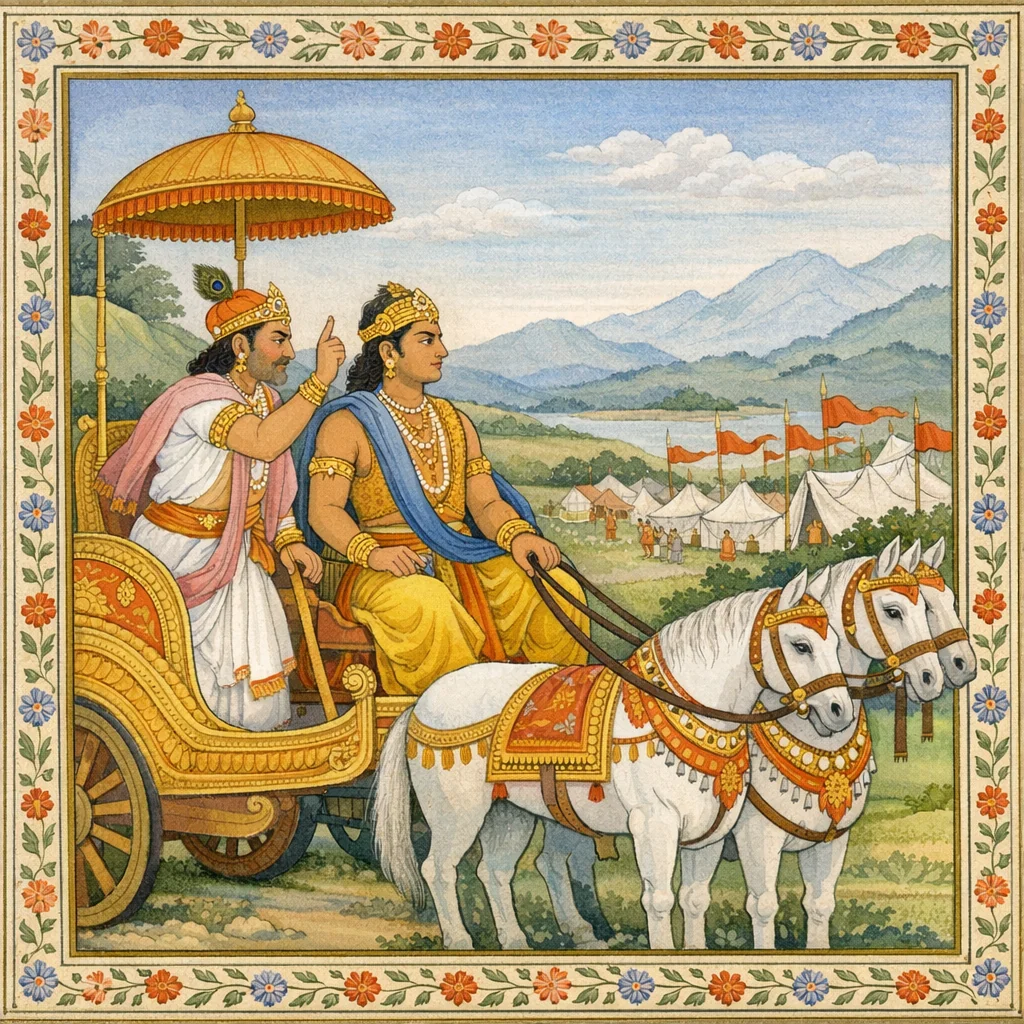
Adhyaya 35
Adhyāya 35 — Bhīmasena’s Counter-Encirclement and the Karṇa Engagement Escalation
Upa-parva: Bhīma–Karṇa Saṃgrāma (Tactical Engagement Cycle)
Dhṛtarāṣṭra questions Sañjaya about the difficult feat of Bhīma forcing Karṇa into a compromised position, recalling Duryodhana’s repeated assertions of Karṇa’s singular battlefield potency. Sañjaya narrates a rapid protective response: Kaurava forces, including multiple named fighters, surge to cover Rādheya and to neutralize Bhīma. Bhīma withstands concentrated assaults, executes swift attrition against incoming chariots, and kills several opponents in sequence, producing panic and dispersal. Reinforcements escalate: elephant units and additional chariot formations attempt to contain him; Bhīma, now dismounted and wielding a mace, breaks through by targeting vulnerable points and dismantling formations. A further cavalry wave—described as directed by Śakuni—advances with assorted weapons; Bhīma meets them with mobile routing tactics and heavy casualties, then re-engages toward Karṇa. The scene culminates in intensified exchanges among major combatants, including Karṇa’s arrow volleys and a broader convergence of forces, presenting the late-war atmosphere of compressed time, high noise, and mutual escalation rather than a single decisive resolution within the chapter.
Chapter Arc: दुर्योधन कर्ण को युद्ध के लिए उकसाता है और उसके रथ-सारथ्य के लिए मद्रराज शल्य को नियुक्त करने की घोषणा करता है—मानो इन्द्र के रथ की बागडोर मातलि संभालते हों, वैसे ही शल्य आज कर्ण के अश्वों को साधेंगे। → रथ का विधिवत् सुसज्जित होना, कर्ण का आत्मविश्वास और शल्य की कटु-वाणी—इन सबके बीच एक अदृश्य संघर्ष उभरता है: सारथि का मन योद्धा की विजय-यात्रा को सहारा देगा या उसे भीतर से तोड़ेगा। कर्ण शल्य की बातों को अनादृत कर ‘चलो’ कहकर आगे बढ़ता है। → कर्ण शल्य से प्रतिज्ञा-भरी गर्जना करता है—आज वह कंकपत्रयुक्त बाणों की सैकड़ों-सहस्रों वर्षा करेगा, पाण्डव-विनाश और दुर्योधन-विजय के लिए तीक्ष्ण शर चलाएगा; पर शल्य प्रत्युत्तर में भविष्य के भयावह दृश्य गिनाकर उसके अहंकार को काटता है—गाण्डीव की गड़गड़ाहट, भीम का संहार, और युद्धभूमि की विभीषिका देखकर ‘तब तुम ऐसा न कहोगे’। → अध्याय का अंत कर्ण के बाह्य उत्साह और शल्य की वाणी से उपजे अंतर्द्वंद्व के साथ होता है—रथ आगे बढ़ता है, पर मन में शंका की छाया पड़ चुकी है। → कर्ण की प्रतिज्ञा और शल्य की भविष्यवाणी आमने-सामने खड़ी हैं—अगले संग्राम में किसकी वाणी सत्य सिद्ध होगी?
Shlokas
Verse 1
ऑपन-माज बछ। ्-ज:डिअ षट्त्रिशो5ध्याय: कर्णका युद्धके लिये प्रस्थान और शल्यसे उसकी बातचीत दुर्योधन उवाच अयं ते कर्ण सारथ्यं मद्रराज: करिष्यति । कृष्णादभ्यधिको यन्ता देवेशस्येव मातलि:,दुर्योधन बोला--कर्ण! ये मद्रराज शल्य तुम्हारा सारथ्यकर्म करेंगे। देवराज इन्द्रके सारथि मातलिके समान ये श्रीकृष्णसे भी श्रेष्ठ रथसंचालक हैं
Duryodhana said: “Karna, the king of Madra, Śalya, will serve as your charioteer. As Mātali is to Indra, lord of the gods, so is he a driver—indeed, even superior to Kṛṣṇa as a charioteer.”
Verse 2
यथा हरिहयैर्युक्ते संगृह्नाति स मातलि: । शल्यस्तथा तवाद्यायं संयन्ता रथवाजिनाम्,जैसे मातलि इन्द्रके घोड़ोंसे जुते हुए रथकी बागडोर सँभालते हैं, उसी प्रकार ये तुम्हारे रथके घोड़ोंको काबूमें रखेंगे
Duryodhana said: “Just as Mātali holds the reins with a firm hand and controls Indra’s chariot yoked to tawny steeds, so today Śalya will be the charioteer who restrains and guides the horses of your chariot.”
Verse 3
योधे त्वयि रथस्थे च मद्रराजे च सारथौ । रथश्रेष्ठो ध्रुवं संख्ये पार्थानभिभविष्यति,जब तुम योद्धा बनकर रथपर बैठोगे और मद्रराज शल्य सारथिके रूपमें प्रतिष्ठित होंगे, उस समय वह श्रेष्ठ रथ निश्चय ही युद्धस्थलमें कुन्तीपुत्रोंकी पराजित कर देगा
Duryodhana said: “When you, as the warrior, are seated upon the chariot, and when the king of Madra, Śalya, is established as the charioteer, then that finest of chariots will surely, in the press of battle, overpower the sons of Pṛthā.”
Verse 4
संजय उवाच ततो दुर्योधनो भूयो मद्रराजं तरस्विनम् | उवाच राजन संग्रामे<ध्युषिते पर्युपस्थिते,संजय कहते हैं--राजन्! तदनन्तर दुर्योधनने प्रातःकाल युद्ध उपस्थित होनेपर पुनः वेगशाली मद्रराज शल्यसे कहा--
Sañjaya said: Then Duryodhana, once again, addressed the mighty king of Madra, Śalya: “O King, now that the battle is at hand and the day of combat has dawned…”
Verse 5
कर्णस्य यच्छ संग्रामे मद्रराज हयोत्तमान् । त्वयाभिगुप्तो राधेयो विजेष्यति धनंजयम्,“मद्रराज! आप संग्राममें कर्णके इन उत्तम घोड़ोंको वशमें कीजिये। आपसे सुरक्षित होकर राधापुत्र कर्ण निश्चय ही अर्जुनको जीत लेगा”
Sañjaya said: “O king of Madra, take firm control of Karṇa’s excellent horses in the battle. With you guarding him, Rādheya (Karṇa) will surely defeat Dhanañjaya (Arjuna).”
Verse 6
इत्युक्तो रथमास्थाय तथेति प्राह भारत । शल्ये<भ्युपगते कर्ण: सारथिं सुमनाब्रवीत्
Sañjaya said: Thus addressed, Karṇa mounted his chariot and replied, “So be it, O Bhārata.” When Śalya had come near, Karṇa—now composed in mind—spoke to his charioteer.
Verse 7
त्वं सूत स्यन्दनं महां कल्पयेत्यसकृत् त्वरन् । भारत! दुर्योधनके ऐसा कहनेपर शल्यने रथका स्पर्श करके कहा--“तथास्तु।” जब शल्यने सारथि होना पूर्णरूपसे स्वीकार कर लिया, तब कर्णने प्रसन्नचित्त होकर बारंबार अपने पूर्व सारथिसे शीघ्रतापूर्वक कहा--'सूत! तुम मेरा रथ सजाकर तैयार करो” ।। ६३ || ततो जैत्रं रथवरं गन्धर्वनगरोपमम्
Sanjaya said: Hurriedly and again and again Karna said to the charioteer, “O Suta, prepare my great chariot.” O Bharata, when Duryodhana spoke thus, Shalya touched the chariot and replied, “So be it.” When Shalya had fully accepted the role of charioteer, Karna—his mind pleased—repeatedly urged his former charioteer to make the chariot ready at once. Then there was brought forth the excellent, victory-bearing chariot, splendid like a city of the Gandharvas.
Verse 8
विधिवत् कल्पितं भद्र|ं जयेत्युक्त्वा न्यवेदयत् । तब सारथिने गन्धर्वनगरके समान विशाल, विजयशील श्रेष्ठ और मंगलकारक रथको विधिपूर्वक सुसज्जित करके सूचित किया--'स्वामिन्! आपकी जय हो! रथ तैयार है” ।। ७ ई || त॑ रथं रथिनां श्रेष्ठ: कर्णो5 भ्यर्च्य यथाविधि,समीपस्थं मद्रराजमारोह त्वमथाब्रवीत् । रथियोंमें श्रेष्ठ कर्णने वेदज्ञ पुरोहितद्वारा पहलेसे ही जिसका मांगलिक कृत्य सम्पन्न कर दिया गया था, उस रथकी विधिपूर्वक पूजा और प्रदक्षिणा की। तत्पश्चात् सूर्यदेवका प्रयत्नपूर्वक उपस्थान करके पास ही खड़े हुए मद्रराजसे कहा--'पहले आप रथपर बैठिये'
Sanjaya said: Karna, foremost among chariot-warriors, duly worshipped that chariot according to prescribed rite. Then, addressing the king of Madra who stood nearby, he said, “You, mount first.” The scene underscores the war-camp’s insistence on auspicious procedure and public decorum even on the brink of violence: ritual correctness, respect for rank, and the desire for victory are woven into the ethics of kingship as the battle is about to resume.
Verse 9
सम्पादितं ब्रह्मविदा पूर्वमेव पुरोधसा । कृत्वा प्रदक्षिणं यत्नादुपस्थाय च भास्करम्
Sanjaya said: Having already made the proper arrangements through the royal priest—one who is a knower of sacred lore—he then, with careful effort, performed the rite of circumambulation and stood in reverent attendance upon the Sun. The scene underscores the warrior’s reliance on consecrated counsel and disciplined devotion before entering perilous action.
Verse 10
तत: कर्णस्य दुर्धर्ष स्यन्दनप्रवरं महत्
Sanjaya said: Then there appeared Karṇa’s great and foremost chariot—an immense, formidable vehicle, difficult for enemies to assail—signaling the escalation of battle power and the pride of martial prowess that drives the war onward.
Verse 11
ततः शल्यदश्रितं दृष्टवा कर्ण: स्वं रथमुत्तमम्
Sanjaya said: Then Karṇa, seeing his own excellent chariot now under Śalya’s charge, turned his attention to it—an ominous sign that even the finest means of war depend upon the steadiness and loyalty of those who guide them.
Verse 12
तावेकरथमारूढावादित्याग्निसमत्विषौ
Sañjaya said: Those two, mounted together on a single chariot, blazed with a radiance equal to the sun and fire—an image of concentrated martial power as the battle’s moral and strategic tensions sharpened.
Verse 13
संस्तूयमानौ तौ वीरौ तदास्तां द्युतिमत्तमौ
Sañjaya said: Thus, at that time, those two heroic warriors—being praised—stood forth, the most radiant among men, their splendor heightened by acclaim amid the war’s charged atmosphere.
Verse 14
₹< ॥0७7758 [ ण्ज्ट्रः «7 ५5 स शल्यसंगृहीताश्वे रथे कर्ण: स्थितो बभौ
Sañjaya said: With Shalya holding the horses’ reins, Karna stood poised upon his chariot and shone forth—ready for battle, his prowess framed by the disciplined control of the team and the grim duty of war.
Verse 15
आस्थित: स रथश्रेष्ठ कर्ण: शरगभस्तिमान्
Sañjaya said: Then Karṇa, the foremost of chariot-warriors, stood firm—his hands (as it were) radiant with arrows—ready for battle. The line underscores his unwavering resolve and martial prowess at a decisive moment in the war.
Verse 16
त॑ं रथस्थं महाबाहुं युद्धायामिततेजसम्,कुरुष्वाधिरथे वीर मिषतां सर्वधन्विनाम् | युद्धके लिये रथपर बैठे हुए अमिततेजस्वी महाबाहु राधापुत्र कर्णसे दुर्योधनने इस प्रकार कहा--“वीर! अधिरथकुमार! युद्धस्थलमें द्रोणाचार्य और भीष्म भी जिसे न कर सके, वही दुष्कर कर्म तुम सम्पूर्ण धनुर्धरोंके देखते-देखते कर डालो
Sañjaya said: “O hero, son of Adhiratha!” As Karṇa—mighty-armed, of immeasurable splendor—sat upon his chariot ready for battle, Duryodhana addressed him thus: “Perform, before the very eyes of all the bowmen, that difficult deed in the battlefield which even Droṇa and Bhīṣma could not accomplish.”
Verse 17
दुर्योधनस्तु राधेयमिदं वचनमत्रवीत् । अकृतं द्रोणभीष्माभ्यां दुष्करं कर्म संयुगे
Sañjaya said: Then Duryodhana addressed Radheya (Karna) with these words: “In battle there remains a formidable deed yet unaccomplished—an arduous task that even Droṇa and Bhīṣma could not bring to completion.”
Verse 18
मनोगतं मम हाासीद् भीष्मद्रोणी महारथौ
Sañjaya said: “Alas, in my mind I had held Bhīṣma and Droṇa—those two great chariot-warriors—as the decisive pillars of our cause.”
Verse 19
ताभ्यां यदकृतं वीर वीरकर्म महामृथे
Sañjaya said: “O hero—doer of heroic deeds—what was it that those two could not accomplish in that great battle…?”
Verse 20
गृहाण धर्मराजं वा जहि वा त्वं धनंजयम्
Sañjaya said: “Either capture Dharmarāja (Yudhiṣṭhira), or else you, Dhanañjaya (Arjuna), strike him down.”
Verse 21
जयश्न ते>स्तु भद्रं ते प्रयाहि पुरुषर्षभ
Sañjaya said: “May victory and auspiciousness be yours. Go forth, O best of men.”
Verse 22
पाण्डुपुत्रस्य सैन्यानि कुरु सर्वाणि भस्मसात् | 'पुरुषप्रवर! तुम्हारी जय हो। कल्याण हो। अब तुम जाओ और पाण्डुपुत्रकी सारी सेनाओंको भस्म करो ।। ततस्तूर्यसहस्राणि भेरीणामयुतानि च
Sañjaya said: “Turn all the armies of the son of Pāṇḍu to ashes. O foremost of men, victory be yours; may auspiciousness attend you. Now go forth and reduce the entire host of the Pāṇḍavas to ashes.” Thereupon, thousands of trumpets and tens of thousands of kettle-drums resounded—an ominous swell of martial acclaim.
Verse 23
प्रतिगृह्म तु तद् वाक््यं रथस्थो रथसत्तम:
Sañjaya said: Having accepted those words, the foremost of chariot-warriors, standing upon his chariot, responded in a manner befitting a noble fighter—signaling assent and readiness amid the moral weight of battle.
Verse 24
अभ्यभाषत राधेय: शल्यं युद्धविशारदम् | चोदयाश्वान् महाबाहो यावद्धन्मि धनंजयम्
Sañjaya said: Then Rādheya (Karna) addressed Śalya, the expert in warfare: “O mighty-armed one, urge on the horses—until I strike down Dhanañjaya (Arjuna).”
Verse 25
भीमसेनं यमौ चोभौ राजानं च युधिष्ठिरम् । रथपर बैठे हुए रथियोंमें श्रेष्ठ राधापुत्र कर्णने दुर्योधनके उस आदेशको शिरोधार्य करके युद्धकुशल राजा शल्यसे कहा--“महाबाहो! मेरे घोड़ोंको बढ़ाइये, जिससे कि मैं अर्जुन, भीमसेन, दोनों भाई नकुल-सहदेव तथा राजा युधिष्ठिरका वध कर सकूँ ।। २३-२४ $ || अद्य पश्यतु मे शल्य बाहुवीर्य धनंजय:
Sañjaya said: Karṇa, the son of Rādhā—foremost among chariot-warriors—accepting Duryodhana’s command as a duty to be borne, addressed King Śalya, skilled in war: “O mighty-armed one, urge on my horses, so that I may strike down Arjuna, Bhīmasena, the twin brothers Nakula and Sahadeva, and King Yudhiṣṭhira.”
Verse 26
अद्य क्षेप्स्याम्यहं शल्य शरान् परमतेजनान्
Sañjaya said: “Today, O Śalya, I shall hurl forth arrows of surpassing brilliance.”
Verse 27
शल्य उवाच सूतपुत्र कथं नु त्वं पाण्डवानवमन्यसे,शल्यने कहा--सूतपुत्र! तुम पाण्डवोंकी अवहेलना कैसे करते हो। वे सब-के-सब तो सम्पूर्ण अस्त्रोंके ज्ञाता, महाधनुर्धर, महाबलवान, युद्धसे पीछे न हटनेवाले, अजेय तथा सत्यपराक्रमी हैं
Śalya said: “O son of a charioteer, how can you hold the Pāṇḍavas in contempt? They are all masters of every weapon, mighty archers of immense strength, unyielding in battle, hard to overcome, and steadfast in true valor.”
Verse 28
सर्वास्त्रज्ञान् महेष्वासान् सर्वानेव महाबलान् । अनिवर्तिनो महाभागानजय्यान् सत्यविक्रमान्,शल्यने कहा--सूतपुत्र! तुम पाण्डवोंकी अवहेलना कैसे करते हो। वे सब-के-सब तो सम्पूर्ण अस्त्रोंके ज्ञाता, महाधनुर्धर, महाबलवान, युद्धसे पीछे न हटनेवाले, अजेय तथा सत्यपराक्रमी हैं
Śalya said: “They are all masters of every weapon, great bowmen, and men of immense strength—unyielding in battle, fortunate and formidable, unconquerable, and steadfast in true valor.”
Verse 29
अपि संतनयेयुर्ये भयं साक्षाच्छतक्रतो: । यदा श्रोष्यसि निर्घोषं विस्फूर्जितमिवाशने:
Śalya said: “Even those who could dispel fear—fear as palpable as that inspired by Śatakratu (Indra) himself—will falter when you hear that dreadful roar, like the thunderous crash of a lightning-bolt.”
Verse 30
यदा द्रक्ष्यसि भीमेन कुज्जरानीकमाहवे
Śalya said: “When, in the thick of battle, you behold the elephant-corps being shattered by Bhīma, then you will understand the true weight of his might and the peril of underestimating a righteous fury unleashed in war.”
Verse 31
यदा द्रक्ष्यसि संग्रामे धर्मपुत्रं यमौ तथा,जब तुम्हें यह दिखायी देगा कि संग्राममें धर्मपुत्र युधिष्ठिर, नकुल-सहदेव तथा अन्यान्य दुर्जय भूपाल बड़ी शीघ्रताके साथ हाथ चला रहे हैं, अपने तीखे बाणोंद्वारा आकाभमें मेघोंकी छायाके समान छाया कर रहे हैं, निरन्तर बाण-वर्षा करते और शत्रुओंका संहार किये डालते हैं, तब तुम ऐसी बातें मुंहले न निकाल सकोगे
Śalya said: “When, on the battlefield, you behold Dharmaputra Yudhiṣṭhira and the twin brothers as well—swift in action, hard to overcome, spreading a shadow in the sky like a mass of clouds with their keen arrows, pouring forth an unbroken rain of shafts and cutting down their foes—then you will no longer be able to utter such boastful words.”
Verse 32
शितै: पृषत्कै: कुर्वाणानभ्रच्छायामिवाम्बरे । अस्यतः: क्षिण्वतश्नारील्लघुहस्तान् दुरासदान् | पार्थिवानपि चान्यांस्त्वं तदा नैवं वदिष्यसि,जब तुम्हें यह दिखायी देगा कि संग्राममें धर्मपुत्र युधिष्ठिर, नकुल-सहदेव तथा अन्यान्य दुर्जय भूपाल बड़ी शीघ्रताके साथ हाथ चला रहे हैं, अपने तीखे बाणोंद्वारा आकाभमें मेघोंकी छायाके समान छाया कर रहे हैं, निरन्तर बाण-वर्षा करते और शत्रुओंका संहार किये डालते हैं, तब तुम ऐसी बातें मुंहले न निकाल सकोगे
Śalya said: “When you behold those hard-to-assail kings—swift of hand—loosing keen arrows so that they cast, as it were, a cloud-like shadow across the sky, ceaselessly showering missiles and hewing down their foes, then you will no longer be able to speak in this boastful way. When Dharmaputra Yudhiṣṭhira, Nakula, Sahadeva, and other unconquerable rulers are plainly at work in battle, your pride will be checked by the reality of their dharmic resolve and martial power.”
Verse 33
संजय उवाच अनादृत्य तु तद् वाक््यं मद्रराजेन भाषितम् | याहीत्येवाब्रवीत् कर्णो मद्रराज॑ तरस्विनम्,संजय कहते हैं--राजन्! मद्रराजकी कही हुई उस बातकी उपेक्षा करके कर्णने उन वेगशाली मद्रनरेशसे कहा--“चलिये, चलिये'
Sañjaya said: Disregarding the words spoken by the king of Madra, Karṇa addressed that swift and forceful ruler of Madra and said only, “Go on—move forward.”
Verse 35
इस प्रकार श्रीमह्ा भारत कर्णपर्वमें शल्यके सारथिकर्मको स्वीकार करनेसे सम्बन्ध रखनेवाला पैंतीसवाँ अध्याय पूरा हुआ
Thus ends the thirty-fifth chapter of the Karṇa Parva in the Śrī Mahābhārata, dealing with the circumstances and implications of Śalya’s acceptance of the charioteer’s role.
Verse 36
इति श्रीमहाभारते कर्णपर्वणि शल्यसंवादे षट्त्रिंशो5ध्याय:
Thus ends the thirty-sixth chapter in the Karṇa Parva of the Śrī Mahābhārata, within the dialogue with Śalya, as narrated by Sañjaya.
Verse 96
समीपस्थं मद्रराजमारोह त्वमथाब्रवीत् । रथियोंमें श्रेष्ठ कर्णने वेदज्ञ पुरोहितद्वारा पहलेसे ही जिसका मांगलिक कृत्य सम्पन्न कर दिया गया था, उस रथकी विधिपूर्वक पूजा और प्रदक्षिणा की। तत्पश्चात् सूर्यदेवका प्रयत्नपूर्वक उपस्थान करके पास ही खड़े हुए मद्रराजसे कहा--'पहले आप रथपर बैठिये'
Sañjaya said: Then Karṇa addressed the king of Madra who was standing nearby, saying, “Please mount the chariot first.” Karṇa—foremost among chariot-warriors—performed the prescribed worship and circumambulation of that chariot, for which a learned priest had already completed the auspicious rites. Thereafter, with deliberate reverence he paid homage to the Sun-god, and then spoke again to the Madra king standing close by: “You should ascend the chariot first.”
Verse 103
आरुरोह महातेजा: शल्य: सिंह इवाचलम् । तदनन्तर जैसे सिंह पर्वतपर चढ़ता है, उसी प्रकार महातेजस्वी शल्य कर्णके दुर्जय, विशाल एवं श्रेष्ठ रथपर आरूढ़ हुए
Sañjaya said: Then the mighty Śalya mounted Karṇa’s vast, excellent, and hard-to-conquer chariot—like a lion climbing a mountain—signaling steadfast resolve and the grim escalation of the war’s duty-bound violence.
Verse 113
अध्यतिष्ठद् यथाम्भोदं विद्युत्वन्तं दिवाकर: । कर्ण अपने उत्तम रथको सारथि शल्यसे सनाथ हुआ देख स्वयं भी उसपर आरूढ़ हुआ, मानो सूर्यदेव बिजलियोंसे युक्त मेघपर प्रतिष्ठित हुए हों
Sañjaya said: Just as the sun seems to take his station upon a cloud lit with lightning, so Karṇa—seeing his excellent chariot now made secure by Śalya as charioteer—mounted it himself. The image underscores the war’s grim grandeur: a mighty warrior’s confidence is strengthened by competent support, even as the scene foreshadows the peril and moral weight of the coming clash.
Verse 123
अभ्राजेतां यथा मेघं सूर्याग्नी सहितौ दिवि । जैसे आकाशमें किसी महान् मेघखण्डपर एक साथ बैठे हुए सूर्य और अग्नि प्रकाशित हो रहे हों, उसी प्रकार सूर्य और अग्निके समान तेजस्वी कर्ण और शल्य उस एक ही रथपर आरूढ़ हो बड़ी शोभा पाने लगे
Sañjaya said: “They shone like the sun and fire together in the sky upon a mass of clouds. In the same way, Karṇa and Śalya—radiant as the sun and fire—mounted on that single chariot, appeared in splendid brilliance.” The image underscores the war’s grim grandeur: dazzling martial power and alliance on one side, yet set within a conflict where outward splendor does not guarantee righteousness or auspicious outcome.
Verse 133
ऋत्विक्सदस्यैरिन्द्राग्नी स्तूयमानाविवाध्वरे । उस समय उन दोनों परम तेजस्वी वीरोंकी उसी प्रकार स्तुति होने लगी, जैसे यज्ञमण्डपमें ऋत्विजों और सदस्योंद्वारा इन्द्र और अग्नि देवताका स्तवन किया जाता है
Sañjaya said: In that moment, those two supremely radiant heroes began to be praised—just as, within a sacrificial arena, Indra and Agni are hymned by the officiating priests and the learned assembly. The comparison frames martial excellence in the language of ritual honor, suggesting that public acclaim can elevate human conflict into a quasi-sacral spectacle, even amid war.
Verse 143
धनुर्विस्फारयन् घोरं परिवेषीव भास्कर: । शल्यने घोड़ोंकी बागडोर हाथमें ले ली। उस रथपर बैठा हुआ कर्ण अपने भयंकर धनुषको फैलाकर उसी प्रकार सुशोभित हो रहा था, मानो सूर्यमण्डलपर घेरा पड़ा हो
Sanjaya said: Karna, seated upon that chariot, stretched and twanged his dreadful bow and shone forth like the sun encircled by a halo. Meanwhile Shalya took the reins of the horses into his own hand. The scene underscores the grim splendor of war: martial brilliance and ominous portents appear together, as human will and skill are yoked to a chariot moving toward fated violence.
Verse 153
प्रबभौ पुरुषव्याप्रो मन्दरस्थ इवांशुमान् | उस श्रेष्ठ रथपर चढ़ा हुआ पुरुषसिंह कर्ण अपनी बाणमयी किरणोंसे युक्त हो मन्दराचलके शिखरपर देदीप्यमान होनेवाले सूर्यके समान प्रकाशित हो रहा था
Sañjaya said: Karṇa, that tiger among men, seated upon his excellent chariot, shone forth—armed with rays in the form of arrows—like the sun blazing upon the summit of Mount Mandara.
Verse 173
कुरुष्वाधिरथे वीर मिषतां सर्वधन्विनाम् | युद्धके लिये रथपर बैठे हुए अमिततेजस्वी महाबाहु राधापुत्र कर्णसे दुर्योधनने इस प्रकार कहा--“वीर! अधिरथकुमार! युद्धस्थलमें द्रोणाचार्य और भीष्म भी जिसे न कर सके, वही दुष्कर कर्म तुम सम्पूर्ण धनुर्धरोंके देखते-देखते कर डालो
Duryodhana spoke thus to Karṇa, the son of Rādhā, mighty-armed and of immeasurable splendor, seated upon his chariot for battle: “O hero, son of Adhiratha! Accomplish, before the eyes of all archers, that arduous deed—the very feat that on the field of war even Droṇa and Bhīṣma could not achieve.”
Verse 186
अर्जुनं भीमसेनं च निहन्ताराविति ध्रुवम् “मेरे मनमें यह विश्वास था कि “महारथी भीष्म और द्रोणाचार्य अर्जुन और भीमसेनको अवश्य ही मार डालेंगे
Sañjaya said: “I was firmly convinced that the great chariot-warriors Bhīṣma and Droṇa would surely slay Arjuna and Bhīmasena.”
Verse 193
तत् कर्म कुरु राधेय वज़्रपाणिरिवापर: । “वीर राधापुत्र! वे दोनों जिसे न कर सके, वही वीरोचित कर्म आज महासमरमें दूसरे वज्रधारी इन्द्रके समान तुम निश्चय ही पूर्ण करो
Sañjaya said: “Do that deed, O Rādheya—like another wielder of the thunderbolt. O heroic son of Rādhā, in this great battle you must surely accomplish today the warrior’s task that those two could not accomplish.”
Verse 206
भीमसेनं च राधेय माद्रीपुत्री यमावपि । 'राधानन्दन! या तो तुम धर्मराज युधिष्ठिरको कैद कर लो या अर्जुन, भीमसेन तथा माद्रीकुमार नकुल-सहदेवको मार डालो
Sañjaya said: “And Bhīmasena too, O son of Rādhā—along with the twin sons of Mādrī.”
Verse 226
वाद्यमानान्यराजन्त मेघशब्दो यथा दिवि । तदनन्तर सहस्रों तूर्य और कई सहस्र रणभेरियाँ बज उठीं, जो आकाशमें मेघोंकी गर्जनाके समान प्रतीत हो रही थीं
Sañjaya said: The instruments being sounded resounded splendidly, like the rumbling of thunderclouds in the sky. Immediately thereafter, thousands of trumpets and many thousands of war-drums were struck, their roar seeming like the thunder of clouds—an ominous swell of martial fervor that signals the army’s collective resolve and the impending violence of battle.
Verse 256
अत्यत:ः कड़्कपत्राणां सहस्राणि शतानि च | “शल्य! आज सैकड़ों और सहस्रों कंकपत्रयुक्त बाणोंकी वर्षा करते हुए मुझ कर्णके बाहुबलको अर्जुन देखें
Sañjaya said: “O Śalya, today let Arjuna behold Karṇa’s might of arm, as he pours down a rain of arrows—hundreds and thousands—each feathered with the plumage of the heron. Let this display of martial power be witnessed on the battlefield.”
Verse 266
पाण्डवानां विनाशाय दुर्योधनजयाय च । “शल्य! आज मैं पाण्डवोंके विनाश और दुर्योधनकी विजयके लिये अत्यन्त तीखे बाण चलाऊँगा'
Sañjaya said: “O Śalya, today, for the destruction of the Pāṇḍavas and for Duryodhana’s victory, I shall discharge exceedingly sharp arrows.” The utterance frames the battle as a deliberate, goal-driven act of annihilation, revealing the ethical hardening that war can produce when victory is pursued at the cost of kin and righteousness.
Verse 293
राधेय गाण्डिवस्थाजौ तदा नैवं वदिष्यसि । वे साक्षात् इन्द्रके मनमें भी भय उत्पन्न कर सकते हैं। राधापुत्र! जब तुम युद्धस्थलमें वज्रकी गड़गड़ाहटके समान गाण्डीव धनुषका गम्भीर घोष सुनोगे, तब ऐसी बातें नहीं कहोगे
Śalya said: “O son of Rādhā (Karna), you will not speak like this then. He is one who can arouse fear even in Indra himself. When, on the battlefield, you hear the deep, thunderbolt-like roar of the Gāṇḍīva bow, you will no longer talk in this manner.”
Verse 303
विशीर्णदन्तं निहतं तदा नैवं वदिष्यसि । जब तुम देखोगे कि भीमसेनने संग्रामभूमिमें गजराजोंकी सेनाके दाँत तोड़-तोड़कर उसका संहार कर डाला है, तब तुम इस प्रकार नहीं बोल सकोगे
Śalya said: “When you behold the elephant-host on the battlefield—its tusks shattered and its ranks destroyed by Bhīmasena—you will no longer be able to speak in this manner.” The remark rebukes premature boasting and insists that judgment should follow witnessed deeds in war, not mere words.
Frequently Asked Questions
The implicit dilemma concerns whether command loyalty and emergency protection of a key warrior justify repeated escalations that increase collective casualties, highlighting the tension between strategic necessity and ethical restraint.
The chapter illustrates how reputation, vows, and fear can accelerate conflict dynamics: tactical success can rapidly reshape morale, but each escalation also compounds irreversible consequences.
No explicit phalaśruti appears in this passage; its meta-function is archival—Sañjaya’s structured witnessing—supporting the epic’s broader inquiry into causality, duty, and the costs of war.