Adhyaya 54
Omens and Consolation after Loss; Reaffirmation of the Saindhava Punishment Vow (उत्पात-दर्शनम्, आश्वासन-वाक्यानि, प्रतिज्ञा-स्थैर्यम्)
Upa-parva: Saindhava-vadha-pratijñā (Episode of the vow to punish Jayadratha and the omens of escalation)
Saṃjaya reports that Vāsudeva (Kṛṣṇa) and Dhanaṃjaya (Arjuna), afflicted by grief and distress, pass the night without sleep. The devas, perceiving Nara-Nārāyaṇa’s wrath, become anxious about imminent developments. A sequence of ominous phenomena is described: harsh winds, solar portents, dry lightning with thunder, trembling of the earth with mountains and forests, and agitation of oceans against their usual course. Disorder appears among animals and vehicles, and the army is unsettled upon hearing the formidable vow of Savyasācin. Arjuna instructs Kṛṣṇa to console Subhadrā together with the daughter-in-law; Kṛṣṇa proceeds to Arjuna’s residence and offers dharmic consolation, emphasizing the kṣatriya ideal of a fitting heroic death and the attainment of exalted worlds through valor and virtue. He further asserts that Saindhava (Jayadratha), characterized as culpable for the killing of the young, will not escape by dawn—even with extraordinary allies—predicting the severing of his head in battle and urging the bereaved to become steady and free from lamentation.
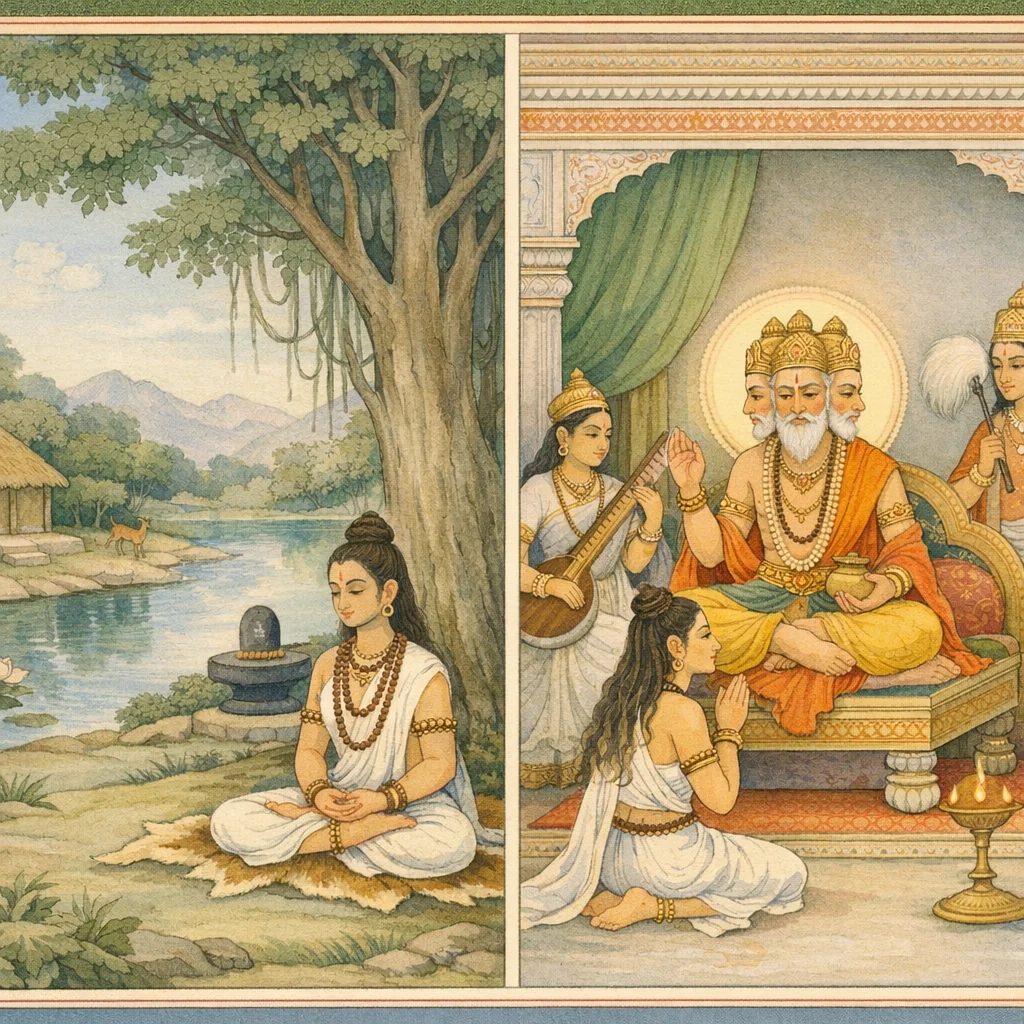
Chapter Arc: Narada recounts to the king a startling origin-tale: the very power that ends all lives—Mṛtyu—once stood as a trembling supplicant before Brahmā, crushed by the burden of her appointed work. → Mṛtyu, bowed like a bent creeper, confesses fear of adharma and grief at the thought of severing beloved bonds—sons, friends, brothers, parents, spouses. She undertakes ghora tapas across famed tīrthas (Puṣkara, Gokarṇa, Naimiṣa, Malaya), seeking a way to perform her cosmic duty without sin. Brahmā instructs her toward a dharmic mode of dissolution: abandon kāma and krodha, and let adharma itself become the slayer of the false-lived. → The decisive turning: Mṛtyu, after intense austerity and repeated prostrations, accepts Brahmā’s command as a head-borne vow—agreeing to become the instrument of cosmic order, not personal cruelty—so that beings fall by their own unrighteousness rather than by her malice. → Brahmā grants boons and assurances: divine supports (Lokapālas, Yama, and various vyādhis) will aid her; she will be freed from taint, become stainless (virajā), and gain renown for executing dissolution as dharma’s function. Mṛtyu, pacified, takes up her office under this moral architecture. → The narrative leaves a lingering question: when death comes, is it Mṛtyu’s hand—or one’s own kāma, krodha, and adharma—that truly strikes?
Shlokas
Verse 1
(दाक्षिणात्य अधिक पाठका ह “लोक मिलाकर कुल २३३६ “लोक हैं) भीस्न्आा+ज (2) आमने चतु:पञ्चाशत्तमो< ध्याय: मृत्युकी घोर तपस्या, ब्रह्माजीके द्वारा उसे वरकी प्राप्ति तथा नारद-अकम्पन-संवादका उपसंहार नारद उवाच विनीय दुःखमबला आत्मन्येव प्रजापतिम् । उवाच प्राज्जलिर्भूत्वा लतेवावर्जिता पुनः
Nārada said: Having set aside her sorrow, the helpless woman fixed her mind solely upon Prajāpati (Brahmā). Then, with hands joined in reverence, she spoke again—like a creeper bent down and then lifted back up.
Verse 2
नारदजी कहते हैं--राजन्! तदनन्तर वह अबला अपने भीतर ही उस दुःखको दबाकर झुकायी हुई लताके समान विनम्र हो हाथ जोड़कर ब्रह्माजीसे बोली ।। मृत्युरुवाच त्वया सृष्टा कथं नारी ईदृशी वदतां वर । क्रूरं कर्माहितं कुर्या तदेव किमु जानती,मृत्युने कहा--वक्ताओंमें श्रेष्ठ प्रजापते! आपने मुझे ऐसी नारीके रूपमें क्यों उत्पन्न किया? मैं जान-बूझकर वही क्रूरतापूर्ण अहितकर कर्म कैसे करूँ?
Narada said: “O King! After that, the helpless one, suppressing her sorrow within, became humble like a bowed creeper; with folded hands she addressed Brahmā.” Death said: “O best of speakers, O Prajāpati! Why did you create me in the form of such a woman? How could I knowingly perform that very cruel and harmful act?”
Verse 3
बिभेम्यहमधर्माद्धि प्रसीद भगवन् प्रभो । प्रियान् पुत्रान् वयस्यांश्व भ्रातृन् मातृ: पितृन् पतीन्
She said: “I am truly afraid of adharma. Be gracious, O Blessed Lord, O Master—for the sake of dear ones: sons, companions of the same age, brothers, mothers, fathers, and husbands.”
Verse 4
कृपणानां हि रुदतां ये पतन्त्यश्रुबिन्दव:
For the tears that fall—drop by drop—from the eyes of the wretched as they weep are not without consequence; they bear a moral weight, arising from helpless grief and the suffering inflicted by fate and human action.
Verse 5
यमस्य भवन देव गच्छेयं न सुरोत्तम,देव! सुरश्रेष्ठ लोकपितामह! मैं शरीर और मस्तकको झुकाकर, हाथ जोड़कर विनीतभावसे आपकी शरणागत होकर केवल इसी अभिलाषाकी पूर्ति चाहती हूँ कि मुझे यमराजके भवनमें न जाना पड़े
She said: “O divine one, best among the gods—O Lord, foremost of the celestials, grandsire of the worlds! Bowing my body and head, with folded hands, I take refuge in you with humility. I ask only this: that I may not have to go to the abode of Yama, the Lord of Death.”
Verse 6
कायेन विनयोपेता मूर्थ्नोदग्रनखेन च । एतदिच्छाम्यहं काम॑ त्वत्तो लोकपितामह,देव! सुरश्रेष्ठ लोकपितामह! मैं शरीर और मस्तकको झुकाकर, हाथ जोड़कर विनीतभावसे आपकी शरणागत होकर केवल इसी अभिलाषाकी पूर्ति चाहती हूँ कि मुझे यमराजके भवनमें न जाना पड़े
With my body humbled in reverence—head bowed and hands joined in supplication—I seek from you alone, O Lord, best of the gods, Grandfather of the worlds, the fulfillment of this single desire: that I may not have to go to Yama’s abode.
Verse 7
इच्छेयं त्वत्प्रसादाद्धि तपस्तप्तुं प्रजेश्वर । प्रदिशेमं वरं देव त्वं महां भगवन् प्रभो,प्रजेश्वर! मैं आपकी कृपासे तपस्या करना चाहती हूँ। देव! भगवन्! प्रभो! आप मुझे यही वर प्रदान करें
“O Lord of creatures, by your gracious favor I wish to undertake tapas, the discipline of austerity. O God—Blessed One, mighty Lord—grant me this very boon: the permission and power to perform tapas.”
Verse 8
त्वया हरक्ता गमिष्यामि धेनुकाश्रममुत्तमम् | तत्र तप्स्थे तपस्तीव्रं तवैवाराधने रता,आपकी आज्ञा लेकर मैं उत्तम धेनुकाश्रमको चली जाऊँगी और वहाँ आपकी ही आराधनामें तत्पर रहकर कठोर तपस्या करूँगी
“With your permission, I shall depart for the excellent Dhenukāśrama. There I will undertake severe austerities, remaining wholly devoted to worship of you alone—seeking inner discipline and fidelity rather than worldly gain.”
Verse 9
न हि शक्ष्यामि देवेश प्राणान् प्राणभृतां प्रियान् हर्तु विलपमानानामधमदिभिरक्ष माम्,देवेश्वर! मैं रोते-विलखते प्राणियोंके प्यारे प्राणोंका अपहरण नहीं कर सकूँगी, आप इस अधर्मसे मुझे बचावें
“O Lord of the gods, I cannot bring myself to take away the beloved life-breath of living beings who are crying and lamenting. Protect me from this unrighteous act.”
Verse 10
ब्रह्मोवाच मृत्यो संकल्पितासि त्वं प्रजासंहारहेतुना । गच्छ संहर सर्वस्त्विं प्रजा मा ते विचारणा,ब्रद्माजीने कहा--मृत्यो! प्रजाके संहारके लिये ही मेरे द्वारा संकल्पपूर्वक तेरी सृष्टि की गयी है। जा, तू सारी प्रजाका संहार कर। तेरे मनमें कोई अन्यथा विचार नहीं होना चाहिये
Brahmā said: “O Death (Mṛtyu), you have been deliberately brought into being for the purpose of ending creatures’ lives. Go—carry out the dissolution of all beings. Let no contrary hesitation arise in you.”
Verse 11
भविता त्वेतदेवं हि नैतज्जात्वन्यथा भवेत् | भव त्वनिन्दिता लोके कुरुष्व वचनं मम,यह बात इसी प्रकार होनेवाली है। इसमें कभी कोई परिवर्तन नहीं हो सकता। तू लोकमें निन्दित न हो, मेरी आज्ञाका पालन कर
“This will indeed happen exactly so; it can never turn out otherwise. Therefore, be one who is not blamed in the world—carry out my instruction.”
Verse 12
नारद उवाच एवमुक्ता भवत् प्रीता प्राउ्जलिर्भगवन्मुखी । संहारे नाकरोद् बुद्धि प्रजानां हितकाम्यया,नारदजी कहते हैं--राजन! भगवान् ब्रह्माजीके ऐसा कहनेपर उन्हींकी ओर मुँह करके हाथ जोड़े खड़ी हुई वह नारी मन-ही-मन बहुत प्रसन्न हुई; परंतु उसने प्रजाके हितकी कामनासे संहार-कार्यमें मन नहीं लगाया
Nārada said: Thus addressed, she—pleased at heart—stood with folded hands, her face turned toward the Blessed Lord (Brahmā). Yet, wishing for the welfare of living beings, she did not set her mind upon the work of destruction.
Verse 13
तृष्णीमासीत् तदा देव: प्रजानामीश्ररेश्वर: । प्रसाद चागमत् क्षिप्रमात्मनैव प्रजापति:,तब प्रजेश्वरोंके भी स्वामी भगवान् ब्रह्मा चुप हो गये। फिर वे भगवान् प्रजापति तुरंत अपने-आप ही प्रसन्नताको प्राप्त हुए
Then the divine Lord—sovereign even over the rulers of creatures—fell silent. Soon thereafter, Prajāpati (Brahmā) attained serenity and favor by his own inner composure.
Verse 14
स्मयमानश्न देवेशो लोकान् सर्वानवेक्ष्य च । लोकास्त्वासन् यथापूर्व दृष्टास्तेनापमन्युना,देवेश्वर ब्रह्मा सम्पूर्ण लोकोंकी ओर देखकर मुसकराये। उन्होंने क्रोधशून्य होकर देखा, इसलिये वे सभी लोक पहलेके समान हरे-भरे हो गये
Nārada said: Smiling, the Lord of the gods surveyed all the worlds. When Apamanyu beheld them with a mind free from anger, the worlds appeared as before—restored to their former, flourishing state.
Verse 15
निवृत्तरोषे तस्मिंस्तु भगवत्यपराजिते । सा कन्यापि जगामाथ समीपात् तस्य धीमतः,उन अपराजित भगवान् ब्रह्माका रोष निवृत्त हो जानेपर वह कन्या भी उन परम बुद्धिमान देवेश्वरके निकटसे अन्यत्र चली गयी
When the wrath of that invincible, blessed lord had subsided, the maiden too departed from the vicinity of that supremely wise divine ruler.
Verse 16
अपसत्याप्रतिश्रुत्य प्रजासंहरणं तदा । त्वरमाणा च राजेन्द्र मृत्युर्थेनुकमभ्यगात्,राजेन्द्र! उस समय प्रजाका संहार करनेके विषयमें कोई प्रतिज्ञा न करके मृत्यु वहाँसे हट गयी और बड़ी उतावलीके साथ धेनुकाश्रममें जा पहुँची
Nārada said: “At that time, without making any pledge to bring about the destruction of the people, Death withdrew from there; and, O best of kings, in great haste she went to the hermitage of Dhenu.”
Verse 17
सा तत्र परमं तीव्र चचार व्रतमुत्तमम् । सा तदा होकपादेन तस्थौ पद्मानि षोडश,उसने वहाँ अत्यन्त कठोर और उत्तम व्रतका पालन आरम्भ किया। उस समय वह दयावश प्रजावर्गका हित करनेकी इच्छासे अपनी इन्द्रियोंको प्रिय विषयोंसे हटाकर इक्कीस पद्म वर्षोतक एक पैरपर खड़ी रही
There she undertook a vow most severe and most excellent. Then, out of compassion and desiring the welfare of the people, she withdrew her senses from their beloved objects and stood unwavering on one foot, steadfast in austerity for a long span.
Verse 18
पज्च चाब्दानि कारुण्यात् प्रजानां तु हितैषिणी । इन्द्रियाणीन्द्रियार्थेभ्य: प्रियेभ्य: संनिवर्त्य सा,उसने वहाँ अत्यन्त कठोर और उत्तम व्रतका पालन आरम्भ किया। उस समय वह दयावश प्रजावर्गका हित करनेकी इच्छासे अपनी इन्द्रियोंको प्रिय विषयोंसे हटाकर इक्कीस पद्म वर्षोतक एक पैरपर खड़ी रही
Nārada said: Out of compassion, and wishing the welfare of the people, she restrained her senses from their beloved objects; for five years she maintained a severe and excellent vow—standing on one foot, steadfast in austerity for the good of all.
Verse 19
ततस्त्वेकेन पादेन पुनरन्यानि सप्त वै । तस्थौ पद्मानि षट् चैव सप्त चैकं च पार्थिव,नरेश्वर! तदनन्तर पुनः अन्य इक्कीस पद्म वर्षोतक वह एक पैरसे खड़ी होकर तपस्या करती रही
Nārada said: “Then, standing on a single foot, she continued her austerity for seven more periods. O king, lord of men, she remained steadfast through further measures as well—six lotuses, then seven, and then one—enduring each successive stage with unwavering resolve. Thereafter again, for another twenty-one lotus-years, she persisted in her penance, balanced on one foot.”
Verse 20
ततः पद्मायुतं तात मृगैः सह चचार सा | पुनर्गत्वा ततो नन््दां पुण्यां शीतामलोदकाम्
Then, dear one, she wandered together with the deer through a tract filled with lotuses. After that, she went again to the Nandā—a sacred river whose waters were cool and clear.
Verse 21
धारयित्वा तु नियमं नन्दायां वीतकल्मषा,इस प्रकार नन्दानदीमें नियमोंके पालनपूर्वक रहकर वह निष्पाप हो गयी। तदनन्तर व्रत-नियमोंसे सम्पन्न हो मृत्यु पहले पुण्यमयी कौशिकीनदीके तटपर गयी और वहाँ वायु तथा जलका आहार करती हुई पुन: कठोर नियमोंका पालन करने लगी
Nārada said: Having steadfastly observed her disciplines on the river Nandā, she became free from sin. Thereafter, fully equipped with vows and restraints, she went first to the auspicious bank of the Kauśikī River; and there, sustaining herself only on air and water, she again undertook severe austerities.
Verse 22
सा पूर्व कौशिकीं पुण्यां जगाम नियमैधिता । तत्र वायुजलाहारा चचार नियमं पुन:,इस प्रकार नन्दानदीमें नियमोंके पालनपूर्वक रहकर वह निष्पाप हो गयी। तदनन्तर व्रत-नियमोंसे सम्पन्न हो मृत्यु पहले पुण्यमयी कौशिकीनदीके तटपर गयी और वहाँ वायु तथा जलका आहार करती हुई पुन: कठोर नियमोंका पालन करने लगी
Long strengthened by disciplined observances, she went first to the sacred river Kauśikī. There, living only on air and water, she again undertook strict vows—continuing her austere self-restraint as a means of purification and moral steadiness.
Verse 23
पज्चगज्जासु सा पुण्या कन्या वेतसकेषु च । तपोविशेषैर्बहुभि: कर्षयद् देहमात्मन:,उस पवित्र कन्याने पंचगंगामें तथा वेतसवनमें बहुत-सी भिन्न-भिन्न तपस्याओंद्वारा अपने शरीरको अत्यन्त दुर्बल कर दिया
Nārada said: That virtuous maiden, dwelling at the sacred confluence called Pañcagaṅgā and also in the Vetasa-groves, undertook many distinct and rigorous austerities, thereby greatly emaciating her own body.
Verse 24
ततो गत्वा तु सा गड़ां महामेरुं च केवलम् । तस्थौ चाश्मेव निश्चेष्टा प्रणायामपरायणा,इसके बाद वह गंगाजीके तट और प्रमुख तीर्थ महामेरुके शिखरपर जाकर प्राणायाममें तत्पर हो प्रस्तर-मूर्तिकी भाँति निश्चेष्ट भावसे बैठी रही
Then she went to the river Gaṅgā and also to the lofty Mahāmeru alone. There, wholly intent on the discipline of breath-control, she remained motionless—like a stone—absorbed in austere self-restraint.
Verse 25
पु]नर्हिमवतो मूर्थ्नि यत्र देवा: पुरायजन् । तत्राड़ुगुछ्ेन सा तस्थौ निखर्व परमा शुभा,फिर हिमालयके शिखरपर जहाँ पहले देवताओंने यज्ञ किया था, वहाँ वह परम शुभलक्षणा कन्या एक निखर्व वर्षोतक अँगूठेके बलपर खड़ी रही
Nārada said: “Then again, upon the summit of Himavat—where in ancient times the gods had performed sacrifice—she, the supremely auspicious maiden, stood there for a full nikharva of years balanced upon the strength of her thumb.”
Verse 26
पुष्करेष्वथ गोकर्णे नैमिषे मलये तथा । अपाकर्षत् स्वकं देहं नियमैर्मानसप्रियै:,तदनन्तर पुष्कर, गोकर्ण, नैमिषारण्य तथा मलयाचलके तीर्थोमें रहकर मनको प्रिय लगनेवाले नियमोंद्वारा उसने अपने शरीरको अत्यन्त क्षीण कर दिया
Nārada said: Then, dwelling at the sacred places of Puṣkara, Gokarṇa, Naimiṣa, and likewise on the Malaya mountain, she drew down her own body—reducing it to extreme leanness—through disciplines and observances that were dear to her mind.
Verse 27
अनन्यदेवता नित्यं दृढभक्ता पितामहे | तस्थौ पितामहं चैव तोषयामास धर्मत:,दूसरे किसी देवतामें मन न लगाकर वह सदा पितामह ब्रह्मामें ही सुदृढ़ भक्तिभाव रखती थी। उस कन्याने अपने धर्माचरणसे पितामहको संतुष्ट कर लिया
Nārada said: With her mind never turning to any other deity, she remained ever steadfast in devotion to Pitāmaha Brahmā. Standing in attendance upon the Grandfather, she pleased him through righteous conduct—by the faithful practice of her dharma.
Verse 28
ततस्तामब्रवीत् प्रीतो लोकानां प्रभवो5व्यय: । सौम्येन मनसा राजन प्रीत: प्रीतमनास्तदा,राजन्! तब लोकोंकी उत्पत्तिके कारणभूत अविनाशी ब्रह्मा उस समय मन-ही-मन अत्यन्त प्रसन्न हो सौम्य हृदयसे प्रीतिपूर्वक उससे बोले--
Then the imperishable Lord of beings, the source from whom the worlds arise, spoke to her with delight. O King, at that time, with a gentle and benevolent mind—his heart inwardly satisfied—Brahmā addressed her affectionately.
Verse 29
मृत्यो किमिदमत्यन्तं तपांसि चरसीति ह । ततोअब्रवीत् पुनर्मुत्युर्भगवन्तं पितामहम्,“मृत्यो! तू किसलिये इस प्रकार अत्यन्त कठोर तपस्या कर रही है?” तब मृत्युने भगवान् पितामहसे फिर इस प्रकार कहा--
Nārada said: “O Death, why are you undertaking such exceedingly severe austerities?” Thereupon Death again addressed the venerable Grandfather (Brahmā), speaking further—
Verse 30
नाहं हन्यां प्रजा देव स्वस्थाशक्षाक्रोशतीस्तथा । एतदिच्छामि सर्वेश त्वत्तो वरमहं प्रभो,“देव! प्रभो! सर्वेश्वर! मैं आपसे यही वर पाना चाहती हूँ कि मुझे रोती-चिल्लाती हुई स्वस्थ प्रजाओंका वध न करना पड़े
Nārada said: “O Deva—O Lord, O Sovereign of all—I would not slay living beings, especially those who are unharmed and crying out in distress. This is the boon I seek from you: grant that I may not be compelled to kill such innocent, terrified subjects.”
Verse 31
अधर्मभयभीतास्मि ततो5हं तप आस्थिता | भीतायास्तु महाभाग प्रयच्छाभयमव्यय,“महाभाग! मैं अधर्मके भयसे बहुत डरती हूँ, इसीलिये तपस्यामें लगी हुई हूँ। अविनाशी परमेश्वर! मुझ भयभीत अबलाको अभय-दान दीजिये
“I am terrified of the fear of adharma; therefore I have taken refuge in austerity. O noble one, O imperishable Lord—grant fearlessness to me who am afraid.”
Verse 32
आर्ता चानागसी नारी याचामि भव मे गति: । तामब्रवीत् ततो देवो भूतभव्यभविष्यवित्,“नाथ! मैं एक निरपराध नारी हूँ और आपके सामने आर्तभावसे याचना करती हूँ, आप मेरे आश्रयदाता हों।” तब भूत, भविष्य और वर्तमानके ज्ञाता भगवान् ब्रह्माने उससे कहा --
The distressed, blameless woman pleaded, “I beg you—be my refuge, be my way to safety.” Then the divine Lord, knower of what has been, what is, and what will be, addressed her in reply.
Verse 33
अपध्यास्यन्ति मे देव मृतेष्वेभ्यो बिभेम्यहम् । भगवन्! मैं पापसे डरती हूँ। प्रभो! मुझपर प्रसन्न होइये। जब मैं लोगोंके प्यारे पुत्रों, मित्रों, भाइयों, माताओं, पिताओं तथा पतियोंको मारने लगूँगी, देव! उस समय उनके सम्बन्धी इन लोगोंके मेरे द्वारा मारे जानेपर सदा मेरा अनिष्ट-चिन्तन करेंगे। अतः मैं इन सबसे बहुत डरती हूँ,अधर्मो नास्ति ते मृत्यो संहरन्त्या इमा: प्रजा: । मया चोक्तं मृषा भद्रे भविता न कथंचन “मृत्यो! इन प्रजाओंका संहार करनेसे तुझे अधर्म नहीं होगा। भटद्रे! मेरी कही हुई बात किसी प्रकार झूठी नहीं हो सकती
Nārada said: “O Lord, I am afraid of these dead. When I begin to strike down people’s beloved sons, friends, brothers, mothers, fathers, and husbands, their relatives—seeing them slain by me—will constantly brood over my ruin and curse me in their hearts. Therefore I fear them greatly. But (you say), ‘O Death, there will be no unrighteousness for you in destroying these creatures; and, O gentle one, what I have spoken cannot in any way prove false.’”
Verse 34
तस्मात् संहर कल्याणि प्रजा: स्वश्चितुर्विधा: । धर्म: सनातनकश्ष त्वां सर्वथा पावयिष्यति,“इसलिये कल्याणि! तू चार श्रेणियोंमें विभाजित समस्त प्राणियोंका संहार कर। सनातनधर्म तुझे सब प्रकारसे पवित्र बनाये रखेगा
Therefore, O auspicious lady, proceed to the destruction of all beings—your own fourfold classes as well. The eternal Dharma will, in every way, keep you purified. (Nārada frames the act as sanctioned by an overarching, timeless moral order, presenting ‘dharma’ as the ethical warrant that removes the taint of violence.)
Verse 35
लोकपालो यमश्नैव सहाया व्याधयदश्ष ते | अहं च विबुधाश्रैव पुनर्दास्थाम ते वरम्
Nārada said: “Yama, the guardian of the world, and the diseases as well—these are your allies. And I, together with the gods, shall again grant you a boon.” In context, the statement frames suffering and mortality not as random misfortunes but as forces aligned with a larger moral order; it also reassures that divine support and recompense follow steadfastness and right conduct.
Verse 36
सैवमुक्ता महाराज कृताञ्जलिरिदं विभुम्
Thus addressed, O great king, she—joining her palms in reverence—spoke these words to the mighty one, framing her reply with humility and devotion.
Verse 37
यद्येवमेतत् कर्तव्यं मया न स्याद् विना प्रभो
Nārada said: “If this is indeed so, then, O lord, it would not be right for me to act in this matter without you.”
Verse 38
लोभ: क्रोधो<भ्यसूयेष्या द्रोहो मोहश्न देहिनाम्
Nārada said: “Greed, anger, spiteful envy, treachery, and delusion—these are the faults that commonly arise in embodied beings.”
Verse 39
अद्वीक्षान्योन्यपरुषा देहं भिन्द्यु: पृथग्विधा: । “लोभ, क्रोध, असूया, ईर्ष्या, द्रोह, मोह, निर्लज्जता और एक-दूसरेके प्रति कही हुई कठोर वाणी--ये विभिन्न दोष ही देहधारियोंकी देहका भेदन करें' || ३८ ई ।। ब्रह्मोवाच तथा भविष्यते मृत्यो साधु संहर भो: प्रजा: । अधर्मस्ते न भविता नापध्यास्याम्यहं शुभे,ब्रह्माजीने कहा--मृत्यो! ऐसा ही होगा। तू उत्तम रीतिसे प्राणियोंका संहार कर। शुभे! इससे तुझे पाप नहीं लगेगा और मैं भी तेरा अनिष्ट-चिन्तन नहीं करूँगा
Nārada said: “Without truly seeing one another, beings wound each other’s very bodies in many ways. Greed, anger, spite, envy, malice, delusion, shamelessness, and the harsh words spoken against one another—these varied faults themselves pierce and break the bodies of embodied creatures.”
Verse 40
यान्यश्रुबिन्दूनि करे ममासं- स्ते व्याधय: प्राणिनामात्मजाता: । ते मारयिष्यन्ति नरान् गतासून् नाधर्मस्ते भविता मा सम भैषी:,तेरे आँसुओंकी बूँदें, जिन्हें मैंने हाथमें ले लिया था, प्राणियोंके अपने ही शरीरोंसे उत्पन्न हुई व्याधियाँ बनकर गतायु प्राणियोंका नाश करेंगी। तुझे अधर्मकी प्राप्ति नहीं होगी; इसलिये तू भय न कर
Nārada said: “Those tear-drops of yours that I gathered in my hand will turn into diseases born from the creatures’ own bodies, and they will destroy men whose life has already departed. No demerit (adharma) will come to you for this; therefore, do not be afraid.”
Verse 41
नाधर्मस्ते भविता प्राणिनां वै त्वं वै धर्मस्त्वं हि धर्मस्य चेशा । धर्म्या भूत्वा धर्मनित्या धरित्री तस्मात् प्राणान् सर्वथेमान् नियच्छ,निश्चय ही, तुझे पाप नहीं लगेगा। तू प्राणियोंका धर्म और उस धर्मकी स्वामिनी होगी। अतः सदा धर्ममें तत्पर रहनेवाली और धर्मानुकूल जीवन बितानेवाली धरित्री होकर इन समस्त जीवोंके प्राणोंका नियन्त्रण कर
Nārada said: “No unrighteousness will accrue to you in regard to living beings. You yourself are Dharma, and indeed the sovereign of Dharma. Therefore, becoming righteous—Earth who is ever steadfast in Dharma—restrain and regulate, in every way, the lives of all these creatures.”
Verse 42
सर्वेषां वै प्राणिनां कामरोषौ संत्यज्य त्वं संहरस्वेह जीवान् । एवं धर्मस्त्वां भविष्यत्यनन्तो मिथ्यावृत्तान् मारयिष्यत्यधर्म:,काम और क्रोधका परित्याग करके इस जगत्के समस्त प्राणियोंके प्राणोंका संहार कर। ऐसा करनेसे तुझे अक्षय धर्मकी प्राप्ति होगी। मिथ्याचारी पुरुषोंको तो उनका अधर्म ही मार डालेगा
Nārada said: “Casting aside desire and anger, carry out here the taking of life among all beings as your appointed task. If you act thus, imperishable dharma will be yours; as for those who live by false conduct, their own adharma will itself bring about their destruction.”
Verse 43
तेनात्मानं पावयस्वात्मना त्वं पापे55त्मानं मज्जयिष्यन्त्यसत्यात् । तस्मात् काम॑ रोषमप्यागतं त्वं संत्यज्यान्त: संहरस्वेति जीवान्,तू धर्मांचरणद्वारा स्वयं ही अपने-आपको पवित्र कर। असत्यका आश्रय लेनेसे प्राणी स्वयं अपने-आपको पापपंकमें डुबो लेंगे। इसलिये अपने मनमें आये हुए काम और क्रोधका त्याग करके तू समस्त जीवोंका संहार कर
Nārada said: “Therefore purify yourself by your own disciplined conduct. By taking refuge in falsehood, beings will sink themselves into the mire of sin. Hence, casting away the desire and anger that have arisen in your mind, restrain yourself within—and do not become a destroyer of living beings.”
Verse 44
नारद उवाच सा वै भीता मृत्युसंज्ञोपदेशा- च्छापाद् भीता बाढमित्यब्रवीत् तम् साच प्राणं प्राणिनामन्तकाले कामक्रोधौ त्यज्य हरत्यसक्ता,नारदजी कहते हैं--राजन्! वह मृत्यु नामवाली नारी ब्रह्माजीके उस उपदेशसे और विशेषतः उनके शापके भयसे भीत होकर उनसे बोली--“बहुत अच्छा, आपकी आज्ञा स्वीकार है'। वही मृत्यु अन्तकाल आनेपर काम और क्रोधका परित्याग करके अनासक्तभावसे समस्त प्राणियोंके प्राणोंका अपहरण करती है
Narada said: Terrified by Brahmā’s instruction—and even more by his curse—the woman known as Death replied to him, “So be it; I accept your command.” And thus, when the final hour arrives, she casts aside desire and anger and, remaining unattached, takes away the life-breath of all living beings.
Verse 45
मृत्युस्त्वेषां व्याधयस्तत्प्रसूता व्याधी रोगो रुज्यते येन जन्तु: । सर्वेषां च प्राणिनां प्रायणान्ते तस्माच्छोकं मा कृथा निष्फलं त्वम्,यही प्राणियोंकी मृत्यु है, इसीसे व्याधियोंकी उत्पत्ति हुई है। व्याधि नाम है रोगका, जिससे प्राणी रुग्ण होता है (उसका स्वास्थ्य भंग होता है)। आयु समाप्त होनेपर सभी प्राणियोंकी मृत्यु इसी प्रकार होती है। अत: राजन! तुम व्यर्थ शोक न करो
Nārada said: “Death is the destiny of these beings, and from it arise the afflictions that follow. ‘Vyādhi’ is what is called disease—the condition by which a creature is made to suffer and its well-being is broken. When the span of life reaches its end, all living beings depart in this same way. Therefore, O king, do not indulge in grief that bears no fruit.”
Verse 46
तेभ्यो5हं भगवन् भीता शरणं त्वाहमागता । भगवन! रोते हुए दीन-दुःखी प्राणियोंके नेत्रोंसे जो आँसुओंकी बूँदें गिरती हैं, उनसे भयभीत होकर मैं आपकी शरणमें आयी हूँ,सर्वे देवा: प्राणिभि: प्रायणान्ते गत्वा वृत्ता: संनिवृत्तास्तथैव । एवं सर्वे प्राणिनस्तत्र गत्वा वृत्ता देवा मर्त्यवद् राजसिंह आयुके अन्तमें सारी इन्द्रियाँ प्राणियोंके साथ परलोकमें जाकर स्थित होती हैं और पुनः उनके साथ ही इस लोकमें लौट आती हैं। नृपश्रेष्ठ! इस प्रकार सभी प्राणी देवलोकमें जाकर वहाँ देवस्वरूपमें स्थित होते हैं तथा वे कर्मदेवता मनुष्योंकी भाँति भोगोंकी समाप्ति होनेपर पुनः: इस लोकमें लौट आते हैं
Nārada said: “O Blessed Lord, I have come to you for refuge, frightened of them. Seeing the tears that fall from the eyes of helpless, suffering creatures, I am seized by fear and therefore seek your protection. For at the end of life, the gods—together with the living beings—go forth and remain there, and then return again in the same way. Thus all beings go to that other realm and abide there in a divine condition; yet, like mortals, when the fruits of enjoyment are exhausted, they return once more to this world. O best of kings, the senses too accompany the beings to the beyond and, returning with them, re-enter this world. In this way the teaching is made clear: even heavenly states are not final when they are sustained by karma; compassion for suffering beings and refuge in the Supreme are the ethical response.”
Verse 47
वायुर्भीमो भीमनादो महौजा भेत्ता देहान् प्राणिनां सर्वगोडसौ । नो वा<<वृतिं नैव वृत्ति कदाचित् प्राप्रोत्युग्रोडनन्ततेजोविशिष्ट:,भयंकर शब्द करनेवाला महान् बलशाली भयानक प्राणवायु प्राणियोंके शरीरोंका ही भेदन करता है (चेतन आत्माका नहीं, क्योंकि) वह सर्वव्यापी, उग्र प्रभावशाली और अनन्त तेजसे सम्पन्न है। उसका कभी आवागमन नहीं होता
Nārada said: “The life-wind is formidable—its roar is dreadful, its power immense. It is the breaker of embodied beings’ bodies; it does not strike the inner Self. For it moves everywhere, fierce in potency and distinguished by inexhaustible radiance. It never truly ‘comes’ or ‘goes’—it is not confined to a single course or locality.”
Verse 48
सर्वे देवा मर्त्यसंज्ञाविशिष्टा- स्तस्मात् पुत्र मा शुचो राजसिंह । स्वर्ग प्राप्तो मोदते ते तनूजो नित्यं रम्यान् वीरलोकानवाप्य,राजसिंह! सम्पूर्ण देवता भी मर्त्य (मरणधर्मा) नामसे विभूषित हैं, इसलिये तुम अपने पुत्रके लिये शोक न करो। तुम्हारा पुत्र स्वर्गलोकमें जा पहुँचा है और नित्य रमणीय वीर- लोकोंमें रहकर आनन्दका अनुभव करता है
Nārada said: “All the gods too bear the designation ‘mortal’ (in the sense of being subject to the conditions of embodied existence); therefore, my son, do not grieve, O lion among kings. Your son has reached heaven, and having attained the ever-delightful worlds of heroes, he rejoices there continually.”
Verse 49
त्यक्त्वा दुःखं संगत: पुण्यकृद्धि- रेषा मृत्युर्देवदिष्टा प्रजानाम् । प्राप्त काले संहरन्ती यथावत् स्वयं कृता प्राणहरा प्रजानाम्,वह दुःखका परित्याग करके पुण्यात्मा पुरुषोंसे जा मिला है। प्राणियोंके लिये यह मृत्यु भगवानकी ही दी हुई है; जो समय आनेपर यथोचितरूपसे (प्रजाजनोंका) संहार करती है। प्रजावर्गके प्राण लेनेवाली इस मृत्युको स्वयं ब्रह्माजीने ही रचा है
“Casting off sorrow, he has gone to join the righteous who have earned merit. For living beings, this Death is indeed ordained by the gods; when the appointed time arrives, she takes away creatures in due and fitting measure. This Death—who seizes the life-breath of beings—was fashioned by Brahmā himself.”
Verse 50
आत्मानं वै प्राणिनो घ्नन्ति सर्वे नैतान् मृत्युर्दण्डपाणिह्िनस्ति । तस्मान्मृतान् नानुशोचन्ति धीरा मृत्यु ज्ञात्वा निश्चयं ब्रह्मसृष्टम् । इत्थं सृष्टिं देवक्लृप्तां विदित्वा पुत्रान्नष्टाच्छठोकमाशु त्यजस्व,सब प्राणी स्वयं ही अपने-आपको मारते हैं। मृत्यु हाथमें डंडा लेकर इनका वध नहीं करती है। अत: धीर पुरुष मृत्युको ब्रह्माजीका रचा हुआ निश्चित विधान समझकर मरे हुए प्राणियोंके लिये कभी शोक नहीं करते हैं। इस प्रकार ब्रह्माजीकी बनायी हुई सारी सृष्टिको ही मृत्युके वशीभूत जानकर तुम अपने पुत्रके मर जानेसे प्राप्त होनेवाले शोकका शीघ्र परित्याग कर दो
Nārada said: All living beings, in truth, bring about their own destruction; Death does not strike them down as a staff-bearing executioner. Therefore the steadfast do not lament for those who have died, understanding death to be a fixed ordinance established by Brahmā. Knowing thus that the whole created order—arranged by divine decree—lies under the dominion of death, cast off at once the grief that has arisen from the loss of your son.
Verse 51
दैपायन उवाच एतच्छुत्वार्थवद् वाक्यं नारदेन प्रकाशितम् । उवाचाकम्पनो राजा सखायं नारदं तथा,व्यासजी कहते हैं--युधिष्ठटिर! नारदजीकी कही हुई यह अर्थभरी बात सुनकर राजा अकम्पन अपने मित्र नारदसे इस प्रकार बोले--
Daipāyana (Vyāsa) said: Having heard these meaningful words, made clear by Nārada, King Akampana then addressed his friend Nārada in this manner.
Verse 52
व्यपेतशोक: प्रीतो5स्मि भगवन्नृषिसत्तम । श्र॒त्वेतिहासं त्वत्तस्तु कृतार्थो5स्म्यभिवादये,“भगवन्! मुनिश्रेष्ठी आपके मुँहसे यह इतिहास सुनकर मेरा शोक दूर हो गया। मैं प्रसन्न और कृतार्थ हो गया हूँ और आपके चरणोंमें प्रणाम करता हूँ
Vyāsa said: “O Blessed one, best among sages! Having heard this sacred history from your own lips, my grief has fallen away. I am filled with joy and feel my purpose fulfilled; I bow to you in reverence.”
Verse 53
इस प्रकार श्रीमह्ाभारत द्रोणपर्वके अन्तर्गत अभिमन्युवधपर्वमें मृत्युवर्णणविषयक तिरपनवाँ अध्याय पूरा हुआ,तथोक्तो नारदस्तेन राज्ञा ऋषिवरोत्तम: | जगाम नन्दनं शीघ्र देवर्षिरमितात्मवान् राजा अकम्पनके इस प्रकार कहनेपर ऋषियोंमें श्रेष्ठठटम अमितात्मा देवर्षि नारद शीघ्र ही नन्न्दन वनको चले गये
Thus addressed by the king, the divine seer Nārada—foremost among sages and of immeasurable spirit—departed at once for Nandana, the celestial grove. The scene closes with the completion of the chapter’s account of death, underscoring the ethical gravity of war: even amid royal power and battlefield fate, the sage’s role is to speak truth and then withdraw, leaving the ruler to act with responsibility under dharma.
Verse 54
पुण्यं यशस्यं स्वर्ग्य च धन्यमायुष्यमेव च । अस्येतिहासस्य सदा श्रवर्ण श्रावणं तथा,जो इस इतिहासको सदा सुनता और सुनाता है, उसके लिये यह पुण्य, यश, स्वर्ग, धन तथा आयु प्रदान करनेवाला है अतः पाण्डुनन्दन! तुम भाइयोंसहित उत्तम धैर्य धारण करके प्रमाद छोड़कर भलीभाँति कवच आदिसे सुसज्जित हो पुनः शीघ्र ही युद्धके लिये तैयार हो जाओ ।। इति श्रीमहाभारते द्रणेपर्वणि अभिमन्युवधपर्वणि मृत्युप्रजापतिसंवादे चतुः:पञ्चाशत्तमो5ध्याय:
Vyāsa said: Ever listening to this sacred history and reciting it to others bestows merit and good repute; it leads toward heaven, brings prosperity, and supports long life. Therefore, O son of Pāṇḍu, together with your brothers, take up steadfast courage, abandon negligence, arm yourselves well with armor and the like, and quickly make ready again for battle.
Verse 55
एतदर्थपदं श्रुत्वा तदा राजा युधिष्छिर । क्षत्रधर्म च विज्ञाय शूराणां च परां गतिम्,सम्प्राप्तोडसौ महावीर्य: स्वर्गलोकं॑ महारथ: । युधिष्ठि! उस समय महारथी महापराक्रमी राजा अकम्पन इस उत्तम अर्थको प्रकाशित करनेवाले वृत्तान्तको सुनकर तथा क्षत्रियधर्म एवं शूरवीरोंकी परम गतिके विषयमें जानकर यथासमय स्वर्गलोकको प्राप्त हुए
Hearing this meaningful account, O King Yudhiṣṭhira, and understanding both the duty of the warrior order and the highest destiny of the heroic, that great chariot-warrior of mighty valor attained the world of heaven at the appointed time. The passage frames his end not as mere death in battle, but as a dharmic culmination—where knowledge of kṣatriya-duty and the ideal of heroic passage grants a sanctioned, elevated departure.
Verse 56
अभिमन्यु: परान् हत्वा प्रमुखे सर्वधन्विनाम्,महाधनुर्धर अभिमन्यु पूर्वजन्ममें चन्द्रमाका पुत्र था, वह महारथी वीर समरांगणमें समस्त धनुर्थरोंके सामने शत्रुओंका वध करके खड्ग, शक्ति, गदा और धनुषद्वारा सम्मुख युद्ध करता हुआ मारा गया है तथा दुःखरहित हो पुनः चन्द्रलोकमें ही चला गया है
Vyāsa said: Abhimanyu, that great archer, after slaying foes in the very forefront of all bowmen, was in truth the son of the Moon in a former birth. That heroic mahāratha, fighting face to face on the battlefield before the eyes of all archers—using sword, spear, mace, and bow—was slain; freed from suffering, he returned again to the Moon-world. The passage frames his death not as mere defeat but as the consummation of a warrior’s duty and a return to his celestial origin.
Verse 57
युध्यमानो महेष्वासो हत: सो$भिमुखो रणे । असिना गदया शक्त्या धनुषा च महारथ: । विरजा: सोमसूनु: स पुनस्तत्र प्रलीयते,महाधनुर्धर अभिमन्यु पूर्वजन्ममें चन्द्रमाका पुत्र था, वह महारथी वीर समरांगणमें समस्त धनुर्थरोंके सामने शत्रुओंका वध करके खड्ग, शक्ति, गदा और धनुषद्वारा सम्मुख युद्ध करता हुआ मारा गया है तथा दुःखरहित हो पुनः चन्द्रलोकमें ही चला गया है
Vyāsa said: Abhimanyu, that great archer and mighty chariot-warrior, was slain in battle while fighting face to face. Having struck down foes before the eyes of all bowmen, he fell amid weapons—by sword, mace, spear, and bow. Free from sorrow, that radiant son of Soma (the Moon) dissolved back into his own lunar realm, returning to the sphere from which he had come.
Verse 58
तस्मात् परां धृतिं कृत्वा भ्रातृभि: सह पाण्डव | अप्रमत्त: सुसंनद्धः शीघ्र योद्धुमुपाक्रम
Therefore, O Pāṇḍava, having mustered the highest resolve together with your brothers, remain vigilant and fully armed, and swiftly set about the fight.
Verse 206
अप्सु वर्षसहस्राणि सप्त चैक॑ च सानयत् । तात! इसके बाद दस हजार पद्म वर्षोतक वह मृगोंके साथ विचरती रही, फिर शीतल एवं निर्मल जलवाली पुण्यमयी नन्दानदीमें जाकर उसके जलमें उसने आठ हजार वर्ष व्यतीत किये
Nārada said: “She spent seven thousand and one years in the waters. Then, my child, she wandered for a further period measured in tens of thousands of padma-years in the company of deer. After that, she went to the sacred Nandā River, whose waters are cool and pure, and there she passed eight thousand years within its stream.”
Verse 353
यथा त्वमेनसा मुक्ता विरजा: ख्यातिमेष्यसि । “लोकपाल, यम तथा नाना प्रकारकी व्याधियाँ तेरी सहायता करेंगी। मैं और सम्पूर्ण देवता तुझे पुनः वरदान देंगे, जिससे तू पापमुक्त हो अपने निर्मल स्वरूपसे विख्यात होगी”
Nārada said: “Just as you will be freed from sin, you will become stainless and attain renown again in your purified state.”
Verse 373
तवाज्ञा मूर्थ्नि मे न््यस्ता यत् ते वक्ष्यामि तच्छुणु । 'प्रभो! यदि इस प्रकार यह कार्य मेरे बिना नहीं हो सकता तो आपकी आज्ञा मैंने शिरोधार्य कर ली है, परंतु इसके विषयमें मैं आपसे जो कुछ कहती हूँ, उसे (ध्यान देकर) सुनिये
“Lord! Your command I have taken upon my head. If this task truly cannot be accomplished without me, then listen with care to what I am about to say.”
Verse 3636
पुनरेवाब्रवीद् वाक््यं प्रसाद्य शिरसा तदा । महाराज! उनके ऐसा कहनेपर मृत्यु हाथ जोड़ मस्तक झुकाकर भगवान् ब्रह्माको प्रसन्न करके उस समय पुनः यह वचन बोली--
Then, bowing his head in submission and seeking favor, he spoke again. O King, when those words were spoken, Death—joining his hands and lowering his head—propitiated the blessed Brahmā and, at that time, once more addressed him with these words.
Frequently Asked Questions
The dilemma is how to reconcile acute personal grief with the demands of kṣatra-dharma: the text models a transition from mourning to duty through consolation rhetoric while maintaining a retaliatory vow that risks further escalation.
The chapter offers a dharmic pedagogy of grief: death is contextualized as inevitable (kāla-niyati) and, for a warrior, potentially honorable when aligned with duty; simultaneously, resolve is framed as ethically meaningful when disciplined by stated commitments rather than impulsive despair.
No explicit phalaśruti is stated here; the meta-function is narrative and ethical—using omens and counsel to mark a threshold moment where vow, duty, and interpretive signs converge to propel the next day’s action.