Adhyaya 174
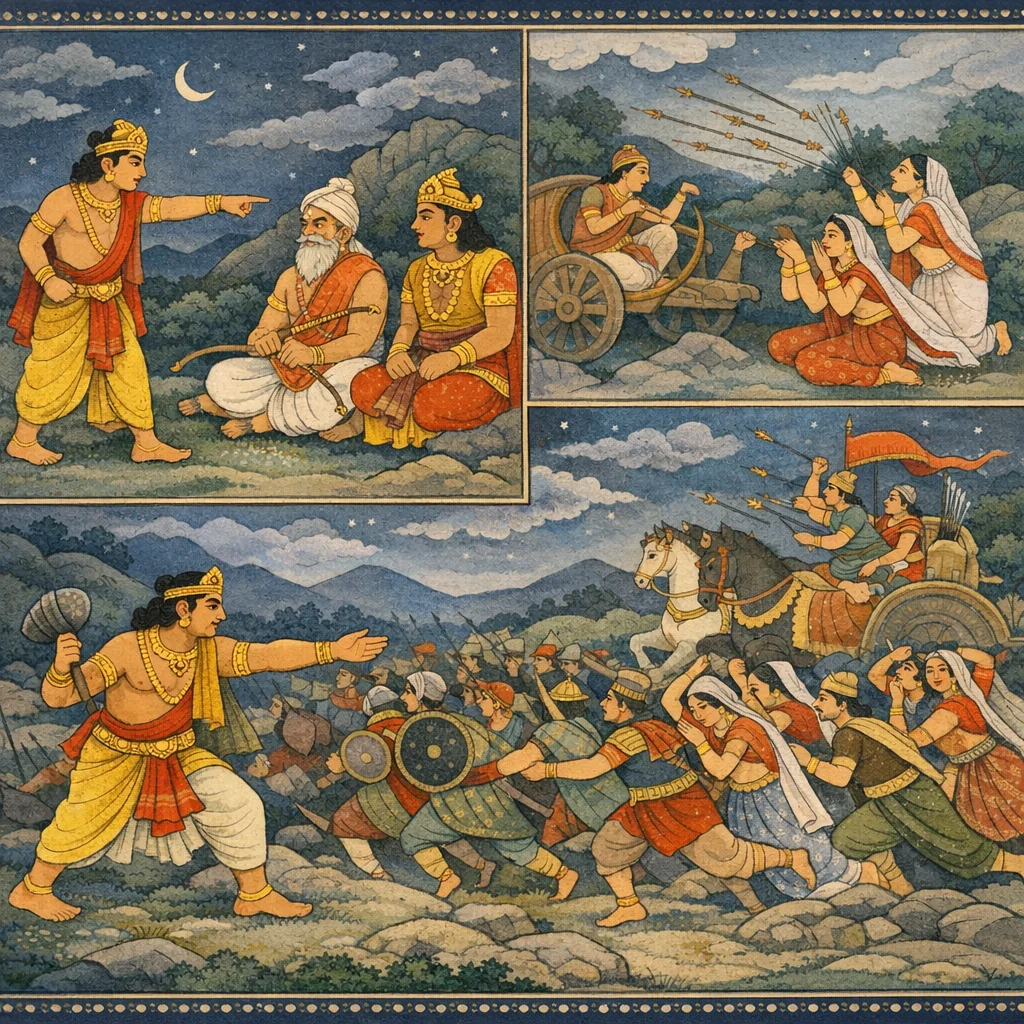
Chapter Arc: जयद्रथ-वध से क्षुब्ध दुर्योधन, वाक्य-चातुर्य और उपालम्भ का शस्त्र लेकर, विजयी वीरों में श्रेष्ठ कर्ण और आचार्य द्रोण के पास सहसा पहुँचता है—और युद्ध की दिशा को शब्दों से मोड़ने का प्रयत्न करता है। → दुर्योधन कहता है कि सव्यसाची अर्जुन ने सैन्धव को रण में मार गिराया, और उसी बीच पाण्डव-सेना उसकी विशाल वाहिनी को रौंद रही है; वह आरोप करता है कि द्रोण और कर्ण जैसे बलवान, कृतास्त्र, जयश्री-सम्पन्न योद्धा ‘उपेक्षित’ बैठे हैं, मानो शक्ति होते हुए भी अशक्त हों। यह कटु वाणी दोनों को अमर्ष से भर देती है और वे क्रुद्ध होकर संग्राम को और उग्र कर देते हैं। → द्रोण के प्रचण्ड प्रहार से पाञ्चालों में हाहाकार उठता है—पहले रणभूमि क्षणभर को निःशब्द-सी लगती है, फिर क्रुद्ध योद्धाओं के टकराव से सहसा महान् कोलाहल फूट पड़ता है; पाञ्चालों की चीख-पुकार और आर्तनाद (द्रोण की मार से) रात के युद्ध को संकुल, अराजक और रक्तरंजित शिखर पर पहुँचा देता है। → पाण्डव-पक्ष की पंक्तियाँ डगमगाती हैं; सेना का पलायन-सा होने लगता है, पर भीमसेन रण-धर्म का स्मरण कराकर और अपने पराक्रम से सैनिकों को लौटाता/स्थिर करता है, जिससे पूर्ण भगदड़ रुकती है और मोर्चा फिर से जमने लगता है। → रात्रि-युद्ध की घनी अराजकता में, द्रोण-कर्ण की क्रुद्ध गति और भीम की प्रतिरोध-धुरी के बीच अगला क्षण किसके पक्ष में टूटेगा—यह अनिश्चितता अध्याय के अंत में युद्ध को अधर में छोड़ देती है।
Shlokas
Verse 1
अपन का बछ। ] अतकहऑफा<ज द्विसप्तत्याधेकशततमो< ध्याय: दुर्योधनके उपालम्भसे द्रोणाचार्य और कर्णका घोर युद्ध, पाण्डव-सेनाका पलायन, भीमसेनका सेनाको लौटाकर लाना और अर्जुनसहित भीमसेनका कौरवोंपर आक्रमण करना संजय उवाच विद्रुतं स्वबलं दृष्टवा वध्यमानं महात्मभि: । क्रोधेन महता5<विष्ट: पुत्रस्तव विशाम्पते,संजय कहते हैं--प्रजानाथ! अपनी सेनाको उन महामनस्वी वीरोंकी मार खाकर भागती देख आपके पुत्र दुर्योधनको महान् क्रोध हुआ
Sañjaya said: O lord of the people, seeing his own forces routed and being cut down by great-souled warriors, your son (Duryodhana) was seized by intense wrath.
Verse 2
अभ्येत्य सहसा कर्ण द्रोणं च जयतां वरम् । अमर्षवशमापतन्नो वाक्यज्ञो वाक्यमब्रवीत्,बातचीतकी कला जाननेवाले दुर्योधनने सहसा विजयी वीरोंमें श्रेष्ठ कर्ण और द्रोणाचार्यके पास जाकर अमर्षके वशीभूत हो इस प्रकार कहा--
Sañjaya said: Duryodhana, skilled in speech, suddenly went up to Karṇa and to Droṇa—the foremost among victorious warriors. Overpowered by indignation, he addressed them with words born of wounded pride, seeking to spur his commanders amid the moral strain of war.
Verse 3
भवदभ्यामिह संग्राम: क्रुद्धा भ्यां सम्प्रवर्तितः । आहवे निहतं दृष्टवा सैन्धवं सव्यसाचिना,“सव्यसाची अर्जुनके द्वारा युद्धस्थलमें सिंधुराज जयद्रथको मारा गया देख क्रोधमें भरे हुए आप दोनों वीरोंने यहाँ रातके समय इस युद्धको जारी रखा था
Sañjaya said: “Here, this battle was set in motion by you two in anger. For, seeing Jayadratha of Sindhu slain in the fight by Arjuna, the ambidextrous archer, you both—enraged—continued the combat even into the night.”
Verse 4
निहन्यमानां पाण्डूनां बलेन मम वाहिनीम् | भूत्वा तद्विजये शक्तावशक्ताविव पश्यत:,“परंतु इस समय पाण्डव-सेनाद्वारा मेरी विशाल वाहिनीका विनाश हो रहा है और आपलोग उसे जीतनेमें समर्थ होकर भी असमर्थकी भाँति देख रहे हैं
Sañjaya said: “Even as my vast host is being cut down by the might of the Pāṇḍavas, you look on as though powerless—though you are in fact capable of securing victory. In this moment, your inaction makes strength appear like weakness, while our army is being destroyed before your eyes.”
Verse 5
यद्य॒हं भवतोस्त्याज्यो न वाच्यो5स्मि तदैव हि । आवां पाण्डुसुतान् संख्ये जेष्याव इति मानदौ,“दूसरोंको मान देनेवाले वीरो! यदि आपलोग मुझे त्याग देना ही उचित समझते थे तो आपको उसी समय मुझसे यह नहीं कहना चाहिये था कि “हमलोग पाण्डवोंको युद्धमें जीत लेंगे!
Sañjaya said: “If you two truly deemed it right to cast me off, then at that very time you should not have spoken to me at all, saying, ‘We shall defeat the sons of Pāṇḍu in battle.’ O you who honor others, such words bind one to responsibility; to reject a person after taking his counsel is ethically blameworthy.”
Verse 6
तदैवाहं वच: श्रुत्वा भवद्धयामनुसम्मतम् | नाकरिष्यमिदं पार्थवैरं योधविनाशनम्,“उसी समय आपलोगोंकी सम्मति सुनकर मैं कुन्तीपुत्रोंके साथ यह वैर नहीं करता, जो सम्पूर्ण योद्धाओंके लिये विनाशकारी हो रहा है
Sañjaya said: “At that very moment, having heard the counsel approved by you, I resolved that I would not pursue this enmity with the sons of Pṛthā—an enmity that is proving ruinous to all the warriors.”
Verse 7
यदि नाहं परित्याज्यो भवद्धयां पुरुषर्षभौ | युध्यतामनुरूपेण विक्रमेण सुविक्रमौ,“अत्यन्त पराक्रमी पुरुषप्रवर वीरो! यदि आप मुझे त्याग देना न चाहते हों तो अपने अनुरूप पराक्रम प्रकट करते हुए युद्ध कीजिये'
Sañjaya said: “O best of men, O heroes of surpassing valor! If you do not wish to abandon me, then fight—displaying prowess befitting you, with your own fitting and splendid courage.”
Verse 8
वाक्प्रतोदेन तौ वीरौ प्रणुन्नौ तनयेन ते । प्रावर्तयेतां संग्रामं घट्टिताविव पन्नगौ,इस प्रकार जब आपके पुत्रने अपने वचनोंकी चाबुकसे उन दोनों वीरोंको पीड़ित किया, तब उन्होंने कुचले हुए सर्पोंकी भाँति कुपित हो पुनः घोर युद्ध आरम्भ किया
Sañjaya said: Urged on by the goad of words—stung by your son’s taunts—those two heroes, like serpents that have been trampled, flared up in wrath and set the dreadful battle in motion once again.
Verse 9
ततस्तौ रथिनां श्रेष्ठी सर्वलोक धनुर्धरी । शैनेयप्रमुखान् पार्थानभिदुद्रुवतू रणे,सम्पूर्ण लोकमें विख्यात धनुर्धर, रथियोंमें श्रेष्ठ उन द्रोणाचार्य और कर्णने रणभूमिमें पुनः सात्यकि आदि पाण्डव महारथियोंपर धावा किया
Sañjaya said: Then those two—foremost among chariot-warriors and famed throughout the world as master archers, Droṇācārya and Karṇa—once again charged into the battle, rushing straight at the Pāṇḍava great chariot-fighters led by Śaineya (Sātyaki).
Verse 10
तथैव सहिता: पार्था: सर्वसैन्येन संवृता: । अभ्यवर्तन्त तौ वीरौ नर्दमानौ मुहुर्मुहु:,इसी प्रकार सम्पूर्ण सेनाओंके साथ संगठित होकर आये हुए कुन्तीके पुत्र भी बारंबार गर्जनेवाले उन दोनों वीरोंका सामना करने लगे
Sañjaya said: In the same manner, the sons of Pṛthā (the Pāṇḍavas), drawn up in close formation and screened by their entire host, advanced to meet those two heroes, who again and again roared aloud.
Verse 11
अथ द्रोणो महेष्वासो दशभि: शिनिपुड्भवम् | अविध्यत् त्वरितं क्रुद्ध: सर्वशस्त्रभूृतां वर:,तदनन्तर सम्पूर्ण शस्त्रधारियोंमें श्रेष्ठ महाधनुर्थर द्रोणाचार्यने कुपित होकर तुरंत ही दस बाणोंसे शिनिप्रवर सात्यकिको बींध डाला
Sañjaya said: Then Droṇa, the great archer—foremost among all wielders of weapons—angered and acting with swift resolve, pierced Sātyaki, the descendant of Śini, with ten arrows.
Verse 12
कर्णश्न॒ दशभिर्बाणै: पुत्रश्न तव सप्तभि: । दशभिर्वषसेनश्व॒ सौबलश्लापि सप्तभि:
Sañjaya said: Karṇa was struck with ten arrows, and your son with seven. Vṛṣasena too was pierced with ten, and the Saubala with seven. Thus the battle’s fury is measured in counted shafts: in war, prowess and fate alike are tallied through wounds rather than words.
Verse 13
दृष्टवा च समरे द्रोणं निघ्नन्तं पाण्डवीं चमूम्
Sañjaya said: Seeing Droṇa on the battlefield, striking down the Pāṇḍava host, the scene reveals the grim momentum of war—where mastery in arms can overwhelm multitudes, and where the ethical weight of violence intensifies as a revered teacher becomes an instrument of large-scale destruction.
Verse 14
विव्यधु: सोमकास्तूर्ण समन्ताच्छरवृष्टिभि: । समरांगणमें द्रोणाचार्यको पाण्डव-सेनाका संहार करते देख सोमकोंने चारों ओरसे बाणोंकी वर्षा करके उन्हें तुरंत घायल कर दिया ।। १३ ह ।। तत्र द्रोणो5हरत् प्राणान् क्षत्रियाणां विशाम्पते
Sañjaya said: The Somakas quickly struck from all sides with showers of arrows. There, Droṇa was taking the lives of the kṣatriyas, O lord of the people—an image of war’s grim momentum, where prowess and duty on the battlefield turn into relentless slaughter.
Verse 15
द्रोणेन वध्यमानानां पञ्चालानां विशाम्पते
Sañjaya said: “O lord of the people, as the Pāñcālas were being cut down by Droṇa…”
Verse 16
पुत्रानन्ये पितृनन्ये भ्रातृनन्ये च मातुलान्,कोई पुत्रोंकी, कोई पिताओंको, कोई भाइयोंको, कोई मामा, भानजों, मित्रों, सम्बन्धियों तथा बन्धु-बान्धवोंको छोड़-छोड़कर अपनी जान बचानेके लिये तुरंत ही भाग चले
Sañjaya said: In that panic, some abandoned their sons, others their fathers; some left their brothers and even their maternal uncles behind. Casting off nephews, friends, kinsmen, and all their close relations, they fled at once—driven by the single urge to save their own lives. The scene lays bare how fear in war can shatter familial duty and social bonds, reducing men to self-preservation.
Verse 17
भागिनेयान् वयस्यांश्व॒ तथा सम्बन्धिबान्धवान् | उत्सृज्योत्सृज्य गच्छन्ति त्वरिता जीवितेप्सव:,कोई पुत्रोंकी, कोई पिताओंको, कोई भाइयोंको, कोई मामा, भानजों, मित्रों, सम्बन्धियों तथा बन्धु-बान्धवोंको छोड़-छोड़कर अपनी जान बचानेके लिये तुरंत ही भाग चले
Sañjaya said: Again and again, casting off their nephews, companions, and even their kinsmen and relatives, they fled in haste, driven by the desire to preserve their own lives. In the terror of battle, bonds of affection and duty are abandoned as self-preservation overwhelms restraint and loyalty.
Verse 18
अपरे मोहिता मोहात् तमेवाभिमुखा ययु: । पाण्डवानां रणे योधा: परलोकं गता: परे,कुछ पाण्डव-सैनिक रणभूमिमें मोहित होकर मोहवश पुनः द्रोणाचार्यके ही सामने चले गये और मारे गये। बहुत-से सैनिक परलोक सिधार गये
Sañjaya said: Others, deluded by confusion, turned again to face Droṇācārya himself. In the battle, many warriors of the Pāṇḍavas, rushing forward in that bewilderment, were slain and departed to the next world—showing how, in war, loss of clarity and judgment swiftly becomes the cause of ruin.
Verse 19
सा तथा पाण्डवी सेना पीड्यमाना महात्मना । निशि सम्प्राद्रवद् राजन्नुत्सूज्योल्का: सहस्रश:,महामना द्रोणाचार्यसे इस प्रकार पीड़ित हुई वह पाण्डव-सेना उस रातके समय सहसरों मशालें फेंक-फेंककर भीमसेन, अर्जुन, श्रीकृष्ण, नकुल, सहदेव, धर्मपुत्र युधिष्ठिर और धृष्टद्युम्नके सामने ही उनके देखते-देखते भाग रही थी
Sañjaya said: Thus hard-pressed by that great-souled warrior, the Pāṇḍava host, O King, fled in the night—casting away thousands of blazing torches as it ran. Even before the very eyes of Bhīmasena, Arjuna, Śrī Kṛṣṇa, Nakula, Sahadeva, Dharmarāja Yudhiṣṭhira, and Dhṛṣṭadyumna, the army broke and scattered, revealing how fear and confusion can overtake even a righteous cause when confronted by overwhelming force.
Verse 20
पश्यतो भीमसेनस्य विजयस्याच्युतस्य च । यमयोर्धर्मपुत्रस्य पार्षतस्य च पश्यत:,महामना द्रोणाचार्यसे इस प्रकार पीड़ित हुई वह पाण्डव-सेना उस रातके समय सहसरों मशालें फेंक-फेंककर भीमसेन, अर्जुन, श्रीकृष्ण, नकुल, सहदेव, धर्मपुत्र युधिष्ठिर और धृष्टद्युम्नके सामने ही उनके देखते-देखते भाग रही थी
Sañjaya said: Even as Bhīmasena looked on, and as Arjuna (the ever-victorious), Kṛṣṇa (Acyuta), the twin brothers Nakula and Sahadeva, Dharmaputra Yudhiṣṭhira, and Dhṛṣṭadyumna (son of Pṛṣata) watched, the Pāṇḍava army—harried and tormented by the great-souled Droṇācārya—fled through the night, casting thousands of torches as it ran. The scene underscores how, in war, even a righteous host can be driven into disorder by superior strategy and force, while its leaders remain witnesses to the suffering of their own ranks.
Verse 21
तमसा संवृते लोके न प्राज्ञायत किंचन । कौरवाणां प्रकाशेन दृश्यन्ते विद्रुता: परे,उस समय पाण्डवदल अन्धकारसे आच्छन्न हो गया था। किसीको कुछ जान नहीं पड़ता था। कौरवदलमें जो प्रकाश हो रहा था, उसीसे कुछ भागते हुए सैनिक दिखायी देते थे
Sañjaya said: When the world was enveloped in darkness, nothing could be clearly discerned. Only by the light shining in the Kaurava host could some of the others be seen—men fleeing in confusion. The scene underscores how, in war, fear and disorientation can eclipse judgment, and how even a small advantage (here, visibility) can decide movement, morale, and survival.
Verse 22
द्रवमाणं तु तत् सैन्यं द्रोणकर्णो महारथौ । जघ्नतु: पृष्ठतो राजन् किरन्तौ सायकान् बहून्,राजन! महारथी द्रोणाचार्य और कर्ण बहुत-से बाणोंकी वर्षा करते हुए उस भागती हुई पाण्डव-सेनाको पीछेसे मार रहे थे
Sañjaya said: O King, as that army fled in disarray, the two great chariot-warriors—Droṇa and Karṇa—struck it from the rear, showering it with countless arrows.
Verse 23
पज्चालेषु प्रभग्नेषु क्षीयमाणेषु सर्वतः । जनार्दनो दीनमना: प्रत्यभाषत फाल्गुनम्,जब पांचाल योद्धा सब ओरसे नष्ट होने और भागने लगे, तब भगवान् श्रीकृष्णने दीनचित्त होकर अर्जुनसे इस प्रकार कहा--
Sañjaya said: When the Pāñcāla warriors were being shattered and were dwindling on every side, Janārdana (Kṛṣṇa), his mind weighed down with compassion and concern, addressed Phālguna (Arjuna).
Verse 24
द्रोणकर्णों महेष्वासावेतौ पार्षतसात्यकी । पज्चालांश्चैव सहितौ जघ्नतु: सायकैर्भृशम्,“कुन्तीनन्दन! द्रोणाचार्य और कर्ण इन दोनों महा-धनुर्धरोंने एक साथ होकर धूृष्टद्युम्न, सात्यकि और पांचालोंको अपने बाणोंद्वारा अत्यन्त क्षत-विक्षत कर दिया है
Sañjaya said: Drona and Karṇa—both mighty archers—together struck down Dṛṣṭadyumna (the son of Pṛṣata), Sātyaki, and the Pāñcāla warriors, grievously wounding them with a fierce shower of arrows.
Verse 25
एतयो: शरवर्षेण प्रभग्ना नो महारथा: । वार्यमाणापि कौन्तेय पृतना नावतिष्ठते,'पार्थ! इन दोनोंकी बाण-वर्षासे हमारे महारथियोंके पाँव उखड़ गये हैं। हमारी सेना रोकनेपर भी रुक नहीं रही है”
Sañjaya said: “O son of Kuntī, under the arrow-storm of these two, our great chariot-warriors have been shaken and broken in spirit. Even though they are being restrained, the army does not stand its ground.”
Verse 26
तां तु विद्रवर्ती दृष्टवा ऊचतुः केशवार्जुनौ । मा विद्रवत वित्रस्ता भयं त्यजत पाण्डवा:,अपनी सेनाको भागती देख श्रीकृष्ण और अर्जुनने उससे कहा--'पाण्डव वीरो! भयभीत होकर भागो मत। भय छोड़ो
Sañjaya said: Seeing their forces in flight, Keśava and Arjuna addressed them: “Pāṇḍava heroes, do not run away in panic. Cast off fear.”
Verse 27
तावावां सर्वसैन्यैश्न व्यूहै: सम्यगुदायुधै: । द्रोणं च सूतपुत्र॑ं च प्रयताव: प्रबाधितुम्,“हम दोनों अस्त्र-शस्त्रोंस भलीभाँति सुसज्जित सम्पूर्ण सेनाओंका व्यूह बनाकर द्रोणाचार्य और सूतपुत्र कर्णको बाधा देनेका प्रयत्न कर रहे हैं
Sañjaya said: “Both of us, having arrayed the entire host in well-formed battle-formations (vyūha) and fully armed, strive to check and press back Droṇācārya and Karṇa, the son of a charioteer.”
Verse 28
एतौ हि बलिनौ शूरौ कृतास्त्रौ जितकाशिनौ । उपेक्षितौ तव बलैनाशयेतां निशामिमाम्,'ये दोनों--द्रोण और कर्ण बलवान, शूरवीर, अस्त्रवेत्ता तथा विजयश्रीसे सुशोभित हैं। यदि इनकी उपेक्षा की गयी तो ये इसी रातमें तुमलोगोंकी सारी सेनाका विनाश कर डालेंगे!
Sañjaya said: “These two—mighty and heroic, fully trained in the use of weapons and radiant with victory—if you neglect them, they will destroy your entire army this very night.”
Verse 29
तयो: संवदतोरेवं भीमकर्मा महाबल: । आयाद्ू वृकोदर: शीघ्र पुनरावर्त्य वाहिनीम्,वे दोनों इस प्रकार अपने सैनिकोंसे बातें कर ही रहे थे कि भयंकर कर्म करनेवाले महाबली भीमसेन पुन: अपनी सेनाको लौटाकर शीघ्र वहाँ आ पहुँचे
Sañjaya said: “While those two were thus conversing with their troops, Bhīma (Vṛkodara)—mighty in strength and terrible in deed—quickly returned after turning back his division, and arrived there again.”
Verse 30
वृकोदरमथायान्तं दृष्टवा तत्र जनार्दन: । पुनरेवाब्रवीद् राजन हर्षयन्निव पाण्डवम्,राजन्! भीमसेनको वहाँ आते देख भगवान् श्रीकृष्ण पाण्डुपुत्र अर्जुनका हर्ष बढ़ाते हुए-से पुनः इस प्रकार बोले--
Sañjaya said: “Seeing Bhīma (Vṛkodara) approaching there, Janārdana (Śrī Kṛṣṇa) again spoke, O King, as though deliberately gladdening the Pāṇḍava (Arjuna).”
Verse 31
एष भीमो रणश्लाघी वृतः सोमकपाण्डवै: । अभ्यवर्तत वेगेन द्रोणकर्णों महारथौ,'ये युद्धकी स्पृहा रखनेवाले भीमसेन सोमक और पाण्डवयोद्धाओंसे घिरकर महारथी ट्रोण और कर्णका सामना करनेके लिये बड़े वेगसे आ रहे हैं
Sañjaya said: “Behold Bhīma—proud of battle—now surrounded by the Somakas and the Pāṇḍava warriors. With great speed he advances to confront the two great chariot-warriors, Droṇa and Karṇa.”
Verse 32
एतेन सहितो युद्धय पज्चालैश्व महारथै: । आश्रचासनार्थ सैन्यानां सर्वेषां पाण्डुनन्दन,'पाण्डुनन्दन! इनके और पांचाल महारथियोंके साथ रहकर तुम अपनी सारी सेनाओंको सान्त्वना देनेके लिये यहाँ युद्ध करो”
Sañjaya said: “O son of Pāṇḍu, stand with him and with the great chariot-warriors of the Pāñcālas, and fight here—so that all your troops may be reassured and steadied in heart.”
Verse 33
ततस्तौ पुरुषव्याप्रावुभी माधवपाण्डवौ | द्रोणकर्णो समासाद्य धिष्ठितौ रणमूर्धनि,तदनन्तर वे दोनों पुरुषसिंह श्रीकृष्ण और अर्जुन युद्धके मुहानेपर द्रोणाचार्य और कर्णके सामने जाकर खड़े हो गये
Sañjaya said: Then those two foremost of men—Mādhava (Śrī Kṛṣṇa) and the Pāṇḍava (Arjuna)—advanced to meet Droṇa and Karṇa and took their stand at the very forefront of the battlefield.
Verse 34
संजय उवाच ततस्तत् पुनरावृत्तं युधिष्ठिरबलं महत् | ततो द्रोणश्व कर्णश्व॒ परान् ममृदतुर्युधि,संजय कहते हैं--महाराज! तदनन्तर युधिष्ठिरकी वह विशाल सेना पुनः लौट आयी। तत्पश्चात् द्रोणाचार्य और कर्ण युद्धके मैदानमें शत्रुओंको रौंदने लगे
Sañjaya said: “Then Yudhiṣṭhira’s great host, having turned back again, returned to the fray. Thereupon Droṇa and Karṇa, in the thick of battle, began to crush the opposing warriors.”
Verse 35
स सम्प्रहारस्तुमुलो निशि प्रत्यभवन्महान् । यथा सागरयो राजंश्नन्द्रोदयविवृद्धयो:,राजन! उस रात्रिमें चन्द्रोदयकालमें उमड़े हुए दो महासागरोंके सदृश उन दोनों दलोंका वह महान् संग्राम अत्यन्त भयंकर प्रतीत होता था
Sañjaya said: That clash became immense and tumultuous in the night. O King, it appeared exceedingly dreadful—like two great oceans swelling at moonrise—so did the battle between the two armies surge and roar.
Verse 36
तत उत्सृज्य पाणिशभ्यां प्रदीपांस्तव वाहिनी । युयुधे पाण्डवै: सार्धमुन्मत्तवदसंकुला,तदनन्तर आपकी सेना अपने हाथोंसे मशालें फेंककर उन्मत्तके समान असंकुलभावसे पाण्डव-सैनिकोंके साथ युद्ध करने लगी
Sañjaya said: Then your army, casting away the torches from their hands, fought together with the Pāṇḍava troops—rushing in like men possessed, without hesitation or orderly formation.
Verse 37
रजसा तमसा चैव संवृते भृशदारुणे । केवल नामगोत्रेण प्रायुध्यन्त जयैषिण:,धूल और अंधकारसे छाये हुए उस अत्यन्त भयंकर संग्राममें विजयाभिलाषी योद्धा केवल नाम और गोत्रका परिचय पाकर युद्ध करते थे
Sañjaya said: In that exceedingly dreadful battle, shrouded by dust and darkness, warriors hungry for victory fought on, recognizing one another only by the bare announcement of name and lineage.
Verse 38
अश्रूयन्त हि नामानि श्राव्यमाणानि पार्थिव: । प्रहरद्धिर्महाराज स्वयंवर इवाहवे,महाराज! स्वयंवरकी भाँति उस युद्धसस््थलमें भी प्रहार करनेवाले नरेशोंद्वारा सुनाये जाते हुए नाम श्रवणगोचर हो रहे थे
Sañjaya said: “O great king, the names of kings were indeed being heard—proclaimed aloud by those striking their blows on the battlefield—so that the war-scene resembled a svayaṃvara, where champions announce themselves as they contend.”
Verse 39
नि:ःशब्दमासीत् सहसा पुन: शब्दों महानभूत् । क्रुद्धानां युध्यमानानां जीयतां जयतामपि,क्रोधमें भरकर युद्ध करते हुए पराजित एवं विजयी होनेवाले योद्धाओंका शब्द वहाँ सहसा बंद होकर कभी सन्नाटा छा जाता था और कभी पुनः महान् कोलाहल होने लगता था
Sañjaya said: Suddenly there would be complete silence, and then again a great roar would arise. Amid warriors fighting in wrath—some being defeated, others victorious—the tumult would abruptly cease, only to surge once more.
Verse 40
यत्र यत्र सम दृश्यने प्रदीपा: कुरुसत्तम । तत्र तत्र सम शूरास्ते निपतन्ति पतज्भवत्,कुरुश्रेष्ठी जहाँ-जहाँ मशालें दिखायी देती थीं, वहाँ-वहाँ शूरवीर सैनिक पतंगोंकी तरह टूट पड़ते थे
Sañjaya said: “O best of the Kurus, wherever torches were seen shining alike, there and there those warriors, equally bold, rushed in—falling upon the fray like moths drawn to a flame.”
Verse 41
तथा संयुध्यमानानां विगाढासीन्महानिशा । पाण्डवानां च राजेन्द्र कौरवाणां च सर्वश:,राजेन्द्र! इस प्रकार युद्धमें लगे हुए पाण्डवों और कौरवोंकी वह महारात्रि सर्वथा प्रगाढ़ हो चली
Sañjaya said: As they continued to fight, O king, the great night grew utterly dense—enveloping both the Pāṇḍavas and the Kauravas on every side.
Verse 123
एते कौरव संक्रन्दे शैनेयं पर्यवाकिरन् । फिर कर्णने दस, आपके पुत्रने सात, वृषसेनने दस और शकुनिने भी सात बाण मारे। कुरुराज! इन वीरोंने युद्धमें शिनिपौत्र सात्यकिपर चारों ओरसे बाणोंकी वर्षा आरम्भ कर दी
Sañjaya said: In that tumultuous battle, those Kaurava warriors showered Śaineya (Sātyaki) from all sides with volleys of arrows—Karna striking him with ten, the king’s son with seven, Vṛṣasena with ten, and Śakuni also with seven. Thus, O lord of the Kurus, they began to hem him in with a rain of missiles amid the press of war.
Verse 143
रश्मिभिर्भास्करो राजंस्तमांसीव समन्तत: । प्रजापालक नरेश! जैसे सूर्य अपनी किरणोंद्वारा चारों ओरके अन्धकारको दूर कर देते हैं, उसी प्रकार द्रोणाचार्य वहाँ क्षत्रियोंके प्राण लेने लगे
Sañjaya said: “O king, O protector of the people! Just as the sun, with its rays, drives away darkness on every side, so did Droṇācārya there begin to take the lives of the kṣatriyas.”
Verse 156
शुश्रुवे तुमुल: शब्द: क्रोशतामितरेतरम् । प्रजानाथ! द्रोणाचार्यकी मार खाकर परस्पर चीखते-चिल्लाते हुए पांचालोंका घोर आर्तनाद सुनायी देने लगा
Sañjaya said: A tumultuous roar was heard as men cried out against one another. O lord of the people, after being struck down by Droṇācārya, the Pāñcālas’ dreadful wailing—shouting and screaming in mutual panic—began to resound.
Verse 171
इस प्रकार श्रीमह्माभारत द्रोणपर्वके अन्तर्गत घटोत्कचवधपर्वमें रात्रियुद्धके प्रसंगमें संकुलयुद्धविषयक एक सौ इकहत्तरवाँ अध्याय पूरा हुआ
Sañjaya said: Thus, in the Śrī Mahābhārata, within the Droṇa Parva—specifically in the section on the slaying of Ghaṭotkaca—during the episode of the night-battle, the one-hundred-and-seventy-first chapter, dealing with the confusion and crush of close combat, is concluded.
Verse 172
इति श्रीमहाभारते द्रोणपर्वणि घटोत्कचवधपर्वणि रात्रियुद्धे संकुलयुद्धे द्विसप्तत्यधिकशततमो<थध्याय:
Sañjaya said: Thus, in the Śrī Mahābhārata, within the Droṇa Parva—specifically in the section on the slaying of Ghaṭotkaca—during the night-battle and the confused, densely entangled fighting, this concludes the 172nd chapter.