Adhyaya 15
द्रोणपर्व — पञ्चदशोऽध्यायः (Droṇa Parva, Chapter 15): युधिष्ठिर-रक्षा तथा अर्जुनस्य शरवृष्टिः
Upa-parva: Droṇa-abhiyāna / Yudhiṣṭhira-anīka-saṅgharṣa (Drona’s offensive against Yudhiṣṭhira’s formation)
Sañjaya reports that Vṛṣasena, perceiving the Kaurava force in distress, sustains the field through weapon-skill and a wide-direction arrow discharge that fells infantry, cavalry, chariots, and elephants. Nakula’s unit engages; Draupadī’s sons move to protect their ally while Kaurava charioteers led by Droṇa’s son surge forward, producing a dense exchange likened to clouds covering mountains. The struggle intensifies around prominent combatants, with Droṇa urging steadiness and then driving toward Yudhiṣṭhira; a Pāñcāla youth (Cakrarakṣa) checks him briefly, drawing acclaim, but Droṇa overwhelms the defense and advances, striking multiple leaders and scattering the line. As talk arises that the Pāṇḍava king is ‘taken,’ Arjuna arrives at speed, creates an arrow-darkness that collapses visibility, and compels Droṇa and Duryodhana’s side to withdraw. Arjuna then conducts an orderly pullback of his own formations; allies praise him as he returns to camp with Kṛṣṇa.
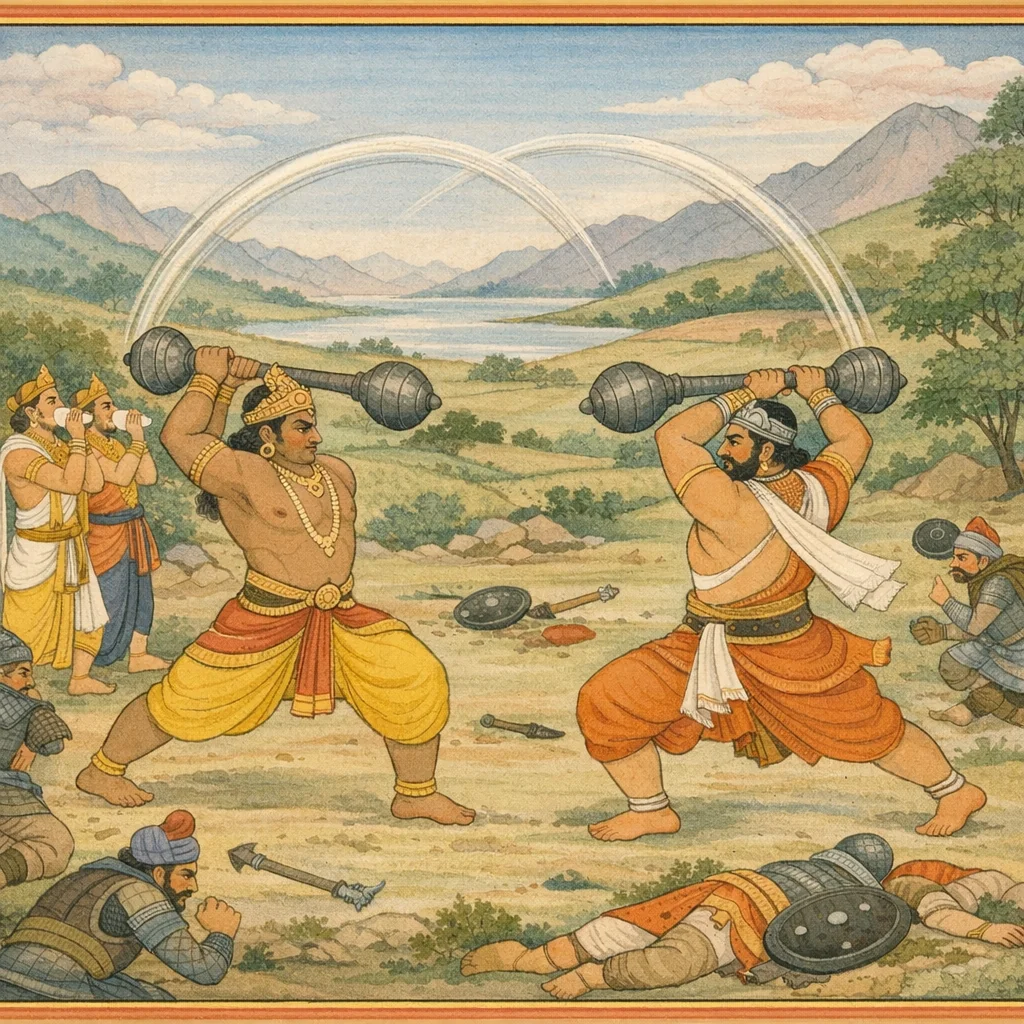
Chapter Arc: धृतराष्ट्र संजय से कहता है कि जितने अद्भुत द्वन्द्व-युद्ध उसने सुने हैं, फिर भी उसका मन नहीं भरता; वह देवासुर-संग्राम-सा इस युद्ध का और वृत्तान्त चाहता है—विशेषतः शल्य और सौभद्र (अभिमन्यु) के प्रसंगों का। → संजय रणभूमि का दृश्य खींचता है जहाँ मद्रराज शल्य के अतिरिक्त कोई भी भीमसेन के वेग को सहने में समर्थ नहीं; दोनों महाबली गदा-युद्ध में आमने-सामने आते हैं और प्रहारों से गदाएँ चिनगारियाँ उगलती, आकाश को प्रकाशित करती हुई घूमती हैं। → शल्य और भीम—दोनों उठी हुई गदाओं के साथ महावेग से टूट पड़ते हैं; गदाएँ बिजली-सी चमकती हैं, मंडल बनाती हुई बीच मार्ग में टकराती-छूटती हैं, और क्षण-क्षण में निर्णायक प्रहार का भय समूचे सैन्य को स्तब्ध कर देता है। → अन्ततः शल्य पराजित होता है; पाण्डव महारथी धार्तराष्ट्रों को दबाकर रण में अग्नि-से दीप्त होते हैं। कौरव सेना भयभीत होकर दिशाओं में बिखरती है, जबकि पाण्डव पक्ष सिंहनाद, शंख, भेरी और मृदंग-निनाद से विजय-हर्ष प्रकट करता है। → धृतराष्ट्र की अतृप्त जिज्ञासा बनी रहती है—वह आगे के द्वन्द्वों और विशेषतः सौभद्र के युद्ध-वृत्तान्त को सुनने को उत्कंठित है।
Shlokas
Verse 1
नफमशा (0) असऔ मनन पज्चदशो< ध्याय: शल्यके साथ भीमसेनका युद्ध तथा शल्यकी पराजय धृतराष्ट्र रवाच बहूनि सुविचित्राणि द्वन्द्ययुद्धानि संजय । त्वयोक्तानि निशम्माहं स्पृहयामि सचक्षुषाम्,धृतराष्ट्र बोले--संजय! तुमने बहुत-से अत्यन्त विचित्र द्वन्द्ययुद्धोंका वर्णन किया है, उनकी कथा सुनकर मैं नेत्रवाले लोगोंके सौभाग्यकी स्पृहा करता हूँ
Dhṛtarāṣṭra said: “Sañjaya, you have described many exceedingly wondrous single combats. Hearing your account, I find myself longing for the good fortune of those who still possess sight.”
Verse 2
आश्चर्यभूतं लोकेषु कथयिष्यन्ति मानवा: । कुरूणां पाण्डवानां च युद्ध देवासुरोपमम्,देवताओं और असुरोंके समान इस कौरव-पाण्डव-युद्धको संसारके मनुष्य अत्यन्त आश्चर्यकी वस्तु बतायेंगे
Sañjaya said: “Among the worlds, people will speak of this as a wonder—the war between the Kurus and the Pāṇḍavas, resembling the battles of gods and demons.”
Verse 3
न हि मे तृप्तिरस्तीह शृण्वतो युद्धमुत्तमम् । तस्मादातायनेरयुद्धं सौभद्रस्थ च शंस मे,इस समय इस उत्तम युद्ध-वृत्तान्तको सुनकर मुझे तृप्ति नहीं हो रही है; अतः: शल्य और सुभद्राकुमारके युद्धका वृत्तान्त मुझसे कहो
Sañjaya said: “Even as I listen here, I do not feel satisfied hearing this excellent account of the battle. Therefore, tell me in detail the combat of Śalya, the son of Ātāyana, and of Saubhadra (Abhimanyu).”
Verse 4
संजय उवाच सादितं प्रेक्ष्य यन्तारं शल्य: सर्वायसीं गदाम् | समुत्क्षिप्प नदन् क्रुद्ध: प्रचस्कन्द रथोत्तमात्
Sañjaya said: Seeing his charioteer struck down, Śalya, in a surge of wrath, seized and lifted an all-iron mace. Roaring aloud, he leapt down from the excellent chariot.
Verse 5
संजयने कहा--राजन्! राजा शल्य अपने सारथिको मारा गया देख कुपित हो उठे और पूर्णतः लोहेकी बनी हुई गदा उठाकर गर्जते हुए अपने उत्तम रथसे कूद पड़े ।। त॑ दीप्तमिव कालाग्निं दण्डहस्तमिवान्तकम् | जवेनाभ्यपतद् भीम: प्रगृह् महतीं गदाम्,उन्हें प्रलयकालकी प्रज्वलित अग्नि तथा दण्डधारी यमराजके समान आते देख भीमसेन विशाल गदा हाथमें लेकर बड़े वेगसे उनकी ओर दौड़े
Sañjaya said: O King, when King Shalya saw that his charioteer had been slain, he flared up in wrath. Roaring, he seized a massive iron mace and leapt down from his excellent chariot. Seeing him advance like the blazing fire of dissolution and like Death himself bearing the rod of punishment, Bhimasena, gripping his own huge mace, rushed toward him at great speed.
Verse 6
सौभद्रो5प्यशनिप्रख्यां प्रगृह्ा महतीं गदाम् । एह्टोहीत्यब्रवीच्छल्यं यत्नाद् भीमेन वारित:,उधरसे अभिमन्यु भी वज्जके समान विशाल गदा हाथमें लेकर आ पहुँचा और “आओ, आओ' कहकर शल्यको ललकारने लगा। उस समय भीमसेनने बड़े प्रयत्नसे उसको रोका
Sañjaya said: Abhimanyu, the son of Subhadrā, also came forward, lifting a massive mace that seemed like a thunderbolt. Crying, “Come! Come!”, he challenged Śalya. Yet Bhīmasena, with great effort, restrained him—showing that even in the fury of battle, valor must be governed by discipline and ordered engagement.
Verse 7
वारयित्वा तु सौभद्रं भीमसेन: प्रतापवान् । शल्यमासाद्य समरे तस्थौ गिरिरिवाचल:,सुभद्राकुमार अभिमन्युको रोककर प्रतापी भीमसेन राजा शल्यके पास जा पहुँचे और समरभूमिमें पर्वतके समान अविचल भावसे खड़े हो गये
Sañjaya said: Having checked Saubhadra (Abhimanyu), the mighty Bhīmasena approached Śalya on the battlefield and stood firm, unmoving like a mountain—signaling steadfast resolve amid the chaos of war and the duty to confront a formidable foe without wavering.
Verse 8
तथैव मद्रराजो5पि भीम॑ दृष्टवा महाबलम् | ससाराभिमुखस्तूर्ण शार्दूल इव कुज्जरम्,इसी प्रकार मद्रराज शल्य भी महाबली भीमसेनको देखकर तुरंत उन्हींकी ओर बढ़े, मानो सिंह किसी गजराजपर आक्रमण कर रहा हो
Sañjaya said: In the same way, the king of Madra—Śalya—on seeing the mighty Bhīma, rushed swiftly straight toward him, like a tiger charging an elephant. The verse highlights the warlike resolve and fierce momentum with which champions seek out worthy opponents on the battlefield.
Verse 9
ततस्तूर्यनिनादाश्न शड्खानां च सहस्रश: । सिंहनादाश्न संजज्ञुभेरीणां च महास्वना:,उस समय सहस्रों रणवाद्यों और शंखोंके शब्द वहाँ गूँज उठे। वीरोंके सिंहनाद प्रकट होने लगे और नगाड़ोंके गम्भीर घोष सर्वत्र व्याप्त हो गये
Sañjaya said: Then, all at once, the blare of war-trumpets and the clamour of thousands of conches resounded. The heroes’ lion-roars rose up, and the deep, rolling thunder of great kettledrums spread everywhere—an ominous surge of martial fervour that stirs courage while also heralding the vast violence about to unfold.
Verse 10
पश्यतां शतशो हाासीदन्योन्यमभिधावताम् । पाण्डवानां कुरूणां च साधु साध्विति नि:स्वन:,एक दूसरेकी ओर दौड़ते हुए सैकड़ों दर्शकों, कौरवों और पाण्डवोंके साधुवादका महान् शब्द वहाँ सब ओर गूँजने लगा
Sañjaya said: As they rushed at one another before the eyes of hundreds of onlookers, a great reverberating cry of approval—“Well done! Well done!”—rose from both the Pāṇḍavas and the Kurus, echoing in every direction. The scene underscores how, amid the moral darkness of war, martial prowess and courage are still publicly praised, even by opposing sides.
Verse 11
न हि मद्राधिपादन्य: सर्वराजसु भारत | सोदुमुत्सहते वेगं भीमसेनस्य संयुगे,भरतनन्दन! समस्त राजाओंमें मद्रराज शल्यके सिवा दूसरा कोई ऐसा नहीं था, जो युद्धमें भीमसेनके वेगको सहनेका साहस कर सके
Sañjaya said: “O Bhārata, among all the kings there was none other than Śalya, lord of Madra, who had the courage to endure Bhīmasena’s onrush in battle, O delight of the Bharatas.”
Verse 12
तथा मद्राधिपस्यापि गदावेगं महात्मन: । सोढुमुत्सहते लोके युधि को<5न्यो वृकोदरात्,इसी प्रकार संसारमें भीमसेनके सिवा दूसरा कौन ऐसा वीर है, जो युद्धमें महामनस्वी मद्रराज शल्यकी गदाके वेगको सह सकता है
Sañjaya said: “Likewise, who else in this world—on the battlefield—has the strength to endure the rushing force of the mace of the great-souled Śalya, lord of Madra, except Vṛkodara (Bhīma)?”
Verse 13
पट्टै्जाम्बूनदैर्बद्धा बभूव जनहर्षणी । प्रजज्वाल तदा5<5विद्धा भीमेन महती गदा,उस समय भीमसेनके द्वारा घुमायी गयी विशाल गदा सुवर्णपत्रसे जटित होनेके कारण अग्निके समान प्रज्वलित हो रही थी। वह वीरजनोंके हृदयमें हर्ष और उत्साहकी वृद्धि करनेवाली थी
Sañjaya said: “Bound with plates of Jāmbūnada gold, the great mace became a delight to the warriors. Whirled and driven by Bhīma, it then blazed like fire—kindling joy and martial ardor in the hearts of the heroic.”
Verse 14
इस प्रकार श्रीमह्ाभारत द्रोणपर्वके अन्तर्गत द्रोणाभिषेकपर्वमें अभिमन्युका पराक्रमविषयक चौदहवाँ अध्याय पूरा हुआ,तथैव चरतो मार्गान् मण्डलानि च सर्वश: । महाविद्युत्प्रतिकाशा शल्यस्य शुशुभे गदा इसी प्रकार गदायुद्धके विभिन्न मार्गों और मण्डलोंसे विचरते हुए महाराज शल्यकी महाविद्युतके समान प्रकाशमान गदा बड़ी शोभा पा रही थी
Sañjaya said: “And just so, as it moved through every course and circled in all the prescribed patterns of mace-combat, King Śalya’s mace—shining like a great flash of lightning—appeared splendid.”
Verse 15
तौ वृषाविव नर्दन्तौ मण्डलानि विचेरतु: । आवर्तितगदाशूज्रावुभौ शल्यवृकोदरौ,इति श्रीमहाभारते द्रोणपर्वणि द्रोणाभिषेकपर्वणि शल्यापयाने पठचदशो<ध्याय: ।। २५ || इस प्रकार श्रीमह्ाभारत द्रोणपर्वके अन्तर्गत द्रोणाभिषेकपर्वमें शल्यका पलायनविषयक पंद्रहवाँ अध्याय पूरा हुआ
Sañjaya said: “Roaring like two mighty bulls, the two—Śalya and Vṛkodara—moved in circles around each other. Both were swift and formidable, their maces whirling as they sought an opening.”
Verse 16
वे शल्य और भीमसेन दोनों गदारूप सींगोंको घुमा-घुमाकर साँड़ोंकी भाँति गरजते हुए पैंतरे बदल रहे थे ।। मण्डलावर्तमार्गेषु गदाविहरणेषु च । निर्विशेषम भूद् युद्ध तयो: पुरुषसिंहयो:,मण्डलाकार घूमनेके मार्गों (पैंतरों) और गदाके प्रहारोंमें उन दोनों पुरुषसिंहोंकी योग्यता एक-सी जान पड़ती थी
Sañjaya said: Śalya and Bhīmasena, whirling their maces like a pair of horned bulls, roared and shifted their stances, circling for advantage. In their circular footwork and in the handling and striking of the mace, the contest between those two lion-like men appeared evenly matched.
Verse 17
ताडिता भीमसेनेन शल्यस्य महती गदा । साग्निज्वाला महारीद्रा तदा तूर्णमशीर्यत,उस समय भीमसेनकी गदासे टकराकर शल्यकी विशाल एवं महाभयंकर गदा आगकी चिनगारियाँ छोड़ती हुई तत्काल छिन्न-भिन्न होकर बिखर गयी
Sañjaya said: Struck by Bhīmasena, Śalya’s massive and terrifying mace—spitting sparks like fire—was at once shattered and scattered.
Verse 18
तथैव भीमसेनस्य द्विषताभिहता गदा । वर्षाप्रदोषे खद्योतैर्व॒तो वृक्ष इवाबभौ,इसी प्रकार शत्रुके आघात करनेपर भीमसेनकी गदा भी चिनगारियाँ छोड़ती हुई वर्षाकालकी संध्याकें समय जुगनुओंसे जगमगाते हुए वृक्षकी भाँति शोभा पाने लगी
Sañjaya said: In the same way, Bhīmasena’s mace, when struck against the foe, began to shine as it threw off sparks—like a tree in the rainy season at twilight, surrounded by flickering fireflies.
Verse 19
गदा क्षिप्ता तु समरे मद्रराजेन भारत | व्योम दीपयमाना सा ससूजे पावकं मुहुः,भारत! तब मद्रराज शल्यने समरभूमिमें दूसरी गदा चलायी, जो आकाशको प्रकाशित करती हुई बारंबार अंगारोंकी वर्षा कर रही थी
Sañjaya said: O Bhārata, in the thick of battle the king of Madra hurled a mace. As it blazed through the sky, it lit up the firmament and again and again seemed to shower sparks like fire.
Verse 20
तथैव भीमसेनेन द्विषते प्रेषिता गदा । तापयामास तत् सैन्यं महोल्का पतती यथा,इसी प्रकार भीमसेनने शत्रुको लक्ष्य करके जो गदा चलायी थी, वह आकाशसे गिरती हुई बड़ी भारी उल्काके समान कौरव-सेनाको संतप्त करने लगी
Sañjaya said: In the same manner, the mace hurled by Bhīmasena at his foe began to scorch the Kaurava host, as though a great meteor were falling from the sky.
Verse 21
ते गदे गदिनां श्रेष्ठौ समासाद्य परस्परम् । श्वसन्त्यौ नागकन्ये वा ससृजाते विभावसुम्,वे दोनों गदाएँ गदाधारियोंमें श्रेष्ठ भीमसेन और शल्यको पाकर परस्पर टकराती हुई फुफकारती नागकन्याओंकी भाँति अग्निकी सृष्टि करती थीं
Sañjaya said: Those two maces—wielded by the foremost of mace-fighters—met each other head-on. As they struck together, they seemed to hiss like serpent-maidens and to cast forth fire, intensifying the fearful spectacle of battle and the ruin born of wrathful combat.
Verse 22
नखैरिव महाव्याप्रौ दनतैरिव महागजौ । तौ विचेरतुरासाद्य गदाग्रया भ्यां परस्परम्,जैसे दो बड़े व्याप्र पंजोंसे और दो विशाल हाथी दाँतोंसे आपसमें प्रहार करते हैं, उसी प्रकार भीमसेन और शल्य गदाओंके अग्रभागसे एक-दूसरेपर प्रहार करते हुए विचर रहे थे
Sañjaya said: Like two mighty tigers striking with their claws, or two great elephants goring with their tusks, Bhīmasena and Śalya closed upon one another and ranged about, each smiting the other with the foreparts of their maces—an image of war’s ferocity where strength and resolve, rather than moral persuasion, decide the moment.
Verse 23
ततो गदाग्राभिहतौ क्षणेन रुधिरोक्षितौ | ददृशाते महात्मानौ किंशुकाविव पुष्पितौ,एक ही क्षणमें गदाके अग्रभागसे घायल होकर वे दोनों महामनस्वी वीर खूनसे लथपथ हो फूलोंसे भरे हुए दो पलाश वृक्षोंके समान दिखायी देने लगे
Sanjaya said: Then, in a single instant, struck by the foremost part of the mace, the two great-souled warriors were seen drenched in blood, appearing like two kiṃśuka (palāśa) trees in full bloom. The verse underscores the grim irony of war: what looks like “flowering” beauty is in truth the vivid redness of spilled blood, reminding the listener that valor and violence can be visually glorified even as they signal suffering and mortality.
Verse 24
शुश्रुवे दिक्षु सर्वासु तयो: पुरुषसिंहयो: । गदाभिघातसंह्ाद: शक्राशनिरवोपम:,उन दोनों पुरुषसिंहोंकी गदाओंके टकरानेका शब्द इन्द्रके वजकी गड़गड़ाहटके समान सम्पूर्ण दिशाओंमें सुनायी देता था
Sañjaya said: In every direction there was heard the thunderous roar of the mace-blows as those two lion-like men struck against each other—like the reverberation of Indra’s thunderbolt. The verse heightens the moral gravity of the duel: the clash is not merely physical noise but a sign of the war’s overwhelming force spreading beyond the combatants to the whole world around them.
Verse 25
गदया मद्रराजेन सव्यदक्षिणमाहत: । नाकम्पत तदा भीमो भिद्यमान इवाचल:,उस समय मद्रराजकी गदासे बायें-दायें चोट खाकर भी भीमसेन विचलित नहीं हुए। जैसे पर्वत वजका आघात सहकर भी अविचलभावसे खड़ा रहता है
Sañjaya said: Struck on the left and on the right by the mace of the king of Madra, Bhīma did not waver at all. Though being battered, he stood firm like an unshaken mountain—showing the warrior’s steadfastness amid the violence of battle.
Verse 26
तथा भीमगदावेगैस्ताड्यमानो महाबल: । धैर्यान्मद्राधिपस्तस्थौ वजैर्गिरिरिवाहत:,इसी प्रकार भीमसेनकी गदाके वेगसे आहत होकर महाबली मद्रराज वज्राघातसे पीड़ित पर्वतकी भाँति धैर्यपूर्वक खड़े रहे
Sañjaya said: Struck by the rushing force of Bhīma’s mace, the mighty king of Madra did not waver; through steadfast courage he stood firm, like a mountain battered by thunderbolts.
Verse 27
आपेततुर्महावेगौ समुच्छितगदावुभौ । पुनरन्तरमार्गस्थौ मण्डलानि विचेरतु:,वे दोनों महावेगशाली वीर गदा उठाये एक-दूसरेपर टूट पड़े। फिर अन्तर्मार्गमें स्थित हो मण्डलाकार गतिसे विचरने लगे
Sañjaya said: Both heroes, wielding their maces with tremendous force, rushed at one another. Then, taking positions within the inner range, they began to circle in ring-like patterns—testing openings and timing.
Verse 28
अथाप्लुत्य पदान्यष्टौ संनिपत्य गजाविव । सहसा लोहदण्डाभ्यामन्योन्यमभिजष्नतु:,तत्पश्चात् आठ पग चलकर दोनों दो हाथियोंकी भाँति परस्पर टूट पड़े और सहसा लोहेके डंडोंसे एक-दूसरेको मारने लगे
Sañjaya said: Then, after springing forward eight paces, the two closed upon each other like enraged elephants, and at once began striking one another with iron clubs.
Verse 29
तौ परस्परवेगाच्च गदाभ्यां च भूशाहतौ । युगपत पेततुर्वीरौ क्षिताविन्द्रध्वजाविव,वे दोनों वीर परस्परके वेगसे और गदाओंद्वारा अत्यन्त घायल हो दो इन्द्रध्वजोंके समान एक ही समय पृथ्वीपर गिर पड़े
Sañjaya said: Struck down by the force of each other’s charge and battered by their maces, the two heroes—grievously wounded—fell together upon the earth, like twin Indra-banners collapsing at the same moment.
Verse 30
ततो विह्वलमान त॑ नि:श्वसन्तं पुन: पुन: । शल्यमभ्यपतत् तूर्ण कृतवर्मा महारथ:,उस समय शल्य अत्यन्त विह्लल होकर बारंबार लम्बी साँस खींच रहे थे। इतनेहीमें महारथी कृतवर्मा तुरंत राजा शल्यके पास आ पहुँचा
Sañjaya said: Then, seeing Śalya overwhelmed and repeatedly heaving deep breaths, the great chariot-warrior Kṛtavarmā swiftly rushed up to him.
Verse 31
दृष्टवा चैनं महाराज गदयाभिनिपीडितम् । विचेष्टन्तं यथा नागं मूर्च्छयाभिपरिप्लुतम्,महाराज! आकर उसने देखा कि राजा शल्य गदासे पीड़ित एवं मूच्छासे अचेत हो आहत हुए नागकी भाँति छटपटा रहे हैं
Sañjaya said: “O great king, seeing him crushed by the mace—writhing like a serpent, overwhelmed and submerged in swoon—the warriors beheld the grievous consequence of the blow.”
Verse 32
ततः स्वरथमारोप्य मद्राणामधिपं रणे । अपोवाह रणात् तूर्ण कृतवर्मा महारथ:,यह देख महारथी कृतवर्मा युद्धस्थलमें मद्रराज शल्यको अपने रथपर बिठाकर तुरंत ही रणभूमिसे बाहर हटा ले गया
Sañjaya said: Then, in the midst of battle, the great chariot-warrior Kṛtavarmā lifted the lord of the Madras onto his own chariot and swiftly carried him away from the field.
Verse 33
क्षीबवद् विह्नललो वीरो निमेषात् पुनरुत्थित: । भीमो<पि सुमहाबाहुर्गदापाणिरदृश्यत,तदनन्तर महाबाहु वीर भीमसेन भी मदोन्मत्तकी भाँति विह्लल हो पलक मारते-मारते उठकर खड़े हो गये और हाथमें गदा लिये दिखायी देने लगे
Sañjaya said: Like one intoxicated and reeling, the hero—within the blink of an eye—rose up again. Then Bhīma too, the mighty-armed warrior, was seen standing with his mace in hand.
Verse 34
ततो मद्राधिपं दृष्टवा तव पुत्रा: पराड्मुखम् । सनागपत्त्यश्वरथा: समकम्पन्त मारिष,आर्य! उस समय मद्रराज शल्यको युद्धसे विमुख हुआ देख हाथी, घोड़े, रथ और पैदल-सेनाओंसहित आपके सारे पुत्र भयसे काँप उठे
Sañjaya said: Then, seeing the lord of Madra—Śalya—turn away from the battle, your sons, together with their elephants, infantry, horses, and chariots, began to tremble in fear.
Verse 35
ते पाण्डवैर््यमानास्तावका जितकाशिभि: । भीता दिशो<न्वपद्यन्त वातनुन्ना घना इव,विजयसे सुशोभित होनेवाले पाण्डवोंद्वारा पीड़ित हो आपके सभी सैनिक भयभीत हो हवाके उड़ाये हुए बादलोंकी भाँति चारों दिशाओंमें भाग गये
Sañjaya said: Harried and driven back by the Pāṇḍavas—those radiant with victory—your troops, terrified, fled in all directions, like clouds scattered and pushed along by the wind.
Verse 36
निर्जित्य धार्तराष्ट्रांस्तु पाण्डवेया महारथा: । व्यरोचन्त रणे राजन् दीप्यमाना इवाग्नय:,राजन्! इस प्रकार आपके पुत्रोंकी जीतकर महारथी पाण्डव प्रज्वलित अग्नियोंकी भाँति रणक्षेत्रमें प्रकाशित होने लगे
Sañjaya said: Having overcome the sons of Dhṛtarāṣṭra, the great chariot-warriors of the Pāṇḍavas shone forth in the battle, O King, like blazing fires—showing how victory becomes visible as prowess and morale, even as the war remains morally weighty and destructive.
Verse 37
सिंहनादान् भृशं चक्र: शड्खान् द्मुश्न हर्षिता: । भेरीक्ष वादयामासुर्मुदड्भां श्षानके: सह,उन्होंने हर्षित होकर बारंबार सिंहनाद किये और बहुत-से शंख बजाये; साथ ही उन्होंने भेरी, मृदंग और आनक आदि वाद्योंको भी बजवाया
Sañjaya said: Rejoicing, they repeatedly raised lion-like battle-cries and blew many conches; and together they also sounded the kettledrums, the mṛdaṅga, and the ānaka drums—deliberately stirring martial ardor and collective resolve for the clash to come.
Frequently Asked Questions
The chapter frames a dharma-sankat between pursuing a high-value objective (pressing toward the opposing king) and the responsibility to limit destabilization: commanders weigh decisive pressure against the risks of chaos, misrecognition, and disproportionate harm under reduced visibility.
Effectiveness is shown as conditional on discipline: coordinated protection, timely interception, and controlled withdrawal can be ethically and strategically superior to uncontrolled pursuit, especially when fear and rumor threaten collective judgment.
No explicit phalaśruti appears; the meta-significance is conveyed narratively through Sañjaya’s reportage—how perception (arrow-darkness, dust, sunset) alters decision-making and why preserving command integrity becomes a central measure of dharmic action.