Adhyaya 135
द्रौणि-पार्षतयोर्युद्धम् | The Duel of Aśvatthāmā (Drauṇi) and Dhṛṣṭadyumna (Pārṣata)
Upa-parva: Droṇābhisandhi / Aśvatthāmā–Dhṛṣṭadyumna-saṃyoga (Drauṇi-Pārṣata Yuddha Episode)
Sañjaya recounts Aśvatthāmā’s reply to Duryodhana: he notes prior affection between the houses yet insists warfare must proceed to full capacity, while warning that the Pāṇḍava host is not easily overrun so long as Pāṇḍu’s sons live. He nonetheless pledges personal commitment and predicts panic among Panchālas and allies. Aśvatthāmā then invites enemy champions to strike, absorbs a concentrated missile-shower, and counters with rapid, enveloping arrow-volleys that scatter Panchāla and Sṛñjaya forces. Dhṛṣṭadyumna advances, challenges Aśvatthāmā, and the two exchange harsh speech: Dhṛṣṭadyumna invokes a deferred vow—he will not kill Aśvatthāmā while Droṇa lives—yet declares intent to send both father and son to death. The duel intensifies into a visually celebrated contest of archery and maneuver, praised by observers, until Aśvatthāmā damages Dhṛṣṭadyumna’s battle-gear (banner, bow, parasol, charioteers, horses) and drives back large bodies of Panchālas, causing visible dismay in the Pāṇḍava ranks while Kauravas acclaim his feat.
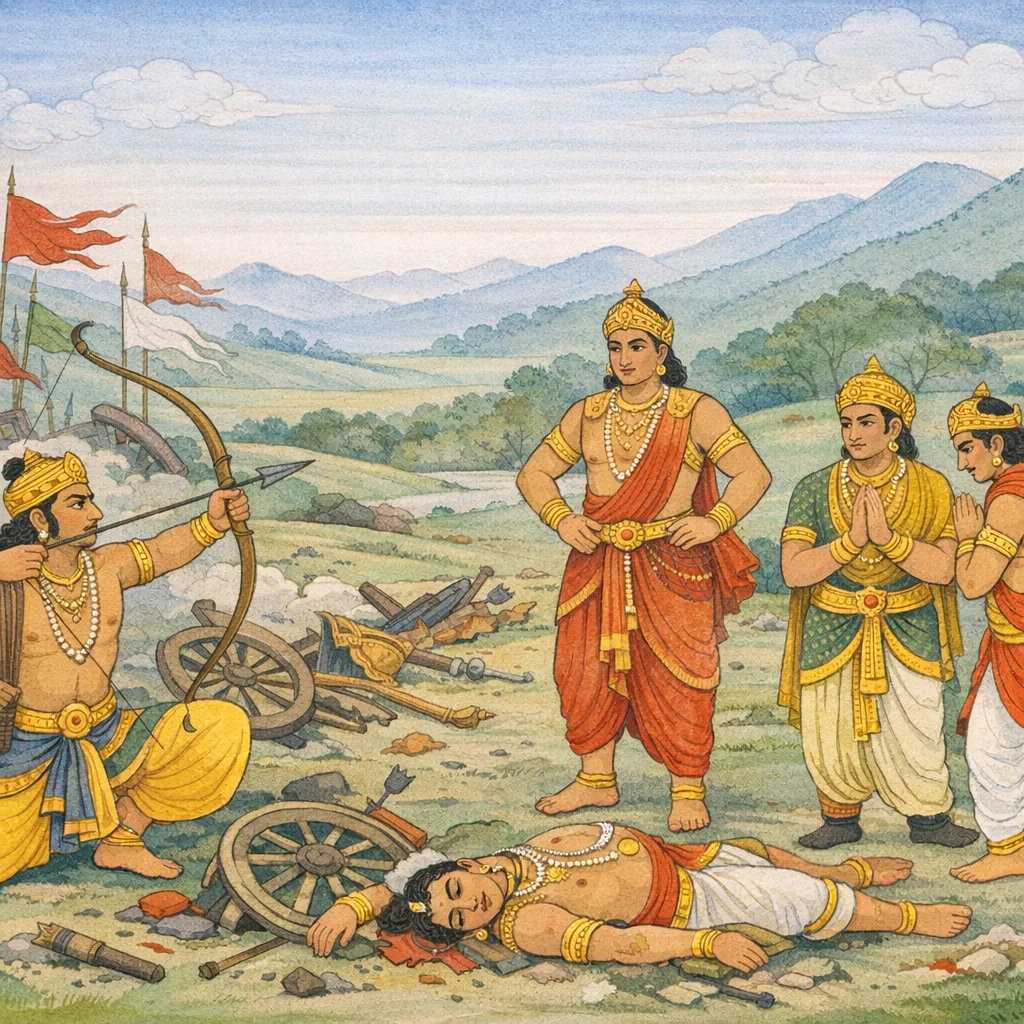
Chapter Arc: धृतराष्ट्र संजय से विस्मय और क्षोभ में पूछते हैं—जो कर्ण देव-दानव-यक्ष-मानव तक को रोक सकता है, वह युद्ध में तेजस्वी भीम/पाण्डव को रोक क्यों न सका? → संजय के वर्णन में भीमसेन अपने पुराने अपमानों और पाण्डवों पर हुए अनगिनत अत्याचारों को हृदय में धारण कर कर्ण पर टूट पड़ता है। कर्ण भी अतिरथी-गौरव के साथ प्रत्युत्तर देता है; बाण-वर्षा, शस्त्र-प्रहार और रथ-युद्ध की तीव्रता बढ़ती जाती है। दुर्योधन कर्ण को पाकर उत्साहित होता है, पर धृतराष्ट्र के मन में यह आशंका भी उठती है कि पाण्डव अजेय हैं और पुत्र दुर्योधन यह सत्य नहीं समझता। → भीमसेन कर्ण के रथ और सारथि-व्यवस्था को ध्वस्त कर उसे रथहीन कर देता है; उसी उन्मत्त क्षण में भीम के तीक्ष्ण बाण दुर्जय के मर्मस्थल भेद देते हैं और वह यमसदन को प्राप्त होता है। → दुर्जय आभूषणों से विभूषित होकर भी घायल देह से पृथ्वी पर गिरकर तड़पता है; कर्ण शोकाकुल होकर दुर्योधन की परिक्रमा करता है। भीम मुस्कराते हुए भी रथहीन कर्ण को शतघ्नी, शंकु और बाण-समूहों से घेर कर दबाव बनाए रखता है। → रथहीन कर्ण पर भीम का घेरा कसता है—क्या कर्ण इस अपमान और संकट से निकल कर पुनः युद्ध-धारा पलटेगा, या पाण्डवों का प्रहार निर्णायक बन जाएगा?
Shlokas
Verse 1
(दाक्षिणात्य अधिक पाठका ३ श्लोक मिलाकर कुल ४३ ६ “लोक हैं) त्रयस्त्रिशर्दाधिकशततमोब ध्याय: भीमसेन और कर्णका युद्ध, कर्णके सारथिसहित रथका विनाश तथा धृतराष्ट्रपुत्र दुर्जयका वध धृतराष्ट्र रवाच अत्यद्भुतमहं मनन््ये भीमसेनस्य विक्रमम् । यत् कर्ण योधयामास समरे लघुविक्रमम्,धृतराष्ट्र बोले--संजय! मैं भीमसेनके पराक्रमको अत्यन्त अद्भुत मानता हूँ कि उन्होंने समरांगणमें शीघ्रतापूर्वक पराक्रम दिखानेवाले कर्णके साथ भी युद्ध किया
Dhṛtarāṣṭra said: “Sañjaya, I deem Bhīmasena’s prowess truly astonishing—that he even engaged Karṇa in battle on the field, Karṇa who is famed for swift and decisive feats of valor.”
Verse 2
त्रिदशानपि वा युक्तान् सर्वशस्त्रधरान् युधि । वारयेद् यो रणे कर्ण: सयक्षासुरमानुषान्,संजय! जो कर्ण रफक्षेत्रमें युद्धके लिये सम्पूर्ण अस्त्र-शस्त्रोंकोी धारण करके सुसज्जित हुए देवताओं तथा यक्षों, असुरों और मनुष्योंका भी निवारण कर सकता है, वह युद्धमें विजय-लक्ष्मीसे सुशोभित होते हुए-से पाण्डुनन्दन कुन्तीकुमार भीमसेनको कैसे नहीं लाँघ सका? इसका कारण मुझे बताओ
“Sañjaya, even if the gods themselves—fully armed with every weapon—were arrayed in battle, Karṇa could hold them back in combat, along with yakṣas, asuras, and men. If Karṇa can check such forces on the battlefield, then how was it that he could not overcome Bhīmasena, the son of Pāṇḍu and Kuntī, who seemed radiant with the fortune of victory? Tell me the reason for this.”
Verse 3
स कथं पाण्डवं युद्धे भ्राजमानमिव श्रिया । नातरत् संयुगे पार्थ तन््ममाचक्ष्व संजय,संजय! जो कर्ण रफक्षेत्रमें युद्धके लिये सम्पूर्ण अस्त्र-शस्त्रोंकोी धारण करके सुसज्जित हुए देवताओं तथा यक्षों, असुरों और मनुष्योंका भी निवारण कर सकता है, वह युद्धमें विजय-लक्ष्मीसे सुशोभित होते हुए-से पाण्डुनन्दन कुन्तीकुमार भीमसेनको कैसे नहीं लाँघ सका? इसका कारण मुझे बताओ
Sañjaya said: “How was it that Karṇa, in the thick of battle, could not overpass that Pāṇḍava—Bhīmasena, the son of Pāṇḍu—who seemed to blaze with the very presence of victory and fortune? Tell me, Sañjaya, the reason for this.”
Verse 4
कथं च युद्ध सम्भूतं तयो: प्राणदुरोदरे । अत्र मन्ये समायत्तो जयो वाजय एव च,उन दोनोंमें प्राणोंकी बाजी लगाकर किस प्रकार युद्ध हुआ? मैं समझता हूँ कि यहीं उभय पक्षकी जय अथवा विजय निर्भर है
Sañjaya said: “And how did the battle arise between those two, when their very lives were staked in a perilous contest? In my judgment, it is here that the outcome is decided—whether victory will belong to one side or the other.”
Verse 5
कर्ण प्राप्प रणे सूत मम पुत्र: सुयोधन: । जेतुमुत्सहते पार्थान् सगोविन्दान् ससात्वतान्,सूत! रणक्षेत्रमें कर्णको पाकर मेरा पुत्र दुर्योधन श्रीकृष्ण तथा सात्यकि आदि यादवोंसहित समस्त कुन्तीकुमारोंको जीतनेका उत्साह रखता है
Sañjaya said: “O charioteer, having obtained Karṇa on the battlefield, my son Suyodhana (Duryodhana) is filled with the resolve to defeat the Pāṇḍavas—along with Govinda (Kṛṣṇa) and along with the Sātvatas (the Yādava allies).”
Verse 6
श्र॒त्वा तु निर्जितं कर्णमसकृद् भीमकर्मणा । भीमसेनेन समरे मोह आविशतीव माम्,समरांगणमें भयंकर कर्म करनेवाले भीमसेनके द्वारा कर्णके बारंबार पराजित होनेकी बात सुनकर मेरे मनपर मोह-सा छा जाता है
Sañjaya said: Hearing again and again that Karṇa has been defeated in battle by Bhīmasena—whose deeds on the battlefield are terrible—I feel as though a cloud of delusion overwhelms my mind.
Verse 7
विनष्टान् कौरवान् मन्ये मम पुत्रस्य दुर्नयै: । न हि कर्णो महेष्वासान् पार्थान् जेष्यति संजय,मेरे पुत्रकी दुर्नीतियोंक कारण मैं समस्त कौरवोंको नष्ट हुआ ही मानता हूँ। संजय! कर्ण कभी महाधनुर्धर कुन्तीकुमारोंको नहीं जीत सकेगा
Sañjaya said: I deem the Kauravas already ruined because of the evil policies of my son. For Karṇa will never be able to defeat the Pārthas—the mighty bowmen, the sons of Kuntī, O Sañjaya.
Verse 8
कृतवान् यानि युद्धानि कर्ण: पाण्डुसुतैः सह । सर्वत्र पाण्डवा: कर्णममजयन्त रणाजिरे,कर्णने पाण्डुपुत्रोंके साथ जो-जो युद्ध किये हैं, उन सबमें पाण्डवोंने ही रणक्षेत्रमें कर्णको जीता है
Sañjaya said: In whatever battles Karṇa fought together with the sons of Pāṇḍu, in every case the Pāṇḍavas overcame Karṇa on the field of war.
Verse 9
अजेया: पाण्डवास्तात देवैरपि सवासवै: । नच तद् बुध्यते मन्द: पुत्रो दुर्योधनो मम,तात! इन्द्र आदि देवताओंके लिये भी पाण्डवोंपर विजय पाना असम्भव है; परंतु मेरा मूर्ख पुत्र दुर्योधन इस बातको नहीं समझता है
Sañjaya said: O dear father, the Pāṇḍavas are unconquerable—even by the gods, even with Indra at their head. Yet my dull-witted son Duryodhana does not understand this.
Verse 10
धनं धनेश्वरस्येव हृत्वा पार्थस्य मे सुत: । मधुप्रेप्सुरिवाबुद्धि: प्रपातं नावबुध्यते,मेरा पुत्र कुबेरके समान कुन्तीकुमार युधिष्ठिरके धनका अपहरण करके ऊँचे स्थानसे मधु लेनेकी इच्छावाले मूर्ख मनुष्यके समान पतनके भयको नहीं समझ रहा है
Sañjaya said: Having seized the wealth of Pārtha as though he were the lord of riches himself, my son—lacking discernment—does not perceive the danger of a fall, like a foolish man who, eager to take honey from a height, fails to recognize the precipice.
Verse 11
निकृत्या निकृतिप्रज्ञो राज्यं हृत्वा महात्मनाम् | जितमित्येव मन्वान: पाण्डवानवमन्यते,वह छल-कपटकी विद्याको जानता है। अतः छलसे ही उन महामनस्वी पाण्डवोंके राज्यका अपहरण करके उसे जीता हुआ मानकर पाण्डवोंका अपमान करता है
Sañjaya said: Skilled in deceit, with a mind trained in crooked stratagems, he stole the kingdom from those great-souled men. Then, imagining it a true victory, he goes on to slight and dishonor the Pāṇḍavas—an ethical indictment of triumph won by fraud rather than by dharma.
Verse 12
पुत्रस्नेहाभिभूतेन मया चाप्यकृतात्मना । धर्मे स्थिता महात्मानो निकृता: पाण्डुनन्दना:,मुझ अकृतात्माने भी पुत्रस्नेहके वशीभूत होकर सदा धर्मपर स्थित रहनेवाले महात्मा पाण्डवोंको ठगा है
Sañjaya said: Overpowered by affection for my son—and I too, lacking self-mastery—I have deceived the Pāṇḍavas, those great-souled men who ever stood firm in dharma.
Verse 13
शमकाम: ससोदर्यों दीर्घप्रेक्षी युधिष्ठिर: । अशक्त इति मत्वा तु मम पुत्रैर्निराकृत:,दूरदर्शी युधिष्ठिर अपने भाइयोंसहित संधिकी अभिलाषा रखते थे; परंतु उन्हें असमर्थ मानकर मेरे पुत्रोंने उनकी बात ठुकरा दी
Sañjaya said: Yudhiṣṭhira—far-sighted and accompanied by his brothers—desired reconciliation and peace. But my sons, judging him to be powerless, rejected his proposal, choosing pride and force over a dharmic settlement.
Verse 14
तानि दुःखान्यनेकानि विप्रकारांश्व सर्वशः । हृदि कृत्वा महाबाहुर्भीमो5युध्यत सूतजम्,अनेक बार दिये गये उन दुःखों और सम्पूर्ण अपकारोंको मनमें रखकर महाबाहु भीमसेनने सूतपुत्र कर्णके साथ युद्ध किया है
Sañjaya said: Keeping in his heart the many griefs he had endured and every kind of wrong done to him, the mighty-armed Bhīma fought with Karṇa, the son of a charioteer. The verse highlights how remembered injuries and accumulated injustice can intensify resolve in war, even as such motivation stands in tension with the ideal of acting without personal rancor.
Verse 15
तस्मान्मे संजय ब्रूहि कर्णभीमौ यथा रणे | अयुध्येतां युधि श्रेष्ठी परस्परवधैषिणौ,अतः संजय! एक-दूसरेके वधकी इच्छावाले युद्धस्थलके श्रेष्ठ वीर कर्ण और भीमसेनने समरांगणमें जिस प्रकार युद्ध किया, वह सब मुझे बताओ
Therefore, O Sañjaya, tell me how Karṇa and Bhīma—both foremost among warriors in battle, each intent on the other’s death—fought on the field. Describe to me the manner of their combat, for their encounter bears heavily on the course of this war and the moral weight of vengeance-driven heroism.
Verse 16
संजय उवाच शृणु राजन् यथावृत्तं संग्रामं कर्णभीमयो: । परस्परवधप्रेप्स्वोर्वनकुज्जरयोरिव,संजयने कहा--राजन्! कर्ण और भीमसेनके युद्धका यथावत् वृत्तान्त सुनिये। वे दोनों जंगली हाथियोंके समान एक-दूसरेके वधके लिये उत्सुक थे
Sañjaya said: O King, hear the battle between Karṇa and Bhīma exactly as it occurred. Like two wild elephants in the forest, each was intent on the other’s death.
Verse 17
राजन वैकर्तनो भीम॑ क्रुद्ध: क्ुद्धमरिंदमम् । पराक्रान्तं पराक्रम्य विव्याध त्रिंशता शरै:,राजन! क्रोधमें भरे हुए सूर्यपुत्र कर्णने कुपित हुए शत्रुदमन पराक्रमी भीमसेनको अपने बल-पराक्रमका परिचय देते हुए तीस बाणोंसे बींध डाला
Sañjaya said: O King, Vaikartana (Karna), inflamed with wrath, advanced against the enraged Bhīma—an enemy-subduer—and, displaying his own prowess, pierced that mighty warrior with thirty arrows.
Verse 18
महावेगै: प्रसन्नाग्रै: शातकुम्भपरिष्कृतै: । अहनदू भरतश्रेष्ठ भीम॑ वैकर्तन: शरै:,भरतश्रेष्ठ) कर्णने चमकते हुए अग्रभागवाले सुवर्णजटित महान् वेगशाली बाणोंद्वारा भीमसेनको घायल कर दिया
Sañjaya said: O best of the Bharatas, with arrows of tremendous speed—whose tips were bright and keen, and which were adorned with pure gold—Karna struck Bhīma, wounding him.
Verse 19
तस्यास्यतो धरनुर्भीमश्नकर्त निशितैस्त्रिभि: । रथनीडाच्च यन्तारं भल्लेनापातयत् क्षितौ,इस प्रकार बाण चलाते हुए कर्णके धनुषको भीमसेनने तीन तीखे बाणोंद्वारा काट डाला और एक भल्ल मारकर सारथिको रथकी बैठकसे नीचे पृथ्वीपर गिरा दिया
Sañjaya said: As Karṇa shot his arrows, Bhīmasena severed his bow with three razor-sharp shafts; then, with a broad-headed arrow, he struck down the charioteer from the chariot-seat onto the earth.
Verse 20
स काड्क्षन् भीमसेनस्य वध॑ वैकर्तनो भूशम् । शक्ति कनकवैदूर्यचित्रदण्डां परामृशत्,तब भीमसेनके वधकी अभिलाषा रखकर कर्णने वेगपूर्वक एक शक्ति हाथमें ली, जिसका डंडा सुवर्ण और वैदूर्यमणिसे जटित होनेके कारण विचित्र दिखायी देता था
Sañjaya said: Longing to slay Bhīmasena, Karṇa—the cutter of foes—swiftly grasped his śakti-spear, whose shaft appeared wondrous, inlaid with gold and vaidūrya gems.
Verse 21
प्रगृह्ा च महाशक्ति कालशक्तिमिवापराम् | समुत्क्षिप्प च राधेय: संधाय च महाबल:
Sañjaya said: Karṇa, mighty in strength, seized a great Śakti-spear—like the irresistible power of Time itself. Lifting it high, he fixed his aim, preparing to hurl it, as the battle pressed toward a decisive and fateful moment.
Verse 22
शक्ति विसृज्य राधेय: पुरंदर इवाशनिम्,इन्द्रके वज़्की भाँति उस शक्तिको छोड़कर बलवान सूतनन्दन कर्णने बड़े जोरसे गर्जना की। उस समय उस सिंहनादको सुनकर आपके पुत्र बड़े प्रसन्न हुए
Sañjaya said: Having hurled the Śakti, Rādheya (Karna) roared mightily—like Purandara (Indra) after casting his thunderbolt. Hearing that lion-like roar, your sons were filled with delight, taking it as a sign of advantage in the battle’s grim moral contest where confidence and fear sway armies as much as weapons do.
Verse 23
ननाद सुमहानादं बलवान् सूतनन्दन: । तं च नादं ततः श्र॒त्वा पुत्रास्ते हर्षिता3भवन्,इन्द्रके वज़्की भाँति उस शक्तिको छोड़कर बलवान सूतनन्दन कर्णने बड़े जोरसे गर्जना की। उस समय उस सिंहनादको सुनकर आपके पुत्र बड़े प्रसन्न हुए
Sañjaya said: The mighty Karṇa, the son of the charioteer, let out a tremendous roar. Hearing that lion-like cry, your sons were filled with joy—taking it as a sign of renewed strength and confidence amid the moral and physical pressures of the war.
Verse 24
तां कर्णभुजनिर्मुक्तामर्कवैश्वानरप्रभाम् । शक्ति वियति चिच्छेद भीम: सप्तभिराशुगै:,कर्णके हाथोंसे छूटकर आकाशमें सूर्य और अग्निके समान प्रकाशित होनेवाली उस शक्तिको भीमसेनने सात बाणोंसे आकाशमें ही काट डाला
Sañjaya said: That Śakti-weapon, released from Karṇa’s arm and blazing in the sky with the radiance of the sun and of fire, was cut down by Bhīmasena in midair with seven swift arrows—an act that checks a deadly assault through alertness and martial restraint amid the fury of war.
Verse 25
छित्त्वा शक्ति ततो भीमो निर्मुक्तोरगसंनिभाम् । मार्गमाण इव प्राणान् सूतपुत्रस्य मारिष,माननीय नरेश! केंचुलसे छूटी हुई सर्पिणीके समान उस शक्तिके टुकड़े-टुकड़े करके फिर भीमसेनने कुपित हो युद्धस्थलमें सूतपुत्र कर्णके प्राणोंकी खोज करते हुए-से सानपर चढ़ाकर तेज किये हुए, यमदण्डके समान भयंकर, मयूरपंख एवं स्वर्णपंखसे विभूषित बाणोंको उसके ऊपर चलाना आरम्भ किया
Sañjaya said: Then Bhīma, having shattered that Śakti-weapon—like a serpent casting off its slough—became fiercely intent on Karṇa’s destruction. As though searching out the very life-breath of the Sūta’s son, he began to discharge upon him arrows honed on the whetstone, dreadful like Yama’s rod, and adorned with peacock-feathers and golden wings—an image of relentless martial resolve within the harsh ethics of battlefield retribution.
Verse 26
प्राहिणोत् कृतसंरम्भ: शरान् बर्हिणवासस: । स्वर्णपुड्खानू शिलाधौतान् यमदण्डोपमान् मृथे,माननीय नरेश! केंचुलसे छूटी हुई सर्पिणीके समान उस शक्तिके टुकड़े-टुकड़े करके फिर भीमसेनने कुपित हो युद्धस्थलमें सूतपुत्र कर्णके प्राणोंकी खोज करते हुए-से सानपर चढ़ाकर तेज किये हुए, यमदण्डके समान भयंकर, मयूरपंख एवं स्वर्णपंखसे विभूषित बाणोंको उसके ऊपर चलाना आरम्भ किया
Sañjaya said: With fierce resolve he loosed arrows upon the battlefield—adorned with peacock-feathered fletching, set on golden shafts, honed as though polished upon stone, and dreadful as Yama’s rod. The image bears the moral weight of war: wrath and skill turn weapons into instruments of fate, and the pursuit of victory can become the pursuit of another’s very life.
Verse 27
कर्णोउप्यन्यद् धनुर्गह्म हेमपृष्ठं दुरासदम् । विकृष्य तन्महच्चापं व्यसूजत् सायकांस्तदा,तब कर्णने भी सुवर्णमय पीठवाले दूसरे दुर्धर्ष एवं विशाल धनुषको हाथमें लेकर खींचा और बाणोंकी वर्षा प्रारम्भ कर दी
Sañjaya said: Karṇa too took up another bow—gold-backed and hard to withstand. Drawing that great bow to its full stretch, he began to loose volleys of arrows. The scene shows the battle’s relentless escalation: prowess and resolve surge onward even as the moral weight of violence continues to gather.
Verse 28
तान् पाण्डुपृत्रश्चिच्छेद नवभिर्नतपर्वभि: । वसुषेणेन निर्मुक्तान्ू नव राजन् महाशरान्,राजन! वसुषेण (कर्ण)-के छोड़े हुए नौ विशाल बाणोंको पाण्डुपुत्र भीमसेनने झुकी हुई गाँठवाले नौ बाणोंद्वारा काट गिराया
Sañjaya said: O King, the son of Pāṇḍu (Bhīmasena) cut down with nine arrows having bent joints those nine mighty shafts released by Vasuṣeṇa (Karṇa). The scene shows the battle’s relentless reciprocity—skill answering skill—where restraint is eclipsed by the demands of war and survival.
Verse 29
छित्त्वा भीमो महाराज नादं सिंह इवानदत् | तौ वृषाविव नर्दन्तौ बलिनौ वासितान्तरे
Having struck down his foe, Bhīma, O King, roared like a lion. Then the two mighty warriors bellowed like enraged bulls, filling the space between the armies with thunderous cries—an image of martial ferocity, where pride, wrath, and valor surge together even as violence mounts.
Verse 30
अन्योनयं प्रजिहीर्षन्तावन्योन्यस्यान्तरैषिणौ
Sañjaya said: “Each sought to overpower the other; each watched for the other’s opening, intent on finding a vulnerable gap.”
Verse 31
अन्योन्यमभिवीक्षन्तौ गोष्ठेष्विव महर्षभौ । वे गोशालाओंमें लड़नेवाले दो बड़े-बड़े साँड्ोंक॒ समान एक-दूसरेपर चोट करनेकी इच्छा रखते हुए अवसर ढूँढ़ते और परस्पर आँखें तरेरकर देखते थे || ३० $ ।। महागजाविवासाद्य विषाणाग्रै: परस्परम्
Sañjaya said: The two mighty champions kept watching one another, like great bulls in a cattle-pen, seeking an opening with the desire to strike. Like huge elephants that have come face to face, they pressed against each other, horn-tips meeting, each testing the other’s strength—an image of war where pride and prowess drive men to search for advantage even as destruction draws near.
Verse 32
निर्दहन्तौ महाराज श्त्रवृष्ट्या परस्परम्
Sañjaya said: O King, the two warriors were, as it were, burning each other down—showering one another with a rain of weapons. The line underscores how the battle’s fury turns martial skill into mutual destruction, where prowess and wrath eclipse restraint.
Verse 33
अन्योन्यमभिवीक्षन्ती कोपाद् विवृतलोचनौ । प्रहसन्तौ तथान्योन्यं भर्त्सयन्तौ मुहुर्मुहु:
Sañjaya said: With anger, their eyes wide open, they kept staring at one another; again and again they laughed at each other and repeatedly hurled taunts—an image of wrath and contempt overtaking restraint amid the war’s brutalizing momentum.
Verse 34
शंखशब्दं च कुर्वाणौ युयुधाते परस्परम् । महाराज! वे परस्पर शस्त्रोंकी वर्षा करके एक-दूसरेको दग्ध करते, क्रोधसे आँखें फाड़-फाड़कर देखते, कभी हँसते और कभी बारंबार एक-दूसरेको डाँटते एवं शंखनाद करते हुए परस्पर जूझ रहे थे || ३२-३३ $ ।। तस्य भीम: पुनश्चापं मुष्टी चिच्छेद मारिष,आर्य! भीमसेनने पुनः कर्णके धनुषको मुट्ठी पकड़नेकी जगहसे काट डाला, शंखके समान श्वेत रंगवाले उसके घोड़ोंको भी बाणोंद्वारा यमलोक पहुँचा दिया और उसके सारथिको भी मारकर रथकी बैठकसे नीचे गिरा दिया
Sañjaya said: “O King, the two warriors fought each other while sounding their conches. They rained weapons upon one another as though to scorch the other, staring with eyes widened in wrath—now laughing, now repeatedly taunting and rebuking each other—still battling as they blew their conches. Then Bhīma again cut Karṇa’s bow at the grip, O venerable one. He also dispatched Karṇa’s conch-white horses to Yama’s realm with his arrows, and after slaying the charioteer he hurled him down from the chariot-seat.”
Verse 35
शड्खवर्णाश्व तानश्चान् बाणैर्निन्यि यमक्षयम् । सारथिं च तथाप्यस्य रथनीडादपातयत्,आर्य! भीमसेनने पुनः कर्णके धनुषको मुट्ठी पकड़नेकी जगहसे काट डाला, शंखके समान श्वेत रंगवाले उसके घोड़ोंको भी बाणोंद्वारा यमलोक पहुँचा दिया और उसके सारथिको भी मारकर रथकी बैठकसे नीचे गिरा दिया
Sañjaya said: Bhīmasena, undeterred, struck Karṇa with his arrows—cutting at the very place where he gripped his bow—and then dispatched Karṇa’s conch-white horses to the abode of Yama. He also slew Karṇa’s charioteer and hurled him down from the chariot-seat. In the harsh ethic of battlefield duty, the narration underscores relentless martial resolve: the fight is pursued to disable the enemy’s capacity to wage war, even by targeting horses and driver, not merely the warrior himself.
Verse 36
ततो वैकर्तन: कर्णश्रिन्तां प्राप दुरत्ययाम् । स च्छाद्यमान: समरे हताश्वो हतसारथि:,घोड़े और सारथिके मारे जानेपर समरांगणमें बाणोंद्वारा आच्छादित हुआ सूर्यपुत्र कर्ण दुस्तर चिन्तामें निमग्न हो गया
Sañjaya said: Then Vaikartana Karṇa was seized by an insurmountable anxiety. In the midst of battle—his horses slain and his charioteer killed—he found himself covered over by volleys of arrows, and his confidence faltered under the pressure of the moment.
Verse 37
मोहित: शरजालेन कर्तव्यं नाभ्यपद्यत । तथा कृच्छूगतं दृष्टवा कर्ण दुर्योधनो नृूप:
Sañjaya said: Bewildered by the net of arrows, he could not determine what ought to be done. Seeing Karṇa brought to such distress, King Duryodhana (too) was shaken—caught between the demands of duty and the harsh necessities of war.
Verse 38
वेपमान इव क्रोधाद् व्यादिदेशाथ दुर्जयम् । गच्छ दुर्जय राधेयं पुरो ग्रसति पाण्डव:
Sañjaya said: Trembling, as it were, with anger, he then issued an order to Durjaya: “Go, Durjaya—(go to) Rādheya (Karna). The Pāṇḍava is pressing forward in the van, as though to swallow up all before him.” In the ethical frame of the epic, the line underscores how wrath drives commanders to urgent, sometimes rash, commands amid the collapsing order of battle.
Verse 39
जहि तूबरकं क्षिप्रं कर्णस्य बलमादधत् | बाणसमूहोंसे मोहित होनेके कारण उसे यह नहीं सूझता था कि अब क्या करना चाहिये। कर्णको इस प्रकार संकटमें पड़ा देख राजा दुर्योधन क्रोधसे काँपने-ला लगा और दुर्जयको आदेश देता हुआ बोला--*दुर्जय! जाओ। राधानन्दन कर्णको सामने ही पाण्डुपुत्र भीमसेन कालका ग्रास बनाना चाहता है। तुम कर्णका बल बढ़ाते हुए उस बिना दाढ़ी- मूँछके भुंडे भीमसेनको शीघ्र मार डालो” || ३७-३८ $ || एवमुक्तस्तथेत्युक्त्वा तव पुत्र॑ तवात्मज:
Sanjaya said: “Strike down Tūbaraka quickly, for he is strengthening Karna.” Bewildered by volleys of arrows, Karna could not discern what ought to be done next. Seeing Karna thus caught in peril, King Duryodhana, trembling with anger, issued an order to Durjaya: “Durjaya, go. Bhimasena, the son of Pandu, standing right before him, seeks to make Karna—Radha’s son—food for Death. You, increasing Karna’s strength, quickly slay that beardless, rough Bhimasena.” Thus addressed, Duryodhana’s son replied, “So be it,” and …
Verse 40
स भीम॑ नवभिर्बाणैरश्वानष्टभितर्पयत्
Sañjaya said: He struck Bhīma with nine arrows, and with eight more he pierced the horses—an act that shows the ruthless precision of battlefield skill, where even the means of movement and survival are deliberately targeted to weaken a formidable opponent.
Verse 41
षड्भि: सूतं त्रिभि: केतुं पुनस्तं चापि सप्तभि: । उसने नौ बाणोंसे भीमसेनको, आठ बाणोंसे उनके घोड़ोंको और छ: बाणोंसे सारथिको घायल कर दिया। फिर तीन बाणोंद्वारा उनकी ध्वजापर आघात करके उन्हें भी पुन: सात बाणोंसे बींध डाला || ४० है ।। भीमसेनो<पि संक्रुद्ध: साश्वयन्तारमाशुगै:
Sañjaya said: With six arrows he struck the charioteer, with three he smote the banner, and then again he pierced Bhīmasena with seven shafts. Enraged in return, Bhīma—swift in action—set upon him along with his horses and driver, as the battle’s fury and the warrior’s duty to answer force with force pressed on without pause.
Verse 42
स्वलंकृतं क्षिती क्षुण्णं चेष्टमानं यथोरगम्
Sañjaya said: “(He appeared) adorned with ornaments, yet crushed upon the earth—writhing like a serpent.” The line conveys the stark moral contrast of war: even the splendidly equipped warrior, once struck down, is reduced to helpless suffering, reminding the listener of the fragility of pride and the grievous cost of violence.
Verse 43
सतुतंविरथं कृत्वा स्मयन्नत्यन्तवैरिणम्
Sañjaya said: Having rendered him chariotless, he smiled at that most implacable foe—an act that, in the harsh ethics of battle, signals both mastery and a deliberate humiliation of an enemy whose hostility had reached its extreme.
Verse 44
तथाप्यतिरथ: कर्णो भिद्यमानो5स्यथ सायकै:,भीमसेनके बाणोंसे क्षत-विक्षत होनेपर भी शत्रुओंको संताप देनेवाला अतिरथी कर्ण समरभूमिमें कुपित भीमसेनको छोड़कर भागा नहीं
Sañjaya said: Even so, Karṇa—the foremost chariot-warrior, famed for scorching his foes—though being pierced and torn by Bhīmasena’s arrows, did not flee the battlefield leaving the enraged Bhīma behind. In the midst of wounds and pressure, he held his ground, embodying the warrior’s resolve to face an equal challenger rather than abandon the fight.
Verse 45
न जहौ समरे भीम॑ क्रुद्धरूपं परंतप:,भीमसेनके बाणोंसे क्षत-विक्षत होनेपर भी शत्रुओंको संताप देनेवाला अतिरथी कर्ण समरभूमिमें कुपित भीमसेनको छोड़कर भागा नहीं
Sañjaya said: Even when wounded and torn by Bhīmasena’s arrows, Karṇa—the mighty warrior who scorches his foes—did not abandon the battlefield. He did not flee, nor did he leave the enraged Bhīmasena in combat; instead, he stood his ground, continuing to afflict the enemy despite his injuries.
Verse 132
इस प्रकार श्रीमहाभारत द्रोणपर्वके अन्तर्गत जयद्रथवधपर्वमें भीमसेन और कर्णका युद्धविषयक एक सौ बत्तीसवाँ अध्याय पूरा हुआ
Sañjaya said: Thus, in the Śrī Mahābhārata, within the Droṇa Parva—specifically in the Jayadratha-slaying section—the one hundred and thirty-second chapter, concerning the battle between Bhīmasena and Karṇa, is concluded.
Verse 133
इति श्रीमहाभारते द्रोणपर्वणि जयद्रथवधपर्वणि कर्णभीमयुद्धे त्रयस्त्रिंयदधिकशततमो< ध्याय:,इस प्रकार श्रीमहाभारत द्रोणपर्वके अन्तर्गत जयद्रथवधपर्वमें कर्ण और भीमयेनका युद्धविषयक एक सौ तैतीसवाँ अध्याय पूरा हुआ
Sañjaya said: Thus, in the Śrī Mahābhārata, within the Droṇa Parva—under the section narrating the slaying of Jayadratha—this concludes the one hundred and thirty-third chapter, describing the battle between Karṇa and Bhīma.
Verse 216
चिक्षेप भीमसेनाय जीवितान्तकरीमिव । वह महाशक्ति दूसरी कालशक्तिके समान प्रतीत होती थी। महाबली राधापुत्र कर्णने जीवनका अन्त कर देनेवाली उस शक्तिको लेकर ऊपर उठाया और उसे धनुषपर रखकर भीमसेनपर चला दिया
Sañjaya said: He hurled it at Bhīmasena as though it were a force destined to end life itself. The mighty Karṇa, son of Rādhā, raised that great śakti—seeming like the very power of Death—and, setting it upon his bow, discharged it toward Bhīma.
Verse 296
शार्टूलाविव चान्योन्यमामिषार्थेड भ्यगर्जताम् । महाराज! भीमसेनने कर्णके बाणोंको काटकर सिंहके समान गर्जना की। वे दोनों बलवान् वीर कभी गायके लिये लड़नेवाले दो साँड़ोंके समान हँकड़ते और कभी मांसके लिये परस्पर जूझनेवाले दो सिंहोंके समान दहाड़ते थे
Sañjaya said: Like two tigers roaring at one another for the sake of prey, they bellowed in mutual challenge. O King, Bhīmasena, having cut down Karṇa’s arrows, roared like a lion. Those two mighty heroes alternated between bellowing like two bulls fighting over a cow and roaring like two lions grappling for flesh.
Verse 313
शरै: पूर्णायतोत्सूष्टैरन्योन्यमभिजष्नतु: । जैसे दो विशाल गजराज अपने दाँतोंके अग्रभागोंद्वारा एक-दूसरेसे भिड़ गये हों, उसी प्रकार कर्ण और भीमसेन धनुषको पूर्णतः खींचकर छोड़े गये बाणोंद्वारा एक-दूसरेको चोट पहुँचाते थे
Sañjaya said: With arrows released after drawing their bows to the full, Karṇa and Bhīmasena struck one another again and again—like two mighty lordly elephants crashing together with the tips of their tusks.
Verse 393
अभ्यद्रवद् भीमसेनं व्यासक्तं विकिरन् शरै: । ऐसा आदेश मिलनेपर आपके पुत्र दुर्योधनसे “बहुत अच्छा” कहकर आपके दूसरे पुत्र दुर्जयने युद्धमें आसक्त हुए भीमसेनपर बाणोंकी वर्षा करते हुए आक्रमण किया
Sañjaya said: Then Durjaya rushed at Bhīmasena, who was fully engaged in the fight, and showered him with arrows. In the moral atmosphere of the war, this shows how obedience to a commander’s order and loyalty to one’s side can intensify violence, even as the larger question of dharma remains contested on the battlefield.
Verse 413
दुर्जयं भिन्नमर्माणमनयद् यमसादनम् । तब भीमसेनने भी अत्यन्त कुपित होकर अपने शीघ्रगामी बाणोंद्वारा दुर्जय (दुष्पराजय)-के मर्मस्थलको विदीर्ण करके उसे सारथि और घोड़ोंसहित यमलोक भेज दिया
Sanjaya said: Bhimasena, inflamed with fierce wrath, struck Durjaya with swift arrows, piercing his vital points. Thus he sent the hard-to-defeat warrior to the abode of Yama—along with his charioteer and horses. The episode underscores the grim ethic of battlefield duty in which decisive force, once combat is joined, is carried through without hesitation, even as it reveals how anger intensifies the violence of war.
Verse 423
रुदन्नार्तस्तव सुतं कर्णश्नक्रे प्रदक्षिणम् । आभूषणभूषित दुर्जय अपने क्षत-विक्षत अंगोंसे पृथ्वीपर गिरकर चोट खाये हुए सर्पके समान छटपटाने लगा। उस समय कर्णने शोकार्त होकर रोते-रोते आपके पुत्रकी परिक्रमा की
Sanjaya said: Overwhelmed with anguish and weeping, Karna circumambulated your son. Durjaya—adorned with ornaments yet torn and wounded—fell upon the earth and writhed like a stricken serpent. At that moment, Karna, grief‑stricken, kept circling your son again and again, crying as he did so—an act that underscores loyalty and attachment even amid the ruin of war.
Verse 433
समाचिनोद् बाणगणै: शतघ्नीभिश्न शड्कुभि: । इस प्रकार अपने अत्यन्त वैरी कर्णको रथहीन करके मुसकराते हुए भीमसेनने उसे बाणसमूहों, शतप्नियों और शंकुओंसे आच्छादित कर दिया
Sañjaya said: Bhīmasena, having rendered his bitter foe Karṇa without a chariot, and even smiling as he did so, covered him over with volleys of arrows, with śataghnīs, and with śaṅkus—pressing the attack without respite in the ruthless momentum of battle.
Frequently Asked Questions
The chapter juxtaposes uncompromising martial commitment with ethical and relational memory: Aśvatthāmā acknowledges mutual affection between factions yet argues that duty compels full-force combat, while Dhṛṣṭadyumna binds action to a vow-condition (not killing Aśvatthāmā while Droṇa lives), creating a tension between immediate advantage and pledged restraint.
Power in conflict is portrayed as relational rather than absolute: ‘tejas’ met by ‘tejas’ tends toward stabilization, not effortless domination. The text also frames vows and identity-claims as forces shaping behavior alongside weapons, indicating that intent, constraint, and reputation co-govern outcomes.
No explicit phalaśruti appears in this adhyāya; its meta-significance lies in demonstrating how narrative authority (Sañjaya’s report) preserves a case-study of vow-ethics and escalation within the war’s moral historiography.