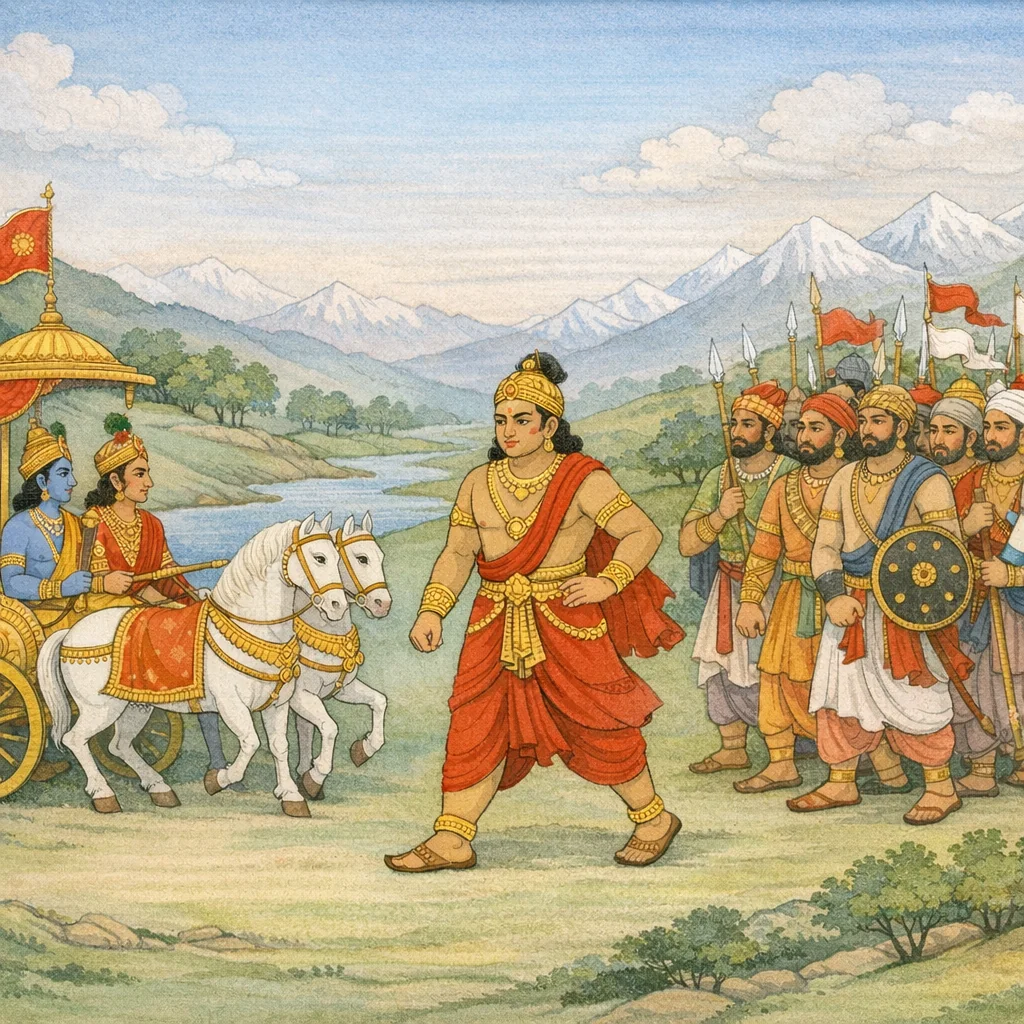
Adhyaya 104
भीमकर्णसमागमः | Bhīma–Karṇa Encounter
Upa-parva: Bhīma–Karṇa Saṃgama (Engagement Episode)
Dhṛtarāṣṭra questions Sañjaya about who could possibly check the enraged Bhīmasena, depicted as time-like and storm-voiced in his destructive momentum against the Kaurava line. Sañjaya reports that Karṇa advances with forceful intent, and the assembly of fighters experiences tremors of fear as Bhīma’s roar spreads across the field. The chapter integrates psychological warfare (sound, intimidation), omen imagery, and immediate tactical exchanges: Karṇa initially strikes Bhīma and his charioteer; Bhīma responds with a dense volley and demonstrates precision by cutting incoming arrows and then severing Karṇa’s bow at the grip. Karṇa re-arms, continues missile fire, but Bhīma disables Karṇa’s chariot system by cutting the bowstring, killing the charioteer, and bringing down the horses. Karṇa leaps to Vṛṣasena’s chariot, while Bhīma proclaims a victorious roar that lifts Pandava morale; Yudhiṣṭhira and the army respond with conches and signals as the duel continues with renewed weapon deployment.
Chapter Arc: रणभूमि में दुर्योधन सबको लाँघकर सामने आ खड़ा होता है; श्रीकृष्ण उसी क्षण अर्जुन से कहते हैं—देखो, यह अद्भुत रथी स्वयं तुम्हें ललकारने आया है। → श्रीकृष्ण दुर्योधन की सामर्थ्य, ऐश्वर्य में पली उसकी दृढ़ता और बान्धव-द्वेष का वर्णन कर अर्जुन को सावधान भी करते हैं और उकसाते भी—यह समय-प्राप्त युद्ध है, इसी पर विजय-पराजय का द्यूत टिका है। उधर दुर्योधन अपने दीर्घकालीन निष्कंटक राज्य-भोग, द्रौपदी-अपमान और पाण्डवों के प्रति वैर को स्मरण कर प्रतिज्ञा-सा क्रोध प्रकट करता है। → अर्जुन-हृषीकेश के सम्मुख आते ही दुर्योधन उन्हें रोकने/टोकने का साहस करता है; कौरव-क्षत्रिय उस धृष्टता को ‘वीरता’ मानकर उसकी प्रशंसा करते हैं, और दोनों पक्षों की दृष्टि एक बिन्दु पर जम जाती है—अब निर्णायक सामना निकट है। → श्रीकृष्ण का प्रोत्साहन अर्जुन के भीतर लक्ष्य-निश्चय को तीक्ष्ण करता है; दुर्योधन का वचन कौरव-पक्ष में उन्माद और आत्मविश्वास भरता है। अध्याय का अंत दोनों सेनाओं के मनोबल के टकराव पर ठहरता है। → अर्जुन और दुर्योधन आमने-सामने हैं—अगला क्षण यह तय करेगा कि यह सामना किस ओर युद्ध की धारा मोड़ेगा।
Shlokas
Verse 1
अप-#-#रा+ द्र्याधेकशततमो< ध्याय: श्रीकृष्णका अर्जुनकी प्रशंसापूर्वक उसे प्रोत्साहन देना, अर्जुन और दुर्योधनका एक-दूसरेके सम्मुख आना, कौरव- सैनिकोंका भय तथा दुर्योधनका अर्जुनको ललकारना वायुदेव उवाच दुर्योधनमतिक्रान्तमेतं पश्य धनंजय । अत्यद्भुतमिमं मन्ये नास्त्यस्य सदृशो रथ:
Vāyudeva said: “Behold, Dhanañjaya—this one has surpassed Duryodhana. I deem this truly astonishing: there is no chariot equal to his.”
Verse 2
श्रीकृष्ण बोले--धनंजय! सबको लाँघकर सामने आये हुए इस दुर्योधनको देखो। मैं तो इसे अत्यन्त अद्भुत योद्धा मानता हूँ। इसके समान दूसरा कोई रथी नहीं है ।। दूरपाती महेष्वास: कृतास्त्रो युद्धदुर्मद: । दृढास्त्रश्चित्रयोधी च धार्तराष्ट्री महाबल:ः,यह महाबली धूृतराष्ट्रपुत्र दूरतकके लक्ष्यको मार गिरानेवाला, महान् धनुर्धर, अस्त्रविद्यामें निपुण और युद्धमें दुर्मद है। इसके अस्त्र-शस्त्र अत्यन्त सुदृढ़ हैं तथा यह विचित्र रीतिसे युद्ध करनेवाला है
Śrī Kṛṣṇa said: “Dhanañjaya, look at this Duryodhana who has overstepped all others and come straight to the front. I regard him as an extraordinarily formidable warrior; there is no other chariot-fighter equal to him. He is a long-range marksman, a great archer, fully trained in weapons, and intoxicated with the pride of battle. His missiles are unyielding, his style of fighting is unconventional, and as Dhṛtarāṣṭra’s son he is possessed of great strength.”
Verse 3
अत्यन्तसुखसंवृद्धों मानितश्च महारथ: । कृती च सतत पार्थ नित्य॑ द्वेष्टि च बान्धवान्,कुन्तीकुमार! महारथी दुर्योधन अत्यन्त सुखसे पला हुआ सम्मानित और दिद्वान् है। यह तुम-जैसे बन्धु-बान्धवोंसे नित्य-निरन्तर द्वेष रखता है
Vāyu said: “O Pārtha, that great chariot-warrior has been reared in excessive comfort and is continually honored. Though capable and accomplished, he constantly bears unceasing hatred toward his own kinsmen.”
Verse 4
तेन युद्धमहं मन्ये प्राप्तकालं तवानघ । अत्र वो द्यूतमायत्तं विजयायेतराय वा,निष्पाप अर्जुन! मैं समझता हूँ, इस समय इसीके साथ युद्ध करनेका अवसर प्राप्त हुआ है। यहाँ तुमलोगोंके अधीन जो रणद्यूत होनेवाला है, वही विजय अथवा पराजयका कारण होगा
Therefore, O sinless one, I judge that the time has now come for you to engage in battle with him. Here, the issue is like a wager of war resting upon you: it will become the very cause of either victory or defeat—depending on how you act at this decisive moment.
Verse 5
अत्र क्रोधविषं पार्थ विमुड्च चिरसम्भृतम् । एष मूलमनर्थानां पाण्डवानां महारथ:,पार्थ! तुम बहुत दिनोंसे सँजोकर रखे हुए अपने क्रोधरूपी विषको इसके ऊपर छोड़ो। महारथी दुर्योधन ही पाण्डवोंके सारे अनर्थोंकी जड़ है
Vāyu said: “Here, O Pārtha, release upon him the poison of your wrath that you have long held in check. This great chariot-warrior is the very root of the Pandavas’ misfortunes.”
Verse 6
सो<थयं प्राप्तस्तवाक्षेपं पश्य साफल्यमात्मन: । कथं हि राजा राज्यार्थी त्वया गच्छेत संयुगम्,आज यह तुम्हारे बाणोंके मार्गमें आ पहुँचा है। इसे तुम अपनी सफलता समझो; अन्यथा राज्यकी अभिलाषा रखनेवाला राजा दुर्योधन तुम्हारे साथ युद्धभूमिमें कैसे उतर सकता था?
Today he has come within the path of your arrows. Count this as your own success; otherwise, how could King Duryodhana, who longs for the kingdom, have come down to the battlefield to fight with you?
Verse 7
दिष्ट्या त्विदानीं सम्प्राप्त एब ते बाणगोचरम् | यथायं जीवितं जह्यात् तथा कुरु धनंजय,धनंजय! सौभाग्यवश यह दुर्योधन इस समय तुम्हारे बाणोंके पथमें आ गया है। तुम ऐसा प्रयत्न करो, जिससे यह अपने प्राणोंको त्याग दे
Vāyu said: “By good fortune, at this very moment he has come within the range of your arrows. Act in such a way, O Dhanañjaya, that this man abandons his life.”
Verse 8
ऐश्वर्यमदसम्मूढो नैष दुःखमुपेयिवान् । नच ते संयुगे वीर्य जानाति पुरुषर्षभ,पुरुषरत्न! ऐश्वर्यके घमंडमें चूर रहनेवाले इस दुर्योधनने कभी कष्ट नहीं उठाया है। यह युद्धमें तुम्हारे बल-पराक्रमको नहीं जानता है
Blinded by the intoxication of power and prosperity, this man has never truly faced hardship. And he does not understand your might in battle, O bull among men—he has not measured the strength and heroism you bring to the field.
Verse 9
त्वां हि लोकास्त्रय: पार्थ ससुरासुरमानुषा: । नोत्सहन्ते रणे जेतुं किमुतिक: सुयोधन:,पार्थ! देवता, असुर और मनुष्योंसहित तीनों लोक भी रणक्षेत्रमें तुम्हें जीत नहीं सकते। फिर अकेले दुर्योधनकी तो औकात ही क्या है?
Vāyu said: “O Pārtha, even the three worlds—together with gods, asuras, and human beings—do not have the power to defeat you in battle. How much less, then, can Suyodhana (Duryodhana) accomplish alone?”
Verse 10
स दिष्ट्या समनुप्राप्तस्तव पार्थ रथान्तिकम् । जह्ोन॑ त्वं महाबाहो यथा वृत्र पुरंदर:,कुन्तीकुमार! सौभाग्यकी बात है कि यह तुम्हारे रथके निकट आ पहुँचा है। महाबाहो! जैसे इन्द्रने वृत्रासुरको मारा था, उसी प्रकार तुम भी इस दुर्योधनको मार डालो
Vāyu said: “By good fortune, O Pārtha, he has come right up to your chariot. O mighty-armed one—strike him down, just as Purandara (Indra) slew Vṛtra.”
Verse 11
एष हानर्थ सततं पराक्रान्तस्तवानघ । निकृत्या धर्मराजं च द्यूते वज्चितवानयम्,अनघ! यह सदा तुम्हारा अनर्थ करनेमें ही पराक्रम दिखाता आया है। इसने धर्मराज युधिष्ठिरको जूएमें छल-कपटसे ठग लिया है
Vāyu said: “This man, O sinless one, has always shown his prowess only in bringing you harm. By deceit he cheated Dharmarāja Yudhiṣṭhira in the game of dice.”
Verse 12
बहूनि सुनृशंसानि कृतान्येतेन मानद । युष्मासु पापमतिना अपापेष्वेव नित्यदा,मानद! तुमलोग कभी इसकी बुराई नहीं करते थे, तो भी इस पापबुद्धि दुर्योधनने सदा तुमलोगोंके साथ बहुत-से क्रूरतापूर्ण बर्ताव किये हैं
Vāyu said: “O bestower of honor, this man has committed many ruthless acts against you. Though you are blameless, that evil-minded Duryodhana has continually behaved with cruelty toward you.”
Verse 13
तमनार्य सदा क्ुद्धं पुरुष कामचारिणम् । आर्या युद्धे मतिं कृत्वा जहि पार्थाविचारयन्,पार्थ! तुम युद्धमें श्रेष्ठ बुद्धिका आश्रय ले बिना किसी सोच-विचारके, सदा क्रोधमें भरे रहनेवाले इस स्वेच्छाचारी दुष्ट पुरुषको मार डालो
Vāyu said: “Slay this ignoble man—ever inflamed with anger and driven by self-will. O Pārtha, having fixed your mind on the noblest resolve in battle, strike him down without hesitation.”
Verse 14
निकृत्या राज्यहरणं वनवासं च पाण्डव । परिक््लेशं च कृष्णाया हृदि कृत्वा पराक्रमम्,पाण्डुनन्दन! दुर्योधनने छलसे तुमलोगोंका राज्य छीन लिया है, तुम्हें जो वनवासका कष्ट भोगना पड़ा है तथा द्रौपदीको जो दुःख और अपमान उठाना पड़ा है--इन सब बातोंको मन-ही-मन याद करके पराक्रम करो
Vāyu said: “O Pāṇḍava, O son of Pāṇḍu—having been robbed of your kingdom by deceit, and having endured exile in the forest, and remembering in your heart the suffering and humiliation borne by Kṛṣṇā (Draupadī), rouse your valor and act with heroic resolve.”
Verse 15
दिष्ट्यैष तव बाणानां गोचरे परिवर्तते । प्रतिघाताय कार्यस्य दिष्ट्या च यततेडग्रत:,सौभाग्यसे ही यह दुर्योधन तुम्हारे बाणोंकी पहुँचके भीतर चक्कर लगा रहा है। यह भी भाग्यकी बात है कि यह तुम्हारे कार्यमें बाधा डालनेके लिये सामने आकर प्रयत्नशील हो रहा है
By good fortune, he now circles within the reach of your arrows. And by that same fortune, he has come forth to the front, striving to thwart your purpose.
Verse 16
दिष्ट्या जानाति संग्रामे योद्धव्यं हि त्वया सह । दिष्ट्या च सफला: पार्थ सर्वे कामा हकामिता:,पार्थ! भाग्यवश समरांगणमें तुम्हारे साथ युद्ध करना यह अपना कर्तव्य समझता है और भाग्यसे ही न चाहनेपर भी तुम्हारे सारे मनोरथ सफल हो रहे हैं
Vāyu said: “By good fortune he understands that, in this battle, it is indeed his duty to fight alongside you. And by that same fortune, O Pārtha, all your aims are being fulfilled—even those you did not deliberately seek.”
Verse 17
तस्माज्जहि रणे पार्थ धार्तराष्ट्र कुलाधमम् । यथेन्द्रेण हत: पूर्व जम्भो देवासुरे मूथे,कुन्तीकुमार! जैसे पूर्वकालमें इन्द्रने देवासुर-संग्राममें जन्मका वध किया था, उसी प्रकार तुम रणक्षेत्रमें कुलकलंक धृतराष्ट्रपुत्र दुर्योधनको मार डालो
Therefore, O Pārtha, strike down in battle that disgrace of the Dhārtarāṣṭra line. Just as Indra once slew Jambha in the war between gods and demons, so should you, son of Kuntī, destroy Duryodhana on the battlefield—removing a stain upon the lineage and restoring the moral order of the war.
Verse 18
अस्मिन् हते त्वया सैन्यमनाथं भिद्यतामिदम् | वैरस्यास्यास्त्ववभूथो मूलं छिन्धि दुरात्मनाम्,इसके मारे जानेपर अनाथ हुई इस कौरव-सेनाका संहार करो, दुरात्माओंकी जड़ काट डालो, जिससे इस वैररूपी यज्ञका अन्त होकर अवभृूथस्नानका अवसर प्राप्त हो
“Now that he has been slain by you, let this Kaurava host—left without its protector—be shattered. Cut off the very root of these wicked men, so that this sacrifice of enmity may reach its conclusion and the final cleansing, like the avabhṛtha bath, may be attained.”
Verse 19
संजय उवाच त॑ तथेत्यब्रवीत् पार्थ: कृत्यरूपमिदं मम | सर्वमन्यदनादृत्य गच्छ यत्र सुयोधन:,संजय कहते हैं--राजन्! तब कुन्तीकुमार अर्जुनने “बहुत अच्छा” कहकर भगवान् श्रीकृष्णसे कहा--“यह मेरे लिये सबसे महान् कर्तव्य प्राप्त हुआ है। अन्य सब कार्योंकी अवहेलना करके आप वहीं चलिये, जहाँ दुर्योधन खड़ा है
Sanjaya said: Then Partha (Arjuna) replied, “So be it,” and said, “This is for me the very form of my duty. Disregarding everything else, go to the place where Suyodhana (Duryodhana) stands.” The verse frames Arjuna’s resolve as a prioritization of dharma in the midst of war: when a decisive obligation presents itself, lesser concerns are set aside in service of the larger moral and strategic necessity.
Verse 20
येनैतद् दीर्घकालं नो भुक्ते राज्यमकण्टकम् | अप्यस्य युधि विक्रम्य छिन्द्यां मूर्धानमाहवे,“जिसने दीर्घकालतक हमारे इस अकंटक राज्यका उपभोग किया है, मैं युद्धमें पराक्रम करके उस दुर्योधनका मस्तक काट डालूँगा
Sañjaya said: “He by whom our kingdom has been enjoyed for a long time, free of thorns and obstacles—against that very Duryodhana, I shall display my valor in battle and, in the thick of war, cut off his head.” The utterance conveys a hardening of resolve into retaliatory violence: prosperity long possessed is invoked as a moral grievance, and the speaker frames beheading as a fitting recompense within the brutal logic of the battlefield.
Verse 21
अपि तस्य हानहाया: परिक्लेशस्य माधव । कृष्णाया: शवनुयां गन्तुं पद केशप्रधर्षणे,“माधव! जो क्लेश भोगनेके योग्य नहीं है, उस द्रौपदीका केश पकड़कर जो उसे अपमानित किया गया है, उसका बदला इस दुर्योधनको मारकर ही चुका सकता हूँ
Sañjaya said: “O Mādhava, for Kṛṣṇā (Draupadī)—who did not deserve such suffering—after her hair was seized and she was thus outraged and humiliated, I can repay that insult only by slaying Duryodhana.”
Verse 22
(अप्यहं तानि दु:खानि पूर्ववृत्तानि माधव । दुर्योधनं रणे हत्वा प्रतिमोक्ष्ये कथंचन ।।) “श्रीकृष्ण! समरांगणमें दुर्योधनका वध करके मैं किसी प्रकार उन सभी दु:खोंसे छुटकारा पा जाऊँगा, जो पूर्वकालमें भोगने पड़े हैं'। इत्येवंवादिनौ कृष्णौ ह्ृष्टौ श्वेतान् हयोत्तमान् | प्रेषषामासतु: संख्ये प्रेप्सन्ती तं॑ नराधिपम्,इस प्रकारकी बातें करते हुए उन दोनों कृष्णोंने युद्धस्थलमें राजा दुर्योधनको अपना लक्ष्य बनानेके लिये हर्षपूर्वक अपने उत्तम सफेद घोड़ोंको उसकी ओर बढ़ाया
Sañjaya said: “O Mādhava, if only I could somehow be freed from those sorrows that have arisen from what has happened before—by slaying Duryodhana in battle.” Speaking thus, the two Kṛṣṇas—gladdened—urged on their excellent white horses in the thick of combat, fixing that king, Duryodhana, as their intended target. The passage frames the warrior’s longing to end accumulated grief through a decisive act in war, while also highlighting how personal suffering and the ethics of vengeance become entangled on the battlefield.
Verse 23
तयो: समीपं सम्प्राप्य पुत्रस्ते भरतर्षभ । न चकार भयं प्राप्ते भये महति मारिष,आर्य! भरतभूषण! आपके पुत्रने उन दोनोंके समीप पहुँचकर महान् भयका अवसर प्राप्त होनेपर भी भय नहीं माना
Sañjaya said: O bull among the Bharatas, your son, having come close to those two, did not yield to fear—even when a great and imminent peril confronted him.
Verse 24
तदस्य क्षत्रियास्तत्र सर्व एवाभ्यपूजयन् । यदर्जुनहृषीकेशौ प्रत्युद्याती न््यवारयत्,अपने सामने आये हुए श्रीकृष्ण और अर्जुनको दुर्योधनने जो रोक दिया, उसके इस कार्यकी वहाँ सभी क्षत्रियोंने भूरि-भूरि प्रशंसा की
Sañjaya said: There, all the kṣatriyas praised him greatly for that deed—because he (Duryodhana) checked Arjuna and Hṛṣīkeśa (Kṛṣṇa) as they advanced to meet him.
Verse 25
ततः सर्वस्य सैन्यस्य तावकस्य विशाम्पते । महानादो हाभूत् तत्र दृष्टया राजानमाहवे,प्रजानाथ! युद्धस्थलमें राजा दुर्योधनको उपस्थित देख आपकी सारी सेनामें महान् सिंहनाद होने लगा
Sañjaya said: Then, O lord of the people, when they saw the king (Duryodhana) present on the battlefield, a great lion-like roar arose throughout your entire army.
Verse 26
तस्मिन् जनसमुन्नादे प्रवृत्ते भैरवे सति । कदर्थीकृत्य ते पुत्र: प्रत्यमित्रमवारयत्,जिस समय वह भयंकर जन-कोलाहल हो रहा था उसी समय आपके पुत्रने अपने शत्रुको कुछ भी न समझकर आगे बढ़नेसे रोक दिया
Sañjaya said: When that dreadful uproar of the masses had arisen, your son, treating the opposing foe as insignificant, advanced and checked him from moving forward.
Verse 27
आवारितस्तु कौन्तेयस्तव पुत्रेण धन्विना । संरम्भमगमद् भूय: स च तस्मिन् परंतप:,आपके धनुर्धर पुत्र दुर्योधनद्वारा रोके जानेपर शत्रुओंको संताप देनेवाले कुन्तीकुमार अर्जुन पुन: उसके ऊपर अत्यन्त कुपित हो उठे
Sañjaya said: When the son of Kuntī, Arjuna, was checked by your bow-bearing son, he flared up once more in fierce wrath; and that scorcher of foes turned his anger upon him.
Verse 28
तौ दृष्टवा पतिसंरब्धौ दुर्योधनधनंजयौ । अभ्यवैक्षन्त राजानो भीमरूपा: समन्ततः,दुर्योधन तथा अर्जुनको परस्पर कुपित देख भयंकर नरेशगण सब ओर खड़े हो चुपचाप देखने लगे
Sañjaya said: Seeing Duryodhana and Dhanañjaya (Arjuna) inflamed with wrath against one another, the kings of dreadful aspect stood all around and watched in silence—aware that a clash between such champions would shake the moral and political order of the battlefield.
Verse 29
दृष्टवा तु पार्थ संरब्धं वासुदेव॑ च मारिष । प्रहसन्नेव पुत्रस्ते योद्धुकाम: समाह्दयत्,आर्य! अर्जुन और श्रीकृष्णको अत्यन्त रोषमें भरे देख आपके पुत्रने जोर-जोरसे हँसते हुए ही युद्धकी इच्छासे उन दोनोंको ललकारा
Sañjaya said: “But when he saw Pārtha (Arjuna) and Vāsudeva (Kṛṣṇa) inflamed with fierce anger, your son—almost laughing aloud—challenged them, driven by the desire to fight.”
Verse 30
ततः प्रहृष्टो दाशा्: पाण्डवश्ष धनंजय: । व्यक्रोशेतां महानादं दश्मतुश्चाम्बुजोत्तमौ,तब हर्षमें भरे हुए श्रीकृष्ण और पाण्डुनन्दन अर्जुनने बड़े जोरसे सिंहनाद किया और अपने उत्तम शंखोंको बजाया
Then, filled with exhilaration, Dāśārha (Śrī Kṛṣṇa) and the Pāṇḍava Dhanañjaya (Arjuna) raised a mighty lion-like roar and blew their excellent conches.
Verse 31
तौ हृष्टरूपौ सम्प्रेक्ष्य कौरवेयास्तु सर्वश: । निराशा: समपद्यन्त पुत्रस्य तव जीविते
Sañjaya said: Seeing those two with faces lit by joy, all the Kaurava warriors, without exception, fell into despair regarding the survival of your son.
Verse 32
उन दोनोंको हर्षोल्लाससे परिपूर्ण देख सम्पूर्ण कौरव-सैनिक आपके पुत्रके जीवनसे निराश हो गये ।। शोकमापु: परे चैव कुरव: सर्व एव ते । अमन्यन्त च पुत्र ते वैश्वानरमुखे हुतम्,अन्य सब कौरव भी शोकमग्न हो गये और आपके पुत्रको आगके मुखमें होम दिया गया--ऐसा मानने लगे
Sañjaya said: All those Kurus on the other side were seized by grief. They concluded that your son had been offered into the mouth of Vaiśvānara—consumed by fire—thus losing hope for his life amid the turmoil of war.
Verse 33
तथा तु दृष्टवा योधास्ते प्रहृष्टो कृष्णपाण्डवौ । हतो राजा हतो राजेत्यूचिरे च भयार्दिता:,श्रीकृष्ण और अर्जुनको इस प्रकार हर्षमग्न देख आपके समस्त सैनिक भयसे पीड़ित हो ऐसा कहते हुए कोलाहल करने लगे कि “हाय! राजा दुर्योधन मारे गये, मारे गये”
Sañjaya said: Seeing Kṛṣṇa and Pāṇḍava (Arjuna) thus exultant, all those warriors of yours—stricken with fear—raised a tumult, crying again and again, “The king is slain! The king is slain!” (meaning Duryodhana).
Verse 34
जनस्य संनिनादं तु श्र॒त्वा दुर्योधनो<ब्रवीत् । व्येतु वो भीरहं कृष्णा प्रेषयिष्यामि मृत्यवे,लोगोंका वह आर्तनाद सुनकर दुर्योधन बोला--“तुमलोगोंका भय दूर हो जाना चाहिये। मैं इन दोनों कृष्णोंको मृत्युके घर भेज दूँगा”
Sañjaya said: Hearing the people’s tumultuous outcry, Duryodhana spoke: “Let your fear be dispelled. I shall send those two Krishnas to the house of Death.”
Verse 35
इत्युक्त्वा सैनिकान् सर्वान् जयापेक्षी नराधिप: । पार्थमाभाष्य संरम्भादिदं वचनमब्रवीत्,अपने सम्पूर्ण सैनिकोंसे ऐसा कहकर विजयकी अभिलाषा रखनेवाले राजा दुर्योधनने कुन्तीकुमारको सम्बोधित करके क्रोधपूर्वक इस प्रकार कहा--
Sañjaya said: Having thus addressed all his soldiers, the king—eager for victory—then spoke to Pārtha (Arjuna). Calling out to Kuntī’s son in a surge of wrath, he uttered these words.
Verse 36
पार्थ यच्छिक्षितं ते<स्त्रं दिव्यं पार्थिवमेव च । तद् दर्शय मयि क्षिप्रं यदि जातो5सि पाण्डुना,'पार्थ! यदि तुम पाण्डुके बेटे हो तो तुमने जो लौकिक एवं दिव्य अस्त्रोंकी शिक्षा प्राप्त की है, उन सबको मेरे ऊपर शीघ्र दिखाओ
Sañjaya said: “O Pārtha, if you are truly born of Pāṇḍu, then quickly display against me the weapons you have been trained in—both the earthly arms and the divine missiles.”
Verse 37
यद् बल॑ तव वीर्य च केशवस्य तथैव च । तत् कुरुष्व मयि क्षिप्रं पश्यामस्तव पौरुषम्,“तुममें और श्रीकृष्णमें जो बल और पराक्रम हो, उसे मेरे ऊपर शीघ्र प्रकट करो। हम देखते हैं कि तुममें कितना पुरुषार्थ है
Sañjaya said: “Whatever strength and heroism you possess—and likewise whatever belongs to Keśava—display it upon me at once. Let us see the measure of your manly prowess.”
Verse 38
अस्मत्परोक्षं कर्माणि कृतानि प्रवदन्ति ते । स्वामिसत्कारयुक्तानि यानि तानीह दर्शय,“हमारे परोक्षमें लोग स्वामीके सत्कारसे युक्त तुम्हारे किये हुए जिन कर्मोंका वर्णन करते हैं, उन्हें यहाँ दिखाओ”
Sañjaya said: “They speak of deeds you have done beyond our sight—deeds marked by due honor and reverence toward your lord. Show those very deeds here (now), so they may be seen and known.”
Verse 101
इस प्रकार श्रीमह्ाभारत द्रोणपर्वके अन्तर्गत जयद्रथवधपर्वमें दुर्योधनका आगमनविषयक एक सौ एकवाँ अध्याय पूरा हुआ
Sañjaya said: Thus ends the one-hundred-and-first chapter in the Jayadratha-slaying section of the Droṇa Parva of the Śrī Mahābhārata, describing the arrival of Duryodhana. This closing colophon marks a narrative turning point in the war: leadership, morale, and responsibility converge as Duryodhana’s appearance signals renewed strategic pressure amid the ethical weight of vengeance and duty on the battlefield.
Verse 102
इति श्रीमहाभारते द्रोणपर्वणि जयद्रथवधपर्वणि दुर्योधनवचने दयथधिकशततमो<्थध्याय:
Thus, in the Śrī Mahābhārata, within the Droṇa Parva—specifically in the section concerning the slaying of Jayadratha—ends the one-hundred-and-second chapter, centered on the words of Duryodhana. This colophon frames the narrative as part of the escalating ethical collapse of war, where speech and counsel become instruments that intensify violence and harden resolve rather than restore dharma.
Frequently Asked Questions
Dhṛtarāṣṭra’s repeated questioning frames a dilemma of kingship and attachment: his concern for his sons conflicts with impartial rājadharma, while the battlefield context tests whether valor and loyalty can be ethically separated from the consequences of partial rule.
The chapter underscores that power in conflict is not only physical but also psychological and procedural: morale, perception, and tactical clarity can shift outcomes rapidly, and attachment-driven interpretation (fear or overconfidence) distorts judgment.
No explicit phalaśruti appears in this passage; its meta-function is structural—linking Dhṛtarāṣṭra’s anxious reception of reports to the epic’s broader inquiry into accountability, consequence, and the limits of control in war.