Adhyaya 92
Adhyāya 92: Irāvanta-śoka, punaḥ-pravṛttiḥ saṅgrāmasya (Arjuna’s grief and the battle’s renewed intensity)
Upa-parva: Bhīṣma-vadha-prastāva (War Progression under Bhīṣma; episodic battle reporting)
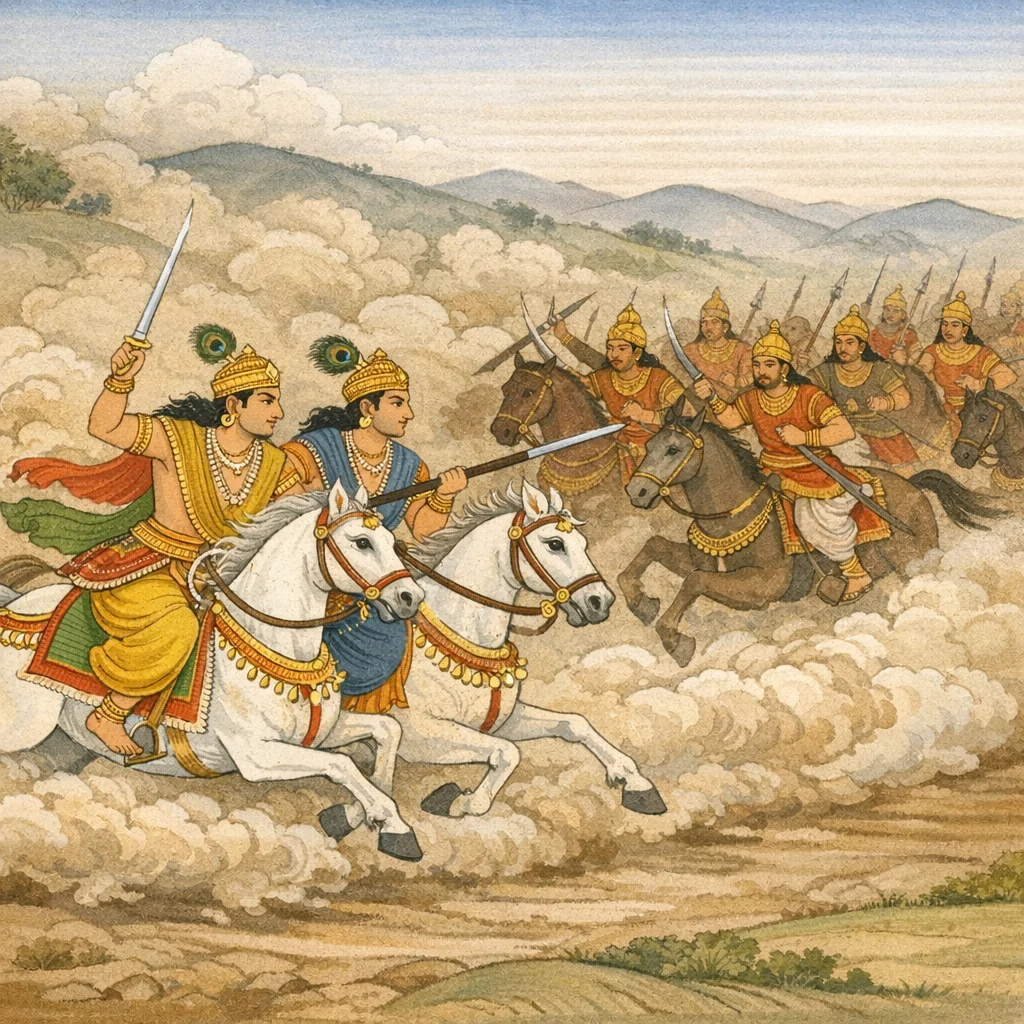
Sañjaya reports that Arjuna (Dhanaṃjaya), hearing of the death of his son Irāvān, is overwhelmed by grief yet converts sorrow into urgent resolve. He addresses Vāsudeva (Kṛṣṇa) with reflective condemnation of wealth-motivated wrongdoing and the kin-destruction produced by Duryodhana’s fault, Śakuni’s influence, and Karṇa’s counsel, recalling Vidura’s earlier foresight about catastrophic loss. Arjuna rejects passivity and orders swift movement against the Dhārtarāṣṭra host. The narrative then shifts to the afternoon engagement: Dhṛtarāṣṭra’s sons converge upon Bhīma; Bhīṣma, Kṛpa, Bhagadattta, and Suśarmā press Arjuna; Hārdikya and Bāhlika engage Sātyaki; Abhimanyu confronts the king of the Ambaṣṭhas and forces a tactical retreat. Bhīma cuts down multiple Kaurava princes despite Droṇa’s attempt to contain him, and the battlefield becomes densely described through catalogues of fallen weapons, armor, and bodies, emphasizing the impersonal scale of destruction. As night falls, visibility ends the engagement; both sides perform a withdrawal and return to their camps in ordered fashion.
Chapter Arc: धृतराष्ट्र, संजय से पूछते हुए, अपने पुत्रों के प्रतिदिन क्षय को देखकर दैव-प्रहार और दुर्भाग्य का विलाप करता है—जहाँ भीष्म, द्रोण और कृप जैसे महाबल हैं, वहाँ भी विजय क्यों नहीं? → संजय युद्धभूमि का घोर चित्र खींचता है: पाण्डव तीन दलों में विभक्त होकर कौरवों का संहार आरम्भ करते हैं, और कौरव भी प्रत्युत्तर में वैसा ही वध करते हैं—युद्ध ‘यमराष्ट्रविवर्धन’ बन जाता है। धृतराष्ट्र का पश्चात्ताप गाढ़ा होता है, क्योंकि हितैषियों की पुरानी चेतावनियाँ (द्यूत रोकने, पाण्डवों से द्रोह न करने) स्मृति में चुभती हैं। → घोर संग्राम अपने चरम पर पहुँचता है—शतशः सहस्रशः योद्धा कटते दिखते हैं; नकुल-सहदेव घुड़सवारों की सेना पर टूट पड़ते हैं, स्वर्ण-कलँगी और आभूषणों से सजे अश्व-समूहों में भगदड़ और विनाश फैलता है। → संजय के वर्णन से स्पष्ट होता है कि यह दिन केवल रणकौशल का नहीं, जनसंहार का है—दोनों पक्षों की सेनाएँ एक-दूसरे को काटती हुई यमलोक की ‘वृद्धि’ कर रही हैं; धृतराष्ट्र के लिए यह समाचार विजय-आशा नहीं, शोक-भार बनकर उतरता है। → अष्टम दिवस के इस भीषण प्रवाह में पाण्डवों के प्रहार का वेग बढ़ता दिखता है—अगले क्षण किस प्रमुख योद्धा पर संकट टूटेगा, यह अनिश्चितता अध्याय के अंत में टंगी रहती है।
Shlokas
Verse 1
/ [दाक्षिणात्य अधिक पाठके २ श्लोक मिलाकर कुल ४६ “लोक हैं] ऑपन-माज बछ। जज: एकोननवतितमो<ध्याय: कौरव-पाण्डव-सेनाका घमासान युद्ध और भयानक जनसंहार धृतराष्ट उवाच दृष्टवा मे निहतान् पुत्रान् बहूनेकेन संजय । भीष्मो द्रोण: कृपश्चैव किमकुर्वत संयुगे,धृतराष्ट्र बोले--संजय! एकमात्र भीमसेनके द्वारा युद्धमें मेरे बहुत-से पुत्रोंको मारा गया देख भीष्म, द्रोण और कृपाचार्यने क्या किया?
Dhṛtarāṣṭra said: “Seeing that many of my sons have been slain by a single warrior, Sañjaya—what did Bhīṣma, Droṇa, and Kṛpa do in the battle?”
Verse 2
अहन्यहनि मे पुत्रा: क्षयं गच्छन्ति संजय । मन्ये5हं सर्वथा सूत दैवेनोपहता भूशम्,मेरे पुत्र प्रतिदिन नष्ट होते जा रहे हैं। सूत! मेरा तो ऐसा विश्वास है कि हमलोग सर्वथा अत्यन्त दुर्भाग्यके मारे हुए हैं
Dhṛtarāṣṭra said: “Day after day my sons are being destroyed, O Sañjaya. O charioteer, I am convinced that we are utterly struck down by fate—overwhelmed by misfortune.”
Verse 3
यत्र मे तनया: सर्वे जीयन्ते न जयन्त्युत । यत्र भीष्मस्य द्रोणस्य कृपस्थ च महात्मन:,दुर्भाग्यके अधीन होनेके कारण ही मेरे पुत्र हारते जा रहे हैं; विजयी नहीं हो रहे हैं। जहाँ भीष्म, द्रोण, महामना कृपाचार्य, वीरवर भूरिश्रवा, भगदत्त, अश्वत्थामा तथा युद्धमें पीठ न दिखानेवाले अन्य शूरवीरोंके बीचमें रहकर भी मेरे पुत्र प्रतिदिन संग्राममें मारे जाते हैं, वहाँ दुर्भाग्यके सिवा और क्या कारण हो सकता है?
Dhṛtarāṣṭra said: “In that place where all my sons are being defeated and do not win—where, even with Bhīṣma, Droṇa, and the great-souled Kṛpa present—my sons still suffer reverses, what else can be the cause but my ill-fortune?”
Verse 4
सौमदत्तेश्न वीरस्य भगदत्तस्य चो भयो: । अश्वत्थाम्नस्तथा तात शूराणामनिवर्तिनाम्,दुर्भाग्यके अधीन होनेके कारण ही मेरे पुत्र हारते जा रहे हैं; विजयी नहीं हो रहे हैं। जहाँ भीष्म, द्रोण, महामना कृपाचार्य, वीरवर भूरिश्रवा, भगदत्त, अश्वत्थामा तथा युद्धमें पीठ न दिखानेवाले अन्य शूरवीरोंके बीचमें रहकर भी मेरे पुत्र प्रतिदिन संग्राममें मारे जाते हैं, वहाँ दुर्भाग्यके सिवा और क्या कारण हो सकता है?
Dhṛtarāṣṭra said: “O dear one, even while the heroic son of Somadatta (Bhūriśravas), Bhagadatta, and likewise Aśvatthāman—warriors who do not turn back from battle—are present, my sons are being slain day after day in the fight. What cause can there be for this except misfortune?”
Verse 5
अन््येषां चैव शूराणां मध्यगास्तनया मम । यदहन्यन्त संग्रामे किमन्यद् भागधेयत:,दुर्भाग्यके अधीन होनेके कारण ही मेरे पुत्र हारते जा रहे हैं; विजयी नहीं हो रहे हैं। जहाँ भीष्म, द्रोण, महामना कृपाचार्य, वीरवर भूरिश्रवा, भगदत्त, अश्वत्थामा तथा युद्धमें पीठ न दिखानेवाले अन्य शूरवीरोंके बीचमें रहकर भी मेरे पुत्र प्रतिदिन संग्राममें मारे जाते हैं, वहाँ दुर्भाग्यके सिवा और क्या कारण हो सकता है?
Dhṛtarāṣṭra said: “Even while surrounded by other mighty warriors, my sons—standing in their very midst—are being slain in battle day after day. If this is happening, what else can be the cause except fate—my own ill-luck that overpowers all human effort?”
Verse 6
न हि दुर्योधनो मन्द: पुरा प्रोक्तमबुध्यत । वार्यमाणो मया तात भीष्मेण विदुरेण च,मूर्ख दुर्योधनने पहले मेरी कही हुई बातोंपर ध्यान नहीं दिया। तात! मैंने, भीष्मने, विदुरने तथा गान्धारीने भी सदा हितकी इच्छासे दुर्बुद्धि दुर्योधनको बार-बार मना किया; परंतु मोहवश पूर्वकालमें हमारी ये बातें उसके समझमें नहीं आयीं। उसीका यह फल अब प्राप्त हुआ है, जिससे भीमसेन समरांगणमें कुपित होकर मेरे मूर्ख पुत्रोंको प्रतिदिन यमलोक भेज रहा है
Dhṛtarāṣṭra said: “For Duryodhana was not truly dull-witted; yet in earlier days he failed to understand what had been spoken to him. Though I, dear son, and Bhīṣma and Vidura repeatedly tried to restrain him, he would not heed counsel. Thus, through delusion and obstinacy, he rejected well-wishing advice—and the bitter consequence of that refusal has now ripened into ruin.”
Verse 7
गान्धार्या चैव दुर्मेधा: सततं हितकाम्यया । नाबुध्यत पुरा मोहात् तस्य प्राप्तमिदं फलम्,मूर्ख दुर्योधनने पहले मेरी कही हुई बातोंपर ध्यान नहीं दिया। तात! मैंने, भीष्मने, विदुरने तथा गान्धारीने भी सदा हितकी इच्छासे दुर्बुद्धि दुर्योधनको बार-बार मना किया; परंतु मोहवश पूर्वकालमें हमारी ये बातें उसके समझमें नहीं आयीं। उसीका यह फल अब प्राप्त हुआ है, जिससे भीमसेन समरांगणमें कुपित होकर मेरे मूर्ख पुत्रोंको प्रतिदिन यमलोक भेज रहा है
Dhṛtarāṣṭra said: “Even Gāndhārī, ever desiring his welfare, repeatedly counseled that dull-witted one; yet, blinded by delusion, he did not understand in earlier times. This is the very fruit of that folly now come to him—so that Bhīmasena, enraged on the battlefield, is sending my foolish sons day after day to the realm of Death.”
Verse 8
यद् भीमसेन: समरे पुत्रान् मम विचेतस: । अहन्यहनि संक्रुद्धो नयते यमसादनम्,मूर्ख दुर्योधनने पहले मेरी कही हुई बातोंपर ध्यान नहीं दिया। तात! मैंने, भीष्मने, विदुरने तथा गान्धारीने भी सदा हितकी इच्छासे दुर्बुद्धि दुर्योधनको बार-बार मना किया; परंतु मोहवश पूर्वकालमें हमारी ये बातें उसके समझमें नहीं आयीं। उसीका यह फल अब प्राप्त हुआ है, जिससे भीमसेन समरांगणमें कुपित होकर मेरे मूर्ख पुत्रोंको प्रतिदिन यमलोक भेज रहा है
Dhṛtarāṣṭra said: “Since Bhīmasena, enraged in battle, is sending my senseless sons day after day to the abode of Yama, the bitter consequence has now arrived. Foolish Duryodhana did not heed the counsel spoken earlier for his welfare—by me, by Bhīṣma, by Vidura, and by Gāndhārī. Deluded in former times, he failed to understand our words; and now that very blindness bears fruit as my sons are slain in the war.”
Verse 9
संजय उवाच इदं तत् समनुप्राप्तं क्षत्तुर्वचनमुत्तमम् । न बुद्धवानसि विभो प्रोच्यमानं हित॑ तदा,संजयने कहा--प्रभो! उस समय आपने जो विदुरजीके कहे हुए उत्तम एवं हितकारक वचनको नहीं सुना (सुनकर भी उसपर ध्यान नहीं दिया), उसीका यह फल प्राप्त हुआ है
Sañjaya said: “This is precisely the consequence that has now come upon you. O mighty lord, at that time you did not heed the excellent and beneficial counsel spoken by the chamberlain (Vidura), even as it was being urged upon you.”
Verse 10
निवारय सुतान् द्यूतात् पाण्डवान् मा द्रुहेति च । सुहृदां हितकामानां ब्रुवतां तत् तदेव च,उन्होंने कहा था कि “आप अपने पुत्रोंको जूआ खेलनेसे रोकिये। पाण्डवोंसे द्रोह न कीजिये।” आपका हित चाहनेवाले अन्यान्य सुहृदोंने भी आपसे वे ही बातें कही थीं; परंतु जैसे मरणासन्न पुरुषको हितकारक ओषधि अच्छी नहीं लगती, उसी प्रकार आप उन हितकर वचनोंको सुनना भी नहीं चाहते थे। अतः श्रेष्ठ विदुरने जैसा बताया था, वैसा ही परिणाम आपके सामने आया है
Sañjaya said: “Restrain your sons from gambling; do not commit hostility against the Pāṇḍavas.” Thus did well-wishing friends, desiring your good, repeatedly counsel you with the same advice. Yet you would not accept those salutary words—just as a man near death finds wholesome medicine distasteful. Therefore, the outcome has come before you exactly as the noble Vidura had foretold.
Verse 11
न शुश्रूषसि तद् वाक्यं मर्त्य: पथ्यमिवौषधम् | तदेव त्वामनुप्राप्तं वचनं साधुभाषितम्,उन्होंने कहा था कि “आप अपने पुत्रोंको जूआ खेलनेसे रोकिये। पाण्डवोंसे द्रोह न कीजिये।” आपका हित चाहनेवाले अन्यान्य सुहृदोंने भी आपसे वे ही बातें कही थीं; परंतु जैसे मरणासन्न पुरुषको हितकारक ओषधि अच्छी नहीं लगती, उसी प्रकार आप उन हितकर वचनोंको सुनना भी नहीं चाहते थे। अतः श्रेष्ठ विदुरने जैसा बताया था, वैसा ही परिणाम आपके सामने आया है
Sañjaya said: You did not heed that counsel—just as a mortal on the brink of death finds wholesome medicine unpalatable. Therefore the very well-spoken warning has now come upon you as its consequence: the good advice you refused to hear has returned as fate fulfilled.
Verse 12
विदुरद्रोणभीष्माणां तथान्येषां हितैषिणाम् । अकृत्वा वचन पथ्यं क्षयं गच्छन्ति कौरवा:,विदुर, द्रोण, भीष्म तथा अन्य हितैषियोंके हितकर वचनोंको न माननेके कारण इन कौरवोंका विनाश हो रहा है
Sañjaya said: Because the Kauravas have not heeded the wholesome and beneficial counsel of Vidura, Drona, Bhishma, and other well-wishers, they are now moving toward ruin.
Verse 13
तदेतत् समनुप्राप्तं पूर्वमेव विशाम्पते । तस्मात् त्वं शृणु तत्त्वेन यथा युद्धमवर्तत,प्रजापालक नरेश! यह सब तो पहलेसे ही प्राप्त है। अब आप जिस प्रकार युद्ध हुआ, उसका यथावत् समाचार सुनिये
Sañjaya said: “O lord of the people, this outcome had already come to pass beforehand. Therefore, listen attentively and in truth as I recount how the battle unfolded.”
Verse 14
मध्याल्वे सुमहारौद्र: संग्राम: समपद्यत । लोकक्षयकरो राजंस्तन्मे निगदत: शृणु,राजन्! उस दिन दोपहर होते-होते बड़ा भयंकर संग्राम होने लगा, जो सम्पूर्ण जगत्के योद्धाओंका विनाश करनेवाला था। वह सब मैं कह रहा हूँ, सुनिये
Sañjaya said: “By midday, O King, a battle of exceedingly dreadful fury had arisen—one that brought destruction upon the world’s warriors. Hear from me, O King, as I recount it.”
Verse 15
ततः सर्वाणि सैन्यानि धर्मपुत्रस्य शासनात् | संरब्धान्यभ्यवर्तन्त भीष्ममेव जिघांसया,तदनन्तर धर्मपुत्र युधिष्ठिरके आदेशसे क्रोधमें भरी हुई उनकी सारी सेनाएँ भीष्मपर ही टूट पड़ीं। वे भीष्मको मार डालना चाहती थीं
Then, at the command of Dharmaputra (Yudhiṣṭhira), all his divisions—enraged and steeled with fierce resolve—surged forward, pressing straight against Bhīṣma alone, intent on killing him.
Verse 16
धृष्टद्युम्न: शिखण्डी च सात्यकिश्व महारथ: । युक्तानीका महाराज भीष्ममेव समभ्ययु:,महाराज! धृष्टद्युम्न, शिखण्डी तथा महारथी सात्यकि--इन सबने अपनी सेनाओंके साथ भीष्मपर ही आक्रमण किया
Sañjaya said: O King, Dhrishtadyumna, Shikhandi, and Satyaki—the great chariot-warrior—having their battle-formations properly arrayed, advanced straight against Bhīṣma.
Verse 17
विराटो द्रुपदश्चैव सहिता: सर्वसोमकै: । अभ्यद्रवन्त संग्रामे भीष्ममेव महारथम्,राजा विराट और सम्पूर्ण सोमकोंसहित ट्रुपदने संग्राममें महारथी भीष्मपर ही चढ़ाई की
Sañjaya said: King Virāṭa and Drupada, accompanied by all the Somakas, charged in the battle straight at Bhīṣma—the great chariot-warrior.
Verse 18
केकया धृष्टकेतुश्च कुन्तिभोजश्न दंशित: । युक्तानीका महाराज भीष्ममेव समभ्ययु:,नरेश्वर! केकय, धृष्टकेतु और कवचधारी कुन्तिभोज--इन सबने अपनी सेनाओंके साथ भीष्मपर ही धावा किया
Sañjaya said: O great king, the Kekayas, Dhṛṣṭaketu, and the armor-clad Kuntibhoja—arrayed with their properly organized battle-formations—advanced together and charged straight at Bhīṣma.
Verse 19
अर्जुनो द्रौपदेयाश्व चेकितानश्व वीर्यवान् । दुर्योधनसमादिष्टान् राज्ञ: सर्वान् समभ्ययु:,अर्जुन, द्रौपदीके पाँचों पुत्र और पराक्रमी चेकितान--ये दुर्योधनके भेजे हुए समस्त राजाओंपर चढ़ आये
Sañjaya said: Arjuna, the sons of Draupadī, and the valiant Cekitāna charged against all those kings who had been dispatched at Duryodhana’s command.
Verse 20
अभिमन्युस्तथा शूरो हैडिम्बश्न महारथ: । भीमसेनश्न संक्रुद्धस्तेड भ्यधावन्त कौरवान्,शूरवीर अभिमन्यु, महारथी घटोत्कच तथा क्रोधमें भरे हुए भीमसेन--इन सबने कौरवोंपर धावा किया
Sañjaya said: The valiant Abhimanyu, Ghaṭotkaca—the great chariot-warrior of the Haiḍimba line—and Bhīmasena, filled with wrath, together charged against the Kauravas.
Verse 21
त्रिधाभूतैरवध्यन्त पाण्डवै: कौरवा युधि । तथैव कौरवै राजन्नवध्यन्त परे रणे,राजन! पाण्डवोंने तीन दलोंमें विभक्त होकर कौरवोंका वध आरम्भ किया। इसी प्रकार कौरव भी रणभूमिमें शत्रुओंका नाश करने लगे
Sañjaya said: O King, in battle the Kauravas were being slain by the Pāṇḍavas, who had divided themselves into three formations; and in the same way, O King, the Kauravas too began to destroy their foes on that great field of combat.
Verse 22
द्रोणस्तु रथिन: श्रेष्ठानू सोमकान् सूंजयै: सह । अभ्यधावत संक्रुद्धः प्रेषयिष्यन् यमक्षयम्,द्रोणाचार्यने श्रेष्ठ रथी सोमकों और सूंजयोंको यमलोक भेजनेके लिये क्रोधपूर्वक उनके ऊपर धावा बोल दिया
Sañjaya said: Drona, intent on sending the foremost chariot-warriors of the Somakas—together with the Sṛñjayas—to the abode of Yama, charged at them in wrath.
Verse 23
तत्राक्रन्दो महानासीत् सूंजयानां महात्मनाम् | वध्यतां समरे राजन् भारद्वाजेन धन्विना,राजन! धनुर्धर द्रोणाचार्यके द्वारा समरभूमिमें मारे जाते हुए महामना सूंजयोंका महान् आर्तनाद सुनायी देने लगा
Sañjaya said: There arose a mighty cry of anguish from the noble Sṛñjayas, O King, as they were being cut down in battle by the bowman Bhāradvāja (Droṇa).
Verse 24
द्रोणेन निहतास्तत्र क्षत्रिया बहवो रणे । विचेष्टन्तो हादृश्यन्त व्याधिक्लिष्टा नरा इव,द्रोणाचार्यके मारे हुए बहुत-से क्षत्रिय रणभूमिमें व्याधिग्रस्त मनुष्योंकी भाँति छटपटाते हुए दिखायी देते थे
Sañjaya said: There on the battlefield, many kṣatriya warriors, struck down by Droṇa, were seen writhing and struggling—like men tormented by disease.
Verse 25
कूजतां क्रन्दतां चैव स्तनतां चैव भारत । अनिशं शुश्रुवे शब्द: क्षुत्क्लिष्टानां नूगामिव,भरतनन्दन! भूखसे पीड़ित मनुष्योंकी भाँति कूजते, क्रन्दन करते और गरजते हुए योद्धाओंका शब्द निरन्तर सुनायी देता था
Sañjaya said: “O Bhārata, there was heard without cease the tumult of warriors—chirping cries, wails, and thunderous roars—like the confused clamour of a multitude of people tormented by hunger.”
Verse 26
तथैव कौरवेयाणां भीमसेनो महाबल: । चकार कदनं घोरें क्रुद्ध/ काल इवापर:
Sañjaya said: “In the same manner, mighty Bhīmasena wrought a dreadful slaughter among the sons of the Kuru line—wrathful, like Death (Kāla) himself in another form.”
Verse 27
इसी प्रकार महाबली भीमसेन क्रोधमें भरे हुए दूसरे कालके समान कौरव सैनिकोंका घोर संहार करने लगे ।। वध्यतां तत्र सैन्यानामन्योन्येन महारणे । प्रावर्तत नदी घोरा रुधिरौघप्रवाहिनी,उस महायुद्धमें परस्पर मारकाट करनेवाले सैनिकोंकी रक्तराशिको प्रवाहित करनेवाली एक भयंकर नदी बह चली
Sañjaya said: In this manner the mighty Bhimasena, filled with wrath, became like a second Death itself and began a dreadful destruction of the Kaurava host. In that great battle, as the armies slaughtered one another, a terrifying river seemed to flow—carrying torrents of blood.
Verse 28
स संग्रामो महाराज घोररूपो5भवन्महान् । कुरूणां पाण्डवानां च यमराष्ट्रविवर्धन:,महाराज! कौरवों और पाण्डवोंका वह घोर महा-संग्राम यमलोककी वृद्धि करनेवाला था
Sañjaya said: O King, that great battle—terrible in form—arose between the Kurus and the Pāṇḍavas, a conflict that swelled the realm of Yama, for it sent multitudes to death.
Verse 29
ततो भीमो रणे क्रुद्धो रभसश्न विशेषतः । गजानीकं समासाद्य प्रेषयामास मृत्यवे,तब युद्धमें विशेष वेगशाली भीमसेनने कुपित हो हाथियोंकी सेनामें प्रवेशकर उन्हें कालके गालमें भेजना आरम्भ किया
Then Bhīma, enraged in the thick of battle and driven by exceptional impetuous force, charged straight into the elephant-corps and began sending them to Death—cutting down the enemy’s mighty mounts and their riders without hesitation.
Verse 30
तत्र भारत भीमेन नाराचाभिहता गजा: । पेतुर्नेंदुश्च सेदुश्न दिशश्व परिबशभ्रमु:,भारत! वहाँ भीमके नाराचोंसे पीड़ित हुए हाथी गिरते, चिग्घाड़ते, बैठ जाते अथवा सम्पूर्ण दिशाओंमें चक्कर लगाने लगते थे
There, O Bhārata, elephants struck by Bhīma’s sharp arrows fell down; some trumpeted in pain, some sank to the ground and sat helplessly, and others, maddened by wounds, wheeled about in all directions. The scene reveals the brutal momentum of battle, where even the mightiest creatures are brought low, and a warrior’s prowess yields both tactical advantage and widespread suffering.
Verse 31
छिन्नहस्ता महानागाश्शकछिन्नगात्राश्ष मारिष । क्रौज्चवद् व्यनदन् भीता: पृथिवीमधिशेरते,आर्य! सूँड़ तथा दूसरे-दूसरे अंगोंके कट जानेसे हाथी भयभीत हो क्रौंच पक्षीकी भाँति चीत्कार करते और धराशायी हो जाते थे
Sañjaya said: “O venerable sir, the great elephants—some with their ‘hands’ (trunks/forelimbs) severed and others with their limbs cut by the blows of weapons—cried out in terror like krauñca birds and collapsed upon the earth. The scene shows the pitiless momentum of battle, where even the mightiest creatures are reduced to suffering, underscoring the grave moral weight of violence and the tragic cost of war.”
Verse 32
नकुल: सहदेवश्न हयानीकमभिद्रुतौ । ते हया: काज्चनापीडा रुक्मभाण्डपरिच्छदा:
Sañjaya said: Nakula and Sahadeva charged straight at the enemy’s cavalry. Those horses were splendidly adorned—crowned with golden head-ornaments and equipped with trappings set with gold—signaling the wealth and pride of the force they were about to break. In the moral atmosphere of the Kurukṣetra war, the verse underscores how outward grandeur and martial display do not shield an army from the consequences of righteous resistance and determined valor.
Verse 33
पतड्धिस्तुरगै राजन् समास्तीर्यत मेदिनी,राजन! वहाँ गिरते हुए घोड़ोंकी लाशोंसे सारी पृथ्वी पट गयी। किन्हींकी जीभ निकल आयी थी, कोई लंबी साँस खींच रहे थे, कोई धीरे-धीरे अव्यक्त शब्द करते और कितनोंके प्राण निकल गये थे। नरश्रेष्ठट इस प्रकार विभिन्न रूपधारी घोड़ोंसे आच्छादित होनेके कारण इस पृथ्वीकी अद्भुत शोभा हो रही थी
Sañjaya said: O King, the earth seemed spread over with fallen horses. The battlefield ground lay covered with their bodies—some with tongues protruding, some drawing long, laboured breaths, some uttering faint, indistinct sounds, and many already bereft of life. Thus, O best of men, the earth assumed a strange and terrible splendour, being overlaid with horses of varied forms—an image that underscores the grievous cost of war and the moral weight borne by those who choose it.
Verse 34
निज्द्रिश्न श्वसद्धिश्व कूजद्धिश्व गतासुभि: । हयैर्बभौ नरश्रेष्ठ नानारूपधरैर्धरा,राजन! वहाँ गिरते हुए घोड़ोंकी लाशोंसे सारी पृथ्वी पट गयी। किन्हींकी जीभ निकल आयी थी, कोई लंबी साँस खींच रहे थे, कोई धीरे-धीरे अव्यक्त शब्द करते और कितनोंके प्राण निकल गये थे। नरश्रेष्ठट इस प्रकार विभिन्न रूपधारी घोड़ोंसे आच्छादित होनेके कारण इस पृथ्वीकी अद्भुत शोभा हो रही थी
Sañjaya said: O King, the earth appeared covered with fallen horses—some still drawing long, laboured breaths, some making faint, indistinct cries, and many already bereft of life. Thus, strewn with horses of varied forms, the battlefield-ground took on a grim, astonishing spectacle, revealing the terrible cost of war and the fragility of life amid the clash of kṣatriya duty.
Verse 35
अर्जुनेन हतै: संख्ये तथा भारत राजभि: । प्रबभौ वसुधा घोरा तत्र तत्र विशाम्पते,भारत! प्रजानाथ! जहाँ-तहाँ अर्जुनके द्वारा युद्धमें मारे गये राजाओंसे भरी हुई वह रणभूमि बड़ी भयानक जान पड़ती थी
Sañjaya said: “O Bhārata, lord of the people, ruler of men—here and there across the battlefield the earth looked dreadful, strewn with kings slain in the press of war by Arjuna and by other royal warriors. The scene proclaimed the terrible cost of kṣatriya conflict, where fame and duty are pursued amid widespread ruin.”
Verse 36
रथैर्भग्नैर्ध्वजैश्छिन्नैनिकृत्तै श्न महायुधै: । चामरैरव्यजनैश्वैव छत्रैश्न सुमहाप्रभै:,राजन! टूटे हुए रथ, कटे हुए ध्वज, छिन्न-भिन्न हुए बड़े-बड़े आयुध, चँवर, व्यजन, अत्यन्त प्रकाशमान छत्र, सोनेके हार, केयूर, कुण्डलमण्डित मस्तक, गिरे हुए शिरोभूषण (पगड़ी आदि), पताका, सुन्दर अनुकर्ष,- जोत और बागडोर आदिसे आच्छादित हुई वह संग्रामभूमि ऐसी जान पड़ती थी, मानो वसन्तऋतुमें उसपर भाँति-भाँतिके फूल गिरे हुए हों
Sañjaya said: “O King, the battlefield was strewn with shattered chariots, severed banners, and great weapons hewn apart; with fallen chowries and fans, and with splendid, intensely radiant parasols. Thus the ground of war appeared covered over with the proud emblems of warriors—an image that underscores how martial glory, once upheld as honor, is reduced by violence into scattered remnants.”
Verse 37
हारै्निष्कै: सकेयूरै: शिरोभिश्व सकुण्डलै: । उष्णीषैरपविद्धैश्व॒ पताकाभिक्षु सर्वश:,राजन! टूटे हुए रथ, कटे हुए ध्वज, छिन्न-भिन्न हुए बड़े-बड़े आयुध, चँवर, व्यजन, अत्यन्त प्रकाशमान छत्र, सोनेके हार, केयूर, कुण्डलमण्डित मस्तक, गिरे हुए शिरोभूषण (पगड़ी आदि), पताका, सुन्दर अनुकर्ष,- जोत और बागडोर आदिसे आच्छादित हुई वह संग्रामभूमि ऐसी जान पड़ती थी, मानो वसन्तऋतुमें उसपर भाँति-भाँतिके फूल गिरे हुए हों
Sañjaya said: “O King, the battlefield was strewn everywhere with golden necklaces and coins, armlets, and severed heads still adorned with earrings; with turbans and head-ornaments cast down; and with fallen banners in all directions. Thus covered with the costly remnants of warriors and their insignia, the field of combat appeared as though, in the spring season, it had been showered with many kinds of blossoms—an image that heightens the tragic irony of war, where beauty is born from ruin and the marks of honor become the debris of violence.”
Verse 38
अनुकर्ष: शुभ राजन् योक्त्रैश्वेव सरश्मिभि: । संकीर्णा वसुधा भाति वसन्ते कुसुमैरिव,राजन! टूटे हुए रथ, कटे हुए ध्वज, छिन्न-भिन्न हुए बड़े-बड़े आयुध, चँवर, व्यजन, अत्यन्त प्रकाशमान छत्र, सोनेके हार, केयूर, कुण्डलमण्डित मस्तक, गिरे हुए शिरोभूषण (पगड़ी आदि), पताका, सुन्दर अनुकर्ष,- जोत और बागडोर आदिसे आच्छादित हुई वह संग्रामभूमि ऐसी जान पड़ती थी, मानो वसन्तऋतुमें उसपर भाँति-भाँतिके फूल गिरे हुए हों
Sañjaya said: “O noble king, the earth appeared strewn over with anukarṣas (drag-ropes), yokes, and reins, and it shone as though, in the spring season, it had been covered with fallen blossoms. The image underscores the terrible irony of war: what should be the beauty of renewal is here mirrored by the scattered remnants of battle—splendor turned into ruin, and ornament into evidence of destruction.”
Verse 39
एवमेष क्षयो वृत्त: पाण्डूनामपि भारत । क्रुद्धे शान्तनवे भीष्मे द्रोणे च रथसत्तमे,भारत! शान्तनुनन्दन भीष्म, रथियोंमें श्रेष्ठ द्रोणाचार्य, अश्वत्थामा, कृपाचार्य और कृतवर्मा--इनके कुपित होनेसे पाण्डव सैनिकोंका भी इस प्रकार यह संहार हुआ था। साथ ही पाण्डवोंके कुपित होनेसे आपके योद्धाओंका भी ऐसा ही विकट विनाश हुआ था
Sañjaya said: “O Bhārata, such was the destruction that befell even the sons of Pāṇḍu. When Śāntanu’s son Bhīṣma was enraged, and when Droṇa—the foremost of chariot-warriors—was likewise wrathful, the Pāṇḍava host met with this kind of ruin.”
Verse 40
अश्व॒त्थाम्नि कृपे चैव तथैव कृतवर्मणि । तथेतरेषु क्रुद्धेघु तावकानामपि क्षय:,भारत! शान्तनुनन्दन भीष्म, रथियोंमें श्रेष्ठ द्रोणाचार्य, अश्वत्थामा, कृपाचार्य और कृतवर्मा--इनके कुपित होनेसे पाण्डव सैनिकोंका भी इस प्रकार यह संहार हुआ था। साथ ही पाण्डवोंके कुपित होनेसे आपके योद्धाओंका भी ऐसा ही विकट विनाश हुआ था
Sañjaya said: “When Aśvatthāmā, Kṛpa, and likewise Kṛtavarman—and the other warriors as well—were inflamed with wrath, there was destruction even among your own men, O Bhārata. In this war, anger did not spare either side; the same fury that cut down the Pāṇḍava host also brought a dreadful ruin upon the Kaurava forces.”
Verse 88
इस प्रकार श्रीमह्याभारत भीष्मपर्वके अन्तर्गत भीष्मवधपर्वमें युनाभ आदि धृतराष्ट्रके पुत्रोका वधविषयक अद्ठासीवाँ अध्याय पूरा हुआ
Sanjaya concludes: Thus, in the Śrī Mahābhārata, within the Bhīṣma Parva—specifically in the section concerning Bhīṣma’s slaying—the eighty-eighth chapter, dealing with the killing of Dhṛtarāṣṭra’s sons beginning with Yudhnābha and others, is completed. The closing formula underscores the relentless moral and political unraveling of the Kaurava line as the war’s consequences intensify.
Verse 89
इति श्रीमहा भारते भीष्मपर्वणि भीष्मवधपर्वणि अष्टमदिवसयुद्धे एकोननवतितमो<ध्याय:
Thus ends the eighty-ninth chapter in the Bhīṣma Parva of the Śrī Mahābhārata, within the section concerning the slaying of Bhīṣma, describing the battle of the eighth day. This closing colophon frames the narrative as part of the larger ethical tragedy of war, marking a formal pause in the account of duty, strategy, and the mounting cost of conflict.
Verse 326
वध्यमाना व्यदृश्यन्त शतशो5थ सहस्रश: । नकुल और सहदेवने घुड़सवारोंकी सेनापर आक्रमण किया। राजन! उन घोड़ोंने सोनेकी कलँगी तथा सोनेके ही अन्यान्य आभूषण धारण किये थे। वे सब सैकड़ों और सहस्रोंकी संख्यामें मरकर गिरते दिखायी देते थे
Sañjaya said: As they were being cut down, they could be seen falling in their hundreds and even in their thousands. Nakula and Sahadeva charged the cavalry host; O King, those horses bore golden crests and other ornaments of gold. Yet on the battlefield, neither prowess nor royal splendor can shield beings from the fruits of violence, and mass death stands as a stark moral backdrop to the struggle for power.
Frequently Asked Questions
Arjuna articulates a dharma-saṅkaṭa: whether any political gain or material objective can justify kin-destruction, especially when the conflict is traced to preventable policy failures and harmful counsel.
The chapter frames responsibility as multi-layered: personal duty operates within the outcomes of governance, counsel, and prior choices; grief is acknowledged as legitimate, yet action is portrayed as proceeding under the constraints of role and time.
No explicit phalaśruti appears here; the meta-function is archival and diagnostic—Sañjaya’s report and the material catalogues serve as narrative evidence for later ethical reflection on causality, leadership, and the cost of escalation.