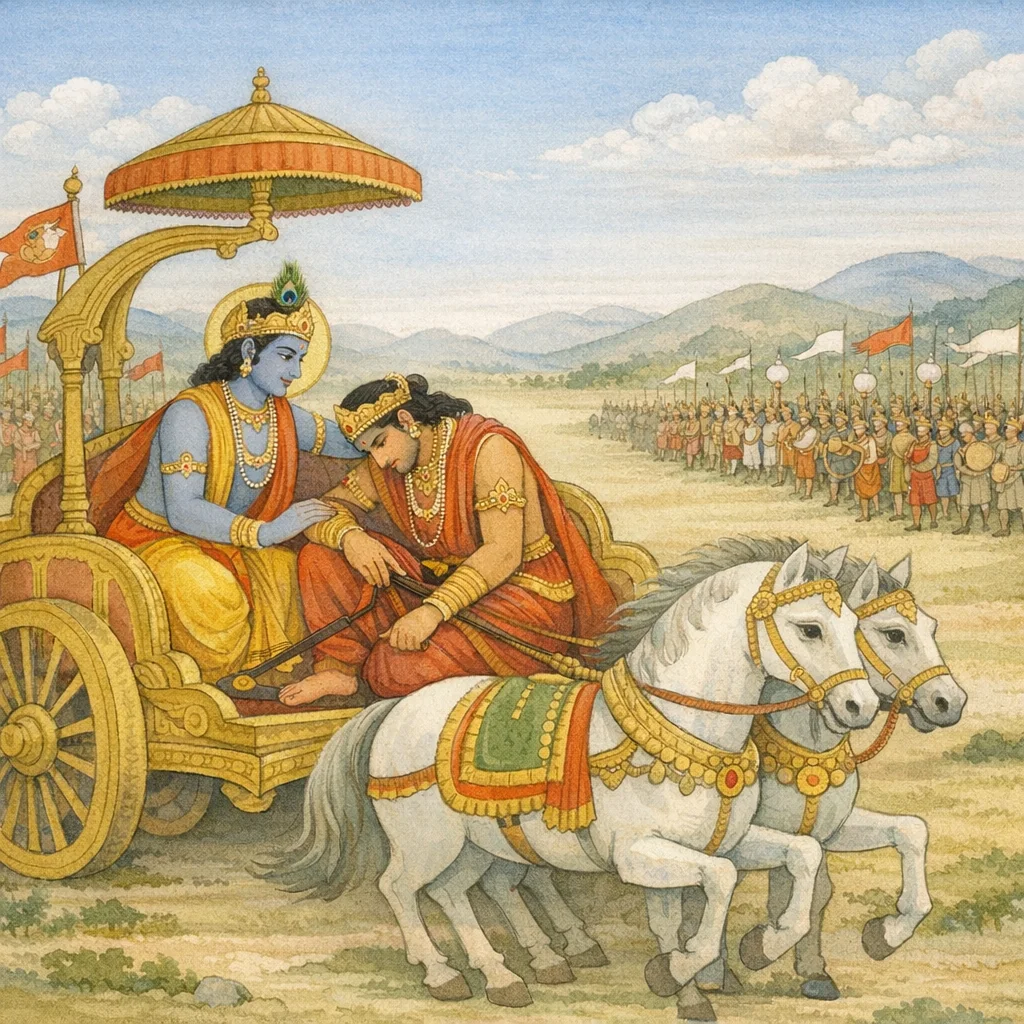
Adhyaya 25
Karma-Yoga, Yajña-Cakra, and the Governance of Desire (कर्मयोग–यज्ञचक्र–कामनिग्रह)
Upa-parva: Bhagavad Gītā Parva (Embedded Discourse within Bhīṣma Parva)
Arjuna questions why, if discernment (buddhi/jñāna) is superior, he is urged toward difficult action (1–2). Śrī Kṛṣṇa replies with a typology of practice: a discipline of knowledge for contemplatives and a discipline of action for practitioners (3). He argues that non-action does not yield freedom; embodied life is compelled by guṇa-driven nature, and merely restraining organs while mentally indulging is hypocrisy (4–6). Superior is regulated action with mental restraint and non-attachment (7–8). Action is to be performed as yajña: otherwise it binds; yajña sustains a reciprocal cycle linking beings, food, rain, and lawful work, and failing to participate is depicted as socially and ethically sterile (9–16). Yet the self-satisfied knower has no personal compulsion, while still acting for public order (17–26). The chapter then analyzes agency: actions occur through guṇas; ego misconstrues itself as the doer, whereas insight sees ‘guṇas moving among guṇas’ and avoids entanglement (27–29). Kṛṣṇa instructs dedicating all actions to him, fighting without expectation or possessiveness (30–35). Arjuna asks why people commit wrongdoing against their will; Kṛṣṇa identifies kāma/krodha (rajas-born) as the obscuring enemy, operating through senses, mind, and intellect; therefore one should regulate the senses and, discerning the hierarchy (senses < mind < intellect < Self), subdue desire through the Self’s steadiness (36–43).
Chapter Arc: धृतराष्ट्र की अंधी जिज्ञासा—धर्मभूमि कुरुक्षेत्र में युद्ध-इच्छुक मेरे और पाण्डु के पुत्रों ने क्या किया?—और संजय की दृष्टि से रणभूमि का उद्घाटन। → दुर्योधन आचार्य द्रोण के पास जाकर पाण्डव-सेना की व्यूह-रचना और प्रमुख महारथियों का बखान करता है; दोनों पक्षों के शंखनाद से आकाश-पृथ्वी गूँज उठते हैं और युद्ध का अनिवार्यत्व सघन हो जाता है। → अर्जुन कृष्ण से रथ को दोनों सेनाओं के बीच ले चलने को कहता है; स्वजन-समुदाय—गुरु, पितामह, बंधु, ससुराल-पक्ष—को सामने देखकर उसका शरीर काँपता है, धनुष हाथ से गिरता है, और वह विजय-राज्य-सुख की आकांक्षा त्याग देता है। → अर्जुन स्वजन-वध के पाप, कुल-क्षय और धर्म-नाश की आशंका से करुणा-विषाद में डूबकर युद्ध से विरत होने की घोषणा करता है और रथ में बैठकर धनुष-बाण छोड़ देता है। → रणभूमि के मध्य, शोक-संविग्न अर्जुन मौन और असहाय—अब कृष्ण क्या उत्तर देंगे, और धर्म का मार्ग कैसे स्पष्ट होगा?
Shlokas
Verse 1
अपने-आप बछ। अर: पञ्चविशो< ध्याय: (श्रीमद्धगवद्गीतायां प्रथमो<5ध्याय:) दोनों सेनाओंके प्रधान-प्रधान वीरों एवं शंखध्वनिका वर्णन तथा स्वजनवधके पापसे भयभीत हुए अर्जुनका विषाद धृतराष्ट उवाच धर्मक्षेत्रे कुरुक्षेत्रे समवेता युयुत्सव: । मामका: पाण्डवाश्वैव किमकुर्वत संजय,इति श्रीमहाभारते भीष्मपर्वणि श्रीमद्धगवद्गीतापर्वणि श्रीमद्भधगवद्गीतासूपनिषत्सु ब्रह्मुविद्यायां योगशास््त्रे श्रीकृष्णार्जुनसंवादेडर्जुनविषादयोगो नाम प्रथमो5ध्याय:
Dhṛtarāṣṭra said: “On the field of dharma—Kurukṣetra—when my sons and the sons of Pāṇḍu had assembled, eager to fight, what did they do, Sañjaya?”
Verse 2
धृतराष्ट्र बोले--हे संजय! धर्मभूमि कुरुक्षेत्रमें एकत्र हुए युद्धकी इच्छावाले मेरे और पाण्डुके पुत्रोंने क्या किया? ।। संजय उवाच दृष्टवा तु पाण्डवानीकं व्यूढं दुर्योधनस्तदा । आचार्यमुपसंगम्य राजा वचनमत्रवीत्,संजय बोले--उस समय राजा दुर्योधनने व्यूह-रचनायुक्त पाण्डवोंकी सेनाको देखकर और द्रोणाचार्यके पास जाकर यह वचन कहा--
Sañjaya said: Then King Duryodhana, seeing the Pāṇḍavas’ army drawn up in battle formation, approached his teacher and spoke these words.
Verse 3
पश्यैतां पाण्डुपुत्राणामाचार्य महतीं चमूम् । व्यूढां द्रपदपुत्रेण तव शिष्येण धीमता,“हे आचार्य! आपके बुद्धिमान् शिष्य ट्रुपदपुत्र धृष्टद्युम्नद्वारा व्यूहाकार खड़ी की हुई पाण्डुपुत्रोंकी इस बड़ी भारी सेनाको देखिये
Sañjaya said: “O Teacher, behold this vast army of the sons of Pāṇḍu, drawn up in battle-array by Drupada’s son—your own intelligent disciple.”
Verse 4
अत्र शूरा महेष्वासा भीमार्जुनसमा युधि । युयुधानो विराटश्न द्रुपदश्च महारथ:,“इस सेनामें बड़े-बड़े धनुषोंवाले तथा युद्धमें भीम और अर्जुनके समान शूरवीर सात्यकि और विराट तथा महारथी राजा ट्रुपद, धृष्टकेतु और चेकितान तथा बलवान् काशिराज, पुरुजितू, कुन्तिभोज और मनुष्योंमें श्रेष्ठ शैब्य, पराक्रमी युधामन्यु तथा बलवान उत्तमौजा, सुभद्रापुत्र अभिमन्यु एवं द्रौपदीके पाँचों पुत्र--ये सभी महारथी हैं
Sanjaya said: “Here are heroes—great bowmen—equal to Bhima and Arjuna in battle: Yuyudhana (Satyaki), Virata, and King Drupada, a mighty chariot-warrior.”
Verse 5
धृष्टकेतुश्वेकितान: काशिराजश्च वीर्यवान् । पुरुजित् कुन्तिभोजश्न शैब्यश्व नरपुज्रव:,“इस सेनामें बड़े-बड़े धनुषोंवाले तथा युद्धमें भीम और अर्जुनके समान शूरवीर सात्यकि और विराट तथा महारथी राजा ट्रुपद, धृष्टकेतु और चेकितान तथा बलवान् काशिराज, पुरुजितू, कुन्तिभोज और मनुष्योंमें श्रेष्ठ शैब्य, पराक्रमी युधामन्यु तथा बलवान उत्तमौजा, सुभद्रापुत्र अभिमन्यु एवं द्रौपदीके पाँचों पुत्र--ये सभी महारथी हैं
Sanjaya said: “There are also Dhṛṣṭaketu and Cekitāna; the valiant king of Kāśī; Purujit and Kuntibhoja; and Śaibya, the foremost among men.”
Verse 6
युधामन्युश्न विक्रान्त उत्तमौजाश्च वीर्यवान् सौभद्रो द्रौपदेयाश्ष॒ सर्व एव महारथा:,“इस सेनामें बड़े-बड़े धनुषोंवाले तथा युद्धमें भीम और अर्जुनके समान शूरवीर सात्यकि और विराट तथा महारथी राजा ट्रुपद, धृष्टकेतु और चेकितान तथा बलवान् काशिराज, पुरुजितू, कुन्तिभोज और मनुष्योंमें श्रेष्ठ शैब्य, पराक्रमी युधामन्यु तथा बलवान उत्तमौजा, सुभद्रापुत्र अभिमन्यु एवं द्रौपदीके पाँचों पुत्र--ये सभी महारथी हैं
Sanjaya said: “And there are the valiant Yudhāmanyu and the mighty Uttamaujas; also Abhimanyu, the son of Subhadrā, and the sons of Draupadī—indeed, all of them are great chariot-warriors.”
Verse 7
अस्माकं तु विशिष्टा ये तान् निबोध द्विजोत्तम | नायका मम सैन्यस्य संज्ञार्थ तान् ब्रवीमि ते,हे ब्राह्मणश्रेष्ठी अपने पक्षमें भी जो प्रधान हैं, उनको आप समझ लीजिये। आपकी जानकारीके लिये मेरी सेनाके जो-जो सेनापति हैं, उनको बतलाता हूँ
Sanjaya said: “But now, O best of the twice-born, understand also those who are foremost on our side. For your clear recognition, I shall name to you the commanders and leading captains of my army.”
Verse 8
भवान् भीष्मश्न कर्णश्र कृपश्च समितिंजय: । अश्रृत्थामा विकर्णश्ष॒ सौमदत्तिस्तथैव च,“आप--द्रोणाचार्य और पितामह भीष्म तथा कर्ण और संग्रामविजयी कृपाचार्य तथा वैसे ही अअश्वत्थामा, विकर्ण और सोमदत्तका पुत्र भूरिश्रवा
Sañjaya said: “You—Droṇa, and grandsire Bhīṣma, and Karṇa, and Kṛpa the conqueror in battle; likewise Aśvatthāmā, Vikarṇa, and also the son of Somadatta—are all present.”
Verse 9
अन्ये च बहव: शूरा मदर्थ त्यक्तजीविता: । नानाश्त्रप्रहरणा: सर्वे युद्धविशारदा:,“और भी मेरे लिये जीवनकी आशा त्याग देनेवाले बहुत-से शूरवीर अनेक प्रकारके शस्त्रास्त्रोंस सुसज्जित और सब-के-सब युद्धमें चतुर हैं
Sañjaya said: “And there are many other heroes as well, who for my sake have abandoned all hope of preserving their lives. Equipped with weapons of many kinds, every one of them is skilled and seasoned in the art of war.”
Verse 10
अपर्याप्तं तदस्माकं बल॑ भीष्माभिरक्षितम् । पर्याप्त॑ त्विदमेतेषां बल॑ भीमाभिरक्षितम्,'भीष्मपितामहद्वारा रक्षित हमारी वह सेना सब प्रकारसे अजेय है और भीमद्वारा रक्षित इन लोगोंकी यह सेना जीतनेमें सुगम है
Sanjaya said: “That army of ours, protected by Bhishma, seems immeasurable and hard to overcome; but this army of theirs, protected by Bhima, seems limited and therefore easier to master.”
Verse 11
अयनेषु च सर्वेषु यथाभागमवस्थिता: । भीष्ममेवाभिरक्षन्तु भवन्त: सर्व एव हि,“इसलिये सब मोर्चोपर अपनी-अपनी जगह स्थित रहते हुए आपलोग सभी नि:संदेह भीष्मपितामहकी ही सब ओरसे रक्षा करें”
Sañjaya said: “Therefore, all of you—stationed in every sector according to your assigned share—must, without fail, protect Bhīṣma alone on all sides.”
Verse 12
तस्य संजनयन् हर्ष कुरुवृद्ध: पितामह: । सिंहनादं विनद्योच्चै: शड्खं दध्मौ प्रतापवान्,(तब) कौरवोंमें वृद्ध बड़े प्रतापी पितामह भीष्मने उस दुर्योधनके हृदयमें हर्ष उत्पन्न करते हुए उच्च स्वरसे सिंहकी दहाड़के समान गरजकर शंख बजाया
Sañjaya said: To kindle joy in Duryodhana’s heart, the grandsire Bhīṣma—eldest of the Kurus and mighty in prowess—roared aloud like a lion and blew his conch with a resounding blast.
Verse 13
ततः शड्खाश्न भेर्यश्व॒ पणवानकगोमुखा: । सहसैवाभ्यहन्यन्त स शब्दस्तुमुलो5भवत्,इसके पश्चात् शंख और नगारे तथा ढोल, मृदंग और नरसिंघे आदि बाजे एक साथ ही बज उठे। उनका वह शब्द बड़ा भयंकर हुआ
Sañjaya said: Then conches and kettledrums, along with tabors, great drums, and the gomukha horns, were sounded all at once. That combined roar became tumultuous and fearsome—an audible sign that the armies had fully entered the mood of war.
Verse 14
ततः श्वेतैर्हयैर्युक्ते महति स्यन्दने स्थितौ । माधव: पाण्डवश्चैव दिव्यौ शड्खौ प्रदध्मतु:,इसके अनन्तर सफेद घोड़ोंसे युक्त उत्तम रथमें बैठे हुए श्रीकृष्ण महाराज और अर्जुनने भी अलौकिक शंख बजाये
Sañjaya said: Then, stationed upon a great chariot yoked with white horses, Mādhava (Kṛṣṇa) and the Pāṇḍava (Arjuna) blew their divine conches. The moment signals the deliberate, righteous resolve to enter battle—an outward proclamation of duty and inner steadiness before the moral trial of war.
Verse 15
पाज्चजन्यं हृषीकेशो देवदत्तं धनंजय: । पौण्डूरं दध्मौ महाशड्ुखं भीमकर्मा वृकोदर:,श्रीकृष्ण महाराजने पांचजन्य नामक, अर्जुनने देवदत्त नामक और भयानक कर्मवाले भीमसेनने पौण्ड्र नामक महाशंख बजाया
Sañjaya said: Hṛṣīkeśa (Kṛṣṇa) blew the conch named Pāñcajanya; Dhanaṃjaya (Arjuna) blew the conch named Devadatta; and Vṛkodara (Bhīma), a doer of fearsome deeds, blew the great conch named Pauṇḍra. The sounding of these conches signals the righteous resolve of the Pāṇḍavas as they enter battle with disciplined purpose rather than personal hatred.
Verse 16
अनन्तविजयं राजा कुन्तीपुत्रो युधिष्ठिर: । नकुल: सहदेवश्न सुधोषमणिपुष्पकौ,कुन्तीपुत्र राजा युधिष्ठिने अनन्तविजय नामक और नकुल तथा सहदेवने सुघोष और मणिपुष्पक नामक शंख बजाये
Sanjaya said: King Yudhiṣṭhira, the son of Kuntī, blew his conch named Anantavijaya; and Nakula and Sahadeva blew their conches named Sughoṣa and Maṇipuṣpaka. In the ethical atmosphere of the Kurukṣetra conflict, this coordinated sounding of conches signals resolve and rightful readiness to act according to kṣatriya-dharma, while affirming unity and morale among the Pāṇḍavas.
Verse 17
काश्यश्व परमेष्वास: शिखण्डी च महारथ: । धृष्टद्युम्नो विराटश्न॒ सात्यकिश्वापराजित:,श्रेष्ठ धनुषवाले काशिराज और महारथी शिखण्डी एवं धृष्टद्युम्न तथा राजा विराट और अजेय सात्यकि, राजा ट्रुपद एवं द्रौपदीके पाँचों पुत्र और बड़ी भुजावाले सुभद्रापुत्र अभिमन्यु--इन सभीने, हे राजन! (सब ओरसे) अलग- अलग शंख बजाये
Sanjaya said: Kāśya, the foremost of archers, and Śikhaṇḍī, a great chariot-warrior; Dhṛṣṭadyumna, King Virāṭa, and Sātyaki the unconquered—these heroes, O King, each sounded his conch separately on all sides. The scene underscores disciplined readiness and collective resolve on the side of dharma as the armies formally enter the moral gravity of war.
Verse 18
द्रुपदो द्रौपदेयाश्व सर्वश: पृथिवीपते । सौभद्रश्न महाबाहुः शड्खान् दश्मु: पृथक् पृथक्,श्रेष्ठ धनुषवाले काशिराज और महारथी शिखण्डी एवं धृष्टद्युम्न तथा राजा विराट और अजेय सात्यकि, राजा ट्रुपद एवं द्रौपदीके पाँचों पुत्र और बड़ी भुजावाले सुभद्रापुत्र अभिमन्यु--इन सभीने, हे राजन! (सब ओरसे) अलग- अलग शंख बजाये
Sañjaya said: O lord of the earth, Drupada, the sons of Draupadī, and the mighty-armed son of Subhadrā all blew their conches, each separately.
Verse 19
स घोषो धार्तराष्ट्राणां हृदयानि व्यदारयत् । नभश्न पृथिवीं चैव तुमुलो व्यनुनादयन्,और उस भयानक शब्दने आकाश और पृथ्वीको भी गुँजाते हुए धारराष्ट्रोंके यानी आपके पक्षवालोंके हृदय विदीर्ण कर दिये
Sañjaya said: That tumultuous roar, reverberating through both sky and earth, tore through the hearts of the Dhārtarāṣṭras—Duryodhana’s party—striking them with dread.
Verse 20
अथ व्यवस्थितान् दृष्टवा धार्तराष्ट्रानू कपिध्वज: । प्रवृत्ते शस्त्रसम्पाते धनुरुद्यम्य पाण्डव:,हे राजन! इसके बाद कपिध्वज अर्जुनने मोर्चा बाँधकर डटे हुए धृतराष्ट्र- सम्बन्धियोंको देखकर, उस शस्त्र चलनेकी तैयारीके समय धनुष उठाकर हृषीकेश श्रीकृष्ण महाराजसे यह वचन कहा--'हे अच्युत! मेरे रथको दोनों सेनाओंके बीचमें खड़ा कीजिये
Then, seeing the sons of Dhṛtarāṣṭra drawn up in firm formation, Arjuna—whose banner bore the emblem of Hanumān—at the moment when the clash of weapons was about to begin, lifted his bow and prepared to speak to Hṛṣīkeśa (Kṛṣṇa).
Verse 21
हृषीकेशं तदा वाक्यमिदमाह महीपते । अर्जुन उवाच सेनयोरुभयोर्मध्ये रथं स्थापय मेडच्युत,हे राजन! इसके बाद कपिध्वज अर्जुनने मोर्चा बाँधकर डटे हुए धृतराष्ट्र- सम्बन्धियोंको देखकर, उस शस्त्र चलनेकी तैयारीके समय धनुष उठाकर हृषीकेश श्रीकृष्ण महाराजसे यह वचन कहा--'हे अच्युत! मेरे रथको दोनों सेनाओंके बीचमें खड़ा कीजिये
O King, at that moment Arjuna addressed Hṛṣīkeśa (Kṛṣṇa) with these words: “O Acyuta, place my chariot between the two armies.”
Verse 22
यावदेतान् निरीक्षे5हं योद्धुकामानवस्थितान् कैर्मया सह योद्धव्यमस्मिन् रणसमुद्यमे,“और जबतक कि मैं युद्धक्षेत्रमें डटे हुए युद्धके अभिलाषी इन विपक्षी योद्धाओंको भली प्रकार देख लूँ कि इस युद्धरूप व्यापारमें मुझे किन-किनके साथ युद्ध करना योग्य है, तबतक उसे खड़ा रखिये
Arjuna said: “Hold the chariot here until I have closely observed these warriors who stand ready, eager to fight, so that I may discern with whom I must engage in this impending enterprise of war.”
Verse 23
योत्स्यमानानवेक्षे5हं य एते5त्र समागता: । धाररराष्ट्रस्य दुर्बुद्धेर्युद्धे प्रियचिकीर्षव:,'दुर्बुद्धि दुर्योधनका युद्धमें हित चाहनेवाले जो-जो ये राजालोग इस सेनामें आये हैं, इन युद्ध करनेवालोंको मैं देखूँगा'
Arjuna said: “I wish to look upon those who have assembled here, intent on fighting—those who, seeking to please the evil-minded son of Dhṛtarāṣṭra, have come to this war.”
Verse 24
इस प्रकार श्रीमह्याभारत भीष्मपर्वके अन्तर्गत श्रीमद्भगवद्गीतापर्वमें धतराष्ट्र-संजय- संवादविषयक चौबीसवाँ अध्याय पूरा हुआ,संजय उवाच एवमुक्तो हृषीकेशो गुडाकेशेन भारत । सेनयोरुभयोर्म ध्ये स्थापयित्वा रथोत्तमम् संजय बोले--हे धृतराष्ट्र! अर्जुनद्वारा इस प्रकार कहे हुए महाराज श्रीकृष्णचन्द्रने दोनों सेनाओंके बीचमें भीष्म और द्रोणाचार्यके सामने तथा सम्पूर्ण राजाओंके सामने उत्तम रथको खड़ा करके इस प्रकार कहा कि “हे पार्थ! युद्धके लिये जुटे हुए इन कौरवोंको देख“
Sanjaya said: “O Bharata (Dhritarashtra), thus addressed by Gudakesha (Arjuna), Hrishikesha (Krishna) positioned the excellent chariot between the two armies.”
Verse 25
भीष्मद्रोणप्रमुखत: सर्वेषां च महीक्षिताम् | उवाच पार्थ पश्यैतान् समवेतान् कुरूनिति,संजय बोले--हे धृतराष्ट्र! अर्जुनद्वारा इस प्रकार कहे हुए महाराज श्रीकृष्णचन्द्रने दोनों सेनाओंके बीचमें भीष्म और द्रोणाचार्यके सामने तथा सम्पूर्ण राजाओंके सामने उत्तम रथको खड़ा करके इस प्रकार कहा कि “हे पार्थ! युद्धके लिये जुटे हुए इन कौरवोंको देख“
Sanjaya said: “O Dhritarashtra, then Krishna had the excellent chariot stationed between the two armies—right before Bhishma and Drona, and in the presence of all the assembled kings—and said, ‘O Partha, behold these Kurus gathered here for battle.’”
Verse 26
तत्रापश्यत् स्थितान् पार्थ: पितृनथ पितामहान् । आचार्यान् मातुलान् भ्रातृन् पुत्रान् पौत्रान् सखींस्तथा
There Arjuna beheld, standing arrayed, his fathers and grandfathers, his teachers, maternal uncles, brothers, sons, grandsons, and friends.
Verse 27
तान् समीक्ष्य स कौन्तेय: सर्वान् बन्धूनवस्थितान्
Having surveyed them, that son of Kuntī beheld all his kinsmen standing arrayed.
Verse 28
अजुन उवाच दृष्टवेमं स्वजनं कृष्ण युयुत्सुं समुपस्थितम्,अर्जुन बोले--हे कृष्ण! युद्धक्षेत्रमें डटे हुए युद्धके अभिलाषी इस स्वजनसमुदायको देखकर मेरे अंग शिथिल हुए जा रहे हैं और मुख सूखा जा रहा है तथा मेरे शरीरमें कम्प एवं रोमांच हो रहा है
Arjuna said: “O Kṛṣṇa, seeing this host of my own kinsmen standing here, eager to fight, my limbs are giving way and my mouth is drying up.”
Verse 29
सीदन्ति मम गात्राणि मुखं च परिशुष्यति । वेपथुश्न शरीरे मे रोमहर्षश्ष॒ जायते,अर्जुन बोले--हे कृष्ण! युद्धक्षेत्रमें डटे हुए युद्धके अभिलाषी इस स्वजनसमुदायको देखकर मेरे अंग शिथिल हुए जा रहे हैं और मुख सूखा जा रहा है तथा मेरे शरीरमें कम्प एवं रोमांच हो रहा है
Arjuna said: “My limbs are failing me, and my mouth is drying up. My whole body trembles, and my hair stands on end.”
Verse 30
गाण्डीवं स्रंसते हस्तात् त्वक् चैव परिदहाते । न च शवक्नोम्यवस्थातुं भ्रमतीव च मे मन:,हाथसे गाण्डीव धनुष गिर रहा है और त्वचा भी बहुत जल रही है तथा मेरा मन भ्रमित-सा हो रहा है, इसलिये मैं खड़ा रहनेको भी समर्थ नहीं हूँ
Arjuna said: “My Gāṇḍīva bow is slipping from my hand, and my skin feels as though it is burning. I cannot even stand steady, and my mind seems to whirl in confusion.”
Verse 31
निमित्तानि च पश्यामि विपरीतानि केशव । न च श्रेयोडनुपश्यामि हत्वा स््वजनमाहवे,हे केशव! मैं लक्षणोंको भी विपरीत ही देख रहा हूँ तथा युद्धमें स््वजन समुदायको मारकर कल्याण भी नहीं देखता
Arjuna said: “O Keśava, I see omens turned against us, and I cannot discern any true good that could come from killing my own people in battle.”
Verse 32
न काड्क्षे विजयं कृष्ण न च राज्यं सुखानि च । कि नो राज्येन गोविन्द कि भोगैर्जीवितेन वा
Arjuna said: “O Kṛṣṇa, I do not desire victory, nor kingdom, nor pleasures. What use is a kingdom to us, O Govinda? What use are enjoyments—or even life itself?”
Verse 33
हे कृष्ण! मैं न तो विजय चाहता हूँ और न राज्य तथा सुखोंको ही। हे गोविन्द! हमें ऐसे राज्यसे क्या प्रयोजन है अथवा ऐसे भोगोंसे और जीवनसे भी क्या लाभ है? ।। येषामर्थे काड्क्षितं नो राज्यं भोगा: सुखानि च । त इमे5वस्थिता युद्धे प्राणांस्त्यक्त्वा धनानि च,हमें जिनके लिये राज्य, भोग और सुखादि अभीष्ट हैं, वे ही ये सब धन और जीवनकी आशाको त्यागकर युद्धमें खड़े हैं
Arjuna said: “O Krishna, I desire neither victory nor kingdom nor pleasures. O Govinda, what use is a kingdom to us—or enjoyments, or even life itself? For those for whose sake we long for sovereignty, pleasures, and happiness are standing here in battle, having already renounced their lives and wealth.”
Verse 34
आचार्या: पितर: पुत्रास्तथैव च पितामहा: । मातुला: श्वशुरा: पौत्रा: श्याला: सम्बन्धिनस्तथा
Arjuna enumerates the very people who stand before him in the opposing ranks—teachers, fathers, sons, and grandfathers; maternal uncles, fathers-in-law, grandsons, brothers-in-law, and other relatives as well. By naming these intimate bonds, he frames the war not as a mere contest for power but as a moral crisis: victory would be stained by the destruction of one’s own kin and the collapse of familial and social duties.
Verse 35
गुरुजन, ताऊ-चाचे, लड़के और उसी प्रकार दादे, मामे, ससुर, पौत्र, साले तथा और भी सम्बन्धी लोग हैं ।। एतान् न हन्तुमिच्छामि घ्नतोडपि मधुसूदन । अपि त्रैलोक्य राज्यस्य हेतो: कि नु महीकृते,हे मधुसूदन! मुझे मारनेपर भी अथवा तीनों लोकोंके राज्यके लिये भी मैं इन सबको मारना नहीं चाहता; फिर पृथ्वीके लिये तो कहना ही क्या है?
Arjuna said: “Madhusūdana, I do not wish to kill these men—even if they strike to kill me. Even for the sake of sovereignty over the three worlds, how could I do it? Then what to speak of doing so merely for the earth?” In this moment, Arjuna’s moral revulsion toward kin-slaying overrides political gain; he frames the war not as a prize to be won but as an ethical catastrophe that no kingdom can justify.
Verse 36
निहत्य धार्तराष्ट्रानू नः का प्रीति: स्याज्जनार्दन | पापमेवाश्रयेदस्मान् हत्वैतानाततायिन:,हे जनार्दन! धुृतराष्ट्रके पुत्रोंकी मारकर हमें कया प्रसन्नता होगी? इन आततायियोंकों* मारकर तो हमें पाप ही लगेगा
Arjuna said: “O Janārdana, what joy could be ours after killing the sons of Dhṛtarāṣṭra? By slaying these aggressors, sin alone would cling to us—rather than any true gain or righteousness.”
Verse 37
तस्मान्ना्ा वयं हन्तुं धार्तराष्ट्रानू स््वबान्धवान् । स्वजनं हि कथं हत्वा सुखिन: स्याम माधव,अतएव हे माधव! अपने ही बान्धव धुृतराष्ट्रके पुत्रोंको मारनेके लिये हम योग्य नहीं हैं; क्योंकि अपने ही कुट॒म्बको मारकर हम कैसे सुखी होंगे?
Therefore we are not fit to kill the sons of Dhṛtarāṣṭra—our own kinsmen. For, O Mādhava, how could we ever be happy after slaying our own people?
Verse 38
यद्यप्येते न पश्यन्ति लोभोपहतचेतस: । कुलक्षयकृतं दोष॑ं मित्रद्रोहे च पातकम्,यद्यपि लोभसे भ्रष्टचित्त हुए ये लोग कुलके नाशसे उत्पन्न दोषको और मित्रोंसे विरोध करनेमें पापको नहीं देखते, तो भी हे जनार्दन! कुलके नाशसे उत्पन्न दोषको जाननेवाले हमलोगोंको इस पापसे हटनेके लिये क्यों नहीं विचार करना चाहिये?
Even if these men, their minds clouded by greed, do not perceive the fault that arises from the destruction of a family line, nor the sin involved in betraying friends and kin, why should we—who understand the evil born of such ruin—not reflect and turn back from this wrongdoing, O Janārdana?
Verse 39
कथं न ज्ञेयमस्माभि: पापादस्मान्निवर्तितुम् । कुलक्षयकृतं दोषं प्रपश्यद्धिर्जनार्दन,यद्यपि लोभसे भ्रष्टचित्त हुए ये लोग कुलके नाशसे उत्पन्न दोषको और मित्रोंसे विरोध करनेमें पापको नहीं देखते, तो भी हे जनार्दन! कुलके नाशसे उत्पन्न दोषको जाननेवाले हमलोगोंको इस पापसे हटनेके लिये क्यों नहीं विचार करना चाहिये?
O Janārdana, how could it not be recognized by us that we should turn back from this sin—when we clearly foresee the fault that arises from the destruction of the family line? Even if those driven by greed and with minds gone astray do not see the evil in opposing friends and in bringing about the ruin of the clan, we who understand the consequences ought to restrain ourselves from this wrongdoing.
Verse 40
कुलक्षये प्रणश्यन्ति कुलधर्मा: सनातना: । धर्मे नष्टे कुलं कृत्स्नमधर्मोडभि भवत्युत,कुलके नाशसे सनातन कुलधर्म नष्ट हो जाते हैं, धर्मके नाश हो जानेपर सम्पूर्ण कुलमें पाप भी बहुत फैल जाता हैः
When a family line is destroyed, the ancient, time-honored duties of the clan perish. And when dharma is lost, the whole family is overwhelmed by adharma, and sin spreads throughout.
Verse 41
अधर्माभिभवात् कृष्ण प्रदुष्यन्ति कुलस्त्रिय: । स्त्रीषु दुष्टासु वाष्णेय जायते वर्णसंकर:,हे कृष्ण! पापके अधिक बढ़ जानेसे कुलकी स्त्रियाँ अत्यन्त दूषित हो जाती हैं और हे वार्ष्णेय! स्त्रियोंके दूषित हो जानेपर वर्णसंकर उत्पन्न होता है
O Krishna, when unrighteousness overwhelms a community, the women of the family become corrupted. And, O descendant of the Vrishni line, when women are corrupted, varṇa-saṅkara—social intermixture and confusion of hereditary duties—arises.
Verse 42
संकरो नरकायैव कुलघ्नानां कुलस्य च | पतन्ति पितरो होषां लुप्तपिण्डोदकक्रिया:,वर्णसंकर कुलघातियोंको और कुलको नरकमें ले जानेके लिये ही होता है। लुप्त हुई पिण्ड और जलकी क्रियावाले अर्थात् श्राद्ध और तर्पणसे वंचित इनके पितरलोग भी अधोगतिको प्राप्त होते हैं
Varṇa-saṅkara leads the destroyers of the clan—and the clan itself—toward hell. And their ancestors too fall, for the rites of offering pinda and water, the śrāddha and tarpaṇa, are cut off.
Verse 43
दोषैरेतै: कुलघ्नानां वर्णसंकरकारकै: । उत्साद्यन्ते जातिधर्मा: कुलधर्माश्च शाश्व॒ता:,इन वर्णसंकरकारक दोषोंसे कुलघातियोंके सनातन कुलधर्म और जातिधर्म नष्ट हो जाते हैं
Arjuna said: By these very faults—committed by those who destroy their own lineage and which bring about the mixing of social orders—the eternal duties of family tradition and the inherited duties of one’s community are ruined and uprooted.
Verse 44
उत्सन्नकुलधर्माणां मनुष्याणां जनार्दन । नरके5नियतं वासो भवतीत्यनुशुश्रुम,हे जनार्दन! जिनका कुलधर्म नष्ट हो गया है, ऐसे मनुष्योंका अनिश्चित कालतक नरकमें वास होता है, ऐसा हम सुनते आये हैं
Arjuna said: O Janārdana, we have heard that for people whose ancestral and family duties have been destroyed, there is a dwelling in hell for an indefinite length of time.
Verse 45
अहो बत महत्पापं कर्तु व्यवसिता वयम् | यद् राज्यसुखलो भेन हन्तुं स्वजनमुद्यता:,हा! शोक! हमलोग बुद्धिमान् होकर भी महान् पाप करनेको तैयार हो गये हैं, जो राज्य और सुखके लोभसे स्वजनोंको मारनेके लिये उद्यत हो गये हैं
Arjuna said: “Alas, what a grievous sin we are resolved to commit! Driven by greed for kingdom and pleasure, we stand ready to kill our own kinsmen.”
Verse 46
यदि मामप्रतीकारमशस्त्र शस्त्रपाणय: । धार्तराष्ट्रा रणे हन्युस्तन्मे क्षेमतरं भवेत्,यदि मुझ शस्त्ररहित एवं सामना न करनेवालेको शस्त्र हाथमें लिये धृतराष्ट्रके पुत्र रणमें मार डालें तो वह मारना भी मेरे लिये अधिक कल्याणकारक होगा
Arjuna said: If the sons of Dhṛtarāṣṭra, weapons in hand, were to slay me in battle while I offer no resistance and stand unarmed, that very death would be safer and more wholesome for me.
Verse 47
संजय उवाच एवमुकक््त्वार्जुन: संख्ये रथोपस्थ उपाविशत् | विसृज्य सशरं चापं शोकसंविग्नमानस:,संजय बोले--रणभूमिमें शोकसे उद्विग्न मनवाला अर्जुन इस प्रकार कहकर, बाणसहित धनुषको त्यागकर रथके पिछले भागमें बैठ गया
Sañjaya said: Having spoken thus on the battlefield, Arjuna—his mind shaken by grief—cast aside his bow together with the arrows and sat down on the chariot-seat.
Verse 266
श्वशूरान् सुहृदश्चैव सेनयोरुभयोरपि । इसके बाद पृथापुत्र अर्जुनने उन दोनों ही सेनाओंमें स्थित ताऊ-चाचोंको, दादों-परदादोंको, गुरुओंको, मामाओंको, भाइयोंको, पुत्रोंको, पौत्रोंकी तथा मित्रोंकोी, ससुरोंको और सुहृदोंको भी देखा
Sanjaya said: Arjuna also saw, in both armies, his fathers-in-law and his well-wishers—recognizing among the assembled warriors those bound to him by family ties and affection, which deepened his moral conflict on the eve of battle.
Verse 276
कृपया परया<<विष्टो विषीदन्निदमब्रवीत् । उन उपस्थित सम्पूर्ण बन्धुओंको देखकर वे कुन्तीपुत्र अर्जुन अत्यन्त करुणासे युक्त होकर शोक करते हुए यह वचन बोले
Sanjaya said: Overwhelmed by profound compassion, and sinking into grief, he spoke these words. Seeing all his kinsmen assembled before him, Kunti’s son Arjuna—filled with intense pity—lamented and uttered this speech.
Frequently Asked Questions
Arjuna’s dilemma is interpretive and ethical: if discerning knowledge is praised as higher, why must he undertake severe duty; the chapter resolves this by separating inner renunciation from external withdrawal and prescribing non-attached, regulated action as the viable path for his role.
Freedom is compatible with action when agency is de-egotized: perform obligatory work as offering, without outcome-attachment, recognizing guṇa-driven processes, and stabilizing conduct through sense regulation and intellect aligned to the Self.
A meta-claim is given in the form of results: those who consistently follow this teaching with faith and without fault-finding are said to be released from karmic binding, whereas those who reject it are described as deluded and self-defeating (31–32).