Adhyaya 78
बभ्रुवाहन-धनंजययोः संग्रामः (Babhruvāhana and Dhanaṃjaya’s engagement at Maṇipūra)
Upa-parva: Maṇipūra-saṃvāda (Babhruvāhana–Arjuna episode) within Āśvamedhika Parva
Vaiśaṃpāyana reports that Babhruvāhana, having heard of his father’s arrival, comes out with formal humility and offerings. Arjuna (Dhanaṃjaya), recalling kṣatra-dharma in the setting of the Aśvamedha horse’s passage, declines to accept a pacific reception and censures the mismatch between martial obligation and conciliatory protocol. Ulūpī, identified as Babhruvāhana’s mother and a nāga-born figure, enters the scene, instructing her son that fighting Arjuna is the correct course and will secure Arjuna’s approval. Babhruvāhana arms himself, mounts his chariot with a prominent banner, and seizes the sacrificial horse through trained retainers, prompting Arjuna’s pleased recognition of proper contest. A fierce father–son battle follows: Babhruvāhana strikes Arjuna, Arjuna counters by disabling the chariot standard and horses, and the fight continues on foot. Babhruvāhana finally pierces Arjuna in a vital region; Arjuna collapses, and Babhruvāhana too falls into shock. Citrāṅgadā, distressed, enters the battlefield and beholds her fallen husband, intensifying the episode’s familial and political stakes.
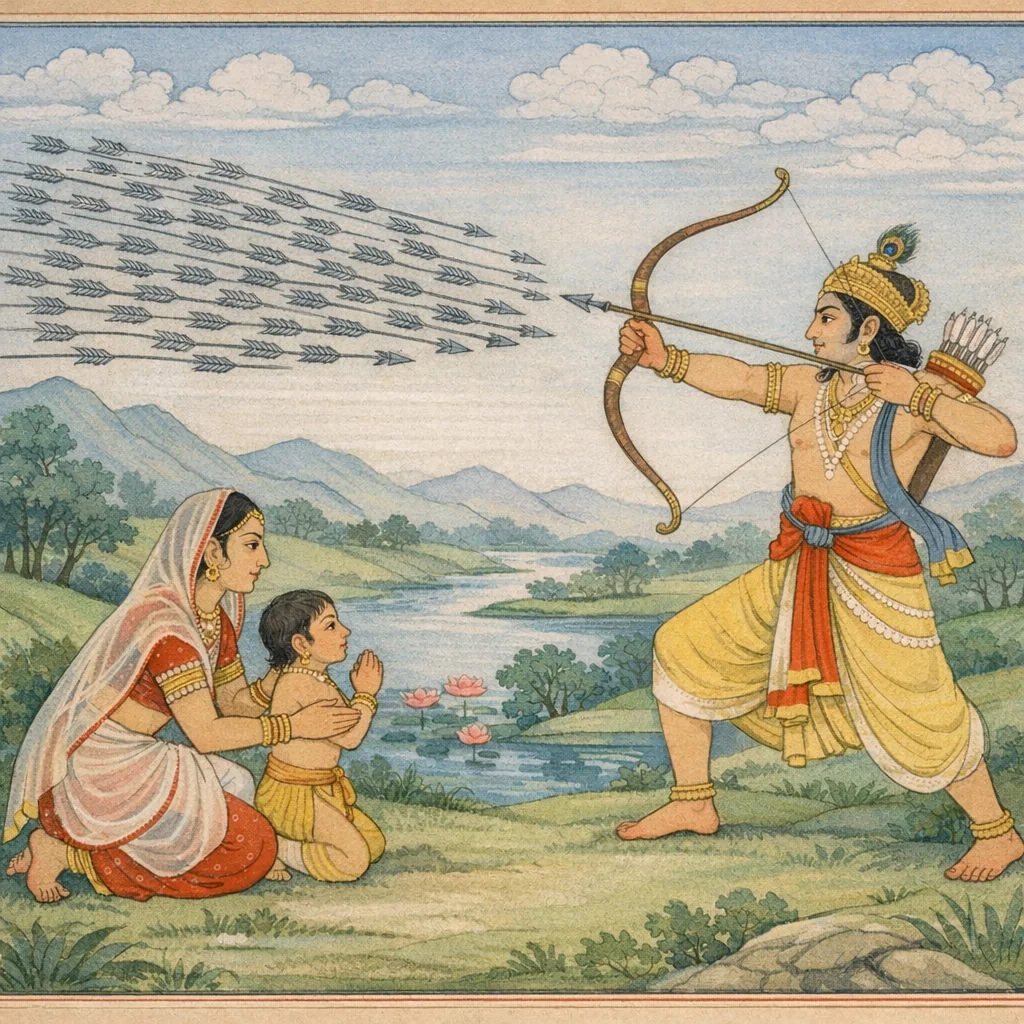
Chapter Arc: अश्वमेध के अनुष्ठान-परिसर में, अर्जुन के सामने सिंधुदेशीय (सैन्धव) योद्धा फिर से संगठित होकर खड़े हो जाते हैं—मानो पुरानी वैराग्नि राख से उठकर पुनः धधकने लगी हो। → सैन्धव सेना उग्र होकर शरवर्षा करती है; गाण्डीवधारी अर्जुन उनकी पुनर्व्यवस्था पर हँसकर, तीखे व्यंग्य-भरे वचनों से उन्हें ‘मुमूर्षु’ कह चुनौती देता है—और युद्ध का वेग बढ़ता जाता है। → सैन्धव एक साथ अर्जुन पर ‘एक करोड़’ झुकी गाँठवाले बाणों की वर्षा करते हैं; उसी उन्मत्त क्षण में जयद्रथ-वंश की ओर से एक शरणागत स्त्री/परिजन (पुत्र को साथ लिये) गिरते हुए को देखकर अर्जुन के क्रोध-धर्म और करुणा-धर्म का टकराव चरम पर पहुँचता है। → शरणागत पक्ष अर्जुन के चरणों में सिर रखकर ‘शम’ की याचना करता है—‘यह अबोध बालक है, इसके बंधु नष्ट हो चुके’; जयद्रथ के अपराध स्मरण कराते हुए भी बालक पर प्रसाद करने का आग्रह होता है। अर्जुन का रौद्र धीरे-धीरे धर्मयुक्त संयम में ढलता है, और प्रतिशोध की जगह अनुग्रह का मार्ग खुलता है। → अर्जुन के भीतर उठी प्रतिज्ञा-सी कठोरता और शरणागत-रक्षा का धर्म—इनमें अंतिम निर्णय किस ओर झुकेगा, यह अगले प्रसंग की ओर कथा को धकेल देता है।
Shlokas
Verse 1
(दाक्षिणात्य अधिक पाठका १ श्लोक मिलाकर कुल ३३ श्लोक हैं) है ० बक। हक २ >> अष्टसप्ततितमो< ध्याय: अर्जुनका सैन्धवोंके साथ युद्ध और दुःशलाके अनुरोधसे उसकी समाप्ति वैशम्पायन उवाच ततो गाण्डीवभृच्छूरो युद्धाय समुपस्थित: । विबभौ युधि दुर्धर्षो हिमवानचलो यथा,वैशम्पायनजी कहते हैं--जनमेजय! तदनन्तर गाण्डीवधारी शूरवीर अर्जुन युद्धके लिये उद्यत हो गये। वे शत्रुओंके लिये दुर्जय थे और युद्धभूमिमें हिमवान् पर्वतके समान अचल भावसे डटे रहकर बड़ी शोभा पाने लगे इस प्रकार श्रीमह्ााभारत आश्वमेधिकपववके अन्तर्गत अनुगीतापर्वनें सैन्धवोंकी पराजयविषयक अठठत्तरवाँ अध्याय पूरा हुआ ॥/ ७८ ॥ ऑपनऔक्रात छा अ्-काजज एकोनाशीतितमो< ध्याय: अर्जुन और बश्रुवाहनका युद्ध एवं अर्जुनकी मृत्यु वैशम्पायन उवाच श्रुत्वा तु नृपतिः प्राप्त पितरं बश्रुवाहन: । निर्ययौ विनयेनाथ ब्राह्माणार्थपुर:सर:
Vaiśampāyana said: Thereafter the heroic Arjuna, bearer of the Gāṇḍīva bow, stood ready for battle. In the midst of war he shone forth—unassailable to his foes—standing firm like the Himālaya mountain.
Verse 2
ततस्ते सैन्धवा योधा: पुनरेव व्यवस्थिता: । व्यमुज्चन्त सुसंरब्धा शरवर्षाणि भारत,भरतनन्दन! तदनन्तर सिन्धुदेशीय योद्धा फिरसे संगठित होकर खड़े हो गये और अत्यन्त क्रोधमें भरकर बाणोंकी वर्षा करने लगे
Then those warriors of Sindhu, once again forming their ranks, released showers of arrows in fierce agitation—O Bhārata, O delight of the Bharatas.
Verse 3
तान् प्रहस्य महाबाहु: पुनरेव व्यवस्थितान् । ततः प्रोवाच कौन्तेयो मुमूर्षून् *लक्षणया गिरा । युध्यध्वं परया शक्त्या यतध्वं विजये मम,उस समय महाबाहु कुन्तीकुमार अर्जुन पुनः मरनेकी इच्छासे खड़े हुए सैन्धवोंको सम्बोधित करके हँसते हुए मधुर वाणीमें बोले--“वीरो! तुम पूरी शक्ति लगाकर युद्ध करो और मुझपर विजय पानेका प्रयत्न करते रहो
Smiling at them when they had once again taken their positions, the mighty-armed Arjuna—Kuntī’s son—addressed those who seemed bent on death with gentle words of implied meaning: “Fight with your utmost strength; strive to win victory over me.”
Verse 4
कुरुध्व॑ सर्वकार्याणि महद् वो भयमागतम् । एष योत्स्यामि सर्वास्तु निवार्य शरवागुराम्,“तुम अपने सारे कार्य पूरे कर लो। तुमलोगोंपर महान् भय आ पहुँचा है। यह देखो--मैं तुम्हारे बाणोंका जाल छिजत्न-भिन्न करके तुम सब लोगोंके साथ युद्ध करनेको उद्यत हूँ
Vaiśampāyana said: “Complete all your necessary tasks at once; a great danger has come upon you. Look—having checked and broken through your net of arrows, I now stand ready to fight you all.”
Verse 5
तिष्ठ ध्वं युद्धमनसो दर्प शमयितास्मि व: । एतावदुक्त्वा कौरव्यो रोषाद् गाण्डीवभूत् तदा,“मनमें युद्धका हौसला लेकर खड़े रहो। मैं तुम्हारा घमण्ड चूर किये देता हूँ। भारत! गाण्डीवधारी कुरुनन्दन अर्जुन शत्रुओंसे ऐसा वचन कहकर अपने बड़े भाईकी कही हुई बातें याद करने लगे। महात्मा धर्मराजने कहा था कि “तात! रणभूमिमें विजयकी इच्छा रखनेवाले क्षत्रियोंका वध न करना। साथ ही उन्हें पराजित भी करना।” इस बातको याद करके पुरुषप्रवर अर्जुन इस प्रकार चिन्ता करने लगे
Vaiśampāyana said: “Stand firm with minds set on battle; I shall quell your arrogance.” Having spoken thus, the Kuru prince—his wrath rising—took up the Gāṇḍīva. Yet, as he faced the enemy, Arjuna recalled his elder brother Dharmarāja’s counsel: a kṣatriya who seeks victory should not slaughter those who are already subdued, and yet must still defeat them. Remembering this, the foremost of men began to reflect on how to uphold victory without violating righteousness.
Verse 6
ततो<5थ वचन स्मृत्वा भ्रातुर्ज्येष्लस्थ भारत । न हन्तव्या रणे तात क्षत्रिया विजिगीषव:,“मनमें युद्धका हौसला लेकर खड़े रहो। मैं तुम्हारा घमण्ड चूर किये देता हूँ। भारत! गाण्डीवधारी कुरुनन्दन अर्जुन शत्रुओंसे ऐसा वचन कहकर अपने बड़े भाईकी कही हुई बातें याद करने लगे। महात्मा धर्मराजने कहा था कि “तात! रणभूमिमें विजयकी इच्छा रखनेवाले क्षत्रियोंका वध न करना। साथ ही उन्हें पराजित भी करना।” इस बातको याद करके पुरुषप्रवर अर्जुन इस प्रकार चिन्ता करने लगे
Then, O Bhārata, recalling the words of his eldest brother, Arjuna reflected: “Dear one, in battle the kṣatriyas who seek victory are not to be slain.” Remembering this counsel, he weighed how to uphold righteous restraint even amid the demands of war and conquest.
Verse 7
जेतव्याश्रैति यत् प्रोक्तं धर्मराज्ञा महात्मना । चिन्तयामास स तदा फाल्गुन: पुरुषर्षभ:,“मनमें युद्धका हौसला लेकर खड़े रहो। मैं तुम्हारा घमण्ड चूर किये देता हूँ। भारत! गाण्डीवधारी कुरुनन्दन अर्जुन शत्रुओंसे ऐसा वचन कहकर अपने बड़े भाईकी कही हुई बातें याद करने लगे। महात्मा धर्मराजने कहा था कि “तात! रणभूमिमें विजयकी इच्छा रखनेवाले क्षत्रियोंका वध न करना। साथ ही उन्हें पराजित भी करना।” इस बातको याद करके पुरुषप्रवर अर्जुन इस प्रकार चिन्ता करने लगे
Vaiśampāyana said: Then Phālguna (Arjuna), the bull among men, began to reflect upon what the great-souled Dharmarāja had declared—namely, the principle concerning how victory is to be sought. Remembering his elder brother’s instruction, Arjuna weighed the ethical demand of triumph in battle: to restrain needless slaughter even while subduing opponents and securing victory.
Verse 8
इत्युक्तो5हं नरेन्द्रेण न हन्तव्या नूपा इति | कथं तन्न मृषेदं स्याद् धर्मराजवच: शुभम्,प्रोवाच वाक््यं धर्मज्ञ: सैन्धवान् युद्धदुर्मदान् । “अहो! महाराजने कहा था कि क्षत्रियोंका वध न करना। धर्मराजका वह मंगलमय वचन कैसे मिथ्या न हो। राजालोग मारे न जायँ और राजा युधिष्ठिरकी आज्ञाका पालन हो जाय, इसके लिये क्या करना चाहिये।” ऐसा सोचकर धर्मके ज्ञाता पुरुषप्रवर अर्जुनने रणोन्मत्त सैन्धवोंसे इस प्रकार कहा--
Vaiśampāyana said: “When the king had thus instructed me—‘Kings are not to be slain’—I reflected: ‘How can the auspicious word of Dharmarāja prove untrue?’ Seeking a course by which rulers would not be killed and yet Yudhiṣṭhira’s command would be fulfilled, Arjuna, knower of dharma, addressed the Sindhu warriors, intoxicated with battle, in these words.”
Verse 9
न हन्येरंश्व राजानो राज्ञश्चाज्ञा कृता भवेत् इति संचिन्त्य स तदा फाल्गुन: पुरुषर्षभ:
Vaiśampāyana said: Reflecting thus—“Kings should not be slain, and the command of a sovereign ought to be carried out”—that bull among men, Phālguna (Arjuna), at that time deliberated with this ethical resolve in mind.
Verse 10
श्रेयो वदामि युष्माकं॑ न हिंसेयमवस्थितान्,'योद्धाओ! मैं तुम्हारे कल्याणकी बात बता रहा हूँ। तुममेंसे जो कोई अपनी पराजय स्वीकार करते हुए रणभूमिमें यह कहेगा कि मैं आपका हूँ, आपने मुझे युद्धमें जीत लिया है, वह सामने खड़ा रहे तो भी मैं उसका वध नहीं करूँगा। मेरी यह बात सुनकर तुम्हें जिसमें अपना हित दिखायी पड़े, वह करो
Vaiśaṃpāyana said: “I speak for your welfare: I will not strike down those who stand down. Any warrior among you who, accepting defeat on the battlefield, declares, ‘I am yours; you have conquered me in war,’—even if he remains standing before me, I will not kill him. Having heard this, do what each of you sees as truly beneficial.”
Verse 11
यश्न वक्ष्यति संग्रामे तवास्मीति पराजित: । एतच्छुत्वा वचो महां कुरुध्वं हितमात्मन:,'योद्धाओ! मैं तुम्हारे कल्याणकी बात बता रहा हूँ। तुममेंसे जो कोई अपनी पराजय स्वीकार करते हुए रणभूमिमें यह कहेगा कि मैं आपका हूँ, आपने मुझे युद्धमें जीत लिया है, वह सामने खड़ा रहे तो भी मैं उसका वध नहीं करूँगा। मेरी यह बात सुनकर तुम्हें जिसमें अपना हित दिखायी पड़े, वह करो
Vaiśaṃpāyana said: “Whoever, though defeated, will not declare on the battlefield, ‘I am yours,’—hear this great statement of mine and then do what you judge to be for your own welfare.”
Verse 12
ततोडन्यथा कृच्छूगता भविष्यथ मयार्दिता: । एवमुकक््त्वा तु तान् वीरान् युयुधे कुरुपुड्रव:
Then he declared, “If you act otherwise, you will be driven into distress by me.” Having spoken thus to those heroes, that foremost of the Kurus engaged them in battle.
Verse 13
शतं शतसहस््राणि शराणां नतपर्वणाम्
Vaiśampāyana said: “Hundreds upon hundreds of thousands of arrows—each with bent joints—(were present/let fly).”
Verse 14
शरानापतत: क्ररानाशीविषविषोपमान्
Vaiśampāyana said: “Cruel arrows came hurtling down, comparable to the poison of deadly serpents.”
Verse 15
छित्त्वा तु तानाशु चैव कड़कपत्रानू शिलाशितान्
Vaiśampāyana said: “Having swiftly cut them down—those hard, leaf-like plates, sharpened like stone—he pressed onward.”
Verse 16
एकैकमेषां समरे बिभेद निशितै: शरै: । सानपर चढ़ाकर तेज किये गये उन कंकपत्रयुक्त बाणोंके तुरन्त ही टुकड़े-टुकड़े करके समरांगणमें अर्जुनने सैन्धव वीरोंमेंसे प्रत्येकको पैने बाण मारकर घायल कर दिया ।। १५६ || ततः प्रासांश्व शक्ती श्ष पुनरेव धनंजयम्
Vaiśampāyana said: “In the thick of battle, Dhanañjaya (Arjuna) struck each of those warriors one by one with razor-sharp arrows, swiftly shattering their attacks and wounding them.”
Verse 17
तेषां किरीटी संकल्पं मोघं चक्रे महाबल:
Vaiśampāyana said: “Among them, the diademed hero—mighty in strength—rendered their resolve futile, ensuring that their intended plan came to nothing.”
Verse 18
सर्वास्तानन्तराच्छित्त्वा तदा चुक्रोश पाण्डव: । परंतु महाबली किरीटधारी पाण्डुकुमार अर्जुनने उनका सारा मनसूबा व्यर्थ कर दिया। उन्होंने उन सभी प्रासों और शक्तियोंको बीचसे ही काटकर बड़े जोरसे गर्जना की ।। १७६ || तथैवापततां तेषां योधानां जयगृद्धिनाम्
Vaiśampāyana said: “Then the Pāṇḍava cut all those spears and śaktis in mid-flight and roared aloud; and likewise, against the warriors rushing in, hungry for victory, …”
Verse 19
तेषां प्रद्रवतां चापि पुनरेवाभिधावताम्
Vaiśampāyana said: Even as they fled, they turned back once more and charged again—revealing the restless swing between fear and resolve that drives warriors in the press of battle.
Verse 20
ते वध्यमानास्तु तदा पार्थेनामिततेजसा
Vaiśampāyana said: Then, as they were being struck down by Pārtha—Arjuna of immeasurable splendor—the scene turned decisively toward the triumph of superior prowess, showing how unchecked aggression meets its end when confronted by disciplined strength aligned with rightful purpose.
Verse 21
ततस्ते फाल्गुनेनाजी शरै: संनतपर्वभि:
Then, in the midst of battle, they were assailed by Phālguna (Arjuna) with arrows whose joints were well-set and firm—shafts shot with disciplined precision, signaling the decisive force of righteous martial skill in the unfolding conflict.
Verse 22
कृता विसंज्ञा भूयिष्ठा: क्लान्तवाहनसैनिका: । थोड़ी ही देरमें अर्जुनने युद्धस्थलमें झुकी हुई गाँठवाले बाणोंद्वारा अधिकांश सैन्धव वीरोंको संज्ञाशून्य कर दिया। उनके वाहन और सैनिक भी थकावटसे खिन्न हो रहे थे ।। २१ कल | तांस्तु सर्वान् परिग्लानान् विदित्वा धृतराष्ट्रजा
Vaiśampāyana said: Most of them were rendered unconscious, and their mounts and soldiers were exhausted and dispirited. Seeing all of them thus worn down, the sons of Dhṛtarāṣṭra took note of the situation—an image of how, in war, prowess can swiftly reduce even proud warriors to helplessness, and how leaders are tested by what they choose to do when the enemy is already weakened.
Verse 23
दुःशला बालमादाय नप्तारं प्रययौ तदा । सुरथस्य सुतं वीर॑ रथेनाथागमत् तदा
Vaiśampāyana said: Then Duḥśalā set out, taking the child—her grandson—with her. And then the heroic son of Suratha arrived there in a chariot. The passage underscores familial duty and protective care: the woman of the Kuru line acts decisively to safeguard and escort the next generation, while a kṣatriya ally approaches in readiness to assist.
Verse 24
शान्त्यर्थ सर्वयोधानाम भ्यगच्छत पाण्डवम् । समस्त सैन्धव वीरोंको कष्ट पाते जान धृतराष्ट्रकी पुत्री दःशला अपने बेटे सुरथके वीर बालकको जो उसका पौत्र था, साथ ले रथपर सवार हो रणभूमिमें पाण्डुकुमार अर्जुनके पास आयी। उसके आनेका उद्देश्य यह था कि सब योद्धा युद्ध छोड़कर शान्त हो जायूँ || २२-२३ $ ।। सा धनंजयमासाद्य रुरोदार्तस्वरं तदा
Vaiśampāyana said: Seeking peace for all the warriors, Duḥśalā—the daughter of Dhṛtarāṣṭra—came to Arjuna, the Pāṇḍava, on the battlefield. Mounted on a chariot, she brought with her a brave young child, the son of her son Sūratha—her own grandson. Her purpose in coming was to make the fighters abandon the conflict and grow calm. Having reached Dhanañjaya (Arjuna), she then wept in a distressed voice.
Verse 25
समुत्सृज्य धनु: पार्थो विधिवद् भगिनीं तदा
Vaiśampāyana said: Then Pārtha (Arjuna), laying aside his bow in due and proper manner, approached his sister with the decorum required by dharma—signaling a shift from martial readiness to respectful, family-bound conduct.
Verse 26
प्राह किं करवाणीति सा च त॑ प्रत्युवाच ह । धनुष त्यागकर कुन्तीकुमारने विधिपूर्वक बहिनका सत्कार किया और पूछा--“बहिन! बताओ, मैं तुम्हारा कौन-सा कार्य करूँ?” तब दुःशलाने उत्तर दिया-- ।। एष ते भरतमश्रेष्ठ स्वस्नीयस्यात्मज: शिशु:
Vaiśampāyana said: He asked, “What shall I do?” And she replied to him: “O best of the Bharatas, this is the infant son of your sister’s son.”
Verse 27
इत्युक्तस्तस्थ पितरं स पप्रच्छार्जुनस्तथा
Vaiśampāyana said: Thus addressed, Arjuna remained there and then questioned his father, seeking clarity on what had been spoken and the right course to follow.
Verse 28
पितृशोकाभिसंतप्तो विषादार्तोडस्य वै पिता
Vaiśampāyana said: His father, scorched by grief for his son and afflicted with despair, was overwhelmed by sorrow.
Verse 29
स पूर्व पितरं श्रुत्वा हतं युद्धे त्वयानघ,“निष्पाप अर्जुन! मेरे पुत्र सुरथने पहलेसे सुन रखा था कि अर्जुनके हाथसे ही मेरे पिताकी मृत्यु हुई है। इसके बाद जब उसके कानोंमें यह समाचार पड़ा है कि तुम घोड़ेके पीछे-पीछे युद्धके लिये यहाँतक आ पहुँचे हो तो वह पिताकी मृत्युके दुःखसे आतुर हो अपने प्राणोंका परित्याग कर बैठा है
Vaiśaṃpāyana said: “O blameless Arjuna, my son Suratha had already heard that my father was slain in battle by your hand. Later, when word reached him that you had come here in pursuit of the sacrificial horse, ready for combat, he—overwhelmed by grief at his father’s death—abandoned his life.”
Verse 30
त्वामागतं च संश्रुत्य युद्धाय हयसारिणम् । पितुश्न मृत्युदुःखातोंडजहात् प्राणान् धनंजय,“निष्पाप अर्जुन! मेरे पुत्र सुरथने पहलेसे सुन रखा था कि अर्जुनके हाथसे ही मेरे पिताकी मृत्यु हुई है। इसके बाद जब उसके कानोंमें यह समाचार पड़ा है कि तुम घोड़ेके पीछे-पीछे युद्धके लिये यहाँतक आ पहुँचे हो तो वह पिताकी मृत्युके दुःखसे आतुर हो अपने प्राणोंका परित्याग कर बैठा है
Vaiśaṃpāyana said: “Hearing that you have arrived—riding in pursuit of the sacrificial horse and coming here for battle—he, overwhelmed by grief at his father’s death, abandoned his life, O Dhanaṃjaya. The report of your approach rekindled the old wound of bereavement, and despair overcame him.”
Verse 31
प्राप्तो बीभत्सुरित्येव नाम श्रुत्वैव तेडनघ । विषादार्त: पपातोर्व्या ममार च ममात्मज:,“अनघ! “अर्जुन आये” इन शब्दोंके साथ तुम्हारा नाममात्र सुनकर ही मेरा बेटा विषादसे पीड़ित हो पृथ्वीपर गिरा और मर गया
Vaiśaṃpāyana said: “O sinless one, merely upon hearing your name—‘Bībhatsu has arrived’—my son, overwhelmed by grief and despair, fell to the earth and died.”
Verse 32
त॑ दृष्टवा पतितं तत्र ततस्तस्यात्मजं प्रभो | गृहीत्वा समनुप्राप्ता त्वामद्य शरणैषिणी,'प्रभो! उसको ऐसी अवस्थामें पड़ा हुआ देख उसके पुत्रको साथ ले मैं शरण खोजती हुई आज तुम्हारे पास आयी हूँ
Vaiśaṃpāyana said: “Seeing him lying fallen there, O lord, I then took his son and have come to you today, seeking refuge. In such a crisis, I turn to you as the rightful protector, for shelter is the dharmic recourse of the afflicted.”
Verse 33
इत्युक्त्वा$<र्तस्वरं सा तु मुमोच धृतराष्ट्रजा । दीना दीन स्थितं पार्थमब्रवीच्चाप्यधोमुखम्,ऐसा कहकर धूृतराष्ट्र-पुत्री दःशला दीन होकर आर्तस्वरसे विलाप करने लगी। उसकी दीनदशा देख अर्जुन भी दीन भावसे अपना मुँह नीचे किये खड़े रहे। उस समय दुःशला उनसे फिर बोली--
Vaiśaṃpāyana said: Having spoken thus, Dhṛtarāṣṭra’s daughter (Duḥśalā) broke into a lament in a voice choked with grief. Seeing her wretched condition, Pārtha (Arjuna) too stood dejected, his face lowered. Then Duḥśalā addressed him again—framing the scene in the ethical aftermath of war, where kinship and compassion persist amid irreversible loss.
Verse 34
स्वसारं समवेक्षस्व स्वस्रनीयात्मजमेव च । कर्तुमर्हसि धर्मज्ञ दयां कुरु कुलोद्ह,'भैया! तुम कुरुकुलमें श्रेष्ठ और धर्मको जाननेवाले हो, अतः दया करो। अपनी इस दुखिया बहिनकी ओर देखो और भानजेके बेटेपर भी कृपादृष्टि करो
Vaiśampāyana said: “Look upon your own sister, and also upon your sister’s grandson. You, who know dharma and are the foremost bearer of your lineage, ought to act with compassion—show mercy.”
Verse 35
विस्मृत्य कुरुराजानं तं च मन्दं जयद्रथम् । अभिमन्योर्यथा जात: परिक्षित् परवीरहा
Vaiśampāyana said: Forgetting the Kuru king and that feeble Jayadratha, Parīkṣit was born from Abhimanyu—one who would become a slayer of enemy heroes. The narration underscores how the lineage’s future strength and moral order (dharma) are restored not by dwelling on past rulers or lesser antagonists, but through the emergence of a worthy successor who can protect the realm.
Verse 36
तमादाय नरव्याप्र सम्प्राप्तास्मि तवान्तिकम्
O tiger among men, having taken him with me, I have now come into your presence.
Verse 37
आगतोड<यं महाबाहो तस्य मन्दस्य पुत्रक:
Vaiśampāyana said: “O mighty-armed one, the son of that dull-witted man has now arrived.”
Verse 38
एष प्रसाद्य शिरसा प्रशमार्थमरिंदम
Having bowed his head in reverent submission, he sought to win his favor, aiming to bring about pacification—O subduer of foes—so that anger might be quelled and harmony restored.
Verse 39
बालस्य हतबन्धोश्ष पार्थ किंचिदजानत:
Vaiśampāyana said: “O Pārtha, the boy—whose kinsman and protector had been slain—was acting in ignorance, understanding only a little.”
Verse 40
तमनार्य नृशंसं च विस्मृत्यास्य पितामहम्
Forgetting his own grandsire, he regarded him as ignoble and cruel—an ethically charged lapse in memory and reverence that marks a fall from proper conduct.
Verse 41
एवं ब्रुवत्यां करुणं दुःशलायां धनंजय:,जब दु:शला इस प्रकार करुणायुक्त वचन कहने लगी, तब अर्जुन राजा धृतराष्ट्र और गान्धारी देवीको याद करके दुःख और शोकसे पीड़ित हो क्षत्रिय-धर्मकी निन्दा करने लगे --
Vaiśampāyana said: As Duḥśalā spoke these compassionate, grief-laden words, Dhanaṁjaya (Arjuna), remembering King Dhṛtarāṣṭra and Queen Gāndhārī, became overwhelmed by sorrow and lamentation, and began to censure the kṣatriya code of duty that had led to such suffering.
Verse 42
संस्मृत्य देवीं गान्धारीं धृतराष्ट्र च पार्थिवम् । उवाच दुःखशोकार्तत क्षत्रधर्म व्यगर्हयत्,जब दु:शला इस प्रकार करुणायुक्त वचन कहने लगी, तब अर्जुन राजा धृतराष्ट्र और गान्धारी देवीको याद करके दुःख और शोकसे पीड़ित हो क्षत्रिय-धर्मकी निन्दा करने लगे --
Remembering Queen Gāndhārī and King Dhṛtarāṣṭra, Pārtha (Arjuna), afflicted with grief and sorrow, spoke and censured the kṣatriya-dharma.
Verse 43
यस्कृते बान्धवा: सर्वे मया नीता यमक्षयम् | इत्युक्त्वा बहु सान्त्वादिप्रसादमकरोज्जय:,'उस क्षात्र-धर्मको धिक्कार है, जिसके लिये मैंने अपने सारे बान्धवजनोंको यमलोक पहुँचा दिया।” ऐसा कहकर अर्जुनने दुःशलाको बहुत सान्त्वाना दी और उसके प्रति अपने कृपाप्रसादका परिचय दिया। फिर प्रसन्नतापूर्वक उससे गले मिलकर उसे घरकी ओर विदा किया
Vaiśampāyana said: “Cursed be that kṣatriya-duty for whose sake I have sent all my kinsmen to Yama’s realm.” Having spoken thus, Arjuna (the conqueror) offered Duḥśalā abundant consolation and gracious kindness, revealing his compassionate favor toward her; then, pleased, he embraced her and sent her back toward her home.
Verse 44
परिष्वज्य च तां प्रीतो विससर्ज गृहान् प्रति,'उस क्षात्र-धर्मको धिक्कार है, जिसके लिये मैंने अपने सारे बान्धवजनोंको यमलोक पहुँचा दिया।” ऐसा कहकर अर्जुनने दुःशलाको बहुत सान्त्वाना दी और उसके प्रति अपने कृपाप्रसादका परिचय दिया। फिर प्रसन्नतापूर्वक उससे गले मिलकर उसे घरकी ओर विदा किया
Vaiśampāyana said: Glad at heart, Arjuna embraced her and then sent her on toward her home. The moment reveals his compassionate restraint after the war’s ruin: not triumph or harshness, but consolation and a respectful closing—quietly calling into question a warrior-code that has cost so many lives.
Verse 45
दुःशला चापि तान् योधान् निवार्य महतो रणात् | सम्पूज्य पार्थ प्रययौ गृहानेव शुभानना,तदनन्तर सुमुखी दुःशलाने उस महान् समरसे अपने समस्त योद्धाओंको पीछे लौटाया और अर्जुनकी प्रशंसा करती हुई वह अपने घरको लौट गयी
Vaiśampāyana said: Duḥśalā too, having restrained those warriors from the great battle, honored Pārtha (Arjuna) and then departed—she of auspicious countenance—returning to her home. The episode marks a dharmic turning away from needless bloodshed, honoring valor without prolonging enmity.
Verse 46
एवं निर्जित्य तान् वीरान् सैन्धवान् स धनंजय: । अन्वधावत धावन्तं हयं कामविचारिणम्,इस प्रकार सैन्धव वीरोंको परास्त करके अर्जुन इच्छानुसार विचरने और दौड़नेवाले उस घोड़ेके पीछे-पीछे स्वयं भी दौड़ने लगे
Vaiśampāyana said: Having thus subdued those valiant warriors of Sindhu, Dhanañjaya (Arjuna) ran on, pursuing the horse that raced ahead, roaming wherever it pleased.
Verse 47
ततो मृगमिवाकाशे यथा देव: पिनाकधृक् । ससार त॑ं तथा वीरो विधिवद् यज्ञियं हयम्,जैसे पिनाकधारी महादेवजी आकाशमें मृगके पीछे दौड़े थे, उसी प्रकार वीर अर्जुनने उस यज्ञसम्बन्धी घोड़ेका विधिपूर्वक अनुसरण किया
Then, just as the god who bears the bow Pināka (Śiva) once sped through the sky in pursuit of a deer, so too did the heroic Arjuna, in due accordance with rite and rule, pursue that sacrificial horse.
Verse 48
सच वाजी यशथेष्टेन तांस्तान् देशान् यथाक्रमम् । विचचार यथाकामं कर्म पार्थस्य वर्धयन्,वह अश्व यथेष्टगतिसे क्रमश: सभी देशोंमें घूमता और अर्जुनके पराक्रमका विस्तार करता हुआ इच्छानुसार विचरने लगा
Vaiśampāyana said: And that horse, moving as it pleased, wandered through those regions in due order; ranging at will, it continually augmented the renown and achievement of Pārtha (Arjuna).
Verse 49
क्रमेण स हयस्त्वेवं विचरन् पुरुषर्षभ । मणिपूरपतेद्देशमुपायात् सहपाण्डव:,पुरुषप्रवर जनमेजय! इस प्रकार क्रमश: विचरण करता हुआ वह अश्व अर्जुनसहित मणिपुर-नरेशके राज्यमें जा पहुँचा
Vaiśampāyana said: “O bull among men, as that horse thus wandered step by step in due course, it arrived in the realm of the lord of Maṇipūra, accompanied by the Pāṇḍava (Arjuna). O Janamejaya, foremost of men!”
Verse 77
इस प्रकार श्रीमह्ाभारत आश्वमेधिकपववके अन्तर्गत अनुगीतापर्वनें सैन्धवोंके साथ अर्जुनका युद्धविषयक सतदह्वत्तरवाँ अध्याय पूरा हुआ
Thus ends the seventy-seventh chapter, concerning Arjuna’s battle with the Saindhavas, within the Anugītā section of the Aśvamedhika Parva of the Śrī Mahābhārata.
Verse 78
इति श्रीमहाभारते आश्वमेधिके पर्वणि अनुगीतापर्वणि सैन्धवपराजये अष्टसप्ततितमो< ध्याय:
Thus, in the Śrī Mahābhārata, within the Aśvamedhika Parva—specifically in the Anugītā section—at the episode concerning the defeat of the Sindhu king (Saindhava), ends the seventy-eighth chapter.
Verse 96
प्रोवाच वाक््यं धर्मज्ञ: सैन्धवान् युद्धदुर्मदान् । “अहो! महाराजने कहा था कि क्षत्रियोंका वध न करना। धर्मराजका वह मंगलमय वचन कैसे मिथ्या न हो। राजालोग मारे न जायँ और राजा युधिष्ठिरकी आज्ञाका पालन हो जाय, इसके लिये क्या करना चाहिये।” ऐसा सोचकर धर्मके ज्ञाता पुरुषप्रवर अर्जुनने रणोन्मत्त सैन्धवोंसे इस प्रकार कहा--
Vaiśampāyana said: Arjuna, knower of dharma, addressed the Sindhu warriors who were maddened by battle: “Alas! The king has declared that kṣatriyas are not to be slain. How can that auspicious word of Dharmarāja prove false? What should be done so that the kings are not killed, and yet King Yudhiṣṭhira’s command is obeyed?” Having reflected thus, Arjuna—the foremost of men and a discerner of righteousness—spoke in this manner to the Sindhu men, intoxicated with the fury of combat.
Verse 123
अर्जुनो$तीव संक्रुद्धः संक्रुद्धर्विजिगीषुभि: । “यदि मेरे कथनके विपरीत तुमलोग युद्धके लिये उद्यत हुए तो मुझसे पीड़ित होकर भारी संकटमें पड़ जाओगे।” उन वीरोंसे ऐसा कहकर कुरुकुलतिलक अर्जुन अत्यन्त कुपित हो क्रोधमें भरे हुए विजयाभिलाषी सैन्धवोंके साथ युद्ध करने लगे
Vaiśampāyana said: Arjuna, inflamed with intense anger, addressed the war-eager men who were themselves wrathful and bent on victory: “If you rise for battle against my words, you will be afflicted by me and fall into a grave calamity.” Having spoken thus to those heroes, Arjuna—the ornament of the Kuru line—overwhelmed by rage, engaged in combat with the victory-seeking Saindhavas.
Verse 133
मुमुचु: सैन्धवा राजंस्तदा गाण्डीवधन्वनि । राजन्! उस समय सैन्धवोंने गाण्डीवधारी अर्जुनपर झुकी हुई गाँठवाले एक करोड़ बाणोंका प्रहार किया
Vaiśampāyana said: O King, at that time the Saindhavas loosed volleys of arrows at Arjuna, wielder of the Gāṇḍīva—an onslaught spoken of as countless, revealing the ferocity of the assault and the peril that can beset even a foremost warrior.
Verse 143
चिच्छेद निशितैर्बाणैरन्तरा स धनंजय: । विषधर सर्पोके समान उन कठोर बाणोंको अपनी ओर आते देख अर्जुनने तीखे सायकोंद्वारा उन सबको बीचसे काट डाला
Vaiśampāyana said: Seeing those hard arrows—like venom-bearing serpents—flying toward him, Arjuna (Dhanañjaya) swiftly severed them in mid-air with his razor-sharp shafts. The scene proclaims disciplined mastery in battle: force is met not with blind rage, but with precise control that prevents harm before it can strike.
Verse 163
जयद्रथं हतं स्मृत्वा चिक्षिपु: सैन्धवा नृपा: । तदनन्तर जयद्रथ-वधका स्मरण करके सैन्धवोंने अर्जुनपर पुनः बहुत-से प्रासों और शक्तियोंका प्रहार किया
Vaiśampāyana said: Remembering that Jayadratha had been slain, the kings of Sindhu’s line hurled their weapons. Thereafter, recalling the slaying of Jayadratha, the Saindhavas once again struck at Arjuna with many spears and javelins—an attack driven by grief, vengeance, and the relentless momentum of war.
Verse 183
शिरांसि पातयामास भल्लै: संनतपर्वभि: । साथ ही विजयकी अभिलाषा लेकर आक्रमण करनेवाले उन सैन्धव योद्धाओंके मस्तकोंको वे झुकी हुई गाँठवाले भल्लोंद्वारा काट-काटकर गिराने लगे
Vaiśampāyana said: With barbed bhalla-arrows whose joints were bent, he caused heads to fall—cutting down, one after another, the Saindhava warriors who had rushed forward driven by the desire for victory. The passage underscores the grim momentum of battle: ambition for triumph meets the swift, decisive violence of a skilled combatant.
Verse 196
निवर्ततां च शब्दो5भूत् पूर्णस्येव महोदधे: । उनमेंसे कुछ लोग भागने लगे, कुछ लोग फिरसे धावा करने लगे और कुछ लोग युद्धसे निवृत्त होने लगे। उन सबका कोलाहल जलसे भरे हुए महासागरकी गम्भीर गर्जनाके समान हो रहा था
Vaiśampāyana said: A great roar arose as the warriors turned back—deep and swelling like the grave thunder of a full, surging ocean. In that tumult, some fled, some charged again, and some withdrew from the fight, revealing the moral confusion and shifting resolve that war breeds in men.
Verse 203
यथाप्राणं यथोत्साहं योधयामासुररजुनम् | अमित तेजस्वी अर्जुनके द्वारा मारे जानेपर भी सैन्धव योद्धा बल और उत्साहपूर्वक उनके साथ जूझते ही रहे
Vaiśampāyana said: With all the strength of their very breath and with undiminished zeal, the warriors fought against Arjuna. Even as they were being cut down by Arjuna of immeasurable splendor, the Saindhava fighters continued to grapple with him, sustained by force and courage—an image of steadfast valor amid inevitable defeat.
Verse 246
धनंजयोउपि तां दृष्टवा धनुर्विससजे प्रभु: । वह अर्जुनके पास आकर आर्तस्वरसे फूट-फ़ूटकर रोने लगी। शक्तिशाली अर्जुनने भी उसे सामने देख अपना धनुष नीचे डाल दिया
Vaiśampāyana said: Seeing her before him, even Dhanañjaya (Arjuna)—the mighty lord—let his bow slip from his hand. The scene underscores how compassion and human vulnerability can interrupt the momentum of violence: the warrior’s readiness to act yields, for a moment, to empathy in the face of another’s grief.
Verse 263
अभिवादयते पार्थ तं पश्य पुरुषर्षभ । 'भैया! भरतश्रेष्ठ! यह तुम्हारे भानजे सुरथका औरस पुत्र है। पुरुषप्रवर पार्थ! इसकी ओर देखो, यह तुम्हें प्रणाम करता है”
Vaiśampāyana said: “O Pārtha, look at him—O bull among men, he is bowing in reverence. ‘Brother, best of the Bharatas, this is the legitimate son of your nephew Surathā. O foremost of men, Pārtha, look toward him; he offers you his respectful salutation.’”
Verse 276
क्वासाविति ततो राजन् दुःशला वाक्यमत्रवीत् । राजन! दुःशलाके ऐसा कहनेपर अर्जुनने उस बालकके पिताके विषयमें जिज्ञासा प्रकट करते हुए पूछा--“बहिन! सुरथ कहाँ है?' तब दुःशला बोली--
Vaiśampāyana said: Then, O king, Duḥśalā spoke these words. In the narrative context, after Arjuna—moved by concern and a sense of familial duty—asked about the child’s father, saying, “Sister, where is Suratha?”, Duḥśalā began to reply.
Verse 286
पज्चत्वमगमद् वीरो यथा तन्मे निशामय । 'भैया! इस बालकका पिता वीर सुरथ पितृशोकसे संतप्त और विषादसे पीड़ित हो जिस प्रकार मृत्युको प्राप्त हुआ है, वह मुझसे सुनो
Vaiśampāyana said: Listen from me how that heroic man met his end—how the boy’s father, the valiant Suratha, tormented by grief for his departed kin and overwhelmed by despair, came to death.
Verse 353
तथायं सुरथाज्जातो मम पौत्रो महाभुज: । “मन्दबुद्धि दुर्योधन और जयद्रथको भूलकर हमें अपनाओ। जैसे अभिमन्युसे शत्रुवीरोंका संहार करनेवाले परीक्षितका जन्म हुआ है, उसी प्रकार सुरथसे यह मेरा महाबाह पौत्र उत्पन्न हुआ है
Vaiśaṃpāyana said: “Thus, from Suratha has been born this grandson of mine, mighty-armed.” The words affirm dynastic continuity after the war’s ruin: the line is renewed through worthy descendants, bidding the hearer turn from misguided loyalties and acknowledge the rightful succession grounded in dharma.
Verse 366
शमार्थ सर्वयोधानां शृणु चेदं वचो मम । 'पुरुषसिंह! मैं इसीको लेकर समस्त योद्धाओंको शान्त करनेके लिये आज तुम्हारे पास आयी हूँ। तुम मेरी यह बात सुनो
Vaiśampāyana said: “For the sake of pacifying all the warriors, listen to these words of mine.”
Verse 376
प्रसादमस्य बालस्य तस्मात् त्वं कर्तुमहसि । “महाबाहो! यह उस मन्दबुद्धि जयद्रथका पौत्र तुम्हारी शरणमें आया है। अत: इस बालकपर तुम्हें कृपा करनी चाहिये
Vaiśampāyana said: Therefore you ought to show grace to this child. The boy—Jayadratha’s grandson, of dull understanding—has come seeking your protection; hence compassion toward him is the fitting course.
Verse 383
याचते त्वां महाबाहो शमं गच्छ धनंजय । “शत्रुदमन महाबाहु धनंजय! यह तुम्हारे चरणोंमें सिर रखकर तुम्हें प्रसन्न करके तुमसे शान्तिके लिये याचना करता है। अब तुम शान्त हो जाओ
Vaiśaṃpāyana said: “O mighty-armed Dhanañjaya, he begs you—be appeased; enter into peace.” With his head laid at your feet, he seeks to please you and implores reconciliation; let wrath subside.
Verse 396
प्रसाद कुरु धर्मज्ञ मा मन्युवशमन्वगा: । “यह अबोध बालक है, कुछ नहीं जानता है। इसके भाई-बन्धु नष्ट हो चुके हैं। अतः धर्मज्ञ अर्जुन! तुम इसके ऊपर कृपा करो। क्रोधके वशीभूत न होओ
Vaiśampāyana said: “O knower of dharma, show grace; do not fall under the sway of anger. This is an ignorant child who knows nothing. His brothers and kinsmen have been destroyed; therefore, O dharma-knowing Arjuna, have compassion toward him—do not be mastered by wrath.”
Verse 403
आगस्कारिणमत्यर्थ प्रसाद कर्तुमहसि । “इस बालकका पितामह (जयद्रथ) अनार्य, नृशंस और तुम्हारा अपराधी था। उसको भूल जाओ और इस बालकपर कृपा करो”
Vaiśampāyana said: “You ought to show abundant favor even to one who has committed an offence. This child’s grandfather—Jayadratha—was ignoble, cruel, and an offender against you. Forget him, and show compassion to this child.”
Frequently Asked Questions
Whether a regional king should prioritize diplomatic deference and hospitality or fulfill the public expectations of kṣatriya duty by contesting the passage of the Aśvamedha horse representing imperial authority.
Dharma is context-sensitive: social civility (sāmna, arghya) is not always treated as sufficient when one’s role requires demonstrable protective capacity and lawful contest under rāja- and kṣātra norms.
No explicit phalaśruti appears in the supplied passage; the chapter functions as narrative-ethical illustration within the Aśvamedhika framework rather than as a self-contained merit proclamation.