Adhyaya 67
Tilā-Dāna, Dīpa-Dāna, and Nitya-Jalapradāna (Yama–Brāhmaṇa Saṃvāda) | तिलदान-दीपदान-नित्यजलप्रदान (यम-ब्राह्मण संवाद)
Upa-parva: Dāna-Dharma Anuśāsana (Gifts of Tilā, Dīpa, Anna, Vāsas; Yama–Brāhmaṇa Saṃvāda)
Yudhiṣṭhira requests further clarification on the proper nature and merit of gifting sesame (tilā), lamps (dīpa), food (anna), and clothing (vāsas). Bhīṣma responds by citing an ancient exemplum: in a brāhmaṇa settlement in Madhyadeśa, Yama instructs a messenger to bring a particular learned brāhmaṇa (Śarmiṇ, of Agastya-gotra), emphasizing careful identification and the ethics of selection. A procedural error occurs when the messenger brings the wrong person; Yama corrects it, honors the appropriate brāhmaṇa, and engages him in dialogue. The brāhmaṇa asks what action yields great merit; Yama teaches that tilā is a supreme gift, recommended especially in śrāddha contexts, to be given according to capacity and proper rite; further, water-giving is continually meritorious, and public water works (ponds, tanks, wells) and drinking stations (prapā) are praised as rare and excellent benefactions. The chapter also affirms the value of lamp-giving for the welfare of ancestors (pitṛ), describing lamps as ‘eye-giving’ to devas and pitṛs. Additional notes include the merit of gifting jewels, the doctrine of mutual inexhaustible merit for worthy giving and worthy acceptance, and the social-ethical fruits of clothing-gifts; the passage closes with a brief endorsement of household continuity through marriage and progeny as a distinguished human good.
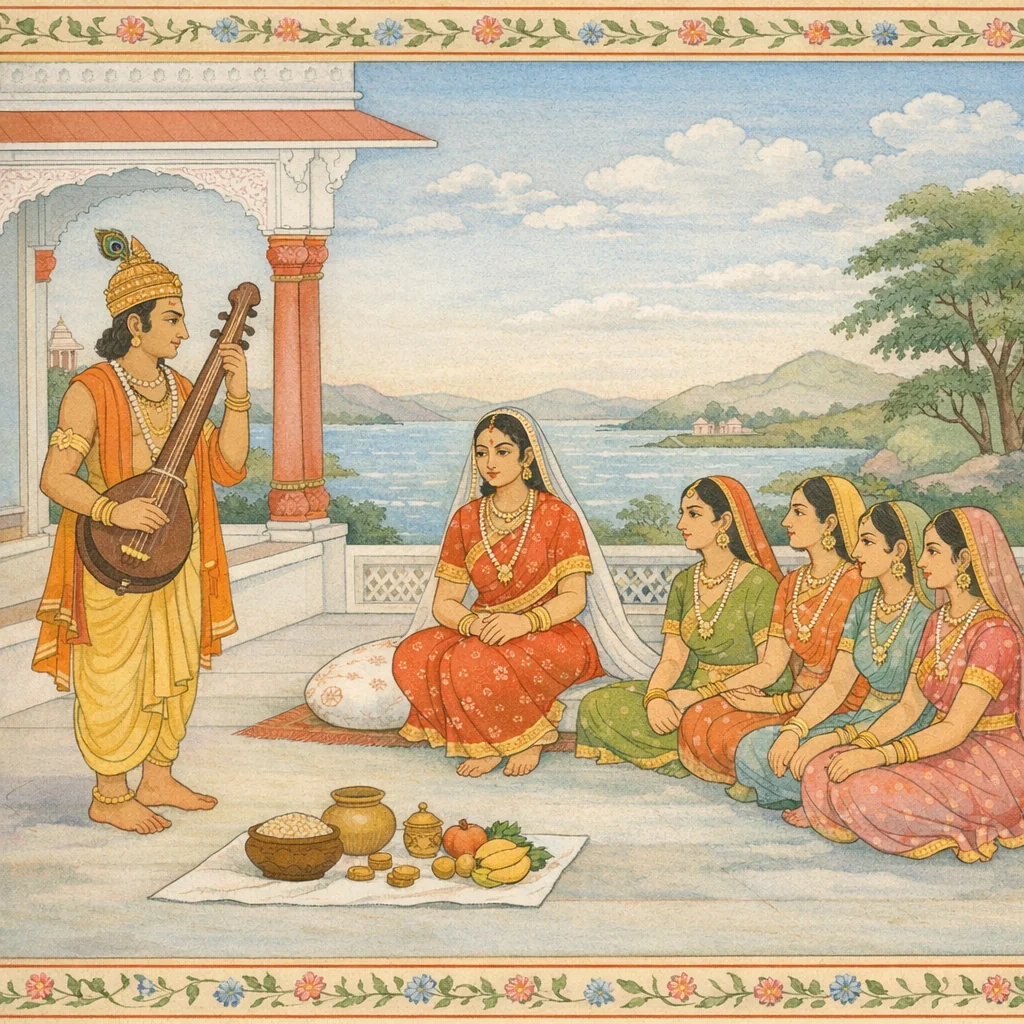
Chapter Arc: युधिष्ठिर, दान-धर्म के विधान को सुनकर, एक और सूक्ष्म जिज्ञासा उठाते हैं—क्या नक्षत्र-योग के अनुसार दान करने से फल में भेद आता है? → भीष्म उत्तर देते हैं कि इस विषय का प्रमाण एक प्राचीन संवाद में है। वे देवर्षि नारद के द्वारका-आगमन और देवकी के साथ धर्म-चर्चा का प्रसंग उठाकर, नक्षत्रों के अनुसार दान-वस्तुओं और उनके विशिष्ट फलों की क्रमबद्ध परंपरा खोलते हैं। → नक्षत्र-योगों के साथ दान का ‘फल-मानचित्र’ अपने चरम पर पहुँचता है—हस्त में रथ-हस्ती-दान, ज्येष्ठा में समूल शाक-दान, श्रवण में कम्बल-दान, शतभिषा में अगुरु-चन्दन-गन्ध-दान, भरणी में तिल-धेनु-दान—और प्रत्येक के साथ स्वर्ग, अप्सरा-संग, यश, समृद्धि, उत्तम गति जैसे विशिष्ट लोक-फल घोषित होते हैं। → भीष्म संक्षेप में कहते हैं कि नक्षत्र-योग से विविध दानों का यह लक्षण-निर्देश बताया गया; नारद से सुना हुआ देवकी का उपदेश आगे स्नुषाओं/परिवार की स्त्रियों तक पहुँचा—अर्थात धर्म-ज्ञान का गृहस्थ-परंपरा में प्रसार। → देवकी द्वारा स्नुषाओं को आगे क्या विशेष आचार-विधान, व्रत-नियम या दान-क्रम बताया गया—यह संकेत देकर कथा अगले अध्याय की ओर मोड़ लेती है।
Shlokas
Verse 1
अप्-४-#क+ चतु:षष्टितमो< ध्याय: विभिन्न नक्षत्रोंके योगमें भिन्न-भिन्न वस्तुओंके दानका माहात्म्य युधिछिर उवाच श्रुतं मे भवतो वाक्यमन्नदानस्य यो विधि: । नक्षत्रयोगस्येदानीं दानकल्पं ब्रवीहि मे,युधिष्ठिरने पूछा--पितामह! मैंने आपका उपदेश सुना। अन्नदानका जो विधान है, वह ज्ञात हुआ। अब मुझे यह बताइये कि किस नक्षत्रका योग प्राप्त होनेपर किस-किस वस्तुका दान करना उत्तम है
Yudhiṣṭhira said: “I have heard your instruction—the prescribed method of giving food in charity. Now, please explain to me the proper rule of charitable gifts in relation to the conjunctions of the lunar mansions (nakṣatra-yoga): when a particular nakṣatra-yoga occurs, which specific items are best to give?”
Verse 2
भीष्म उवाच अत्राप्युदाहरन्तीममितिहासं पुरातनम् । देवक्याश्रैव संवाद महर्षेनरिदस्थ च,भीष्मजीने कहा--युधिष्ठिर! इस विषयमें जानकार मनुष्य देवकी देवी और महर्षि नारदके संवादरूप प्राचीन इतिहासका उदाहरण दिया करते हैं
Bhishma said: “In this matter too, the learned cite an ancient historical precedent—namely, the dialogue between Lady Devakī and the great sage Nārada.”
Verse 3
द्वारकामनुसम्प्राप्तं नारद देवदर्शनम् । पप्रच्छेदं वच: प्रश्न॑ देवकी धर्मदर्शनम्,एक समयकी बात है, धर्मदर्शी देवर्षि नारदजी द्वारकामें आये थे। उस समय वहाँ देवकी देवीने उनके सामने यही प्रश्न उपस्थित किया
Bhishma said: When the divine-seeing sage Narada arrived in Dvaraka, Devaki—herself discerning in matters of dharma—approached him and posed a question, seeking guidance on righteous conduct.
Verse 4
तस्या: सम्पृच्छमानाया देवर्षिनरिदस्ततः । आचरष्ट विधिवत सर्व तच्छृणुष्व विशाम्पते,प्रजानाथ! देवकीके इस प्रकार पूछनेपर देवर्षि नारदने उस समय विधिपूर्वक सब बातें बतायीं। वे ही बातें मैं तुमसे कहता हूँ, सुनो
Bhishma said: “When she thus inquired, the divine seer Nārada then explained everything in due ritual and proper order. Hear from me those very matters, O lord of the people, O ruler of men.”
Verse 5
नारद उवाच कृत्तिकासु महा भागे पायसेन ससर्पिषा । संतर्प्य ब्राह्मणान् साधूँल्लोकानाप्रोत्यनुत्तमान्
Nārada said: “O highly fortunate lady, by offering sweet rice (pāyasa) mixed with ghee to the Brāhmaṇas—those virtuous and worthy recipients—you will duly satisfy them and thereby attain the highest worlds.”
Verse 6
नारदजीने कहा--महाभागे! कृत्तिका नक्षत्र आनेपर मनुष्य घृतयुक्त खीरके द्वारा श्रेष्ठ ब्राह्मणोंको तृप्त करे। इससे वह सर्वोत्तम लोकोंको प्राप्त होता है ।। रोहिण्यां प्रसृतैर्मार्ग्मासैरन्नेन सर्पिषा । पयोअऊज्नपानं दातव्यमनृणार्थ द्विजातये,रोहिणी नक्षत्रमें पके हुए फलके गूदे, अन्न, घी, दूध तथा पीनेयोग्य पदार्थ ब्राह्मणको दान करने चाहिये। इससे उनके ऋणसे छुटकारा मिलता है
Narada said: “O noble lady, when the Kṛttikā constellation arrives, a person should satisfy worthy Brahmins with rice-pudding enriched with ghee; by this he attains the highest worlds. And when Rohiṇī is in ascendance, one should give to a twice-born Brahmin ripe fruit-pulp and juices, cooked food, ghee, milk, and suitable drinks; by this one is released from indebtedness.”
Verse 7
दोग्ध्रीं दत्त्वा सवत्सां तु नक्षत्रे सोमदैवते । गच्छन्ति मानुषाल्लोकात् सर्वलोकमनुत्तमम्,मृगशिरा नक्षत्रमें दूध देनेवाली गौका बछड़ेसहित दान करके दाता मृत्युके पश्चात् इस लोकसे सर्वोत्तम स्वर्गलोकमें जाते हैं
Nārada said: One who donates a milch cow together with her calf, at the time of the lunar mansion presided over by Soma, departs after death from the human world and attains the unsurpassed heavenly realm.
Verse 8
आर्द्रायां कृसरं दत्त्वा तिलमिश्रमुपोषित: । नरस्तरति दुर्गाणि क्षुरधारांश्व॒ पर्वतान्,आर्द्रा नक्षत्रमें उपवासपूर्वक तिलमिश्रित खिचड़ी दान करनेवाला मनुष्य बड़े-बड़े दुर्गम संकटोंसे तथा क्षुरकी-सी धारवाले पर्वतोंसे भी पार हो जाता है
Nārada said: A person who, after observing a fast, gives kṛsara (a rice-and-pulse dish) mixed with sesame on the day of the Ārdrā lunar mansion, crosses even formidable hardships—indeed, even razor-edged mountains.
Verse 9
पूपान् पुनर्वसौ दत्त्वा तथैवान्नानि शो भने । यशस्वी रूपसम्पन्नो बद्धन्नो जायते कुले
Narada said: “By giving sweet cakes at the time of the Punarvasu observance, and likewise offering food, one is born in a noble family endowed with fame and beauty.”
Verse 10
शोभने! पुनर्वसु नक्षत्रमें पूआ और अन्न-दान करके मनुष्य उत्तम कुलमें जन्म लेता है, तथा वहाँ यशस्वी, रूपवान् एवं प्रचुर अन्नसे सम्पन्न होता है ।। पुष्येण कनकं दत्त्वा कृतं वाकृतमेव च । अनालोकेषु लोकेषु सोमवत् स विराजते,पुष्य नक्षत्रमें सोनेका आभूषण अथवा केवल सोना ही दान करनेसे दाता प्रकाशशून्य लोकोंमें भी चन्द्रमाके समान प्रकाशित होता है
Narada said: “O auspicious lady! By offering sweet cakes and giving food in charity under the Punarvasu constellation, a person is born into an excellent family and, in that life, becomes renowned, handsome, and richly supplied with food. Likewise, by giving gold—whether fashioned as an ornament or even as unworked metal—under the Puṣya constellation, the giver shines like the moon even in worlds devoid of light.”
Verse 11
आश्लेषायां तु यो रूप्यमृषभं वा प्रयच्छति । स सर्वभयनिर्मुक्त: सम्भवानधितिष्ठति,जो आश्लेषा नक्षत्रमें चाँदी अथवा बैल दान करता है, वह इस जन्ममें सब प्रकारके भयसे मुक्त हो दूसरे जन्ममें उत्तम कुलमें जन्म लेता है
Nārada said: Whoever, on the occasion of the Āśleṣā lunar mansion, gives a gift of silver or a bull becomes free from every kind of fear in this very life, and in a later birth attains an excellent and well-born lineage.
Verse 12
मघासु तिलपूर्णानि वर्धमानानि मानव: । प्रदाय पुत्रपशुमानिह प्रेत्य च मोदते,जो मनुष्य मघा नक्षत्रमें तिलसे भरे हुए वर्धमान पात्रोंका दान करता है, वह इहलोकमें पुत्रों और पशुओंसे सम्पन्न हो परलोकमें भी आनन्दका भागी होता है
Nārada said: A person who, under the Maghā lunar mansion, gives in charity auspicious vessels (vardhamāna-pātras) filled with sesame seeds becomes blessed in this world with children and livestock, and after death also partakes of joy in the next world.
Verse 13
फल्गुनीपूर्वसमये ब्राह्णानामुपोषित: । भक्ष्यान् फाणितसंयुक्तान् दत्त्वा सौभाग्यमृच्छति,पूर्वाफाल्गुनी नक्षत्रमें उपवास करके जो मनुष्य ब्राह्मणोंको मक्खनमिश्रित भक्ष्य पदार्थ देता है, वह सौभाग्यशाली होता है
Nārada said: If a person observes a fast at the time of the Pūrvaphalgunī constellation and then gives Brahmins edible offerings prepared with phāṇita (sweet syrup/jaggery), he attains good fortune.
Verse 14
घृतक्षीरसमायुक्तं विधिवत् षष्टिकौदनम् | उत्तराविषये दत्त्वा स्वर्गलोके महीयते,उत्तराफाल्गुनी नक्षत्रमें विधिपूर्वक घृत और दुग्धसे युक्त साठीके चावलके भातका दान करनेसे मनुष्य स्वर्गलोकमें सम्मानित होता है
Narada said: “One who, in the proper manner, offers as a gift cooked ṣaṣṭika rice prepared with ghee and milk, and does so in the sacred observance connected with the Uttarā (Uttaraphālgunī) constellation, is honored and held in high esteem in the heavenly world.”
Verse 15
यद् यत् प्रदीयते दानमुत्तराविषये नरै: । महाफलमनन्तं तद् भवतीति विनिश्चय:,उत्तरा नक्षत्रमें मनुष्य जो-जो दान देते हैं, वह महान् फलसे युक्त एवं अनन्त होता है-- यह शास्त्रोंका निश्चय है
Narada said: Whatever gift people give at the time of Uttarā is assuredly said to yield great and even limitless fruit—this is the settled conclusion of the sacred teachings.
Verse 16
हस्ते हस्तिरथं दत्त्वा चतुर्युक्तमुपोषित: । प्राप्रोति परमॉललोकान् पुण्यकामसमन्वितान्,हस्तनक्षत्रमें उपवास करके ध्वजा, पताका, चँदोवा और किंकिणीजाल--इन चार वस्तुओंसे युक्त हाथी जुते हुए रथका दान करनेवाला मनुष्य पवित्र कामनाओंसे युक्त उत्तम लोकोंमें जाता है
Under the asterism Hastā, one who keeps the fast and gives in charity an elephant-drawn chariot, yoked with four horses and furnished with banner, pennon, canopy, and a net of tinkling bells, attains the highest worlds, filled with holy desires and merit.
Verse 17
चित्रायां वृषभ॑ दत्त्वा पुण्यगन्धांश्व भारत । चरन्त्यप्सरसां लोके रमन्ते नन्दने तथा,भारत! जो लोग चित्रा नक्षत्रमें वृषभ एवं पवित्र गन्धका दान करते हैं, वे अप्सराओंके लोकमें विचरते और नन्दनवनमें रमण करते हैं
Nārada said: “O Bhārata, those who, under the asterism Citrā, give the gift of a bull and offer pure, auspicious fragrances attain the realm of the Apsarases. There they roam freely and delight in Nandana, Indra’s celestial grove.”
Verse 18
स्वात्यामथ धन दत्त्वा यदिष्टतममात्मन: । प्राप्रोति लोकान् स शुभानिह चैव महद् यश:,स्वाती नक्षत्रमें अपनी अधिक-से-अधिक प्रिय वस्तुका दान करके मनुष्य शुभ लोकोंमें जाता है और इस जगतमें भी महान् यशका भागी होता है
Nārada said: On the day of the Svātī lunar mansion, if a person gives wealth in charity—especially what is dearest to oneself—one attains auspicious worlds hereafter and, even in this very life, becomes a recipient of great renown.
Verse 19
विशाखायामनडूवाहं थेनुं दत्त्वा च दुग्धदाम् । सप्रासंगं च शकटं सधान्यं वस्त्रसंयुतम्,जो विशाखा नक्षत्रमें गाड़ी ढोनेवाले बैल, दूध देनेवाली गाय, धान्य, वस्त्र और प्रासंगसहित शकट दान करता है, वह देवताओं और पितरोंको तृप्त कर देता है तथा मृत्युके पश्चात् अक्षय सुखका भागी होता है। वह जीते जी कभी संकटमें नहीं पड़ता और मरनेके बाद स्वर्गलोकमें जाता है
Nārada said: “One who, under the asterism Viśākhā, gives in charity a draught-ox fit for pulling a cart, a milk-giving cow, and a cart furnished with its fittings—together with grain and clothing—thereby satisfies the gods and the ancestors. Such a donor attains unfailing happiness after death, is not overcome by distress while living, and, upon departing this world, goes to heaven.”
Verse 20
पितृन् देवांश्न प्रीणाति प्रेत्य चानन्त्यमश्रुते । न च दुर्गाण्यवाप्रोति स्वर्गलोक॑ च गच्छति,जो विशाखा नक्षत्रमें गाड़ी ढोनेवाले बैल, दूध देनेवाली गाय, धान्य, वस्त्र और प्रासंगसहित शकट दान करता है, वह देवताओं और पितरोंको तृप्त कर देता है तथा मृत्युके पश्चात् अक्षय सुखका भागी होता है। वह जीते जी कभी संकटमें नहीं पड़ता और मरनेके बाद स्वर्गलोकमें जाता है
Narada says: One who offers such a gift gladdens both the ancestors and the gods. After death he attains unending reward; while living he does not fall into distress, and upon departing this world he goes to heaven.
Verse 21
दत्त्वा यथोक्तं विप्रेभ्यो वृत्तिमिष्टां स विन्दति । नरकादींश्व॒ संक्लेशान् नाप्रोतीति विनिश्चय:
Nārada said: “When a person gives to the Brahmins the prescribed livelihood-support (vṛtti), he gains the welfare and sustenance he desires. It is a settled conclusion that he does not fall into the torments beginning with hell.”
Verse 22
पूर्वोक्त वस्तुओंका ब्राह्मणोंको दान करके मनुष्य इच्छित जीविका-वृत्ति पा लेता है और नरक आदिके कष्ट भी कभी नहीं भोगता। ऐसा शास्त्रोंका निश्चय है ।। अनुराधासु प्रावारं वरान्नं समुपोषित: । दत्त्वा युगशतं चापि नर: स्वर्गे महीयते,जो मनुष्य अनुराधा नक्षत्रमें उपवास करके ओढ़नेका वस्त्र और उत्तम अन्न दान करता है, वह सौ युगोंतक स्वर्गलोकमें सम्मानपूर्वक रहता है
Narada said: By giving the previously mentioned items in charity to Brahmins, a person attains the livelihood he desires and never has to endure the torments of hell and the like—such is the settled conclusion of the scriptures. Moreover, one who, under the Anurādhā lunar mansion, observes a fast and then donates a cloak (a covering garment) and excellent food is honored in heaven for a hundred yugas.
Verse 23
कालशाकं तु विप्रे भ्यो दत्त्वा मर्त्य: समूलकम् | ज्येष्ठायामृद्धिमिष्टां वै गतिमिष्टां स गच्छति,जो मनुष्य ज्येष्ठा नक्षत्रमें ब्राह्मयगोंको समयोचित शाक और मूली दान करता है, वह अभीष्ट समृद्धि और सदगतिको प्राप्त होता है
Narada said: A mortal who, at the time of the Jyeṣṭhā nakṣatra, gives to Brahmins the seasonally appropriate leafy vegetable (kālaśāka) together with its root, attains the prosperity he desires and also the blessed course of destiny he seeks.
Verse 24
मूले मूलफल दत्त्वा ब्राह्मणेभ्य:ः समाहित: । पितृन् प्रीणयते चापि गतिमिष्टां च गच्छति,मूल नक्षत्रमें एकाग्रचित्त हो ब्राह्मणोंको मूल-फल दान करनेवाला मनुष्य पितरोंको तृप्त करता और अभीष्ट गतिको पाता है
Nārada said: With focused mind, one who, on the occasion of the Mūla nakṣatra, gives roots and fruits in charity to Brāhmaṇas thereby gratifies the ancestors (pitṛs) as well, and attains the desired blessed course of destiny.
Verse 25
अथ पूर्वास्वषाढासु दधिपात्राण्युपोषित: । कुलवृत्तोपसम्पन्ने ब्राह्मणे वेदपारगे
Nārada said: “Then, on the day of Pūrvāṣāḍhā, having observed a fast and (having prepared) vessels of curd, he approached a Brāhmaṇa who was endowed with good family conduct and established tradition, and who was learned in the Vedas.”
Verse 26
पुरुषो जायते प्रेत्य कुले सुबहुगोधने । पूर्वाषाढ़ा नक्षत्रमें उपवास करके कुलीन, सदाचारी एवं वेदोंके पारंगत विद्वान् ब्राह्मणको दहीसे भरे हुए पात्रका दान करनेवाला मनुष्य मृत्युके पश्चात् ऐसे कुलमें जन्म लेता है, जहाँ गोधनकी अधिकता होती है ।। उदमन्थ॑ं ससर्पिष्कं प्रभूतमधिफाणितम् | दत्त्वोत्तरास्वषाढासु सर्वकामानवाप्रुयात्
Nārada said: Whoever, having fasted on the day of the Pūrvāṣāḍhā lunar mansion, gives a vessel filled with curd to a noble Brahmin of good conduct and mastery of the Vedas, is reborn after death in a family abounding in cattle-wealth. Likewise, one who on the days of Uttarāṣāḍhā donates a plentiful churned drink mixed with ghee and sweetened with abundant molasses attains the fulfillment of all desired aims.
Verse 27
जो उत्तराषाढ़ा नक्षत्रमें जलपूर्ण कलशसहित सत्तूकी बनी हुई खाद्य वस्तु, घी और प्रचुर माखन दान करता है, वह सम्पूर्ण मनोवांछित भोगोंको प्राप्त कर लेता है ।। दुग्धं त्वभिजिते योगे दत्त्वा मधुघृतप्लुतम् । धर्मनित्यो मनीषिभ्य: स्वर्गलोके महीयते,जो नित्य धर्मपरायण पुरुष अभिजित् नक्षत्रके योगमें मनीषी ब्राह्मणोंको मधु और घीसे युक्त दूध देता है, वह स्वर्गलोकमें सम्मानित होता है
Nārada said: Whoever, under the asterism Uttarāṣāḍhā, gives in charity a water-filled pot together with food prepared from roasted barley-flour (sattu), along with ghee and abundant butter, obtains all enjoyments he has wished for. And the man steadfast in dharma—when the Abhijit asterism is in conjunction—who offers to wise Brahmins milk enriched with honey and ghee, is honored in the world of heaven.
Verse 28
श्रवणे कम्बलं दत्त्वा वस्त्रान्तरितमेव वा । श्वेतेन याति यानेन स्वर्गलोकानसंवृतान्
Narada said: “One who offers a woollen blanket for the protection of the ears—whether given directly or even wrapped within another cloth—travels in a white celestial conveyance and reaches the heavenly worlds, unobstructed.”
Verse 29
जो श्रवण नक्षत्रमें वस्त्रवेष्टित कम्बल दान करता है, वह श्वेत विमानके द्वारा खुले हुए स्वर्गलोकमें जाता है ।। गोप्रयुक्ते धनिष्ठासु यानं दत्त्वा समाहित: । वस्त्रराशिधन सद्य:ः प्रेत्य राज्यं प्रपद्यते,जो धनिष्ठा नक्षत्रमें एकाग्रचित्त होकर बैलगाड़ी, वस्त्र-समूह तथा धन दान करता है, वह मृत्युके पश्चात् शीघ्र ही राज्य पाता है
Narada said: When the constellation Dhaniṣṭhā is in effect, one who, with a collected mind, gives a vehicle yoked with oxen (such as a bullock-cart), along with a heap of garments and wealth, attains—after death—swiftly the reward of sovereignty.
Verse 30
गन्धान् शतभिषायोगे दत्त्वा सागुरुचन्दनान् । प्राप्रोत्यप्सरसां संघान् प्रेत्य गन्धांश्व शाश्वतान्,जो शतभिषा नक्षत्रके योगमें अगुरु और चन्दन-सहित सुगन्धित पदार्थोका दान करता है, वह परलोकमें अप्सराओंके समुदाय तथा अक्षय गन्धको पाता है
Nārada said: One who, at the auspicious conjunction of the Śatabhiṣā nakṣatra, gives fragrant substances—together with agaru and sandalwood—attains after death the company of hosts of apsarases and gains enduring, unfailing fragrance in the next world.
Verse 31
पूर्वाभाद्रपदायोगे राजमाषान् प्रदाय तु । सर्वभक्षफलोपेत: स वै प्रेत्य सुखी भवेत्,पूर्वाभाद्रपदा नक्षत्रके योगमें बड़ी उड़द या सफेद मटरका दान करके मनुष्य परलोकमें सब प्रकारकी खाद्य वस्तुओंसे सम्पन्न हो सुखी होता है
Nārada said: “When the lunar mansion Pūrvābhādrapadā is in an auspicious conjunction (yoga), if one gives in charity rāja-māṣa (a superior kind of māṣa pulse), then after death that person attains a happy state, endowed with all kinds of foods and fruits.”
Verse 32
औरभ्रमुत्तरायोगे यस्तु मांसं प्रयच्छति । स पितृन् प्रीणयति वै प्रेत्य चानन्त्यमश्षुते,जो उत्तराभाद्रपदा नक्षत्रके योगमें औरभ्र फलका गूदा दान करता है, वह पितरोंको तृप्त करता और परलोकमें अक्षय सुखका भागी होता है
Nārada said: “Whoever, at the auspicious conjunction called Uttarā-yoga, offers the fleshy pulp of the aurabhra fruit as a gift truly gladdens the Pitṛs (ancestral spirits); and after death, he attains unending well-being in the next world.”
Verse 33
कांस्योपदोहनां धेनुं रेवत्यां यः प्रयच्छति । सा प्रेत्य कामानादाय दातारमुपतिष्ठति,जो रेवती नक्षत्रमें कांसके दुग्धपात्रसे युक्त धेनुका दान करता है वह धेनु परलोकमें सम्पूर्ण भोगोंको लेकर उस दाताकी सेवामें उपस्थित होती है
Nārada said: “Whoever donates a cow furnished with a bronze milking vessel at the time of the Revatī lunar mansion—after death, that very cow, bearing all desired enjoyments, comes to attend upon and serve the donor.”
Verse 34
रथमश्वसमायुक्तं दत्त्वाश्विन्यां नरोत्तम: । हस्त्यश्वरथसम्पन्ने वर्चस्वी जायते कुले,जो नरश्रेष्ठ अश्विनी नक्षत्रमें घोड़े जुते हुए रथका दान करता है, वह हाथी, घोड़े और रथसे सम्पन्न कुलमें तेजस्वी पुत्ररूपसे जन्म लेता है
Nārada said: “If an excellent man donates a chariot yoked with horses when the lunar mansion Aśvinī is in effect, he is reborn in a family endowed with elephants, horses, and chariots, and he becomes a radiant, illustrious person there.”
Verse 35
भरणीषु द्विजातिभ्यस्तिलधेनु प्रदाय वै । गा: सुप्रभूता: प्राप्नोति नर: प्रेत्य यशस्तथा,जो भरणी नक्षत्रमें ब्राह्मणोंको तिलमयी धेनुका दान करता है, वह इस लोकमें बहुत- सी गौओंको तथा परलोकमें महान् यशको प्राप्त करता है
Nārada said: “If, under the Bharaṇī lunar mansion, a man gives to the twice-born (especially brāhmaṇas) a ‘sesame-cow’—a ritual gift fashioned of sesame—then in this world he gains abundant cattle, and after death he attains great renown as well.”
Verse 36
भीष्म उवाच इत्येष लक्षणोद्ेश: प्रोक्तो नक्षत्रयोगत: । देवक्या नारदेनेह सा स्नुषाभ्यो5ब्रवीदिदम्
Bhishma said: “Thus has this concise indication of the characteristics been stated, in accordance with the combinations of the lunar mansions (nakṣatra-yogas). Here, Devakī, instructed by Nārada, spoke these words to her daughters-in-law.”
Verse 64
भीष्मजी कहते हैं--राजन्! इस प्रकार नक्षत्रोंक योगमें किये जानेवाले विविध वस्तुओंके दानका संक्षेपसे यहाँ वर्णन किया गया है। नारदजीने देवकीसे और देवकीजीने अपनी पुत्रवधुओंसे यह विषय सुनाया था ।। इति श्रीमहाभारते अनुशासनपर्वणि दानधर्मपर्वणि नक्षत्रयोगदानं नाम चतु:षष्टितमो5 ध्याय:,इस प्रकार श्रीमह्याभारत अनुशासनपर्वके अन्तर्गत दानधर्मपर्वमें नक्षत्रयोग सम्बन्धी दान नामक चौंसठवाँ अध्याय पूरा हुआ
Bhishma said: “O King, here a concise account has been given of the many kinds of gifts to be offered when particular constellational conjunctions (nakṣatra-yogas) occur. This teaching was heard by Narada from Devaki, and Devaki in turn conveyed it to her daughters-in-law. Thus ends the sixty-fourth chapter of the Anushasana Parva, within the section on the dharma of giving, entitled ‘Gifts in connection with nakṣatra-yogas.’”
Frequently Asked Questions
It demonstrates the dharmic risk of misidentifying recipients: even well-intended actions can become flawed if the selection and procedure contradict explicit instruction, requiring correction to restore ritual-ethical integrity.
Tilā-dāna is presented as exceptionally meritorious when performed properly and regularly, while water-giving—especially through durable public provisions—embodies continuous welfare and thus yields outstanding merit.
Yes in functional form: lamp-giving is said to benefit devas and pitṛs as ‘eye-giving’ support, and worthy giving/acceptance is described as producing akṣaya (inexhaustible) merit for both donor and recipient.