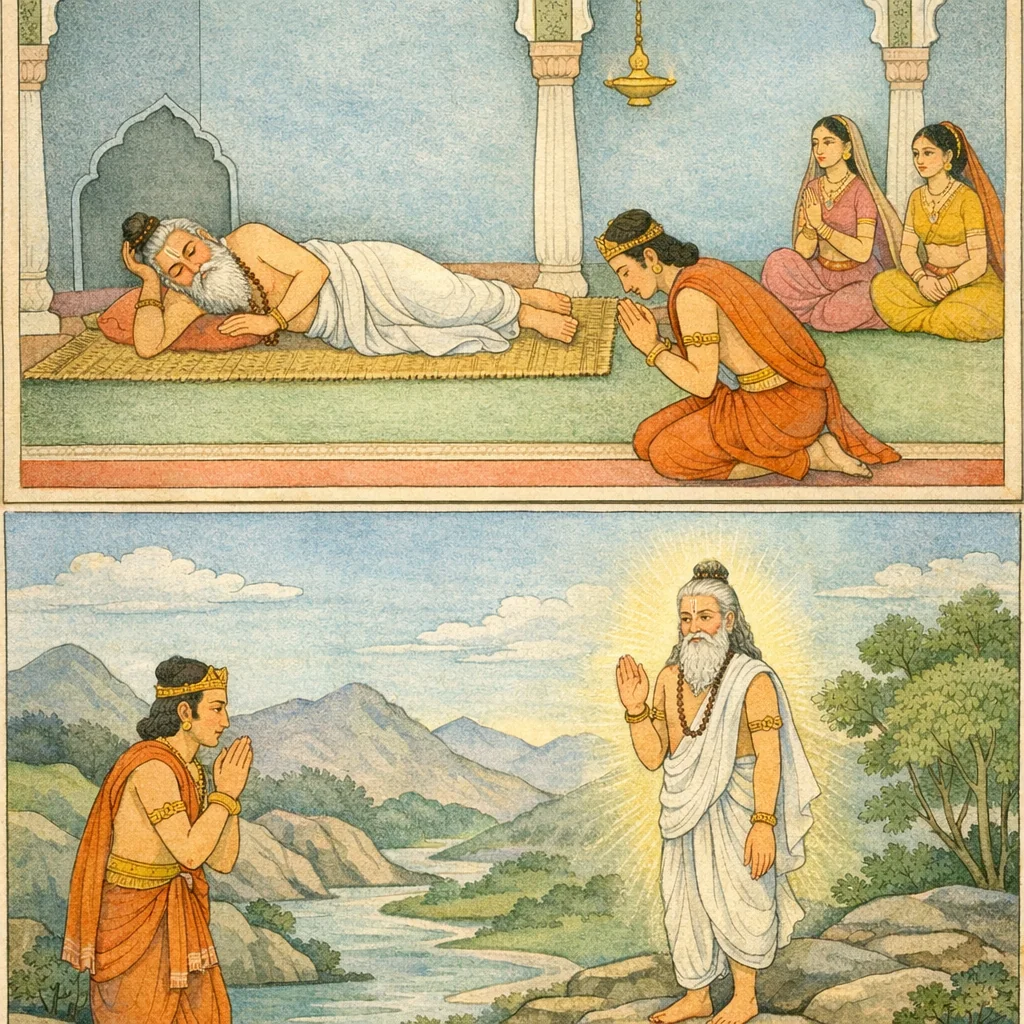
Adhyaya 58
Dāna-Śreṣṭhatā: Abhaya, Anugraha, and the Ethics of Honoring the Worthy (दानश्रेष्ठता: अभय-अनुग्रह-विप्रपूजा)
Upa-parva: Dāna-Dharma Anuśāsana (Charity and Merit Discourse)
Yudhiṣṭhira asks Bhīṣma to identify which form of giving is superior among commonly discussed external gifts, motivated by the principle that a gift ‘follows’ the giver. Bhīṣma answers by elevating abhaya (granting fearlessness/safety) to all beings and anugraha (aid in adversity) as exemplary gifts, alongside the practice of giving what is genuinely desired or valued, especially to a thirsty or needy petitioner. He states that the ‘best gift’ is that after which the giver experiences the settled conviction of having truly given; such a gift is said to accompany the donor. He lists purifying gifts—gold, cows, and land—and urges regular giving to sādhus, asserting that charity releases one from sin. He further instructs that one should honor petitioners according to capacity, assist even an adversary who comes seeking refuge, and remove hunger from the emaciated and ashamed. A key administrative ethic follows: invite and support restrained, self-controlled brāhmaṇas—especially those who do not solicit—through lodging and provisions, treating such support as a distributed sacrifice (vitata-yajña) superior to many ritual offerings. The chapter concludes with a strong emphasis on honoring brāhmaṇas as stabilizers of kṣatriya power and as an anchor of social legitimacy, framed as Bhīṣma’s sworn truth about the spiritual consequences of his own conduct toward them.
Chapter Arc: राजर्षि कुशिक, अपने गृह में ठहरे मुनिपुंगव च्यवन से विनयपूर्वक पूछते हैं—“भगवन्, यदि आप प्रसन्न हैं तो बताइए, मेरे घर में आपके निवास का कारण क्या है?” → च्यवन अपने विचित्र आचरणों का संकेत देते हैं—इक्कीस-इक्कीस दिनों तक एक करवट सोना, उठकर बिना कुछ कहे बाहर जाना, सहसा अन्तर्धान होना और फिर पुनः दर्शन देना—और कुशिक की सहनशीलता व धैर्य की परीक्षा लेते हैं। धीरे-धीरे स्पष्ट होता है कि यह केवल तपस्वी का स्वभाव नहीं, बल्कि एक उद्देश्यपूर्ण ‘परीक्षा’ है। → च्यवन सत्य उद्घाटित करते हैं: “मैं तुम्हारे कुल-नाश के हेतु आया था—कुशिकोच्छेद का संकल्प लेकर।” परंतु कुशिक की अविचल क्षमा, सेवा और क्रोध-रहित धैर्य ने उस संकल्प को पलट दिया; विनाश का हेतु वरदान में रूपान्तरित हो जाता है। → प्रसन्न होकर च्यवन कहते हैं—“राजर्षे, जो वर तुम्हारे मन में है, मांग लो; मैं तीर्थयात्रा को जाऊँगा।” कुशिक की निःशंक निष्ठा और अतिथि-धर्म के पालन से ऋषि संतुष्ट होते हैं और उसे कल्याणकारी फल का आश्वासन देते हैं। → वरदान का द्वार खुलता है—कुशिक क्या मांगेगा, और यह वर उसके वंश व राज्य-धर्म को किस दिशा में मोड़ेगा?
Shlokas
Verse 1
अफ्-४-णका+ पञ्चपञज्चाशत्तमो<् ध्याय: च्यवनका कुशिकके पूछनेपर उनके घरमें अपने निवासका कारण बताना और उन्हें वरदान देना च्यवन उवाच वरश्न गृह्मतां मत्तो यश्न ते संशयो हृदि । त॑ प्रब्रूहि नरश्रेष्ठ सर्व सम्पादयामि ते,च्यवन बोले--नरश्रेष्ठ! तुम मुझसे वर भी माँग लो और तुम्हारे मनमें जो संदेह हो, उसे भी कहो। मैं तुम्हारा सब कार्य पूर्ण कर दूँगा
Cyavana said: “Choose a boon from me, and also speak whatever doubt lies in your heart. O best of men, tell it plainly—I will bring all your aims to completion.”
Verse 2
कुशिक उवाच यदि प्रीतोडसि भगवंस्ततो मे वद भार्गव | कारणं श्रोतुमिच्छामि मद्गृहे वासकारितम्,कुशिकने कहा--भगवन्! भृगुनन्दन! यदि आप मुझपर प्रसन्न हों तो मुझे यह बताइये कि आपने इतने दिनोंतक मेरे घरपर क्यों निवास किया था? मैं इसका कारण सुनना चाहता हूँ
Kuśika said: “O venerable one, O Bhārgava! If you are pleased with me, then tell me: for what reason did you arrange to dwell in my house for so many days? I wish to hear the cause.”
Verse 3
शयनं चैकपार्श्वेन दिवसानेकविंशतिम् । अकिंचिदुक्त्वा गमनं॑ बहिश्न मुनिपुंगव
Kuśika said: “For twenty-one days he lay on only one side; then, without saying anything at all, that foremost of sages went away—departing outward, as one who endures and remains detached.”
Verse 4
अन्तर्धानमकस्माच्च पुनरेव च दर्शनम् | पुनश्च शयनं विप्र दिवसानेकविंशतिम्
Kuśika said: “Then, without warning, there was a disappearance, and again there was a reappearance. And once more, O brāhmaṇa, there was lying down (as if in sleep) for twenty-one days.”
Verse 5
तैलाभ्यक्तस्य गमनं भोजनं च गृहे मम । समुपानीय विविध॑ यद् दग्ध॑ जातवेदसा
Kuśika said: “In my house, the one who has been anointed with oil is to be escorted and fed; and various offerings are to be brought and presented—those that have been cooked by Jātavedas (the sacred fire).”
Verse 6
निर्याणं च रथेनाशु सहसा यत् कृतं त्वया । धनानां च विसर्गस्य वनस्यापि च दर्शनम्
Kuśika said: “Your swift departure by chariot, done all at once and without delay, and your act of giving away wealth, and even your going to see the forest—these deeds of yours (taken together) call for reflection on the resolve and purpose behind them.”
Verse 7
प्रासादानां बहूनां च काउचनानां महामुने । मणिदविद्रुपादानां पर्यड्काणां च दर्शनम्
Kushika said: “O great sage, there was the sight of many golden palaces, and also of couches whose feet were set with gems and vaidūrya (cat’s-eye).”
Verse 8
पुनश्चादर्शनं तस्य श्रोतुमिच्छामि कारणम् | अतीव ह्वात्र मुह्दामि चिन्तयानो भृगूद्गह
Kushika said: “Again, I wish to hear the reason for his disappearance from sight. Here I am utterly bewildered as I reflect on it, O Bhṛgu’s descendant.”
Verse 9
मुनिपुंगव! इक्कीस दिनोंतक एक करवटसे सोते रहना, फिर उठनेपर बिना कुछ बोले बाहर चल देना, सहसा अन्तर्धान हो जाना, पुनः दर्शन देना, फिर इक्कीस दिनोंतक दूसरी करवटसे सोते रहना, उठनेपर तेलकी मालिश कराना, मालिश कराकर चल देना, पुनः मेरे महलमें जाकर नाना प्रकारके भोजनको एकत्र करना और उसमें आग लगाकर जला देना, फिर सहसा रथपर सवार हो बाहर नगरकी यात्रा करना, धन लुटाना, दिव्य वनका दर्शन कराना, वहाँ बहुत-से सुवर्णमय महलोंको प्रकट करना, मणि और मूँगोंके पायेवाले पलंगोंको दिखाना और अन्तमें सबको पुनः अदृश्य कर देना--महामुने! आपके इन कार्योंका यथार्थ कारण मैं सुनना चाहता हूँ। भूगुकुलरत्न! इस बातपर जब मैं विचार करने लगता हूँ तब मुझपर अत्यन्त मोह छा जाता है ।। न चैवात्राधिगच्छामि सर्वस्यास्य विनिश्चयम् । एतदिच्छामि कार्त्स्न्येन सत्यं श्रोतुं तपोधन,तपोधन! इन सब बातोंपर विचार करके भी मैं किसी निश्चयपर नहीं पहुँच पाता हूँ, अतः इन बातोंको मैं पूर्ण एवं यथार्थ रूपसे सुनना चाहता हूँ
Kuśika said: “O foremost of sages! You lie for twenty-one days on one side; then, rising, you go out without speaking a word, suddenly vanish, and later appear again. Again you lie for twenty-one days on the other side; then, rising, you have oil-massage done and, once anointed, you depart. Then you return to my palace, gather many kinds of food, set it on fire, and burn it. Next you suddenly mount a chariot, tour outside the city, scatter wealth, show a wondrous forest, and there manifest many golden mansions; you display couches with legs inlaid with gems and coral, and finally you make everything disappear again. Great sage! I wish to hear the true reason for all these acts of yours. Jewel of Bhṛgu’s line! When I reflect on this, deep bewilderment overwhelms me. Even after pondering, I cannot reach any conclusion about it all; therefore, O ascetic rich in austerity, I desire to hear the complete truth.”
Verse 10
च्यवन उवाच शृणु सर्वमशेषेण यदिदं येन हेतुना । न हि शक््यमनाख्यातुमेवं पृष्टेन पार्थिव,च्यवनने कहा--भूपाल! जिस कारणसे मैंने यह सब कार्य किया था, वह सारा वृत्तान्त तुम पूर्णरूपसे सुनो। तुम्हारे इस प्रकार पूछनेपर मैं इस रहस्यको बताये बिना नहीं रह सकता
Cyavana said: “O king, listen in full to the entire account—what this is, and for what reason it was done. When you question me in this manner, it is not possible for me to withhold the explanation; I cannot leave this matter unspoken.”
Verse 11
पितामहस्य वदत: पुरा देवसमागमे । श्रुतवानस्मि यद् राज॑ंस्तन्मे निगदत: शृणु,राजन! पूर्वकालकी बात है, एक दिन देवताओंकी सभामें ब्रह्माजी एक बात कह रहे थे जिसे मैंने सुना था, उसे बता रहा हूँ, सुनो
Chyavana said: “O king, long ago, in an assembly of the gods, I heard a statement spoken by the Grandfather (Brahmā). Now listen, O king, as I recount that very teaching to you.”
Verse 12
ब्रह्मक्षत्रविरोधेन भविता कुलसंकर: । पौत्रस्ते भविता राजंस्तेजोवीर्यसमन्वित:,नरेश्वर! ब्रह्माजीने कहा था कि ब्राह्मण और क्षत्रियमें विरोध होनेके कारण दोनों कुलोंमें संकरता आ जायगी। (उन्हींके मुहसे मैंने यह भी सुना था कि तुम्हारे वंशकी कन्यासे मेरे वंशमें क्षत्रिय तेजका संचार होगा और) तुम्हारा एक पौजत्र ब्राह्मण-तेजसे सम्पन्न तथा पराक्रमी होगा
Cyavana said: “Because of hostility between the Brahmin and the Kshatriya, there will arise a confusion and intermixture of lineages. Yet, O king—O lord of men—there will be a grandson of yours endowed with splendour and heroic power.”
Verse 13
ततस्ते कुलनाशार्थमहं त्वां समुपागत: । चिकीर्षन् कुशिकोच्छेदं संदिधक्षु: कुलं तव,यह सुनकर मैं तुम्हारे कुलका विनाश करनेके लिये तुम्हारे यहाँ आया था। मैं कुशिकका मूलोच्छेद कर डालना चाहता था। मेरी प्रबल इच्छा थी कि तुम्हारे कुलको जलाकर भस्म कर डालूँ
Then, with the aim of destroying your lineage, I came to you—intent on uprooting the Kuśika line and resolved to burn your family to ashes.
Verse 14
ततो5हमागम्य पुरे त्वामवोचं महीपते । नियम कंचिदारप्स्ये शुश्रूषा क्रियतामिति,भूपाल! इसी उद्देश्यसे तुम्हारे नगरमें आकर मैंने तुमसे कहा कि मैं एक व्रतका आरम्भ करूँगा। तुम मेरी सेवा करो (इसी अभिप्रायसे मैं तुम्हारा दोष ढूँढ़ रहा था); किंतु तुम्हारे घरमें रहकर भी मैंने आजतक तुममें कोई दोष नहीं पाया। राजर्षे! इसीलिये तुम जीवित हो, अन्यथा तुम्हारी सत्ता मिट गयी होती
Then, O king, I came to your city and said to you: “I shall undertake a certain religious observance; render me service.” (With that intention I was in fact seeking a fault in you.) Yet, even while dwelling in your house, I have not found any fault in you to this day. O royal sage, for this reason you still live; otherwise your very power and standing would have been destroyed.
Verse 15
नच ते दुष्कृतं किंचिदहमासादयं गृहे । तेन जीवसि राजर्षे न भवेथास्त्वमन्यथा,भूपाल! इसी उद्देश्यसे तुम्हारे नगरमें आकर मैंने तुमसे कहा कि मैं एक व्रतका आरम्भ करूँगा। तुम मेरी सेवा करो (इसी अभिप्रायसे मैं तुम्हारा दोष ढूँढ़ रहा था); किंतु तुम्हारे घरमें रहकर भी मैंने आजतक तुममें कोई दोष नहीं पाया। राजर्षे! इसीलिये तुम जीवित हो, अन्यथा तुम्हारी सत्ता मिट गयी होती
Cyavana said: “I have not found in your house even the slightest evil deed of yours. For that reason you still live, O royal seer; otherwise, O protector of the earth, you would not have remained as you are—your very standing would have been destroyed.”
Verse 16
एवं बुद्धिं समास्थाय दिवसानेकविंशतिम् । सुप्तो5स्मि यदि मां कश्चिद् बोधयेदिति पार्थिव,भूपते! यही विचार मनमें लेकर मैं इक्कीस दिनोंतक एक करवटसे सोता रहा कि कोई मुझे बीचमें आकर जगावे
Chyavana said: “Having resolved upon this intention, O king, I lay sleeping for twenty-one days, thinking, ‘If someone should come and awaken me.’”
Verse 17
यदा त्वया सभार्येण संसुप्तो न प्रबोधित: । अहं तदैव ते प्रीतोी मनसा राजसत्तम,नृपश्रेष्ठल जब पत्नीसहित तुमने मुझे सोते समय नहीं जगाया, तभी मैं तुम्हारे ऊपर मन-ही-मन बहुत प्रसन्न हुआ था
Cyavana said: “When I was asleep, you did not wake me—though you were there together with your wife. At that very time, O best of kings, I became inwardly pleased with you.”
Verse 18
उत्थाय चास्मि निष्क्रान्तो यदि मां त्वं महीपते । पृच्छे: क््व यास्यसीत्येवं शपेयं त्वामिति प्रभो,भूपते! प्रभो! जिस समय मैं उठकर घरसे बाहर जाने लगा उस समय यदि तुम मुझसे पूछ देते कि “कहाँ जाइयेगा' तो इतनेसे ही मैं तुम्हें शाप दे देता
Chyavana said: “O king, when I had risen and was about to step out, had you asked me even once, ‘Where are you going?’, I would have cursed you for that very question, O lord.”
Verse 19
अन्तर्हितः पुनश्नास्मि पुनरेव च ते गृहे । योगमास्थाय संसुप्तो दिवसानेकविंशतिम्
Chyavana said: “Having become invisible, I was again present—indeed, once more within your house. Entering into yogic absorption, I lay in deep sleep for twenty-one days.”
Verse 20
फिर मैं अन्तर्धान हुआ और पुनः तुम्हारे घरमें आकर योगका आश्रय ले इक्कीस दिनोंतक सोया ।। क्षुधितो मामसूयेथां श्रमाद् वेति नराधिप । एवं बुद्धि समास्थाय कर्शितौ वां क्षुधा मया,नरेश्वर! मैंने सोचा था कि तुम दोनों भूखसे पीड़ित होकर या परिश्रमसे थककर मेरी निन््दा करोगे। इसी उद्देश्यसे मैंने तुमलोगोंको भूखे रखकर क्लेश पहुँचाया
Chyavana said: “Then I vanished and returned again to your house; taking refuge in yoga, I slept for twenty-one days. O king, I thought that when hunger pressed you, you two might speak ill of me—either from hunger or from sheer fatigue. With that intention, I kept you both without food and thus caused you distress.”
Verse 21
न च ते<भूत् सुसूक्ष्मोडपि मन्युर्मनसि पार्थिव । सभार्यस्य नरश्रेष्ठ तेन ते प्रीतिमानहम्,भूपते! नरश्रेष्ठ) इतनेपर भी स्त्रीसहित तुम्हारे मनमें तनिक भी क्रोध नहीं हुआ। इससे मैं तुमलोगोंपर बहुत संतुष्ट हुआ
Cyavana said: “O king, not even the slightest anger arose in your mind—even when you were with your wife. O best of men, precisely because of that restraint I am deeply pleased with you, O ruler.”
Verse 22
भोजनं च समानाय्य यत् तदा दीपितं मया । क्रुद्धयेथा यदि मात्सर्यादिति तन्मर्षितं च मे,इसके बाद जो मैंने भोजन मँगाकर जला दिया, उसमें भी यही उद्देश्य छिपा था कि तुम डाहके कारण मुझपर क्रोध करोगे; परंतु मेरे उस बर्तावको भी तुमने सह लिया
“And when I had food brought and then set it aflame, that too concealed the same intent: that, out of jealousy, you would become angry with me. Yet even that behavior of mine you endured.”
Verse 23
ततो<हं रथमारुह्य त्वामवोचं नराधिप । सभार्यो मां वहस्वेति तच्च त्वं कृतवांस्तथा
Then I mounted the chariot and said to you, O king: “Carry me, together with my wife.” And you did exactly as I asked.
Verse 24
धनोत्सर्गेडपि च कृते न त्वां क्रोध: प्रधर्षयत्,प्रीत्यर्थ तव चैतन्मे स्वर्गसंदर्शनं कृतम् । फिर जब मैं तुम्हारा धन लुटाने लगा, उस समय भी तुम क्रोधके वशीभूत नहीं हुए। इन सब बातोंसे मुझे तुम्हारे ऊपर बड़ी प्रसन्नता हुई। राजन! मनुजेश्वर! अतः मैंने पत्नीसहित तुम्हें संतुष्ट करनेके लिये ही इस वनमें स्वर्गका दर्शन कराया है। पुनः: यह सब कार्य करनेका उददेश्य तुम्हें प्रसन्न करना ही था, इस बातको अच्छी तरह जान लो
Even when I set about taking away your wealth, anger did not overpower you. This very fact pleased me greatly. Therefore, O king, lord among men, I caused you—together with your wife—to behold heaven in this forest, solely to gratify you. Know well that the purpose behind all these acts was only to give you satisfaction.
Verse 25
ततः प्रीतेन ते राजन् पुनरेतत् कृतं तव । सभार्यस्य वन॑ भूयस्तद् विद्धि मनुजाधिप
Then, O King, being pleased with you, I have once again done this for you. Know, O lord of men, that the forest has been restored again for you and your wife—returned to your possession and welfare.
Verse 26
यत् ते वने5स्मिन् नृपते दृष्टं दिव्यं निदर्शनम्,नरेश्वर! राजन्! इस वनमें तुमने जो दिव्य दृश्य देखे हैं, वह स्वर्गकी एक झाँकी थी। नृपश्रेष्ठट भूपाल! तुमने अपनी रानीके साथ इसी शरीरसे कुछ देरतक स्वर्गीय सुखका अनुभव किया है
Cyavana said: “O king, the wondrous, divine spectacle you witnessed in this forest was but a glimpse of heaven. O lord of men, best of rulers—together with your queen you have, in this very body, tasted heavenly happiness for a short while. Know it as a sign: the fruits of merit can be experienced, yet they are fleeting unless grounded in dharma.”
Verse 27
स्वर्गोद्देशस्त्वया राजन् सशरीरेण पार्थिव । मुहूर्तमनु भूतो 5सौ सभार्येण नृपोत्तम,नरेश्वर! राजन्! इस वनमें तुमने जो दिव्य दृश्य देखे हैं, वह स्वर्गकी एक झाँकी थी। नृपश्रेष्ठट भूपाल! तुमने अपनी रानीके साथ इसी शरीरसे कुछ देरतक स्वर्गीय सुखका अनुभव किया है
O king, lord of the earth, you experienced that heaven in your very body—together with your wife—for only a brief moment, O best of kings.
Verse 28
निदर्शनार्थ तपसो धर्मस्य च नराधिप । तत्र या55सीत् स्पूृहा राजंस्तच्चापि विदितं मया,नरेश्वर! यह सब मैंने तुम्हें तप और धर्मका प्रभाव दिखलानेके लिये ही किया है। राजन! इन सब बातोंको देखनेपर तुम्हारे मनमें जो इच्छा हुई है, वह भी मुझे ज्ञात हो चुकी है
O lord of men, I did all this only to show you the power and true measure of austerity and dharma. And, O king, the longing that arose in your heart upon witnessing these events is already known to me as well, O ruler of men.
Verse 29
ब्राह्म॒ण्यं काड्क्षसे हि त्वं तपश्न पृथिवीपते । अवमन्य नरेन्द्रत्वं देवेन्द्रत्व॑ं च पार्थिव,पृथ्वीनाथ! तुम सम्राट् और देवराजके पदकी भी अवहेलना करके ब्राह्मणत्व पाना चाहते हो और तपकी भी अभिलाषा रखते हो
Cyavana said: “O lord of the earth, you indeed desire the state of a brāhmaṇa and also long for austerity. O king, setting aside even the sovereignty of men and the lordship of Indra, you seek brahminhood.”
Verse 30
एवमेतद् यथा<<वत्थ व्वं ब्राद्मण्यं तात दुर्लभम् | ब्राह्मणे सति चर्षित्वमृषित्वे च तपस्विता,तात! तप और ब्राह्मणत्वके सम्बन्धमें तुम जैसा उदगार प्रकट कर रहे थे, वह बिलकुल ठीक है। वास्तवमें ब्राह्मणत्व दुर्लभ है। ब्राह्मण होनेपर भी ऋषि होना और ऋषि होनेपर भी तपस्वी होना तो और भी कठिन है
Cyavana said: “It is exactly as you have spoken, dear one: true brahminhood is hard to attain. And even when one is a brāhmaṇa, to be a ṛṣi is rarer still; and even when one is a ṛṣi, to be genuinely austere and self-disciplined is rarer yet.”
Verse 31
भविष्यत्येष ते काम: कुशिकात् कौशिको द्विज: । तृतीयं पुरुष तुभ्यं ब्राह्मणत्वं गमिष्यति,तुम्हारी यह इच्छा पूर्ण होगी। कुशिकसे कौशिक नामक ब्राह्मणवंश प्रचलित होगा तथा तुम्हारी तीसरी पीढ़ी ब्राह्मण हो जायगी
Cyavana said: “This desire of yours will indeed be fulfilled. From Kuśika there will arise a Brahmin lineage known as the Kauśikas; and in your third generation, your descendants will attain brahminhood.”
Verse 32
वंशस्ते पार्थिवश्रेष्ठ भूगूणामेव तेजसा । पौत्रस्ते भविता विप्रस्तपस्वी पावकद्युति:,नृपश्रेष्ठ! भूगुवंशियोंके ही तेजसे तुम्हारा वंश ब्राह्मणत्वको प्राप्त होगा। तुम्हारा पौत्र अग्निके समान तेजस्वी और तपस्वी ब्राह्मण होगा
Cyavana said: “O best of kings, through the very splendor of the Bhṛgu lineage, your line will attain the status of brahminhood. Your grandson will be a Brahmin—an austere ascetic—radiant like fire.”
Verse 33
यः स देवमनुष्याणां भयमुत्पादयिष्यति । त्रयाणामेव लोकानां सत्यमेतद् ब्रवीमि ते,तुम्हारा वह पौत्र अपने तपके प्रभावसे देवताओं, मनुष्यों तथा तीनों लोकोंके लिये भय उत्पन्न कर देगा। मैं तुमसे यह सच्ची बात कहता हूँ
Cyavana said: “That very grandson of yours, by the force of his austerities, will become a source of fear to gods and men alike—indeed, to all the three worlds. This I tell you as the plain truth.”
Verse 34
वरं गृहाण राजर्षे यत् ते मनसि वर्तते । तीर्थयात्रां गमिष्यामि पुरा कालो5भिवर्तते,राजर्षे! तुम्हारे मनमें जो इच्छा हो, उसे वरके रूपमें माँग लो। मैं तीर्थयात्राको जाऊँगा। अब देर हो रही है
Cyavana said: “O royal seer, choose a boon—whatever wish abides in your mind. I must set out on pilgrimage to the sacred fords; time is already pressing on.”
Verse 35
कुशिक उवाच एष एव वरो मेडद्य यस्त्व॑ प्रीतो महामुने । भवत्वेतद् यथा5त्थ त्वं भवेत् पौत्रो ममानघ,कुशिकने कहा--महामुने! आज आप प्रसन्न हैं, यही मेरे लिये बहुत बड़ा वर है। अनघ! आप जैसा कह रहे हैं, वह सत्य हो--मेरा पौत्र ब्राह्मण हो जाय
Kuśika said: “This alone is the boon I seek today—that you, great sage, are pleased. O sinless one, let it be exactly as you have spoken: may my grandson become a brāhmaṇa.”
Verse 36
ब्राह्माण्यं मे कुलस्यास्तु भगवन्नेष मे वर: । पुनश्चाख्यातुमिच्छामि भगवन् विस्तरेण वै,भगवन्! मेरा कुल ब्राह्मण हो जाय, यही मेरा अभीष्ट वर है। प्रभो! मैं इस विषयको पुनः विस्तारके साथ सुनना चाहता हूँ
Kuśika said: “O venerable one, let my lineage attain the status and conduct of true Brahmins—this is the boon I seek. And, O Lord, I wish to hear this matter again, explained in fuller detail.”
Verse 37
कथमेष्यति विप्रत्वं कुलं मे भूगुनन्दन । कश्नचासौ भविता बन्धुर्मम कश्चापि सम्मतः,भगुनन्दन! मेरा कुल किस प्रकार ब्राह्मणत्वको प्राप्त होगा? मेरा वह बन्धु, वह सम्मानित पौत्र कौन होगा जो सर्वप्रथम ब्राह्मण होनेवाला है?
Kuśika said: “O delight of the Bhṛgus, how will my lineage attain the status of brāhmaṇahood? And who will be that kinsman of mine—some honored descendant—who will be the first to become a brāhmaṇa?”
Verse 54
इस प्रकार श्रीमह्याभारत अनुशासनपर्वके अन्तर्गत दानधर्मपर्वमें च्यवन और कुशिकका संवादविषयक चौवनवाँ अध्याय पूरा हुआ
Thus ends the fifty-fourth chapter of the Dāna-dharma section within the Anuśāsana Parva of the Śrī Mahābhārata, dealing with the dialogue between Cyavana and Kuśika. This colophon marks the completion of a teaching on the ethics of giving and righteous conduct, framed through their conversation.
Verse 55
इति श्रीमहा भारते अनुशासनपर्वणि दानधर्मपर्वणि च्यवनकुशिकसंवादो नाम पञ्चपज्चाशत्तमो<ध्याय:
Thus, in the Śrī Mahābhārata, within the Anuśāsana Parva—specifically in the section on the dharma of giving—ends the fifty-fifth chapter entitled “The Dialogue of Cyavana and Kuśika.” This closing colophon frames the teaching as a moral inquiry into dāna (generosity) and its proper ethical grounding.
Verse 236
अविशड्को नरपते प्रीतो5हं चापि तेन ह । नरेन्द्र! इसके बाद मैं रथपर आरूढ़ होकर बोला, तुम स्त्रीसहित आकर मेरा रथ खींचो। नरेश्वर! इस कार्यको भी तुमने नि:शंक होकर पूर्ण किया। इससे भी मैं तुमपर बहुत संतुष्ट हुआ
Chyavana said: “O king, you acted without hesitation, and I was pleased by that. Then, mounting my chariot, I said, ‘Come here together with your wife and draw my chariot.’ O lord of men, you completed even this task without doubt or fear. For this too, I became greatly satisfied with you.”
Verse 256
प्रीत्यर्थ तव चैतन्मे स्वर्गसंदर्शनं कृतम् । फिर जब मैं तुम्हारा धन लुटाने लगा, उस समय भी तुम क्रोधके वशीभूत नहीं हुए। इन सब बातोंसे मुझे तुम्हारे ऊपर बड़ी प्रसन्नता हुई। राजन! मनुजेश्वर! अतः मैंने पत्नीसहित तुम्हें संतुष्ट करनेके लिये ही इस वनमें स्वर्गका दर्शन कराया है। पुनः: यह सब कार्य करनेका उददेश्य तुम्हें प्रसन्न करना ही था, इस बातको अच्छी तरह जान लो
Chyavana said: “This vision of heaven was shown to you solely to please you. Even when I began to take away your wealth, you did not fall under the sway of anger. Seeing all this, I became greatly delighted with you. Therefore, O king, lord among men, I caused you—together with your wife—to behold heaven here in this forest, with the single aim of satisfying you. Know well that the purpose of all these acts was only to gladden you.”
Frequently Asked Questions
He seeks a principled hierarchy of gifts—among socially recognized forms of dāna—asking which is truly ‘superior’ and why certain gifts are said to remain connected to, or ‘follow,’ the donor in moral consequence.
Bhīṣma prioritizes life-protective giving: granting safety (abhaya) and providing relief in adversity, giving valued goods with sincere intent, and supporting disciplined recipients—especially those who do not ask—so that charity becomes a sustained ethical practice akin to sacrifice.
Yes in doctrinal form: it asserts that certain purifying gifts (gold, cows, land) can lift demerit, that dāna frees a person from sin, and that gifts ‘accompany’ the giver—linking intention, recipient, and act to enduring moral and spiritual outcomes.