Adhyaya 1
Vaṃśānuvārṇana and the Transition to the Fourth (Upasaṃhāra) Pada
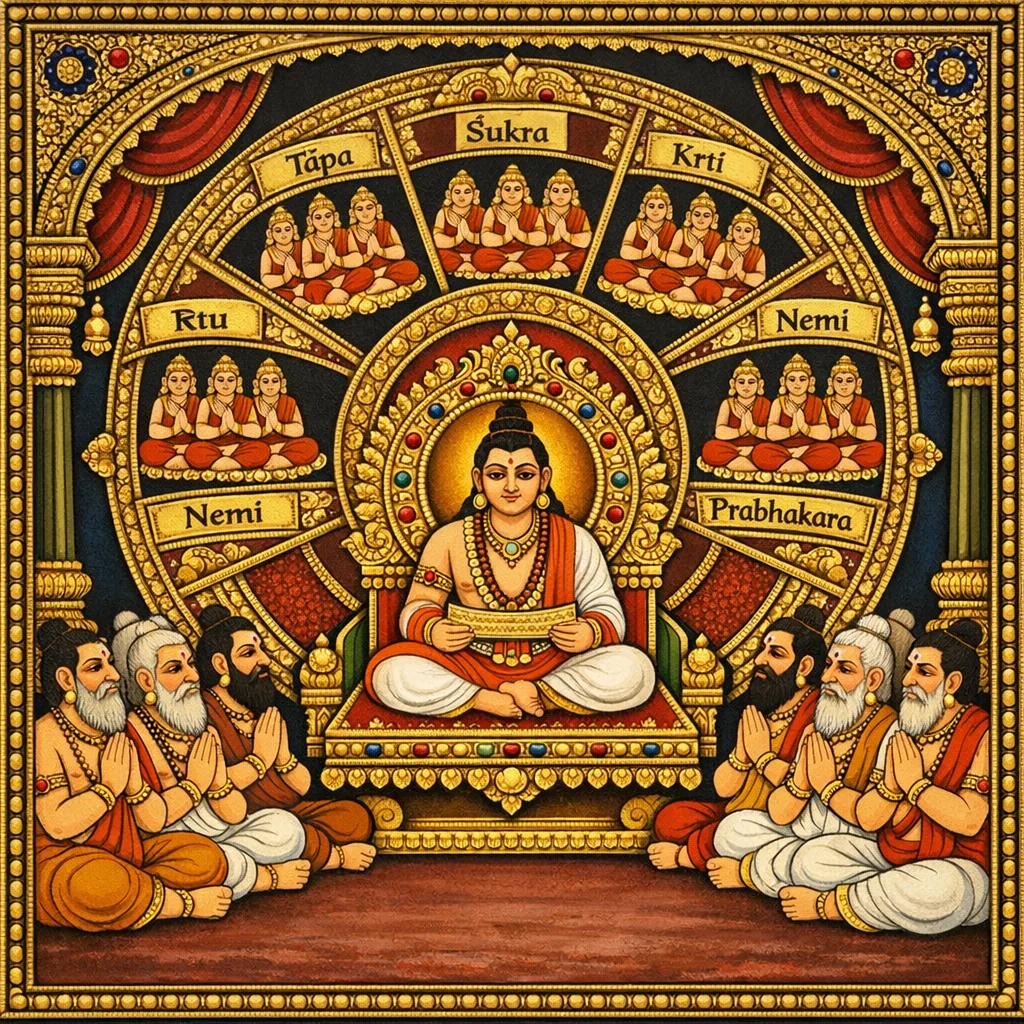
This opening serves as a formal colophon and hinge: it declares the Third Pada (Upodghāta) complete and signals the start of the Uttara-bhāga. The assembled ṛṣis request a fuller exposition of the Fourth Pada, called “saṃhāra” (a concluding, compendious account). Sūta agrees to narrate “yathātatham” (accurately and in due order), and turns the discourse to the Vaivasvata Manvantara (the present Manu) and the structured enumeration of Manvantaras, including those yet to come. The verses emphasize cosmic time-administration: brief Manvantara summaries, pralaya (world-dissolution) within the cycle, and the naming of future Saptarṣis (Kauśika, Gālava, Jāmadagnya, Bhārgava; then Dvaipāyana, Vasiṣṭha, Kṛpa, Śāradvata, Ātreya, Dīptimān, Ṛṣyaśṛṅga Kāśyapa) along with associated divine gaṇas and their named members (Ṛtu, Tapa, Śukra, Kṛti, Nemi, Prabhākara, etc.). Thus it establishes a metadata-rich index of who governs each epoch, aligning genealogy with cosmic chronology.
Shlokas
Verse 1
इति श्रीब्रह्माण्डे महापुराणे वायुप्रोक्ते मध्यमभागे तृतीय उपोद्धातपादे वंशानुवर्णनं नाम चतुःसप्ततितमो ऽध्यायः // ७४// समाप्तश्चायं तृतीयः पादः अथोत्तरभागप्रारमभः श्रुत्वा पादं तृतीयं तु क्रान्तं सूतेन धीमता / ततश्चतुर्थं पप्रच्छुः पादं वै ऋषिसत्तमाः
Thus, in the Śrī Brahmāṇḍa Mahāpurāṇa, in the middle section spoken by Vāyu, within the third introductory pāda, the seventy-fourth chapter called “Description of the Lineages” is concluded. This third pāda is also complete; now the latter section begins. Having heard the third pāda as traversed by the wise Sūta, the foremost sages then inquired about the fourth pāda.
Verse 2
पादः क्रान्तस्तृतीयो ऽयमनुषङ्गेण नस्त्वया / चतुर्थं विस्तरात्पादं संहारं पारिकीर्त्तय
By your connected narration you have completed this third pāda for us; now expound the fourth pāda in detail, and also recount the saṃhāra, the cosmic dissolution.
Verse 3
मन्वन्तराणि सर्वाणि पूर्वाण्येवापरैः सह / सप्तर्षीणामथैतेषां सांप्रतस्यान्तरे मनोः
I shall recount all the Manvantaras—those of old and those to come—along with the Seven Ṛṣis in the era of the present Manu.
Verse 4
विस्तरावयवं चैव निसर्गस्य महात्मनः / विस्तरेणानुपूर्व्या च सर्वमेव ब्रवीहि नः
O great-souled one, tell us in full the expanse of creation and its parts, and relate everything in detail, in due sequence.
Verse 5
सूत उवाच भवतां कथयिष्यामि सर्वमेतद्यथातथम् / पादं त्विमं ससंहारं चतुर्थं मुनिसत्तमाः
Sūta said: O best of sages, I shall tell you all of this exactly as it is; this is the fourth section, including the Saṃhāra, the dissolution.
Verse 6
मनोर्वैवस्वतस्येमं सांप्रतस्य महात्मंनः / विस्तरेणानुपूर्व्या च निसर्गं शृणुत द्विजाः
O twice-born, hear in detail and in proper sequence the account of creation in this present age of the great-souled Vaivasvata Manu.
Verse 7
मन्वन्तराणां संक्षेपं भविष्यैः सह सप्तभिः / प्रलयं चैव लोकानां ब्रुवतो मे निबोधत
Understand attentively as I speak: I shall give a concise account of the Manvantaras, together with the seven yet to come, and also of the Pralaya, the dissolution of the worlds.
Verse 8
एतान्युक्तानि वै सम्यक्सप्तसप्तसु वै प्रजाः / मन्वन्तराणि संक्षेपाच्छृणुता नागतानि मे
Thus have I rightly spoken of the seven times seven orders of beings. Now hear from me, in brief, the Manvantaras that are yet to come.
Verse 9
सावर्णस्य प्रवक्ष्यामि मनोर्वैवस्वतस्य ह / भविष्यस्य भविष्यं तु समासात्तन्निबोधत
Now I shall speak of Manu Sāvarṇa and of Manu Vaivasvata. And what is yet to unfold in the future—know it in brief.
Verse 10
अनागताश्च सप्तैव स्मृतास्त्विह महर्षयः / कौशिको गालवश्चैव जामदग्न्यश्च भार्गवः
Here are remembered seven great seers yet to come: Kauśika, Gālava, Jāmadagnya, and Bhārgava.
Verse 11
द्वैपायनो वशिष्टश्च कृपः शारद्वतस्तथा / आत्रेयो दीप्तिमांश्चैव ऋषयशृङ्गस्तु काश्यपः
Also: Dvaipāyana, Vasiṣṭha, Kṛpa Śāradvata; Ātreya, Dīptimān, and Ṛṣyaśṛṅga Kāśyapa—these too are counted among them.
Verse 12
भरद्वाजस्तथा द्रौणिरश्वत्थामा महायशाः / एते सप्त महात्मानो भविष्याः परमर्षयः / सुतपाश्चामिताभाश्च सुखाश्चैव गणास्त्रयः
Bharadvāja, and Aśvatthāmā the son of Droṇa, of mighty fame—these seven great souls shall in time become supreme seers (Paramarṣis). And there shall be three gaṇas: Sutapā, Amitābha, and Sukha.
Verse 13
तेषां गणस्तु देवानामेकैको विंशकः स्मृतः / नामतस्तु प्रवक्ष्यामि निबोधध्वं समाहिताः
Of those deities, each gaṇa is remembered as a company of twenty. Now I shall declare their names; listen with minds composed.
Verse 14
ऋतुस्तपश्च शुक्रश्च कृतिर्नेमिः प्रभाकरः / प्रभासो मासकृद्धर्मस्तेजोरश्मिः क्रतुर्विराट्
Their names are: Ṛtu, Tapas, Śukra, Kṛti, Nemi, Prabhākara; Prabhāsa, Māsakṛt, Dharma, Tejorasmi, Kratu, and Virāṭ.
Verse 15
अर्चिष्मान् द्योतनो भानुर्यशः कीर्त्तिर्बुधो धृतिः
Also: Arciṣmān, Dyotana, Bhānu, Yaśas, Kīrti, Budha, and Dhṛti.
Verse 16
विंशतिः सुतपा ह्येते नामभिः परिकीर्त्तिताः / प्रभुर्विभुर्विभासश्च जेता हन्ता रिहा ऋतुः
These are the twenty called Sutapā, praised by these names: Prabhu, Vibhu, Vibhāsa, Jetā, Hantā, Rihā, and Ṛtu.
Verse 17
सुमतिः प्रमतिर्दीप्तिः समाख्यातो महो महान् / देही मुनिरिनः पोष्टा समः सत्यश्च विश्रुतः
They are: Sumati, Pramati, Dīpti, Samākhyāta, Maha, Mahān; Dehī, Muni, Rina, Poṣṭā, Sama, Satya, and Viśruta.
Verse 18
इत्येतेह्यमिताभास्तु विंशतिः परिकीर्त्तिताः / दामो दानी ऋतः सोमो वित्तं वैद्यो यमो निधिः
Thus have these twenty of immeasurable radiance been proclaimed—Dāma, Dānī, Ṛta, Soma, Vitta, Vaidya, Yama, and Nidhi.
Verse 19
होमो हव्यं हुतं दानं देयं दाता तपः शमः / ध्रुवं स्थानं विधानं च नियमश्चेति विंशतिः
Homa, the sacred offering, the oblation, the gift, what is to be given, the giver, austerity, and tranquility; and also Dhruva, Sthāna, Vidhāna, and Niyama—thus making twenty.
Verse 20
सुखा ह्येते समाख्याताः सावर्ण्ये प्रथर्मेतरे / मारीचस्यैव ते पुत्राः कश्यपस्य महात्मनः
In the first interval of Sāvarṇi they are spoken of as the “Sukhās”; they are the sons of the great-souled Kaśyapa, of Marīci’s line.
Verse 21
सांप्रतस्य भविष्यन्ति षष्टिर्देवास्तदन्तरे / सावर्णस्य मनोः पुत्रा भविष्यन्ति नवैव तु
In that interval there will be sixty Devas belonging to the present Manvantara; and the sons of Manu Sāvarṇi will be only nine.
Verse 22
विरजाश्चार्वरीवांश्च निर्मोकाद्यास्तथा परे / नव चान्येषु वक्ष्यामि सावर्णेष्वन्तरेषु वै
Viraja, Cārvarīvān, Nirmoka, and others besides will also arise; and the other sets of nine in the intervals of Sāvarṇi I shall declare hereafter.
Verse 23
सावर्णमनवश्चान्ये भविष्या ब्रह्मणः सुताः / मेरुसावर्णितस्ते वै चत्वारो दिव्यदृष्टयः
Other Manus named Sāvarṇa shall arise in the future as sons of Brahmā. They are indeed called Meru-Sāvarṇi—four, endowed with divine vision.
Verse 24
दक्षस्य ते हि वौहित्राः क्रियाया दुहितुः सुताः / महता तपसा युक्ता मेरुपृष्ठे महौ जसः
They are Dakṣa’s grandsons—the sons of his daughter Kriyā. Joined to mighty austerity, they abide upon the back of Meru, radiant with great power.
Verse 25
ब्रह्मादिभिस्तेजनिता दक्षेणैव च धीमता / महर्लोकं गता वृत्ता भविष्या मेरुमाश्रिताः
They were brought forth by Brahmā and the other gods, and also by wise Dakṣa. Having gone to Maharloka, they shall in the future abide, taking refuge in Meru.
Verse 26
महानुभावास्ते पूर्वं जज्ञिरे चाक्षुषेन्तरे / जज्ञिरे मनवस्ते हि भविष्यानागतान्तरे
Those of great majesty were formerly born in the Cākṣuṣa Manvantara. Those very Manus shall be born again in the future Manvantara yet to come.
Verse 27
प्राचेतसस्य दक्षस्य दौहित्रा मनवस्तु ये / सावर्णा नामतः पञ्च चत्वारः परमर्षिजाः
The Manus who are grandsons of Prācetasa Dakṣa are called by name Sāvarṇa—five in number; and four of them are born of the line of the supreme ṛṣis.
Verse 28
संज्ञापुत्रस्तु सावर्णिरेको वैवस्वतस्तथा / ज्येष्ठः संज्ञासुतो नाम मुर्वैवस्वतः प्रभुः
Among Saṃjñā’s sons, one was known as Sāvarṇi and another as Vaivasvata; the eldest son of Saṃjñā, the lord, bore the name Mur‑Vaivasvata.
Verse 29
वैवस्वतेंऽतरे प्राप्ते समुत्पत्तिस्तयोः शुभा / चतुर्दशैते मनवः कीर्तिता कीर्तिवर्द्धनाः
When the Manvantara of Vaivasvata arrived, their auspicious birth took place; these are the fourteen Manus, proclaimed as increasers of renown.
Verse 30
वेदे स्मृतौ पुराणे च सर्वे ते प्रभविष्णवः / प्रजानां पतयः सर्वे भूतानां पतयः स्थिताः
In the Veda, the Smṛti, and the Purāṇas, they are all spoken of as Prabhaviṣṇu; they stand as lords of the peoples and rulers of all beings.
Verse 31
तैरियं पृथिवी सर्वा सप्तद्वीपा सपत्तना / पूर्णं युगसहस्रं वै परिपाल्या नरेश्वरैः
By those kings among men, this entire earth—together with the seven continents and its cities—should be protected and ruled for a full thousand yugas.
Verse 32
प्रजाभिस्तपसा चैव विस्तरस्तेषु वक्ष्यते / चतुर्द्दशैते विज्ञेयाः सर्गाः स्वायंभुवादयः
The full account of their peoples and their austerities will be told later; know these fourteen creations (sargas), beginning with Svāyaṃbhuva and the rest.
Verse 33
मन्वन्तराधिकारेषु वर्त्तन्ते ऽत्र सकृत्सकृत् / विनिवृत्ताधिकारास्ते महार्लोकं समाश्रिताः
Here they repeatedly carry out the offices of the Manvantaras; when their charge is fulfilled, they take refuge in Maharloka.
Verse 34
समतीतास्तु ये तेषामष्टौ षट् च तथापरे / पूर्वेषु सांप्रतश्चायं शास्ति वैवस्वतः प्रभुः
Of them, those that have passed are eight, and likewise six others. In the former Manvantaras and in the present as well, the Lord Vaivasvata rules.
Verse 35
ये शिष्टास्तान्प्रवक्ष्यामि सह देवर्षिदानवैः / सह प्रजा निसर्गेण सर्वांस्ते ऽनागतान्द्विजः
O Dvija, I shall declare those who are eminent, together with the Devarishis and the Danavas; and, according to the order of creation, all those yet to come, along with their peoples.
Verse 36
वैवस्वत निसर्गेण तेषां ज्ञेयस्तु विस्तरः / अनूना नातिरिक्तास्ते यस्मात्मर्वे विवस्वतः
By the creative order of Vaivasvata their full extent should be understood. They are neither fewer nor more, for all of them arise from Vivasvan.
Verse 37
पुनरुक्तबहुत्वात्तु न वक्ष्ये तेषु विस्तरम् / मन्वन्तरेषु भाव्येषु भूतेष्वपि तथैव च
Because it would involve excessive repetition, I shall not speak of them in detail. In the Manvantaras yet to come, and in those already past, it is the same.
Verse 38
कुलेकुले निसर्गास्तु तस्माज्ज्ञेया विभागशः / तेषामेव हि सिद्ध्यर्थं विस्तरेण क्रमेण च
In every lineage there are natural manifestations; therefore they are to be understood according to their divisions. For the very fulfillment of these, the account is set forth in detail and in due order.
Verse 39
दक्षस्य कन्या धर्मिष्ठा सुव्रता नाम विश्रुता / सर्वकन्यावरिष्ठा तु ज्येष्ठा या वीरिणीसुता
Daksha had a daughter steadfast in dharma, renowned by the name Suvratā. She was the foremost of all daughters, the eldest, born of Vīriṇī.
Verse 40
गृहीत्वा तां पिता कन्यां जगाम ब्रह्मणो ऽतिके / वैराजस्थमुपासीनं धर्मेण च भवेन च
Taking that maiden, her father went to Brahmā’s presence. There Brahmā sat upon the Vairāja seat, worshipped together with Dharma and Bhava (Śiva).
Verse 41
भवधर्मसमीपस्थं दक्षं ब्रह्माभ्यभाषत / दक्ष कन्या तवेयं वै जनयिष्यति सुव्रता
Brahmā addressed Daksha, who stood near Bhava and Dharma: “O Daksha, this daughter of yours—Suvratā—shall surely bring forth offspring.”
Verse 42
चतुरो वै मनून्पुत्रांश्चातुर्वर्ण्यकराञ्छुभान् / ब्रह्मणो वचनं श्रुत्वा दक्षो धर्मो भवस्तदा
Four auspicious sons—four Manus—who would establish the sacred order of the four varṇas. Hearing Brahmā’s words, Daksha, Dharma, and Bhava (Śiva) rejoiced at that time.
Verse 43
तां कन्यां मनसा जग्मुस्त्रयस्ते ब्रह्मणा सह / सत्याभिध्यायिनां तेषां सद्यः कन्या व्यजायत
The three, together with Brahmā, went to that maiden in their minds; for those who contemplated Truth, a maiden was born at once.
Verse 44
सदृशानूपतस्तेषां चतुरो वै कुमारकान् / संसिद्धाः कार्यकरणे संभूतास्ते श्रियान्विताः
Four youths, fitting and like to them, were born—accomplished in the doing of deeds, and endowed with auspicious splendor.
Verse 45
उपभोगासमर्थैश्च सद्योजातैः शरीरकैः / ते दृष्ट्वा तान्स्वयंभूतान्ब्रह्मव्याहारिणस्तदा
With bodies newly born, they were not yet fit for enjoyment; seeing them self-arisen and speaking words of Brahmā, they were then filled with wonder.
Verse 46
सरंब्धा वै व्यकर्षन्त मम पुत्रो ममेत्युत / अभिध्यायात्मनोत्पन्नानूचुर्वै ते परस्परम्
Stirred with eagerness, they tugged, crying, “My son—mine!” and they told one another that these had arisen from themselves through contemplation.
Verse 47
यो यस्य वपुषा तुल्यो भजतां सततं सुतम् / यस्य यः सदृशश्चापि रूपे वीर्ये च मानतः
Whoever is equal to another in bodily form should ever be accepted as his son—whoever is alike in beauty, in vigor, and in honor.
Verse 48
तं गृह्णातु स भद्रं वो वर्णतो यस्य यः समः / ध्रुवं रूपं पितुः पुत्रः सो ऽनुरुध्यति सर्वदा
For your welfare, let him accept the one who is equal in varna and condition; the son ever follows the father’s steadfast form.
Verse 49
तस्मादात्मसमः पुत्रः पितुर्मातुश्च वीर्यतः / एवं ते समयं कृत्वा सर्वेषां जगृहः सुतान्
Therefore, by the vital power of father and mother, the son becomes equal to one’s own self; thus, having made an agreement, they accepted the sons of all.
Verse 50
चाक्षुषस्यान्तरे ऽतीते प्राप्ते वैवस्वतस्य ह / रुचेः प्रजापतेः पुत्रो रौच्यो नामाभवत्सुतः
When the Manvantara of Cākṣuṣa had passed and that of Vaivasvata arrived, Prajāpati Ruci had a son who was named Raucyā.
Verse 51
भूत्यामुत्पादितो यस्तु भौत्यो नाम कवेः सुतः / वैवस्वतेंऽतरे जातौ द्वौ मनू तु विवस्वतः
Born of Bhūti was the son of Kavi, known as Bhauṭya; and within the Manvantara of Vaivasvata, two Manus of Vivasvān were born.
Verse 52
वैवस्वतो मनुर्यश्च सावर्णो यश्च वै श्रुतः / ज्ञेयः संज्ञासुतो विद्वान्मनुर्वैवस्वतः प्रभुः
The Manu known as Vaivasvata, and the one famed as Sāvarṇa—let the wise know that the sovereign Vaivasvata Manu is the son of Saṃjñā.
Verse 53
सवर्णायाः सुतश्चान्यः स्मृतो वैवस्वतो मनुः / सावर्णम नवो ये च चत्वारस्तु महर्षिजाः
Another son of Sāvarṇā is remembered as Manu Vaivasvata; and in the Sāvarṇa Manvantara there are said to be four great Maharishis.
Verse 54
तपसा संभृतात्मानः स्वेषु मन्वन्तरेषु वै / भविष्येषु भविष्यन्ति सर्वकार्यार्थसाधकाः
Steeled in spirit by austerity, in their own Manvantaras, in times yet to come, they shall arise as accomplisher of every task and aim.
Verse 55
प्रथमे मेरुसावर्णेदक्षपुत्रस्य वै मनोः / परामरीचिगर्भाश्च सुधर्माणश्च ते त्रयः / संभूताश्च महात्मानः सर्वे वैवस्वतेन्तरे
In the first Meru-Sāvarṇa Manvantara, in the time of Manu, son of Dakṣa, Parāmarīcigarbhā and Sudharmāṇa—those three great-souled ones—arose within the span of the Vaivasvata Manvantara.
Verse 56
दक्षपुत्रस्य पुत्रास्ते रोहितस्य प्रजापतेः / भविष्यन्ति भविष्यास्तु एकैको द्वादशो गणः
They are the sons of Dakṣaputra, of Prajāpati Rohita; they shall be known as the Bhaviṣyas, and each one shall have twelve companies (gaṇas).
Verse 57
ऐश्वरश्च ग्रहो राहुर्वाकुर्वंशस्तथैव च / पारा द्वादश विज्ञेया उत्तरांस्तु निबोधत
Aiśvara, Graha, Rāhu, and Vākurvaṃśa likewise—know these as the twelve called Pārā; now hear the names that follow.
Verse 58
वाजिपो वाजिजिच्चैव प्रभूतिश्च ककुद्यथ / दधिक्रावा विपक्वश्च प्रणीतो विजयो मधुः
Vājipo, Vājijit, Prabhūti and Kakud; likewise Dadhikrāvā, Vipakva, Praṇīta, Vijaya, and Madhu—these sacred names are recited.
Verse 59
उतथ्योत्तमकौ द्वौ तु द्वादशैते मरीचयः / सुधर्माणस्तु वक्ष्यामि नामतस्तान्निबोधत
Utathya and Uttamaka are two among them; thus these are the twelve Marīcis. Now I shall declare the Sudharmāṇas by name—listen attentively.
Verse 60
वर्णस्तथाथगर्विश्च भुरण्यो व्रजनो ऽमितः / अमितो द्रवकेतुश्च जंभो ऽथाजस्तु शक्रकः
Varṇa, Athagarvi, Bhuraṇya, Vrajana, Amita; also Amita, Dravaketu, Jambha, and Aja—known as Śakraka—these are the names.
Verse 61
सुनेमिर्द्युतयश्चैव सुधर्माणः प्रकीर्तिताः / तेषामिन्द्रस्तदा भाव्यो ह्यद्भुतो नाम नामतः
Sunemi and Dyutaya are proclaimed as the Sudharmāṇas. Their Indra in that time will be, by name, “Adbhuta”—the Wondrous One.
Verse 62
स्कन्दो ऽसौ पार्वतीयो वै कार्तिकेयस्तु पावकिः / मेधातिथिश्च पौलस्त्यो वसुः काश्यप एवं च
Skanda, the son of Pārvatī, is indeed Kārtikeya, also called Pāvaki; and likewise Medhātithi, Paulastya, Vasu, and Kāśyapa are named.
Verse 63
ज्योतिष्मान्भार्गवाश्चैव द्युतिमानङ्गिरास्तथा / वसिनश्चैव वासिष्ठ आत्रेयो हव्यवाहनः
Jyotiṣmān, Bhārgava, and Dyutimān, and likewise Aṅgirā; also Vasina, Vāsiṣṭha, Ātreya, and Havyavāhana—these sages are thus named.
Verse 64
सुतपाः पौलहश्चैव सप्तैते रोहितेतरे / धृतिकेतुर्दीप्तिकेतुः शापहस्तनिरामयाः
Sutapā and Paulaha—these seven are the other sons of Rohita; among them are Dhṛtiketu, Dīptiketu, Śāpahasta, and Nirāmaya.
Verse 65
पृथुश्रवास्तथानीको भूरिद्युम्नो बृहद्यशः / प्रथमस्य तु सावर्णेर्नव पुत्राः प्रकीर्तिताः
Pṛthuśravā, Anīka, Bhūridyumna, and Bṛhadyaśa—thus are proclaimed the nine sons of the first Sāvarṇi.
Verse 66
दशमे त्वथ पर्याये धर्मपुत्रस्य वै मनोः / द्वीतीयस्य तु सावर्णेर्भाव्यस्यैवान्तरे मनोः
In the tenth succession comes the Manvantara of Manu, the son of Dharma; and within Manu’s Manvantara is also that of the second Sāvarṇi, called Bhāvya.
Verse 67
सुधामानो विरुद्धाश्च द्वावेव तु गणौ स्मृतौ / दीप्तिमन्तश्च ते सर्वे शतसंख्याश्च ते समाः
Sudhāmānas and Viruddhas—these alone are remembered as two gaṇas; all of them are radiant, and each group is equal in number, a hundred strong.
Verse 68
प्राणानां यच्छतं प्रोक्तं ऋषिभिः पुरषेति वै / देवास्ते वै भविष्यन्ति धर्मपुत्रस्य वै मनोः
The seers have declared that this company of vital breaths is called “Puraṣa”; they shall become the gods, as the sons of Manu, the son of Dharma.
Verse 69
तेषामिन्द्रस्तथा विद्वान्भविष्यः शान्तिरुच्यते / हविष्मान्पौलहः श्रीमान्सुकीर्तिश्चाथ भार्गवः
Among them will be a wise Indra, and one spoken of as “Śānti”; also Haviṣmān Paulaha, the illustrious Śrīmān, and Sukīrti of the Bhārgava line.
Verse 70
आपोमूर्तिस्तथात्रेयो वसिष्ठश्चापवः स्मृतः / पौलस्त्यो ऽप्रतिमश्चापि नाभागश्चैव काश्यपः
There will be Āpomūrti and Ātreya; Vasiṣṭha is remembered as Āpava; also Paulastya, the peerless Apratima, and Nābhāga of the Kāśyapa line.
Verse 71
अभिमन्युश्चाङ्गिरसः सप्तैते परमर्षयः / सुक्षेत्रश्चोत्तमौजाश्च भूरिसेनश्च वीर्यवान्
Abhimanyu and Āṅgirasa—these seven are the supreme seers; and there are also Sukṣetra, Uttamaujā, and the mighty Bhūrisena.
Verse 72
शतानीको निरामित्रो वृषसेनो जयद्रथः / भूरिद्युम्नः सुवर्चाश्च दशैतेमानवाः स्मृताः
Śatānīka, Nirāmitra, Vṛṣasena, Jayadratha, Bhūridyumna, and Suvarcā—these are remembered as the ten Mānava.
Verse 73
एकादशे तु पर्याये सावर्णे वै तृतीयके / निर्वाणरतयो देवाः कामगा वै मनोजवाः
In the eleventh Manvantara, in the third cycle of Sāvarṇa, the gods delight in nirvāṇa, move as they wish, and are swift as the mind.
Verse 74
गणास्त्वेते त्रयः ख्याता देवातानां महात्मनाम् / एकैकस्त्रिंशतस्तेषां गणस्तु त्रिदिवौकसाम्
These three gaṇas are renowned as the companies of the great-souled deities; and in each gaṇa of the dwellers in Tridiva there are thirty-one gods.
Verse 75
मासस्याहानि त्रिंशत्तु यानि वै कवयो विदुः / निर्वाणरतयो देवा रात्रयस्तु विहङ्गमाः
The thirty days of the month, as the seers-poets know, are the gods who delight in nirvāṇa; and the nights are called vihaṅgama, flitting like birds.
Verse 76
गणस्तृतीयो यः प्रोक्ते देवतानां भविष्यति / मनोजवा मूरूर्त्तास्तु इति देवाः प्रकीर्तिताः
The third gaṇa of the deities that has been spoken of will, in times to come, be famed by the names ‘Manojava’ and ‘Mūrta’; thus are the gods extolled.
Verse 77
एते हि ब्रह्मणः पुत्रा भविष्या मानवाः स्मृताः / तेषामिद्रो वृषा नाम भविष्यः सुरराट् ततः
These are the sons of Brahmā, remembered as the Manus yet to come; and among them, the Indra named ‘Vṛṣā’ shall thereafter be the king of the gods.
Verse 78
तेषां सप्तऋषींश्चापि कीर्त्यमानान्निवौधत / हविष्मान्काश्यपश्चापि वपुष्मांश्चैव भार्गवः
Hear also the names of their Seven Ṛṣis as they are praised: Haviṣmān Kāśyapa, and Vapuṣmān Bhārgava.
Verse 79
आरुणिश्च तथात्रेयो वसिष्ठो नग एव च / पुष्टिराङ्गिरसो ज्ञेयः पौलस्त्यो निश्चरस्तथा
Āruṇi and Ātreya, Vasiṣṭha and Naga; know also Puṣṭi Āṅgirasa, and likewise Paulastya and Niścara.
Verse 80
पौलहो ह्यतितेजश्च देवा ह्येकादशेन्तरे / सर्ववेगः सुधर्मा च देवानीकः पुरोवहः
Paulaha and Atiteja are the Devas of the eleventh interval; and also Sarvavega, Sudharmā, and Devānīka, the one who leads in front.
Verse 81
क्षेमधर्मा ग्रहेषुश्च आदर्शः पैण्ड्रको मरुः / सावर्णस्य तु ते पुत्राः प्राजापत्यस्य वै नव
Kṣemadharmā, Graheṣu, Ādarśa, Paiṇḍraka, and Maru—these are the nine sons of Sāvarṇa, of the Prajāpatya line.
Verse 82
द्वादशे त्वथ पर्याये रुद्रपुत्रस्य वै मनोः / चतुर्थो रुद्रसावर्णो देवांस्तस्यान्तरे शृणु
In the twelfth cycle, in the age of Manu, the son of Rudra, the fourth is Rudrasāvarṇa; hear the Devas of that interval.
Verse 83
पञ्चैव तुगणाः प्रोक्ता देवतानामनागताः / हरिता रोहिताश्चैव देवाः सुमनसस्तथा
For the age yet to come of the deities, five divine hosts are declared: the Haritas, the Rohitas, and the gods called Sumanasa.
Verse 84
सुकर्माणः सुतरश्च विद्वांश्चैव सहस्रदः / पर्वतो ऽनु चरश्चैव अपाशुश्च मनोजवः
Sukarmā, Sutara, Vidvān, Sahasrada, Parvata, Anucara, Apāśu, and Manojava—these are the names (of those divine ones) that are recounted.
Verse 85
ऊर्जा स्वाहा स्वधा तारा दशेते हरिताः स्मृताः / तपो ज्ञानी मृतिश्चैव वर्चा बन्धुश्च यः स्मृतः
Ūrjā, Svāhā, Svadhā, and Tārā—these are remembered among the ten Haritas; and also Tapo, Jñānī, Mṛti, Varcā, and Bandhu are spoken of.
Verse 86
रजश्चैव तु राजश्च स्वर्णपादस्तथैव च / पुष्टिर्विधिश्च वै देवा दशैते रोहिताः स्मृताः
Rajas, Rāja, and Svarṇapāda; and also Puṣṭi and Vidhi—these ten gods are remembered as the Rohitas.
Verse 87
तुष्ताद्यास्तु ये देवास्त्रय स्त्रिंशत्प्रकीर्तिताः / ते वै सुमनसो वेद्यान्निबोधत सुकर्मणः
Those gods, praised as the Thirty-Three beginning with Tuṣṭa, are indeed to be known as Sumanasa; understand this well, O Sukarmaṇa.
Verse 88
सुपर्वा वृषभः पृष्टा कपिद्युम्नविपश्चितः / विक्रमश्च क्रमश्चैव विभृतः कान्त एव च
Suparvā, Vṛṣabha, Pṛṣṭa, Kapidyumna the wise, Vikrama, Krama, Vibhṛta, and Kānta—these are proclaimed as the names (of the Devas).
Verse 89
एते देवाः सुकर्माणः सुतरांश्च निबोधत / वर्षो दिव्यस्तथाञ्जिष्ठो वर्चस्वी द्युतिमान्कविः
These Devas are doers of righteous deeds—know them well: Varṣa, Divya, and also Añjiṣṭha, Varcasvī, Dyutimān, and Kavi.
Verse 90
शुभो हविः कृतप्राप्तिर्व्यापृतो दशमस्तथा / सुतारा नामतस्त्वेते देवा वै संप्रकीर्तिताः
Śubha, Havi, Kṛtaprāpti, and Vyāpṛta—these too are the tenth (names); by name, these Devas are extolled as ‘Sutārā’.
Verse 91
तेषामिन्द्रस्तु विज्ञेयो ऋतधामा महायशाः / द्युतिर्वसिष्ठपुत्रस्तु आत्रेयः सुतपास्तथा
Among them, Indra is to be known as Ṛtadhāmā of great renown; Dyuti is the son of Vasiṣṭha, and there are also Ātreya and Sutapā.
Verse 92
तपोमूर्तिस्त्वाङ्गिरसस्तपस्वी काश्यपस्तथा / तपोधनश्च पौलस्त्यः पौलहश्च तपोरतिः
Tapomūrti Āṅgirasa, the ascetic Kāśyapa; Tapodhana Paulastya, and Taporati Paulaha—these too are spoken of as (divine Ṛṣis).
Verse 93
भार्गवः सप्तमस्तेषां विज्ञेयस्तु तपोधृतिः / एते सप्तर्षयः सिद्धा अन्त्ये सावर्णिकेंऽतरे
Among them, the seventh is Bhārgava, to be known as Tapodhṛti. These are the perfected Seven Ṛṣis, in the final Sāvarṇika Manvantara.
Verse 94
देववानुपदेवश्च देवश्रेष्ठो विदूरथः / मित्रवान् मित्रसेनो ऽथ चित्रसेनो ह्यमित्रहा
Devavān, Upadeva, Devaśreṣṭha, and Vidūratha; also Mitravān, Mitrasena, and Citrasena, the slayer of foes.
Verse 95
मित्रबाहुः सुवर्चाश्च द्वादशस्य मनोः सुताः / त्रयोदशेतु पर्याये भाव्ये रौच्येन्तरे पुनः
Mitrabāhu and Suvarcā are sons of the twelfth Manu. Then, in the thirteenth succession, in the future Raucyā Manvantara, they shall appear again.
Verse 96
त्रय एव गणाः प्रोक्ता देवानां तु स्वयंभुवा / ब्रह्मणो मानसाः पुत्रास्ते हि सर्वे महात्मनः
Svayambhū has declared that the devas have only three hosts. They are Brahmā’s mind-born sons; all of them are great-souled.
Verse 97
सुत्रामाणः सुधर्माणः सुकर्माणश्च ते त्रयः / त्रिदशानां गणाः प्रोक्ता भविष्याः सोमपायिनाम्
The three are Sutrāmāṇa, Sudharmāṇa, and Sukarmāṇa. They are declared to be hosts of the Tridaśa, who in time to come shall be Soma-drinkers.
Verse 98
त्रयस्त्रिशद्देवता याः पृथगिज्यास्तु याज्ञिकैः / आज्येन पृषदाज्येन ग्रहश्रेष्टेन चैव ह
The thirty-three deities are worshipped separately by the sacrificers; they are offered ājya (ghee), pṛṣadājya, and the finest graha, Soma.
Verse 99
ये वै देवास्त्रयस्त्रिंशत्पृथक्त्वेन निबोधत / सुत्रामाणः प्रयाज्यास्तु आज्याशा ये तु सांप्रतम्
Know distinctly those thirty-three gods: the deities called Sutrāmāṇa are to be worshipped in the preliminary offerings (prayājya), and at present they seek their share of ājya.
Verse 100
सुकर्माणो ऽनुयाज्याख्याः पृषदाज्याशिनस्तु ये / उपयाज्याः सुधर्माण इति देवाः प्रकीर्त्तिताः
Those who partake of pṛṣadājya are called Sukarmāṇa and are known as anu-yājya; those who are Sudharmāṇa are upa-yājya—thus are the gods declared.
Verse 101
दिवस्पतिर्महासत्वस्तेषामिन्द्रो भविष्यति / पुलहात्मजपुत्रास्ते विज्ञेयास्तु रुचेः सुताः
Their Indra will be Divaspati, mighty in power; they are to be known as the grandsons of Pulaha’s son, and as the sons of Ruci.
Verse 102
अङ्गिराश्चैव धृतिमान् पौलस्त्यो ऽप्यव्ययस्तु सः / पौलहस्तत्त्वदर्शी छ भार्गवश्च निरुप्सुकः
Aṅgiras is steadfast; Paulastya too is imperishable; Paulaha is a seer of truth, and Bhārgava is free from longing (nirupsuka).
Verse 103
निष्प्रकंप्यस्तथात्रेयो निर्मोहः काश्यपस्तथा / सुतपाश्चैव वासिष्ठः सप्तैते तु त्रयोदश
Niṣprakaṃpya, Ātreya, Nirmoha, Kāśyapa, and also Sutapā and Vāsiṣṭha—these seven are renowned in the thirteenth Manvantara.
Verse 104
चित्रसेनो विचित्रश्च नयो धर्मो धृतो भवः / अनेकः क्षत्रविद्धश्च सुरसो निर्भयो दश
Citrasena, Vicitra, Naya, Dharma, Dhṛta, Bhava, Aneka, Kṣatraviddha, Surasa, and Nirbhaya—these ten names are declared.
Verse 105
रौच्यस्यैते मनोः पुत्रा ह्यन्तरे तु त्रयोदशे / चतुर्दशे तु पर्याये भौत्यस्याप्यन्तरे मनोः
These are the sons of Manu Raucya in the thirteenth Manvantara; and in the fourteenth cycle, they are also spoken of within the Manvantara of Manu Bhautyā.
Verse 106
देवतानां गणाः पञ्च प्रोक्ता ये तु भविष्यति / चाक्षुषाश्च पवित्राश्च कनिष्ठा भ्राजितास्तथा
Five companies of the gods, who are to arise hereafter, are declared: the Cākṣuṣas, the Pavitrās, the Kaniṣṭhas, the Bhrājitas, and (one more company).
Verse 107
वाचावृद्धाश्च इत्येते पञ्च देवगणाः स्मृताः / निषादाद्याः स्वराः सप्त सप्त तान्विद्धि चाक्षुषान्
“Vācāvṛddha” and the rest—these are remembered as the five divine companies. The seven notes beginning with Niṣāda—know them as the sevenfold notes belonging to the Cākṣuṣas.
Verse 108
बृहदाद्यानि सामानि कनिष्ठान्सप्त तान्विदुः / सप्त लोकाः पवित्रास्ते भ्राजिताः सप्तसिंधवः
Among the Sāman chants beginning with Bṛhad, seven are known as the lesser ones. Those seven lokas are holy, and the seven radiant Sindhus (rivers) as well.
Verse 109
वाचावृद्धानृषीन्विद्धि मनोः स्वायभुवस्य ये / सर्वे मन्वन्तरेद्राश्च विज्ञेयास्तुल्यलक्षणाः
Know the seers, ancient in sacred speech, who belong to Svāyambhuva Manu. The Indras of every manvantara too should be understood as bearing like characteristics.
Verse 110
तेजसा तपसा वुद्ध्या बलश्रुतपराक्रमैः / त्रैलोक्ये यानि सत्त्वानि गतिमन्ति ध्रुवाणि च
By tejas, tapas, wisdom, strength, śruti, and heroic might, the beings within the three worlds attain their destined course (gati) and become steadfast as dhruva.
Verse 111
सर्वशः सर्वैर्गुणैस्तानि इन्द्रास्ते ऽभिभवन्ति वै / भूतापवादिनो हृष्टा मध्यस्था भूतवादिनः
Those Indras, in every way and by every virtue, truly overpower them all. The slanderers of beings rejoice; the impartial ones speak the doctrine of bhūta.
Verse 112
भूताभवादिनः शक्तास्त्रयो वेदाः प्रवादिनाम् / अग्नीध्रः काश्यपश्चैव पौलस्त्यो मागधश्च यः
Mighty are those who expound bhūta-ābhava, the arising of beings; for the proclaimers, the three Vedas stand as pramāṇa. They are Agnīdhra, Kāśyapa, Paulastya, and also Māgadha.
Verse 113
भार्गवो ह्यग्निवाहुश्च शुचिराङ्गिरसस्तथा / शुक्रश्चैव तु वासिष्ठः पौलहो मुक्त एव च
Bhārgava and Agnivāhu, and likewise the pure Aṅgirasa; and also Śukra, Vāsiṣṭha, Paulaha, and Mukta are named.
Verse 114
आत्रेयः श्वाजितः प्रोक्तो मनुपुत्रानतः शृणु / उरुर्गुरुश्च गंभीरो बुद्धः शुद्धः शुचिः कृती
Ātreya is spoken of as Śvājita; now hear the succession of Manu’s sons—Uru, Guru, Gambhīra, Buddha, Śuddha, Śuci, and Kṛtī.
Verse 115
ऊर्जस्वी सुबलश्चैव भौत्यस्यैते मनोः सुताः / सावर्णा मनवो ह्येते चत्वारो ब्रह्मणः सुताः
Ūrjasvī and Subala—these are the sons of Manu Bhautyā. These four are the Sāvarṇa Manus, spoken of as sons of Brahmā.
Verse 116
एको वैवस्वतश्चैव सावर्णो मनुरुच्यते / रौच्यो भौत्यश्च यौ तौ तु मतौ पौलहभार्गवौ / भौत्यस्यैवाधिपत्ये तु तूर्णं कल्पस्तु पूर्यते
One is Vaivasvata and one is called the Sāvarṇa Manu. Raucya and Bhautyā are regarded as Paulaha and Bhārgava; and under Bhautyā’s sovereignty this kalpa is swiftly fulfilled.
Verse 117
सूत उवाच निःशेषेषु तु सर्वेषु तदा मन्वन्तरेष्विह
Sūta said: when all the manvantaras here have been entirely brought to completion, then…
Verse 118
अन्ते ऽनेकयुगे तस्मिन्क्षीणे संहार उच्यते / सप्तैते भार्गवा देवा अन्ते मन्वन्तरे तदा
At the end of many yugas, when that span is spent, it is called saṃhāra, the dissolution. Then, at the close of the manvantara, these seven Bhārgava deities appear.
Verse 119
भुक्त्वा त्रैलोक्यम ध्यस्था युगाख्या ह्येकसप्ततीः / पितृभिर्मनुभिः सार्द्धं क्षीणे मन्वन्तरे तदा
Abiding in the midst of the three worlds, they enjoy seventy-one periods known as yugas. When the manvantara is spent, they gather together with the Pitṛs and the Manus.
Verse 120
अनाधारमिदं सर्वं त्रैलोक्यं वै भविष्यति / ततः स्थाना नि शुभ्राणि स्थानिनां तानि वै तदा
Then all the three worlds will truly be without support. Thereafter, the abodes of their inhabitants will become radiant—pure and shining.
Verse 121
प्रभ्रशयन्ते विमुक्तानि तारा ऋक्षग्रहैस्तथा / ततस्तेषु व्यतीतेषु त्रैलोक्यस्येश्वरेष्विह
The stars as well, along with constellations and planets, are released from their bonds and begin to fall away. When these have passed and vanished, even the lords of the three worlds here come to their end.
Verse 122
संप्रप्तेषु महर्लोकं यस्मिंस्ते कल्पवासिनः / अजिताद्या गणा यत्र आयुष्मन्तश्चतुर्दश
When those dwellers of the kalpa reach Maharloka, there abide the hosts beginning with Ajita—fourteen gaṇas, blessed with long life.
Verse 123
मन्वन्तरेषु सर्वेषु देवास्ते वै चतुर्द्दश / सशरीराश्च श्रूयन्ते जनलोके सहानुगाः
In every Manvantara, those fourteen Devas are heard of as dwelling in Janaloka, embodied and accompanied by their attendants.
Verse 124
एवं देवेष्वतीतेषु महर्लोकाज्जनं प्रति / भूतादिष्ववशिष्टेषु स्थावरां तेषु तेषु वै
Thus, when the Devas have passed on, from Maharloka toward Janaloka, among the remaining beings and elements, in those places only the immobile (sthāvara) remain.
Verse 125
शून्येषु लोकस्थानेषु महान्तेषु भुवादिषु / देवेषु च गतेष्वूर्द्ध्वं सायुज्यं कल्पवासिनाम्
When the great abodes of the worlds—Bhu and the rest—stand empty, and the Devas have gone upward, the dwellers of the Kalpa attain sāyujya, the supreme union.
Verse 126
संहृत्य तास्ततो ब्रह्मा देवर्षिपितृदानवान् / संस्थापयति वै सर्गमहर्दृष्ट्वा युगक्षये
Then Brahmā, having withdrawn the Devas, seers, Pitṛs, and Dānavas, beholds the end of the Yuga and, with the coming of day, establishes creation anew.
Verse 127
चतुर्युगसहस्रान्तमहर्यद्ब्रह्मणो विदुः / रात्रिं युगसहस्रान्तां ते ऽहोरात्रविदो जनाः
Those who know the measure of day and night declare: Brahmā’s day lasts until the completion of a thousand cycles of the four Yugas, and his night likewise lasts a thousand such cycles.
Verse 128
नैमित्तिकः प्राकृतिको यश्चैवात्यन्तिकोर्ऽथतः / त्रिविधिः सर्वभूतानामित्येष प्रतिसंचरः
The Naimittika, the Prākṛtika, and the Ātyantika—thus, in essence, are three; this is the threefold reabsorption (pratisaṃcāra) of all beings.
Verse 129
ब्राह्मो नैमित्तिकस्तस्य कल्पदाहः प्रसंयमः / प्रतिसर्गे तु भूतानां प्राकृतः करणक्षयः
His Naimittika (Brahmā’s) pralaya is the burning of a kalpa and the great withdrawal; and in the re-creation (pratisarga), the Prākṛtika pralaya of beings is the perishing of the instruments (karaṇa), the senses.
Verse 130
ज्ञानाच्चात्यन्तिकः प्रोक्तः कारणानामसंभवः / ततः संहृत्य तान्ब्रह्मा देवांस्त्रैलोक्यवासिनः
The Ātyantika pralaya is said to arise from true knowledge, wherein even the causes can no longer come to be. Then Brahmā, having withdrawn them, draws in even the gods who dwell in the three worlds.
Verse 131
प्रहरति प्रकुरुते सर्गस्य प्रलयं पुनः / सुषुप्सुर्भगवान्ब्रह्मा प्रजाः संहरते तदा
Time again and again strikes and brings about the pralaya of creation. Then Bhagavān Brahmā, sinking into sleep, withdraws and dissolves the creatures (prajā).
Verse 132
ततो युगसहस्रान्ते संप्राप्ते च युगक्षये / तत्रात्मस्थाः प्रजाः कर्तुं प्रपेदे स प्रजापतिः
Then, at the end of a thousand yugas, when the yuga’s dissolution had arrived, that Prajāpati set himself to create anew the creatures abiding within his own Self.
Verse 133
तदा भवत्यनावृष्टिः संतता शतवार्षिकी / तया यान्यल्पसाराणि सत्त्वानि वृथिवीतले
Then there arises an unbroken drought, without rain, lasting a hundred years. By it, the creatures of little strength upon the face of the earth waste away.
Verse 134
तान्येवात्र प्रलीयन्ते भूमित्वमुपयान्ति च / सप्तरश्मिरथो भूत्वा उदत्तिष्ठद्विभावसुः
Those very beings dissolve here, mingling with the soil and becoming earth itself. Then Vibhāvasu rises aloft, taking the form of a chariot of seven rays.
Verse 135
असह्यरश्मिर्भगवान्पिबत्यंभो गनस्तिभिः / हरीतारश्मयस्तस्यदीप्यमानास्तु सप्ततिः
The Bhagavān, whose rays are unbearable, drinks up the waters through the hosts of ganasti. His blazing green-hued rays shine forth as seventy.
Verse 136
भूय एव विवर्त्तन्ते व्याप्नुवन्तोंबरं शनैः / भौमं काष्ठेन्धनं तेजो भृशमद्भिस्तु दीप्यते
They turn back once more, slowly spreading to fill the sky. The earth-born fire, as though fed by wood as fuel, blazes fiercely through the waters.
Verse 137
तस्मादुदकभृत्सूर्यस्तपतीति हि कथ्यते / नावृष्ट्या तपते सूर्य्यो नावृष्ट्या परिषिच्यते
Therefore the Sun is called ‘udaka-bhṛt’, the bearer of waters, for he burns while holding them. In the time of no rain the Sun scorches, and in no rain he is not cooled by sprinkling waters.
Verse 138
नावृष्ट्या परिविश्येत वारिणा दीप्यते रविः / तस्मादपः पिबन्यो वै दीप्यते रविरंबरे
When there is no rain, the world grows parched; yet by water the Sun is kindled. Therefore in the sky the Sun shines as though drinking the waters.
Verse 139
तस्य ते रश्मयः सप्त पिबन्त्यंभो महार्णवात् / तेनाहारेण संदीप्ताः सूर्याः सप्त भवन्त्युत
His seven rays drink the waters from the great ocean; nourished by that draught, they blaze forth and become seven Suns.
Verse 140
ततस्ते रश्मयः सप्त सूर्यभूताश्चतुर्द्दिशम् / चतुर्लोकमिमं सर्वं दहन्ति शिखिनस्तदा
Then those seven rays, becoming Suns, spread to the four directions; and at that time, like tongues of fire, they burn the entire fourfold world.
Verse 141
प्राप्नुवन्ति च ताभिस्तु ह्यूर्द्ध्वं चाधश्च रश्मिभिः / दीप्यन्ते भास्कराः सप्त युगान्ताग्निप्रतापिनः
By those rays, both above and below are reached; the seven Bhāskaras blaze, bearing the fierce splendor of the fire at the end of the age.
Verse 142
ते वारिणा प्रदीप्ताश्च बहुसाहस्ररश्मयः / स्वं समावृत्य तिष्ठन्ति निर्दहन्तो वसुंधराम्
Kindled by the waters, they bear thousands upon thousands of rays; veiling all with their own radiance, they stand, scorching the Earth.
Verse 143
ततस्तेषां प्रतापेन दह्यमाना वसुंधरा / साद्रिनद्यर्णवा पृथ्वी निस्नेहा समपद्यत
Then, by their mighty splendor, Vasundharā was scorched; this Earth with mountains, rivers, and oceans became bereft of moisture, utterly dry.
Verse 144
दीप्ताभिः संतताभिश्च चित्राभिश्च समन्ततः / अधश्चोर्ध्वं च तिर्यक् च संरूद्धा सूर्यरश्मिभिः
By blazing, unbroken, and wondrous rays of the Sun, it was hemmed in on every side—below, above, and across.
Verse 145
सूर्याग्नीनां प्रवृद्धानां संसृष्टानां परस्परम् / एकत्वमुपयातानामेकज्वाला भवत्युत
When the Sun and Fire, grown immense, mingle with one another and attain oneness, they truly become a single flame.
Verse 146
सर्वलोकप्रणाशश्च सो ऽग्निर्भूत्वानुमण्डली / चतुर्लोकमिदं सर्वं निर्दहत्याशु तेजसा
That fire, become the ruin of all worlds, spread in a circling sphere and with its radiance swiftly burned up all these four realms.
Verse 147
ततः प्रलीने सर्वस्मिञ्जङ्गमे स्थावरे तथा / निर्वृक्षा निस्तृणा भूमिः कूर्मपृष्ठसमा भवेत्
Then, when all that moves and all that stands still has dissolved away, the earth becomes without trees and without grass, flat like the back of Kūrma, the Tortoise.
Verse 148
अंबरीषमिवाभाति सर्वमप्यखिलं जगत् / सर्वमेव तदर्चिर्भिः पूर्णं जाज्वल्यते घनः
The whole universe shines like a blazing furnace; the dense mass of fire, filled with its tongues of flame, flares up and burns everywhere.
Verse 149
भूतले यानि सत्त्वानि महोदधिगतानि च / ततस्तानि प्रलीयन्ते भूमित्वमुपयान्ति च
All beings upon the earth, and those dwelling in the great ocean as well, then dissolve in pralaya and return to the state of earth.
Verse 150
द्वीपाश्च पर्वताश्चैव वर्षाण्यथ महोदधिः / सर्वं तद्भस्मसाच्चक्रे सर्वात्मा पावकस्तु सः
Islands and mountains, the regions of the world and the great ocean—he, the Fire who is the Self of all, reduced it all to ashes.
Verse 151
समुद्रेभ्यो नदीभ्यश्च पातालेभ्यश्च सर्वशः / पिबत्यपः समिद्धो ऽग्निः पृथिवीमाश्रितो ज्वलन्
The kindled fire, blazing while resting upon the earth, drinks up the waters everywhere—from oceans and rivers, and even from the Pātālas below.
Verse 152
ततः संवर्द्धितः शैलानति क्रम्य ग्रहांस्तथा / लोकान्संहरते दीप्तो घोरः संवर्त्तको ऽनलः
Then, grown vast, it overleaps the mountains and passes beyond the planets; the blazing, dreadful Saṃvartaka fire consumes and withdraws all the worlds.
Verse 153
ततः स पृथिवीं भित्त्वा रसातलमशोष्यत् / निर्दह्यान्ते तु पातालं वायुलोकमथादहत्
Then, cleaving the earth, he dried up Rasātala; and at the end, having burned Pātāla, he set even the realm of Wind, Vāyuloka, ablaze.
Verse 154
अधस्तात्पृथिवीं दग्ध्वा तूर्द्ध्वं स दहतो दिवम् / योजनानां सहस्राणि प्रयुतान्यर्बुदानि च
Having burned the earth below, he rose upward, scorching even the heavens; his blaze spread for thousands of yojanas, to the vast measures of prayutas and arbudas.
Verse 155
उदतिष्ठञ्शिखास्तस्य बह्व्यः संवर्त्तकस्य तु / गन्धर्वांश्च पिशाचांश्च समहोरगराक्षसान्
Many tongues of flame of that Saṃvartaka rose up, engulfing Gandharvas and Piśācas, together with Mahoragas and Rākṣasas.
Verse 156
तदा दहति संदीप्तो गोलकं चैव सर्वशः / भूर्लोकं च भुवर्ल्लोकं स्वर्लोकं च महस्तथा
Then, blazing fiercely, he burned the entire cosmic sphere on every side—Bhūrloka, Bhuvarloka, Svarloka, and likewise Maharloka.
Verse 157
घोरो दहति कालाग्निरेवं लोकचतुष्टयम् / व्याप्तेषु तेषु लोकेषु तिर्यगूर्द्ध्वमथाग्निना
Thus the dreadful Kālāgni burns the fourfold worlds; and when those realms are pervaded by fire, the flames spread both outward and upward.
Verse 158
तत्तेजः समनुप्राप्य कृत्स्नं जगदिदं शनैः / अयोगुडनिभं सर्वं तदा ह्येवं प्रकाशते
Having attained that radiance, this entire world is slowly illumined; then everything shines forth as if like a glowing ball of iron.
Verse 159
ततो गजकुलाकारास्तडिद्भिः समलङ्कृताः / उत्तिष्ठन्ति तदा घोरा व्योम्नि संवर्तका घनाः
Then, in the sky, dreadful clouds of dissolution arise, shaped like herds of elephants and adorned with lightning.
Verse 160
केचिन्नीलोत्पलश्यामाः केचित्कुमुदसन्निभाः / केचिद्वैडूर्यसंकाशा इन्द्रनीलनिभाः परे
Some clouds are dark as the blue lotus, some are pale as the kumuda; some gleam like vaidurya gems, and others shine like indranila.
Verse 161
शङ्खकुन्दनिभाश्चान्ये जात्यञ्जननिभास्तथा / धूम्रवर्णा घनाः केचित्केचित्पीताःपयोधराः
Others are white as conch and kunda blossoms, and others black as pure anjana; some clouds are smoke-hued and dense, while some rain-bearers are golden-yellow.
Verse 162
केचिद्रासभवर्णाभा लाक्षारसनिभास्तथा / मनशिलाभास्त्वपरे कपोताभास्तथांबुदाः
Some clouds appear donkey-hued, some like the crimson juice of lac; some gleam like manashila, and some are dove-grey in their sheen.
Verse 163
इन्द्रगोपनिभाः केचिद्धरितालनिभास्तथा / चाषपत्रनिभाः केचिदुत्तिष्ठन्ति घना दिवि
Some clouds appear crimson like the indragopa, some green like haritāla, and some like the leaves of the cāṣa bird; thus the dense clouds rise in the sky.
Verse 164
केचित्पुरवराकाराः केचिद्गजकुलोपमाः / केचित्पर्वतसंकाशाः केचित्स्थलनिभा घनाः
Some clouds take the form of splendid cities, some resemble herds of elephants; some look like mountains, and some like broad stretches of land—dense masses of cloud.
Verse 165
क्रीडागारनिभाः केचित्केचिन्मीनकुलोपमाः / बहुरूपा घोररूपा घोरस्वरनिनादिनः
Some clouds are like pleasure-halls, some like shoals of fish; they are many-formed, dreadful in appearance, and roar with terrifying sound.
Verse 166
तदा जलधराः सर्वे पूरयन्ति नभस्तलम् / ततस्ते जलदा घोरराविणो भास्करात्मकाः
Then all the water-bearing clouds fill the expanse of the sky; and those rain-clouds, roaring terribly, seem as though imbued with the very essence of the Sun.
Verse 167
सप्तधा संवृतात्मानस्तमग्निं शमयन्त्युत / ततस्ते जलदा वर्षं मुञ्चन्ति च महौघवत्
Veiling themselves sevenfold, they even quell the Sun’s fire; then those rain-clouds release the downpour like a mighty flood.
Verse 168
सुघोरमशिवं सर्वं नाशयन्ति च पावकम् / प्रवृष्टैश्च तथात्यर्थं वारिणा पूर्यते जगत्
All that is most dreadful and inauspicious destroys everything, even fire; and by the heavy downpour the whole world is filled with water.
Verse 169
अद्भिस्तेजोभिभूतं च तदाग्निः प्रविशत्यपः / नष्टे चाग्नौ वर्षगते पयोदाः पावकोद्भवाः
When the fiery radiance is overcome by the waters, that fire enters into the waters; and when the fire is extinguished and the rains proceed, clouds born of fire arise.
Verse 170
प्लावयन्तो जगत्सर्वं बृहज्जलपरिस्रवैः / धाराभिः पूरयन्तीमं चोद्यमानाः स्वयंभुवा
With vast surging floods they inundate the entire world; and, urged by the Self-born (Svayambhū), they fill this realm with streaming columns of water.
Verse 171
अन्ये तु सलिलौघैस्तु वेलामभिभवन्त्यपि / साद्रिद्वीपान्तरं पीतं जलमन्नेषु तिष्ठति
Others, with surging masses of water, even overrun the boundary of the seashore; and the water drunk amid the islands with their mountains remains abiding as essence within food.
Verse 172
पुनः पतति भूमौ तत्पयोधस्तान्नभस्तले / संवेष्टयति घोरात्मा दिवि वायुः समततः
Then that cloud-water falls again upon the earth from the vault of heaven; and in the sky the wind, fierce in nature and spread everywhere, wraps it all around.
Verse 173
तस्मिन्नेकार्मवे घोरे नष्टे स्थावारजङ्गमे / पूर्मे युगसहस्रे वै निःशेषः कल्प उच्यते
In that dreadful Ekārṇava, when all beings—immobile and mobile—have perished, at the end of the former thousand yugas it is called the “kalpa without remainder.”
Verse 174
अथांभसऽऽवृते लोके प्राहुरेकार्मवं बुधाः / अथ भूमिर्जलं खं च वायुश्चैकार्मवे तदा
When the world is covered by waters, the wise call it “Ekārṇava”; then earth, water, sky, and wind—all are within that Ekārṇava.
Verse 175
नष्टे ऽनले ऽन्धभूते तु प्राज्ञायत न किञ्चन / पार्थिवास्त्वथ सामुद्रा आपो दैव्याश्च सर्वशः
When fire has perished and all becomes darkness, nothing can be discerned; then terrestrial, oceanic, and divine waters—every kind of water—are everywhere.
Verse 176
असरन्त्यो व्रजन्त्यैक्यं सलिलाख्यां भजन्त्युत / आगतागतिके चैव तदा तत्सलिलं स्मृतम्
Those waters, though not flowing, merge into oneness and take the name “salila”; and that which has a coming-and-going motion (like waves) is then remembered as salila.
Verse 177
प्रच्छाद्यति महीमेतामर्णवाख्यं तु तज्जलम् / आभाति यस्मात्तद्भाभिर्भाशब्दो व्याप्तिदीप्तिषु
That water veils this earth, and therefore is called “arṇava,” the ocean; and since it shines by its own radiance, the word “bhā” bears the sense of pervasion and brilliance.
Verse 178
भस्म सर्वमनुप्राप्य तस्मादंभो निरुच्यते / नानात्वे चैव शीघ्रे च धातुर्वै अर उच्यते
Sacred ash pervades all; therefore it is explained as “ambhaḥ.” And for the sense of diversity and swiftness, the verbal root “ar” is indeed spoken of.
Verse 179
एकार्मवे तदा ह्यो वै न शीघ्रस्तेन ता नराः / तस्मिन्युगसहस्रान्ते दिवसे ब्रह्मणो गते
In that single cosmic ocean (ekārṇava) there was then no swiftness; thus those beings were without motion. When, at the end of a thousand yugas, Brahmā’s day had passed.
Verse 180
तावन्तं कालमेवं तु भवत्येकार्मवं जगत् / तदा तु सर्वे व्यापारा निवर्त्तन्ते प्रजापतेः
For just that span of time the world exists as the single ocean (ekārṇava). Then all the activities of Prajāpati withdraw and cease.
Verse 181
एकमेकार्णवे तस्मिन्नष्टे स्थावरजङ्गमे / तदा स भवति ब्रह्मा सहस्राक्षः सहस्रपात्
When, in that single ocean (ekārṇava), all that is fixed and moving has perished, then He becomes Brahmā—thousand-eyed and thousand-footed.
Verse 182
सहस्रशीर्षा सुमनाः सहस्रपात्सहस्रचक्षुर्वदनः सहस्रवाक् / सहस्रबाहुः प्रथमः प्रजापतिस्त्रयी मयो यः पुरुषो निरुच्यते
He is thousand-headed, of auspicious mind, thousand-footed; thousand-eyed and thousand-faced, thousand-voiced. Thousand-armed, He is the first Prajāpati—this Puruṣa is declared to be formed of the Triple Veda.
Verse 183
आदित्यवर्मा भुवनस्य गोप्ता अपूर्व एकः प्रथमस्तुराषाट् / हिरण्यगर्भः पुरुषो महान्वै संपठ्यते वै रजसः परस्तात्
He is Adityavarma, the protector of the universe, unique, the one, the first, and the subduer. He is Hiranyagarbha, the Great Being, said to be beyond the quality of Rajas.
Verse 184
चतुर्युगसहस्रान्ते सर्वतः सलिलाप्लुते / सुषुप्सुरप्रकाशेप्सुः स रात्रिं कुरुते प्रभुः
At the end of a thousand cycles of the four Yugas, when everything is flooded with water, the Lord, wishing to sleep and desiring no light, creates Night.
Verse 185
जनलोकं विवर्त्तास्ते तपसा लब्धचक्षुषः
They, having obtained vision through penance (Tapas), turn towards the Janaloka.
Verse 186
भृग्वादयो महात्मानः पूर्वे व्याख्यातलक्षणाः
The great souls beginning with Bhrigu, whose characteristics have been explained previously.
Verse 187
सत्यादीन्सप्तलोकान्वै ते हि पश्यन्ति चक्षुषा / ब्रह्माणं ते तु पश्यन्ति सदा ब्राह्मीषु रात्रिषु
They behold with their own eyes the seven worlds beginning with Satya; and in the Brahmic nights they ever behold Brahmā.
Verse 188
सप्तर्षयः प्रपश्यन्ति स्वप्नं कालं स्वरात्रिषु / कल्पानां परमेष्टि त्वात्तस्मादाद्यः स पठ्यते
The Seven Ṛṣis behold, in their own nights, time as though a dream; and because he is Parameṣṭhī over the kalpas, he is therefore called the First.
Verse 189
स स्रष्टा सर्वभूतानां कल्पादिषु पुनः पुनः / एवमेशायित्वा तु ह्यात्मन्येव प्रजापतिः
He, Prajāpati, is the creator of all beings, again and again at the beginnings of the kalpas; thus having exercised lordship, he abides at last within his own Self.
Verse 190
अथात्मनि महातेजाः सर्वमादाय सर्वकृत् / ततः स वसते रात्रिं तमस्येकार्णवे जले
Then the mighty Radiant One, the Doer of all, gathers all into himself; thereafter he dwells through that night in the waters of the dark, single ocean—Ekārṇava.
Verse 191
ततो रात्रिक्षये प्राप्ते प्रति बुद्धः प्रजापतिः / मनः सिसृक्षया युक्तः सर्गाय निदधे पुनः
Then, when the night’s end arrives, Prajāpati awakens again; joined with the will to create, he sets his mind once more toward the work of emanation.
Verse 192
एवं स लोके निर्वृत्त उपशान्ते प्रजापतौ / ब्राह्मे नैमित्तिके तस्मिन्कल्पिते वै प्रसंयमे
Thus, when in the worlds Prajāpati’s activity had ceased and all was stilled, in that Brahmā’s naimittika kalpa the great restraint—pralaya—was indeed ordained.
Verse 193
देहैर्वियोगः सत्त्वानां तस्मिन्वै कृत्स्नशः स्मृतः / ततो धग्धेषु भूतेषु सर्वेष्वादित्यरशिमभिः
Then, it is remembered, all beings were wholly severed from their bodies; thereafter, by Āditya’s rays, every creature was burned away.
Verse 194
देवर्षिमनुवर्येषु तस्मिन्नंबुप्लवे तदा / गन्धर्वादीनि सत्त्वानि पिशायान्तानि सर्वशः
At that time of the watery inundation, even among the deva-seers and the foremost Manus, beings such as the Gandharvas and the rest, everywhere, fell into the state of piśācas.
Verse 195
कल्पादावप्रतप्तानि जनमेवाश्रयन्ति वै / तिर्यग्योनीनि नरके यानि यानि गतान्यपि
At the dawn of the kalpa, those not scorched by that heat truly take refuge again in birth; so too the various animal wombs, even those that had gone to hell.
Verse 196
तदा तान्यापि दग्धानि धूतपापानि सर्वशः / जले तान्युपपद्यन्ते यावत्संप्लवते जगत्
Then they too are burned, and all their sins are wholly shaken off; and as long as the world remains inundated, they arise within the waters.
Verse 197
व्युष्टायां च रचन्यां तु ब्रह्मणो ऽव्यक्तयोनितः / जायन्ते हि पुनस्तानि सर्वभूतानि कृतस्नशः
When the night has passed, from Brahmā whose womb is the Unmanifest, all beings are born again, wholly and without remainder.
Verse 198
ऋषयो मनवो देवाः प्रजाः सर्वाश्चतुर्विधाः / तेषामपि च सिद्धानां निधनोत्पत्तिरुच्यते
Ṛṣis, Manus, Devas, and all creatures in the fourfold order—of them, and even of the Siddhas—birth and dissolution are declared.
Verse 199
यथासूर्यस्य लोके ऽस्मिन्नुदयास्तमने स्मृते / तथा जन्मनिरोधश्च भूतानामिह दृश्यते
As in this world the sun is remembered to rise and set, so here too are seen the birth and cessation (laya) of beings.
Verse 200
आभूतसंप्लवात्तस्माद्भवः संसार उच्यते / यथा सर्वाणि भूतानां जायन्ते वर्षणेष्विह
Since this becoming flows on until the great inundation and dissolution of beings, it is called bhava—saṃsāra; just as here, in the season of rains, all creatures come to birth.
Frequently Asked Questions
It acts as a boundary-marker and launchpad: it closes the Upodghāta Pāda and reorients the narrative toward the Fourth Pada, with the ṛṣis requesting an expanded, concluding (saṃhāra-style) exposition.
The discourse is anchored in the present Vaivasvata Manu’s Manvantara while explicitly previewing future Manvantaras, including Sāvarṇi-related succession material and the associated future Saptarṣi rosters.
No. The sample is administrative-cosmological (Manvantara/Saptarṣi/gaṇa listings and the transition to Upasaṃhāra). Lalitopākhyāna hooks are better treated as a later-section SEO crosslink rather than a direct topic of this chapter’s excerpt.