Adhyaya 7
Mauneya Devagandharva–Apsaras Vamsha-Kirtana (Catalogue of Mauneya Gandharvas and Apsarases)
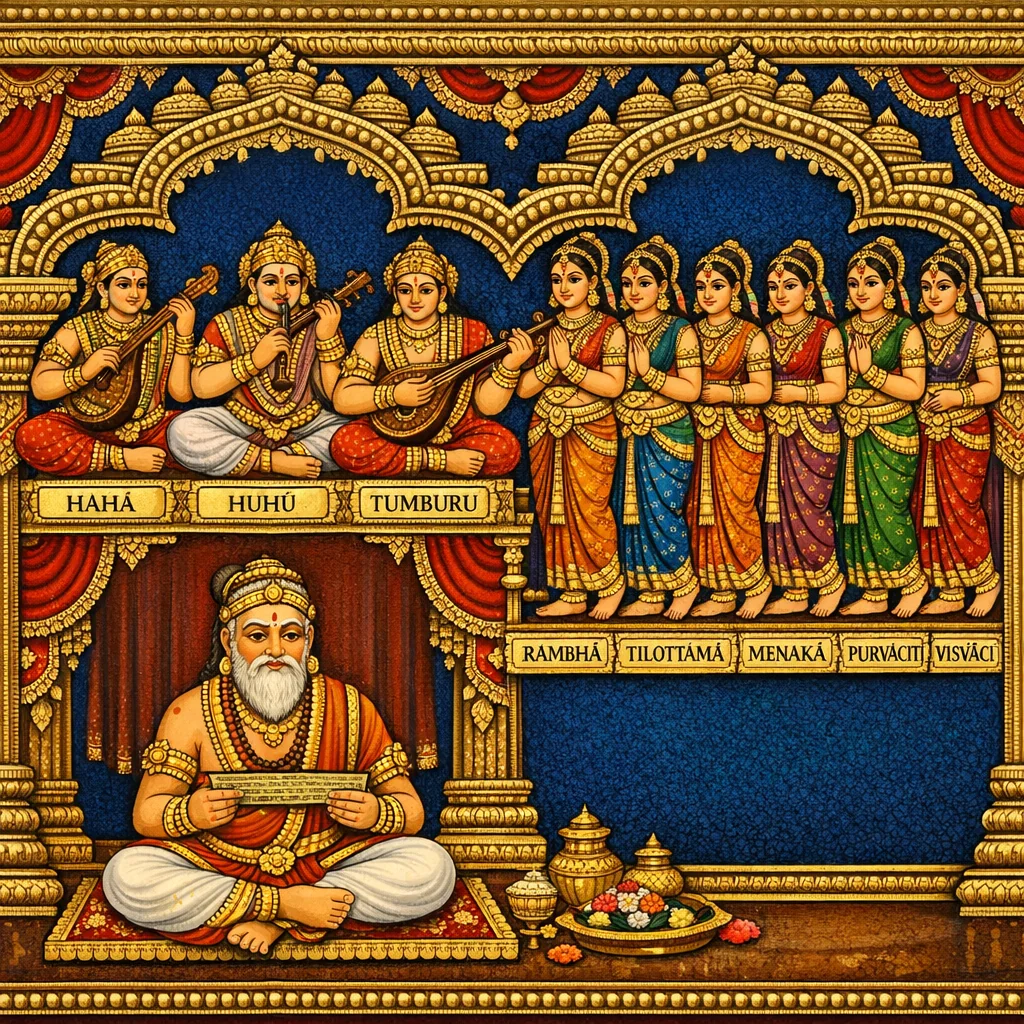
This Adhyāya is chiefly a catalogue: Sūta narrates by enumerating celestial lineages. He lists the Mauneya Devagandharvas—offspring associated with Gandharvas and Apsarases—moving through an ordered sequence of names such as Bhīmasena, Agrasena, Suparṇa, Varuṇa; Dhṛtarāṣṭra; Citraratha; Parjanya; Kali; and Nārada. The chapter then turns to groupings of Apsarases, distinguished by rank and number, and gives prominent names including Rambhā, Tilottamā, Menakā, Pūrvacittī, Viśvācī, and Pramlocā. Famous Gandharvas like Hahā, Huhū, and Tumburu are also highlighted, showing that celestial musicians and nymphs are placed within a genealogical taxonomy rather than appearing as isolated mythic figures. In effect, the chapter functions as a cosmological registry, supplying authoritative name-lists and kinship affiliations for later references within the Purāṇic universe.
Shlokas
Verse 1
इति श्रीब्रह्माण्डे महापुराणे वायुप्रोक्ते मध्यमभागे तृतीय उपोद्धातपादे दनुवंशकीर्त्तनं नाम षष्ठो ऽध्याय सूत उवाच गन्धर्वाप्सरसः पुत्रा मौनेयास्तान्निबोधत / भीमसेनेग्रसेनौ च सुपर्णो वरुणस्तथा
Thus, in the holy Brahmāṇḍa Mahāpurāṇa, in the middle section spoken by Vāyu, within the third introductory division, is the sixth chapter called “The Proclamation of Danu’s Lineage.” Sūta said: Know the Mauneyas, sons of gandharvas and apsarases—Bhīmasena, Grasenā, Suparṇa, and Varuṇa as well.
Verse 2
धृतराष्ट्रश्च गोमांश्च सूर्यवर्चास्तथैव च// पत्रवानर्कपर्णश्च प्रयुतश्च तथैव हि
Dhṛtarāṣṭra, Gomān, and Sūryavarcā; likewise Patravān, Arkaparṇa, and also Prayuta.
Verse 3
भीमश्चित्ररथश्चैव विख्यातः सर्वजीद्वशी / त्रयोदशः शालिशिराः पर्जन्यश्च चतुर्दशः
Bhīma and Citraratha are renowned as those who can subdue all beings. The thirteenth is Śāliśirā, and the fourteenth is Parjanya.
Verse 4
कलिः पञ्च दशस्तेषां नारदश्चैव षोडशः / इत्येते देवगन्धर्वा मौनेयाः परिकीर्त्तिताः
Among them, the fifteenth is Kali and the sixteenth is Nārada. Thus these divine Gandharvas are celebrated as the Mauneyas.
Verse 5
चतुर्विंशाश्चावरजास्तेषामप्सरसः शुभाः / अरुणा चानपाया च विमनुष्या वरांबरा
In their younger line are twenty-four auspicious Apsarases: Aruṇā, Anapāyā, Vimanuṣyā, and Varāmbarā.
Verse 6
मिश्रकेशी तथाचासिपर्णिनी चाप्यलुंबुषा / मरीचिः शुचिका चैव विद्युत्पर्णा तिलोत्तमा
Miśrakeśī, Asiparṇinī, and Alumbuṣā; also Marīci, Śucikā, Vidyutparṇā, and Tilottamā.
Verse 7
अद्रिका लक्ष्मणा क्षेमा दिव्या रंभा मनोभवा / असिता च सुबाहूश्च सुप्रिया सुभुजा तथा
Adrikā, Lakṣmaṇā, Kṣemā, Divyā, Rambhā, Manobhavā; and also Asitā, Subāhu, Supriyā, and Subhujā.
Verse 8
पुण्डरीकाजगन्धा च सुदती सुरसा तथा / तथैवास्याः सुबाहूश्च विख्यातौ च हहाहुहू
Puṇḍarīkājagandhā, Sudatī, and Surasā; likewise her Subāhū; and Hahā and Huhū too—both renowned.
Verse 9
तुंबुरुश्चेति चत्वारः स्मृतागन्धर्वसत्तमाः / गन्धर्वाप्सरसो ह्येते मौनेयाः परिकीर्त्तिताः
Tumburu and the other three—these four are remembered as the finest of Gandharvas. These Gandharvas and Apsarases are proclaimed as the Mauneyas.
Verse 10
हंसा सरस्वती चैव सूता च कमलाभया / सुमुखी हंसपादी च लौकिक्यो ऽप्सरसः स्मृताः
Haṃsā, Sarasvatī, Sūtā, Kamalābhayā, Sumukhī, and Haṃsapādī are remembered as the ‘laukika’—the worldly Apsarases.
Verse 11
हंसो ज्योतिष्टमो मध्य आचारस्त्विह दारुणः / वरूथो ऽथ वरेण्यश्य ततो वसुरुचिः स्मृतः
Haṃsa, Jyotiṣṭama, and Madhya; here too is Ācāra, fierce in nature. Then come Varūtha, Vareṇya, and thereafter Vasuruci, as remembered.
Verse 12
अष्टमः सुरुचिस्तेषां ततो विश्वा वसुः स्मृतः / सुषुवे सा महाभागा रिष्टा देवर्षिपूजिता
The eighth among them is Suruci; thereafter Viśvā Vasu is remembered. That greatly blessed one bore Riṣṭā, revered by the Devarishis.
Verse 13
अरूपां सुभगां भासीमिति त्रेधा व्यजायत / मनुवन्ती सुकेशी च तुंबरोस्तु सुते शुभे
Arūpā, Subhagā, and Bhāsī were born in threefold form; and Tumbara’s auspicious daughters, Manuvantī and Sukeśī, were also born.
Verse 14
पञ्चचूडास्त्विमा विद्यादेवमप्सरसो दश / मेनका सहजन्या च पर्णिनी पुञ्जिकस्थला
Among them, know the one called Pañcacūḍā; thus ten Apsarases are recounted—Menakā, Sahajanyā, Parṇinī, and Puñjikasthalā.
Verse 15
कृतस्थला द्यृताची च विश्वाची पूर्वचित्त्यपि / प्रम्लोचेत्यभिविख्यातानुम्लोचैव तु ता दश
Kṛtasthalā, Dyṛtācī, Viśvācī, and Pūrvacittī; and the famed Pramlocā and Anumlocā—these too belong to that set of ten.
Verse 16
अनादिनिधनस्याथ जज्ञे नारायणस्य या / कुलोचितानवद्याङ्गी उर्वश्चेकादशी स्मृता
Then she who was born of Nārāyaṇa, the Beginningless and Endless—befitting her noble line, flawless in every limb—was Urvaśī, remembered as the eleventh.
Verse 17
मेनस्य मेनका कन्या जज्ञे सर्वाङ्गसुंदरी / सर्वाश्च ब्रह्मवादिन्यो महाभागाश्च ताः स्मृताः
Menakā, daughter of Mena, was born as beauty in every limb; and all of them are remembered as brahmavādinīs and as greatly blessed ones.
Verse 18
गणास्त्वप्सरसां ख्याताः पुण्यास्ते वै चतुर्दश / आहृत्यः शोभवत्यश्च वेगवत्यस्तथैव च
The renowned and holy companies of Apsarases are fourteen in number—Āhṛtyā, Śobhavatī, and likewise Vegavatī.
Verse 19
ऊर्ज्जाश्चैव युवत्यश्च स्रुचस्तु कुरवस्तथाश्च / वर्हयश्चामृताश्चैव मुदाश्च मृगवो रुचः
Ūrjjā and Yuvatī; Sruc and Kurava; Varhaya and Amṛtā; Mudā, Mṛgava, and Ruca—these are their names.
Verse 20
भीरवः शोभयन्त्यश्च गाणा ह्येते चतुर्दश / ब्रह्मणो मानसाहृत्यः शोभवत्यो मरुत्सुताः
Bhīrava and Śobhayantī—thus these companies are fourteen; born from Brahmā’s mind, they are famed as Śobhavatīs and Marutsutas.
Verse 21
वेगवत्यश्च रिष्टाया ऊर्ज्जाश्चैवाग्निसंभवाः / युवत्यश्च तथा सूर्यरश्मिजाताः सुशोभनाः
Vegavatī was born of Riṣṭā, and Ūrjjā arose from Agni; and the most radiant Yuvatīs were born of the Sun’s rays.
Verse 22
गभस्तिभिश्च सोमस्य जज्ञिरे कुरवः शुभाः / यज्ञोत्पन्ना स्रुचो नाम कुशवत्यां च बर्हयः
From the beams of Soma were born the auspicious Kuravas; from the sacrifice (yajña) arose those called Sruc; and in Kuśavatī were born the Varhayas.
Verse 23
वारिजा ह्यमृतोत्पन्ना अमृता नामतः स्मृताः / वायूत्पनाना मुदा नाम भूमिजा मृगवस्तथा
Those apsaras born of the lotus, arisen from amṛta, are remembered by the name “Amṛtā”. Those born of the wind are called “Mudā”, and those born of the earth are likewise called “Mṛgavā”.
Verse 24
विद्युतो ऽत्र रुचो नाम मृत्योः कन्याश्च भीरवः / शोभयन्त्यश्च कामस्य गणाः प्रोक्ताश्चतुर्दश
Here, those born of lightning are named “Rucaḥ”, and the daughters of Mṛtyu (Death) are called “Bhīravā”. They are declared to be Kāma’s adorning retinues—fourteen in all.
Verse 25
इत्येते बहुसाहस्रा भास्वरा अप्सरोगणाः / देवतानामृषीणां च पत्न्यश्च मातरश्च ह
Thus are these the radiant hosts of apsaras, numbering many thousands; and they are also spoken of as the wives and the mothers of the gods and the ṛṣis.
Verse 26
सुगन्धाश्चाथ निष्पन्दा सर्वाश्चाप्सरसः समाः / संप्रयोगस्तु कामेन माद्यं दिवि हरं विना
All those apsaras are fragrant, unshaken, and alike in their divine nature. Yet in heaven, union with Kāma brings intoxication—Hara (Śiva) alone excepted.
Verse 27
तासां देवर्षि संस्पर्शा जाताः साधारणा यतः / पर्वतस्तत्र संभूतो नारदश्चैव तावुभौ
Because those apsaras came into contact with the devarṣis, there arose offspring of a common kind. There were born Parvata and Nārada—those two together.
Verse 28
ततो यवीयसी चैव तृतीयारुन्धती स्मृता / देवर्षिभ्यस्तयोर्जन्म यस्मान्नारदपर्वतौ
Then the third, the youngest, is remembered as Arundhatī. Since those two were born of the devarṣis, they are known as Nārada and Parvata.
Verse 29
तस्मात्तौ तत्सनामानौ स्मृतौ नारदपर्वतौ / विनतायाश्च पुत्रौ द्वौ अरुणौ गरुडश्च ह
Therefore the two are remembered by those very names—Nārada and Parvata. And Vinatā too had two sons: Aruṇa and Garuḍa.
Verse 30
गायत्र्यादीनि छन्दांसि सौपर्णेयानि पक्षिणाः / व्यवहार्याणि सर्वाणि ऋजुसन्निहितानि च
The metres such as Gāyatrī and the rest, and the birds of the Sauparṇeya line—these all are held fit for practical use, present in a simple and straightforward way.
Verse 31
क्रद्रूर्नागसहस्रं वै विजज्ञे धरणीधरम् / अनेकशिरसां तेषां खेचराणां महात्मनाम्
Kadrū indeed brought forth a thousand nāgas, bearers of the earth. Those great-souled sky-ranging beings possessed many heads.
Verse 32
बहुत्वान्नामधेयानां प्रधानांश्च निबोधत / तेषां प्रधाना नागानां शेषवासुकितक्षकाः
Since their names are many, know the foremost among them. Chief of those nāgas are Śeṣa, Vāsuki, and Takṣaka.
Verse 33
अकर्णो हस्तिकर्णश्च पिजरश्चार्यकस्तथा / ऐरावतो महापद्मः कंबलाश्वतरावुभौ
Akarna, Hastikarna, Pijara, and Aryaka; also Airavata, Mahapadma, and the two—Kambala and Asvatara—are renowned.
Verse 34
एलापत्रश्च शङ्खश्च कर्केटकधनञ्जयौ / महाकर्णमहानीलौ धृतराष्ट्रबलाहकौ
Elapatra and Shankha; Karketaka and Dhananjaya; Mahakarna and Mahanila; and Dhritarashtra and Balahaka—these are the names of the Nāgas.
Verse 35
करवीरः पुष्पदंष्ट्रः सुमुखो दुर्मुखस्तथा / सूनामुखो दधिमुखः कालियश्चालिपिण्डकः
Karavira, Pushpadamshtra, Sumukha and Durmukha; Sunamukha, Dadhimukha; and Kaliya and Alipindaka—these are Nāga names.
Verse 36
कपिलश्चांबरीषश्च अक्रूरश्च कपित्थकः / प्रह्रादस्तु ब्रह्मणाश्च गन्धर्वो ऽथ मणिस्थकः
Kapila and Ambarisha, Akrura and Kapitthaka; and Prahlada, Brahmana, Gandharva, and Manisthaka—these too are named among the Nāgas.
Verse 37
नहुषः कररोमा च मणिरित्येवमादयः / काद्रवेयाः समाख्याताः खशायास्तु निबोधत
Nahusha, Kararoma, Mani, and others like them are known as the Kadraveya Nāgas; now, learn also of the Khashayas.
Verse 38
खशा विजज्ञे द्वौ पुत्रौ विकृतौ परुषव्रतौ / श्रेष्ठं पश्चिमसंध्यायां पूर्वस्यां च कनीयसम्
Khaśā bore two sons, misshapen and of harsh vows: the elder was born at the western twilight, and the younger at the eastern twilight.
Verse 39
विलोहितैककर्णं च पूर्वं साजनयत्सुतम् / चतुर्भुजं चतुष्पादं किञ्चित्स्पन्दं द्विधागतिम्
First she bore a son, Vilohita, with a single ear—four-armed and four-footed, faintly trembling, and moving in twofold ways.
Verse 40
सर्वङ्गकेशं स्थूलाङ्गं शुभनासं महोदरम् / स्वच्छशीर्षं महाकर्णं मुञ्जकेशं महाबलम्
His whole body was covered with hair; his limbs were massive, his nose auspicious, and his belly vast. His head was clear, his ears great, his hair like munja grass, and his strength immense.
Verse 41
ह्रस्वास्यं दीर्घजिह्वं च बहुदंष्ट्रं महाहनुम् / रक्तपिङ्गाक्षपादं च स्थूलभ्रूदीर्घनासिकम्
His face was short, his tongue long, his teeth many, and his jaw immense. His eyes and feet were reddish-tawny; his brows were thick and his nose long.
Verse 42
गुह्यकं शितिकण्ठं च महापादं महामुखम् / एवंविधं खशापुत्रं जज्ञे ऽसावतिभीषणम्
He was of the Guhyaka kind, dark-blue of throat, with great feet and a great mouth. Thus was this son of Khaśā born, exceedingly fearsome in form.
Verse 43
तस्यानुजं द्वितीयं सा ह्युषस्यन्ते व्यजायत / त्रिशीर्षं च त्रिपादं च त्रिहस्तं कृष्णलोचनम्
At dawn she bore her second, younger son—three-headed, three-footed, three-handed, and dark-eyed.
Verse 44
ऊर्द्ध्वकेशं हरिच्छ्मश्रुं शिलासंहननं दृढम् / ह्रस्वकायं प्रबाहुं च महाकाय महारवम्
His hair rose upward, his beard was green-tinged, his frame hard as stone; short in stature yet strong-armed, huge-bodied, and thunderous in roar.
Verse 45
आकर्णदारितास्यं च बलवत्सथूलनासिकम् / स्थूलौष्ठमष्टदंष्ट्र च जिह्मास्यं शङ्कुकर्णकम्
His mouth seemed split to the ears, his nose thick and strong; his lips were heavy, he bore eight fangs, his face was crooked, and his ears were cone-shaped.
Verse 46
पिङ्गलोद्वत्तनयनं जटिलं द्वन्द्वपिण्डकम् / महास्कन्धं महोरस्कं पृथुघोणं कृशोदरम्
His eyes were tawny and crazed; he was matted-haired, with paired lumps on his cheeks; broad-shouldered, wide-chested, wide-nosed, and lean-bellied.
Verse 47
अस्थूलं लोहितं ग्रीवलंबमेढ्राण्डपिडकम् / एवंविधं कुमारं सा कनिष्ठं समसूयत
He was not stout, but ruddy in hue, with hanging lumps at the neck and in the region of the male organ and testes; such was the youngest son she brought forth.
Verse 48
सद्यः प्रसूतमात्रौ तौ विवृद्धौ च प्रमादतः / उपयौगसमर्थाभ्यां शरीराभ्यां व्यवस्थितौ
Though just born, through heedlessness they suddenly grew and stood established in bodies strong and fit for use.
Verse 49
सद्योजातौ विवृद्धाङ्गौ मातरं पर्यकर्षताम् / तयोः पूर्वस्तु यः क्रूरो मातरं सो ऽभ्य कर्षत
Newborn though they were, their limbs were grown, and they dragged their mother about; and the elder, cruel by nature, pulled at her fiercely.
Verse 50
ब्रुवंश्च मातर्भक्षाव रक्षार्थं क्षुधयार्दितः / न्यषेधयत्पुनर्ह्येनं स्वयं स तु कनिष्ठकः
Crying, “Let us eat our mother,” he was tormented by hunger; yet for her protection the younger one himself restrained him again.
Verse 51
पूर्वेषां क्षेमकृत्त्वं वै रक्षैतां मातरं स्वकाम् / बाहुभ्यां परिगृह्यैनं मातरं सो ऽभ्यभाषयत्
He said, “The calling of the elders is to bring safety; protect your beloved mother.” Then, holding him in his arms, he spoke to the mother.
Verse 52
एतस्मिन्नेव काले तु प्रादुर्भूतस्तयोः पिता / तौ दृष्ट्वा विकृता कारौ खशां तामभ्यभाषत
At that very time their father appeared; seeing the two in distorted form, he addressed that woman Khaśā.
Verse 53
तौ सुतौ पितरं दृष्ट्वा ह्येकभूतौ भयान्वितौ / मातुरेव पुनश्चाङ्गे प्रलीयेतां स्वमायया
Seeing their father, the two sons, seized by fear, became as one; and by their own māyā they again dissolved into the very body of their mother.
Verse 54
अथाब्रवीदृषिर्भार्यां किमाभ्यामुक्तवत्यसि / सर्वमाचक्ष्व तत्त्वेन तवैवायं व्यतिक्रमः
Then the rishi said to his wife, “What did you say to those two? Tell everything in truth; this transgression is yours alone.”
Verse 55
मातृतुल्यश्च जनने पुत्रो भवति कन्यका / यथाशीला भवेन्माता तथाशीलो भवेत्सुतः
O mother, a son is born akin to his mother; as the mother’s nature is, so too becomes the son’s nature.
Verse 56
यद्वर्णा तु भवेद्भूमिस्तद्वर्णं सलिलं ध्रुवम् / मातॄणां शीलदोषेण तथा रूपगुणैः पुनः
Whatever color the earth bears, that very color the water surely takes; so too, through mothers’ faults of conduct, and again through their form and virtues, (the offspring is shaped).
Verse 57
विभिन्नास्तु प्रजाः सर्वास्तथा ख्यातिवशेन च / इत्येवमुक्त्वा भगवान्खशामप्रतिमस्तदा
Having spoken thus, the Blessed One, serene as the sky, then declared: “All beings are indeed diverse, and they differ also under the sway of fame and repute.”
Verse 58
पुत्रावाहूय साम्ना वै चक्रे ताभ्यां तु नामनी / पुत्राभ्यां यत्कृतं तस्यास्तदाचष्ट खशा तदा
Calling her two sons with the chant of the Sāma, she bestowed names upon them. And what the sons had done to their mother, Khaśā then declared at once.
Verse 59
माता यथा समाख्याता तर्माभ्यां च पृथक्पृथक् / तेन धात्वर्थयोगेन तत्तदर्थे चकार ह
Just as the mother had addressed them separately, so too each was spoken of apart. By linking with the meaning of the verbal root, each was fashioned according to its proper sense.
Verse 60
मातर्भक्षेत्यथोक्तो वै खादने भक्षणे च सः / भक्षावेत्युक्तवानेष तस्माद्यक्षो ऽभवत्त्वयम्
When he was told, “Mother—eat, devour,” he turned to eating and consuming. He uttered “bhakṣāve”; therefore you became known as a Yakṣa.
Verse 61
रक्ष इत्येष धातुर्यः पालने स विभाव्यते / उक्तवांश्चैष यस्मात्तु रक्षेमां मातरं स्वकाम्
The root “rakṣ” is understood in the sense of guarding and protecting. For he had said, “I shall protect my beloved mother.”
Verse 62
नाम्ना रक्षो ऽपरस्तस्माद्भविष्यति तवात्मजः / स तदा तद्विधां दृष्ट्वा विक्रियां च तयोः पिता
Therefore your other son shall become a Rākṣasa, bearing the name “Rakṣa”. Then their father, seeing such a disposition and change in the two of them…
Verse 63
तदा भाविनमर्थं च बुद्ध्वा मात्रा कृतं तयोः / तावृभौ क्षुधितौ दृष्ट्वा विस्मितः परिमृष्टधीः
Then, understanding the future purpose that the mother had ordained for the two, seeing them both hungry, he was astonished and sank into thoughtful reflection.
Verse 64
तयोः प्रादिशदाहारं खशापतिरसृग्वसे / पिता तौ क्षुधितौ दृष्ट्वा वर मेतं तयोर्ददौ
Khaśāpati Asṛgvasa provided them with food; the father, seeing the two hungry, bestowed upon them this boon.
Verse 65
युवयोर्हस्तसंस्पर्शाद्रक्तधाराश्च सर्वशः / सृङ्मांसवसाभूता भविष्यन्तीह कामतः
By the touch of your hands, streams of blood everywhere shall, at your will, become flesh and fat.
Verse 66
नक्ताहारविहारौ च द्विजदेवादिभोजनौ / नक्तं चैव बलीयांसौ दिवा वै निर्बलौ युवाम्
Your feeding and roaming shall be by night, and you shall devour the twice-born and even the gods and others; by night you will be strong, but by day surely weak.
Verse 67
मातरं रक्षत इमां धर्मश्चैवानुशिष्यते / इत्युक्त्वा काश्यपः पुत्रौ तत्रैवान्तरधीयत
“Protect this mother, and follow dharma as well.” Having spoken thus, Kaśyapa instructed his sons and vanished there and then.
Verse 68
गते पितरि तौ क्रूरौ निसर्गादेव दारुणौ / विपर्ययेषु वर्त्तेते ऽकृतज्ञौ प्राणिहिंसकौ
When their father had departed, those two were by nature cruel and dreadful. They moved in perverse ways—ungrateful and slayers of living beings.
Verse 69
महाबलौ महासत्त्वौ महाकायौ दुरासदौ / मायाविदावदृश्यौ तावन्तर्धानगतावुभौ
Both were mighty in strength and spirit, huge of body and hard to assail. Skilled in māyā, they became unseen, and both passed into concealment.
Verse 70
तौ कामरूपिणौ घोरौ नीरुजौ च स्वभावतः / रूपा नुरूपैराचारैः प्रचरन्तौ प्रबाधकौ
Those two were shape-shifters at will, dreadful, and by nature free from illness. Roaming with conduct befitting their forms, they went about afflicting others.
Verse 71
देवानृषीन्पितॄंश्चैव गन्धर्वान्किन्नरानपि / पिशाचांश्चमनुष्यांश्चपन्नगान्पक्षिणः पशून्
They (harassed) the devas, the ṛṣis, and the pitṛs; gandharvas and kinnaras as well; also piśācas, humans, nāgas, birds, and beasts.
Verse 72
भक्षार्थमिह लिप्संतौ चेरतुस्तौ निशाचरौ / इन्द्रस्यानुचरौ चैव क्षुब्धौ दृष्ट्वा ह्यतिष्ठताम्
Seeking prey to devour, those two night-roamers wandered here. Indra’s attendants, seeing them, were stirred to anger and halted there.
Verse 73
राक्षसं तं कदाचिद्वै निशीथे ह्येक मीश्वरम् / आहारं स परीप्सन्वै शब्देनानुससार ह
Once, at dead of night, that rākṣasa, longing to take the lone Lord as his food, followed after, guided by the sound.
Verse 74
आससाद पिशाचौ वै त्वजः शण्ढश्च ताबुभौ / कपिपुत्रौ महावीर्यौं कूष्माडौ पूर्वजावुभौ
He came upon two piśācas—Tvaja and Śaṇḍha—both sons of a kapi, mighty in prowess, Kūṣmāṇḍas, ancient ones.
Verse 75
पिङ्गाक्षावूर्द्ध्वरोमाणौ वृत्ताक्षौ च सुदारुणौ / कन्याभ्यां सहितौ तौ तु ताभ्यां भर्तुश्चिकीर्षया
Their eyes were tawny, their hair bristled upward, their gaze round and most dreadful; and the two were accompanied by two maidens, who sought to do this for their husband’s sake.
Verse 76
ते कन्ये कामरूपिण्यौ तदाचारमुभे च तम् / आहारार्थे समीहन्तौ सकन्यौ तु बुभुक्षितौ
Those two maidens were kāmarūpiṇīs, able to assume forms at will, and both acted accordingly; and the two (piśācas), with the maidens, hungry, strove in search of food.
Verse 77
अपश्यतां रक्षसं तौ कामरूपिणमग्रतः / सहसा सन्निपातेन दृष्ट्वा चैव परस्परम्
As they looked on, they beheld before them that shape-shifting rākṣasa; and in the sudden encounter, they also saw one another face to face.
Verse 78
ईक्षमाणाः स्थितान्योन्यं परस्परजिघृक्षवः / पितरावूचतुः कन्ये युवा मानयत द्रुतम्
They stood gazing at one another, eager to seize each other. Then the Pitṛs said: “O maiden, you two, honor him at once.”
Verse 79
जीवग्राहं निगृह्यैनं विस्फुरन्तं पदेपदे / ततस्तमभिसृत्यैनं कन्ये जगृहतुस्तदा
They subdued that jīvagrāha as he writhed at every step. Then, O maiden, they approached and seized him right then.
Verse 80
संगृहीत्वा तु हस्ताभ्यामानीतः पितृसंसदि / ताभ्यां कन्यागृहीतं तं पिशाचौ वीक्ष्य रक्षसम्
Grasping him with both hands, they brought him into the assembly of the Pitṛs. Seeing that rākṣasa held by the two maidens, the piśācas looked on.
Verse 81
अपृच्छतां च कस्य त्वं स च सर्वमभाषत / तस्य कर्माभिजाती च श्रुत्वा तौ रक्षसस्तदा
They asked, “Whose are you?” and he told them everything. Then those two rākṣasas heard of his deeds and his lineage.
Verse 82
अजः शण्डश्च तस्मै ते कन्यके प्रत्यपादयत् / तौ तुष्टौ कर्मणा तस्य कन्ये ते ददतुस्तु वै
They handed over to him the two maidens, Aja and Śaṇḍā. Pleased by his conduct, O maiden, they truly gave you to him.
Verse 83
पैशाचैन विवाहेन रुदन्त्यावुद्ववाह सः / अजः शण्डः सुताभ्यां तु तदा श्रावयतां धनम्
By the paiśāca form of marriage he wedded the weeping maiden; then Aja and Śaṇḍa made their sons hear of the matter of wealth.
Verse 84
इयं ब्रह्मधना नाम कन्या या सहिता शुभा / ब्रह्म तस्यापराहार इति शण्डो ऽभ्यभाषत
This auspicious, well-adorned maiden is named “Brahmadhanā”; Śaṇḍa declared, “Her highest sustenance is Brahman alone.”
Verse 85
इयं जन्तुधना नाम कन्या सर्वाङ्गजन्तिला / जन्तुभाव धनादाना इत्यजौऽश्रावयद्धनम्
This maiden is named “Jantudhanā”, her whole body teeming with creatures; Aja proclaimed of wealth: “The state of living beings itself is the giving of riches.”
Verse 86
सर्वाङ्गकेशापाशा च कन्या जन्तुधना तु या / यातुधानप्रसूता सा कन्या चैव महारवा
The maiden Jantudhanā is ensnared all over with nets of hair; born of the yātudhānas, she is a girl of mighty wailing.
Verse 87
अरुणा चाप्यलोमा च कन्या ब्रह्मधना तु या / ब्रह्मधानप्रसूता सा कन्या चैव महारवा
The maiden Brahmadhanā is ruddy and without body-hair; born of brahmadhana, she too is a girl of mighty wailing.
Verse 88
एवं पिशाचकन्ये ते मिथुने द्वे प्रसूयताम् / तयोः प्रजानिसर्गं च कथयिष्ये निबोधत
Thus, O Piśāca maidens, you two gave birth to two pairs; now I shall recount the arising of their progeny—listen attentively.
Verse 89
हेतिः प्रहेतिरुग्रश्च पौरुषेयौ वधस्तथा / विद्युत्स्फूर्जश्च वातश्च आयो प्याघ्रस्तथैव च
Heti, Praheti, and Ugra; Pauruṣeya and Vadha; also Vidyut-sphūrja, Vāta, Āyu, and Āghra—these are (their offspring).
Verse 90
सूर्यश्च राक्षसा ह्येते यातुधानात्मजा दश / माल्यवांश्च सुमाली च प्रहेतितनयौ शृणु
These rākṣasas—among them one named Sūrya—are the ten sons of Yātudhāna; and hear also: Mālyavān and Sumālī are the sons of Praheti.
Verse 91
प्रहेतितनयः श्रीमानपुलोमा नाम विश्रुतः / मधुः परो महोग्रस्तु लवणस्तस्य चात्मजः
Praheti’s illustrious son was famed by the name Apulomā; his sons were Madhu, Para, Mahogra, and Lavaṇa.
Verse 92
महायोगबलोपेतो महा देवमुपस्थितः / उग्रस्य पुत्रौ विक्रान्तो वज्रहा नाम विश्रुतः
Endowed with the power of great yoga, he stood devoted before Mahādeva; among Ugra’s sons, the valiant one was famed as Vajrahā.
Verse 93
पौरुषेयसुताः पञ्च पुरुषादा महाबलाः / कूरश्च विकृतश्चैव रुधिरादस्तथैव च
Pauruṣeya had five sons, mighty Puruṣādas: Kūra, Vikṛta, and likewise Rudhirāda and the rest.
Verse 94
मेदाशश्चवपाशश्च नामभिः परिकीर्त्तिताः / वधपुत्रौ दुराचारौ विघ्नश्च शामनश्च ह
They were renowned by the names Medāśa and Vapāśa; the two wicked sons of Vadha were Vighna and Śāmana.
Verse 95
विद्युत्पुत्रो दुराचारो रसनो नाम राक्षसः / स्फूर्जक्षेत्रे निकुंभस्तु जातो वै ब्रह्मराक्षसः
Vidyut’s wicked son was the rākṣasa named Rasana; and in the land of Sphūrja, Nikumbha was born as a brahmarākṣasa.
Verse 96
वातपुत्रो विरोधस्तु तथा यस्य जनातकः / व्याघ्र पुत्रो निरानन्दः क्रतूनां विघ्नकारकः
Vāta’s son was Virodha, and also his Janātaka; Vyāghra’s son was Nirānanda, the maker of obstacles to the kratu rites.
Verse 97
सर्वस्य चान्वये जाता पूराः सर्पाश्च राक्षसाः / यातुधानाः परिक्रान्ता ब्रह्म धानान्निबोधत
In the lineage of all, Pūras, serpents, rākṣasas, and yātudhānas were born and spread on every side; O Brahman, understand this.
Verse 98
यज्ञापेतो धृतिः क्षेमो ब्रह्मपेतश्च यज्ञहा / श्वातोंऽबुकः केलिसर्पौं ब्रह्मधानात्मजा नव
Dhṛti and Kṣema, bereft of yajña, and Yajñahā fallen away from Brahman; Śvāta, Ambuka, and Kelisarpā—these are spoken of as the nine sons of Brahmadhāna.
Verse 99
स्वसारो ब्रह्मराक्षस्यस्तेषां चेमाः सुदारुणाः / रक्तकर्णी महाजिह्वा क्षमा चेष्टापहारिणी
Their sisters were brahmarākṣasīs; and among them these were most dreadful—Raktakarṇī, Mahājihvā, and Kṣamā, she who steals away one’s power of action.
Verse 100
एतासामन्वये जाताः पृथिव्यां ब्रह्मराक्षसाः / इत्येते राक्षसाः क्रान्ता यक्षस्यविनिबोधत
From their lineage, brahmarākṣasas were born upon the earth. Thus these rākṣasas grew rampant and mighty—O Yakṣa, understand this well.
Verse 101
चकमे सरसं यक्षः पञ्चचूडां क्रतुस्थलाम् / तल्लिप्सुश्चिन्तयानः स देवोद्यानानि मार्गते
The Yakṣa desired Pañcacūḍā, the kratu-ground by the lake. Longing to possess her, he pondered and went in search of the devas’ gardens.
Verse 102
वैभ्राजं सुरभिं चैव तथा चैत्ररथं च यत् / विशोकं सुमनं चैव नन्दनं च वनोत्तमम्
He sought out Vaibhrāja and Surabhī, and also Caitraratha; likewise Viśoka and Sumana, and Nandana—the finest of all sacred groves.
Verse 103
बहूनि रमणीयानि मार्गते जातलालसः / दृष्ट्वा तां नन्दने सो ऽथ अप्सरोभिः सहासिनीम्
Kindled with longing, he searched along many delightful paths. Then, in Nandana’s grove, he beheld her smiling amid the apsarases.
Verse 104
नोपायं विन्दते तत्र तस्या लाभाय चिन्तयन् / दूषितः स्वेन रूपेण कर्मणा चैव दूषितः
Though he pondered how to win her, he found no means there. Tainted by his own form, he was tainted also by his deeds.
Verse 105
ममोद्विजन्ति हिंस्रस्य तथाभूतानि सर्वशः / तत्कथं नाम चार्वगीं प्राप्नुयामहमङ्गनाम्
All beings, in every way, shrink from one fierce as I. How then could I ever attain the fair maiden named Cārvagī?
Verse 106
दृष्ट्वोपायं ततः सो ऽथ शीघ्रकारी व्यवर्त्तयत् / कृत्वा रूपं वसुरुचेर्गन्धर्वस्य च गुह्यकः
Seeing a stratagem, he—swift in action—set it in motion. That guhyaka assumed the form of the gandharva Vāsuruci.
Verse 107
ततः सो ऽप्सरसां मध्ये ता जचग्राह क्रतुस्थलाम् / बुद्ध्वा वसुरुचिं तं सा भावेनैवाभ्यावर्त्तत
Then, amid the apsarases, he seized Kratusthalā. Taking him to be Vāsuruci, she turned back to him, led by the heart’s own feeling.
Verse 108
संभूतः स तया सार्द्धं दृश्यमानो ऽप्सरोगणैः / जगाम मैथुनं यक्षः पुत्रार्थं स तया सह
He arose together with her, while the hosts of apsaras looked on. Seeking a son, that yaksha went with her into union.
Verse 109
दृश्यमानो ऽप्सरो लिप्सुः शङ्कां नैव चकार सः / ततः संसिद्धकारणः सद्यो जातः सुतस्तु वै
He, longing for the apsara, felt no suspicion even though the apsaras watched. Then, when the cause was fulfilled, a son was born at once.
Verse 110
उछ्रयात्परिणाहेन सद्यो वृद्धः श्रिया ज्वलन् / राजाहमिति नाभिर्हि पितरं सो ऽभ्यवादयत्
In height and breadth he grew to adulthood at once, blazing with the splendor of Śrī. Saying, “I am the king,” he saluted his father from his very navel.
Verse 111
भवान् रजतनाभेति पिता तं प्रत्युवाच ह / मात्रानुरूपो रूपेम पितुर्वीर्येणजायते
His father replied, “You are Rajatanābha.” Form accords with the mother, yet birth comes to be through the father’s potency.
Verse 112
जाते तस्मिन्कुमारे तु स्वरुपं प्रयपद्यत / स्वरूपं प्रतिपद्यन्ते गूहन्तो यक्षराक्षसाः
When that boy was born, he regained his own true form. Even yakshas and rakshasas who hide themselves return to their proper forms.
Verse 113
सुप्ता म्रियन्तः क्रुद्धाश्च भीतास्ते हर्षितास्तथा / ततो ऽब्रवीत्सो ऽप्सरसं स्मयमानस्तु गुह्यकः
Some lay asleep, some were dying; some were wrathful, some afraid, and some filled with joy. Then the Guhyaka, smiling, spoke to the Apsaras.
Verse 114
गृहं मे गच्छ भद्रं ते सपुत्रा त्वं वरानने / इत्युक्त्वा सहसा तत्र दृष्ट्वा स्वं रूपमास्थितम्
He said, “Go to my dwelling; may auspiciousness be yours. O fair-faced one, go with your son.” Having spoken, he suddenly beheld his own form standing there.
Verse 115
विभ्रान्ताः प्रद्रुताः सर्वाः समेत्याप्सरसस्तदा / गच्छन्तीमन्वगच्छत्तां पुत्रस्तप्तां त्वयन्शिरा
Then all the Apsaras, bewildered, ran about and gathered together. And the son followed her as she went, burning with anguish, his head bowed.
Verse 116
गन्धर्वाप्सरसां मध्ये नयित्वा स न्यवर्त्तत / तां च दृष्ट्वा समुत्पत्तिं यक्षस्याप्सरसां गणाः
He led her into the midst of the Gandharvas and Apsaras, and then returned. Seeing the rise of that Yaksha, the hosts of Apsaras were filled with wonder.
Verse 117
यक्षाणां तु जनित्री त्वं इत्यूचुस्तां क्रतुस्थलाम् / जगाम सह पुत्रेण ततो यक्षः स्वमालयम्
They said to Kratusthala, “You are the mother of the Yakshas.” Then that Yaksha went to his own abode together with his son.
Verse 118
न्यग्रोधो रोहिणो नाम्ना शेरते तत्र गुह्यकाः / तस्मिन्निवासो यक्षाणां न्यग्रोधे रोहिणे स्मृतः
Beneath the banyan called Rohiṇī, the Guhyakas lie at rest. That Rohiṇī nyagrodha is remembered as the abode of the Yakṣas.
Verse 119
यक्षो रजतनाभश्च गुह्यकानां पितामहः / अनुह्रादस्य दैत्यस्य भद्रां मणिवरां सुताम्
The Yakṣa named Rajatanābha was the grandsire of the Guhyakas. He took as wife Bhadrā, Manivarā, the daughter of the Daitya Anuhrāda.
Verse 120
उपयेमे ऽनवद्याङ्गीं तस्यां मणिवरो वशी / जज्ञे सा मणिभद्रं च शक्रतुल्यपराक्रममम्
Manivara wedded that faultless-limbed maiden. From her was born Maṇibhadra, whose prowess equaled Śakra (Indra).
Verse 121
तयोः पत्न्यौ भगिन्यौ च क्रतुस्थस्यात्मजे शुभे / नाम्ना पुण्यजनी चैव तथा देवजनी च या
Their two wives were sisters, the auspicious daughters of Kratustha: one named Puṇyajanī, and the other Devajanī.
Verse 122
विजज्ञे पणिभद्रातु पुत्रान्पुण्यजनी शुभा / सिद्धार्थं सूर्यतेजश्च सुमनं नन्दनं तथा
Auspicious Puṇyajanī bore sons to Maṇibhadra: Siddhārtha, Sūryateja, Sumana, and Nandana.
Verse 123
मण्डूकं रुचकं चैव मणिमन्तं वसुं तथा / सर्वानुभूतं शङ्खं च पिङ्गाक्षं भीरुमेव च
Maṇḍūka, Rucaka, Maṇimanta, and Vasu; likewise Sarvānubhūta, Śaṅkha, Piṅgākṣa, and Bhīru—these too are their names.
Verse 124
असोमं दूरसोमं च पद्मं चन्द्रप्रभं तथा / मेघवर्णं सुभद्रं च प्रद्योतं च महाद्युतिम्
Asoma, Dūrasoma, Padma, and Candraprabha; also Meghavarṇa, Subhadra, Pradyota, and Mahādyuti.
Verse 125
द्युति मन्तं केतुमन्तं दर्शनीयं सुदर्शनम् / चत्वारो विंशतिश्चैव पुत्राः पुण्यजनीभवाः
Dyutimanta, Ketumanta, Darśanīya, and Sudarśana; thus were born the twenty-four sons of Punyajanī.
Verse 126
जज्ञिरे मणिभद्रस्य सर्वे ते पुण्यलक्षणाः / तेषां पुत्राश्च पौत्राश्च यक्षाः पुण्यजनाः शुभाः
All of them were born of Maṇibhadra, marked with auspicious merit. Their sons and grandsons too became blessed Yakṣas among the Punyajanas.
Verse 127
विजज्ञे वै देवजनी पुत्रान्मणिवराञ्छुभा / पूर्णभद्रं हैमवन्तं मणिमन्त्रविवर्द्धनौ
Devajanī too bore auspicious sons, noble as jewels: Pūrṇabhadra, Haimavanta, and Maṇi and Mantravivardhana.
Verse 128
कुसुं चरं पिशङ्गं च स्थूलकर्णं महामुदम् / स्वेतं च विमलं चैव पुष्पदन्तं चयावहम्
Kusuṃcara, Piśaṅga, Sthūlakarṇa, Mahāmuda; Śveta, Vimala, Puṣpadanta, and Cayāvaha—these are the sacred names.
Verse 129
पद्मवर्णं सुचन्द्रं च पक्षञ्च बलकं तथा / कुमुदाक्षं सुकमलं वर्द्धमानं तथा हितम्
Padmavarṇa, Sucandra, Pakṣa and Balaka; Kumudākṣa, Sukamala, Varddhamāna, and Hita—these too are divine names.
Verse 130
पद्मनाभं सुगन्धं च सुवीरं विजयं कृतम् / पूर्ममासं हिरण्याक्षं सारणं चैव मानसम्
Padmanābha, Sugandha, Suvīra, Vijayakṛta; Pūrmamāsa, Hiraṇyākṣa, Sāraṇa, and Mānasam—these also are sacred names.
Verse 131
पुत्रा मणिवरस्यैते यक्षा वै गुह्यकाः स्मृताः / सुरुपाश्च सुवेषाश्च स्रग्विणः प्रियदर्शनाः
These are the sons of Maṇivara; they are remembered as Yakṣas, the Guhyakas—fair of form, well adorned, garlanded, and pleasing to behold.
Verse 132
तेषां पुत्राश्च पौत्राश्च शतशो ऽथ सहस्रशः / खशायास्त्वपरे पुत्रा राक्षसाः कामरूपिणः
Their sons and grandsons are in the hundreds and even the thousands; while Khaśāyā’s other sons are Rākṣasas who assume forms at will.
Verse 133
तेषां यथा प्रधानान्वै वर्ण्यमा नान्निबोधत / लालाविः क्रथनो भीमः सुमाली मधुरेव च
Among them, hear the foremost as they are named: Lālāvi, Krathana, Bhīma, Sumālī, and Madhura as well.
Verse 134
विस्फूर्जनो बृहज्जिह्वो मातङ्गो धूम्रितस्तथा / चन्द्रार्कभीकरो बुध्नः कपिलोमा प्रहासकः
Visphūrjana, Bṛhajjihva, Mātaṅga, and Dhūmrita; also Candrārkabhīkara, Budhna, Kapilomā, and Prahāsaka.
Verse 135
पीडापरस्त्रिनाभश्च वक्राक्षश्च निशाचरः / त्रिशिराः शतदंष्ट्रश्च तुण्डकोशश्च राक्षसः
Pīḍāpara, Trinābha, and Vakrākṣa the night-roamer; also Triśirā, Śatadaṃṣṭra, and Tuṇḍakośa, rākṣasas.
Verse 136
अश्वश्चाकंपनश्चैव दुर्मुखश्च निशाचरः / इत्येते राक्षसवारा विक्रान्ता गणरूपिमः
Aśva, Akampana, and Durmukha the night-roamer—these were rākṣasa champions, mighty in valor, taking the form of a gaṇa-host.
Verse 137
सर्वलोकचरास्ते तु त्रिदशानां समक्रमाः / सप्त चान्या दुहितरस्ताः शृणुध्वं यथाक्रमम्
They moved through all the worlds, and were the peers of the gods. There were also seven other daughters—hear them in due order.
Verse 138
यासां च यः प्रजासर्गो येन चोत्पादिता गणाः / आलंबा उत्कचोत्कृष्टा निरृता कपिला शिवा
Those through whom the creation of progeny proceeded, and by whom the hosts of gaṇas were brought forth—Ālambā, Utkacā, Utkṛṣṭā, Nirṛtā, Kapilā, and Śivā.
Verse 139
केशिनी च महाभागा भगिन्यः सप्त याः स्मृताः / ताभ्यो लोकनिकायस्य हन्तारो युद्धदुर्मदाः
With Keśinī, the greatly blessed, seven sisters are remembered; from them were born the slayers of the world’s multitudes, maddened with the pride of battle.
Verse 140
उदीर्णा राक्षसगणा इमे चोत्पादिताः शुभाः / आलंबेयो गणः क्रूर औत्कचेयो गणस्तथा
These fierce hosts of rākṣasas, risen in tumult, were also brought forth: the gaṇa of Ālambeya is cruel, and so too is the gaṇa of Autkaceya.
Verse 141
तथौ त्कार्ष्टेयशैवेयौ रक्षसां ह्युत्तमा गणाः / तथैव नैरृतो नाम त्र्यंबकानुचरेण ह
Likewise, Utkarṣṭeya and Śaiveya are foremost gaṇas among the rākṣasas; and so too arose a gaṇa called Nairṛta, through a follower of Tryambaka (Śiva).
Verse 142
उत्पादितः प्रजाकर्गे गणेश्वरवरेण तु / विक्रान्ताः शौर्यसंपन्ना नैरृता देवराक्षसाः
In the course of progeny-creation, the supreme Lord of the gaṇas brought forth the Nairṛtas; they were bold and valorous—deva-rākṣasas, endowed with heroic might.
Verse 143
येषामधिपतिर्युक्तो नाम्ना ख्यातो विरूपकः / तेषां गणशतानीका उद्धतानां महात्मनाम्
Those whose lord was renowned by the name Virūpaka had hundreds of gaṇa-battalions—proud companies of great-souled beings.
Verse 144
प्रायेणानुचरन्त्येते शङ्करं जगतः प्रभुम् / दैत्यराजेन कुम्भेन महाकाया महात्मना
For the most part they attended upon Śaṅkara, the Lord of the worlds, together with Kumbha—the great-souled Daitya king of विशाल frame.
Verse 145
उत्पादिता महावीर्या महाबलपराक्रमाः / कापिलेया महावीर्या उदीर्णा दैत्यराक्षसाः
They were brought forth with mighty valor, vast strength, and warlike prowess; those surging Daitya-Rākṣasas, known as the Kāpileyas, were heroes of great might.
Verse 146
कपिलेन च यक्षेण केशिन्यां ह्यपरे जनाः / उत्पादिता बलावता उदीर्णा यक्षराक्षसाः
And within Keśinī, from the Yakṣa named Kapila, others were born; growing strong, they rose up as fierce Yakṣa-Rākṣasas.
Verse 147
केशिनी दुहिता चैव नीला या श्रुद्रराक्षसी / आलंबेयेन जनिता नैकाः सुरसिकेन हि
Keśinī also had a daughter named Nīlā, a dreadful Rākṣasī; and from Ālaṃbeya—and likewise from Surasika—many offspring were born.
Verse 148
नैला इति समाख्याता दुर्जया घोरविक्रमाः / चरन्ति पृथिवीं कृत्स्नां तत्र ते देवलौकिकाः
They are famed as “Nailā,” unconquerable and of dreadful might. They roam over the whole earth; there they appear as divine beings, akin to those of the deva-world.
Verse 149
बहुत्वाच्चैवसर्गस्य तेषां वक्तुं न शक्यते / तस्यास्त्वपि च नीलाया विकचा नाम राक्षसी
Because their progeny in creation is so vast, they cannot be fully described. And of that Nailā there was also a rākṣasī named Vikacā.
Verse 150
दुहिता सुताश्च विकया महा सत्त्वपराक्रमाः / विरूपकेन तस्यां वै नैरृतेन इह प्रजाः
Vikacā’s daughter and sons too were of great strength and valor. From her, here, progeny was brought forth by Virūpaka, the Nairṛta rākṣasa.
Verse 151
उत्पादिताः सुघोराश्च शृणु तास्त्वनुपूर्वशः / दंष्ट्राकराला विकृता महाकर्णा महोदराः
They were brought forth exceedingly dreadful; hear them in due order: Daṃṣṭrākarāla, Vikṛta, Mahākarṇa, and Mahodara.
Verse 152
हारका भीषकाश्चैव तथैव क्लामकाः परे / रेरवाकाः पिशाचाश्च वाहकास्त्रासकाः परे
There were also Hāraka and Bhīṣaka, and likewise others called Klāmaka; the piśācas named Reravāka, and further others—Vāhaka and Trāsaka.
Verse 153
भूमिराक्षसका ह्येते मन्दाः परुपविक्रमाः / चरन्त्यदृष्टपूर्वास्तु नानाकारा ह्यनेकशः
These are called the earth‑rākṣasas—dull of mind, yet harsh in prowess. They roam in many forms, in countless ways, never seen before.
Verse 154
उत्कृष्टबलसत्त्वा ये तेषां वैखेचराः स्मृताः / लक्षमात्रेण चाकाशं स्वल्पात्स्वल्पं चरन्ति वै
Those endowed with exceptional strength and sattva are remembered as the vaikhecaras. They move through the sky up to the measure of a lakṣa, advancing little by little.
Verse 155
एतैर्व्याप्तमिदं विश्वं शतशो ऽथ सहस्रशः / भूमिराक्षसकैः सर्वैरनेकैः क्षुद्रराक्षसैः
By them this universe is pervaded in hundreds and in thousands—by all those many petty earth‑rākṣasas spread everywhere.
Verse 156
नानाप्रकारैराक्रान्ता नाना देशाः समन्ततः / समासाभिहिताश्चैवह्यष्टौ राक्षसमातरः
In many ways, many lands all around have been overrun. And, in brief, eight ‘mothers of the rākṣasas’ are also spoken of.
Verse 157
अष्टौ विभागा ह्येषां हि व्याख्याता अनुपूर्वशः / भद्रका निकराः केचिदज्ञनिष्पत्तिहेतुकाः
Their eight divisions have been explained in due order. Among them are certain hosts called bhadrakas, said to be causes for the arising of ignorance.
Verse 158
सहस्रशतसंख्याता मर्त्य लोकविचारिणः / पूतरा मातृसामान्यास्तथा भूतभयङ्कराः
They are numbered in thousands and hundreds, roaming the world of mortals—Pūtanā and the like, taking on a motherly guise, yet fearsome like bhūtas.
Verse 159
बालानां मानुषे लोके ग्रहा मरणहेतुकाः / स्कन्दग्रहादयो हास्या आपकास्त्रासकादयः
In the human world, for children, these grahas become causes of death—Skandagraha and the rest: Hāsya, Āpaka, Trāsaka, and others.
Verse 160
कौमारास्ते तु विज्ञेया बालानां गृहवृत्तयः / स्कन्दग्रहविशेषाणां मायिकानां तथैव च
These are to be known as the ‘kaumāra’ modes of graha-affliction in children; and likewise the particular, māyic forms of the Skandagrahas.
Verse 161
पूतना नाम भूतानां ये च लोकविनायकाः / एवं गणसहस्राणि चरन्ति पृथिवीमिमाम्
Among the bhūtas are those called Pūtanā, and those known as Lokavināyakas; thus do thousands of gaṇas roam upon this earth.
Verse 162
यक्षाः पुण्यजना नामपूर्णभद्राश्च ये स्मृताः / यक्षाणां राक्षसानां च पौलस्त्यागस्तयश्च ये
The yakṣas known as Puṇyajanas, and those remembered as Pūrṇabhadras; and also, among yakṣas and rākṣasas, those belonging to the line of Paulastya (Paulastyāgastya) as well.
Verse 163
नैरृतानां च सर्वेषां राजभूदलकाधिपः / यक्षादृष्ट्या पिबन्तीह नॄणां मांसमसृग्वसे
The Lord of Alaka became the king of all Nairritas. Through their mere gaze, Yakshas drink the flesh, blood, and fat of humans.
Verse 164
रक्षांस्यनुप्रवेशेन पिशाचैः परिपीडनैः / सर्वलक्षणसंपन्नाः समामैश्चापि दैवतैः
Rakshasas afflict by entering bodies, and Pisachas by tormenting. They are endowed with all characteristics, along with cruel deities.
Verse 165
भास्वरा बलवन्तश्च ईश्वराः कामरूपिणः / अनाभिभाव्या विक्रान्ताः सर्वलोकनमस्कृताः
They are radiant, strong, sovereign lords, able to assume any form at will, invincible, valorous, and worshipped by all worlds.
Verse 166
सूक्ष्माश्चौजस्विनोमेध्या वरदा याज्ञिकाश्च वै / देवानां लक्षणं ह्येतदसुराणां तथैव च
They are subtle, vigorous, pure, givers of boons, and performers of sacrifices. This is indeed the characteristic of Devas and similarly of Asuras.
Verse 167
हीना देवैस्त्रिभिः पादैर्गन्धर्वाप्सरसः स्मृताः / गन्धर्वेभ्यस्त्रिभिः पादैर्हीना गुह्यकराक्षसाः
Gandharvas and Apsaras are considered inferior to Devas by three quarters. Guhyakas and Rakshasas are inferior to Gandharvas by three quarters.
Verse 168
ऐश्वर्यहीना रक्षोभ्यः पिशाचास्त्रिगुणां पुनः / एवन्धनेन रूपेण आयुषा च बलेन च
The piśācas, bereft of aiśvarya, are again threefold inferior to the rākṣasas; so too in wealth, in form, in lifespan, and in strength.
Verse 169
धर्मैश्वर्येण बुद्ध्या च तपःश्रुतपराक्रमैः / देवासुरेभ्यो हीयन्ते त्रींस्त्रीन्पादान्परस्परम्
In dharma, aiśvarya, intellect, austerity, śruti-learning, and valor, they fall short of devas and asuras, diminishing among one another by three degrees each.
Verse 170
गन्धर्वाद्याः पिशाचान्ताश्चतस्रो देवयोनयः / अतः शृणुत भद्रं वः प्रजाः क्रोधवशान्वयाः
From the gandharvas onward, ending with the piśācas—these are the four classes of devayoni. Therefore listen, for your welfare, O progeny born in the line ruled by wrath.
Verse 171
क्रोधायाः कन्यका जज्ञे द्वादशैवात्मसंभवाः / ता भार्या पुलहस्यासन्नामतो मे निबोधत
From Krodhā were born twelve maidens, self-born from her own being; they became the wives of Pulaha—learn their names from me.
Verse 172
मृगी च मृगमन्दा च हरिभद्रा त्विरावती / भूता च कपिशा दंष्ट्रा ऋषा तिर्या तथैव च
Mṛgī and Mṛgamandā; Haribhadrā and Irāvatī; Bhūtā and Kapiśā; Daṃṣṭrā, Ṛṣā, and Tiryā—and others likewise.
Verse 173
श्वेता च सरमा चैव सुरसा चेति विश्रुता / मृग्यास्तु हरिगाः पुत्रा मृगश्चान्ये शशास्तथा
Śvetā, Saramā, and Surasā are renowned. From Mṛgyā were born sons called Harigā; and likewise other deer and hares (śaśa).
Verse 174
न्यङ्कवःशरभा ये च रुरवः पृषताश्च ये / ऋक्षाश्च मृगमन्दाया गवयाश्चापरे तथा
There arose nyaṅka and śarabhā, ruru and pṛṣata; also ṛkṣa, mṛgamanda, and other gavaya as well.
Verse 175
महिषोष्ट्रवराहश्च खड्गा गौरमुखास्तथा / हर्य्या स्तु हरयः पुत्रा गोलाङ्गूलास्तरक्षवः
There arose the buffalo (mahiṣa), camel (uṣṭra), boar (varāha), rhinoceros (khaḍga), and the bull-faced kind (gauramukha). From Haryā were born sons called Haraya; and also golāṅgūla and tarakṣu.
Verse 176
वानराः किन्नराश्चैव मायुः किंपुरुषास्तथा / सिंहाव्याघ्राश्च नीलाश्चद्वीपिनः क्रोधिताधराः
There arose vānara (monkey-kind), kinnara, māyu, and kiṃpuruṣa; and also lions and tigers, nīla, and dvīpin (spotted beasts), with lips set in wrath.
Verse 177
सर्पाश्चाजगरा ग्राहा मार्जारा मूषिकाः परे / मण्डूका नकुलाश्चैव वल्कका वनगोचराः
There arose serpents, ajagara (great constrictors), and grāha (crocodiles); also cats (mārjāra) and other mice (mūṣika). Frogs (maṇḍūka), nakula, and valkaka that roam the forests were born as well.
Verse 178
हंसं तु प्रथमं जज्ञे पुलहस्य वरं शुभा / रणचन्द्रं शतमुखं दरीमुखमथापि च
First was born Hamsa, an auspicious boon to Pulaha; then were born Ranacandra, Satamukha, and also Darīmukha.
Verse 179
हरितं हरिवर्माणं भीषणं शुभलक्षणम् / प्रथितं मथितं चैव हरिणं लाङ्गलिं तथा
Then were born Harita, Harivarmā, Bhīṣaṇa of auspicious marks, and also Prathita, Mathita, Hariṇa, and Lāṅgalī.
Verse 180
श्वेताया जज्ञिरे वीरा दश वानरपुङ्गवाः / ऊर्द्ध्वदृष्टिः कृताहारः सुव्रतो विनतो बुधः
From Śvetā were born ten valiant chiefs among the Vānaras—Ūrddhvadṛṣṭi, Kṛtāhāra, Suvrata, Vinata, and Budha.
Verse 181
पारिजातः सुजातश्च हरिदासो गुणाकरः / क्षेममूर्तिश्च बलवान् राजानः सर्व एव ते
Pārijāta, Sujāta, Haridāsa, Guṇākara, Kṣemamūrti, and Balavān—all of them indeed were kings.
Verse 182
तेषां पुत्राश्च पौत्राश्च बलवन्तः सुदुःसहाः / अशक्याः समरेजेतुं देवदानवमानवैः
Their sons and grandsons too were mighty and hard to withstand; neither Devas, nor Dānavas, nor men could conquer them in battle.
Verse 183
यक्षभूतपिशाचैश्च राक्षसैः सुभुजङ्गमैः / नाग्निशस्त्रविषैरन्यैर्मृत्युरेषां विधीयते
For yakṣas, bhūtas, piśācas, rākṣasas, and fearsome serpents—neither by fire, nor by weapons, nor by poisons—death itself is ordained for them.
Verse 184
असंगगतयः सर्वे पृथिव्यां व्योम्नि चैव हि / पाताले च जले वायौ ह्यविनाशिन एव ते
All of them move unbound and unattached; on earth and in the sky, in pātāla, in water and in wind as well, they are truly imperishable.
Verse 185
दशकोटिसहस्राणि दशार्बुदशतानि च / महापद्मसहस्राणि महापद्मशतानि च
Thousands of tens of koṭis, and hundreds of tens of arbudas; likewise thousands of mahāpadmas, and hundreds of mahāpadmas.
Verse 186
दशार्बुदानि कोटीनां सहस्राणां शतं शतम् / नियुतानां सहस्राणि निखर्वाणां तथै व च
Ten arbudas of koṭis; hundreds upon hundreds of thousands; thousands of niyutas, and likewise of nikharvas.
Verse 187
दशार्बुदानि कोटीनां षष्टिकोटिस्तथैव च / अर्बुदानां च लक्षं तु कोटीशतमथापरम्
Ten arbudas of koṭis, and likewise sixty koṭis; a lakh of arbudas, and then yet another hundred koṭis.
Verse 188
दश पद्मानि चान्यानि महापद्मानि वै नव / संख्यातानि कुलीनानां वानराणां तरस्विनाम्
And ten padmas more, and truly nine mahāpadmas—such is the number of the noble-born, mighty Vānaras.
Verse 189
सर्वे तेजस्विनः शूराः कामरूपा महा बलाः / दिव्याभरणवेषाश्च ब्रह्मण्याश्चाहितग्नयः
All were radiant heroes, able to assume forms at will, and of mighty strength; adorned in divine ornaments and attire, devoted to the Brāhmaṇas, and keepers of the sacred fires.
Verse 190
यष्टारः सर्वयज्ञानां सहस्रशतदक्षिणाः / मुकुटैः कुण्डलैर्हारैः केयूरैः समलङ्कृताः
They were performers of every yajña, bestowing gifts of thousands and hundreds as dakṣiṇā; adorned with crowns, earrings, garlands, and armlets.
Verse 191
वेदवेदाङ्गविद्वांसो नीतिशास्त्रविचक्षणाः / अस्त्राणां मोचने चापि तथा संहारकर्मणि
They were learned in the Vedas and Vedāṅgas, discerning in the science of righteous polity; skilled in releasing and wielding weapons, and likewise in the work of destruction.
Verse 192
दिव्यमं त्रपुरस्कारा दिव्यमन्त्रपुरस्कृताः / समर्था बलिनः शूराः सर्वशस्त्रप्रहारिणः
Led forth by divine mantras and consecrated by divine mantras, they were able, strong, heroic, and smiters with every kind of weapon.
Verse 193
दिव्यरूपधराः सौम्या जरामरणवर्जिताः / कुलानां च सहस्राणि दश तेषां महात्मनाम्
Those great souls bear divine forms, gentle and free from age and death; the lineages of those Mahatmas are ten thousand.
Verse 194
चतुर्षु मेरुपार्श्वेषु हेमकूटे हिमाह्वये / नीले श्वेतनगे चैव निषधे गन्धमादने
On the four sides of Meru—at Hemakūṭa, at Himāhvaya (the Himalaya), at Nīla, at Śvetanaga, and also at Niṣadha and Gandhamādana.
Verse 195
द्वीपेषु सप्तसु तथा या गुहा ते च पर्वताः / निलयास्तेषु ते प्रोक्ता विश्वकर्मकृता स्वयम्
In the seven continents, those caves and mountains are declared to be their abodes—fashioned by Viśvakarmā himself.
Verse 196
पुरैश्च विविधाकारैः प्रकारैश्च विभूषिताः / सर्वर्तुरमणीयास्ते ह्युद्यानानि च सर्वशः
They are adorned with cities of many forms and with encircling ramparts; everywhere are gardens delightful in every season.
Verse 197
गृहभूमिषु शय्यासु पुष्पगन्धसुखोदिताः / आलेपनैश्च विविधैर्दिव्यभक्तिकृतैस्तथा
On the floors of their dwellings and upon their beds arises delight born of flower-fragrance; and there are many divine unguents as well, prepared in devotion.
Verse 198
सर्वरत्नसमाकीर्णा मानसीं सिद्धिमास्थिताः / वानरा वानरीभिस्ते दिव्याभरणभूषिताः
Those vānara warriors and vānari maidens, filled with every jewel, had attained perfection of mind and were adorned with divine ornaments.
Verse 199
पिबन्तो मधु माध्वीकं सुधाभक्षानुमिश्रितम् / क्रियामयाः समुदिता दिवि देवगणा इव
They drank honey and mādhvīka, as though blended with the savor of amṛta; brimming with sacred vigor, they rose like hosts of gods in the heavens.
Verse 200
देवगन्धर्वमुख्यानां पुत्रास्ते वै सुखे रताः / धार्मिकाश्च वरोत्सिक्ता युद्धशैण्डा महाबलाः
They were sons of the gods and foremost gandharvas, delighting in happiness; righteous in dharma, uplifted by excellence, skilled in battle, and mighty in strength.
Frequently Asked Questions
A Mauneya-associated catalogue of Devagandharvas and Apsarases is presented, functioning as a celestial genealogy/registry that groups renowned Gandharvas and Apsaras figures into a named lineage framework.
Gandharvas include Citraratha, Hahā, Huhū, and Tumburu; Apsarases include Rambhā, Tilottamā, Menakā, Pūrvacittī, Viśvācī, and Pramlocā, among many others listed sequentially.
Not in the provided sample. The visible content is genealogical and taxonomic (name-lists of Gandharvas/Apsarases), rather than Śākta-ritual (Vidya/Yantra) material characteristic of the Lalitopākhyāna found in the concluding division.