Adhyaya 7
Purukutsa’s Rasātala Victory; Triśaṅku and Hariścandra; Rohita and Śunaḥśepha
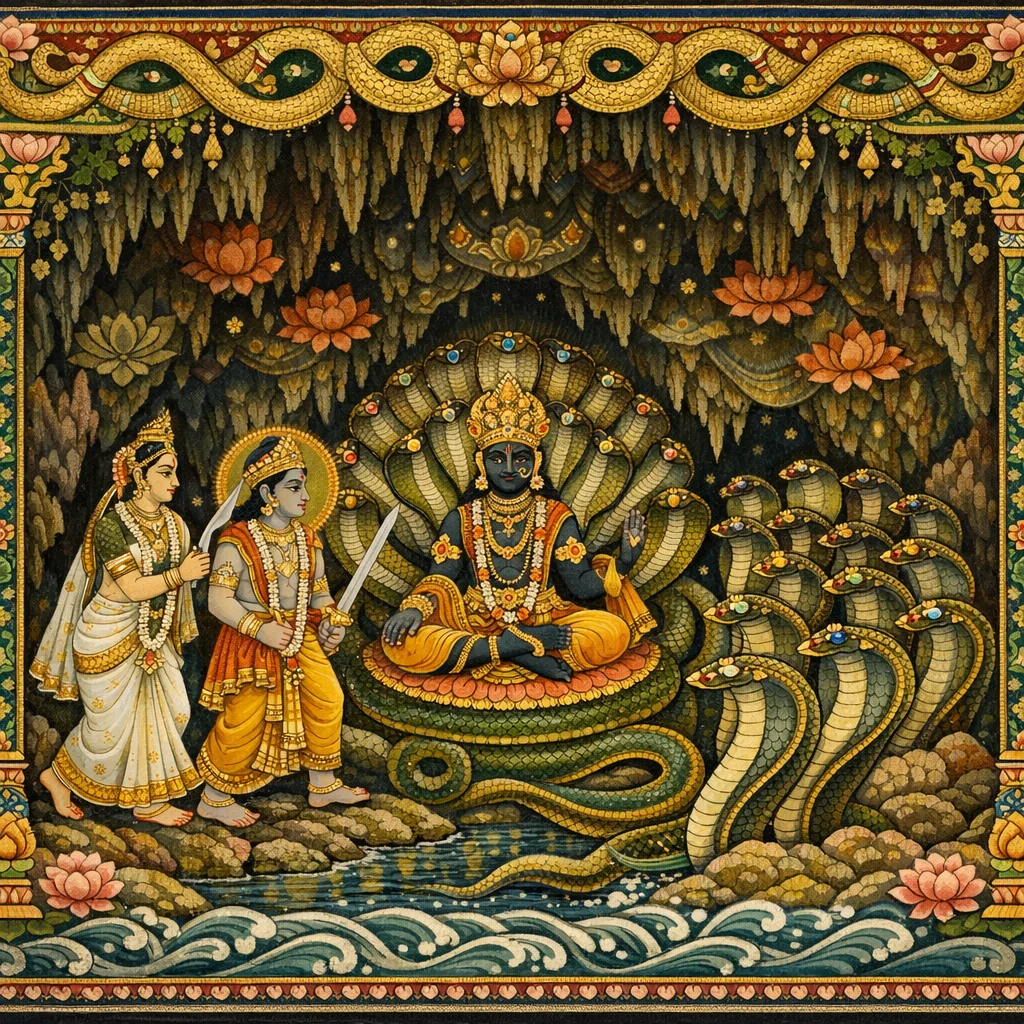
Continuing the Sūrya-vaṁśa line after Māndhātā, this chapter first notes Ambarīṣa and his distinguished descendants, then turns to Purukutsa, whom the goddess Narmadā leads into Rasātala at Vāsuki’s request. Empowered by Lord Viṣṇu, Purukutsa destroys hostile Gandharvas, and the Nāgas bestow a protective phala-śruti: remembrance of this deed guards one from snake attacks. The genealogy then runs through Trasaddasyu to Triśaṅku (Satyavrata), whose offense and curse culminate in the paradox of being “suspended in the sky” through Viśvāmitra’s power. From Triśaṅku comes Hariścandra, whose vow to Varuṇa for a son becomes a moral ordeal: repeated delays of the promised sacrifice bring Varuṇa’s affliction, while Rohita flees and is repeatedly directed by Indra to wander among tīrthas. At last Rohita purchases Śunaḥśepha as the substitute victim, enabling Hariścandra’s sacrifice before great ṛṣis. The chapter closes with Hariścandra’s purification and a brief sāṅkhya-like dissolution sequence, setting up further Śunaḥśepha/Viśvāmitra narratives ahead.
Shlokas
Verse 1
श्रीशुक उवाच मान्धातु: पुत्रप्रवरो योऽम्बरीष: प्रकीर्तित: । पितामहेन प्रवृतो यौवनाश्वस्तु तत्सुत: । हारीतस्तस्य पुत्रोऽभून्मान्धातृप्रवरा इमे ॥ १ ॥
Śukadeva Gosvāmī said: Among the sons of Māndhātā, the foremost and celebrated one was Ambarīṣa. His grandfather Yuvanāśva accepted him as a son. Ambarīṣa’s son was Yuvanāśva, and Yuvanāśva’s son was Hārīta. In Māndhātā’s dynasty these were especially prominent.
Verse 2
नर्मदा भ्रातृभिर्दत्ता पुरुकुत्साय योरगै: । तया रसातलं नीतो भुजगेन्द्रप्रयुक्तया ॥ २ ॥
Narmadā’s serpent brothers gave Narmadā to Purukutsa. Sent by Vāsuki, she led Purukutsa to Rasātala, the lower region of the universe.
Verse 3
गन्धर्वानवधीत् तत्र वध्यान् वै विष्णुशक्तिधृक् । नागाल्लब्धवर: सर्पादभयं स्मरतामिदम् ॥ ३ ॥
There in Rasātala, Purukutsa, empowered by Lord Viṣṇu, slew the Gandharvas who were fit to be slain. From the serpents he received this boon: whoever remembers this account—how Narmadā brought him to the lower region—will be protected from the attack of snakes.
Verse 4
त्रसद्दस्यु: पौरुकुत्सो योऽनरण्यस्य देहकृत् । हर्यश्वस्तत्सुतस्तस्मात्प्रारुणोऽथ त्रिबन्धन: ॥ ४ ॥
The son of Purukutsa was Trasaddasyu, who became the father of Anaraṇya. Anaraṇya’s son was Haryaśva, whose son was Prāruṇa, and Prāruṇa’s son was Tribandhana.
Verse 5
तस्य सत्यव्रत: पुत्रस्त्रिशङ्कुरिति विश्रुत: । प्राप्तश्चाण्डालतां शापाद् गुरो: कौशिकतेजसा ॥ ५ ॥ सशरीरो गत: स्वर्गमद्यापि दिवि दृश्यते । पातितोऽवाक् शिरा देवैस्तेनैव स्तम्भितो बलात् ॥ ६ ॥
Tribandhana’s son was Satyavrata, renowned as Triśaṅku. By his guru’s curse he fell to the state of a caṇḍāla; yet by the ascetic might of Kauśika (Viśvāmitra) he ascended to heaven in his very body. The devas cast him down, but Viśvāmitra’s power held him so he did not fall completely; even today he is seen hanging in the sky, head downward.
Verse 6
तस्य सत्यव्रत: पुत्रस्त्रिशङ्कुरिति विश्रुत: । प्राप्तश्चाण्डालतां शापाद् गुरो: कौशिकतेजसा ॥ ५ ॥ सशरीरो गत: स्वर्गमद्यापि दिवि दृश्यते । पातितोऽवाक् शिरा देवैस्तेनैव स्तम्भितो बलात् ॥ ६ ॥
Tribandhana’s son was Satyavrata, renowned as Triśaṅku. By his guru’s curse he fell to the state of a caṇḍāla; yet by the ascetic might of Kauśika (Viśvāmitra) he ascended to heaven in his very body. The devas cast him down, but Viśvāmitra’s power held him so he did not fall completely; even today he is seen hanging in the sky, head downward.
Verse 7
त्रैशङ्कवो हरिश्चन्द्रो विश्वामित्रवसिष्ठयो: । यन्निमित्तमभूद् युद्धं पक्षिणोर्बहुवार्षिकम् ॥ ७ ॥
Triśaṅku’s son was Hariścandra. Because of Hariścandra, Viśvāmitra and Vasiṣṭha fell into conflict and, transformed into birds, fought one another for many years.
Verse 8
सोऽनपत्यो विषण्णात्मा नारदस्योपदेशत: । वरुणं शरणं यात: पुत्रो मे जायतां प्रभो ॥ ८ ॥
Hariścandra had no son and thus was deeply despondent. Following Nārada’s counsel, he took shelter of Varuṇa and prayed, “O Lord, may a son be born to me.”
Verse 9
यदि वीरो महाराज तेनैव त्वां यजे इति । तथेति वरुणेनास्य पुत्रो जातस्तु रोहित: ॥ ९ ॥
O King, Hariścandra begged Varuṇa, “If a heroic son is born to me, with that very son I shall perform a yajña to please you.” Varuṇa replied, “So be it.” By Varuṇa’s benediction, a son named Rohita was born.
Verse 10
जात: सुतो ह्यनेनाङ्ग मां यजस्वेति सोऽब्रवीत् । यदा पशुर्निर्दश: स्यादथ मेध्यो भवेदिति ॥ १० ॥
Thereafter, when the son was born, Varuṇa came to Hariścandra and said, “Now you have a son; with this son offer sacrifice unto me.” Hariścandra replied, “Only when ten days have passed after an animal’s birth does it become fit for sacrifice.”
Verse 11
निर्दशे च स आगत्य यजस्वेत्याह सोऽब्रवीत् । दन्ता: पशोर्यज्जायेरन्नथ मेध्यो भवेदिति ॥ ११ ॥
After ten days, Varuṇa came again and said, “Perform the sacrifice now.” Hariścandra replied, “When the animal’s teeth have grown, then it becomes pure enough to be offered.”
Verse 12
दन्ता जाता यजस्वेति स प्रत्याहाथ सोऽब्रवीत् । यदा पतन्त्यस्य दन्ता अथ मेध्यो भवेदिति ॥ १२ ॥
When the teeth had grown, Varuṇa said, “Now you may perform the sacrifice.” Hariścandra replied, “When all its teeth have fallen out, then it will be fit to be offered.”
Verse 13
पशोर्निपतिता दन्ता यजस्वेत्याह सोऽब्रवीत् । यदा पशो: पुनर्दन्ता जायन्तेऽथ पशु: शुचि: ॥ १३ ॥
When the teeth had fallen out, Varuṇa returned and said, “Now perform the sacrifice.” But Hariścandra replied, “When the animal’s teeth grow in again, then it will be pure enough to be offered.”
Verse 14
पुनर्जाता यजस्वेति स प्रत्याहाथ सोऽब्रवीत् । सान्नाहिको यदा राजन् राजन्योऽथ पशु: शुचि: ॥ १४ ॥
When the teeth grew in again, Varuṇa said, “Now perform the sacrifice.” But Hariścandra replied, “O King, only when the sacrificial animal becomes a kṣatriya—able to don armor and defend himself in battle against the foe—will he be purified.”
Verse 15
इति पुत्रानुरागेण स्नेहयन्त्रितचेतसा । कालं वञ्चयता तं तमुक्तो देवस्तमैक्षत ॥ १५ ॥
Out of deep attachment to his son, Hariścandra—his heart bound by affection—begged the deva Varuṇa to postpone the appointed time; thus Varuṇa waited, and waited again, for the hour to arrive.
Verse 16
रोहितस्तदभिज्ञाय पितु: कर्म चिकीर्षितम् । प्राणप्रेप्सुर्धनुष्पाणिररण्यं प्रत्यपद्यत ॥ १६ ॥
Rohita understood that his father meant to offer him as the sacrificial victim. Therefore, to save his life, he took up bow and arrows and departed for the forest.
Verse 17
पितरं वरुणग्रस्तं श्रुत्वा जातमहोदरम् । रोहितो ग्राममेयाय तमिन्द्र: प्रत्यषेधत ॥ १७ ॥
When Rohita heard that his father, seized by Varuṇa’s affliction, had developed dropsy and a greatly swollen belly, he wished to return to the capital; but Indra forbade him.
Verse 18
भूमे: पर्यटनं पुण्यं तीर्थक्षेत्रनिषेवणै: । रोहितायादिशच्छक्र: सोऽप्यरण्येऽवसत् समाम् ॥ १८ ॥
Indra, known as Śakra, instructed Rohita that wandering the earth while honoring tīrthas and holy places is truly pious. Obeying this counsel, Rohita dwelt in the forest for one year.
Verse 19
एवं द्वितीये तृतीये चतुर्थे पञ्चमे तथा । अभ्येत्याभ्येत्य स्थविरो विप्रो भूत्वाह वृत्रहा ॥ १९ ॥
Thus, at the end of the second, third, fourth, and fifth years, whenever Rohita sought to return to his capital, Indra—the slayer of Vṛtra—approached him in the guise of an aged brāhmaṇa and forbade his return, repeating the very same words as before.
Verse 20
षष्ठं संवत्सरं तत्र चरित्वा रोहित: पुरीम् । उपव्रजन्नजीगर्तादक्रीणान्मध्यमं सुतम् । शुन:शेफं पशुं पित्रे प्रदाय समवन्दत ॥ २० ॥
Thereafter, in the sixth year, having wandered in the forest, Rohita returned to his father’s capital. From Ajīgarta he purchased the second son, named Śunaḥśepha, and offered him to his father Hariścandra as the sacrificial victim, then bowed with reverence.
Verse 21
तत: पुरुषमेधेन हरिश्चन्द्रो महायशा: । मुक्तोदरोऽयजद् देवान् वरुणादीन् महत्कथ: ॥ २१ ॥
Thereafter, the renowned King Hariścandra performed the great puruṣamedha sacrifice, worshiping the demigods headed by Varuṇa. Thus the dropsy inflicted by Varuṇa was cured, and the devas were pleased.
Verse 22
विश्वामित्रोऽभवत् तस्मिन् होता चाध्वर्युरात्मवान् । जमदग्निरभूद् ब्रह्मा वसिष्ठोऽयास्य: सामग: ॥ २२ ॥
In that great puruṣamedha sacrifice, Viśvāmitra served as the hotā priest offering oblations; the self-realized Jamadagni served as the adhvaryu; Vasiṣṭha was the brahmā, the chief overseeing priest; and the sage Ayāsya recited the hymns of the Sāma Veda as the sāmagā.
Verse 23
तस्मै तुष्टो ददाविन्द्र: शातकौम्भमयं रथम् । शुन:शेफस्य माहात्म्यमुपरिष्टात् प्रचक्ष्यते ॥ २३ ॥
Indra, greatly pleased with Hariścandra, bestowed upon him a chariot of pure gold (śātakaumbha). The glories of Śunaḥśepha will be described later, along with the account of Viśvāmitra’s son.
Verse 24
सत्यं सारं धृतिं दृष्ट्वा सभार्यस्य च भूपते: । विश्वामित्रो भृशं प्रीतो ददावविहतां गतिम् ॥ २४ ॥
Seeing the truthfulness, steadfast endurance, and grasp of the essential in Mahārāja Hariścandra and his queen, the great sage Viśvāmitra was greatly pleased. For the fulfillment of life’s human purpose, he granted them an imperishable path—unfailing, inexhaustible knowledge.
Verse 25
मन: पृथिव्यां तामद्भिस्तेजसापोऽनिलेन तत् । खे वायुं धारयंस्तच्च भूतादौ तं महात्मनि । तस्मिञ्ज्ञानकलां ध्यात्वा तयाज्ञानं विनिर्दहन् ॥ २५ ॥ हित्वा तां स्वेन भावेन निर्वाणसुखसंविदा । अनिर्देश्याप्रतर्क्येण तस्थौ विध्वस्तबन्धन: ॥ २६ ॥
Mahārāja Hariścandra first purified his mind, steeped in material enjoyment, by merging it into the earth element. Then he merged earth into water, water into fire, fire into air, and air into ether. Thereafter he merged ether into the total material energy and that energy into the ray of spiritual knowledge, by which ignorance was completely burned away.
Verse 26
मन: पृथिव्यां तामद्भिस्तेजसापोऽनिलेन तत् । खे वायुं धारयंस्तच्च भूतादौ तं महात्मनि । तस्मिञ्ज्ञानकलां ध्यात्वा तयाज्ञानं विनिर्दहन् ॥ २५ ॥ हित्वा तां स्वेन भावेन निर्वाणसुखसंविदा । अनिर्देश्याप्रतर्क्येण तस्थौ विध्वस्तबन्धन: ॥ २६ ॥
Abiding in that ray of knowledge and in the awareness of nirvāṇa’s bliss arising from his own realized nature, he stood firm in the Parabrahman—indescribable and beyond all reasoning. Thus all his bonds were shattered, and he became completely free from material bondage.
Frequently Asked Questions
The chapter presents this as a phala-śruti granted by the Nāgas: Purukutsa, empowered by Viṣṇu, relieved them by destroying inimical Gandharvas in Rasātala. In gratitude they bless the narrative itself with protective efficacy—remembrance aligns the listener with Viṣṇu’s protection and the Nāgas’ benediction, neutralizing fear of serpent harm.
Triśaṅku’s ascent is attributed to Viśvāmitra’s extraordinary tapas and resolve, overriding ordinary eligibility. The devas resisted and caused his fall; Viśvāmitra’s counter-power halted the descent, producing the liminal condition: neither fully admitted nor fully returned. The image teaches that siddhi without full dharmic alignment creates unstable results, while also illustrating the potency—and limits—of contested cosmic authority.
Śunaḥśepha is the brāhmaṇa boy purchased by Rohita from Ajīgarta to serve as the substitute sacrificial victim when Rohita refuses to be offered. He becomes central because the episode tests the boundaries of vow-keeping, compassion, and priestly ethics, and it later connects to Viśvāmitra’s lineage and instruction, which the text signals will be elaborated subsequently.
Indra’s repeated interventions function as a narrative mechanism to extend Rohita’s exile into a sustained tapas-like wandering through forests and tīrthas. It delays the immediate resolution of the vow-crisis, intensifies the karmic pressure on Hariścandra, and frames pilgrimage as a purifier of intent—while also showing how devas may influence human choices to protect broader cosmic order.
The sequence depicts progressive purification and dissolution: mind’s material tendencies are neutralized by grounding into the elements (earth → water → fire → air → ether), then into the total material energy, and finally into spiritual knowledge (ātma-jñāna). The conclusion stresses that true freedom is attained when realized consciousness becomes engaged in the Lord’s service—bhakti is presented as the stable, transcendent completion of purification.