Adhyaya 2
Dakṣa Offends Lord Śiva: Cursing and Countercursing in the Sacrificial Assembly
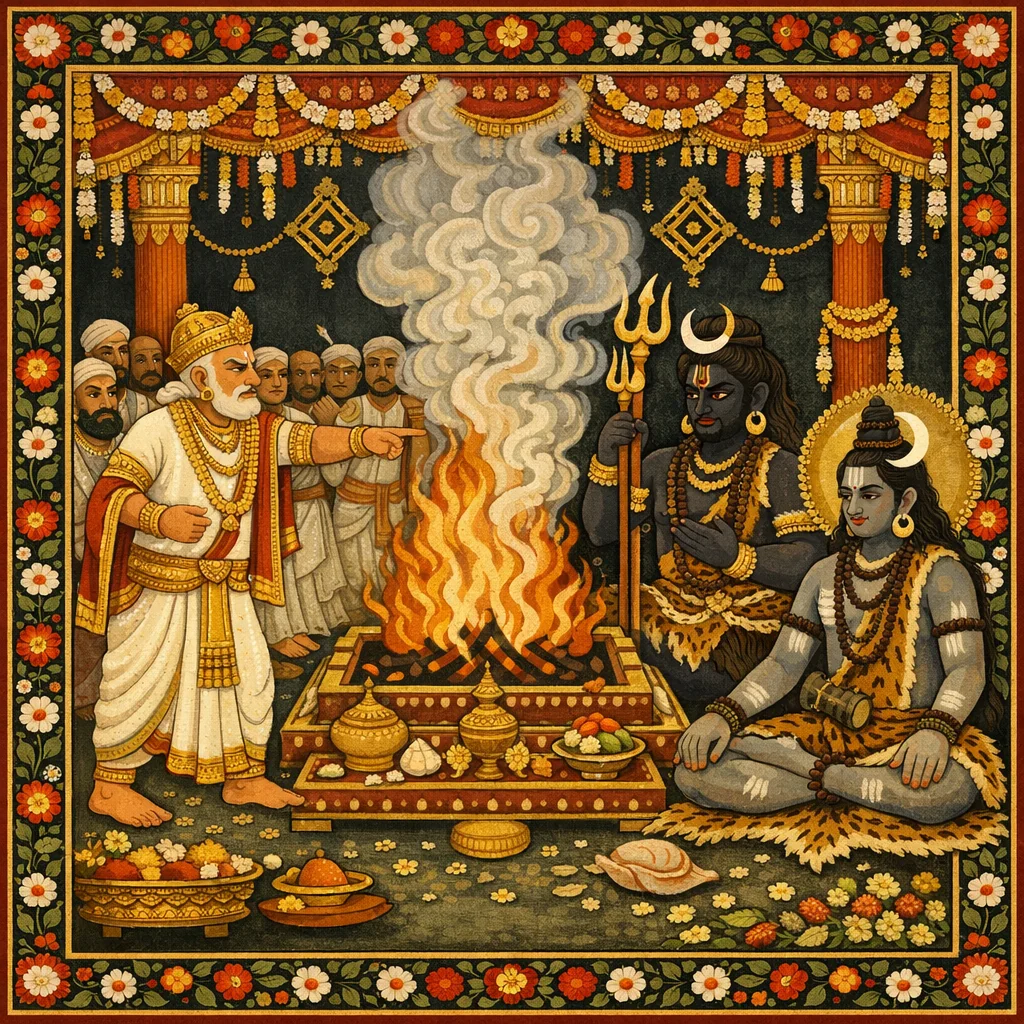
Vidura asks Maitreya to explain how Dakṣa—though affectionate toward Satī—became envious of Lord Śiva, and how the dispute grew until Satī’s self-sacrifice, setting the course toward the later Dakṣa-yajña calamity. Maitreya describes an ancient grand sacrifice where Dakṣa enters radiant and is honored by nearly all, except Brahmā and Śiva. Taking Śiva’s calm, seated composure as disrespect, Dakṣa publicly denounces him, attacks his ascetic way of life, and declares him unfit to receive sacrificial shares, then storms out in anger. Nandīśvara, outraged, curses Dakṣa and the brāhmaṇas who tolerated the insult, condemning hollow ritualism and materialistic Vedic interpretation that eclipses transcendental knowledge. Bhṛgu retaliates by cursing Śiva’s followers, branding their vows as atheistic deviations. As sectarian hostility escalates, Śiva remains silent, grows sorrowful, and leaves the arena with his attendants. The sacrifice continues for ages and ends with avabhṛtha-snāna, yet the unresolved offense foreshadows imminent devastation and Satī’s decisive response in the next arc.
Shlokas
Verse 1
विदुर उवाच भवे शीलवतां श्रेष्ठे दक्षो दुहितृवत्सल: । विद्वेषमकरोत्कस्मादनादृत्यात्मजां सतीम् ॥ १ ॥
Vidura inquired: Dakṣa, though so affectionate to his daughter, why did he become envious of Lord Śiva, the foremost among the gentle? And why did he neglect his daughter Satī?
Verse 2
कस्तं चराचरगुरुं निर्वैरं शान्तविग्रहम् । आत्मारामं कथं द्वेष्टि जगतो दैवतं महत् ॥ २ ॥
Lord Śiva is the guru of all that moves and does not move—free from enmity, peaceful in form, ātmārāma, and the greatest among the devas. How could Dakṣa be inimical toward such an auspicious Lord?
Verse 3
एतदाख्याहि मे ब्रह्मन्जामातु: श्वशुरस्य च । विद्वेषस्तु यत: प्राणांस्तत्यजे दुस्त्यजान्सती ॥ ३ ॥
O brāhmaṇa Maitreya, please tell me: what bitter enmity arose between the son-in-law and the father-in-law that the great goddess Satī abandoned even her life, so difficult to relinquish?
Verse 4
मैत्रेय उवाच पुरा विश्वसृजां सत्रे समेता: परमर्षय: । तथामरगणा: सर्वे सानुगा मुनयोऽग्नय: ॥ ४ ॥
Maitreya said: Long ago, at a great satra sacrifice performed by the leaders of universal creation, all the exalted sages, the hosts of devas, and the fire-gods, along with their followers, assembled.
Verse 5
तत्र प्रविष्टमृषयो दृष्ट्वार्कमिव रोचिषा । भ्राजमानं वितिमिरं कुर्वन्तं तन्महत्सद: ॥ ५ ॥
When Dakṣa entered that assembly, the sages beheld him shining with a radiance like the sun; his bodily luster lit up the great hall, dispelling darkness, and all present seemed diminished before him.
Verse 6
उदतिष्ठन्सदस्यास्ते स्वधिष्ण्येभ्य: सहाग्नय: । ऋते विरिञ्चां शर्वं च तद्भासाक्षिप्तचेतस: ॥ ६ ॥
Moved by his bodily radiance, all the participants in that great assembly—including the fire-gods—except Viriñci (Brahmā) and Śarva (Śiva), rose from their seats and stood in respect.
Verse 7
सदसस्पतिभिर्दक्षो भगवान्साधु सत्कृत: । अजं लोकगुरुं नत्वा निषसाद तदाज्ञया ॥ ७ ॥
Dakṣa was properly honored by the presiding lord of the assembly, Bhagavān Brahmā. After offering obeisance to Aja, the guru of the worlds (Brahmā), Dakṣa, by his order, took his seat in due manner.
Verse 8
प्राङ्निषण्णं मृडं दृष्ट्वा नामृष्यत्तदनादृत: । उवाच वामं चक्षुर्भ्यामभिवीक्ष्य दहन्निव ॥ ८ ॥
Before taking his seat, Dakṣa was deeply offended to see Lord Śiva sitting and offering him no respect. Enraged, his eyes blazing as if with fire, he began to speak harshly against Śiva.
Verse 9
श्रूयतां ब्रह्मर्षयो मे सहदेवा: सहाग्नय: । साधूनां ब्रुवतो वृत्तं नाज्ञानान्न च मत्सरात् ॥ ९ ॥
O brahmarṣis, gods, and fire-gods present here, hear me attentively. I speak of the conduct of the virtuous, not out of ignorance, nor out of envy.
Verse 10
अयं तु लोकपालानां यशोघ्नो निरपत्रप: । सद्भिराचरित: पन्था येन स्तब्धेन दूषित: ॥ १० ॥
This (Śiva) is shameless and destroys the honor of the governors of the worlds. By his arrogant ways he has polluted the path of proper conduct followed by the virtuous.
Verse 11
एष मे शिष्यतां प्राप्तो यन्मे दुहितुरग्रहीत् । पाणिं विप्राग्निमुखत: सावित्र्या इव साधुवत् ॥ ११ ॥
By taking my daughter’s hand in marriage before the sacred fire and the brāhmaṇas, he has as good as accepted himself as my subordinate. He married my daughter, who is like Gāyatrī, yet merely pretended to be a righteous man.
Verse 12
गृहीत्वा मृगशावाक्ष्या: पाणिं मर्कटलोचन: । प्रत्युत्थानाभिवादार्हे वाचाप्यकृत नोचितम् ॥ १२ ॥
Though his eyes are like a monkey’s, he took the hand of my daughter, whose eyes are like those of a fawn. Yet, though I deserved welcome, he did not rise to receive me, nor did he greet me with sweet words.
Verse 13
लुप्तक्रियायाशुचये मानिने भिन्नसेतवे । अनिच्छन्नप्यदां बालां शूद्रायेवोशतीं गिरम् ॥ १३ ॥
I did not wish to give my daughter to this man, who has shattered all bounds of civility. By neglecting the prescribed rules and rites he is impure; yet I was compelled to hand my young girl to him, as one would impart the Vedic word to a śūdra.
Verse 14
प्रेतावासेषु घोरेषु प्रेतैर्भूतगणैर्वृत: । अटत्युन्मत्तवन्नग्नो व्युप्तकेशो हसन् रुदन् ॥ १४ ॥ चिताभस्मकृतस्नान: प्रेतस्रङ्न्रस्थिभूषण: । शिवापदेशो ह्यशिवो मत्तो मत्तजनप्रिय: । पति: प्रमथनाथानां तमोमात्रात्मकात्मनाम् ॥ १५ ॥
He dwells in dreadful places like cremation grounds, surrounded by pretas, bhūtas, and their hordes. Naked like a madman, hair disheveled, he wanders—now laughing, now weeping—smearing his body with funeral ash, neglecting regular bathing, and adorning himself with garlands of skulls and bones. Thus he is called ‘Śiva’ only in name; in truth he is inauspicious and frenzied, dear to beings sunk in the darkness of tamas, and the leader of the pramathas.
Verse 15
प्रेतावासेषु घोरेषु प्रेतैर्भूतगणैर्वृत: । अटत्युन्मत्तवन्नग्नो व्युप्तकेशो हसन् रुदन् ॥ १४ ॥ चिताभस्मकृतस्नान: प्रेतस्रङ्न्रस्थिभूषण: । शिवापदेशो ह्यशिवो मत्तो मत्तजनप्रिय: । पति: प्रमथनाथानां तमोमात्रात्मकात्मनाम् ॥ १५ ॥
He lives in dreadful places like cremation grounds, surrounded by pretas and bhūtas. Naked like a madman, hair disheveled, he roams—now laughing, now weeping—smearing himself with funeral ash, neglecting regular bathing, and wearing garlands of skulls and bones. Thus he is ‘Śiva’ only in name; in truth he is inauspicious and frenzied, lord of the pramathas in tamas and dear to the deluded.
Verse 16
तस्मा उन्मादनाथाय नष्टशौचाय दुर्हृदे । दत्ता बत मया साध्वी चोदिते परमेष्ठिना ॥ १६ ॥
To that lord of madness—bereft of all cleanliness and foul of heart—at the bidding of Paramesthī Brahmā, I gave my chaste daughter. Alas, what a fate!
Verse 17
मैत्रेय उवाच विनिन्द्यैवं स गिरिशमप्रतीपमवस्थितम् । दक्षोऽथाप उपस्पृश्य क्रुद्ध: शप्तुं प्रचक्रमे ॥ १७ ॥
The sage Maitreya continued: Having thus reviled Girīśa (Śiva), Dakṣa saw him seated as though in opposition; he then performed ācaman, cleansing hands and mouth, and in anger began to curse him.
Verse 18
अयं तु देवयजन इन्द्रोपेन्द्रादिभिर्भव: । सह भागं न लभतां देवैर्देवगणाधम: ॥ १८ ॥
This sacrifice is meant for Indra, Upendra, and the other devas; Bhava (Śiva), said to be the lowest among the demigods, should receive no share of the oblations.
Verse 19
निषिध्यमान: स सदस्यमुख्यै- र्दक्षो गिरित्राय विसृज्य शापम् । तस्माद्विनिष्क्रम्य विवृद्धमन्यु- र्जगाम कौरव्य निजं निकेतनम् ॥ १९ ॥
Though the leaders of the sacrificial assembly tried to restrain him, Dakṣa hurled a curse at Giritra (Śiva); then, his anger swelling, he left the gathering and returned to his own home.
Verse 20
विज्ञाय शापं गिरिशानुगाग्रणी- र्नन्दीश्वरो रोषकषायदूषित: । दक्षाय शापं विससर्ज दारुणं ये चान्वमोदंस्तदवाच्यतां द्विजा: ॥ २० ॥
Understanding that Girīśa (Śiva) had been cursed, Nandīśvara, chief among Śiva’s attendants, blazed with anger, his eyes reddening; he prepared to hurl a dreadful curse upon Dakṣa and the brāhmaṇas present who had tolerated Dakṣa’s harsh vilification of Śiva.
Verse 21
य एतन्मर्त्यमुद्दिश्य भगवत्यप्रतिद्रुहि । द्रुह्यत्यज्ञ: पृथग्दृष्टिस्तत्त्वतो विमुखो भवेत् ॥ २१ ॥
One who deems this mortal (Dakṣa) the foremost and, out of envy, acts offensively toward Bhagavān Śiva is of meager intelligence; seeing in duality, he becomes bereft of true transcendental knowledge.
Verse 22
गृहेषु कूटधर्मेषु सक्तो ग्राम्यसुखेच्छया । कर्मतन्त्रं वितनुते वेदवादविपन्नधी: ॥ २२ ॥
One attached to the hypocritical religiosity of household life, craving worldly happiness and delighting in superficial explanations of the Vedas, loses true intelligence and spreads the karma-kāṇḍa—fruitive ritual—as if it were everything.
Verse 23
बुद्ध्या पराभिध्यायिन्या विस्मृतात्मगति: पशु: । स्त्रीकाम: सोऽस्त्वतितरां दक्षो बस्तमुखोऽचिरात् ॥ २३ ॥
Dakṣa has accepted the body as all in all. Therefore, since he has forgotten the viṣṇu-pāda, or viṣṇu-gati, and is attached to sex life only, within a short time he will have the face of a goat.
Verse 24
विद्याबुद्धिरविद्यायां कर्ममय्यामसौ जड: । संसरन्त्विह ये चामुमनु शर्वावमानिनम् ॥ २४ ॥
Those who have become as dull as matter by cultivating materialistic education and intelligence are nesciently involved in fruitive activities. Such men have purposely insulted Lord Śiva. May they continue in the cycle of repeated birth and death.
Verse 25
गिर: श्रुताया: पुष्पिण्या मधुगन्धेन भूरिणा । मथ्ना चोन्मथितात्मान: सम्मुह्यन्तु हरद्विष: ॥ २५ ॥
May those who are envious of Lord Śiva, being attracted by the flowery language of the enchanting Vedic promises, and who have thus become dull, always remain attached to fruitive activities.
Verse 26
सर्वभक्षा द्विजा वृत्त्यै धृतविद्यातपोव्रता: । वित्तदेहेन्द्रियारामा याचका विचरन्त्विह ॥ २६ ॥
These brāhmaṇas take to education, austerity and vows only for the purpose of maintaining the body. They shall be devoid of discrimination between what to eat and what not to eat. They will acquire money, begging from door to door, simply for the satisfaction of the body.
Verse 27
तस्यैवं वदत: शापं श्रुत्वा द्विजकुलाय वै । भृगु: प्रत्यसृजच्छापं ब्रह्मदण्डं दुरत्ययम् ॥ २७ ॥
When all the hereditary brāhmaṇas were thus cursed by Nandīśvara, the sage Bhṛgu, as a reaction, condemned the followers of Lord Śiva with this very strong brahminical curse.
Verse 28
भवव्रतधरा ये च ये च तान्समनुव्रता: । पाषण्डिनस्ते भवन्तु सच्छास्त्रपरिपन्थिन: ॥ २८ ॥
One who takes a vow to please Lord Śiva, or who follows such vows, surely becomes a heretic and turns away from the transcendental injunctions of the true śāstras.
Verse 29
नष्टशौचा मूढधियो जटाभस्मास्थिधारिण: । विशन्तु शिवदीक्षायां यत्र दैवं सुरासवम् ॥ २९ ॥
Those who have lost purity and whose minds are deluded—who imitate Śiva by wearing matted hair, ashes, and bones—enter into Śiva’s initiation, where “divinity” is sought in wine and similar indulgences.
Verse 30
ब्रह्म च ब्राह्मणांश्चैव यद्यूयं परिनिन्दथ । सेतुं विधारणं पुंसामत: पाषण्डमाश्रिता: ॥ ३० ॥
Bhṛgu Muni continued: Since you blaspheme the Vedas and the brāhmaṇas devoted to Vedic principles—who are the bridge of dharma for mankind—it is understood that you have already taken shelter of atheistic doctrine.
Verse 31
एष एव हि लोकानां शिव: पन्था: सनातन: । यं पूर्वे चानुसन्तस्थुर्यत्प्रमाणं जनार्दन: ॥ ३१ ॥
This alone is the eternal, auspicious path for human society, firmly followed by the ancients. Its strongest proof is Janārdana Himself—the Supreme Personality of Godhead, the well-wisher of all living beings.
Verse 32
तद्ब्रह्म परमं शुद्धं सतां वर्त्म सनातनम् । विगर्ह्य यात पाषण्डं दैवं वो यत्र भूतराट् ॥ ३२ ॥
That Brahman is supremely pure—the eternal path of the saintly. By blaspheming the Vedic principles, O followers of Bhūtarāṭ (Lord Śiva), you will without doubt descend to the level of atheism.
Verse 33
मैत्रेय उवाच तस्यैवं वदत: शापं भृगो: स भगवान् भव: । निश्चक्राम तत: किञ्चिद्विमना इव सानुग: ॥ ३३ ॥
Maitreya said: As Bhṛgu’s curse and the countercurses resounded, Lord Śiva, the Bhagavān, became deeply sorrowful. Saying nothing, he left the sacrificial arena, followed by his disciples.
Verse 34
तेऽपि विश्वसृज: सत्रं सहस्रपरिवत्सरान् । संविधाय महेष्वास यत्रेज्य ऋषभो हरि: ॥ ३४ ॥
Maitreya continued: O Vidura, mighty archer, all the Prajāpatis, progenitors of the universe’s people, performed a satra-sacrifice for thousands of years, for yajña is the highest worship of Bhagavān Hari, the Supreme Personality of Godhead.
Verse 35
आप्लुत्यावभृथं यत्र गङ्गा यमुनयान्विता । विरजेनात्मना सर्वे स्वं स्वं धाम ययुस्तत: ॥ ३५ ॥
My dear Vidura, mighty archer, when the yajña was completed all the devas performed the avabhṛtha bath at the confluence of the Gaṅgā and Yamunā. Thus purified at heart, they departed for their respective abodes.
Frequently Asked Questions
Dakṣa’s hostility arises from pride in status (as Prajāpati) and a dualistic, honor-centered view of dharma. Seeing Śiva remain seated—an expression of inner detachment rather than contempt—Dakṣa interprets it as disrespect. The Bhāgavata frames this as ego-driven offense: ritual authority and social prestige become the lens through which Dakṣa judges a transcendental devotee, leading to blasphemy and a curse.
The criticism reflects Dakṣa’s material and external criteria, not the Bhāgavata’s conclusion. Śiva’s cremation-ground symbolism and unconventional conduct signify renunciation and transcendence over bodily identification. The text emphasizes that Śiva is peaceful, free from envy, and spiritually complete—qualities that establish his greatness. Thus, the episode teaches discernment: spiritual stature is measured by realization and devotion, not by external conformity.
Nandīśvara’s curse targets complicity: not only the offender but also those who normalize blasphemy against a great soul. It critiques a form of religiosity that clings to karma-kāṇḍa promises and bodily identity, thereby losing transcendental knowledge. In Bhāgavata theology, honoring devotees safeguards yajña’s purpose—worship of Hari—whereas offense and silence in the face of offense degrade spiritual intelligence.
Bhṛgu is a principal sage aligned with brahminical authority in the sacrificial context. He responds to Nandīśvara’s condemnation with a counter-curse, portraying Śiva’s followers as deviating from Vedic injunctions. Narratively, this reflects institutional defensiveness and sectarian polarization; philosophically, it demonstrates how rivalry and identification with party-spirit can eclipse the shared aim of Veda: auspicious advancement culminating in devotion to Janārdana (Hari).
Vidura’s opening questions frame this chapter as the causal seed of Satī’s tragedy. Dakṣa’s public blasphemy establishes a social and emotional rupture: Satī is placed between father and husband, and the sacrificial culture becomes a stage for offense. Śiva’s silent withdrawal highlights his non-retaliatory nature, but the unresolved insult and the institutional endorsement of Dakṣa’s pride set the conditions for Satī’s later unbearable grief and her decisive renunciation of that bodily connection.