Adhyaya 311
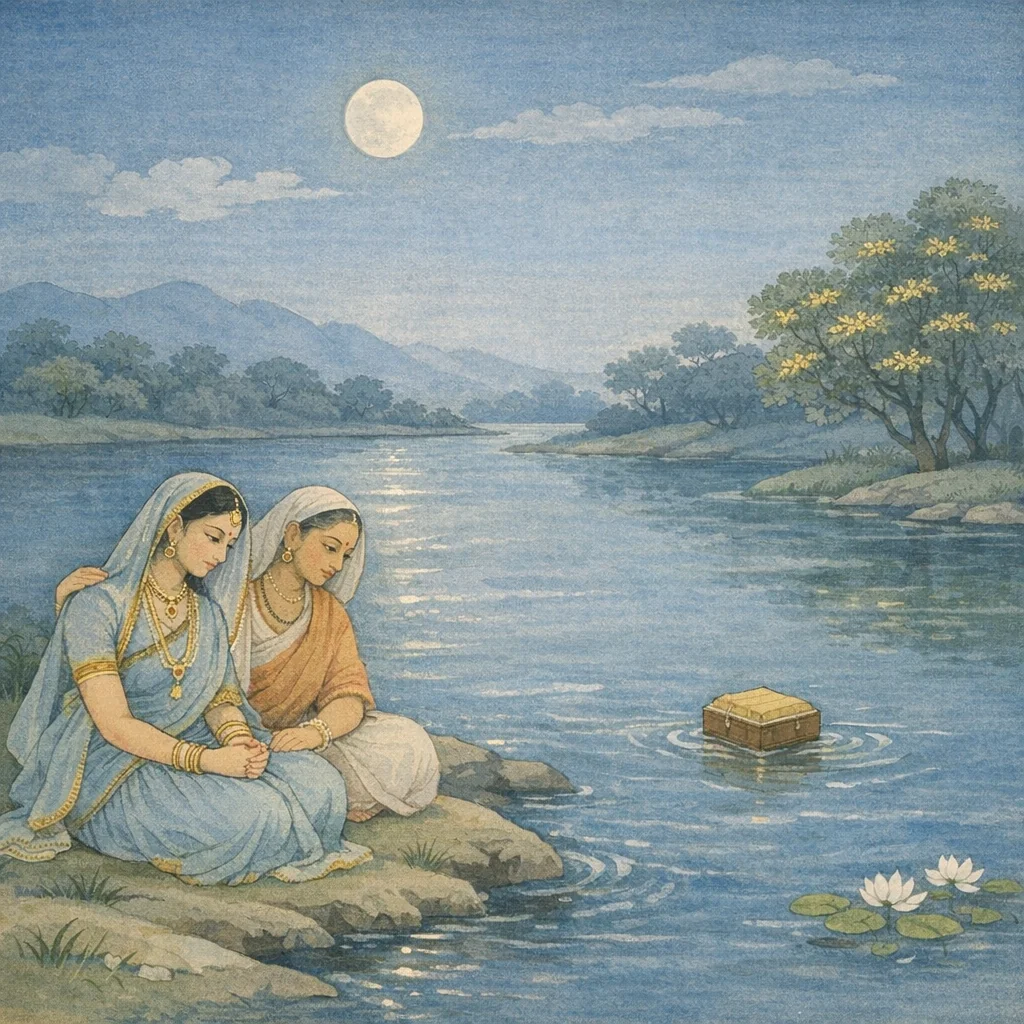
Chapter Arc: Vaishampayana opens the hidden wound of Kunti: a maiden’s secret pregnancy—an event that will shadow the Kurukshetra fate long before the war is even named. → Kunti, terrified of kin and social censure, conceals the गर्भ; only a trusted nurse knows. Knowing it is ‘akartavya’ for an unmarried girl, she still clings to the child with fierce पुत्रस्नेह, torn between dharma-as-reputation and dharma-as-motherhood. → In the dead of night, weeping and desperate for one last sight, Kunti places the newborn—radiant like the Sun, armored with divine कवच and adorned with divine कुण्डल—into a casket and sets him afloat upon the river, her lament rising as the current carries away her firstborn. → The casket drifts to the region near Champa, into the Suta realm; the child survives, still bearing the miraculous armor and earrings—fate preserving what society forced her to abandon. → The abandoned child’s future identity and the inevitable collision between birth-truth and lived-lineage are left hanging, as destiny quietly transfers him into another household.
Shlokas
Verse 1
हम (_) ऑन आा5ह अष्टाधिकांत्रेशततमो< ध्याय: कर्णका जन्म, कुन्तीका उसे पिटारीमें रखकर जलमें बहा देना और विलाप करना वैशग्पायन उवाच ततो गर्भ: समभवत् पृथाया: पृथिवीपते । शुक्ले दशोत्तरे पक्षे तारापतिरिवाम्बरे,वैशम्पायनजी कहते हैं--राजन! इस प्रकार आकाशमें जैसे चन्द्रमाका उदय होता है, उसी प्रकार ग्यारहवें मासके- शुक्लपक्षकी प्रतिपदाको कुन्तीके उदरमें भगवान् सूर्यके द्वारा गर्भ स्थापित हुआ
Vaiśaṃpāyana said: “O lord of the earth, then a conception arose in Pṛthā (Kuntī). In the bright fortnight, on the eleventh day, it appeared like the lord of the stars (the Moon) rising in the sky.”
Verse 2
सा बान्धवभयाद् बाला गर्भ तं॑ विनिगूहती । धारयामास सुश्रोणी न चैनां बुबुधे जन:,सुन्दर कटिप्रदेशवाली कुन्ती भाई-बन्धुओंके भयसे उस गर्भको छिपाती हुई धारण करने लगी। अत: कोई भी मनुष्य नहीं जान सका कि यह गर्भवती है
Out of fear of her kinsmen, the young maiden concealed that pregnancy and continued to bear it. Though fair-hipped, she kept it so hidden that no one among the people perceived that she was with child.
Verse 3
नहितां वेद नार्यन्या काचिद् धात्रेयिकामृते । कन्यापुरगतां बालां निपुणां परिरक्षणे,एक धायके सिवा दूसरी कोई स्त्री भी इसका पता न पा सकी। कुन्ती सदा कन्याओंके अन्तःपुरमें रहती थी एवं अपने रहस्यको छिपानेमें वह अत्यन्त निपुण थी
Vaiśaṃpāyana said: No other woman knew of her condition, except her nurse. The young girl remained within the maidens’ inner apartments, and she was exceedingly skilled at guarding her secret—concealing it with careful self-control and discretion.
Verse 4
ततः कालेन सा गर्भ सुषुवे वरवर्णिनी । कन्यैव तस्य देवस्य प्रसादादमरप्रभम्,तदनन्तर सुन्दरी पृथाने यथासमय भगवान् सूर्यके कृपाप्रसादसे स्वयं कन्या ही बनी रहकर देवताओंके समान तेजस्वी एक पुत्रको जन्म दिया
In due course, that fair-complexioned lady gave birth to the child she had conceived. By the grace of that god, she remained a maiden, and yet brought forth a son radiant with an immortal-like splendor—an event that underscores the extraordinary power of divine boon and the safeguarding of a woman’s social honor amid an otherwise perilous situation.
Verse 5
तथैवाबद्धकवचं कनकोज्ज्वलकुण्डलम् । हर्यक्षं वृषभस्कन्धं यथास्य पितरं तथा,उसने अपने पिताके ही समान शरीरपर कवच बाँध रखा था और उसके कानोंमें सोनेके बने हुए दो दिव्य कुण्डल जगमगा रहे थे। उस बालककी आँखें सिंहके समान और कंधे वृषभ-जैसे थे
Vaiśaṃpāyana said: “Just so, the boy wore a fastened coat of mail, and his golden, radiant earrings shone brilliantly. His eyes were tawny like a lion’s, and his shoulders were like a bull’s—his form resembling his father’s in every way.”
Verse 6
जातमात्र च त॑ गर्भ धात्र्या सम्मन्त्रय भाविनी । मज्जूषायां समाधाय स्वास्तीर्णायां समन्ततः,उस बालकके पैदा होते ही भामिनी कुन्तीने धायसे सलाह लेकर एक पिटारी मँगवायी और उसमें सब ओर सुन्दर मुलायम बिछौने बिछा दिये। इसके बाद उस पिटारीमें चारों ओर मोम चुपड़ दिया, जिससे उसके भीतर जल न प्रवेश कर सके। जब वह सब तरहसे चिकनी और सुखद हो गयी, तब उसके भीतर उस बालकको सुला दिया और उसका सुन्दर ढककन बंद कर दिया तथा रोते-रोते उस पिटारीको अश्वनदीमें छोड़ दिया
Vaiśaṃpāyana said: As soon as the child was born, the resolute lady, after consulting the nurse, placed the newborn in a chest that had been carefully lined on all sides with soft bedding. The act, though outwardly harsh, is framed as a desperate measure to conceal a socially perilous birth—an ethical tension between personal honor, fear of public censure, and the duty to protect life as best as circumstances allow.
Verse 7
मधूच्छिष्टस्थितायां सा सुखायां रुदती तथा । श्लक्ष्णायां सुपिधानायामश्वनद्यामवासृजत्,उस बालकके पैदा होते ही भामिनी कुन्तीने धायसे सलाह लेकर एक पिटारी मँगवायी और उसमें सब ओर सुन्दर मुलायम बिछौने बिछा दिये। इसके बाद उस पिटारीमें चारों ओर मोम चुपड़ दिया, जिससे उसके भीतर जल न प्रवेश कर सके। जब वह सब तरहसे चिकनी और सुखद हो गयी, तब उसके भीतर उस बालकको सुला दिया और उसका सुन्दर ढककन बंद कर दिया तथा रोते-रोते उस पिटारीको अश्वनदीमें छोड़ दिया
Vaiśaṃpāyana said: Having placed the child in a box made secure with wax—smooth, well-covered, and made comfortable—she, weeping all the while, set it adrift in the Aśvanadī. The scene underscores a painful moral tension: a mother’s protective care expressed through an act of abandonment compelled by fear of social blame and the constraints of duty as understood in her circumstances.
Verse 8
जानती चाप्यकर्तव्यं कन्याया गर्भधारणम् । पुत्रस्नेहेन सा राजन् करुणं पर्यदेवयत्,राजन! यद्यपि वह यह जानती थी कि किसी कन्याके लिये गर्भधारण करना सर्वथा निषिद्ध और अनुचित है, तथापि पुत्रस्नेह उमड़ आनेसे कुन्ती वहाँ करूणाजनक विलाप करने लगी
Vaiśaṃpāyana said: “Though she knew, O king, that for an unmarried maiden to conceive is a deed forbidden and improper, still—overwhelmed by love for her son—she broke into a piteous lament.”
Verse 9
समुत्सृजन्ती मज्जूषामश्वनद्यां तदा जले । उवाच रुदती कुन्ती यानि वाक्यानि तच्छूणु,उस समय अश्वनदीके जलमें उस पिटारीको छोड़ते समय रोती हुई कुन्तीने जो बातें कहीं, उन्हें बताता हूँ; सुनो
As she was then casting the casket into the waters of the Aśvanadī, Kuntī—overcome with tears—spoke certain words. Hear from me what she said. The moment frames a painful ethical tension: a mother’s grief and fear of social censure set against the irreversible consequences of abandoning a child, and the narrative prepares the listener to weigh compassion, duty, and the cost of secrecy.
Verse 10
स्वस्ति ते चान्तरिक्षेभ्य: पार्थिवेभ्यश्व पुत्रक | दिव्येभ्यश्वचैव भूतेभ्यस्तथा तोयचराश्न ये,वह बोली--'मेरे बच्चे! जलचर, थलचर, आकाशचारी तथा दिव्य प्राणी तेरा मंगल करें
Vaiśaṃpāyana said: “May well-being attend you, my child—from the beings that move in the sky, from those that dwell upon the earth, from the divine orders of existence, and likewise from all creatures that live in the waters.” In this blessing, the speaker invokes harmony with every realm of life, implying that one’s journey and conduct should be aligned with the whole moral and cosmic order.
Verse 11
शिवास्ते सन्तु पन्थानो मा च ते परिपन्थिन: । आगताश्च तथा पुत्र भवन्त्वद्रोहचेतस:,“तेरा मार्ग मंगलमय हो। बेटा! तेरे पास शत्रु न आयें। जो आ जाय॑ँ, उनके मनमें तेरे प्रति द्रोहकी भावना न रहे
Vaiśaṃpāyana said: “May your roads be auspicious, and may no obstructors trouble you. And, my son, even those who do come near you—may they arrive without hostility, their minds free from any intent to harm you.”
Verse 12
पातु त्वां वरुणो राजा सलिले सलिलेश्वर: । अन्तरिक्षे5न्तरिक्षस्थ: पवन: सर्वगस्तथा,“जलमें उसके स्वामी राजा वरुण तेरी रक्षा करें। अन्तरिक्षमें वहाँ रहनेवाले सर्वगामी वायुदेव तेरी रक्षा करें
Vaiśaṃpāyana said: “May King Varuṇa, lord of the waters, protect you while you are in water; and may the Wind-god—who abides in the mid-air and moves everywhere—likewise protect you in the sky.” The blessing frames the journey as one safeguarded by cosmic order: each realm has its rightful guardian, and protection is invoked by aligning oneself with that order.
Verse 13
पिता त्वां पातु सर्वत्र तपनस्तपतां वर: । येन दत्तो$सि मे पुत्र दिव्येन विधिना किल,“पुत्र! जिन्होंने दिव्य रीतिसे तुझे मेरे गर्भमें स्थापित किया है वे तपनेवालोंमें श्रेष्ठ तेरे पिता भगवान् सूर्य सर्वत्र तेरा पालन करें
Vaiśaṃpāyana said: “May your father—the Sun-god, Tapana, the foremost among those who burn—protect you everywhere. For it was by a divine ordinance, it is said, that you were bestowed upon me as my son.” The blessing frames the child’s safety and identity as grounded in a sacred, lawful order, emphasizing protection, legitimacy, and gratitude toward the divine source of life.
Verse 14
आदित्या वसवो रुद्रा: साध्या विश्वे च देवता: । मरुतश्नष सहेन्द्रेण दिशश्ष॒ सदिगी श्वरा:,“आदित्य, वसु, रुद्र, साध्य, विश्वेदेव, इन्द्रसहित मरुदगण, दिक्पालोंसहित दिशाएँ तथा समस्त देवता सभी सम-विषम स्थानोंमें तेरी रक्षा करें। यदि विदेशमें भी तू जीवित रहेगा तो मैं इन कवच-कुण्डल आदि चिह्लोंसे उपलक्षित होनेपर तुझे पहचान लूँगी
Vaiśaṃpāyana said: “May the Ādityas, the Vasus, the Rudras, the Sādhyas, the Viśvedevas, the Maruts together with Indra, and the Directions along with their guardian-lords protect you everywhere—whether in auspicious or perilous places. Even if you remain alive in a foreign land, I shall recognize you by these marks—your armor, earrings, and other distinguishing signs.”
Verse 15
रक्षन्तु त्वां सुरा: सर्वे समेषु विषमेषु च । वेत्स्यामि त्वां विदेशेषपि कवचेनाभिसूचितम्,“आदित्य, वसु, रुद्र, साध्य, विश्वेदेव, इन्द्रसहित मरुदगण, दिक्पालोंसहित दिशाएँ तथा समस्त देवता सभी सम-विषम स्थानोंमें तेरी रक्षा करें। यदि विदेशमें भी तू जीवित रहेगा तो मैं इन कवच-कुण्डल आदि चिह्लोंसे उपलक्षित होनेपर तुझे पहचान लूँगी
Vaiśaṃpāyana said: “May all the gods protect you—whether the ground is even or perilous. I shall recognize you even in foreign lands, marked out by your armor. May the Ādityas, Vasus, Rudras, Sādhyas, the Viśvedevas, Indra together with the hosts of Maruts, the directions along with their guardians, and indeed all the deities keep you safe in every safe and unsafe place. If you remain alive even abroad, then, distinguished by these signs—your armor, earrings, and the like—I will know you.”
Verse 16
धन्यस्ते पुत्र जनको देवो भानुर्विभावसु: । यस्त्वां द्रक्ष्यति दिव्येन चक्षुषा वाहिनीगतम्,“बेटा! तेरे पिता भगवान् भुवनभास्कर धन्य हैं, जो अपनी दिव्य दृष्टिसे नदीकी धारामें स्थित हुए तुझको देखेंगे
Vaiśaṃpāyana said: “Blessed indeed is your father—the divine Sun, Bhānu, Vibhāvasu—for he will behold you with celestial sight as you remain within the river’s current.” The line underscores a moral vision in which divine perception recognizes and affirms a being’s rightful place and condition, turning a seemingly liminal state (in the river-stream) into a scene of grace and validation.
Verse 17
धन््या सा प्रमदा या त्वां पुत्र॒त्वे कल्पयिष्यति । यस्यास्त्वं तृषित: पुत्र सतनं पास्यसि देवज,देवपुत्र! वह रमणी धन्य है जो तुझे अपना पुत्र बनाकर पालेगी और तू भूख-प्यास लगनेपर जिसके स्तनोंका दूध पियेगा
Vaiśaṃpāyana said: “Blessed indeed is that woman who will take you as her own son and rear you. O son of a god—O divine child—when you are thirsty, you will drink from her breast.”
Verse 18
को नु स्वप्रस्तया दृष्टो या त्वामादित्यवर्चसम् । दिव्यवर्मसमायुक्तं दिव्यकुण्डलभूषितम्,“उस भाग्यशालिनी नारीने कौन-सा ऐसा शुभ स्वप्न देखा होगा, जो सूर्यके समान तेजस्वी, दिव्य कवचसे संयुक्त, दिव्य कुण्डलभूषित, कमलदलके समान विशाल नेत्रवाले, लाल कमलदलके सदृश गौर कान्तिवाले, सुन्दर ललाट और मनोहर केशसमूहसे विभूषित तुझ-जैसे दिव्य बालकको अपना पुत्र बनायेगी”
Vaiśaṃpāyana said: “What auspicious dream could that fortunate woman have seen, by which she would obtain you as her son—you who shine with the splendor of the sun, clad in celestial armor and adorned with divine earrings?”
Verse 19
पद्मायतविशालाक्ष पद्मताम्रदलोज्ज्वलम् | सुललाटं सुकेशान्तं पुत्रत्वे कल्पयिष्यति,“उस भाग्यशालिनी नारीने कौन-सा ऐसा शुभ स्वप्न देखा होगा, जो सूर्यके समान तेजस्वी, दिव्य कवचसे संयुक्त, दिव्य कुण्डलभूषित, कमलदलके समान विशाल नेत्रवाले, लाल कमलदलके सदृश गौर कान्तिवाले, सुन्दर ललाट और मनोहर केशसमूहसे विभूषित तुझ-जैसे दिव्य बालकको अपना पुत्र बनायेगी”
Vaiśaṃpāyana said: “Who will be that fortunate woman—what auspicious dream must she have seen—who will take you as her son: you whose eyes are wide like lotus-petals, whose radiance glows like the reddish lotus-leaf, whose forehead is beautiful, and whose hair is lovely?”
Verse 20
धन्या द्रक्ष्यन्ति पुत्र त्वां भूमौ संसर्पमाणकम् | अव्यक्तकलवाक्यानि वदन्तं रेणुगुण्ठितम्,“वत्स! जब तू धरतीपर पेटके बल सरकता फिरेगा और समझमें न आनेवाली मधुर तोतली बोली बोलेगा, उस समय तेरे धूलिधूसरित अंगोंको जो लोग देखेंगे, वे धन्य हैं
Vaiśaṃpāyana said: “Blessed indeed are those who will behold you, my son, as you crawl upon the earth—your words still indistinct and sweetly lisped—your little body covered in dust.” The line evokes the sanctity of ordinary, innocent life and the tender dharma of affection and care within the household.
Verse 21
धन््या द्रक्ष्यन्ति पुत्र त्वां पुनर्योवनगोचरम् । हिमवद्धनसम्भूतं सिंहं केसरिणं यथा,पुत्र! हिमालयके जंगलमें उत्पन्न हुए केसरी सिंहके समान तुझे जवानीमें जो लोग देखेंगे, वे धन्य हैं
Vaiśaṃpāyana said: “Blessed indeed are those, my son, who will behold you once more within the range of youth—like a tawny-maned lion born amid the Himalayan forests.” The line conveys affectionate assurance and praise: the return of vigor is portrayed not as mere physical renewal, but as a restoration of rightful strength and dignity that inspires confidence in others.
Verse 22
एवं बहुविधं राजन् विलप्य करुणं पृथा । अवासृजत मज्जूषामश्चनद्यास्तदा जले,राजन्! इस तरह बहुत-सी बातें कहकर करुण-विलाप करती हुई कुन्तीने उस समय अश्वनदीके जलमें वह पिटारी छोड़ दी
After lamenting in many ways, O King, Pṛthā (Kuntī) poured forth a sorrowful cry; and then, at that time, she cast the casket into the waters of the Aścanadī. The scene underscores the moral weight of concealment and the painful choices made to protect honor and avert future turmoil, even when the heart is torn by compassion and regret.
Verse 23
रुदती पुत्रशोकार्ता निशीथे कमलेक्षणा । धात्रया सह पृथा राजन पुत्रदर्शनलालसा,जनमेजय! आधी रातके समय कमलनयनी कुन्ती पुत्रशोकसे आतुर हो उसके दर्शनकी लालसासे धात्रीके साथ नदीके तटपर देरतक रोती रही
Vaiśaṃpāyana said: In the deep of night, Kuntī—lotus-eyed and overwhelmed by grief for her son—longing to behold him, wept for a long time on the riverbank, accompanied by her nurse. The scene underscores a mother’s helpless sorrow and the moral weight of separation and loss that even the noblest must endure.
Verse 24
विसर्जयित्वा मज्जूषां सम्बोधनभयात् पितु: । विवेश राजभवन पुन: शोकातुरा तत:,पेटीको पानीमें बहाकर, कहीं पिताजी जग न जायूँ, इस भयसे वह शोकसे आतुर हो पुन: राजभवनमें चली गयी
Having cast the casket away into the water, fearing that her father might recognize her, she—overwhelmed by grief—returned once more to the royal palace. The act reflects a painful ethical tension: self-preservation and secrecy chosen under fear, even as sorrow continues to weigh upon her.
Verse 25
मज्जूषा त्वश्वनद्या: सा ययौ चर्मण्वतीं नदीम् । चर्मण्वत्याश्व यमुनां ततो गड़ां जगाम ह,वह पिटारी अश्वनदीसे चर्मण्वती (चम्बल) नदीमें गयी। चर्मण्वतीसे यमुनामें और वहाँसे गंगामें जा पहुँची
Vaiśaṃpāyana said: That casket, carried along by the current, went from the Aśvanadī to the river Carmaṇvatī; from the Carmaṇvatī it entered the Yamunā, and from there it reached the Gaṅgā. The verse underscores the inexorable movement of events—how what is set afloat by fate and human action is borne onward through the great channels of the world, until it arrives at a decisive meeting-point.
Verse 26
गड़ाया: सूतविषयं चम्पामनुययौ पुरीम् । स मज्जूषागतो गर्भस्तरज़ैरुह्ममानक:
Vaiśaṃpāyana said: Following the course of the Gaṅgā, the child in the womb—placed within a casket—was carried along by the river’s current and came to the city of Campā, in the land of the Sūtas. The scene underscores how fate and providence can preserve life even amid abandonment, and how a community’s realm becomes the setting for an unforeseen moral responsibility toward the helpless.
Verse 27
पिटारीमें सोया हुआ वह बालक गंगाकी लहरोंसे बहाया जाता हुआ चम्पापुरीके पास सूतराज्यमें जा पहुँचा ।। अमृतादुत्थितं दिव्यं तनुवर्म सकुण्डलम् । धारयामास तं गर्भ दैवं च विधिनिर्मितम्,उसके शरीरका दिव्य कवच और कानोंके कुण्डल--ये अमृतसे प्रकट हुए थे। वे ही विधाताद्वारा रचित उस देवकुमारको जीवित रख रहे थे
Vaiśaṃpāyana said: The infant, lying in a small casket, was carried along by the waves of the Gaṅgā and came near Campāpurī, into the realm of the Sūta king. From ambrosia had arisen a divine cuirass upon his body and earrings upon his ears; these heaven-sent protections, fashioned by destiny itself, sustained that divinely ordained child in the womb and beyond—signaling that his life was being preserved for a larger moral unfolding.
Verse 307
इस प्रकार श्रीमह्याभारत वनपर्वके अन्तर्गत कुण्डलाहरणपर्वमें सूर्यकृन्ती-समायमविषयक तीन सौ सातवाँ अध्याय पूरा हुआ
Thus ends the three hundred and seventh chapter of the Vana Parva of the revered Mahābhārata, within the section known as the ‘Episode of the Removal of the Earrings,’ dealing with the meeting of Sūrya and Kuntī. This closing colophon signals the completion of a narrative unit that frames the ethical tensions of divine boon, secrecy, and the far-reaching consequences of extraordinary births and choices.
Verse 308
इति श्रीमहा भारते वनपर्वणि कुण्डलाहरणपर्वणि कर्णपरित्यागे अष्टाधिकत्रिशततमो< ध्याय:,इस प्रकार श्रीमह्याभारत वनपर्वके अन्तर्गत कुण्डलाहरणपर्वमें कर्णपरित्यागविषयक तीन सौ आठवाँ अध्याय पूरा हुआ
Thus, in the Śrī Mahābhārata, within the Vana Parva, in the section concerning the taking away of the earrings, in the episode of Karṇa’s relinquishment, the three-hundred-and-eighth chapter concludes. The colophon signals the ethical focus of the episode: Karṇa’s famed act of giving—surrendering what is most precious to him—framed as a test of generosity, honor, and the complex demands of dharma.