Adhyaya 296
यक्षोपाख्यान-प्रवेशः (Entry into the Yakṣa-Lake Episode)
Upa-parva: Yakṣa-prāśna (Dharma-buddhi Parva / The Lake Episode)
The chapter opens with Yudhiṣṭhira’s reflection on calamity: he observes that misfortune appears without fixed boundary, apparent cause, or visible instrumentality, yet dharma still differentiates between puṇya and pāpa in lived outcomes. Bhīma, Arjuna, and Sahadeva each identify a specific unresolved grievance from the dice-hall humiliation—Draupadī’s coercive summoning, Karṇa’s cutting speech, and Śakuni’s victory in dice—as potential moral debts contributing to present uncertainty, suggesting a karmic-ethical accounting. Vaiśaṃpāyana then shifts to action: Yudhiṣṭhira instructs Nakula to climb a tree, survey the directions, and locate water for the exhausted brothers. Nakula confirms signs of water (trees indicating moisture and the calls of sārasas) and is dispatched to fetch it. At the lake, he hears an aerial warning: the water is under prior claim; he must answer questions before drinking and taking water. Overcome by thirst, Nakula drinks without compliance and collapses. Concerned by delay, Yudhiṣṭhira sends Sahadeva, who discovers Nakula fallen, receives the same injunction, drinks regardless, and falls as well. Arjuna is then sent; he finds both brothers down, searches for an adversary, hears the Yakṣa’s condition, responds with force (arrow volleys) against an unseen source, but ultimately drinks without resolving the questions and collapses. Finally, Bhīma is dispatched; he too is warned by the Yakṣa and, without engaging the interrogative condition, drinks and falls. The chapter ends with Yudhiṣṭhira entering the silent forest and beholding the ornate lake environment, setting the stage for the forthcoming formal question-and-answer discourse.
Chapter Arc: तीर्थों और आश्रमों का परिभ्रमण कर सावित्री मंत्रियों सहित पिता के भवन लौटती है और वहाँ नारद को पिता के साथ आसनस्थ देखकर दोनों के चरणों में प्रणाम करती है। → राजा अश्वपति सावित्री के विवाह-प्रसंग को आगे बढ़ाते हैं; नारद सत्यवान के कुल, गुण और पृष्ठभूमि का वर्णन करते हुए द्युमत्सेन के राज्य-हरण, अंधत्व और वनवास की कथा सुनाते हैं—जिससे वर-चयन का भार और भी गंभीर हो उठता है। → नारद निर्णायक वाणी बोलते हैं: सत्यवान में केवल एक ही दोष है—आज से एक वर्ष के भीतर उसकी आयु समाप्त हो जाएगी और वह देह-त्याग करेगा। → नारद सावित्री के विवाह में अविघ्न की शुभकामना देकर विदा लेते हैं; प्रसंग का केंद्र अब ‘निश्चित मृत्यु’ के ज्ञान के साथ सावित्री के संकल्प और आगामी घटनाओं की ओर मुड़ जाता है। → सत्यवान की एक-वर्ष-सीमा निश्चित हो चुकी है—अब प्रश्न यह है कि सावित्री इस अनिवार्य नियति के सामने क्या मार्ग चुनेगी और समय के साथ कौन-सा धर्म-निर्णय करेगी।
Shlokas
Verse 1
(दाक्षिणात्य अधिक पाठका ३ “लोक मिलाकर कुल ४१३ “लोक हैं) # “&+ (9) #:.. #:.2 चतुर्न॑वर्त्याधेकद्विशततमो< ध्याय: सावित्रीका सत्यवान॒के साथ विवाह करनेका दृढ़ निश्चय मार्कण्डेय उवाच अथ मद्राधिपो राजा नारदेन समागत: । उपविष्ट: सभामध्ये कथायोगेन भारत,मार्कण्डेयजी कहते हैं--भरतनन्दन युधिष्ठिर! एक दिन मद्रराज अश्वपति अपनी सभामें बैठे हुए देवर्षि नारदजीके साथ मिलकर बातें कर रहे थे
Mārkaṇḍeya said: “Then the king, lord of Madra, having met with Nārada, sat in the midst of his royal assembly, O Bhārata, engaged in conversation.” The verse sets a calm, courtly frame for the Savitrī–Satyavān narrative, emphasizing the role of wise counsel (Nārada) and reflective dialogue in guiding righteous decisions.
Verse 2
ततो5भिगम्य तीर्थानि सर्वाण्येवाश्रमांस्तथा । आजगाम पितुर्वेश्म सावित्री सह मन्त्रिभि:,उसी समय सावित्री सब तीर्थों और आश्रमोंमें घूम-फिरकर मन्त्रियोंक साथ अपने पिताके घर आ पहुँची
Then, having visited all the sacred fords and likewise the hermitages, Sāvitrī returned to her father’s home, accompanied by the ministers—her journey framed as a dutiful pilgrimage and a return to familial responsibility.
Verse 3
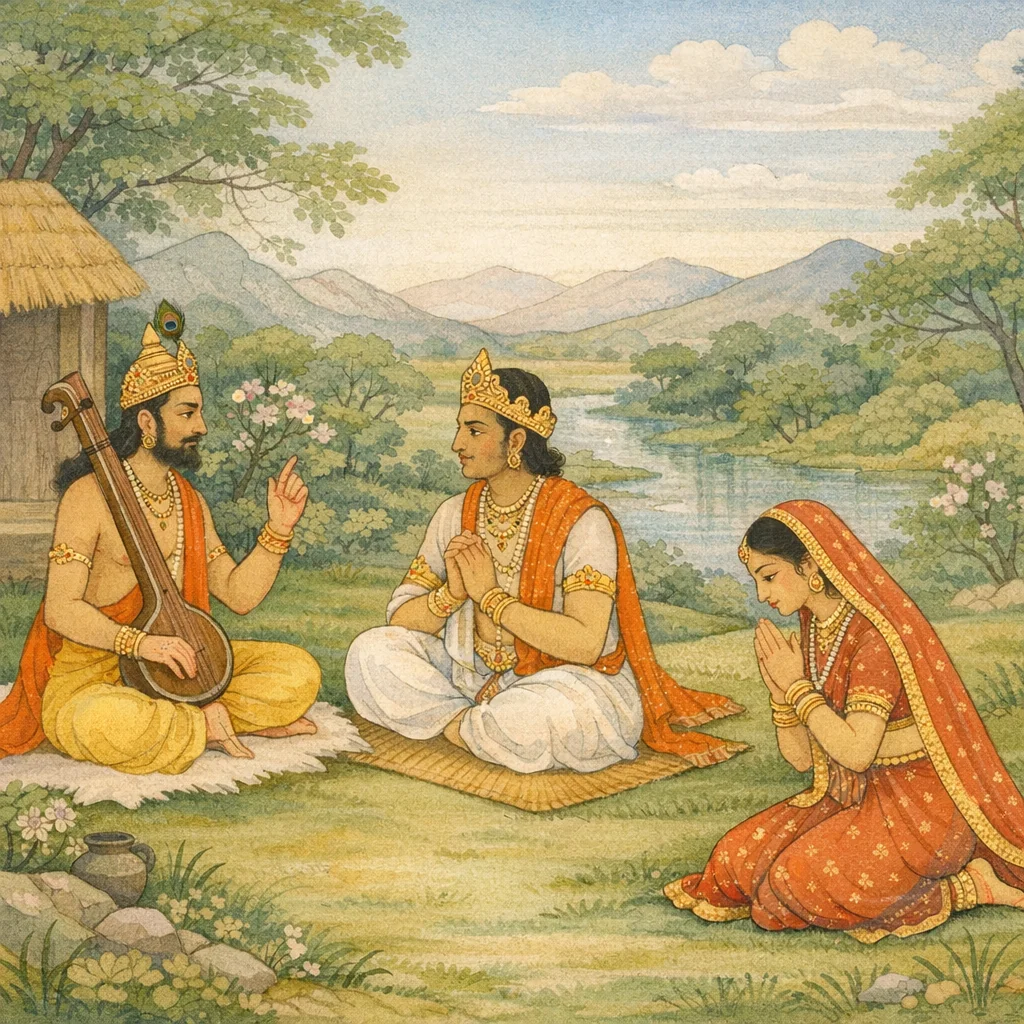
नारदेन सहासीन सा दृष्टवा पितरं शुभा । उभयोरेव शिरसा चक्रे पादाभिवादनम्,वहाँ पिताको नारदजीके साथ बैठे हुए देखकर शुभलक्षणा सावित्रीने दोनोंके चरणोंमें मस्तक रखकर प्रणाम किया
Markandeya said: Seeing her father seated together with Narada, the auspicious Savitri bowed her head at the feet of them both, offering due reverence. The scene underscores the ethic of honoring elders and holy guests with humility and proper conduct.
Verse 4
नारद उवाच क्व गताभूत् सुतेयं ते कुतश्चैवागता नृप । किमर्थ युवती भर्रें न चैनां सम्प्रयच्छसि,नारदजीने पूछा--राजन्! आपकी यह पुत्री कहाँ गयी थी और कहाँसे आ रही है? अब तो यह युवती हो गयी है। आप किसी वरके साथ इसका विवाह क्यों नहीं कर देते हैं?
Nārada said: “O king, where had this daughter of yours gone, and from where has she now returned? She has reached the age of youth; for what reason do you not give her in marriage to a suitable husband?”
Verse 5
अश्वपतिरवाच कार्येण खल्वनेनैव प्रेषिताद्यैव चागता । एतस्या: शृणु देवर्षे भर्तारें योडनया वृत:,अश्वपतिने कहा--देवर्षे! इसे मैंने इसी कार्यसे भेजा था और यह अभी-अभी लौटी है। इसने अपने लिये जिस पतिका वरण किया है, उसका नाम इसीके मुखसे सुनिये
Aśvapati said, “O divine seer, I sent her out precisely for this purpose, and she has only just returned today. Now hear from her own lips, O Devarṣi, the name of the husband whom she has chosen for herself.”
Verse 6
मार्कण्डेय उवाच सा ब्रहि विस्तरेणेति पित्रा संचोदिता शुभा | तदैव तस्य वचन प्रतिगृहोदमब्रवीत्,मार्कण्डेयजी कहते हैं--युधिष्ठिर! पिताके यह कहनेपर कि “बेटी! तू अपनी यात्राका वृतान्त विस्तारके साथ बतला' शुभलक्षणा सावित्री उनकी आज्ञा मानकर उस समय इस प्रकार बोली
Verse 7
सावित्रयुवाच आसीच्छाल्वेषु धर्मात्मा क्षत्रिय: पृथिवीपति: । द्युमत्सेन इति ख्यात: पश्चाच्चान्धो बभूव ह,सावित्रीने कहा--पिताजी! शाल्वदेशमें द्युमत्सेन नामसे प्रसिद्ध एक धर्मात्मा क्षत्रिय राजा राज्य करते थे। पीछे वे अंधे हो गये
Sāvitrī said: In the land of the Śālvas there once ruled a righteous Kṣatriya king, a lord of the earth, renowned by the name Dyumatsena. In later time, it so happened that he became blind.
Verse 8
विनष्टचक्षुषस्तस्य बालपुत्रस्य धीमत: । सामीप्येन ह्तं राज्यं छिद्रेडस्मिन् पूर्ववैरिणा,उनकी आँखें चली गयीं और पुत्र अभी बाल्यावस्थामें था, यह अवसर पाकर उनके पूर्वशत्रु एक पड़ोसी राजाने आक्रमण किया और उस बुद्धिमान् नरेशका राज्य हर लिया
Markandeya said: “When that wise king lost his eyesight and his son was still only a child, a former enemy—an adjacent ruler—seized the opportunity. Exploiting this vulnerability, he attacked and took away the king’s realm.”
Verse 9
जिद ,.+-+ स बालवत्सया सार्ध भार्यया प्रस्थितो वनम् । महारण्यं गतश्नापि तपस्तेपे महाव्रत:,तब अपनी छोटी अवस्थाके पुत्रवाली पत्नीके साथ वे वनमें चले आये और विशाल वनके भीतर रहकर बड़े-बड़े व्रतोंका पालन करते हुए तपस्या करने लगे। उनके एक पुत्र हैं सत्यवान जो पैदा तो नगरमें हुए हैं, परंतु उनका पालन-पोषण एवं संवर्धन तपोवनमें हुआ है। वे ही मेरे योग्य पति हैं। उन्हींका मैंने मन-ही-मन वरण किया है
Markandeya said: “Accompanied by his wife, who had a young child, he set out for the forest. Having entered the great wilderness, that man of mighty vows undertook austerities, observing rigorous disciplines. (Thus, though their son Satyavān was born in the city, he was raised and nurtured in the hermitage-forest; therefore he is the husband worthy of me—him I have chosen in my heart.)”
Verse 10
तस्य पुत्र: पुरे जात: संवृद्धश्व तपोवने । सत्यवाननुरूपो मे भर्तेति मनसा वृत:,तब अपनी छोटी अवस्थाके पुत्रवाली पत्नीके साथ वे वनमें चले आये और विशाल वनके भीतर रहकर बड़े-बड़े व्रतोंका पालन करते हुए तपस्या करने लगे। उनके एक पुत्र हैं सत्यवान जो पैदा तो नगरमें हुए हैं, परंतु उनका पालन-पोषण एवं संवर्धन तपोवनमें हुआ है। वे ही मेरे योग्य पति हैं। उन्हींका मैंने मन-ही-मन वरण किया है
Markandeya said: “His son was born in the city, yet he was reared in the forest hermitage. That Satyavān, fitting for me in every way, I have chosen in my heart as my husband.”
Verse 11
नारद उवाच अहो बत महत् पापं सावितन्र्या नृपते कृतम् अजानन्त्या यदनया गुणवान् सत्यवान् वृतः,(यह सुनकर) नारदजी बोल उठे--अहो! यह बड़े खेदकी बात है। राजन! सावित्रीने बिना जाने ही अपना बड़ा अनिष्ट किया है, जो कि इसने सत्यवानको गुणवान् समझकर वरण कर लिया है
Nārada said: “Alas! O king, this is a grievous misstep committed by Sāvitrī. Unaware of the truth, she has brought great harm upon herself, for she chose Satyavān, taking him to be a man of virtue.”
Verse 12
सत्यं वदत्यस्य पिता सत्यं माता प्रभाषते । तथास्य ब्राद्मणाश्षक्रुनमैतत् सत्यवानिति,इस राजकुमारके पिता सदा सत्य बोलते हैं। इसकी माता भी सत्यभाषण करती है। इसलिये ब्राह्मणोंने इसका नाम “'सत्यवान” रख दिया था
Nārada said: “His father speaks the truth, and his mother too speaks truthfully. Therefore the brāhmaṇas bestowed on him this very name—‘Satyavān’—because truthfulness is the defining mark of his family.”
Verse 13
बालस्याश्चा: प्रियाश्नास्य करोत्यश्चांश्व मृन्मयान् । चित्रेषपि विलिखत्यश्षूंक्षित्राश्व॒ इति चोच्यते,इस बालकको अभश्व बहुत प्रिय हैं। यह मिट्टीके अश्व बनाया करता है और चित्र लिखते समय भी अश्वोंको ही अंकित करता है, अतः इसे “चित्राश्व" भी कहते हैं
Narada said: “To the boy, horses are especially dear. He fashions horses out of clay, and even when he draws pictures he sketches horses alone. Therefore he is also called ‘Citrāśva’—‘the one whose horses are in pictures.’”
Verse 14
राजोवाच अपीदानीं स तेजस्वी बुद्धिमान् वा नृपात्मज: । क्षमावानपि वा शूर: सत्यवान् पितृवत्सल:,राजाने पूछा--देवर्ष! इस समय पितृभक्त राजकुमार सत्यवान् तेजस्वी, बुद्धिमान, क्षमावान् और शूरवीर तो है न?
The king said: “O divine seer, is that prince Satyavān even now truly radiant and discerning—patient though valiant, truthful, and devoted to his father?”
Verse 15
नारद उवाच विवस्वानिव तेजस्वी बृहस्पतिसमो मतौ । महेन्द्र इव वीरश्न वसुधेव समन्वित:,नारदजीने कहा--वह राजकुमार सूर्यके समान तेजस्वी, बृहस्पतिके समान बुद्धिमान, इन्द्रके समान वीर और पृथ्वीके समान क्षमाशील है
Narada said: “That prince is radiant like the Sun, wise in counsel like Bṛhaspati, heroic like Mahendra (Indra), and endowed with forbearance like the Earth.”
Verse 16
अश्वपतिरवाच अपि राजात्मजो दाता ब्रह्माण्यश्वापि सत्यवान् । रूपवानप्युदारो वाप्यथवा प्रियदर्शन:
Aśvapati said: “Is he perhaps a prince by birth, a generous giver, and devoted to the Brahmins—truthful as well? Or is he handsome, noble-hearted, and pleasing to behold?”
Verse 17
अश्वपतिने पूछा--क्या राजपुत्र सत्यवान् दानी, ब्राह्मणभक्त, रूपवानू, उदार अथवा प्रियदर्शन भी है? ।। नारद उवाच सांकृते रन्तिदेवस्य स्वशकक््त्या दानतः सम: । ब्रह्मण्य: सत्यवादी च शिबिरौशीनरो यथा,नारदजीने कहा--सत्यवान् अपनी शक्तिके अनुसार दान देनेमें संकृतिनन्दन रन्तिदेवके समान है तथा उशीनरपुत्र शिबिके समान ब्राह्मणमभक्त और सत्यवादी है
Narada said: “Satyavān is like Rantideva, the son of Saṅkṛti, in giving charity according to his means; and like Śibi, the son of Uśīnara, he is devoted to Brahmins and steadfastly truthful.”
Verse 18
ययातिरिव चोदार: सोमवत् प्रियदर्शन: । रूपेणान्यतमोडश्रिभ्यां द्युमत्सेनसुतो बली,वह ययातिकी भाँति उदार और चन्द्रमाके समान प्रियदर्शन है। द्युमत्सेनका वह बलवान पुत्र रूपवान् तो इतना है मानो अश्विनीकुमारोंमेंसे ही एक हो
Nārada said: “Like King Yayāti, he is noble-hearted; like the moon, he is pleasing to behold. In beauty he seems as though he were one of the Aśvin twins themselves—this mighty son of Dyumatsena.”
Verse 19
स दान्तः स मृदुः शूर: स सत्य: संयतेन्द्रिय: । स मैत्र: सो5नसूयश्न स ह्वीमान् द्युतिमांश्ष सः,वह जितेन्द्रिय, मृदुल, शूरवीर, सत्यस्वरूप, इन्द्रियसंयमी, सबके प्रति मैत्रीभाव रखनेवाला, अदोषदर्शी, लज्जावान् और कान्तिमान् है
Nārada said: “He is disciplined and self-controlled; gentle in conduct yet heroic in courage. He is truthful and keeps his senses restrained. He is friendly toward all, free from envy and fault-finding, endowed with modesty, and radiant with inner splendor.”
Verse 20
नित्यशश्चार्जवं तस्मिन् स्थितिस्तस्यैव च ध्रुवा । संक्षेपतस्तपोवृद्धैः शीलवृद्धैश्न कथ्यते,तप और शीलमें बढ़े हुए वृद्ध पुरुष संक्षेपमें उसके विषयमें ऐसा कहते हैं कि राजकुमार सत्यवान्में सरलताका नित्य निवास है और उस सदगुणमें उसकी अविचल स्थिति है
Verse 21
अश्वपतिर्वाच गुणैरुपेतं सर्वैस्तं भगवन् प्रब्रवीषि मे । दोषानप्यस्य मे ब्रूहि यदि सन््तीह केचन,अश्वपति बोले--भगवन्! आप तो उसे सभी गुणोंसे सम्पन्न ही बता रहे हैं, यदि उसमें कोई दोष हों तो उन्हें भी बतलाइये
Aśvapati said: “Revered sir, you describe him to me as endowed with every virtue. If, however, there are any faults in him here, please tell me those as well.”
Verse 22
नारद उवाच एक एवास्य दोषो हि गुणानाक्रम्य तिष्ठति | सच दोष: प्रयत्नेन न शक््यमतिवर्तितुम्,नारदजीने कहा--दोष तो एक ही है, जो उसके सभी गुणोंको दबाकर स्थित है। उस दोषको प्रयत्न करके भी हटाया नहीं जा सकता
Nārada said: “He has only a single fault; yet it stands so powerfully that it overwhelms all his virtues. That fault cannot be overcome—even by deliberate effort.”
Verse 23
एको दोषो<स्ति नान्यो<5स्य सोडद्यप्रभूृति सत्यवान् । संवत्सरेण क्षीणायुर्देहन्यासं करिष्यति,आजसे लेकर एक वर्ष पूर्ण होनेतक सत्यवान्की आयु पूर्ण हो जायगी और वह शरीर त्याग देगा। केवल यही दोष उसमें है, दूसरा नहीं
Nārada said: “There is only one flaw in him—no other at all. From today onward, within a year, Satyavān’s allotted lifespan will be exhausted, and he will lay down his body.” The statement underscores that moral excellence does not always shield one from the fixed workings of fate and time; it frames the ethical tension between virtue and mortality that the narrative is about to test.
Verse 24
राजोवाच एहि सावित्रि गच्छस्व अन्यं वरय शोभने । तस्य दोषो महानेको गुणानाक्रम्य च स्थित:,राजा बोले--बेटी सावित्री! यहाँ आ। शोभने! तू पुनः यात्रा कर और दूसरे किसी पुरुषका वरण कर ले। सत्यवान्का यह एक ही बहुत बड़ा दोष है जो उसके सभी गुणोंको दबाकर स्थित है
The king said: “Come here, Sāvitrī. O fair one, go again and choose another husband. In him there is one great fault which, as it were, stands overpowering and eclipsing all his virtues.”
Verse 25
यथा मे भगवानाह नारदो देवसत्कृत: । संवत्सरेण सो<ल्पायुर्देहन्यासं करिष्यति,जैसा कि देववदिन्त भगवान् नारदजी कह रहे हैं, सत्यवानूकी आयु बहुत थोड़ी है और वह एक ही वर्षमें देहत्याग कर देगा
Nārada said: “Just as the Blessed one—Nārada, honored among the gods—told me, that man, whose lifespan is short, will lay down his body within a single year.” The statement functions as a moral turning-point: a foreknown limit of life tests resolve, truthfulness, and steadfast dharma in the face of inevitable loss.
Verse 26
सावित्रयुवाच सकृदंशो निपतति सकृत् कन्या प्रदीयते । सकृदाह ददानीति त्रीण्येतानि सकृत् सकृत्,सावित्री बोली--भाइयोंमें धनका बँटवारा एक ही बार होता है, कन्या एक ही बार दी जाती है तथा श्रेष्ठ दाता “मैं दूँगा', यह कहकर एक ही बार वचनदान करता है। ये तीन बातें एक-एक बार ही होती हैं। सत्यवान् दीर्घायु हों या अल्पायु, गुणवान् हों या गुणहीन; मैंने उन्हें एक बार अपना पति चुन लिया। अब मैं दूसरे किसी पुरुषका वरण नहीं कर सकती
Sāvitrī said: “A share of property is allotted only once; a maiden is given in marriage only once; and a noble giver, saying ‘I will give,’ makes his pledge only once—these three acts are done but once. Whether Satyavān is long-lived or short-lived, virtuous or lacking in virtue, I have chosen him once as my husband. Now I cannot choose any other man.”
Verse 27
दीर्घायुरथवाल्पायु: सगुणो निर्गुणो5पि वा । सकृद् वृतो मया भर्ता न द्वितीयं वृणोम्यहम्,सावित्री बोली--भाइयोंमें धनका बँटवारा एक ही बार होता है, कन्या एक ही बार दी जाती है तथा श्रेष्ठ दाता “मैं दूँगा', यह कहकर एक ही बार वचनदान करता है। ये तीन बातें एक-एक बार ही होती हैं। सत्यवान् दीर्घायु हों या अल्पायु, गुणवान् हों या गुणहीन; मैंने उन्हें एक बार अपना पति चुन लिया। अब मैं दूसरे किसी पुरुषका वरण नहीं कर सकती
Nārada said: “Whether he be long-lived or short-lived, whether endowed with virtues or even devoid of them—once I have chosen him as my husband, I will not choose a second.” In the Savitrī–Satyavān episode, this declares an unwavering, dharma-grounded fidelity: a marriage-choice, once made in truth, is not to be revoked for fear, advantage, or changing circumstance.
Verse 28
मनसा निश्चयं कृत्वा ततो वाचाभिधीयते । क्रियते कर्मणा पश्चात् प्रमाणं मे मनस्तत:,पहले मनसे निश्चय करके फिर वाणीद्वारा कहा जाता है। तत्पश्चात् उसे कार्यरूपमें परिणत किया जाता है, अत: इस विषयमें मेरा मन ही प्रमाण है
Having first formed a firm resolve in the mind, one then expresses it through speech; afterwards it is carried out as action. Therefore, in this matter, my mind itself is the decisive authority (the primary proof), for intention precedes word and deed.
Verse 29
नारद उवाच स्थिरा बुद्धिर्नरश्रेष्ठ सावित्र्या दुहितुस्तव । नैषा वारयितुं शक्या धर्मादस्मात् कथंचन,नारदजी बोले--नरश्रेष्ठ] आपकी पुत्री सावित्रीकी बुद्धि स्थिर है। इसे इस धर्ममार्गसे किसी तरह हटाया नहीं जा सकता
Narada said: “O best of men, your daughter Savitri possesses unwavering resolve. She cannot, in any way, be turned back from this path of dharma.”
Verse 30
नान्यस्मिन् पुरुषे सन्ति ये सत्यवति वै गुणा: । प्रदानमेव तस्मान्मे रोचते दुहितुस्तव,सत्यवान्में जो गुण हैं, वे दूसरे किसी पुरुषमें हैं भी नहीं। अत: मुझे आपकी पुत्रीका सत्यवानके साथ विवाह कर देना ही ठीक मालूम पड़ता है
Nārada said: “The virtues that are found in Satyavān are not found in any other man. Therefore, in my judgment, it is best that you give your daughter to Satyavān in marriage.”
Verse 31
राजोवाच अविचाल्यं तदुक्तं यत् तथ्यं भगवता वच: । करिष्याम्येतदेवं च गुरुर्हि भगवान् मम,राजा बोले--देवर्षे! आपने जो बात कही है, वह ठीक है। उसे टाला नहीं जा सकता। अतः मैं ऐसा ही करूँगा, क्योंकि आप मेरे गुरु हैं
The king said: “What you have spoken is true and cannot be set aside. Therefore I shall act exactly as you have said, for you, revered sage, are indeed my teacher.”
Verse 32
नारद उवाच अविषध्नमस्तु सावितन्र्या: प्रदाने दुहितुस्तव । साधयिष्याम्यहं तावत् सर्वेषां भद्रमस्तु व:
Nārada said: “May there be no obstacle in the giving of your daughter in marriage to Sāvitanrī. For my part, I shall see this matter successfully accomplished. May good fortune attend you all.”
Verse 33
नारदजीने कहा--राजन्! आपकी पुत्री सावित्रीके विवाहमें किसी प्रकारकी विघ्न- बाधा न आवे। अच्छा, अब मैं चलता हूँ। आप सब लोगोंका कल्याण हो ।। मार्कण्डेय उवाच एवमुकक््त्वा समुत्पत्य नारदस्त्रिदिवं गत: । राजापि दुहितु: सज्जं वैवाहिकमकारयत्,मार्कण्डेयजी कहते हैं--युधिष्ठिर! ऐसा कहकर नारदजी उठे और स्वर्गलोकमें चले गये। इधर राजा भी अपनी पुत्रीके विवाहकी तैयारी कराने लगे
Mārkaṇḍeya said: Having spoken thus, Nārada rose up and departed to Tridiva (the heavenly world). The king, for his part, had the wedding preparations for his daughter set in readiness. The passage underscores prompt, orderly action in accordance with dharma: wise counsel is received without delay, and a father responsibly undertakes the rites and arrangements that secure his daughter’s rightful marriage.
Verse 293
इस प्रकार श्रीमहाभारत वनपर्वके अन्तर्गत पतिव्रतामाहात्म्यपर्वमें सावित्री- उपाख्यानविषयक दो सौ तिरानबेवाँ अध्याय पूरा हुआ
Thus ends the two hundred and ninety-third chapter of the Mahābhārata’s Vana Parva, within the section on the greatness of devoted wives (Pativratā-māhātmya), specifically concerning the Savitrī episode. The colophon signals the completion of this unit, underscoring the ethical ideal of steadfast marital fidelity and dharma-centered resolve celebrated through Savitrī’s narrative.
Verse 294
इति श्रीमहा भारते वनपर्वणि पतिव्रतामाहात्म्यपर्वणि सावितऋयुपाख्याने चतुर्नवत्यधिकद्विशततमो<5ध्याय:
Thus ends the two hundred and ninety-fourth chapter in the Vana Parva of the Śrī Mahābhārata, within the section on the greatness of devoted wives, in the sub-narrative of Sāvitrī. The narration (spoken by Mārkaṇḍeya) here formally concludes this chapter, framing the ethical emphasis on steadfast marital fidelity, virtue, and dharma as exemplified in Sāvitrī’s story.
Frequently Asked Questions
The dilemma is procedural obedience versus urgent need: whether one may bypass a stated ethical condition (answering questions) to satisfy immediate survival thirst, and what legitimacy means when a resource is claimed by an unseen guardian.
The chapter foregrounds that dharma is not merely intention but disciplined method: under pressure, the ethically stable response requires restraint, inquiry, and recognition of rightful conditions, rather than force or entitlement.
No explicit phalaśruti appears within this chapter’s verses; its meta-function is structural, establishing the rule of the Yakṣa’s interrogation and positioning Yudhiṣṭhira’s forthcoming answers as the interpretive key to the episode’s resolution.